Feverish support for local players has long been a fixture of the French Open, a privilege that comes with playing on home turf.
For many of those players, however, the “turf” itself hardly feels like home.
While Roland Garros is the ultimate symbol of clay, the French Open’s home country has produced remarkably few specialists of the ochre surface in recent decades. Some players, like Adrian Mannarino, are even described as being “allergic” to the red dirt.
Of the 30 French players who entered the tournament this year, only nine made it past the first round, the third lowest tally in the past three decades, suggesting yet another disappointing run for a nation starved of success.
Advertisement
Lining up for an ice cream outside the French Open’s centre court, local fans Benjamin and Pablo offered one explanation for the lack of home wins.
“In places like Spain or Argentina, the kids are practically raised on clay,” said the pair from the Basque Country, one sporting a Gallic horned helmet, the other a French tricolour. “But in France we play on pot-holed concrete courts.”
Self-flagellation has been a recurrent theme at Roland Garros, particularly when recalling more successful times.
Three years ago, at an event making 40 years since Yannick Noah’s 1983 triumph, France’s last male champion had a stark piece of advice for youngsters hoping to emulate his feat: to pack their bags and go abroad.
Advertisement
“You have to go and nourish yourself elsewhere, because we’re used to losing at all levels,” he said. “All coaches have lost. None of them have won. So you’re surrounded by people who have all lost.”
Henri Leconte, the last Frenchman to reach a final, was even blunter a few years earlier as organisers marked three decades since his 1988 defeat.
“They don’t train on clay as much as we used to,” said the flamboyant Leconte. “They are afraid to play at the French Open. They are always coming with an excuse, saying, ‘Oh, I have a bad back or elbow’.”
Leconte was right about one thing: training on clay has indeed declined, though the players are hardly at fault.
In the 1950s, almost all tennis in France was played on clay. But by the mid-1970s, when the young Noah and Leconte were honing their skills, the percentage of clay courts had slumped to 50%.
Nowadays, they account for just 16% of the roughly 31,000 courts recognised by the French Tennis Federation (FFT). Tennis tournaments on French soil have largely followed the trend: just 19% on the men’s circuit are played on the red dirt, and 34% in the women’s.
In comparison, clay courts account for more than 60% of all courts in Spain, Italy and Switzerland, all of which have produced Grand Slam title winners in recent years, and up to 80% in Germany.
Advertisement
“That’s what we grew up on,” Germany’s Alexander Zverev said after his first-round win on Sunday, when quizzed about Europeans’ greater agility on clay compared to Americans or Australians. “We move through the slippery surface better, because we’re used to it (…) Nobody can really teach you how to slide,” added the men’s second seed.
The paradox behind the decline of clay in France is that it coincided with a broader boom for the sport, spurred by the so-called “5,000 courts” plan launched in 1981 by the FFT’s then-president Philippe Chatrier – whose name was later given to the French Open’s centre court.
Aimed at helping small towns and villages to build their own courts, Chatrier’s plan accelerated a tenfold increase in the number of licensed players in the country, from 100,000 in the 1960s to more than 1 million in the 1990s.
The overwhelming majority of new courts, however, were made of concrete – a far cheaper and easier surface to build that also requires minimal maintenance. The concrete boom led many existing clubs to dig up their clay courts and switch to hard surfaces, accelerating the demise of clay.
Advertisement
Democratisation ultimately reinforced a social divide at the heart of tennis, says historian Patrick Clastres, who has co-authored a book on the history of the sport in France.
“Tennis has always been an elitist sport, associated with the leisure class,” he said. “Efforts to democratise tennis opened the sport to the middle class and even some working-class constituencies, while clay courts remained largely the preserve of a social elite.”
‘90% hassle’
Clay courts are made of layers of stones, gravel, clinker (a volcanic residue) and limestone, capped by a thin layer of crushed brick about two millimetres thick, which gives the courts their famous ochre hue.
Each of the French Open’s 18 courts requires more than a ton of clay, which has to be regularly watered to avoid it drying up and cracking. The heatwave pummeling Paris this week has kept the tournament’s 200 groundskeepers especially busy, requiring them to soak the courts at night and shower them with calcium chloride in the morning to help retain the surface moisture during the day.
Such heavy maintenance translates into prohibitive costs for many clubs that operate on a fraction of the French Open’s budget.
In an interview with French daily Libération, the head of a tennis club in Normandy said clay courts “offered 10% of the benefits for 90% of the hassle”. He added: “A hard court just needs two hours with a pressure washer every year, that’s all. With clay, you have to reckon on a good seventy hours per court each year, just to redo the lines that crack in the frost and replenish the crushed brick.”
Since 2021, the FFT has offered clubs that remain committed to clay a maintenance grant of €800 per year per court. It also helps them build new courts, covering at least 30% of the cost, up to a limit of €100,000 per court.
Advertisement
Such measures are “not enough”, the federation’s head Gilles Moretton conceded last month in an interview with Le Monde, announcing plans to help clubs with ageing concrete courts to switch to hybridclay – a new surface that is much cheaper to build and maintain.
Just three centimetres thick, as opposed to one metre for traditional clay, the hybrid surface requires much less watering and does not need annual resurfacing. Converting a concrete court costs around €35,000 – 60% of which will be covered by the FFT.
The federation also plans to foster the development of more junior tournaments played on artificial clay to ensure young players get enough match practice on the surface, which experts say is virtually indistinguishable from ordinary clay.
According to Clastres, however, the subsidies remain “insufficient for many towns to save their struggling clubs, let alone switch back to clay”.
Advertisement
A formative surface
The decline of clay courts in France has in turn stripped French youngsters of a crucial formative experience on a surface that is widely regarded as the most demanding.
While it is notoriously difficult for players to adapt to grass tournaments like Wimbledon, clay requires the most tactical nous and the broadest palette of skills, featuring spin, slice, drop shots and the famous slides. The slowest of the three surfaces, it is also the most physically taxing.
According to Patrick Mouratoglou, who coached Serena Williams for a decade and founded France’s best known private tennis academy on the French Riviera, the country’s centralising instinct has also conspired to deny aspiring players some much-needed clay-court practice.
“You don’t suddenly become good on clay when you’ve been training at the FFT’s National Training Centre in Paris, which is an indoor hard-court facility. It makes no sense,” he said. “The project is fundamentally flawed from the outset. All the more so because clay courts are extremely formative.”
Mouratoglou said any national training centre “should be outdoors, in the south of France”, where conditions are right for clay.
Critics, including Leconte, have also accused the FFT of choosing “quantity over quality”, fostering an abundance of young talents instead of focusing on the handful who are most promising.
Supporters of the French model, however, stress that individual success at Roland Garros and at the other majors is not the only measure of a sport’s success.
Advertisement
France has the second highest number of licensed players in Europe, after Germany. It is also one of the few countries that has succeeded in making tennis “genuinely popular”, said Clastres.
“In Italy and Spain, the climate means you can play all year on clay. In the US, college scholarships allow a select few to make it to the top. And in Eastern Europe, families have been willing to let their kids drop out of school to pursue a career in tennis,” he added.
“France has a different model, one that has brought the sport to a broader segment of the public and produced many players ranked among the top 100 – but relatively few Grand Slam champions.”
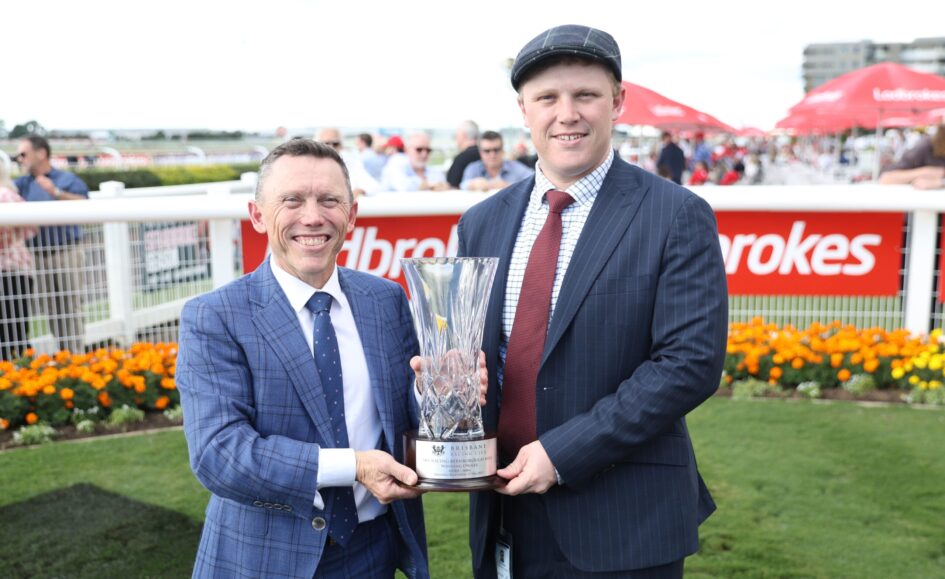
Trainer Chris Munce has added another significant chapter to the Ipswich Cup’s storied history, this time sharing the victory with his son, Corey.
Munce’s own jockeying career saw him win the Listed staying feature aboard Oompala in 1994, a horse that later finished third in the Melbourne Cup.
His training prowess was first showcased in the Ipswich Cup with Smart Meteor in 2022, and Kaluakoi continued this winning legacy on Saturday.
Reflecting on his achievements, Munce said, “Oompala was a very good galloper. He won the Caloundra Cup, got beaten in the Grafton Cup, then went and ran third in the Melbourne Cup. To be able to ride a winner and now train two, one with Corey, it’s a great thrill.”
Advertisement
Munce admitted that Kaluakoi’s lack of a recent middle-distance run this preparation was a point of concern leading up to Saturday’s event.
However, any such worries were quickly allayed once the race commenced.
Munce shared his immediate thoughts with Corey after the first lap: “I said to Corey when he got past the winning post that he was going to be hard to beat because he pricked his ears down the hill and relaxed lovely. He’s got no real turn of foot, but he’s a tough galloper.”
The $4.60 favourite, Kaluakoi, set the pace throughout and responded gamely for apprentice Emily Lang to secure a three-quarters of a length win over Encoder ($4.80). Sun Worshipper ($21) took third place.
Advertisement
Lang, notching her fifth stakes victory, confirmed she followed Chris Munce’s directive to be proactive from the start.
She explained the trainer’s instructions: “He did say to me on Thursday at the trials that he didn’t want (the horse) to be ridden pretty. The last four or so weeks have been really tough. I obviously don’t have a claim anymore, and with all the Sydney and Melbourne jockeys coming up, my manager has had to do a really tough job of getting me rides. When I get the opportunity from a stable like Chris and Corey Munce, it makes all the difference and it’s good to get the job done.”
In the Listed Eye Liner Stakes (1350m), Michael Freedman’s Soothsayer, piloted by Daniel Moor, triumphed despite a challenging draw.
Lee Freedman, who manages his brother’s Gold Coast stable, expressed his surprise at the six-year-old’s rapid improvement this season, suggesting he might develop into a capable miler next year.
Advertisement
“I’m a bit flabbergaster to be honest because he’s gone from a benchmark 85 to a Group Three. He may have come back this ‘prep’ better than ever. I always thought he’d be a good horse for a race like the Epsom (Handicap), so that may be the race you see him in,” Lee Freedman stated.
Nov 30, 2025; Seattle, Washington, USA; Minnesota Vikings tight end T.J. Hockenson (87) makes a catch during the second half against the Seattle Seahawks at Lumen Field. Mandatory Credit: Kevin Ng-Imagn Images
The latest in our NFC North positional rankings sees us take a look at the tight end position. This is another position group in the division that is loaded with talent, making it difficult to separate the four teams.
NFC North TE Rankings for 2026
For the TE group, the main focus is on the top two players on each team’s depth chart, with other options taken into consideration. I had the Vikings in first place in last season’s ranking, but they don’t fare so well this time around. Here are my NFC North TE rankings for 2026.
1. Chicago Bears – Colston Loveland and Cole Kmet
Chicago has invested heavily in the draft at the TE position in recent years, spending a first-round pick on Colston Loveland, a second-round pick on Cole Kmet, and going again this year, spending a third-round pick on Sam Roush. It has given the Bears not just the top-end quality but also strong depth.
Advertisement
Loveland immediately became the team’s TE1, going over 700 receiving yards and scoring six touchdowns in his rookie season. With a head coach who has proven he likes to give his TEs a heavy workload, Loveland should be looking to go even bigger in Year 2.
2. Detroit Lions – Sam LaPorta and Tyler Conklin
Sam LaPorta’s 2025 season ended after Week 10 due to a herniated disc in his back. It led to career lows in his numbers across the board, but 489 receiving yards and three touchdowns from nine games showed his production didn’t suffer from the exit of Ben Johnson as the Lions’ playcaller. Tyler Conklin was signed on free agency, perhaps as insurance if LaPorta takes time to get back up to speed, or as a replacement for Brock Wright, whose name has been mentioned with a potential exit.
Oct 31, 2021; Minneapolis, Minnesota, USA; Minnesota Vikings tight end Tyler Conklin (83) and the Minnesota Vikings are introduced as they prepare to play the Dallas Cowboys at U.S. Bank Stadium. Mandatory Credit: Matt Blewett-USA TODAY Sports.
Conklin is well known to Vikings fans, a fifth-round pick by Minnesota back in 2018. Conklin has gone on to have a solid career. How good the Lions are at this position and as a team could hinge on if/when LaPorta gets back to his best. Detroit’s form nose dived after LaPorta got injured last season, winning only three of the last eight games and finishing last in the division.
3. Green Bay Packers – Tucker Kraft and Luke Musgrave
Tucker Kraft was building on his good season in 2024 and looking to go even better in 2025 when an ACL tear cut his season short. Kraft had racked up 489 receiving yards and six touchdowns from just eight games. The Packers will be hoping he can return to that form in 2026.
Advertisement
Luke Musgrave was taken a round earlier (second round) than Kraft in the 2023 draft, but hasn’t managed to have the same impact. Musgrave couldn’t take advantage of Kraft’s injury either and isn’t certain to stay above Josh Whyle on the depth chart. What should be an area of strength on the Packers’ teams has question marks hanging over it coming into the new season.
4. Minnesota Vikings – T.J. Hockenson and Josh Oliver
It looked for a moment that T.J. Hockenson was heading out of Minnesota, but a reworked deal that makes him a free agent at the end of the season saw him stay. Hockenson was set for a 1,000 receiving yards season in 2023 before a knee injury ended his season a couple of games earlier. He hasn’t been able to find that form since, although that would have been difficult for anybody in the Vikings stuttering offense of 2025.
Oct 5, 2025; Tottenham, United Kingdom; Minnesota Vikings tight end Josh Oliver (84) celebrates after scoring a touchdown against the Cleveland Browns during the first quarter of an NFL International Series game at Tottenham Hotspur Stadium. Mandatory Credit: Kirby Lee-Imagn Images
Hockenson turns 29 in July and should have some good years left in him. With a contract to play for, he will be eager to show he can still be one of the top receiving TEs in the league.
Josh Oliver is one of the best blocking TEs in the league and has shown he is well capable of making a play when called upon. However, he’s not the most dynamic, and not a guy you’d want to step into a role as a focal point receiver of Hockenson can’t play. I thought the Vikings would look to draft a potential Hockenson replacement in the draft, but that never materialized.
Proud UK Viking. Family Man. Enjoy writing about my team. Away from football an advocate for autism acceptance.
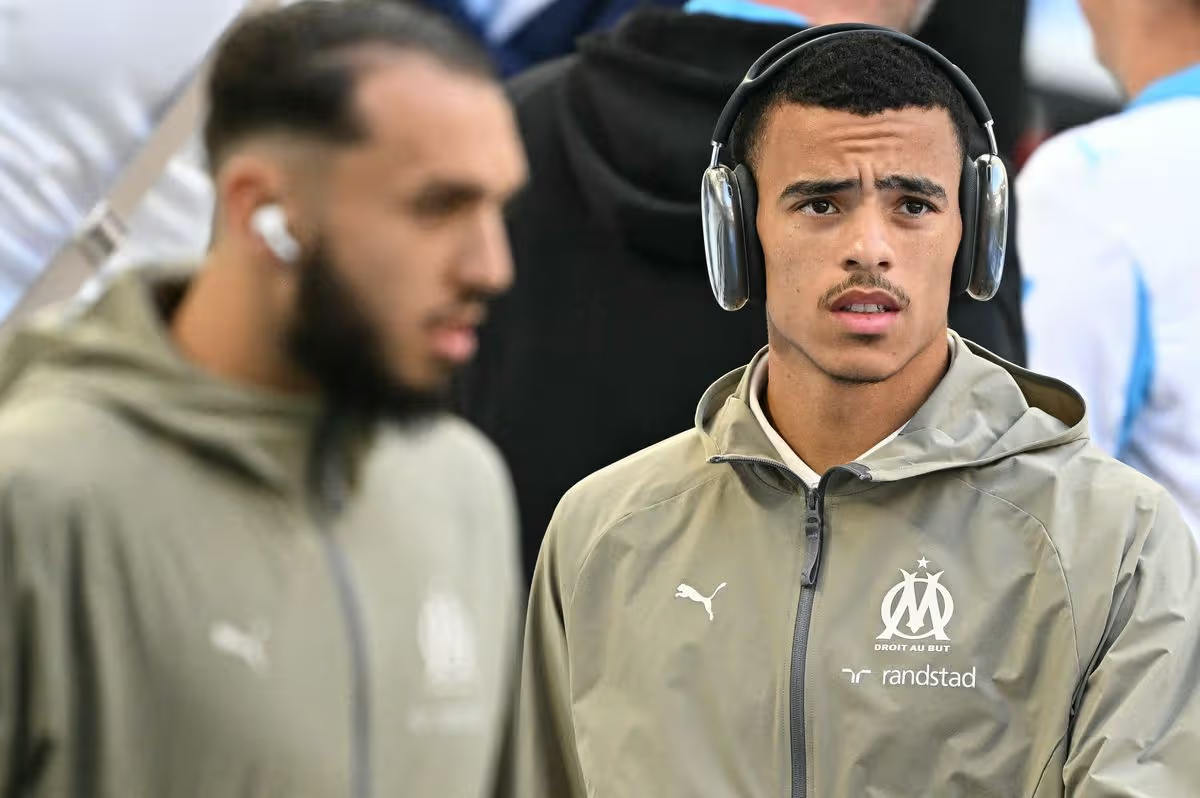
Greenwood has scored 48 goals and assisted 17 times from 81 appearances in France, pushing him to the forefront of this summer’s transfer window. There were rumours that Spurs were planning to move for the 24-year-old, offering him a return to the Premier League.
Advertisement
Football London has confirmed that there is no interest in bringing Greenwood to the club, despite his former manager, Roberto De Zerbi, praising him during his time at Marseille. The current Spurs manager claimed that the player – who had attempted rape and assault charges dropped against him in 2023 – was a “good guy” who was handed a “heavy price.”
De Zerbi said at the time: “I don’t want to get involved in anyone’s private life. All I can see is that Mason seems a good lad; he paid in a strong way for what happened. He has probably here found the right environment for him, which gave him affection, and held out its hand to him.
“When I look at him as a person, I feel sad for what happened in his life, without getting into the details. Because the person I know here is very different to the one that has been described, especially in England.”
Advertisement
This response led to fan backlash before De Zerbi joined Spurs, and he apologised for the comments after his deal in north London was confirmed. He said: “I have never wanted to downplay the issue of violence against women or violence against anyone more broadly.
“In my life, I have always stood up for who are more vulnerable, more fragile. I have consistently fought and taken a stand to be on the side of those who are more at risk. Those of you who know me well will know I’m not the type of person who makes compromises to win more games or to win an extra title. I apologise to those who I offended with this subject matter.
“I have a daughter, and I’m very sensitive to these things and always have been. I hope that over time, people will get to know me better and will understand that in that moment, I didn’t mean to take a stance.”
Advertisement
While Spurs are not in the race for Greenwood, Marseille are still keen to let the goalscorer go this summer.
L’Equipe reports that the club will consider all offers and a deal is desired before the end of June. Roma have been credited with an interest, with a fee of around £35million (€40m) proposed by the Italians.
Marseille are expecting at least £47m (€55m) before they let the 24-year-old go, as per Corriere dello Sport. Reports suggest that Roma could make a secondary offer of around £40m (€45m), plus £4.3m (€5m) in add-ons.
Advertisement
This deal could in turn benefit United, despite Greenwood initially departing Old Trafford in 2024. The club holds a 40% sell-on clause, so a deal this summer could significantly boost Michael Carrick’s transfer war chest.
If Roma does move forward with the £43.3m deal in the coming days, United would make around £17m in total. With Ederson on his way to the club this summer and plenty more players linked, Carrick would welcome the incoming cash to bolster his squad for next season.
Thousands of Man United fans upgraded their matchday last season. This is how they did it.
This article contains affiliate links, we will receive a commission on any sales we generate from it. Learn more
Official premium experiences at Old Trafford are available now for the 26/27 Premier League season. Make it easier than ever to turn a regular fixture into something genuinely unforgettable.
Usyk, meanwhile, must decide whether to vacate his WBC title – and potentially pursue a rematch with Verhoeven – or face WBC ‘interim’ champion Agit Kabayel.
“No, I’m not going to fight with Itauma because he’s a young guy. I don’t want to break this guy.”
Speaking with IFL TV, former opponent Fury doesn’t believe Usyk’s reasoning for not wanting to face Itauma.
“Bulls**t. Oleksandr is coming up to around 40 years old, he has just been pushed all of the way and probably lost every round against a kickboxer. So, I don’t think that he wants to fight a 21-year-old kid who is mustard, for no gain.
“He is not going to gain big money because Moses doesn’t have that following at the moment or the popularity. He is coming up, he is a rising star but he is not on top at the moment, so he [Usyk] isn’t going to gain anything from it.
“It’s all to lose and nothing to gain. If he beats Moses, he has beat a young kid coming up and if he loses to Moses, he has lost to a 21-year-old, so it doesn’t make much sense [for Usyk to fight him].”
Itauma will face Filip Hrgovic at London’s O2 Arena on August 29, entering his toughest assignment in the professional ranks thus far.
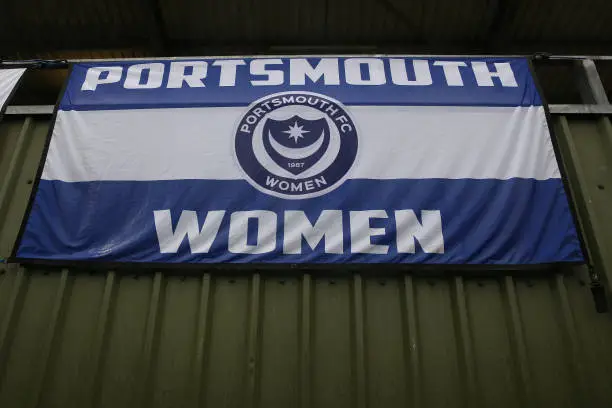
HAVANT, ENGLAND – DECEMBER 10: A Portsmouth Women banner is seen prior to the Adobe Women’s FA Cup Third Round match between Portsmouth Women v Southampton F.C. Women at Westleigh Park on December 10, 2023 in Havant, England. (Photo by Steve Bardens – The FA/The FA via Getty Images)
Portsmouth Women will call Fratton Park home for the entire 2026/27 season.
For the first time in the club’s history, Pompey Women will play all of their home league matches at Fratton Park, moving away from Havant and Waterlooville’s ground and onto one of English football’s most iconic stages.
The decision comes after a successful trial during the 2025/26 campaign, when several matches were played at Fratton Park and attracted some of the team’s biggest crowds of the season.
Advertisement
That support has given the club confidence to take the next step.
CEO Andrew Cullen believes the move can help grow the fanbase while supporting Portsmouth’s long-term goal of returning to the Women’s Super League.
“This provides a brilliant opportunity to grow support for the club,” Cullen said.
Advertisement
The move is also a sign of how much the women’s game continues to grow.
Not long ago, many women’s teams were playing away from their parent club’s main stadiums. Now, more clubs are bringing their women’s sides onto the biggest stage, recognising both the growth of the sport and the demand from supporters.
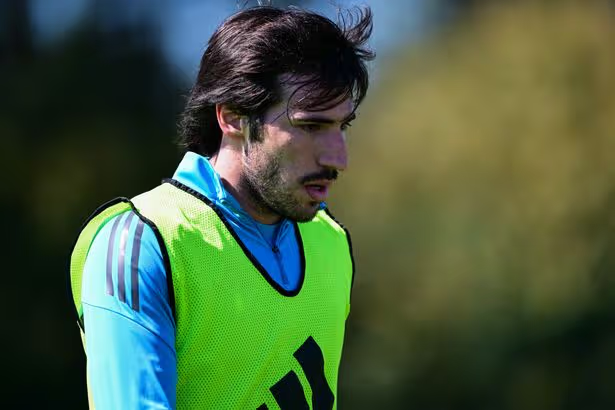
Manchester City are keen on Newcastle United midfielder Sandro Tonali but are not the only interested club with Tottenham having seen an £80million offer rejected
Japan thrashed Tunisia 4-0 to confirm the North Africans’ exit from the 2026 FIFA World Cup group stage on Saturday.
Tunisia came into the match after a difficult week that included a heavy 5-1 defeat to Sweden, the dismissal of head coach Sabri Lamouchi and the appointment of Herve Renard as his replacement. However, the change in the dugout failed to produce an immediate response.
Japan took the lead after less than four minutes at Monterrey Stadium in Guadalupe, Mexico. A swift counter-attack caught Tunisia’s defence out of position and Daichi Kamada finished from close range to put the Asian side ahead.
Advertisement
The Japanese doubled their advantage soon afterwards through Ayase Ueda. The striker produced an excellent finish from the edge of the penalty area, sending the ball through a defender’s legs and into the far corner.
Tunisia struggled to create meaningful chances and looked short of ideas throughout the contest. Japan controlled possession comfortably and repeatedly found space to launch dangerous attacks.
Junya Ito made it 3-0 after being played through on goal and calmly beat goalkeeper Aymen Dahmen with a simple finish.
Advertisement
Ueda completed the scoring late in the match when he guided a looping header into the far corner for his second goal of the game.
Japan were far superior from start to finish and never looked troubled by a Tunisia side whose attacks were easily dealt with.
The result leaves Japan on four points and in a strong position to reach the knockout stage. They will aim to secure qualification when they face Sweden in their final group match on Friday.
Tunisia, meanwhile, have been eliminated from the tournament and will play their last group game against group leaders the Netherlands.
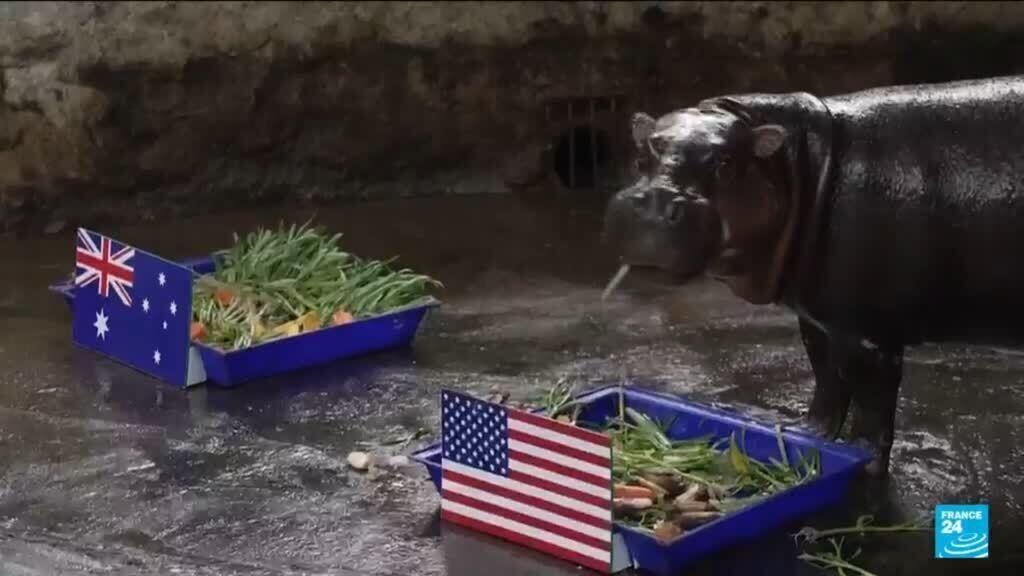
There’s been Achilles the cat, Mani the Parakeet and Nelly the elephant. Over the years, animals from across the world have predicted the outcome of World Cup matches. This year is no different, with a Canadian goldfish and Thai tigers and hippos putting bets on who will come out on top in the 2026 competition. Story by Camille Corcoran.
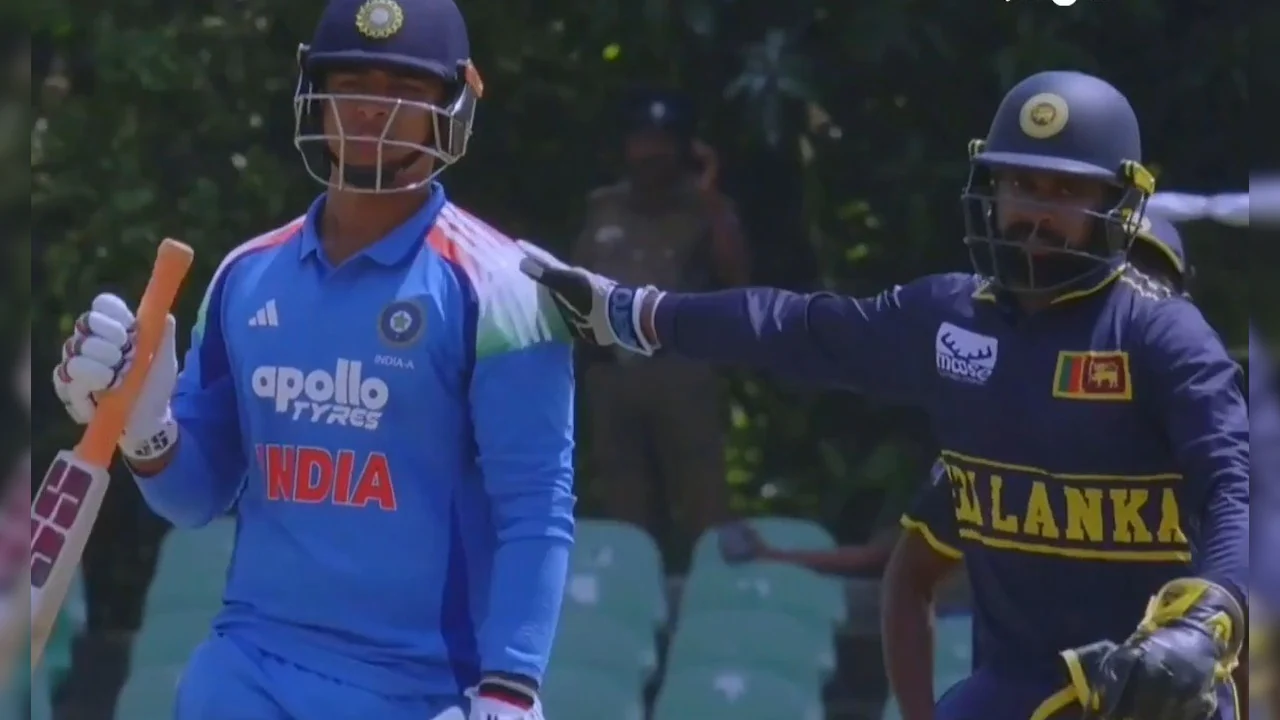
Only a few days ago, they were charging at and sledging Vaibhav Sooryavanshi. On Sunday, it all turned into the ultimate show of sportsmanship. Playing in the final of the Tri-Nation Series in Dambulla, Sooryavanshi shrugged off his lean run in the league stage with a breathtaking 29-ball 94, which also included the fastest fifty in List A cricket, to help India A post a mammoth 377/9 against Sri Lanka A in the tri-series final on Sunday.
The last time Sooryavanshi faced Sri Lanka A, it ended in a physical altercation. On Sunday, Sri Lankan players came up and patted him on the back after the fiery knock.
THE AURA OF 15 YO SOORYAVANSHI.
Advertisement
From mocking to congratulating – Vaibhav Sooryavanshi answered with his blistering knock of 94.
Asked to bat, India A looked set for a score in excess of 400, riding on Sooryavanshi’s extraordinary blitz before Sri Lanka A clawed their way back in the middle overs.
Advertisement
Skipper Tilak Varma steadied the innings with a composed 67 off 90 balls, while Anukul Roy (39 off 15) and Vipraj Nigam (27 off 20) produced a late burst to lift India beyond the 350-run mark.
The day, however, belonged to Sooryavanshi.
The 15-year-old from Samastipur in Bihar needed just 11 deliveries to reach his half-century, eclipsing the 21-year-old record held by Sri Lanka’s Kaushalya Weeraratne, who had taken 12 balls to reach the milestone in 2005.
Having endured a modest run in the series, Sooryavanshi walked out with clear intent and unleashed absolute carnage. His first 11 deliveries yielded 50 runs, reading 4, 4, 4, 6, 6, 0, 6, 4, 4, 6, 6, as he dismantled the Sri Lankan attack from the outset.
Advertisement
He reached the landmark with five sixes and as many boundaries, bringing up the record with successive sixes straight down the ground off pacer Dulaj Samuditha.
The left-hander combined brute force with exceptional timing. He initially targeted the leg side against the seamers before effortlessly opening up the off side once Sri Lanka A stationed an additional fielder on the on side.
His ability to dispatch even good deliveries over the ropes once again stood out.
The highlight of the innings was his lofted shots over extra cover. Three effortless sixes in that region showcased the bat speed, balance and fearlessness that have made him one of India’s most exciting young talents.
Advertisement
Alongside Priyansh Arya (39), Sooryavanshi added 132 runs for the opening wicket and looked well on course to register the fastest century in List A cricket.
However, spinner Sahan Arachchige ended the fireworks by having him caught at mid-off in the ninth over. Arya followed an over later as Sri Lanka A clawed their way back into the contest.
Ruturaj Gaikwad (40) and Tilak then added 63 runs for the third wicket, but the flow of boundaries dried up considerably.
As India attempted to accelerate in the closing stages, wickets fell at regular intervals, but Nigam and Anukul provided the final flourish.
Advertisement
Featured Video Of The Day
Delhi vs Mumbai IPL 2026: Fans Flood Arun Jaitley Stadium for High-Voltage Clash
Crysencio Summerville is enjoying an impressive World Cup for the Netherlands, but that may not be good news for Manchester United
Manchester United may be wincing every time Crysencio Summerville finds the net in the World Cup. The West Ham United forward is a transfer target for the Reds this summer.
And with the Hammers having been relegated from the Premier League last season, the former Leeds United forward is expected to leave the London Stadium this summer. Over the last few weeks, £50million is the figure that has been banded about for the Dutchman.
Advertisement
However, after he found the net in the Netherlands’ 5-1 demolition of Sweden on Saturday evening, with that strike coming after he scored a fine goal for his country in their 2-2 draw with Japan, his price tag is growing with every good display he produces.
Summerville currently boasts two goals and an assist in his opening two matches. He may add to that tally on Friday, June 26, when Ronald Koeman’s side face Group F whipping boys Tunisia, who have been beaten 5-1 and 4-0 by Sweden and Japan, respectively.
His displays will be good news for West Ham. It’s understood there is no buyout clause in the ex-Leeds star’s contract at the club, meaning the Hammers are in a position to demand whatever fee they like.
Advertisement
If Summerville continues to find the net at the rate he is, they may only increase the price they want. United could also find themselves in a bidding war, as Paris Saint-Germain have also been linked with the 24-year-old.
The French side are also expected to allow Bradley Barcola to leave, meaning they will be in the market for a new left-winger. Summerville has firmly put himself in the European transfer market window with his performances for the Netherlands.
Interestingly, both of his World Cup appearances have also come from the substitutes’ bench. After their victory over Sweden, Netherlands boss Koeman appeared to suggest Summerville may come in for Donyell Malen when the matches get trickier.
Advertisement
He said: “I think Summerville is stronger defensively. We talk a lot with the players about recognizing tactical changes on the pitch quicker.
“I understand that the substitution is difficult for Donyell, but this is top-level football. Team performances are what matter. Before the match, I sat down with him and explained why he would play on the right and that he would have the freedom to cut inside because he is not a natural right winger.”
Advertisement
In the Premier League, Summerville contributed five goals and four assists in 31 appearances for the east Londoners last season. With United reportedly in the market for a left-winger, his displays in the World Cup, on top of his Premier League displays, may be enough to convince Michael Carrick to sign him.
Sky is knocking 20% off its entire range of Glass TVs to mark the start of the 2026 FIFA World Cup. Until June 17, shoppers can upgrade to the Sky smart TV that’s ‘designed for football’ from £4.50 per month when taken alongside a Sky TV and Netflix package.











































You must be logged in to post a comment Login