
TL;DR
Waymo is blocked from NYC by Mayor Mamdani, the taxi lobby, and labor unions. Governor Hochul withdrew her statewide robotaxi proposal after outcry.



A new Siri is on the horizon, and we’re getting a better look — literally — at how Apple’s new AI assistant will appear and perform when it’s unveiled later this year.
In a new report from Bloomberg, the news outlet created illustrations showing how Siri could look with the launch of iOS 27, the updated operating system for iPhones. Bloomberg’s Mark Gurman also outlined how people will be able to use Siri, which will pivot from a reactive assistant (for single, linear tasks) to an AI-agentic chatbot, capable of managing complex workflows without needing step-by-step guidance.
Apple is scheduled to launch iOS 27 in mid-September and could discuss the updates at its Worldwide Developers Conference, scheduled for June 8-12.
“The images are based on information viewed by Bloomberg and people with knowledge of the company’s plans who asked not to be identified because the software isn’t yet public,” Gurman wrote.
An Apple representative didn’t immediately respond to a request for comment.
Siri will look, feel and function differently after iOS 27 launches. It will live inside the Dynamic Island, always available to help iPhone users answer questions and perform tasks in the operating system and apps, Gurman said.
The Dynamic Island is a wide, pill-shaped region at the top of the home screen on certain iPhone models where you can see system alerts, apps running in the background, and track ride shares and food delivery. The Dynamic Island is available on iPhone 14 Pro and iPhone 14 Pro Max and all models of the iPhone 15, 16 and 17.
You’ll be able to launch Siri on iPhone in different ways, Gurman said. The original way — saying “hey Siri” or holding down the power button — will activate a Siri animation in the Dynamic Island and is still ideal for voice queries and search.
The second way to launch Siri is entirely new. By swiping down from the top center of the iPhone to launch a Search or Ask interface, you can either type or speak your question or command. When Siri responds, the results will appear in a text card that pops up from the Dynamic Island. You can swipe down further to initiate a conversation with the Siri chatbot, Gurman said.
In the Search or Ask field, iPhone users will be able to choose other AI agents to handle their queries, Gurman said. A drop-down menu of AI agents, such as ChatGPT or Gemini, will appear when people click a button. Apple has a partnership with OpenAI for ChatGPT and has also tested integrating Gemini and Anthropic’s Claude with Siri, Gurman said.
The new Search or Ask array will also include a weather panel and Siri Suggestions, which are already on iPhones and typically show eight of your most used apps, Gurman said.
Siri Suggestions will be included in a new Siri interface in iOS 27.
The Notification Center isn’t going away, Gurman said. Right now, you can access it by swiping down from the top left or the top center, but with iOS 27, you’ll get it only by swiping down from the top left.
As reported before, Siri will no longer be limited to answering rudimentary questions or performing typical tasks, such as calling someone or operating smart home devices. The new Siri will be much more AI-capable, partly using Google Gemini technology, to search the web and analyze on-screen content, Gurman said.
There will also be a dedicated Siri app, following in the footsteps of other phone AI apps such as ChatGPT, Gemini and Claude.
According to Gurman, the home screen of the Siri app will display a conversation history, allowing you to return to previous chats. You’ll be able to use voice or text to converse with Siri, and also upload documents and photos for Siri to analyze.
Siri will show rich text cards for people who ask for news, weather forecasts and sports scores, but will also show results based on the person’s data, such as text messages, emails, appointments and more, Gurman said.
Gurman said that Siri will be able to write emails or text messages based on information from the internet and your device. Siri will also be able to scan your appointment calendar to let you know when you’re booked or available.
Siri will also be integrated into the iPhone’s camera app, Gurman said, enabling people to have them analyzed by a different AI agent or via a Google search, as they can now with Google Lens.
In another report from The Information, Apple will use WWDC to show how well iPhones can process many AI queries on-device, without relying entirely on external data centers and the cloud, thanks to the chips used in iPhones, Macs and Apple Watches.
However, Siri won’t be able to handle all AI queries, the report said. The more complex ones will be farmed out to Gemini, which CNET has reported on before. This two-pronged approach will help Apple show that it values customer privacy through on-device AI functionality and also save money by not having to build huge data centers, The Information report said.
The report said that Google’s Gemini will train a smaller AI model that can run on Apple devices.

Waymo is blocked from NYC by Mayor Mamdani, the taxi lobby, and labor unions. Governor Hochul withdrew her statewide robotaxi proposal after outcry.
Waymo delivers more than 500,000 paid rides per week across 10 US cities, raised $16 billion in February, and is expanding internationally to Tokyo and London. It cannot operate in New York City.
The reason is not technical, it is political.
As the New York Times reported this week, opposition from local politicians, labor unions, and an influential taxi lobby has stopped the Google-owned robotaxi company from entering the country’s largest and most lucrative ride-hailing market. The roadblocks are structural, not temporary.

The 💜 of EU tech
The latest rumblings from the EU tech scene, a story from our wise ol’ founder Boris, and some questionable AI art. It’s free, every week, in your inbox. Sign up now!
New York Governor Kathy Hochul introduced a budget proposal in January that would have legalized commercial robotaxi pilots across New York state, excluding New York City. A month later, she withdrew it. The pushback from driver groups, transit workers, and state legislators was immediate and overwhelming.
“Based on conversations with stakeholders, including the legislature, it was clear that the support was not there to advance this proposal,” a spokesperson for the governor told CNBC. The reversal killed Waymo’s most promising regulatory pathway into the New York market.
Newly elected NYC Mayor Zohran Mamdani has made his position clear. Mamdani, who went on a hunger strike alongside taxi workers during his earlier political career, has declined to renew Waymo’s testing permit, which expired on March 31. The permit, approved by former Mayor Eric Adams in August 2025, had allowed Waymo to test eight Jaguar I-PACE vehicles with safety drivers in Manhattan and downtown Brooklyn.
No collisions were reported during the entire testing period, according to NYC’s Department of Transportation. That fact has not changed the political calculus.
“Our strategy remains the same,” Waymo’s global head of public policy Justin Kintz told the New York Times. “We want to meet people and governments where they are.”
“We know that some of them will take more time than others,” Kintz added. “But we’re committed to earning trust.”
The company has spent at least $1.8 million lobbying New York state officials since 2019, according to state records, and recently retained The Parkside Group at $15,000 per month to lobby on autonomous vehicle legislation. The money has not moved the needle.
The standoff reflects a broader tension in the robotaxi industry. Waymo must approach each state and city individually for permission to operate, a patchwork regulatory environment that gives local politicians effective veto power. Legislation has stalled in at least eight states, including New York, Virginia, Oregon, and Minnesota, even as 18 states now allow fully driverless commercial operations.
Waymo’s technical record in New York was clean, but its broader safety record is more complicated. The company issued its sixth recall this week after robotaxis drove into highway construction zones 13 times across Phoenix and the San Francisco Bay Area.
A rider told CBS News they thought they were going to die. Waymo offered three free rides worth up to $40 each.
The recall pattern gives ammunition to Waymo’s opponents in New York. New York Magazine argued that what could reverse the Mamdani administration’s resistance would be proof that the vehicles are safe, beyond the company’s own statistics. That is difficult to demonstrate when the company is simultaneously pulling its fleet off highways because the software cannot reliably detect cones and closure signs.
The economic stakes are enormous. Waymo is deploying its new, cheaper Ojai robotaxi and targeting one million weekly rides by the end of 2026, with plans for more than 20 additional cities including international markets. New York City, where over 100,000 for-hire vehicle drivers operate and the taxi industry generates billions annually, would be its single most valuable market.
But the city’s taxi medallion system has already been through one near-collapse, when Uber and Lyft decimated medallion values from over $1 million to under $200,000 a decade ago. Taxi drivers who fought back from that crisis are not interested in another disruption. The New York Taxi Workers Alliance, which represents roughly 28,000 drivers, has framed the fight against robotaxis as a labor rights issue.
The competitive landscape is shifting around Waymo while it waits. GM is rebuilding its autonomous vehicle program after shutting down the $10 billion Cruise division. Tesla has launched a limited robotaxi service in Austin, and Amazon’s Zoox operates in San Francisco and Las Vegas.
None of them are in New York either, which suggests the city’s resistance is not Waymo-specific but industry-wide.
For now, Waymo’s $16 billion war chest and 500,000 weekly rides have not purchased entry to the one market that matters most. The company’s strategy of patience and lobbying may eventually work, but in a city where taxi drivers have political allies in the mayor’s office, the state legislature, and the labor movement, “eventually” could mean years.
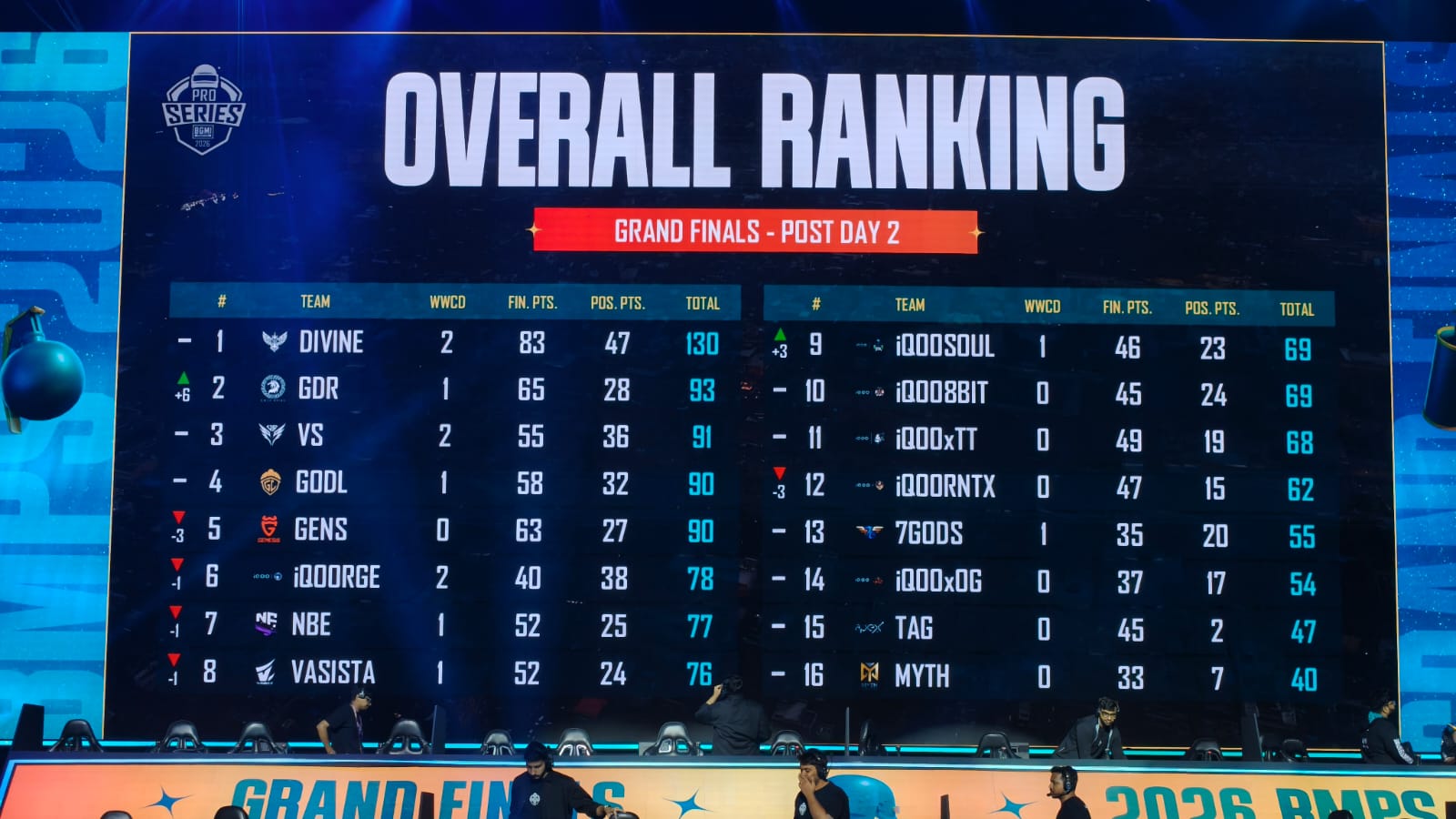
The second day of the BMPS Grand Finals has just curtailed, and as expected, it was the day of comebacks from the likes of GDR, who finished second in the overall standings just after table toppers Divine. Another big comeback came from Vacista Esports, who finished third in overall standings, thanks to the multiple chicken dinners. Sadly, it wasn’t all sunshine for teams like TAG, who failed to mount a challenge for the top once again, succumbing to blind pushes and unnecessary moves. Here’s what the standings look like after day 2 of the BMPS Grand Finals.
| Rank | Team | WWCD | Finish Points | Position Points | Total Points |
|---|---|---|---|---|---|
| 1 | DIVINE | 2 | 83 | 47 | 130 |
| 2 | GDR | 1 | 65 | 28 | 93 |
| 3 | VS | 2 | 55 | 36 | 91 |
| 4 | GODL | 1 | 58 | 32 | 90 |
| 5 | GENS | 0 | 63 | 27 | 90 |
| 6 | iQOOORGE | 2 | 40 | 38 | 78 |
| 7 | NBE | 1 | 52 | 25 | 77 |
| 8 | VASISTA | 1 | 52 | 24 | 76 |
| 9 | iQOOSOUL | 1 | 46 | 23 | 69 |
| 10 | iQOO8BIT | 0 | 45 | 24 | 69 |
| 11 | iQOOxTT | 0 | 49 | 19 | 68 |
| 12 | iQOORNTX | 0 | 47 | 15 | 62 |
| 13 | 7GODS | 1 | 35 | 20 | 55 |
| 14 | iQOOxOG | 0 | 37 | 17 | 54 |
| 15 | TAG | 0 | 45 | 2 | 47 |
| 16 | MYTH | 0 | 33 | 7 | 40 |
Day 3 is up ahead tomorrow, and Divine still has a comfortable lead ahead of all the pack. It’ll be interesting to see if they can continue this timid momentum, or if someone from the likes of GDR, VS, or even GodLike makes a dent in anyone’s plans to catch the flight to Paris.

We may receive a commission on purchases made from links.
So, you’re tired of seeing rotating ads or Amazon’s preloaded graphics on your Kindle every time you put it to sleep. That’s understandable, especially if you’re voracious reader who’s been spending a lot of time on your ereader. In this piece, we’re going to walk you through how to change your Kindle sleep screen and even how to personalize it if you want.
Kindles with Special Offers or lockscreen ads typically cost $20 less than the versions without them. These devices will show you a rotation of advertisements for books, for more Kindle devices or for Kindle Unlimited whenever you put your Kindle to sleep. As long as your device is ad-supported, you cannot customize your screensaver, so your first step is removing Special Offers from your ereader, which will understandably cost you some money. If your Kindle doesn’t have lockscreen ads, you can skip this step. But if it does, you can follow these instructions:
1. On desktop, go to the Amazon website, log in and click the hamburger menu on the left side of the screen.
 Screenshot by Mariella Moon (Amazon)
2. On mobile, fire up the Amazon app.
NOTE: If you’re not in the US but somehow have a US-version Kindle, you might have issues removing lockscreen ads. Amazon will ask you to add a US address and a card with US billing to be able to pay $20 for their removal. Without both, it won’t be possible to proceed to the next step. You can try talking to customer service and asking kindly if they can disable special offers for you at no cost, but there’s no guarantee that that will work.
Once you’re done getting lockscreen ads removed, or if you never had them in the first place, you’ll get a rotation of Amazon-provided illustrations as your screensaver. Those who own newer Kindles have the option of using the cover of the book you’re currently reading instead (see below for a full list of supported models). To make sure this feature is turned on, follow these steps:
NOTE: The option to use book covers as screensavers is only available on the following models:
 Amazon
Unfortunately, there’s no way to use custom images as your permanent Kindle screensaver without jailbreaking your device. There is, however, a trick you can consider: Replacing the cover of a book with the illustration you want to see, then opening it before locking your device. Before you proceed with the instructions below, make sure you’ve already completed the steps above to toggle on the option to display book covers as your lockscreen.
NOTE: You will have to switch to the book that uses your custom cover before you put your device to sleep every time you want to see it on your lockscreen. Alternatively, you can change the cover of every book you read, though that sounds pretty time-consuming, especially if you blaze through books quickly. While this solution isn’t very straightforward, it’s an effective way to personalize your device.


Dan Lewis, co-founder and former CEO of the online freight marketplace Convoy, has left Microsoft to start a new company focused on one of the most expensive problems in artificial intelligence: the cost of running AI models.
The stealth startup is building “the supply chain for intelligence,” a computing platform designed to run AI models more efficiently, according to a recent update to Lewis’ LinkedIn profile. He acknowledged the new venture this week in response to a message from GeekWire but said it was too early to share details.
It’s a new chapter for an entrepreneur who led Seattle-based Convoy from startup to nearly $4 billion in value before it shut down in 2023 amid a prolonged freight recession that battered the trucking industry. Flexport acquired Convoy’s technology, and Lewis joined as a technical advisor.
Lewis went to Microsoft in February 2025 as a chief product officer focused on enterprise AI, later rising to corporate vice president, according to his LinkedIn profile. He left this spring to launch the new venture, which his profile says he co-founded in May.
In his LinkedIn description, Lewis elaborated on the “supply chain for intelligence” concept, saying the startup is building a platform that spans data centers, networking, computer chips, and the software that routes AI requests in real time. The focus is inference — running AI models versus training them — to improve speed and response time for heavy workloads.
“Our mission is to be the best stewards of power to make AI efficient, abundant, and affordable for this next era,” the description concludes.
@media (max-width: 600px) {
aside.callout { float:none !important; max-width:100% !important; margin-left:0 !important; margin-right:0 !important; }
aside.callout .callout-img { display:none !important; }
}
It’s the latest chapter in a career that has blended AI, logistics, and efficiency. Lewis studied cognitive science at Yale, then was an executive at Wavii, a Seattle machine-learning startup that Google acquired in 2013, and later built AI-driven product personalization at Amazon.
At Convoy, he and his colleagues built a digital marketplace that used machine learning to match truckers with shippers, set pricing, and fill empty trucks that would otherwise drive back without a load. A big part of the goal, as the company saw it, was reducing the waste and carbon emissions of trucks running empty — “deadhead” miles, as they’re known.
At Microsoft, he worked on enterprise AI, helping companies build and run AI agents and workflows, and started an internal program called Camp AIR to accelerate AI-first teams.
For now, details such as the name of the new startup and funding haven’t been confirmed. Lewis lists himself as CEO and co-founder, indicating that he’s not leading the company alone. Stay tuned for more on this one in the months ahead.

“A grassroots movement is forming among everyday tech workers who are demanding their companies develop and deploy AI responsibly,” reports TechCrunch.
Hoping to leverage that discontent is a new super PAC called the Guardrails Alliance. The New York Times reports that it launched Thursday with backers that included tech employees and labor unions:
Guardrails positions itself as a populist political movement that runs on small donations from people in the trenches of the AI boom. The PAC has about $5 million at its disposal today and planGuardrails will buy ads to support Alex Bores, a New York congressional candidate who became Leading the Future’s first target and is running in the primaries next week. s to raise $15 million this cycle — small potatoes compared to deep-pocketed adversaries like Leading the Future, which has more than $100 million from tech leaders like OpenAI president Greg Brockman…
“This is not about matching [Leading the Future] dollar for dollar,” [said the super PAC’s co-founder, political operative Shaunna Thomas]. “What this vehicle is meant to do is be a political home for people who are concerned about the way the anti-regulation AI tech sector is trying to manipulate elections.”
Meanwhile a former Netflix and Warner Bros. executive has launched the Alliance for Responsible Innovation in the Arts & Media, reports Variety, calling it an AI-focused content coalition that says it’s dedicated to supporting “responsible and sustainable AI innovation and the importance of human creativity.”
The initial members of the coalition, announced Monday, include Disney, the New York Times, Adobe, Condé Nast, the Financial Times, ITV, Advance, BBC, Cambridge University Press & Assessment, U.K. publisher Reach and Wiley. Many of the coalition’s members have either struck deals with AI companies or are developing their own AI tools… The group plans to argue for legal and policy guardrails around AI’s usage, with its funding directed towards analyses, tools and services focused on advancing those initiatives…
One of the group’s launch advisers is Damian Collins, OBE, who previously served as the U.K. Parliamentary Under-Secretary of State in the Department for Science, Innovation and Technology under prime ministers Boris Johnson and Liz Truss. “Using AI to break the law can never be an acceptable excuse,” he said in a statement. “Laws around personal safety, intellectual property and financial crime still apply in the age of AI. This is why ARIAM has been created and why I’m proud to working with this necessary initiative.”

If Day 1 of the BMPS 2026 Grand Finals belonged to Divine Gaming, Day 2 was all about Victoris Sumus and GodsReign. Both teams consistently found themselves in the late game across multiple matches and looked like one of the most complete squads on the battlefield. At the same time, teams like GodLike Esports mounted impressive comebacks, while iQOO SouL finally showed signs of life after a disastrous opening day. Here’s everything that happened on Day 2 of the BMPS 2026 Grand Finals.
The biggest story of the day was undoubtedly Victoris Sumus. The squad started strong in the opening Rondo match and eventually secured a crucial chicken dinner after outlasting GodLike Esports in the final fight. That momentum continued throughout the day as they repeatedly put themselves in winning positions.
Match 2 saw Victoris Sumus pull off one of the most surprising endgames of the tournament. Despite being forced to rotate into the zone under pressure from GodLike, the team somehow survived without losing a player. Moments later, they eliminated GodLike and secured another chicken dinner. Even when they weren’t winning matches, Victoris Sumus remained a constant threat. Their positioning, rotations, and ability to capitalize on mistakes made them one of the most dangerous teams on the server.

After spending most of Day 1 near the bottom of the standings, iQOO SouL desperately needed a response. Unfortunately, the day didn’t start well. Genesis Esports eliminated SouL in the opening match, exposing the same coordination issues that had haunted the team throughout Day 1. Match 2 wasn’t much better, as TAG stunned the crowd by wiping SouL near Pochinki.
However, things finally clicked during the Miramar games. SouL looked far more coordinated, won several crucial engagements, and secured their first chicken dinner of the tournament in Match 5. The team followed that up with another solid performance in the final game, highlighted by a clutch play from Legit that helped eliminate GodLike during the closing stages. It wasn’t a perfect day, but it was exactly the kind of comeback SouL fans had been hoping for.
GodLike Esports entered Day 2 with plenty of ground to make up and looked significantly sharper throughout the day. The team consistently found itself in favorable late-game positions and finally converted one of those opportunities into a chicken dinner during Match 3. Their aggressive pushes and grenade usage were among the best we’ve seen so far in Jaipur. While they narrowly missed out on a few additional wins, GodLike’s Day 2 performance firmly placed them back into contention heading into the final day.

No team generated more crowd reactions than Team Aryan x TMG. Whether it was aggressive early-game pushes, risky compound crashes, or unconventional strategies, TAG constantly found themselves in the middle of the action.
The team showed flashes of brilliance, including a memorable win over SouL and an impressive shotgun push against Genesis. Unfortunately, their aggressive playstyle often backfired, preventing them from converting strong starts into meaningful points. TAG remains one of the most entertaining teams to watch, but they’ll need a much cleaner Day 3 to climb the leaderboard.
While much of the attention was on Victoris Sumus, SouL, and GodLike, Gods Reign quietly put together one of the most impressive comeback stories of the tournament. After spending much of the event in the lower half of the standings, GDR consistently picked up crucial finish points throughout Day 2. Their biggest moment came in the final Miramar match, where they secured 19 points and a chicken dinner to cap off the day in style.
That massive haul propelled them all the way to second place in the overall standings, turning them from an outside contender into a genuine title threat heading into the final day. Check out the full standings after day 2 of the BMPS Grand Finals here.

The Wall Street Journal reports on internet-connected devices — and how every year millions of them “can contain a secret digital backdoor that opens up access to your home internet, so that anyone… can surf the web as if they were you.” (And this is especially true for “knockoffs that you buy online”…)
In a video report this week they tested two digital picture frames from Amazon and three streaming devices from Walmart “because we heard that they often ship with backdoor software used in cyberattacks. Security experts believe manufacturers are being paid to add this malware, but many people also get tricked into downloading the software onto their phones or computers… Within minutes of turning the devices on, there was a surge of internet traffic… Visits to gambling, porn, cryptocurrency and loads of other sketchy web sites started pouring in from users around the world.” (And remote visitors also tried to access Outlook and Gmail accounts…)
Residential proxy companies even rent out access to “tens of millions of home networks around the world,” according to the report. “But the problem is actually worse than that. Hackers figured out a way to seize control of these backdoors, and they started taking over these residential networks. Last month authorities arrested a 23-year-old Ottawa man, saying he’d taken control of more than a million devices to launch some of the largest cyberattacks anyone had ever seen..”
After a couple months the Journal’s reporter collected logs of all the traffic, and sent it to an investigator at Comcast, who said both were conducting DDoS attacks. But estimate for the number of infected devices are as low as tens of millions or as high 500 million-plus. “We’ve seen nation state attacks launched through these kind of endpoints, which means your device sitting in your house is part of a nation state attack against another nation state… We’ve seen ad fraud, we’ve seen ticket scalping, we’ve seen financial fraud.”
But more importantly, “We have seen some of the largest computer attacks — meaning computers attacking other computers at human request — ever recorded in our digital history in the last several months.” At cybersecurity conferences, some are warning “there are much larger ones on the horizon if we don’t get a hold of this problem.”
The company making the picture frame “couldn’t be reached for comment,” while Amazon said it’s been out of stock since last year. Both Amazon and Walmart said they take action when they confirm malware on a third-party product.
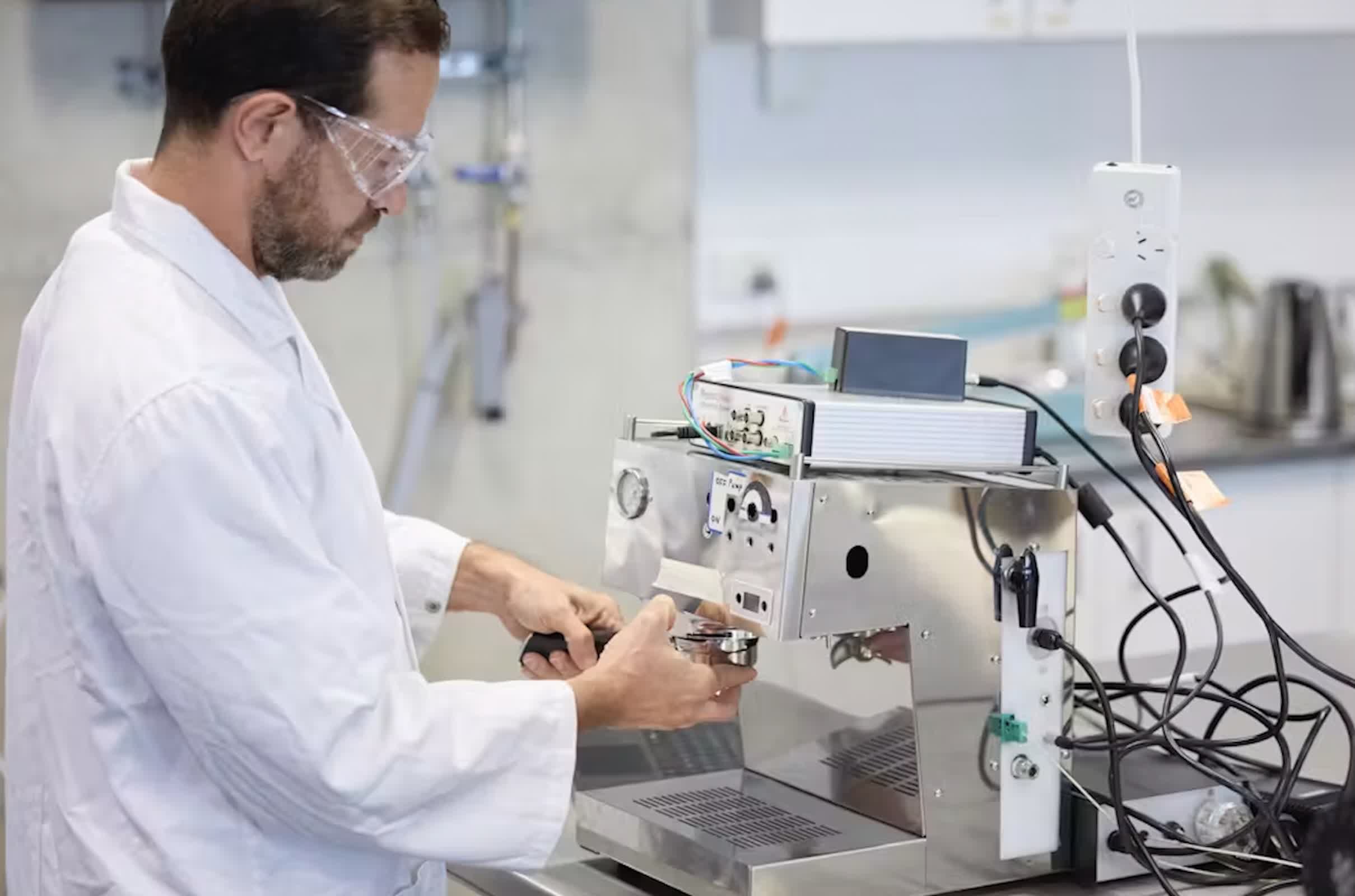
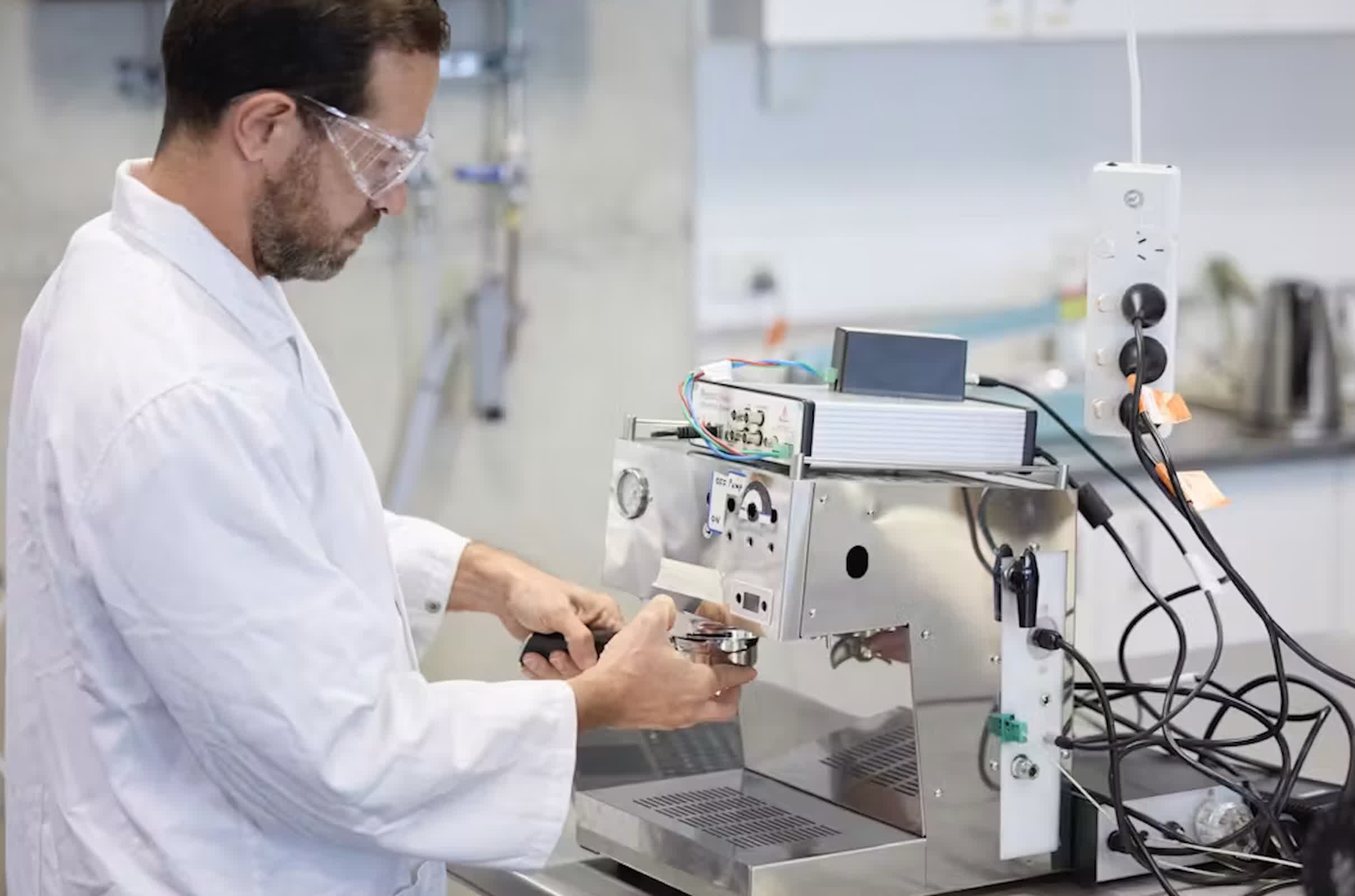
The takeaway: New research is challenging a basic assumption about espresso: that it has to be made with hot water. Instead of relying on near-boiling water, researchers have shown that high-frequency sound waves can produce an espresso-style shot with similar strength and taste – no heat required.
Developed by engineers and food scientists at UNSW Sydney, this new method is called “ultrasonic espresso” and replaces heat with mechanical energy. It runs at room temperature, using sound waves to pull flavor from finely ground coffee, and reaches espresso-level intensity in under three minutes despite the cold-water start.
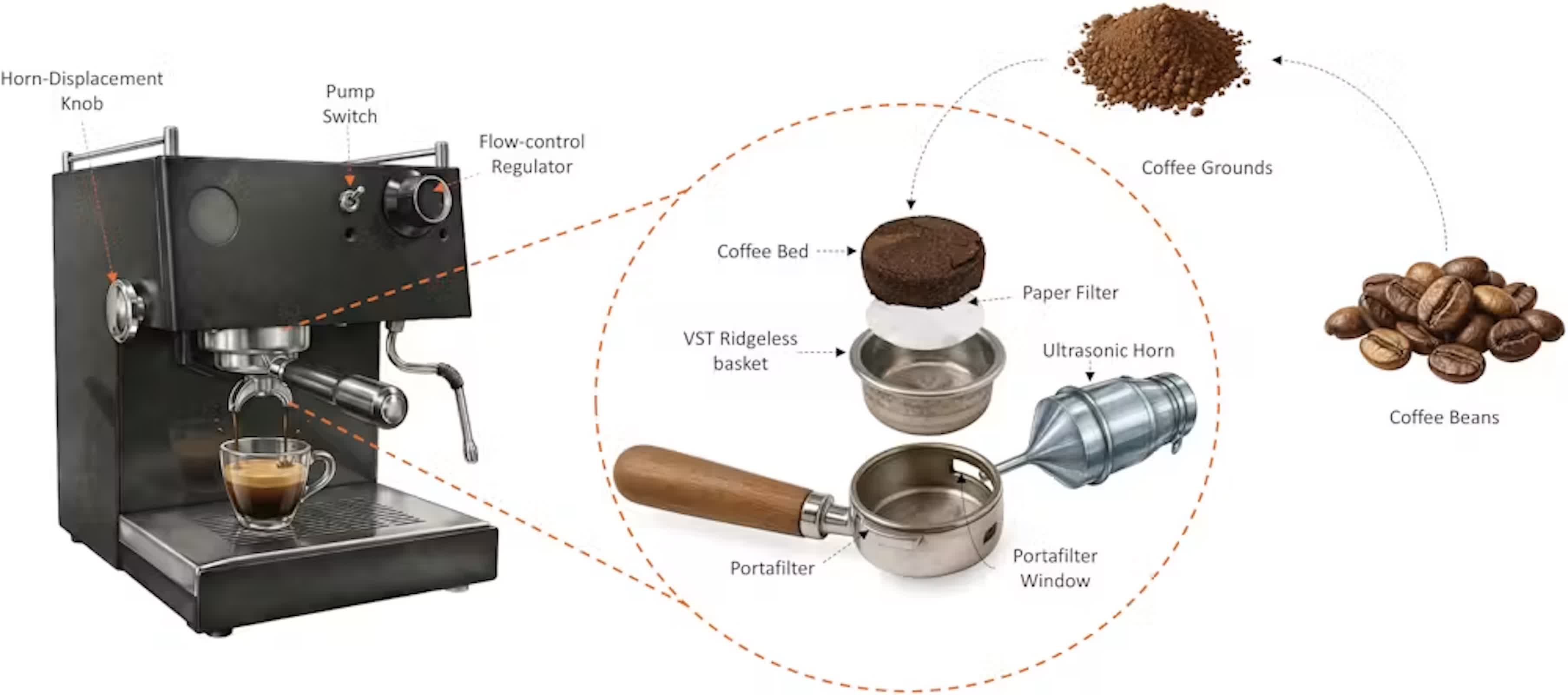
The setup still begins with a standard espresso basket. A small metal transducer is mounted against its wall, and once activated, it emits ultrasound – sound waves above the range of human hearing – that travel through the water and coffee bed.
What happens next is the key step.
The sound waves trigger acoustic cavitation, a process where tiny bubbles form in the liquid and collapse in rapid succession. When those bubbles implode near coffee particles, they generate microscopic bursts of force that chip away at the grounds, speeding up the release of oils, flavor compounds, and caffeine into the water.
In effect, the system swaps heat for controlled agitation at a microscopic level, using pressure changes and localized mechanical action instead of temperature to drive extraction.
That distinction matters more at scale than it does on a kitchen counter. For a home user, skipping the heating step might not move the needle much. But in industrial settings – particularly ready-to-drink coffee production – energy consumption becomes a central concern, and the researchers estimate that eliminating the need to heat water could cut energy use by up to 75%.
The process also introduces some logistical flexibility. Because the coffee is produced at room temperature, it can go straight into bottled drinks or milk-based products, or be shipped as a concentrated liquid and diluted later, potentially simplifying production and distribution.
Ultrasound is not entirely new to coffee science. Earlier work from the same UNSW team explored its ability to speed up cold brewing, compressing what is typically a 12 to 24-hour process into a matter of minutes. But espresso presents a different challenge: it is not just about extracting caffeine or basic flavor, but about achieving a specific balance of bitterness, aroma, and body typically associated with high heat and pressure.
To hit that target, the researchers, led by Dr. Francisco Trujillo, fine-tuned several variables. Grind size played a clear role, with finer particles allowing faster extraction. The water-to-coffee ratio had to be carefully controlled to avoid under-extraction or dilution, and timing proved equally important, with the optimal window landing between two-and-a-half and three minutes of ultrasonic exposure.
Matching the chemistry of espresso is only part of the equation, though. The more practical question is whether people can actually taste the difference.
To test that, the team ran a blind evaluation with about 100 regular coffee drinkers, those findings are published in the Journal of Food Engineering. Participants sampled four coffees: traditional espresso, ultrasonic espresso, and both traditional and ultrasonic filter coffee, served at the same temperature and in random order.
The results were strikingly close. Participants couldn’t reliably distinguish between the traditional espresso and the ultrasonic version, with the two performing nearly identically across aroma, flavor, bitterness, and overall preference. In the filter category, the ultrasonic version was actually favored, with tasters describing its bitterness as more balanced.
The findings suggest that heat may not be as essential to espresso as long assumed. By using ultrasound to accelerate extraction, the process reproduces the defining characteristics of espresso while significantly reducing energy input. For an industry built around heat-driven methods, this opens up a different way of thinking about how coffee can be made.
Image credit: The Conversation
The most controversial feature is Simultaneous Opposing Cardinal Direction (SOCD) customization. This allows one key to override another rather than registering both simultaneously, which is ideal for strafing in tactical shooters like Counter-Strike 2 and Valorant. The difference in reaction speed is immediately noticeable, making quick peeks far more consistent. However, because of the distinct advantage it provides, the feature has been banned in some competitive games because it reduces the delay between directional movement to near-zero levels without requiring any additional skills.
Testing these features across a variety of shooters and racing games, I was consistently impressed by the level of fine-tuning Wootility offers—something not possible on a traditional mechanical keyboard.
The gaming experience of this keyboard is simply impressive. The switches are incredibly smooth and consistent, offering granular control with near-instantaneous, low-latency inputs. While older Hall Effect keyboards from competitors like Keychron and Asus often lacked the tactile feel of traditional mechanical designs, Wooting’s Lekker switches easily bridge the gap.
The RGB lighting also looks great and is deeply customizable. Like most LEDs, it tends to lean slightly blue, but this is easily corrected in the software (I set mine to 203/192/180 for a true white). It is a minor quirk in an otherwise impressive lighting setup.

Photograph: Henri Robbins
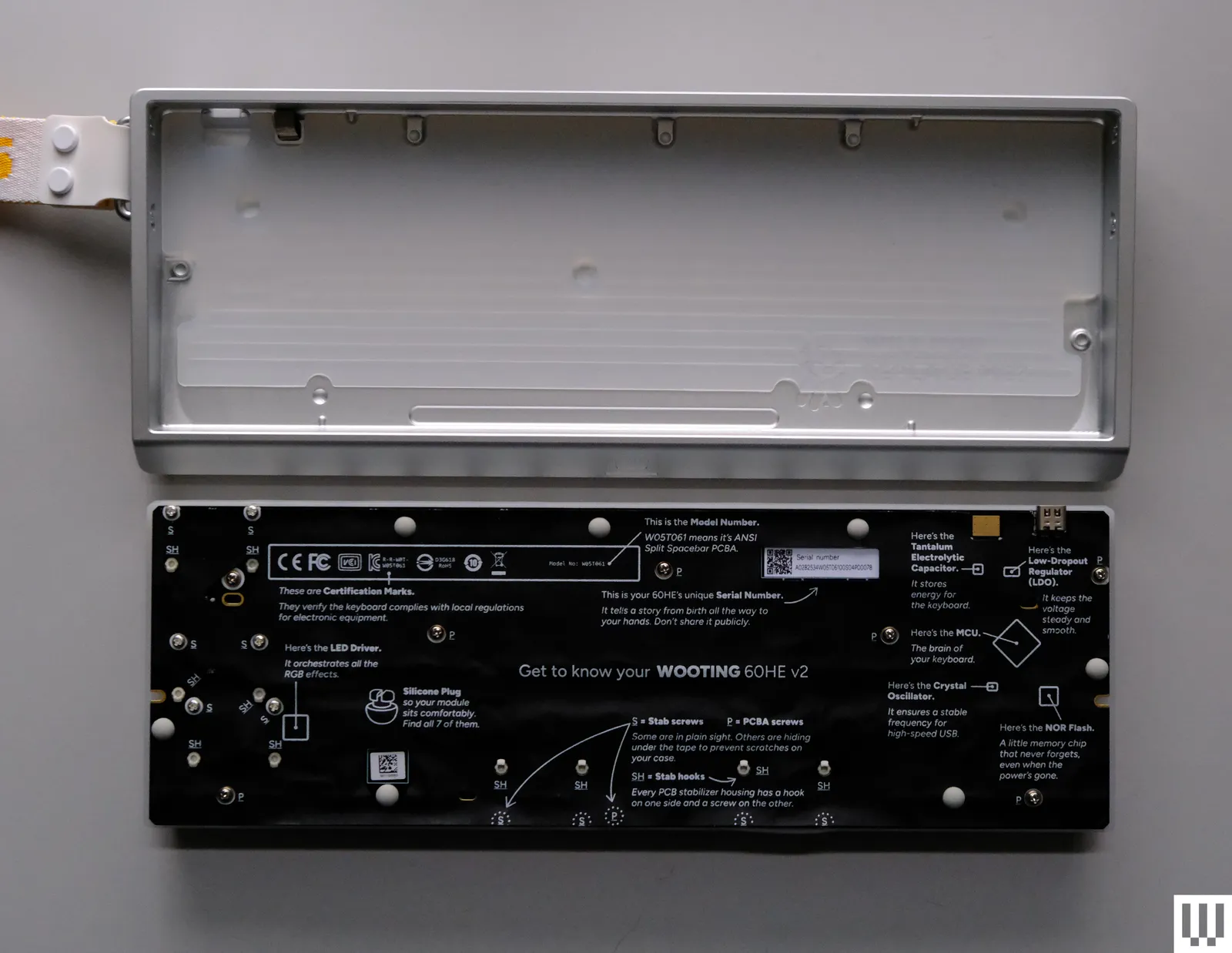
The 60HE v2’s simple internal design makes repairs easy, allowing the keyboard to be disassembled in seconds. Despite this ease of access, Wooting’s solid construction ensures everything stays securely in place. Inside, you will find a plate, switches, a silicone layer, a PCB with rubber feet on the underside, your choice of sound dampening layer, and the case.
Switch compatibility is often a weak point for analog keyboards, but the 60HE v2 easily outpaces competitors from Keychron, Razer, and ROG, which typically only support two or three options. By adopting the widely used KS-20 design, the 60HE v2 works with switches from Gateron, Geon, and several other manufacturers, giving users a constantly growing range of options.
My only real complaint is the adherence to the standard GH60 form factor, which places the USB-C port directly on the left side of the PCB. While I would prefer a centered port on a separate daughterboard for convenience and repairability, I understand the choice. The benefits of standardization for both consumers and manufacturers ultimately outweigh this minor design gripe.
I’m impressed by how well this keyboard performs across every metric. The build quality is robust, the switches are smooth and consistent, and nearly every aspect can be tailored to the individual player. Aside from the lack of wireless connectivity, it leaves nothing to be desired.
The 60HE v2 is easily one of the best gaming keyboards available today. While it is currently backordered, if you are willing to be patient, it is absolutely worth the $240 price tag.

Day 2 of the BMPS Grand Finals was truly the day of comebacks, with teams like GDR and Victoris Summus making the largest leap, and occupying the second and third place in the rankings, respectively. While there was plenty of action from the bottom dwellers, Divine held their 30-point lead, thanks to clever strategies that put them in the top five of almost every match consistently. Here’s what the schedule will look like for day 3 of the BMPS Grand Finals.
The live broadcast will begin at 2:45 PM IST. Fans can catch the games like on Krafton’s YouTube channel in Hindi, English, and a few other regional languages. Or, if you want to support your team live, head over to the Jaipur Convention Center. Tickets are available on the District app. Maps for today will include:
A total of 18 matches will be played over the course of this weekend. And the format is pretty simple. Points are awarded for each finish, and also for how long a team survives. In the end, the team with the most total points (position + finish) will be the winners.
| Rank | Team | WWCD | Finish Points | Position Points | Total Points |
|---|---|---|---|---|---|
| 1 | DIVINE | 2 | 83 | 47 | 130 |
| 2 | GDR | 1 | 65 | 28 | 93 |
| 3 | VS | 2 | 55 | 36 | 91 |
| 4 | GODL | 1 | 58 | 32 | 90 |
| 5 | GENS | 0 | 63 | 27 | 90 |
| 6 | iQOOORGE | 2 | 40 | 38 | 78 |
| 7 | NBE | 1 | 52 | 25 | 77 |
| 8 | VASISTA | 1 | 52 | 24 | 76 |
| 9 | iQOOSOUL | 1 | 46 | 23 | 69 |
| 10 | iQOO8BIT | 0 | 45 | 24 | 69 |
| 11 | iQOOxTT | 0 | 49 | 19 | 68 |
| 12 | iQOORNTX | 0 | 47 | 15 | 62 |
| 13 | 7GODS | 1 | 35 | 20 | 55 |
| 14 | iQOOxOG | 0 | 37 | 17 | 54 |
| 15 | TAG | 0 | 45 | 2 | 47 |
| 16 | MYTH | 0 | 33 | 7 | 40 |




No Jackpot Winner as $257 Million Prize Rolls Over to $269 Million Monday Draw


Weekend Open Thread: Miami – Corporette.com

Zimbabwe Requires Crypto Businesses to Register Annually Under New FIU Regulations

Wall Street Week Ahead: Investors see Micron earnings as pulse check of AI rally momentum

Matt Damon’s Viral Sci-Fi Thriller Has Taken Over HBO Max


HIVE shares jump as $220M AI deal speeds Bitcoin mining pivot


As AI companies race to go public, who else is along for the ride?


Anthropic staff to meet White House officials next week, Axios reports

Bitcoin could crash to $48,000, if this historical pattern is triggered

what doctors are seeing in ebike crashes

Warning of disruption as Cardiff Crossrail works to start

Tributes to former deputy head teacher at Cambridge school among death and funeral notices

Kate Middleton Glare Goes Viral After Kids Booed At Royal Event


“Israel’s” ban on ICRC visits ruled illegal, but Knesset moves to stop them permanently


XRP ETFs Outperform As Bitcoin And Ethereum Funds Extend Outflow Trend


Financial Accounting | Last Day Revision Strategy and Booster | CMA Inter – June 2026


Over 400 Arch Linux packages compromised to push rootkit, infostealer


Invesco Quality Income Fund Q1 2026 Commentary


Singer Oliver Tree dies aged 32 in helicopter crash in Brazil


Dick Advocaat’s Curacao scores first-ever World Cup goal against Germany


You must be logged in to post a comment Login