
CryptoCurrency
Hyper Casual Game Development for Long-Term DAU Retention

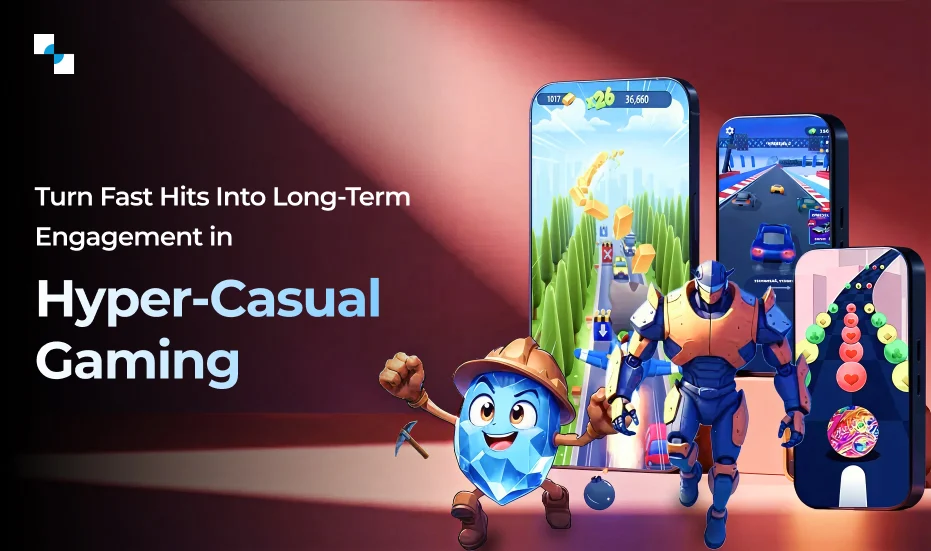
The global hyper-casual gaming market was valued at USD 16,665.88 million in 2022 and is expected to reach USD 25,958.4 million by 2029. Behind all these impressive figures lies a more discouraging reality: the DAU of most titles drops 80% within the first week of going live. This brutal retention curve has become the industry’s most pressing challenge. While getting users to download your game is relatively straightforward with the right user acquisition strategy, keeping them coming back requires a fundamentally different approach to hyper casual game development.
The assumption with hyper-casual games is that they are disposable by their very nature: quick hits meant to burn bright and fade fast. But developers like Voodoo and Supersonic have shown this doesn’t need to be the case, as their top performers continue to enjoy healthy DAU numbers well after launch, not through luck, but rather conscious design choices extending player lifecycle without betraying core genre appeal.
The key lies in understanding that simplicity and retention aren’t opposing forces. When hyper casual game development services focus on building the right foundation from day one, games can remain both accessible and engaging long after the initial download spike fades.
Balancing Simplicity with Long-Term Engagement Mechanics
The uncertainty between keeping things simple and keeping players engaged is where most hyper-casual games fail. Your core loop needs to be masterable in seconds, but the path to mastery should take weeks. This is where smart hyper casual game development separates sustainable hits from flash-in-the-pan downloads.
- Layer progression without adding complexity
Look at how “Helix Jump” introduced new ball skins and platform variations without changing the fundamental swipe mechanic. Players never had to learn new controls, but the visual variety created a sense of progression. Each unlock felt rewarding despite requiring zero training. - Introduce difficulty curves that create natural break points
The best-performing titles in hyper casual game development services portfolios show that players need moments of achievement every 2-3 minutes. These micro-victories trigger dopamine responses that keep fingers tapping. When levels become marathons instead of sprints, retention craters. - Create meaningful choices within constrained systems
Something as simple as choosing what kind of power-up to take creates investment. When players realize that their decisions are important in many ways, they build preferences and strategies that keep them returning. This principle drives effective hyper casual game development more than elaborate feature sets ever could.
Let’s Build Your Next Hyper-Casual Hit
Leveraging Data-Driven Updates to Keep Gameplay Fresh Without Complexity Creep
Most developers treat their hyper-casual games as finished products at launch. The successful ones treat them as living systems that evolve based on player behavior. Analytics shouldn’t just inform your next game; they should shape this one.
- Track where players actually quit, not where you think they quit
Heat mapping tools reveal that players often abandon games at surprising moments. Maybe level 12 has a difficulty spike you didn’t notice in testing, or perhaps the reward pacing breaks down after the first 15 minutes. Professional hyper casual game development services run cohort analysis to identify these friction points before they become retention killers. - Test content variations relentlessly
A/B testing is not merely for app store screenshots. The design of your level, frequency of rewards, and even color palettes need to be constantly tested against player retention metrics. Kwalee famously runs hundreds of variations for each game concept, and this approach doesn’t stop at launch. The most successful titles in their portfolio receive weekly content tests. - Update content on player schedules, not development schedules
If your analytics show players typically exhaust content in 4 days, you need fresh material ready by day 3. This aggressive cadence is what separates expert hyper casual game development from traditional mobile game approaches. Players don’t care about your sprint planning—they just know when a game feels stale. - Use seasonal themes without changing core mechanics
“Subway Surfers” has run the same basic gameplay for years while keeping DAU strong through themed updates. Halloween skins, winter wonderlands, and cultural celebrations give players reasons to return without requiring them to relearn anything. This strategy works because it respects the player’s existing muscle memory.
Proven Meta-Game Strategies That Don’t Compromise Casual Appeal
Meta-games, the systems that exist above your core gameplay loop, are where hyper-casual titles traditionally stumble. Add too much, and you’re no longer hyper-casual. Add too littl,e and there’s no reason to return tomorrow. Finding this balance separates adequate hyper casual game development services from exceptional ones.
- Collections work when they’re visual and immediate
“Color Bump 3D” succeeded by showing players exactly which ball skins they were collecting and how close they were to completion. The collection screen is scannable in two seconds, which respects the genre’s time-conscious audience while providing long-term goals. - Daily rewards need to offer immediate gameplay value
Coins that sit in a virtual wallet do nothing for retention. Power-ups, continuations, or head-starts that players can use in their very next session provide a concrete link between returning and a benefit. This way of approaching hyper-casual game development accepts the fact that your players aren’t thinking of your game when they aren’t playing it. - Tournaments create urgency without commitment
24-hour competitive events give players a reason to open the app today, not eventually. These limited-time pressure points spike DAU in ways that permanent leaderboards never achieve. The key is keeping entry frictionless, i.e., one tap to join, no registration required. - Battle passes adapted for casual consumption
Traditional battle passes demand 30+ hours of engagement per season. Casual-adapted versions offer 10-15 tiers, completable in 2-3 weeks with 5-minute daily sessions. This is respectful to your audience’s attention span while borrowing the psychologically proven hooks that make passes work.
Final Verdict
Building hyper-casual games with strong retention is all about adding the right features in the right proportion and not about adding more features. The developers who find consistent success in DAU understand that every single element must justify its existence against the twin criteria of simplicity and stickiness. Your game needs to remain instantly accessible to new players while giving veterans reasons to return.
The difference between a game that peaks at launch and one that builds a sustainable audience comes down to foundation. This bears out in the analytics when hyper casual game development has focused on retention from the very first design document, as opposed to attempting to bolt it on post-launch.
Want to build a hyper-casual game that attracts new players and retains the old ones? Contact Antier. Let’s build something that lasts beyond the launch spike.



