
Entertainment
Hoda Kotb returns to “Today ”to fill in for Savannah Guthrie amid search for mother: 'There is also a job to do'

:max_bytes(150000):strip_icc():format(jpeg)/hoda-kotb-savannah-guthrie-the-today-show-01-020926-9bc5630aa898407dbaa02b552a637ada.jpg)
‘We show up for each other,” said Kotb, who left her permanent post on the show in 2025.

Continue Reading
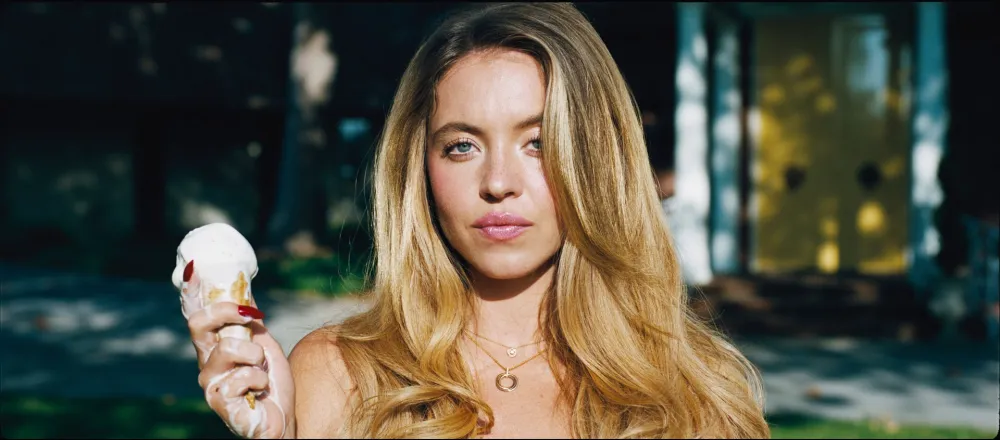
HBO Max has plenty of hot new movies and shows debuting in April 2026, but there’s only one series that’s dominating the conversation — Euphoria.
The Sam Levinson drama is finally returning for its third and reportedly final season, and it features original stars Zendaya, Jacob Elordi, Sydney Sweeney, Hunter Schaefer, as well as new additions to the cast like Sharon Stone.
Other notable debuts include Richard Gadden‘s Baby Reindeer follow-up, Half Man, and the streaming debut of Timothee Chalamet‘s Oscar-nominated sports film, Marty Supreme.
Watch With Us has compiled a complete list of all the new movies and shows on HBO Max in April 2026 below.

Sydney Sweeney in Euphoria season 3. HBO
April 1:
A Big Hand for a Little Lady
Abbott and Costello Meet Captain Kidd
Alien vs. Predator: Extended Cut
Alien
Alien 3
Alien 3: The Assembly Cut
Alien Resurrection
Alien Resurrection: Special Edition
Alien vs. Predator: Requiem: Extended Cut
Alien: Director’s Cut
Aliens
Aliens vs. Predator: Requiem
Aliens: Director’s Cut
Abbott and Costello In Hollywood
AVP: Alien vs. Predator
Blood on the Moon
Cabin in the Sky
Captain Horatio Hornblower
Carson City
Dallas
Deeply, Season 1
Deeply, Season 2
Deeply, Season 3
Evil Lives Here: My Child the Killer, Season 1 (ID)
Fort Dobbs
Fort Worth
Gunsmoke in Tucson
Inu-Oh
Man From the Black Hills
Maze Runner: The Death Cure
Mortal Kombat Legends: Battle of the Realms
Mortal Kombat Legends: Cage Match
Mortal Kombat Legends: Scorpion’s Revenge
Mortal Kombat Legends: Snow Blind
On Moonlight Bay
Out of the Past
Practical Magic
Rachel and the Stranger
Rancho Notorious
Renovation Aloha, Season 3 (HGTV)
Riding Shotgun
Rocky Mountain
Roughshod
San Antonio
Santa Fe Trail
Shoot-Out at Medicine Bend
Springfield Rifle
Tall in the Saddle
Tall Man Riding
The Bounty Hunter
The Boy and the Beast
The Devil Wears Prada
The Family
The Flame and the Arrow
The Hole in the Ground
The Left-Handed Gun
The Man
The Man Behind the Gun
The Man with a Cloak
The Mummy (1999)
The Mummy Returns
The Mummy: Tomb of the Dragon Emperor
The Naked Spur
The Oklahoman
The St. Louis Kid
They Died with Their Boots On
Thunder Over the Plains
Twister
Wagons West
Welcome to Plathville, Season 8 (TLC)
Westward the Women
Wichita

The 2026 Oscars were good for HBO Max — both One Battle After Another and Sinners won an armful of awards and can be streamed only on the Warner Bros.-owned streamer. But HBO Max has more than just award-winning films — it also streams some of the biggest hits of the past and present. In […]
April 2:
Body Bizarre, Season 8 (TLC)
Expedition Files, Season 4 (Discovery)
April 3:
Alien: Romulus
Dream Stage, Season 1
April 4:
Game Night
April 5:
Teen Titans Go!, Season 9G (Cartoon Network)
April 7:
Tropic Like It’s Hot, Season 1 (HGTV)
April 9:
Hacks, Season 5 (Max Original)
The World’s Tallest Man, Season 1 (HGTV)
April 10:
Artemis II: To the Moon and Back (Discovery)
Christy
House Hunters International: Volume 9, Season 208 (HGTV)
April 12:
Be My Guest with Ina Garten, Season 7 (Food Network)
Building Back America’s Trades, Season 1 (Magnolia Network)
Euphoria, Season 3 (HBO Original)
April 13:
Boy Band Confidential: A Hollywood Demons Event, Season 1 (ID)
Smiling Friends, Season 3B (Adult Swim)
April 14:
Rock The Block, Season 7 (HGTV)
The Dark Wizard (HBO Original)
April 15:
Nanny McPhee Returns
World’s Bargain Dream Homes, Season 1 (HGTV)
April 16:
One Day In My Body, Season 1 (TLC)
April 17:
Dust Bunny (Lionsgate)
House Hunters: Volume 11, Season 253 (HGTV)
April 18:
Belle Collective, Season 7 (OWN Network)
Krypto Saves the Day: Coastal Catastrophe
April 20:
Impractical Jokers, Season 12B
April 21:
Hollywood Demons, Season 2 (ID)
No Hard Feelings
April 22:
Jeff Dunham’s The Cars That Drove Us, Season 1 (Discovery)
April 23:
Half Man (HBO Original)

Jamie Bell and Richard Gadd in Half Man HBO
April 24:
48 Hrs: Escape From Chernobyl (Discovery)
HGTV Smart Home 2026 (HGTV)
House Hunters International: Volume 9, Season 209 (HGTV)
Marty Supreme (A24)
April 25:
Confessions of a Nazi Spy
The Mouthpiece
Stranger on the Third Floor

HBO Max started 2026 off with a loaded lineup of dramas, including A Knight of the Seven Kingdoms and The Pitt. But now, it’s time to send in the clowns as the streamer drops two big comedy shows in March. Thank You! You have successfully subscribed. Subscribe to newsletters Enter your email Please enter a valid […]
April 27:
24 in 24: Last Chef Standing, Season 3 (Food Network)
April 28:
Standoff: The FBI, Power and Paranoia, Season 1 (CNN)
NHL on TNT
April 1:
St Louis vs Los Angeles, 9 PM
April 5:
Minnesota vs Detroit
Boston vs Philadelphia
April 8:
Washington vs Toronto
Edmonton vs San Jose
April 12:
Pittsburgh vs Washington
April 15:
Detroit vs Florida
April 19:
NHL Playoffs, TBD
April 22:
NHL Playoffs, TBD
April 23:
NHL Playoffs, TBD
April 24:
NHL Playoffs, TBD
April 25:
NHL Playoffs, TBD
April 26:
NHL Playoffs, TBD
April 28:
NHL Playoffs, TBD
April 29:
NHL Playoffs, TBD
April 30:
NHL Playoffs, TBD
College Basketball – March Madness
April 4:
Final Four
April 6:
National Championship
US Soccer
April 11:
Japan vs USWNT
April 14:
Japan vs USWNT
April 17:
Japan vs USWNT
MLB
April 7:
LA Dodgers vs Toronto
April 14:
Chicago Cubs vs Philadelphia
April 21:
NY Yankees vs Boston
April 28:
Detroit vs Atlanta

Fantasy fans are better served on HBO Max than science fiction fans. There’s some overlap between the two fandoms, but HBO Max clearly favors one over the other. Thank You! You have successfully subscribed. Subscribe to newsletters Enter your email Please enter a valid email. Subscribe By signing up, I agree to the Terms and […]
ALL ELITE WRESTLING (AEW) IN APRIL
April 2:
AEW Dynamite, 8 p.m.
April 5:
AEW Collusion, 8 p.m.
April 6:
AEW Dynamite PPV, 8 p.m.
April 9:
AEW Dynamite, 8 p.m.
April 12:
AEW Collision, 8 p.m.
April 16:
AEW Dynamite: Spring Breakthru, 8 p.m.
April 17:
AEW Collision: Spring Breakthru, 8 p.m.


April 23:
AEW Dynamite, 8 p.m.
April 26:
AEW Collision Playoff Palooza, 8:30 p.m.
April 30:
AEW Dynamite, 8 p.m.
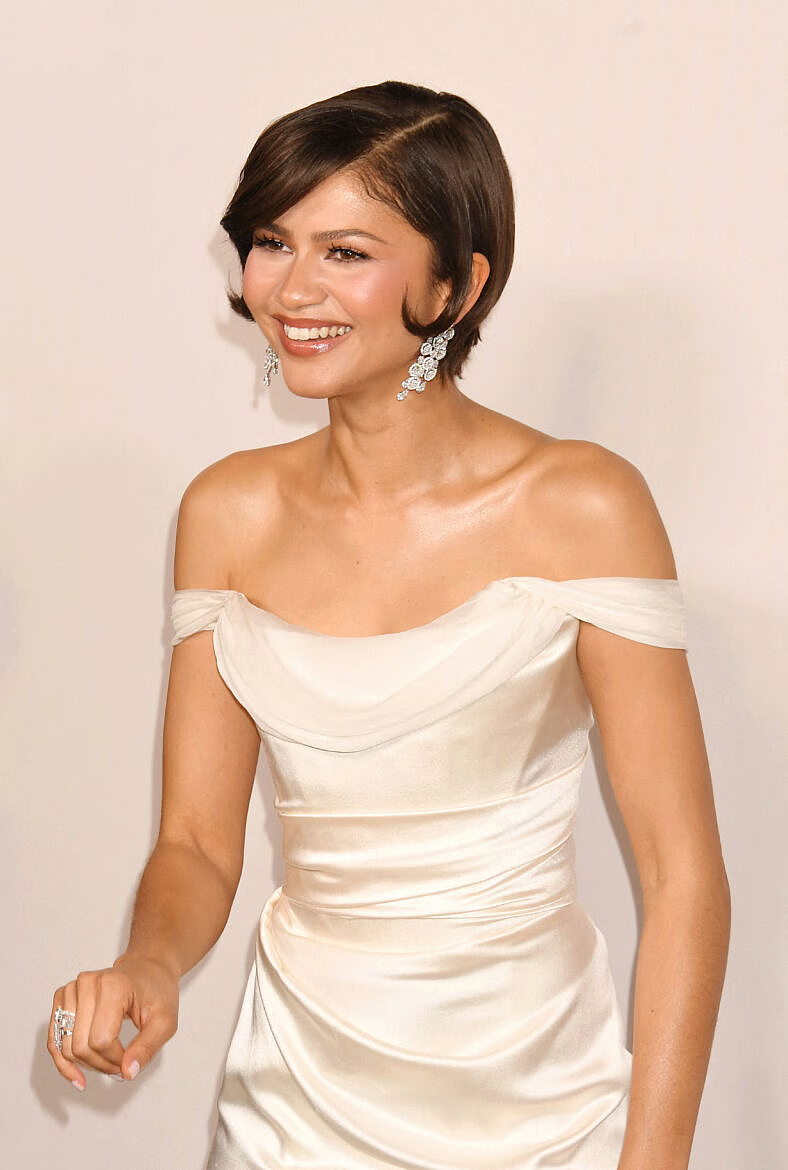
Zendaya always knew what type of wedding she wanted long before finding her perfect half, Tom Holland.
The sensational entertainer has been keeping fans guessing about the status of her relationship with her “Spider-Man” co-star. The pair is rumored to be married, but has yet to confirm or deny the speculations.
Now, a resurfaced clip has confirmed Zendaya never wanted a fanfare for her union, and the reason is quite touching.
Zendaya Once Declared Her Love For An ‘Intimate’ Union

The resurfaced video captured Zendaya on the red carpet at the Los Angeles premiere of the hit movie “Blended” in 2014. She looked stunning in an all-black ensemble, radiating her ever-consistent youthful glow as she flashed her toned midriff in a crop top.
While speaking to Entertainment Tonight, Zendaya was asked what kind of wedding she wanted when she eventually decided to walk down the aisle. The model wasted no time answering the question, revealing that she had always known what type of ceremony she wanted.
“I want, like, a small and intimate. More like just me and like my close family and friends. Relatives,” Zendaya declared, before explaining why she did not want a large wedding ceremony. “You know, I don’t want to go to my own wedding and be like, ‘Who are they?’” she said.
The Disney Alum Addressed Her Refusal To Confirm Or Deny The Marriage Rumors

Zendaya’s past comments matched her recent reaction to speculation about her marriage to Holland. The rumors intensified after her stylist, Law Roach, claimed the couple had secretly tied the knot during a red carpet appearance at the 2026 Actor Awards on March 1.
During an April 1 appearance on The New York Times’ “Modern Love” podcast, Zendaya explained why she and Holland have failed to confirm or deny the rumors. She noted that it felt like there was “this level of a parasocial investment” in her personal relationship, and she wasn’t a fan of it.
Zendaya acknowledged that she and Holland are public figures whose love life played out in the public eye, and she did not want to dismiss fans’ interest in them. Nonetheless, she and Holland needed their privacy and wanted certain aspects of their lives to themselves.
The Couple Isn’t Hiding But Preserving Their Privacy

Zendaya continued that she wasn’t oblivious to fans’ interest in her relationship status, saying, “I hear it, but also my own little boundaries of what I like to bring up and talk about, but then also what I’m willing to share.”
Zendaya stressed that she and Holland weren’t trying to “hide from the world. Instead, their actions stemmed from their decision to “preserve things for ourselves so that we can maintain that joy just within ourselves and our loved ones and our family.”
“In a lot of ways, I’m also a very private person, and I try my best to be able to have things for myself and for him as well,” Zendaya explained. Her words came days after she addressed the viral AI-generated images of her alleged wedding to Holland.
The ‘Dune’ Actress Said People Were Deceived By The AI Wedding

Last month, The Blast reported that Zendaya appeared on “Jimmy Kimmel Live!” to address the marriage speculation. When the host brought up the AI-generated images of her secret wedding to Holland, she revealed the pictures had deceived people in her circle.
When asked whether people got upset that they weren’t invited to the wedding, Zendaya confirmed that “many people” were mad. She also poked fun at the claims of a secret wedding, using the moment to promote her new movie, “The Drama.”
Zendaya claimed she was sharing footage from her actual wedding ceremony, but it was a badly photoshopped image of Holland’s head on her co-star, Robert Pattinson’s body. She joked about the clip’s authenticity, claiming it was real rather than AI-generated.
Zendaya Fueled The Marriage Rumors In Paris

Although Zendaya and Holland have not publicly confirmed or denied the marriage speculations, it did not stop fans from drawing their own conclusions. The Blast shared in March that Zendaya’s actions had further ignited the wedding rumors.
The Golden Globe Award honoree gave fans plenty to talk about during the Paris premiere of her new movie. She stepped out in a bridal-themed ensemble, rocking a white dress and a curly side bob haircut.
Naturally, eyes were drawn to the three diamond rings on her fingers, particularly the one on her left ring finger. Zendaya’s new movie with Pattinson is set to hit theatres on April 3. The Blast reported that she declared she would take a break after undertaking multiple projects scheduled for 2026 releases.
We got a texttt, Roomies! The weather is heating up, the baddies are outside, and new cast bombshells will soon be entering the villa.
From dramatic recouplings to sweet love stories, many ‘Love Island USA’ fans can’t wait to see who will be gracing our screens this year. Well, the wait won’t be long, because we’ve got the FIRST LOOK at the official cast.
And from the looks of it, that ‘Baddies’ x ‘Love Island’ crossover might be coming sooner than we expected.
RELATED: Huda Mustafa And Louis Russell Speak Out After His Ex-GF Is Granted Restraining Order Against Reality Star (PHOTOS)
‘Love Island USA’ Officially Renewed For Season 8
Earlier this month, Variety revealed that Peacock renewed ‘Love Island USA’ for Season 8. The show is set to premiere June 2nd with Ariana Madix returning as host.
The renewal comes after ‘Love Island USA’ continues to dominate the charts.The show skyrocketed during Season 6, with many viral moments taking over our timelines. It went on to become the most-watched reality series of summer 2024.
Season 7 also pulled major numbers, with a few controversial moments from the cast and even more viral clips, racking up over 18.4 billion minutes streamed on Peacock and holding the No. 1 streaming original spot in the U.S. for six consecutive week
Many Of Your Faves Enter New Eras As ‘Baddies USA’ Officially Wraps Up
‘Baddies USA’ Chapter One recently wrapped on Sunday, many of the outros had us shedding a few tears as the baddies reflected on everything they went through this season. From music to motherhood, it’s clear a new era is underway.
Ahna Mac, who got a bit emotional, revealed this will be her final season of ‘Baddies.’ As y’all know, Ahna recently celebrated her engagement with baseball player Jazz Chisholm Jr. Ahna has been very open about growth and ready for wifey life.
She penned a writing, “Don’t be sad guys, just come watch me on YouTube. I don’t know why everyone is so sad, y’all getting a better version of me! Now I have more time to build my farm and make my day-in-life videos, and I have so much more coming. The journey does not stop here. It only gets better, I PROMISE.”
Scotlyn “Scotty” Ryan is also enjoying her new era as she counts down the weeks until she welcomes her baby with Zeus CEO Lemuel Plummer. The couple recently cleared up misconceptions, revealing that they are not in an open relationship. They shared that they are very much in love and are even talking about having another baby in the future, teasing the idea of a “Lil Baby Lemmy.”
Baddies X Love Island? Here’s What’s In Store For The Season 8 Cast
As new chapters begin and relationships continue to grow, one thing is clear love is in the air, and it looks like we might be seeing another baddie step into a new journey real soon.
A source tells us that if you loved Season 6 and Season 7, this season is set to be even more intense, with a mix of drama and kick-your-feet moments as a new group of strangers searches for love. That means hotter bombshells, more romantic dates, crazier challenges, and even more unexpected twists.
Before we reveal the full cast, we’ll give y’all a few hints about the “baddie” who will be entering the villa. Hint: She’s talented and can spit a few bars, always serves in every confessional look, and never backs down from getting her get-back.
Scroll down to see who…
The baddie who will be entering the villa is the baddest of them all, Ms. April Fools. It’s safe to say June definitely has some expected surprises in store.
If you made it this far, thank you for always being a tuned-in Roomie and staying caught up. Happy April 1st!
RELATED: Crossover OTW? Natalie Nunn & Biggie React After ‘Love Island’ Star Nic Shows Love To His Favorite ‘Baddies’ Cast Member
What Do You Think Roomies?

Netflix has grown quite a sci-fi division over the last 10 years, but no shows have exploded to the same level as Stranger Things. The series arrived 10 years ago, starting as nothing more than a simple supernatural kidnapping thriller, but by the time its final season arrived last year, the show had evolved into something much more complex. Like any show with a big audience, the ending of Stranger Things was quite controversial among fans, but most would agree it avoided the same disaster-level conclusion as Game of Thrones. Many fans were surprised to see such little death from the finale, though. Season 5 may have come and gone, but there are still plenty of stories from Hawkins left to tell.
The Duffer brothers, Matt and Ross, have already confirmed that another Stranger Things series is in the works, but it will focus on the mysterious rock that a young Henry Creel found inside the suitcase while he was exploring the cave. It’s unconnected to the original show. It’s still up in the air as to when this new offshoot will arrive, but fans don’t have to wait that long to return to Hawkins. Netflix has already announced a new animated spin-off, Stranger Things: Tales From ‘85, which will officially be released later this month, on April 23. The animated series is set between the events of Seasons 2 and 3, and Netflix has also released an official synopsis, which reads as follows:
“Return to Hawkins with Stranger Things: Tales From ’85, an exciting new animated series from showrunner Eric Robles and executive producers the Duffer Brothers. In the winter of 1985, snow blankets the town and the horrors of the Upside Down are finally fading. Our heroes Eleven, Mike, Will, Dustin, Lucas, and Max have settled back into a normal life of D&D, snowball fights, and quiet days. But beneath the ice, something terrifying has awakened. Could it be from the Upside Down? From the depths of Hawkins Lab? Or from somewhere else entirely? Our heroes must race to solve this mystery and save Hawkins in this new story set in the Stranger Things universe.”

Reach into the Television Grab Bag and Pull Out a Prize — The Collider TV Quiz!
Let’s test your breadth of knowledge, not depth, with this sampling of your favorite shows. True fans will take no issue with these questions.
Are Any ‘Stranger Things’ Cast Members Coming Back for ‘Tales From ’85′?
Unfortunately, none of the core Stranger Things cast from live-action will be reprising their roles in the animated series. The ensemble cast for Tales From ‘85 consists of Brooklyn Davey Norstedt as Eleven, Jolie Hoang-Rappaport as Max, Luca Diaz as Mike, Elisha “EJ” Williams as Lucas, Braxton Quinney as Dustin, Ben Plessala as Will, Brett Gipson as Hopper, Odessa A’zion as Nikki Baxer, Jeremy Jordan as Steve, Janeane Garofalo as Anna Baxter and Lou Diamond Phillips as Daniel Fischer. Additional voice cast includes Robert Englund as Cosmo, Alysia Reiner as Karen Wheeler, Alessandra Antonelli as Nancy Wheeler, Valeria Rodriguez as Rosario, and Jack Griffo as Jeff.
Check out all five seasons of Stranger Things on Netflix and stay tuned to Collider for more updates and coverage of the first spin-off, Tales From ‘85.

- Release Date
-
April 23, 2026
- Network
-
Netflix
- Showrunner
-
Eric Robles
- Directors
-
Phil Allora
- Writers
-
Jennifer Muro
-

Odessa A’zion
Nikki Baxter
-

Brooklyn Davey Norstedt
Eleven
-
Jolie Hoang-Rappaport
Max
-
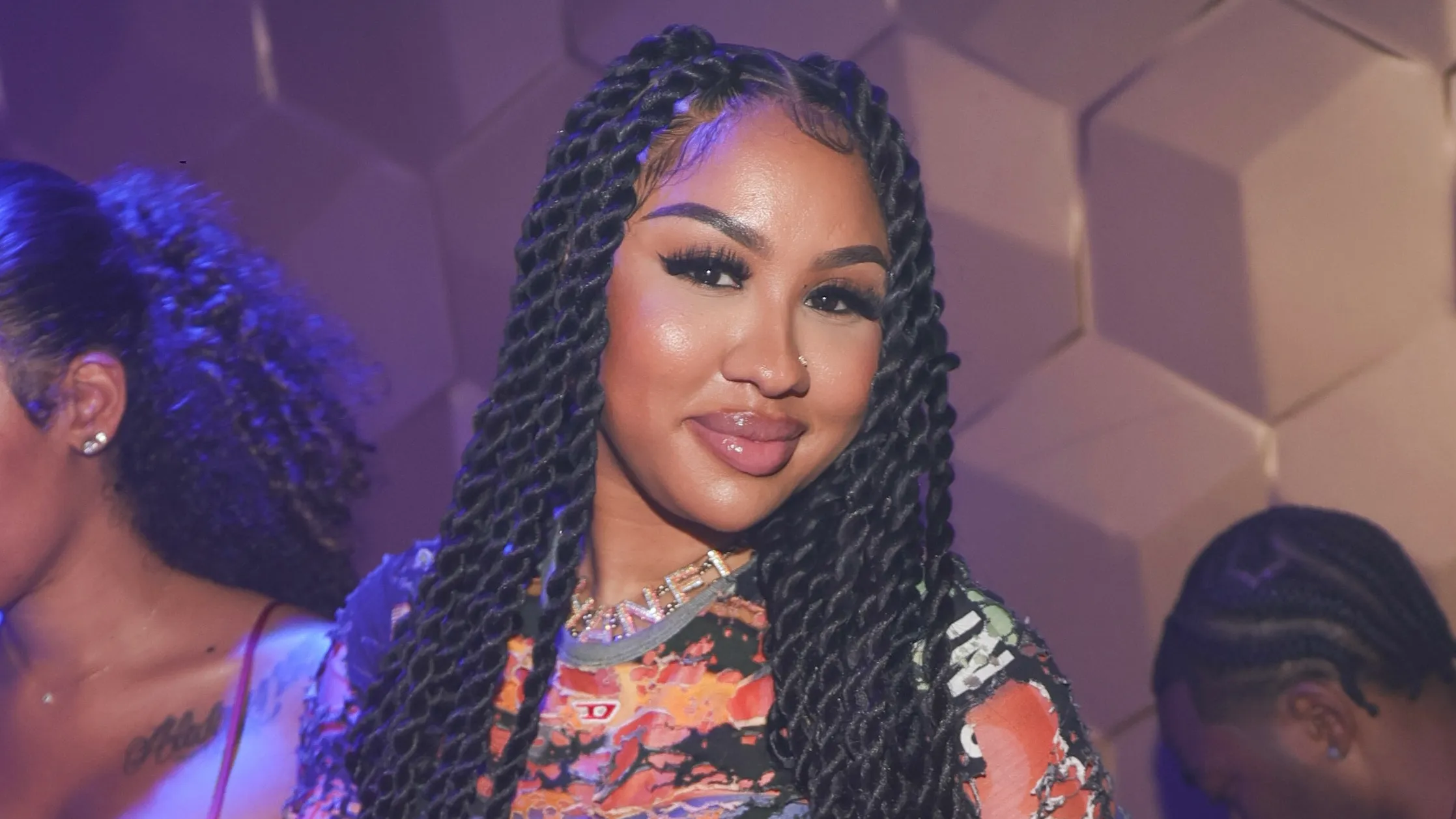
Ari Fletcher is showing off her new look after doing the big chop on her hair!
RELATED: Awww! Yosohn Has Internet Users Tearing Up After Explaining Why He Doesn’t Want Ari Fletcher To Have Another Baby (WATCH)
Ari Fletcher Shows Off New Look After Doing The Big Chop
On Tuesday, March 31, Ari Fletcher took to her Instagram Story to share a photo of some of her hair bundled in her fist. Furthermore, Fletcher captioned the photo with, “I never understood why people cut it all off, but now I see. Free [red heart emoji]” Apparently, moments earlier, on Snapchat, Fletcher had shared her plans and the look she was ultimately going for.
A few hours later, Fletcher returned to Instagram with photos of her new look!
“Ain’t no feeling like being free ♥️,” she captioned her carousel post.
Afterward, Fletcher even shared the footage of her big chop.
Social Media Reacts To Her New Look
Social media users stepped into TSR’s comment section with reactions to Ari Fletcher’s new look and big chop.
Instagram user @kayla_micah wrote, “I feel like there is an age you reach where it really does just become hair. Definitely a sign of growth!”
While Instagram user @_beautifullybloomed_ added, “It’s so pretty , my man gone leave me if i do this though !”
Instagram user @ketraye_ajure wrote, “Hair was thin so I’m happy she made this choice”
While Instagram user @tooskie_b added, “Am I the only one that doesn’t like it? 🥴 I’m glad she’s starting new though! We all need that sometimes! Love that for her 🫶🏽”
Instagram user @champaignetaylor___ wrote, “Grown woman fine 😍😍😍 it’s just hair it’ll grow back”
While Instagram user @prettipantease added, “It looks good. She needed that big chop !”
Instagram user @_aikan__ wrote, “It’s cute but she will have a weave next week 😂😂😂”
While Instagram user @k.ashuri added, “No hate but it was definitely time..she was having way too many different hands in her hair 😍”
Instagram user @prettyshadesofmelanin wrote, “Love this go ahead in free yourself fantasia voice 😍🙌🏾”
While Instagram user @kyeaxo added, “It’s so powering to cut all your hair off. You’ll never understand until you do it.”
Instagram user @sheeza_goddess wrote, “The short hair’d girlies are popping OUT😍🔥”
While Instagram user @iamkaylatene added, “it needed to go boo, that shit was fried and thin. and idk how that happened bc i remember her hair used to be so long and thick”
Before Ari Fletcher Showed Off New Look After Doing The Big Chop, She Spoke On Her “Internal Bra”
Before Ari Fletcher showed off her new look after doing the big chop, she stunned social media users by speaking on her “internal bra.” As The Shade Room previously reported, last month, Ari Fletcher was doing a livestream with Jordyn Lucas when she opened up about her procedures and the “surgery that hurt the most.” Ultimately, Fletcher explained that she had a “bra procedure,” which was “excruciating,” adding that a “metal bra” was “drilled” into her chest.
RELATED: Ari Fletcher Shocks Livestream Viewers After Saying Her “Internal Bra” Surgery Was Her “Most Painful” Procedure (VIDEO)
What Do You Think Roomies?
Roseanne Barr is opening up about some alarming news she recently received from her doctor.
“This doctor says I have to go get my heart checked out because it’s damaged,” the former sitcom star said on the Thursday, March 26, episode of her “Roseanne Barr Podcast.”
She continued, “So, now I’m so pissed because I’m like, ‘I need a new doctor.’ He’s always sending me to other doctors to check me out, and I’m like, ‘Why do I have to go find something wrong when nothing’s wrong?’ And then get in shape so I can have surgery and die on the surgery table. I mean, well, it doesn’t make any sense.”
Barr, 73, said that she doesn’t want to undergo surgery and would rather live out her final days in hospice care.

Roseanne Barr is no stranger to controversy. Long before ABC chose to cancel the reboot of Roseanne in 2018, the actress made headlines for a variety of reasons including a controversial National Anthem performance and a run for president. Years after Barr’s Roseanne character was killed off The Conners, Us Weekly learned exclusive details about […]
“I would rather not get ready for any sort of surgery ever again in my life and just get a heart attack or a stroke and just be put into a home,” she said. “That is the life. Living in the hospice. … That’s all I want. They know you’re dying and they give you morphine.”
In June 2025, Barr opened up about moving to Texas, where she experienced a tractor injury while mowing her property.
“I’m doing a lot of mowing. I’ve got a really fantastic tractor out here and I’m mowing. The only problem is I don’t clear the trees quite as good as I should and I’m always hitting a tree and knocking it over, and it always hits me in the head,” she told Fox News Digital.
“So, I’ve had several injuries recently. I had this one tree … I knocked it and a great big old branch fell right on my head and trapped me in my tractor,” she continued. “So, I knew I had to get out of there, and it weighed about a hundred pounds.”

Roseanne Barr didn’t just play a mom on TV, the actress has expanded her own family off screen over the years. Barr started off doing stand-up comedy before becoming a household name for her lead role on Roseanne, which ran from 1988 to 1997. The series was briefly revived in 2018 but came to an […]
Barr became a household name following the success of ABC sitcom Roseanne, which originally aired from 1988 to 1997.
In 2018, ABC canceled a revival of Roseanne following the star’s racist tweet about former Obama White House advisor Valerie Jarrett. The show was retooled around her fellow cast members, including John Goodman and Laurie Metcalf, as The Conners, which aired seven seasons from 2018 to 2025.
Barr told Fox News Digital in June 2025 that she is no longer in touch with her former costars.
“No, I’m not friends with none of them,” she said. “They’re all in the past. I have pleasant memories of what fun we had — wish them all the best. And no, we don’t talk. I’ve moved on from that horrendous ending and chapter of my life, but you know, I don’t hold any bitterness or nothing to them, but my God, what fun we had on that show.
“And I was sorry they f***ed it all up with their greed and ridiculous stupidity to f*** all that up. F*** them, but I wish them well,” she said at the time.
:max_bytes(150000):strip_icc():format(jpeg)/survivor-tout-c294a08236054d3e97f5edfa00dea737.jpg)
Money or glory?
Entertainment
Conservative influencer alleges “The View” denied her request to appear on show, defend herself after cohosts slammed her
:max_bytes(150000):strip_icc():format(jpeg)/Isabel-Brown-The-View-040126-8a9587d93fdf448aaa66b7354fa05113.jpg)
Isabel Brown said the alleged interaction “tells you everything you need to know about their motives.”
By Charlene Badasie
| Published

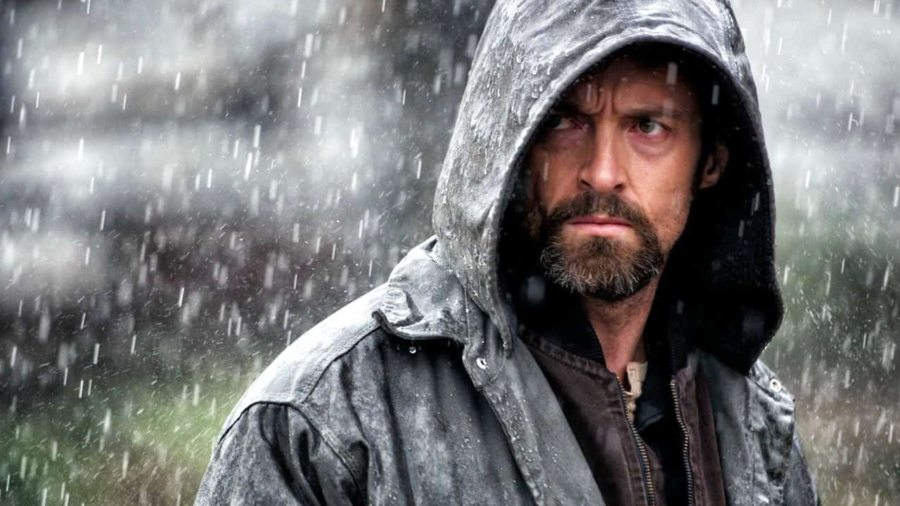
The 2013 thriller film Prisoners is directed by Denis Villeneuve from a script written by Aaron Guzikowski. It features an ensemble cast including Hugh Jackman, Jake Gyllenhaal, Viola Davis, Terrence Howard, Maria Bello, Paul Dano, and Melissa Leo. The story revolves around the Dover and Birch families, whose two young daughters go missing.
A Violent And Desperate Crime Thriller
Prisoners opens on Thanksgiving Day in a small suburban town, where the Dovers and Birches gather for a meal. Keller Dover (Hugh Jackman) and Franklin Birch (Terrence Howard) are close friends, and their families spend the day together. During the festivities, the two youngest daughters, Anna Dover and Joy Birch, go missing while playing outside. Panic sets in, and the families contact the police.

Detective Loki (Jake Gyllenhaal) is assigned to the case and starts by investigating the girls’ last known activities, questioning neighbors and potential witnesses. A suspicious RV is identified, and its driver, Alex Jones (Paul Dano), is brought in for questioning. However, due to his limited mental capacities, Loki is unable to extract meaningful information from him.
As days become weeks and the investigation stalls, Keller Dover becomes increasingly desperate and frustrated by the lack of progress. He becomes convinced that Alex Jones knows more than he’s letting on. In a moment of desperation, Keller abducts Alex and holds him captive in an abandoned building. He believes that by using force, he can extract information about the girls’ whereabouts in Prisoners.

Detective Loki discovers a maze pendant worn by one of the missing girls, which leads him to a suspect with a history of child abductions. However, he cannot directly link this suspect to the current case. Meanwhile, Franklin Birch struggles with Keller’s extreme actions, torn between his friendship and his sense of morality.
Nancy Birch (Viola Davis) also grapples with losing her daughter and the increasing tension within their group of friends. As Keller continues to interrogate Alex, he becomes increasingly violent and desperate. At the same time, Loki starts to uncover a web of secrets, including a history of abuse in the Jones family and connections to other child disappearances, bringing Prisoners to a shocking conclusion.
A Maze Worth Getting Lost In

Prisoners debuted at the Telluride Film Festival and was released in theaters in September 2013. The Hugh Jackman film received critical acclaim for its tense atmosphere, strong performances, and thought-provoking themes. It currently holds an 81 percent critics score on review aggregator Rotten Tomatoes alongside an 87 percent audience score.
Prisoners also performed well at the global box office, earning over $122 million against a comparatively modest budget of $46 million. Hugh Jackman and Jake Gyllenhaal engaged in extensive research for the movie. Gyllenhaal spent time with detectives to prepare for his role, while Jackman explored the psychology of a desperate father.

The maze motif seen in promotional material and on the Prisoners movie poster is a visual metaphor for the characters’ journey through moral complexities. The project also marked the first time that Denis Villeneuve collaborated with cinematographer Roger Deakins, leading to a strong creative partnership that continued in subsequent films.
Notable Entries After Prisoners
Since Prisoners, Hugh Jackman has appeared in several movies across various genres. He reprised his role as Wolverine in 2024’s Deadpool & Wolverine. He also starred in the 2015 sci-fi drama Chappie as Vincent Moore, an ex-military officer. The film revolves around a police robot imbued with artificial intelligence, which leads to ethical and philosophical dilemmas.

In a shift from Prisoner‘s thriller genre, Hugh Jackman took on the role of Blackbeard in the 2015 fantasy adventure film Pan. The movie serves as a prequel to the Peter Pan story and explores the origins of Peter and his rivalry with Blackbeard. Jackman also starred in the 2016 sports drama Eddie the Eagle as Bronson Peary, who serves as a coach and mentor to the aspiring British ski jumper.
Some of his other notable film credits include The Greatest Showman in 2017, Bad Education in 2019, Reminiscence in 2021, and The Son in 2022. Hugh Jackman’s post-Prisoners filmography demonstrates his versatility as an actor, with roles spanning various genres, from science fiction and superhero films to dramas, comedies, and musicals.

This diverse range of projects showcases his ability to tackle different types of characters and storytelling styles. But fans can still catch him in Prisoners, which is available on demand through YouTube, Apple TV+, Amazon Prime Video, and Fandango at Home.
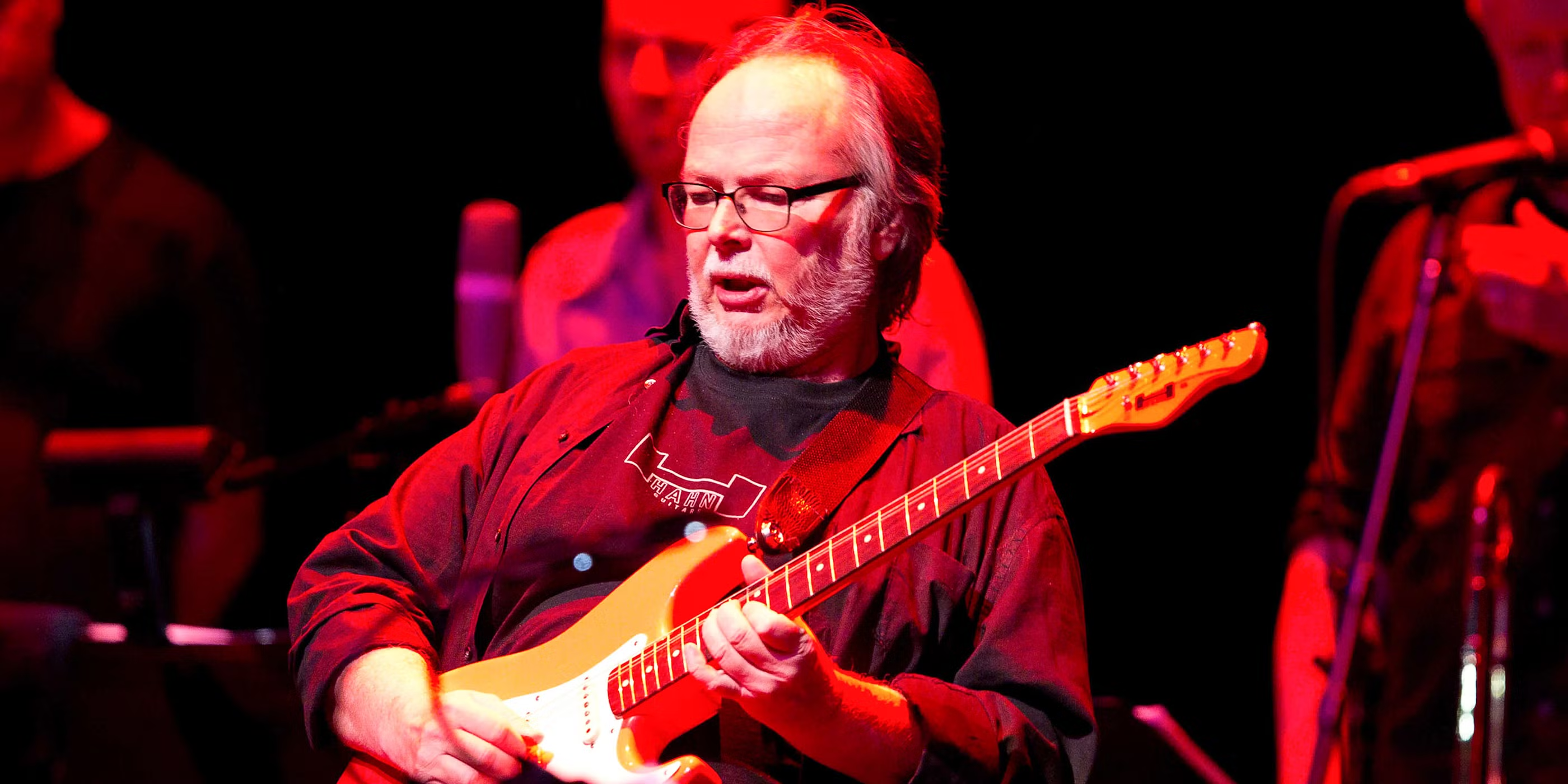
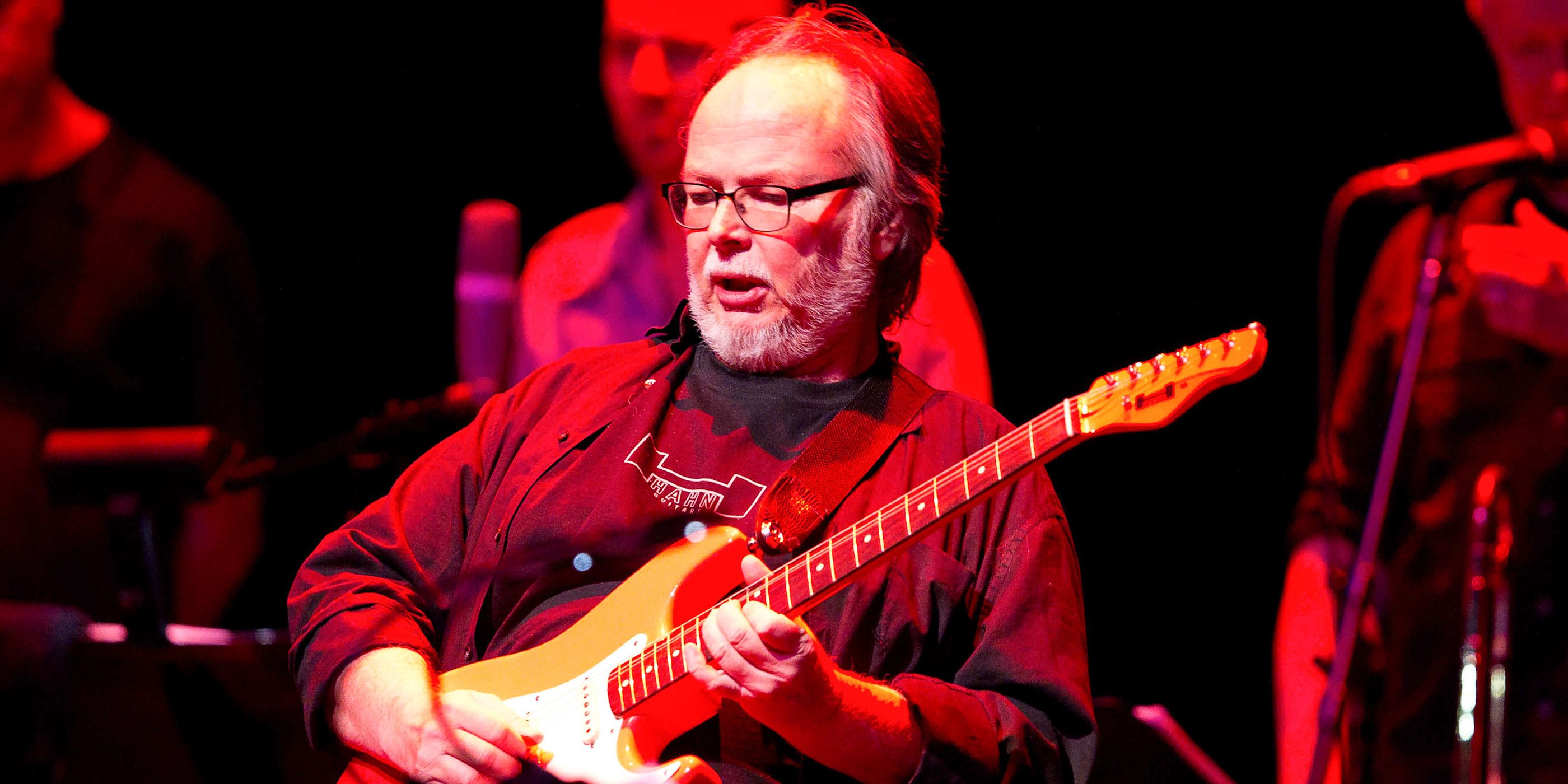
Steely Dan carved out a unique place in music history, fueled by studio perfectionism, potent and ironic lyrics and a jazz-rock sensibility that scored mainstream success while creating a cult following. The duo of Donald Fagen on keyboards and vocals and the late Walter Becker on guitar, bass and vocals teamed up with a bevy of renowned studio musicians to create a lasting musical legacy that continues to find an audience years later.
The band took its name from a novelty toy mentioned in William S. Burroughs‘ 1959 novel Naked Lunch, if you know, you know. They were inducted into the Rock and Roll Hall of Fame back in 2001 and have sold over 40 million albums globally. It’s quite a daunting task to rank such a prolific set of albums that define a genre with classic songs: “Do It Again,” “Reelin’ in the Years,” “Rikki Don’t Lose That Number,” “Deacon Blues,” “Black Cow,” “My Old School.” “Peg,” and that’s just scratching the surface. Focusing on the 70s, here are Steely Dan’s studio albums ranked by songwriting, musicianship, and overall production.
6
‘Pretzel Logic’ (1974)
Steely Dan’s third album, Pretzel Logic, begins a shift in how the band approached recording in the studio. It was also the last album the group went on tour to support until the 2000s. Donald Fagen and Walter Becker both decided to focus on creating music in the studio and quit performing live. Jeff Porcaro, who went on to form Toto, played drums on all songs except “Night by Night,” which features Jim Gordon, best known for his work with Derek and the Dominos. Studio legends Chuck Rainey and Wilton Felder were brought in to play bass and The Eagles bassist Timothy B. Schmit adds backing vocals to three songs, including “Barrytown” and the catchy blues shuffle “Pretzel Logic.”
“Rikki Don’t Lose That Number” peaked at number four on the Billboard Hot 100, making it the group’s most successful single. “Any Major Dude Will Tell You” is another classic peeled off the album, inspired by spending so much time recording in California. A cover of Duke Ellington’s “East St. Louis Toodle-Oo,” which gave the band some jazz cred, and the potent country music-inspired “With a Gun” both showcase the diversity of Pretzel Logic. It’s also the last album to feature the original members Jeff “Skunk” Baxter, who would later join The Doobie Brothers, and drummer/vocalist Jim Hodder.
5
‘Katy Lied’ (1975)
A new era of creativity and studio musicianship is evident on 1975’s Katy Lied. The album is an amalgamation of featured artists including a slew of guitarists, including Rick Derringer, Dean Parks, Elliott Randall and the first of many historic collaborations with jazz legend Larry Carlton, who adds signature licks on “Daddy Don’t Live in that New York City No More.” Outside of playing some bass and rhythm guitar, Walter Becker also contributed the guitar solos on “Black Friday” and “Bad Sneakers.” Rick Derringer laid down the memorable and fiery solo on “Chain Lightning.”
Jeff Porcaro handled all the drums minus “Any World (That I’m Welcome To),” played by studio guru Hal Blaine. Chuck Rainey and Wilton Felder were brought back into the fold to play bass on tracks along with Becker. Legendary vocalist Michael McDonald sings backing vocals on the album, clearly heard in “Bad Sneakers” and “Any World (That I’m Welcome To).” Donald Fagen and Walter Becker continued growth as lyricists shine in “Black Friday,” “Bad Sneakers,” and “Everyone’s Gone To The Movies,” an upbeat island-vibe song about pornography. The album has a clean sound that would only improve as the band continued to spend ample time in the recording studio. “Black Friday” still jumps out of the speakers.
4
‘Countdown to Ecstasy’ (1973)
Countdown to Ecstasy is Steely Dan’s second album, which spawned the quintessential tracks “Bodhisattva” and “My Old School,” for which guitarist Jeff “Skunk” Baxter approached the solo like a saxophonist trying to make his guitar honk. The members of the band were the same from the debut, but Becker and Fagen began to bring in a few outside musicians to enhance the record, including guitarist Rick Derringer for the slide work in “Show Biz Kids.” Like the debut, Walter Becker played bass and added backing vocals and Jim Hodder played drums on every track.
At the time, Countdown to Ecstasy wasn’t as successful as their debut, but in time has earned appreciation with some fan-favorite deep cuts, including “The Boston Rag.” The tune shows off the group’s irreverent and playful lyric writing with the classic opening line: “Any news was good news / And the feeling was bad at home / I was out of my mind, and you were on the phone.” “My Old School” was inspired by a drug bust at Bard College, when Becker and Fagen were students: “It was still September when your daddy was quite surprised / To find you with the working girls in the county jail.” Countdown to Ecstasy feels and sounds like a band getting into a grove that would be short-lived by studio experimentation.
3
‘Can’t Buy a Thrill’ (1972)
Steely Dan’s debut album is an eclectic mix of rock, pop and jazz. The effort features three different lead vocalists: Donald Fagen, David Palmer and Jim Hodder, who also played drums on every track. Palmer lends his vocals on “Brooklyn (Owes the Charmer Under Me)” and the hit “Dirty Work.” Fagen leads the way on hits “Do It Again,” and “Reelin’ in the Years,” while Hodder sings lead on “Midnite Cruiser.” The album features the twin guitar attack of Denny Dias and Jeff “Skunk” Baxter. Denny Dias used a rented Danelectro electic sitar for the memorable guitar solo on the Latin-tinged track “Do It Again,” while Baxter plays the classic lead on “Reelin’ in the Years.” Guitarist Denny Dias on his approach to playing in Steely Dan:
“I play jazz guitar in a rock-and-roll band and that’s all I’ve ever done.”
Can’t Buy a Thrill showed that Becker and Fagen were a potent songwriting force on the verge of taking the decade by storm. It marked the beginning of a glorious relationship the band had with Gary Katz, who produced every Steely Dan album through the 1980 release Gaucho. The album made an immediate splash, selling over 500-thousand copies in its first year and achieving platinum status in 1993, selling over one million copies.
2
‘The Royal Scam’ (1976)
The Royal Scam is a tour de force that captures Becker and Fagen hitting their stride as songwriters and entering a creative peak. The album’s lead track, “Kid Charlemagne,” was inspired by the rise and fall of notorious San Francisco LSD chemist Owsley Stanley: “Clean this mess up else we’ll all end up in jail / Those test tubes and the scale / Just get it all out of here / Is there gas in the car? / Yes, there’s gas in the car? / I think the people down the hall know who you are.” Larry Carlton plays the incredible guitar solo on the track widely considered to be among the best solos of all time. The jazz legend also plays on the energetic classic “Don’t Take Me Alive,” and “Everything You Did.”
Bernard Purdie played drums on all but two tracks on the album. The legendary soul and R&B drummer blessed the group with his signature style called the “Purdie Shuffle,” clearly heard on “The Fez,” Haitian Divorce,” and “Kid Charlemagne.” The title track is a six-minute opus that infectiously snakes along, highlighting Chuck Findley on trumpet. The Royal Scam is a brilliant album that showcases the maturing minds of Becker and Fagen and their obsession with studio perfection. It’s a flawless album that leads the duo to Aja.
1
‘Aja’ (1977)
Aja is one of the best sounding albums of all time. In fact, it won Best Engineered Recording — Non-Classical at the 20th Annual Grammy Awards in 1978. To this day, audio engineers and sound guys love to play this album to test speakers or prepare for soundcheck. Donald Fagen and Walter Becker used about 40 different musicians (including five different drummers on just seven songs) and many hours logged in the studio to get the sound and performances they wanted for their sixth studio album. The combination of more sophisticated songs and arrangements along with virtuoso performances and a nerdy level of high production standards was a perfect storm.
Fagen and Becker have many great quotable lyrics culled from every song on the album. The opening lines of “Black Cow:” “In the corner of my eye / I saw you at Rudy’s / You were very high / You were high.” The clever line in the chorus of “Josie,” “She’s a raw flame / A live wire / She prays like a Roman with her eyes on fire.” At just over eight minutes, the album’s title track, “Aja,” is the band’s longest song. The airy classic features the historic collaboration of Steve Gaad with his powerfully articulate drums along with jazz legend Wayne Shorter on saxophone. “Peg” and “Josie” are upbeat sonic treasures, “Deacon Blues” is a brilliant seventh-minute atmospheric track with a quotable and catchy chorus, and even the album’s deepest cuts, “I Got The News,” and “Home At Last” are well regarded. Aja is a masterpiece of studio perfection where each song and every moment is beautifully crafted and obsessed over. Studio perfection exemplified.

NewsBeat2 minutes ago
Migrant boat sinks off Turkish coast after high-speed chase, killing 19 | World News

Business3 minutes ago
IMDEX boss calls on support for resources technology disruptors

Crypto World4 minutes ago
Alphabet (GOOGL) Stock Sees Bullish Analyst Upgrades Amid $2.4M Executive Sale


-

 News Videos7 days ago
Parliament publishes latest register of MPs’ financial interests
-

 Business6 days ago
Instagram, YouTube Found Responsible for Teen’s Mental Health Struggle in Historic Ruling
-
 Tech6 days ago
Intercom’s new post-trained Fin Apex 1.0 beats GPT-5.4 and Claude Sonnet 4.6 at customer service resolutions
-

 NewsBeat5 days ago
The Story hosts event on Durham’s historic registers
-

 Sports5 days ago
Sweet Sixteen Game Thread: Tide vs Michigan
-
Entertainment2 days ago
Fans slam 'heartbreaking' Barbie Dream Fest convention debacle with 'cardboard cutout' experience
-
 Entertainment4 days ago
Lana Del Rey Celebrates Her Husband’s 51st Birthday In New Post
-
Crypto World1 day ago
Dems press CFTC, ethics board on prediction-market insider trades
-

 Sports1 day ago
Tallest college basketball player ever, standing at 7-foot-9, entering transfer portal
-

 Tech3 days ago
The Pixel 10a doesn’t have a camera bump, and it’s great
-

 Entertainment7 days ago
HBO’s Harry Potter Series Will Definitely Fail For One Big Reason, And It’s Not J.K. Rowling Or Snape
-

 Crypto World2 days ago
U.S. rule change may open trillions in 401(k) funds to crypto
-

 Fashion6 days ago
En Vogue in Brown Leather and Tailored Neutrals by Atelier Savoir, Styled by J Bolin
-

 Tech1 day ago
EE TV is using AI to help you find something to watch
-

 Tech1 day ago
How to back up your iPhone & iPad to your Mac before something goes wrong
-

 Fashion6 days ago
What Are Your Favorite T-Shirts for the Weekend?
-

 Fashion5 days ago
Weekly News Update, 3.27.26 – Corporette.com
-

 Politics2 days ago
Should Trump Be Scared Strait?
-

 Fashion4 days ago
Amazon Sundays: Soft Spring Layers
-

 Tech3 days ago
Elon Musk’s last co-founder reportedly leaves xAI
You must be logged in to post a comment Login