

Crypto World
‘We Investigated Ourselves’: ZachXBT Slams EdgeX After Sudden Token Collapse


The EDGE token collapsed to an all-time low of around $0.40 on June 1, less than two weeks after it hit an all-time high of $1.54.
The crash wiped off about 51% of the token’s value in a single day, triggering more than $6.2 million in liquidations across major exchanges and drawing immediate accusations of insider manipulation from on-chain researcher ZachXBT.
edgeX Points the Finger Outward
edgeX, the decentralized perpetual futures DEX that issues the EDGE token, posted on X several hours after the crash began, acknowledging what it called “a sudden and irregular price movement.” The team also said they were working to understand what happened. Two hours later, the project followed with a firmer statement, saying the following:
“The edgeX protocol were not compromised in any way. This is not a hack, exploit, or security breach. What we have identified so far suggests deliberate attempts by certain external party to manipulate the market price of EDGE.”
The company added that it was working with relevant exchanges and platforms to identify the cause and pursue accountability. It also promised to provide a more detailed update once the said investigations were over.
However, their explanation was not well received everywhere, with ZachXBT, an on-chain investigator known for calling out bad actors in crypto, pushing back directly and stating that the EDGE supply appeared to be controlled by a small group with low circulating float. He also challenged the edgeX team to disclose the platform’s counterparties and market maker agreements if they really cared about transparency, mocking the project’s self-investigation with a pointed paraphrase:
“We investigated ourselves and did not find ourselves guilty even though we control nearly the entire supply.”
On the price side, the damage was significant, with CoinGecko data showing that EDGE dropped from about $1.26 to near $0.40, which was a new all-time low, before it stabilized around $0.62 at the time of writing.
Additional data from CoinGlass showed the price fall caused liquidations of about $6.2 million in 24 hours, with long positions accounting for $4.84 million. That activity was mostly concentrated on Binance, Bybit, and OKX, which together handled the majority of the forced closures that affected at least 3,840 traders, with price volatility hitting 74.77% on the day.
A Rough Season for Crypto Security
There is a valid reason why many people, upon seeing EDGE’s behavior in the market, immediately thought its parent platform had been hacked and why edgeX came out to categorically deny that there had been such an incident.
This year, the crypto space has been rattled by a string of exploits, including a recent attack on DxSale, where more than 1,400 liquidity pools tied to its old contracts on the BNB Chain were drained of about $7.3 million worth of tokens. A hacker also stole about $11 million from the Verus bridge, while TrustedVolumes, a liquidity provider, lost just under $6 million.
The post ‘We Investigated Ourselves’: ZachXBT Slams EdgeX After Sudden Token Collapse appeared first on CryptoPotato.



Securitize has been selected to tokenize economist Nouriel Roubini's Atlas America Fund into USAFi, a digital security issued under Dubai's Virtual Assets Regulatory Authority and custodied at Bank of New York, designed to give institutional collateral round-the-clock portability. The product is… Read the full story at The Defiant


Analysts track this using a metric called spent transaction outputs (STXO), which, in simple terms, tracks the movement of BTC on the blockchain. An OG moving coins after holding them for half a decade is almost always a sign of impending liquidation or profit-taking.
During the peak of the bullish cycle, single-day sell-offs sometimes exceeded 142,000 BTC, sending shockwaves through the market.
But that’s not the case anymore.
The timing of this slowdown in OG selling is not a coincidence, according to analysts at CryptoQuant. Currently, bitcoin is trading around $63,000, which, as it turns out, could be the “break-even” point for the most expensive coins this group could have possibly purchased five years ago, analysts explained on X.
By looking to hold at these levels, the OGs are effectively removing a massive source of selling pressure that capped BTC’s gains above $100,000 last year.
In other words, sell-side pressures are weakening just as some contrary indicators warn of a bottom. Note that outflows from spot ETFs have also slowed over the past two weeks in a positive sign for the cryptocurrency.
As of this writing, bitcoin changed hands near $62,750, largely unchanged on a 24-hour basis.
Crypto World
Circle Publishes Official USDC Spec for Machine Payments Protocol, Enabling Crosschain Agent-to-Agent Commerce
Circle published a formal USDC method specification for the Machine Payments Protocol on Monday, standardizing how AI agents and automated services settle payments in USDC across EVM-compatible blockchains and Solana. The specification, posted at paymentauth.org/draft-usdc-charge-00.html, outlines… Read the full story at The Defiant
The US House has passed a major housing bill that includes a ban on central bank digital currencies until 2030, in what is set to be a major win for Republicans who have long pushed for such a measure.
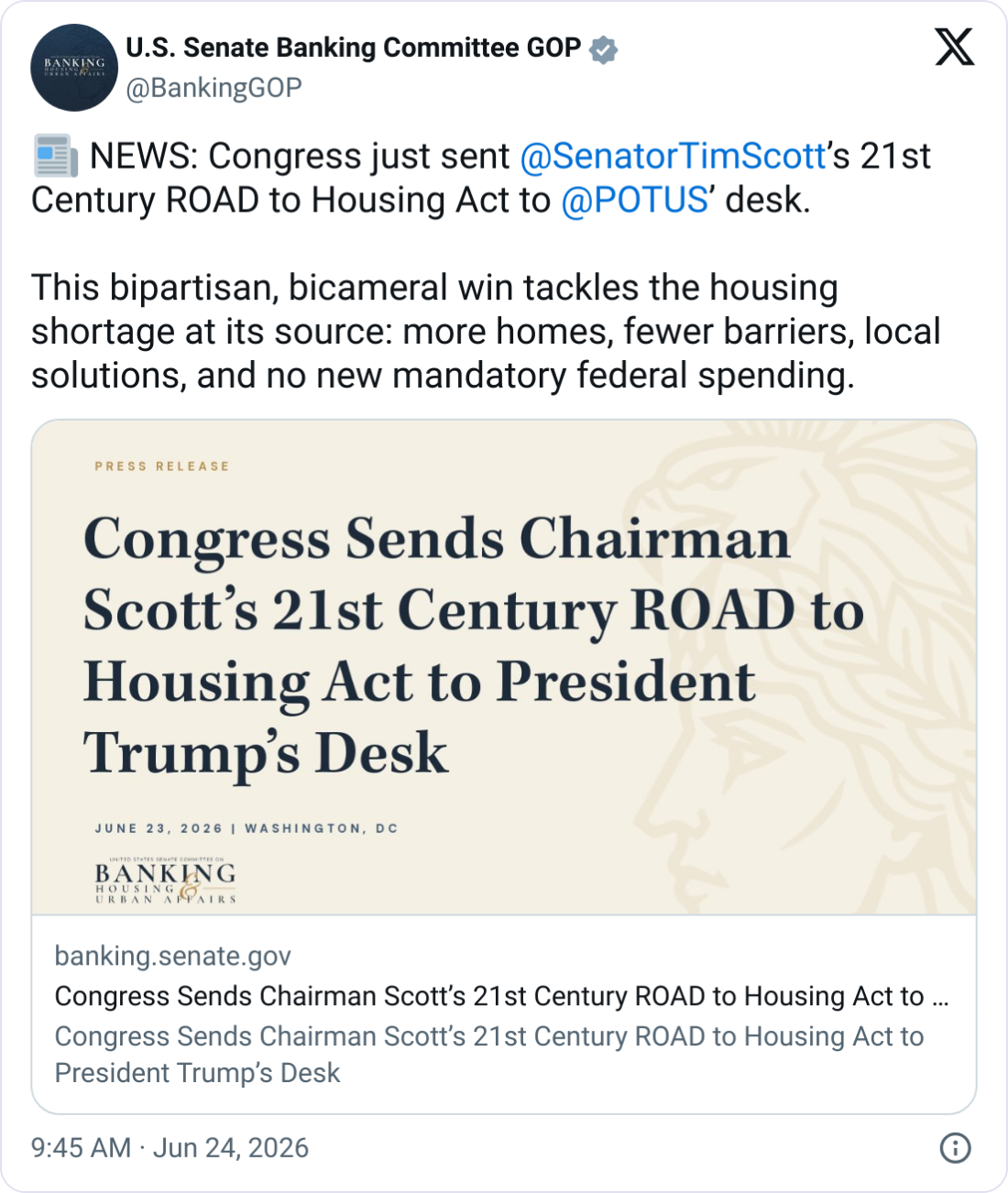
The House voted 358-32 on Tuesday to pass the 21st Century ROAD to Housing Act, a day after the Senate voted 85-5 to pass the bill, which largely aims to tackle housing affordability. The bill now heads to US President Donald Trump, who has signaled support for the measure and is expected to sign it into law on Wednesday.
“Today, Congress delivered a major win for families working toward the American Dream,” said Senate Banking Committee Chairman Tim Scott. “I look forward to President Trump signing it into law.”
CBDCs are a representation of fiat currency issued by a central bank on a ledger. The signing of the bill will be a win for Republicans who have tried to pass a CBDC ban for years, and for crypto advocates who see CBDCs as an attempt to repurpose technology made for decentralized assets into a centrally controlled asset.
The housing bill includes language that the Federal Reserve may not, directly or indirectly, “issue or create a central bank digital currency or any digital asset that is substantially similar to a central bank digital currency,” a clause that expires on Dec. 31, 2030.
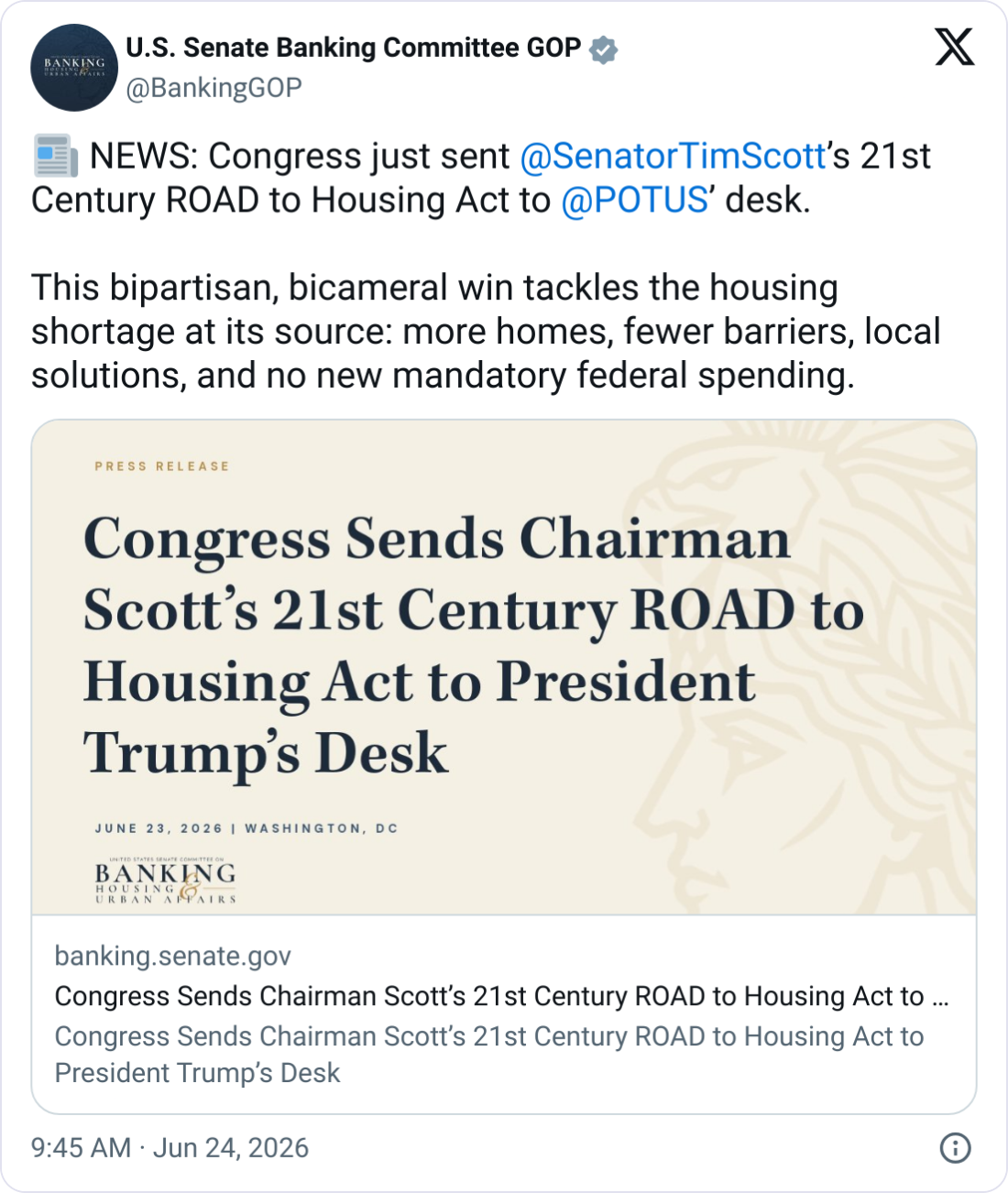
Source: US Senate Banking Committee GOP
The bill’s quick passage comes after House and Senate leaders reached a deal to move forward with the housing bill last week, after previously disagreeing over multiple aspects of the legislation.
The bill has included the CBDC ban since the Senate passed a version of it in March. It also features a carve-out for crypto stablecoins, allowing “dollar-denominated currency that is open, permissionless and private.”
The CBDC ban revived language from Republican Representative Tom Emmer’s Anti-CBDC Surveillance State Act. That bill was introduced in June 2025 and passed the House a month later, but it never saw movement in the Senate.
Related: Crypto lobby urges Congress to pass staking and mining tax bill as is
With the bill off lawmakers’ agenda, Congress can now focus on passing other legislation before the August recess and the November midterm elections.
One bill that has garnered particular interest is the Senate’s crypto market structure bill, dubbed the CLARITY Act, which many lawmakers have been pushing to advance.
Despite months of talks between lawmakers and crypto and banking lobbyists, the CLARITY Act is still seeing pushback, and the odds of it being passed this year have slipped.
Earlier this month, Galaxy Digital lowered its estimate of the Senate passing the bill before the end of the year, giving it a 60% chance as the congressional calendar tightens.
Magazine: How crypto laws changed in 2025 — and how they’ll change in 2026


Synthetix founder Kain Warwick has acknowledged that sUSD has been depegged for over a year, taken personal responsibility for treasury mismanagement, and published a detailed thread this morning explaining the path forward: winding down the SNX-backed stablecoin and replacing it with a… Read the full story at The Defiant


BlackRock has renewed its view that Bitcoin can sit inside some investment portfolios as a small complementary diversifier.
Summary
- BlackRock says Bitcoin may diversify portfolios when exposure stays near 1% to 2% overall levels.
- The firm warns larger allocations may raise portfolio risk because Bitcoin remains highly volatile.
- Related ETF coverage shows BlackRock keeps building products around Bitcoin exposure and income strategies.
The firm said Bitcoin’s role is changing as more investors study its supply, demand, adoption path and place beside traditional assets.
“Bitcoin’s role in portfolios is evolving, and it could be considered a complementary diversifier,” said BlackRock. The asset manager said a typical 1% to 2% allocation may support return potential while keeping risk within a suitable range.
The 1% to 2% range reflects risk limits
BlackRock’s view does not present Bitcoin as a core holding for every investor. Its research says the asset still carries high volatility, unstable correlations and adoption risk. A larger position may raise total portfolio risk beyond what many investors can accept.
The firm uses a risk budgeting approach when sizing Bitcoin exposure. In a 60/40 portfolio, BlackRock said a 1% to 2% Bitcoin position can add risk at a level similar to one large technology stock. The firm warned that going above that range can make Bitcoin a bigger driver of portfolio swings.
ETF growth keeps BlackRock near Bitcoin demand
BlackRock’s comments come as the firm keeps expanding Bitcoin-linked products. Its iShares Bitcoin Trust remains one of the largest spot Bitcoin ETFs, and the company has added new products for investors who want different ways to access Bitcoin exposure.
As previously reported by crypto.news, BlackRock launched the iShares Bitcoin Premium Income ETF on Nasdaq in June. The fund holds Bitcoin exposure mainly through IBIT and sells call options to target a 15% to 25% annual yield paid through monthly distributions.
The product does not offer the same return profile as spot Bitcoin. It seeks income from option premiums while keeping partial upside exposure to Bitcoin’s price. That structure may suit investors who want Bitcoin-linked income, but it can limit gains during sharp rallies.
In a recent update, crypto.news covered BlackRock’s earlier filings for the Bitcoin income ETF. The product showed how traditional asset managers are shaping crypto access through regulated funds rather than direct token custody.
Recent market moves add caution
BlackRock’s portfolio message also arrives after a volatile period for U.S. spot Bitcoin ETFs. As crypto.news reported, Bitcoin ETFs saw a 13-day outflow streak from May 15 to June 3, draining about $4.37 billion from the sector.
That outflow run showed that ETF demand can shift fast when markets weaken. BlackRock’s own research also says Bitcoin has seen deep drawdowns over its short history, including drops of 70% to 80% from peak to bottom.
Still, the firm continues to describe Bitcoin as different from many traditional assets. BlackRock says its fixed supply and adoption-driven value path set it apart from stocks and bonds. The firm also says investors should review the asset with caution because future adoption remains uncertain.
For portfolio builders, the message is narrow. BlackRock is not calling for large Bitcoin holdings. It is saying that a limited allocation may fit some investors who understand the risk, accept price swings and want exposure to a digital asset that moves on different drivers.
AI agents can now access 0x Protocol's Swap API by paying $0.01 per request in USDC from their own wallets, with no API key or account setup required. The integration, built with Alchemy AgentPay, runs on the HTTP 402 standard and extends the protocol's DeFi liquidity aggregation to autonomous… Read the full story at The Defiant
South Korea’s KG Group is pursuing a Solana-based digital asset payments network following KG Financial’s strategic MOU with the Solana Foundation. The deal targets stablecoin settlement across the group’s merchant network.
The move adds to a fast-growing list of Korean financial players exploring public-chain settlement behind regulated commerce.
What the KG Group and Solana Partnership Bring
A digital asset payments network is an infrastructure layer that uses blockchain rails to settle transactions in stablecoins or tokenized money. KG Financial, formerly KG Mobilians, is now building exactly that with the Solana Foundation across the South Korean retail commerce sector.
The agreement formalizes work that has been running since April. Both parties have already completed joint proof of concept projects covering stablecoin issuance and real-world payment services. As a result, KG Financial concluded the model is both commercially viable and technically feasible across the board.
Follow us on X to get the latest news as it happens
The signing took place at KG Tower in Jung-gu, Seoul. Solana Foundation President Lily Liu and KG Financial CEO Yoo Seung-yong led the ceremony alongside senior officials. Furthermore, the event marked one of the most concrete Solana partnerships involving a major Korean payments group to date.
KG Group brings significant scale to the deal. The conglomerate operates affiliate KG Inicis, a leading payment gateway with deep reach across Korean online commerce. Moreover, the broader KG payments network covers roughly 220,000 active merchants spread across multiple retail and digital channels nationwide.
The MOU outlines several specific areas of focus. Both sides will jointly develop stablecoin-based payment and settlement systems. Furthermore, the agreement covers the creation of digital payment service proofs of concept and the integration of Solana with existing regulated PG services and prepaid card platforms.
Toss Bank Will Test Solana for Cross-Border Payments
The KG Group news lands days after Toss Bank signed its own MOU with the Solana Foundation. The country’s first internet-only bank to formally partner with Solana is now testing stablecoin-based international remittances directly inside a regulated digital banking application.
That earlier agreement covers a phased proof of concept for cross-border remittances and broader blockchain settlement work. Furthermore, Toss Bank serves roughly 15 million customers, giving Solana direct exposure to one of the largest digital banking platforms operating across the Korean financial ecosystem today.
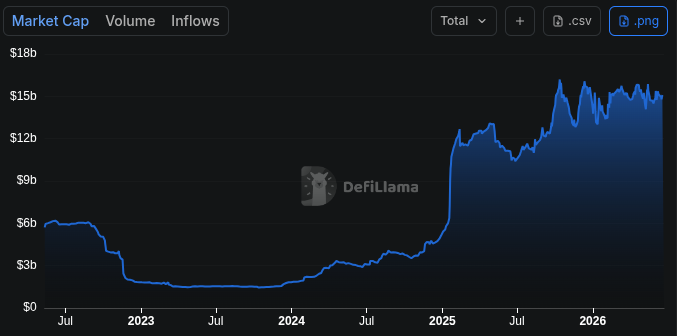
Solana brings real depth to the table. According to DeFiLlama, the network now hosts roughly $15.21 billion in stablecoin market cap, with USDC accounting for around 48% of that. Furthermore, that figure represents nearly 5% of the total $309 billion global stablecoin market, according to CoinGecko data.

Toss Bank already runs a live international remittance product launched in January. The service supports seven currencies across 30 countries. As a result, blockchain settlement must improve something concrete within the existing service, such as costs, speed, or operational reliability for the bank.
The two deals together paint a clear picture. Korean financial groups are now openly testing whether Solana can sit safely behind regulated banking apps, payment gateways, and merchant networks across a wide range of consumer-facing financial products in the country.
Subscribe to our YouTube channel to watch leaders and journalists provide expert insights.
The post South Korea’s KG Group Picks Solana to Roll Out a Digital Asset Payments Push appeared first on BeInCrypto.
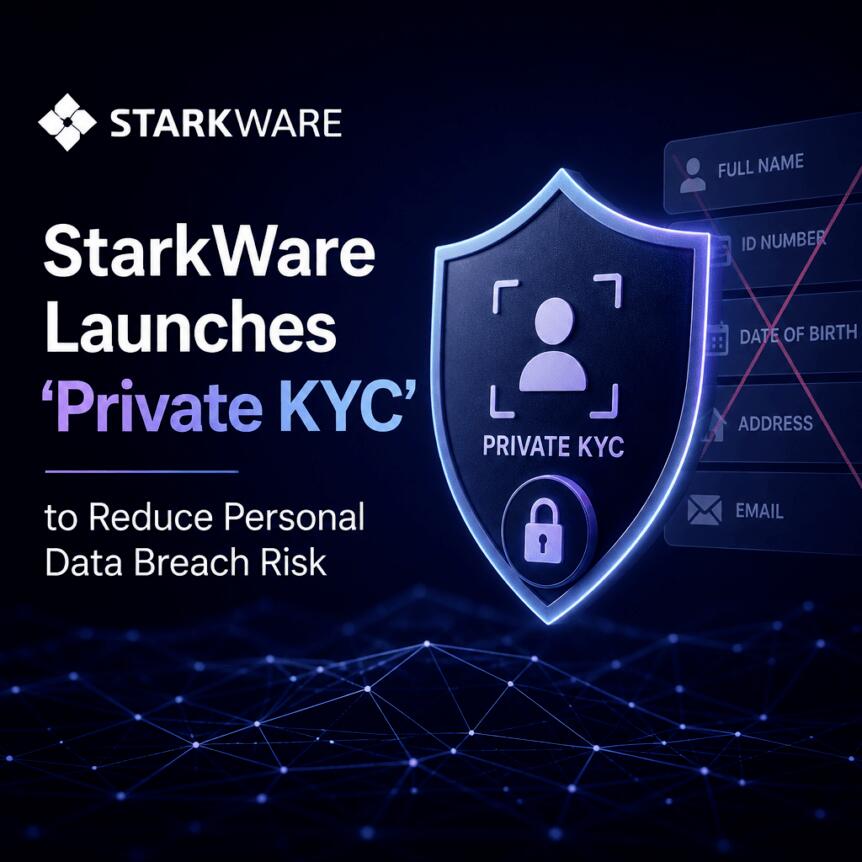
StarkWare has unveiled a demo of “Private KYC” for Starknet, aiming to let users satisfy know-your-customer requirements without handing over complete identity documents. The privacy-focused system is built around selective disclosures using zero-knowledge proofs, designed to confirm specific facts—such as age or credential validity—while keeping the underlying personal data hidden.
In the announcement, StarkWare said the approach uses STRK20 privacy features alongside zero-knowledge STARK proofs. The goal is to reduce the amount of personal information organizations need to collect and store, addressing a core vulnerability of today’s compliance workflows: once large identity databases exist, they become high-value targets.
Key takeaways
- Starknet Private KYC is designed to verify specific attributes (e.g., “over 18” or “credential is valid”) rather than reveal full passport details.
- The demo relies on zero-knowledge STARK proofs so verifiers can confirm eligibility without viewing the underlying identity data.
- User-side steps include scanning a passport and proving eligibility via encrypted data registered on-chain.
- StarkWare frames the release as proof that compliance and privacy do not have to conflict—particularly by limiting how much identity data institutions store.
- The model is positioned as a contrast to biometric verification approaches that drew criticism for centralized custody concerns.
Selective identity checks on Starknet
Traditional KYC typically requires users to provide full documents, after which institutions must store and safeguard sensitive information. StarkWare argues that this “all-or-nothing” data exchange is unnecessary when regulations often require confirmation of only one or a small set of facts.
Under the proposed flow, users begin by scanning their passport using a smartphone camera and the device’s NFC chip to read and confirm the document is genuine and signed by the issuing authority. After that, users encrypt identity data to their Starknet wallet, register relevant attributes in a public on-chain registry, and submit zero-knowledge proofs for targeted checks.
Crucially, verifiers are able to validate eligibility by consulting the public registry and checking the proofs—without accessing the actual identity data itself. StarkWare described the principle this way: verification should “only confirm the precise fact,” such as meeting an eligibility rule, rather than expose the complete document.
StarkWare also warned that institutions collecting full identity information can create long-lived risk. In its framing, “every identity database becomes a liability the moment it exists,” underscoring why limiting what’s stored matters for both security and compliance.
How the demo’s privacy design works
StarkWare presented Private KYC as a demo rather than a fully deployed feature set, but the workflow outlines a practical mechanism for privacy-preserving verification on a public blockchain environment.
First, passport data is used locally during the scan and authenticity confirmation step. Next, identity data is encrypted and tied to a user’s Starknet wallet, reducing the likelihood that raw documents or complete personal records need to be transmitted to every counterparty.
Then, instead of sharing full documents for each verification request, users register attributes in a public on-chain registry and produce zero-knowledge STARK proofs for the specific statements that need to be checked. Starknet’s team said current identity checks often “ask for your whole document when they only need one fact,” and the architecture is intended to align the system’s disclosure level with the actual compliance requirement.
StarkWare’s core argument is that verification can be structured so institutions confirm what they need without building their own copy of someone’s identity. The company said this approach avoids creating another dataset that organizations would then have to defend.
Why KYC privacy is gaining momentum
The push for privacy-preserving verification comes as cyber risk continues to rise. The article accompanying the announcement cited StationX data suggesting the US reached a record 3,322 data compromises in 2025, representing a 79% increase over five years. It also referenced a global average data breach cost of $4.4 million, as reported by StationX in that same context.
On top of broad data-breach statistics, the wider compliance landscape is increasingly shaped by the reality that sensitive records—especially identity and credential data—attract attackers. StarkWare’s positioning is therefore less about cryptography as an abstract concept and more about changing the practical incentives for collecting and storing identity information.
The company’s approach also reflects an important asymmetry in today’s KYC systems: users often have little control over how many parties repeat collection, how long records are retained, or what security standards are used. Private KYC, as presented, aims to reduce those risks by limiting disclosure to what is necessary for eligibility decisions.
In the crypto ecosystem, there is also an example of the consequences of custody and centralization in privacy-adjacent identity systems. StarkWare compared its direction to Sam Altman’s World ID, which uses zk-proofs to verify humanness via iris scans on hardware orbs. However, World ID drew backlash over centralized biometric custody. StarkWare’s “self-custody” framing is intended to address similar concerns by avoiding the same custody pattern for biometric-style data.
What to watch next for Starknet’s Private KYC
Private KYC on Starknet is positioned as a step toward compliance-ready verification that protects sensitive personal details, but the demo nature of the announcement means implementation details and rollout timing remain unclear. Investors and builders should watch for when and how the proofs, on-chain attribute registries, and verifier tooling are integrated into real-world applications—especially those that need auditable eligibility without repeated exposure of full documents.
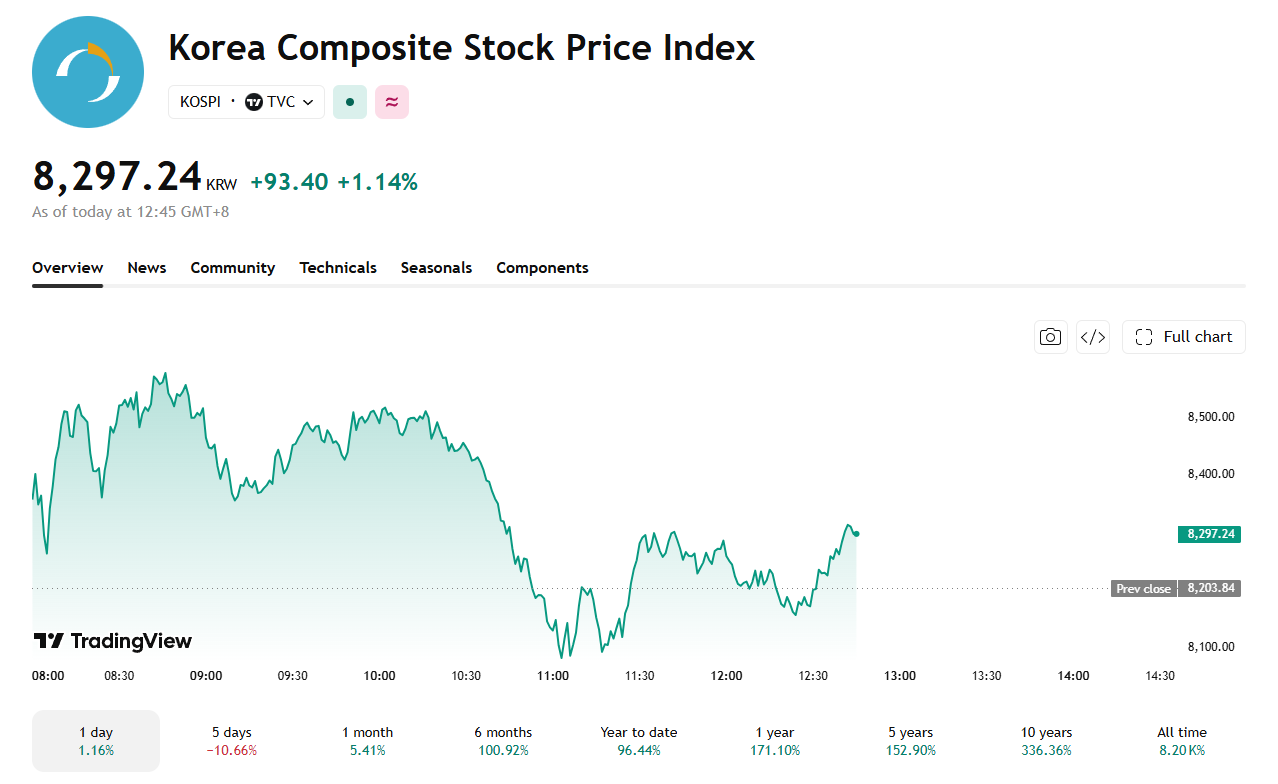
South Korea’s KOSPI opened sharply higher on June 24 after the previous session’s 10% crash, but the recovery quickly ran out of steam. SK Hynix shed further ground while Samsung held relatively steady, and the index retreated toward the 8,300 level.
The initial bounce drew in retail and institutional bargain hunters, but sellers returned fast. With Micron Technology’s earnings due after the US close, traders appear unwilling to hold positions.
The Bounce That Didn’t Stick
The KOSPI opened at 8,356.79, up 1.86% from Tuesday’s close of 8,203.84, and briefly extended as high as 8,543.68, a gain of over 4%. That move faded. The index has since pulled back to 8,297, trimming the day’s gain to around 1%.

The divergence between South Korea’s two biggest chipmakers tells a clearer story. Samsung Electronics held relatively firm, trading around 322,500 won, still up on the day, but well off the early 7% surge. SK Hynix reversed course more sharply, falling to 2,467,000 won after earlier trading near 2,653,000 won. That reversal puts SK Hynix back in the red for the session.
The KOSDAQ also opened higher but has given back much of its early advance.
Sellers Return Before Micron
Tuesday’s crash erased weeks of gains in a single session. The KOSPI, which had closed at a record high of 9,114.55 the previous day, finished Tuesday at 8,203.84, down 910.71 points, or 9.99%. Samsung Electronics and SK Hynix both slid around 12%. The Korea Exchange activated a circuit breaker at around 2:33 p.m., halting trading for 20 minutes.
Wednesday’s early jump looked like classic post-crash position covering. Retail investors and institutions bought the dip while foreign investors stayed net sellers. Kiwoom Securities researcher Han Ji-young had said the market would open higher on technical buying once investors priced in the US semiconductor selloff — and it did. But holding those gains is proving harder.
“With the view that the sharp drop in semiconductor stocks in the U.S. market has been priced in, Korea’s market will open higher on technical buying after the previous day’s plunge and work to recoup the prior losses.” — Han Ji-young, Kiwoom Securities
SK Hynix’s steeper reversal reflects the stock’s specific vulnerability. The chip stock had overtaken Samsung as South Korea’s most valuable listed company earlier this month, powered by its dominance in High Bandwidth Memory. That premium makes it more exposed when AI chip sentiment turns.

Korea’s failure to secure a place on the MSCI Developed Markets Index watch list drew little market reaction — analysts treated it as an expected outcome after a negative accessibility review last week.
Micron Technology reports earnings after the US close on June 24. The result and its guidance on memory chip demand will set the tone for Samsung, SK Hynix, and Kioxia heading into the rest of the week. A strong Micron print could stabilise sentiment. A miss risks extending Tuesday’s selloff into a second wave.
The post KOSPI’s Recovery Fades as Early Gains Evaporate from SK Hynix appeared first on BeInCrypto.
Olympic skier and gold medalist Bode Miller arrested on drug possession charges

Financial Audit Guest Weighs 300 Pounds

BBC Breakfast shake-up as host Jon Kay issues urgent ‘risk to life’ warning


-

 Fashion5 days ago
Weekend Open Thread: Miami – Corporette.com
-

 Entertainment3 days ago
Renter of Home in Anne Heche Crash Denies Settlement With Son
-

 Tech2 days ago
Microsoft accidentally kills epic Outlook email threads
-

 Business3 days ago
Soccer-U.S. defends Iran World Cup travel restrictions, says discussions ongoing
-
Crypto World3 hours ago
Bitcoin (BTC) Dips Below $62K, Ethereum (ETH) Plunges 6% Daily: Market Watch
-
 Sports12 hours ago
Two goals and an assist by sheer aura: Cristiano Ronaldo just entered the World Cup chat
-

 Politics5 days ago
BBC Reporter Discusses Cross Party Criticism Of Trumps Iran Deal
-
 Business4 days ago
Wall Street Week Ahead: Investors see Micron earnings as pulse check of AI rally momentum
-
Business6 hours ago
Entergy settles forward sale agreements, raises $672 million in cash proceeds
-

 Politics4 days ago
Andy Burnham and the meaning of Makerfield
-

 Tech6 days ago
AWS enters the context layer race with a graph that learns from agents, not manual curation
-
 Crypto World4 days ago
Can Charles Hoskinson Really Rescue Cardano?
-

 Crypto World4 days ago
HIVE shares jump as $220M AI deal speeds Bitcoin mining pivot
-

 Crypto World4 days ago
Jake Chervinsky accuses CME of protecting derivatives monopoly
-

 NewsBeat5 days ago
Keir Starmer Allies Question His Chances For No 10
-

 Tech1 day ago
Nearly 7,000 fake Amazon domains registered ahead of Prime Day 2026, researchers warn
-

 Business5 days ago
Brexit cost 6% of UK economy, Bank of England company data suggests
-

 Sports5 days ago
FIFA World Cup 2026: Canada beat 9-men Qatar 6-0 to register first ever win | FIFA World Cup 2026
-
 Tech3 days ago
Signal’s Meredith Whittaker says AI chatbots ‘are not your friends’ and calls Copilot agents a backdoor
-

 Entertainment4 days ago
Jose Alvarado Wants Taylor Swift at More Knicks Games
You must be logged in to post a comment Login