
CryptoCurrency
zKYC Privacy-Preserving Integration in White-Label Crypto Neo Banking

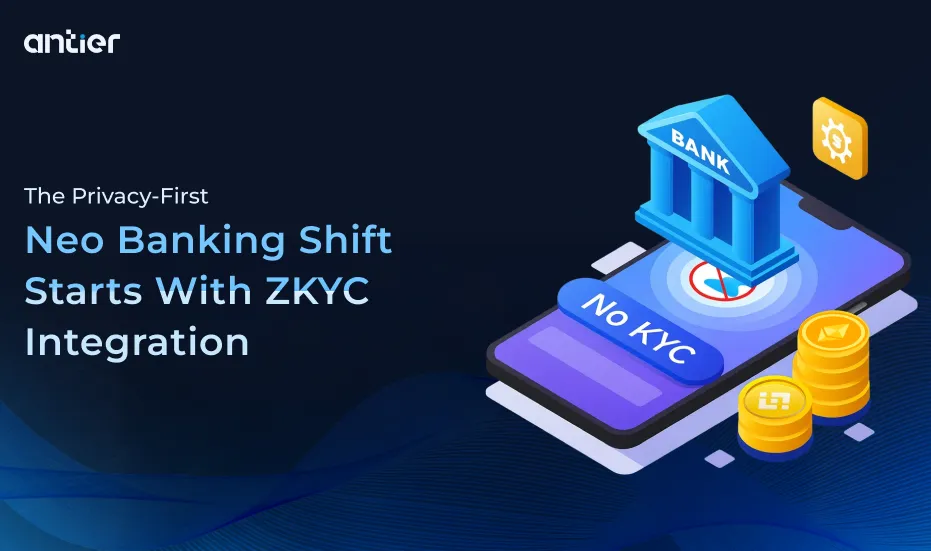
Before you start wondering about the next step to zKYC privacy preserving, let us first help you get a clear picture of what it actually is and how it is transforming the complete web3 fintech arena. Privacy-preserving KYC, often called zKYC, uses zero-knowledge cryptography so users can prove identity attributes without handing over raw personal data. For enterprises with white-label crypto neo banks, this is a game-changer. It keeps onboarding smooth and compliant while dramatically lowering data-breach risk and regulatory exposure. Customers gain control of their credentials, businesses reduce repeated KYC friction and operational costs, and regulators receive verifiable attestations without excess data sharing. As Web3 moves toward verifiable credentials and self-sovereign identity, integrating zKYC in crypto-friendly neo banking is no longer optional. It is the design pattern that balances user privacy, legal requirements, and a seamless user experience that enterprise clients expect from production neo banking solutions.
Current Market: Privacy-Preserving KYC & Identity Trends
The market for digital identity and privacy-preserving verification is moving from niche research into measurable commercial adoption. In 2024, the broader digital identity solutions market was estimated at USD 39.07 billion and is expected to grow strongly over the coming decade, driven by demand for secure, reusable credentials across finance, government, and commerce. Within that space, privacy-enhancing technologies, which include zero-knowledge proofs and related tooling used for zKYC, were valued at roughly USD 3.12 billion in 2024 and are forecast to expand rapidly, with CAGRs above 20 percent as enterprises adopt data-minimization and privacy-by-design approaches.
Adoption is no longer just theoretical: major infrastructure players and incumbent banks are prototyping and shipping verifiable credential solutions, and projects such as Polygon ID are positioning short-lived, verifiable KYC credentials as production-ready tools for compliant onboarding, signaling finance’s shift from research to practical integration. At the same time, Web3-native fintechs and enterprises with customized BaaS platforms are launching live pilots and integrations that pair zero-knowledge verification with existing banking rails to enable onramps, card issuance and KYC-gated services while keeping user data private; these pilots demonstrate clear commercial models for zKYC in real banking workflows and show growing interest from both enterprise customers and retail users seeking privacy-preserving, friction-light onboarding.
Perks Of Integrating zKYC Into a White-Label Crypto Neo Bank App
1. Stronger privacy, lower liability – Users keep raw PII off your servers while you obtain cryptographic proof that they meet regulatory checks. This reduces your data breach surface and compliance exposure.
2. Better conversion and user experience – Reusable, verifiable credentials mean customers do not repeat full KYC on every partner, lowering friction and increasing onboarding conversions for enterprise clients.
3. Regulatory compatibility with less data sharing – zKYC enables auditors and compliance teams to verify required attributes without seeing extraneous personal data, helping reconcile privacy with AML/KYC obligations.
4. Cost efficiency and operational scale – Once verifiable credentials are issued, KYC refreshes are faster and cheaper, and third-party credential issuers can shoulder expensive document checks.
5. Differentiation for enterprise customers – Offering zKYC on a white-label neo banking platform becomes a strong enterprise sales argument for customers who need both compliance and privacy guarantees.
6. Interoperability and business models – Short-lived and portable credentials enable new B2B revenue streams, such as credential issuance as a service, delegated verification, and pay-per-refresh models.
Core Features Of a zKYC-Integrated White Label Neo Banking Solution
- Verifiable credential issuance and verification – Support for blockchain-anchored or DID-based credential issuance and verifier flows for zero-knowledge proofs.
- Selective disclosure and attribute proofs – Users can prove single attributes, for example, age or residency status, without disclosing full documents.
- Short-lived, refreshable credentials – Credentials that expire or refresh on demand to meet AML refresh windows and to reduce stale attestations.
- Issuer/verifier role management – Clear separation between KYC issuers (trusted identity providers) and service verifiers (your neo bank and partners), with an audit trail.
- SDKs and APIs for native UX – Mobile and web SDKs that embed zKYC flows into onboarding, card issuance, fiat onramp, and privileged services.
- Consent and privacy controls – Transparent consent screens, revocation mechanisms, and local storage of proofs to align with privacy regulations.
- Regulatory audit mode – Tamper-evident logs and selective audit disclosures for compliance teams that need to verify processes without accessing raw PII.
- Interoperability with standards – Support for W3C Verifiable Credentials, DIDs, and major ZKP stacks to maximize ecosystem compatibility.
- Secure key management and recovery – Wallet-style key custody options, enterprise key management integration, and delegated recovery flows.
- Fraud detection and anomaly signals – Combine zKYC attestations with behavioral signals and AI risk scoring to detect synthetic identities without exposing PII.
Launch Your Privacy-Verified White Label Neo Bank App in Just a Few Days!
Advanced Features of Customized Neo Banking App With zKYC
1. zKYC-Gated Debit and Virtual Card Issuance
Card networks, virtual crypto cards, and spend controls are tied to zero-knowledge identity validation, ensuring instant issuance without exposing raw identity documents. This supports:
- on-chain to fiat spend bridges
programmable spending limits - AML-trigger-based card freeze without sharing PII
2. Stablecoin Yield Accounts with Privacy-Verified Eligibility
Users access yield programs only after completing zKYC attribute checks (e.g., residency, jurisdiction) without disclosing their full passport or national ID.
This protects custodians while enabling:
- USDT, USDC, EURC yield accounts
- daily payout visibility without AML data exposure
- compliant jurisdiction-based participation
3. AI-Driven Cashback & Reward Intelligence
Cashback multipliers and campaign eligibility are verified via zero-knowledge proofs so users qualify for card rewards without sharing sensitive socioeconomic data.
AI personalizes:
- category-based cashback (travel, fuel, entertainment)
- loyalty boosts based on anonymized usage clusters
- risk-adjusted reward tiers without profiling raw identity
4. zKYC-Verified Staking Entry
Staking access is determined through proof-based identity checks:
- age, region, high-risk country filter, source-of-funds signal
No full identity file submission is exposed to the staking validator.
This unlocks: - ETH, TRX, MATIC staking
- reward dashboards with risk-neutral compliance
- reversible staking with proof-based exit validation
5. On-Chain Swap Desk with Proof-Based Compliance
zKYC verifies who is eligible to swap, not what their identity documents are. Ideal for:
- stablecoin ↔ fiat ramps
cross-chain swaps via DEX aggregators - travel rule proof attestation without disclosing KYC files
6. Stablecoin Treasury Wallets with zKYC Credential Controls
Corporate and institutional stablecoin flows (salary, settlements, card funding pools) require credential proofs rather than vaulting identity records. Treasury gets:
- protected transaction approvals
- AML-screened participants without storing passports
- compliance audits with proof-only verification
7. AI Risk Models Running on Zero-Knowledge Signals
Behavior scoring is trained on transactional proof patterns vs raw PII. System analyses:
- abnormal Spend-to-Yield behavior
- sudden withdrawal anomalies
- card fraud vectors within privacy-legal limits
8. Cashback on Stablecoin Spending
As stablecoin settlement grows, cashback attached to stablecoin card spending is now one of the strongest growth hooks:
- stablecoin-linked merchant rebates
- non-PII reward qualification logic
- privacy-preserving loyalty points clearing
9. Multi-Currency Card Settlements with zKYC
Stablecoin-to-fiat conversion for card spending auto-validates via proofs:
- zero FX exposure leakage
- identity attributes confirmed without document reveal
- selective residency proofing for currency corridor access
10. Yield and Cashback Fusion Model
This is the newest retention model:
- Card spending generates points
- points convert directly to stablecoin yield multipliers
- eligibility gated by proof-only KYC credentials
Always ensure that you partner with the right digital banking development company to acquire all the advantages successfully and launch a compliant and feature-rich banking solution in this highly competitive Web3 market.
Wrapping Thoughts
As the digital finance ecosystem continues to expand, one thing is becoming increasingly clear: users want seamless access to banking services without feeling watched, profiled, or overexposed. When zKYC is applied correctly, it allows banks to verify trust without demanding every detail of a person’s identity, and that balance is exactly what modern crypto-native customers respond to.
This is where the right technology partner makes all the difference. Choosing a white label crypto bank development company that understands both the cryptography and the compliance landscape is essential. At Antier we combine deep blockchain engineering, AI-driven risk analytics, wallet architecture and neo bank integrations to deliver turnkey zKYC solutions that are production ready. Our team builds verifiable credential flows, secure key management, and compliance wrappers that help enterprises deploy privacy-preserving onboarding without sacrificing regulatory controls. If you want a demo, integration plan or migration roadmap tailored to your stack, we can help you design and deploy it end to end.
Frequently Asked Questions
01. What is zKYC and how does it benefit users and businesses?
zKYC, or privacy-preserving KYC, uses zero-knowledge cryptography to allow users to prove their identity attributes without sharing raw personal data. This benefits users by giving them control over their credentials, while businesses experience reduced KYC friction and operational costs, and lower data-breach risks.
02. How is the market for privacy-preserving KYC expected to grow in the coming years?
The digital identity solutions market, including privacy-preserving verification, was estimated at USD 39.07 billion in 2024 and is projected to grow significantly over the next decade, driven by the demand for secure, reusable credentials across various sectors.
03. What are some practical applications of zKYC in the financial sector?
zKYC is being integrated into crypto-friendly neo banking solutions, enabling compliant onboarding, card issuance, and KYC-gated services while maintaining user data privacy. Major banks and fintechs are already piloting these solutions, demonstrating their commercial viability.



