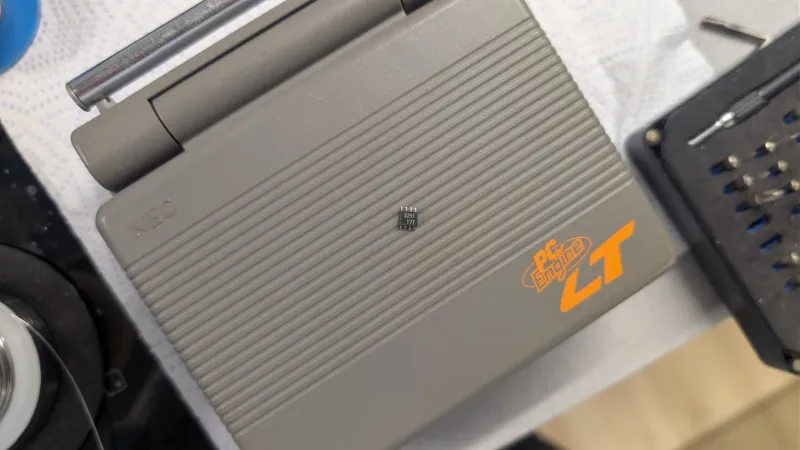
One of the delights of our tips line is that from time to time it brings us retrocomputing hardware that, despite years of reporting, we were not aware existed. [Hitmanmcc] has just such a machine, an NEC PC Engine LT. It’s a PC engine in a laptop form factor, and like many of this super-rare console, it has succumbed to capacitor failure. We’re treated to the process of bringing it back to life.
Replacing capacitors was only part of the story for this repair, as the electrolyte had caused damage elsewhere on the board. In particular there is a small transformer that forms part of an inverter to generate an LCD bias voltage, and this had been destroyed. Fortunately the art of switching power conversion has advanced in the decades since the console was produced, and a small module was procured to do the same job.
The result of all this surgery is another rare console rescued from e-waste, and an opportunity for the rest of us to take a look too. The PC engine is a relative rarity here, but we’ve had a few hacks over the years. This converter for its American cousin is one.
In a sign of the times, Firefox’s New Tab page could soon include a crossword puzzle from AI-powered news platform Particle. The blog OMG Ubuntu reports:
The mini crossword game is updated daily, with puzzles based around recent content Particle’s AI has ingested and summarised that day. [After solving the crossword, links appear to related news articles…] If you just want to try the crossword, you access it in any browser via a direct link.
While it may look like Mozilla is trying to capitalise on the Wordle craze several years too late, it’s part of its strategy to make the Firefox new tab page a discover destination in itself, not just a springboard for new searches. The ‘Daily Grind’ crossword widget (name subject to change) is just one of several widgets Firefox has (or will get). You’ll also find a to-do list, timer, stock checker, world clock, picture of the day, privacy report and new-look weather widget (bigger than the existing one). During the World Cup 2026, Firefox offered real-time match scores and fixture information too…
[T]hey aren’t mandatory. You can disable the ones you don’t want to use, or, if you don’t want any at all, turn them all off to hide the widget area itself. A button to ‘show fewer widgets’ frees up room to allow other distractions (sponsored stories) on the new tab page to show… [Presumably you can also still open new tabs to a blank page…]
Advertisement
They’re rolling out to users in certain region and locales already. Plus, Mozilla routinely tests new features with a small set of users before they hit stable builds (i.e., the “Allow Firefox to run feature studies” setting). If you don’t have widgets in your Firefox build, but you want them, you can manually enable them in Firefox 153 and later from the about:config page. Search for the following master switch and set it to true to enable the widget area:
Then, enable the widgets you want to use by searching:
activity-stream.widgets.*.enabled
Advertisement
However, the usual caveats about “trying things not enabled by default” still apply. Mozilla hasn’t set a firm rollout date, though the feature is already documented on its support site. With fortnightly Firefox releases about to start, and a big Nova redesign, chances are we’ll all be puzzling over these widgets sooner rather than later.
Nearly 400 4K Blu-ray users shared info about player problems
There’s a huge gap between the best and worst in the poll
Panasonic will be happy; Sony not so much
One of the things I like best about Reddit is the way people share their experiences of particular products: whether it’s a kitchen knife, a portable AC or a Gibson guitar I know I’ll be able to find sage advice on what to buy and what to watch out for. And now the good people of r/hometheater have come together to talk about the best 4K Blu-ray players and their reliability.
The poll was carried out by r/hometheater poster “requieminadream” and generated nearly 400 responses — almost double the number of previous poll respondents — from r/4KBluray, r/Bluray, r/PhysicalMediaMatters, the AVS Forums, and the Blu-ray.com forums. And there are some very clear differences between different firms’ Blu-ray devices.
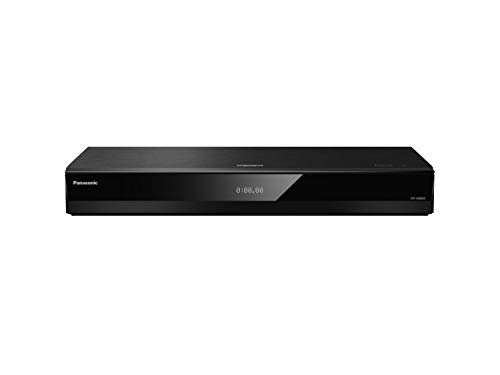
Requieminadream very kindly summarized the results in a sentence: “The Sony UBP-X700 is still the problem child, the Panasonic DP-UB820 is still champ, and the pricey UB-9000 posted the cleanest numbers (small sample though).”
Latest Videos FromTechRadar
Advertisement
But there were some interesting discoveries in the detail too, so it’s definitely worth looking at if you’re considering a pre-owned 4K Blu-ray player purchase, or just which one seems to make people the happiest long-term.
One of the reasons I like Reddit wisdom is because with few exceptions, reviewers can’t spend years with the products they test — so the reviews of my car don’t know about the software issues that drive me wild and sometimes require a reboot at traffic lights, and the reviews of my router don’t know about its tendency to misbehave every few weeks.
It’s the same with Blu-ray players: even the most in-depth review won’t be able to tell you if a player’s likely to pack up in year two or three. (Though one exception is our Panasonic DP-UB820 review, written by our TV Hardware senior writer James Davidson, because he wrote us a fresh review based on combining using it in our test room and having used it daily for several years beforehand.)
Advertisement
But in general, polls like this are a brilliant resource.
Sign up for breaking news, reviews, opinion, top tech deals, and more.
By a large margin, the Panasonic DP-UB820 is the community’s favored player: 43.4% of respondents have one, and its problem rate was around half that of the Sony UBP-X700. The rate of serious issues was very low, at just 8% — backing up what James had said, when he called it “the workhorse of the 4K Blu-ray player world”.
The “problem child” that emerged from this latest poll is the Sony UBP-X700. Of the 103 Sony users, some 77.7% reported some issues over time; recurring and/or serious issues were 23%. The number one complaint is freezing during triple-layer transitions, which is something that has long been discussed on Blu-ray forums.
Advertisement
The poll shows another interesting pattern, which is problems over time. For the Sony, issues became more common over time — but for the Panasonic the pattern was of any failures showing up early, but better long-term reliability.
The other players in the survey came in between the two extremes, but some of the best results were from “other” players including games consoles and more niche Blu-ray products.
Satisfaction with those products was exceptionally high, with the PS5 getting a significantly higher rating than the Xbox. That’s all the more striking given the Sony X700’s performance: the PS5 is a more premium product and that seems to be reflected in its reliability — alas, we shouldn’t expect any more PlayStations to arrive with a disc player.
Advertisement
I should make clear, as the original Redditor did, that in some cases the sample sizes for ownership in these polls is pretty low, so we should take the results with a pinch of salt. However, the Panasonic UB820 and the Sony X700 were the best-represented, and are the two most popular players, so their data is arguably the most useful anyway.
AI tools now record conversations without announcing themselves, and users are bringing them to dates and personal chats
A growing number of professionals have started using AI tools to record every conversation they have, and the people being recorded usually have no idea it is happening. The Wall Street Journal reported this week that apps like Granola, which transcribes meetings without deploying a visible bot or announcing its presence, have made ambient recording so frictionless that users are now bringing the technology out of conference rooms and into personal settings. The shift raises legal and ethical questions that neither the tools nor their users appear ready to answer.
Granola, which raised 125 million dollars earlier this year at a valuation of one and a half billion dollars, works by recording audio directly through the user’s device microphone rather than joining a call as a separate participant. That means no bot icon appears in the meeting and no automated message tells attendees they are being recorded. Michelle Lim, CEO of meeting software company Flint, told the Journal that she wishes Granola were running in every room she enters, a statement that captures both the appeal and the problem.
Some users have taken the concept well beyond the workplace, with Emmie Chang, founder of startup Yuzu Labs, telling the Journal she records first dates and sends the transcripts to Claude for feedback on how the conversation went. Others described recording therapy sessions, doctor visits, and casual dinners with friends, all without telling the other person. In the eleven US states that require all-party consent for recordings, including California, Florida, Illinois, and Pennsylvania, doing so without disclosure is a potential felony under state wiretapping laws.
Advertisement
The 💜 of EU tech
The latest rumblings from the EU tech scene, a story from our wise ol’ founder Boris, and some questionable AI art. It’s free, every week, in your inbox. Sign up now!
The workplace implications are already materialising. Amy Dufrane, CEO of the Human Resource Certification Institute, told the Associated Press that AI note-takers pose enormous organisational risk, arguing that companies should not use them at all. Reports have surfaced of AI notetakers remaining on video calls after employees have left, silently documenting informal conversation and gossip, and privacy law expert Alex Alben warned that automatic recording involving third parties creates liability that most users have not considered.
Researchers have raised a separate concern that goes beyond privacy, with studies on cognitive offloading finding a negative correlation between heavy AI use and critical thinking. The worry is not just that people are recording without consent, but that they are losing the ability to listen, remember, and process conversations on their own. As these tools become cheaper and more invisible, the question is no longer whether they will spread but whether anyone will bother to ask permission first.
Amazon’s weekend Apple sale is going strong, with price drops of up to $150 off Apple Watch, AirTag, and iPad devices.
Apple Watch Series 11 from $299
Save $100 on several Apple Watch Series 11 styles.
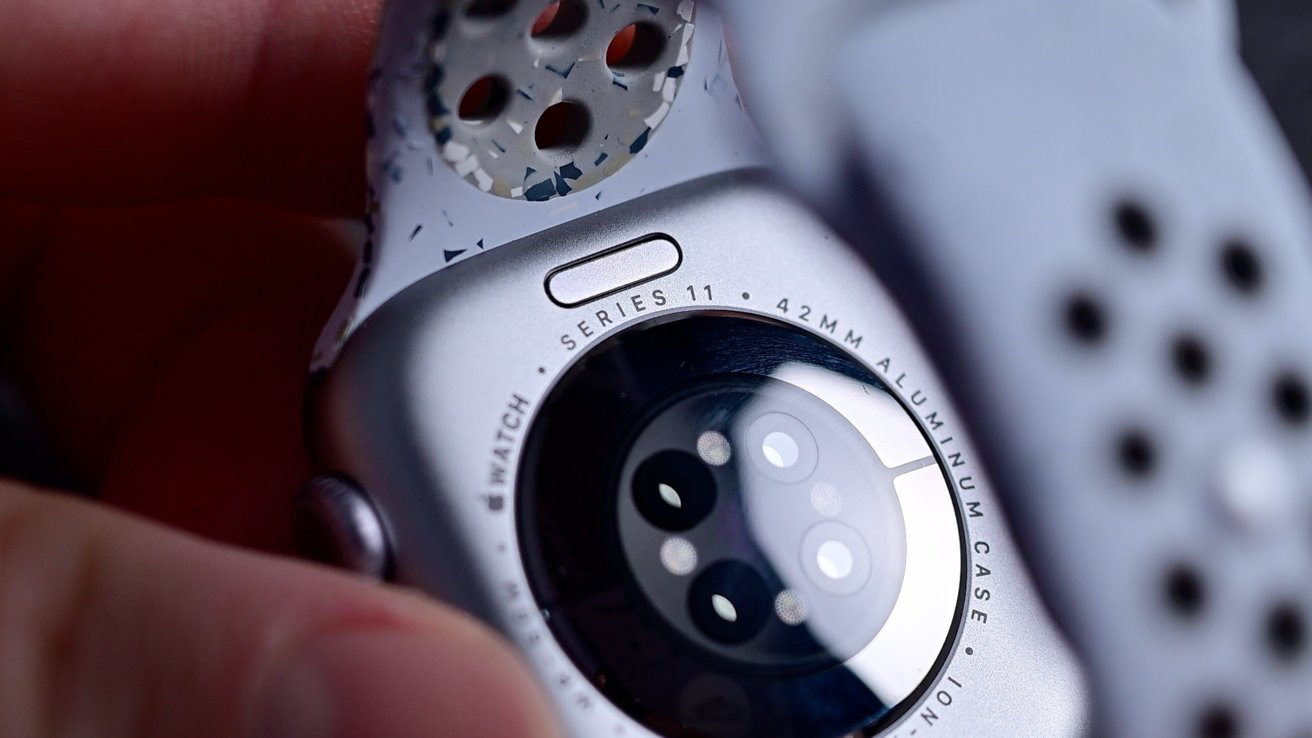
Apple Watch shoppers have plenty of reasons to take a look at Amazon, where several Series 11 styles are $100 off. The standout offer drops the 42mm GPS model to $299, within $20 of the lowest price on record.
42mm Apple Watch Series 11 deals
42mm Apple Watch Series 11 GPS (Aluminum Case, Sport Band): $299 ($100 off)
42mm Apple Watch Series 11 GPS + Cellular (Aluminum Case, Sport Band): $399 ($100 off)
42mm Apple Watch Series 11 GPS + Cellular (Titanium Case, Milanese Loop): $649 ($100 off)
46mm Apple Watch Series 11 deals
46mm Apple Watch Series 11 GPS (Aluminum Case, Sport Band): $329 ($100 off)
46mm Apple Watch Series 11 GPS + Cellular (Aluminum Case, Sport Band): $429 ($100 off)
46mm Apple Watch Series 11 GPS + Cellular (Titanium Case, Milanese Loop Band): $699 ($100 off)
Get 4 AirTags for just $89 at Amazon.
Advertisement
Amazon’s weekend AirTag sale drops the 4-pack down to $89 after a 10% discount.
The second-generation AirTag tracker builds on the original design while adding hardware improvements aimed at helping users locate lost items from greater distances. And according to Amazon, the deal is selling fast.
Today’s AirTag 2 deals
iPads from $399
Get an iPad 11 for $399 with month-end deals.
Amazon is also running discounts across Apple’s iPad line, with month-end deals delivering prices as low as $399.
A new memory cartoon is waiting for me. When I open the app, I see a multipanel strip called Big Little Moments. It appears as soon as I plug the Looki AI device back in to recharge, after almost a month not wearing it. It shows moments of me at a bar with my friend in LA, watching a stage presentation, eating a meal, seeing a demo, two women sitting across from me and then just me, walking with a phone in my hand.
These moments are from two days in June, when I wore the Looki to the Augmented World Expo in Long Beach, California. I’d been wearing it almost nonstop since April. I wore it to Apple’s WWDC, to Google I/O. I wore it to my Princeton college reunion. I wore it at home and commuting. And then I stopped.
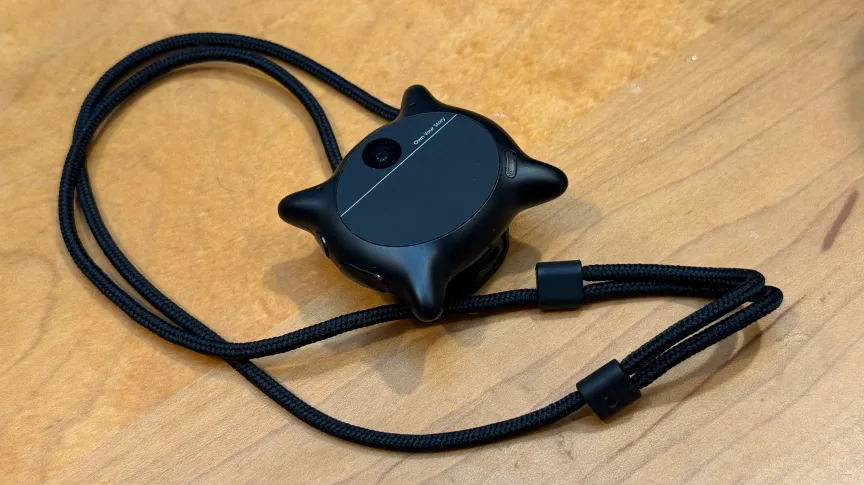
The Looki L1 is a little black pendant, sort of watch-sized, with a camera on the front and microphones hidden somewhere. It has a clip and a lanyard. It can be worn around the neck or left propped on a desk. It’s an AI wearable but, unlike smart glasses, it has a battery that can run a whole day while intermittently recording audio and video clips. My colleague Katie Collins tried it last year, but I never got to test one out until this spring and summer.
The Looki is a round-with-spiky-bits pendant with a magnetic back clasp. Buttons to trigger recordings are studded around the sides. There’s also a touchpad. (Scott Stein/CNET)
AI wearables of all shapes and forms are everywhere now. OpenAI may be next to offer one. Some of these devices come in glasses form. Some are pendants. Some are pins. Some are earbuds. As AI keeps spreading everywhere and trying to absorb more of our personal information that it can craft into patterns and narratives, wearables are the physical form of trying to give AI eyes, ears and, increasingly, memories of your own life.
The Looki device follows in a long line of lifelogging wearables that go back over a decade. In 2014, I reviewed an occasionally recording lifelogging camera called the Narrative Clip, which promised to capture our memories. I found its memory, in practice, to be full of holes. In 2026, that’s pretty much still the case.
The Looki L1 promises a fun way to remember and record life’s moments, to have a companion to travel with you and save moments without having to record them. To be an all-day wearable camera.
But when I wore one, it made me feel awkward, like I was being a jerk or a spy. At best, it’s odd; at worst, it feels like I’m a guy with, well, an always-on camera. Which, in 2026, isn’t nearly as “fun” as it was in 2014, it turns out. I tested the Looki because I was curious, and because I’m legitimately interested in the future of assisted memory tech.
What the Looki L1 is, and isn’t
Looki L1 is an odd duck product, as many AI wearables are. The $250 lifelogging camera has no subscription, although the product team I chatted with suggested that some services could be subscription-based down the road. It uses its own proprietary AI service, and can’t hook into any other platforms such as Google Gemini, ChatGPT or Anthropic’s Claude, although it borrows models from several sources.
Advertisement
I do like the snap-on magnetic pendant strap that doubles as a charging dongle and can serve as a desktop stand if you want to perch it somewhere to take photos or video. The magnetic clasp works through clothing, too, so the pendant could look like a clip-on pin. But I don’t like that the Looki’s active recording LEDs are small. They’re less noticeable than those on Meta’s glasses by far.
There’s a phone app that the Looki pairs with, just as a smartwatch or pair of smart glasses would. That’s how the pendant gets its firmware updates and uploads its recorded clips to your phone and the cloud.
Looki’s highlight video compilations feel pretty random at the events I wore them at, and of course, no one really knew I was recording. (Scott Stein/CNET)
Looki has an “AI Mode” that stays on and intermittently records short video clips (no more than about 5 seconds each), apparently picking moments of interest. In my three months of use, it didn’t seem to have any pattern. There are dedicated buttons to trigger manual audio recordings, still photos or video recordings. There’s also a front touchpad, which I could hold down to summon a voice AI to chat with for feedback on what I’d recorded, or anything else. I rarely used it.
The Qualcomm chip on the Looki is an older watch-oriented model, but it still lasts a day on a charge. The future for pendants like these is likely even longer battery life, based on the specs of Qualcomm’s newest AI-optimized chips, released this year. These types of pendants are probably going to do even more on-device without relying on the cloud at all.
But, for the most part, the Looki is a repository. It sucks up images and videos, and then syncs them over to its companion phone app (which takes several minutes) and cloud-analyzes them later (which can take up to several hours). It’s like burying a time capsule and then digging it up later that day to see what you’ve got.
Advertisement
And what did I get? Mostly a hot, sometimes fascinating, often awkward mess.
As a memory maker, full of holes
The best thing the Looki does is generate comic book-like generative AI images based on things it automatically captures. The results vary in style and structure, with absolutely no discrete controls to make anything turn into a comic if you’d like it to. You just have to get lucky, I guess.
A few images of people I met, comic-transformed, are fun. A few story panel-type comics tried to distill a day, or several days, into a narrative. Sometimes they were clever (one, a map of New York and New Jersey showing me commuting, seeing tech demos and going to a Princeton reunion) felt sharable. One, of my trip to WWDC, was weirdly focused on my pre-event breakfast with my colleague Bridget Carey rather than all the hours I wore it during Apple’s keynote, which was the whole point of the day.
Sometimes the Looki auto-inserted me into images, inventing a narrative. (Since I’m wearing the pendant, I was clearly not in the picture.) My comic portrait ranged from oddly accurate to something more like Marc Maron. One comic picture of me buying a coffee at a Hyatt was inexplicably done in Minecraft-style blocks.
As for the rest of the recorded memories? There are AI-made supercuts of videos, set to odd preselected music. The tone often felt generic, and the captured videos are frequently at bad angles. When I had coffee with friends, several of the clips were accidental crotch shots. Other times, faces were cut out of the picture. (Did I need to wear the pendant higher up?)
The Looki seems to take video clips but not photos automatically, which were harder to download and share with friends. Also, a lot of the captured clips were either too brief or the people in them were discussing things that nobody approved sharing in the first place. If you’re wearing a Looki, prepare to do a lot of warning, explaining and apologizing.
Advertisement
Do I like having them to look over? Sort of, but so few are actually good. You can just take photos and videos when you want, rather than having the intermittently recording AI mode on. But then, if you do that, the device doesn’t feel like a true lifelog.
Sadly, a lot of the captured supercuts just showed me on my phone. Which, of course, just illustrated a sad state of my own life. I am on my phone a hell of a lot. Too much. And the comics, the autocaptures, they all tended to have at least one shot capturing me looking at my phone, since the pendant was around my neck, over and over and over.
Besides keeping these lifelog videos and autocaptures and creating comic strips, it weirdly tries to analyze meals I’ve eaten (not to any true success), and also pops occasional random notifications based on location, I think, and what the camera sees. These notifications are meant to be smart and context-aware. Sometimes they’re oddly on point (telling me I’m at AWE and reminding me of the start of the opening keynote, even though I never told it I was at AWE). Other times it just noted a store or maybe someone standing nearby. Again, like everything else the Looki does, these notifications can’t be customized at all.
As a public device, it’s embarrassing
My son has told me to take off the Looki pendant more times than I can count. My wife shamed me about my decision to wear it in a Japanese supermarket (I didn’t). People who saw it at public events, like WWDC or Google I/O, were either mildly curious or mildly offput. I awkwardly took it off a lot and stuck it in my pocket on trains, in bathrooms and, increasingly, many other places.
At a Whole Foods, someone next to me noticed it as I was shopping for chocolate bars and asked if it was recording. I explained it might be and that I test tech products for my job. They said they weren’t that upset, they knew that people are wearing cameras more and more. I didn’t believe they weren’t upset. And that reaction, too, has stuck with me. I wear smart glasses at least half the time now. Where does that put me on the socially acceptable spectrum? Don’t tell me.
Advertisement
I still find smart glasses less personally embarrassing, because they look and function like actual glasses. And, in reality, Meta’s glasses very infrequently record anything. While Meta has an autocapture mode for the glasses now, running it would wear out the battery fast.
The Looki, meanwhile, does nothing at all except be a AI-enabled camera pendant on your neck. To remember to charge that up and wear it, like an odd necklace that nobody asked for… I just can’t justify it. I made myself wear it for more weeks than I thought I would. Now, it’s out of batteries and sitting in a bag somewhere. I gave up.
The Looki was really just my Memory Cartoon Generator, for the most part, as you can see from all the images I shared. They’re interesting, but I can’t choose when they happen, or how they happen. And they’re not enough to keep me wearing the Looki. As you can see above, sometimes it even captured when I went to my home bathroom. (I never kept it on in an actual public bathroom, but this is exactly the nightmare stuff that the Looki embodies.)
If devices like the Looki could be actual memory assistants, deeply aware and able to help see and guide you — Or, if they were better cameras, taking photos I’d actually use — Or, if it could hook into AI services I actually semi-trusted and recognized — well, maybe. Right now, the Looki is more like a harbinger. Of glasses that really and truly will have longer battery life, someday soon, and be able to record all day long, if intermittently. And more AI pendants.
When that day happens, then yes, maybe my glasses will truly be recording all the time. And yes, that’s concerning. But even more concerning is the lack of any tech company efforts to manage privacy and deeper control over these random AI wearables. Or to elevate them beyond just gimmicks.
Advertisement
What I learned is I hit my limit. The Looki is not on me anymore. But the spirit of the Looki is everywhere else, coming fast.
Scott Stein
Editor at Large
I started with CNET reviewing laptops in 2009. Now I explore wearable tech, VR/AR, tablets, gaming and future/emerging trends in our changing world. Other obsessions include magic, immersive theater, puzzles, board games, cooking, improv and the New York Jets. My background includes an MFA in theater which I apply to thinking about immersive experiences of the future.
See full bio
The European Commission has accused TikTok of falling short on protecting minors, saying the platform’s current account settings don’t meet the child safety standards required under the Digital Services Act (DSA). The findings are preliminary, but if upheld, TikTok could face a fine of up to 6% of its global annual revenue.
Why the EU thinks TikTok isn’t doing enough
According to the Commission, TikTok allows minors to set their accounts to public, making their content visible to anyone — including people without a TikTok account. Regulators also say that content posted by older teenagers (aged 16 and 17) can still be recommended to other users through the For You feed, increasing the risk of unwanted contact, cyberbullying, or exploitation.
Unsplash
The Commission argues that stronger privacy protections for children should be enabled by default, rather than relying on users to change their settings manually. It also wants content from minors’ public accounts to be visible only to approved TikTok followers instead of being accessible to a broader audience, while recommending that minors’ content should not appear in the For You feed for other users.
EU Executive Vice-President for Tech Sovereignty, Security and Democracy Henna Virkkunen said protecting minors online should never be optional, adding that platforms are expected to build child safety into their services by design rather than offering it as an opt-in feature.
What TikTok said
TikTok has pushed back against the findings, saying it shares the Commission’s goal of protecting young users and already offers more than 50 privacy and safety features for teens. As reported by Reuters, the company notes that accounts for users under 18 are private by default, while younger teens cannot use direct messaging and their content is not recommended in the For You feed. TikTok says it will review the Commission’s findings and continue working with regulators before a final decision is reached.
Advertisement
Bryan M. Wolfe / Digital Trends
The Commission’s announcement represents preliminary findings, meaning TikTok now has the opportunity to formally respond before the EU decides whether the company has violated the DSA. If regulators remain unconvinced, they could issue a non-compliance decision along with financial penalties. The investigation is one of several ongoing DSA probes into TikTok as European regulators continue tightening oversight of how large social media platforms protect younger users online
Canon registered three new EOS R cameras. Rumours point to a retro-styled R8 II (digital AE-1), an R7 II with Canon’s first stacked APS-C sensor, and an R10 II. All expected H2 2026.
Canon has registered three new cameras with wireless certification agencies, a step that typically signals imminent announcements. Rumours point to updates across Canon’s mid-range mirrorless lineup: the EOS R8 II, EOS R7 II, and EOS R10 II. All three are expected in the second half of 2026. The most interesting is the R8 II, which may arrive in mid-September with retro styling inspired by the Canon AE-1, a legendary 1976 film SLR that turns 50 this year.
The AE-1 was one of the most popular cameras ever made, beloved by amateur photographers for its accessible design. Nikon already proved the retro-digital formula works with the Zf, and Canon has reportedly been working on a similar concept for years. The rumoured R8 II specs include a 32.5MP full-frame sensor, 40fps electronic shutter burst, in-body image stabilisation, oversampled 4K video, and two SD card slots, up from one on the original R8. Whether the retro styling is cosmetic or extends to film-style image processing modes remains unclear.
The EOS R7 II may be more significant technically. It is rumoured to feature Canon’s first stacked APS-C sensor, a design that moves circuitry behind the sensor for faster readout, enabling higher burst speeds and blackout-free viewfinder shooting. Currently, only Fujifilm’s X-H2S offers a stacked APS-C sensor. Resolution may increase from 32.5MP to 39MP. The EOS R10 II, Canon’s beginner model, is expected with improved autofocus and a deeper burst buffer but fewer dramatic changes.
Advertisement
The 💜 of EU tech
The latest rumblings from the EU tech scene, a story from our wise ol’ founder Boris, and some questionable AI art. It’s free, every week, in your inbox. Sign up now!
None of this is confirmed. Canon has not announced anything beyond the wireless certifications. The memory crisis has pushed component costs higher across consumer electronics, and Canon’s ability to price these cameras competitively will depend on how much the DRAM shortage has affected sensor and processing costs. Apple raised iPhone 17 prices 10% in Japan due to currency and component pressure, and camera manufacturers face the same headwinds. Three registrations in one batch suggests Canon is planning a coordinated launch, not a staggered rollout. The AE-1 anniversary gives them until the end of the year to make it count.
Electrolyte powders, dissolvable tablets, and trendy ready-to-drink waters have graduated from the pockets of athletes to one of wellness’s buzziest categories.
And it’s a crowded market, worth an estimated $39 billion globally in 2025 and forecast to double within the next decade. Much of the growth has been fueled by wellness trends and influencer-fronted hype cycles, like Prime Hydration, created by YouTubers Logan Paul and KSI, which the company claimed pushed past $1 billion in sales in a single year. In other internet corners, dozens of celebrity and podcaster-adjacent brands are all promising a means of optimizing your way to hydration.
These products are marketed as daily essentials for everyone—from office workers to gym regulars—promising to combat brain fog, improve skin, banish fatigue, and aid recovery. Here’s everything you need to know about the electrolyte obsession, and when these products are actually worth buying.
What Are Electrolytes?
Electrolytes are essential minerals, among them sodium, potassium, calcium, magnesium, and chloride, that carry an electrical charge once dissolved in fluid. That charge is what lets the body do much of its basic work, such as helping muscles and nerves work correctly. They work to ensure fluid stays balanced inside and outside every cell, as a serious imbalance can cause headaches, muscle cramps, dizziness, fatigue, and weakness. In more serious cases, severe electrolyte imbalances can interfere with heart function and require medical treatment.
Advertisement
Who Needs Electrolytes?
For most healthy adults, the body has been regulating electrolyte levels perfectly well long before trendy, flavored hydration sticks landed on supermarket shelves. In fact, if you eat a reasonably balanced diet and drink water when you’re thirsty, there’s a good chance you’re already getting everything you need.
The sachet earns its place in roughly three situations. Studies from the American College of Sports Medicine suggest that water alone is sufficient for exercise lasting less than an hour, but electrolytes become increasingly useful during longer sessions of prolonged, sweat-heavy exercise, particularly in high temperatures or humidity. They’re also useful for illness involving heavy fluid loss, which is why oral rehydration salts are a recognized medical treatment rather than a wellness trend. And you should also consider them during long stretches of fasting, when the food that usually supplies these minerals is absent.
Are There Natural Electrolytes?
There are many sources of electrolytes in everyday foods. If you’re eating a reasonably varied diet (fruits, vegetables, lean protein, whole grains, nuts, seeds), your electrolyte stores are continually being topped up without the need for specialist drinks or powders.
Research by the Beverage Hydration Index shows that milk-based drinks can maintain hydration for longer than plain water. The combination of protein, natural electrolytes and small amounts of fat slows the rate at which fluid leaves the stomach, helping the body retain hydration for longer. Coconut water too can replenish potassium.
Advertisement
The Nutrition Source from Harvard’s School of Public Health notes that, essentially, “any beverage containing electrolyte minerals may be labeled an electrolyte drink. Some are very costly yet only contain a small amount of these nutrients, while others may contain a high amount of only one nutrient such as potassium or sodium.”
Can You Have Too Many Electrolytes?
For healthy adults, an occasional electrolyte drink is unlikely to cause harm. Daily consumption, however, can sometimes be counterproductive.
Many electrolyte products contain significant amounts of sodium, despite the fact that most populations already consume considerably more salt than recommended. The World Health Organization estimates the global average of sodium intake a day is more than double its recommended limit and roughly 1.89 million deaths a year can be linked to excess intake. Regularly adding extra sodium may not be ideal for anyone managing high blood pressure or cardiovascular risk. Some formulations also contain substantial amounts of added sugar, making them nutritionally closer to soft drinks than health products.
Anyone recovering from illness or sweating through an August shift outdoors has a fair case for supplementing. For everyone else, the best approach to hydration remains an unremarkable one. Electrolytes themselves are nonnegotiable. Electrolyte products are mostly just a lifestyle purchase.
Samsung Galaxy Unpacked took place earlier in the week, and amongst the key launches we the got a look at a brand new compact foldable: the Samsung Galaxy Z Flip 8. This clamshell phone is Samsung’s slimmest and lightest Flip yet, measuring just 6.1mm thick when folded, and weighing in at 180g.
Preorders are open now, and if you’ve decided this is the phone for you, now’s a great time to get a case sorted. Below, I’ve rounded up a selection of my favorites in the US and in the UK. I’ve focused on reputable brands like Otterbox, Spigen and Casetify, alongside Samsung’s official offerings, but I’ve also mixed in a handful of Amazon options for those seeking something cheaper. As a relatively niche launch, there isn’t the usual glut of cases to choose from, but I was pleasantly surprised to see a decent range available.
When making your selection, keep in mind what you need from a case. Do you want the toughest case, with reinforced corners, to keep your foldable safe from bumps and scratches? Are you seeking a fun designs that lets you express some personality? Or do you need something minimalist that lets the phone itself take center stage? I’ve also included a number of MagSafe options.
Advertisement
Scroll down to browse my favorite Samsung Galaxy Z Flip 8 cases and covers, to keep your new clamshell safe and looking great.
US cases for the Samsung Galaxy Z Flip 8
Advertisement
UK cases for the Samsung Galaxy Z Flip 8
Sign up for breaking news, reviews, opinion, top tech deals, and more.
Politico reports that in the Virginia area alone there’s dozens of data center projects “that altogether need 70 gigawatts of power — equivalent to 70 nuclear plants” — currently seeking connection to their grid. But there’s also concerns about a Virginia data center powered with natural gas and backup diesel generators:
When Virginia’s top environmental regulator received an analysis warning of data center pollution, it took him less than five minutes to forward it to seven people on his staff… Internal emails obtained by POLITICO through a public records request paint a portrait of an agency that moved quickly to defend the only data center in Virginia that is powering itself — in what former officials and environmental health advocates described as an unusual effort to shape the debate around an industry whose global epicenter is in the state. The agency’s pushback focused on the report’s findings that the facility in Loudoun County could release harmful amounts of air pollution through eight bus-sized natural gas turbines — as allowed by permits granted by the Department of Environmental Quality [DEQ] itself… The request comes as data centers are devising new ways to produce their own power as a way to temper growing public discord over rising electricity prices amid the AI construction boom.
Virginia has more than 600 data centers. The report [commissioned by Virginia’s 54-year-old environmental nonprofit Piedmont Environmental Council] raised concerns that the data center’s on-site power system, which also includes dozens of backup diesel generators, could cause tens of millions of dollars in health damages to people living around the facility, owned by Vantage Data Centers… [The analysis also argued the pollution could lead to 3.4 to 6.5 premature deaths annually.] People living near the Vantage facility in Sterling say its natural gas turbines produce constant noise and air pollution. The permits for Vantage issued by DEQ in 2023 allow cumulative emissions of seven different pollutants, including 95 tons per year of nitrogen oxides and more than 56 tons of soot. Both contribute to asthma and heart attacks.
Those figures are in line with other state permits for minor sources of pollution, but DEQ’s permits for Vantage have sparked local concerns because of the facility’s location in a residential area… [Viriginia environmental quality officials] raised questions about whether the report wrongly described the facility’s potential air pollution as dangerous, when soot levels in Loudoun County are deemed acceptable by America’s Environmental Protection Agency (EPA). Health experts, including former EPA air quality official Michael Korber, told POLITICO that soot pollution can negatively affect human health even at EPA-approved levels. The World Health Organization’s standard for ambient soot pollution is nearly half of what EPA suggests is safe. Some current and former staffers on Virginia’s Department of Environmental Quality believe it’s inappropriate for the agency to issue aggressive statements on the healthfulness of the data centers, with one former department leader saying Virginia’s DEQ “is not the health department.”



























































You must be logged in to post a comment Login