
Connect with us
DAPA Banner
DAPA Coin
DAPA
COIN PAYMENT ASSET
PRIVACY · BLOCKDAG · HOMOMORPHIC ENCRYPTION · RUST
ElGamal Encrypted MINE DAPA
🚫 GENESIS SOLD OUT
DAPAPAY COMING

Tech

Xbox is celebrating 25 years with a translucent green special edition Series X console

Published

on

Microsoft has officially kicked off celebrations for Xbox’s 25th anniversary with a nostalgic new limited-edition console that pays tribute to the original Xbox era. Unveiled during the Xbox Games Showcase, the new Xbox Series X25 combines modern hardware with the iconic translucent green aesthetic that defined Microsoft’s first gaming console back in 2001.

The special edition console arrives ahead of Xbox’s official 25th anniversary in November and is clearly designed to appeal to longtime fans who grew up during the original Xbox generation. Officially called the Xbox Series X25, the console features a translucent green shell inspired by the classic debug-style look associated with the first Xbox hardware.

Microsoft has also included several nostalgic touches throughout the design. The Xbox power logo lights up in green, while the front of the console includes a dedicated 25th anniversary emblem. Despite the visual overhaul, the hardware specifications remain identical to the standard Xbox Series X, including the same 1TB storage configuration and overall performance capabilities.

Microsoft is leaning heavily into Xbox nostalgia

The anniversary edition highlights how important nostalgia has become in the gaming industry. Console makers increasingly rely on retro-inspired hardware, limited-edition designs, and legacy branding to reconnect with longtime fans who grew up alongside iconic gaming platforms.

Advertisement

For Xbox specifically, the translucent green aesthetic carries significant emotional weight. The original Xbox launched in 2001 with a bold industrial design language that helped differentiate Microsoft from Sony and Nintendo at the time. The green color scheme quickly became one of the brand’s defining visual identities.

The new console also reflects the growing popularity of translucent gaming hardware again. Over the past few years, companies including 8BitDo have successfully revived retro transparent designs through Xbox-themed keyboards, mice, controllers, and accessories inspired by the original console generation.

Alongside the console, Microsoft also announced the Xbox Wireless Controller X25 Special Edition. The controller features the same translucent green shell along with colored ABXY buttons and bumpers inspired by the original “Duke” controller that shipped with the first Xbox.

For longtime Xbox fans, the controller may end up being just as nostalgic as the console itself. The Duke controller remains one of the most recognizable – and famously oversized – controllers in gaming history.

The anniversary launch shows that Xbox still values hardware identity

The limited-edition release arrives during an important period for Xbox. Microsoft has spent the past several years expanding beyond traditional console gaming through Game Pass, cloud streaming, PC integration, and AI-powered gaming initiatives. Some industry observers questioned whether Xbox hardware itself would remain central to Microsoft’s long-term strategy.

Advertisement

Instead, the anniversary launch reinforces that Microsoft still sees emotional value in dedicated gaming hardware and the Xbox brand identity. Even as the company pushes toward subscription ecosystems and cloud gaming, nostalgic console releases continue to generate excitement among collectors and longtime players.

Microsoft says the Xbox Series X25 Console and Xbox Wireless Controller X25 Special Edition will launch together in select markets starting in November. The controller will also be sold separately for fans who want the retro design without purchasing a new console.

Pricing and pre-order details have not yet been announced, but given the limited-edition nature of the hardware, demand from collectors is expected to be high once sales begin later this year.

Source link

Advertisement
Continue Reading
Click to comment

You must be logged in to post a comment Login

Leave a Reply

Tech

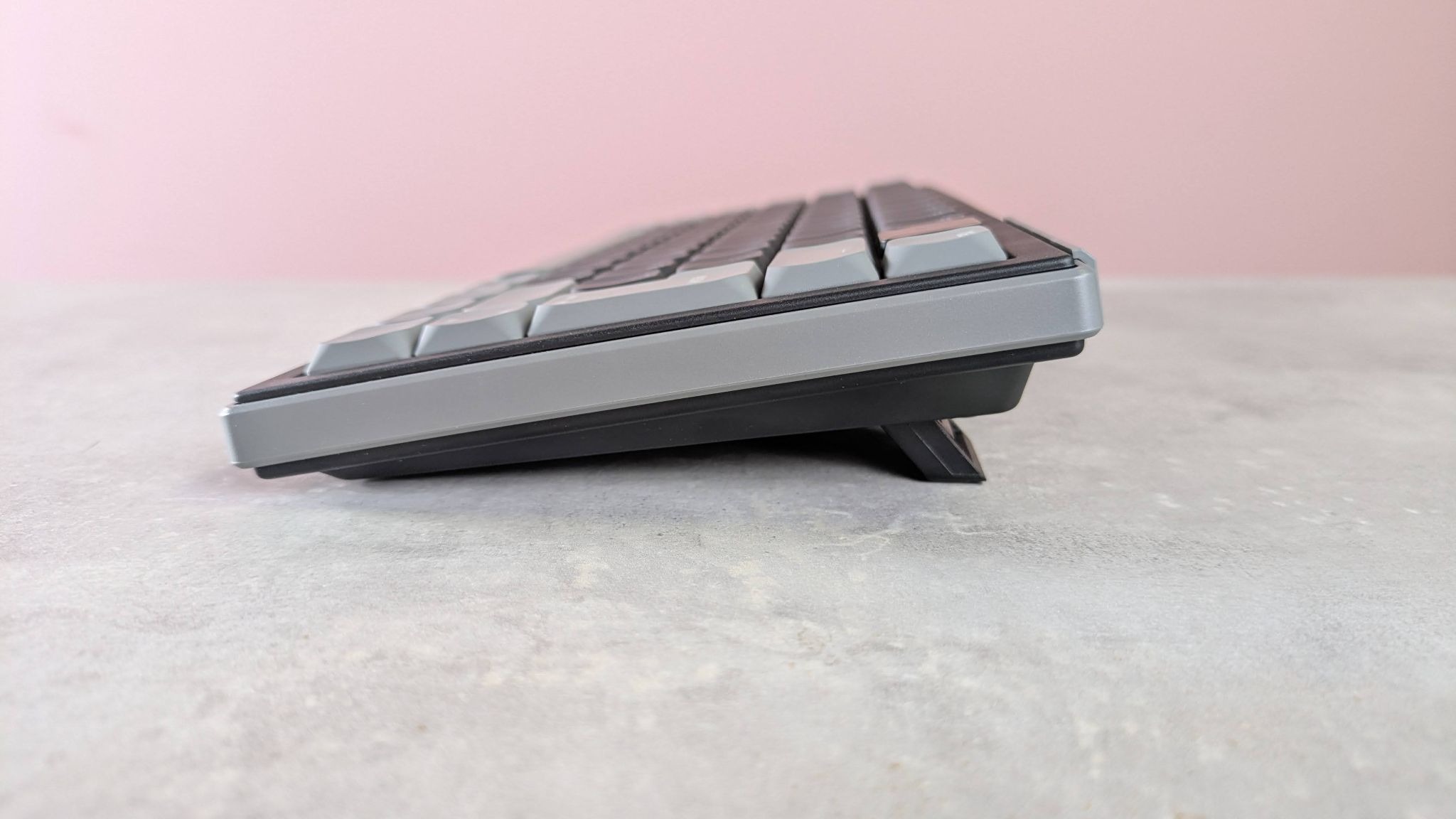
Cherry XTRFY K63W Pro Compact Ultra-Wideband review: a unique keyboard that may prove divisive

Published

on

Why you can trust TechRadar


We spend hours testing every product or service we review, so you can be sure you’re buying the best. Find out more about how we test.

Cherry XTRFY K63W Pro Compact Ultra-Wideband: One-minute review

The Cherry XTRFY K63W Pro Compact Ultra-Wideband is a small gaming keyboard with a few surprises in store.

True to its name, it certainly doesn’t take up much room on your desk. It’s also pleasingly light, which means it’s easy to move around. Despite this and the plastic construction, the build quality seems high.

Advertisement

Source link

Advertisement
Continue Reading

Tech

Ukraine reveals in-house AI system to slash battle planning time to mere minutes

Published

on


  • Ukraine Central Research Institute has unveiled Marichka, a closed neural network intended to cut brigade-level planning decisions from six to 12 hours down to minutes
  • The system calculates force ratios, estimates losses, and models courses of action on an interactive map, but has so far only been trialed on test data, with classified document integration still pending
  • Marichka adds another layer to Ukraine’s tech stack for battlefield planning: the country already fields Delta for situational awareness and works with Palantir at multiple levels

Ukraine’s Central Research Institute of the Armed Forces has presented Marichka, a closed neural network designed to compress the operational planning cycle at brigade level and above from hours to minutes.

The system, still in testing, is built to collect and verify battlefield information, then calculate force ratios and estimate required resources and likely losses, presenting commanders with modeled options on an interactive map. Military standards currently allow a regiment or brigade commander six to 12 hours and roughly 20 documents to reach the same point.

Source link

Continue Reading

Tech

Chuck Berry Is On Top Review: Chess Records’ 75th Anniversary Audiophile Remaster Series Restored Rock ‘n’ Roll Classic

Published

on

Now seems like a good time to revisit the recent Chess Records 75th Anniversary Series audiophile reissue of Chuck Berry’s 1959 one-LP masterpiece, Chuck Berry Is on Top. With one of Mr. Berry’s most famous musical progeny, the Rolling Stones, back on the charts with their very strong Foreign Tongues LP, newer fans discovering the glories of good old rock ’n’ roll would be wise to take a very enjoyable history lesson with Berry’s iconic third studio album.

For those unfamiliar with the Stones’ deep repertoire, they covered numerous Chuck Berry songs over the years, and much of their musical style, especially early on, was influenced by his writing and overall sound. Their versions of “Carol,” “Little Queenie,” “Around and Around,” and “You Can’t Catch Me” made that debt rather difficult to miss.

Effectively a greatest-hits collection in all but name, most of the tracks on Chuck Berry Is on Top were originally issued as 45 rpm singles during the late 1950s. Many became Top 40 hits, including “Almost Grown” (No. 32 on the Billboard Hot 100, No. 3 on the R&B chart), “Carol” (No. 18 Hot 100, No. 12 R&B), “Maybellene” (No. 5 Hot 100, No. 1 R&B), “Sweet Little Rock and Roller,” “Johnny B. Goode” (No. 8 Hot 100, No. 2 R&B), “Little Queenie” (No. 80 Hot 100), “Jo Jo Gunne,” “Roll Over Beethoven” (No. 29 Hot 100, No. 2 R&B), and “Around and Around.”

chess-records-75th-anniversary-sticker

In terms of sound quality, this new reissue of Chuck Berry Is on Top is exemplary. The project was supervised by Chad Kassem of Analogue Productions, a division of Acoustic Sounds. Disc mastering and lacquer cutting were handled by Matthew Lutthans at The Mastering Lab, located within Quality Record Pressings (QRP), where the albums were manufactured.

Much like an Acoustic Sounds or Blue Note Tone Poet Series reissue, Chuck Berry Is on Top is packaged in a deluxe, expanded, laminated gatefold cover, rather than the single-pocket, flat-matte design of the original. Each disc is housed in an audiophile-grade, plastic-lined inner sleeve. The iconic black Chess Records label design has also been reproduced. Some original pressings used a blue label, but it is still a very cool detail.

Advertisement
chuck-berry-on-top-labels

For those dead set on finding an original 1959 copy of Chuck Berry Is on Top, tempered expectations may be in order, as copies in good condition remain quite rare. At the time of writing, only eight are listed on the vinyl marketplace Discogs, none graded higher than VG, with asking prices ranging from $35 to $185. It took me forever to find an original copy in playable condition out in the wild, so unless you are willing to pay collector prices, be prepared for a very long search.

chuck-berry-on-top-back-cover

That said, the prospect of buying a pristine new 180-gram pressing of Chuck Berry Is on Top, made from the original monaural master tapes and supervised by one of the most highly regarded vinyl production teams in the world, for $38.98 at Amazon seems like the logical choice for most fans.

Were the cover on my original copy not quite so nice, I might purge it entirely, knowing that this new Chess Records 75th Anniversary Series audiophile reissue will be my go-to listening copy for the foreseeable future. It sounds excellent and remains very much in keeping with the character of my original, minus the clicks and pops, of course. Perhaps it will become your go-to copy as well.

Our Ratings

★★★★★★★★★★ Music

★★★★★★★★★★ Sound Quality

★★★★★★★★★★ Pressing Quality

Advertisement
Advertisement. Scroll to continue reading.

Where to buy:


Mark Smotroff is a deep music enthusiast / collector who has also worked in entertainment oriented marketing communications for decades supporting the likes of DTS, Sega and many others. He reviews vinyl for Analog Planet and has written for Audiophile Review, Sound+Vision, Mix, EQ, etc.  You can learn more about him at LinkedIn.

Source link

Advertisement
Continue Reading

Tech

IBM buys Howard Hughes-founded HRL to fuel quantum plans

Published

on

IBM expects HRL’s technical breakthroughs will help drive its quantum programme for ‘decades to come’.

IBM is acquiring Boeing and General Motors’ jointly-owned research and development institute HRL Laboratories.

HRL’s expertise in silicon-spin qubit engineering is expected to help IBM in its long-term quantum plans. The lab was established in 1948 as Hughes Research Laboratories by the late prominent aviation expert Howard Hughes. Details of the transaction were not disclosed.

IBM has major ongoing quantum computing projects, including a roadmap to delivering Quantum Starling by 2029, expected to be fault-tolerant and 20,000-times more powerful than today’s quantum computers – capable of running 100m quantum operations.

Advertisement

As per IBM’s plans, Starling will be followed up with an even more powerful quantum computer called Blue Jay, projected to be capable of 1bn quantum operations.

In May, the company pledged more than $10bn to quantum research over the next five years and announced ‘Anderon’, the world’s first pure-play quantum wafer foundry in the making, with support from the US government.

The acquisition gives IBM a boost in quantum research and allows the incoming team from HRL to partner closely with Anderon to scale quantum manufacturing and enable faster learning cycles. Quantum technology has the potential for commercial impact across industries, including in life sciences, defence and navigation, according to IBM.

HRL’s support could also allow IBM to innovate and industrialise new technologies such as quantum sensing, and conduct deeper research into the sensors detecting and capturing subtle measurements.

Advertisement

Combined with additional technical capabilities in cryogenics, control electronics, qubit interconnects and packaging, IBM anticipates the acquisition will fuel its quantum programme for “decades to come” and help develop next-generation computing, communications and mission-critical systems.

HRL has also innovated in quantum materials that have the potential to unlock better semiconductors and more sensitive sensors.

“The HRL team will help IBM push even farther forward toward the frontiers of quantum innovation,” said Jay Gambetta, IBM’s director of research and an IBM fellow.

“This talented group of researchers brings a broad portfolio of technologies that will strengthen IBM’s long-term plans to deliver useful quantum computing to the world, bringing together advances across quantum computing, quantum sensing and quantum networking to enable the applications of the future.”

Advertisement

The announcement comes after a disappointing quarter for IBM, which reported a 1pc revenue growth and a marginally lower net income compared to the same quarter last year. The company lowered its 2026 forecast as a result.

“Joining IBM is the natural next chapter for what we have built at HRL, where our team has dedicated years to exploring paths to how future quantum computers could be built at scales that today seem impossible,” said Rob Vasquez, the president and CEO at HRL.

“We now look forward to leveraging IBM’s industry leadership and working alongside their world-class talent on fundamental infrastructure to take this vision forward.

“Additionally, our cutting-edge physical and information science innovations will combine with their advanced research capabilities to deliver an unmatched suite of technology solutions for our commercial and government customers.”

Advertisement

Don’t miss out on the knowledge you need to succeed. Sign up for the Daily Brief, Silicon Republic’s digest of need-to-know sci-tech news.

Source link

Advertisement
Continue Reading

Tech

Firefox’ New Tab Page Will Get Widgets – Including an AI-Powered Daily Crossword

Published

on

In a sign of the times, Firefox’s New Tab page could soon include a crossword puzzle from AI-powered news platform Particle. The blog OMG Ubuntu reports:

The mini crossword game is updated daily, with puzzles based around recent content Particle’s AI has ingested and summarised that day. [After solving the crossword, links appear to related news articles…] If you just want to try the crossword, you access it in any browser via a direct link.

While it may look like Mozilla is trying to capitalise on the Wordle craze several years too late, it’s part of its strategy to make the Firefox new tab page a discover destination in itself, not just a springboard for new searches. The ‘Daily Grind’ crossword widget (name subject to change) is just one of several widgets Firefox has (or will get). You’ll also find a to-do list, timer, stock checker, world clock, picture of the day, privacy report and new-look weather widget (bigger than the existing one). During the World Cup 2026, Firefox offered real-time match scores and fixture information too…

[T]hey aren’t mandatory. You can disable the ones you don’t want to use, or, if you don’t want any at all, turn them all off to hide the widget area itself. A button to ‘show fewer widgets’ frees up room to allow other distractions (sponsored stories) on the new tab page to show… [Presumably you can also still open new tabs to a blank page…]

Advertisement

They’re rolling out to users in certain region and locales already. Plus, Mozilla routinely tests new features with a small set of users before they hit stable builds (i.e., the “Allow Firefox to run feature studies” setting). If you don’t have widgets in your Firefox build, but you want them, you can manually enable them in Firefox 153 and later from the about:config page. Search for the following master switch and set it to true to enable the widget area:

browser.newtabpage.activity-stream.widgets.system.enabled

Then, enable the widgets you want to use by searching:

activity-stream.widgets.*.enabled

Advertisement

However, the usual caveats about “trying things not enabled by default” still apply. Mozilla hasn’t set a firm rollout date, though the feature is already documented on its support site. With fortnightly Firefox releases about to start, and a big Nova redesign, chances are we’ll all be puzzling over these widgets sooner rather than later.

Source link

Continue Reading

Tech

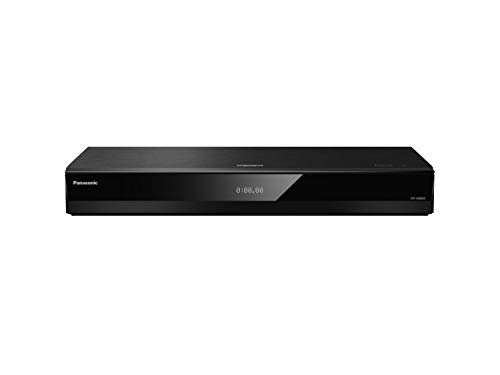
Someone polled 4K Blu-ray player owners about the reliability of different models over time, and there’s a clear winner

Published

on


  • Nearly 400 4K Blu-ray users shared info about player problems
  • There’s a huge gap between the best and worst in the poll
  • Panasonic will be happy; Sony not so much

One of the things I like best about Reddit is the way people share their experiences of particular products: whether it’s a kitchen knife, a portable AC or a Gibson guitar I know I’ll be able to find sage advice on what to buy and what to watch out for. And now the good people of r/hometheater have come together to talk about the best 4K Blu-ray players and their reliability.

The poll was carried out by r/hometheater poster “requieminadream” and generated nearly 400 responses — almost double the number of previous poll respondents — from r/4KBluray, r/Bluray, r/PhysicalMediaMatters, the AVS Forums, and the Blu-ray.com forums. And there are some very clear differences between different firms’ Blu-ray devices.

Source link

Advertisement
Continue Reading

Tech

People are recording every conversation with AI tools, and nobody consented

Published

on

TL;DR

AI tools now record conversations without announcing themselves, and users are bringing them to dates and personal chats

A growing number of professionals have started using AI tools to record every conversation they have, and the people being recorded usually have no idea it is happening. The Wall Street Journal reported this week that apps like Granola, which transcribes meetings without deploying a visible bot or announcing its presence, have made ambient recording so frictionless that users are now bringing the technology out of conference rooms and into personal settings. The shift raises legal and ethical questions that neither the tools nor their users appear ready to answer.

Granola, which raised 125 million dollars earlier this year at a valuation of one and a half billion dollars, works by recording audio directly through the user’s device microphone rather than joining a call as a separate participant. That means no bot icon appears in the meeting and no automated message tells attendees they are being recorded. Michelle Lim, CEO of meeting software company Flint, told the Journal that she wishes Granola were running in every room she enters, a statement that captures both the appeal and the problem.

Some users have taken the concept well beyond the workplace, with Emmie Chang, founder of startup Yuzu Labs, telling the Journal she records first dates and sends the transcripts to Claude for feedback on how the conversation went. Others described recording therapy sessions, doctor visits, and casual dinners with friends, all without telling the other person. In the eleven US states that require all-party consent for recordings, including California, Florida, Illinois, and Pennsylvania, doing so without disclosure is a potential felony under state wiretapping laws.

Advertisement

The 💜 of EU tech

The latest rumblings from the EU tech scene, a story from our wise ol’ founder Boris, and some questionable AI art. It’s free, every week, in your inbox. Sign up now!

The workplace implications are already materialising. Amy Dufrane, CEO of the Human Resource Certification Institute, told the Associated Press that AI note-takers pose enormous organisational risk, arguing that companies should not use them at all. Reports have surfaced of AI notetakers remaining on video calls after employees have left, silently documenting informal conversation and gossip, and privacy law expert Alex Alben warned that automatic recording involving third parties creates liability that most users have not considered.

Researchers have raised a separate concern that goes beyond privacy, with studies on cognitive offloading finding a negative correlation between heavy AI use and critical thinking. The worry is not just that people are recording without consent, but that they are losing the ability to listen, remember, and process conversations on their own. As these tools become cheaper and more invisible, the question is no longer whether they will spread but whether anyone will bother to ask permission first.

Advertisement

Source link

Continue Reading

Tech

Amazon Sale Drops Apple Watch to $299 4 AirTags $89 iPad $399

Published

on

Amazon’s weekend Apple sale is going strong, with price drops of up to $150 off Apple Watch, AirTag, and iPad devices.

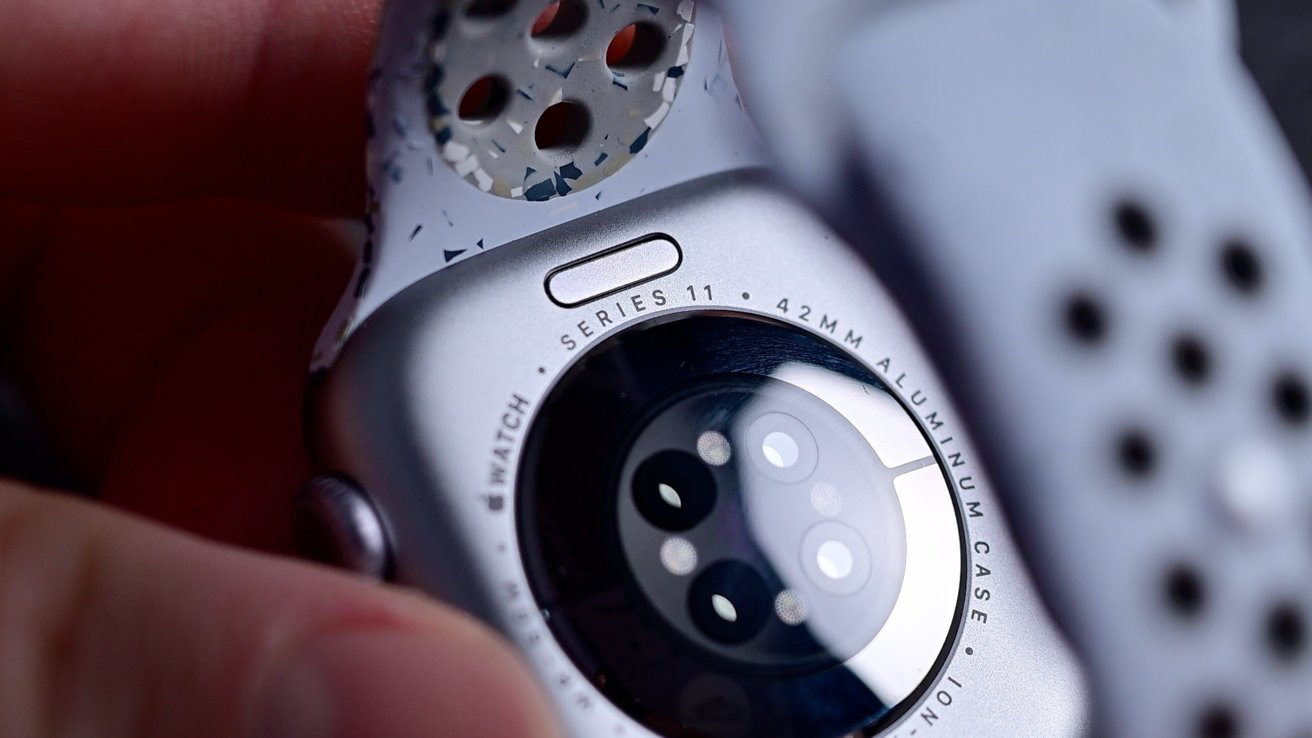
Apple Watch Series 11 from $299

Save $100 on several Apple Watch Series 11 styles.

Save $100 on several Apple Watch Series 11 styles.

Apple Watch shoppers have plenty of reasons to take a look at Amazon, where several Series 11 styles are $100 off. The standout offer drops the 42mm GPS model to $299, within $20 of the lowest price on record.

42mm Apple Watch Series 11 deals

  • 42mm Apple Watch Series 11 GPS (Aluminum Case, Sport Band): $299 ($100 off)
  • 42mm Apple Watch Series 11 GPS + Cellular (Aluminum Case, Sport Band): $399 ($100 off)
  • 42mm Apple Watch Series 11 GPS + Cellular (Titanium Case, Milanese Loop): $649 ($100 off)

46mm Apple Watch Series 11 deals

  • 46mm Apple Watch Series 11 GPS (Aluminum Case, Sport Band): $329 ($100 off)
  • 46mm Apple Watch Series 11 GPS + Cellular (Aluminum Case, Sport Band): $429 ($100 off)
  • 46mm Apple Watch Series 11 GPS + Cellular (Titanium Case, Milanese Loop Band): $699 ($100 off)
Stack of Apple AirTag trackers on a smooth surface, one standing upright in front, with a blurred purple and blue background

Get 4 AirTags for just $89 at Amazon.

Advertisement

Amazon’s weekend AirTag sale drops the 4-pack down to $89 after a 10% discount.

The second-generation AirTag tracker builds on the original design while adding hardware improvements aimed at helping users locate lost items from greater distances. And according to Amazon, the deal is selling fast.

Today’s AirTag 2 deals

iPads from $399

Apple iPad tablet with colorful home screen and app icons, standing upright on a wooden surface, with a white brick wall in the background

Get an iPad 11 for $399 with month-end deals.

Amazon is also running discounts across Apple’s iPad line, with month-end deals delivering prices as low as $399.

Advertisement

Weekend iPad sale

Source link

Continue Reading

Tech

My Life With Looki Is a Harbinger of Always-On Recording Glasses to Come

Published

on

A new memory cartoon is waiting for me. When I open the app, I see a multipanel strip called Big Little Moments. It appears as soon as I plug the Looki AI device back in to recharge, after almost a month not wearing it. It shows moments of me at a bar with my friend in LA, watching a stage presentation, eating a meal, seeing a demo, two women sitting across from me and then just me, walking with a phone in my hand.

These moments are from two days in June, when I wore the Looki to the Augmented World Expo in Long Beach, California. I’d been wearing it almost nonstop since April. I wore it to Apple’s WWDC, to Google I/O. I wore it to my Princeton college reunion. I wore it at home and commuting. And then I stopped.

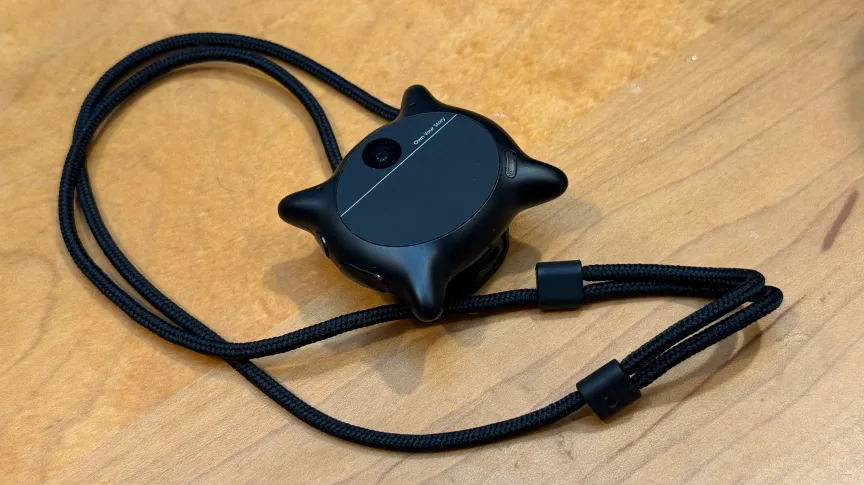
The Looki L1 is a little black pendant, sort of watch-sized, with a camera on the front and microphones hidden somewhere. It has a clip and a lanyard. It can be worn around the neck or left propped on a desk. It’s an AI wearable but, unlike smart glasses, it has a battery that can run a whole day while intermittently recording audio and video clips. My colleague Katie Collins tried it last year, but I never got to test one out until this spring and summer.

The Looki is a round-with-spiky-bits pendant with a magnetic back clasp. Buttons to trigger recordings are studded around the sides. There’s also a touchpad. (Scott Stein/CNET)

AI wearables of all shapes and forms are everywhere now. OpenAI may be next to offer one. Some of these devices come in glasses form. Some are pendants. Some are pins. Some are earbuds. As AI keeps spreading everywhere and trying to absorb more of our personal information that it can craft into patterns and narratives, wearables are the physical form of trying to give AI eyes, ears and, increasingly, memories of your own life.

Everyone feels wary of smart glasses lately, because of the outer-facing cameras, tech’s pushy AI relentlessness and Meta’s poor reputation for privacy. When I tell people I’m wearing Meta Ray-Bans, they tend to ask me, “Is it recording me now?” I say no, then point to the Looki around my neck. “But this probably is.”

Advertisement

The Looki device follows in a long line of lifelogging wearables that go back over a decade. In 2014, I reviewed an occasionally recording lifelogging camera called the Narrative Clip, which promised to capture our memories. I found its memory, in practice, to be full of holes. In 2026, that’s pretty much still the case.

The Looki L1 promises a fun way to remember and record life’s moments, to have a companion to travel with you and save moments without having to record them. To be an all-day wearable camera.

But when I wore one, it made me feel awkward, like I was being a jerk or a spy. At best, it’s odd; at worst, it feels like I’m a guy with, well, an always-on camera. Which, in 2026, isn’t nearly as “fun” as it was in 2014, it turns out. I tested the Looki because I was curious, and because I’m legitimately interested in the future of assisted memory tech. 

What the Looki L1 is, and isn’t

Looki L1 is an odd duck product, as many AI wearables are. The $250 lifelogging camera has no subscription, although the product team I chatted with suggested that some services could be subscription-based down the road. It uses its own proprietary AI service, and can’t hook into any other platforms such as Google Gemini, ChatGPT or Anthropic’s Claude, although it borrows models from several sources.

Advertisement

I do like the snap-on magnetic pendant strap that doubles as a charging dongle and can serve as a desktop stand if you want to perch it somewhere to take photos or video. The magnetic clasp works through clothing, too, so the pendant could look like a clip-on pin. But I don’t like that the Looki’s active recording LEDs are small. They’re less noticeable than those on Meta’s glasses by far.

There’s a phone app that the Looki pairs with, just as a smartwatch or pair of smart glasses would. That’s how the pendant gets its firmware updates and uploads its recorded clips to your phone and the cloud.

Looki’s highlight video compilations feel pretty random at the events I wore them at, and of course, no one really knew I was recording. (Scott Stein/CNET)

Looki has an “AI Mode” that stays on and intermittently records short video clips (no more than about 5 seconds each), apparently picking moments of interest. In my three months of use, it didn’t seem to have any pattern. There are dedicated buttons to trigger manual audio recordings, still photos or video recordings. There’s also a front touchpad, which I could hold down to summon a voice AI to chat with for feedback on what I’d recorded, or anything else. I rarely used it.

The Qualcomm chip on the Looki is an older watch-oriented model, but it still lasts a day on a charge. The future for pendants like these is likely even longer battery life, based on the specs of Qualcomm’s newest AI-optimized chips, released this year. These types of pendants are probably going to do even more on-device without relying on the cloud at all.

But, for the most part, the Looki is a repository. It sucks up images and videos, and then syncs them over to its companion phone app (which takes several minutes) and cloud-analyzes them later (which can take up to several hours). It’s like burying a time capsule and then digging it up later that day to see what you’ve got.

Advertisement

And what did I get? Mostly a hot, sometimes fascinating, often awkward mess. 

As a memory maker, full of holes

The best thing the Looki does is generate comic book-like generative AI images based on things it automatically captures. The results vary in style and structure, with absolutely no discrete controls to make anything turn into a comic if you’d like it to. You just have to get lucky, I guess.

A few images of people I met, comic-transformed, are fun. A few story panel-type comics tried to distill a day, or several days, into a narrative. Sometimes they were clever (one, a map of New York and New Jersey showing me commuting, seeing tech demos and going to a Princeton reunion) felt sharable. One, of my trip to WWDC, was weirdly focused on my pre-event breakfast with my colleague Bridget Carey rather than all the hours I wore it during Apple’s keynote, which was the whole point of the day.

Sometimes the Looki auto-inserted me into images, inventing a narrative. (Since I’m wearing the pendant, I was clearly not in the picture.) My comic portrait ranged from oddly accurate to something more like Marc Maron. One comic picture of me buying a coffee at a Hyatt was inexplicably done in Minecraft-style blocks.

As for the rest of the recorded memories? There are AI-made supercuts of videos, set to odd preselected music. The tone often felt generic, and the captured videos are frequently at bad angles. When I had coffee with friends, several of the clips were accidental crotch shots. Other times, faces were cut out of the picture. (Did I need to wear the pendant higher up?)

The Looki seems to take video clips but not photos automatically, which were harder to download and share with friends. Also, a lot of the captured clips were either too brief or the people in them were discussing things that nobody approved sharing in the first place. If you’re wearing a Looki, prepare to do a lot of warning, explaining and apologizing.

Advertisement

Do I like having them to look over? Sort of, but so few are actually good. You can just take photos and videos when you want, rather than having the intermittently recording AI mode on. But then, if you do that, the device doesn’t feel like a true lifelog.

Sadly, a lot of the captured supercuts just showed me on my phone. Which, of course, just illustrated a sad state of my own life. I am on my phone a hell of a lot. Too much. And the comics, the autocaptures, they all tended to have at least one shot capturing me looking at my phone, since the pendant was around my neck, over and over and over.

Besides keeping these lifelog videos and autocaptures and creating comic strips, it weirdly tries to analyze meals I’ve eaten (not to any true success), and also pops occasional random notifications based on location, I think, and what the camera sees. These notifications are meant to be smart and context-aware. Sometimes they’re oddly on point (telling me I’m at AWE and reminding me of the start of the opening keynote, even though I never told it I was at AWE). Other times it just noted a store or maybe someone standing nearby. Again, like everything else the Looki does, these notifications can’t be customized at all.

As a public device, it’s embarrassing

My son has told me to take off the Looki pendant more times than I can count. My wife shamed me about my decision to wear it in a Japanese supermarket (I didn’t). People who saw it at public events, like WWDC or Google I/O, were either mildly curious or mildly offput. I awkwardly took it off a lot and stuck it in my pocket on trains, in bathrooms and, increasingly, many other places.

At a Whole Foods, someone next to me noticed it as I was shopping for chocolate bars and asked if it was recording. I explained it might be and that I test tech products for my job. They said they weren’t that upset, they knew that people are wearing cameras more and more. I didn’t believe they weren’t upset. And that reaction, too, has stuck with me. I wear smart glasses at least half the time now. Where does that put me on the socially acceptable spectrum? Don’t tell me.

Advertisement

I still find smart glasses less personally embarrassing, because they look and function like actual glasses. And, in reality, Meta’s glasses very infrequently record anything. While Meta has an autocapture mode for the glasses now, running it would wear out the battery fast.

The Looki, meanwhile, does nothing at all except be a AI-enabled camera pendant on your neck. To remember to charge that up and wear it, like an odd necklace that nobody asked for… I just can’t justify it. I made myself wear it for more weeks than I thought I would. Now, it’s out of batteries and sitting in a bag somewhere. I gave up.

The Looki was really just my Memory Cartoon Generator, for the most part, as you can see from all the images I shared. They’re interesting, but I can’t choose when they happen, or how they happen. And they’re not enough to keep me wearing the Looki. As you can see above, sometimes it even captured when I went to my home bathroom. (I never kept it on in an actual public bathroom, but this is exactly the nightmare stuff that the Looki embodies.)

If devices like the Looki could be actual memory assistants, deeply aware and able to help see and guide you — Or, if they were better cameras, taking photos I’d actually use — Or, if it could hook into AI services I actually semi-trusted and recognized — well, maybe. Right now, the Looki is more like a harbinger. Of glasses that really and truly will have longer battery life, someday soon, and be able to record all day long, if intermittently. And more AI pendants.

When that day happens, then yes, maybe my glasses will truly be recording all the time. And yes, that’s concerning. But even more concerning is the lack of any tech company efforts to manage privacy and deeper control over these random AI wearables. Or to elevate them beyond just gimmicks.

Advertisement

What I learned is I hit my limit. The Looki is not on me anymore. But the spirit of the Looki is everywhere else, coming fast.

Source link

Continue Reading

Tech

The EU says TikTok still isn’t doing enough to protect kids

Published

on

The European Commission has accused TikTok of falling short on protecting minors, saying the platform’s current account settings don’t meet the child safety standards required under the Digital Services Act (DSA). The findings are preliminary, but if upheld, TikTok could face a fine of up to 6% of its global annual revenue.

Why the EU thinks TikTok isn’t doing enough

According to the Commission, TikTok allows minors to set their accounts to public, making their content visible to anyone — including people without a TikTok account. Regulators also say that content posted by older teenagers (aged 16 and 17) can still be recommended to other users through the For You feed, increasing the risk of unwanted contact, cyberbullying, or exploitation.

The Commission argues that stronger privacy protections for children should be enabled by default, rather than relying on users to change their settings manually. It also wants content from minors’ public accounts to be visible only to approved TikTok followers instead of being accessible to a broader audience, while recommending that minors’ content should not appear in the For You feed for other users.

EU Executive Vice-President for Tech Sovereignty, Security and Democracy Henna Virkkunen said protecting minors online should never be optional, adding that platforms are expected to build child safety into their services by design rather than offering it as an opt-in feature.

What TikTok said

TikTok has pushed back against the findings, saying it shares the Commission’s goal of protecting young users and already offers more than 50 privacy and safety features for teens. As reported by Reuters, the company notes that accounts for users under 18 are private by default, while younger teens cannot use direct messaging and their content is not recommended in the For You feed. TikTok says it will review the Commission’s findings and continue working with regulators before a final decision is reached.

Advertisement

The Commission’s announcement represents preliminary findings, meaning TikTok now has the opportunity to formally respond before the EU decides whether the company has violated the DSA. If regulators remain unconvinced, they could issue a non-compliance decision along with financial penalties. The investigation is one of several ongoing DSA probes into TikTok as European regulators continue tightening oversight of how large social media platforms protect younger users online

Source link

Continue Reading

Trending

Copyright © 2025