

Business
ANZ Group Shares Fall 1% as Australian Banks Encounter Sector-Wide Caution

SYDNEY — ANZ Group Holdings Ltd. shares declined on Friday, closing at A$34.12 after dropping 0.36 or 1.04%, as broader caution weighed on Australia’s major banks amid mixed domestic economic signals and global market volatility.
The move aligned with softness across the financial sector, with the big four lenders posting modest losses. ANZ, one of Australia’s largest banks with significant operations in both Australia and New Zealand, has shown resilience in 2026 but remains sensitive to interest rate expectations and lending conditions.
Trading volume was healthy as the stock moved in line with peers. The S&P/ASX 200 index also closed lower, reflecting similar pressures. Analysts described the session as typical late-week positioning rather than a fundamental shift in the bank’s outlook.
ANZ has delivered steady performance through the first half of 2026. The group reported solid cash earnings supported by resilient net interest margins and careful cost management. Business and institutional banking segments contributed positively, while the bank continued investing in digital capabilities to enhance customer experience and operational efficiency.
The current environment features the Reserve Bank of Australia navigating persistent inflation concerns while balancing growth objectives. This has tempered expectations for near-term rate cuts, influencing investor sentiment toward financial stocks. Household spending remains resilient but shows signs of moderation, affecting credit demand forecasts.
ANZ’s diversified operations across retail, commercial, institutional and wealth management provide buffers against sector-specific headwinds. The bank’s New Zealand subsidiary adds geographic diversification while introducing exposure to cross-border economic dynamics. Recent updates highlighted strong capital levels well above regulatory requirements, supporting both lending growth and shareholder returns.
For income-focused investors, ANZ offers an attractive dividend yield backed by consistent payouts and a robust capital position. The bank has maintained a disciplined approach to capital allocation, balancing reinvestment needs with returns to shareholders.
Valuation metrics suggest ANZ trades at reasonable levels relative to historical averages and international peers when factoring in its defensive characteristics and reliable income stream. However, sensitivity to domestic economic indicators and global financial market movements can drive short-term volatility.
Broader Australian banking sector context shows comparable dynamics across the major players. Higher-for-longer interest rates have supported profitability, but competitive dynamics and regulatory requirements continue to shape the operating environment. Analysts generally maintain constructive views on the sector, citing strong balance sheets and potential benefits from economic stabilization.
Looking ahead, ANZ’s upcoming trading updates and full-year results will provide further insight into loan growth, asset quality and margin trends. The bank’s strategic focus on digital transformation, sustainability and customer-centric initiatives is expected to support performance as customer preferences evolve.
Global factors, including U.S. monetary policy signals and commodity price movements, also influence Australian financial markets indirectly. ANZ’s dual presence in Australia and New Zealand adds both diversification benefits and additional risk considerations.
Analysts project continued earnings stability for ANZ, supported by prudent risk management and a robust domestic franchise. While near-term headwinds from economic uncertainty exist, the bank’s market position and operational strength provide a solid foundation for navigating cycles.
For investors evaluating positions, ANZ represents a blend of income reliability and moderate growth potential typical of major Australian banks. Longer-term investors may view current levels as attractive for accumulation, particularly given the dividend yield. Shorter-term participants might monitor upcoming economic data and central bank communications before adjusting exposure.
The current share price movement fits within normal daily fluctuations for a stock of ANZ’s size. It does not necessarily signal a change in the bank’s fundamental trajectory but reflects broader market sentiment and sector rotation.
As one of Australia’s systemically important financial institutions, ANZ plays a vital role in the economy through lending, employment and community engagement. Its performance influences broader confidence in the financial system and reflects the health of household and business finances nationwide.
Friday’s trading served as a reminder of the sector’s sensitivity to sentiment shifts. Despite the decline, ANZ maintains strong fundamentals including capital buffers and customer franchises that have supported it through various economic conditions.
Market participants will assess next week’s economic calendar, including any further inflation or employment data that could shape expectations for monetary policy. The balance between growth support and inflation control remains central to banking sector prospects.
ANZ continues investing in technology and innovation to meet evolving customer needs while upholding rigorous risk standards. Its commitment to sustainability and community initiatives aligns with stakeholder expectations and regulatory priorities in a changing financial landscape.
Investors considering ANZ should weigh individual risk tolerance, portfolio allocation and time horizon. The bank offers stability and income characteristics that complement growth-oriented holdings in diversified portfolios. Prudent position sizing and ongoing monitoring of key metrics such as loan growth, margins and asset quality remain advisable.
Overall, ANZ retains a position of strength in the Australian and New Zealand financial services industry. Its diversified business model, strong capital position and customer focus position it favorably to navigate current challenges while capitalizing on longer-term opportunities in a digital and sustainable economy.

Factbox-Hong Kong IPO-bound Shein’s management and ownership structure

EIPI: Light Enough For Upside, Heavier For The Grind – Maintain Buy
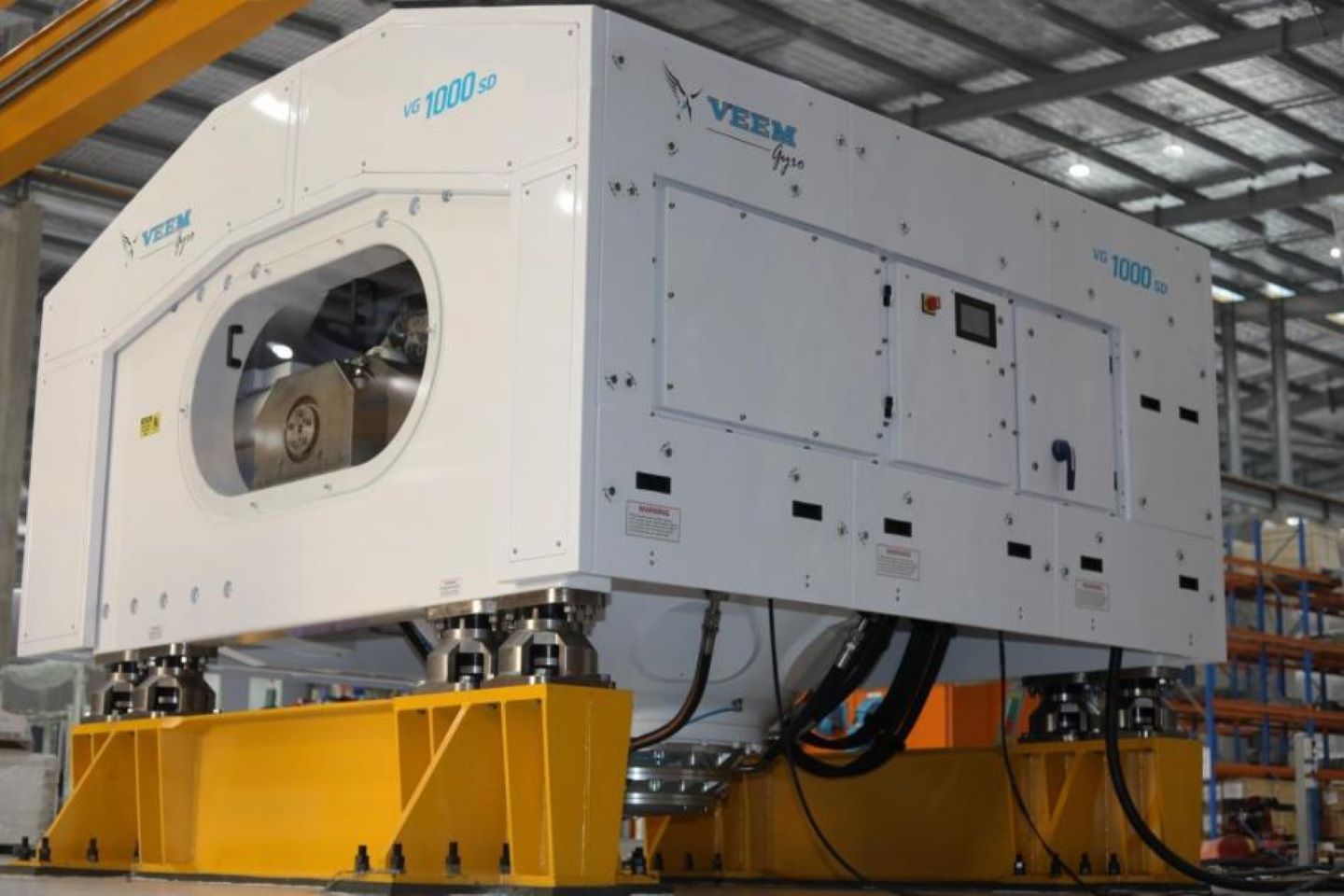
VEEM chief executive Trevor Raman has announced he will depart the marine technology company, citing a desire to pursue additional career opportunities.
Myanmar military escalates civilian killings, monitor warns, amid diplomatic push

Shares in China’s biggest memory chip maker have surged by more than 470% as they made their debut on the Shanghai Stock Exchange’s tech-heavy STAR Market.
The surge has pushed CXMT’s stock market valuation to around 3.3 trillion yuan ($487.3bn; £364.9bn), making it the most valuable listed company in mainland China.
The spectacular debut comes despite a sharp selloff in technology stocks around the world this month.
CXMT manufactures dynamic random-access memory (Dram) chips that power artificial intelligence (AI) data centres, mobile phones, PCs, tablets and other devices.
The firm, which was founded in 2016 by Chairman Zhu Yiming, is headquartered in Hefei, Anhui Province in eastern China.
The company has said it plans to use most of the proceeds from the initial public offering (IPO) to boost production of memory chips and carry out more research and developments.
The strong performance of its IPO will offer some comfort to Chinese financial officials, who have been rolling out measures to help curb a stock market slump that wiped out more than $1.5tn in recent weeks.
South Korean tech giants Samsung Electronics and SK Hynix and US-based Micron dominate the Dram market, with the three companies accounting for around 90% of global production.
Earlier this month, SK Hynix raised $26.5bn (£19.8bn) in its New York share offering, marking the largest ever listing by a foreign firm in the US.
The company, a key supplier to AI chip giant Nvidia, said it had sold 177.9 million American depositary shares for $149 each.
The shares surged as much as 17% on Friday in their first day of trading on the Nasdaq but have since given up some of that gain.
SK Hynix saw its market value top $1tn in its home country in May, lifted by the boom in demand for AI chips.
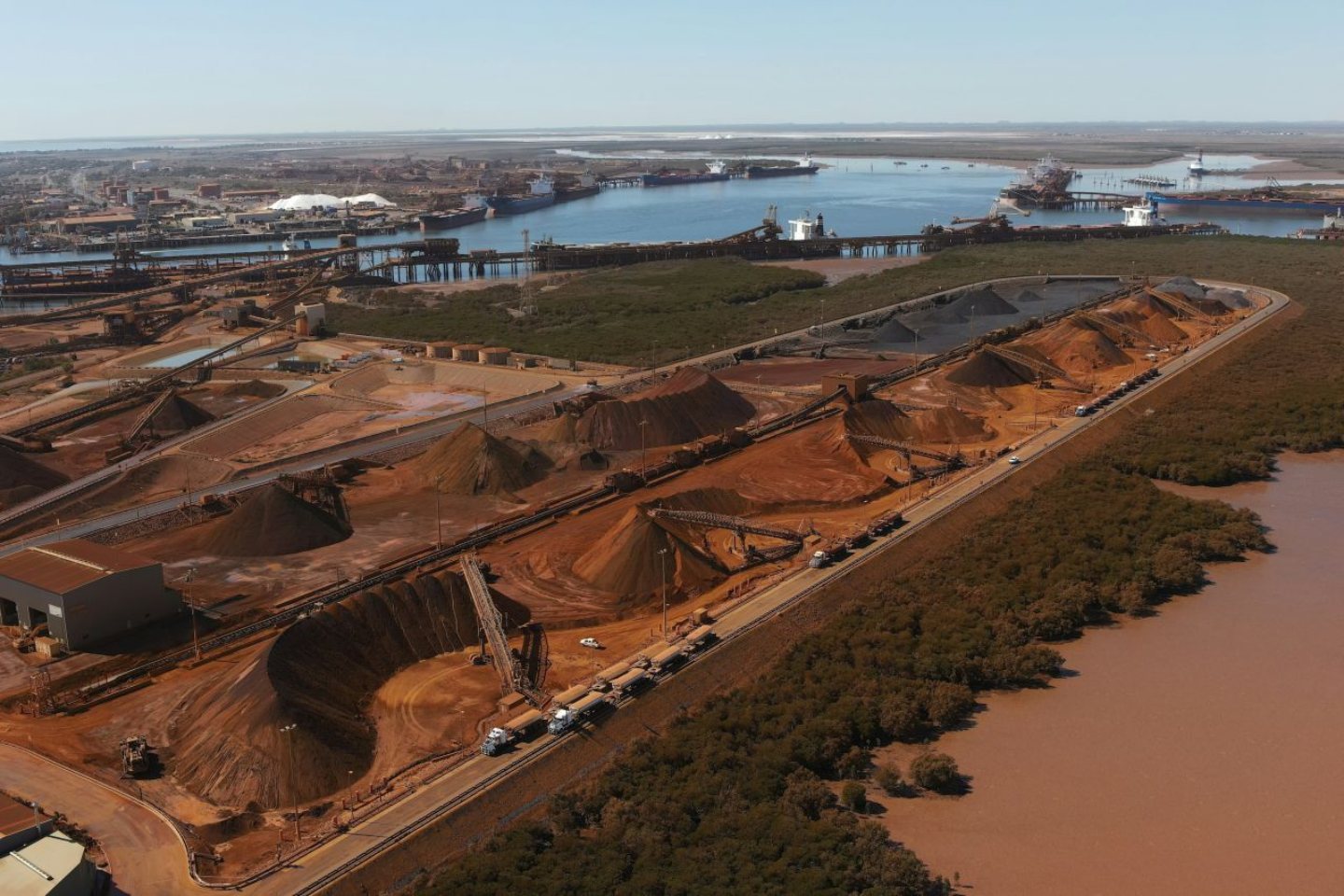
A wholly owned Monadelphous subsidiary has been awarded a $37 million contract to deliver upgrades to the Utah Ring Road in the Port of Port Hedland.
Shares in Talga Group rose by more than 15 per cent early on Monday, following a market update regarding its Vittangi anode project in Sweden.


Wolf Report is a senior analyst and private portfolio manager with over 10 years of generating value ideas in European and North American markets, and the owner of Wolf of Value, a service focusing on international dividend-paying value investments.He further covers the markets of Scandinavia, Germany, France, UK, Italy, Spain, Portugal and Eastern Europe in search of reasonably valued stock ideas.
Analyst’s Disclosure: I/we have no stock, option or similar derivative position in any of the companies mentioned, and no plans to initiate any such positions within the next 72 hours. I wrote this article myself, and it expresses my own opinions. I am not receiving compensation for it (other than from Seeking Alpha). I have no business relationship with any company whose stock is mentioned in this article.
While this article may sound like financial advice, please observe that the author is not a CFA or in any way licensed to give financial advice. It may be structured as such, but it is not financial advice. Investors are required and expected to do their own due diligence and research prior to any investment.
Short-term trading, options trading/investment, and futures trading are potentially extremely risky investment styles. They generally are not appropriate for someone with limited capital, limited investment experience, or a lack of understanding for the necessary risk tolerance involved.
I own the European/Scandinavian tickers (not the ADRs) of all European/Scandinavian companies listed in my articles. I own the Canadian tickers of all Canadian stocks I write about.
Please note that investing in European/Non-US stocks comes with withholding tax risks specific to the company’s domicile as well as your personal situation. Investors should always consult a tax professional as to the overall impact of dividend withholding taxes and ways to mitigate these.
Seeking Alpha’s Disclosure: Past performance is no guarantee of future results. No recommendation or advice is being given as to whether any investment is suitable for a particular investor. Any views or opinions expressed above may not reflect those of Seeking Alpha as a whole. Seeking Alpha is not a licensed securities dealer, broker or US investment adviser or investment bank. Our analysts are third party authors that include both professional investors and individual investors who may not be licensed or certified by any institute or regulatory body.

This is the forum for daily political discussion on Seeking Alpha. A new version is published every market day.
Please don’t leave political comments on other articles or posts on the site.
The comments below are not regulated with the same rigor as the rest of the site, and this is an ‘enter at your own risk’ area as discussion can get very heated. If you can’t stand the heat… you know what they say…
More on Today’s Markets:
Moderation Guidelines:
We remove comments under the following categories:
- Personal attacks on another user account
- Anti-Vaxxer or covid related misinformation
- Stereotyping, prejudiced or racist language about individuals or the topic under discussion.
- Inciting violence messages, encouraging hate groups and political violence.
Regardless of which side of the political divide you find yourself, please be courteous and don’t direct abuse at other users.
For any issue with regards to comments please email us at : moderation@seekingalpha.com.
Seeking Alpha’s Disclosure: Past performance is no guarantee of future results. No recommendation or advice is being given as to whether any investment is suitable for a particular investor. Any views or opinions expressed above may not reflect those of Seeking Alpha as a whole. Seeking Alpha is not a licensed securities dealer, broker or US investment adviser or investment bank. Our analysts are third party authors that include both professional investors and individual investors who may not be licensed or certified by any institute or regulatory body.
Business
ASX 200 Slides on Trump Tariff Fears and Wall Street Selloff, Marking a Third Straight Weekly Decline
Australia’s benchmark share index closed lower Friday, reversing gains from earlier in the week as a fresh round of U.S. tariff threats and a sharp selloff on Wall Street weighed on sentiment, capping a third consecutive weekly decline for the local market.
A rough end to the trading week
The S&P/ASX 200 fell 66.70 points, or 0.75%, to close at 8,772.30 on Friday, giving back a string of gains posted earlier in the week. Weakness was broad-based, spreading across the technology, consumer durables, non-energy minerals and healthcare sectors. Technology names led the losses, with Xero falling 4.5%, WiseTech Global dropping 4.6%, and Megaport sliding 3.3%. Gold miners also retreated, with Northern Star Resources down 3.9% and Evolution Mining off 2.4%. Australia’s four major banks were a rare bright spot, rising between 1% and 1.5% as investors rotated toward more defensive, income-generating stocks.
For the week overall, the index shed roughly 0.3%, marking its third consecutive weekly decline even as trading earlier in the week had briefly pushed the market toward stronger gains.
Trump’s tariff announcement rattles sentiment
The pullback came after the Trump administration said it would impose new tariffs on 60 trading partners, a move that unsettled global markets and flowed through to Australian trading given the country’s close economic and trade ties with both the United States and Asia-Pacific export markets. The announcement contributed to a sharp overnight selloff on Wall Street, which set a negative tone for Friday’s session in Sydney. The Dow Jones Industrial Average fell 0.97% overnight, while the tech-heavy Nasdaq Composite dropped a steeper 2.15%, dragging down sentiment across Asia-Pacific markets the following morning.
Strong jobs data complicates the rate outlook
Domestically, robust employment figures added another layer of complexity to the week’s trading. Australia added 76,000 jobs in June, far exceeding consensus expectations of around 15,000, while the unemployment rate held steady at 4.4%. The stronger-than-expected labor market data initially helped push the index higher earlier in the week, with the ASX 200 climbing as much as 1.1% intraday on Thursday to touch 8,926.30, its best level since mid-June, before those gains were pared back as investors recalibrated expectations for Reserve Bank of Australia policy.
The strong jobs report lifted the odds of an August RBA rate increase to roughly 36%, with markets now largely pricing in a move to 4.6% by the end of the year following three rate hikes already delivered in 2026. That shift added pressure to rate-sensitive sectors, including parts of the financial sector, even as the broader market weighed the implications of a still-resilient labor market against the risk of further tightening.
With Australia’s inflation data for June and the second quarter due out the following week, investors remained cautious about the potential for persistent price pressures to further complicate the central bank’s policy path heading into the back half of the year.
Commodities offer a partial offset
Mining and materials stocks provided some support during the week, helped by strength in key commodity prices. Gold traded around $4,116 an ounce, while iron ore futures climbed 1.7% to $98.70 in Singapore, lifting major miners including BHP Group, which rose 1.5% to $60.63, Fortescue, up 1% to $18.76, and Northern Star Resources, up 2% to $20.74 during Thursday’s session before the sector cooled into Friday’s close.
Energy stocks also found support mid-week after oil prices rose 2.3% to $96.24 a barrel, following reports that Iran-backed Houthi militants had attacked two Saudi Arabian oil tankers in the Red Sea, adding a geopolitical risk premium to crude markets that flowed through to Australian energy shares.
A market still near record territory despite the pullback
Even with the week’s decline, the ASX 200 remains within striking distance of the record highs it set earlier this year. The index touched an all-time intraday high of 9,198.6 points in February before pulling back toward the high-8,000s range by mid-year. Over its more than 25-year history, the benchmark index has delivered a long-term annualized total return of roughly 8.2%, including dividends, making short-term pullbacks like the one seen this week a routine part of its longer-term trajectory rather than a departure from it.
Seasonally, July has historically been one of the stronger months for the ASX 200, with the index averaging a gain of roughly 2.13% for the month since 1980 and finishing higher in 72% of those years. Recent Julys in particular have performed well, with the index closing higher in 11 of the last 12 years during the month, making this year’s choppier trading somewhat of an outlier relative to the seasonal pattern.
What investors are watching next
With inflation data for June and the second quarter due the following week, market participants are likely to remain focused on how that report shapes expectations for the Reserve Bank of Australia’s next policy move. The interplay between a resilient labor market, persistent inflation risk, and the fallout from the latest round of U.S. tariff actions is expected to remain the dominant theme driving Australian equity markets in the near term, alongside ongoing volatility in global commodity prices and continued swings in U.S. technology shares, which have had an outsized influence on sentiment in Sydney trading throughout the year.
Factbox-Hong Kong IPO-bound Shein’s management and ownership structure
Robinhood Chain Becomes Largest Blockchain by RWA Holder Count

Fantasy Baseball Week 19 Preview: Two-start pitcher rankings feature Max Fried, Jake Bennett


-

 Fashion2 days ago
Weekend Open Thread: Brooks Brothers
-

 Crypto World6 days ago
Grayscale Files For Worldcoin ETF, WLD Registers Sharp Rise
-

 NewsBeat5 days ago
How a former Blue Peter presenter stunned America’s Got Talent judges
-

 Tech6 days ago
Sail Virtually Aboard The “Itanic” With IA-64 Emulator
-
 Tech6 days ago
Turtle Beach Command Series KB7 review: a nifty screen-equipped gaming keyboard
-

 NewsBeat7 days ago
Unregistered fitter used Gas Safe logo on business flyers
-

 Tech5 hours ago
Intel is reversing course and bringing hyper-threading back to its server chips
-
 Business5 days ago
New Jersey voter registration controversy explained: How 6,600 noncitizens got on the rolls, and what happens next
-
 Entertainment5 days ago
Johnny Depp’s R-Rated Gothic Cult Classic Gets New Release Ahead of Sydney Sweeney Remake
-

 Crypto World4 days ago
Ethics, other provisions in crypto Clarity Act to be further discussed
-

 Tech7 days ago
Watch Flock Safety CEO Garrett Langley discuss the future of surveillance at TechCrunch Disrupt 2026
-
 NewsBeat6 days ago
Shanghai science forum photos show China’s AI and robotics advances in rivalry with US
-

 Crypto World7 days ago
Circle’s President Sold Over 360,000 Shares, The Filings Explain Why
-

 Tech7 days ago
Subway Sandwich Computers Get a Second Life as Gaming Machines
-
 Sports8 hours ago
Commonwealth Games boxing: Jadumani Singh seals dominant 5-0 win over Pakistan’s Sumama Rehman to enter quarter-finals | Commonwealth Games News
-

 News Videos3 days ago
The Peugeot Family: How 200 Years of an “Old Money” Dynasty Died in A Boardroom
-

 Politics16 hours ago
Spain sweeps the board at 2026 World Cup with individual awards
-

 Sports3 days ago
2026 3M Open leaderboard: Scottie Scheffler finds putter in Round 1, sits three back
-

 Fashion3 days ago
16 Dresses for the High Summer Event
-

 Crypto World6 days ago
Andrew Cuomo joins OKX board as crypto exchange expands in U.S.
You must be logged in to post a comment Login