

Entertainment
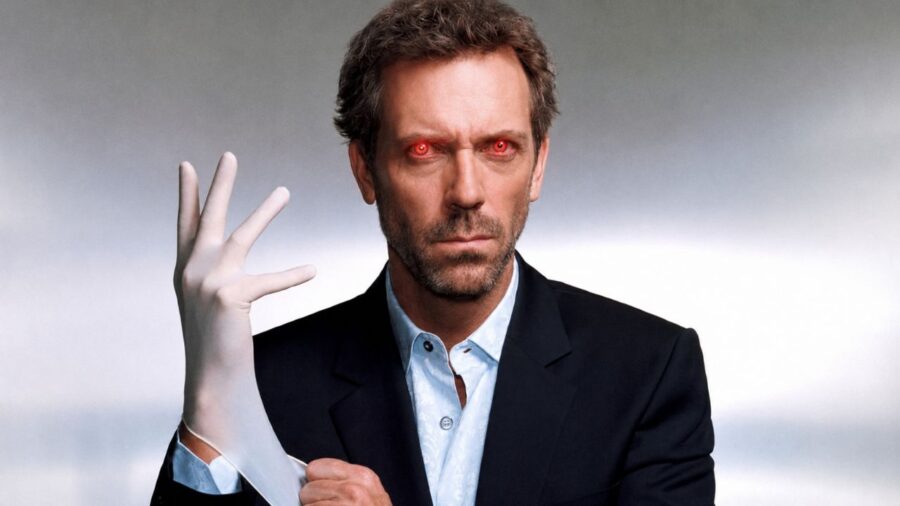
Hugh Laurie Brings House Back By Roasting A Fan

By Chris Snellgrove
| Published

While I mostly lurk these days, I’m still hanging around on X, formerly known as Twitter. Admittedly, the place has become a real hellscape, with a feed constantly serving up ragebait and idiots constantly asking Grok to do their thinking for them. Speaking of idiots, X is filled with people who pay for blue checks, and as you might imagine, the people who pay extra to force their comments to the top almost never have anything interesting to say. Why am I still there, then? Because every single day, there’s some insanely brilliant bit of sh*tposting that makes me utter the motto every Twitter veteran: “I’m never leaving this site.”
For example, even though the last House episode aired nearly a decade and a half ago, new fans are constantly discovering the show. New haters, too, as evidenced by one user (@jan_murray) starting Season 1 and griping about the show’s repetitive episode formula. Normally, this would be no big deal; people posting bad media takes on X is hardly anything new. What made her critique noteworthy, though, is that House star Hugh Laurie actually provided a response so wonderfully sarcastic and withering that it’s like he brought his famous TV doctor back for one last rodeo. A Golden Globe-winning actor dunking on a random fan out of nowhere? Man, I’m never leaving this site!
The New Main Character Is Here
All of this began with X user Janet Murray’s capsule review of House. Admitting that she was “late to the party,” she described starting Season 1 and getting annoyed with its repetitive story structure. “Patient has mysterious illness. Hugh Laurie (House) gets diagnosis wrong. Patient nearly dies.” She goes on to describe how the titular characters will get the diagnosis wrong again and nearly get fired, with the patient almost dying again. Finally, “Hugh Laurie has last minute leftfield idea. Gets diagnosis right. Doesn’t get fired.” She ends her critique with a rhetorical question: “Eight seasons of this?”
As expected, many House superfans began mocking her criticisms. But that was nothing compared to Hugh Laurie, House himself, coming into the comment section like a wrecking ball. He immediately began with his character’s signature snark, criticizing her use of brackets in the original post. The actor then sarcastically noted that the crew tried a couple of episodes where “House gets it right the first time, but they were only 6 minutes long. NBC weren’t happy.“ He then joked that they tried episodes “where House never gets it right and the patient dies. The audience wasn’t happy.”
Making A House Call
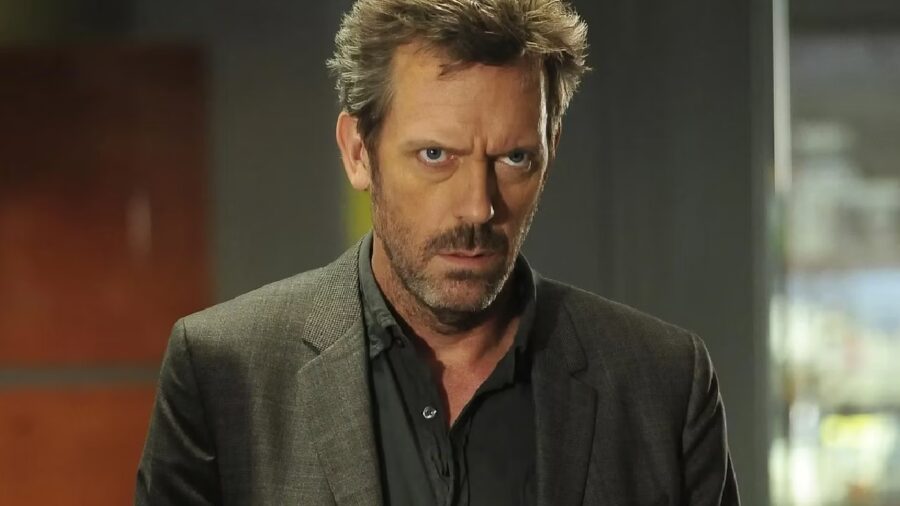
Honestly, this was already brutal enough, but Laurie wasn’t done. Continuing, he wrote, “One could apply your trenchant analysis to other art forms: JS Bach wrote 30 Goldberg variations on the same chord structure; Frida Kahlo painted 50 portraits of herself…The point is, or was, variations on a theme; if all you see is hospital, medical blah blah, then it wasn’t meant for you.” As if he could hear the House fandom crying for him to finish her, Laurie added an absolutely devastating final sentence: “Nonetheless, I look forward to your first novel!”
Aside from the relative novelty of a famous actor talking sh*t to a sh*t poster, what makes Hugh Laurie’s response so great is that it might as well have been written by House. From the initial mocking of her communication to dragging her for not understanding media, the whole thing feels like a (slightly) more polite version of the TV doctor’s famous onscreen takedowns. Plus, Laurie’s final dig, essentially pointing out that this is creative criticism from someone who hasn’t created much, feels like the kind of thing House might throw out, mid-argument, before dramatically walking away.
The Diagnosis Is Correct
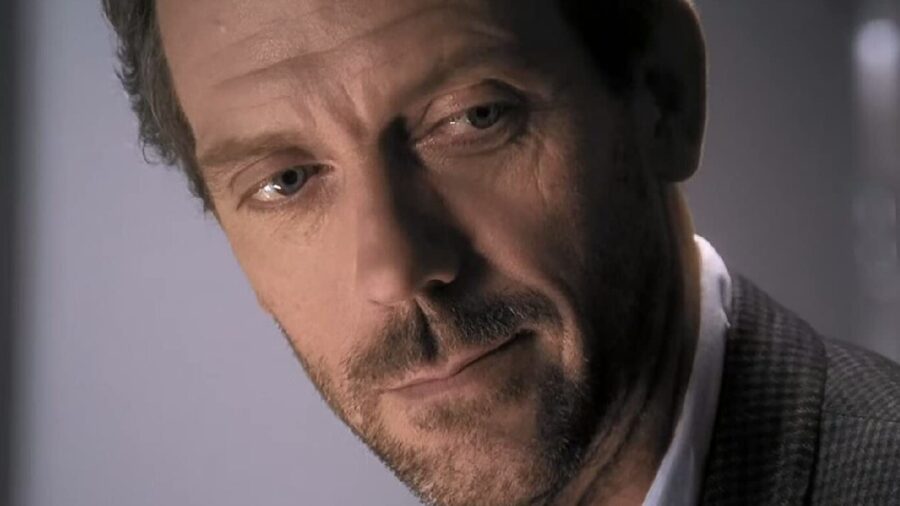
Beyond the sarcasm, Laurie offers some pretty spot-on media analysis. Most great new stories are, in fact, variations on stories we have seen before. Joseph Campbell pointed this out in his groundbreaking 1949 book Hero with a Thousand Faces. According to him, most great myths (ranging from The Odyssey to the Bible) tell the same essential story using different variations of the same tropes. He called this the “monomyth,” and his theories influenced George Lucas. This is why the first Star Wars, despite being sci-fi, has so many King Arthur callbacks: a magical mentor, an enchanted sword, and a hero of destiny who has to rescue a damsel in distress from a terrifying castle.
While many fans and even a few of the show’s actors have been hoping for a House revival, nothing has been announced. Realistically, we may never get another TV series that brings back Hugh Laurie’s famously cantankerous physician. However, this hilarious kerfluffle over on X is a reminder that fans can effectively summon House back for more wit and wisdom whenever they want. All they have to do is say something really, really stupid where Hugh Laurie can see it, and then brace themselves for the most hilarious clapbacks in celebrity history!

Continue Reading

Us Weekly has affiliate partnerships. We receive compensation when you click on a link and make a purchase. Learn more!
Summertime in Copenhagen is unmatched. Not only are the vibes high, but the fashion is impeccable. Copenhagen Fashion Week hasn’t even happened yet, but on my recent trip, people were already stepping out in their most stylish looks. I’ve always admired the Danes’ fashion sense, and I’m basing my summer wardrobe solely on the top trends I saw. You’d be smart to do the same. Embrace a breezy Scandinavian style this summer and beyond with the city’s most popular fashion trends below.
4 Copenhagen Fashion Trends I’m Copying for the Rest of the Summer
Flip-Flops
1. Supported Style: These sleek leather flip-flops aren’t just stylish; they’re also extremely comfortable thanks to the memory foam footbed.
2. Gentle Knots: Copenhagen is a walking city, and while many flip-flops cause blisters, the fashionable girls avoided sores by wearing ones that had soft fabric straps like these.
3. Color Pop: I noticed Danish women kept their outfits pretty neutral, but opted to add a dash of color with bright flip-flops.
4. Elevated: Early aughts styles have reached Scandinavia! I saw countless people wearing chunky wedge flip-flops for extra height.

My favorite part of warm-weather dressing is knowing that stylish summer shoes can instantly make an outfit feel fresh. As a shopping editor, I’ve seen the most comfortable sandals, supportive slides and easy everyday sneakers disappear fast once the season kicks in, making now the smartest time to shop before your size is gone. To […]
Boxy Cotton Sundresses
5. Let it Flow: Looser dresses are the move in Copenhagen (probably because they’re easy to bike in!). This chiffon maxi comes in so many colors and matches the joyful vibes of the Scandinavian city.
6. Gingham Dreams: I thought the gingham craze was just an American thing — my time in Copenhagen proved otherwise. The Danes adore the pattern, especially on flowy dresses.
7. Short ‘n Sweet: While maxi dresses were more popular than minis, the few people who wore minis kept them loose and breezy, just like this cotton trapeze dress.
8. Delicate Details: The ruched square neckline and embroidered skirt on this cotton maxi make it so versatile — style it with sneakers (or flip-flops) for daytime wear or slip on some heels for special evenings.
Stylish Capris
9. A Little Flick: There’s something about the slightly flared hem on these stretchy capris that feels effortlessly stylish.
10. Pretty Pattern: Polka dots are the unofficial pattern of Copenhagen — I saw them everywhere. That’s why I immediately bought these dotted capri pants when I got home.
11. So Playful: So many capris look like carbon copies of each other. Luckily, the feminine ruffle hem on this style makes them stand out.
12. Keep it Chill: One thing I loved most about the fashion in Copenhagen was how women prioritized more comfortable, looser silhouettes — even when it came to capris. This relaxed style features a wider leg opening so the pants won’t tug or bunch.
Boho Tops
13. All the Lace: With three different types of lace, this whimsical boho tank feels so romantic and is a total statement piece.
14. Go Asymmetrical: The Danes’ high fashion prowess was on full display with asymmetrical tops like this smocked style that looked like it just came from a Copenhagen Fashion Week runway.
15. Show Some Skin: Copenhagen’s weather is cold, dark and rainy most of the year. So in the summer, people really take advantage of the sun by wearing strapless tops, just like this embroidered floral design.
16. Vintage-Inspired: Thrifting is unmatched in Copenhagen, and people will easily believe you scored this vintage-inspired lace vest during your trip.
UsNow Summer Sale Alert: These Chic Fashion Finds are over 30% off – Plus Free Shipping
Welcome to summer with our biggest sale of the year. This summer’s chicest dresses, tops and swimsuits are all over 30% + free shipping. Inventory is limited so hurry before they’re gone.

When temperatures climb, the last thing I want is an outfit that feels heavy, clingy or fussy. That’s why I reach for lightweight seersucker every summer; the puckered fabric naturally lifts away from the skin, making it feel cool, breathable and effortlessly polished, even on the hottest days. From easy-going matching sets to chic maxi […]
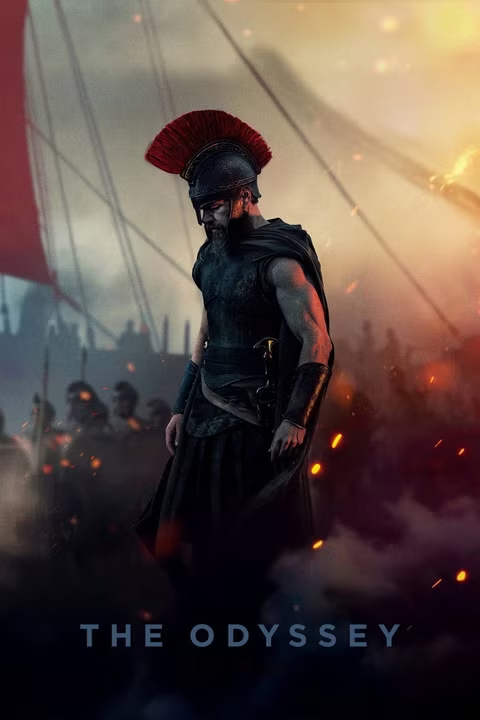
While stars like Tom Cruise, Matt Damon and Tom Holland have dominated the headlines throughout 2026, one actor has quietly put together the most commercially successful year in Hollywood. And we’re laughing thinking about how random the whole thing is but, between a record-breaking Christopher Nolan epic and the year’s biggest animated blockbuster, of all people, Benny Safdie has amassed a box office haul that no other performer has been able to match.
Yes, the man whose face you remember dripping with suntan lotion in front of an atomic explosion in Oppenheimer has scaled new box office heights, and is looking at well over $2 billion in takings — and we’re not even in August, yet! It’s even funnier because Safdie isn’t the leading man in any of the films. Instead, he’s become the year’s ultimate supporting player, with two hugely successful projects combining to give him an extraordinary run at the global box office. Now, given Spider-Man: Brand New Day comes out this week, Zendaya and Tom Holland, Safdie’s co-stars, will likely overtake him, while Zendaya definitely will when Dune 3 releases. But for now, let’s enjoy this.
What Movies Is Benny Safdie in?
Safdie kicked off the year by voicing Bowser Jr. in The Super Mario Galaxy Movie, which has surpassed $1 billion worldwide to become one of 2026’s biggest releases, and followed it up as the King of Auramaxxing Mycenae, Agamemnon, in The Odyssey, which is now almost guaranteed to pass a billion, having almost reached $700 million worldwide in just its second weekend.
Safdie first rose to prominence alongside his brother Josh Safdie, directing acclaimed films including Good Time and Uncut Gems. In recent years, however, he’s increasingly become one of Hollywood’s most sought-after character actors, earning praise for performances in Oppenheimer, Are You There God? It’s Me, Margaret. and now The Odyssey.
With The Odyssey continuing to dominate cinemas and The Super Mario Galaxy Movie already sitting among the biggest hits of the year, Safdie’s remarkable 2026 box office record may prove difficult for anyone else to catch before the year is out. This is one of those unusual cases where an actor you wouldn’t expect is actually the highest grossing — Zoe Saldaña is regularly cited on these lists thanks to her work in the Marvel Cinematic Universe, but also James Cameron‘s Avatar films, while Samuel L. Jackson‘s supporting role as Nick Fury in the MCU has seen him become the highest-grossing actor of all time in the past.
The Odyssey is playing now in theaters.

- Release Date
-
July 15, 2026
- Runtime
-
173 minutes
The start of the 21st century saw quite a distinct shift in music. The lingering effects of the ’90s were still felt. The shockwaves in alt-rock and pop music paved the way for new styles to find success. While massive pop hits dominated the airwaves, so did the explosive rise of mainstream hip-hop and R&B. Alt-rock remained, but rock subgenres like pop-punk and emo slowly took over. And then there was Eurodance music, which shifted to fast, pulsating Auto-Tune club beats. For every Eminem, Britney Spears, or Green Day who dominated the 2000s, there was a one-hit wonder whose track outlasted the artist. You may not remember their name, but you certainly can sing the song.
In the age when TRL was appointment after-school television, the obsession with music videos and Top 40 hits shaped the music scene. The ’00s had a bevy of one-hit wonders across all genres. The artists dropped a hit that stuck with us, but why didn’t they? We’re about to celebrate 10 of the greatest one-hit wonders from the aughts. From hip-hop tracks that were highly inappropriate for a younger demographic to rock songs that became our anthems, these tracks were not only downloaded on Napster but also had a significant impact on pop culture. Some of these artists’ music videos have been on Youtube since the website launched, and some emerged years after, with the views jumping to great heights because we love nostalgia. Though it’s likely some of your favorites may not have made the cut, they remain in our brains.
10
“I Wann Be Bad” by Willa Ford (2001)
There were quite a few blonde bombshells in the pop music scene: Britney Spears, Christina Aguilera, Jessica Simpson, Mandy Moore. For the most part, they were wholesome until they weren’t any longer. But one blond bombshell entered the TRL era claiming she was a bad girl from day one. That girl was Willa Ford. In the pop-dance track, the rebellious anthem was all about embracing your wild side and breaking the rules. Ford also added another layer with rapper Royce da 5’9″, bringing an extra layer of swagger and edge. It’s a trend that the early aughts did quite often. In a time when the aforementioned divas were still bringing sugary, sweet, Ford was quickly rejected from delivering more. Which is comical as Spears and Aguilera went “I’m a Slave 4 U” and “Dirrrty” shortly after. But they earned it. Ford came out swinging.
Now, another layer into why “I Wanna Be Bad” became a one-hit wonder was because of the world around. Timing was everything, as her second single, “Did Ya Understand That,” was scheduled for release on September 11, 2001. The world stood still, radios froze, and her single just didn’t have the ability to chart. Further, her record company suffered executive turnover, leaving her stranded in “no man’s land.” It’s ironic that her album was called Willa Was Here because, for some, it served as a reminder that in the oversaturated pop scene, she existed. Post-“I Wanna Be Bad,” Ford had some film and television appearances, including the third season of Dancing with the Stars. She and her partner, Maksim Chmerkovskiy, were eliminated in the fifth week of the competition. Just this year, she released a digital album called Amanda, which included a string orchestral version of her one-hit wonder.
9
“Ocean Avenue” by Yellowcard (2003)
Emo pop-rock was all the rage at the turn of the century. Many alternative rock bands sought out mainstream crossover appeal because it often led to a road of success. For Yellowcard, it seemed they were on that path with the mammoth hit, “Ocean Avenue.” The nostalgic, coming-of-age pop-punk anthem told the story of a youthful romance and a longing to escape your hometown. With that theme, the track resonated by hitting the charts around the world. It may have been a song rooted in Jacksonville, Florida, but it had universal appeal. While the song became a massive mainstream anthem, the band never found that same allure again.
Yellowcard was locked into the mainstream after “Ocean Avenue.” It helped usher in the rise of pop-punk. It resonated well beyond its debut, earning itself a slot on many lists years later, including Greatest Choruses and Best Emo Songs, but Yellowcard was stuck in the past. Though the band found their niche and earned a devoted fan base, Yellowcard never found their way back into the mainstream. While “Only One” did bubble under the Hot 100, no song found the same allure as “Ocean Avenue.”
8
“Tipsy” by J-Kwon (2004)
We should all be grateful that J-Kwon‘s “Tipsy” predated Kidz Bop, because the infectious track would easily have made its way onto an album in retooled form. The truth, though, every kid and their mother was screaming out, “Everybody in the b— gettin’ tipsy.” The celebratory party anthem captured attention with its catchy counting hook, defining a generation of club culture. As the lead single from J-Kwon’s debut album, “Tipsy” was a minimalist, club-shaking hit. Though the track did lead off with, “Teen drinking is very bad,” “Tipsy” literally promoted underage drinking and clubbing. But that didn’t stop anyone from playing the track as it peaked at No. 2 on the Billboard Hot 100. Written when J-Kwon was just 17, the song served as an ode to sneaking into venues in St. Louis, blowing off steam, and getting buzzed.
The song was simply inescapable. If you listened to rap and R&B radio, you’d hear it. Top 40, it was played. It was an instant earworm that remained the communal drinking track until LMFAO and Lil Jon took over with “Shots” in 2009. Because “Tipsy” became J-Kwon’s defining track, industry executives and fans tied him to the party sound. But as hip-hop trends shifted away from the St. Louis sounds of the early 2000s, J-Kwon was never able to regain the same glory, fading into relative musical obscurity. The song has since reemerged in the pop culture lexicon after country singer Shaboozey sampled it on his track “A Bar Song (Tipsy).” Now, an entirely new generation and genre sang out, “everybody in the bar gettin’ tipsy.”
7
“Butterfly” by Crazy Town (2000)
If there was ever a band that was meant to bridge the gap from the ’90s to the ’00s it was Crazy Town. They were a rap-rock band that made their impact on the decade with their one-hit wonder, “Butterfly.” A cool, smooth, laid-back rock song with rap layered in, “Butterfly” was meant as a romantic ode to frontman Shifty Shellshock’s girlfriend. Sampling the instrumental from “Pretty Little Ditty” by Red Hot Chili Peppers, the relaxed, acoustic vibe with the hip-hop beat was exactly what music-lovers needed. “Butterfly” was a feel-good, guilty-pleasure track that distinctly brought carefree energy to the airwaves. But the song’s success was aided by its iconic music video. “Butterfly” found immense airplay on MTV because of its fantastical, CGI-heavy forest full of actual butterflies.
From Australia to Poland, with Italy in between, “Butterfly” charted in nearly two dozen countries. The song reached No. 1 on the Billboard Hot 100, but that came with a caveat. Because the song was so mainstream, it ended up alienating their core heavy metal audience. By locking into the pop realm, they struggled to ever shed that appeal. Though “Butterfly” wasn’t the first single from the band, their earlier singles failed to chart even after the success of “Butterfly.” Their sophomore album, “Darkhorse” flopped commercially, leading to the band to break up in 2003. The song has remained at the forefront of iconic one-hit wonders.
6
“Teenage Dirtbag” by Wheatus (2000)
Even outsiders needed an anthem, and that came from Wheatus‘ “Teenage Dirtbag.” The lead single from the band’s self-titled debut album, “Teenage Dirtbag,” told the tale of unrequited high school romance and teenage alienation. Though the song, written by frontman Brendan B. Brown, was inspired by a gruesome teen murder near his Long Island home in the ’80s. That murder set off a media frenzy and local “Satanic Panic.” Brown made the song an homage to those outsiders who loved AC/DC and Iron Maiden. The song itself is a peppy blend of alternative rock angst and power-pop hooks, which gave it wide appeal. It did have a specific sound, including Brown’s iconic falsetto that many listeners believed was that of a female vocalist.
“Teenage Dirtbag” had massive international success, charting at No. 1 in Australia, Austria, and Belgium. Surprisingly, “Teenage Dirtbag” never officially charted on the US Billboard Hot 100. But that didn’t stop it from becoming massively popular. The song was even featured on soundtracks including the 2000 teen comedy Loser, starring Jason Biggs and Mena Suvari. Unfortunately, Wheatus never found the same broad commercial traction as their subsequent singles. The song found a resurgence on TikTok when users and celebrities alike shared throwback photos and childhood memories to the song.
5
“I Believe in a Thing Called Love” by the Darkness (2003)
It may have been 2003, but the English rock band the Darkness brought music lovers back to the ’80s with their glam-rock anthem “I Believe in the Thing Called Love.” A retro throwback reminiscent of Freddie Mercury and Queen, the one-hit wonder was a celebration of romantic optimism and passion. But the truth is, it was deliberately intended to be the “stupidest song ever.” The song is an homage to classic rock. It’s gloriously over-the-top, proven in its exceptionally bizarre music video. Yes, the band was giving glam rock in space. The song is best known for Justin Hawkins‘ soaring, glass-shattering vocals and face-melting guitar riffs. Did you understand anything that came out of Hawkins’ mouth when he reached the tippy-top notes? No, but that was the allure of its idiocy.
The Darkness found massive global crossover success. Their stylistic mismatch with the 2000s became a roadblock. The band’s unapologetic ’70s glam and ’80s hair-metal revivalism clashed with the post-grunge and garage-rock trends on the airwaves. Despite its popularity, it never cracked the Billboard Hot 100 in the States, though in their homeland, No. 1 was their destiny, where they also scored multiple top-10 hits from their debut album. “I Believe in a Thing Called Love” swiftly became a karaoke go-to. The song may have been a one-hit wonder, but it certainly had longevity in pop culture. The song was featured on music video games including Karaoke Revolution and Guitar Hero. It even made it onto the soundtracks of Bridget Jones: The Edge of Reason and The Fall Guy. The band has kept on rocking, with Hawkins even appearing on the UK version of The Masked Singer.
4
“My Neck, My Back (Lick It)” by Khia (2002)
If there is one song that became a pop culture touchstone because of its unapologetically explicit lyrics and empowering declaration of female sexual desire, it’s “My Neck, My Back (Lick It)” by Khia. The lead single from her debut album, Thug Misses, was the edited version of the song that reached mainstream radio, peaking on the US Billboard Hot 100. The song flips traditional power dynamics by giving Khia a demand for physical satisfaction, encouraging other women to do the same. In the process, it challenged the male-dominated rap culture. Though it was an important song for its sociological mission, it was nearly impossible to truly give Khia the success she needed for longevity, as the widespread radio rotation was nearly impossible without major censorship. Did it dilute the song? Incredibly.
To make matters worse, Khia was caught in label disputes while also becoming a controversial persona. She transitioned into a polarizing figure in the music industry, using her platform to focus on outspoken beefs and social commentary. Nevertheless, the track transcended its underground roots to become a cult classic. It’s been interpolated by Saweetie in her 2017 hit “ICY GRL.” Miley Cyrus performed a cover of it in 2015 at Adult Swim’s upfront party. And then there was a country-style cover from Elle King. Oh, and whenever other labels and artists tried to use the sample in their songs, Khia kept the song in the news cycle during copyright disputes.
3
“Who Let the Dogs Out” by Baha Men (2000)
In the ’90s, the most shocking yet addictive one-hit wonder with an awful meaning was “The Macarena.” Only a few years later, the Baha Men swooped in and took over with the highly addictive earworm, “Who Let the Dogs Out.” The sole hit single from the Bahamian Junkanoo band, the song, originally written by Trinidadian musician Anslem Douglas, was originally intended as a man-bashing anthem. In the lyrics, men at a party catcall women, prompting them to respond by calling the men dogs and demanding to know who let the dogs out. Though over time, it’s been believed that the song is about men calling women dogs. Nevertheless, the song rose to prominence thanks to its appearance in Rugrats in Paris: The Movie. It’s why kids started barking all the time.
The song became a global chart-topper, going number 1 in Australia and New Zealand. The Baha Men’s entire identity was locked into the novelty track. Because of that, their subsequent releases failed to find the same massive commercial lightning in a bottle. “Who Let the Dogs Out” was simply irresistible. The barking and chanting served as an inescapable earworm, finding its place in the professional sports world. The cultural phenomenon lasted long beyond its initial release. It appeared in films like Rat Race and Bubble Boy. It continues to be dropped into meme culture and internet humor. And, like anything successful, it faced legal complications, which were documented in the 2019 SXSW documentary Who Let the Dogs Out. Still today, we want to know the answer to the titular question.
2
“Hit ‘Em Up Style (Oops!)” by Blu Cantrell (2001)
Thanks to Blu Cantrell, we all wished to shop at Neiman Marcus, though the music video clearly stated it was Neircus Marman. The sassy R&B revenge anthem “Hit ‘Em Style (Oops!)” A fiercely independent, boss track, “Hit ‘Em Up Style (Oops!)” follows Cantrell as she discovers a partner’s infidelity and retaliates by draining his bank accounts, maxing out his credit cards, and selling his property as payback. The fun feel flips the classic heartbreak narrative into an empowering, upbeat revenge fantasy. The rhythmic, head-nodding anthem gave way to an instant guilty-pleasure tune. The track cleverly sampled a snippet of Frank Sinatra‘s “The Boys’ Night Out,” instantly adding a hint of nostalgia. The single’s massive success was driven by its uniquely catchy fusion of classic jazz and modern R&B. That jazzy R&B helped establish Alicia Keys as a megastar. It didn’t happen for Cantrell.
Cantrell found instant success as the song peaked at No. 2 on the Billboard Hot 100. Unfortunately, it was the only massive track in her repertoire as “Breathe” featuring Sean Paul didn’t find the same appeal stateside. That said, Cantrell’s track remains a feminist anthem, even as a time-capsule song. Cantrell fell into a bit of music obscurity, though she did try reality in the complete celebrity-centric flop on NBC, Celebrity Circus. The song has been covered and mashed up, including by dancehall artist Shenseea. Cantrell was invited to appear in the “Boss Up” music video, but she passed.
1
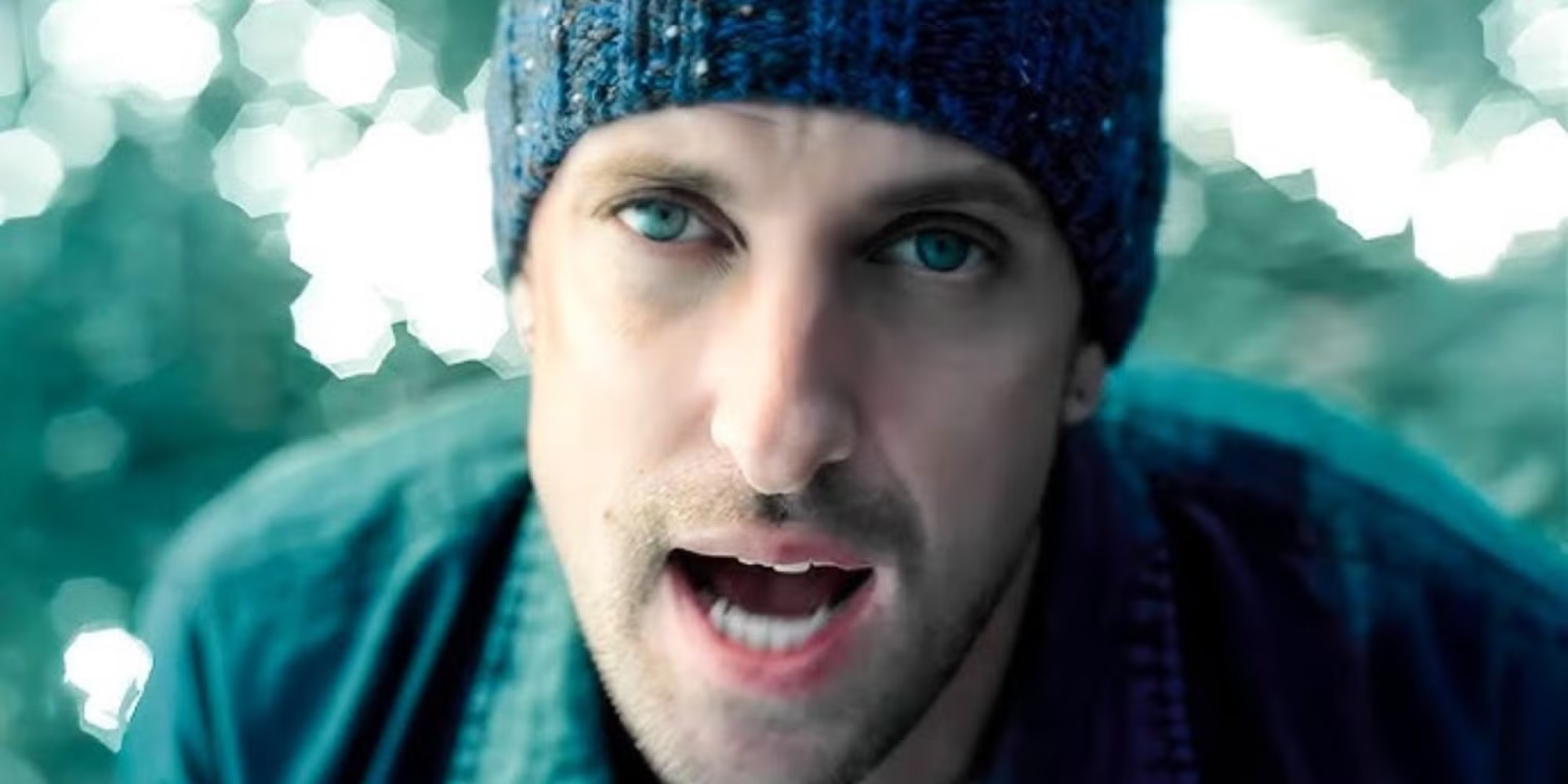
“Bad Day” by Daniel Powter (2005)
Sometimes we turn to music to lift ourselves up when we’ve had a tough time. Then Daniel Powter arrived with “Bad Day,” and a song personified it all. What began as a commercial song for Coca-Cola turned into an overnight hit for the Canadian singer-songwriter. Before it was used as a mockery and as an exit song for a reality song, “Bad Day” was meant as a triumphant lift-up track. The song’s lyrics discuss the universal experience of having a rough, discouraging day and pushing through it. The musical equivalent of that hokey poster you saw taped on the classroom wall, “Bad Day” was meant to remind the listeners that this too shall pass. Rather than being a sad ballad, Powter presented the song with a sunny, upbeat melody. Powter didn’t have a bad day when the song reached No. 1 on the Billboard Hot 100 in 2006, spending five weeks in the top spot. As for his subsequent singles, they had bad days, as none reached such chart heights.
Perhaps the most prevalent appearance of the track was during American Idol as the elimination send-off song. What was meant to be a comforting, albeit slightly melancholic, pick-me-up track in the moment became laughable over time. It would soon be used as a parody via viral videos to evoke sucky situations through musical underscoring. Powter has openly shared how the overnight fame affected his mental health, pushing him into substance abuse to cope with the sudden spotlight. Powter made waves when he auditioned for Canada’s Got Talent with “Bad Day.” In his audition, judge Howie Mandel mentioned the risk of singing an original song, only to eventually put two and two together. They let him through to the next day, so not such a bad day!

She’s covered in mud, elbow-deep in an engine bay, and the internet cannot stop talking about her. Say hello to Hope De Graauw — the Australian outdoor stunner who’s blowing up social media right now, and not just because of her looks.

That’s the question flooding Hope’s comments section lately. Fans have been doing double-takes over her uncanny resemblance to OnlyFans megastar Sophie Rain — the same striking features, the same magnetic camera presence — except Hope’s version comes with a dirt bike, a lift kit, and an accent that makes the whole thing even more irresistible.
“I had to scroll back up like three times,” one commenter wrote. “Is this Sophie Rain in Australia?” Spoiler: it’s not. It’s Hope — and she’s very much her own thing.
From the Outback to Everyone’s For You Page

Unlike a lot of internet-famous faces, Hope didn’t come up posing in a studio. She grew up around dust, diesel, and wide-open Australian terrain, and it shows. Offroading isn’t a prop for her content — it’s genuinely her world. She’s just as comfortable winching a bogged-down truck out of a creek bed as she is turning heads doing it.
That authenticity is exactly why people can’t look away. The internet has seen plenty of manufactured “outdoorsy girl” content. Hope is the real deal, and audiences can tell the difference immediately.
She Builds the Trucks, Not Just Poses Next to Them

Here’s the part that’s really got people hooked: Hope isn’t just riding along for the aesthetic. She’s under the hood. Suspension work, drivetrain upgrades, the kind of hands-on mechanical knowledge that most influencers couldn’t fake if they tried — she’s doing it herself, on camera, in between the content that’s already drawing Sophie Rain comparisons.
It’s a combination nobody saw coming: a face that stops the scroll, paired with the kind of grease-under-the-fingernails skill set that off-road diehards respect. That mix is rare, and it’s exactly why early fans are calling her a breakout star in the making.
What’s Next for Hope De Graauw

Right now, Hope’s following is climbing fast, fueled by word-of-mouth comparisons and a steady stream of content that mixes rugged adventure with serious star power. Industry watchers are already predicting she won’t stay an under-the-radar name for long.
Keep an eye on this one. Between the Sophie Rain lookalike buzz and a genuine offroading pedigree most creators can’t touch, Hope De Graauw has all the ingredients of the internet’s next obsession — and she’s just getting started.
Entertainment
Gloria Estefan used to flash bare butt to ex-neighbor Rosie O’Donnell: ‘Her kid went through a phase of mooning’
:max_bytes(150000):strip_icc():format(jpeg)/Rosie-ODonnell-and-Gloria-Estefan-072726-d5be91580ea54322b69fe8e669e754e8.jpg)
O’Donnell recounted living near Estefan in Miami on Ana Navarro’s podcast.
If you avoided every book published in the 21st century, you’d still be unlikely to ever run out of good reading material, since there are an overwhelming number of classics published in the 20th century, and then all sorts of essential pieces of literature published in 1900 or earlier, too. “Wait, isn’t 1900 part of the 20th century?” you might be asking. It’s part of the 1900s, as in the decade, but not the 20th century.
The same goes for the year 2000. Arguable classics from 2000, like House of Leaves, Blonde, and Harry Potter and the Goblet of Fire, aren’t going to be here, as a result. It would feel right for the year 2000 to be part of the 21st century, but also, it would be factually incorrect. So, going through the best books of the 21st century so far means counting anything published from 2001 onwards. There’s only one author who appears here more than once, and he only appears twice, just to maintain some variety. Speaking of variety, non-fiction and works of fiction will be included here, too.
25
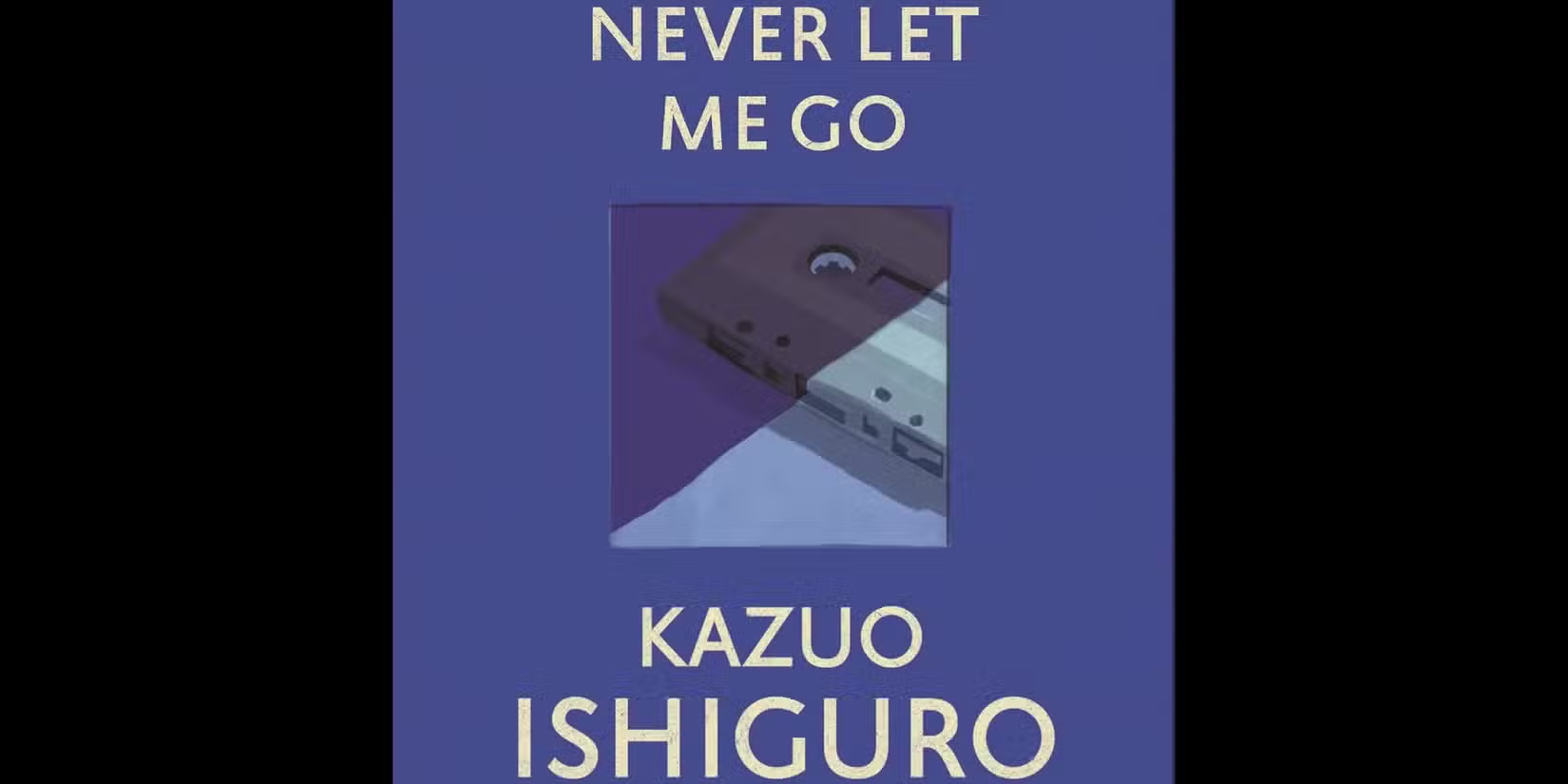
‘Never Let Me Go’ (2005)
Kazuo Ishiguro

A far from conventional science fiction book, and a heavy one, too, Never Let Me Go feels like it’s been around for longer than just over 20 years… in a good way. It feels like more of a traditional classic than it is, and that also suggests it’s going to stand the test of time further, though it’s worth really stressing that it’s a good book without being a very fun book.
The sci-fi elements are subdued, and there mostly to enhance what’s mostly a psychological drama, and something that can be unusually eerie (maybe even scary) at times, too. It’s all too easy to ruin some of the surprises in Never Let Me Go, so it’s just better to say you’re better off discovering things here for yourself (again, if you don’t mind reading a downbeat novel every now and then).
24
‘The Cold Six Thousand’ (2001)
James Ellroy

The middle chapter in the Underworld USA trilogy by James Ellroy, The Cold Six Thousand, is not as good as American Tabloid, but that one came out in 1995, so it can’t be here. Sorry, American Tabloid. It is worth mentioning that, though, because the book covers events between 1958 and 1963, with The Cold Six Thousand picking up right after and covering 1963 to 1968, with the third book, Blood’s a Rover, then covering 1968 to 1973.
Historical figures and fictional characters collided in American Tabloid, building up to the assassination of John F. Kennedy, with some of those figures and characters carrying over to The Cold Six Thousand, which then builds to the assassinations of Martin Luther King and Robert F. Kennedy. It succeeds at making a tumultuous time in history feel all the more chaotic and downbeat, standing as a good book to read if, for whatever reason, you want to feel some intense paranoia.
23
‘The Road’ (2006)
Cormac McCarthy

Potentially the greatest post-apocalyptic book of the century so far, The Road is about a man and his son trying to survive in a vastly changed world, but one that does feel uneasily believable. If an apocalyptic event did happen, it would probably be more The Road than Fallout… not that Fallout looks amazing, either, but there is fun to be had in that world, whether you’re talking about the games or the show.
The Road keeps things minimalist and brutal, in that Cormac McCarthy sort of way. You can typically rely on him for a well-written bad time, though there is still humanity in The Road, with some love and all still existing when there’s nothing else. And all that’s conveyed in a non-cheesy way, and without detracting/distracting from the bulk of the book, which is still very much as heavy as it needs to be, with subject matter like this.
22
‘Falling Man’ (2007)
Don DeLillo

Certain Don DeLillo books are worthy of reading before Falling Man, but those ones (namely, Libra, Underworld, and White Noise) all came out in the 20th century. Falling Man is his best of the current century, and it’s admittedly imperfect, but it has enough truly striking moments to ultimately feel great. It’s a novel that sees DeLillo tackling the aftermath of the 9/11 attacks, doing so after addressing historical events of the back half of the 20th century in books like Libra and Underworld.
The postmodern approach here does lead to certain stretches of the book being hard to connect to others, and there is a non-chronological sort of storytelling here. But it does all serve to make the final stretch of Falling Man very haunting and powerful, albeit in ways that are hard to explain without undermining said haunting and powerful quality (just trust, please).
21
‘Born to Run’ (2016)
Bruce Springsteen

If you’ve listened to enough classic Bruce Springsteen albums, you’ll probably know he’s good with words (bit of an understatement), and those songs are often narratively quite strong. It shouldn’t be too surprising, then, that when he wrote a memoir – with the same title as what’s probably his best album – it was also extremely well-written. He covers about everything you’d want here, and the whole thing’s well-paced, too.
Like any memoir, Born to Run is going to be more compelling if you’re a Bruce Springsteen fan, but that’s okay. Maybe the person writing is a Bruce Springsteen fan, and so perhaps they’re biased, but what are you going to do? Yes, you. Problem? Upset? Don’t agree Born to Run is very good? Tough. It’s a great memoir. It’s a great book. It’s also one of a few memoirs that might be enhanced if you listen to it, since Springsteen himself narrates it (the same can be said about a couple more memoirs from the 21st century that’ll be mentioned a little later).
20
‘Against the Day’ (2006)
Thomas Pynchon

Like Don DeLillo, Thomas Pynchon is a postmodernist author who had his most essential books published in the 20th century, but he’s remained writing throughout the 21st century, too. Against the Day isn’t just his biggest of this century, but is also the beefiest book he’s written so far in either century, being well over 1000 pages long and having an overwhelming bunch of characters who drop in and out of the narrative (or narratives?) as a period of about 25 years is covered.
Against the Day is kind of a historical novel that spans from 1893 to 1918, but the main characters are mostly fictional, and there are some clear breaks from reality at certain points, when Pynchon wants to get fantastical/surreal. You can chip away at it over time, but it is a rewarding one to eventually finish (or conquer), standing as Pynchon’s most moving novel, or maybe his second-most, after only Mason & Dixon.
19
‘Reclaiming History: The Assassination of President John F. Kennedy’ (2007)
Vincent Bugliosi

There were lots of things that happened in the 1960s, to put it mildly. It was a decade of change, upheaval, and progress (at least in some regards), with the John F. Kennedy assassination being… well, not related to progress. But it definitely changed things and shook America, plus much of the world, in ways that can still be felt, and it all happened not too long ago in the overall scheme of things.
Reclaiming History: The Assassination of President John F. Kennedy is the ultimate book about the event, covering it in exhaustive detail and then addressing just about every conspiracy theory that’s sprung up about the event itself, laying out why they don’t hold up. It is easiest to be exposed to conspiracies, rather than detailed refutations of conspiracies, so Reclaiming History has value in that regard. And if you still want to believe, you do you, and even then, you can still probably get a lot out of the (long) section of this (very long) book that covers the assassination and its immediate aftermath, more or less minute-by-minute.
18
‘Harry Potter and the Deathly Hallows’ (2007)
J.K. Rowling

The 1990s was when the Harry Potter series started, but the 2000s felt like the decade that it was truly dominant, and even inescapable. The fourth book was published in 2000, and is debatably the best Harry Potter book of the 2000s, but it’s got that “technically a 20th-century book” thing going for it, so it’s not here. The final three books in the series were also published during the 2000s, and were being released at around the same time the first few movies were coming out, too.
You can’t fault Harry Potter and the Deathly Hallows when it comes to drama and big things happening.
Of the 21st century Harry Potter books, the grand finale, Harry Potter and the Deathly Hallows, is going here. It’s one of the less controversial endings to a long-running book series out there, and even if it’s not perfect, it is still satisfying and crowd-pleasing. Crowds of people read it, and most of them seemed pleased. And you can’t fault Harry Potter and the Deathly Hallows when it comes to drama and big things happening, with it being jam-packed to the extent that dividing its eventual movie adaptation into two parts did ultimately feel appropriate.
17
‘The Girl with the Dragon Tattoo’ (2005)

Stieg Larsson died suddenly and tragically before he could see just how popular his Millennium series would be, because the three books in that series he wrote were all published posthumously. The Girl with the Dragon Tattoo was the first of them, and probably the best, being about a journalist and a hacker/private investigator who both get wrapped in a complex criminal case for (initially) different reasons.
It unfolds a bit like a noir story, and also a psychological thriller, keeping things unpredictable and consistently tense. The Girl with the Dragon Tattoo has been adapted into two movies, and that’s part of the reason it’s such a central and defining neo-noir story, but the book remains the most compelling way to soak up this particular dark, intense, and oftentimes surprising narrative.
16
‘Sonny Boy: A Memoir’ (2024)
Al Pacino

Another memoir, Sonny Boy is Al Pacino telling his life story in his own words, and it also has a fantastic audiobook version, with Pacino being both conversational and theatrical with his delivery. It feels like he’s approached you in a bar, or you’ve found yourself stuck next to him on a long plane trip, and he’s just started casually telling you about everything he’s done. But he’s Pacino, and his life story is fascinating, so it’s worth listening to.
There is a slow pace to the early chapters, about Pacino’s childhood, but then he returns to this time right near the book’s end, and the final things he has to say about his pre-acting years become so much more bittersweet and moving. And then the parts about all the incredible movies he’s been in (with some time spent on the not-so-incredible movies he’s also been in) are all engrossing in the ways you’d expect such parts to be.
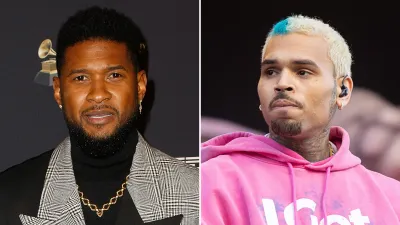
In an unconformable onstage moment, Usher asked a fan to leave after she visibly rejected his seductive dance moves.
During his Friday, July 24, R&B Tour show in Nashville, the “U Got It Bad” singer, 47, performed alongside a female fan from the audience, per footage later shared via Instagram.
In the video, the shirtless musician, who is currently coheadlining The R&B Tour with Chris Brown, is seen serenading the fan before he begins to lean into her while sitting on a bed. As Usher attempts to nuzzle the woman’s neck, the pair bend backwards onto the bed as the fan maintains a rigid position.
The singer (full name Usher Raymond IV) is then seen shifting his face toward the fan’s to engage more intimately with her. However, the woman remains tight-lipped throughout the pair’s interaction. As Usher then lifts his head to look into the woman’s eyes, he flashes her a brief glance before slowly turning his head toward the crowd with a puzzled expression on his face.
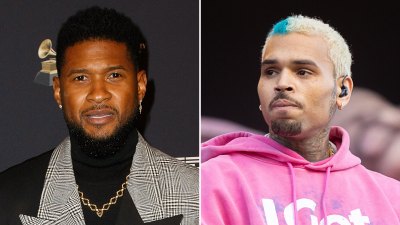
Is there a new feud brewing? Usher and Chris Brown were spotted arguing during a Las Vegas party early on Saturday, May 6. Usher, 44, and Brown had gotten into a heated exchange at the “Go Crazy” rapper’s 34th birthday party at Skate Rock City roller rink in Las Vegas, according to a video obtained […]
“I don’t think she wants to be on the stage,” the hitmaker then says before walking away from the bed, removing his two earpieces and shaking his hand at the bed in a gesture for her to leave the stage altogether.
The awkward moment drew mixed responses from fans, who took to the post’s comments section to offer their takes. “Why would she go up there then?” posed one fan, while another wrote, “I respect her.”


Another social media user commented on Usher’s reaction during the moment, summing it up as, “She killed his ego a little bit, bro ain’t used to that.”
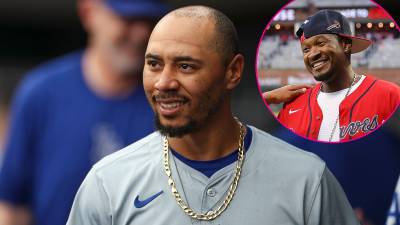
Brandon Sloter/Getty Images Mookie Betts is known for his quick hands on the baseball field, but the Los Angeles Dodgers star was almost forced to utilize them during a potential throwdown with Usher. Betts, 31, was mic’d up in the outfield during ESPN’s Sunday Night Baseball broadcast of the Dodgers’ game in Atlanta against the […]
Usher and Brown, 37, announced their tour in April, sharing a joint Instagram post that declared it was “time” to hit the road together. The announcement attracted backlash due to Brown’s legal issues over the years, which have included allegations of abuse against women. (Brown pleaded guilty to the felony assault of his 2009 girlfriend Rihanna, serving five years of probation.)
Brown addressed the backlash in an Instagram Story shared on April 26. “The funniest and the weirdest s*** ever to me is the fact that poeple [sic] have the option to come to my tour and the option not to,” he wrote at the time. “I know everyone who is a fan of me and USHER will definitely be in the building and it will be PACKED just like last year.”
The new millennium has been an embarrassment of riches for science fiction. From mainstream commercial hits to quiet and introspective pieces, the genre has thrived and reached new levels of recognition, thanks to directors like Denis Villeneuve and Jordan Peele. It’s a genre that has massively thrived in the modern age, not just due to continued franchises, but memorable original visions from the best filmmakers working today.
In fact, more than a few recent sci-fi movies are on their way to becoming classics of the beloved and daring genre. From award-winning successes like Arrival to box-office smash hits like Backrooms, these masterpieces will surely stand the test of time and take their worthy place alongside classics like Star Wars and 2001: A Space Odyssey.
10
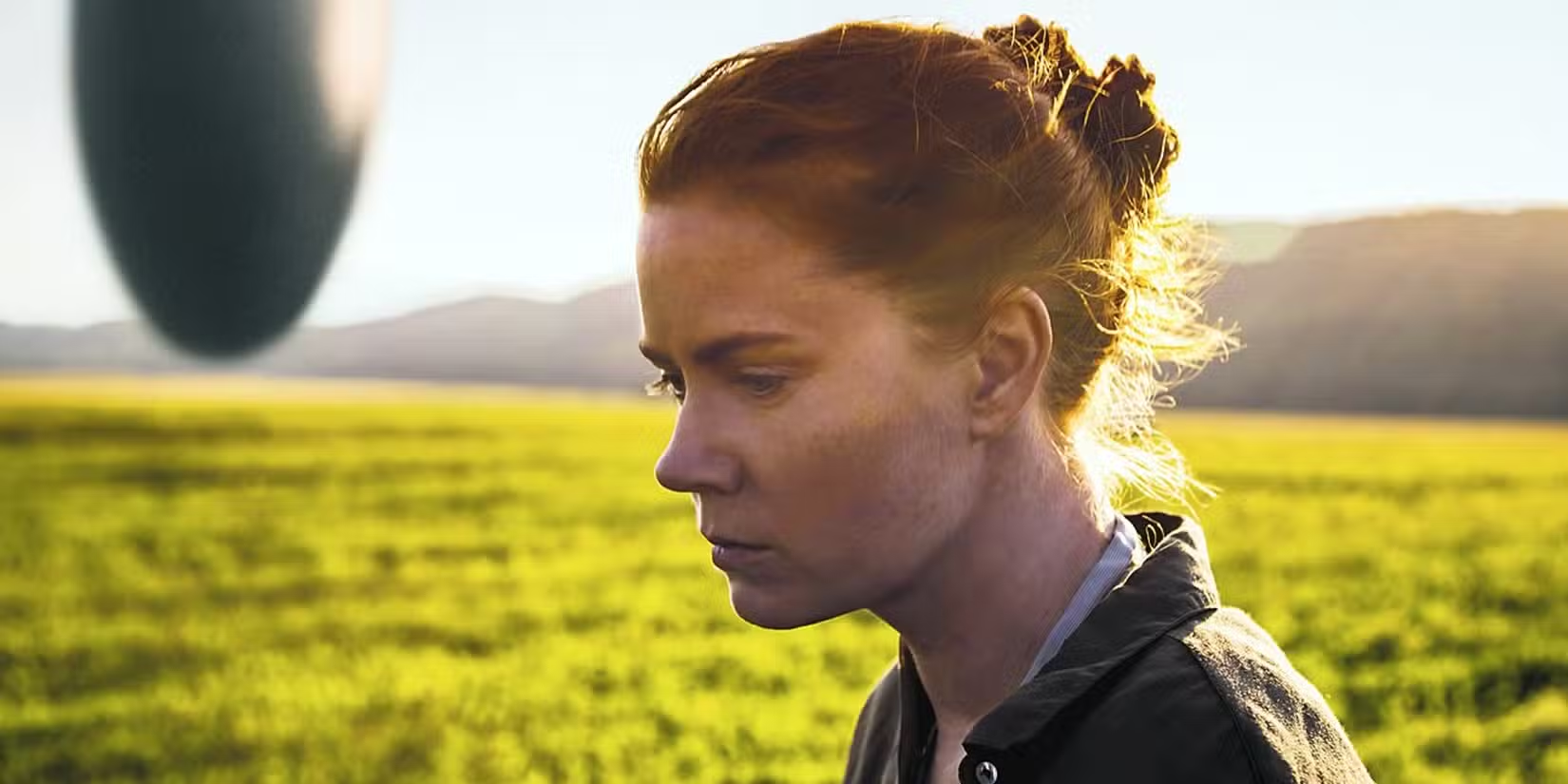
‘Arrival’ (2016)

Amy Adams gives the best performance of her esteemed career in Denis Villeneuve’s 2016 cerebral sci-fi masterpiece Arrival. Adams plays Louise Banks, a linguist tasked with interpreting a series of symbols created by aliens newly arrived on Earth.
Insightful, thought-provoking, and profoundly impactful, Arrival is a cinematic masterpiece. The film is a triumph, balancing weighty ideas with a deeply humane plot that will resonate with every parent and child. Further elevated by Adams’ gripping performance, Arrival‘s standing has only improved over the years, with many considering it among the best films of the 21st century.
9
‘The Substance’ (2024)

Body horror has been a staple of the horror genre for decades now, with iconic titles like The Fly and Under the Skin showing the timeless effectiveness of body horror with sci-fi elements at their center. The Substance is simply the latest landmark title in the sci-fi body horror genre, further amplifying its abundance of gore and gross-out moments with a heaping dose of in-your-face messaging about the self-destructive culture of Hollywood beauty standards towards women.
The film’s overwhelming, in-your-face style manages to even give it a distinct edge from previous body horror films, making it an immediate fan-favorite for those who witnessed it. The hype and enthusiasm for the film even ended up being ridden all the way to a Best Picture nomination, a complete rarity for horror films and a perceived impossibility for body horror. While already being heralded as a horror classic, it’s easy to imagine the film as a sci-fi classic in the future as well. —Robert Lee
8
‘Dune’ (2021)
.jpg?q=49&fit=crop&w=500&dpr=2)
Villeneuve strikes again. The ambitious director tackled Frank Herbert‘s notoriously divisive and challenging seminal novel Dune with a faithful adaptation starring Timothée Chalamet. The Oscar nominee stars as Paul Atreides, a young man caught in a galactic battle over control of the desert-like but crucial planet of Arrakis.
Dune successfully captures its source material’s grand scope and hefty themes and blends them with a healthy dose of thrilling action sequences worthy of a major Hollywood production. The film is an epic cinematic achievement that brought new life to a well-known classic, cementing its place in the pantheon of sci-fi triumphs. With the climactic finale of the Dune trilogy on the horizon, the classic status of this original entry is all but cemented.
7
‘Poor Things’ (2023)

An unrestrained arthouse dramedy from acclaimed visionary director Yorgos Lanthimos, Poor Things has an infectious mixture of raunchy comedy, insightful social messaging, and a quirky twist on its Frankenstein-adjacent story. The film follows the perspective of Bella Baxter (Emma Stone), a woman brought back to life through unorthodox means who has the physical body of an adult woman and the mind of a child. As she navigates the world and learns of its pleasures and hardships, she grows steadfast in standing for equality and liberation.
From the very first frame to its equal parts strange and emotional ending, Poor Things thrives thanks to the sheer creativity and personality of its execution, persisting in every part of the film and elevating it to massive critical acclaim. Even in the short time since its release, there has been overwhelming praise and appreciation for the artistry on display in the film, including 4 Academy Award wins. —Robert Lee
6
‘A Quiet Place’ (2018)

John Krasinski directs himself and his real-life wife, Emily Blunt, in 2018’s horror sci-fi A Quiet Place. Set in a world populated by blind monsters with heightened hearing, the film focuses on the Abbott family as they try to survive while grieving the death of their youngest child while expecting another.
Anxious but understated, A Quiet Place relies on the basics of horror, using mystery and silence to craft an exquisite creature feature far scarier than many other contemporary horror pictures. Soaring on the backs of Krasinski’s assured directing and Blunt’s career-best performance, A Quiet Place is a modern classic in the horror and sci-fi genres.
5
‘Backrooms’ (2026)

Based on the fan-favorite YouTube series of the same name, which in itself adapted a prominent internet creepypasta, Backrooms shines as one of the most prominent and shining examples of the future of filmmaking in the hands of the next generation. The film sees various people investigating a mysterious pathway in the basement of a furniture showroom that leads to the titular Backrooms. With strange, unsettling imagery and rooms that seemingly go on forever, it doesn’t take long before the dangers of the Backrooms make themselves present.
With a larger cinematic scale and a deeper examination of the thematic strengths and world of Backrooms as a whole, this feature-length extension of the web-series is everything that fans wanted and more from a Backrooms movie. Especially since this type of internet-centric adaptation never is this faithful to the original source material, the film became an immediate hit that capitalized on all the fans of the property while also seamlessly introducing it to new audiences. —Robert Lee
4
‘Mad Max: Fury Road’ (2015)

Thirty years after Mad Max: Beyond Thunderdome, George Miller returned to his famous franchise with Mad Max: Fury Road. The film stars Tom Hardy as Max Rockatansky, who joins Imperator Furiosa, played by the mighty Charlize Theron, to take down the despot Immortan Joe.
Mad Max: Fury Road is a technical achievement of the highest order. The film is basically a prolonged car chase, with Miller raising the stakes and thrills to new and epic heights. However, Fury Road is also a feminist rallying cry and a successful reinvention of a saga that spent years on life support.
3
‘Nope’ (2022)

Jordan Peele‘s neo-Western sci-fi horror Nope stars Daniel Kaluuya, Keke Palmer, and Steven Yeun. The film follows two siblings attempting to capture evidence of a UFO that appears over their horse ranch.
Nope offers interesting commentaries about the movie-making business, the film industry, and society’s simultaneous fear and obsession with the unknown. Like Peele’s previous efforts, Nope has a healthy dose of horror, adding a layer of tension to the already eerie premise. Exhilarating and audacious, Nope finds Peele at his most commercial, marking yet another triumph in his filmography and becoming an instant classic of the genre.
2
‘Project Hail Mary’ (2026)

Each generation manages to have its own high-budget sci-fi epic that pushes technological advancements to their limit to create a strikingly beautiful exploration of the cosmos, with this role being squarely filled by Project Hail Mary. This charming mixture of quirky humor and harrowing human nature makes for a great mixture of entertainment and emotion, delivering everything one would want out of a sci-fi blockbuster experience.
On top of being a really great film in its own right, there is an undeniable approachability and crowd-pleasing attribute to Project Hail Mary that makes it a joy to watch for just about everyone that witnesses it. While the film has only been out a few months, the pathway to newfound classic status is easily underway, as it will most certainly make a killing at the upcoming Academy Awards and will probably even win a few awards along the way. However, even more than just awards, Project Hail Mary is the type of fun, lighthearted movie with real depth that audiences will be reminiscing about and rewatching for decades to come. —Robert Lee
1
‘Everything Everywhere All at Once’ (2022)

The Oscar-winning sensation Everything Everywhere All at Once stars Michelle Yeoh, Ke Huy Quan, Stephanie Hsu, and Jamie Lee Curtis. It tells the story of Evelyn, a Chinese-American immigrant who discovers she can access other universes and becomes involved in a multiversal battle against an all-powerful being called Jobu Tupaki.
Subversive and brilliant, Everything Everywhere All at Once is equal parts absurd and heartwarming. Blending heavy metaphysical themes with issues of family and identity, the film is a brilliant exploration of life, love, and the Asian-American experience. Everything Everywhere All at Once is unique, a film that will stand the test of time as one of the genre’s all-time best.
Entertainment
Carly Simon reveals ‘difficult, frustrating’ cancer, Parkinson’s disease diagnoses that led to public retreat
:max_bytes(150000):strip_icc():format(jpeg)/carly-simon-1-072726-8e620b0179dc44d5a3382bfd1b3b0cde.jpg)
The “You’re So Vain” explained her public absences, reflecting on “periods when I could not walk without considerable help” amid her battle with Parkinson’s.
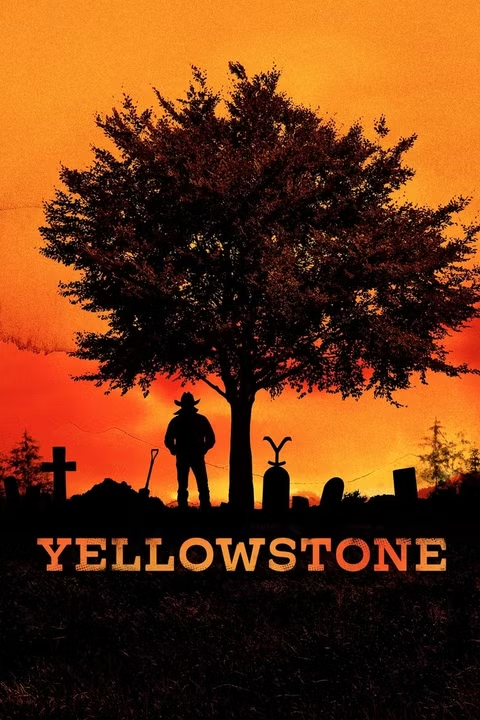
Taylor Sheridan is currently enjoying the fruits of his labor. After building up his career brick by brick, the prolific multihyphenate now has one of the biggest resumes. His TV shows are key pillars in the Paramount+ library, and he has continued to deliver new ones over the past several years. Sheridan is also successful in the film business with hits like Hell or High Water and Sicario. Still, Sheridan has not been the recognizable name he is despite being nominated for an Oscar at the 2017 Academy Awards. All that changed in the late 2010s when one of his most celebrated works exploded in popularity.
The TV show that made him a household name was not a smash hit right out of the gate, but it slowly built its audience until it became the most-watched cable TV show. The gritty neo-Western was praised by viewers for its writing and slow-burn approach that usually culminated in an epic season finale. It concluded in December 2024 partly because the story had neared its natural conclusion, and the behind-the-scenes drama had become hard to contain. However, a good show is a good show, and the passage of time doesn’t negate that fact.
The series in question is Yellowstone, the Kevin Costner-led drama that has opened major doors to Sheridan. After Yellowstone, he went on to write and create close to a dozen shows for Paramount+, shows that have been successful in their own right. The latest, Dutton Ranch, completed its freshman season a few weeks ago. Now, viewers are still craving that original Yellowstone feel, as shown by FlixPatrol’s ranking for last week, which reveals that Yellowstone has become the number one show on Paramount+ globally, over a year after it aired its series finale. It’s rare for completed stories to achieve this, but Yellowstone‘s endlessly rewatchable storyline and the availability of numerous episodes make it a perfect outlier.
The ‘Yellowstone’ Universe Continues
The show came to an end in 2024 when Costner left, and his character was killed off, so the writers had no option but to end this chapter of the story. However, the remaining characters got their continuation when CBS and Paramount+ ordered new shows focusing on different Dutton siblings. In Marshals, Kayce (Luke Grimes) remains in Montana but shifts gears by joining law enforcement instead of ranching. Meanwhile, in Dutton Ranch, Beth (Kelly Reilly) and her husband Rip (Cole Hauser) move to Texas to start a new life away from the Dutton family mess. Both shows will return for Season 2.
Stream all 53 episodes of Yellowstone on Paramount+ in the U.S. and stay tuned to Collider for more updates.

- Release Date
-
2018 – 2024
- Network
-
Paramount Network
- Directors
-
Stephen Kay, Taylor Sheridan, Christina Alexandra Voros, Guy Ferland, John Dahl
- Writers
-
John Coveny, Ian McCulloch

NewsBeat37 seconds ago
Bride who ‘lit up the room’ dies just days after getting married

Business1 minute ago
NBCUniversal, YouTube ink deal to embed Peacock in the video platform
Crypto World3 minutes ago
Circle’s IBM Patent Deal Brings Nearly 1,000 Blockchain Patents


-

 Fashion3 days ago
Weekend Open Thread: Brooks Brothers
-

 Crypto World6 days ago
Grayscale Files For Worldcoin ETF, WLD Registers Sharp Rise
-

 NewsBeat6 days ago
How a former Blue Peter presenter stunned America’s Got Talent judges
-

 Tech15 hours ago
Intel is reversing course and bringing hyper-threading back to its server chips
-

 Tech7 days ago
Sail Virtually Aboard The “Itanic” With IA-64 Emulator
-
 Tech6 days ago
Turtle Beach Command Series KB7 review: a nifty screen-equipped gaming keyboard
-
 Business5 days ago
New Jersey voter registration controversy explained: How 6,600 noncitizens got on the rolls, and what happens next
-
 Entertainment6 days ago
Johnny Depp’s R-Rated Gothic Cult Classic Gets New Release Ahead of Sydney Sweeney Remake
-

 Crypto World5 days ago
Ethics, other provisions in crypto Clarity Act to be further discussed
-

 Politics4 hours ago
Luke Littler dismantles Gerwyn Price to retain title in Blackpool
-
 NewsBeat7 days ago
Shanghai science forum photos show China’s AI and robotics advances in rivalry with US
-
 Sports19 hours ago
Commonwealth Games boxing: Jadumani Singh seals dominant 5-0 win over Pakistan’s Sumama Rehman to enter quarter-finals | Commonwealth Games News
-

 Sports4 days ago
2026 3M Open leaderboard: Scottie Scheffler finds putter in Round 1, sits three back
-

 News Videos4 days ago
The Peugeot Family: How 200 Years of an “Old Money” Dynasty Died in A Boardroom
-

 Politics1 day ago
Spain sweeps the board at 2026 World Cup with individual awards
-

 Fashion3 days ago
16 Dresses for the High Summer Event
-

 Crypto World7 days ago
Andrew Cuomo joins OKX board as crypto exchange expands in U.S.
-
 Entertainment3 days ago
A New Post-Apocalyptic Gundam Anime Series Blasts Into SDCC
-

 News Videos18 hours ago
BITCOIN JUST ENTERED THIS CRITICAL ZONE…
-

 Crypto World1 day ago
XRP Ledger adds $2.6B as RWA inflows rank second
You must be logged in to post a comment Login