

Crypto World
MiCA Architect Says EU Should Prioritize Tokenization Over DeFi Rules

The European Union should focus on a broader digital asset framework covering real-world assets and tokenization instead of regulating decentralized finance through a second version of the Markets in Crypto-Assets Regulation (MiCA), an adviser at the European Commission said.
The European Commission launched a public consultation on MiCA in May, seeking feedback through Aug. 31.
“I do not believe that [MiCA] is outdated now. That’s my personal opinion, but it does not matter. That’s why we have this consultation,” Peter Kerstens told Cointelegraph during a fireside chat at WAIB Summit Monaco 2026.
Kerstens, one of MiCA’s architects, said that the feedback received during the European Commission’s current review period will help shape the bloc’s next regulatory steps.
MiCA is approaching the end of its transitional period on July 1, after which crypto asset service providers will be required to hold a MiCA license or stop servicing EU clients.
Related: Crypto firms face July 1 EU cutoff as MiCA grace period ends
EU doesn’t need to regulate DeFi, says MiCA architect
Decentralized finance (DeFi) protocols were included among the emerging risk areas examined in the consultation, even though they are largely outside MiCA’s current scope.
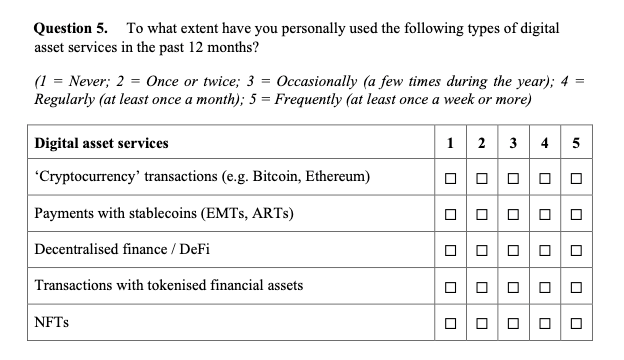
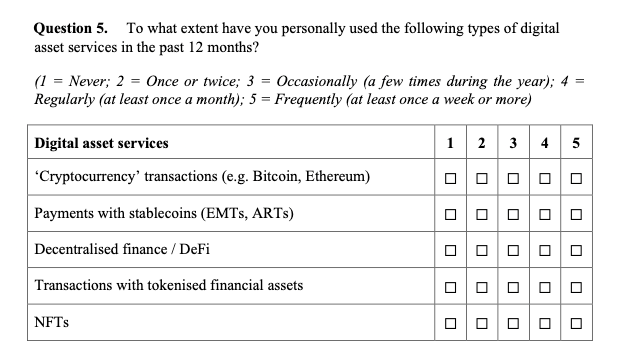
An excerpt from the public consultation on the MiCA review. Source: European Commission
However, Kerstens said regulating DeFi would be difficult because laws can be applied to people and organizations, but not directly to computer networks. He said lawmakers would need a new legal doctrine to regulate non-entities.
Kerstens added that he doesn’t see a need to regulate DeFi, which he described as a “movement” that has “no representatives.”
“I don’t see what the problem is. And if there is no problem, why should it be regulated?”
Earlier in March, a working paper from the European Central Bank questioned whether decentralized autonomous organizations (DAOs) are decentralized enough to remain outside MiCA’s scope. Looking at Aave, MakerDAO, Ampleforth and Uniswap, the paper found that the top 100 governance token holders controlled over 80% of the supply in each protocol, based on holdings snapshots from November 2022 and May 2023.
The authors said these findings question whether DAOs are inherently decentralized and whether they should remain outside of the MiCA regulation as “fully decentralized” services.
Magazine: Crypto wanted to overthrow banks, now it’s becoming them in stablecoin fight

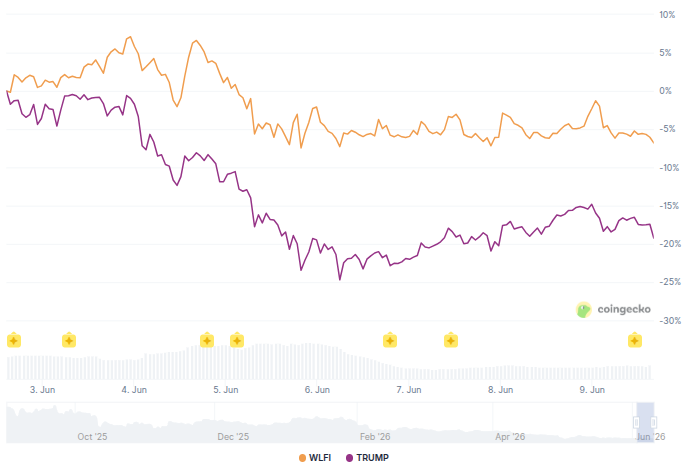
The Trump crypto empire generated estimated profits of $2.3 billion as affiliated projects expanded across digital assets and attracted significant investor participation.
At the same time, losses reported among outside buyers reignited debate about risk, influence, and accountability in crypto.
What Powered Trump’s Crypto Empire
The Trump crypto empire developed around a strategy that combined political visibility, brand licensing, and rapid expansion into digital assets. Unlike traditional business models, several ventures required little direct capital while creating large financial upside.
The largest contributor was World Liberty Financial, the family’s flagship decentralized finance project. The structure reportedly granted Trump-linked entities a 75% percent share of token sale proceeds.
Follow us on X to get the latest news as it happens
World Liberty Financial raised approximately $1.4 billion through the sale of 30 billion governance tokens. After expenses, estimates suggest nearly $987 million flowed to the family. Additional sales involving roughly three billion more tokens may have pushed total proceeds above $1.4 billion.
Analysts cited by Reuters noted that early token sales and exchange activity were unusual for a project at that stage, raising questions about insider selling patterns.
The second major source was the TRUMP meme coin. Blockchain analysis estimated total sales at roughly $1.2 billion. Based on estimated allocations and marketing influence, family-related proceeds may have reached approximately $616 million.

Two additional public market vehicles expanded the ecosystem. ALT5 Sigma, later renamed AI Financial Corp., reportedly purchased more than $700 million in World Liberty Financial tokens, directing over $500 million toward Trump-linked entities.
American Bitcoin became another contributor. Trump family members reportedly received ownership stakes without direct purchase costs. By late April, Eric Trump’s position alone was valued at more than $70 million.
Another report also reveals that the Trump Family’s gains outperform major industry players, including Coinbase ($2.1 billion), IREN Ltd., and BlackRock, while far exceeding those posting losses, such as Galaxy Digital.

Why Investors Experienced the Opposite Result
While profits expanded rapidly, investor outcomes moved in the opposite direction: World Liberty Financial buyers accumulated estimated losses approaching $674 million. A significant portion of early holdings remained restricted, resulting in accounting values close to zero until unlock periods.
TRUMP meme coin investors also suffered substantial declines. Buyers entered aggressively during peaks that reached approximately $75 per token.
By late April, the token traded near $2.38, contributing to estimated investor losses of more than $700 million. While early large traders captured gains, many smaller participants remained exposed to the downside.
Public companies connected to the ecosystem also declined sharply. ALT5 Sigma fell from more than $9 to approximately $75 cents. American Bitcoin dropped from around $11 to near $1.15 by late April. Combined investor losses across those vehicles exceeded $875 million.

Supporters describe the strategy as efficient entrepreneurship supported by disclosed risks. Critics argue that the timing, influence, and regulatory environment raise broader questions about conflicts of interest.
Regardless of interpretation, the Trump crypto ventures illustrate how political reach, media attention, and digital assets can generate extraordinary outcomes for both winners and losers.
The post Trump Family Cashes in $2.3 Billion from Crypto Empire, While Investors get Crushed appeared first on BeInCrypto.


Crypto investment firm Paradigm has urged the U.S. Federal Deposit Insurance Corporation to remove provisions from its proposed stablecoin framework that could restrict third-party firms from offering rewards tied to stablecoins.
Summary
- Paradigm urged the FDIC not to extend the GENIUS Act’s stablecoin yield ban to third-party firms such as exchanges and wallet providers.
- The firm argued Congress previously rejected proposals that would have broadened restrictions on stablecoin rewards.
- Paradigm also challenged proposed rules on white-label stablecoins, reporting requirements, tokenized reserves, and resolution procedures.
According to a comment letter submitted to the FDIC, Paradigm argued that the agency’s interpretation of the GENIUS Act goes beyond the law approved by Congress. The firm stated that while the legislation bars stablecoin issuers from paying yield directly to holders, it does not prohibit independent third parties from distributing rewards linked to stablecoin activity.
“Nothing in the statutory text can be read to expand the yield prohibition to ‘related third parties’ or to authorize an agency’s presumption that the yield prohibition reaches those entities.”
Paradigm said the FDIC should withdraw what it described as an expansion of the statute or align its approach with proposals already put forward by the Office of the Comptroller of the Currency and the National Credit Union Administration.
The firm also asked the regulator to establish an enforcement cure period that would protect compliant issuers from unintended violations.
The dispute comes as lawmakers continue work on the CLARITY Act, a separate crypto market structure bill that preserves activity-based stablecoin rewards offered by third-party companies such as exchanges. Several digital asset firms, including Ripple and Coinbase, have recently called on Congress to advance the legislation to a floor vote.
Paradigm says Congress rejected similar restrictions
Within its filing, Paradigm pointed to the legislative history of the GENIUS Act and argued that Congress had already considered and declined proposals that would have extended restrictions on stablecoin rewards to outside firms.
According to the company, nothing in the law authorizes the FDIC to presume that third-party reward programs violate the statute. Paradigm stated that lawmakers deliberately limited the prohibition to stablecoin issuers rather than distributors or other service providers.
Part of the disagreement centers on how stablecoins are distributed through the crypto ecosystem. Activity-based rewards have become common among exchanges and fintech platforms that use stablecoins for payments, transfers, or customer incentive programs.
Earlier feedback submitted by Consensys raised similar concerns. In a separate filing reported by crypto.news, the blockchain software company argued that parts of the FDIC proposal could capture ordinary commercial arrangements involving distribution partners and brand licensing agreements. Consensys also cited legislative discussions surrounding the GENIUS Act, stating that lawmakers ultimately abandoned efforts to extend remuneration restrictions to third parties.
Other proposed rules draw industry scrutiny
Beyond the yield issue, Paradigm challenged several operational requirements contained in the FDIC proposal.
The company urged the agency to preserve white-label stablecoin arrangements, arguing that requiring separate reserve pools, accounts, and compliance systems for every branded stablecoin would create unnecessary burdens. Instead, Paradigm recommended allowing subledgering practices similar to those proposed by the OCC.
Recognition of tokenized reserve assets formed another part of the firm’s submission. Paradigm asked the FDIC to follow the OCC’s approach and formally accommodate such assets within the regulatory framework.
Reporting requirements also drew criticism. According to Paradigm, weekly supervisory reports would impose high fixed costs on issuers. The firm recommended monthly reporting and asked regulators to define reporting categories directly in the rule text rather than through forms that could later be revised without public consultation.
Questions about how failed institutions would be handled under the GENIUS Act remain unresolved as well. Paradigm stated that the law does not clearly identify which agency would oversee the resolution of a national trust bank, prompting the company to request additional guidance from the FDIC.
Paradigm joins a growing list of industry participants weighing in on the proposed rules. Alongside Consensys, USDC issuer Circle has also submitted comments, urging regulators to clearly distinguish payment stablecoins from tokenized bank deposits.
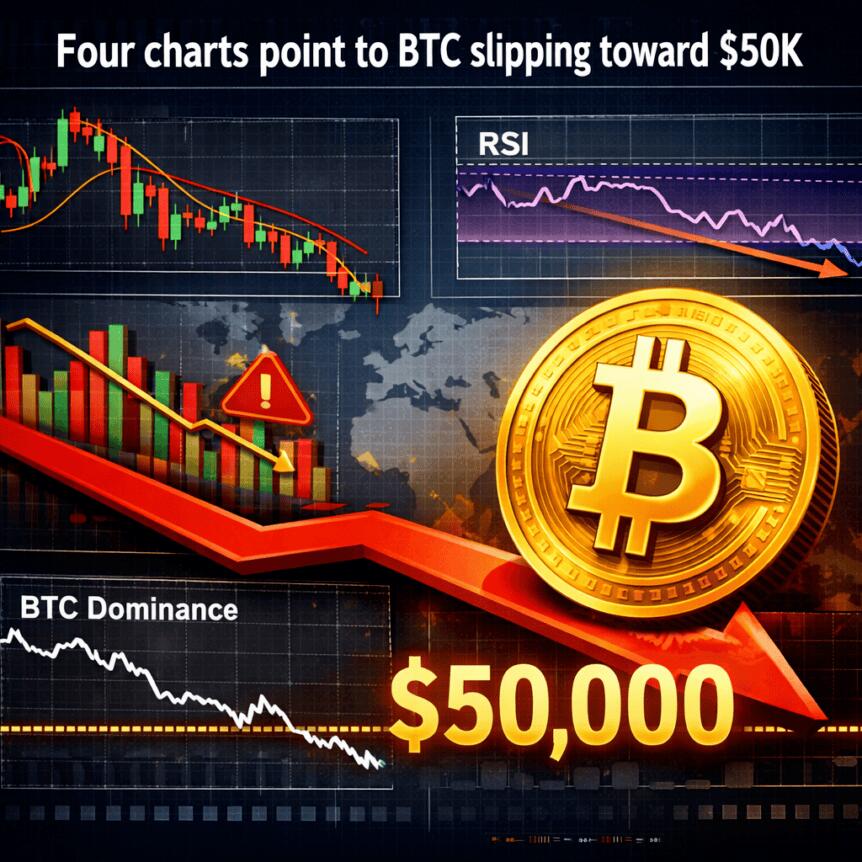
Bitcoin (BTC) bulls managed to defend the $60,000 level after a roughly 13% pullback last week, but a bundle of on-chain indicators and technical signals still points to meaningful downside risk in the weeks ahead. Traders are watching whether BTC can sustain the rebound or slide toward the lower end of its recent range as macro headwinds and market dynamics weigh on risk assets.
Key price and on-chain reference points are centering around miners’ costs, realized price, and valuation bands. If BTC fails to hold above crucial support, analysts say a test of the $50,000 area remains plausible, with several metrics suggesting a potential deeper retest before a durable bottom forms.
Notably, the framework used by several researchers combines production-cost estimates, the average cost basis of current holders, and long-run valuation bands to gauge where BTC might gravitate during periods of stress. In the current setup, those signals converge near the mid-$50,000s to low-$50,000s, with a clear risk of a sub-$50,000 print if selling pressure intensifies.
Key takeaways
- Mining-cost dynamics place BTC near its estimated production cost of about $62,650, with a lower boundary near $50,120. A sustained break below the production-cost band would open a path toward the next major floor near $50,000.
- Bitcoin’s realized price sits around $53,600, a level that has historically coincided with the formation of major cycle bottoms when prices move below it. Past bear markets saw substantial drawdowns relative to realized price, underscoring the risk of a deeper capitulation if BTC fails to reclaim higher ground.
- Glassnode’s MVRV bands show BTC trading below the lower valuation zone, with the next deep-value magnet near $50,000 and a nearby cluster around the $53,600 realized price.
- Technical setup remains fragile: BTC is testing the 200-week moving average near $62,000, and a weekly close below that level would bolster a bear-case scenario with a path toward sub-$50,000 levels. RSI readings around oversold territory further corroborate near-term selling pressure.
Mining-cost dynamics outline a fragile near-term floor
One of the most closely watched signals comes from the Bitcoin production-cost model, which compares the market price to the estimated average cost to mine a bitcoin. The framework, shared by Capriole Investments founder Charles Edwards, places Bitcoin current price near the production cost of roughly $62,650. In this zone, miners are broadly near break-even on average, a circumstance markets have historically treated as a long-term value area.
The model also highlights a lower boundary around $50,120, corresponding to an estimate of the electrical-cost floor. In practical terms, BTC is flirting with the upper edge of a major miner-cost support band, and a decisive move below this zone could bring the magnet of the electrical-cost floor into focus around the $50,000 mark.
For readers tracking the data, the reference to Edwards’ production-cost visualization appears on social media as part of the ongoing discussion about mining economics and price floors. Capriole’s cost framework remains a frequent touchstone for framing near-term risk versus longer-term demand.
Realized price as a potential bottom indicator
The realized price—the average cost basis of all BTC holders—stands near $53,600, according to the chart shared by analyst Follis. Historically, major cycle bottoms in Bitcoin have followed periods when price briefly dips below this metric. In previous bear markets, BTC has fallen a meaningful percentage below realized price: about 58% in 2011, 49% in 2015, 47% in 2018, and 34% in 2022.
That pattern has tempered expectations for a swift bottom. While the cycle this time has shown shallower drawdowns relative to realized price, a move back above or below that line will shape traders’ views on the path to a sustained bottom. If BTC were to break decisively below $60,000, the next target could align with realized price near $53,600, potentially opening the door to a deeper capitulation toward $50,000 and beyond, depending on macro dynamics and liquidity conditions.
Some observers suggest that a bottom could still form later in the cycle, with discussions anchored around the idea that the broad market tends to materialize meaningful basing patterns after price action interacts with realized-price dynamics. For context, references to these cycles and the realized-price framework have been explored in related analyses and charts, including discussions on the timing of potential bottoms in subsequent quarters.
Valuation bands point toward a deep-value magnet near $50k
Bitcoin’s valuation bands, as tracked by on-chain analytics, showBTC trading below the lower band of the long-run framework, with the next magnet around the deep-value zone near $50,000. The current price level, near $63,000, sits below the upper bands that were known to cap tops during prior bull markets, and well above the deep-value threshold that has historically absorbed sharp downturns.
In this framework, the proximity of price to the lower band reinforces the potential for a test of the $50,000 region if weakness persists. The cluster around $53,600—the realized price—contributes to a confluence area that may act as a keen reference point for traders seeking to gauge whether a longer-term bottom is forming or a renewed drawdown could unfold.
Analysts frequently cite these bands to explain why bear-market episodes retrace toward the lower valuation ranges before a durable bottom forms, a pattern seen in prior cycles and echoed in the recent correction. The interplay between the realized-price line and the lower MVRV band is especially watched for potential confirmation of a deeper retest before any sustained recovery.
Bearish technical setup reinforces downside risk below $60k
From a purely chart-driven perspective, Bitcoin’s weekly view hints at a bear-flag continuation scenario. After failing to reclaim the 50-week simple moving average near $91,700, BTC has moved into a corrective flow and is testing the 200-week moving average around $62,000. A decisive weekly close below that level would reinforce the bearish setup and could target the $50,000 area as a measured move from the flag pattern.
Momentum signals add to the caution, with RSI readings hovering near oversold territory around 30, underscoring the presence of selling pressure that could persist if btc fails to reclaim the flag support promptly.
In practice, this means the market may need a clear reclamation of the $60,000 level or a decisive hold above the 200-week EMA to shift the bias. Until that happens, the risk-reward remains skewed toward additional downside, particularly if macro conditions deteriorate or liquidity tightens further.
What to watch next: a sustained move above the $62,000–$63,000 zone would reframe the setup, while a break under $60,000 could push BTC into the $50,000s as on-chain and macro dynamics intersect. As always, readers should monitor how miners respond to price pressure, how realized-price dynamics evolve, and how valuation bands respond to price action in the near term.
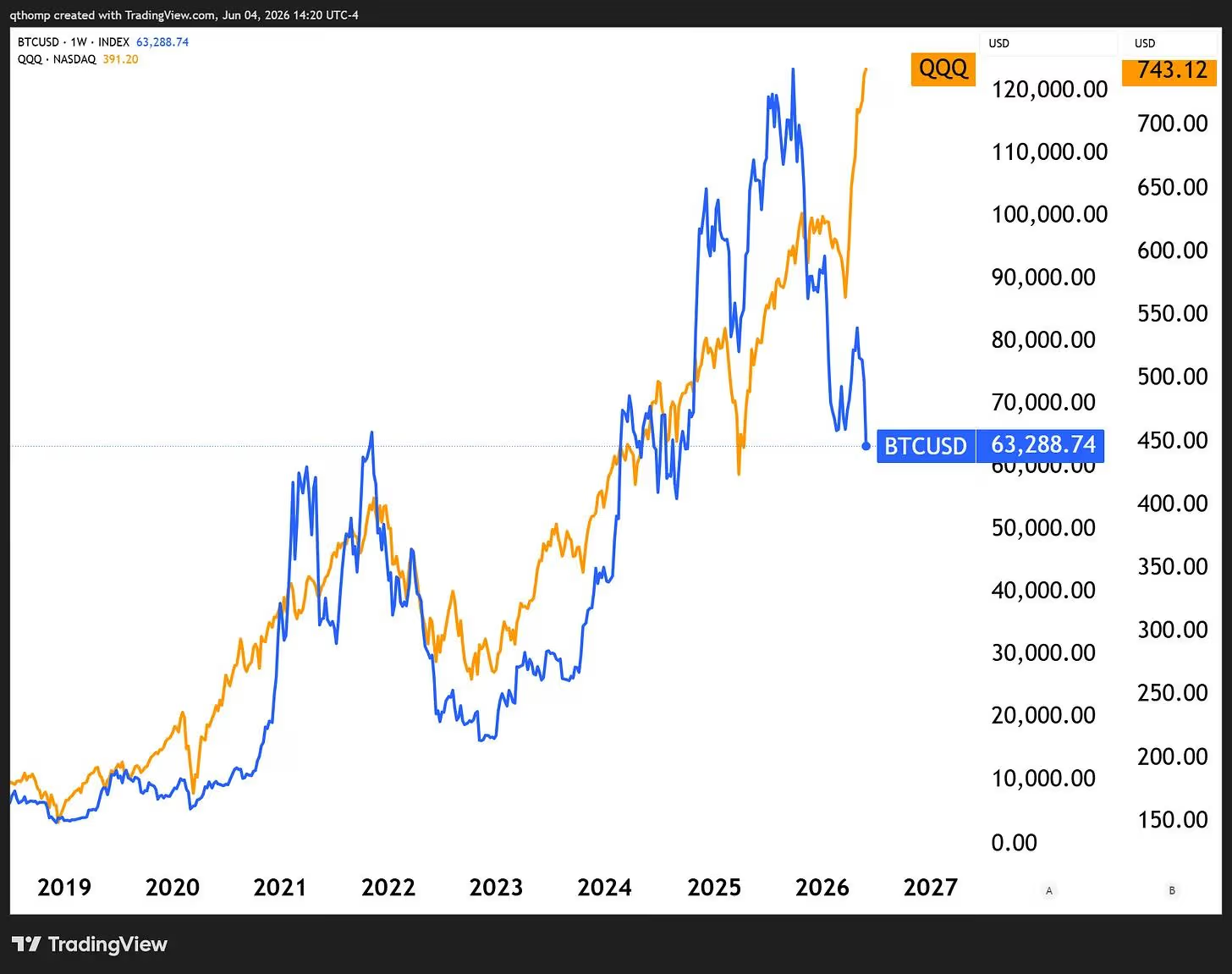
Bitcoin continues to flash warning signs, according to Quinn Thompson, CIO at Lekker Capital, as his fund remains firmly bearish on crypto heading into the summer.
Thompson argues that the market faces a combination of structural challenges, including ongoing digital asset treasury (DAT) concerns, unresolved questions about Strategy’s preferred stock STRC, and lingering fears about quantum computing risks to Bitcoin’s security model.
Combined with weakening liquidity conditions and heavy selling pressure, these factors have contributed to one of the largest divergences between bitcoin and technology stocks in recent history, with crypto significantly underperforming despite continued strength across much of the tech sector.

Thompson’s broader concern extends beyond crypto and believes a wave of blockbuster IPOs (SpaceX, Anthropic and OpenAI) could absorb trillions of dollars in investor capital, creating a liquidity drain.
One of the clearest signs for Thompson is the Magnificent Seven’s underperformance relative to the broader Nasdaq. Historically, healthy bull markets are characterized by leaders leading. Today, however, many of the index’s gains are being driven by semiconductor and AI supply chain names rather than the hyperscalers that sparked the initial rally.

The challenge for those hyperscalers is growing, Thompson says. Massive AI-related capital expenditure commitments pressure free cash flow, increasing debt levels, and reducing share buybacks.
Yet cutting spending could undermine the semiconductor and AI infrastructure trade that has supported the broader technology complex.
Thompson concludes that rising IPO supply is set to compete for capital and investor attention, while He sees a difficult path forward for both AI leaders and the wider market.
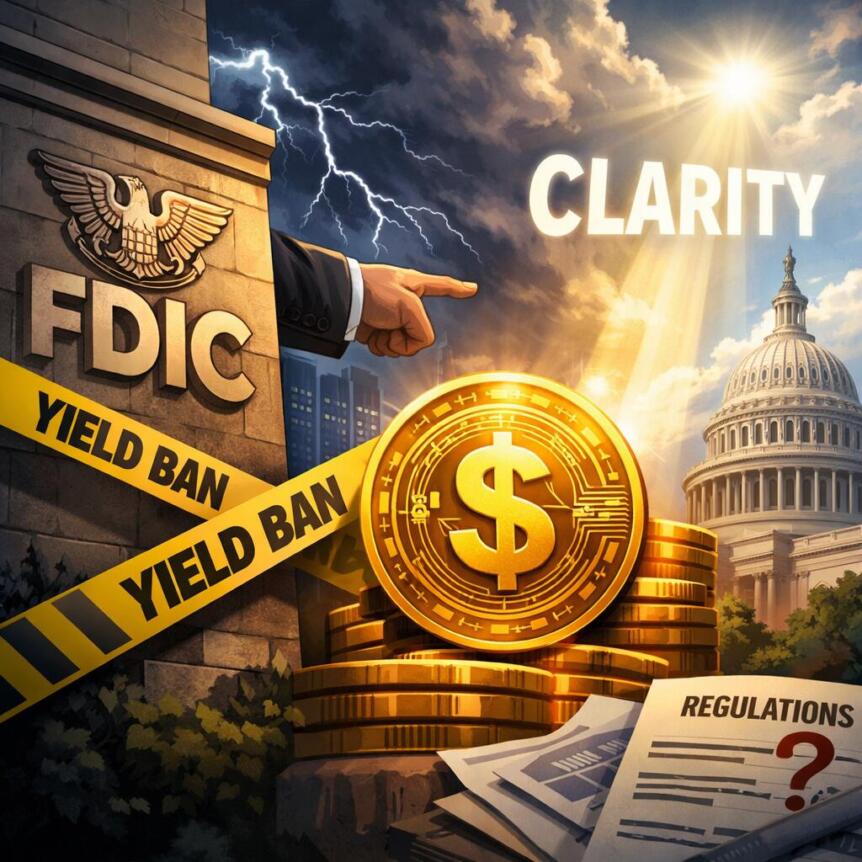
Paradigm has challenged the FDIC’s proposed stablecoin rules, warning against a broader yield ban. The firm says the GENIUS Act limits issuers, not independent third-party platforms. The letter adds pressure as Congress weighs the CLARITY Act and wider crypto market rules.
Paradigm Challenges FDIC Stablecoin Yield Plan
Paradigm told the U.S. Federal Deposit Insurance Corporation that its proposal exceeds the GENIUS Act. The firm said the law does not allow the agency to restrict third-party stablecoin rewards. It also argued that Congress rejected similar restrictions during earlier legislative talks.
The GENIUS Act bars stablecoin issuers from paying yield directly to holders. However, Paradigm said that the rule does not apply to exchanges or other outside firms. Therefore, the FDIC should not treat third-party rewards as automatic violations.
The firm urged the FDIC to remove language that expands the act beyond its text. It also asked the agency to match limits proposed by the OCC and NCUA. In addition, Paradigm called for a cure period for good-faith issuers.
CLARITY Act Keeps Stablecoin Rewards in Focus
The debate comes as the Senate considers the CLARITY Act, a broader crypto-market-structure bill. That bill protects activity-based stablecoin rewards offered by third-party firms. As a result, exchanges could still reward users without acting as stablecoin issuers.
The CLARITY Act follows the GENIUS Act, which has already advanced stablecoin regulation. Lawmakers designed the GENIUS Act to create reserve, licensing, and oversight rules. However, the reward issue remains a major point for crypto firms.
Ripple, Coinbase, and other companies have pushed lawmakers to advance the CLARITY Act. Yet the Senate faces a crowded schedule and several competing policy priorities. Even so, crypto firms view the bill as central to market clarity.
Paradigm Seeks Changes on Reserves and Reporting
Paradigm also asked the FDIC to protect white-label stablecoin arrangements. The proposal could force issuers to maintain separate systems for each branded stablecoin. The firm said subledgering would offer a cleaner and less costly approach.
The crypto firm also urged the FDIC to recognize tokenized reserve assets. It said the OCC already proposed similar treatment for such assets. That change could help stablecoin issuers manage reserves with clearer operational rules.
Paradigm further asked the FDIC to reduce weekly reporting requirements to monthly reports. It said weekly filings would raise fixed costs for smaller and growing firms. The firm also asked regulators to place reporting categories directly in the rule text.
Wider Industry Pushes Back on FDIC Proposal
Other crypto firms have also submitted comment letters on the FDIC’s stablecoin proposal. ConsenSys has urged the agency to revise parts of the planned rule. Circle also asked regulators to separate payment stablecoins from tokenized bank deposits.
Circle’s position matters because it issues USDC, one of the largest stablecoins in circulation. The company wants regulators to avoid treating distinct products under one framework. That split could shape how banks and crypto firms launch digital money products.
The FDIC now faces pressure to align its rules with Congress and other agencies. Paradigm’s letter adds another industry challenge to the proposed stablecoin framework. The final rule could define how rewards, reserves, and reporting work across the market.

XRP is sitting on what analyst EGRAG CRYPTO is calling a “macro decision zone,” with the next monthly candle close likely determining whether the token carves out a double bottom or slides toward $0.80.
Although the token has bounced back after touching a 19-month low of $1.05 last week, it still hasn’t cleared the levels that would give bulls any real confidence.
The Framework
According to EGRAG, a monthly close above $1.40 would confirm that the $1.05 low was the bottom. However, in their opinion, reclaiming $1.61 to $1.65 would be where genuine bullish recovery begins, with a break above $1.70 adding another layer of confirmation. Still, none of those levels have been touched as of now.
The analyst also made a case for the downside, saying that if XRP lost momentum, it could go back down to $0.80. Interestingly, they didn’t flag any intermediate support between the current price and that level if the structure breaks down.
“Hold ground then → double bottom possible,” they wrote. “Lose momentum then → $0.80 retest likely.”
Earlier, EGRAG pointed out that XRP had reached $1.1860 and was “building momentum for the second push,” placing a short-term target of $1.19 to $1.25. The analyst did warn that losing $1.14 would open the door to a retest of $1.10.
Fellow market watcher CasiTrades added a complementary read of their own, noting that the Ripple token had “perfectly” hit a major .786 macro Fibonacci support at $1.09 on Coinbase. The crypto trader also identified $1.19 and $1.27 as resistance zones that, if they failed, could lead to a deeper low toward the $0.90 area.
However, if XRP can push through both, it would suggest that the market is building a new trend rather than setting up for another wave lower.
XRP Recovery Amid SBI’s Reward Program Launch
Some traders are looking beyond daily price action, with one of them, ChartNerd, noting that XRP had closed below its 200-week simple moving average, a development that in the past came just before cycle lows.
At the time of writing, the world’s sixth-largest cryptocurrency by market cap had gained just over 1% in 24 hours. The uptick followed news that Japan’s SBI Bank had launched a program that lets customers exchange their deposit interest for Bitcoin, Ethereum, or XRP.
However, it was still down by more than 8% over the last seven days, underperforming the broader crypto market, which had shed about 5.4% of its value in the same period. XRP is also off over 18% across one month and nearly 49% year-on-year, while sitting 68% below its July 2025 all-time high.
But that decline isn’t all bad news, as on-chain analytics platform Santiment, using its 30-day MVRV metric, said the asset was in a “fair buy” zone where long-term investors could start accumulating.
Meanwhile, on the longer horizon, ChartNerd placed potential Fibonacci extension targets on XRP at $8, $13, and $27, as long as a proper cycle bottom forms before year-end.
The post XRP Faces Key Test: $1.40 Breakout or $0.80 Retest appeared first on CryptoPotato.


Ethena continues to deepen its ties with traditional finance, announcing a deal with asset manager Janus Henderson that includes a strategic investment in the protocol’s governance token.
Under the agreement, Ethena will allocate and help distribute Janus Henderson’s tokenized funds of collateralized loan obligations (CLO), the protocol said in a Tuesday X post.
Meanwhile, Janus Henderson, with $480 billion in assets under management, made a strategic investment in Ethena’s ENA token and plans to use USDe, Ethena’s yield-bearing synthetic dollar, as part of its treasury cash management strategy, according to a Thursday announcement.
The firms are also exploring ways to offer USDe to Janus Henderson clients through exchange-traded investment products.
ENA jumped 5% following the announcement before paring gains. It was down 8% over the past 24 hours as braoder crypto markets slipd
“We are really excited about the possibility here,” Nick Cherney, head of innovation at Janus Henderson Investors, told Coindesk in a message. “We believe very deeply that innovation in blockchain is being led by the defi community, and that we need to continue to forge partnerships with leading founders and protocols.”
The deal fits into the trend of traditional finance firms increasingly embracing and backing decentralized finance (DeFi) infrastructure. Earlier this year, BlackRock (BLK) expanded its tokenized money market fund through a partnership with Uniswap and also invested an undisclosed amount in the decentralized exchange’s UNI token, while Apollo Global Management (APO) stroke a deal with lending protocol Morpho to bring tokenized private credit assets onchain and investing in the protocol’s governance token.
Last week, Coinbase Ventures disclosed its first investment in Ethena and announced a partnership that will bring Ethena products to Coinbase’s more than 100 million users. Separately, Ethena expanded its relationship with crypto bank Anchorage Digital to support institutional lending activity through Anchorage’s Atlas collateral management platform.
Ethena has grown into one of the largest decentralized finance protocols by offering yield through its USDe token, which combines stablecoin demand with derivatives-based hedging strategies. After reaching roughly $15 billion in assets during last year’s market rally, the protocol currently manages about $5 billion as crypto markets continue to recover from a prolonged downturn.
“Ethena has proven that even now it is possible to innovate in the stablecoin arena, and we continue to see huge opportunity in their business,” Janus Henderson’s Cherney added.

Key Insights
- Chainlink gains more traction due to CCIP and institution blockchain adoption
- Litecoin is gaining strength due to high liquidity and fast transaction speeds
- Ondo Finance has been making headlines due to growing interest in tokenization and financial products on the blockchain
- Increasing market optimism is pushing investors into altcoins with proven use cases
- All three altcoins function within different industries
Altcoins Become Favored in Market Upturn Over Bitcoin and Ethereum
Now that the cryptocurrency market is experiencing better sentiment than before, traders are eyeing altcoins rather than sticking to Bitcoin and Ethereum because the latter two are perceived to be safer but have less upside potential. However, there are several cryptocurrencies that are becoming increasingly popular owing to their solid foundations, thriving ecosystems, and practical applications.
Chainlink (LINK), Litecoin (LTC), and Ondo Finance (ONDO) are some of the altcoins making a mark at present. These are different kinds of altcoins and serve various purposes in the crypto world, such as decentralized infrastructure, digital payments, and tokenized financial derivatives.
Chainlink (LINK) The Building Blocks of Future Blockchain Network Connectivity
As one of the leading infrastructure providers in the cryptocurrency sector, Chainlink has firmly positioned itself as a cornerstone of the industry. The platform operates a decentralized oracle system that allows smart contracts access to high-quality, off-chain information.
The importance of Chainlink increases in conjunction with the expansion of decentralized finance, tokenization, and blockchain-based applications. Leading DeFi projects have chosen Chainlink as their data provider for accurate market information and pricing.
The development of Chainlink’s Cross-Chain Interoperability Protocol (CCIP) is one of the most important growth drivers. The technology is designed to ensure safe communication and transfer of assets from one blockchain network to another. With a future that is set to become multi-chain, interoperability becomes vital.
Finally, the rising adoption of blockchain technology by financial institutions will also contribute significantly to the growth prospects of Chainlink. Traditional systems must integrate with blockchain networks safely, and the company has the infrastructure necessary to facilitate such an integration.
Litecoin (LTC) An Established Digital Payments Network
Litecoin has established itself as one of the most famous cryptocurrencies available today. Referred to as the “silver to Bitcoin’s gold,” Litecoin was conceived for facilitating cheaper and quicker transfers in a secure environment.
A lengthy history of performance has contributed to establishing trust in Litecoin as an investment vehicle. As opposed to many recent coins, which are yet to be tested, Litecoin boasts impressive durability and has proven itself resilient enough over numerous market fluctuations. This makes it one of the best assets for traders seeking safe options amid high volatility.
One more factor that makes Litecoin so appealing is its liquidity level. The coin is listed on all major exchanges, thus allowing trading to happen quickly and without any hindrances. High liquidity tends to result in fast price jumps amid rising demand.
In past years, Litecoin managed to experience capital inflows caused by investors’ rotations between dominant cryptocurrencies and established alt-coins. Should market sentiments turn positive, Litecoin might be expected to capitalize on increased interest.
Ondo Finance (ONDO) Driving the RWA Boom
As one of the leaders in the real-world asset (RWA) sector that continues to develop extremely quickly, Ondo Finance focuses its efforts on providing access to tokenized financial instruments available on the blockchain network but not in the conventional financial sector.
Tokenized RWA assets have emerged as one of the biggest growth drivers in the blockchain industry today. Global financial organizations are increasingly looking for new opportunities for improving their operations via introducing more efficient, transparent, and easily accessible tokenized products. Ondo Finance stands at the heart of this shift.
The platform allows users to invest in various yield-bearing financial instruments based on real-world assets. This way, Ondo Finance helps to connect decentralized and traditional finance. The increased interest of institutional players in blockchain may lead to higher demand for tokenized products in the future.
Strategic partnerships and growing popularity within the RWA space make Ondo’s prospects even brighter. In case the trend toward tokenization intensifies as expected by industry experts, ONDO token may be among its main beneficiaries.
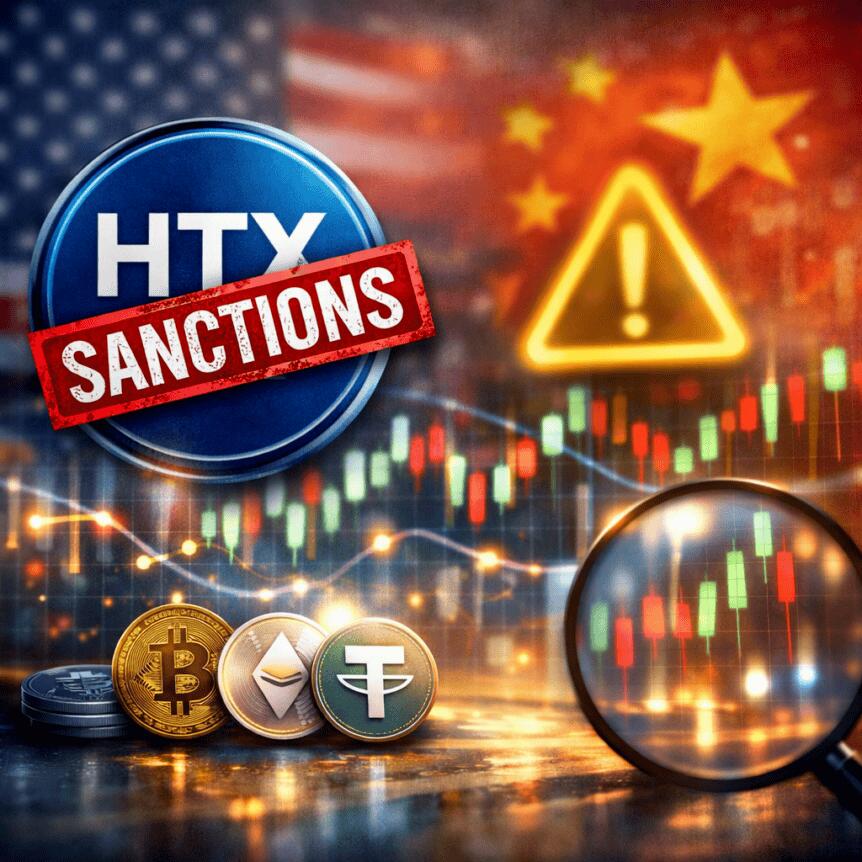
The United Kingdom has sanctioned Huobi Global S.A., the Panama-based company behind the HTX exchange, amid allegations of providing financial support to Russia-linked networks. The move has sparked a lively debate among blockchain researchers and industry observers, who warn that broad sanctions could ripple across the crypto compliance fabric and disrupt established practices for curbing illicit activity in DeFi and beyond.
Regulators asserted there were reasonable grounds to suspect HTX had supported Russia’s government through financial services and funds routed via sanctioned entities A7 Limited Liability Company and Garantex. HTX has rejected the characterization, insisting that the sanctioned entity is not the exchange itself.
Amid the sanctions discourse, researchers highlighted potential collateral damage to the industry’s risk governance. Galaxy Digital’s Alex Thorn suggested that the scope of the sanctions—covering “all of HTX”—could affect legitimate users and complicate stablecoin and sanctions screening practices. Security researcher Taylor Monahan argued that imposing broad sanctions could undermine years of work to encourage DeFi protocols to screen and block stolen funds, insisting that most HTX users are legitimate. Blockchain investigator ZachXBT added that on-chain address tainting tied to the sanctions has been “catastrophic” for tracing work, warning that the concept of “risk” may be diluted in practice.
The UK action comes on the heels of sanctions announced on May 26 targeting Huobi Global S.A. for alleged support of Russia-linked financial networks. The government cited connections to entities previously sanctioned in relation to Russia-linked activity, framing the move as part of a broader regulatory effort to curb illicit financial flows in crypto markets. Related coverage has noted parallel regulatory actions, including actions by UK authorities against HTX promotions in other contexts.
Key takeaways
- The UK sanctions Huobi Global S.A. (HTX), the operator behind HTX, citing potential support for Russia’s government through linked entities A7 and Garantex.
- Industry observers warn that blanket sanctions may disrupt legitimate users and complicate compliance workflows across stablecoins, KYC/AML, and sanctions screening.
- HTX denies the core allegation, stating the sanctioned entity is separate from the exchange and that the sanctioning rationale may conflate distinct entities.
- Global Ledger reports HTX processed about $21.06 billion in high-risk crypto flows from 2021 through May 2026, with roughly $7.64 billion linked to Russian high-risk actors and darknet markets.
- There have been downstream effects, including forced actions by DeFi projects and HTX’s own responses, such as delisting a partner’s USD stablecoin and suspending trading pairs.
Regulatory action and pathway to enforcement
According to regulatory communications, the UK authorities asserted that HTX had facilitated financial services and funds that supported Russia’s government via sanctioned intermediaries. This framing places HTX within a broader sanctions regime designed to impede illicit state-linked financial networks, a domain where cross-border enforcement and jurisdictional differences frequently shape outcomes. The sanctions posture underscores how national regulators are leveraging crypto-enabled financial activity to police geopolitical risk, with implications for exchanges, custodians, and liquidity providers seeking to maintain compliant cross-border operations.
HTX’s denial—that the sanctioned entity is distinct from the exchange—highlights a central enforcement tension: how to delineate between a platform and its partners or affiliates in a tightly coupled ecosystem. For legal and compliance teams, the case emphasizes the importance of precise entity mapping, robust sanctions screening, and clear contractual controls to prevent inadvertent exposure to sanctioned flows. The evolving regulatory narrative also intersects with ongoing debates about licensing frameworks and the scope of enforcement under regimes like MiCA in the European Union, which seeks to harmonize crypto-asset regulation across member states, and parallel US authorities’ postures under the SEC, CFTC, and DOJ enforcement levers.
Industry perspectives on enforcement and DeFi hygiene
Industry voices emphasize that sanctions can create unintended frictions for legitimate users and complicate efforts to trace illicit flows in a permissionless environment. Alex Thorn of Galaxy Digital cautioned that an expansive sanction targeting “all of HTX” could slow or complicate legitimate user activity and blur the lines between sanctioned and non-sanctioned participants. The divergence in how stablecoin issuers decide when to freeze or restrain token movement—an area of ongoing regulatory scrutiny—adds another layer of complexity for compliance teams navigating cross-border settlements and sanctions compliance.
Taylor Monahan, a prominent blockchain security researcher, argued that sanctions that blanket a major exchange may undermine the industry’s long-running push to foster best practices in tracing and blocking stolen funds. She asserted that a significant portion of HTX’s user base is legitimate, urging regulators to balance enforcement with practical considerations for users and service providers focused on legitimate financial activity.
On-chain tracing perspectives were echoed by ZachXBT, who criticized the sanctions as an “overreach” and said that taint would “catastrophic[ly]” affect investigative work. He suggested that broad address tainting could erode the quality of risk signals that investigators rely on to assess exposure, potentially elevating false positives and complicating due diligence across counterparties.
Operational impact and on-chain dynamics
Market participants have begun to observe downstream effects from the sanction regime. A Global Ledger report attributed HTX with processing approximately $21.06 billion in high-risk crypto flows between 2021 and May 2026, with about $7.64 billion linked to Russian high-risk entities and darknet markets such as Garantex and related entities. While this figure provides a baseline for risk assessment, it also underscores the challenges regulators face in distinguishing legitimate commerce from illicit activity within a highly interconnected ecosystem.
In the wake of sanctions, some DeFi projects have taken precautionary steps to reassess exposure to HTX-related addresses. World Liberty Financial, a project associated with the broader, Trump-linked DeFi ecosystem, reportedly froze HTX-linked addresses after conducting sanctions compliance reviews. HTX responded by delisting the DeFi platform’s USD1 stablecoin and suspending several trading pairs, illustrating how regulatory actions can cascade into liquidity and product offerings across the crypto landscape. These developments highlight the practical implications for on-chain risk management, liquidity provisioning, and the reliability of sanctions screening in fast-moving markets.
Ongoing regulatory coverage in related spaces—such as actions against HTX’s promotional activities by UK regulators—illustrates the breadth of regulatory oversight touching crypto businesses. For exchanges and market participants, the episode reinforces the need for robust compliance frameworks that address sanctions exposure, sanctions list screening, and the potential for cross-border asset freezes to affect settlement rails and customer solvency protections.
Policy context and cross-border implications
The HTX sanctions sit within a broader policy discourse about how jurisdictions coordinate responses to geopolitical risk in crypto markets. Regulators are increasingly leveraging sanctions regimes to constrain sanctioned entities’ access to fiat channels and crypto rails, while industry stakeholders stress the necessity of preserving access for legitimate users and ensuring that enforcement actions do not undermine the integrity of compliance programs. In parallel, policymakers are considering the interoperability of global standards with regional regimes such as MiCA, which aims to regulate crypto-asset service providers within the EU, and the evolving enforcement posture of major jurisdictions like the United Kingdom, the United States, and others. Ongoing debates center on licensing clarity, cross-border supervision, and the harmonization of AML/KYC expectations for exchanges, wallets, and fiat ramps.
Regulators also emphasize the importance of transparent attribution and clear delineation of sanctioned entities to minimize disruption to legitimate user activity. As enforcement patterns evolve, compliance teams should monitor any shifts in sanctions language, guidance on cross-border transfers, and the development of standardized due-diligence practices that can adapt to evolving geopolitical risks without compromising user access or financial inclusion.
Closing perspective
As authorities refine how sanctions interact with rapidly evolving crypto networks, the HTX case underscores the need for precise governance of sanctioned entities and a prudent balance between enforcement and practical risk management. For institutions and compliance professionals, the episode highlights the importance of rigorous entity mapping, robust sanctions screening, and proactive cross-border coordination to navigate a landscape where policy, technology, and markets intersect in complex ways.


Trad.Fi, which lends money to companies buying heavy equipment, said it is working with W3, a developer of AI agents for enterprises, to deploy $650 million in private credit onchain over the next 48 months.
The program targets the heavily paper-based U.S. equipment distribution sector, focusing on manufacturing systems, industrial electrical infrastructure and residential solar installations. By using AI to evaluate risk, conduct due diligence and price loans, Trad.Fi aims to compress the typically monthslong financing timelines for small and mid-sized businesses into a single day.
“Small businesses lose deals waiting for financing, and the only way to fix that is to move the capital, the records and the workflow onto programmable rails,” Trad.Fi CEO Alexander Szul said in a statement. “This is what private credit looks like when it finally meets the speed of the real economy.”
Institutional capital is undergoing a structural shift as it interacts with digital asset infrastructure. The tokenization of real-world assets (RWAs), spanning commodities, equities, and private credit, is now a $25 billion market, having quadrupled from roughly $6.4 billion a year ago. It could become a $30 trillion industry by 2030, according to Security Token Market.
The $650 million figure represents Trad.Fi’s targeted equipment-financing origination pipeline over the next four years, the firm said.
In an initial phase, institutional capital from established, traditional private credit lenders will fund the bulk of the underlying equipment loans directly offchain. At the same time, the companies will work on the initial bridge technology, the ability to predict corporate stability and effect blockchain capital placement.
The long-term goal of the project is a fully programmable treasury in which 100% of senior and equity capital flows natively through the Avalanche blockchain.
A tokenized liquidity pool managed by an unidentified third-party operator will start up in the coming weeks. The pool provides eligible investors with direct onchain access to the equity portions of the private credit generated by the program.

Trump booed while Mamdani cheered at NY Knicks game

STOP: The New 1% of XRP…

Hayling care home residents celebrate D-Day



-

 Fashion4 days ago
Weekend Open Thread: Evereve – Corporette.com
-
 Crypto World4 days ago
Jensen Huang Approves Samsung, SK Hynix, and Micron for NVIDIA (NVDA) HBM4 Memory Supply
-

 Sports7 days ago
French Open 2026 results: Alexander Zverev beats Rafael Jodar and will play Jakub Mensik in semi-finals
-

 Business7 days ago
Trump Taps Housing Chief Bill Pulte as Acting Intelligence Director After Gabbard Exit
-

 Crypto World1 day ago
Anatomy of the June crypto crash: Fed, Iran, Saylor
-
 NewsBeat7 days ago
Republicans balk at Trump’s attempt to appoint a MAGA enforcer to lead National Intelligence
-
 Crypto World3 days ago
Senator Cynthia Lummis Calls CLARITY Act the Most Consequential Financial Legislation of This Generation
-
 Business3 days ago
The Pain Points Taking a Fragile Tech Rally Down a Notch
-
 Entertainment3 days ago
The Best Mystery Series of All Time Is Surging on Streaming 30 Years After It Ended
-

 Tech2 days ago
Microsoft unveils seven homegrown AI models in new bid for ‘long term self-sufficiency’
-

 Tech4 days ago
Microsoft launches MXC, an OS-level sandbox for AI agents, with OpenAI and Nvidia already on board
-

 NewsBeat2 days ago
Alexander Zverev wins the French Open to finally earn a 1st Grand Slam title
-
Crypto World4 days ago
LBank Surpasses 25 Million Users Worldwide as AFA Partnership Continues to Drive Global Growth
-

 Business7 days ago
PagerDuty, Inc. (PD) Presents at Bank of America 2026 Global Technology Conference Transcript
-

 Tech4 days ago
Suspicious Polyfill login prompts pop up on Toshiba, Muji websites
-

 Crypto World2 days ago
Trump’s AI Ownership Plan Could Benefit Anthropic at OpenAI’s Expense
-

 Business4 days ago
(VIDEO) Justin Bieber Delivers Surprise Happy Birthday Serenade to Diners at Los Angeles Mexican Restaurant
-

 Tech4 days ago
Meta steals a tactic from Tesla and builds data centers in tents
-

 Tech4 days ago
RCS Messages Between iPhone and Android Get End-to-End Encryption With iOS 26.5
-
Business7 days ago
Asia stocks rise past US-Iran jitters; Nikkei hits record high on stimulus cheer
You must be logged in to post a comment Login