

Politics
Trump booed while Mamdani cheered at NY Knicks game

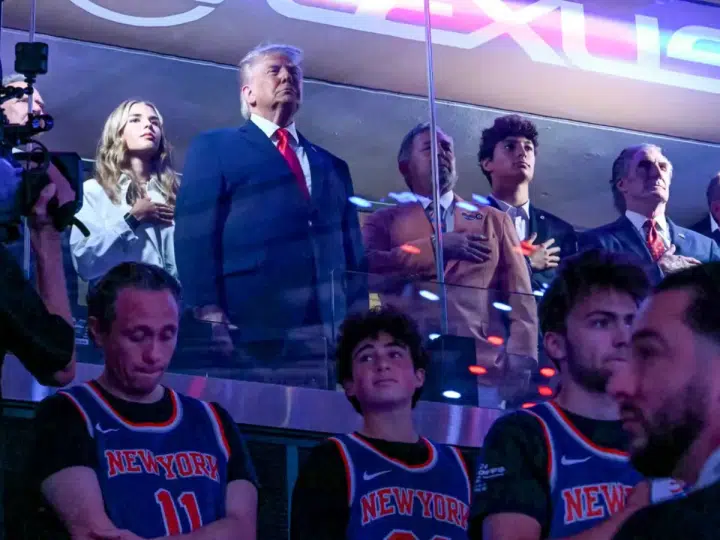
Donald Trump’s vanity will have taken a hit when fans booed him after being shown on the big screen at a basketball game in New York’s Madison Square Garden.
In contrast, cheers were heard as Zohran Mamdani strode into the arena ahead of the New York Knicks – Spurs game on Monday.
The FT reported.
President Trump attends Madison Square Garden for Game 3 of the NBA Finals to cheer on his hometown team — but as Trump was shown on the jumbotron during the national anthem, the crowd erupted in loud booing. https://t.co/uQCepUP70B
— NBC News (@NBCNews) June 9, 2026
CBS News wrote:
Trump was shown for several seconds giving a military salute. The boos ended when the U.S. flag followed him on the screens, and fans cheered when New York Knicks players were shown. Mentions of the San Antonio Spurs also elicited loud boos.
they thought people wouldn’t boo if they showed him during the national anthem lmao https://t.co/G6nJDgmHqj
— hasanabi (@hasanthehun) June 9, 2026
And to make matters worse for Trump, the first US president to attend NBA finals, the Knicks lost.
Sleepy Trump
Trump popularised the term “Sleepy Joe” in reference to former President Joe Biden and is still using it.
Just last month, the White House posted:
“When President Xi very elegantly referred to the United States as perhaps being a declining nation, he was referring to the tremendous damage we suffered during the four years of Sleepy Joe Biden… But now, the United States is the hottest Nation anywhere in the world” -… pic.twitter.com/Kjr5Rdaz0D
— The White House (@WhiteHouse) May 14, 2026
So why was Trump caught nodding off at the NBA game?
President Trump appears to fall asleep during Game 3. pic.twitter.com/FEjMjtYY83
— New York Post Sports (@nypostsports) June 9, 2026
This wasn’t the first time. Just last week, Democrats labelled Trump the “Commander-in-Sleep” after he appeared to doze off during an Oval Office press briefing on “clean coal”.
The Commander-in-Sleep clocks in https://t.co/I28i1cnQct
— Democrats (@TheDemocrats) June 4, 2026
Rubio to the rescue
Trump, with his falling approval ratings, an illegal war on Iran, and general chaos, clearly needs his rest. His minions are also rushing to rescue him when anyone dares call him out for sleeping on the job.
Last week, when Ted Lieu confronted the Secretary of State, Marco Rubio, about Trump dozing off, Rubio insisted:
I’ve never seen him fall asleep. The guy doesn’t sleep.
Lieu played clips of Trump nodding off right next to Rubio and said:
You are literally talking about issues of war and peace and Donald Trump is sleeping right next to you.
oh my goodness — Ted Lieu played Rubio a video of Trump sleeping while Rubio tried to talk to him during a cabinet meeting. Then this exchange happened:
RUBIO: I’ve never seen him fall asleep
LIEU: I’m gonna show you a video that shows you just lied to Congress
*plays… pic.twitter.com/yccC9GcYoq
— Aaron Rupar (@atrupar) June 3, 2026
Rubio called it “outrageous”. Trump’s own explanation? The meeting was “boring” so he closed his eyes.
I don’t sleep much.
It would be funny if this man wasn’t a war criminal and paedophile who deserves to be booed at a basketball game, in Congress, and everywhere else he shows his face.
Featured image via USA Today
By The Canary


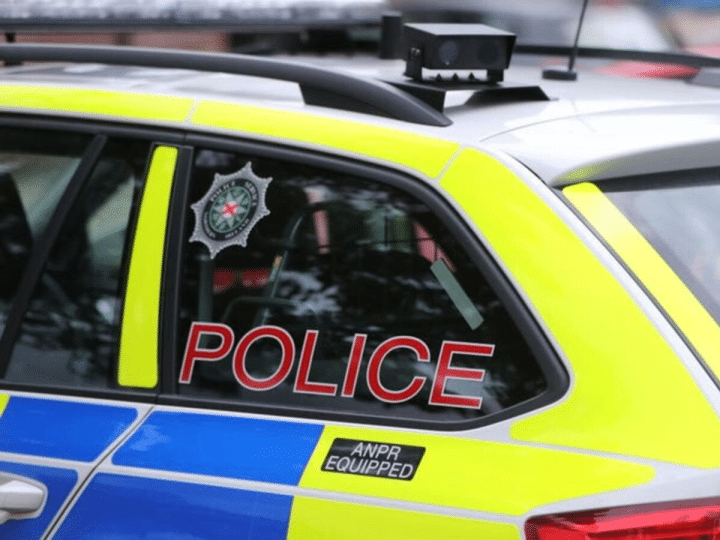
A video filmed in Armagh shows a Police Service of Northern Ireland (PSNI) officer repeatedly punching a grounded man who poses no meaningful threat.
At least three cops restrain the man, with the most violent officer completely on top of him.
Appallingly, the PSNI has attempted to defend the attack, claiming “it was necessary for officers to use a degree of force in order to safely make [the arrest]”.
A PSNI spokesperson gave background to the cop’s attack:
At around 10.30pm on Saturday night, 6 June, police received reports a man had been attacked at a bar on Railway Street in Armagh.
It is alleged the victim had been punched a number of times to the face, and head-butted by a female suspect who then along with a male suspect, is believed to have caused criminal damage to the bar, including smashing a window.
Upon police arrival both suspects appeared to be fighting with each other in the street.
When approached both the man and woman lashed out at police, punching and kicking violently.
PSNI misuse of force must be condemned
Regardless of what preceded the PSNI brutality, there is no justification for repeatedly striking a grounded man who at that point was barely resisting.
Sinn Féin councillors, Sarah Duffy and John O’Kane, have produced a rather weak response failing to condemn the assault.
They said:
Given the level of concerns that have been raised with us by members of the local community, we have requested an urgent meeting with the PSNI to discuss the matter and to receive an update on the circumstances surrounding the incident.
Social Democratic and Labour Party (SDLP) MLA, Colin McGrath, has also equivocated.
It is important to remember that police officers carry out their duties in often challenging circumstances.However, public confidence depends on transparency and accountability when questions are raised.
The incident is strikingly similar to a recent ‘arrest’ made by thugs in Coleraine. They attacked Mohammed Manai and held him hostage, likely motivated by his ethnicity.
Police had accused Manai of attempting to gain entry to a primary school, without providing any evidence. The PSNI subsequently arrested Manai, but not any of his assailants, despite footage proving their violent assault against him.
Recently, Zack Polanski sadly backtracked after rightly criticising police in England for “kicking a mentally ill man in the head when he was already incapacitated by taser”.
The attack happened during an attempt by police to subdue Essa Suleiman, who is accused of stabbing three men in London.
Once again, however, it’s important to emphasise that we ought never justify extreme, needless violence from police, even in extreme situations.
Amnesty criticise rising police aggression
Doing so leads to appalling crimes, particularly against marginalised groups, such as when a thug in uniform carried out the manslaughter of ex-footballer, Dalian Atkinson, in 2016.
Benjamin Monk kicked Atkinson with “such force that his bootlaces left an imprint on his forehead”.
Amnesty International has drawn attention to increased PSNI use of force. In 2024, the NGO raised the “deeply disturbing” 21% increase in such methods from the previous year.
Recently, it raised concerns about the police service’s decision to bring in a “‘Taser 10’ (T10) electro-shock weapon”. Amnesty International said the weapon “carries significant new risks, with the potential for serious unintended injuries”.
It cites the most recent PSNI statistics on use of force, which show a 36% increase in drawing tasers and a 38% increase in firing them.
The Armagh incident raises questions about whether PSNI officers can control themselves even when unarmed, so handing out new tasers seems liable to pose an even greater danger to the public.</p>
Featured image via Niall Carson/ PA
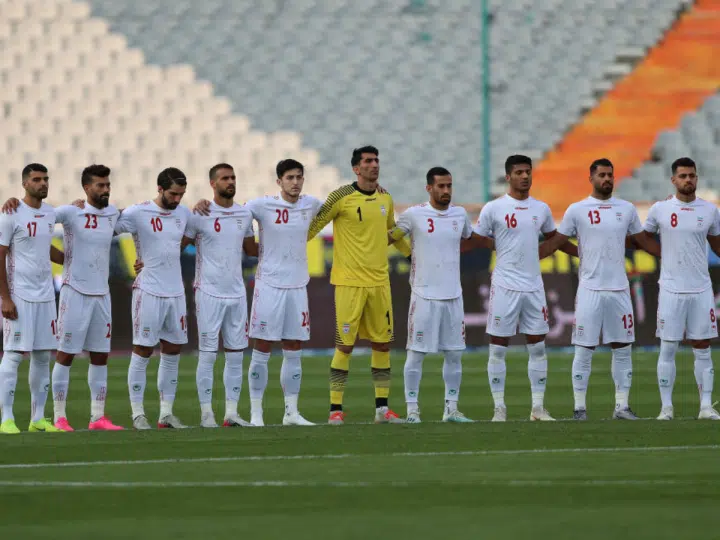

Iran has suffered a fresh blow just days before the start of the 2026 World Cup, after the Iranian Football Federation announced the withdrawal of its allocated share of fan tickets for its three World Cup matches.
The move has sparked widespread controversy and led Tehran to question whether political considerations are influencing the organisation of the tournament.
Iran fans left disappointed
Reuters cited the Iranian Football Federation, which said it had already begun distributing and selling tickets for the national team’s group stage matches, before it learnt about the tickets being withdrawn.
This means Iranian fans will be denied access to tickets through the federation’s official channels.
The federation added that a large number of Iranian fans had already finalised their travel and accommodation arrangements. Depriving them of their official allocation, it argued, “contradicts the spirit of international competitions and the principle of equality among participating nations”.
The Iranian Football Federation stressed that the decision raises “serious questions” about the interference of non-sporting and political considerations in the organisation of the World Cup.
FIFA under pressure
According to tournament regulations, each participating federation receives 8% of the tickets for its matches to distribute to supporters. However, the Iranian Football Federation has not disclosed which body took the decision to withdraw the tickets.
It has also called on FIFA to intervene and uphold the principles of neutrality, fairness and the applicable regulations, warning that political issues could affect the atmosphere of the tournament.
FIFA has not yet released an official comment despite requests from the media for clarification on the reasons behind the decision.
A series of crises before kick-off
The ticket crisis comes amid a series of complications faced by Iran since qualifying for the World Cup, against a backdrop of political and security tensions that escalated following the air strikes launched by the US and Israel against Iran in late February.
These circumstances prompted the Iranian Football Federation to negotiate moving the team’s base from the US state of Arizona to Mexico.
After weeks of uncertainty, all of Iran’s players received their US entry visas just 10 days before their first match in the tournament. Meanwhile, several members of the administrative and technical staff did not receive the required visas.
In an attempt to defuse tensions, FIFA announced that its general secretary, Mattias Grafström, had held a “positive” meeting with the president of the Iranian Football Federation, Mehdi Taj.
The meeting followed the team’s arrival at their training camp in Mexico, emphasising that dialogue and cooperation would continue to ensure Iran could compete in the tournament under the best possible conditions.
The Iranian national team begins its World Cup campaign against New Zealand on 15 June, before facing Belgium on 21 June. Iran concludes its group stage matches against Egypt on 6 July.
Featured image via Amin M. Jamali/ Getty Images
By Alaa Shamali
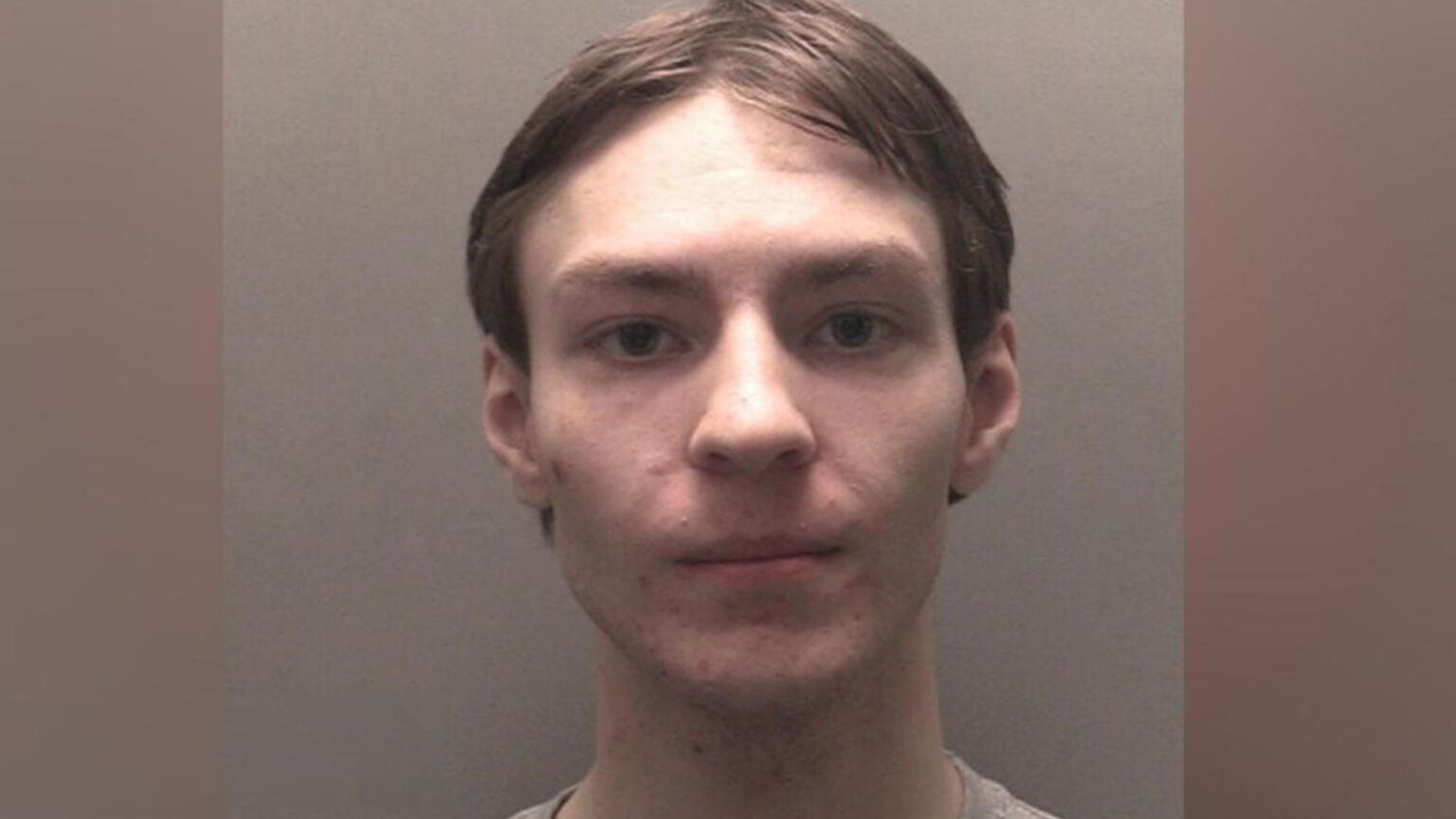
In January 2026, trans activist Darren Rigby spent a week threatening massacres at three all-girls schools across Merseyside, UK. One email warned he was on his way with ‘a revolver and a machete’ to ‘shoot and stab all of your girls’. Another claimed he was hiding inside a school armed with a crossbow and sword. At the Belvedere Academy, he promised to ‘kill every girl and woman staff member I come across’.
These were not random threats. Rigby chose girls’ schools as his targets and trans grievance as his justification. According to evidence reported from court, Rigby demanded apologies for ‘transwomen’, accused his intended victims of being ‘TERFs’, and threatened violence in response to what he described as the mistreatment of trans people. One email sent to Greenbank High School in Southport left little doubt as to his motivation:
‘I am on my way to the school with a revolver and a machete and I’m going to shoot and stab all of your girls. You TERFs are going to learn to stop mocking, deadnaming and misgendering transwomen like me. If anyone attempts to stop me, they will be shot and I will release a blood agent into the school which will poison you.’
The threats were made less than six months after Axel Rudakubana murdered three young girls at a dance class in Southport. Staff, pupils and families had no way of knowing whether Rigby was a fantasist or another killer. Schools were forced into lockdown, parents rushed to the gates and girls were left crying and shaking. On 1 June, he was sentenced to 28 months in custody, for the threats but also for possession of a weapon and cannabis.
Had a young man threatened to butcher schoolgirls while invoking Andrew Tate or any of the other manosphere grievance goblins, the ideological dimension would have dominated headlines. Instead, despite targeting female-only schools and justifying his threats with references to ‘trans women’, ‘misgendering’ and ‘TERFs’, those details were expunged from mainstream coverage.
Only Reduxx and Jamie Lopez of the Southport Lead appear to have treated the motive aired in court as a fact worth reporting. Readers of the BBC News, Liverpool Echo or Irish Mirror would have struggled to discover why Rigby chose his targets. Merseyside Police, which proudly advertises its ‘Navajo LGBTI’ accreditation, likewise omitted any reference to Rigby’s hostility towards ‘TERFs’ or his stated grievances about the treatment of ‘trans women’.
Unhinged misogynists have a habit of attaching themselves to whatever ideology happens to legitimise their hatred of women. The man who murdered 14 women at Montreal’s École Polytechnique in 1989, and whose name is often omitted out of respect for survivors, blamed feminism for his failures. In his suicide note, he wrote: ‘I have decided to send the feminists, who have always ruined my life, to their Maker.’ Serial killer Peter Sutcliffe, meanwhile, justified his murder spree as a divine mission to rid the streets of prostitutes, whom he regarded as morally corrupt. More recently, Plymouth gunman Jake Davison immersed himself in the fatalistic worldview of the incel and ‘blackpill’ subcultures, where female choice is treated as a form of oppression and male sexual failure as evidence of a rigged system.
The idea that trans zealots pose a threat to public safety is no longer confined to social media; the link has become so apparent that US president Donald Trump has publicly called for an investigation into whether transgender ideology plays a role in some acts of mass violence.
One of the earliest high-profile cases involving women associated with so-called trans exclusion was the 2016 murder of lesbian couple Charlotte Reed and Patricia Wright, and their adopted son, Benny Toto Diambu-Wright. Their killer, a man called Dana Rivers, had spent years campaigning against female-only spaces through Camp Trans, the movement established to challenge Michigan Womyn’s Music Festival’s ‘women born’ policy.
The ideology of woman hate changes through the decades, but the pattern remains remarkably consistent. Whether the grievance is feminism, prostitution, sexual rejection, or gender identity, the underlying belief of misogynists is the same: women are to blame, and violence is justified retaliation.
Had Rigby cited Andrew Tate, there’s little doubt police forces, charities and journalists would still be discussing the case. Conferences would be convened, funding allocated and safeguarding guidance updated. But instead, he threatened schoolgirls in the language of trans activists, with the same complaints about misgendering and exclusion that still pepper the policies of many British institutions. Is it any surprise that, from the BBC to Merseyside Police, there was such reluctance to join the dots? To do so would have meant confronting the uncomfortable possibility that an ideology they regard as inclusive had supplied a misogynist with both his grievance and his justification.
This time, we got lucky, and Rigby was jailed. But when the police and the media treat trans grievance as uniquely exempt from scrutiny, they do not make the threat disappear. They merely ensure that, when somebody eventually acts on those beliefs, they will once again insist that nobody could have seen it coming.
Jo Bartosch is co-author of Pornocracy. Order it here.
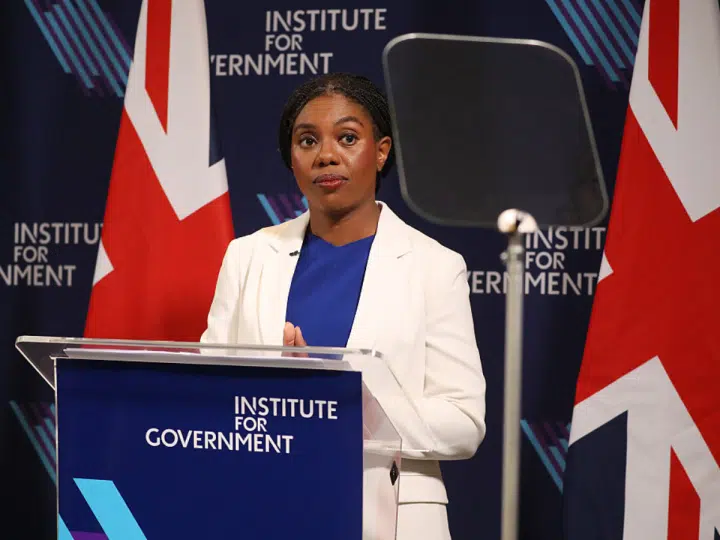
Kemi Badenoch has announced her intention to “repeal the public sector equality duty in its entirety”.
The PSED, or simply “the duty”, requires public sector leaders to abide by equality considerations set out in the 2010 Equality Act.
Principally, this means working to prevent discrimination against people with protected characteristics (race, sex, disability etc), and monitoring the outcomes of that work.
The news comes just a week after Nigel Farage weaponised the tragic murder of Henry Nowak as an excuse to attack diversity, equality and inclusion (DEI) initiatives.
Vickrum Digwa, a British Asian man, stabbed Nowak, then told police he had been the victim of a racially-motivated assault. The police arrested Nowak even as he lay dying, ignoring his pleas and him saying he’d been stabbed.
Shamelessly, the Reform leader used the incident to claim that the UK is a “two-tier system” biased against white people.
He called for an “end to DEI and positive discrimination” and “a country that treats everybody equally and fairly before the law”.
Badenoch claims laws ‘delivering perverse outcomes’
In today’s speech, Badenoch followed suit, trailing after her further-right counterpart. She claimed that the public sector equality duty had led to a pursuit of “equality of outcome” rather than “equal treatment and equality under the law”.
Badenoch went on to brand the duty a “Blairite legal settlement”, and claimed that she was installed as Tory leader to undo it.
Likewise, she added:
There are many laws which were brought in with good intentions but are delivering perverse outcomes and unintended consequences.
Demonstrating that there are truly no depths to which she won’t stoop, the Tory-in-chief attacked the Macpherson report. After the racially-motivated murder of Stephen Lawrence in 1993, and the disdainful reaction from law enforcement, the landmark report recognised that the UK policing is institutionally racist.
Badenoch claimed that the report “wanted to put right what went wrong with policing in the 1990s”.
However, in attempting to do so, it also enshrined a principle which I believe is wrong: that a racist incident is racist, if it is perceived as racist by the victim or any other person.
This may have made sense in a different context long ago, but today when we look at the response to Henry Nowak’s murder, and the police’s acceptance that the murderer was correct when he accused Henry of racism, it’s clear that mere accusations are being accepted as facts.
‘Fear of being called racist’
As examples of ‘equalities law overreach’, the Badenoch named the Southport murders, Nottingham stabbings and the Manchester Arena bombing.
All these crimes could have been stopped if people had intervened instead of having a fear of being called racist.
An official inquiry into the Southport debacle highlighted that the Prevent counter-terrorism agency repeatedly ignored referrals for the murderer, Axel Rudakubana, because his ideology wasn’t terror-related.
At the Canary, we phrased this another way:
The UK has invested so much in the very idea that (Muslim) terrorism is the greatest threat to our safety that we’ve actively started to damage the capacity to respond to non-terror threats.
That’s a far cry from the police being afraid of being called racist. However, we’re not exactly surprised that Badenoch has failed to take basic facts into account. There’s no other way you could get to the conclusion that the police are somehow too anti-discrimination.
Labour and Reform condemned by Tory leader
In spite of presenting what amounts to a watered-down Farage talking point, Badenoch attacked both Reform and Labour in her speech. The latter were, in her words, “not yet sure anything is wrong”.
Meanwhile, Reform’s plan to rip up the Equality Act completely, as announced by ex-Tory turncoat Suella Braverman, would apparently “make it legal to discriminate against white people”.
Badenoch’s words have been truly vile. She’s ignored years of findings on police racism, yet again betraying Black and Brown people across the country. What’s more, she and others have ignored Nowak’s parents’ plea not to use his murder to stir up hatred and division.
Beyond that, however, there’s something so desperately pathetic about the Badenoch right now.
She’s outflanked on the right by Nigel Farage, the figurehead of a party of white supremacists and bigots. Meanwhile, on her (near) left, Starmer has managed to sleepwalk into becoming prime minister simply by not being a Conservative.
The racist scum that used to vote for the Tories have a white man to vote for now. There’s no level of self-hatred that Badenoch can display that will win them back. One day, she might even realise that.
Featured image via Alishia Abodunde/ Getty Images
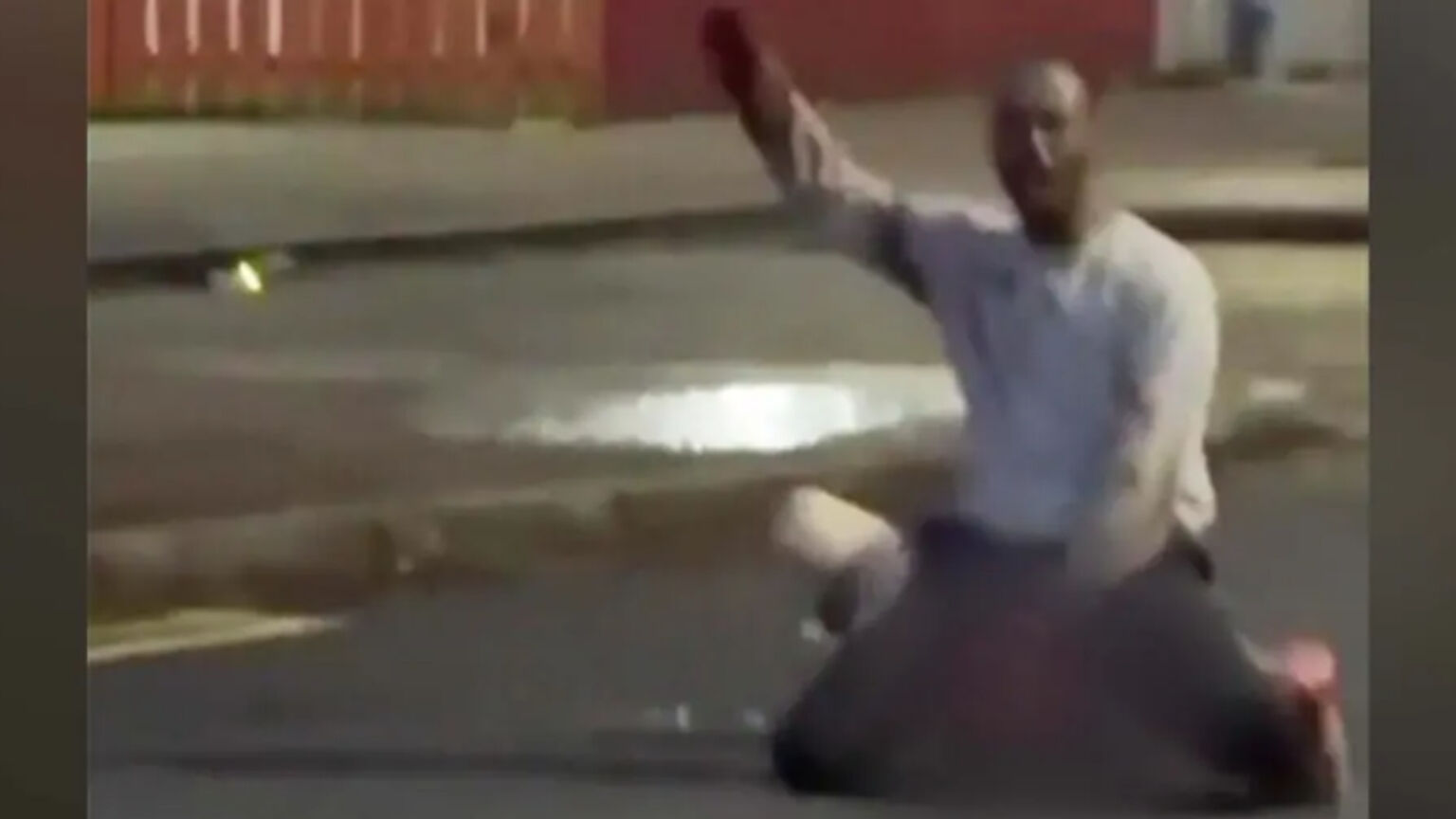
Are we allowed to feel pure, cold rage yet? It’s what millions of us felt this morning as we watched footage of that barbarous assault in Belfast. However much the pleb-fearing thoughtpolice of Keir Starmer’s government might disapprove of such fury, it’s the emotion that swelled in all decent British and Irish people as they saw a brute rain stab after stab upon his sprawled, struggling victim. Good luck trying to curb the people’s rage over this act of wanton savagery.
It was truly obscene. On a dimly lit nighttime street in north Belfast, a kind of medieval butchery unfolded. A local man in his 40s was mercilessly pinned down by the knifeman. Each plunge of the knife was coldly, cruelly executed. The monster went for the man’s face, his neck, his back. The police announced this morning that the victim suffered ‘significant injuries to his eyes’. Was this an attempted eye-gouging? In the United Kingdom in 2026? Some are calling it an attempted beheading. Whichever it was, we now know the early media reports about a ‘knife incident’ were shamefully euphemistic, dolling up a monstrous atrocity in the garb of everyday crime.
Then came the most salient revelation, the one that imbued this feral exhibition of violence with political urgency – the suspect is Sudanese. The Police Service of Northern Ireland (PSNI) tried to get the details out quickly, clearly having learned how much it riles the public when the truth about barbaric violence is withheld from us on the grounds that we’re too dumb and racist to handle it. The suspect is in his 30s, he seems to be from Sudan, and he got to Northern Ireland via Dublin. Oh, and he was granted leave to remain.
These findings change everything. Everything. Yes, only the blood-stained degenerate bears responsibility for the horrors inflicted on that innocent man. But we now know the piece of scum had an army of witless aiders and abetters. There lurks in the background of this abomination a whole regime of complicity. The wilfully oblivious technocrats who have overseen the withering of our borders. The spineless legal system that refuses to remove people who should not be here. The virtue-hoarding activist class that agitates for the right of every ‘asylum seeker’ to stay, because they cherish the spotlight of self-righteousness far more than they do the safety of working-class men and women. None of them wielded the knife, no; but all helped to pave the way for that reprobate’s presence in Belfast.
Isn’t there now a case against officialdom of reckless endangerment? Every week there are reports of horrifying rapes carried out by illegal immigrants. Working-class women and girls have suffered sickening abuse at the hands of men who came on small boats under the noses of our apathetic, cowardly rulers. People have been murdered, too. From the alleged rape gang overseen by Afghan nationals in Norwich to last night’s demented bloodletting in Belfast – when are we allowed to say this is all the bitter harvest of state failure, the predictable outcome of refusing to get a handle on who is coming here and why?
People are sick of paying the blood price of bourgeois virtue. That is increasingly how it feels to working-class communities – that they are expected to absorb the risk of letting in tens of thousands of unvetted men, while their betters absorb the glow of righteousness that comes with crying ‘Refugees welcome’. The activist class in their leafy suburbs are shielded from the social consequences of their moral theatre. It is the lower orders who suffer the fallout. Working-class girls who suddenly have 800 men from fuck knows where in the hotel at the end of their road. Women like Rhiannon Whyte, murdered by a Sudanese ‘asylum seeker’ from the very migrant hotel she worked in. This poor man in Belfast. It seems their suffering is a small price to pay for the moral gloating of our rulers.
This is why people are angry. Not because they’re racist. Not because they want all non-whites cast out of the kingdom. Such defamatory classist bile doesn’t wash anymore. No, it is the pathological nonchalance of the establishment that infuriates them, and the green light that such institutionalised cowardice gives to certain wicked men who come here. That image of the suspect in Belfast seeming to punch the air with bloodcurdling delight as his exhausted victim fought for his life – this will be burned into people’s minds. It deserves to become a defining image in the life of our nation. For it grimly embodies the twin horrors of an individual’s murderous intent and a state’s murderous indifference.
Already the political class is fretting more about the masses’ response to this apocalyptic event than the event itself. Just as Starmer lamented the calls for ‘pure, cold rage’ over the death of Henry Nowak, so they will seek to crush our outrage over the barbarism in Belfast. An MP for Northern Ireland’s Social Democratic and Labour Party is fuming about the ‘English right-wing politicians’ who might exploit this atrocity to ‘further their own ends’. Imagine witnessing such End Times violence and thinking, ‘Shit, how are people going to react?’. They are so lost. They are beyond lost.
It could have been worse. Had it not been for the intervention of passers-by – one of them using a hurling stick to beat the knifeman as the cops arrived – the victim would unquestionably have perished. The heroism of these good people deserves reward. And yet we can’t have a situation where the only thing standing between civilisation and barbarism is a hurling stick. So much moral repair is needed. And it needs to start now.
Brendan O’Neill is spiked’s chief political writer and host of the spiked podcast, The Brendan O’Neill Show. Subscribe to the podcast here. His latest book – After the Pogrom: 7 October, Israel and the Crisis of Civilisation – is available to order on Amazon UK and Amazon US now. And find Brendan on Instagram: @burntoakboy.
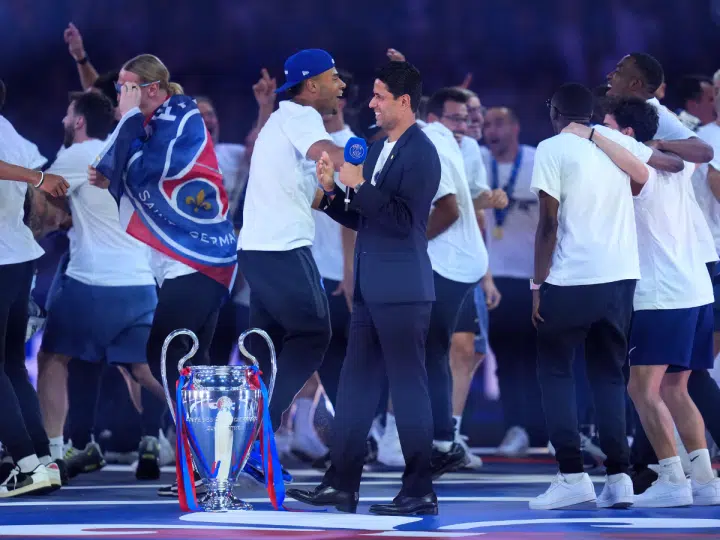
Just days before the start of the 2026 World Cup, the latest valuations from the website ‘Transfermarkt’ have revealed which clubs dominate the market. Paris Saint-Germain’s (PSG) rise to the top of the world’s most valuable clubs for the first time in its history, whilst Premier League clubs have exerted a striking dominance over the global elite.
Paris Saint-Germain oust giants from the top
The Parisian club has taken the top spot with a market value of €1.37 billion, ahead of second-placed Manchester City at €1.32 billion and Arsenal in third place at €1.25 billion.
This rise reflects the transformation the French club’s sporting project has undergone in recent years, relying on a group of the world’s most promising young talents and the rising market value of several of its stars, which has seen it overtake clubs that used to dominate the top of the table, such as Real Madrid and Barcelona.
Real Madrid came fourth with a value of €1.22 billion, followed by Barcelona in fifth place with €1.17 billion, whilst Chelsea retained sixth place after the value of its squad surpassed the €1 billion mark to reach €1.11 billion.
The Premier League dominates the scene
Although Paris Saint-Germain topped the list, the English Premier League was the biggest winner in the rankings, having made an exceptional showing with 11 clubs in the top 20.
Alongside Manchester City, Arsenal and Chelsea, the list included Liverpool, Manchester United, Tottenham Hotspur, Newcastle United, Nottingham Forest, Brighton, Bournemouth, Crystal Palace and Aston Villa, a clear indication of the significant economic gap between the English league and its European rivals.
Liverpool ranked eighth with a value of €940 million, whilst Manchester United came ninth with €752 million, ahead of Tottenham Hotspur and Newcastle United.
Notable surprises and the decline of some traditional powerhouses
The list was not without surprises, as Nottingham Forest managed to secure 13th place globally with a value of €578 million, ahead of established clubs such as Atlético Madrid and Juventus.
Bournemouth and Crystal Palace also made an unexpected appearance among the world’s top 20 clubs by market value, reflecting the financial boom experienced by English Premier League clubs in recent years.
In contrast, Bayern Munich came in seventh as the highest-ranked German club with a value of €958 million, whilst Inter Milan finished twelfth to top the Italian clubs with a value of €647 million, while Juventus slipped to twentieth place with a value of just €500 million.
With the World Cup fast approaching, these figures confirm that the balance of power in modern football is no longer measured by titles alone, but also by the value of the talent clubs possess and their ability to invest in the future, making the list of clubs with the highest market value a true reflection of the shifts the game is undergoing within the global economy.
List of the 20 most valuable clubs in the world
- Paris Saint-Germain — €1.37 billion
- Manchester City — €1.32 billion
- Arsenal — €1.25 billion
- Real Madrid — €1.22 billion
- Barcelona — €1.17 billion
- Chelsea — €1.11 billion
- Bayern Munich — €958 million
- Liverpool — €940 million
- Manchester United — €752 million
- Tottenham Hotspur — €700 million
- Newcastle United — €696 million
- Inter Milan — €647 million
- Nottingham Forest — €578 million
- Atlético Madrid — €577 million
- Brighton — €567 million
- Bournemouth — €566 million
- Crystal Palace — €553 million
- Aston Villa — €532 million
- Leipzig — €505 million
- Juventus — €500 million
Featured image via Getty/Franco Garland
By Alaa Shamali
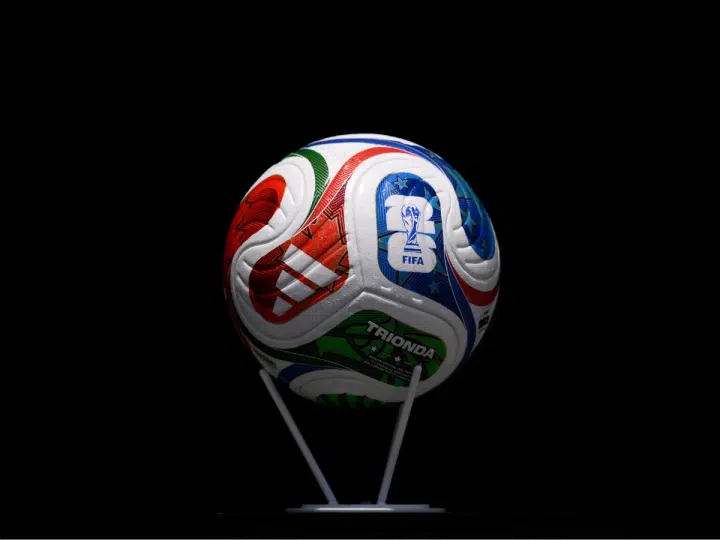
The 2026 World Cup is set to enter a radically different phase in its history, following the decision to increase the number of participating teams from 32 to 48. This expansion has not only increased the number of teams but has also completely reshaped the tournament’s structure, from the group stage right through to the knockout rounds.
This change has led to an increase in the number of matches from 64 to 104, with the adoption of a completely new competition format, the biggest since the tournament’s inception.
A completely new format: 12 groups and an expanded knockout stage
In the previous format, which ran from 1998 to 2022, the tournament was organised into eight groups of four teams each, with the top two teams in each group qualifying directly for the round of 16, whilst the remaining 16 teams were eliminated.
For the 2026 World Cup, however, the number of groups has increased to 12, with four teams in each group, making the format both broader and more complex.
Under the new system, the top two teams from each group qualify directly for the round of 32, a new stage introduced to accommodate the significant expansion, bringing the total number of direct qualifiers to 24 teams.
The most significant change is that the eight best third-placed teams are given the chance to continue in the tournament by qualifying for the round of 32, bringing the total number of qualifiers for the knockout stages to 32.
Conversely, 12 teams will be eliminated immediately, namely those finishing fourth in their groups.
Criteria for determining the best third-placed teams
In the event of a tie between teams finishing third, a series of progressive criteria will be applied to determine the outcome:
First: points scored in the group stage.
Second: goal difference. Third: number of goals scored.
Fourth: fair play record.
The fair play record is based on disciplinary points as follows:
- Yellow card: 1 point
- Sending off after two yellow cards: 3 points
- Straight red card: 4 points
- Yellow card followed by a straight red card: 5 points
If the tie persists, the FIFA World Ranking is used to determine the winner.
Draw for the Round of 32
Once the 32 qualifiers have been determined, the tournament bracket is reconfigured according to a specific draw:
- The 8 group winners face the 8 third-placed teams.
- Another 4 group winners face 4 runners-up.
- The 8 runners-up also face each other in a direct knockout stage.
Final qualification table
At the end of the group stage, the places are distributed as follows:
- 12 group winners
- 12 runners-up
- 8 best third-placed teams
- 12 teams will be eliminated in the first round
This brings the number of teams qualifying for the knockout stages from 16 in the old system to 32 in the 2026 edition, ushering in a new era for the tournament that is the largest and most extensive in World Cup history.
Featured image via Getty/Orlando Ramirez
By Alaa Shamali
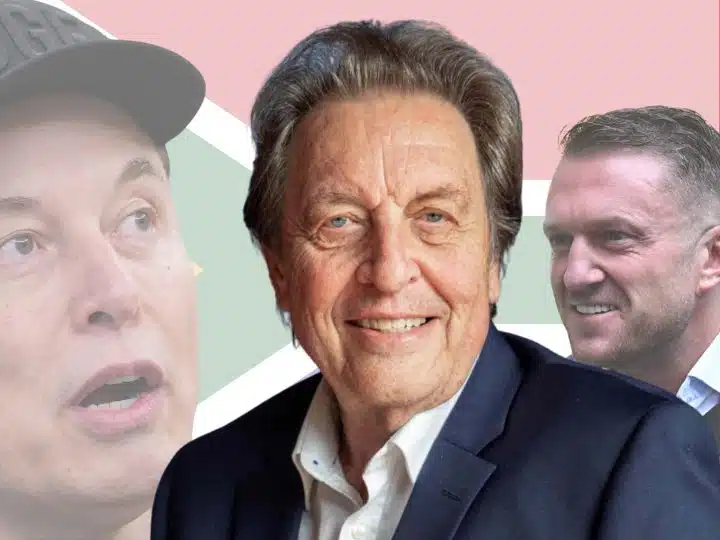
In what may be his strangest move yet, Tommy Robinson has released a video of himself with Elon Musk‘s father, Errol, an alleged sex offender.
Tommy Robinson is in Russia with Erroll Musk, who has been accused of sexually abusing five of his children and stepchildren. pic.twitter.com/kHKxFiVpC4
— Mukhtar (@I_amMukhtar) June 9, 2026
For clarity’s sake, we’re not saying it’s a ‘strange move’ because Errol has faced accusations of sexual abuse. After all, hanging around with alleged sex offenders is par for the course with Robinson. What’s not standard practice, however, is pissing off his wealthy backers and as we’ll get into, Elon despises his father.
Tommy Robinson and Errol Musk
Elon Musk has previously covered Robinson’s legal costs, as Robinson openly admitted. People also suspect Elon has artificially boosted Robinson’s reach on the Musk-owned X/Twitter because Robinson is all over its timeline posting suck-up posts like this:
How did I just make a full blown movie trailer with myself in it all on grok imagine 1.5
This would’ve cost 100s of thousands to produce years ago @elonmusk really doing his thing. pic.twitter.com/DYaan3LCRc — Tommy Robinson
 (@TRobinsonNewEra) June 4, 2026
In the video above, Robinson says:
Enjoying my day with… This is for my ex-subscribers, Errol. Say hello to them.
Errol responds:
Hi, ex-subscribers of Tommy.
Tommy then says:
We’re gonna go and cause some trouble.
Errol retorts:
Yeah, no trouble. Doing things right.
Robinson then laughs as he says:
Trying our best to.
He likely won’t be laughing once Elon gets a look at this little love in.
The relationship between Elon and his dad
While there really is no excuse for Elon being the way he is, knowing more about his father does at least explain how we ended up with this absolute dustbin of a human being.
Elon Musk Confirms He Used Burner Account On X To Role-Play As Toddler Son https://t.co/TE6xciuk2K
— HuffPost (@HuffPost) April 8, 2024
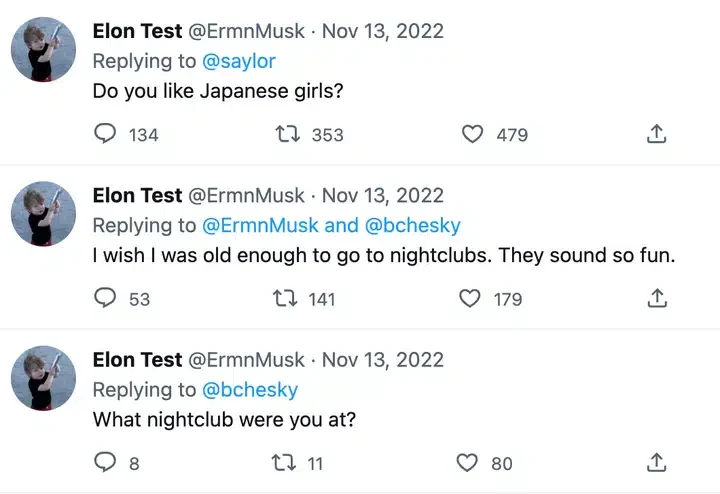
There are ‘daddy issues’, and there’s whatever the f*ck this is. And as we said, this strange behaviour doesn’t come from nowhere.
Benzinga reported that Elon said the following about his “terrible” father:
In my experience, there is nothing you can do. Nothing, nothing. I wish. I’ve tried everything. I tried threats, rewards, intellectual arguments, emotional arguments, everything to try to change my father for the better, and he, no way, it just got worse.
Speaking on how he came to live with Errol, Elon said (summarised by the Guardian):
I felt sorry for my father, because my mother had all three kids. He seemed very sad and lonely by himself. So I thought, ‘I can be company’.
I didn’t really understand at the time what kind of person he was…It was not a good idea.
Elon isn’t the only Musk to have accused Errol of being a wretched human. A New York Times investigation revealed that Errol has faced multiple accusations of sexual abuse from family members, including:
- A stepdaughter who accused him of touching her in 1993, aged four
- The same stepdaughter accused him of sniffing her worn underwear a decade later
- Three police investigations into his behaviour
Outside of the allegations, it’s 100% confirmed that Errol fathered two children with his former stepdaughter. Oh, and Errol has also admitted to killing three men, supposedly in self-defence.
Given all this, then, it’s understandable why Elon would say:
He was such a terrible human being, you have no idea. My dad will have a carefully thought-out plan of evil. He will plan evil. Almost every crime you can possibly think of, he has done. Almost every evil thing you could possibly think of, he has done. It’s so terrible, you can’t believe it
The question is how will Elon feel about seeing his minion, Tommy Robinson, with his abuser?
Curtains for Tommy Robinson
As of right now, Elon still follows Robinson. This could change, however, because Elon is incredibly spiteful.
A good example of Elon turning on a former plaything is the case of Matt Taibbi.
Taibbi was once a well-respected investigative journalist. This changed when Elon took over Twitter, and he brought Taibbi in to curate the so-called Twitter Files — a release of internal documents exchanged between the site’s former owners.
If you’ve never heard of the ‘Twitter Files’, it’s because nothing came out which was all that surprising. As a result, many accused Taibbi of doing paid-for propaganda on behalf of a billionaire.
Things later turned sour between Elon and Taibbi because of the journalist’s relationship with Substack, a site which Elon regarded as a rival.
Since sharing links to my articles is a primary reason I come to this platform, I was alarmed and asked what was going on. I was given the option of posting articles on Twitter instead.
I’m obviously staying at Substack, and will be moving to Substack Notes next week.
— Matt Taibbi (@mtaibbi) April 7, 2023
The following messages show how things panned out:
Since @elonmusk published parts of these conversations, I might as well include others. I was under a “blanket search ban” at one point and a lot of my 1.9 million followers still don’t see my content. https://t.co/vFRtJFierF pic.twitter.com/k29MFxLUTC
— Matt Taibbi (@mtaibbi) February 15, 2024
There’s also a more recent example which exemplifies how weird and fickle Elon is.
Everything is Cheong
In late May, Musk unfollowed Ian Miles Cheong, a guy who’s made a career out of sucking up to Elon. For an example of this, see the time Cheong claimed to have “never finished GTA5” despite the fact that IT WAS HIS JOB TO PUBLISH GUIDES ON GTA 5.
Whoa! Whoa! Whoa!
You mean to tell me the game series named "Grand Theft Auto" is gonna involve doing crimes?!
Count me out, sir! — 𝕋𝕙𝕖 ℍ𝕚𝕤𝕥𝕠𝕣𝕪 𝕠𝕗 ℂ𝕙𝕚𝕟𝕒 ℙ𝕠𝕕𝕔𝕒𝕤𝕥 (@thocpodcast) December 5, 2023
Not me, Upstanding Citizen Cheong! https://t.co/tDc1NAY64n
Readers added a Community Note to this Tweet: https://t.co/yEdKu6hqQA
— Helpful Community Notes (@HelpfulNotes) December 6, 2023
The Tesla billionaire unfollowed Cheong after the man made the following observation about the mother of one of Elon’s children:
Ashley St. Claire is now trying to smash Hasan Piker. Third baby on the way, I guess. pic.twitter.com/NDBmo0zFtC
— Ian Miles Cheong (@ianmiles) May 26, 2026
It's pretty cool how some of you who act like you're friends with me are publicly gloating over Elon's decision to unfollow me. Good to know where I stand with you!
— Ian Miles Cheong (@ianmiles) May 27, 2026
As Cheong has 1.2 million followers on X, it looks like Elon may now be throttling the man’s reach.

To be clear, it’s almost certainly not the case that Musk unfollowed Cheong because he insulted the mother of his child. If we had to guess, we’d say it’s because Cheong drew attention to a conversation in which Ashley St. Claire talked at length about how weird and abusive Elon is.
St. Claire has said the following about Musk:
No one’s going to believe me, but he was so much more normal before I got pregnant. It was a very normal conversation. His demeanor was normal. I know I’m going to get roasted for this, but in private, he was funny, but then it just got so f–king weird, man.
Singer Grimes has also accused Musk of being manipulative and controlling in regards to their parental arrangements. It doesn’t end there, either, as the Atlantic reported:
Musk has an undisclosed number of children that is likely well above the 14 already publicly known, and he’s shown no obvious intention to stop sowing his seed.
But perhaps more interesting than the presence of contracts between Musk and his harem of mothers is the apparent absence of traditional family ties. He appears to acknowledge few, if any, bonds of genuine duty and responsibility among family members, much less bonds of care or love.
Musk seems to have reduced traditional family relationships to mere financial arrangements, undermining longtime conservative agreement around the importance of family.
What goes around comes around
All this is a roundabout way of noting that Elon is a weird and spiteful creature who is every bit the progeny of his father, which could be a problem for Tommy Robinson.
If he does lose Elon, though, he will still have his Zionist backers, as Lowkey exposed in the following thread and video:
Tommy Robinson has previously stated he would "fight for Israel in a war."
This thread examines Robinson and EDL's very clear material relationship with the Zionist Movement and considers the possibility that the racist attacks and pogroms in Britain are part of that fight.
— Lowkey (@Lowkey0nline) August 4, 2024
Featured image via Leon Neal/ Kevin Dietsch/ Getty Images
By Willem Moore
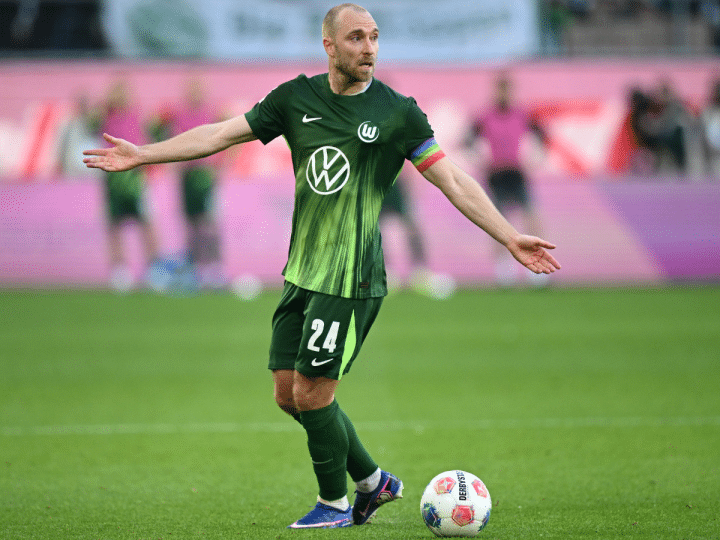
Christian Eriksen’s collapse during Denmark’s friendly against Ukraine sent a jolt through the Nature Energy Park crowd and brought the match to an immediate halt. What began as a routine warm‑up fixture ahead of the summer schedule turned into a moment of collective fear, one that revived memories no Danish supporter ever wanted to relive.
The 34‑year‑old midfielder went down shortly after the hour mark, appearing to clutch his chest before falling to the turf. Players reacted instantly, waving urgently for medical staff while forming a protective circle around him. The stadium, loud only minutes earlier, fell into a stunned, suspended silence.
Within minutes, the referee abandoned the match. Supporters were told the players would not return.
Eriksen reassurance from home
Hours later, the tension eased. Eriksen released a short statement confirming he was back home, recovering, and doing well. It was the message Denmark and much of the football world needed to hear.
He clarified that the incident was not a repeat of his cardiac arrest at Euro 2020. Instead, his implantable cardioverter‑defibrillator (ICD), fitted after that life‑threatening episode, had activated as designed. The device had done its job. He emphasised that he felt stable, was in good spirits, and was already focusing on rest with his family.
The tone was calm, measured, and reassuring, mirroring the way he plays on the pitch.
Echoes of Copenhagen
For many watching, the scene in Odense was painfully familiar. Eriksen’s collapse at Euro 2020 remains one of the most harrowing moments in modern football. His heart stopped on the pitch. CPR was administered. Teammates shielded him from cameras. The world held its breath.
That day changed the trajectory of his career. Italian regulations prevented him from continuing at Inter Milan with an ICD, prompting his return to the Premier League with Brentford in 2022. His performances there earned him a move to Manchester United, where he made over 100 appearances and lifted both the Carabao Cup and FA Cup before moving to Wolfsburg in 2025.
Through it all, Eriksen has been open about his recovery, his gratitude, and his determination to keep playing. Saturday’s incident was a reminder of the journey he has already travelled and the resilience that defines him.
Players’ immediate response
The reaction on the pitch was swift and emotional. Denmark captain Simon Kjær, who played a crucial role in Eriksen’s care in 2021, was among the first to call for medical assistance. Ukrainian players, visibly shaken, stepped back to allow space while joining the applause as Eriksen was taken off.
Some players were in tears. Others knelt, heads bowed. It was a moment that stripped away rivalry and left only human concern.
Medical clarity
Eriksen will undergo further tests in the coming days, but early indications suggest he avoided serious complications. His club, Wolfsburg, issued a brief statement echoing Denmark’s update and offering full support.
For now, there is no timeline on his return to training. That will come later. The priority is stability, rest, and careful monitoring.
In Denmark, the relief was palpable. Supporters who had lived through the trauma of 2021 feared the worst when Eriksen fell. The news that he was home, recovering, and in good condition brought a collective exhale.
Messages of support poured in from across Europe, teammates, former clubs, rival players, and supporters who have followed his remarkable comeback story. Eriksen has long been one of football’s most admired figures, not just for his talent but for the grace with which he has navigated adversity.
Featured Image via Stuart Franklin/Getty Images
By Faz Ali
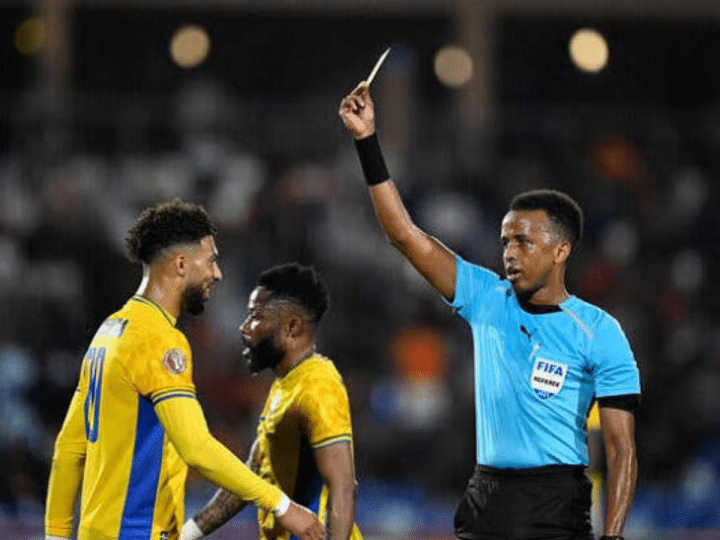
Somalia’s top referee, Omar Abdulkadir Artan, has been dramatically ruled out of the 2026 World Cup after being denied entry to the United States, ending what would have been a landmark moment for Somali football. The 34‑year‑old, voted Africa’s best referee in 2025, was set to become the first Somali official to take charge at a men’s World Cup finals. Instead, he was forced to fly back to Istanbul after being turned away at Miami International Airport.
FIFA confirmed the decision late on Monday, acknowledging that one of Africa’s most respected officials would not be part of the tournament after US authorities refused him entry.
A dream shattered at the final checkpoint
Artan travelled to Miami believing he held the correct visa to work at the tournament. Somalia remains on the US travel‑ban list, but he had been assured he could enter under the accreditation and documentation provided for World Cup officials. That confidence evaporated the moment he landed.
According to US Customs and Border Protection, Artan was subjected to “additional inspection” upon arrival on Saturday as officers assessed whether he met the criteria for entry. After hours of checks, he was deemed “inadmissible due to vetting concerns” and denied entry.
He was placed on a return flight to Istanbul, where he had been based for refereeing assignments in recent seasons.
FIFA: ‘Host governments determine who receives a visa’
FIFA moved quickly to clarify its position, stressing that it has no authority over immigration decisions made by host nations.
A spokesperson said:
“FIFA can confirm that match official Omar Abdulkadir Artan will be unable to train and officiate at the FIFA World Cup 2026 after he was denied entry into the United States. FIFA is not involved in host country immigration processes, including visa adjudications, and has been informed by authorities that Mr Artan’s status will not be changed at present. In line with previous FIFA events, a host government ultimately determines who receives a visa and who is admitted into their country.”
The statement leaves no room for appeal. With the tournament days away, FIFA has already begun the process of replacing Artan within its refereeing pool.
A historic first that never materialised
For Somalia, Artan’s appointment was more than a personal milestone — it was a national breakthrough. No Somali referee had ever been selected for a men’s World Cup finals. His rise through African football, culminating in being named CAF Referee of the Year in 2025, had been celebrated across the continent.
His absence now leaves a glaring void.
Artan had been scheduled to join the final pre‑tournament training camp in the US, where referees undergo fitness testing, VAR calibration sessions, and match‑specific briefings. Instead, he watched his World Cup dream collapse at the airport gate.
Somali officials condemn the decision
News of the visa denial sparked immediate frustration within Somali sporting circles. Ciise Aden Abshir, an advisor to Somalia’s Ministry of Sports, told Agence France-Presse:
Omar is among Africa’s most respected referees and deserves the support of the entire football community. Denying him entry and preventing him officiating harms not only him personally but also undermines football’s commitment to fairness, merit and the spirit of fair play.
The sentiment has been echoed across Somali media, where Artan’s story had been held up as proof that Somali football could produce world‑class officials despite decades of instability at home.
A wider problem of visa complications
Artan’s case is not isolated. In recent weeks, multiple athletes, journalists, and officials from countries on US travel‑restriction lists have reported delays or denials in securing visas for the World Cup. While FIFA has insisted it is working with US authorities to streamline the process, the governing body has repeatedly emphasised that it cannot override immigration decisions.
For referees, the stakes are particularly high. Unlike players, who travel with national teams and federations, match officials must meet strict logistical and training deadlines. Missing even a few days of preparation can rule them out of the tournament entirely.
Artan’s removal underscores the fragility of that system.
A career defined by resilience
Artan’s rise through the refereeing ranks has been anything but straightforward. Born and raised in Mogadishu, he began officiating in local leagues before earning CAF recognition for his composure, fitness, and command of matches. His performances in the CAF Champions League and Africa Cup of Nations qualifiers earned him a place on FIFA’s elite list.
By 2025, he had become one of the most trusted referees on the continent, praised for his calm authority and ability to manage high‑pressure fixtures. His selection for the 2026 World Cup was widely viewed as overdue recognition.
That journey now hits an unexpected and painful halt.
What happens next for FIFA and African officiating
FIFA will now reassign Artan’s scheduled matches to other officials, likely drawing from its standby list. The Confederation of African Football (CAF) is expected to push for another African referee to be added to the roster, though time is running short.
For African officiating, Artan’s exclusion is a symbolic blow. His presence at the World Cup would have represented a step forward for Somali football and a broader statement about the continent’s refereeing depth.
Instead, the conversation has shifted to immigration policy, travel bans, and the complexities of hosting a global tournament across multiple countries with differing entry rules.
For Artan, the disappointment is profound. For Somalia, it is a missed moment of global visibility. For FIFA, it is another reminder of the corruption when tournaments intersect with geopolitics.
The World Cup will go on without him. The image of a top African referee being turned away at a US airport days before the biggest tournament of his life will linger a stark reminder that even in football, borders can still close doors that talent alone cannot open.
Featured Image via Khaled Desouki/Getty Images
By Faz Ali

Airdrie school wins prestigious Gold Reading Schools Award

Police Name Suspect in Separate Kidnapping Near Nancy Guthrie’s Arizona Home

FIFA names Kraken official crypto exchange supporter for 2026 World Cup



-

 Fashion4 days ago
Weekend Open Thread: Evereve – Corporette.com
-
 Crypto World4 days ago
Jensen Huang Approves Samsung, SK Hynix, and Micron for NVIDIA (NVDA) HBM4 Memory Supply
-
 Sports7 days ago
French Open 2026 results: Alexander Zverev beats Rafael Jodar and will play Jakub Mensik in semi-finals
-
 Business7 days ago
Trump Taps Housing Chief Bill Pulte as Acting Intelligence Director After Gabbard Exit
-

 Crypto World2 days ago
Anatomy of the June crypto crash: Fed, Iran, Saylor
-
 NewsBeat7 days ago
Republicans balk at Trump’s attempt to appoint a MAGA enforcer to lead National Intelligence
-
 Crypto World3 days ago
Senator Cynthia Lummis Calls CLARITY Act the Most Consequential Financial Legislation of This Generation
-
 Business3 days ago
The Pain Points Taking a Fragile Tech Rally Down a Notch
-
 Entertainment3 days ago
The Best Mystery Series of All Time Is Surging on Streaming 30 Years After It Ended
-

 Tech4 days ago
Microsoft launches MXC, an OS-level sandbox for AI agents, with OpenAI and Nvidia already on board
-

 Tech2 days ago
Microsoft unveils seven homegrown AI models in new bid for ‘long term self-sufficiency’
-

 NewsBeat2 days ago
Alexander Zverev wins the French Open to finally earn a 1st Grand Slam title
-
Crypto World4 days ago
LBank Surpasses 25 Million Users Worldwide as AFA Partnership Continues to Drive Global Growth
-

 Business7 days ago
PagerDuty, Inc. (PD) Presents at Bank of America 2026 Global Technology Conference Transcript
-

 Tech4 days ago
Suspicious Polyfill login prompts pop up on Toshiba, Muji websites
-

 Crypto World2 days ago
Trump’s AI Ownership Plan Could Benefit Anthropic at OpenAI’s Expense
-
 Sports4 hours ago
Bangladesh beat Australia after 20 years in ODIs, register only their second win over six-time world champions | Cricket News
-

 Business4 days ago
(VIDEO) Justin Bieber Delivers Surprise Happy Birthday Serenade to Diners at Los Angeles Mexican Restaurant
-

 Tech4 days ago
Meta steals a tactic from Tesla and builds data centers in tents
-

 Tech4 days ago
RCS Messages Between iPhone and Android Get End-to-End Encryption With iOS 26.5
You must be logged in to post a comment Login