
News Beat
Eurovision 2026: Every Country That’s Pulled Out Over Israel Participation

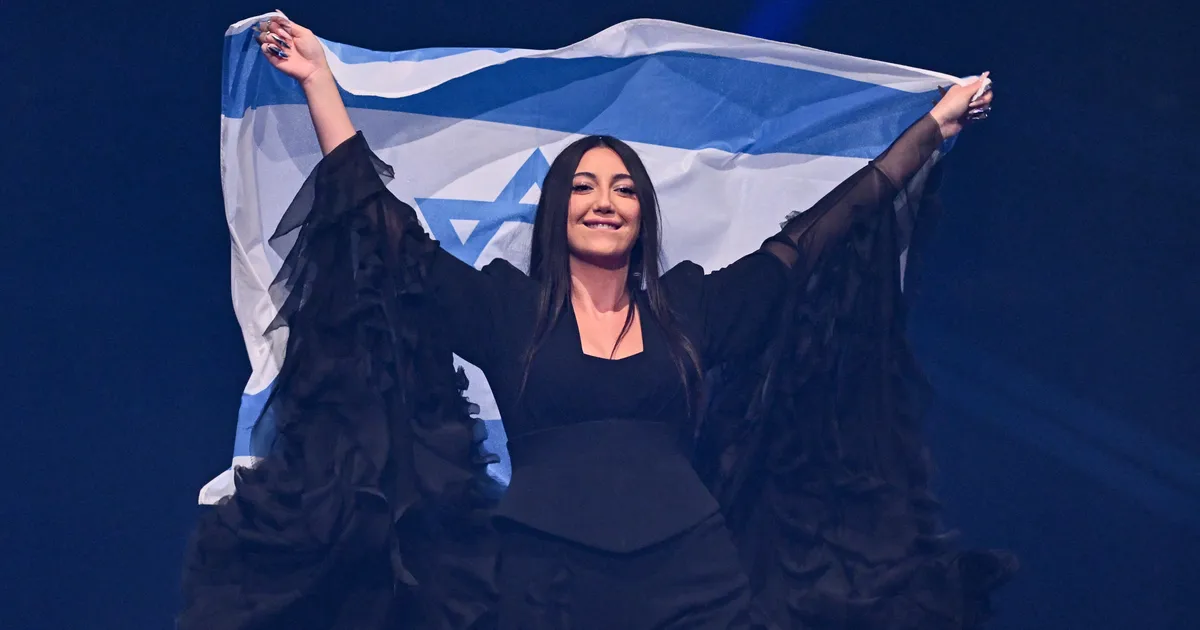
After months of mounting speculation, Eurovision 2026 has confirmed that Israel will be allowed to compete in the upcoming song contest.
It’s an extremely controversial decision given the escalating violence in Gaza, and now many countries have confirmed that they’ll be boycotting the competition as a result of Israel’s presence.
In the run-up to last year’s Eurovision, many fans called for organisers to remove Israel from the contest, in the same way Russia was banned in 2022 following its invasion of Ukraine.
However organisers chose to run Eurovision as usual, with Israel remaining in the contest.
This led to wider campaigns for a boycott of the competition, backed by the Palestinian-led BDS movement, with the UK seeing a dip in its viewership (although it’s worth pointing out the previous year took place in the UK).
With the news that Israel will officially once again be allowed to compete in Eurovision, here’s which countries won’t be competing next year as a result.
Ireland
Ireland holds the joint record for most Eurovision wins, but Irish broadcaster RTÉ has confirmed that the country will neither compete in nor broadcast Eurovision 2026.
In a statement, it said: “RTÉ feels that Ireland’s participation remains unconscionable given the appalling loss of lives in Gaza and the humanitarian crisis there which continues to put the lives of so many civilians at risk.
“RTÉ remains deeply concerned by the targeted killing of journalists in Gaza during the conflict and the continued denial of access to international journalists to the territory.”
Spain
A significant withdrawal, Spain represents one of the “Big Five” countries (along with the UK, France, Germany and Italy), which contribute the most financially to the competition and can advance straight to the final.
Spanish broadcaster RTVE had previously agreed to withdraw from Eurovision if Israel participated.
Before the official announcement, RTVE’s Secretary General expressed “serious doubts” about Israel’s participation, naming the situation in Gaza and “Israel’s use of the contest for political purposes” and calling for a secret ballot on the issue – which wasn’t granted.
After the decision that Israel would remain, RTVE followed through on its claims and announced Spain’s withdrawal from the competition, saying it had increased their “distrust of the festival’s organisation”.
The Netherlands
Dutch broadcaster Avrotros has also publicly announced that the Netherlands won’t compete in this year’s competition.
In a statement, it said that it had consulted with “a broad range of stakeholders” from the Israeli ambassador to Amnesty International and “the many thousands of Eurovision fans who reached out to us” to reach its decision.
“Avrotros noted that the severe humanitarian suffering in Gaza, the restrictions on press freedom, and the political interference surrounding the most recent edition of the Song Contest were incompatible with the values we stand for,” they wrote.
“After weighing all perspectives, Avrotros concludes that, under the current circumstances, participation cannot be reconciled with the public values that are fundamental to our organisation.”
Slovenia
Slovenian national broadcaster RTVSLO was amongst the first to say they’d boycott this year’s Eurovision if Israel was allowed to compete.
The broadcaster has said its position “remains unchanged” and Slovenia has now withdrawn from the competition.
“The recent rule changes do not alter our view,” RTVSLO said in a statement. “As a public service broadcaster, RTV Slovenia is committed to upholding ethical principles and expects that equal rules and standards apply to all EBU members and all participating countries.”
Eurovision is due to take place in Vienna in May 2026, following JJ’s win for Austria earlier this year.



