Connect with us
DAPA Banner
DAPA Coin
DAPA
COIN PAYMENT ASSET
PRIVACY · BLOCKDAG · HOMOMORPHIC ENCRYPTION · RUST
ElGamal Encrypted MINE DAPA
🚫 GENESIS SOLD OUT
DAPAPAY COMING

NewsBeat

David Hockney, the artist who forced Britain to make room for colour, joy and queerness

Published

on

David Hockney, the artist who forced Britain to make room for colour, joy and queerness

Born in Bradford and shaped by northern art-school discipline, David Hockney brought a working-class, almost punk refusal to British art: do the work, trust the eye, do not ask for approval. Hockney made success look effortless: all colour, good humour, great glasses, cigarettes and smoky charm. But for a young gay artist from a northern mill town, nothing about that journey was effortless.

Hockney knew what it was to be judged before he was properly seen. In Britain, class prejudice travels through accent. His Bradford voice carried history, poetry and bite, but at the Royal College of Art in London it was mocked. Looking at the drawings of his fellow students who laughed, he simply outdrew them.

Bradford educated Hockney. The north was not a cultural desert waiting to be rescued by London, but a place of serious art schools, teachers, makers and visual traditions. What it lacked was not talent or discipline, but the automatic authority granted to those formed by privilege.

Hockney refused the lot assigned to him. He opened gates for those who followed, showing that art college, success and cultural authority were not reserved for those born inside old networks of taste and confidence. His answer to class prejudice, regional snobbery, homophobia and aesthetic gatekeeping was not to become deferential. He clocked into a lifelong art-making shift, working harder, looking harder and making more until the cultural gatekeepers had no choice but to rearrange around him.

Advertisement

He made works of pleasure, colour, friendship and innovation. He portrayed gay life, not through struggle – but through domesticity, tenderness and desire, a brave and piercingly clever approach before the partial decriminalisation of sex between men in England and Wales in 1967.

Like Boy George in pop, Hockney made difference visible through colour, humour and style, in a form large audiences could enjoy before they necessarily understood its politics. Against the grey weight of inherited prejudice, he offered something bright, accessible and quietly radical. By showing ordinary happiness, he helped make the prejudice against it look ridiculous, making acceptance feel overdue.

Hockney’s late career also challenged ageism and disablism. Using a wheelchair in later life, he refused the assumption that older or disabled bodies mean diminished cultural agency. Like the infirm Henri Matisse making cut-outs in his last decade, Hockney made old age active, inventive and publicly consequential.

Advertisement
Portrait of an Artist (Pool with Two Figures) by David Hockney (1972)
Christie’s / Wikipedia

The art of seeing

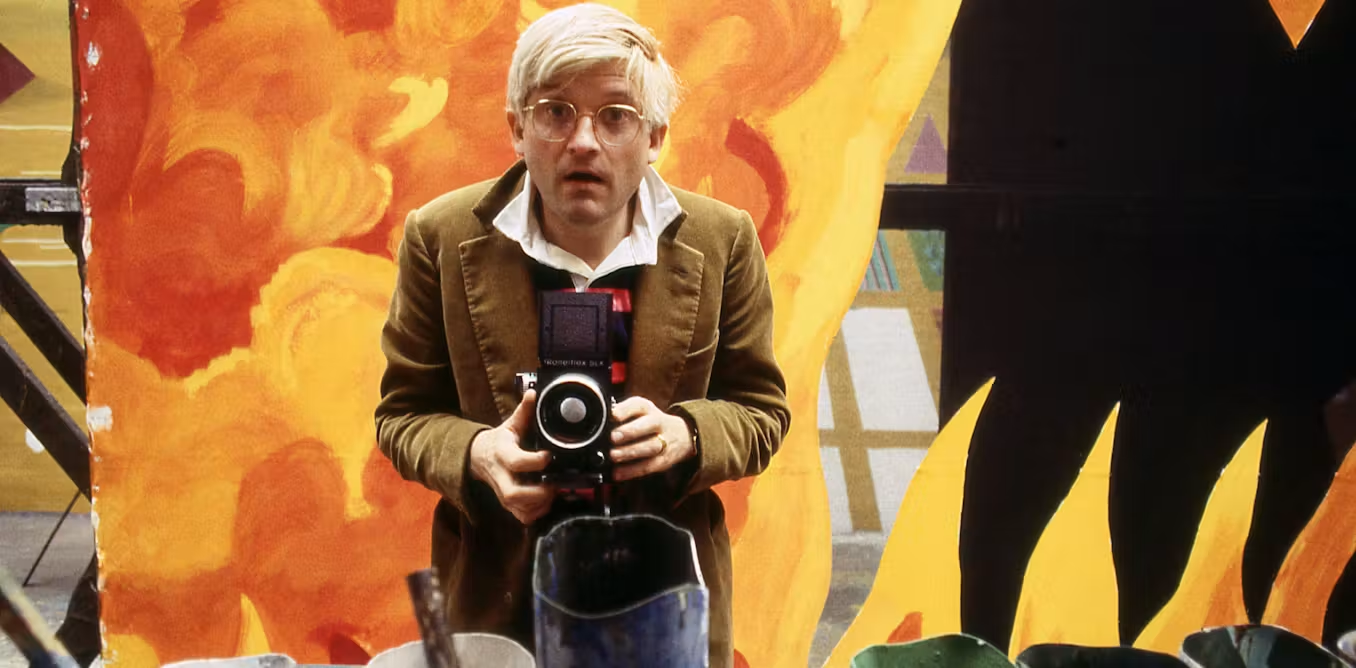
Beyond swimming pools and California light, Hockney insisted that art is an experiment in seeing. He never treated looking as passive. He embraced Polaroid, photo-collage, iPad, projection and immersive display. He lived in the now by continually adopting whatever helped him see.

His work with physicist Charles Falco on the historical use of lenses, mirrors and optical devices in painting was not a sideline, but part of a lifelong enquiry into the technologies of vision.

In Pearblossom Hwy (1986), Hockney used hundreds of photographic prints to fracture space and test perception, while refusing to accept the camera as the final authority. A mountain could be made from all the photographs that have failed to capture the majesty of a bush, an oak tree, a rolling hill or a mountain itself. For Hockney, seeing was not the same as recording: the camera could seize an instant, but landscape required time, attention, weather and the bodily experience of being there.
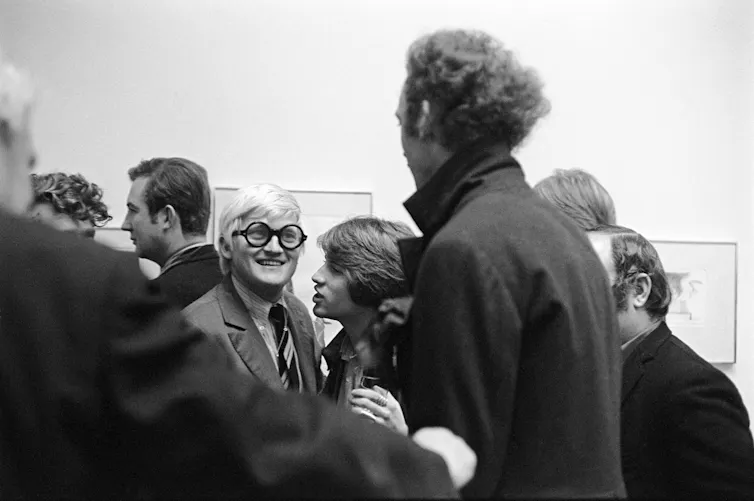
A group of people at an art gallery with David Hockney in the middle, smiling.
Hockney at the age of 32 in 1969.
Homer Sykes / Alamy

His later work made that fight to catch time explicit. Again and again, Hockney asked how a flat image could hold colour, light and the passing seasons. This reached monumental form in A Year in Normandie (2020), a printed iPad frieze more than 90 metres long.

Here, time is made spatial. We walk its length, moving through winter, spring, summer and autumn as if moving through life itself. The work captures time, but also lets it slip away, teaching human frailty and humility through the simplest things: a road, a tree, a field, a burst of hawthorn blossom.

Advertisement

Seen alongside another northern artist, LS Lowry, Hockney’s landscapes gain further force. Lowry’s industrial worlds, social, bodily, smoky and crowded, are now – in much of the UK – pictorial memory. Hockney’s roads, trees, fields and blossoms may one day carry a similar charge. They record not only place, but a fragile idea of land, season and belonging.
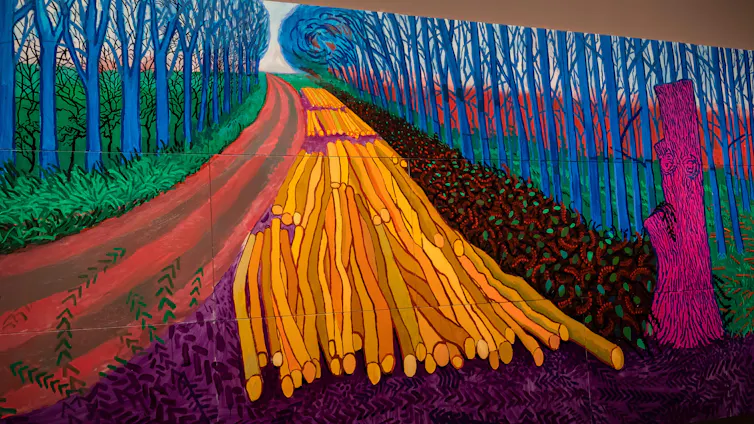
A painting of a rural scene showing a path through some trees in vivid pinks, blues and greens.
Hockney’s Felled Trees on Wolgate (2008)
Bosiljka Zutich / Alamy

In an environmental age, looking carefully at blossom by the roadside, at trees, seasons and shifting light, is not an escape from politics. It is a radical act and a condition of care. In a country where 44% of adults now spend three hours or less outdoors each week, Hockney’s insistence on slow looking feels less like nostalgia than a warning.

Hockney did not try to escape the north or his background – instead he made the north impossible to ignore. Using the digital tools of now, he asked us to look slowly at local spaces in the round. His legacy is not only that he entered the art canon. It is that he made the canon warmer: more northern, more queer, more popular, more colourful, more technologically curious and more open to joy and pleasure.

Hockney made humour, friendship and pleasure into serious forms of exchange. At a time when some voices profit from division, and when environmental crisis and war press heavily on daily life, Hockney’s sign-off message, “love life”, feels more striking than ever.

Advertisement

Source link

Continue Reading
Click to comment

You must be logged in to post a comment Login

Leave a Reply

NewsBeat

Duchess Sophie implemented strict rule for her wedding – but late Queen ‘ignored’ it

Published

on

Daily Mirror

The Duke and Duchess of Edinburgh, who are marking their 27th wedding anniversary today, had a unique dress code rule for their royal wedding, but not everyone followed their request

The Duke and Duchess of Edinburgh are marking a landmark occasion today — their 27th wedding anniversary. Prince Edward and Sophie exchanged vows at St George’s Chapel in Windsor on June 19 1999, in what was widely regarded as an “informal” royal wedding. Guests turned out in their droves, among them the late Queen and Prince Philip, King Charles and his sons Princes William and Harry.

Advertisement

Sophie looked breathtaking in a wedding gown by Samantha Shaw and was granted permission to wear a tiara from the late Queen’s private collection. The relaxed atmosphere of the occasion saw the couple opt for a less rigid dress code — requesting that guests arrive in evening wear and leave their hats at home.

Yet it appears some royals chose to bend these rules — with one family member seemingly disregarding them altogether. Photos from the occasion show the groom’s late mother, Queen Elizabeth, sporting a delicate lilac fascinator, while the groom’s sister Princess Anne chose a small green hair accessory.

When it came to Edward’s grandmother, the late Queen Mother, she still arrived wearing a hat — though the couple may well have been perfectly content with this, given she was rarely spotted in public without one. Following their ceremony at St George’s Chapel, the newlyweds enjoyed a carriage ride through Windsor before heading to their reception in St George’s Hall.

Advertisement

When Sophie joined the Royal Family over two decades ago, a few eyebrows were raised at the news that she would not receive a duchess title. Unlike her sister-in-law Camilla and her nephew’s wife Kate, Sophie was bestowed the title of Countess of Wessex upon her marriage to Edward in 1999.

However, in 2023 King Charles granted both Edward and Sophie new titles – finally elevating them to Duke and Duchess of Edinburgh. It had long been the wish of Prince Philip, the former Duke of Edinburgh, and the former monarch to pass the Dukedom to Edward and Sophie following their deaths.

In a previous interview, Sophie revealed how she and Edward sat “stunned” when Philip informed them of his wishes regarding his title – in just 11 words. Recounting the moment she and her husband learnt of Philip’s intentions, she told the Telegraph: “We sat there slightly stunned. He literally came straight in and said, ‘Right. I’d like it very much if you would consider that’.”

Advertisement

Philip’s wish for Edward to inherit the title was a nod to his son’s decades of dedication to the Duke of Edinburgh’s Award, the youth programme widely regarded as one of Philip’s most cherished legacies.

The couple, who are parents to Lady Louise Windsor and James, the Earl of Wessex, have often regarded as some of the Royal Family’s safest pairs of hands, quietly keeping up with duty and being an invaluable support for the King.

Advertisement

The pair have enjoyed a bigger public profile in recent years, especially since the likes of Prince Harry and Meghan Markle stepped down from royal duties, allowing the Edinburgh’s to take more of the spotlight.

Away from their royal roles, Edward and Sophie appear to prefer life away from publicity, living under the radar, away from the cameras at their Bagshot Park estate in Surrey.

Source link

Continue Reading

NewsBeat

Funding Futures 4 to take part in fundraising sky dive today

Published

on

Funding Futures 4 to take part in fundraising sky dive today

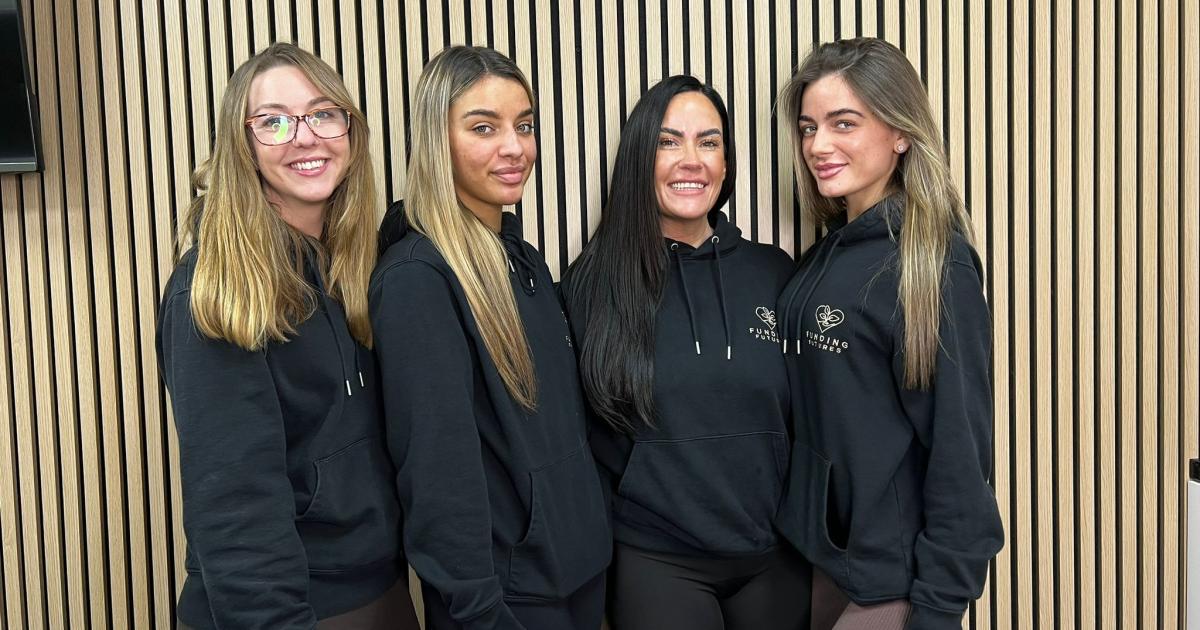
Sophie Calderley, Nicha Miller and mother and daughter Siobhan Mitchell and Lily Morris all work for Funding Futures which created the Leap For Her Future campaign.

The courageous foursome are aiming to raise £3,000 to support the CIC’s (Community Interest Company) work with women across Greater Manchester.

Sophie is an educator, mentor and project coordinator, Nicha is an educator and content creator, Siobhan is an educator, mentor and project coordinator and Lily is an educator.

Advertisement

Funding Futures helps women who are not currently in employment, education or training to achieve qualifications, develop new skills, gain confidence and take positive steps towards employment, further education and greater independence.

Many of them have faced significant challenges and barriers in their lives. Now, through accredited courses, tailored support and opportunities for personal development, they are helped to unlock their potential and create brighter futures for themselves and their families.

The Leap For Her Future campaign was created to both raise funds and awareness of the organisation’s work and also to inspire others to support the cause and help Funding Futures reach more women.

Commented Sophie: “This year is about letting go of fear and comfort. So all I’m going to think of is letting go of that plane on the day.

Advertisement

“The reason we are doing this is to raise money and offer more wraparound support for more women Funding Futures gives every woman an opportunity to pursue the future they want.

“The money raised will be going towards a brighter future for so many women in the local area.”

The jump takes place at the Black Knights Skydiving Centre in Lancaster on Friday, June 19.

To donate go to https://www.justgiving.com/crowdfunding/leapforherfuture?utm_medium=FA&utm_source=CL

Advertisement

Source link

Continue Reading

NewsBeat

World Cup 2026: Iran to lodge complaint to Fifa over travel restrictions

Published

on

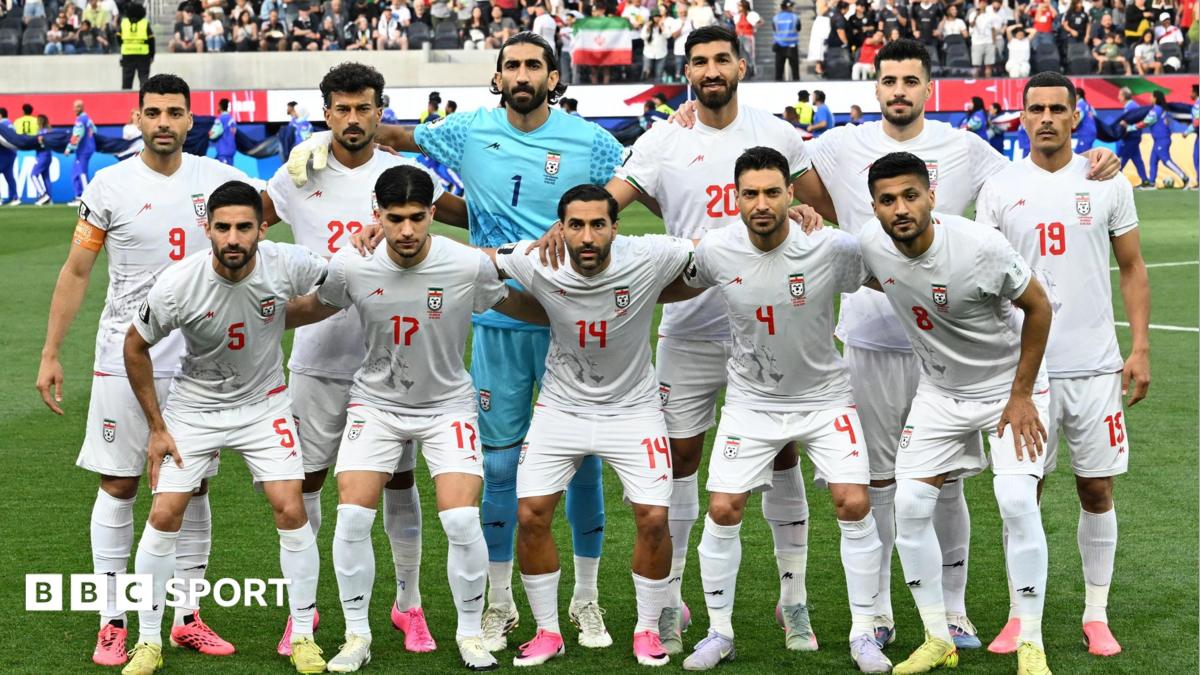
The Iran team line up before their 2-2 draw with New Zealand at the 2026 World Cup

Iran’s involvement in the World Cup has been plagued with uncertainty, linked to the war in the Middle East and related security concerns.

Fifa president Gianni Infantino visited the Iran team in the dressing room following the game against New Zealand as tensions continue.

Multiple “integral” members of their backroom staff were denied entry visas for the US while the FFIRI called on Fifa to “uphold the principles of neutrality, fairness, and established regulations” after their allocation of tickets was revoked on the eve of the tournament.

“The Iranian national football team agreed to these terms,” a Department of Homeland Security spokesperson told the BBC when asked for a response to Ghalenoei’s comments.

Advertisement

Iran, who switched their base for the World Cup from Arizona in the US to Tijuana in Mexico amid the conflict in the Middle East, have two group games remaining and both are in the US.

They face Belgium in Los Angeles on 21 June (20:00 BST) and Egypt in Seattle on 27 June (04:00 BST).

Iran said they “needed to arrive in each host city two days before every match and return to its base camp the day after the game in order to achieve optimal technical and physical preparation” but “this request was not approved” for their game against New Zealand.

“The same situation has now been repeated ahead of Iran’s second match against Belgium,” added the FFIRI.

Advertisement

“Given that the game will be played at 12:00pm local time in Los Angeles, the Football Federation of Iran requested that the team be allowed to travel to Los Angeles two days before the match.

“The aim was to provide sufficient time for players to adapt to the match conditions, complete their final training session, and finalise preparations.

“Despite the technical reasons presented by the federation, the request was once again denied.”

The presidents of the US and Iran have signed an initial peace deal aiming to end the war but Andrew Giuliani, the executive director of the White House Fifa Task Force, said that Iran knew the situation they faced when it came to their matches.

Advertisement

“The team will be allowed to come in, match day minus one, so the day before the match,” Giuliani told CBS News.

“They’ll be asked to leave the day that the match wraps up, so the evening of the match. And they’ll be able to do that again in Los Angeles.”

Source link

Advertisement
Continue Reading

NewsBeat

Bruno Fernandes targeted as Cristiano Ronaldo’s family get involved in World Cup row

Published

on

Manchester Evening News

Portugal were held to a 1-1 draw by DR Congo in their World Cup 2026 opener on Wednesday, with Bruno Fernandes and Cristiano Ronaldo both enduring frustrating afternoons for the European giants

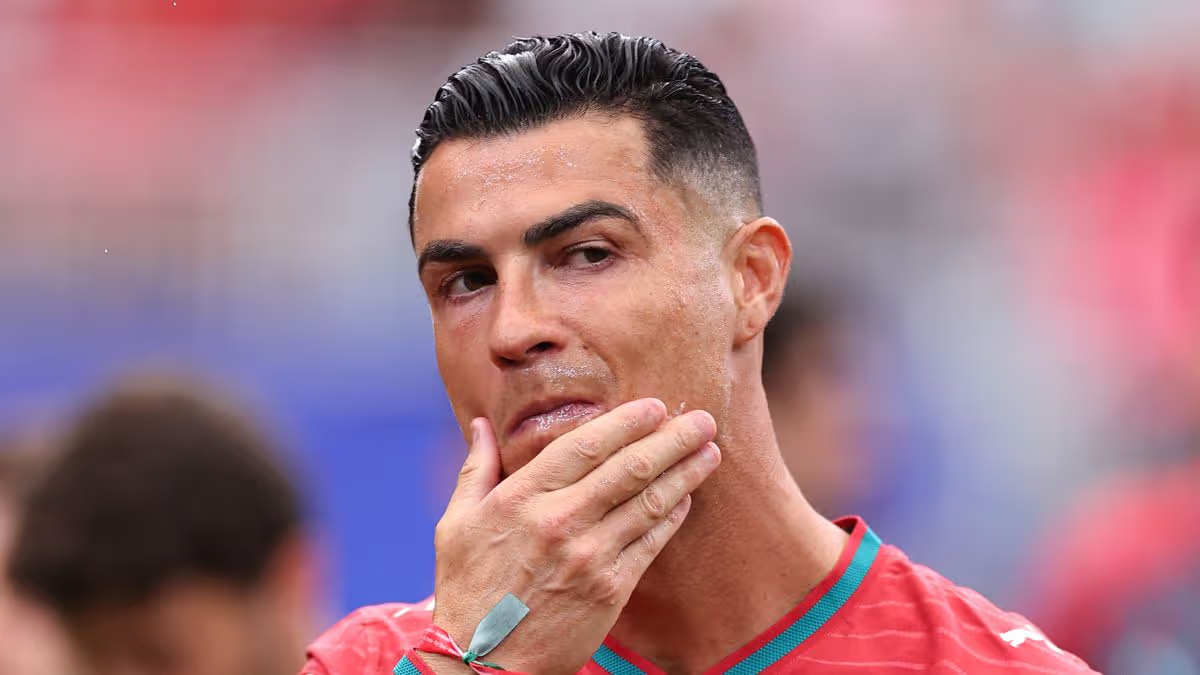
Cristiano Ronaldo’s sister Katia Aveiro has reacted to Bruno Fernandes’ performance in Portugal’s draw with DR Congo in their World Cup opener. The Manchester United midfielder featured for the entire match alongside Ronaldo but they were forced to settle for a point as their campaign got off to a disappointing start.

Advertisement

Katia ‘liked’ an Instagram post from a Brazilian account commenting on the United skipper’s showing for his nation. Roberto Martinez’s team endured frustration despite Joao Neves’ sixth-minute header as Newcastle United star Yoane Wissa equalised. Despite controlling 75 per cent of possession, only three efforts were directed on target – leaving Ronaldo without any attempts of his own.

Fernandes also endured a lacklustre outing. Featuring a picture of the United star, the post read: “This one here is the Raphinha for Portugal. Too much popcorn for the national team.”

Get MEN Premium now for just £1 HERE – or get involved in our United WhatsApp group by clicking HERE.

You can also join our United Facebook page by clicking HERE and don’t miss out on our brilliant selection of newsletters HERE.

Advertisement

It follows a strange surge of abuse directed towards Portuguese players and those close to them with Neves among those suffering the brunt of an online barrage. The Paris Saint-Germain star’s Instagram comments were hijacked by angry Ronaldo supporters in light of his post-match comments.

He said: “We know what Cristiano (Ronaldo) has done for this national team and for the world of football.

“But right now, he is one of us. He is no different. He is an additional player to help and contribute to Portugal’s performance just like all of us.

“He played very well, the whole team had an excellent match. We are united. And in the long term, that’s what will make the difference. It’s not this draw that should ruin our morale. On the contrary, this result will only strengthen us further to do better in the upcoming matches.”

Advertisement

FOLLOW OUR MAN UNITED FB PAGE! Latest news and analysis via the MEN’s Manchester United Facebook page

Vitinha and Pedro Neto have also seen their comments sections taken over with supporters demanding Ronaldo shown more respect. It has even been suggested that Neves’ partner has also had her social media being bombarded by angry supporters of the five-time Ballon d’Or winner.

Ronaldo also faced criticism for his limited impact during the fixture, recording just 25 touches against Congo. Yet, he remained on the pitch for the duration of the match.

One Portugal supporter wrote on X: “Ronaldo just gets in the way, and only those who don’t want to see it won’t. It’s ridiculous that he has a guaranteed place in the national team.”

Advertisement

Another added: “Ronaldo just sits in the box waiting for a miracle ball that never arrives.”

With seven minutes left on the clock, Martinez chose to introduce Goncalo Ramos, withdrawing Vitinha – a move that drew criticism from former England striker Chris Sutton.

“He [Martinez] is scared to take him off,” Sutton told BBC Radio 5 Live. “He is not the manager. He [Ronaldo] might score the winner, but the game passed him by.

“He is a brilliant player. He was once the playmaker, but now he is the poacher. He is not only the poacher, but he runs the estate. I don’t understand some of his management. Cristiano Ronaldo was on the periphery and Martinez has to be brave enough to be the manager.”

Advertisement

Martinez, meanwhile, defended the substitution by arguing it would have made little sense to remove the goalscorer while Portugal were pushing for a winner.

“We were finding it difficult because they were playing in a back six,” Martinez hit back. “And in a situation like that, you can use his qualities.

“It makes no sense to get a player like Cristiano out of the game where you need goals. The straight line is not the quickest way.

“The way he attracts defenders and uses space is valuable. When you need goals, you need a player like Cristiano Ronaldo on the pitch.”

Advertisement

Taking to Instagram following the final whistle, the Portugal icon wrote: “This was not the start we wanted but this is far from being over. Heads held high and focus on the next game.”

Portugal will be keen to respond to the disappointing outcome when they take on Uzbekistan on Tuesday (6pm). Colombia, meanwhile, one of Portugal’s group rivals, defeated Uzbekistan 3-1 and currently lead Group K.

Source link

Advertisement
Continue Reading

NewsBeat

Makerfield by-election results LIVE as Andy Burnham smashes Reform paving way for leadership challenge and Nigel Farage hits out

Published

on

Manchester Evening News

Source link

Advertisement
Continue Reading

NewsBeat

Andy Burnham as Prime Minister: What would it mean for London?

Published

on

Andy Burnham as Prime Minister: What would it mean for London?

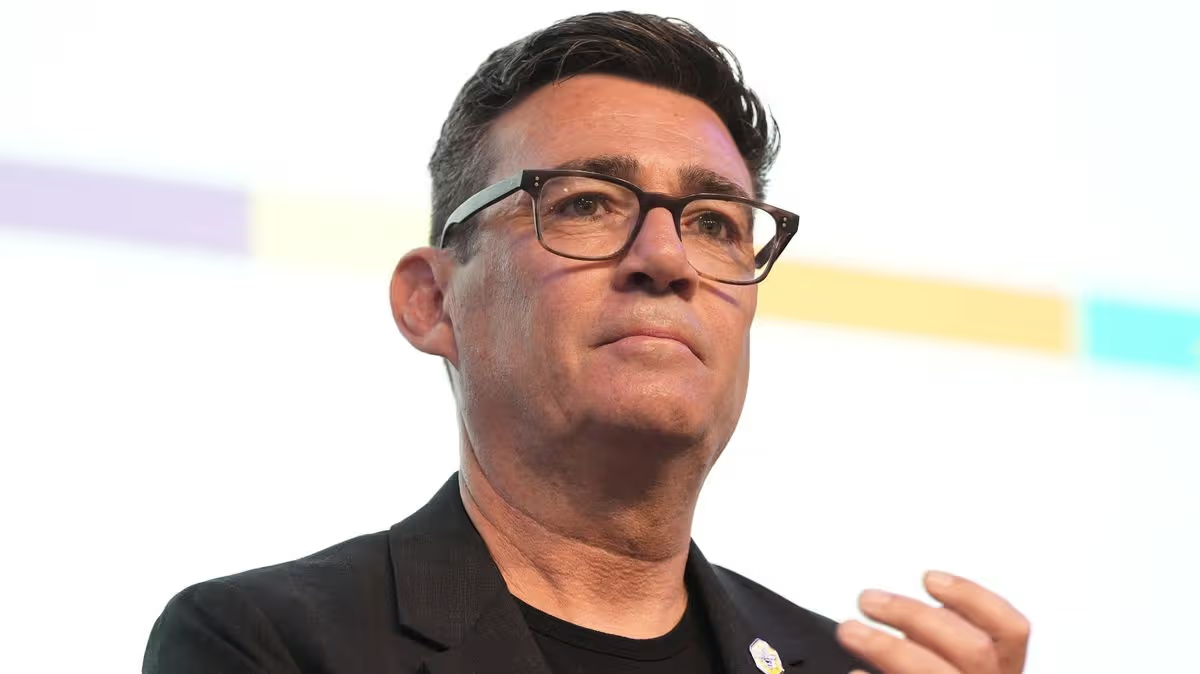
The now former Greater Manchester Mayor beat Reform UK’s candidate Robert Kenyon by a majority of 9,231, nearly 4,000 more than Labour achieved at the 2024 general election.

Source link

Advertisement
Continue Reading

NewsBeat

Is Australia’s social media ban for under 16s working?

Published

on

Is Australia’s social media ban for under 16s working?

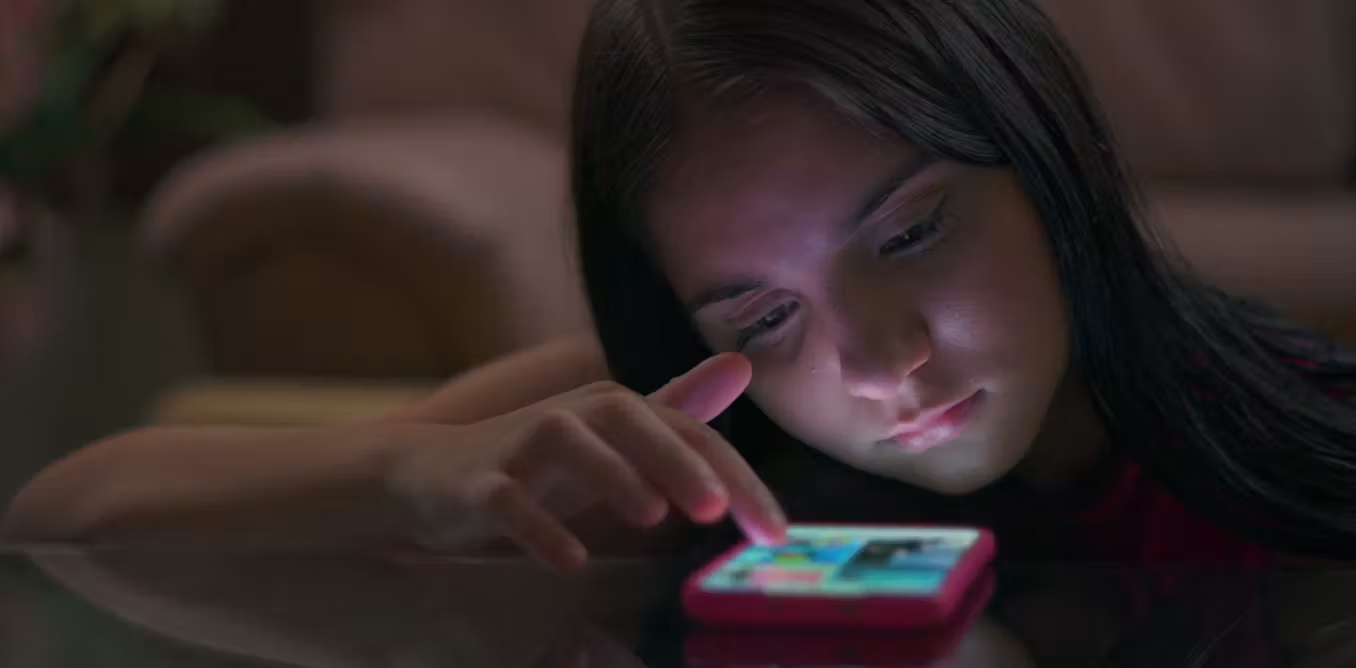
When Australia banned under 16-year-olds from using social media in December 2025, it became a test case for a policy now being pursued by governments around the world.

Six months on, the UK has announced plans to introduce its own social media ban in 2027, with France, Malaysia, Indonesia and Greece among other countries pursuing similar bans.

Advertisement

So how’s it going in Australia? Have the teenagers emerged from a phone-lit glow to reengage in the real world? And what kind of difference is it having on their mental health?

In this episode of The Conversation Weekly, we speak to Susan Sawyer, a professor of adolescent mental health at the University of Melbourne, who is running a number of ongoing studies examining the way young people and their parents are reacting to Australia’s ban.

Sawyer says that when the ban was first introduced, she was cynical about the government’s ability to get young people off social media – and it has been difficult. In a compliance report released in March 2026, Australia’s eSafety Commission said many young people were still able to access social media, and it launched investigations into five technology companies it feels haven’t done enough to comply with the ban.

Yet while she used to think of the ban as a blunt instrument, Sawyer says her views are changing. “We’re seeing that conversations are shifting from whether social media negatively affects young people or to what extent or in what ways, to rather thinking about what age might be a more appropriate age for young people to first gain access to social media,” says Sawyer.

Advertisement

And that is born out by some of Sawyer’s research. In a recent poll of more than 2,000 parents of 0- to 17-year-olds, just under 40% said the law had changed their view on when children should first have their social media accounts and “overwhelmingly, that’s now a higher age”, she says.

Listen to Sawyer on The Conversation Weekly podcast, and read an article she’s written about her latest research on the impact of high social media use on mental health.

This episode of The Conversation Weekly was written and produced by Gemma Ware, Katie Flood and Mend Mariwany. Mixing by Eleanor Brezzi and theme music by Neeta Sarl.

Newsclips in this episode from pmaulinauskasmp, BBC News and 9News Australia.

Advertisement

Listen to The Conversation Weekly via any of the apps listed above, download it directly via our RSS feed or find out how else to listen here. A transcript of this episode is available via the Apple Podcasts or Spotify apps.

Source link

Advertisement
Continue Reading

NewsBeat

Cotswolds town named among top UK places to visit in 2026 – not Castle Combe or Bibury

Published

on

Daily Mirror

The “overlooked” town has been named one of the top places to visit in the UK for 2026, crowning the historic Cotswolds town ahead of overrun tourist hotspots like Bibury and Bourton-on-the-Water

The best place to visit in the Cotswolds has been revealed – and it’s not the usual suspects like Chipping Campden, Bibury or Bourton-on-the-Water.

Advertisement

There’s an abundance of stunning beauty spots scattered across the UK, with rugged landscapes, peaceful golden beaches, vibrant and quirky towns, craggy rocks and cliffs, vast woodlands, rolling green hills, and plenty more besides.

For a relatively small country, there’s a rich variety of diverse destinations to pick from – whether you fancy exploring the peaceful glacial lakes and fells of the Lake District, or the seemingly endless dramatic coastlines of Scotland, the history and intrigue of sites like the Mourne Wall in Northern Ireland, or the impressive peaks of Eryri/Snowdonia in Wales; there’s no shortage of choices.

This is equally true when it comes to the varied towns scattered throughout the UK, from sleepy fishing villages and bustling market towns, to picturesque places that offer a glimpse into the past, and much more.

If you’re keen to embark on a “staycation” in the UK and feel overwhelmed at the prospect of deciding where to go, you’re in luck.

Advertisement

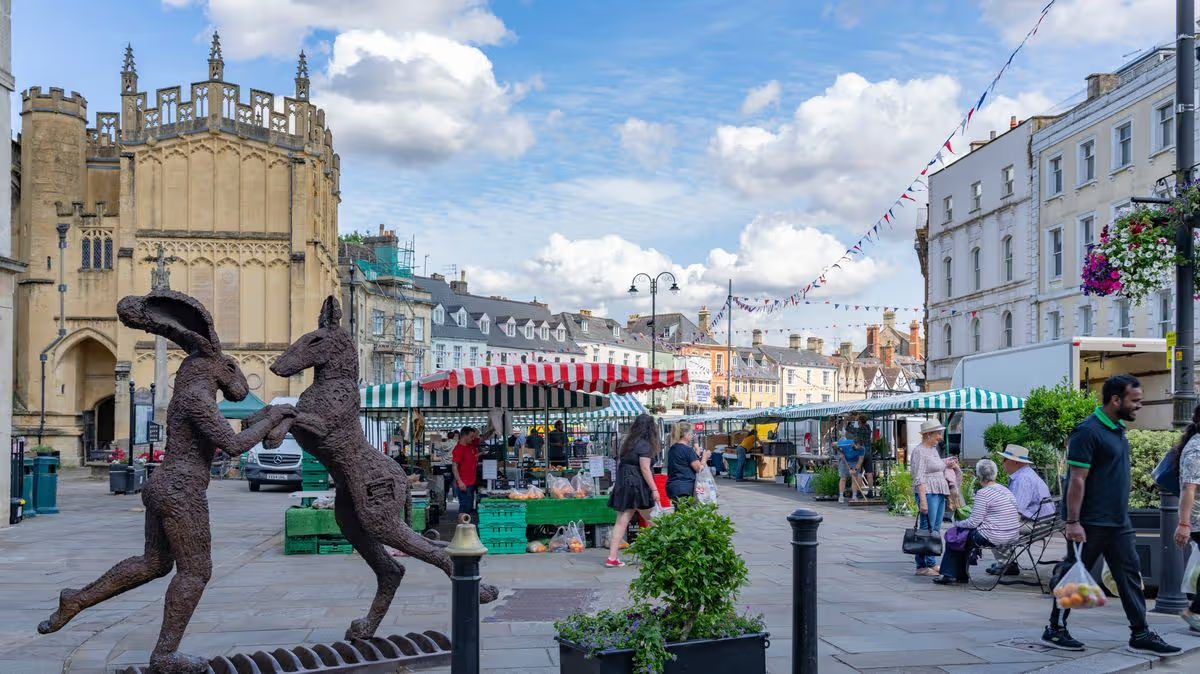
Time Out has issued a round-up of “the best places to go in the UK in 2026” – and a Gloucestershire town has made the cut. Widely celebrated as the “Capital of the Cotswolds”, the historic market town of Cirencester has claimed fifth place on a national list.

Time Out said: “When it comes to ‘where to travel in the UK’, you might think the Cotswolds has been done to death. Actually, it hasn’t. In fact, only teeny tiny portions of the region tend to get all the love.”

The publication described Cirencester as “often-overlooked” and championed the town – the largest in the region – for being “much better equipped for tourism” than overcrowded destinations such as Bibury.

Advertisement

Cirencester boasts a seamless fusion of Roman heritage with a vibrant independent shopping scene – particularly within the historic Corn Hall and Arcade – alongside stunning green spaces, including Cirencester Park. Home to the 9th Earl and Countess Bathurst, the park is a haven for deer and horses alike.

History enthusiasts will be in their element at the award-winning Corinium Museum, which houses an impressive Roman collection; “one of the largest collections of Romano-British antiquities extensively from Corinium”.

Featuring mosaics, sculptures, coins and much more, the fully accessible venue also includes a gift shop, café, and the Cirencester Visitor Information Centre.

The town is equally well-stocked with stunning historic buildings and characterful pubs that are well worth exploring.

Advertisement

Of summer visits, Time Out noted: “Heading here in summer? Go for a dip in the Cirencester Open Air Swimming Pool, a beautiful old spot for a swim surrounded by old buildings.

“It’s a slice of history all by itself – around since 1869, making it one of the oldest in the country.”

Source link

Advertisement
Continue Reading

NewsBeat

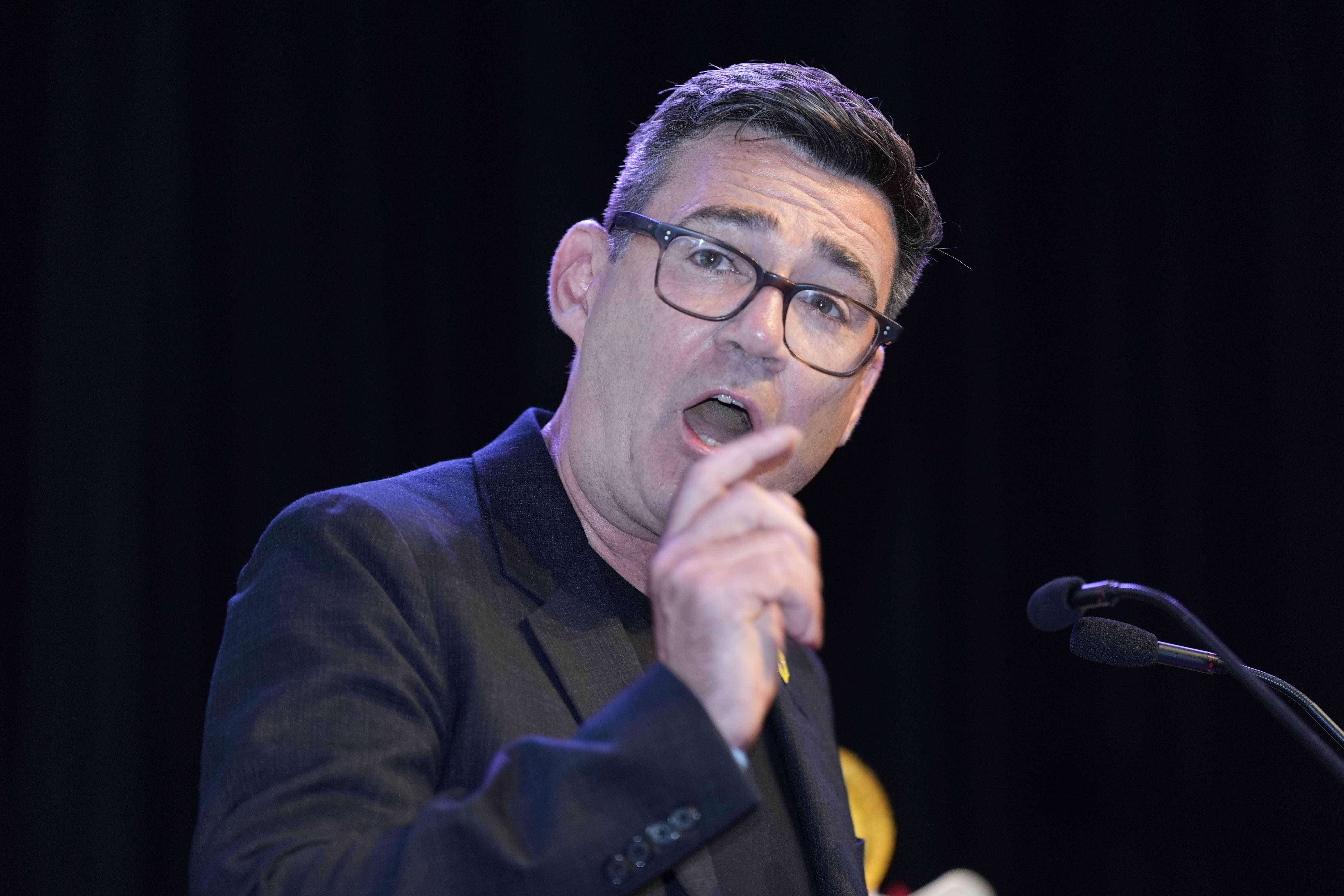
Andy Burnham’s speech in full after landslide victory in Makerfield by-election

Published

on

Andy Burnham’s speech in full after landslide victory in Makerfield by-election

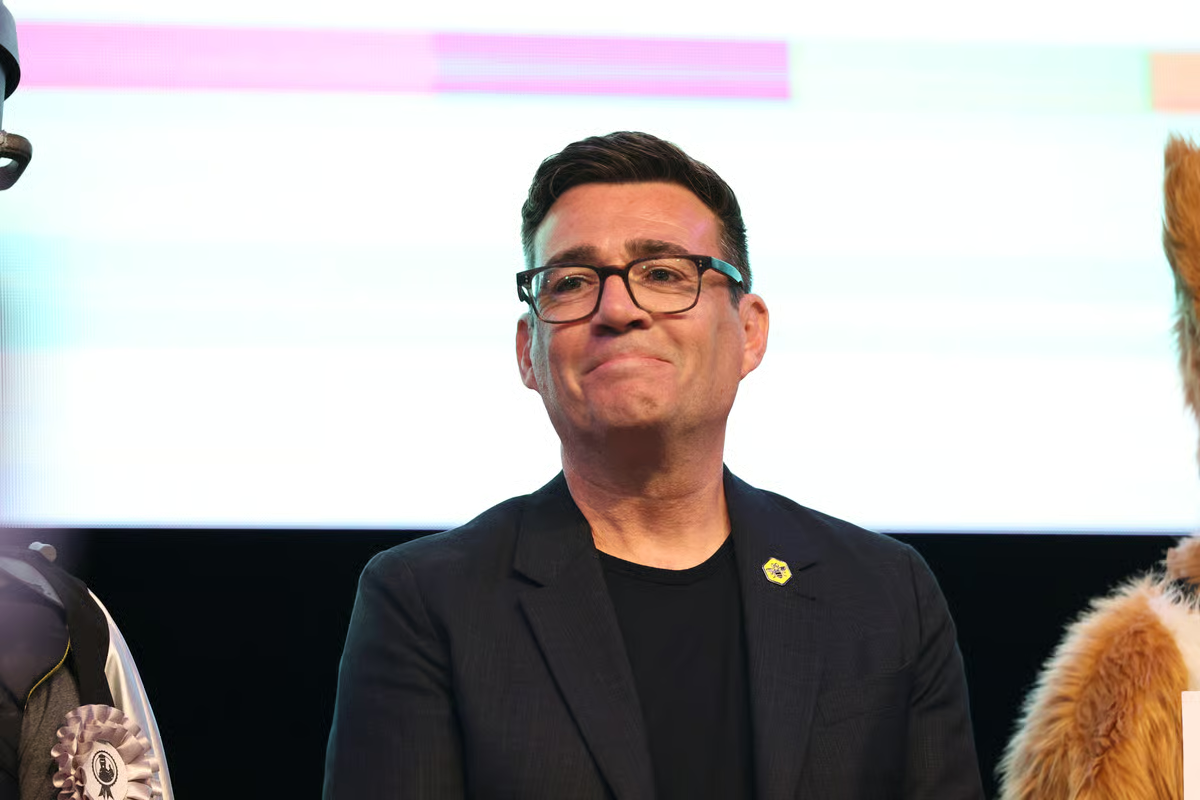
Labour’s Andy Burnham has claimed a landslide victory in the crucial Makerfield by-election.

He is now set to return to Westminster and is likely to officially challenge Sir Keir Starmer for the party leadership.

Allies of Mr Burnham are calling on Sir Keir to hand over the keys to No 10, but the prime minister has repeatedly insisted that he has no intention of walking away.

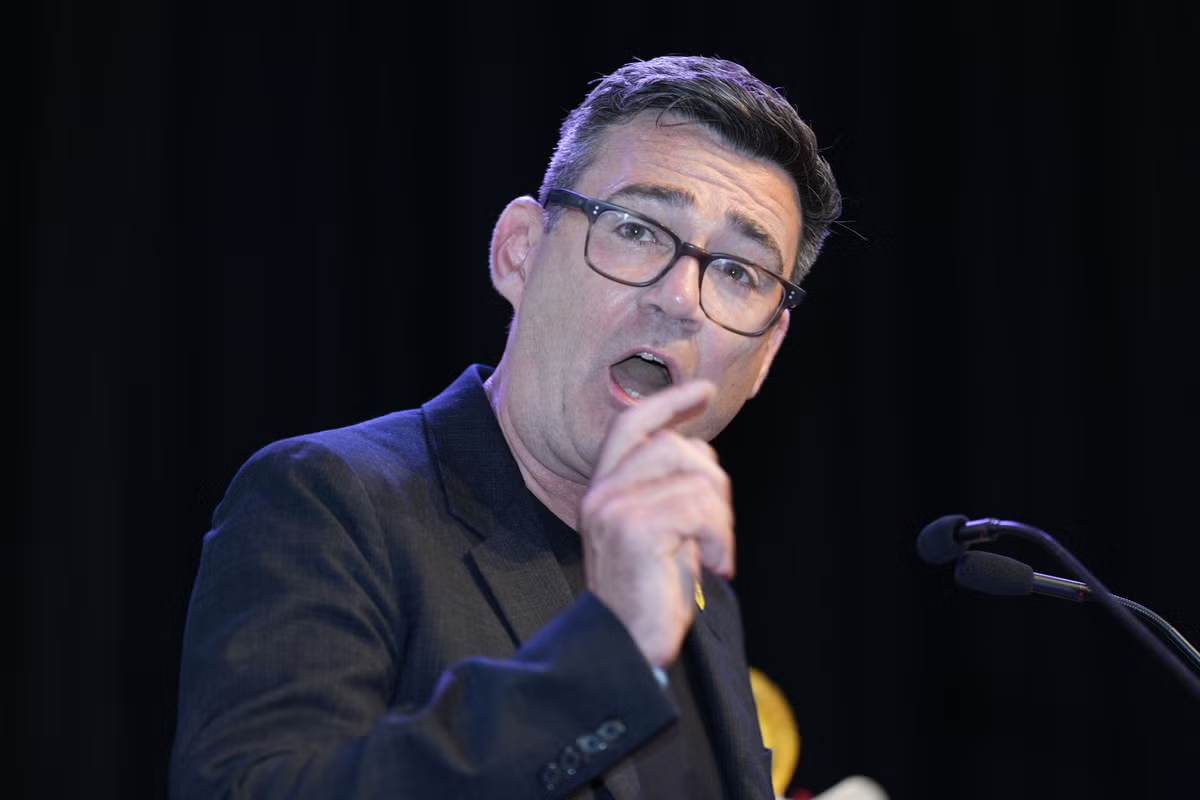
Speaking after the results were counted, Mr Burnham hailed his victory as a “turning point” and said that Labour has a “final chance to change”.

Advertisement

Here is Mr Burnham’s victory speech, in full.

Labour party candidate Andy Burnham is declared the winner of the Makerfield by-election which was triggered by the resignation of Josh Simons
Labour party candidate Andy Burnham is declared the winner of the Makerfield by-election which was triggered by the resignation of Josh Simons (PA Wire)

“Everyone knows that politics isn’t working.

“Everyone can feel that the country isn’t where it should be. Tonight could, just could, be the turning point.

“From here on I will give everything I have got to make it so. To ensure the name Makerfield is forever synonymous with bringing about the change this country needs, bringing back something we’ve lost – hope – hope for the future.

“I am proud that this place has shone in the world’s spotlight for the last few weeks and the warmth, humour and hospitality of its people has been on show for all to see. It will never be a stepping stone to me, but instead will be my touchstone.

Advertisement

“A Makerfield test at the heart of British politics will make sure that the places Westminster has neglected will now get fairness.

“I spoke in the campaign about the need to change politics. I promised to lead by example, from the front, as your Member of Parliament.

“I know people who traditionally vote for the Conservatives, the Liberal Democrats, the Greens, and perhaps more recently for Reform UK, have given me their support in this election. I will always have respect to them for that. And out of respect for them, I will always take a place-first, rather than a party-first, approach and I will focus on problem-solving rather than point-scoring.

“And I will work hard after this by-election to heal the divisions of this campaign. And let it be really understood that I will be your MP, however you voted.

Advertisement

“When this borough went to the polls in May, it made a loud cry for change. In this campaign we have begun to answer that.

“But I do say to my own party: this is a final chance to change. This is what people said directly to me on the hundreds of doorsteps that I stood on. We must hear it, we must act upon it and we must get it right. There will be no second chance.

“But there is a chance now from this result tonight to build a new politics based on unity and hope. Turning away from the path that takes us to a divided, dark politics of the kind we see in the United States.

“We must now take this path and put this country back on the right path, and bring people back together and get things working properly again.

Advertisement

“It is with some sadness that this result brings an end to my wonderful nine years as mayor of Greater Manchester.

“This city region has given so much to me. And it is a wrench to leave the job I love. But I am not leaving the service of Greater Manchester. I’ve always been clear that it can’t achieve everything it should be and we can’t close the north-south divide, and we can’t make all the great English cities be what they should be without big change at the national level.

“I always knew one day I would seek to go back to Westminster to complete that unfinished business so that Makerfield and Greater Manchester, and the north of England, can fulfil their potential.

“This result will bring about a country that works fairly for everywhere and for everybody.

Advertisement

“People here have voted for change. They have voted for more power for the North and everywhere forgotten by Westminster. They have voted for hope. Now, let’s give that back to them.”

Source link

Continue Reading

NewsBeat

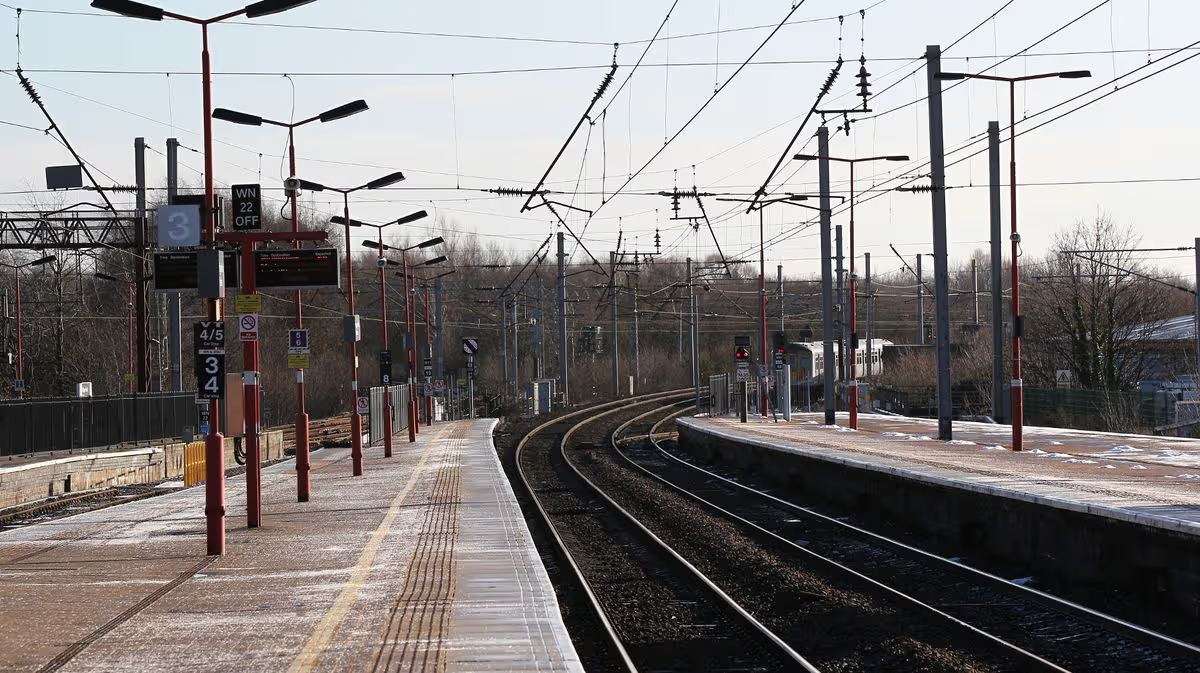
Major train disruption LIVE as Bolton and Wigan lines blocked in serious incident

Published

on

Manchester Evening News

Source link

Continue Reading

Trending

Copyright © 2025