Tech
‘Observational memory’ cuts AI agent costs 10x and outscores RAG on long-context benchmarks
RAG isn’t always fast enough or intelligent enough for modern agentic AI workflows. As teams move from short-lived chatbots to long-running, tool-heavy agents embedded in production systems, those limitations are becoming harder to work around.
In response, teams are experimenting with alternative memory architectures — sometimes called contextual memory or agentic memory — that prioritize persistence and stability over dynamic retrieval.
One of the more recent implementations of this approach is “observational memory,” an open-source technology developed by Mastra, which was founded by the engineers who previously built and sold the Gatsby framework to Netlify.
Unlike RAG systems that retrieve context dynamically, observational memory uses two background agents (Observer and Reflector) to compress conversation history into a dated observation log. The compressed observations stay in context, eliminating retrieval entirely. For text content, the system achieves 3-6x compression. For tool-heavy agent workloads generating large outputs, compression ratios hit 5-40x.
The tradeoff is that observational memory prioritizes what the agent has already seen and decided over searching a broader external corpus, making it less suitable for open-ended knowledge discovery or compliance-heavy recall use cases.
The system scored 94.87% on LongMemEval using GPT-5-mini, while maintaining a completely stable, cacheable context window. On the standard GPT-4o model, observational memory scored 84.23% compared to Mastra’s own RAG implementation at 80.05%.
“It has this great characteristic of being both simpler and it is more powerful, like it scores better on the benchmarks,” Sam Bhagwat, co-founder and CEO of Mastra, told VentureBeat.
How it works: Two agents compress history into observations
The architecture is simpler than traditional memory systems but delivers better results.
Observational memory divides the context window into two blocks. The first contains observations — compressed, dated notes extracted from previous conversations. The second holds raw message history from the current session.
Two background agents manage the compression process. When unobserved messages hit 30,000 tokens (configurable), the Observer agent compresses them into new observations and appends them to the first block. The original messages get dropped. When observations reach 40,000 tokens (also configurable), the Reflector agent restructures and condenses the observation log, combining related items and removing superseded information.
“The way that you’re sort of compressing these messages over time is you’re actually just sort of getting messages, and then you have an agent sort of say, ‘OK, so what are the key things to remember from this set of messages?’” Bhagwat said. “You kind of compress it, and then you get in another 30,000 tokens, and you compress that.”
The format is text-based, not structured objects. No vector databases or graph databases required.
Stable context windows cut token costs up to 10x
The economics of observational memory come from prompt caching. Anthropic, OpenAI, and other providers reduce token costs by 4-10x for cached prompts versus those that are uncached. Most memory systems can’t take advantage of this because they change the prompt every turn by injecting dynamically retrieved context, which invalidates the cache. For production teams, that instability translates directly into unpredictable cost curves and harder-to-budget agent workloads.
Observational memory keeps the context stable. The observation block is append-only until reflection runs, which means the system prompt and existing observations form a consistent prefix that can be cached across many turns. Messages keep getting appended to the raw history block until the 30,000 token threshold hits. Every turn before that is a full cache hit.
When observation runs, messages are replaced with new observations appended to the existing observation block. The observation prefix stays consistent, so the system still gets a partial cache hit. Only during reflection (which runs infrequently) is the entire cache invalidated.
The average context window size for Mastra’s LongMemEval benchmark run was around 30,000 tokens, far smaller than the full conversation history would require.
Why this differs from traditional compaction
Most coding agents use compaction to manage long context. Compaction lets the context window fill all the way up, then compresses the entire history into a summary when it’s about to overflow. The agent continues, the window fills again, and the process repeats.
Compaction produces documentation-style summaries. It captures the gist of what happened but loses specific events, decisions and details. The compression happens in large batches, which makes each pass computationally expensive. That works for human readability, but it often strips out the specific decisions and tool interactions agents need to act consistently over time.
The Observer, on the other hand, runs more frequently, processing smaller chunks. Instead of summarizing the conversation, it produces an event-based decision log — a structured list of dated, prioritized observations about what specifically happened. Each observation cycle handles less context and compresses it more efficiently.
The log never gets summarized into a blob. Even during reflection, the Reflector reorganizes and condenses the observations to find connections and drop redundant data. But the event-based structure persists. The result reads like a log of decisions and actions, not documentation.
Enterprise use cases: Long-running agent conversations
Mastra’s customers span several categories. Some build in-app chatbots for CMS platforms like Sanity or Contentful. Others create AI SRE systems that help engineering teams triage alerts. Document processing agents handle paperwork for traditional businesses moving toward automation.
What these use cases share is the need for long-running conversations that maintain context across weeks or months. An agent embedded in a content management system needs to remember that three weeks ago the user asked for a specific report format. An SRE agent needs to track which alerts were investigated and what decisions were made.
“One of the big goals for 2025 and 2026 has been building an agent inside their web app,” Bhagwat said about B2B SaaS companies. “That agent needs to be able to remember that, like, three weeks ago, you asked me about this thing, or you said you wanted a report on this kind of content type, or views segmented by this metric.”
In those scenarios, memory stops being an optimization and becomes a product requirement — users notice immediately when agents forget prior decisions or preferences.
Observational memory keeps months of conversation history present and accessible. The agent can respond while remembering the full context, without requiring the user to re-explain preferences or previous decisions.
The system shipped as part of Mastra 1.0 and is available now. The team released plug-ins this week for LangChain, Vercel’s AI SDK, and other frameworks, enabling developers to use observational memory outside the Mastra ecosystem.
What it means for production AI systems
Observational memory offers a different architectural approach than the vector database and RAG pipelines that dominate current implementations. The simpler architecture (text-based, no specialized databases) makes it easier to debug and maintain. The stable context window enables aggressive caching that cuts costs. The benchmark performance suggests that the approach can work at scale.
For enterprise teams evaluating memory approaches, the key questions are:
-
How much context do your agents need to maintain across sessions?
-
What’s your tolerance for lossy compression versus full-corpus search?
-
Do you need the dynamic retrieval that RAG provides, or would stable context work better?
-
Are your agents tool-heavy, generating large amounts of output that needs compression?
The answers determine whether observational memory fits your use case. Bhagwat positions memory as one of the top primitives needed for high-performing agents, alongside tool use, workflow orchestration, observability, and guardrails. For enterprise agents embedded in products, forgetting context between sessions is unacceptable. Users expect agents to remember their preferences, previous decisions and ongoing work.
“The hardest thing for teams building agents is the production, which can take time,” Bhagwat said. “Memory is a really important bit in that, because it’s just jarring if you use any sort of agentic tool and you sort of told it something and then it just kind of forgot it.”
As agents move from experiments to embedded systems of record, how teams design memory may matter as much as which model they choose.

Tech
Stoke Space adds $350M to funding round as it gets ready for the first launch of its reusable rocket

Kent, Wash.-based Stoke Space Technologies says it has added another $350 million to its previously announced Series D financing round, bringing the amount raised in the round to $860 million.
The fresh funding will go toward completing activation of the company’s Florida launch complex and expanding production capacity for its fully reusable Nova launch vehicle. Additional capital will be used to accelerate future elements on Stoke’s product road map.
Terms of the round were not disclosed. With the extension of the Series D round, Stoke has raised $1.34 billion to date.
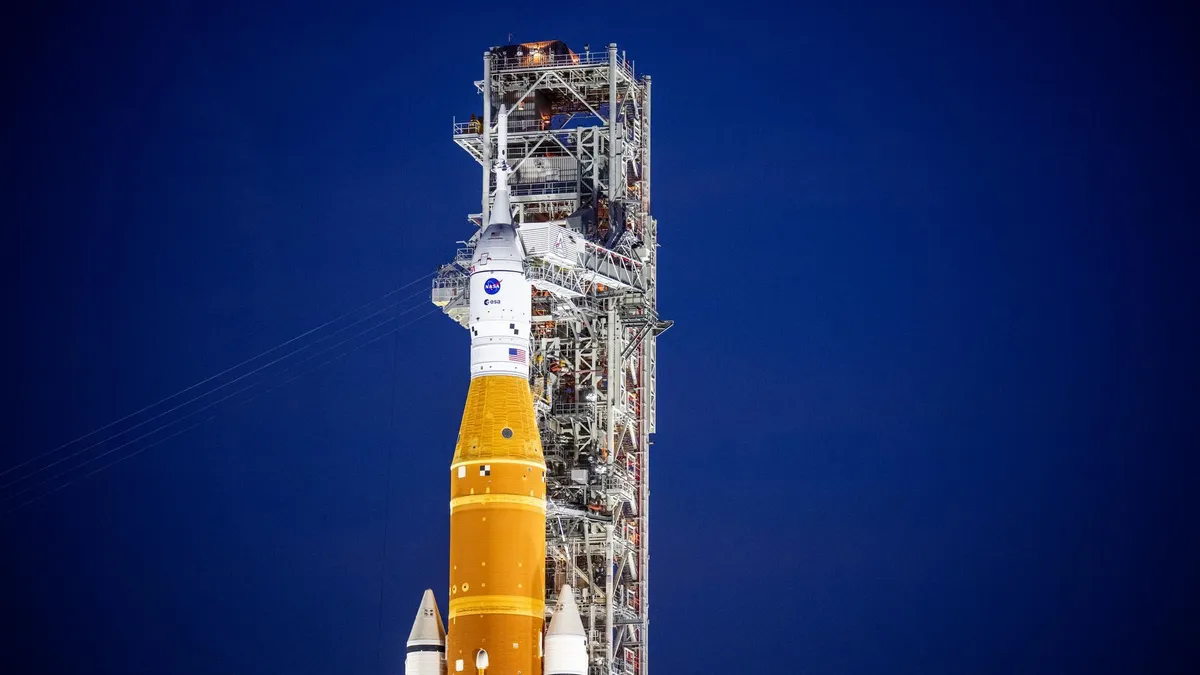
The medium-lift Nova rocket is currently under development. First liftoff from Launch Complex 14 at Cape Canaveral Space Force Station is expected sometime this year.
“We’re extremely grateful for our investors’ continued support,” Andy Lapsa, Stoke’s co-founder and CEO, said today in a news release. “We’re executing with urgency to bring Nova to market and deliver for our customers. It’s a special vehicle, and there’s more in the pipeline — we look forward to sharing those developments as they mature.”

Nova’s first-stage booster is designed to fly itself back to a landing pad, following a procedure similar to that used by SpaceX for its Falcon 9 rocket. The second stage would use an actively cooled heatshield to ease its descent through the atmosphere, and then touch down on its own set of landing legs.
While SpaceX and Blue Origin are focusing on heavy-lift rockets such as Starship and New Glenn, Stoke is targeting the medium-lift launch market. Even though Stoke Space hasn’t yet launched a rocket to orbit, it was added to the U.S. Space Force’s list of providers for national security launches last year.
Tech
Best Speakers of 2026 – CNET
Whether you’re interested in background music for your next party or you’re looking to upgrade a stereo system, there’s a speaker set ready for you. Speakers tend to be designed with a specific purpose in mind. For example, you might need speakers for your TV, computer speakers or a set for a specific room. Or perhaps you need portable Bluetooth speakers to take on a trip. There’s a speaker for every situation.
BLUETOOTH SPEAKER DEALS OF THE WEEK
Deals are selected by the CNET Group commerce team, and may be unrelated to this article.
Not all speakers are created equal
I’ve highlighted the best wired and wireless speakers I’ve tested costing between $50 and $1,000. While most of the included systems are powered speakers, you’ll also find passive bookshelf speakers, such as the Elac Debut 2.0 B6.2, which just need to be paired with a great AV receiver.

From smart speakers to outdoor speakers to immersive home theater systems, every model I’ve chosen boasts great sound quality and is the best speaker in its particular category. I’ll update this list periodically as we review new products, so you can take your audio setup to the next level.
Read more: Best Soundbar for 2025
With great sound, a compact size and the Alexa voice assistant built-in, the Sonos Era 100 packs a lot of punch, making it the best smart speaker for the money.
Elac has been belting out classic, affordable designs ever since its, er, debut in 2015. The Debut 2.0 exemplifies the brand’s appeal to both the budget-conscious and audiophiles. It offers a lively, insightful sound and attractive looks for around $400.
Pros
- Big, generously proportioned speakers
- Excellent sound quality perfect for long binge sessions
- Nothing holds a candle to it for the money
Cons
- Could be smoother, especially with its lower register
- Dustcaps didn’t quite line up
Want the biggest sound? You’ll need big speakers. The fit and finish of the large Fluance XL8 towers is unmatched by other speakers at its price. The sound of the XL8F is open and thrilling, but never shrill, and when fed a movie soundtrack these speakers simply zing. They’re no slouch with music either. If you truly want the maximum speaker for your money, the huge Fluance XL8F has no equal.
Pros
- Very compact (pocket-friendly)
- More bass and volume than most speakers this small
- Waterproof and dustproof (IP67)
- Integrated strap
- Can be linked to another StormBox Micro for stereo mode
- USB-C charging
- 8 hours of battery life
Cons
- Not as durable as Bose SoundLink Micro
- Distorts slightly at higher volumes with certain tracks
Budget Bluetooth speakers are seemingly a dime a dozen, but among the countless options there do lie some gems. The $50 Tribit Stormbox Micro is a compact, portable speaker that offers both waterproofing and excellent bass for its size.
Pros
- Compact, easy to set up and affordable
- Excellent dialogue reproduction
- Tried and true Roku experience
Cons
- Lacks bass in movies and music
The $130 Roku Streambar is a hybrid soundbar-4K video streamer and the most welcome surprise is that it’s able to perform both tasks well. Pair it with a bedroom TV and the optional Onn Wireless Sub for a killer home theater setup.
If there was ever a bargain in home theater it was this — for around the same price as the Elac speakers above you can get a full Dolby Atmos setup. With a sub! Sound quality is excellent and the Klipsch kit includes all of the cables you need in the box.
The Edifier R1280DB offers almost everything you could want in a PC speaker — excellent sound, a range of connections including Bluetooth and a compact footprint — and all for a reasonable $150. It doesn’t offer USB, though, so connect the headphone/line out of your PC to it instead.
Pros
- Excellent sound in a compact size
- Amazon Alexa onboard
- DTS Virtual:X
- Articulate subwoofer
The Yamaha YAS-209 is one of the most fully featured soundbars the company has ever offered — especially at the price. With Alexa, HDMI connectivity and a wireless subwoofer, this soundbar doesn’t want for anything. The sound quality is great, too.
Pros
- Motorized speakers work well.
- Excellent sound for movies and music.
- Plenty of connections
- Includes rears and wireless sub.
Cons
- Not as easy to use as Sonos Arc
- No Apple AirPlay support
- Somewhat short surround cables
The Vizio Elevate may have one big gimmick at the core of it, that revolving height speaker, but it also offers sound quality to back up the gee-whizzery. This is a 5.1.4 Dolby Atmos soundbar, with a hefty subwoofer, and its performance is equally thrilling in both movies and music. Add in a bunch of streaming features and you have the best surround system under a grand.
Tech
Techdirt Podcast Episode 443: The Supreme Court’s Internet Cases
from the taking-an-interest dept
In the last few years, the Supreme Court has been paying a lot more attention to the internet than it ever has before, and the cases keep on coming. This is already having a big impact on how the internet functions, and it doesn’t look likely to stop any time soon. Given all that, this week our own Cathy Gellis joins the podcast for a discussion all about the past, present, and future of SCOTUS and the internet.
You can also download this episode directly in MP3 format.
Follow the Techdirt Podcast on Soundcloud, subscribe via Apple Podcasts or Spotify, or grab the RSS feed. You can also keep up with all the latest episodes right here on Techdirt.
Filed Under: podcast, scotus, supreme court
Tech
Managing your brand’s narrative in the AI age

Earned media has always been hailed as the holy grail of PR due to its unparalleled ability to build trust. Most recent surveys state that 40%–60% of the population still trusts organic content the most, depending on the country. However, I see significant business risks in relying on organic PR only, especially now that various AI systems are on the rise. Robots don’t distinguish between earned and paid content when using it to generate answers. And that’s a wake-up call for us all to revise our PR strategies. The potential dangers of earned-only PR strategies The primary advantage of earned media,…
This story continues at The Next Web
Tech
OpenAI policy exec who opposed chatbot’s “adult mode” reportedly fired on discrimination claim
Ryan Beiermeister, who served as OpenAI’s vice president of product policy, was fired in January after a male colleague accused her of sex discrimination, the Wall Street Journal has reported.
“The allegation that I discriminated against anyone is absolutely false,” Beiermeister told the Journal. TechCrunch reached out to OpenAI for comment and also contacted an email that appears to be associated with Beiermeister; neither had responded at the time of publication.
Per the Journal’s report, Beiermeister’s termination came after she expressed criticism of a planned ChatGPT feature dubbed “adult mode.” The new mode would introduce erotica into the chatbot user experience. Fidji Simo, who serves as OpenAI’s CEO of Applications — a role overseeing the company’s consumer-facing products — has told reporters that the new feature is planned to launch during the first quarter of this year.
Beiermeister and others at the company have raised concerns about how the new “adult” feature could potentially impact certain users, according to the report.
OpenAI reportedly said that Beiermeister, who was fired following a leave of absence, had “made valuable contributions during her time at OpenAI, and her departure was not related to any issue she raised while working at the company.”
Beiermeister’s LinkedIn profile says she previously worked for four years on Meta’s product team and spent more than seven years working for Palantir.
Tech
Discord Tries To Walk Back Age Verification Panic, Says Most Users Won’t Need Face Scans
Discord has moved to calm a user backlash over its upcoming age verification mandate by clarifying that the “vast majority” of people will never be asked to confirm their age through a face scan or government ID.
The platform said it will instead rely on an internal “age prediction” model that draws on account information, device and activity data, and behavioral patterns across its communities to estimate whether someone is an adult. Users whose age the model cannot confidently determine will still need to submit a video selfie or ID.
Those not verified as adults or identified as under 18 will be placed in a “teen-appropriate” experience that blocks access to age-restricted servers and channels. The clarification came after users threatened to leave the platform and cancel Nitro subscriptions, and after a third-party vendor used by Discord for age verification suffered a data breach last year that exposed user information and a small number of uploaded ID cards.
Tech
Android 17 Beta 1 is around the corner, will skip the traditional Developer Preview stage
While Android beta testers were exploring the newly-launched Android 16 QPR3 Beta 2.1, Google decided to surprise everyone. The official Android Beta Program handle on Reddit has confirmed the arrival of Android 17 Beta 1, and it’s coming sooner than you’d think.
“We are looking forward to our next Beta program cycle that covers our Android 17 Platform Release (26Q2),” says Google. It says the upcoming update will build on the Android 16 QPR platform release and include the “latest bug fixes and improvements.”

A surprise at the end of the cycle
The timing isn’t exactly shocking, as Android 16 QPR3 Beta 2.1 is the last update in the cycle. What’s unique, however, is Google’s route. Instead of pushing Android 17 via the Developer Preview stage, the company is jumping straight into the first beta.
Current beta testers (those enrolled in the Android Beta Program with an eligible Pixel smartphone) will automatically receive the Android 17 update once it goes live (which could be sometime in the coming weeks).
On the one hand, it’s good that Google is seeding the Android 17 update promptly to beta testers, making the initial build available for a wider testing audience.

The fine print beta testers shouldn’t ignore
However, once testers upgrade to Android 17 Beta 1, they won’t be able to roll back to the previous stable version until the cycle ends (which would be around June 2026) without wiping their device.
Anyways, that also implies that Google is planning to release the stable Android 17 version around the same time. Regular users should expect the major Android update to hit their Pixel devices in or around June 2026.
As for what’s new in Android 17 Beta 1? Google hasn’t spilled the beans yet. Even so, we expect to see the usual early-beta performance improvements and software refinements, sprinkled with a couple of visual adjustments.
Tech
What George Washington Can Teach Us About Grace in the Wake of Violence
This year, Americans are celebrating the 250th anniversary of the Declaration of Independence. That statement of foundational political principles and national identity in the summer of 1776 capped off a year of armed conflict marked by the first shots at Lexington and Concord, the shocking British casualties at Bunker’s Hill, and the ensuing siege of Boston in the spring and summer of 1775. Those conflicts saw the ascent of George Washington to the office of Commander in Chief of the Continental Army — the first national office held by the man who would earn the right to be called the father of our country. Like the greatest of statesmen, Washington proved equally capable of defending his country in war and of governing it in peace.
On Sept. 10, 2025, tragedy struck Utah Valley University, where I teach. At the time, my colleagues and I were hosting Junior ROTC cadets from around the state for the first of a series of Constitution Day events on the theme of George Washington’s constitutional legacy. Washington’s example of courage, moderation, wisdom and civic charity are always relevant models for American students. But that day, the importance of virtuous civic leadership in the face of threats to American prosperity and freedom was visceral and poignant.
For teachers, navigating Americans’ deep disagreements in the classroom feels risky. Early survey evidence suggests that the assassination of Charlie Kirk has only increased the tension. Rather than sparking a renewed commitment to open dialogue, Kirk’s killing has intensified the silence.
According to an October 2025 survey of college students from the Foundation for Individual Rights in Education (FIRE), a notable portion of students have become less comfortable expressing their views on controversial topics in class (45 percent), in common campus spaces (43 percent), and on social media (48 percent), after what happened to Kirk.
A general might seem like an odd model for civil discourse following such a tragic event, but in the American experience, our greatest military leaders furnish helpful examples. With Washington, this is not difficult to see.
At the most basic level, Washington’s steady devotion to the rule of law and constitutional self-government is foundational to Americans’ ability to navigate our political differences. We all operate under the same framework — the Constitution — and must adhere to it as our common bond, even as we seek to improve it and navigate our differences and disagreements about the common good.
Washington lived out this commitment in his conduct at Newburgh in 1783 when he put down a budding coup by his own disgruntled officers and later when he twice laid aside unparalleled executive power, first as commander in chief and later as president of the United States.
In his farewell address at the end of his long public service he pressed home the importance of constitutional fidelity as the bedrock of American citizenship.
“The basis of our political systems is the right of the people to make and to alter their constitutions of government,” he wrote. “But the Constitution which at any time exists, till changed by an explicit and authentic act of the whole people, is sacredly obligatory upon all.”
Navigating Disagreement With Respect
At a more practical level, Washington navigated constant opposition to his command of the Continental army with grace. As president, he presided over a cabinet riven by political division, and even personal animosity. He spoke to his fellow citizens across important differences in a way that reminded them of their common American citizenship and their common humanity. His letter to the Hebrew Congregation at Newport is a model.
But even more important than Washington’s ability to communicate what he held in common with his fellow citizens was his ability to do that while disagreeing with them fundamentally. While famously skeptical of political parties, Washington was not one to dodge controversy. He would not sacrifice his view of the common good for the sake of avoiding an argument.
Washington’s willingness to contend for his principles serves as an important lesson to students and teachers of civic education: civil discourse does not mean avoiding disagreement. It does not mean giving up or surrendering our convictions. It does not mean hiding or concealing our objections to laws or policies or ideas simply for the sake of maintaining the appearance of agreement and civility.
It’s easy to lament our fractured discourse. But as teachers and educators, we must work to repair it. School leaders and administrators should actively support civil discourse and defend the educators who teach it, as well as provide a forum for students who want to express their views. Fostering this courage isn’t about asking students to be martyrs for their beliefs. It’s about creating a positive environment for productive disagreement.
For robust civil discourse, it is important to cultivate courage, humility and civic charity. To foster courage, teachers can scaffold robust debate by starting with discussion topics that lower the social risk of speaking and then building up to more challenging questions, so that each student has a chance to be heard. To instill humility, the first object of discourse should be on understanding a problem from all sides rather than settling a debate. Humility requires a recognition that we may be wrong, or at the very least that we certainly have something more to learn. Human beings are finite and rarely have a complete understanding of the question at hand.
Nurturing Humility and Reasoning Skills
Teachers can nurture civic charity by framing classroom debates as a collaborative, not confrontational, approach to a solution. The parliamentary model of addressing the chair rather than individuals in a debate can help students to see their peers not as enemies but as partners working towards a common goal.
Students should always be pressed to “steel man” arguments, even for positions they don’t hold. This builds intellectual humility, sharpens reasoning skills, and detaches contentious ideas from the people who hold them. Intellectually serious and fact-based comparisons between our present and the past are indispensable. Flippant dismissals of opposing views as fascist and communist will not advance the truth-seeking enterprise.
In other words, we can teach them to be like Washington, who used civil disagreement among his cabinet members to formulate compromises where possible and to proceed with decisions on controversial matters having treated all sides with due respect where compromise is not possible.
I have so far suggested means of supporting civil discourse in the midst of our present divisions and about those issues that divide Americans. But perhaps the most important thing we do for students as civic educators is to help them step outside our current political divisions. Our founding principles and institutions form a pre-partisan constitutional inheritance that was crafted long before the left-right ideological frameworks and red-blue partisan divides we ham-handedly use to put ourselves in political tribes came into fashion.
Examining our country’s historical debates over how best to live up to our constitutional principles engages students with scenarios and questions for which their current partisan frameworks do not provide a clear answer. It reminds them, as Washington sought to do in his farewell address, of the inheritance they hold in common with each other as Americans.
Tech
Windows 11 KB5077181 & KB5075941 cumulative updates released
Microsoft has released Windows 11 KB5077181 and KB5075941 cumulative updates for versions 25H2/24H2 and 23H2 to fix security vulnerabilities, bugs, and add new features.
Today’s updates are mandatory as they contain the February 2026 Patch Tuesday security patches for vulnerabilities discovered in previous months.
You can install today’s update by going to Start > Settings > Windows Update and clicking on ‘Check for Updates.’

Source: BleepingComputer
You can also manually download and install the update from the Microsoft Update Catalog.
This is the third ‘Patch Tuesday’ release for version 25H2, but as it’s based on version 24H2, there are no exclusive or special changes. You’ll get the same fixes across the two versions of Windows 11.
What’s new in the February 2026 Patch Tuesday update
After installing today’s security updates, Windows 11 25H2 (KB5077181) will have its build number changed to Build 26200.7840 (or 26100.7840 in case of 24H2), and 23H2 (KB5073455) will be changed to 226×1.6050.
This update mostly contains bug fixes, and here’s everything you need to know:
-
[Gaming] Fixed: This update addresses an issue that determines device eligibility for the full-screen gaming experience.
-
[Networking] Fixed: This update addresses an issue that prevented some devices from connecting to certain WPA3‑Personal Wi‑Fi networks. The issue might occur after you install KB5074105.
-
[Secure Boot] With this update, Windows quality updates include a broad set of targeting data that identifies devices and their ability to receive new Secure Boot certificates. Devices will receive the new certificates only after they show sufficient successful update signals, which helps ensures a safe and phased rollout.
-
[Cross Device Resume] New! This update expands the functionality of Cross‑Device Resume, which Microsoft first introduced in the May 2025 Windows non-security update (KB5058499). You can continue activities from your Android phone on your PC based on the apps and services you use, including resuming Spotify playback, working in Word, Excel, or PowerPoint, or continuing a browsing session.
-
Vivo Android phone users can continue browsing from Vivo Browser on their PC.
-
If you use an Android phone from HONOR, OPPO, Samsung, vivo, or Xiaomi, you can resume online files that you opened in the Microsoft Copilot app on your phone and continue working on them on your PC. Files open in the corresponding Microsoft 365 app on your PC if it is installed. If the app is not installed, the files open in your default web browser. This feature does not support offline files stored only on your phone.
-
-
[Windows MIDI Services] New! This update improves MIDI on Windows with enhanced support for MIDI 1.0 and MIDI 2.0, including full WinMM and WinRT MIDI 1.0 support with built-in translation, shared MIDI ports across apps, custom port names, loopback and app-to-app MIDI, plus performance improvements and bug fixes—delivering a better experience for musicians.
The App SDK and Tools package is a separate download that enables inbox MIDI 2.0 features and includes tools like MIDI Console and the MIDI Settings app. Releases are available on the Windows MIDI Services landing page and GitHub and are currently unsigned, which might display a security warning during download or installation.
-
[Narrator] New! Narrator now gives you more control over how it announces on‑screen controls. You can choose which details are spoken and adjust their order to match how you navigate apps. These settings apply throughout the app to help reduce extra speech and make Narrator easier to follow.
-
[Settings] New!1 You can view the Device card on the Settings home page. It shows key specifications and usage details for your PC. From the card, you can go directly to Settings > System > About for more detailed information about your device. This card appears when you sign in with your Microsoft account. This feature rollout has resumed after being paused during the August 2025 release.
-
[Smart App Control] New! You can turn Smart App Control (SAC) on or off without any clean install requirement. To make changes, go to Windows Security > App & Browser Control > Smart App Control settings. When turned on, SAC helps block untrusted or potentially harmful apps. To learn more, see App & Browser Control in the Windows Security App – Microsoft Support.
-
[Voice Access] New! A streamlined setup makes it easier to get started with Voice Access. The redesigned experience helps you download a speech model for your chosen language, select your preferred input microphone, and learn what Voice Access can help you do on your Windows PC.
-
[Voice Typing] New! The Wait time before acting setting in Voice Typing enables you to adjust the delay before a voice command runs. This setting gives you flexibility for different speech patterns and improves recognition accuracy whether you speak slowly or quickly.
-
[Windows Hello] New! Windows Hello Enhanced Sign-in Security (ESS) now supports peripheral fingerprint sensors. This update extends this more secure sign in option beyond devices with built in fingerprint sensors to include desktops and other Windows 11 PCs, including Copilot+ PCs. To get started, plug in a supported ESS fingerprint reader, go to Settings > Accounts > Sign in options, and follow the prompts to enroll.
Microsoft is not aware of new issues with this month’s Patch Tuesday.
Tech
With co-founders leaving and an IPO looming, Elon Musk turns talk to the moon
On Tuesday night, Elon Musk gathered the employees of xAI for an all-hands meeting. Evidently, he wanted to talk about the future of his AI company, and specifically, how it relates to the moon.
According to The New York Times, which reports that it heard the meeting, Musk told employees that xAI needs a lunar manufacturing facility, a factory on the moon that will build AI satellites and fling them into space via a giant catapult. “You have to go to the moon,” he said, per the Times. The move, he explained, will help xAI harness more computing power than any rival. “It’s difficult to imagine what an intelligence of that scale would think about,” he added, “but it’s going to be incredibly exciting to see it happen.”
What Musk didn’t appear to address clearly was how any of this would be built, or how he plans to reorganize the newly merged xAI-SpaceX entity that is simultaneously careening toward a potentially historic IPO. He did acknowledge, proudly, that the company is in flux. “If you’re moving faster than anyone else in any given technology arena, you will be the leader,” he told employees, per the Times, “and xAI is moving faster than any other company — no one’s even close.” He added that “when this happens, there’s some people who are better suited for the early stages of a company and less suited for the later stages.”
It isn’t clear what prompted the all-hands, but the timing, whatever its cause, is at least curious. On Monday night, xAI co-founder Tony Wu announced he was leaving. Less than a day later, another xAI co-founder, Jimmy Ba, who reported directly to Musk, said he was bouncing, too. That brings the total to six of xAI’s 12 founding members who have now left the young company. The splits have all been described as copacetic, and with a SpaceX IPO reportedly targeting a $1.5 trillion valuation coming as soon as this summer, everyone involved stands to do very well financially on their way out the door.
The moon itself is a more recent preoccupation. For most of SpaceX’s 24-year existence, Mars was the end game. This past Sunday, just before the Super Bowl, Musk surprised many, posting that SpaceX had “shifted focus to building a self-growing city on the Moon,” arguing that a Mars colony would take “20+ years.” The moon, he said, could get there in half the time.
It’s a pretty big change in direction for a company that has never sent a mission to the moon.
Rationally or otherwise, investors do seem considerably more excited about data centers in orbit than about colonies on other planets. (Even for the most patient money in the room, that’s a long timeline.) But to at least one venture backer in xAI who talked with this editor last year, the lunar ambitions have nothing to do with Wall Street and aren’t a distraction from xAI’s core mission; they’re inseparable from it.
Techcrunch event
Boston, MA
|
June 23, 2026
The theory, laid out by the VC at the time, is that Musk has been building toward a single goal from the beginning: the world’s most powerful world model, an AI trained not just on text and images but on proprietary real-world data that no competitor can replicate. Tesla contributes energy systems and road topology. Neuralink offers a window into the brain. SpaceX provides physics and orbital mechanics. The Boring Company adds some subsurface data. Add a moon factory to the mix and you start to see the outline of something very powerful.
Whether that vision is achievable is a very big question. Another is whether it is legal. Under the 1967 Outer Space Treaty, no nation — and by extension, no company — can claim sovereignty over the moon. But a 2015 U.S. law opened a significant loophole — while you can’t own the moon, you can own whatever you extract from it.
As Mary-Jane Rubenstein, a professor of science and technology studies at Wesleyan University, explained to TechCrunch last month, the distinction is somewhat illusory. “It’s more like saying you can’t own the house, but you can have the floorboards and the beams,” she said. “Because the stuff that is in the moon is the moon.”
That legal framework is the scaffolding on which Musk’s moon ambitions apparently rest, even as not everyone has agreed to play by those rules (China and Russia certainly have not). Meanwhile, for now at least, the team to help him get there keeps getting smaller.
-
Politics3 days agoWhy Israel is blocking foreign journalists from entering
-
NewsBeat2 days agoMia Brookes misses out on Winter Olympics medal in snowboard big air
-
Sports4 days agoJD Vance booed as Team USA enters Winter Olympics opening ceremony
-
Business3 days agoLLP registrations cross 10,000 mark for first time in Jan
-
Tech5 days agoFirst multi-coronavirus vaccine enters human testing, built on UW Medicine technology
-
Tech8 hours agoSpaceX’s mighty Starship rocket enters final testing for 12th flight
-
NewsBeat2 days agoWinter Olympics 2026: Team GB’s Mia Brookes through to snowboard big air final, and curling pair beat Italy
-
Sports2 days agoBenjamin Karl strips clothes celebrating snowboard gold medal at Olympics
-
Politics3 days agoThe Health Dangers Of Browning Your Food
-
Sports4 days ago
Former Viking Enters Hall of Fame
-
Sports5 days ago
New and Huge Defender Enter Vikings’ Mock Draft Orbit
-
Business3 days agoJulius Baer CEO calls for Swiss public register of rogue bankers to protect reputation
-
NewsBeat5 days agoSavannah Guthrie’s mother’s blood was found on porch of home, police confirm as search enters sixth day: Live
-
Business6 days agoQuiz enters administration for third time
-
Crypto World19 hours agoBlockchain.com wins UK registration nearly four years after abandoning FCA process
-
Crypto World1 day agoU.S. BTC ETFs register back-to-back inflows for first time in a month
-
NewsBeat2 days agoResidents say city high street with ‘boarded up’ shops ‘could be better’
-
Sports2 days ago
Kirk Cousins Officially Enters the Vikings’ Offseason Puzzle
-
Crypto World1 day agoEthereum Enters Capitulation Zone as MVRV Turns Negative: Bottom Near?
-
NewsBeat6 days agoStill time to enter Bolton News’ Best Hairdresser 2026 competition