
Crypto World
Why Bitcoin OG Erik Voorhees Just Went All-In on Gold

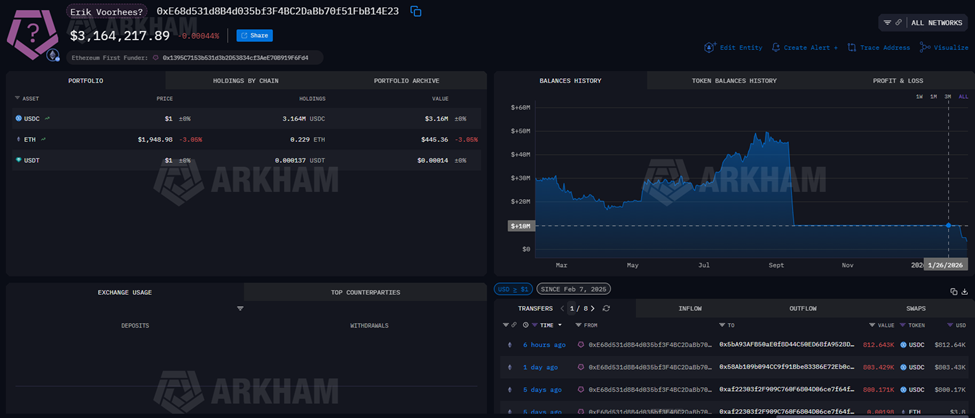
Erik Voorhees, the early Bitcoin advocate and founder of ShapeShift, is making a bold pivot into gold.
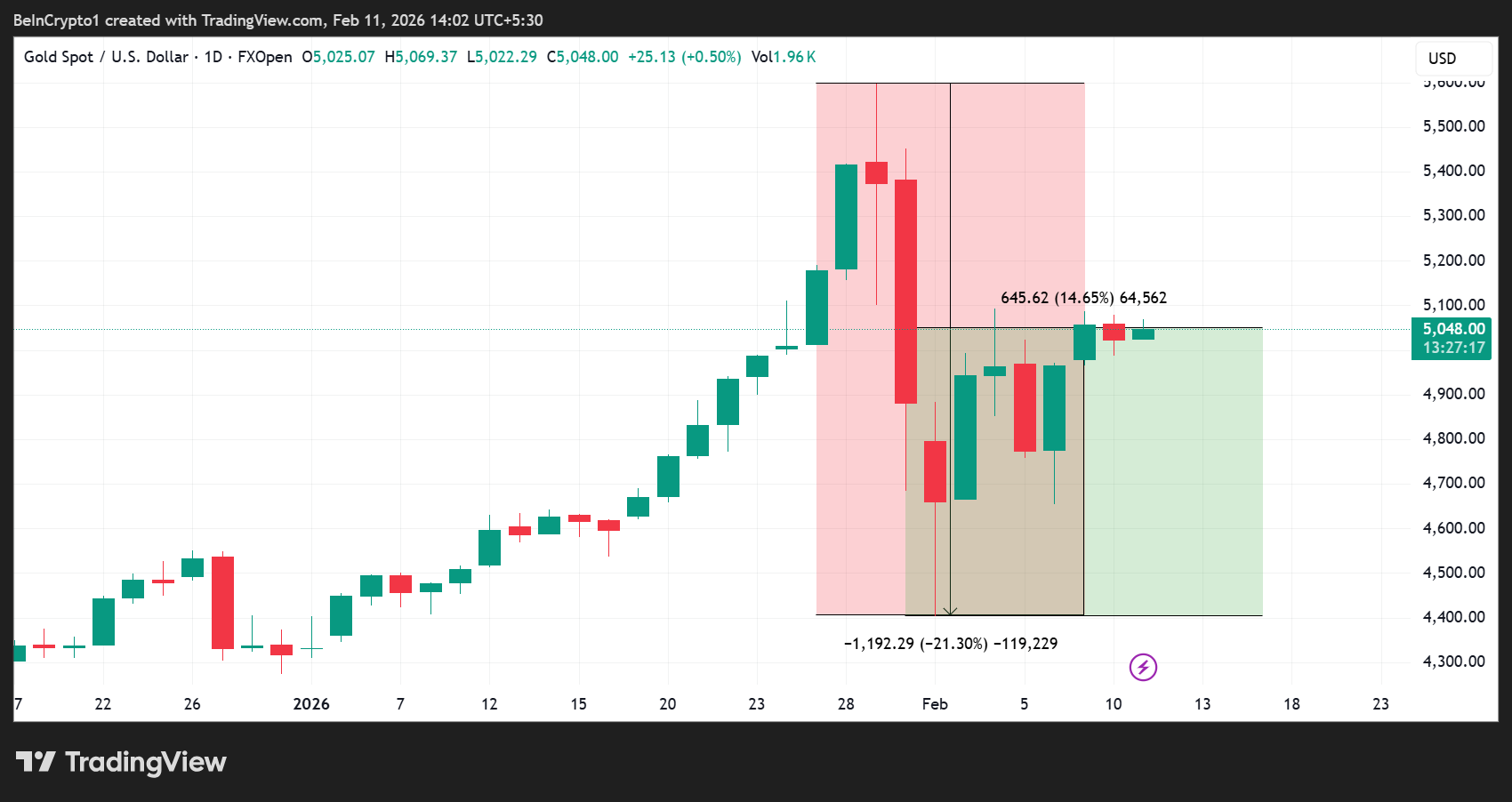
The move comes as gold recovers following a 21% crash, with prospects for further gains if analyst projections are any guide.
Sponsored
Sponsored
Erik Voorhees’ Gold Move Signals a Shift Beyond Bitcoin
Lookonchain reports that Voorhees created nine new wallets and spent $6.81 million in USDC. The Bitcoin OG purchased 1,382 ounces of PAXG, a gold-backed token just like Tether Gold, at an average price of $4,926 per ounce.
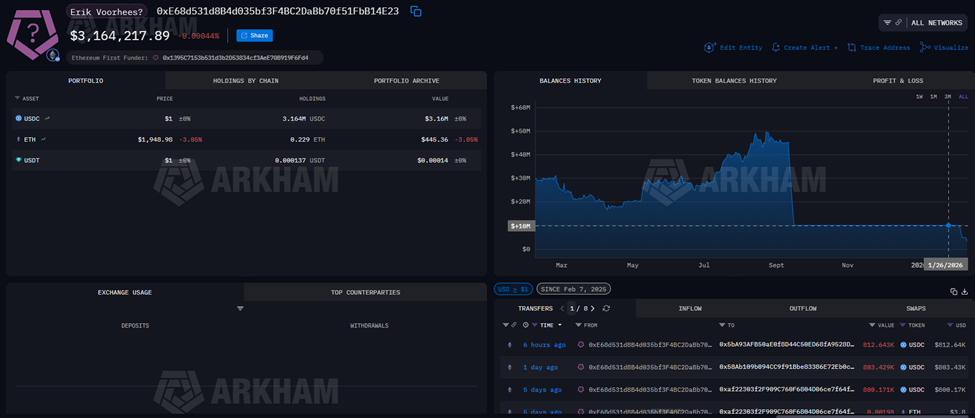
Voorhees, who entered the Bitcoin ecosystem in 2011 and later founded several of the earliest major crypto companies, has long championed Bitcoin as “digital gold.”
His latest purchases suggest a nuanced strategy to diversify into traditional safe-haven assets even while remaining a vocal advocate for crypto.
Analyst Jacob King notes that Voorhees’ move signals that some of crypto’s earliest adopters are hedging against potential market volatility by holding both physical and tokenized gold.
Gold prices have been holding steady above $5,000 per ounce, supported by strong central bank demand and inflows from gold ETFs. As of this writing, the gold price was trading for $5,048, up by almost 15% since bottoming out at $4,402 on February 2.
Sponsored
Sponsored
According to Coin Bureau CEO and co-founder Nic Puckrin, the recent dip in gold prices reflects a temporary pause rather than a retreat. Puckrin cites upcoming US jobs and CPI data, which are likely to influence rate-cut expectations.
Gold Set for Breakout as Analysts Forecast $6,300+ Amid Strategic Dollar Shift
Elsewhere, technical analyst Rashad Hajiyev notes that gold is poised for a breakout after testing a critical resistance level, projecting a near-term breakout to around $5,200 per ounce before entering a range-bound phase.
Sponsored
Meanwhile, Wells Fargo recently characterized the pullback as a healthy correction after a sharp rally, raising its 2026 gold target to $6,100–$6,300 per ounce. The multinational financial services firm cited geopolitical risks, market volatility, and sustained central bank demand.
“Buy the gold dip, Wells Fargo says. The recent pullback in gold is a healthy correction after a sharp rally,” wrote Walter Bloomberg.
Meanwhile, Daniel Oliver, founder of Myrmikan Capital, projects a longer-term surge to $12,595 per ounce, driven by central bank buying and concerns over a potential “government bond death spiral.”
Gold Outpaces Stocks as Macro Shifts and Crypto Moves Highlight Its Safe-Haven Appeal
Gold’s strong performance relative to equities is stark. Historical data shows gold surging 1,658% since 2000, compared to the S&P 500’s 460% gain.
Sponsored
Sponsored
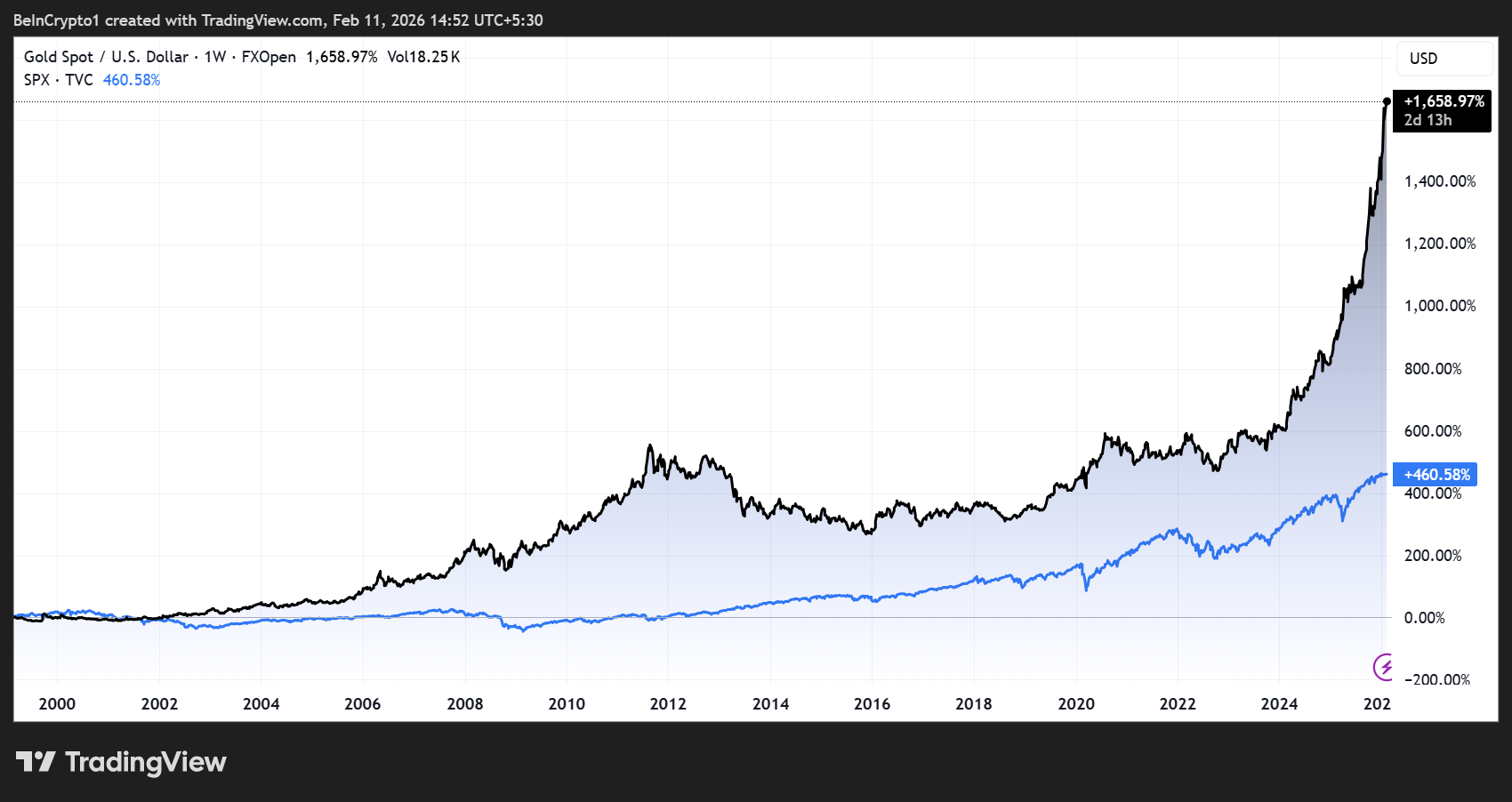
Even after factoring in dividends, the S&P’s total return of roughly 700% reflects gold’s value as a portfolio diversifier. This is especially true in periods of macroeconomic and geopolitical uncertainty.
According to analysts, broader macroeconomic factors are driving gold’s rise. Sunil Reddy notes that US policy is quietly shifting away from maximizing dollar purchasing power toward reindustrialization and trade rebalancing.
This “softer dollar” approach is boosting demand for hard assets like gold and silver, signaling a strategic pivot rather than purely speculative buying.
Voorhees’ move into gold may reflect an awareness of these dynamics. By deploying millions into PAXG, the Bitcoin pioneer appears to be betting on gold’s continued relevance as a hedge against dollar weakness and a counterbalance to crypto market volatility.
Still, investors should conduct their own research and not rely solely on analysts’ projections.



Paradigm is building a pro‑grade prediction market terminal, eyeing an internal MM unit and S&P‑style index product as Kalshi’s valuation jumps to $22B on surging volumes.
Summary
- Paradigm is developing a professional-grade prediction market terminal targeting institutional traders and market makers.
- The firm is also exploring an internal market-making unit and an index product bundling multiple event markets, similar to the S&P 500.
- Paradigm, already a major backer of Kalshi, led a $1 billion round valuing the platform at $11 billion.
Paradigm is building a dedicated prediction market trading terminal aimed squarely at professional traders and market makers, in one of the clearest signs yet that real‑money event markets are being treated as an emerging asset class rather than a curiosity. The project, led by Paradigm partner Arjun Balaji and initiated in late 2025, is designed to give sophisticated users Bloomberg‑style tools to trade, analyze and route liquidity across a growing ecosystem of on‑chain and regulated prediction platforms, according to a recent report in Fortune.
The San Francisco‑based crypto investment firm is simultaneously weighing the launch of an internal prediction market‑making business, while working with researchers on a “prediction market index” that would package multiple event contracts into a single, tradable structure, explicitly modeled on benchmarks such as the S&P 500. Such an index could mirror earlier experiments with volatility and DeFi indices, and follows a broader wave of venture capital interest in the sector; one recent Forbes analysis noted that prediction market startups attracted $3.7 billion in new capital and “minted young billionaires at Polymarket and Kalshi” as trading volumes exploded.
Paradigm has already begun aggregating prediction market data into a public panel, a necessary precondition for any institutional‑grade terminal product. The firm is also one of the most aggressive financiers of regulated prediction venue Kalshi: in December 2025, Kalshi announced a $1 billion Series E funding round at an $11 billion valuation, led by Paradigm and joined by Sequoia, Andreessen Horowitz, ARK Invest and others, doubling its value in under two months, as first reported by TechCrunch and corroborated by company statements.
That bet has continued to pay off. A subsequent funding round reported in March 2026 lifted Kalshi’s valuation again, to $22 billion, after a further $1 billion raise, according to coverage compiled by Yahoo Finance and The Wall Street Journal. As prediction markets move from sub‑$100 million monthly volumes in early 2024 to more than $13 billion by the end of 2025, according to research cited by Forbes, the emergence of a dedicated Paradigm‑backed terminal, internal liquidity provision and index products suggests the asset class is being refashioned into financial infrastructure, rather than treated as a sideshow to spot crypto.


Deepcoin is the first centralized exchange to integrate Polymarket event contracts, syncing quotes, liquidity and clearing so users can trade real‑world events with CEX tooling.
Summary
- Deepcoin has launched synchronized “Event Contracts” in partnership with Polymarket, becoming the first centralized exchange to plug directly into its markets.
- The integration offers real‑time quotes, shared liquidity and unified clearing, letting users trade Polymarket‑style contracts with CEX speed and tooling.
- Deepcoin says it will keep refining the product toward a more “pure and professional” event‑trading experience tied to real‑world outcomes.
Cryptocurrency exchange Deepcoin has entered a formal partnership with prediction market platform Polymarket to launch “Event Contracts,” marking the first time a centralized exchange has integrated directly with Polymarket’s real‑money event markets. Announced on April 1, the tie‑up allows Deepcoin users to access “real quotes and liquidity support synchronized with global top event markets” while trading through standard exchange accounts, according to a company statement reported by ChainCatcher.
Under the new structure, both sides have implemented “deep integration of underlying logic and clearing synchronization,” so that positions taken via Deepcoin are effectively mirrored one‑for‑one with corresponding Polymarket contracts. This design means users can “directly participate in popular contracts on Polymarket through their Deepcoin accounts, enjoying CEX trading speed” and order‑book style execution that aligns with “professional trading habits,” the exchange said.
Deepcoin framed the launch as the first step in building out a dedicated, institutional‑grade venue for real‑world event trading. The platform stated it would “continue to refine its products in the future to create a more pure and professional trading experience,” signaling plans to iterate on contract design, risk management and user analytics as volumes scale. By routing demand from a centralized venue into on‑chain prediction markets, the partnership effectively opens CEX rails into a segment historically dominated by niche DeFi interfaces and bespoke OTC flows.
The move lands just as regulated event markets and decentralized prediction protocols are drawing heightened attention from both venture capital and regulators. In March, Kalshi’s latest financing pushed its valuation to $22 billion as demand for macro and political contracts surged, according to coverage compiled by Yahoo Finance, while a recent Forbes analysis described prediction markets as “on the cusp of becoming core financial infrastructure” amid rising institutional interest. At the same time, U.S. Commodity Futures Trading Commission enforcement director David Miller has warned that insider‑trading laws apply fully to prediction markets, underscoring the compliance pressure that CEX integrations like Deepcoin’s will have to navigate.
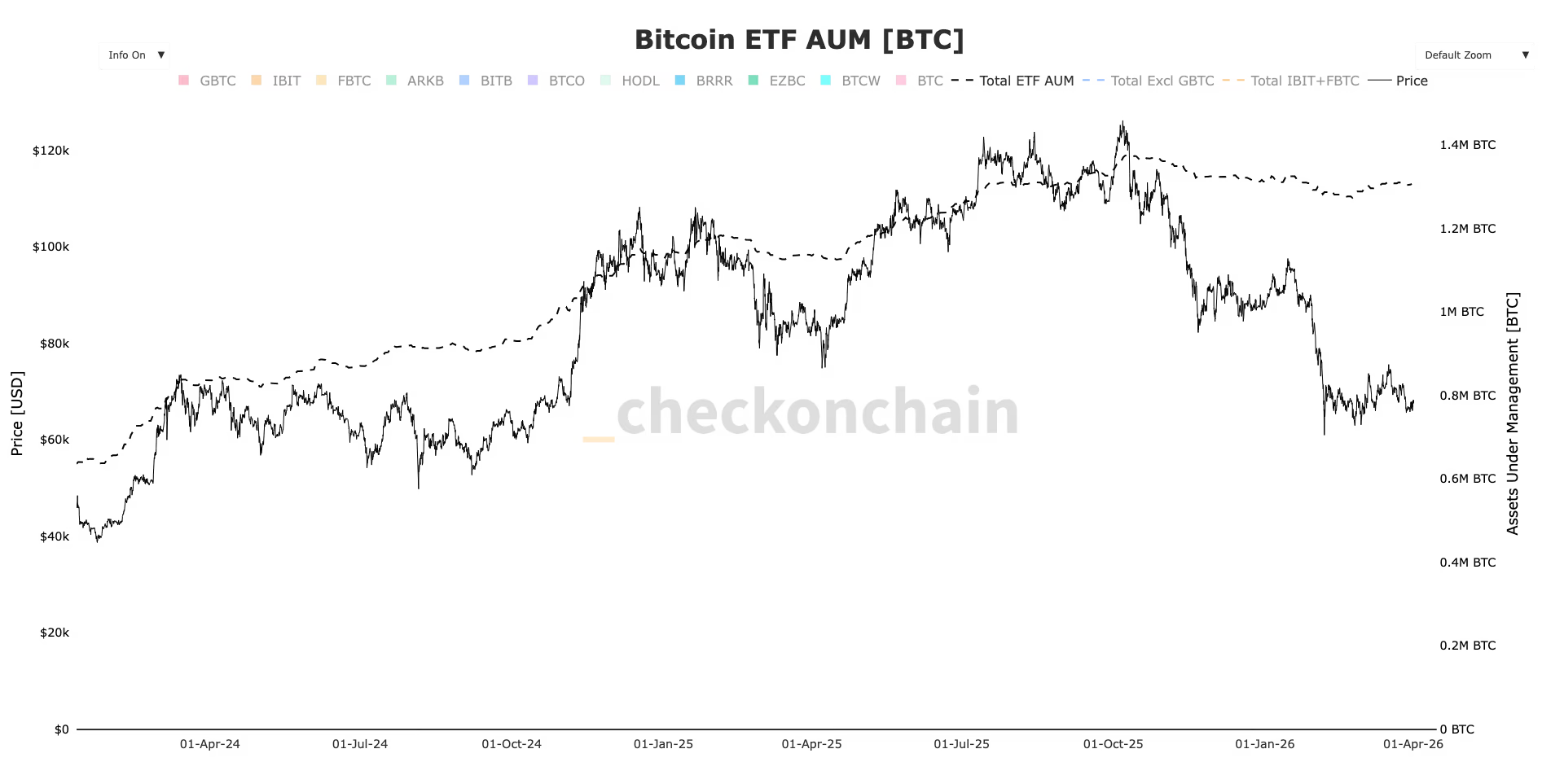
U.S.listed spot bitcoin ETFs ended March with $1.32 billion in net inflows to record their first monthly inflows since October, SoSoValue data shows.
This follows four consecutive months of net outflows, which coincided with bitcoin declining by as much as 50% from its October all time high of $126,000.
November saw $3.5 billion in outflows, followed by $1.1 billion in December, $1.6 billion in January, and $206 million in February.
March also marked bitcoin’s first positive monthly candle in six months, suggesting a potential shift in momentum.
ETF assets under management have remained relatively resilient, however. Holdings declined from 1.38 million BTC in October to a low of 1.28 million BTC, a drop of roughly 7%, and have since recovered to around 1.31 million BTC, according to CheckonChain.
ETF investors remain underwater on average, with an estimated cost basis near $84,000 compared to a current spot price of about $68,000.

Crypto World
Galaxy Digital’s (GLXY) testnet suffers hack but no client funds or information were compromised
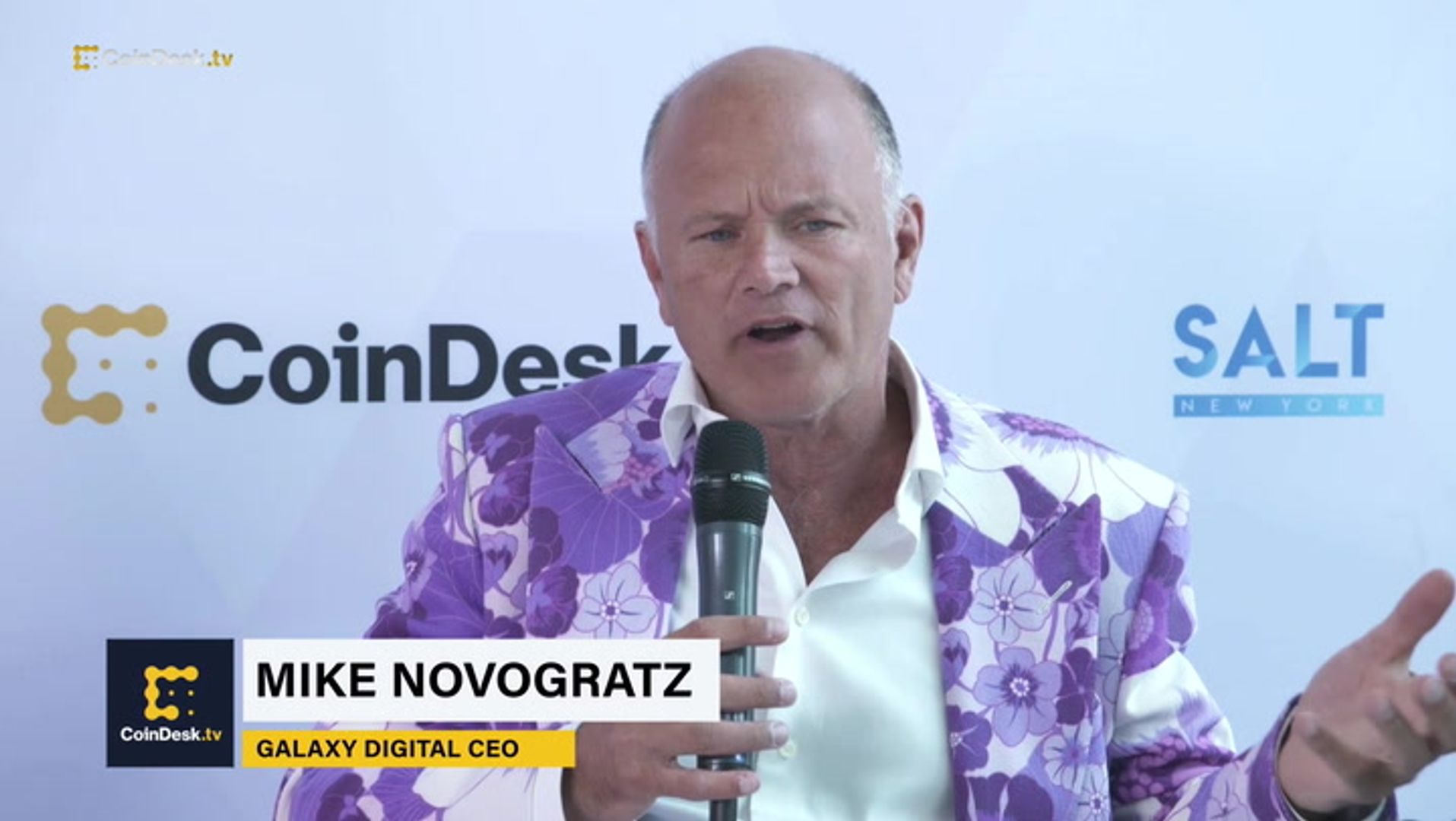
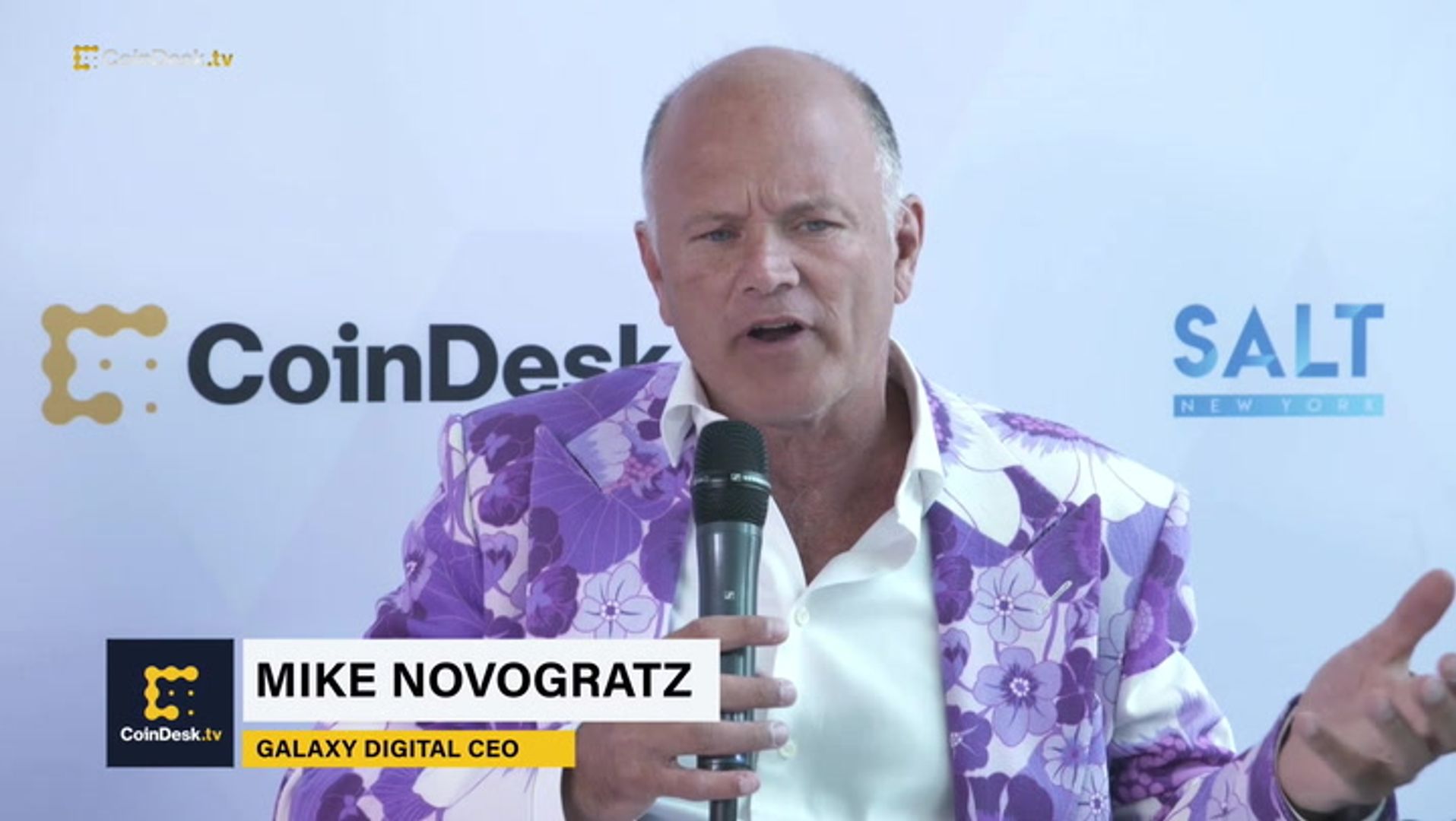
Galaxy Digital (GLXY), the digital asset financial services firm founded by Mike Novogratz, said it recently contained a cybersecurity incident involving unauthorized access to an isolated development workspace, according to a statement from a company spokesperson.
“An immaterial amount of company funds used for testing within the isolated development workspace was impacted,” the spokesperson said in emailed comments. The loss was less than $10,000, according to a person with knowledge of the matter.
The firm emphasized that the affected environment was used solely for research and development and was not connected to its core infrastructure, production systems, trading platforms or client accounts.
Galaxy said it detected the intrusion and moved quickly to contain it, secure the compromised workspace and implement additional precautionary measures across its on-chain infrastructure.
“No client funds or client account information were accessed or at risk at any point based on our review to date,” Galaxy said, adding that all platforms and services remain fully operational and secure for clients.
Hacks and exploits remain a persistent risk in the crypto industry, where the combination of open-source code, large pools of onchain liquidity and uneven security practices creates an attractive target for attackers.
Billions of dollars are lost to smart contract exploits, phishing schemes and infrastructure breaches, with industry estimates often exceeding $1–2 billion annually in recent years.
Even when incidents are contained, and client assets are not impacted, breaches can erode trust, trigger heightened regulatory scrutiny and underscore the operational risks facing firms operating in largely irreversible, always-on financial systems.
Galaxy is a diversified financial services and investment firm focused on the digital asset and blockchain sector, providing institutional clients with trading, asset management, lending, advisory and custody services.
The firm operates across several core business lines, including global markets, asset management and digital infrastructure, while also running businesses in areas like crypto mining, staking and data center operations.
Positioned as a bridge between traditional finance and crypto, Galaxy offers institutional-grade access to digital assets and related technologies, alongside investments in blockchain ventures and emerging areas such as AI-powered infrastructure.
The company said it is continuing to review the incident and will provide updates as appropriate.
Read more: Bitcoin’s quantum threat is real, but far from an existential crisis, Galaxy says
Warren Buffett, the legendary investor and chairman of Berkshire Hathaway, revealed on CNBC this week that his firm purchased approximately $17 billion in US Treasury bills at the latest auction. Is a stock market crash coming and what does it mean for Bitcoin (BTC)?
Key takeaways:
-
Berkshire held $373 billion in cash or cash equivalents as of 2025’s close, more than double the levels in 2023.
-
The firm’s rising cash reserves typically precede major stock market crashes, a bad sign for Bitcoin.
Buffett still sees better value in cash than in stocks
Buffett’s message is straightforward: Berkshire does not see the recent equity pullback as a sufficiently attractive buying opportunity.
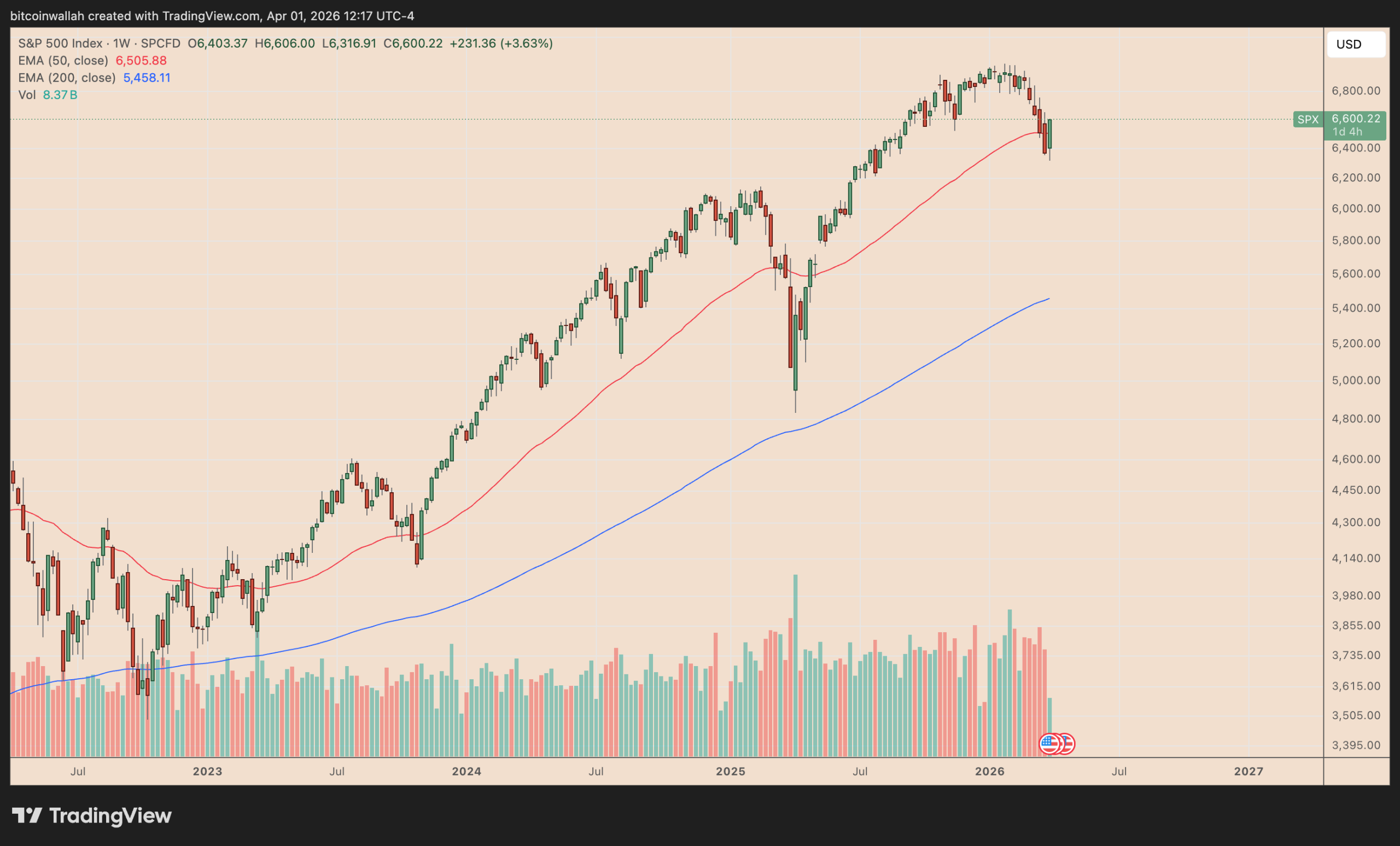
For context, the S&P 500 has fallen about 5.75% since reaching a record high in January.

Buffett said stocks are not “substantially” cheaper after the decline and described the sell-off as “nothing” compared with earlier downturns in which markets fell more than 50%.
That helps explain Berkshire’s latest Treasury-bill purchase. The company ended 2025 with about $373 billion in cash and equivalents, up from a record $334.2 billion a year earlier and more than double its level at the end of 2023.
Buffett, who famously called Bitcoin “rat poison,” typically gets into cash before major stock crashes, historical data shows.
In 1998, for instance, Buffett began trimming Berkshire’s stock exposure and raising cash, pushing the company’s cash and cash-equivalents holdings to $13.1 billion, or about 23% of total assets.

By mid-2000, that figure had climbed to nearly $15 billion, or roughly 25% of assets, before Berkshire started deploying capital into bargains as the Dot-com bubble burst.
Bitcoin’s positive correlation with stocks may hurt prices
Bitcoin has traded more like a stock than a traditional safe haven for much of the post-2020 period, often moving in the same direction as US equities, especially the tech-heavy Nasdaq.
As of Wednesday, the 20-week rolling correlation coefficient between the two markets was positive at 0.47.

If Buffett’s risk-off strategy is correct, then Bitcoin should see another crash alongside stocks. Fresh quantum-security concerns, war-driven inflation risks, and nearly 50% US recession odds are putting pressure on the BTC price.
Berkshire’s portfolio decisions have also leaned away from crypto-adjacent finance.
In the first quarter of 2025, the firm fully exited Nu Holdings, a crypto-friendly fintech company, after building its position in 2021 and 2022. It secured about $250 million in profits from these investments.
Multiple analysts predict BTC’s price to drop to as low as $30,000 in 2026.
This article is produced in accordance with Cointelegraph’s Editorial Policy and is intended for informational purposes only. It does not constitute investment advice or recommendations. All investments and trades carry risk; readers are encouraged to conduct independent research before making any decisions. Cointelegraph makes no guarantees regarding the accuracy or completeness of the information presented, including forward-looking statements, and will not be liable for any loss or damage arising from reliance on this content.
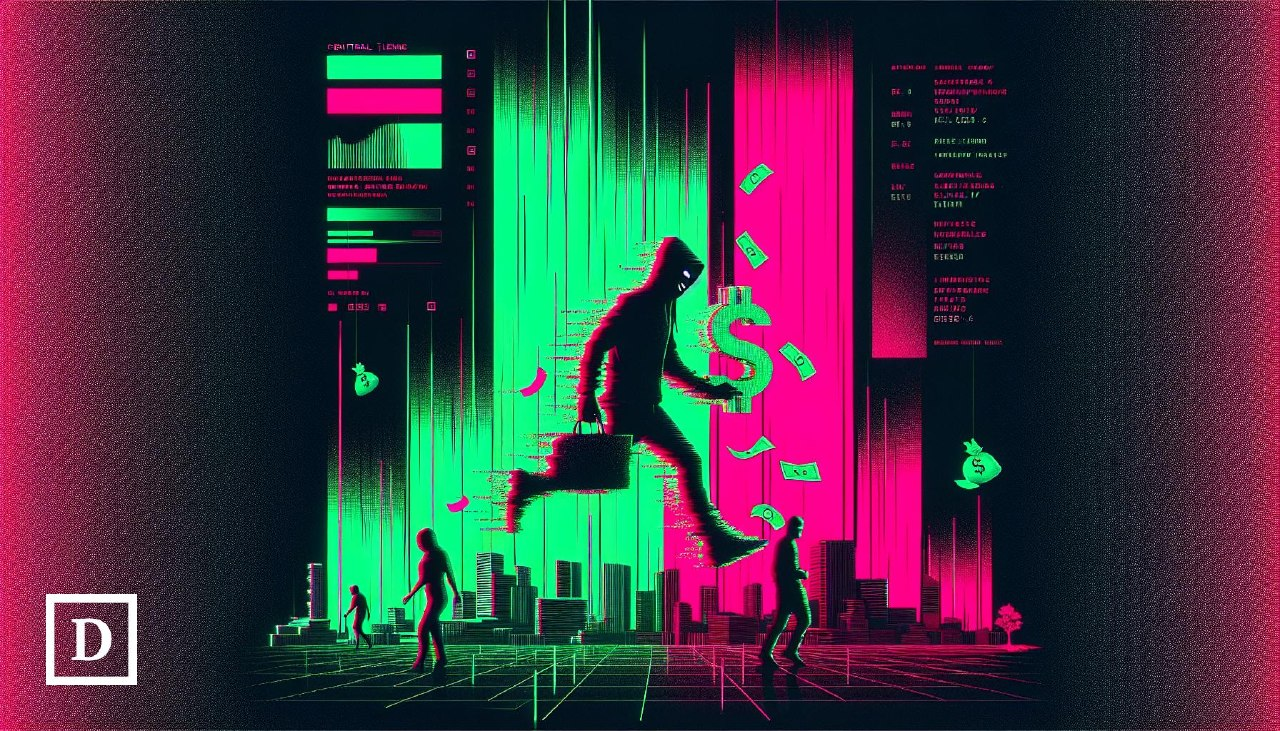
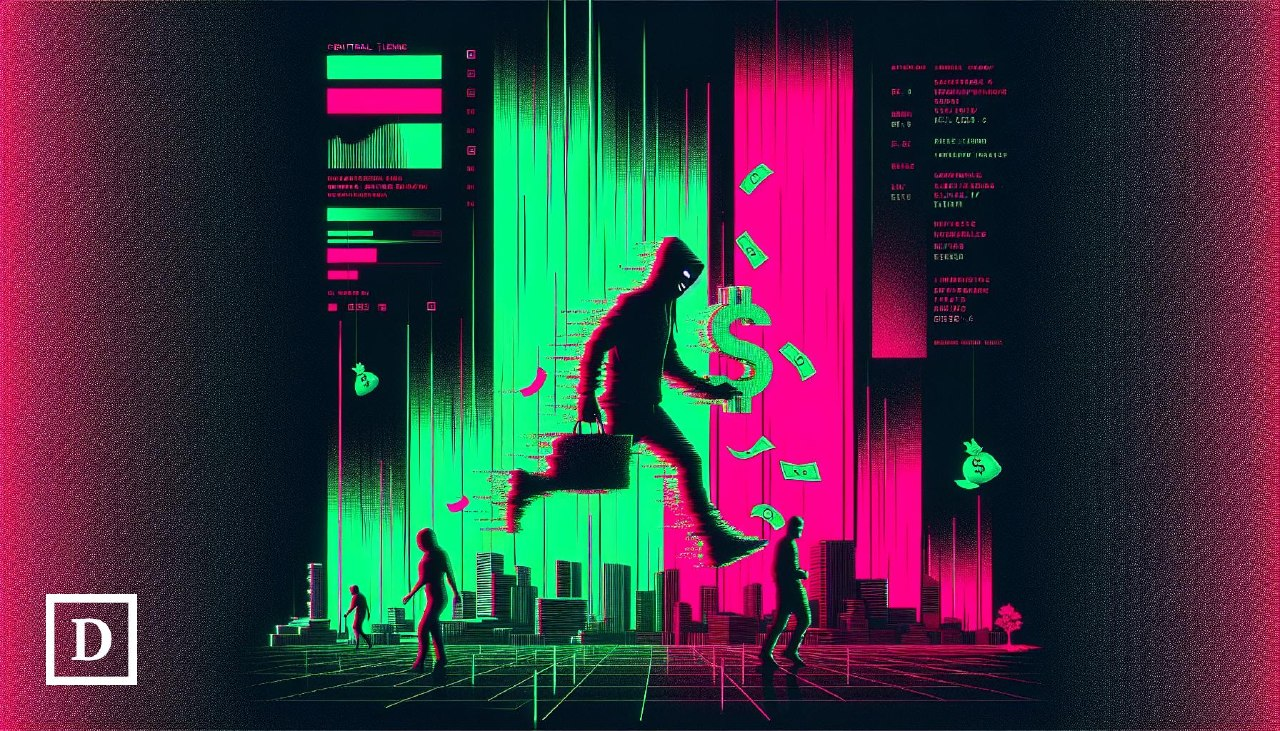
Onchain data shows more than a dozen asset types drained from the Solana perp DEX’s main vault address in a rapid burst of transactions.

TLDR
- EDX Markets has applied for a national trust bank charter with the Office of the Comptroller of the Currency.
- The charter would allow the company to offer regulated custody, asset management, and principal trading services.
- The exchange plans to separate custody and settlement functions from its trading operations.
- Chief executive Tony Acuña-Rohter said the trust charter would help serve institutional clients.
- The move follows conditional trust charter approvals granted to Circle and Ripple in December.
EDX Markets has filed for a national trust bank charter with the Office of the Comptroller of the Currency. The application would allow the crypto exchange to expand custody and settlement services under federal oversight. The move marks a direct step toward deeper integration with the US banking system.
Citadel-Backed Platform Seeks Federal Trust Status
EDX Markets submitted its application on April 1, according to public filings. The company seeks approval to operate as a national trust bank under OCC supervision. The charter would permit custody, asset management, and principal trading within a regulated structure.
The exchange stated that the new structure would separate custody and settlement from trading functions. It argued that combining brokerage, exchange, and custody roles creates conflicts and operational risk. Therefore, it aims to align its operations with traditional financial market models.
EDX Markets operates an institutional crypto platform backed by Citadel Securities and other financial firms. The company said the trust charter would strengthen safeguards for client assets. It added that federal supervision would support secure custody and settlement systems.
Chief executive Tony Acuña-Rohter said large banks will shape the next stage of digital asset adoption. He stated, “Obtaining a trust charter positions us to meet institutional demand for regulated custody.” He added that the structure supports clients requiring compliant asset management services.
The company maintained that the trust model reflects established practices in equities and derivatives markets. In those markets, exchanges, brokers, custodians, and market makers operate separately. EDX Markets said this separation limits conflicts between trade execution and asset custody.
Application Reflects Policy Shift Toward Digital Assets
The filing comes as federal regulators show greater openness to crypto firms entering the banking system. Several companies have sought national trust charters in recent months. Regulators have reviewed these applications under existing banking laws.
In December, regulators granted conditional approvals to Circle Internet Group and Ripple. Those approvals allowed both firms to pursue trust bank operations under federal supervision. The decisions placed custody and asset management within the regulatory perimeter.
EDX Markets stated that its proposed structure would reduce systemic risk across crypto platforms. It said separating custody and trading functions strengthens protections for client funds. The firm emphasized that regulated settlement systems improve operational transparency.
Founded in 2022, EDX Markets built its platform for institutional investors entering digital assets. Backers include Citadel Securities, Virtu Financial, Fidelity Digital Assets, and Hudson River Trading. The exchange designed its order-matching system to mirror traditional market infrastructure.
National trust banks can hold client assets and manage portfolios under OCC oversight. They can also provide fiduciary and custody services within federal rules. EDX Markets confirmed that it will continue operating its existing order-matching platform during the review process.

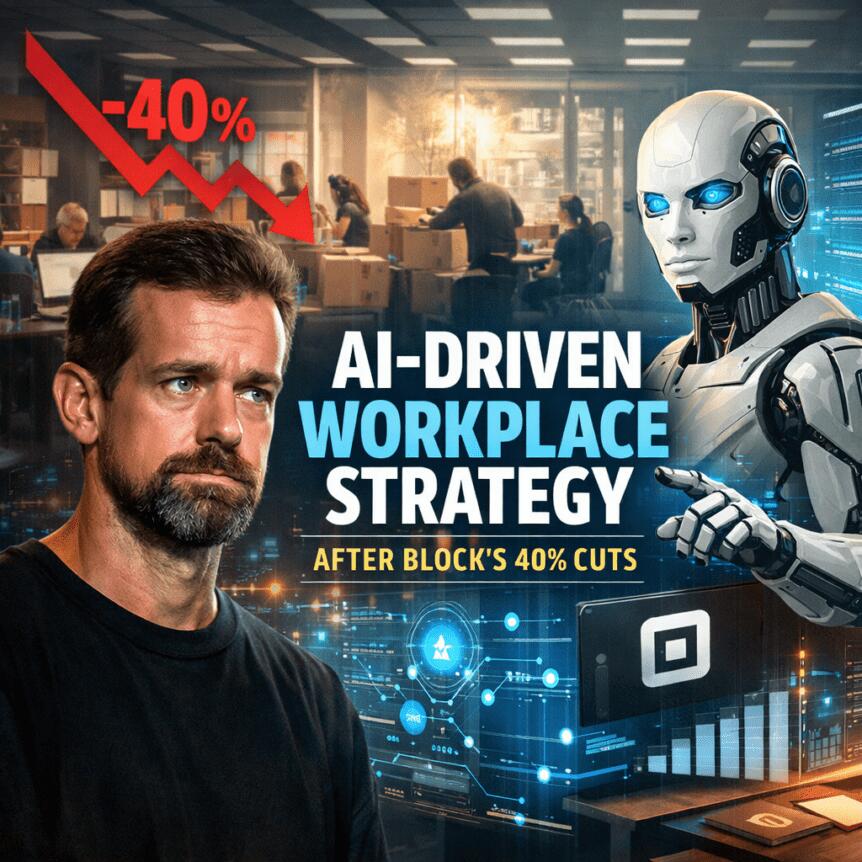
Block co-founder Jack Dorsey and the company’s lead independent director, Roelof Botha, have laid out a forward-looking vision in which artificial intelligence could fundamentally change how work is coordinated. In a blog post published this week, they describe a model where AI would take on the tasks typically handled by middle managers—tracking projects, flagging issues, assigning work, and sharing critical information faster than human processes allow.
The post comes on the heels of Block’s previously reported workforce restructuring, part of a broader wave of AI-driven cost-cutting across the tech sector. Block disclosed that it cut roughly 4,000 jobs in February, an action Dorsey attributed to the rapid pace of AI adoption and the need to stay competitive. In March, some of the employees who had been laid off were quietly rehired, illustrating a cautionary approach to the current wave of optimization. The blog authors emphasize that AI’s role in the new model is evolving, not yet fully realized, and that Block remains in the “early stages” of testing how an intelligence-centric structure could function in practice.
“We’re questioning the underlying assumption: that organizations have to be hierarchically organized with humans as the coordination mechanism. Instead, we intend to replace what the hierarchy does. Most companies using AI today are giving everyone a copilot, which makes the existing structure work slightly better without changing it. We’re after something different: a company built as an intelligence, or mini-AGI.”
Key takeaways
- Block’s leadership proposes replacing traditional hierarchical management with an intelligence-driven framework that leverages AI to coordinate work and decision-making.
- The envisioned structure redefines roles around three pillars: individual contributors, directly responsible individuals, and player-coaches who mentor while continuing to contribute technically.
- AI would enable real-time visibility into what’s being built, what’s blocked, resource allocation, and overall product performance, potentially speeding up information flow beyond conventional managerial channels.
- Despite the AI emphasis, human involvement remains central to strategic and ethical decisions, signaling a blended governance approach rather than a pure automation model.
From hierarchy to intelligence: Block’s strategic shift
The core idea articulated by Dorsey and Botha is a pivot away from the familiar pyramid where instructions travel up and down through layers of management. In a remote-first, machine-readable environment, AI would continuously build and maintain a live picture of organizational activity: what’s in development, what’s blocked, where resources are needed, and what outcomes are proving effective or failing. The authors describe the aim as moving beyond “copilot” enhancements to a more transformative design—an organization that operates as an intelligence rather than a traditional hierarchy.
They emphasize that the pattern could reshape corporate operation across sectors, not just within Block. The argument rests on a simple premise: information flow drives speed and adaptability. If AI can handle the coordination overhead more efficiently than humans, the bottlenecks created by layers of management could recede, enabling faster iteration and more responsive leadership decisions.
To illustrate the proposed shift, Block outlines a three-tier talent model. Individual contributors would be responsible for building and maintaining the operating systems that power the company’s workflows. Directly responsible individuals would tackle specific problems and be empowered to marshal any resources necessary to resolve them. Between these layers, player-coaches would assume manager-like duties—mentoring and supporting others—while continuing to contribute code and substantive work themselves. In this arrangement, the traditional gatekeeping function of middle management would be distributed and augmented by AI-enabled visibility and automation.
People still in the driver’s seat
Even as AI takes on coordination tasks, Dorsey and Botha stress that human judgment remains indispensable. They acknowledge that AI can process information at a scale and speed far beyond human capability, but key business and ethical decisions will continue to require human insight. The blog notes that while AI can present a continuously updated view of operations, it cannot substitute for the values, prudence, and accountability that guide corporate governance.
This stance sits at an important crossroads for investors and workers alike. The acceleration of AI-driven restructuring has historically raised questions about job security, morale, and the long-term viability of new organizational paradigms. Block’s own experience—balancing a major layoff with later rehiring of some affected employees—illustrates a cautious, iterative approach rather than a speculative leap into a fully automated future. The authors’ framing suggests a model where AI acts as a force multiplier for human capabilities, rather than replacing people wholesale.
Why it matters for crypto-adjacent ventures
The broader crypto and fintech sectors have watched Block (the company behind the Cash App and a notable crypto-friendly stance) as a bellwether for technology-enabled financial services. If an AI-first, intelligence-driven corporate structure gains traction, it could influence how other blockchain and payments firms think about product development cycles, regulatory compliance, and governance practices. The potential impact extends to how quickly teams can respond to security risks, how product roadmaps are validated in real time, and how cross-functional collaboration is organized in a hybrid or fully remote environment.
From an investor perspective, the shift raises questions about how governance, risk controls, and performance metrics would be managed in an AI-augmented organization. Real-time visibility into development pipelines and resource allocation could improve transparency, but it also heightens sensitivity to data quality, AI oversight, and ethical considerations in automated decision-making. As with any large-scale adoption of AI in corporate governance, the outcomes will hinge on guardrails, accountability, and the ongoing calibration of human-in-the-loop processes.
Block’s announcement aligns with a wider industry conversation about whether AI can augment, or even replace, certain managerial functions. While the blog presents a staged, experimental path toward an intelligent enterprise, observers will be watching to see whether early pilots yield tangible improvements in productivity, risk management, and employee engagement. The balance between speed and governance will be particularly telling in sectors where regulatory scrutiny and customer trust are paramount.
What to watch next
The immediate questions center on execution and governance. How quickly will Block move from a conceptual framework to concrete organizational changes? What criteria will the company use to assess the success of its AI-driven coordination model? And how will Block address potential pitfalls, such as algorithmic bias, data silos, or accountability for automated decisions?
As AI continues to redefine work patterns across the technology landscape, Block’s approach could foreshadow a broader shift in corporate design. If the model proves adaptable and beneficial, it may prompt other firms to experiment with similar intelligence-driven structures, especially in environments that prize rapid iteration and remote collaboration.
Readers should monitor Block’s forthcoming updates and pilot implementations to gauge whether the vision moves from theory to practice and how those developments influence investor confidence, employee experience, and the broader discourse around AI-enabled governance.

XRP is trading near $1.36 with modest 24-hour gains of up +2.6% in price, but the real story is regulatory, and it could reshape Ripple’s long-term value prediction entirely. The Office of the Comptroller of the Currency’s landmark final rule takes effect April 1, and Ripple is positioned squarely in its crosshairs.
The OCC’s final rule revises chartering regulations to allow national trust banks to conduct non-fiduciary activities alongside fiduciary ones, a structural change that opens the U.S. banking system to crypto-native operators at a federal level.
— JackTheRippler © (@RippleXrpie) March 31, 2026
 RUMORS: @Ripple will officially receive the approval to become a National Trust Bank tomorrow, April 1st. #XRP pic.twitter.com/pDpLpg70jG
Ripple’s conditional approval as a National Trust Bank was granted alongside approvals for BitGo, Fidelity, and Paxos, signaling this isn’t a one-off concession but a systemic policy shift. The full charter remains pending, but conditional approval already allows Ripple to custody client assets under federal oversight as a direct boost to institutional confidence in both XRP and the RLUSD stablecoin.
This development lands as U.S. regulators push crypto deeper into traditional financial infrastructure, making the timing anything but coincidental. The price, however, tells a more complicated story.
Discover: The best pre-launch token sales
XRP Price Prediction: Ripple to Reclaim $2.00 Amid Regulatory Tailwinds?
XRP 24-hour trading volume surging to $2.1 billion, even if conviction is mixed, it is still a notable volume spike. Support still clusters at $1.30 – $1.35, the range that has held through recent consolidation. Resistance begins at $2.20 and extends toward $3.30, the upper bound of recent 24-hour highs recorded on Binance.
XRP remains -63% off its 2025 all-time high of $3.65, with Standard Chartered having revised its 2026 XRP forecast down to $2.80 from an earlier $8.00 target, citing deteriorating market conditions.
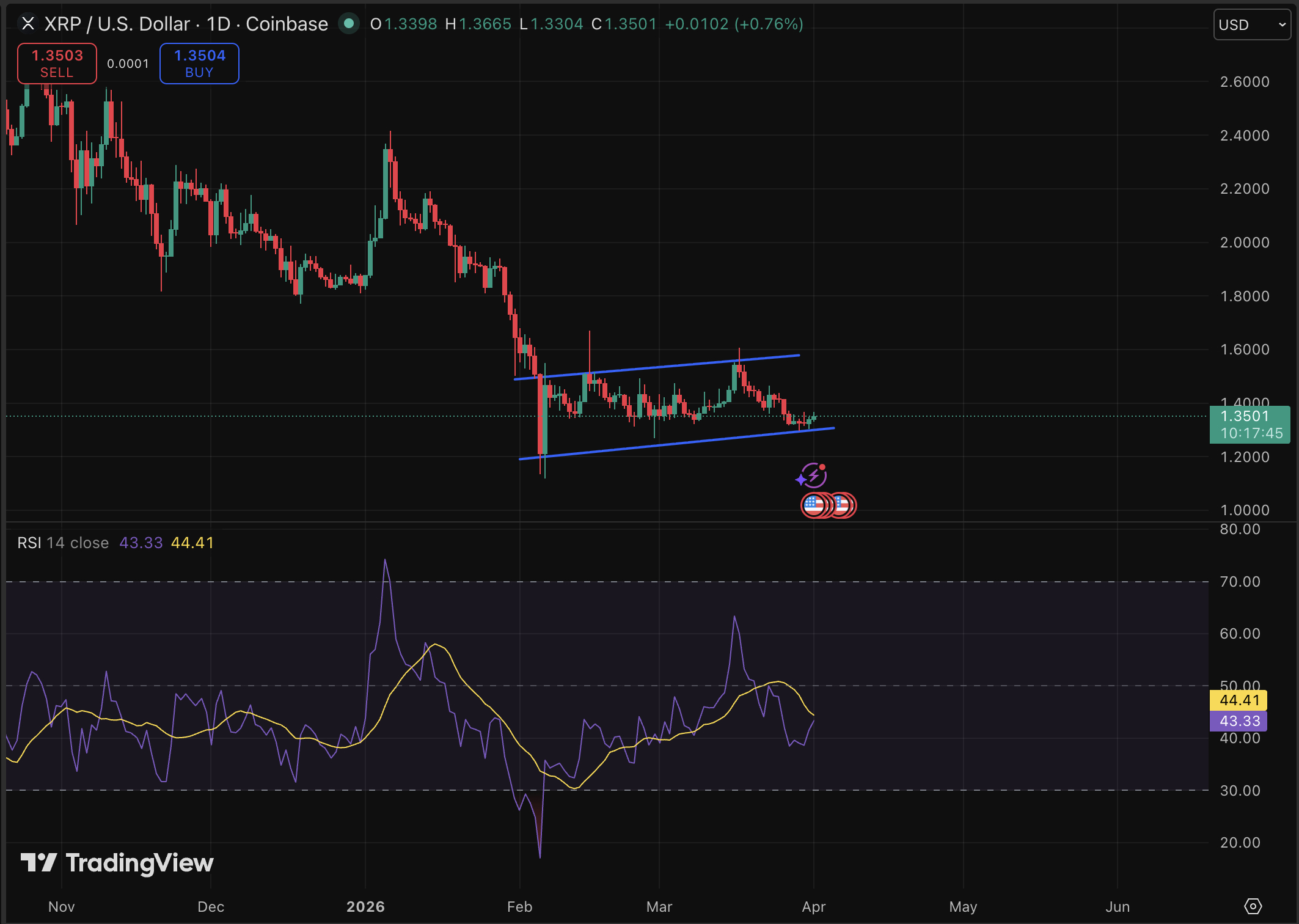
April 1 OCC rule, however, can trigger institutional inflows with XRP reclaiming $2.20 resistance within 30 days as custody clarity drives TradFi adoption. But most likely, XRP price consolidates in the $1.35–$1.80 range through Q2 2026, with the full trust bank charter serving as the next catalyst.
The OCC news is structurally bullish for XRP long-term. Near-term price action, though, appears hostage to broader market sentiment until the full charter lands.
Discover: The best crypto to diversify your portfolio with
Bitcoin Hyper Eyes Infrastructure Upside as XRP Tests Critical Support
XRP’s regulatory breakthrough is real, but at a $83B+ market cap, the ceiling on percentage returns requires a specific kind of optimism. Traders hunting asymmetric upside in the current cycle are increasingly rotating toward earlier-stage infrastructure plays where the valuation gap is wider, and the catalyst timeline is front-loaded.
Bitcoin Hyper ($HYPER) is one project absorbing that attention. It positions itself as the first-ever Bitcoin Layer 2 with Solana Virtual Machine (SVM) integration, bringing sub-second smart contract execution to Bitcoin’s ecosystem without compromising the underlying security model. Bitcoin’s trust, Solana’s speed.
The presale has raised $32 million at a current token price of $0.0136, with 36% APY staking rewards available for early participants. Features include a Decentralized Canonical Bridge for BTC transfers, extremely low-latency Layer 2 processing, and high-speed, low-cost transaction execution that outperforms Solana itself on throughput metrics.
Research Bitcoin Hyper before the presale closes.
This article is for informational purposes only and does not constitute financial advice. Crypto assets are highly volatile. Always conduct your own research before investing.
The post XRP Price Prediction: Ripple to Become National Bank? appeared first on Cryptonews.
Crypto World
Solana (SOL) DeFi platform Drift investigates suspicious activity, tells users to halt deposits


Solana-based decentralized finance (DeFi) platform Drift said it is investigating “unusual activity” on its protocol, prompting concerns that the platform may have been exploited.
“We are observing unusual activity on the protocol. We are currently investigating. Please do not deposit funds into the protocol while we investigate,” Drift wrote in a post on X. “This is not an April Fools joke. Proceed with caution until further notice. We’ll provide additional updates from this account.”
The warning triggered speculation across the crypto community, with some users reporting irregular behavior tied to their positions.
Helius CEO Mert Mumtaz added to the concern in a separate X post, writing, “not 100% fully certain yet, but it seems drift might be getting exploited.” Helius is a key infrastructure provider on Solana, offering APIs and node services that developers and platforms rely on to access blockchain data.
If confirmed, an exploit could affect user funds and add pressure on Solana’s DeFi ecosystem, which has seen renewed growth in recent months.

Apple retires Mac Pro after 20 years as it shifts pro desktop strategy

Paradigm builds pro-grade prediction market terminal for institutional traders

Supergirl Goes Full-On John Wick In New Trailer


-

 News Videos7 days ago
Parliament publishes latest register of MPs’ financial interests
-

 Business6 days ago
Instagram, YouTube Found Responsible for Teen’s Mental Health Struggle in Historic Ruling
-
 Tech6 days ago
Intercom’s new post-trained Fin Apex 1.0 beats GPT-5.4 and Claude Sonnet 4.6 at customer service resolutions
-

 NewsBeat5 days ago
The Story hosts event on Durham’s historic registers
-

 Sports5 days ago
Sweet Sixteen Game Thread: Tide vs Michigan
-
Entertainment2 days ago
Fans slam 'heartbreaking' Barbie Dream Fest convention debacle with 'cardboard cutout' experience
-
 Entertainment4 days ago
Lana Del Rey Celebrates Her Husband’s 51st Birthday In New Post
-
Crypto World1 day ago
Dems press CFTC, ethics board on prediction-market insider trades
-

 Sports1 day ago
Tallest college basketball player ever, standing at 7-foot-9, entering transfer portal
-

 Tech3 days ago
The Pixel 10a doesn’t have a camera bump, and it’s great
-

 Entertainment7 days ago
HBO’s Harry Potter Series Will Definitely Fail For One Big Reason, And It’s Not J.K. Rowling Or Snape
-

 Crypto World2 days ago
U.S. rule change may open trillions in 401(k) funds to crypto
-

 Tech1 day ago
EE TV is using AI to help you find something to watch
-

 Tech1 day ago
How to back up your iPhone & iPad to your Mac before something goes wrong
-

 Fashion6 days ago
En Vogue in Brown Leather and Tailored Neutrals by Atelier Savoir, Styled by J Bolin
-

 Politics2 days ago
Should Trump Be Scared Strait?
-

 Tech2 days ago
Flipsnack and the shift toward motion-first business content with living visuals
-

 Fashion6 days ago
What Are Your Favorite T-Shirts for the Weekend?
-

 Fashion5 days ago
Weekly News Update, 3.27.26 – Corporette.com
-

 Tech2 days ago
Apple will hide your email address from apps and websites, but not cops
You must be logged in to post a comment Login