

Crypto World
Strategy director dumps $9M in shares as STRC rout hits MSTR stock

A Strategy director has sold nearly $9 million worth of company shares over the past three months as pressure on the firm’s preferred stock offerings and concerns over future dividend funding continue to weigh on MSTR.
Summary
- Strategy director Jarrod Patten has sold nearly $9 million worth of MSTR shares over the past three months.
- QCP estimates Strategy has about 7.5 months of liquidity to support preferred stock dividend payments.
- Bernstein maintained its $450 MSTR price target despite the stock falling roughly 31% over the past month.
According to a recent filing with the U.S. Securities and Exchange Commission, Strategy director Jarrod Patten exercised options to acquire 1,500 Class A shares at a strike price of $18.236 and immediately sold them on the open market at roughly $134 per share, generating a profit of around $200K.
The transaction adds to a steady pattern of insider selling. SEC filings show Patten has disposed of 55,750 MSTR shares during the last three months, with total proceeds approaching $9 million. His latest sale comes as Strategy stock remains under pressure following a sharp decline in both Bitcoin and the company’s preferred securities.
Following the transaction, Patten still holds 28,406 Class A shares, positions across several Series A perpetual preferred stock offerings, and 44,250 unexercised director stock options.
Dividend concerns have moved into focus
Attention has increasingly shifted toward Strategy’s ability to support dividend obligations tied to its preferred stock products.
According to market maker QCP, Strategy’s current liquidity position can fund dividend payments for roughly seven and a half months.
As crypto.news reported, QCP said the company could eventually face a decision between raising additional capital, diluting shareholders further, or selling Bitcoin if alternative funding sources become less attractive.
The concern emerged shortly after Strategy completed several balance-sheet transactions. QCP noted that the company repurchased nearly $1.5 billion of convertible notes due in 2029 while raising approximately $200 million through MSTR stock sales. Part of those proceeds was later used to acquire another $100 million worth of Bitcoin.
Investor attention has also centered on Strategy’s preferred securities. STRC, the company’s Stretch preferred stock, recently fell to a record low of $89, leaving it about 11% below its intended $100 value and increasing scrutiny of the firm’s capital structure.
Earlier this month, Strategy disclosed the sale of 32 BTC valued at approximately $2.5 million to fund STRC dividend payments. The transaction marked the first known Bitcoin sale by the company after years of maintaining a strict accumulation strategy.
Analyst targets remain unchanged despite weakness
Selling activity by company insiders has continued throughout 2026. Earlier filings showed Chief Executive Officer Phong Le, Chief Financial Officer Andrew Kang, and former Executive Vice President Wei-Ming Shao collectively sold millions of dollars’ worth of MSTR shares in March. Kang and Patten reduced their holdings as the stock weakened despite record highs in major U.S. equity indexes.
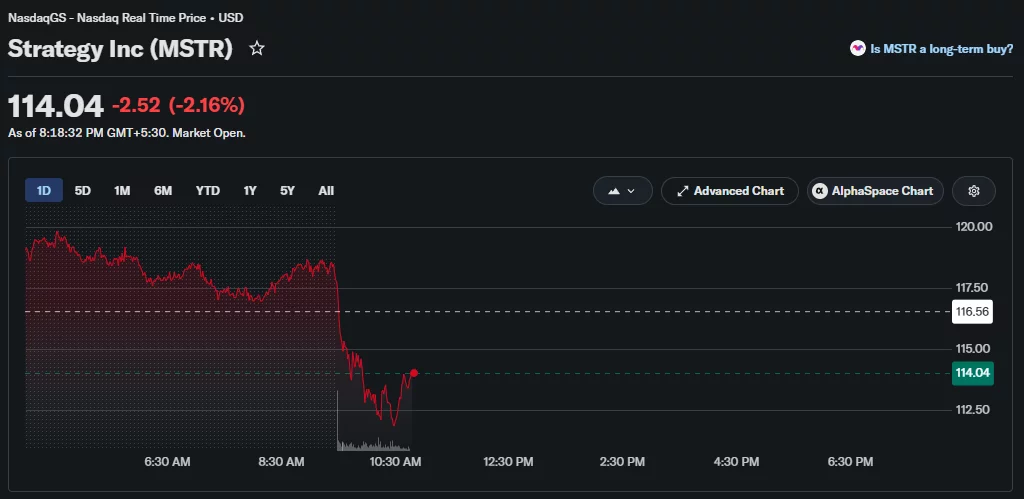
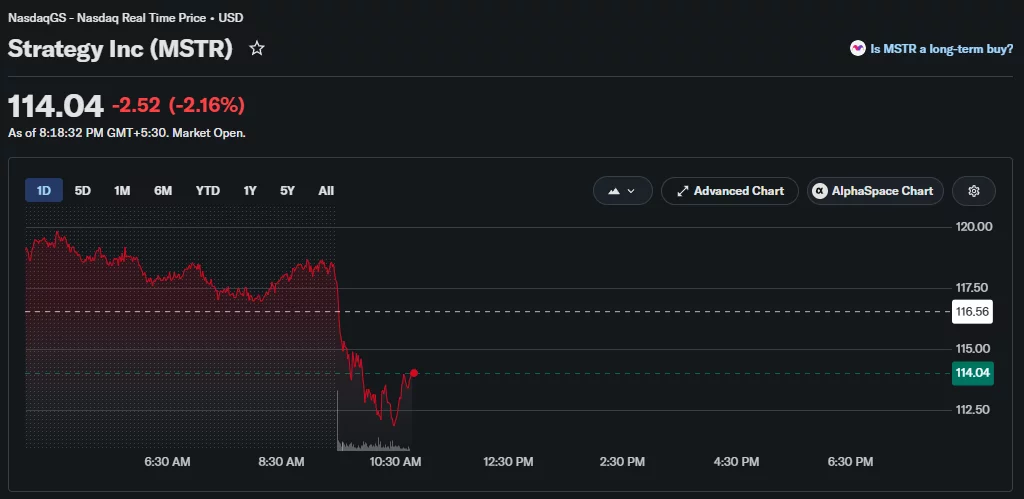
MSTR closed 5.09% lower at $116.56 on Wednesday as risk assets weakened after the Federal Reserve kept interest rates unchanged at 3.50% to 3.75% while signaling potential tightening risks for 2026. The stock extended its decline on Thursday, falling another 2.1% to $114.04. With those losses, MSTR is now down roughly 31% over the past month.
Meanwhile, Bitcoin traded near $63,850 at press time after dropping nearly 2% in the past 24 hours.
Despite the recent decline, analysts at TD Cowen, Citigroup, Bernstein, and BTIG have maintained their existing bullish ratings on MSTR shares. Bernstein analysts reiterated a buy rating and kept a 12-month price target of $450, while TD Cowen targets $350, Citigroup holds at $260, and BTIG maintains a target of $250.



- Legacy Aztec Network contracts were drained of over $4M in three days.
- Attacks exploited flaws in zero-knowledge proof verification logic.
- The core Aztec network and AZTEC token were not affected by the exploits.
Aztec’s legacy infrastructure has come under a coordinated wave of attacks, leading to losses that crossed $4 million within just three days.
The exploits targeted deprecated smart contracts that had already been shut down years earlier but still held on-chain liquidity.
Despite being labelled as inactive and immutable, the contracts remained accessible to attackers who exploited weaknesses in zero-knowledge proof verification logic.
While the attacks did not affect the current Aztec network or its AZTEC token, they exposed long-standing risks tied to retired DeFi systems that continue to exist on Ethereum without active maintenance or upgrade paths.
First breach: Aztec Connect drained of $2.1 million
The first incident occurred on June 14, when attackers exploited the Aztec Connect protocol, a deprecated privacy-focused bridge that had been officially shut down after its retirement phase.
The contract was already considered inactive, yet it still contained residual funds.
The attacker managed to drain approximately $2.1 million in digital assets, including around 909 ETH, 270,000 DAI, and 167 wstETH, alongside other smaller holdings.
The exploit was linked to flaws in the way rollup proof verification was handled, allowing invalid or manipulated proofs to be accepted as legitimate.
What made the situation more critical was the nature of the contract itself.
Aztec Connect was described as immutable, meaning it could not be paused or patched once deployed.
Even though users had previously been encouraged to withdraw funds before shutdown, the remaining balance became an easy target for exploitation years later.
Security teams reviewing the incident pointed to a breakdown in the relationship between zero-knowledge proof validation and on-chain settlement logic.
In simple terms, the system accepted proofs that did not correctly match the underlying transaction state, allowing the attacker to trigger unauthorised withdrawals.
Second attack: Private Rollup Bridge exploited for $2.15 million
Just three days later, a second exploit hit another legacy system known as the Private Rollup Bridge.
This contract was also part of Aztec’s older infrastructure and had been deprecated following the transition away from earlier rollup designs.
In this case, attackers drained roughly 1,158 ETH, valued at close to $2.15 million at the time of the incident.
The method used was different in execution but similar in technical root cause.
Instead of directly manipulating withdrawals through basic proof mismatch, the attacker leveraged a vulnerable “escape hatch” mechanism embedded in the bridge design.
By submitting a specially crafted zero-knowledge proof, the attacker was able to trigger the contract’s exit logic.
The system incorrectly validated the proof and released funds without proper verification of the underlying state transitions.
This allowed the attacker to extract liquidity in a single coordinated sequence.
Like the earlier exploit, this breach did not involve private key compromise or reentrancy vulnerabilities.
Instead, it highlighted deeper issues in how proof validation was structured in legacy rollup systems, particularly when contracts remain permanently active on-chain after being officially sunset.
Response from Aztec and security firms
Following both incidents, Aztec Labs and the Aztec Foundation confirmed that the affected systems were deprecated products with no connection to the current Aztec network or AZTEC token ecosystem.
The Aztec Foundation was made aware of a potential exploit targeting a deprecated product which occurred on June 17, 2026. There are no links between this product and any smart contracts related to the current network or the AZTEC ERC20 token.
The product was deprecated 4 years… https://t.co/kANaIuw8HF
— Aztec Foundation (@aztecFND) June 18, 2026
They emphasised that neither contract could be upgraded, paused, or controlled, as both were designed to be immutable at deployment.
Security firm CertiK Alert also flagged the Private Rollup Bridge exploit, identifying the attacker’s address and confirming the movement of funds tied to a specific Ethereum transaction.
Their analysis aligned with other reviews, suggesting that the vulnerability stemmed from flaws in zero-knowledge proof verification rather than conventional smart contract bugs.
Aztec representatives also clarified that the Private Rollup Bridge and Aztec Connect incidents were separate events, even though they occurred within a short timeframe and shared similar technical weaknesses.
Crypto World
Bitcoin’s (BTC) nemesis, the Dollar Index (DXY), is on the verge of a major breakout: Daybook: Crypto Daily


Bitcoin and the Dollar Index (DXY) are moving in opposite directions, with the latter on the verge of a major move that may embolden crypto bears.
The largest cryptocurrency is under pressure for a third straight day, trading near $63,900 and down nearly 1% since midnight UTC. The broader market is mostly showing similar losses, with the exception of a few tokens such as HASH, XLM and ENA, which gained 7% or more.
The Dollar Index, which tracks the U.S. currency’s value against major fiat currencies, has gained 0.26% to 100.66, extending Wednesday’s 0.8% rise. What’s notable is that the index is now on the verge of firmly breaking out of a 13-month-long trading range.
This type of setup usually leads to more momentum chasing by traders, resulting in further gains. Strength in the greenback typically weighs on dollar-denominated assets such as bitcoin.
BTC has historically tended to move in the opposite direction to the dollar. Its 90-day correlation coefficient with the DXY was recently minus 0.82.
Crypto World
Mounting AI costs and weaker performance are driving investors toward AI infrastructure


The biggest winners from the rotation have been memory and semiconductor stocks. Memory-chip maker Sandisk (SNDK) has surged roughly 800% this year and the Global X Artificial Intelligence & Technology ETF, which focuses on memory-related companies (DRAM), is up about 140%. In microprocessors, Micron Technology (MU) has gained about 230% this year, and the VanEck Semiconductor ETF (SMH) 67%.
The investments highlight a growing preference for the companies supplying the infrastructure behind the AI boom rather than the hyperscalers funding it.
In addition, capital has been attracted SpaceX (SPCX), Elon Musk’s space exploration company that is also expanding into AI. Last week, the company raised $75 billion in the largest IPO in history.
While AI has become the market’s dominant investment theme, the cash required to feed the growth is rising even faster. Google parent Alphabet (GOOGL), Amazon, Microsoft and Meta are expected to spend a combined $725 billion on capital expenditures this year, a 77% increase from last year’s record level.
Free cash flow is no longer fully funding these ambitions. Alphabet, Amazon and Meta, collectively borrowed some $93 billion last year, accounting for roughly 6% of total corporate bond issuance.
Another source of support is also fading. Share repurchases have fallen 33% to $132 billion in 2025, reducing a key pillar of demand for these stocks.

After showing signs of recovery, Bitcoin (BTC) lost momentum and dipped below $64,000 earlier today before finding support there.
While short-term sentiment weakened, the largest BTC holders appeared unfazed, using the decline as a buying opportunity.
Whale Accumulation Returns
Bitcoin whales holding at least 1,000 BTC have increased their combined holdings to 7.17 million BTC, according to Santiment’s latest findings. This is the highest level recorded since March 14. These large holders now control 35.82% of Bitcoin’s available supply, while the number of wallets holding at least 1,000 BTC stands at 2,044.
Additionally, crypto analyst Darkfost revealed that addresses holding more than 1 BTC have increased their combined holdings to a new all-time high of over 16.8 million BTC. The total supply held by this group continues to rise.
Darkfost explained that this trend could be linked to Bitcoin’s gradual institutionalization, although he stressed that such a development should be viewed from a long-term perspective.
Retail investors are also showing signs of renewed accumulation, but at a slower pace. This group is currently estimated to hold around 1.7 million BTC, which remains below the peak recorded in December 2023. The analyst went on to add that some retail participants may have taken profits during previous rallies, while others could have shifted their exposure to Bitcoin exchange-traded funds, which are easier to manage.
Despite these differences, both large holders and retail investors appear to be increasingly viewing the current market environment as an opportunity to accumulate Bitcoin.
Fed Takes Center Stage
Markets reacted strongly after the latest FOMC meeting. Bitcoin dropped below its “liquidity defense line.” Bitunix analyst Dean Chen said these moves suggest that investors are adjusting portfolios for a longer period of high interest rates rather than expecting an economic slowdown or easier monetary conditions. In a statement to CryptoPotato, Chen said that Federal Reserve policy is becoming a bigger driver of crypto markets than Middle East developments.
The analyst also warned that tighter liquidity, a stronger dollar, and rising Treasury yields could increase pressure on risk assets in the months ahead.
“Now, Warsh has explicitly anchored policy priorities to inflation control and rebuilding Fed credibility, meaning liquidity expectations could continue to tighten in the coming months. If the dollar remains strong and Treasury yields continue to climb, capital will increasingly favor the greenback and fixed-income assets, leaving risk assets to face higher valuation pressures.”
The post Bitcoin Dips Below $64K Again: Here’s How Whales Reacted appeared first on CryptoPotato.
The OG meme coin has fared poorly over the past several months, dropping out of the elite top 10 crypto club.
While some market observers remain optimistic that a recovery could be on the way, recent whale behavior suggests that a deeper collapse is also plausible.
DOGE Whales ‘Paying Rent’
The popular analyst Ali Martinez revealed that 420 million coins have been distributed by such large investors over the past seven days. As of current rates, the USD equivalent of this stash is around $35 million, while whales now collectively own nearly 35 billion DOGE, 22.7% of the token’s circulating supply.
The development doesn’t guarantee that the meme coin’s price is headed for further decline, but it signals that these investors are preparing for such a scenario.
Some believe these market participants are experienced players who may have access to inside information, enabling them to position themselves effectively ahead of major moves. In any case, their actions are closely monitored by retail investors, who could follow suit, thereby intensifying the sell-off.
Others took a more humorous approach to explaining the recent behavior. X user Lynor, for instance, said that DOGE whales cashed out so they can “pay rent this week.”
Time to Rally?
Martinez has been quite vocal on DOGE lately, and his previous comments were quite optimistic. Earlier in June, he disclosed that the Tom DeMark Sequential indicator flashed a buy signal on the asset, suggesting a rebound could be on the way. It’s worth mentioning that this technical tool accurately predicted the meme coin’s pullback in early May, when the valuation dropped from $0.113 to $0.078.
Later on, the analyst paid special attention to $0.081, classifying it as “the lower mid-range boundary” of a five-year parallel channel dating back to 2021. He argued that holding above that level could open the door for another “parabolic move.”
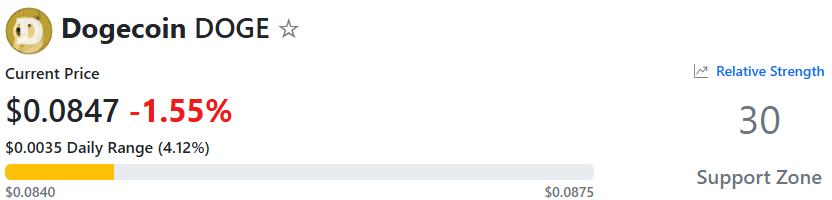
DOGE’s Relative Strength Index (RSI) supports the bullish scenario. The ratio has fallen to 30, meaning that the asset has entered oversold territory and could be due for a resurgence. The technical analysis tool ranges from 0 to 100, with anything above 70 considered a warning of a possible correction.
Last but not least, we will take a look at DOGE’s exchange netflow. Over the past several weeks, outflows have surpassed inflows, reflecting a growing investor preference for self-custody – a trend that naturally reduces immediate selling pressure.

The post 420,000,000 Dogecoin (DOGE) in 7 Days: Crash Signal or False Alarms? appeared first on CryptoPotato.


Blockchain infrastructure firm Alchemy said AI agents with its AgentCard now have access to the Visa (V) network with complete identity and payment capabilities, enabling them to make online purchases on behalf of consumers.
The integration allows AgentCard, a virtual ID and spending card for AI agents, to access Visa Intelligent Commerce to book a vacation, order groceries or renew a subscription, for example, without the consumer ever touching a checkout screen.
Agent-native payment protocols are in early adoption with firms like Stripe, Visa and Mastercard (MA) driving hard into this new area, known as agentic commerce. AgentCard works with agents built on models from any provider, including OpenAI or Anthropic.
“Every major computing shift has produced a new kind of economic actor,” Nikil Viswanathan, co-founder and CEO of Alchemy, said in a statement. “The internet created online businesses. Mobile created the app economy. AI agents are next, and they need to be able to access the global economy, and AgentCard is how that starts.”
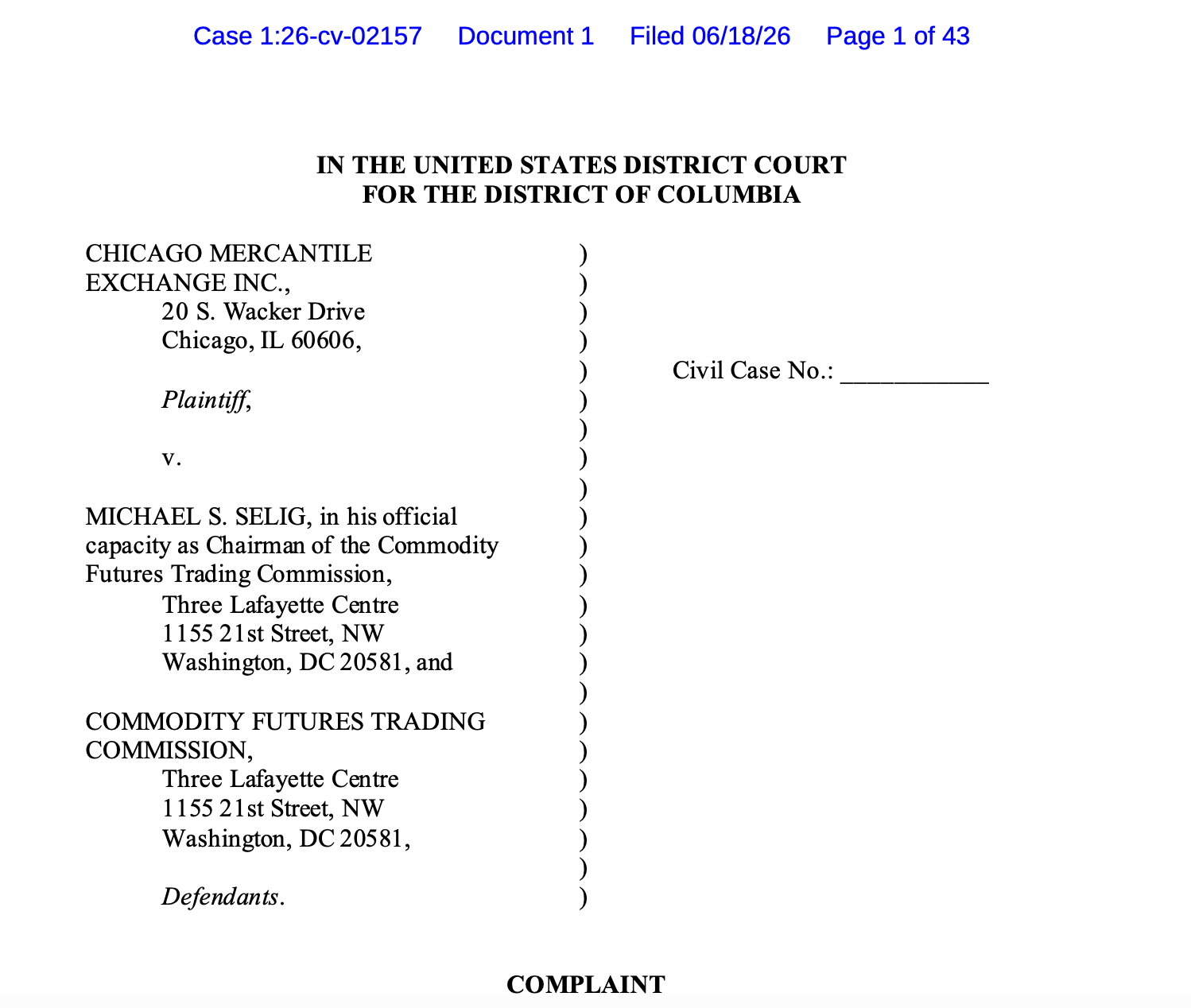
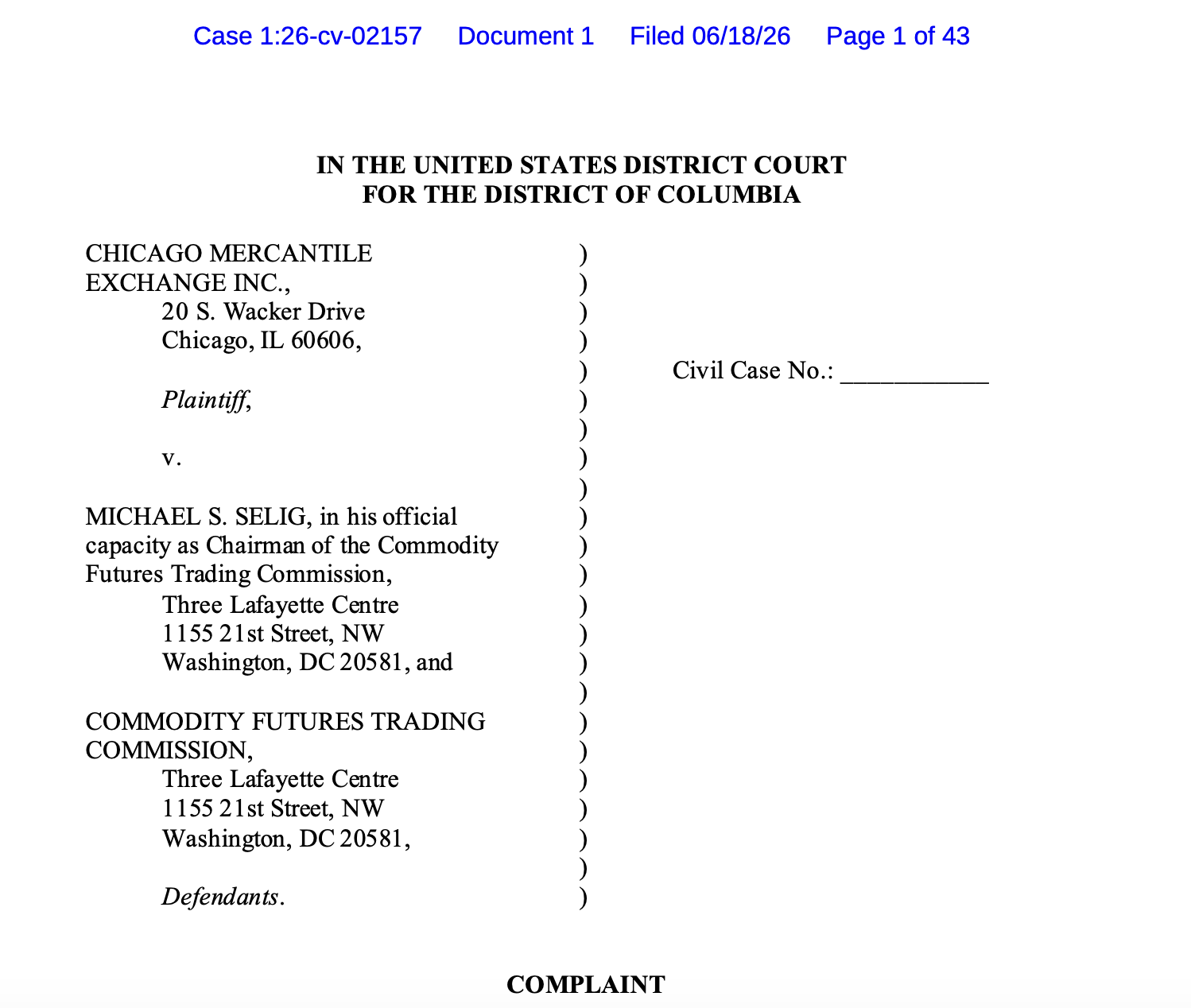
The Chicago Mercantile Exchange (CME) Group said it was taking legal action against the US Commodity Futures Trading Commission (CFTC) over cryptocurrency perpetual futures.
In a Thursday filing in the US District Court for the District of Columbia, CME filed a complaint against the CFTC and its chair Michael Selig over the agency’s regular approvals of perpetual futures tied to crypto. The lawsuit stemmed from a May 29 notice from the CFTC approving perpetual futures contracts tied to the spot price of Bitcoin (BTC) for prediction markets platform Kalshi and issuing a no-action position for similar products on cryptocurrency exchange Coinbase.
According to CME’s filing, the CFTC’s approval of such products went against directives from the US Congress by treating “futures” as “swaps” with expiration dates. The company alleged that the agency was in violation of the Commodity Exchange Act and a court should vacate its actions over perpetual futures, noting that Selig had unilaterally acted without a full panel of five CFTC commissioners.
“With one stroke of his pen, [Selig] overrode Congress’s definition of the term ‘swap’ and circumvented the regulatory regime Congress required for that form of derivative,” said the complaint, adding:
“The CFTC’s failure to evenhandedly, consistently, and correctly apply the CEA risks harming competition and destabilizing derivatives markets.”
Source: PACER
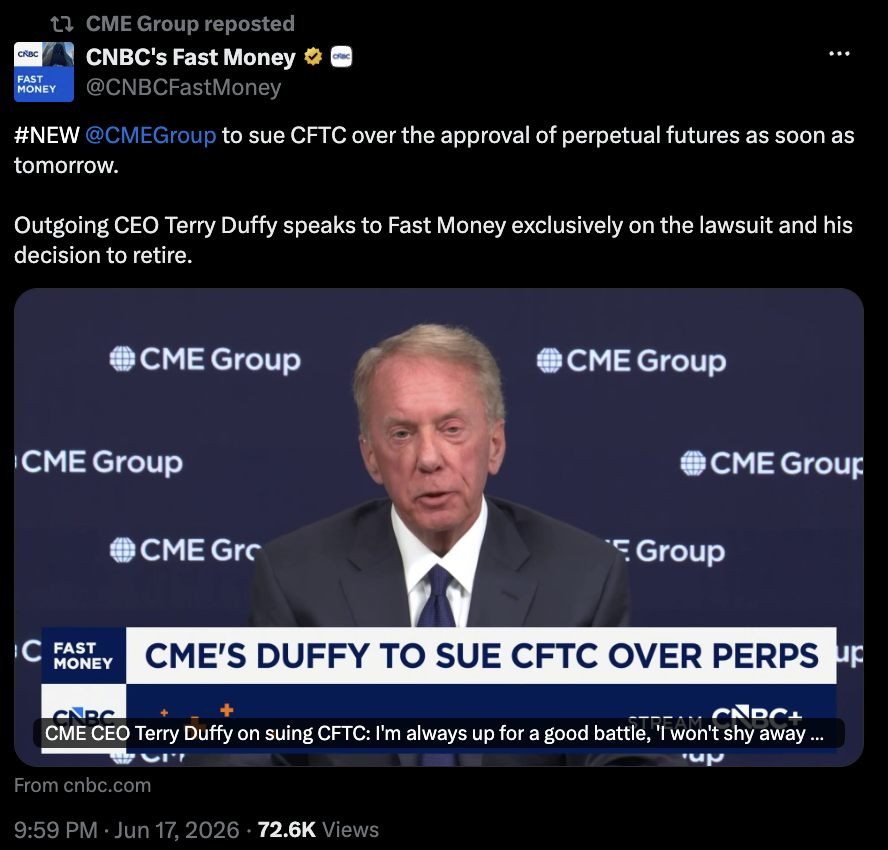
The lawsuit came just one day after CME CEO Terrence Duffy said that the company would be taking legal action against the CFTC. In a Monday CNBC interview, Selig said that perpetual futures contracts “trade very similarly” to others, describing the CFTC’s position as “good for investors” and claiming that the Commodity Exchange Act “does not define the term ‘futures contract.’”
A CFTC spokesperson told Cointelegraph that CME had engaged in “lawfare” against the agency and the administration’s crypto policies, calling the complaint “frivolous.”
Related: ICE, CME press US regulators to ‘rein in’ Hyperliquid energy trading: Report
Kraken also announced the launch of perpetual futures trading for US users through CFTC-regulated platform Bitnomial.
CME CEO Terry Duffy. Source: CNBC Fast Money
Selig acts alone on prediction markets, perpetual futures, CFTC agenda
Confirmed by the US Senate in December 2025, Selig remains the chair and sole commissioner at the CFTC in a leadership panel intended to consist of a bipartisan group of five people. As of Thursday, US President Donald Trump had not announced any nominations to fill the seats, despite urging from many members of Congress to do so.
Magazine: OpenAI files for IPO, SEC scraps 611 rule and Hungary overhauls crypto: Hodlers Digest June 7-13

Key Highlights
-
QUBT stock advanced following Planck Dynamics’ order of five NeuraWave platforms for 2026 delivery.
-
The NeuraWave agreement provides QCi with tangible commercial momentum in AI computing markets.
-
The partnership with Planck Dynamics opens defense sector opportunities for QCi’s photonic technology.
-
A possible $10M expansion hinges on achieving specific milestones and customer requirements.
-
NeuraWave leverages photonic reservoir computing for edge AI applications requiring minimal latency.
Shares of Quantum Computing Inc. (QUBT) advanced following news that Planck Dynamics had placed an order for the company’s NeuraWave technology. QUBT stock traded at $10.34, representing a 5.78% gain, as investors responded to the commercial validation. The shares briefly touched $10.50 during intraday trading before stabilizing near session highs.
NeuraWave Contract Lifts QUBT Stock
Quantum Computing announced that Planck Dynamics has committed to an initial purchase of five NeuraWave computing systems. Delivery is scheduled for 2026, with technical coordination work commencing immediately. This purchase order establishes QCi’s first commercial foothold in photonic reservoir computing applications.
The arrangement establishes a foundation for potential expansion of NeuraWave deployments moving forward. QCi indicated the overall program value could surpass $10 million based on achievement of specified performance benchmarks. Additional system orders remain contingent upon Planck Dynamics reaching development targets and satisfying contractual requirements.
Planck Dynamics functions as part of NUNC Capital BV’s investment portfolio based in the Netherlands. The firm specializes in defense applications and develops real-time analytical systems for operational environments. This collaboration positions QCi’s photonic technology within a rigorous, performance-driven sector.
Photonic Computing Partnership Focuses on Edge Applications
QCi engineered NeuraWave specifically for temporal artificial intelligence and time-series data analysis tasks. The platform employs photonic reservoir computing architecture to deliver rapid, efficient processing of sophisticated datasets. Consequently, it addresses scenarios where centralized computing infrastructure introduces unacceptable latency.
The collaborative program will validate electro-optic computing capabilities for advanced AI processing needs. It seeks to enable both commercial and governmental applications across diverse operational contexts. The initiative emphasizes rapid response times, minimal energy consumption, and instantaneous analytical output.
This application domain is significant because edge computing architectures process information at or near data generation points. Such systems frequently support sensor arrays, mobile platforms, and geographically distributed infrastructure. Thus, QCi has tailored NeuraWave for scenarios where processing speed and reduced power requirements are mission-critical.
Commercial Validation Strengthens QCi Strategy
Quantum Computing has centered its business approach on quantum optics and integrated photonic technologies. The firm aims to transition advanced computing capabilities from laboratory environments into practical commercial deployments. This partnership delivers tangible evidence of customer demand supporting that strategic direction.
Both organizations will develop a detailed Statement of Work governing the partnership activities. This document will define technical milestones, system integration objectives, and implementation timelines. It will serve as the roadmap for continued collaboration between QCi and Planck Dynamics throughout the project lifecycle.
While the agreement doesn’t ensure the complete $10 million program materialization, it provides QUBT with substantive positive news following a turbulent trading period. The contract also validates growing market recognition of photonic computing solutions for sophisticated AI applications.



Federal Reserve Chairman Kevin Warsh’s tough talk on inflation Wednesday reverberated through financial markets, with traders expecting that the central bank could start jacking up interest rates in just a few months.
Tapped to serve by President Donald Trump, who has repeatedly demanded lower rates, Warsh during a news conference instead focused on the battle against inflation, which has run above the Fed’s official 2% target for five years.
“Persistently high prices are a burden for the American people, but the recent past need not be prologue,” he said. “I am pleased to report that members of the [Federal Open Market Committee] are unambiguous and unanimous. This committee will deliver price stability.”
Markets immediately took notice as the new central bank leader sought to establish his inflation-fighting credentials.
The 2-year Treasury yield, seen as a market reflection of Fed moves, soared as Warsh spoke.
At the same time, futures market traders began placing bets on when the next rate hike would come. The probability for an increase at the July 28-29 meeting quickly climbed to about 1-in-3. Odds for a September hike spiked to 67% around midday Thursday, according to the CME Group’s FedWatch.

2-year yield
Dispelling the Warsh narrative
Moreover, traders priced in largely tighter Fed policy well into the future too.
The odds of a second hike by September 2027 rose above 45%. Even further out, the market-implied fed funds rate for May 2031 stood at 4.78%, indicating as many as five hikes in as many years from the current target range of 3.50%-3.75%.
A popular narrative that Warsh was sent to the Fed to ease monetary policy at all costs was quickly dispelled within the space of a 40-minute parley with reporters. At times serious and other times light-hearted, the session was notable for the inflation focus, with Warsh referring to “price stability” a dozen times.
Market veteran Ed Yardeni said he was “blown away” by Warsh’s remarks.
“We thought he was a dove who favored lowering the federal funds rate (FFR) because he believes that AI is boosting productivity and economic growth while keeping a lid on inflation,” the head of Yardeni Research said in an overnight note. “Instead, he hammered home a strict, orthodox message on inflation with a strong commitment to price stability.”
The pivot to inflation fighter shook investors, with stock market averages diving along with the spike in Treasury yields.
But apprehension about a possibly hawkish Warsh Fed dissipated Thursday as Wall Street digested the FOMC meeting outcome and focused more on positive developments in the Iran war and the prospect for lower energy costs ahead. Stocks rallied and yields were flat to lower.
Some positives on inflation
There seems reason for optimism that the chairman’s position in retrospect could be seen as a good deal of saber-rattling amid what might already be positive prospects for inflation. Even with popular inflation gauges at multi-year highs and well above the Fed’s 2% target, underlying pressures are easing, with core inflation up just 0.2% in the month in May.
Scott Clemons, chief investment strategist at Brown Brothers Harriman, thinks the Fed actually won’t make any moves this year on rates as it watches the shifting inflation dynamics and other factors play out.
“Far be it for me to disagree with the futures market, but I would be surprised if the Fed raises interest rates this year,” Clemons said. “It is an election year. This is already a hyper-politicized environment. There’s already concerns about politicization at the Fed. I’m not sure they want to feed that.”
In the past, Warsh has said it’s generally prudent to look through temporary supply disruptions that hit prices.
Commodity costs, in fact, are up just 6% since the war began in late February and have come off their May peak by some 17%, as measured by the S&P GSCI index. Should inflation ease and commodity prices continue to retreat — the price of gasoline dipped below $4 a gallon Thursday, according to AAA — and the economy wobble, that could get the central bank back into an easing posture.
“For now, for the markets, Warsh’s message was comforting and unsettling,” Steve Blitz, chief U.S. economist at TS Lombard, said in a note. “In declaring that inflation will be dealt with in no uncertain terms was comforting. By saying that markets will decide where to set rates rather than having them set with an eye to where the Fed wants them set was unsettling (to today’s traders, but this should, ultimately, prove comforting).”
These standards, according to the rule proposal, “must include reasonable procedures for: (1) verifying the identity of any person seeking to open an account to the extent reasonable and practicable; (2) maintaining records of the information used to verify a person’s identity, including name, address, and other identifying information; and (3) determining whether the person appears on any lists of known or suspected terrorists or terrorist organizations provided to the financial institution by any government agency.”
The Fed opened a 60-day public comment period alongside the other agencies in the joint effort, including the Office of the Comptroller of the Currency, Federal Deposit Insurance Corp., National Credit Union Administration and the Treasury Department’s financial-crimes arm.
In September, the regulators had issued a more preliminary document seeking comments to direct their GENIUS implementation in this and other areas, and the Treasury received 450 comments. This new stage is known as a “notice of proposed rulemaking,” which comes with another comment period and review before the agencies can eventually issue final joint rules and begin enforcing the regulations.
The Treasury’s Financial Crimes Enforcement Network (FinCEN) has pursued its own related rule to apply the GENIUS Act anti-money laundering provisions on issuers.
Array Digital Infrastructure stock hits 52-week low at 38.5 USD

Aztec Network loses over $4 million in three days to two subsequent hacks

Will Ferrell Gives Unexpected Las Culturistas Pride Speech


-

 Business4 days ago
No Jackpot Winner as $257 Million Prize Rolls Over to $269 Million Monday Draw
-

 Fashion6 days ago
Weekend Open Thread: Tuckernuck – Corporette.com
-
Crypto World4 days ago
Zimbabwe Requires Crypto Businesses to Register Annually Under New FIU Regulations
-

 Crypto World6 days ago
Bitget enters Argentina’s regulated crypto market through PSAV registration
-

 Tech6 days ago
NanoClaw integrates JFrog registries to secure AI agent downloads
-

 Tech6 days ago
This Week In Security: Microsoft On Microsoft, Register Your Domains, Linux On ARM, And FreeBSD Joins The File Cache Club
-

 NewsBeat7 days ago
El Nino has formed in the Pacific and could set records, forecasters say
-

 NewsBeat6 days ago
FBI searches office of Ohio voter registration group
-
 Tech7 days ago
Anthropic is spending $150M to embed 1,000 AI fellows inside nonprofits. No degree required.
-
 Entertainment7 days ago
‘The Pitt’s Fan-Favorite Doctor Confirms Noah Wyle Gave His Blessing to Return [Exclusive]
-
 Tech7 days ago
Former AWS CEO Adam Selipsky to lead new $10B AI data center venture
-
 Crypto World7 days ago
Ripple and Bitso Bring MXNB Stablecoin to XRP Ledger
-
 Entertainment4 days ago
Matt Damon’s Viral Sci-Fi Thriller Has Taken Over HBO Max
-

 Business4 days ago
Anthropic staff to meet White House officials next week, Axios reports
-

 Tech4 days ago
As AI companies race to go public, who else is along for the ride?
-
 Crypto World4 days ago
Bitcoin could crash to $48,000, if this historical pattern is triggered
-

 Business7 days ago
Justin Bieber Prepares for 2026 Tour Return with New Music and Promoter Talks
-

 Politics4 days ago
“Israel’s” ban on ICRC visits ruled illegal, but Knesset moves to stop them permanently
-
 Tech7 days ago
Euro-Office 1.0 Arrives To Open-Source Infighting: ‘Compatibility Is Not Sovereignty’
-
Entertainment7 days ago
Ana Navarro unleashes explosive tirade on ex-Trump aide, Disney Channel star in epic on-air fight: 'Have you no shame?'
You must be logged in to post a comment Login