Connect with us

Business

A Timeline of Shinawatra Clan in Thai Politics

Published

on

A Timeline of Shinawatra Clan in Thai Politics

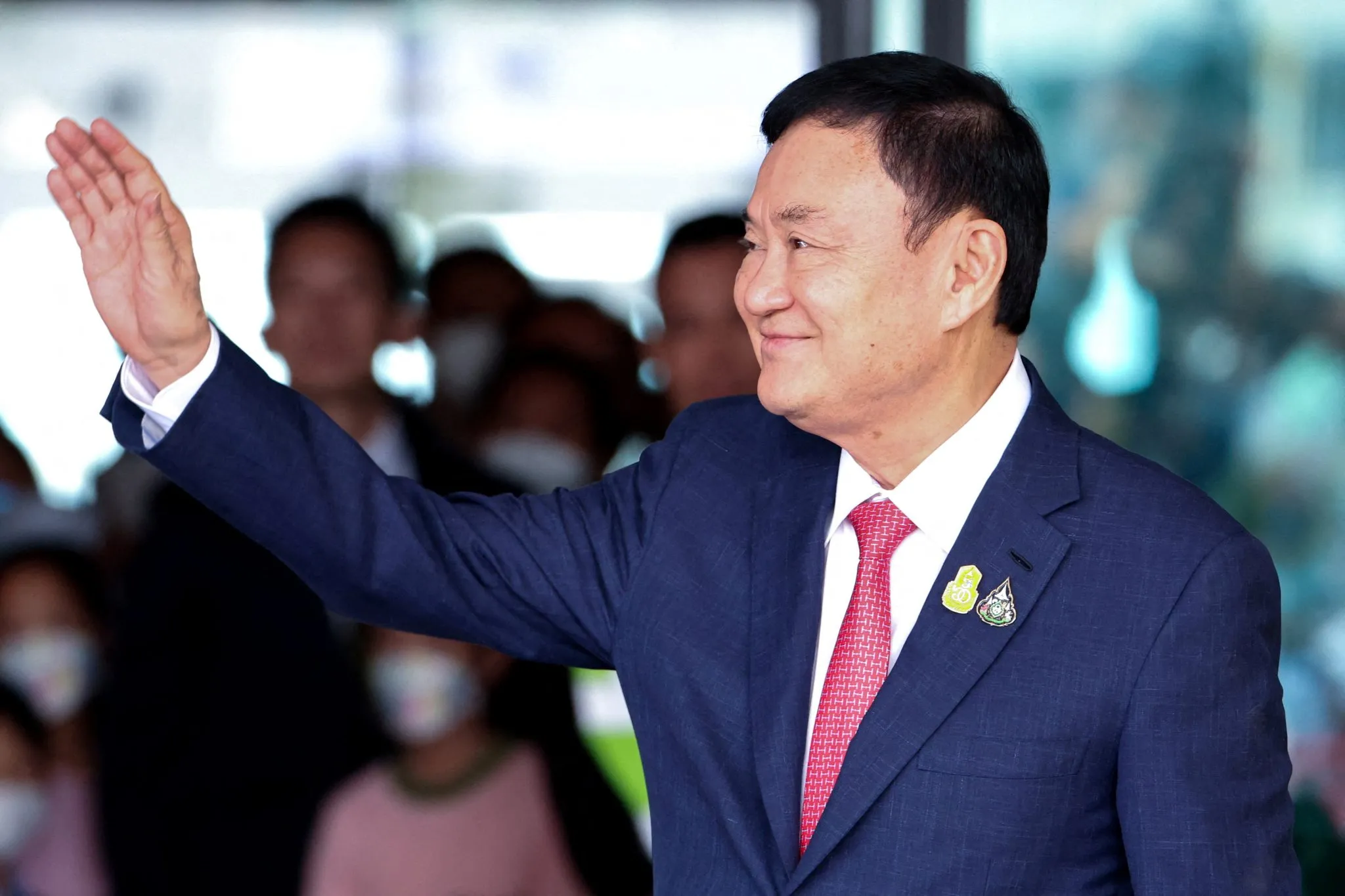
The Shinawatra family’s impact on Thai politics stands out as one of the most significant—and divisive—elements of the country’s 21st-century history, marked by a pattern of sweeping election victories repeatedly disrupted by judicial or military interventions.

However, the “Shin clan” political movement, which includes Thai Rak Thai, the People Power Party, and Pheu Thai, has faced a significant decline, now only third in the 2026 general election—its lowest standing since its formation. Once a dominant force with a track record of landslide victories, the movement is now struggling with diminished political influence and the emergence of formidable new competitors.

A timeline of the “Shinawatra Era” in Thai politics.

The Rise of Thaksin (1998–2006)

Thaksin Shinawatra, a telecommunications tycoon, disrupted the traditional political establishment with a platform of “pro-poor” policies known as Thaksinomics.

  • 1998: Thaksin founds the Thai Rak Thai (TRT) party.
  • 2001: TRT wins a landslide victory. Thaksin becomes Prime Minister, introducing universal healthcare and rural microcredit.
  • 2005: Thaksin becomes the first PM in Thai history to serve a full term and win a consecutive absolute majority.
  • 2006 (The Turning Point): Mass “Yellow Shirt” protests erupt over allegations of corruption and tax evasion regarding the sale of his company, Shin Corp.
  • September 2006: While Thaksin is at the UN in New York, the military ousts him in a coup.

Proxy Battles and the Red Shirts (2007–2010)

Despite Thaksin being in exile, his political machine remained dominant under new names.

  • 2007: The People’s Power Party (PPP), a TRT successor, wins the election. Samak Sundaravej becomes PM.
  • 2008: Courts remove Samak for accepting payment for a TV cooking show. His successor (and Thaksin’s brother-in-law) Somchai Wongsawat is also removed by the court shortly after.
  • 2010: Pro-Thaksin “Red Shirt” protesters occupy central Bangkok. A military crackdown leads to over 90 deaths.

The Yingluck Era (2011–2014)

The family returned to direct power with Thaksin’s youngest sister, Yingluck, leading the new Pheu Thai Party.

  • 2011: Yingluck Shinawatra becomes Thailand’s first female Prime Minister after another landslide win.
  • 2013: Her government attempts to pass an amnesty bill that would allow Thaksin to return without jail time. This sparks massive “Blue Sky” protests.

  • May 2014: After months of deadlock, the Constitutional Court removes Yingluck for abuse of power. Days later, General Prayut Chan-o-cha leads a military coup.

The Paetongtarn Era (2023–2025)

After nearly a decade of military-aligned rule, the Shinawatras made a dramatic comeback in a shifted political landscape.

  • May 2023: Pheu Thai loses to the Move Forward Party (MFP) in the general election but eventually forms a coalition with former rivals (pro-military parties) to secure the premiership.
  • August 2023: Thaksin Shinawatra returns to Thailand after 15 years in exile. He is sentenced to prison but immediately moved to a hospital and later paroled.
  • August 2024: Following the court-ordered removal of PM Srettha Thavisin, Paetongtarn “Ung Ing” Shinawatra (Thaksin’s daughter) is elected Prime Minister.

Summary of Shinawatra Prime Ministers

Name Relation Term Reason for Leaving
Thaksin Shinawatra Patriarch 2001–2006 Military Coup
Somchai Wongsawat Brother-in-law 2008 Court Order
Yingluck Shinawatra Sister 2011–2014 Court Order / Military Coup
Paetongtarn Shinawatra Daughter 2024–2025 Court Order

The 2026 Election: A Historic Low

  • Campaign and Outcome:
    • Pheu Thai, seeking to restore its popularity, fielded “Dr Shane” Yodchanan Wongsawat (a Shinawatra family member) as its prime ministerial candidate, campaigning with the slogan “Overhaul Thailand—Pheu Thai can do it.”
    • Unofficial results from the February 8, 2026, election indicate Pheu Thai has fallen to third place, signaling it is no longer the dominant party capable of forming a government.
  • Key Factors Contributing to the Decline:
    • Rise of New Parties: The emergence of new progressive parties, such as the People’s Party, with liberal branding and strong appeal to new voters, directly challenged Pheu Thai’s base.
    • Strong Rivals: Bhumjaithai has established a solid voter base and local political power-brokers, positioning it to form a second-term government.
    • Loss of Strongholds: A major upset occurred in Chiang Mai, a long-standing Shinawatra stronghold, where Pheu Thai failed to win a single seat. The People’s Party swept six constituencies, while Kla Tham secured four in remote areas, demonstrating a significant shift in voter allegiances across urban and rural/border regions.
    • Political Instability: The repeated removal of prime ministers through legal and ethical challenges further damaged the party’s image and stability.

Pheu Thai must reflect on these successive electoral defeats, as the “Shinawatra clan” experiences a decline in political influence, while opposing parties strengthen and gain momentum. This shift in the political landscape signals a need for Pheu Thai to reassess its strategies, rebuild its grassroots support, and adapt to the changing demands of the electorate. Failure to address these challenges could further erode its standing, allowing rival parties to consolidate their power and reshape the nation’s political dynamics.

Advertisement
Continue Reading
Click to comment

Leave a Reply

Your email address will not be published. Required fields are marked *

Business

Hundreds of jobs saved as ambulance firms sold in pre-pack deal

Published

on

Business Live

RSM advised on deal for Spark Medical and Medi 4 Ambulance Services

File photo of an ambulance outside the Royal London Hospital in east London

Spark Medical and Medi 4 Ambulance Services operate across the UK(Image: PA)

Hundreds of jobs at a cash-strapped ambulance services group have been saved after a pre-pack deal.

RSM advised on the deal to rescue the operations of Spark Medical and Medi 4 Ambulance Services, which will save more than 375 jobs and secure the services the companies provide to the NHS.

Spark Medical, based in Bromborough, Wirral, provides independent ambulance services and event medical cover across the UK. It employs 97 directly, alongside many subcontractors, and operates up to 50 medical vehicles a day.

Last August, Spark Medical bought West Sussex-based Medi 4 Ambulance Services, which offers patient transport services across the south of the UK.

Advertisement

RSM said: “The combined business has recently faced increased cost commitments and ongoing capital expenditure alongside a reduction in revenue, creating pressures on cash flow.”

That led to a creditors’ administration application on January 19, with Lee Lockwood and James Miller of RSM UK Restructuring Advisory serving as proposed administrators.

They identified a buyer for the two businesses and completed the pre-pack sale on February 6. The buyer has not yet been named, and BusinessLive has contacted RSM for more information.

Lee Lockwood, restructuring advisory partner at RSM said: “The pre-pack sale of Spark Medical Limited and Medi 4 Ambulance Services Limited ensures the continued operations of a large NHS supplier.

Advertisement

“The deal carries significant implications in terms of maintaining public health services and the resilience of local health services, as well as a substantial number of jobs. It marks a positive outcome for the business, its employees and subcontractors and the wider community.”

The most recent abridged accounts for Spark Medical, for the year to March 2024, show the company reported fixed assets of £2.2m, up from £1.9m the year before. Shareholders funds stood at £911k, down from £965k the year before.

The Companies House profile for Spark Medical, not yet updated to reflect the pre-pack deal, shows a Trafford Park company called “Forbidden Festival Europe Master Ltd” had “significant control” over Spark Medical.

Advertisement
Continue Reading

Business

Market Wrap: Sensex snaps 3-day gain, Nifty holds 25,900 as IT selloff dampens sentiment

Published

on

Market Wrap: Sensex snaps 3-day gain, Nifty holds 25,900 as IT selloff dampens sentiment
Benchmark indices Sensex and Nifty ended largely flat on Wednesday, with the 30-share Sensex snapping its three-day gaining streak, while Nifty managed to close marginally higher. The subdued close came amid a sharp selloff in IT stocks, with heavyweights such as TCS, Persistent and Infosys tumbling up to 3%.

The BSE Sensex ended 40 points lower to close the session at 84,234 or 0.05% in the red, while the Nifty 50 gained 19 points or 0.07% points to end the day at 25,954.

Expert views

“Indian benchmark indices traded in a narrow and choppy range after opening on a positive note. Volatility remained contained, and the broader undertone continued to stay constructive. Steady domestic institutional participation, selective earnings-driven buying and signs of stabilising FII flows are providing structural support to the market,” Ponmudi R, CEO of Enrich Money said.

Advertisement

However, the upside remains capped in the absence of a decisive breakout or fresh positive triggers. Sectoral trends were mixed, with banking, auto and healthcare stocks posting strong gains, while IT witnessed broad-based selling pressure, emerging as a key drag on the benchmark indices. Stability in the USD/INR pair is offering macro comfort and helping avert any sharp risk-off reaction. Overall, sentiment remains cautiously optimistic—resilient beneath the surface, yet awaiting a stronger directional catalyst, he added.

Global Markets

European equities edged lower on Wednesday as investors digested a fresh wave of corporate earnings. The pan-European Stoxx 600 was down about 0.2%, with most major regional markets trading in the red. London’s FTSE 100 bucked the broader trend, rising 0.3% as risk-off sentiment pushed investors toward defensive mining and energy stocks.


Global markets are also focused on the U.S. January nonfarm payrolls data. Asia, equities moved modestly higher despite weaker-than-expected Chinese inflation data.
Meanwhile, U.S. stock futures edged up late Tuesday ahead of the delayed jobs report. S&P 500 and Nasdaq 100 futures each gained around 0.2%, while Dow Jones Industrial Average futures rose about 85 points, or nearly 0.2%. The Bureau of Labor Statistics’ January payrolls report was postponed due to the partial U.S. government shutdown that ended on Feb. 3.

Crude impact

Oil prices advanced on Wednesday, supported by rising geopolitical risk as U.S.-Iran talks remained fragile, while improving demand signals from India also helped ease concerns around a potential supply surplus.
Brent crude futures climbed 57 cents, or 0.83%, to $69.37 a barrel by 0711 GMT, while U.S. West Texas Intermediate crude rose 56 cents, or 0.88%, to $64.52.

Advertisement

“Oil retains a bullish tail-risk bid as U.S.-Iran talks continue but remain delicate, keeping the Strait of Hormuz risk premium elevated amid ongoing sanctions pressure, tariff threats linked to Iranian trade and a heightened U.S. military presence in the region,” LSEG analysts said in a report.

Rupee vs Dollar

The Indian rupee ended 0.1% lower at 90.70 per U.S. dollar on Wednesday, compared with its previous close of 90.5775.

(With inputs from agencies)

(Disclaimer: Recommendations, suggestions, views and opinions given by the experts are their own. These do not represent the views of The Economic Times)

Advertisement
Continue Reading

Business

Scripps cost-cutting, AI integration is latest effort to grow earnings

Published

on

Scripps cost-cutting, AI integration is latest effort to grow earnings

FILE PHOTO: E.W. Scripps Co. signage is displayed on a monitor on the floor of the New York Stock Exchange (NYSE) in New York, U.S., on Friday, June 3, 2016.

Michael Nagle | Bloomberg | Getty Images

E.W. Scripps is setting into motion what it calls a transformation plan for the broadcast station company — intended to generate growth for both earnings and its local TV stations.

Advertisement

The company announced Wednesday that it’s targeting growth of between $125 million and $150 million in annual enterprise earnings before interest, taxes, depreciation and amortization by 2028. In order to get there, Scripps will go through a number of cost savings and revenue growth measures that lean on technology, namely artificial intelligence, CNBC can exclusively report.

“This will essentially be a reorienting of the entire company … with a much more agile and efficient cost structure,” CEO Adam Symson said in an interview with CNBC. “We have to act like a media startup. We’ve got to act like the company E.W. founded, because the marketplace cannot bear the legacy pace or legacy thinking.”

The company plans to outline more details about its efforts during its next earnings call with investors on Feb. 26, but Symson described making changes to the newsroom to alleviate journalists from administrative tasks and to focus more on gathering and reporting the news.

The company declined to comment on specific impacts to staffing as a result of the cost cutting, saying potential effects to jobs would be determined over the next several months.

Advertisement

“Everything is on the table, but our goal is to always preserve the journalism and the sales, the two things that make up our customer relationship,” said Symson.

Scripps owns more than 60 local affiliate broadcast stations across 40 markets, including Ion, which has become a broadcaster of the WNBA and other pro sports games.

The company’s stock has dropped 70% in the last five years, a decline not unlike many of its media peers.

The revitalization for the almost 150-year-old Scripps comes as the company — as well as the broadcast industry at large — finds itself at a historically challenging moment.

Advertisement

The broadcast station industry — which also includes publicly traded companies like Nexstar Media Group, Tegna, Sinclair and Gray Media — faces the same challenges as its cable and content studio peers, namely the defection of pay TV bundle subscribers for streaming alternatives.

As a result, the industry has been in pursuit of consolidation as it awaits key regulatory changes. Scripps itself has been an M&A target, with Sinclair recently making a hostile approach to merge with the company. Scripps has rejected such overtures.

Meanwhile, media outlets across print, digital and TV have been in the midst of massive layoffs in the last year. Paramount Skydance has cut thousands of jobs across the company, including at its CBS News, and most recently The Washington Post reportedly told staffers it would eliminate a third of its newsroom jobs.

The rise of AI has also fueled fears about mass layoffs, especially in newsrooms.

Advertisement

In 2024 Scripps announced the creation of an AI team that would report to Laura Tomlin, Scripps’ chief transformation officer. Symson said her first order of business has been to “consolidate technology from across the company.”

Symson said Scripps’ move to implement new technology is not meant to replace journalism jobs with AI, but instead help newsrooms work more efficiently and ensure a long runway for local news.

“This cannot be a cost-cutting exercise in service to incrementally trying to improve margins from cutting product. That has proven to be the beginning of the end,” said Symson. “This really has to be about starting with our consumer understanding, what it is they need out of us, both from our news product as well as our sales product.”

Transformation efforts

This week, Symson gathered 200 leaders from across the company at Scripps’ headquarters in Cincinnati to outline the latest plan, which will be announced more broadly on Wednesday to Scripps employees and investors.

Advertisement

The company will also reaffirm its most recent earnings guidance, noting it expects its 2026 financial performance to be lifted by midterm elections — local broadcast stations rely heavily on political advertising — as well as the airing of the Winter Olympics and upcoming World Cup on its affiliates this year.

Harini Logan, 14, from San Antonio, Texas, receives the trophy from Scripps CEO Adam Symson after winning the annual Scripps National Spelling Bee held at National Harbor in Oxon Hill, Maryland, U.S., June 2, 2022. REUTERS/Jonathan Ernst

Jonathan Ernst | Reuters

This transformation, with the vision tagline, “We Create Connection,” is the latest step in recent years for Scripps to find new avenues of revenue growth.

Advertisement

“Scripps’ transformation effort is not unique, per se. Everyone in the space is cutting costs,” said analyst Dan Kurnos of Benchmark in a recent interview. “Last we checked, broadcast TV wasn’t the most rapidly growing segment of the media ecosystem. It’s just not as bad as cable.”

During a November earnings call with investors, Symson teased further initiatives the team has been working on, calling out its focus on “expense management.”

For the local media division, Scripps said its third-quarter expenses had decreased more than 4% year over year and the networks business saw expenses drop 7.5%, both due in part to “lower employee-related costs.”

Yet Kurnos said that Scripps has deviated from its peers with other moves, such as growing Scripps Sports with local media rights. Scripps’ networks now have the rights to air WNBA games, and the company has also been picking up the rights to NHL teams exiting their regional sports networks.

Advertisement

“I think Scripps has been forced to reinvent themselves a few times,” Kurnos told CNBC.

President and CEO of E. W. Scripps Company, Adam Symson poses for a photo with WNBA Commissioner, Cathy Engelbert.

Courtesy: Scripps

While Scripps has rejected a merger with Sinclair, the company has been doing smaller deals on its own, such as offloading stations and a station swap with Gray Media, which is still pending approval. This week the company also agreed to sell its Court TV network for less than $125 million, according to a person familiar with the matter who declined to be identified speaking about internal matters.

Advertisement

Symson acknowledged the need for consolidation as the industry forges ahead into a new era. But he fell short of saying it was a necessity, at least for Scripps, as some of his peers have said on recent public calls.

“Responsible consolidation is important for the industry, without question. But make no mistake about it, it is financial engineering,” said Symson. “It will create a tail wind for our business that investors should appreciate, and we will go after it, but it will not create the organic growth that we are talking about here.”  

Symson’s history at Scripps runs deep and began in the newsroom. He started at the company as an executive producer of investigations and special projects at a Scripps-owned affiliate in Phoenix before joining the corporate parent in 2003 and taking over as CEO in 2017.

The latest transformation efforts follow similar shifts in 2023, when Scripps eliminated some anchor roles, added reporters in smaller markets and increased reporters’ wages, among other changes.

Advertisement

“It is very personal to me. I think at this point, I’m the only CEO of a broadcast company that comes from a journalism background and from the newsroom,” said Symson. “What we do is too important for us to not go on the offense and aggressively transform the company in order to ensure that we’re a company that continues to thrive.”

Disclosure: CNBC parent Versant is carrying NBC Sports-produced Olympic coverage on its networks, including USA Network and CNBC.

Continue Reading

Business

Apura Ingredients names new business development manager

Published

on

Apura Ingredients names new business development manager

Leo Aguado joins the company.

Continue Reading

Business

10 Things You Must Know About America’s Freestyle Skiing Sprint Sensation

Published

on

Jaelin Kauf

Jaelin Kauf didn’t just ski; she attacked. On a day where the defending Olympic champion, Jakara Anthony, faltered under the immense pressure of the Italian Alps, Kauf remained a picture of technical violence and speed. Clocking the fastest time of the day at 24.88 seconds, Kauf’s aggressive line through the bumps and her signature “cork 720” aerial secured her a score of 80.77, second only to her teammate’s historic gold-medal run.

Jaelin Kauf
Jaelin Kauf

With this performance, Kauf becomes the first American woman to win back-to-back Olympic silver medals in moguls. Here are 10 essential facts you need to know about Jaelin Kauf’s incredible journey and today’s historic victory.

1. The 2026 Silver Medal & The “U.S. Sweep”

Today’s final in Livigno was the first time in Olympic history that two American women finished in the top two spots in freestyle skiing. Kauf’s silver, paired with Elizabeth Lemley’s gold, cemented a new era of American dominance. Despite being the veteran of the team, Kauf’s raw speed remained unmatched, forcing her younger rivals to push their technical limits just to keep pace.

2. Back-to-Back Olympic Silver (2022 & 2026)

Kauf has now matched her Silver Medal from the Beijing 2022 Games. In Beijing, she was the first American to medal in those Games, breaking a long drought for the U.S. moguls team. Her consistency across two vastly different Olympic cycles—one defined by COVID-19 isolation and the other by the roaring crowds of Italy—proves she is a generational talent.

3. “Robo-Kauf” Genetics: Born into Ski Royalty

Jaelin’s prowess is in her blood. Her parents, Scott Kauf and Patti Sherman-Kauf, were both professional mogul champions in the 1980s and 90s. Scott, nicknamed “Robo-Kauf” for his mechanical precision, was a five-time World Pro Mogul Tour champion. Patti was a three-time champion and an X-Games medalist in skicross. Unlike the Beijing Games, her parents were in the stands today in Livigno to watch her take silver in person.

Advertisement

4. The Fastest Woman on the World Cup Circuit

Kauf is universally recognized as the fastest woman on the moguls circuit. While many skiers focus on “absorbing” bumps to stay technical, Kauf “skis like a sprinter.” Her ability to maintain control while carrying unprecedented speed into the bottom air section is what separates her from the field and makes her the “time-score” benchmark for every competition.

5. The Dominant 2024–2025 “Triple Crown” Season

Leading up to these Olympics, Kauf had the best season of her career. In 2025, she became the first American since Hannah Kearney (2015) to win all three FIS Crystal Globes: the Moguls globe, the Dual Moguls globe, and the Overall Freestyle globe. She won 8 of 16 World Cup events last season, doubling her career win total in a single calendar year.

6. 2025 Dual Moguls World Champion

In March 2025, Kauf finally broke her “silver streak” at major championships by winning the Gold Medal in Dual Moguls at the FIS Freestyle World Championships in St. Moritz. This victory established her as the heavy favorite for the newest Olympic discipline.

7. Education: The University of Utah

While competing at the highest level, Kauf has been pursuing a degree in Environmental and Sustainable Studies at the University of Utah. She has used her platform to advocate for climate action through organizations like Protect Our Winters, highlighting the direct threat rising temperatures pose to the mountain communities she calls home.

Advertisement

8. The “Deliver the Love” Philosophy

Glued to the back of Kauf’s helmet is her personal motto: “Deliver the Love.” It serves as a reminder to prioritize the joy of skiing over the crushing pressure of the podium. After her run today, she embraced Elizabeth Lemley, personifying the mentorship and sportsmanship she has brought to the U.S. Ski Team for over a decade.

9. Technical Mastery: The Signature Cork 720

In today’s final, Kauf’s “top air” was a high-consequence cork 720 (two full rotations while off-axis), a trick that once gave her trouble in earlier qualifiers. Her ability to nail the landing and immediately transition back into a high-speed mogul line is why she remains a “judging favorite” for both air and turns.

10. The Mission Isn’t Over: Dual Moguls Debut

While the individual event is finished, Jaelin Kauf’s 2026 Olympic story has one chapter left. On Saturday, February 14, she will compete in the Olympic debut of Dual Moguls. As the reigning World Champion in this head-to-head format, Kauf is the odds-on favorite to finally secure the one thing missing from her trophy case: Olympic Gold.

Milano Cortina 2026: Women’s Moguls Final Results (Feb 11)

Rank Athlete Country Score
1 (Gold) Elizabeth Lemley USA 82.30
2 (Silver) Jaelin Kauf USA 80.77
3 (Bronze) Perrine Laffont FRA 78.00
Advertisement
Continue Reading

Business

Children’s camp – how to choose?

Published

on

camp

Singapore is a bustling city filled with opportunities for learning and exploration. Unique scientific Holiday camp in Singapore is held in the city, offering children of all ages a chance to explore the wonders of science and technology.

The camp provides a unique opportunity for children to learn about the world around them. Participants are encouraged to take part in various activities and experiments, giving them a hands-on experience of the scientific concepts they are taught.

How’s it going?

The camp is organized by a team of experienced teachers and scientists, all of whom have an extensive knowledge of the subjects they teach. They make sure that the children understand the concepts and apply them in their day-to-day lives. The camp also provides a platform for students to interact with each other and learn from each other.

The camp has a range of activities to suit all interests. These include field trips to Singapore’s natural habitats, such as the rainforest and the mangroves. Students also get to take part in educational workshops, where they can learn about the science behind the natural environment.

Advertisement

What are the benefits of camp for children?

In addition to the field trips, the camp also offers a range of interactive activities, such as building robots and creating coding projects. These activities are designed to stimulate the imagination and encourage creative thinking. They also provide the perfect opportunity for children to explore their own talents and interests.

The camp also offers a range of social activities, such as sports, art, and music. These activities are designed to help children develop their social skills and make new friends.

The camp is a great way for children to experience the wonders of science and technology in a fun and safe environment. It is also a great way for them to learn about the world around them and develop their own skills and interests.

Advertisement

In addition to these advantages, there are other important benefits such as:

  • A scientific camp for children helps them to think outside of the box and come up with creative solutions to problems. It also encourages them to think critically about the world around them and develop their own ideas.
  • Scientific camps for children are a great way for children to meet other like-minded children and make new friends.
  • Many scientific camps for children include field trips to explore the natural environment, giving children a hands-on experience of the concepts they are taught. It also provides a platform for students to interact with each other and learn from each other.

What are the conclusions?

Overall, scientific camps for children are a great way to introduce them to the wonders of science and technology. They provide a safe and fun environment for children to explore and learn about the world around them. They also teach children about the history and culture of their country, help them to develop their social skills, and give them the opportunity to make new friends.

Continue Reading

Business

Cardiff Parkway train station project expected to secure major UK Government funding boost

Published

on

Business Live

Engineering giant Rolls-Royce has appraised the scheme’s business park element as ticking all the right boxes for a major hub with the potential to create thousands of high-skilled jobs

An artist's rendering of a modern train station featuring a spacious platform with individuals walking and a glass-enclosed pedestrian bridge connecting the station to another structure. Various trains are depicted, some arriving and others departing.

(Image: Wilkinson Eyre)

The planned Cardiff Parkway new mainline train station at St Mellons in Cardiff is expected to secure a major boost from the UK Government.

The project, which secured planning permission last year from the Welsh Government, would be integrated into a business park that, over the long term, could see around 900,000sq ft of new employment space built – with the potential to support thousands of new jobs.

Advertisement

The funding is expected to be additional to the £445m announced by Chancellor Rachel Reeves in her three-year spending review last summer, which takes effect from April, for rail enhancement projects in Wales.

The Chancellor also referred to the Parkway project, although without a funding commitment, in her Budget back in November and again a month later at the Welsh Government’s Investment Summit.

In the spending review the UK Government in comparison has set aside £1bn towards development work for rail enhancement projects in the north of England, which over the long-term is expected to see investment of £45bn.

The Parkway announcement is expected to be confirmed alongside publication of Transport for Wales’ new vision document, endorsed by the Wales Rail Board, which will outline a pipeline of rail enhancement projects seeking further UK Government funding.

Advertisement

It is understood that the vision document, which was expected to published later this week, has been pushed back a few weeks. Projects included will be the removal of level crossings to speed up train times on the North Wales Mainline, increased services from Wrexham to Liverpool, and further phases of the South Wales Metro, where the £1.1bn electrification of the Core Valley Lines is close to completion.

Further investment is need to ensure four services per hour (currently just two) on the most densely populated parts of the network on the Coryton and City Lines that run through Cardiff.

READ MORE: Largest ever number of renewable projects in Wales backed in UK Goverment auction roundREAD MORE: Admiral invests in fund backing growth of UK mid-market firms

The Cardiff Parkway project is being driven by Cardiff Parkway Developments, which is owned by financial services giant Investec, the Roberts family and the Welsh Government, which has a minority 10% interest.

Advertisement

Due to the protracted time it took the Welsh Government to make a favourable planning decision – for which a number of previous ministers had little appetite to see approved – the cost of the train station element and required rail corridor investment has increased from the initial projection.

Work is still required on the final design of the station, as well as confirmation of the number of trains that could call there.

The station would serve some of the most deprived communities not only in Cardiff, but across Wales, including Trowbridge, Rhymney, Llanrumney and St Mellons.

The funding required for the train station and related road and utility infrastructure to serve the business park – where buildings would be developed on a pre-let basis – is around £180m.

Advertisement

Transport for Wales (TfW) would take a long lease to run the station, with a privately funded securitisation deal against future rents providing upfront capital. TfW’s leasing costs would be covered by increased rail ticket sales and car parking income.

More detailed work is required to assess the number of trains that could stop at the station, which in turn would impact car parking offset income.

For the business park element, as the site is included in the Cardiff and Newport UK Government-backed investment zone, some of the required infrastructure could be financed through tax increment financing.

This allows borrowing against future business rates generated by new companies attracted to the park.

Advertisement

Unlike investment zones in England where 100% of business rates are retained for further investment, the Welsh Government intends to keep half of the rates raised.

The zone will be overseen by the Cardiff Capital Region.

A simpler funding model for Parkway Station would be for Network Rail to take over ownership of the station itself, or potentially for Transport for Wales (TfW) to do so as a devolved asset.

This would allow Cardiff Parkway Developments to focus on attracting new investment into the integrated business park.

Advertisement

There is already strong interest from engineering giant Rolls-Royce, which has appraised the site as ticking all the right boxes for a potential new hub investment that could create thousands of high-skilled jobs.

It has appraised Parkway’s planned business park positively due to its own train station, access to a skilled workforce, nine universities across south Wales and the west of England, and the security afforded by a 200-acre site with close rail proximity to both Cardiff and Bristol.

The company has already established a satellite office at a nearby business park in St Mellons for its Submarines division, which will eventually create 200 jobs.

While it continues to assess the site for further investment, clarity around the station would only strengthen the case for a hub development.

Advertisement

Of the £445m announced last year by the Chancellor for rail enhancement projects, £90m is allocated for development work to build cases for further investment.

It also includes £77.87m from the Department for Transport for the upgrade of Cardiff Central Station.

The remainder of the cost, despite it being a non-devolved rail asset, will be funded by the Welsh Government and the Cardiff Capital Region. This leaves only around £300m from the spending review allocation for Wales.

The planned Burns stations between Cardiff and the Severn Tunnel – recommended by the Lord Burns Commission, set up by the Welsh Government after it decided not to proceed with the £1bn M4 Relief Road – have an estimated cost of around £70m each (with Magor expected to be lower).

Advertisement

As a result, there is insufficient funding to deliver all of the Burns stations, let alone other projects.

However, an announcement on Parkway would be a step in the right direction, although it would need to be followed by further fundingcommitments from the UK Government.

Speaking recently to the Senedd’s Climate Change, Environment and Infrastructure Committee, TfW chairman Vernon Everitt said the current spending review envelope of £445m for rail projects in Wales needs to be built on significantly.

Advertisement
Continue Reading

Business

Kraft Heinz hits pause on separation

Published

on

Kraft Heinz hits pause on separation

New CEO pivoting away from previously announced plan. 

Continue Reading

Business

Delinquencies in commercial mortgage-backed securities rise

Published

on

Delinquencies in commercial mortgage-backed securities rise

Key Points

  • Delinquencies in commercial mortgage-backed securities rose again in January, up 17 basis points from December to 7.47%, according to Trepp.
  • The increase was driven by the beleaguered office sector, which has a lot of distressed properties to work through but is seeing improvements in fundamentals.
  • The rate increase was driven by two exceptionally large New York City properties: Worldwide Plaza and One New York Plaza. 

Continue Reading

Business

Oatly loses ‘milk’ branding battle in UK Supreme Court

Published

on

Oatly loses ‘milk’ branding battle in UK Supreme Court

Plant-based drinks maker Oatly has lost a long-running legal fight over its use of the word “milk” in marketing, after the UK Supreme Court ruled that it cannot trademark or use the slogan “post-milk generation” in connection with dairy alternatives.

The case, brought by Dairy UK, centred on whether the term “milk”, which is protected under EU-derived food labelling rules still in force in the UK, can be used in a trade mark for plant-based products.

On Wednesday, the UK Supreme Court upheld an earlier Court of Appeal ruling that “milk” is a reserved term that can only refer to animal-derived products. Judges said the phrase “post-milk generation” could confuse consumers about whether Oatly’s products were entirely milk-free or merely contained reduced levels of dairy.

The decision reinstates the original position of the UK Intellectual Property Office (UKIPO), which had refused Oatly’s 2021 trade mark application.

Oatly’s UK and Ireland general manager, Bryan Carroll, criticised the outcome, calling it “a way to stifle competition” that creates “an uneven playing field for plant-based products that solely benefits Big Dairy”.

Advertisement

Under the ruling, Oatly must cancel its UK trade mark registration for “POST MILK GENERATION” and cannot use the phrase to market dairy-free alternatives. However, because the regulation applies only to food products, the company is still permitted to sell pre-existing merchandise such as T-shirts bearing the slogan.

The dispute reflects a broader regulatory framework under which certain food designations, including milk, cheese, butter and yoghurt, are legally reserved for animal-derived products. Although the UK has left the EU, the relevant regulation continues to apply as “assimilated law”.

Richard May, partner at law firm Osborne Clarke, said the ruling confirms the UK’s alignment with EU standards. “The key principle is straightforward: if a product is not derived from animal milk, it cannot be marketed using reserved dairy designations such as ‘milk’ or ‘cheese’,” he said.

Laurie Bray, senior associate and trade mark attorney at Withers & Rogers, said the judgment was decisive. “It has taken the highest court in the land to decide once and for all whether a plant-based milk alternative can be branded as ‘milk’. The outcome is not what Oatly was hoping for,” she said.

Advertisement

Bray added that the ruling may prompt Dairy UK or its European counterparts to challenge Oatly’s EU trade mark registrations covering similar wording.

The case comes amid growing debate across Europe over the labelling of plant-based foods. Last year, the European Parliament voted to tighten rules on the use of terms such as “oat milk” and “veggie burger”, although the measures have yet to be formally adopted.

European farming groups argue that such terms mislead consumers and dilute established product definitions. Environmental campaigners and alternative protein producers, by contrast, have warned that overly restrictive labelling harms innovation and sustainability goals.

For UK plant-based brands, the Supreme Court’s decision sends a clear signal. While factual descriptors such as “dairy-free” remain permissible, the use of protected dairy terminology in branding or trade marks is likely to face legal challenge.

Advertisement

The ruling marks the end of a protracted dispute for Oatly, and underscores how regulatory definitions can shape the fast-growing plant-based food and drink market.

Advertisement
Continue Reading

Trending

Copyright © 2025