Connect with us
DAPA Banner
DAPA Coin
DAPA
COIN PAYMENT ASSET
PRIVACY · BLOCKDAG · HOMOMORPHIC ENCRYPTION · RUST
ElGamal Encrypted MINE DAPA
🚫 GENESIS SOLD OUT
DAPAPAY COMING

Business

AI Euphoria, Fed Signals and Oil Politics: David Roche warns markets may be ignoring bigger risks

Published

on

AI Euphoria, Fed Signals and Oil Politics: David Roche warns markets may be ignoring bigger risks
Global markets continue to shrug off macroeconomic uncertainties, buoyed by optimism surrounding artificial intelligence and easing concerns over inflation. But David Roche from Quantum Strategy believes investors may be overlooking deeper structural risks that could eventually reshape financial markets.

Speaking to ET Now, Roche discussed the US Federal Reserve‘s latest stance, the AI investment boom, geopolitical developments involving Iran, and the outlook for global technology spending.

Fed’s inflation fight supports market confidence
Roche said the Federal Reserve’s commitment to fighting inflation has strengthened confidence in the US dollar while keeping long-term inflation expectations in check.”People assume that the Fed will continue to fulfil its inflation mandate ahead of anything else. Therefore, interest rates… will not be cut, at least not at the moment… That helps markets because it gives confidence in the dollar.”

AI Boom May Be Unsustainable
While acknowledging AI’s transformative potential, Roche argued that the scale of investment has become excessive and could eventually hurt markets.
“AI is… a bubble. Not because it is not a good product, but because the amount of money being poured into it is not rational and will not be remunerated by profits.”He warned that a correction in AI investments could have far-reaching consequences for both markets and the broader economy.

Oil Relief, But Strategic Risks Remain
Roche said markets are welcoming the resumption of oil flows as lower crude prices would ease inflationary pressures.

Advertisement

“Traders love the oil flowing. The oil prices are going to come down, lower inflation, less increases in interest rates.”

However, he sharply criticised the broader agreement.

“The MoU is a bad, bad, bad deal. It puts Iran in charge of the Gulf… and essentially puts the Iranians… back in the dollar flow.”

Trump’s Priority Is Lower Oil Prices
Asked whether the agreement is effectively an exit strategy for the United States, Roche answered in the affirmative.

Advertisement

“Trump needs this deal because he needs lower oil prices… The Iranians… need the dollars. The reason the deal will hold is because the two parties have a common interest.”

He added that the agreement strengthens Iran’s strategic position despite helping stabilise oil markets.

Inflation Likely to Stay Contained
Roche believes the recent rise in inflation is likely to prove temporary as oil prices ease and the Federal Reserve remains focused on price stability.

“The reason for the oil prices to go up has now been removed. There will be more oil and lower prices… The Fed made it quite clear that they were going to fight any inflation.”

Advertisement

Technology Spending Faces a Reality Check
Commenting on the outlook for the technology sector, Roche said his concern is not with AI itself but with the unprecedented level of capital being committed to it.

“What I see on IT is a great product being financed with complete excesses… We have over a trillion dollars being dedicated to IT.”

He cautioned that the economics behind these investments may ultimately disappoint investors.

“My concern about IT is not that it is not a good product. It is a great product… Nobody is going to pay the amount of money that would have to be paid to actually pay back this capital.”

Advertisement
Continue Reading
Click to comment

You must be logged in to post a comment Login

Leave a Reply

Business

ServiceNow: The AI Threat Is Overstated

Published

on

HubSpot: Believe The Transition, But Wait For Confirmation

ServiceNow: The AI Threat Is Overstated

Continue Reading

Business

New leader of the Welsh Local Government Association

Published

on

Business Live

Leader of Torfaen Council has taken up the role

Anthony Hunt.(Image: Welsh Labour)

The Welsh Local Government Association (WLGA) has appointed Anthony Hunt as its new leader.

Mr Hunt, who has been leader of Torfaen County Borough Council since 2016, has held the finance and resources brief at the association for over a decade.

Advertisement

The representative body for the 22 local authorities in Wales said that local government in Wales is facing ongoing financial and service pressures.

It is calling on the new Plaid Cymru Welsh Government for fair, multi-year funding, stronger support for prevention, sustainable social care, investment in housing and education, highways and a greater focus on rural communities and connectivity. Mr Hunt said: “It is an honour to take on this role at such an important time for local government in Wales

“Councils are ready to work in partnership with the new Welsh Government to deliver for our communities. We were pleased to welcome Siân Gwenllian the new Local Government Minister, to our annual general meeting recently, and we are grateful for that engagement, which reflects the importance of an ongoing partnership between local and national government.

“That partnership has to be built on stability and trust. We need fair, multi-year funding settlements that allow us to plan properly, invest in prevention, and focus on long-term outcomes.

Advertisement

“Local government is at the heart of delivering the services people rely on every day, such as social care, housing, education and support for vulnerable families, and demand for those services continues to rise.

If we are serious about strengthening communities, then we must invest properly in those foundations.

“By working together across government, we can shift more focus towards prevention, strengthen the sustainability of social care, tackle the pressures in education, and ensure every community, including rural areas, has access to the services and infrastructure they need.”

“This is about turning shared priorities into real outcomes. Councils stand ready to play our full part in building stronger, fairer and more resilient communities across Wales.”

Advertisement

Cabinet Minister for Local Government, Housing and Planning, Siân Gwenllian, said: “I warmly welcome Anthony Hunt as the new leader of the WLGA. Local government is at the heart of everything we want to achieve for people across Wales.

“Delivering the homes and public services that communities depend on requires a strong, equal partnership between Welsh Government and local authorities -and I look forward to working with Anthony to shape a fairer Wales.”

Continue Reading

Business

BE Semiconductor Industries N.V. (BESIY) Analyst/Investor Day – Slideshow

Published

on

OneWater Marine Inc. (ONEW) Q1 2026 Earnings Call Transcript

BE Semiconductor Industries N.V. (BESIY) Analyst/Investor Day – Slideshow

Continue Reading

Business

Exclusive-Meta lobbies Congress for protection from child-harm lawsuits

Published

on

Exclusive-Meta lobbies Congress for protection from child-harm lawsuits


Exclusive-Meta lobbies Congress for protection from child-harm lawsuits

Continue Reading

Business

Higher inflation drives jump in UK budget deficit in May

Published

on

Higher inflation drives jump in UK budget deficit in May


Higher inflation drives jump in UK budget deficit in May

Continue Reading

Business

Weebit Nano Shares Jump 6.6% as ASX Semiconductor Stock Extends Run on ReRAM Momentum

Published

on

Weebit Nano Shares Jump 6.6% as ASX Semiconductor Stock Extends

Shares of Weebit Nano Ltd rose 6.61% on Friday, climbing 53 cents to close at $8.55, as the Sydney-based semiconductor memory technology company continued to attract strong investor interest on the back of expanding commercial partnerships, accelerating revenue growth, and a steady stream of capital raises supporting its push toward mass-market deployment of its core memory technology.

A Company Built Around Next-Generation Memory Chips

Weebit Nano Ltd is an Australia-based developer and licensor of advanced semiconductor memory technology. The company’s Resistive RAM, or ReRAM, addresses the growing need for higher performance and lower power non-volatile memory solutions in a range of new electronic products, such as Internet of Things devices, smartphones, robotics, autonomous vehicles, fifth-generation communications, and artificial intelligence.

Weebit Nano develops its non-volatile memory using a resistive random access memory technology based on fab-friendly materials, with operations in South Korea and the United States. The company was incorporated in 2010 and is headquartered in Sydney, Australia. As of mid-June, the company carried a market capitalization of approximately $1.86 billion.

Advertisement

A Landmark Deal With Texas Instruments

Among the most significant recent catalysts behind the stock’s rally has been a licensing agreement with one of the world’s largest semiconductor manufacturers. Weebit Nano has attracted fresh attention after licensing its resistive random access memory technology to Texas Instruments, alongside issuing 2026 revenue guidance that targets minimum revenue of A$10 million.

That agreement came following a period of mixed share price performance, with the stock posting a 17.5% one-month return and a 9.81% three-month return ahead of the announcement, underscoring how individual commercial milestones have continued to drive outsized moves in the stock even amid broader volatility.

Chip Tape-Outs Mark a Key Commercial Milestone

Advertisement

Beyond the Texas Instruments partnership, the company has also reported significant progress in moving its technology from the development stage toward actual commercial production. Weebit Nano shares jumped after the company revealed fresh commercial progress for its ReRAM chip technology, with two customers moving from development to actual chip tape-outs, signaling growing confidence that the memory technology is nearing real-world deployment. One customer, Overlord Labs, has already received a functional prototype, while a second customer has validated its initial silicon.

Both customers are set to run 12 to 18 months of testing before potential mass production, and Weebit Nano expects additional tape-outs later this year, which could further boost investor optimism.

Tape-out by product customers is an important milestone on the path to mass production and marks the achievement of one of the three 2026 targets set at Weebit’s 2025 Annual General Meeting.

Strong Investor Demand Through Repeated Capital Raises

Advertisement

Weebit Nano has repeatedly turned to equity markets to fund its expansion, with each raise typically met by strong demand from both retail and institutional shareholders. Shares in the ASX technology company previously raced more than 20% higher in a single session after the company announced it had raised an additional $15 million and a new major shareholder emerged. The company said in a statement to the ASX that a share purchase plan priced at $4.05 per share had raised the new funds, bringing the total raised, including an institutional placement, to $102 million.

Weebit Nano Chief Executive Officer Coby Hanoch said at the time: “The Board and I are incredibly grateful for the strong support we continue to receive from our loyal retail shareholder base.” He noted that the company was at an exciting juncture in its history, with AEC-Q100 automotive-grade qualified ReRAM and multiple licensing agreements with leading foundries.

A more recent AUD 87 million capital raise is set to fund the company’s technology, AI, and commercial expansion over the next three years, as Weebit aims to widen its lead in ReRAM and in-memory compute, with new fabrication deals expected amid strong industry momentum.

The company has continued to expand its equity base incrementally through routine share issuances as well. Weebit Nano applied to the ASX for quotation of 666,509 new fully paid ordinary shares issued following the exercise or conversion of existing options or other convertible securities on June 2 and June 4, 2026, marginally expanding the company’s free float and equity base.

Advertisement

Accelerating Revenue Growth

While Weebit Nano remains a pre-profitability company, its underlying revenue trajectory has shown dramatic improvement in recent reporting periods. In fiscal year 2025, Weebit Nano’s revenue reached 4.41 million, an increase of 333.23% compared to the previous year’s 1.02 million. Losses totaled 38.38 million, a 6.94% improvement compared to 2024.

More recently, revenue surged to AUD 5.4 million over two years, with record receipts and a strong cash position. ReRAM adoption has been accelerating, particularly in analog, automotive, and AI applications, as the company prepares for what it describes as a major market inflection point.

A Dramatic Share Price Trajectory

Advertisement

The stock’s broader trajectory over the past year illustrates just how significantly investor sentiment toward Weebit Nano has shifted. Weebit Nano shares have appreciated from lows of $1.43 over the past 12 months, a remarkable run that has transformed the company from a speculative small-cap technology stock into one of the more closely watched names within the ASX semiconductor sector.

Trailing total shareholder returns have reached as high as 372.86% over certain measurement periods, dramatically outperforming the broader S&P/ASX 200 benchmark over the same stretch.

A Speculative but Closely Watched Stock

Despite the company’s growing list of commercial partnerships and improving revenue figures, Weebit Nano remains, by traditional valuation metrics, a richly priced and speculative investment. The stock currently carries a price-to-sales ratio of 176.58 and a price-to-book ratio of 27.25, with no meaningful trailing or forward price-to-earnings ratio given the company’s ongoing losses.

Advertisement

That valuation profile reflects a market that continues to price Weebit Nano based primarily on the long-term commercial potential of its ReRAM technology rather than on current financial performance — a dynamic common among early-stage semiconductor licensing companies whose primary value proposition lies in intellectual property and design partnerships rather than near-term product revenue.

What Comes Next

With multiple customer tape-outs already underway and additional milestones expected later this year, investors will be watching closely to see whether Weebit Nano can convert its growing list of licensing agreements — including its recent deal with Texas Instruments — into sustained revenue growth that more closely justifies its current market valuation. Given the company’s track record of significant single-day share price moves tied to individual commercial and capital-raising announcements, Weebit Nano appears likely to remain one of the more volatile, closely tracked names among ASX-listed semiconductor and technology stocks in the months ahead.

Advertisement
Continue Reading

Business

Nutex Health: Good Value But Regulation Reliant

Published

on

Nutex Health: Good Value But Regulation Reliant

Nutex Health: Good Value But Regulation Reliant

Continue Reading

Business

At Close of Business podcast June 19 2026

Published

on

At Close of Business podcast June 19 2026

Nadia Budihardjo speaks with Claire Tyrrell on the success of architecture practice Hames Sharley.

Continue Reading

Business

Australian Beef Hit With 55% China Tariff After Hitting Import Quota in Record Time

Published

on

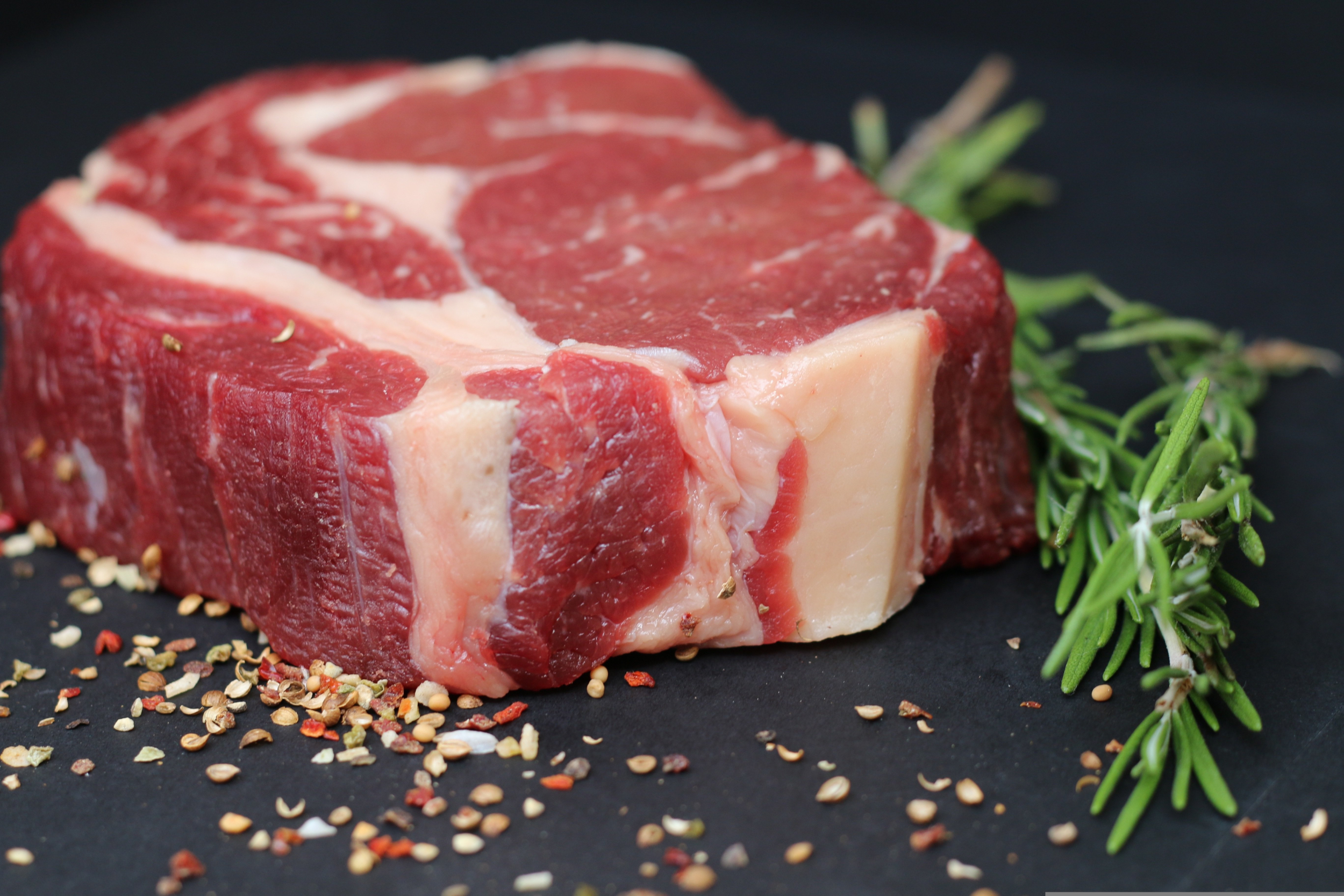
Australian beef

CANBERRA, Australia — Australian beef exports to China will face an additional 55% tariff starting this weekend, after the country’s shipments hit Beijing’s annual import quota in record time, a development that could significantly disrupt trade flows and push producers to seek out new markets for their red meat.

The tariff comes after Australian exports hit Beijing’s annual quota limit, a development that could impact trade flows and prompt producers to seek new markets for red meat. The Chinese Ministry of Commerce announced that the 205,000-tonne safeguard had been hit as of Thursday, June 18, with the 55% tariff set to take effect at midnight on June 20.

A Quota Hit Faster Than Expected

The speed at which Australian exporters reached the threshold caught much of the industry by surprise. On June 16, 2026, Australia crossed the 205,000-tonne limit set by China for Australian beef imports this year. The news came just two weeks after China’s Ministry of Commerce announced that Australian shipments had already reached 90% of the annual quota as of June 1. The final 10% was consumed quickly, and the threshold was crossed sooner than some in the industry had expected.

Advertisement

Beef exports have hit the Chinese quota in record time.

The Origins of the Quota System

The Chinese government in December imposed a quota of 205,000 tons on beef imports from Australia as part of a range of trade limits on major red meat-producing nations, including Brazil and Argentina, in a push to protect local farmers.

China introduced a three-year beef safeguard system in January 2026, setting import quotas for several major exporting countries, including Australia, Brazil, Argentina, New Zealand, Uruguay, and the United States. The system was introduced to protect China’s domestic beef industry, with Chinese farmers having faced pressure from rising import volumes that pushed down local prices and made it harder for domestic producers to compete.

Advertisement

Beijing introduced the quota system following a safeguard investigation into beef imports. Under the arrangement, a set volume of beef from each country enters China at the standard low or zero tariff rate established under existing trade agreements. Once the quota is surpassed, an extra 55% duty applies automatically. For Australia, the 2026 quota stands at 205,000 tonnes, rising slightly in subsequent years before the policy concludes in 2029.

The Scale of the Cutback

The new quota represents a dramatic reduction compared to the volumes Australian exporters had been shipping to China just one year earlier. Australia exported more than 295,000 tonnes of beef to China in the first 11 months of 2025 alone, highlighting the scale of prior trade volumes. The quota for Australia of 205,000 tonnes for 2026 is significantly lower than the volume Australia shipped to China in 2025.

What Remains Exempt

Advertisement

Not all Australian beef products will be subject to the new tariff. The safeguard restrictions do not apply to beef offal, which remains exempt from tariffs, as negotiated under the China-Australia Free Trade Agreement.

Industry sources also suggest a narrow subset of high-value products may continue moving despite the steep new duty. Industry sources say only a small number of product types might still make financial sense under a 55% tariff. High-end Wagyu beef destined for premium food service customers is one example. A handful of specific cuts, such as brisket and short plate, may still be shipped in very small volumes. For the most part, trade will stop.

Industry Reaction

Australian meat industry representatives described 2026 as an unusually difficult year for the sector, citing a combination of factors weighing on producers and exporters alike. “The combination of external trade barriers and rising domestic costs means 2026 is an exceptionally challenging year for the sector,” an industry representative said, according to reporting from Farm Online. “We will continue to work with our members and partners in the Australian government to advocate for improved trading conditions which facilitate a more stable and reliable trade in Australian beef to China.”

Advertisement

Limited Expected Impact on Domestic Cattle Prices

Despite the significant trade disruption the tariff is expected to cause, analysts have suggested the effects on Australian domestic cattle prices are likely to be modest and short-lived, given strong demand from other export markets. Episode 3 meat industry analyst Matt Dalgleish said the tariff would likely lead to a dip in flows to China until mid-November but should have little impact on local cattle prices. “The broader global picture is one of tight supplies and there are several other destinations that will have demand remaining firm,” he said. “We shouldn’t see too much price weakness locally for cattle.”

A Shifting Competitive Landscape

The tariff’s introduction is also expected to reshape competitive dynamics among beef exporters within the Chinese market, potentially benefiting rival suppliers from other countries whose own quotas have not yet been triggered. While Australian exports will face the significant 55% tariff for the remainder of 2026, this could make expensive U.S. product more price competitive than “Aussie Beef” in Chinese retailers, though the impact on domestic cattle prices is not expected to be notable or to last for long. Beef from New Zealand and Argentina will also be landing in China on a more price competitive footing for the next six months.

Advertisement

Potential Financial Toll for Australian Producers

The broader financial stakes for Australia’s red meat sector are considerable, with some industry estimates pointing to losses well into the billions of dollars if trade volumes to China decline as sharply as expected. Industry groups warn of potential losses exceeding A$1 billion annually if exports to China fall by approximately one-third.

Producers Already Adapting

In anticipation of the quota being reached, Australian producers and exporters had already begun adjusting their strategies in recent weeks. Producers are accelerating shipments, exploring alternative markets in Asia and the Middle East, and investing in value-added products and diversification.

Advertisement

An Equal-Opportunity Safeguard

Australian exporters can take some measure of comfort in the fact that the new tariff regime is not targeted specifically at Australia, but rather applies uniformly across all of China’s major beef trading partners. The safeguard applies equally to Brazil, the United States, Argentina, New Zealand and Uruguay under similar quota arrangements.

What Comes Next

With Australia’s quota now officially exhausted for the remainder of 2026 and the 55% tariff set to take effect at midnight on June 20, the coming months will test how much of the country’s beef trade with China can be sustained through premium product categories and tariff-exempt offal exports. Industry attention will also turn to how quickly producers can pivot toward alternative markets in Asia and the Middle East to offset the expected decline in shipments to what has long been one of Australia’s most important beef export destinations, with the quota system set to remain in place, gradually rising, through 2029.

Advertisement
Continue Reading

Business

UK borrowing in May surges by more than expected

Published

on

UK borrowing in May surges by more than expected

Borrowing is the difference between spending and income from taxes.

Continue Reading

Trending

Copyright © 2025