

Business
Will Sensex, Nifty bounce back on Monday? Iran peace deal risks among 5 factors to drive D-St this week


The Sensex dropped 607 points to settle at 76,802.90, while the Nifty50 fell 155 points to close at 24,013.10. The decline came after both indices had surged as much as 5% over the previous five trading sessions. Here are five key factors that could shape market sentiment in the days ahead.
1. ) US-Iran peace deal on thin ice?
Although the United States and Iran had agreed to a 60-day ceasefire to facilitate negotiations, tensions remained high after Iran’s Islamic Revolutionary Guard Corps (IRGC) announced on Saturday that the Strait of Hormuz had been closed. The U.S. military, however, said commercial shipping traffic through the strategic waterway remained uninterrupted.The developments threaten to complicate efforts to secure an interim peace agreement brokered by Pakistan and signed on Wednesday by U.S. President Donald Trump and Iranian President Masoud Pezeshkian, aimed at ending nearly four months of conflict.

Negotiators from both countries were scheduled to begin talks in Switzerland on Sunday, even as U.S. officials rejected Tehran’s claims that the Strait of Hormuz had been shut.
2. ) Will oil rise again?
Brent crude prices advanced on Friday after scheduled talks between the United States and Iran in Switzerland were abruptly cancelled, highlighting ongoing uncertainty around efforts to convert a temporary agreement into a lasting peace arrangement.
Brent crude futures gained 0.9% to close at $80.57 a barrel. West Texas Intermediate futures were trading 1.23% higher at $77.54 earlier in the day. Oil prices had briefly moved lower after Israel and Iran-backed Hezbollah agreed to a ceasefire.Switzerland’s foreign ministry said the US-Iran talks planned at Bürgenstock on Friday would no longer take place.
3. ) IT selloff to continue?
IT stocks bore the brunt of Friday’s selloff, with Infosys, TCS, Tech Mahindra and HCL Tech tumbling as much as 7%.
The weakness followed an 11% slide in Accenture’s shares on Wall Street after the consulting giant revised its FY26 revenue growth forecast to 3-4% from its earlier guidance of 3-5%. The company also projected fourth-quarter revenue of $17.75 billion-$18.4 billion, below analysts’ expectations of $18.47 billion, according to LSEG data.
The index continues to trade below its key short- and long-term moving averages, while the RSI has slipped below 40, indicating bearish momentum. Additionally, DI- has crossed above DI+ on the ADX indicator, reflecting growing seller dominance. The 27,050–27,000 zone remains a crucial support zone. Any sustainable move below this zone can lead Index extending its weakness further on the downside. The resistance is placed in the 28,250–28,300 zone.
4. ) Will rupee strengthen more?
The rupee ended almost unchanged against the US dollar on Friday after a volatile session. Gains from the unwinding of long dollar positions were offset by weakness in regional currencies and outflows linked to index rebalancing. The currency closed at 94.32 per dollar, little changed from the previous session.
Even so, the rupee registered its strongest weekly performance in 11 weeks, aided by debt inflows. It also recorded its fourth weekly gain in the last five weeks. The currency touched an intraday high of 94.21 as traders cut long dollar positions, but later gave up those gains as the dollar strengthened globally and index-related outflows weighed on sentiment.
“The recent RBI measures together with favourable oil prices following the easing of Middle East tensions helped the rupee remain in positive territory despite significant dollar strength today,” Dhaval Shah, Founder and Managing Director of De-Risk Forex Consultancy, told Reuters.
According to Shah, recent price action suggests that sentiment towards the rupee has improved. “The bias for the rupee has changed and we continue to maintain our forecast of 93.50,” he said.
The rupee has been trending higher since the Reserve Bank of India unveiled measures aimed at attracting dollar inflows two weeks ago.
5. ) FII turn net buyers
Foreign institutional investors turned net buyers during the week, bringing in cumulative inflows of around Rs 3,400 crore despite fluctuations in daily flows. The shift signals an improvement in overseas investor sentiment after a prolonged period of selling and provides support to domestic equities at a time when global risk appetite has improved and geopolitical tensions have eased, says Ponmudi R, CEO of Enrich Money.
Domestic institutional investors continued to provide strong support to the market, purchasing shares worth around Rs 7,100 crore during the week. Their steady buying helped cushion periods of volatility and underpinned the recent market recovery. Combined with the return of positive foreign flows, sustained institutional participation is likely to remain supportive for sentiment in the near term.
Technical set up
According to Sudeep Shah of SBI Securities, the broader trend in the Nifty remains positive as the index continues to trade above its 20-day and 50-day exponential moving averages. The daily RSI is at 58 and remains above its nine-day moving average, indicating that underlying momentum is still favourable despite recent consolidation.
On the downside, the 23,850-23,800 zone is expected to act as immediate support since it coincides with both the 50-day EMA and the 50% Fibonacci retracement level of the recent rally. A decisive break below 23,800 could increase selling pressure and push the index towards the next support level at 23,500.
On the upside, the 24,150-24,200 zone, which aligns with the 100-day EMA, is likely to act as an immediate resistance area. A sustained move above 24,200 could improve bullish sentiment and pave the way for a rally towards the 24,500 mark in the near term.
(Disclaimer: Recommendations, suggestions, views and opinions given by the experts are their own. These do not represent the views of The Economic Times)

Business
9 Sensex stocks with up to 40% upside potential. Are these in your portfolio? – Money Makers

Analyst forecasts often offer more than just numbers; they provide insights into where the next wave of market opportunities may emerge. For investors scanning the Sensex for potential outperformers, the latest analyst consensus highlights several heavyweight stocks that could deliver strong returns over the coming year.
According to Trendlyne data, multiple Sensex stocks show attractive upside potential over the next 12 months based on average analyst target prices. This “upside” represents the expected gain from current levels and serves as a research-backed indicator for investors seeking to position themselves ahead of potential rallies. Among them, nine Sensex stocks stand out, with projected gains ranging from 20% to 40%, suggesting strong return potential in an increasingly selective market.

Last week, the BSE benchmark Sensex jumped 1,274.95 points, or 1.68 per cent.
“Indian equity markets extended their recovery during the week, supported by easing geopolitical concerns, softer crude oil prices, and improving global risk sentiment. Although negotiations remain ongoing and the agreement is yet to be fully implemented, the reduction in geopolitical uncertainty has significantly improved market sentiment,” Ponmudi R, CEO – Enrich Money, an online trading and wealth tech firm, said.
The market valuation of Bharti Airtel surged by Rs 52,432.67 crore to Rs 11,62,963.30 crore, the most among the top-10 firms.
Life Insurance Corporation of India (LIC) added Rs 51,675.23 crore, taking its valuation to Rs 5,56,726.30 crore.
The valuation of Bajaj Finance soared by Rs 26,553.71 crore to Rs 5,98,501.25 crore, and that of Reliance Industries jumped by Rs 22,464.02 crore to Rs 17,71,882.96 crore.
Also Read | Earnings of OMCs seen weak as Q1FY27 under-recoveries bite: Report
The market capitalisation (mcap) of Larsen & Toubro climbed Rs 21,929.12 crore to Rs 5,79,126.95 crore, and that of State Bank of India rallied Rs 16,753.57 crore to Rs 9,55,415.07 crore.
HDFC Bank‘s mcap edged higher by Rs 11,948.72 crore to Rs 12,01,263.14 crore, and that of Hindustan Unilever advanced by Rs 6,661.1 crore to Rs 5,15,946.75 crore.
The valuation of ICICI Bank rose by Rs 4,724.22 crore to Rs 9,66,021.99 crore.
However, the market value of TCS declined by Rs 12,699.49 crore to Rs 7,69,350.13 crore.
Reliance Industries remained the most valued domestic firm, followed by HDFC Bank, Bharti Airtel, ICICI Bank, State Bank of India, TCS, Bajaj Finance, Larsen & Toubro, LIC and Hindustan Unilever.
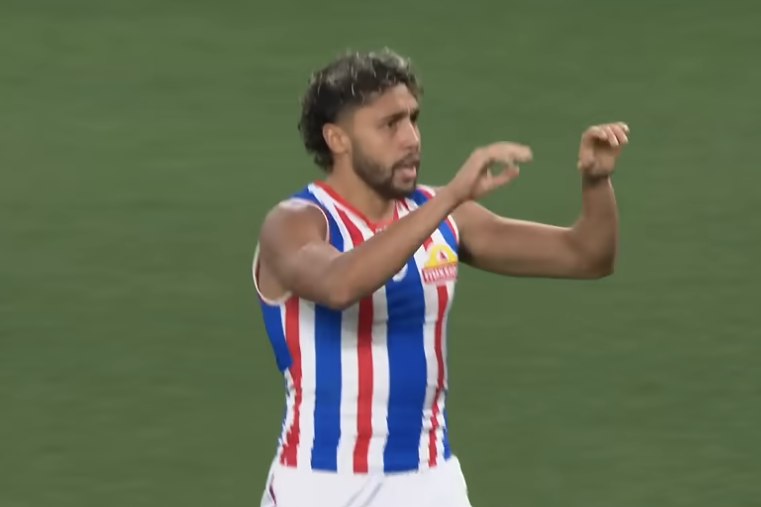
MELBOURNE — The Western Bulldogs secured a much-needed victory in a low-scoring affair, defeating an injury-hit St Kilda side 12.11 (83) to 8.13 (61) at Marvel Stadium on Sunday afternoon. The win propelled the Bulldogs into seventh place on the AFL ladder, keeping their finals hopes firmly alive.
It was a contest that tested the Bulldogs’ resilience from the opening bounce. St Kilda, already battling injuries, lost key players during the game, compounding their struggles in a match they needed to keep their own postseason aspirations on track. The Bulldogs controlled large portions of the game through midfield dominance but had to withstand a Saints fightback before sealing the result late.
Marcus Bontempelli was the standout performer for the visitors, collecting 34 disposals, 13 clearances and booting a goal, including a highlight-reel roving major in the second quarter that brought the crowd to its feet. His leadership and work rate set the tone for a Bulldogs side that has shown glimpses of its premiership pedigree this season. Tom Liberatore’s return added further steel to the midfield, with the veteran gathering 23 disposals and five clearances in his first game back since Round 6.
The Bulldogs jumped out of the blocks, kicking the first three goals of the match, mirroring a pattern St Kilda has endured in recent weeks. However, the Saints responded to trail by just 16 points at halftime. The second half remained a grind, with both teams trading blows in a physical encounter under the closed roof.
St Kilda’s injury woes worsened dramatically. Co-captain Jack Sinclair hobbled off early with a calf injury after recording just one disposal, and scans are expected to determine the severity. Ruckman Tom De Koning, a significant recruit for the Saints, was forced from the field in the second quarter after copping a knee to the ribs in a contest. He briefly returned but was ruled out at halftime. Rowan Marshall also spent time off the ground in the third quarter after a heavy hit in the ruck contest.
Despite the setbacks, St Kilda showed fight, particularly through their forward line and pressure around the ball. However, their inaccuracy and the Bulldogs’ ability to win the stoppages proved decisive. The Saints now sit outside the top eight with a challenging run ahead before their mid-season break.
Western Bulldogs coach Luke Beveridge would be pleased with the four-point haul, especially after recent inconsistencies. The return of Liberatore provided a boost, while players like Matt Kennedy contributed goals and contested work. The Bulldogs’ defense held firm in the final quarter to repel Saints surges and secure the 22-point victory.
This result highlights the competitive nature of the middle of the 2026 AFL ladder. For the Bulldogs (now 9-6), it reinforces their status as a dangerous finals contender when their best players fire. Bontempelli’s performance, in particular, underscores why he remains one of the league’s premier midfielders. His ability to influence contests at both ends of the ground was pivotal in a game lacking high-scoring flair but rich in intensity.
For St Kilda, the afternoon was a reminder of the fragility of their campaign. Coach Ross Lyon faces a significant challenge in managing the injury list while trying to extract more consistency from a group capable of strong performances but prone to slow starts. The loss of Sinclair and De Koning disrupts their structural balance, particularly in defense and ruck. Marshall’s availability will also be monitored closely.
The match statistics reflected the Bulldogs’ midfield control. They won the clearance battle decisively, allowing them to generate repeated forward entries. While St Kilda competed in tackles and contested possessions at times, they struggled to convert opportunities into scores, finishing with more behinds than goals.
Key moments included Bontempelli’s second-quarter goal, which came after a slick handball chain and highlighted the Bulldogs’ transition speed. In the final term, with the margin inside two goals, the Dogs’ experienced heads steadied the ship. Multiple players contributed to the defensive effort, denying the Saints clean looks at goal in the closing stages.
The Bulldogs’ forward setup, bolstered by returning players, provided enough targets to keep the Saints’ defense honest. Kennedy’s presence added another dimension, with his work alongside the likes of Aaron Naughton and others creating headaches for St Kilda’s back six.
This victory comes at an important time for the Western Bulldogs. With several teams jostling for ladder position, every point counts. Their ability to grind out a win in less-than-ideal conditions — against an opponent missing key personnel — bodes well for the business end of the season.
St Kilda, meanwhile, will regroup during the bye period. The club will hope for positive news on their injured stars to mount a late charge. Their home ground advantage at Marvel Stadium has been solid, but on this occasion, it wasn’t enough to overcome the Dogs’ determination and superior midfield.
The game drew a solid crowd to Marvel Stadium, with fans treated to a tough, attritional battle typical of AFL at this level. While not a high-scoring spectacle, it delivered in physicality and highlighted the depth required to succeed in the modern game.
As the season approaches its midpoint, the Bulldogs have positioned themselves well. Consistency remains the key for both sides, but Sunday’s result
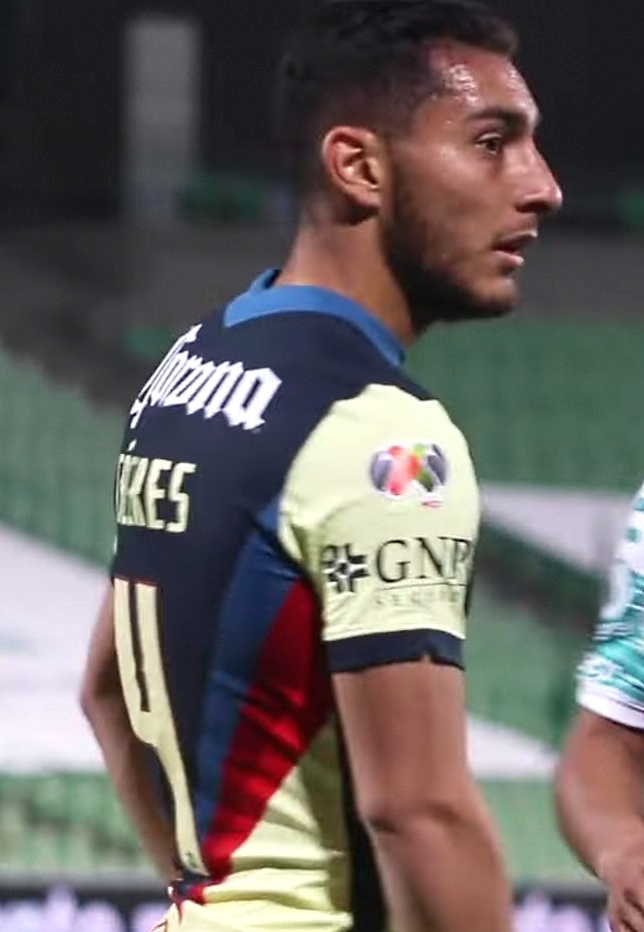
MIAMI GARDENS, Fla. — Uruguay head to Hard Rock Stadium on Sunday, desperate to secure their first victory of the tournament. La Celeste controlled early possession against Saudi Arabia but struggled to convert that dominance into meaningful chances, ultimately settling for a frustrating 1-1 draw. Marcelo Bielsa will demand a far more ruthless attacking display against Cape Verde. With European champions Spain waiting on matchday three, maximum points here are not just important — they are essential.
Two Surprise Results Have Left the Group Wide Open
A pair of surprise opening results for Uruguay and Cape Verde, albeit for differing reasons, leaves Group H wide open before they meet in Sunday’s World Cup clash. Cape Verde held Spain to a shock goalless draw in their debut at FIFA’s top event, despite facing 27 shots from the European champions across almost 100 minutes. Coincidentally, Uruguay also attempted 27 efforts in their tournament opener but were left frustrated by a 1-1 draw with Saudi Arabia.
With all four Group H teams currently tied on one point, Cape Verde may be sensing another opportunity to move closer to an unlikely progression. Their chances of featuring in the last 32 have jumped to 47.6% from the 32.9% the Opta supercomputer gave them before a ball was kicked in North America.
Cape Verde’s Disciplined Defensive Blueprint
Cape Verde will likely sit deep again in Miami against Bielsa’s side, given how that blueprint worked against La Roja. Coach Bubista will have been delighted with how disciplined his side were off the ball. Cape Verde conceded only one foul — the fewest by any team in a World Cup match on record since 1966 — despite Spain having over 74% of possession.
Much of that defensive resilience traced back to a standout individual performance in goal. Forty-year-old goalkeeper Vozinha delivered an inspired display for Cape Verde. His seven saves was the most by a goalkeeper keeping a clean sheet against Spain in any competition since October 2020, when Ukraine’s Georgiy Bushchan managed eight. Vozinha was aided by a resilient backline in front of him, led by Pico Lopes, whose 11 clearances on matchday one was the most by a debutant in the World Cup for an African team since Tunisia’s Karim Haggui against Saudi Arabia in 2006.
Uruguay’s Two Critical Absences
Bielsa is without two key players ahead of this fixture. Ronald Araújo is ruled out with a calf injury, while Giorgian de Arrascaeta is also sidelined with a calf problem of his own. The absence of De Arrascaeta in particular strips Uruguay of their most creative passer.
Losing Ronald Araújo reshapes the defense, with Sebastián Cáceres alongside Mathías Olivera. The absence of De Arrascaeta leaves a creative hole against a team that just kept a clean sheet against Spain. Uruguay may need to be more direct and lean harder on Vinas and the runners from deep.
Uruguay’s Likely Lineup
Fernando Muslera retains his place in goal after a record-breaking appearance against Saudi Arabia. Sebastián Cáceres partners Mathías Olivera in central defense, with Guillermo Varela and Juan Manuel Sanabria as the full-backs. Federico Valverde and Rodrigo Bentancur provide the creative drive in midfield, with Manuel Ugarte offering defensive cover behind them.
In attack, Bielsa faces a decision over Darwin Núñez, who struggled against Saudi Arabia and was substituted at halftime. Federico Vinas is the likely replacement should Bielsa opt for a change. Agustín Canobbio offers pace and directness from the flank. Maximiliano Araújo, who scored the late equalizer against Saudi Arabia, is expected to retain his place.
Uruguay’s possible starting XI: Muslera; Varela, Cáceres, Olivera, Sanabria; Valverde, Bentancur, Ugarte, Araújo; Canobbio, Núñez.
A Statistical Edge in Set Pieces
Maximiliano Araújo is expected to again be central to any creative exploits for Uruguay given his recent form from dead-ball situations. As well as equalizing, his five chances created — all from set-pieces — was the most by a Uruguay player in a World Cup game since Diego Forlán managed as many against Mexico in 2010. Cape Verde’s defense should expect a heavy aerial workload given Uruguay attempted 34 crosses from open play on matchday one, the most of any team across Groups A to H, and also their most on record in a World Cup match since 1966, though only nine were successful.
Uruguay’s Encouraging Recent History
Despite the missing personnel, Uruguay’s broader recent record at the World Cup offers some reassurance. Uruguay have only lost one of their last nine group games on FIFA’s global stage, with six wins and two draws, that lone defeat coming 2-0 to Portugal at Qatar 2022. Those nine matches have seen just 15 goals scored overall, 11 for and four against, at an average of 1.7 per game.
Cape Verde, by contrast, have struggled specifically against South American opposition in their limited history. Bubista’s team have lost their only two matches against CONMEBOL sides — they suffered a 1-0 defeat against Ecuador four years ago and a 4-2 loss to Chile in March this year.
Match Details and How to Watch
The Group H fixture kicks off at 6 p.m. Eastern Time on Sunday, June 21, 2026, at Hard Rock Stadium in Miami Gardens, Florida. The match will be broadcast on FS1, Telemundo, and FOX One in the United States. UK viewers can watch the match live and free-to-air on BBC One, with a live stream available via BBC iPlayer and the BBC Sport website.
The Betting and Statistical Outlook
The numbers point heavily toward Uruguay despite their personnel concerns. The Opta supercomputer struggled to see past a win for Uruguay, who claimed all three points in a massive 67.2% of 25,000 pre-match simulations. Cape Verde are afforded just a 12.2% chance of victory in the same data-led simulations, while the draw accounted for 20.6% of scenarios. Separate market pricing from Kalshi traders shows a similar lean, with Uruguay priced at 67% to win, the draw at 23%, and Cape Verde at 11%.
With Spain looming on matchday three and all four Group H sides level on points after the opening round, Sunday’s result carries outsized importance for both nations’ paths through the remainder of the group. A Uruguay win would put Bielsa’s side in firm control of their own destiny heading into the decisive final fixture, while another surprise result for Cape Verde would mark a second remarkable result in as many matches for the tournament’s smallest participating nation, and would meaningfully boost their already-improved odds of reaching the knockout rounds for the first time in their history.


I am a financial analyst with a background in corporate finance, credit analysis, and market research, with a particular focus on fixed income and income-generating assets. My work on Seeking Alpha focuses on preferred stocks, bonds, REITs, BDCs, and fixed income investment assets, areas where I believe rigorous credit analysis is often underrepresented in the volume of equity-focused commentary available to individual investors. My approach to investing is fundamentally driven by risk-adjusted returns. I look for situations where the market has mispriced a security relative to its credit quality. I pay close attention to balance sheet structure, asset coverage ratios, dividend coverage, and preferred redemption schedules, as these are the factors that most directly determine the risk and return profile for preferred holders. Professionally, I have experience in analyzing structured credit instruments, valuing corporate balance sheets, and building models for valuing income securities. My background is in finance and economics. I have been actively following the fixed income and hybrid markets for several years, with a particular interest in periods of interest rate volatility.
Analyst’s Disclosure: I/we have no stock, option or similar derivative position in any of the companies mentioned, and no plans to initiate any such positions within the next 72 hours. I wrote this article myself, and it expresses my own opinions. I am not receiving compensation for it (other than from Seeking Alpha). I have no business relationship with any company whose stock is mentioned in this article.
Seeking Alpha’s Disclosure: Past performance is no guarantee of future results. No recommendation or advice is being given as to whether any investment is suitable for a particular investor. Any views or opinions expressed above may not reflect those of Seeking Alpha as a whole. Seeking Alpha is not a licensed securities dealer, broker or US investment adviser or investment bank. Our analysts are third party authors that include both professional investors and individual investors who may not be licensed or certified by any institute or regulatory body.


UK business minister says he has no reason to think PM Starmer will resign on Monday


After the fracture: how Britain’s financial industry recovered from Brexit

metamorworks/iStock via Getty Images
Last week was momentous. There was a fragile 60-day de-escalation during negotiations between Washington and Tehran. However, the allies of both (Hezbollah and Israel) continue to clash, stalling talks. Still, oil prices tumbled 7-9%. At the same time, a new era at the Federal

Mystery has long shrouded Jane Street, the Wall Street trading giant. Its traders rely on proprietary algorithms, making it hard to understand how the firm generates all its profits. It’s privately owned and only trades with its own money, so its moves are difficult to track. It’s also an unusually flat organization, with no one leader at its helm to speak on business television or serve as its public face.
The firm’s location adds to its enigma. Jane Street occupies a nondescript office building in Brookfield Place across from the World Trade Center, rather than the Greenwich Village street it randomly picked for its name.
Now, as the firm pushes to become an artificial-intelligence powerhouse, it’s edging into the spotlight.
Jane Street has surged in size from a handful of staffers when it was founded 26 years ago to 3,500 employees, and it wants to get much bigger, with plans to recruit more than 500 employees this year. To become a major AI investor and supercharge its trading with the technology, it needs to catch the attention of AI startups and talent.
Copyright ©2026 Dow Jones & Company, Inc. All Rights Reserved. 87990cbe856818d5eddac44c7b1cdeb8

Earnings call transcript: Accenture Q3 2026 results spark sharp stock selloff
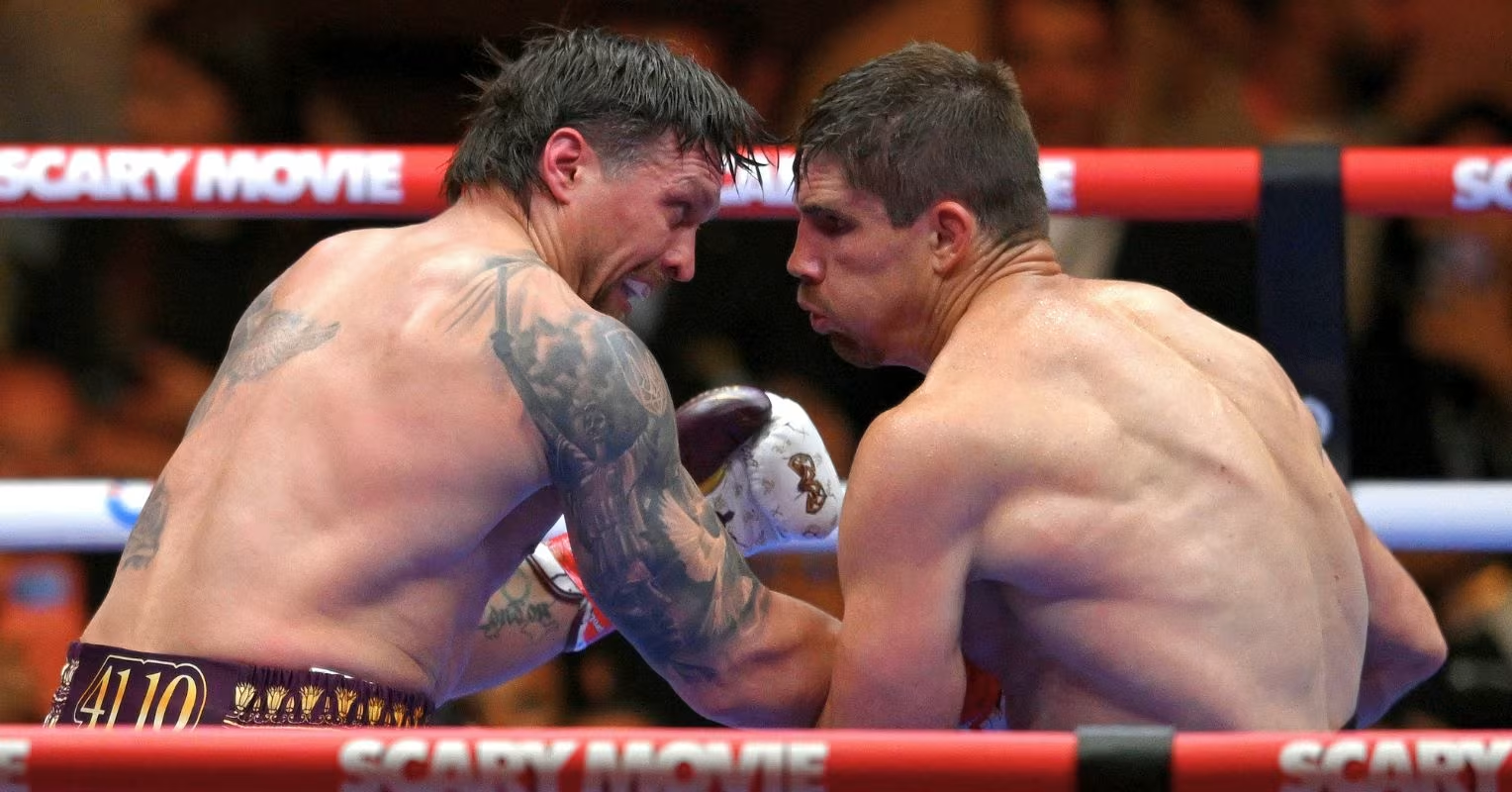
Rico Verhoeven sums up Oleksandr Usyk’s punching power as he calls for rematch

Today’s NYT Mini Crossword Answers for June 21

Ryhope Engines Museum stars in Virginia Woolf’s Night and Day


-

 Business7 days ago
No Jackpot Winner as $257 Million Prize Rolls Over to $269 Million Monday Draw
-

 Fashion2 days ago
Weekend Open Thread: Miami – Corporette.com
-
 Crypto World6 days ago
Zimbabwe Requires Crypto Businesses to Register Annually Under New FIU Regulations
-
 Business1 day ago
Wall Street Week Ahead: Investors see Micron earnings as pulse check of AI rally momentum
-
 Entertainment7 days ago
Matt Damon’s Viral Sci-Fi Thriller Has Taken Over HBO Max
-

 Tech7 days ago
As AI companies race to go public, who else is along for the ride?
-

 Business7 days ago
Anthropic staff to meet White House officials next week, Axios reports
-

 Crypto World1 day ago
HIVE shares jump as $220M AI deal speeds Bitcoin mining pivot
-
 Crypto World7 days ago
Bitcoin could crash to $48,000, if this historical pattern is triggered
-
 NewsBeat7 days ago
what doctors are seeing in ebike crashes
-
 NewsBeat7 days ago
Warning of disruption as Cardiff Crossrail works to start
-
 NewsBeat7 days ago
Tributes to former deputy head teacher at Cambridge school among death and funeral notices
-
 Entertainment7 days ago
Kate Middleton Glare Goes Viral After Kids Booed At Royal Event
-

 Politics7 days ago
“Israel’s” ban on ICRC visits ruled illegal, but Knesset moves to stop them permanently
-

 News Videos7 days ago
Financial Accounting | Last Day Revision Strategy and Booster | CMA Inter – June 2026
-

 Crypto World7 days ago
XRP ETFs Outperform As Bitcoin And Ethereum Funds Extend Outflow Trend
-

 Tech6 days ago
Over 400 Arch Linux packages compromised to push rootkit, infostealer
-

 Business7 days ago
Invesco Quality Income Fund Q1 2026 Commentary
-

 NewsBeat7 days ago
Singer Oliver Tree dies aged 32 in helicopter crash in Brazil
-
 Crypto World7 days ago
Market Preview: SpaceX (SPCX) IPO Record, Federal Reserve Meeting, and Iran Nuclear Agreement
You must be logged in to post a comment Login