

Crypto World
Trader Notes ‘Suspicious’ BTC Rally as Bitcoin Eyes $66K Peak

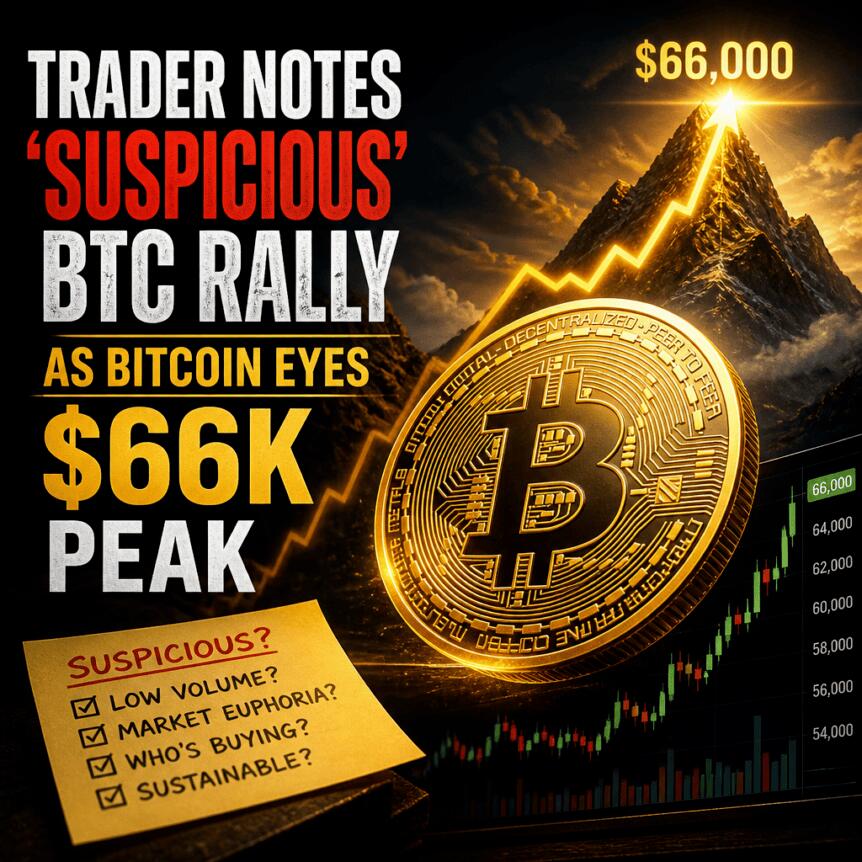
Bitcoin moved back toward the mid-$60,000 range on Sunday, but the bounce came with fresh skepticism from traders as geopolitical risk flared again in the Middle East. BTC/USD reached a local high of $64,522 on Bitstamp before giving back roughly 0.5% on the day, according to TradingView data.
The lack of clean follow-through is being linked to a combination of macro uncertainty and persistent exchange-level selling pressure—factors that may influence how sustainable the current uptick really is.
Key takeaways
- BTC/USD traded around $64,000 after printing a $64,522 local high on Bitstamp, then slipped back by about 0.5%.
- Traders pointed to the renewed Strait of Hormuz closure and broader US-Iran tensions as reasons to stay cautious.
- Lennaert Snyder described the price action as “suspicious,” even while still identifying $66,000 as an upside target.
- Exitpump argued that Binance spot is still selling into the rally, with the latest move driven more by derivatives/perps than spot demand.
- Market chatter also highlighted an observation that recent Mondays often preceded local pivot highs.
BTC holds gains as Hormuz closure reignites risk
Despite further instability in the US-Iran conflict, Bitcoin maintained most of its prior gains. Iran reportedly closed the Strait of Hormuz again, while the “current peace deal” was cast as increasingly fragile—an uncertainty that tends to matter to markets not only through oil prices, but also through risk appetite more broadly.
The wider stand-off has been tied to Israeli strikes in Lebanon, with Iran warning that last week’s ceasefire could unravel. US President Donald Trump responded with sharp rhetoric, writing on Truth Social that “harder” strikes on Iran could follow.
For crypto traders, the immediate takeaway was not that BTC was collapsing under the news, but that the rally’s reliability was questioned. Snyder posted on X that BTC appeared to be “pumping with rising geopolitical tensions,” calling the behavior “very suspicious.” Snyder still framed the move as potentially part of an upside push, pointing to $66,000 as a reasonable target for this week.
Another trader, Killa, emphasized that the calendar may be relevant to near-term price behavior, noting a pattern from recent weeks: “Over the past six weeks, 6 out of 6 Mondays have marked a local pivot high before price moved lower.” The remark doesn’t guarantee the same outcome going forward, but it reflects how many desks are currently watching day-by-day technical timing rather than only headline risk.
Geopolitics keeps traders watching structure, not just direction
When geopolitical headlines tighten—especially involving the Strait of Hormuz—traders often reassess the robustness of breakouts. In this case, the market’s reaction was mixed: BTC pushed to fresh intraday highs but then retraced, suggesting that upside momentum may be constrained by traders waiting for clearer signals before adding exposure.
That dynamic can also be seen in the way traders discussed the rally. Rather than focusing solely on price levels, they highlighted “how” BTC was moving. Snyder’s concern about suspicious pumping and Killa’s reference to Monday pivot highs both point toward an active monitoring of whether the market is building a stable base—or simply spiking before rotating back lower.
For investors, the practical implication is that headline-driven volatility may increase the probability of sharp swings around key levels. The fact that BTC could touch $64,522 and still end the day slightly lower underscores that buyers have not yet fully taken control of the tape.
Binance order books suggest selling persists despite the bounce
While BTC’s chart may look constructive to some, exchange-level data is complicating the picture. Exitpump argued that order-book and short-interest dynamics on Binance indicate that the latest price rise is not being matched by spot accumulation in a straightforward way.
Exitpump wrote on X that, “Despite price slowly grinding higher, Binance spot continues to sell into the move,” adding that “Mostly perps driven move up.” The implication is that derivatives activity may be doing more of the heavy lifting than spot demand—an arrangement that can sometimes leave the market more fragile if leverage unwinds.
This is not the first time that Binance-related sell pressure has been highlighted in coverage. Earlier reporting from Cointelegraph cited persistent “aggressive” selling from Binance as a reason bulls faced resistance. The new commentary builds on that theme by framing the most recent uptick as potentially derivatives-led rather than driven by consistent spot buying.
For traders, this distinction matters because derivatives-led moves can reverse quickly if funding rates, open interest, or short positioning shifts. Spot sell pressure, meanwhile, can cap rallies by ensuring that every attempt to push higher meets sustained supply on the order book.
What to watch next: follow-through versus derivatives-led spikes
Bitcoin’s ability to hold above the $64,000 area—and, specifically, whether it can regain momentum toward $66,000—will likely depend on two things: whether geopolitical volatility translates into broader risk-off selling, and whether spot pressure on major venues like Binance continues to outweigh spot demand. Traders are watching Monday timing patterns and the reliability of the rally’s structure, but the market’s next moves should reveal whether the current strength is sustainable or merely a brief, leverage-assisted push.


Abu Dhabi Global Market (ADGM) has approved the first admission of tokenized digital securities to its Official List, alongside permission for the instruments to trade on a recognized exchange venue. The development signals that tokenized assets can be structured and regulated within an established securities framework, rather than operating only as over-the-counter products or experimental pilots.
The legal filing and regulatory steps were guided by law firm Gibson Dunn, which advised Btech Holdings Limited. According to the firm, the Financial Services Regulatory Authority (FSRA) of ADGM approved the relevant prospectuses on 11 June 2026 under the market and financial services rules that apply to securities listings.
What ADGM approved, and why it matters
ADGM’s announcement centers on the admission of tokenized securities referred to as bStocks. The instruments were characterized under ADGM regulation as securities for the purposes of the Financial Services and Markets Regulations 2015 (FSMR). They were structured as Certificates over Shares, a design choice intended to fit the tokenized product into conventional securities categories.
After FSRA approval of the prospectuses, the securities were admitted to ADGM’s Official List of Securities with effect from the same date, and they were also set to be traded on the Recognized Investment Exchange (RIE) operated by Nest Exchange Limited.
In institutional capital markets, listing and trading rules are critical for liquidity, investor protections, and market integrity. By tying tokenized securities to an official listing process and prospectus approval, ADGM is effectively aligning part of the tokenization market with the same regulatory benchmarks used for traditional listings.
Regulatory pathway: prospectus approval and admission to the Official List
Per Gibson Dunn’s account, FSRA approval was granted for prospectuses drafted by the firm. The approval was described as being provided pursuant to section 61 of FSMR and Rule 4.6 of the Market Rules (MKT), including a reference to meeting requirements under MKT 4.5.
This matters because prospectus regimes are typically designed to ensure disclosures are comprehensive and consistent, covering issuer details, the nature of the instrument, risk factors, and other information required for public market participation. For tokenization to move into mainstream financing channels, regulators and exchanges generally need to ensure tokenized structures still satisfy disclosure and governance expectations.
How the product is structured: certificates over shares
The tokenized instruments were described as securities that fall under FSMR, structured as certificates over shares. The certificate-over-share structure is relevant in regulatory terms because it can help define the rights embedded in the tokenized instrument, including the economic linkage to the underlying shares.
While tokenization often involves distributed ledger infrastructure, the key regulatory question is how the product maps to existing legal definitions. ADGM’s approach, as reflected in this admission, indicates a willingness to treat tokenized securities as regulated securities when the instrument’s legal characteristics are clear and the issuer complies with disclosure and admission requirements.
Implications for tokenization in the UAE and beyond
Institutional tokenization is still searching for scalable market infrastructure and consistent regulatory standards. Regions that can demonstrate repeatable pathways for approvals, listing, and regulated trading have an advantage when issuers and financial intermediaries decide where to deploy tokenized capital markets activity.
ADGM’s step also points to a broader industry trend: regulators are increasingly focused on whether tokenized assets can meet established securities principles, including transparency, market conduct expectations, and investor protections.
In this case, the admission to ADGM’s Official List and the ability to trade on the RIE operated by Nest Exchange potentially reduce operational uncertainty for market participants evaluating tokenized instruments. It may also encourage other issuers considering tokenization to pursue structured, regulated listings rather than limiting activity to private placements.
Role of legal counsel
Gibson Dunn stated it advised on multiple phases of the mandate, including structuring the issuance, preparing prospectuses approved by FSRA, and handling the applications for admission to the Official List and to trading on the RIE.
The firm said the team was led by partners Sameera Kimatrai and Jade Chu, supported by associates Aliya Padhani and Holly Alderton. The matter was also described as involving other partners including Hagen Rooke, Mellissa Duru, and Lauren Cook Jackson.
What to watch next
This admission provides a regulatory reference point for tokenized securities that aim to be integrated into exchange-based trading. Going forward, market observers will likely focus on whether additional tokenized issuances follow the same pathway, how liquidity develops on the trading venue, and whether the market structure attracts issuers and intermediaries at scale.
For investors, the practical value of tokenized securities will depend on execution quality, transparency, custody and settlement mechanics, and ongoing compliance. For issuers, the central question will be whether regulated listing and trading can reduce barriers to issuance while still supporting innovation in how assets are tokenized and distributed.
Crypto World
Could Keir Starmer’s Exit Open the Door to Britain’s Most Crypto-Friendly Labour Leader?
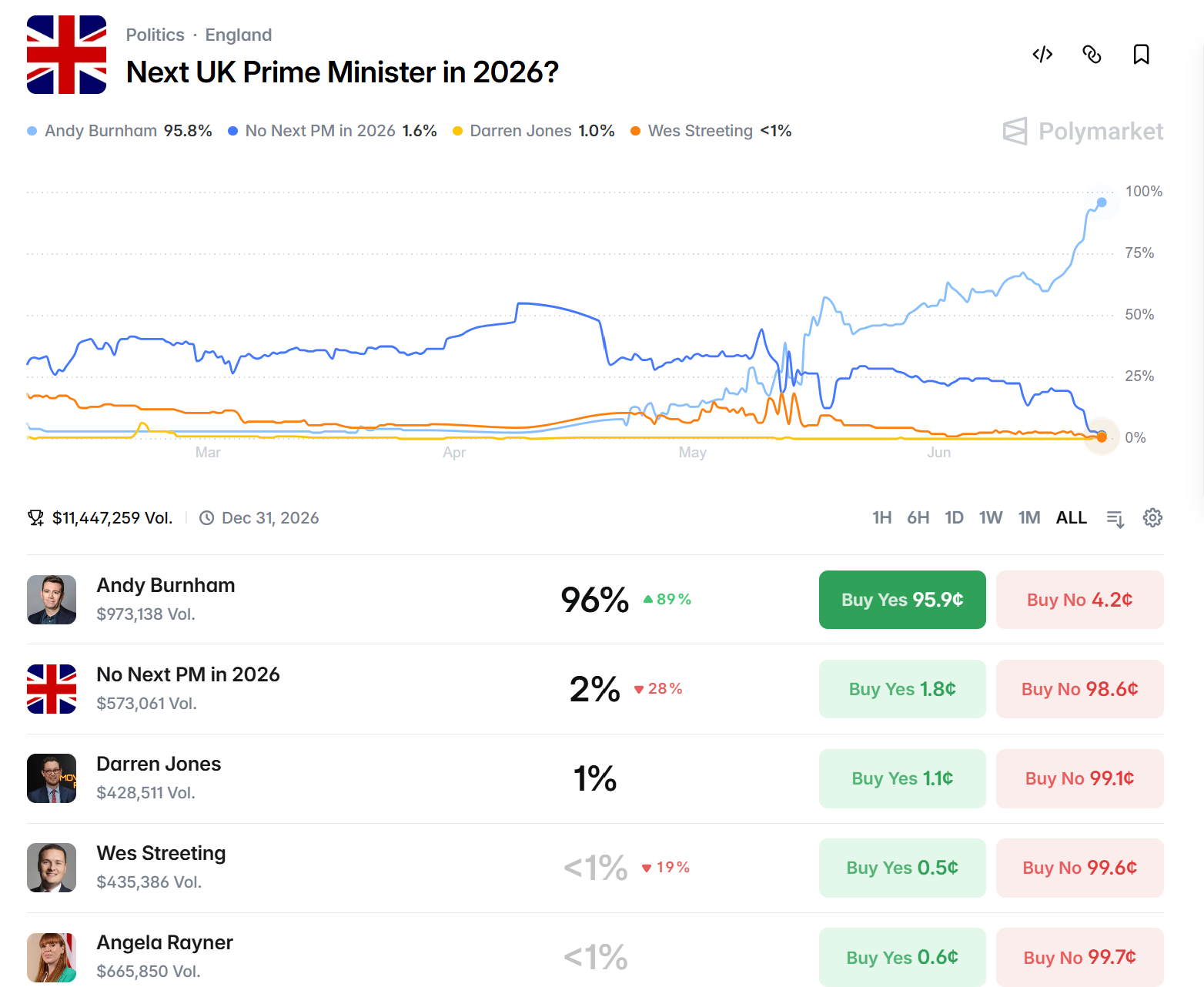
Andy Burnham’s landslide by-election win has handed Labour’s most crypto-friendly figure a clear route to challenge Keir Starmer for the party leadership.
The Greater Manchester mayor will be sworn in as an MP this week, removing the last barrier to a leadership bid. His enthusiasm for Web3 sits awkwardly beside Starmer’s recent crackdown on crypto.
Burnham’s Win Reopens the Leadership Question
Burnham took the Makerfield seat on June 18 with 54.8% of the vote. He beat Reform UK by a majority of more than 9,200, on a turnout that climbed to almost 59%.
By-election turnouts usually fall, so the result reads as a genuine mandate.
He is due to be sworn in within days. On Polymarket, the crypto-settled prediction market, traders have wagered more than $11 million on the succession and make Burnham the clear favorite to take over.

Starmer insists he will fight any challenge.
Weekend reports suggested the prime minister was weighing his future, though his office dismissed talk of an imminent exit.
Cabinet ministers, union leaders and party donors have all joined talks about the timing of a handover.
A Pro-Web3 Voice Against a Crypto Crackdown
Burnham ranks among the few senior Labour figures to openly back digital assets. He told about 100 Web3 founders at a Stand With Crypto event that he was “bought in.”
“Manchester was the home of the Industrial Revolution. Let’s make it the home of the web3 revolution,” Andy Burnham, Mayor of Greater Manchester, in remarks to crypto founders.
That tone clashes with the national party. In March, Starmer’s government imposed a moratorium on crypto donations to political parties.
The independent Rycroft Review had warned that crypto’s anonymity could mask foreign money entering UK politics.
Even so, Burnham’s support looks regional and pragmatic, tied to Manchester jobs rather than markets.
Reform UK is Britain’s most crypto-forward party, and one of only three that had agreed to accept crypto at all.
Its leader, Nigel Farage, has bought Bitcoin (BTC) himself and pitched a national reserve.
Markets Watch the Handover
The political risk has already reached bond markets. The 10-year gilt yield rose to about 4.8% on Friday.

Investors are weighing a Burnham government they expect to borrow and spend more freely, and sterling weakened alongside it.
For crypto, the signal is fainter. Bitcoin traded near $63,900, up less than 1% on the day but down about 17% over the month and 38% on the year.
It sits well below its October record near $126,000, so the turmoil has produced no clear safe-haven bid.

Any read-through also depends on a retail base that is shrinking. Crypto ownership among UK adults has slipped to about 8%, down from 12% a year earlier, the FCA found.
A Burnham premiership could still soften the tone toward Web3 after a year of tighter UK crypto rules, though bond investors look more worried about his spending than his digital-asset views.
His swearing-in and any leadership timetable this week will set the near-term direction. A warmer crypto stance surviving Britain’s fiscal squeeze is the real question for a shrinking crypto electorate.
The post Could Keir Starmer’s Exit Open the Door to Britain’s Most Crypto-Friendly Labour Leader? appeared first on BeInCrypto.
In times when investors are pulling funds out of the spot exchange-traded funds tracking ETH and especially BTC, their behavior toward XRP, HYPE, and SOL has been entirely contrasting.
The ETFs following the three altcoins’ performances continue to see more net inflows even as the market stagnates and uncertainty builds.
XRP, SOL, HYPE ETFs Keep Gaining Capital
CryptoPotato has repeatedly reported on the Ripple ETFs’ impressive performance over the past several weeks, in which most assets, including XRP, recorded fresh losses and dipped to multi-year lows. However, investors using the Wall Street-trading financial vehicles have remained active, with net inflows dominating for months. In fact, there have been only two weeks in the red since mid-March.
The last one, which had only four trading days, also ended in the green. The ETFs attracted $2.82 million on Monday, $5.30 million on Tuesday, and $2.55 million on Thursday. Since Wednesday was a $0.00 day, according to SoSoValue data, that means that the week ended with net inflows of $10.66 million. The cumulative net inflows have tapped a new all-time high of $1.45 billion.
The Solana ETFs also attracted over $7 million in net inflows in the past week, following a red one with $2.58 million in net outflows. HYPE and its ETFs continue to be the current market superstar. The funds saw their third-best week to date, with almost $28 million entering. Moreover, the HYPE ETFs have been on a six-week streak of net inflows since their inception in mid-May.
Their performance has been particularly promising since they have attracted nearly $185 million in net inflows in six weeks. The same six weeks have been highly emotional and full of FUD for the entire crypto market, especially June’s start when most assets tumbled to multi-year lows.

BTC, ETH ETFs Deep in Red
And while the aforementioned altcoins continue to enjoy fresh ETF capital, the same cannot be said for the funds tracking the two largest cryptocurrencies by market cap. As reported earlier, the spot BTC ETFs bled more than $226 million in the past week, and are down by roughly $5 billion in the same six weeks in which the HYPE and XRP ETFs have been only in the green.
The spot Ethereum ETFs are in no better shape. In fact, they are on the same six-week negative streak, pushing the total inflows down by nearly $1 billion. So the question now is whether investors are simply seasonally rotating from larger-cap digital assets into smaller altcoins, or have they completely abandoned BTC and ETH for the new kids on the block.
The post Why Capital Is Flowing Into XRP, SOL, and HYPE Instead of BTC and ETH appeared first on CryptoPotato.
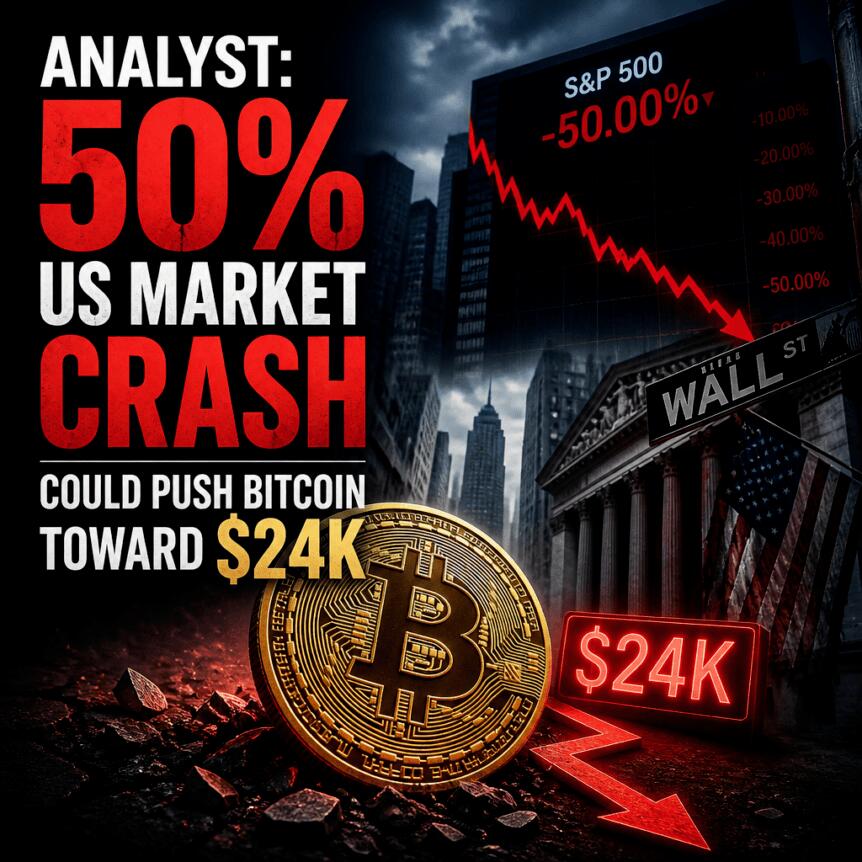
Bitcoin’s downside risks are again back in focus as analyst Jesse Olson laid out a worst-case technical scenario that could send BTC sharply lower if a broader macro shock hits US markets. In a Sunday post, Olson pointed to a multi-week chart setup that, in his view, leaves Bitcoin vulnerable to a move toward $23,980—a level he frames as a key target in the event of a severe stock-market sell-off.
The bearish case is not only technical. Olson’s outlook aligns with what multiple market indicators have been signaling so far in 2026: institutional participation appears muted, with a persistently weak Coinbase premium reading and ongoing spot Bitcoin ETF outflows described by market data providers. Together, these factors suggest that when risk appetite falls, Bitcoin could face stronger selling pressure than what retail alone might typically drive.
Key takeaways
- Olson’s chart work suggests BTC could fall toward $23,980 if US equities undergo a macro downturn of roughly 50%+.
- A negative Coinbase premium is consistent with weaker professional demand rather than aggressive institutional accumulation.
- Since May, SoSoValue data shows US spot Bitcoin ETFs have logged $4.68 billion in net outflows.
- On-chain analyst Darkfost argues institutions tend to wait for confirmation and performance, making them less likely to “buy the bottom” prematurely.
Olson’s worst-case BTC level and the macro trigger
Olson shared a two-week Bitcoin chart outlining a potential pathway for downside under stress conditions. His level is derived from a proprietary Market Sniper Pro VWAP indicator, using a long-term support line based on an anchored, volume-weighted average price (aVWAP) concept.
In the chart framing Olson used, the line appears anchored from the 2022 bear-market bottom. As the chart progresses, that methodology effectively creates a sloping reference zone that traders can watch for whether price is respecting a longer-term “average” support framework—or breaking away from it.
Olson presented $23,980 as a base-case target in a “severe macro sell-off” scenario that includes a US stock market drop of more than 50%. The implication is straightforward: Bitcoin has often traded like a high-risk asset during periods when leveraged positions are unwound and liquidity becomes expensive.
The macro timing risk Olson warns about is not confined to crypto technicals. The article context also references calls from established market observers who have warned about speculative excess or heightened recession risk. For example, GMO co-founder Jeremy Grantham has argued the current AI-led market surge resembles a major speculative bubble, while economist Gary Shilling has warned a US recession is “almost inevitable” by year-end, with stocks potentially declining by 20%–30%. (Those perspectives are cited via links embedded in the original reporting.)
Against that backdrop, the logic for Bitcoin is that a broad equity shock could accelerate crypto de-risking. In practical trading terms, that can mean earlier longs are forced to reduce exposure, and new dip-buying interest—particularly institutional—may take longer to reappear.
Coinbase Premium stays negative, signaling weak “professional” appetite
Beyond chart levels, the report highlights the Coinbase Premium Index—a metric that compares Bitcoin’s price on Coinbase versus Binance. The underlying idea is that when the premium is positive, it often reflects stronger US institutional demand (or at least more aggressive buying pressure on regulated venues). When the reading stays negative, it can point to weaker professional accumulation or heavier selling on Coinbase relative to Binance.
According to the report’s description, the Coinbase premium has been largely negative so far in 2026. That matters because it suggests that, at least in this period, institutional-style demand has not stepped in with the same urgency seen during stronger risk-on phases.
The key tension for traders is that BTC’s price can still rise without sustained premium strength—especially if retail-driven flows dominate. But if the market later shifts into “risk-off,” a lack of steady institutional bid can make drawdowns more abrupt, because there is less natural demand to cushion sell pressure.
Spot Bitcoin ETFs record $4.68B in outflows since May
The institutional-demand picture is reinforced by spot Bitcoin ETF flow data cited from SoSoValue. The report states that since May, US-based spot Bitcoin funds have accumulated $4.68 billion in net outflows.
ETF flow trends are closely watched by many participants because they aggregate buying and selling behavior across traditional brokerage accounts and investment platforms. Net outflows, in that sense, can be read as ongoing caution from professional allocators and advisers rather than a one-off profit-taking event.
While the report doesn’t attempt to forecast ETF flows forward, the combination of negative Coinbase premium and ETF outflows fits the same broader narrative: there isn’t clear evidence, at least in the period referenced, that major institutional channels are actively leaning against weakness.
Why institutions may wait for “confirmation,” not a potential bottom
One reason analysts often provide for institutional behavior under stress is that these players may not buy based on technical “support” signals alone. Instead, they may wait for confirmation—whether that’s stabilization in broader markets, improved volatility conditions, or sustained improvements in inflows.
In a Sunday post cited in the report, Darkfost, a CryptoQuant-associated on-chain analyst, said: institutions “don’t act like retail” and typically operate under “permanent risk management logic.” Darkfost’s point, as quoted, was that institutions are “not looking to buy a potential bottom” but rather for confirmation and performance—adding that the conditions for that are “not the case yet.”
This helps explain why Olson’s downside framing could matter even if the $23,980 area is technically meaningful. If institutional demand is missing—or if ETF outflows continue—then market moves toward lower support zones may be driven less by “buying opportunity” narratives and more by positioning adjustments and liquidity constraints.
Earlier coverage referenced in the report also aligns with the idea that a stock-market crash could push Bitcoin below $30,000. While those earlier remarks are not elaborated in detail here, they strengthen the broader theme: macro shocks can overwhelm crypto’s internal narratives and magnify downside through forced de-risking.
For readers, the key watch items are straightforward: whether BTC’s technical structure actually breaks toward the $23,980 target, and whether institutional indicators change character—specifically the Coinbase premium trend and whether spot Bitcoin ETFs shift from net outflows to inflows. If those signals remain weak, the market may continue to treat rallies as temporary while waiting for broader risk conditions to improve.
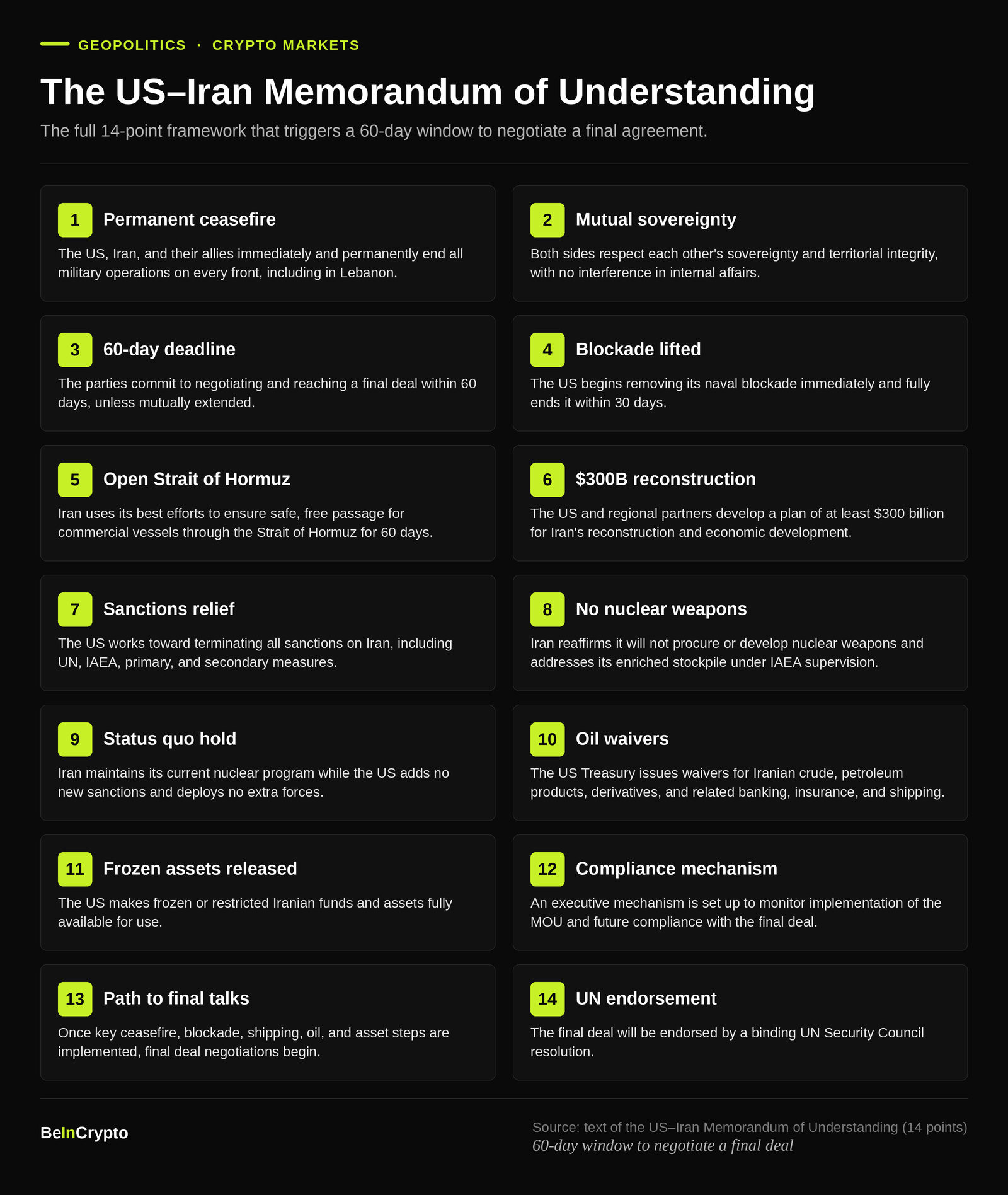
US Vice President JD Vance opened direct US-Iran talks at Switzerland’s Bürgenstock resort on Sunday, even as President Donald Trump threatened fresh military strikes if Tehran fails to rein in Hezbollah.
The talks implement a 14-point memorandum that Trump and Iranian President Masoud Pezeshkian signed on June 17. It set a 60-day ceasefire to end a war that began on February 28 and to reopen the Strait of Hormuz.

US-Iran Talks Open Under Pressure
Vance leads the US side, with Iranian chief negotiator Mohammad Bagher Ghalibaf heading Tehran’s team. Pakistan and Qatar are mediating in a four-way format.
The talks nearly fell apart first. Iran suspended them on Friday over Israel’s strikes in Lebanon, then agreed to meet on Sunday. Vance expects only a couple of days of negotiations.
Washington wants fast movement on Iran’s nuclear program. Tehran wants the fighting in Lebanon to stop first. It is also seeking sanctions relief, the unfreezing of assets, and an end to the US naval blockade.
The truce is fraying. Israeli strikes killed dozens in Lebanon over the weekend, and five Israeli soldiers have died since the deal. The turmoil has even split crypto traders over whether the ceasefire holds.
Bitcoin (BTC) could swing again if the war reignites, a risk analysts have already war-gamed for crypto. Trump, meanwhile, escalated on Truth Social, warning Tehran over its Lebanese proxies.
“Iran must immediately stop their highly paid PROXIES in Lebanon from causing trouble. If they don’t, we’ll hit Iran very hard again, just like we did last week, only harder!!!” Donald Trump, US president, via post.
Follow us on X to get the latest news as it happens
Why Crypto Markets are Watching Hormuz
The Strait of Hormuz is the reason markets care. About 20 million barrels of oil cross it daily. That is close to a fifth of global supply and more than a quarter of seaborne trade.
Iran’s Revolutionary Guard declared the waterway shut on Saturday, citing Israel’s attacks. Yet US Central Command said 55 tankers still passed through that day, carrying more than 17 million barrels.
After the signing, oil fell sharply, and equities set records. Brent crude slipped to about $78 a barrel, and US gas hit $3.99 a gallon, its lowest since March. GasBuddy analyst Patrick De Haan expects sub-$3 gas by early 2027 if the truce holds.
For crypto, the signal runs through oil. Cheaper energy cools inflation and revives rate-cut bets, the script Bitcoin has followed all year.
Yet Bitcoin barely reacted to the deal, holding near $64,000. Last June, a similar Iran ceasefire sent it above $105,000.
The next few days of talks will test whether the ceasefire survives in Lebanon. For crypto, the bigger tell may be oil, not the nuclear file.
The post Trump Issues Fresh Iran Threat as US-Iran Talks Enter Critical Phase appeared first on BeInCrypto.

HIVE Digital Technologies, a Nasdaq-listed infrastructure provider, says it has received approval from the municipal council of Boden to acquire the 32 megawatt Big Boden data centre in northern Sweden. The purchase, focused on long-term control of a key Nordic site, is designed to support HIVE’s plans to expand high-performance computing and AI workloads from within its existing Swedish footprint.
The Big Boden facility has supported HIVE’s operations since 2018. With the approval in place, the company moves from tenant arrangements to ownership, a shift that typically gives data centre operators greater flexibility over long-term capital planning, infrastructure upgrades, and operational resilience targets.
From tenant to owner at Big Boden
Municipal approval is a common procedural step in real estate and infrastructure transactions, particularly where utilities, permitting, and local planning requirements are involved. For HIVE, the significance is practical as well as strategic: a controlled asset can be upgraded on a longer horizon than leased capacity.
In its announcement, HIVE framed the acquisition as a milestone in its commitment to Sweden as a location for “sovereign” AI and sustainable digital infrastructure. The company has previously positioned its compute infrastructure around sustainability and green power sourcing, an increasingly important topic for enterprise AI buyers who face pressure to disclose and manage energy use.
Upgrade path toward Tier III-style capabilities
HIVE said it plans to bring the Boden site toward Tier III infrastructure standards. In data centre terms, that typically relates to higher expectations for redundancy and uptime, including design approaches meant to reduce the risk of unplanned outages. While the company did not provide a detailed timeline in the email update, it indicated the work is intended to strengthen security, redundancy, and uptime capabilities for enterprise-scale AI and high-performance computing workloads.
The company also referenced support for next-generation NVIDIA GPU architectures, pointing to a market demand shift across the industry. Data centre operators are increasingly competing not only on raw power capacity, but also on operational readiness for GPU-intensive deployments, including performance, reliability, and power delivery capabilities suitable for large-scale AI training or inference.
Why data centre ownership matters for compute strategy
In the broader market, many compute infrastructure firms rely on a mix of owned and contracted capacity. Ownership can reduce uncertainty when demand rises, but it also shifts execution risk to the operator, including capex planning, construction timelines, and regulatory compliance.
For companies pursuing AI-related workloads, the reliability dimension is critical. GPU clusters generally require steady power availability, robust cooling, and predictable uptime to maintain service quality for customers and internal deployments. Moving toward a higher tier standard can therefore be an operational necessity rather than a branding exercise.
HIVE’s move to own the Big Boden asset also aligns with a trend in which governments, enterprises, and regulated sectors seek local compute options. Whether referred to as “sovereign” compute, data residency, or strategic infrastructure, the underlying idea is the same, greater control over where workloads run and how infrastructure is governed.
Sustainability and local impact in the background
The email update included figures and context intended to show continuity of investment in the Boden region since HIVE’s earlier entry. It stated that HIVE has invested more than SEK 960 million in the region through local contractors and renewable energy procurement, and that it has contributed more than SEK 575 million in taxes to the Swedish Tax Authority. HIVE also pointed to local community involvement through initiatives such as support for youth and women’s hockey, sponsorship activity, and work linked to heat recovery projects.
While these points are not directly tied to the municipal approval itself, they help explain how data centre operators often build long-term social and regulatory relationships, particularly in markets where energy consumption, land use, and grid impact are recurring political topics.
Implications for HIVE and the Nordic AI infrastructure market
If HIVE executes its upgrade plan as described, the Big Boden facility could strengthen the company’s ability to serve enterprise and institutional customers looking for AI compute capacity in northern Europe. In practice, the key question for investors and customers will be how quickly capacity can be upgraded to the desired operational standard and how performance targets translate into usable capacity for GPU-based deployments.
HIVE also indicated the project fits into a broader strategy aimed at developing renewable-powered AI infrastructure across multiple jurisdictions. For the Nordic region specifically, the acquisition underscores ongoing competition among compute operators to secure energy-backed capacity and to position their facilities for AI workloads with higher reliability expectations.
For now, the municipal approval clears the way for the transaction and subsequent development plans. The next milestones will likely involve the deal completion process and disclosure around the scope and timing of upgrades at the 32 MW site.
Note: This update is based on information provided in the announcement circulated to the media.
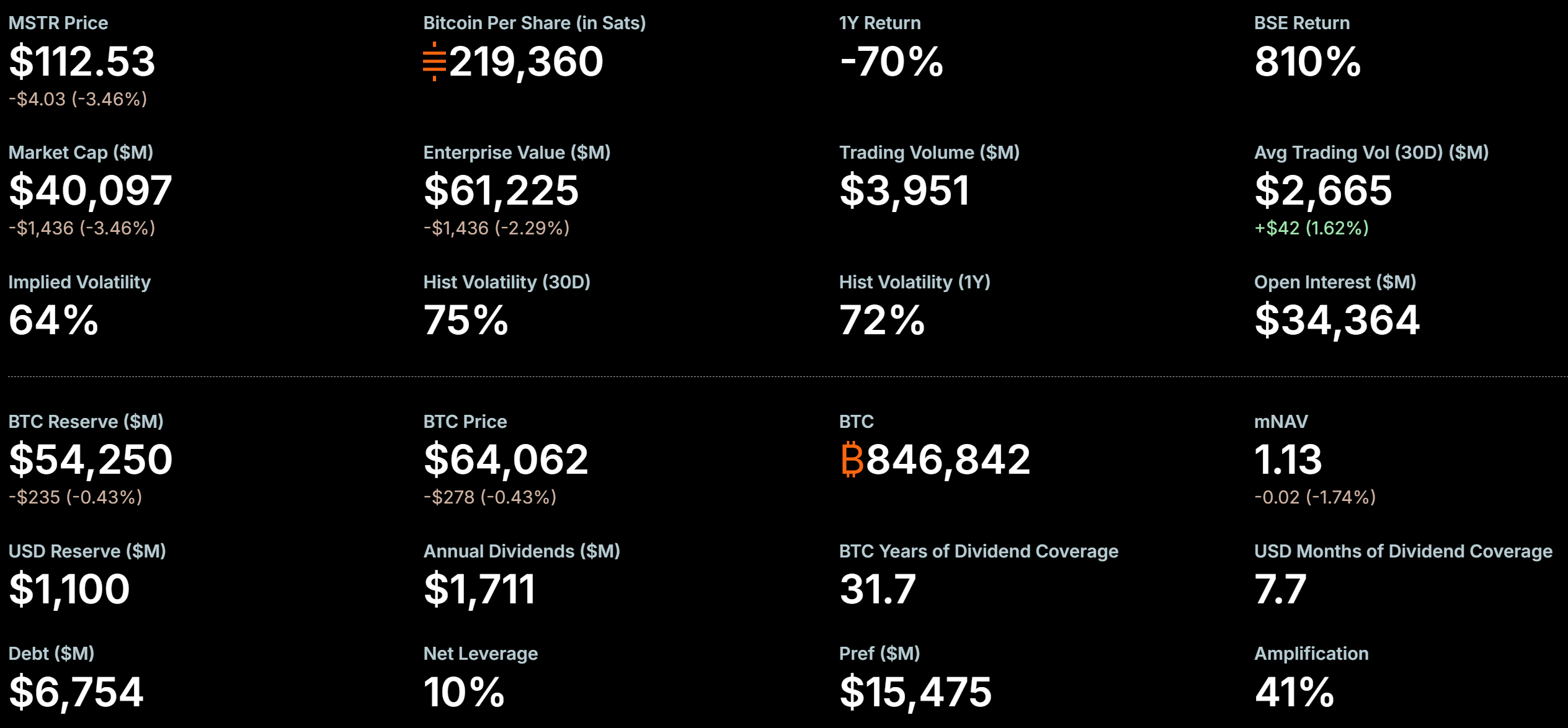
Strategy Executive Chairman Michael Saylor signaled another Bitcoin (BTC) purchase on Sunday, posting MicroStrategy’s tracker hours after he urged unity among Bitcoin holders.
The timing stands out. MicroStrategy’s most recent filing reported a small Bitcoin sale rather than a purchase, and the firm has disclosed no new buy in three weeks.
Michael Saylor Signals MicroStrategy’s Next Bitcoin Buy
The chart Saylor shared plots Strategy’s Bitcoin holdings against its average purchase price since 2020. Each orange dot marks a separate buy.
Strategy held 846,842 BTC as of this writing, according to a regulatory filing. At an average cost of $75,658, the position sits about 10% below cost.

Bitcoin was trading near $64,082 on Sunday, up 1.31% on the day. That values the holdings around $54.2 billion.
The caption fueled fresh purchase speculation, a familiar move from Saylor before past acquisitions. The firm, formerly MicroStrategy, began buying in 2020 and remains the largest corporate holder by a wide margin.
Saylor’s Unity Call Meets a Buying Slowdown
Hours earlier, Saylor urged the Bitcoin community to focus on its shared goals rather than internal disputes.
Bitcoiners agree on the 99% that matters. We shouldn’t let the 1% divide us while nearly all global capital has yet to enter Bitcoin’s monetary network. The opportunity is bigger than the argument,” he wrote.
The appeal lands during a clear pause. Strategy’s June 1 filing showed it sold 32 BTC for $2.5 million to fund preferred stock dividends.
That marked a rare step for a company built on accumulation. MicroStrategy pays an 11.50% annual rate on its STRC preferred shares, a cost it must cover with cash.
The same week, Strategy sold $128 million of common stock under its at-the-market program. Buying Bitcoin with stock and selling some to pay dividends sits at the center of the criticism.
Saylor has hinted at more buying even as the company slowed its weekly purchases. Supporters point to a stack still worth about $54 billion.
MicroStrategy typically files a Bitcoin update each Monday. The next one will show whether Saylor’s dots multiplied again, or whether the pause held.
The post Michael Saylor Teases Next Bitcoin Buy After Urging Community Unity appeared first on BeInCrypto.
A Japanese pension fund plans to shift about 1% of its assets into cryptocurrency from fiscal 2026, treating Bitcoin (BTC) as a hedge against a weakening dollar rather than a bet on price gains.
The National Business Corporate Pension Fund, based in Okayama, manages around $136 million for about 1,200 small and medium-sized firms. Few Japanese pension funds have invested directly in digital assets.
A Currency Hedge, Not a Price Bet
The fund’s executive director of investment, Aiyu Kiguchi, said the US dollar may lose its global reserve status. So the fund is trimming dollar exposure instead of adding to it.
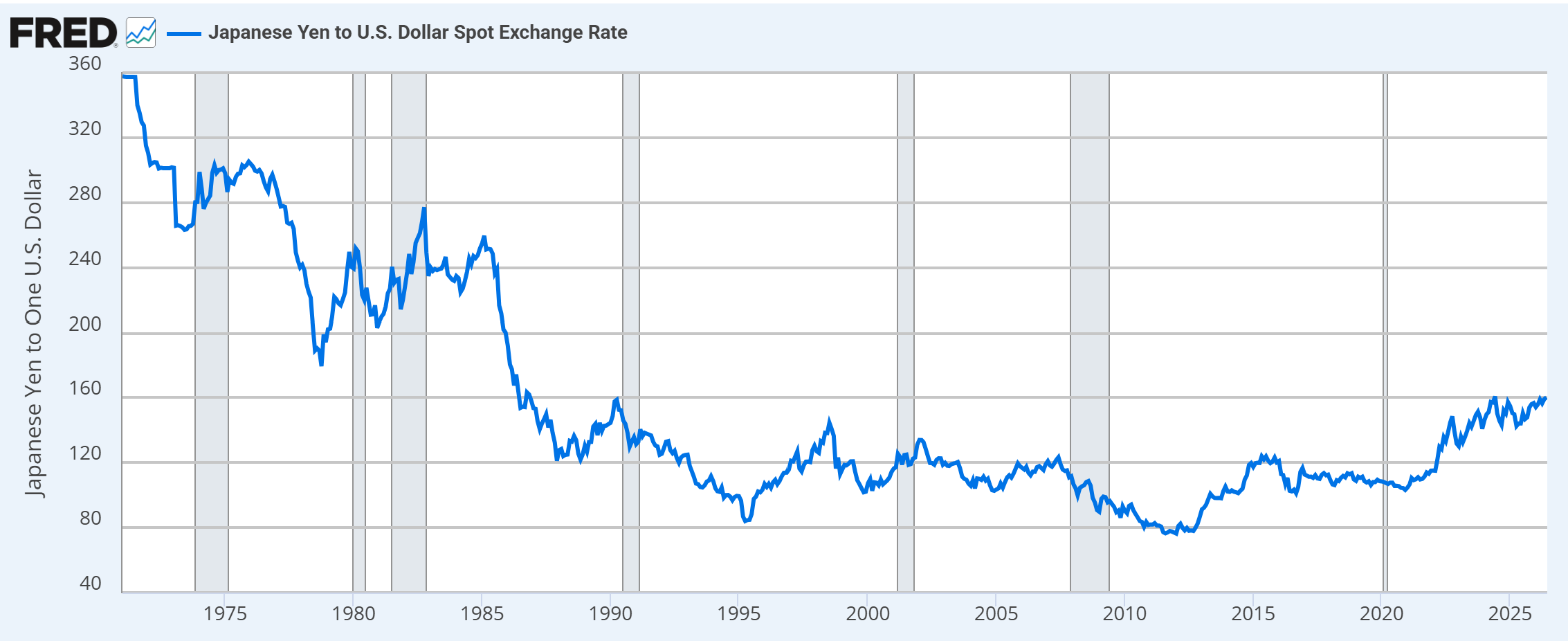
Meanwhile, the yen trades near 161 per dollar, ranging within the lower segment while eroding a portfolio still four-fifths held in yen.

That concern is not unfounded. The dollar’s share of global reserves has eased to about 57%, from roughly 71% in 2001, IMF data shows.
Bitcoin shows little correlation with the dollar index, which the fund treats as protection against currency debasement. The token will sit beside gold and emerging-market currencies in a small diversification sleeve.
The fund will not buy crypto directly. Instead, it plans to gain exposure through a passive, multi-token fund run by a major hedge fund.
The shift cuts its yen holdings from 80% to 70%, with developed-market currencies and the crypto stake filling the gap.
Why the Japanese Pension Fund Move Matters
Japan’s giant Government Pension Investment Fund only sought details on Bitcoin and gold in 2024 and never committed.
This far smaller fund is the one actually acting. It grew from a pension plan for Okayama’s machinery and metal makers, industries long exposed to currency swings.
The contrast with the United States is sharp. The State of Wisconsin Investment Board established a Bitcoin ETF position valued at about $321 million.
It then sold all of it within months, according to its SEC filings. Most US pension exposure has come through exchange-traded funds (ETFs) as a tactical trade, not Japan’s currency-hedge logic.
Kiguchi reached his decision after about six years of study, concluding the market had matured.
The move reflects Japan’s growing interest in Bitcoin as the country moves to regulate crypto as a financial instrument.
The Okayama fund is already studying multi-token arbitrage, a sign its 1% position could grow if other small-business plans follow.
The post Japanese Pension Fund Plans Crypto Allocation to Hedge Dollar Risk appeared first on BeInCrypto.
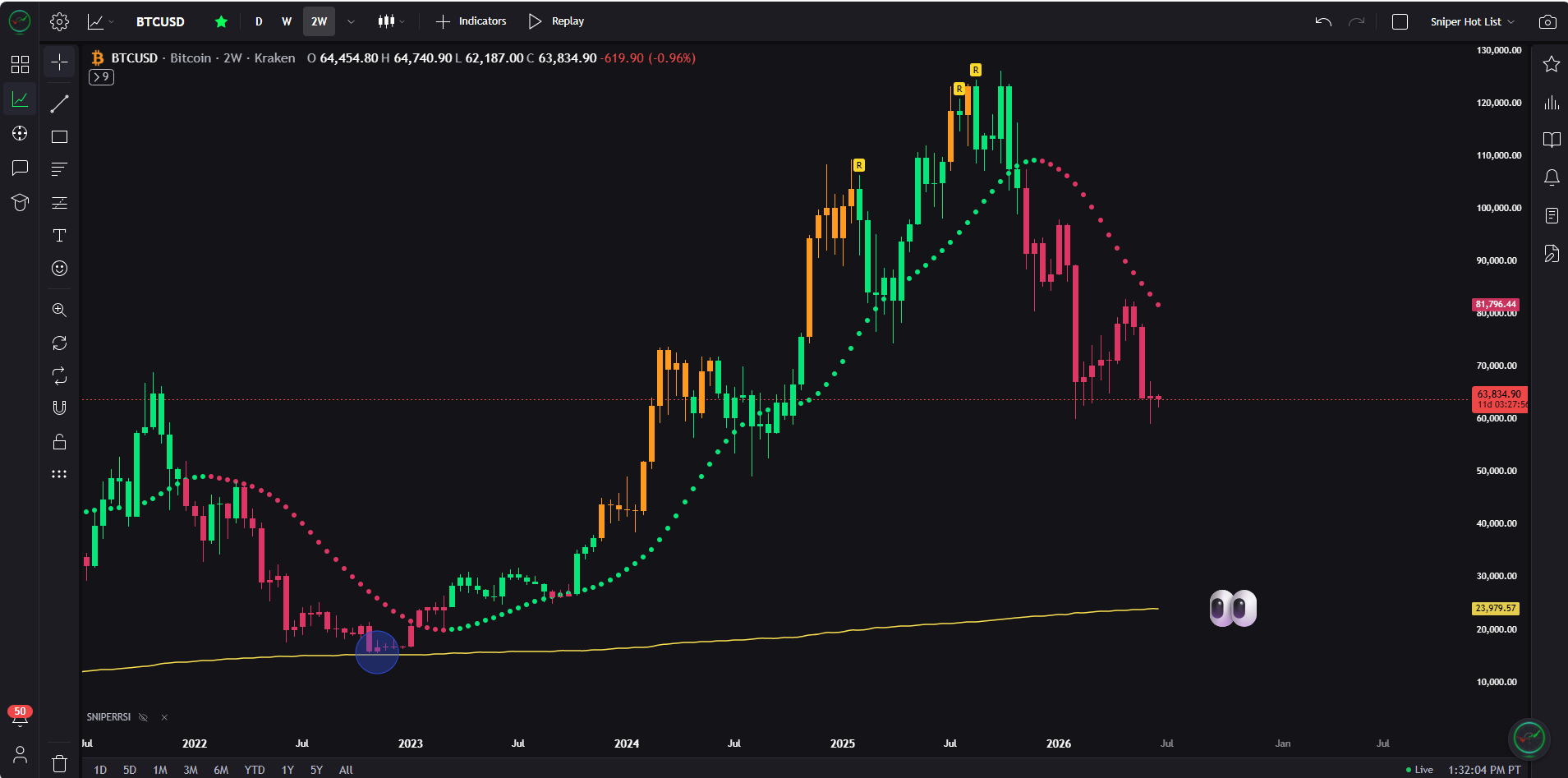
Bitcoin (BTC) could tumble by over 60% to under $24,000 in 2026, according to technical analyst Jesse Olson, if the stock market experiences a major crash.
Key takeaways:
- A US stock market crash of over 50% may accelerate BTC’s sell-off.
- Negative Coinbase premium and persistent ETF outflows hint at de-risking among institutional investors.
Bitcoin chart flags $23,980 worst-case downside target
In a Sunday post, Olson shared a two-week Bitcoin chart showing BTC potentially falling toward $23,980, based on a long-term volume-weighted support line from his proprietary Market Sniper Pro VWAP indicator.
BTC/USD two-week price chart. Source: TradingView/Jesse Olson
The yellow line on the chart represents a custom version of anchored volume-weighted average price (aVWAP), a tool traders use to track the average price of an asset, weighted by volume, from a specific starting point.
In Bitcoin’s case, Olson appears to have anchored the line from the 2022 bear market bottom, allowing it to slope forward as a potential long-term support zone.
Olson presented the $23,980 level as his base-case Bitcoin forecast in a severe macro sell-off, wherein the stock market drops by over 50%. The type of stress Olson warns about is already being flagged by veteran market observers.
For instance, GMO co-founder Jeremy Grantham has called the ongoing AI market boom a major speculative bubble. While Michael Burry has compared the current rally to the final stages of the Dot-com mania.
Related: Arthur Hayes dumps HYPE, NEAR as he warns of AI IPO wave
Economist Gary Shilling has also warned that a US recession is “almost inevitable” by year-end, with stocks at risk of a 20%–30% decline.
BTC often trades like a high-risk asset during market stress. A deep stock-market sell-off could force investors to cut crypto exposure, turning Olson’s $23,980 level into a key downside level to watch.
Bitcoin institutional demand remains weak
Another bearish signal comes from the Coinbase Premium Index, which tracks Bitcoin’s price gap between Coinbase and Binance.
A positive premium usually points to stronger US institutional demand, while a negative reading suggests weaker professional buying or heavier selling on Coinbase.
In Bitcoin’s case, the index has largely remained negative so far in 2026, showing that institutional buyers are still not stepping in with conviction.
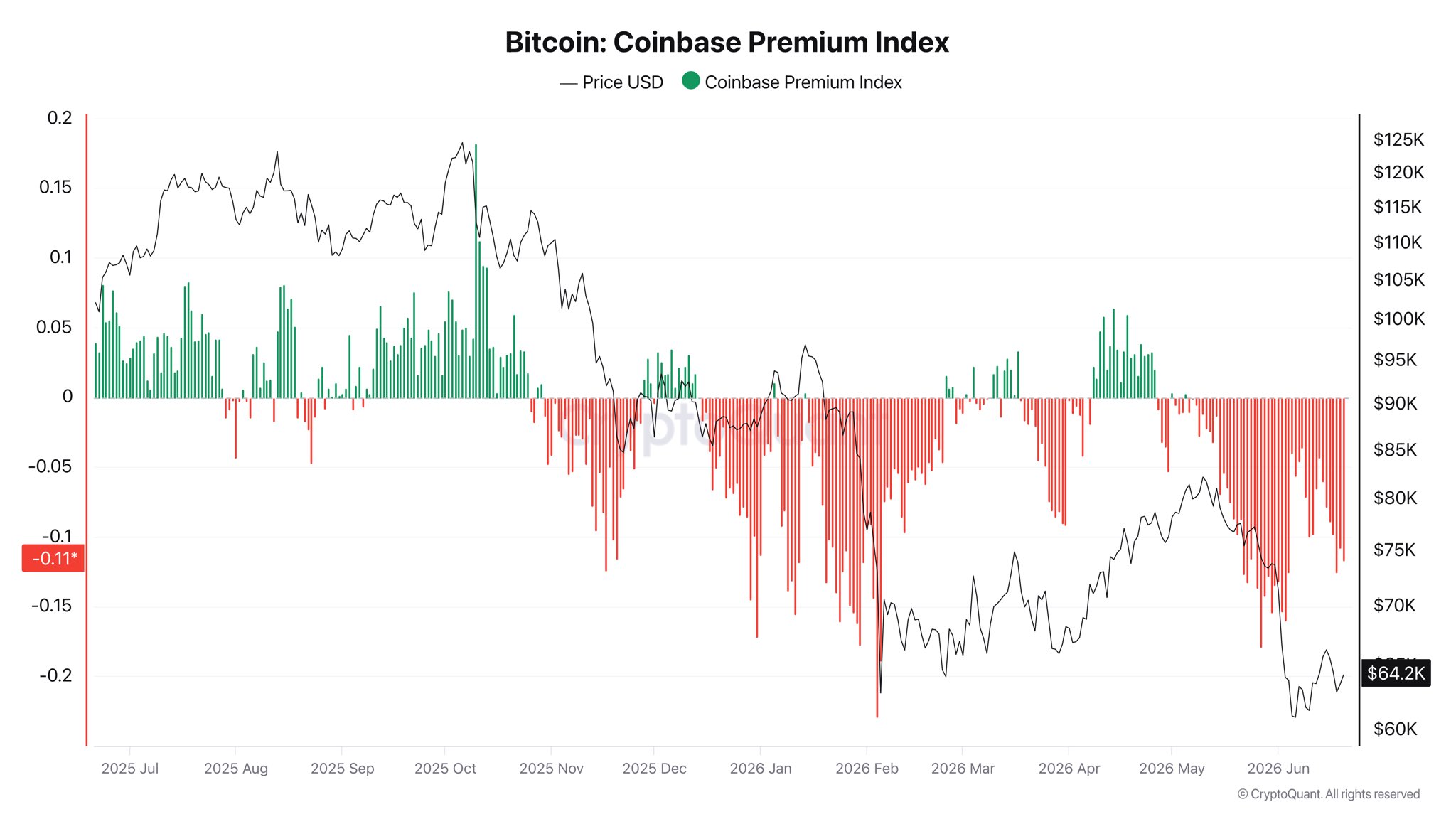
Bitcoin Coinbase Premium Index vs. price. Source: CryptoQuant/Darkfost
Spot Bitcoin ETFs are showing a similar trend. Since May, the US-based funds have recorded $4.68 billion in net outflows, according to SoSoValue data, reflecting weaker demand from professional investors and other ETF buyers.
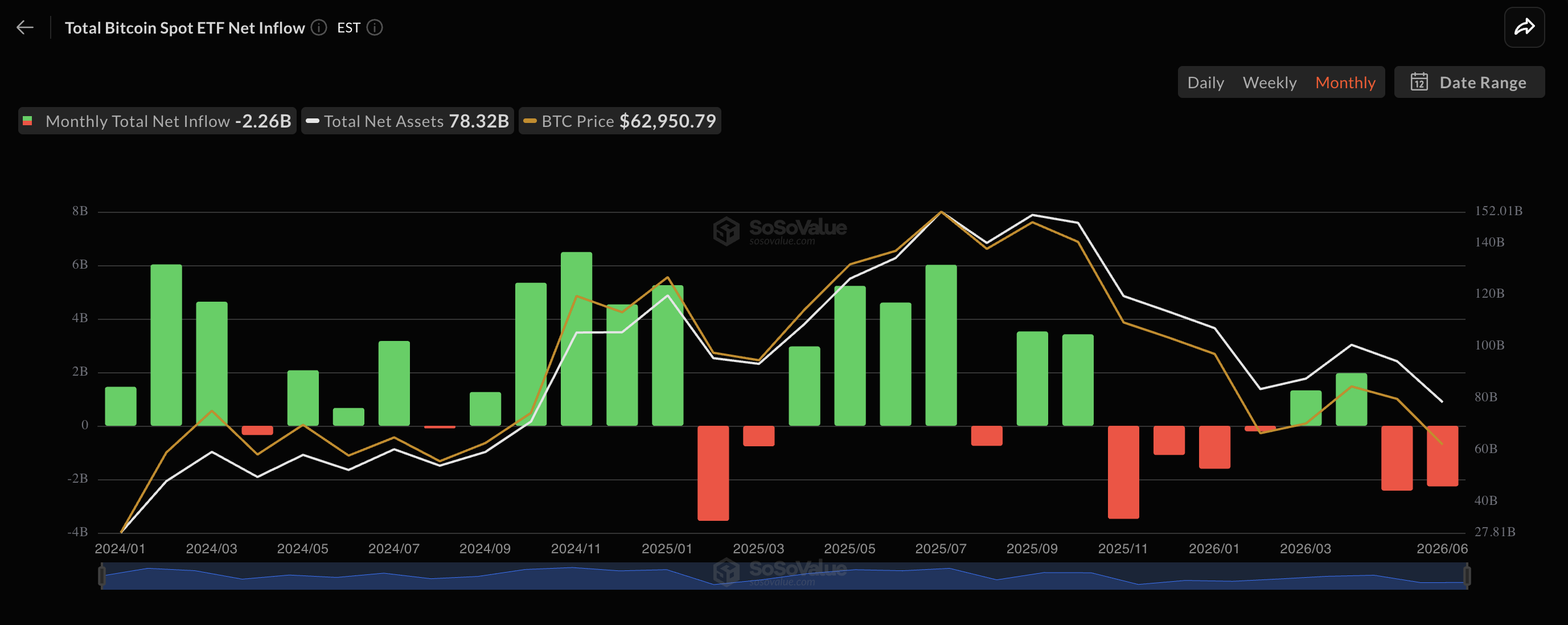
US Bitcoin ETF net flows. Source: SoSoValue
“These investors don’t act like retail,” said Darkfost, a CryptoQuant-associated on-chain analyst, in a Sunday post, adding:
“They operate under permanent risk management logic, they’re not looking to buy a potential bottom, they’re looking for confirmation, for performance. And that’s not the case yet.”
In the past, multiple analysts, including Galaxy Digital’s Alex Thorn and pseudonymous trader Crypto Kid, have said Bitcoin could decline below $30,000 in the event of a stock market crash.
NEAR is making a specific wager: that the future of crypto is autonomous AI agents transacting at machine speed, and that they will need a blockchain built to handle them. A June upgrade is the centerpiece. Here is the thesis, the technology, and the one number that complicates it.
Summary
- NEAR is betting that AI agents will need a blockchain built for machine-speed transactions.
- Dynamic resharding is the June upgrade designed to scale capacity automatically.
- NEAR Intents gives agents a way to settle activity across multiple chains.
- The thesis is coherent, but falling active users show the agent economy has not arrived yet.
NEAR Protocol has spent 2026 rebuilding its pitch to the market around a single, specific bet: that the future of crypto belongs to autonomous AI agents, software that transacts on its own at machine speed, and that those agents will need a blockchain engineered to handle them.
The wager is sharp and unusual in a field full of vague AI branding, because NEAR is pointing at a concrete use case, an on-chain economy where AI agents buy compute, settle payments, label data, and execute trades automatically. Those agents could generate bursts of transactions that would paralyze a conventional blockchain, and NEAR is positioning itself as the infrastructure built to absorb that load.
A major network upgrade in June 2026, introducing automatic scaling, is the centerpiece of the bet, and NEAR’s leadership has branded the token “the currency of agents” and the network “a unified commerce layer.” The thesis is deeply interesting, the technology is real, and there is one number that complicates the whole story.
This piece works through NEAR’s bet in full: the AI-agent thesis and why a blockchain for agents would need to be different, the June upgrade called dynamic resharding and what it actually does, the other pieces NEAR has assembled around the thesis including its cross-chain settlement system and its privacy tooling, the tokenomics that tie usage to the token’s value, and the honest complication, a gap between NEAR’s soaring narrative and its actual on-chain usage that every serious observer should weigh.
The goal is to explain what NEAR is trying to become and to assess the bet clearly, neither dismissing a real and ambitious technical effort nor accepting the narrative uncritically. NEAR is one of the more concrete expressions of the AI-crypto thesis, and understanding it illuminates where that whole idea stands.
The bet: a blockchain built for AI agents
To understand NEAR’s strategy, you have to understand the specific future it is betting on, because the entire technical effort follows from a particular vision of how crypto will be used.
The vision is an on-chain economy populated by autonomous AI agents, software programs that act on their own to accomplish goals, transacting with each other and with services at machine speed and scale. In this future, an AI agent might need to buy computing power on one blockchain, settle a payment on another, and store data on a third, all automatically.
A swarm of such agents reacting to an opportunity, a profitable arbitrage, or a large data-labeling task, could suddenly generate hundreds of thousands of transactions in a short span. This is a fundamentally different usage pattern from human-driven crypto, where transactions arrive at human pace and human scale.
Agents operate at machine frequency, in unpredictable bursts, and at volumes that would overwhelm a blockchain designed for human users, which is the problem NEAR has decided to solve. That makes it another AI-crypto crossover, but one focused on transaction infrastructure rather than identity.
NEAR’s co-founder, who notably co-authored the 2017 research paper that introduced the transformer architecture underlying today’s large language models, has framed the protocol as fundamental infrastructure for exactly this AI-driven commerce.
Why would AI agents need a different blockchain instead of using existing ones? The answer is about handling unpredictable, machine-speed demand without breaking.
On a conventional blockchain, a sudden explosion of transactions causes congestion: fees spike, confirmations slow, and the network becomes expensive and sluggish for everyone. That is fatal for AI agents that need to transact cheaply, instantly, and at scale without warning.
A blockchain serving AI agents must be able to absorb sudden, massive surges of activity while keeping fees low and confirmations fast, scaling up its capacity automatically the moment demand spikes. There is no time to wait for human intervention when a swarm of agents starts transacting.
This requirement, automatic, instant scalability to handle unpredictable machine-speed bursts, is the technical heart of NEAR’s bet, and it is what the June upgrade is designed to deliver. NEAR is wagering that whoever builds the blockchain that can handle AI agents at scale will become essential infrastructure for the agent economy, and it is trying to be that blockchain.
The June upgrade: dynamic resharding
The centerpiece of NEAR’s bet is a June 2026 upgrade called dynamic resharding, and understanding what it does, in plain terms, explains why NEAR thinks it can serve AI agents when other blockchains cannot.
The concept rests on sharding, a technique NEAR has used since its launch to scale its blockchain. Sharding splits a blockchain into multiple parallel partitions called shards, each processing transactions independently, like opening multiple checkout lines in a grocery store instead of forcing everyone through a single queue.
More shards mean more transactions processed in parallel, and therefore more capacity. For a basic primer on the ledger model, sharding and scaling explained starts with the blockchain structure that sharding modifies.
NEAR has scaled this way for years, but until now, adding a new shard was a slow, manual process requiring weeks of validator coordination, a governance vote, and a staged rollout. That is the equivalent of needing a committee meeting every time the store wanted to open another checkout line.
That manual bottleneck is exactly the problem for AI agents, because when a surge of agent activity hits, there is no time to convene a vote and coordinate validators over weeks. The capacity has to appear immediately or the network congests.
Dynamic resharding removes the human bottleneck entirely. With the upgrade, when a shard fills up past a defined threshold, it automatically splits into more shards, deterministically and without any human intervention, adding capacity in real time exactly when and where it is needed.
In the grocery-store analogy, the store now automatically opens new checkout lines the moment the existing ones get crowded, with no manager required. NEAR’s leadership says the upgrade will let the network scale to many dozens of shards, with throughput exceeding that of major payment networks.
They frame it as foundational to the AI-agent vision: when a swarm of agents suddenly floods the network, dynamic resharding isolates that surge into newly created shards, absorbing it while keeping fees flat and confirmations fast for everyone else.
The same upgrade also adds post-quantum-secure signatures, cryptographic protections designed to resist future quantum computers, letting users rotate to quantum-safe keys. That is a forward-looking security measure that signals NEAR’s ambition to be durable infrastructure.
The upgrade, part of NEAR’s network release numbered 2.13, is the technical delivery of the AI-agent bet: automatic, instant scaling built precisely for the unpredictable machine-speed demand that agents would generate.
The pieces around the bet
Dynamic resharding is the centerpiece, but NEAR has assembled several other pieces around the AI-agent thesis, and seeing them together shows that the bet is a coordinated strategy, not a single feature.
The most important supporting piece is NEAR’s cross-chain settlement system, called Intents, which addresses a problem specific to AI agents operating across multiple blockchains. Rather than requiring an agent to hold tokens on every chain and navigate the complexity of moving between them, the Intents system lets an agent simply express what it wants to accomplish, and specialized participants called solvers figure out the optimal path across chains to make it happen.
For an AI agent that needs to buy compute on one chain, settle on another, and store data on a third, this abstraction is exactly what makes operating across a fragmented multi-chain world practical. The Intents system has processed a large volume of cross-chain activity, generating tens of millions of dollars in fees and settling transactions across many dozens of blockchains.
It is central to NEAR’s pitch as a “unified commerce layer” for agents, the connective tissue that lets agents transact across the whole crypto ecosystem through one interface.
NEAR has also leaned heavily into privacy, the second supporting pillar, on the reasoning that AI-driven commerce and confidential finance require privacy guarantees. The protocol’s infrastructure powers products offering confidential on-chain treasuries, private multisig, payroll, and balance management for organizations that need to manage funds without exposing everything publicly.
Separately, NEAR’s AI division rolled out automatic anonymization of personal information in prompts sent to closed AI models, scrubbing sensitive data before it reaches the inference infrastructure. That addresses enterprise concerns about data leakage when using AI.
Together with dynamic resharding, these pieces, cross-chain settlement through Intents and a suite of privacy tools, form a coordinated thesis: NEAR is trying to be the scalable, cross-chain, privacy-capable settlement layer that AI agents and confidential finance need. It is assembling the specific capabilities that an agent economy would require instead of just adding a generic AI label.
That strategy is coherent, which is part of what makes the bet credible enough to take seriously.
The tokenomics: tying usage to value
For investors, the question is how NEAR’s technical ambitions connect to the value of the NEAR token, and the protocol has restructured its tokenomics to forge that link, which is worth understanding.
NEAR made two important tokenomic changes that tie network usage to token value. First, it cut its inflation rate, reducing the maximum annual issuance of new tokens significantly, which matters because the token supply is now fully unlocked, so lower issuance means less dilution of existing holders.
Second, and more directly tied to the AI-agent thesis, NEAR activated a fee mechanism on its Intents settlement system, under which the fees generated by cross-chain settlement activity are used to buy NEAR tokens on the open market. This creates a direct feedback loop: more usage of the Intents system generates more fees, and those fees translate into more buying pressure on the token.
That means if AI-agent and cross-chain activity grows, the growth flows through to demand for NEAR. The design is meant to ensure that the token captures value from the network’s actual usage instead of relying purely on speculation, aligning the token’s value with the success of the AI-agent thesis.
The proof-of-stake base matters too, because staking is how networks like NEAR secure themselves while issuing rewards and aligning validators. That is NEAR’s proof-of-stake foundation, and it sits underneath the scaling and usage story.
This tokenomic structure is what makes the AI-agent bet an investment thesis and not just a technical one. If NEAR succeeds in becoming the settlement layer for AI agents, the resulting surge in transaction activity would generate fees that buy NEAR, and the reduced inflation would mean that demand is not offset by heavy new issuance.
The logic is clean: usage drives fees, fees drive token buying, and lower inflation preserves the effect, so the token is engineered to benefit if the agent economy materializes on NEAR. The caveat, which the next section develops, is that this entire mechanism depends on real, growing usage.
The fee-to-buyback loop only generates meaningful demand if the Intents system and the broader network are actually being used at scale. A clever tokenomic design that ties value to usage is only as valuable as the usage it captures, and that is precisely where NEAR’s story meets its complication.
The structure rewards success, but it cannot manufacture it.
The number that complicates the story
Here is the honest complication that any serious assessment of NEAR must confront, because it is the gap between the narrative and the reality, and it is the single most important thing for a skeptical observer to weigh.
NEAR’s token has rallied substantially on the AI-agent thesis, surging on the announcement of dynamic resharding and the broader AI narrative. The story is compelling, the technology real, the strategy coherent.
But the on-chain usage tells a more sobering story. The number of daily active users on the NEAR network fell dramatically over 2026, dropping from nearly three million earlier in the year to a small fraction of that, a steep decline that analysts have flagged as a warning sign precisely because it diverges so sharply from the soaring price and narrative.
This is the gap that complicates everything: NEAR’s price and story point to a thriving AI-agent future, while its actual usage, measured by active users, has been falling, not rising. The narrative describes a network about to be flooded with AI-agent activity, while the data shows fewer humans actually using it.
That disconnect between price action and on-chain usage is exactly the kind of signal that should make an observer cautious.
This does not mean the bet is doomed, but it means the bet is unproven and largely ahead of its evidence. Some of NEAR’s rally has been driven by factors other than fundamental adoption, including short squeezes that force bearish traders to buy back positions and amplify upward moves, and by the powerful pull of the AI narrative itself, which can lift a token’s price faster than real usage justifies.
The crucial open question is whether the AI-agent thesis will translate into actual, sustained on-chain activity: whether the fees, the usage, the agent transactions, and the revenue capture will genuinely grow enough to justify the renewed market attention and the token’s price.
The technology may work as advertised and the strategy may be sound, but the agent economy NEAR is betting on has not yet arrived at scale on its network. The falling user count is a reminder that the thesis remains a wager on the future, not a description of the present.
An honest assessment holds both truths: NEAR has built coherent, interesting infrastructure for a plausible future, and that future has not shown up in the usage data yet, leaving the bet credible but unproven.
How to weigh the bet
For anyone trying to assess NEAR, the situation comes down to weighing a real and coherent technical bet against an unproven thesis and a worrying usage trend, and a few principles clarify the judgment.
The case for taking NEAR seriously is real. The AI-agent thesis is plausible, a future of autonomous agents transacting on-chain is a credible direction for crypto, and NEAR has built a coherent, technically ambitious set of tools for it: automatic scaling through dynamic resharding, cross-chain settlement through Intents, privacy infrastructure, and tokenomics that tie usage to token value.
This is not vague AI branding bolted onto an unrelated chain; it is a focused, multi-year effort to build specifically for the agent economy, led by a team with deep AI credentials. If the AI-agent future arrives and NEAR captures even a meaningful share of it, the network’s design positions it to benefit substantially, and the tokenomics would channel that benefit to the token.
For an investor who believes in the AI-agent thesis and in NEAR’s execution, the bet has a clear logic. Agents would use the code agents would transact through, and NEAR is trying to make that code scale across chains and bursts of activity.
The case for caution is equally real and rests on the gap between narrative and reality. The thesis is unproven, the agent economy has not arrived at scale, the on-chain usage has been falling, not rising, and part of the price strength has come from market mechanics like short squeezes and the momentum of the AI narrative instead of from fundamental adoption.
An investor should weigh that the bet is precisely that, a bet on a future that may or may not materialize on NEAR specifically, in a competitive field where other blockchains are also pursuing scalability and AI use cases. Automatic scaling, if it proves valuable, could be matched by competitors.
The disciplined reading is to treat NEAR as a high-conviction bet on a specific and unproven future, sized to the reality that the thesis is ahead of the evidence. Watch the actual usage data, the fees, the active users, and the agent activity, because those are the real tests of whether the narrative is becoming reality.
That discipline matters especially against the market backdrop for altcoins, where strong narratives can still run into a difficult macro and liquidity environment. The technology and strategy are real; the adoption is the open question, and watching it, not the price, is how to know whether the bet is paying off.
None of this is investment advice; it is a frame for assessing one of crypto’s more concrete and ambitious AI bets with appropriate clarity about what is proven and what is hoped.
A coherent bet, ahead of its evidence
NEAR’s wager is one of the clearest expressions of the AI-crypto thesis in the market: a bet that autonomous AI agents will transact on-chain at machine speed and scale, and that they will need a blockchain built to absorb that load.
The June dynamic resharding upgrade is the centerpiece, delivering automatic, instant scaling designed precisely for the unpredictable bursts an agent economy would generate. Around it, NEAR has assembled a coherent strategy: cross-chain settlement through Intents, privacy tooling, and tokenomics that channel usage-driven fees into buying the token.
Led by a team with deep AI credentials and pointed at a plausible future, the bet is specific, technically real, and worth taking seriously, not the vague AI branding that decorates so many crypto projects.
The complication is the gap between the narrative and the evidence. NEAR’s price and story describe a network on the verge of an AI-agent boom, while its actual usage, measured by a daily active user count that has fallen sharply over 2026, tells a more sobering tale.
Part of the rally has come from short squeezes and the pull of the AI narrative, not fundamental adoption. The agent economy NEAR is betting on has not yet arrived at scale on its network, which leaves the thesis credible but unproven, ahead of its evidence.
The honest assessment holds both: NEAR has built impressive, focused infrastructure for a believable future, and that future has not shown up in the usage data, making NEAR a high-conviction bet on a specific future, not a description of present reality.
Whether dynamic resharding and the Intents system become the rails of a real agent economy, or whether the narrative outruns the adoption, is the question that will define NEAR. The answer lies not in the price but in whether the agents ever actually arrive.
The bet is placed and the infrastructure is built; the economy it is built for has yet to show up.
Frequently asked questions
What is NEAR betting on with the AI-agent thesis?
NEAR is betting that the future of crypto involves autonomous AI agents, software that transacts on its own at machine speed, and that those agents will need a blockchain engineered to handle their unpredictable, high-volume activity. It envisions an on-chain economy where agents buy compute, settle payments, and store data automatically, generating bursts of transactions that would overwhelm conventional blockchains. NEAR is positioning itself as the scalable settlement layer for this agent economy, branding its token “the currency of agents.”
What is dynamic resharding?
Dynamic resharding is a June 2026 NEAR upgrade, part of network release 2.13, that lets the blockchain automatically add capacity when demand spikes. NEAR uses sharding, splitting the network into parallel partitions, or shards, like multiple checkout lines. Previously, adding a shard required weeks of manual validator coordination and a governance vote. Dynamic resharding removes that bottleneck: when a shard fills up, it automatically splits into more shards, with no human intervention, adding capacity in real time, which is essential for absorbing sudden AI-agent surges.
Why would AI agents need a special blockchain?
Because they transact at machine speed in unpredictable bursts. A swarm of agents reacting to an opportunity could generate hundreds of thousands of transactions suddenly, which on a conventional blockchain causes congestion, spiking fees and slowing confirmations for everyone. A blockchain serving agents must absorb these surges automatically while keeping fees low and confirmations fast, scaling capacity the instant demand spikes, because there is no time for human intervention. That automatic, instant scalability is what NEAR’s dynamic resharding is built to provide.
How does NEAR’s token capture value from this?
Through two tokenomic changes. NEAR cut its inflation rate, reducing dilution since the supply is fully unlocked. More importantly, it activated a fee mechanism on its Intents cross-chain settlement system, where fees from settlement activity are used to buy NEAR on the open market. This creates a feedback loop: more usage generates more fees, which buy more NEAR, so growth in AI-agent and cross-chain activity flows through to token demand. The design ties the token’s value to actual network usage rather than pure speculation.
What is the problem with NEAR’s story?
A gap between narrative and reality. NEAR’s price and story describe a thriving AI-agent future, but its on-chain usage tells a different tale: daily active users fell sharply over 2026, from nearly three million to a small fraction of that. This decline diverges from the soaring price, and analysts flag it as a warning sign. Part of the rally also came from short squeezes and AI-narrative momentum rather than fundamental adoption. The thesis is unproven, and the agent economy has not yet arrived at scale on NEAR.
Is NEAR a good investment?
That depends on whether you believe the AI-agent thesis and NEAR’s execution, and it is genuinely unproven. The case for it: a plausible future, coherent and ambitious technology, a credentialed team, and tokenomics tying value to usage. The case for caution: the thesis is unproven, usage has been falling, the agent economy has not materialized at scale, competitors are pursuing similar goals, and price strength has partly come from market mechanics. The disciplined approach watches actual usage data, not price, as the test. This is not investment advice.
As of June 21, 2026. Crypto markets and protocol details change quickly; verify current data before relying on this analysis. This article is information, not investment advice.

“Just go home, Rory. F****** hell!” – Rory McIlroy’s frustrations spill over at US Open

Yamal scores first World Cup goal as Spain bounce back with thumping win over Saudi Arabia

John Ternus plans to shake up Apple’s design work


-

 Fashion2 days ago
Weekend Open Thread: Miami – Corporette.com
-
 Crypto World7 days ago
Zimbabwe Requires Crypto Businesses to Register Annually Under New FIU Regulations
-
 Business2 days ago
Wall Street Week Ahead: Investors see Micron earnings as pulse check of AI rally momentum
-
 Entertainment7 days ago
Matt Damon’s Viral Sci-Fi Thriller Has Taken Over HBO Max
-

 Crypto World2 days ago
HIVE shares jump as $220M AI deal speeds Bitcoin mining pivot
-

 Business7 days ago
Anthropic staff to meet White House officials next week, Axios reports
-
 Crypto World7 days ago
Bitcoin could crash to $48,000, if this historical pattern is triggered
-
 NewsBeat7 days ago
what doctors are seeing in ebike crashes
-
 NewsBeat7 days ago
Warning of disruption as Cardiff Crossrail works to start
-
 NewsBeat7 days ago
Tributes to former deputy head teacher at Cambridge school among death and funeral notices
-
 Entertainment7 days ago
Kate Middleton Glare Goes Viral After Kids Booed At Royal Event
-

 Politics7 days ago
“Israel’s” ban on ICRC visits ruled illegal, but Knesset moves to stop them permanently
-

 Crypto World7 days ago
XRP ETFs Outperform As Bitcoin And Ethereum Funds Extend Outflow Trend
-

 Tech7 days ago
Over 400 Arch Linux packages compromised to push rootkit, infostealer
-

 News Videos7 days ago
Financial Accounting | Last Day Revision Strategy and Booster | CMA Inter – June 2026
-

 Sports7 days ago
Dick Advocaat’s Curacao scores first-ever World Cup goal against Germany
-

 Business7 days ago
Invesco Quality Income Fund Q1 2026 Commentary
-

 NewsBeat7 days ago
Singer Oliver Tree dies aged 32 in helicopter crash in Brazil
-
 Tech5 days ago
The Adder At The Heart Of Intel’s 8087 FPU
-
 Tech7 days ago
Microsoft Updates Six Windows’ Apps. ‘Photos’ Gets Watermarks for Copilot Images (Off by Default)
You must be logged in to post a comment Login