

Business
Oil Price Today (June 23): Crude oil near $78 per barrel as investors track flows through Hormuz. What’s next?


Crude oil price on June 23
Brent crude futures rose 24 cents, or 0.38%, to $78.15 a barrel, while U.S. West Texas Intermediate gained 33 cents, or 0.46%, to $74.19 a barrel as of 0026 GMT.
On Monday, oil prices had dropped more than 3% after the United States granted Iran a 60-day sanctions waiver following initial peace negotiations. Market sentiment was also influenced by reports of reduced hostilities in Lebanon under the broader agreement.
The latest developments came after a tense weekend that had raised concerns about the stability of the week-old accord. U.S. President Donald Trump had warned that military action could resume if Iran interfered with shipping through the Strait of Hormuz after Tehran announced the closure of the key waterway.
In a post on Truth Social on Monday, Trump said Iran would agree to weapons inspections to ensure “nuclear honesty.” “If Iran doesn’t live up to their agreement, or if they’re not behaving, I will do what I have to do,” Trump later told reporters.
Also read: These large-caps have ‘strong buy’ & ‘buy’ recos and an upside potential of up to 24%
Where are prices headed?
Despite the recent slide in oil prices, a complete reopening of Hormuz is expected to be a complex process. It will require careful coordination of vessel movements, restarting oil wells, repairing infrastructure, and agreeing on de-mining operations. Some shipowners also remain wary of operating conditions in the strait and the wider Persian Gulf.

Analysts note that global oil inventories were depleted during the extended disruption of shipping through the Strait of Hormuz and will take time to rebuild. Stockpiles could continue falling before fresh Gulf supplies begin reaching international markets.
Last month, Saudi Aramco Chief Executive Officer Amin Nasser cautioned that disruptions in the Strait of Hormuz could delay a return to stability in global oil markets until 2027. According to Nasser, prolonged interruptions could affect nearly 100 million barrels of oil supply each week. Saudi Aramco remains the world’s largest oil producer.Read more: NSE and Ambani are about to see if India’s retail crowd still has ‘buy the dip’ energy left
Morgan Stanley described the oil market as being in “a race against time,” warning that some factors limiting the rise in prices could weaken if the Strait of Hormuz remains closed through June.
The brokerage noted that higher U.S. crude exports and softer Chinese demand have so far helped absorb part of the supply shock. However, it cautioned that global supplies could tighten again if disruptions in the strategic shipping route continue, particularly beyond the period during which the U.S. and China can cushion the impact.
(Disclaimer: Recommendations, suggestions, views and opinions given by the experts are their own. These do not represent the views of The Economic Times)



My name is Andres Veurink and I have been in the financial markets for over a decade at this point, spending the majority of that in a hedge fund here in Rotterdam, working my way up as an analyst. My work relfect rigourious standards as I myself have a very high standard as to what I invest my money in. My preferred sectors to follow are tech, specifically SaaS and cloud business but recently I’ve also taken up an interest in writing about the energy and minerals sectors, two areas I’m quite familiar with having followed them for over a decade at this point. I find these offer incredible growth opportunities and are also very fun to research and follow. It’s a very active space with plenty of news coming out each week. Work is my own thoughs and research is done only by myself.
Analyst’s Disclosure: I/we have a beneficial long position in the shares of VAL either through stock ownership, options, or other derivatives. I wrote this article myself, and it expresses my own opinions. I am not receiving compensation for it (other than from Seeking Alpha). I have no business relationship with any company whose stock is mentioned in this article.
Seeking Alpha’s Disclosure: Past performance is no guarantee of future results. No recommendation or advice is being given as to whether any investment is suitable for a particular investor. Any views or opinions expressed above may not reflect those of Seeking Alpha as a whole. Seeking Alpha is not a licensed securities dealer, broker or US investment adviser or investment bank. Our analysts are third party authors that include both professional investors and individual investors who may not be licensed or certified by any institute or regulatory body.
Ella Loneragan speaks with Nadia Budihardjo about the state’s largest philanthropic foundations.
Business
Nominal GDP growth could fuel largecap recovery; pharma, auto ancillaries remain preferred bets: Shreyash Devalkar

Speaking to ET Now, Shreyash Devalkar, Head-Equity, Axis MF said the June-quarter earnings season has so far been more resilient than initially feared, with listed companies reporting only limited impact from geopolitical tensions and inflationary pressures.
Earnings resilience despite macro concerns
Devalkar believes the focus has shifted back to corporate earnings after the results season. While smaller companies have faced some challenges, the broader listed universe has remained relatively insulated.”We looked at the internals of the market. They are always driven by earnings growth, and that is what, at the end of the day, the market has come back to after the results season. Earlier, it was expected that the June quarter would see a significant impact from the war and inflation. While it definitely affected smaller companies, the commentary from listed companies has largely suggested that the impact has been benign,” he said.
He added that higher nominal GDP growth and inflation could actually support revenue growth across several sectors.
“Higher nominal GDP growth and inflation would actually help revenue growth this quarter in many segments. There have been price increases, which are reflected in improving credit growth. We are looking at companies where higher pricing and higher revenue growth will come with minimal impact on margins. In some segments, the price increase may more than compensate for higher raw material costs, allowing margins to remain broadly intact,” he added.
Largecaps may finally catch up
Midcap companies have consistently delivered stronger earnings growth than largecaps over the past several quarters. However, Devalkar believes improving nominal GDP growth could help narrow that gap.
“That has been the case for many quarters now. Midcaps have consistently delivered stronger growth, while largecap growth has remained subdued. In my judgment, largecap companies generally cannot grow too far away from nominal GDP growth. With nominal GDP growth improving because of inflation, there is a case for largecaps to see an uptick in headline revenue growth,” he said.
IT still lacks growth triggers
Despite attractive valuations, Devalkar believes the IT sector needs stronger revenue growth before becoming compelling again.
“When the growth for any sector is below 5%, it becomes difficult to generate meaningful equity returns. Even after combining low dollar revenue growth with rupee depreciation, free cash flow yields, dividends and buybacks, the overall return is only reasonable, not exciting. Unless dollar revenue growth improves beyond 5%, it becomes difficult to build a strong investment case,” he said.
He also pointed out that some global IT peers benefiting from the AI wave are trading at lower valuation multiples.
“One should not only look at valuation. Since growth is below 5% so far, returns need to be evaluated more holistically,” he said.
Auto ancillaries preferred over OEMs
Within automobiles, Devalkar said his preference remains firmly tilted towards auto ancillary companies rather than vehicle manufacturers.
“Broadly, we are more positive on auto ancillaries than auto OEMs. Traditionally, auto ancillary companies depended heavily on the domestic auto cycle. Today, many of them have diversified into non-auto businesses and exports, making them an attractive play on India’s manufacturing story. That is why we continue to have meaningful exposure to this space,” he said.
Pharma and healthcare remain portfolio favourites
Devalkar said the investment case for pharmaceuticals has evolved, with domestic businesses driving consistent growth while international operations have stabilised.
“There are two parts to pharma—domestic and international. The international business is broadly getting into a base and is reasonably priced. On the domestic front, growth remains strong and is comparable to, or even better than, many FMCG companies. That is why pharma continues to fit well within our portfolio,” he said.
He added that the firm’s healthcare exposure extends beyond pharmaceuticals.
“Our exposure is not only to pharma but also to healthcare, including hospitals and diagnostics. We remain positive on the entire healthcare space,” he said.
Defence remains a structural story, but valuations need caution
While maintaining a positive long-term view on defence, Devalkar advised investors to be selective as valuations have become richer.
“Defence is a long-term structural story, and there is no doubt about that. However, unlike three years ago, these structural themes are no longer in the early stages. Whether it is power or defence, these sectors have now been discovered. Investors need to be cautious because of valuations,” he said.
Crude oil remains the biggest risk
On market risks, Devalkar believes recent developments have largely been supportive for equities, though crude oil prices continue to warrant close monitoring.
“There have been more incremental positives than negatives. Cooling crude prices and the measures taken by the government and the central bank have been supportive. The biggest risk continues to be crude oil because it remains highly unpredictable. The monsoon is also a risk, but it is broadly known and largely priced in,” he said.

Neuberger is an employee-owned, private, independent investment manager founded in 1939 with approximately 3,000 employees across 26 countries. The firm manages $567 billion of equities, fixed income, private markets, real estate and hedge fund portfolios for global institutions, advisors and individuals. Neuberger’s investment philosophy is founded on active management, fundamental research and engaged ownership. The firm is proud to be recognized for its commitment to its two constituents, clients and employees. Again in 2025, we were named Best Asset Manager for Institutional Investors in the US (Crisil Coalition Greenwich) and the #1 Best Place to Work in Money Management (Pensions & Investments, firms with more than 1,000 employees). Neuberger has no corporate parent or unaffiliated external shareholders. Visit www.nb.com for more information, including www.nb.com/disclosure-global-communications for information on awards. Data as of March 31, 2026.

Gatekeeper Systems: The First Real Evidence Of A Turnaround
Business
Tata Motors shares jump 5% on strong growth guidance. What are Nomura, other brokerages saying?
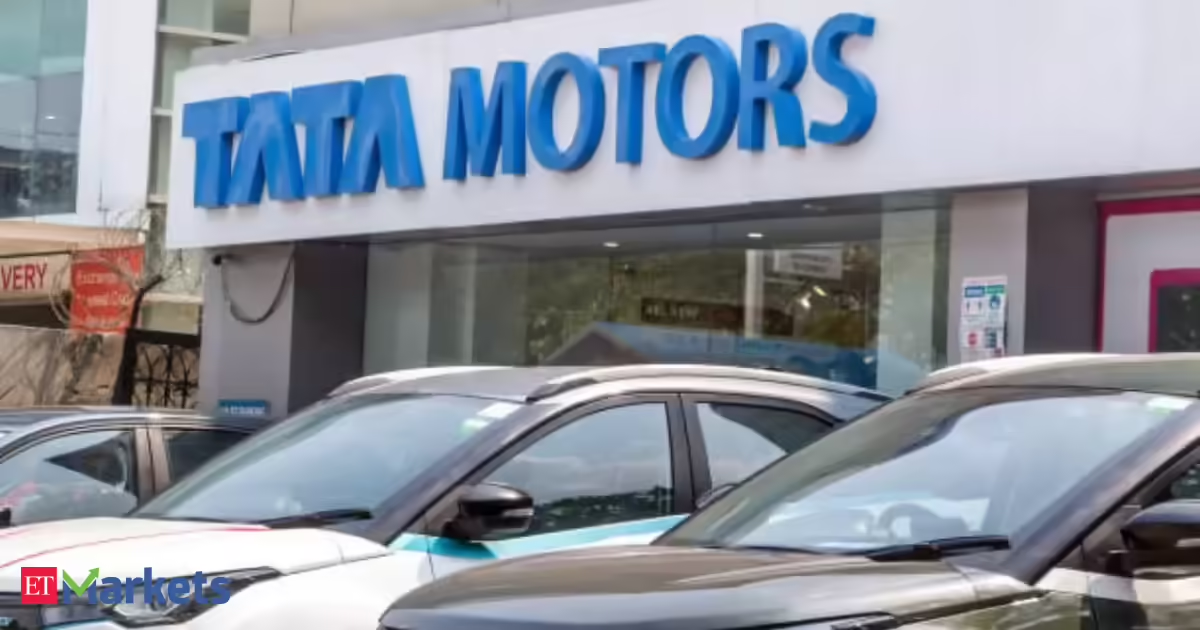
At its Investor Day 2026, the company said it had already achieved several of its FY2027 targets ahead of schedule, including margin improvement, cash generation and strengthening its leadership position in heavy commercial vehicles.
Here’s what brokerages are saying:
JM Financial: With a buy call and target price of Rs 475, the brokerage implies an upside of 19% from current levels. Analysts said Tata Motors’ management remains optimistic on the long-term outlook for the commercial vehicle business, backed by healthy GDP growth, sustained infrastructure spending, and rising e-commerce penetration.
The brokerage also noted that GST-driven freight efficiencies continue to support demand for multi-axle trucks. While elevated diesel prices, commodity inflation, geopolitical uncertainties and the possibility of interest rate hikes remain near-term challenges, management believes these headwinds are manageable and do not materially alter the sector’s long-term growth prospects. Nomura:
Also read: Tata Motors CV bets on global expansion, EVs and digital businesses for next phase of growth
However, Nomura remains cautious on Iveco, citing weak performance over the past six months. It said it is awaiting greater clarity on the integration process and the realisation of synergies before turning more constructive on the stock.
For its forecasts, Nomura expects MHCV volumes to grow 5% each in FY27 and FY28, while EBITDA margins are estimated at 12.6% and 13.3%, respectively. The brokerage noted that volumes could see an upside if Tata Motors gains market share. It also expects Iveco’s EBIT margins to improve to 2.4% in FY27 and 5.5% in FY28.
Motilal Oswal: The brokerage has a Neutral rating and a target of Rs 416, implying 4% upside. It has turned cautious on the near-term outlook for Tata Motors’ commercial vehicle business, citing recent geopolitical tensions and their potential impact on the Indian economy. It also expects margins to remain under pressure in the near term. Read more: Tata Motors PV eyes over Rs 6 lakh crore revenue by FY31
Factoring in a more measured demand environment, Motilal Oswal now expects Tata Motors’ commercial vehicle volumes to grow at a CAGR of 6% over FY26-28. Based on this, it estimates revenue, EBITDA and profit after tax to grow at a CAGR of 8%, 8% and 10%, respectively, during the same period.
The brokerage said the stock appears fairly valued at 21.7 times FY27 estimated earnings and 18.6 times FY28 estimated earnings. The valuation is based on 12 times FY28 estimated EV/EBITDA for the core business, in line with peers, along with an additional value of Rs 12 per share for Tata Motors’ stake in Tata Capital.

Conexeu Sciences: Hanging On The FDA 510(k) Pathway Submission
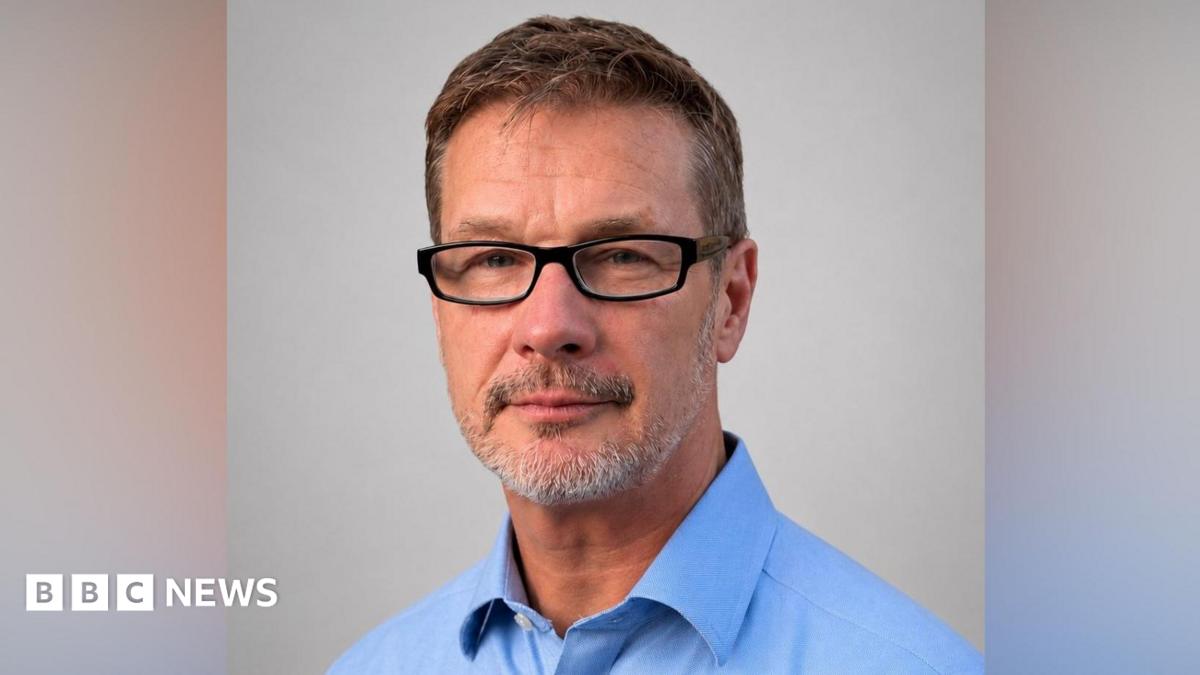
South East Water (SEW) has announced a new chief executive designate after its previous boss resigned.
The heavily criticised water company said that John Halsall will take over from David Hinton, pending regulatory approval.
Halsall has previously worked for Thames Water, South West Water and Network Rail.
The announcement comes as SEW remains under fire for repeated water supply failures in Kent and Sussex and grapples with major infrastructure issues.
Halsall said that his priorities were “responding to customers’ immediate concerns” and delivering on short term improvements.
In the longer term, Halsall said that he would deliver the company’s largest ever investment programme of £2.1bn to “improve reliability and resilience”.
He added: “I look forward to working with our customers, community partners, regulators and colleagues to rebuild trust in South East Water, drive the improvements the business needs to deliver and make the changes people want to see.”
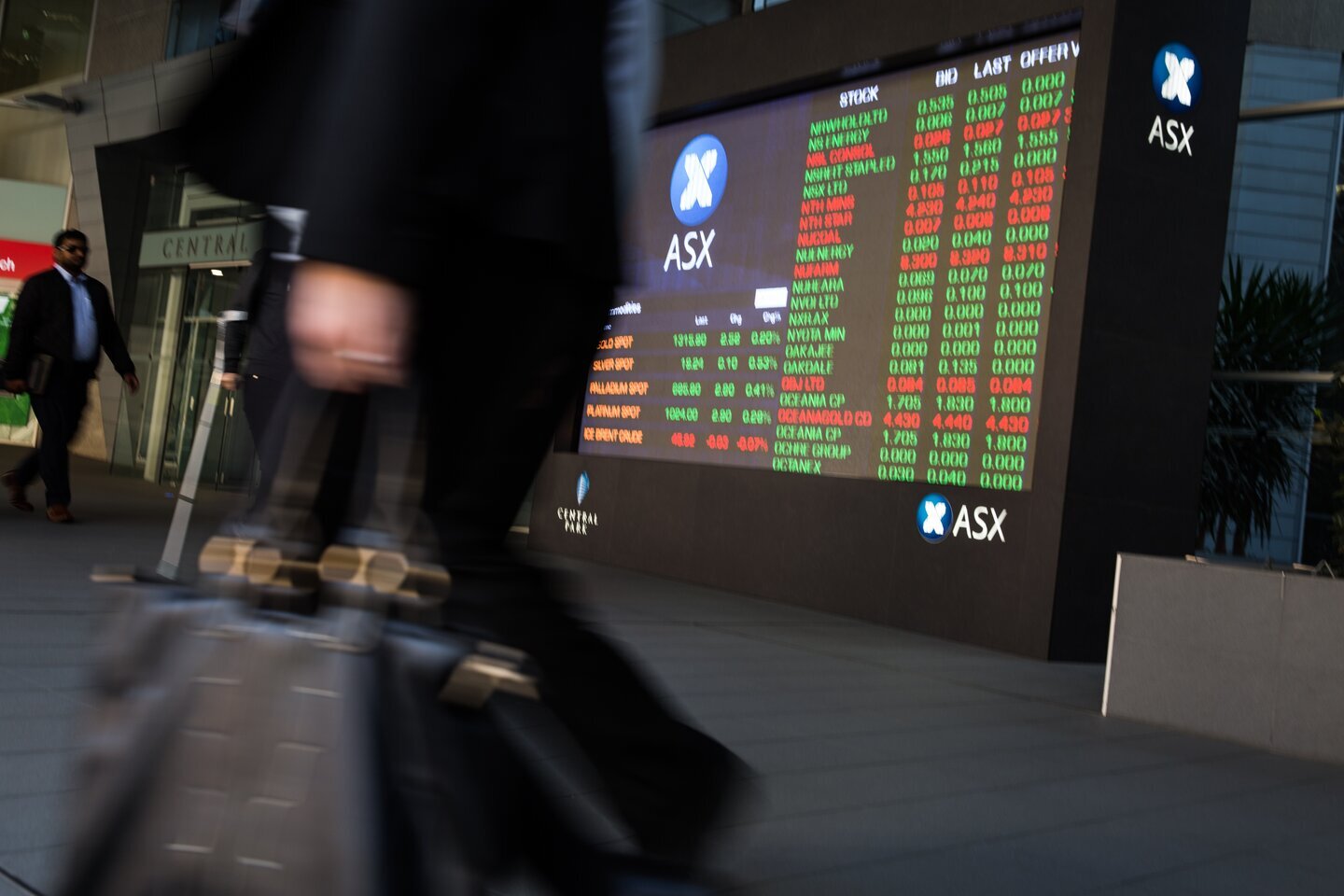
Australia’s share market has snapped a four-session losing streak, but investor sentiment remains subdued with the Reserve Bank’s battle with inflation far from over.

Police have used their fixed wing fleet of aircraft to transport accused criminals 71 times in just three weeks because more than 20 regional courts have closed.

FIFA World Cup Record: Cristiano Ronaldo Vs Bekhruz Karimov Marks Biggest Ever Age Gap Between Opponents

Ordering a trip back to 2009, with a side of nostalgia

Man jailed for spitting at shop mannequin dressed in Celtic kit


-

 Fashion5 days ago
Weekend Open Thread: Miami – Corporette.com
-

 Entertainment3 days ago
Renter of Home in Anne Heche Crash Denies Settlement With Son
-

 Tech2 days ago
Microsoft accidentally kills epic Outlook email threads
-

 Business3 days ago
Soccer-U.S. defends Iran World Cup travel restrictions, says discussions ongoing
-
 Sports14 hours ago
Two goals and an assist by sheer aura: Cristiano Ronaldo just entered the World Cup chat
-
Crypto World5 hours ago
Bitcoin (BTC) Dips Below $62K, Ethereum (ETH) Plunges 6% Daily: Market Watch
-

 Politics6 days ago
BBC Reporter Discusses Cross Party Criticism Of Trumps Iran Deal
-
Business8 hours ago
Entergy settles forward sale agreements, raises $672 million in cash proceeds
-
 Business4 days ago
Wall Street Week Ahead: Investors see Micron earnings as pulse check of AI rally momentum
-

 Politics4 days ago
Andy Burnham and the meaning of Makerfield
-

 Tech6 days ago
AWS enters the context layer race with a graph that learns from agents, not manual curation
-
 Crypto World4 days ago
Can Charles Hoskinson Really Rescue Cardano?
-

 Crypto World4 days ago
HIVE shares jump as $220M AI deal speeds Bitcoin mining pivot
-

 Crypto World4 days ago
Jake Chervinsky accuses CME of protecting derivatives monopoly
-

 Crypto World2 hours ago
Securitize Wraps Roubini's SEC-Registered ETF as Dubai VARA Digital Security
-

 NewsBeat5 days ago
Keir Starmer Allies Question His Chances For No 10
-

 Tech2 days ago
Nearly 7,000 fake Amazon domains registered ahead of Prime Day 2026, researchers warn
-

 Business5 days ago
Brexit cost 6% of UK economy, Bank of England company data suggests
-

 Sports5 days ago
FIFA World Cup 2026: Canada beat 9-men Qatar 6-0 to register first ever win | FIFA World Cup 2026
-
 Tech3 days ago
Signal’s Meredith Whittaker says AI chatbots ‘are not your friends’ and calls Copilot agents a backdoor
You must be logged in to post a comment Login