

Business
ETMarkets PMS Talk | We analyse over 300 data points to identify alpha: Wright PMS’ Sonam Srivastava


In an interaction with Kshitij Anand of ETMarkets, she said the firm analyses more than 300 data points—from valuations and earnings momentum to macroeconomic indicators and sectoral trends—to identify alpha-generating opportunities.
She also shared how Wright PMS dynamically adjusts its allocations across factors and sectors, with current preferences tilted towards data centre-linked plays, power transmission, select pharma stocks and domestic-facing themes. Edited Excerpts –
Kshitij Anand: Can you take us through the performance of the fund vis-à-vis the benchmark in the recent period?
Sonam Srivastava: See, we have two funds: one is the Factor Fund and the other is the Alpha Fund. Our Factor Fund has had a good run. We are now almost three years since inception, and the fund has delivered close to a 20% CAGR compared to around 11% by the market. So, it has performed very well since inception.

Over the last one year, we have been able to beat the benchmark by around 10%. Even over six months, three months, and one month, we are outperforming the benchmark. The reason for this is our tactical, quantitative approach. We were able to shift into the right set of sectors.
We have significant exposure to companies in the data centre space, power transmission, etc., which our factors and models picked up. That is why the performance has been strong.
Kshitij Anand: Can you explain what factor investing means in simple terms and why you believe it can outperform traditional stock-picking strategies?
Sonam Srivastava: See, factor investing is something that people have been doing for years. Factor investing essentially means trying to understand the underlying forces in the market that drive returns.
There are some very well-known factors, such as valuation—anything that is undervalued tends to outperform; growth—anything that is growing fast tends to attract investors; quality—high-quality companies attract investors; and behavioural factors like momentum, where stocks that pick up a trend tend to attract investors.
What factor investing does is try to break down these metrics for each stock. It is a very good quantitative way to look at the market. While four or five factors are widely known, we try to dig deeper and identify what else we can look at.
We analyse more than 300 data points. For example, we may have factors that identify the impact of inflation, showing which stocks are likely to be affected by inflation and which are not, or which stocks have exposure to North America or Africa, and so on.
So, there can be a very interesting set of factors, and we believe it is a very effective approach to gain a holistic understanding of a stock and the different forces influencing it. Through that, you can generate alpha. A lot of people associate factor investing with passive funds.
While that approach also has its own value, you will find that in one scenario, a momentum fund can be a great investment opportunity, while in another, a quality fund may be more attractive.
However, our approach is more active in nature—we actively evaluate factors, and we believe that can generate meaningful alpha over the long term.
Kshitij Anand: Let us look at this more deeply now. The fund mentions dynamic asset allocation between equity, factors, bonds, and gold. So, what indicators determine these allocation shifts, and how frequently do they occur?
Sonam Srivastava: See, again, it is a very interesting question. There are two parts to it. First of all, getting the right set of factors. As I said, we are not constrained to only five factors or 10 factors.
We are looking at anything and everything that is interesting. And even if you are looking at valuation, it does not have to be the PE ratio. It can be any other metric that makes more sense. So, that is the first part.
Second, we look at something called a market regime. Is it a growth market, a consolidating market, or a market where there is capitulation and things are falling sharply?
What you will see is that throughout the market cycle, certain sets of factors work well in different phases. For example, quality works well when the market is falling. Secondly, once growth starts from the bottom, you will see value stocks doing well. And when growth really picks up, momentum stocks tend to do extremely well.
So, we try to model that market regime using macroeconomic indicators. Again, we do everything quantitatively. We look at metrics such as liquidity in the market, sentiment, and valuations, etc., to identify which regime we are in.
Once we know the regime, based on that we modulate the amount of risk we are going to take. If we are taking less risk, quality automatically gets more weight. And if we are taking more risk, momentum automatically gets more weight.
Kshitij Anand: Good that you mentioned the quantitative and qualitative aspects. So, how do your quantitative models adapt during periods of extreme market volatility, such as geopolitical events or the sudden economic shocks that we have seen recently?
Sonam Srivastava: See, I think that is a very, very apt question for today’s time, and we have seen this throughout the cycle. I will give you some context here. We started the PMS three years ago.
The first one-and-a-half years after starting were probably the best period. It was like the peak, and I think we were among the top-performing funds. We did extremely well.
Then, when volatility hit last year, it did have an impact because in 2025, almost anything and everything got affected. So, there have been lessons as well.
What happens during volatile periods is that our strategy starts allocating more towards lower-risk factors such as quality and adopts a more defensive stance. Throughout 2025, we saw that the allocation was relatively more defensive.
Eventually, we started adding more exposure to sectors such as cement and chemicals, and towards the end of last year, we significantly increased our allocation to industrials. So, the portfolio adapts with the market. But yes, the models definitely handle such situations really well.
Kshitij Anand: Now, with the portfolio turnover of around 250%, how do you balance active management with transaction costs and tax efficiency?
Sonam Srivastava: That is also a very good question. See, if you look at any active manager, they tend to have a decent turnover. Many active managers, even in the traditional space, have turnover north of 150% or so.
Some value investing funds, on the other hand, typically have very low turnover because they buy a stock and hold it for a long time before selling it.
When we are working with data, what happens is that if we simply let the data run, it changes every day, which can lead to very high churn. In fact, 250% is actually quite low. So, what we do is implement turnover controls.
We try to strike a balance between the amount of returns we can generate and the level of churn we can afford. We aim to find that sweet spot, and we believe 250% is a very reasonable figure.
If you look at some other quant funds, I have heard of managers reporting turnover of 600%. So, ours is a decent number, and we think it is justified. For example, last year we saw a lot of churn from defensive sectors into industrials, which was completely justified because that is what has been working in the market.
Kshitij Anand: Earlier in the conversation, we spoke about factors. Are there any specific factors, such as momentum, value, quality, or low volatility, that currently dominate your allocation, or does the model decide that dynamically?
Sonam Srivastava: As I was telling you, I recently wrote a newsletter about this. We carried out a detailed analysis of the macroeconomic environment, and the picture is mixed. Obviously, we are seeing some recovery in sentiment with the Iran deal coming in, and there could be some euphoria going forward.
However, if you look at factor trends and dispersion—which means the difference between the top-performing momentum stocks and the least-performing momentum stocks—you will find that price momentum, earnings momentum, where we track the growth projections of stocks and how they are evolving, and value are the factors that are working really well right now.
On the other hand, low volatility and quality are currently underperforming for some reason. We are also seeing that plain beta is not working because there are so many forces at play. You have developments related to Iran, domestic factors like El Niño, and broader domestic market churn.
So, simply relying on beta will not work. You have to be very strategic, and that is where these factors have helped us identify the right set of stocks.
Kshitij Anand: Given the current market valuations, where do you see the best opportunities for factor-based investing over the next, let us say, 12 to 18 months?
Sonam Srivastava: As you mentioned, we are currently recovering from a weak market phase. Typically, during such recoveries, you will see momentum and earnings momentum deliver stronger returns.
In terms of market segments, what we have observed within our own strategies is a significant allocation towards stocks with exposure to the data centre theme. For example, we hold one stock, MTR Technologies, which has gone up nearly three times in our portfolio in 2026.
We also have exposure to several companies in the power transmission segment that are benefiting from the data centre opportunity, and they have been performing very well.
More recently, I have also started seeing pharma names emerge in our models, along with a few consumer stocks.
Kshitij Anand: Does factor-based investing work better in a bull market, a bear market, or a sideways market?
Sonam Srivastava: See, factor-based investing is just an umbrella term. It can mean many different things. There can be a quant investor or a factor-based investor who focuses only on quality.
There can be a factor investor who focuses only on momentum. We know there are some people who only do momentum, some who only do quality, and others who only focus on growth.
So, there is a whole spectrum of approaches. And because of that, you will have managers who outperform in different market conditions.
If somebody has a quantitative focus only on quality, they will do well in volatile markets. Somebody with a quantitative focus on momentum will do well in a bull market but may struggle when the market becomes volatile.
So, it is a broad term. We did have exposure to momentum in 2025, which is why we saw a correction, and then we gradually shifted towards quality. Now, momentum has started picking up again.
The reason I started Wright Research is because I believe that if I can make the correct tactical allocation through these factors, then I can identify the right strategy for every market.
It is very difficult to do because you not only have to focus on factor strategies but also identify the type of market you are in. It can be tricky, but that is our approach. If we can do that correctly, then we can obviously generate higher alpha. So, I believe factor investing has that potential.
Kshitij Anand: Are there any sectors that are looking attractive to you at this point in time?
Sonam Srivastava: Sectorally, we are at an interesting stage. We have seen a good run-up in the themes I was talking about earlier, such as proxy AI plays like data centres. We have witnessed a very strong bull run there, and we are still allocated to that theme.
We also had exposure to metals, although we have reduced it slightly in recent times. On the consumer side, we have picked up a few names, as well as some pharmaceutical stocks, where we are seeing a lot of stability and growth.
In the consumer space, we prefer specific names rather than the entire basket because factors like the monsoon could have an impact. However, certain companies are definitely doing well.
We do not have any exposure to IT at the moment. In banking, we have exposure to a few NBFCs, and we believe there is some positive news flow on the NBFC side as well. Broadly, that is the kind of exposure we currently have.
Kshitij Anand: So, more domestically oriented sectors, actually.
Sonam Srivastava: Yes, there is a strong domestic orientation. I will also share the newsletter with you. We analysed what worked and what did not work over the last year.
We found that companies with exposure to the US dollar or the US market itself have not performed particularly well. However, companies with exposure to Europe, the Middle East, and Africa have delivered better performance during the same period.
(Disclaimer: Recommendations, suggestions, views, and opinions given by experts are their own. These do not represent the views of the Economic Times)


Helus Pharma prices $50 million stock offering at $4.85/share

A federal homebuilding program has come under fire at a major Pilbara conference for failing to invest outside of Perth.
According to Rohit Srivastava, Founder, Strike Money Analytics & Indiacharts, the technical setup continues to favour the bulls as long as key support levels remain intact, with banking and defence emerging as two sectors likely to outperform in the coming months.
23,800 Remains the Key Support for Nifty
Srivastava believes the market’s immediate direction will depend on whether Nifty can defend the 23,800 level, which has repeatedly acted as a strong support.”So, I have put 23,800 as the critical support that the market is trying to test again and again. That is where we left behind a gap on the 15th of June and, interestingly, we have not filled it, which makes it a good support. Now, as long as this support holds and we close positive today, the next target for the market is to cross the 25,000 mark in the coming weeks, and that is what we would be looking for. Similarly, in Bank Nifty, if I put the support range at around 59,956, we would be looking at it going towards 61,000 in the coming days,” he said.
According to him, maintaining these support levels could pave the way for another leg of the market’s uptrend.
Defence Weakness Is Only a Pause
While the Nifty Defence Index witnessed sharp selling pressure during the session, Srivastava does not see it as a reversal of the broader trend. Instead, he believes the decline is simply a temporary correction following a strong rally.
“So, it is just a pullback. The Defence Index was actually holding out against the market. It went up for almost seven-eight consecutive days, and we have seen a two-day pullback. So, it is probably just a pause in what is going to be a continuation of an uptrend. The Nifty Defence Index should be headed towards 10,700-10,800 in the coming weeks, so it would be a buy on dips as of now. We do have open recommendations on GRSE, that is Garden Reach, for our clients, so that is a particular stock that we like,” he said.
His view suggests that investors should use short-term corrections as buying opportunities rather than interpreting them as a sign of weakness.
Banking Could Be One of the Best-Performing Sectors
The strong performance in both private and public sector banks has reinforced Srivastava’s bullish outlook on financials. He believes the sector is entering a phase of catch-up after lagging the broader market for the past couple of years.
“Let me just highlight that we are SEBI-registered since I discussed the stock. Now, coming to banking, I do think that the banking sector as a whole is going to be one of the top-performing sectors of the coming year after having underperformed for a year or two before. In the previous cycle, it was lagging, especially private banks. There is a complete turnaround and catch-up in performance that is happening right now. In the next leg of growth, financials are going to play a very, very important part. I already mentioned the Bank Nifty levels that we are looking at, going towards 61,000 in the next move in the coming days, so I do not think you are going to see any weakness in the financial space,” he said.
His outlook indicates that financial stocks could become a key driver of the next phase of the market rally, supported by improving sectoral momentum and strengthening technical indicators.


I am an investor specializing in the consumer products sector with a focus on identifying companies that offer a unique combination of strong brand recognition, solid financials, and growth potential. I have a keen eye for consumer trends and an in-depth understanding of the industry, which has helped me to identify profitable investment opportunities in the sector.
Analyst’s Disclosure: I/we have no stock, option or similar derivative position in any of the companies mentioned, and no plans to initiate any such positions within the next 72 hours. I wrote this article myself, and it expresses my own opinions. I am not receiving compensation for it (other than from Seeking Alpha). I have no business relationship with any company whose stock is mentioned in this article.
Seeking Alpha’s Disclosure: Past performance is no guarantee of future results. No recommendation or advice is being given as to whether any investment is suitable for a particular investor. Any views or opinions expressed above may not reflect those of Seeking Alpha as a whole. Seeking Alpha is not a licensed securities dealer, broker or US investment adviser or investment bank. Our analysts are third party authors that include both professional investors and individual investors who may not be licensed or certified by any institute or regulatory body.

President Donald Trump highlights a record 19 million barrels of oil flowing through the Strait of Hormuz, causing oil prices to tumble.
Traffic by tankers transiting the Strait of Hormuz has picked up amid the negotiations between the U.S. and Iran aimed at ending the war, which has caused oil prices to decline with more supply hitting the market.
The two sides have agreed to open the key shipping route for oil during the negotiations after the U.S. instituted a naval blockade and Iran laid sea mines that deterred shipping from moving through the narrow chokepoint.
The Strait of Hormuz’s central channel is yet to be cleared of Iranian mines, which has caused ships making the transit to either pass through a northern channel in Iran’s territorial waters or a southern channel in Oman’s waters. The U.S. Navy is overseeing transits along the southern route, while Iran issued a demand last week that vessels use the northern route through its waters.
Shipping traffic rose over the weekend to the highest level since the conflict began at the end of February, with 109 vessels transiting the Strait of Hormuz from Saturday through Monday, according to Kpler, a firm which tracks global shipping traffic.
OIL PRICES FLUCTUATE AS TRUMP’S IRAN DEAL COULD FULLY REOPEN STRAIT OF HORMUZ

Shipping traffic through the Strait of Hormuz is rising amid U.S.-Iran negotiations, though it remains below pre-war levels amid the threat of mines. (Reuters/Hamad I Mohammed)
President Donald Trump said Tuesday in a post on his Truth social media platform that, “19 Million Barrels of Oil flowed out of the Hormuz Strait yesterday, an all time RECORD. Oil prices are tumbling down, and the World is a much safer place!!!”
Despite the rise in shipping traffic, it remains lower than the more than 130 ships per day that transited the strait on a typical day before the conflict began, the New York Times reported.
There also remains a backlog of hundreds of ships waiting to pass through the strait, according to the International Maritime Organization.
OIL PRICES PLUNGE TO LOWEST LEVELS SINCE EARLY MARCH AFTER TRUMP SIGNS IRAN DEAL
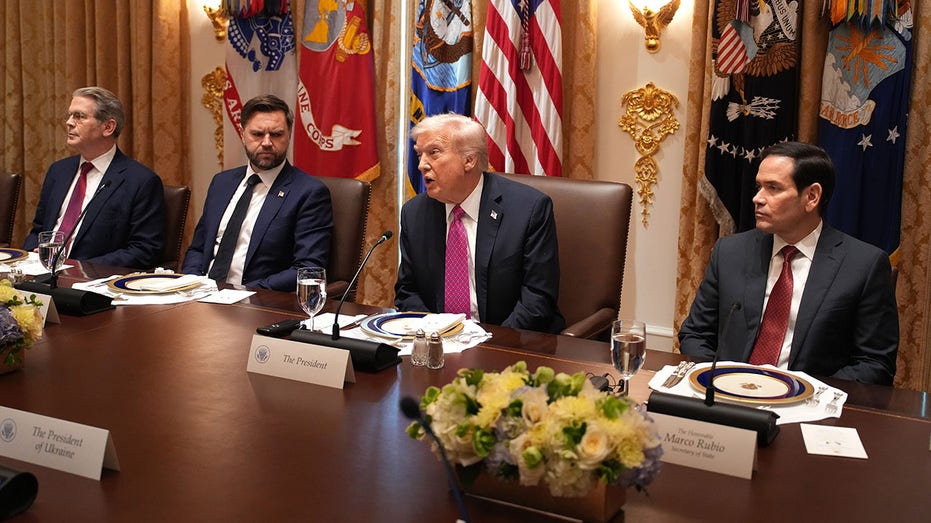
President Donald Trump touted the rise in oil traffic amid the negotiations with Iran. (Getty Images)
The Joint Maritime Information Center (JMIC), a U.S.-led international maritime security organization based in Bahrain, lowered the regional threat level to moderate on June 18 after the U.S. and Iran agreed to open the waterway during the 60-day negotiating window.
However, it noted there have been confirmed mines in the waterway and recommended vessels use the southern route near Oman as it has been cleared of mines.
“Mariners should be advised of the existence of mines and expect naval presence as clearance operations continue,” JMIC said in its announcement. “Mariners should also expect congestion through transit routes and potential VHF hailing from naval forces to support free flow.”
ZELDIN TOUTS US ENERGY FUTURE, SAYS INDO-PACIFIC NATIONS INCREASINGLY INTERESTED IN AMERICAN SUPPLY

Tanker traffic in the Strait of Hormuz declined precipitously amid the Iran war. (Giuseppe Cacace/AFP via Getty Images)
The uptick in oil moving through the Strait of Hormuz has eased global oil prices, which surged to trade above $100 a barrel at times during the first two months of the conflict.
Prices for Brent crude, the global oil benchmark, were around $75 a barrel on Tuesday after declining about 0.3% on the day and over 4.5% in the past five days.
They also declined for the U.S. crude benchmark, West Texas Intermediate, which was about $73 a barrel on Tuesday after declining roughly 0.8% on the day and around 7.7% over the last five trading days.
GET FOX BUSINESS ON THE GO BY CLICKING HERE
Rising oil supplies from the Middle East with the return of tanker traffic through the Strait of Hormuz has also caused a shift in prices for North Sea crude, with prices for Forties crude from the North Sea trading at its lowest level in two years on Monday, Bloomberg reported.
Gatestone Institute senior fellow Gordon Chang joins ‘Mornings with Maria’ to discuss reports that a Chinese-made missile downed a U.S. fighter jet over Iran and what it could reveal about Beijing’s role in the conflict.
A Chinese supercomputer system surpassed an American computer for the world’s fastest, according to an industry list published in Hamburg, Germany, on Tuesday, giving China the edge over the U.S. with the fastest supercomputer for the first time since 2017.
LineShine, a system built by the Shenzhen Cloud Computing Center in China, took the crown from El Capitan, a supercomputer housed at the Lawrence Livermore National Laboratory in California, which had reigned supreme since November 2024.
The last time China held the top spot was in 2017, when the Sunway TaihuLight was ranked No. 1. The U.S. had held the top spot consistently since dethroning Japan’s Fugaku in 2021.
MICROSOFT CEO SATYA NADELLA’S WARNING ABOUT THE AI RACE
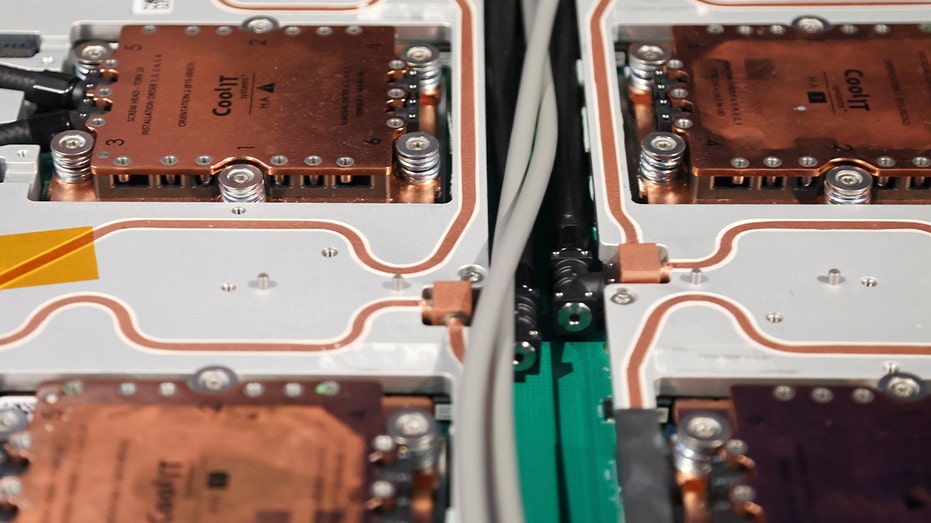
A computer blade for the Hewlett Packard Enterprise El Capitan supercomputer at the HPE Discover event at the Sphere in Las Vegas on June 24, 2025. (Ian Maule/Bloomberg via Getty Images)
LineShine, unlike the majority of high-end supercomputers, is not powered by graphics processing units (GPUs) such as the ones made by chip manufacturer Nvidia. The new compute champion, instead, runs on standard central processing units (CPUs). In total, LineShine runs on over 13 million CPUs, according to the TOP500 List.
The TOP500 List uses a metric called the High Performance Linpack (HPL) benchmark to measure supercomputer performance. Evaluating a computer along this benchmark involves making the system run a protracted series of calculations, pushing the system to its limit in an attempt to ascertain how much computing it can actually do.
“This performance does not reflect the overall performance of a given system, as no single number ever can. It does, however, reflect the performance of a dedicated system for solving a dense system of linear equations,” the TOP500 list writes on its website.
APPLE CEO TIM COOK WARNS OF “UNAVOIDABLE” PRICE HIKES AMID AI-DRIVEN CHIP CRUNCH
Using this benchmark, TOP500 determined that LineShine performed 20% better than El Capitan.

The Hewlett Packard Enterprise El Capitan supercomputer at the HPE Discover event at the Sphere in Las Vegas on June 24, 2025. (Ian Maule/Bloomberg via Getty Images)
LineShine’s entrance onto the list also made it the fifth supercomputer in the world to demonstrate exascale capacity, meaning it can perform one quintillion calculations per second.
GET FOX BUSINESS ON THE GO BY CLICKING HERE
While China nabbed the top spot, the U.S. still dominated the rankings overall, holding the second, third and fourth spots with El Capitan, Frontier and Aurora.
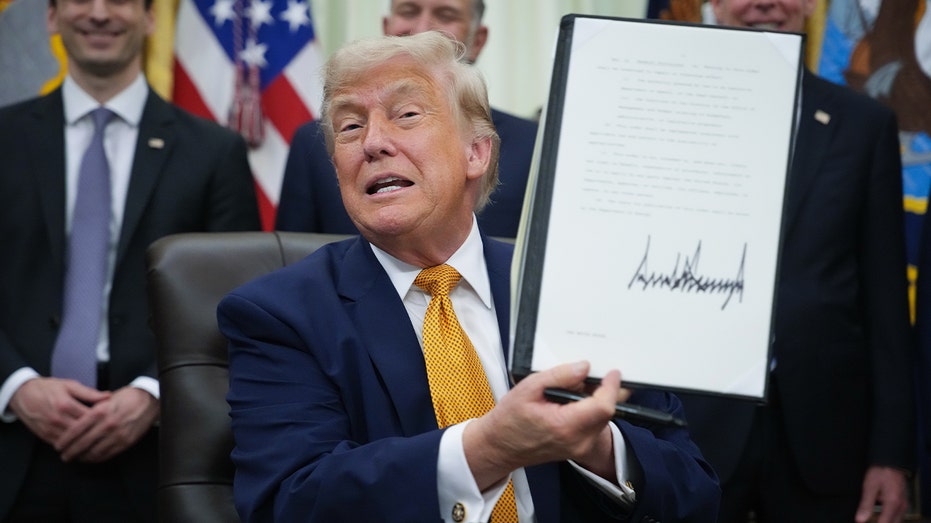
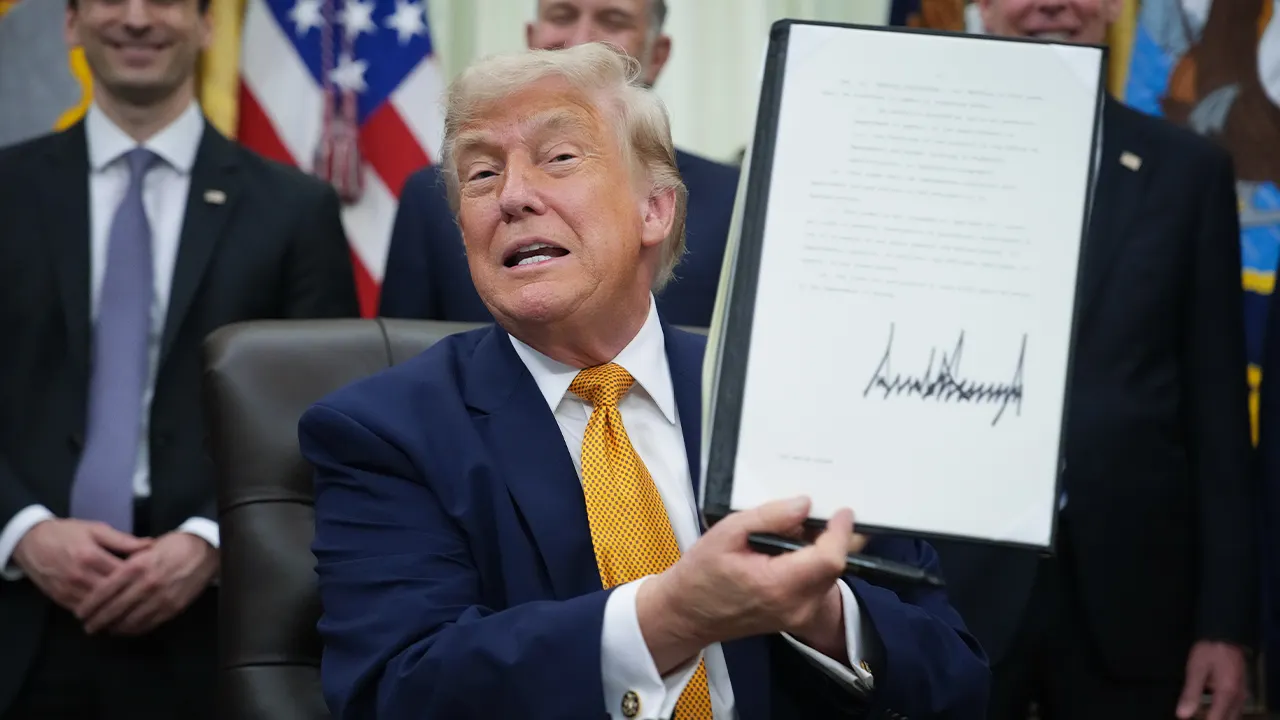
President Donald Trump shows an executive order he signed at the White House related to quantum computing on June 22, 2026. (Andrew Harnik/Getty Images)
The Chinese computer’s debut on the list comes one day after President Donald Trump signed an executive order related to quantum computing, moving the U.S. to upgrade its efforts in the emerging technology that some experts say will transform the computing landscape.

In two of Northern Ireland’s port towns, the starkly different economic impacts of the 10 years since Brexit come to life.
In Larne, garden centre owner John Shannon points to a £387 “export charge” he must now pay just to bring in roses from Great Britain (GB).
In Warrenpoint, food manufacturer Brian Reid sees a different reality.
“Off the back of the Brexit vote, we picked up a lot of customers who wanted to source on the island of Ireland,” he said.
In the 10 years since the referendum result that saw the UK leave the EU, Northern Ireland’s economy has outperformed the UK average on some key measures.
Northern Ireland has a Brexit deal which means it has a closer economic relationship with the European Union (EU) than other parts of the UK.
It is tempting to conclude the better performance is all due to that special deal.
The reality is more complicated than that.
Part of the story is Northern Ireland undergoing a delayed recovery having suffered a deeper and longer recession following the 2008 financial crisis and property crash.
On a wider note, Brexit set the tone of politics in Northern Ireland for years, leading to the suspension of devolution between 2022 and 2024. Its impacts remain divisive and contested.
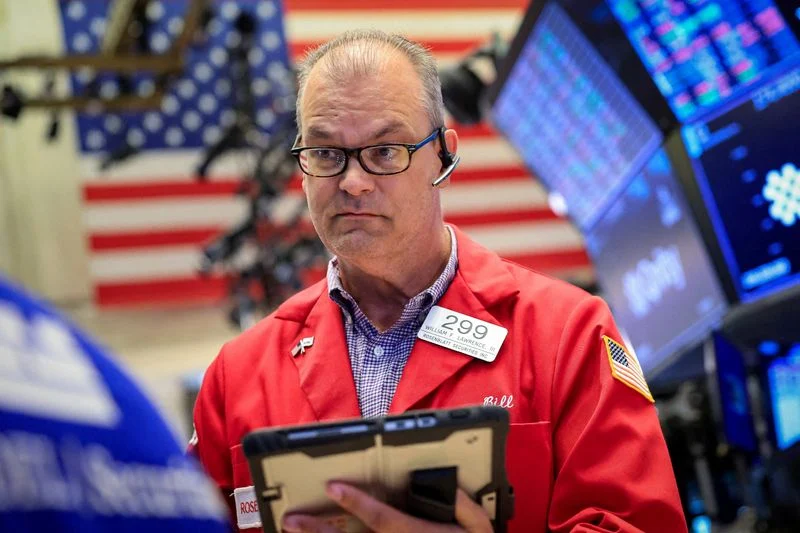

S&P 500, Nasdaq futures tick up as tech shares stabilize
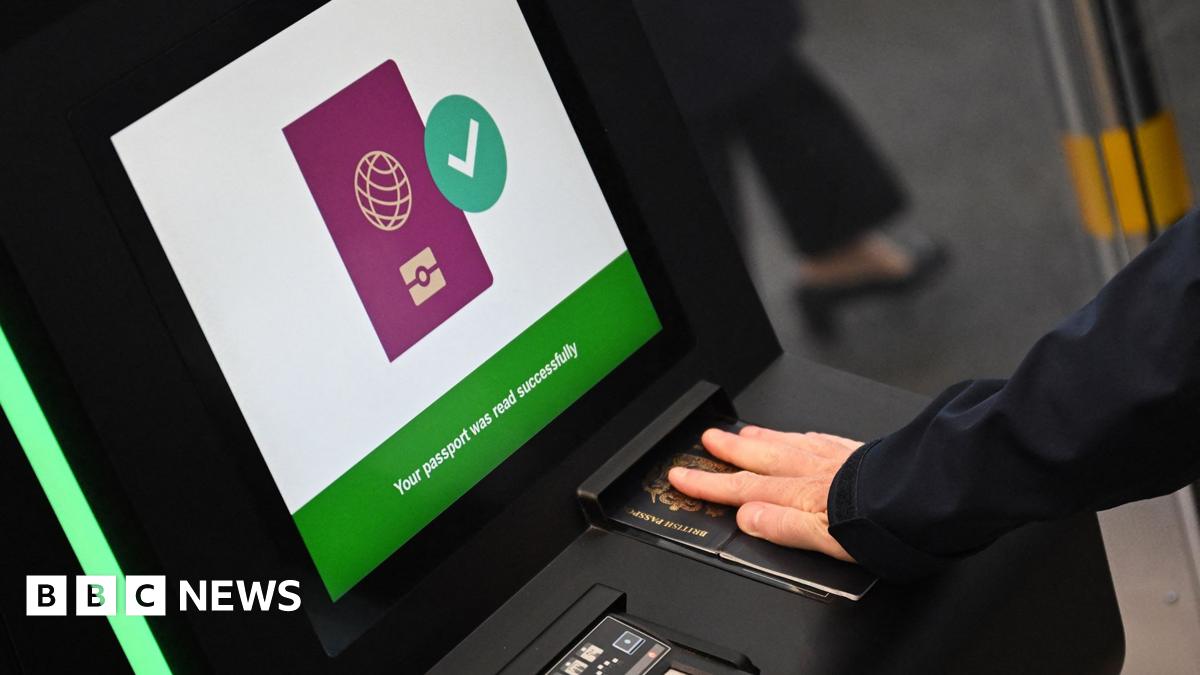
EES started to be rolled out in October last year and is now fully up and running.
The time it takes to register biometric information means people have been told to prepare for a wait at border controls.
During the introductory period, queues started to flare up at certain airports at busy times.
Since then, the system has been working well in some airports, while waits of several hours have been reported at others.
A representative of airline trade body IATA has warned queues in some places could be as long as six hours.
Travel experts and industry figures have blamed problems with the technology and border staffing levels. There have also been reports of people having to register their biometric information more than once.
The UK boss of Wizz Air told the BBC passengers should be prepared for a wait, and turn up three hours before their flight home.
Some passengers have missed flights home because the wait for EES checks meant they could not reach their gate in time.
Whether airlines will hold flights for passengers who get held up is a mixed picture. Some say they will wait wherever possible, while Ryanair is an example of a carrier which has said it will not.

Fed Chair Kevin Warsh struck a hawkish tone during his first press conference leading the central bank last week. That was enough to put a dent in trading for the day, but markets quickly shook off volatility. The future still looks bright for markets through the rest of this year, but today I’m breaking down the key risks to watch in the second half of 2026, and how investors are digesting Warsh’s not-so-detailed preview of the Fed’s path forward.
Cause of death for children, 2 and 4, found in car during 40C heat confirmed
Helus Pharma prices $50 million stock offering at $4.85/share

South Korea Includes Token Securities in Capital Markets Overhaul


-

 Fashion5 days ago
Weekend Open Thread: Miami – Corporette.com
-

 Entertainment4 days ago
Renter of Home in Anne Heche Crash Denies Settlement With Son
-

 Tech2 days ago
Microsoft accidentally kills epic Outlook email threads
-

 Business4 days ago
Soccer-U.S. defends Iran World Cup travel restrictions, says discussions ongoing
-
 Sports15 hours ago
Two goals and an assist by sheer aura: Cristiano Ronaldo just entered the World Cup chat
-
Crypto World6 hours ago
Bitcoin (BTC) Dips Below $62K, Ethereum (ETH) Plunges 6% Daily: Market Watch
-

 Politics6 days ago
BBC Reporter Discusses Cross Party Criticism Of Trumps Iran Deal
-

 Crypto World3 hours ago
Securitize Wraps Roubini's SEC-Registered ETF as Dubai VARA Digital Security
-
Business9 hours ago
Entergy settles forward sale agreements, raises $672 million in cash proceeds
-
 Business4 days ago
Wall Street Week Ahead: Investors see Micron earnings as pulse check of AI rally momentum
-

 Politics4 days ago
Andy Burnham and the meaning of Makerfield
-

 Tech6 days ago
AWS enters the context layer race with a graph that learns from agents, not manual curation
-
 Crypto World4 days ago
Can Charles Hoskinson Really Rescue Cardano?
-

 Crypto World4 days ago
HIVE shares jump as $220M AI deal speeds Bitcoin mining pivot
-

 Crypto World4 days ago
Jake Chervinsky accuses CME of protecting derivatives monopoly
-

 NewsBeat5 days ago
Keir Starmer Allies Question His Chances For No 10
-

 Tech2 days ago
Nearly 7,000 fake Amazon domains registered ahead of Prime Day 2026, researchers warn
-
 Tech3 days ago
Signal’s Meredith Whittaker says AI chatbots ‘are not your friends’ and calls Copilot agents a backdoor
-

 Business5 days ago
Brexit cost 6% of UK economy, Bank of England company data suggests
-

 Sports5 days ago
FIFA World Cup 2026: Canada beat 9-men Qatar 6-0 to register first ever win | FIFA World Cup 2026
You must be logged in to post a comment Login