Connect with us
DAPA Banner
DAPA Coin
DAPA
COIN PAYMENT ASSET
PRIVACY · BLOCKDAG · HOMOMORPHIC ENCRYPTION · RUST
ElGamal Encrypted MINE DAPA
🚫 GENESIS SOLD OUT
DAPAPAY COMING

Tech

From alert fatigue to autopilot fatigue: How agentic AI shifts cyber risk

Published

on

For a long time, security teams have been dealing with the same problem: a constant stream of security alerts, but not enough context.

Missing details like user behavior, asset importance, or related activity, means there’s a heavy reliance on analysts to work out what actually matters.

Source link

Continue Reading
Click to comment

You must be logged in to post a comment Login

Leave a Reply

Tech

I cover gadgets for a living, and these Amazon device deals stood out

Published

on

Prime Day is usually one of the best times to buy Amazon’s own hardware, and this year’s device deals cover almost every corner of the smart home. We’re talking Kindles, Echo speakers, smart displays, Ring doorbells, Blink cameras, and Fire TV streaming sticks. I would not buy every discounted Amazon device just because it is on sale, but some deals are better than others. Some devices also make more sense depending on whether you want a smarter home, a distraction-free reading experience, or a better streaming setup. So here’s our top pick for some of the best Amazon devices Prime Day deals I’d check first.

Kindle Scribe Colorsoft (24% off)

The Kindle Scribe Colorsoft is the most interesting Kindle deal here because it is not just an e-reader. It has an 11-inch color display, a built-in notebook, pen support, AI-powered productivity tools, and support for importing documents from services like Google Drive and OneDrive. It is still a premium Kindle, so the discount matters. If you want one device for reading, marking up documents, sketching ideas, and keeping handwritten notes, this is the Amazon device I’d look at.

Great E-reader

Kindle Scribe Colorsoft

Pros

  • Stunningly thin and stylish
  • Fantastic note-taking experience
  • Impressive battery mileage
  • Responsive software with minimal lag

Cons

  • Lack of waterproofing
  • Restrictive software experience
  • Needs more stylus controls
  • Pretty expensive for its cause

Echo Show 11 (32% off)

The Echo Show 11 is the best pick here if you want an Alexa device that does more than play music and answer questions. It has an 11-inch Full HD touchscreen, spatial audio, and a built-in smart home hub, so it can work as a kitchen display, smart home dashboard, video calling screen, or streaming device. Amazon says it is designed for Alexa+, which makes it a better long-term buy if you want Amazon’s next-gen AI assistant features.

Solid smart hub

Echo Show 11

Pros

Advertisement
  • Sleek floating screen design.
  • Integrated Matter smart hub.
  • Advanced ambient AI sensors.
  • Clear room-filling audio quality.

Cons

  • No physical privacy shutter.
  • Audio distorts at maximum volume.
  • Alexa+ features restricted regionally.

Echo Dot Max (35% off)

The Echo Dot Max is the safer pick if you want better Alexa audio without adding another screen. Amazon claims it delivers nearly three times the bass of the regular Echo Dot, and it also includes a built-in smart home hub, Omnisense technology, and eero Built-in support for extending compatible eero networks. At 35% off, it is an easy upgrade for bedrooms, home offices, or smaller living spaces.

Great Smart Speaker

Echo Dot Max

Pros

  • Based on expert reviews from trusted outlets—including TechRadar, Trusted Reviews, SoundGuys, Business Today, and ZDNET—here is the aggregated synthesis of pros and cons for the Amazon Echo Dot Max: Pros Audibly upgraded bass performance
  • Complete smart home hub.
  • Premium 3D knit design.
  • Quick Alexa voice response.

Cons

  • Lacks wired audio inputs.
  • Awkward front control placement.
  • Mono audio hardware setup.
  • Restricted regional AI features.

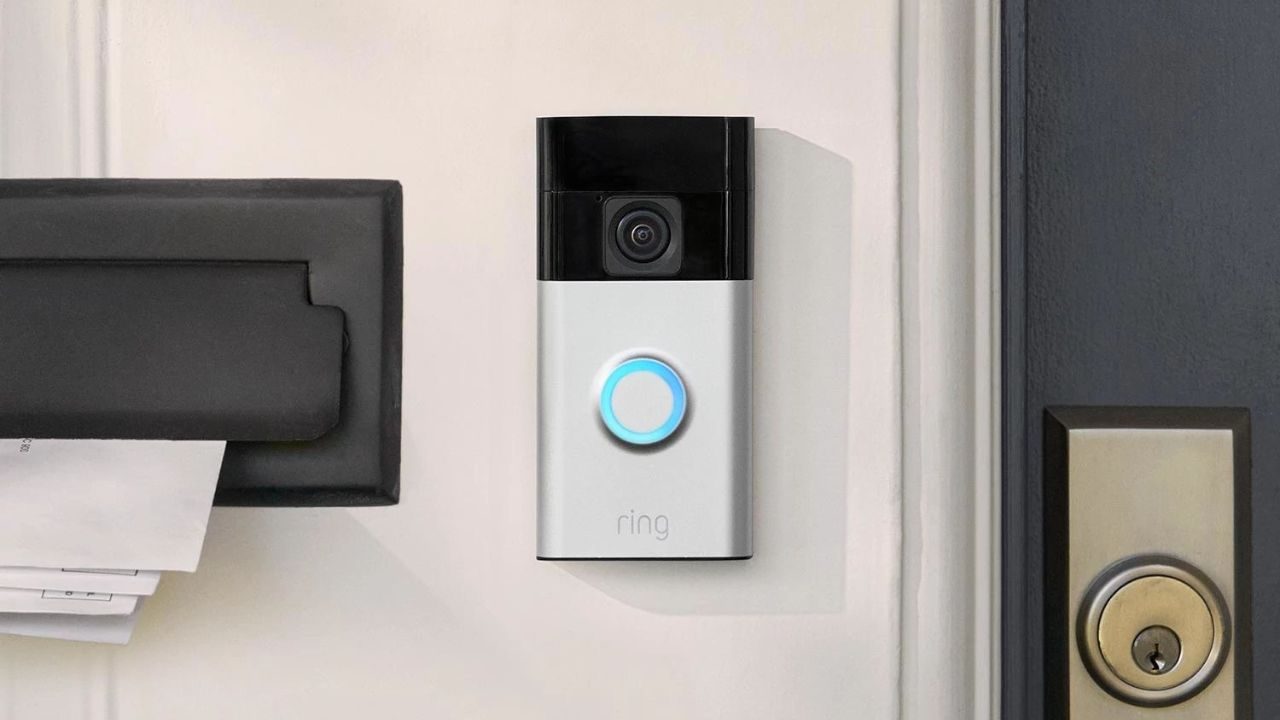
Ring Battery Doorbell (50% off)

The Ring Battery Doorbell is the one I’d buy for a simple front-door upgrade. It is battery-powered, easy to install, and does not require existing wiring, which makes it renter-friendly. This latest model offers Retinal 2K video, Head-to-Toe view, up to 6x Enhanced Zoom, Two-Way Talk, and real-time motion alerts. At 50% off, it is one of the easiest smart home upgrades to justify.

Best Smart Lock

Ring Battery Doorbell

Pros

  • Simple wireless DIY installation.
  • Head-to-toe wide vertical view.
  • Excellent smart home integration.
  • Convenient modern charging ports.

Cons

  • Essential features require subscription.
  • Limited native Google integration.
  • Non-removable battery design hassle.

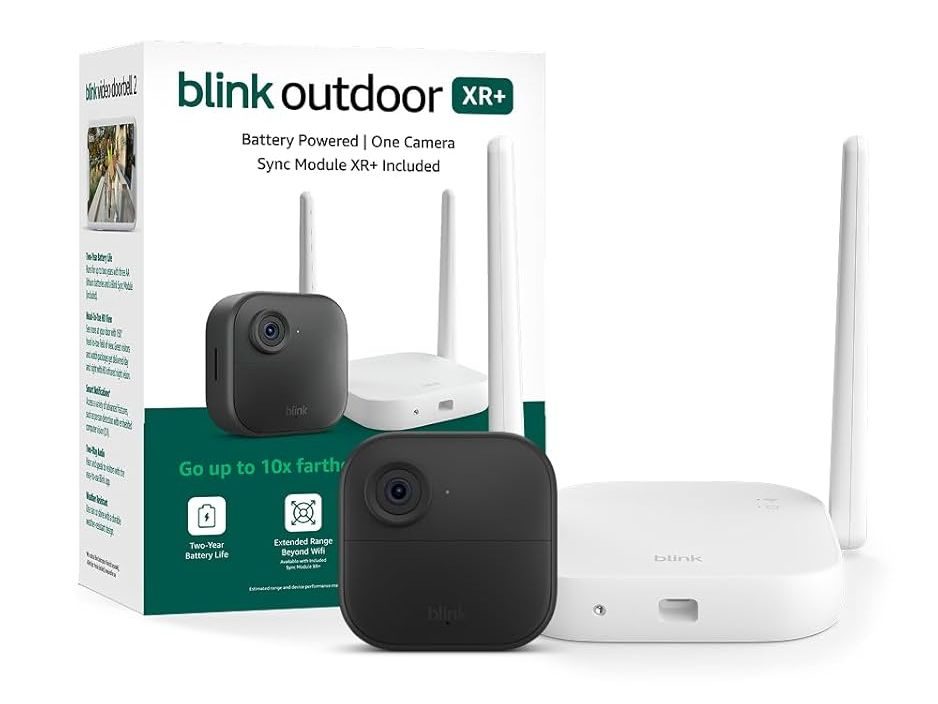
Blink Outdoor XR+ (65% off)

The Blink Outdoor XR+ is the deal I’d consider if Wi-Fi coverage is your biggest home security problem. Blink says its XR technology can extend coverage up to 10 times farther than Wi-Fi alone, with the Outdoor 4 camera working at much longer distances through the Sync Module XR+. So it’s useful for garages, sheds, gates, driveways, and larger properties where a standard wireless camera may struggle.

Best Extended-range Wireless security camera

Blink Outdoor XR+

Pros

  • Massive extended wireless range.
  • Long two-year battery life.
  • Excellent Alexa smart integration.
  • Simple wire-free DIY setup.

Cons

  • Subscription needed for AI.
  • No Google Home support.
  • Noticeable video feed lag.

Fire TV Stick 4K Plus (50% off)

The Fire TV Stick 4K Plus is the easiest impulse buy on this list. It is 50% off and supports 4K Ultra HD, Dolby Vision, HDR10+, Dolby Atmos, Wi-Fi 6, and AI-powered Fire TV Search with Alexa+. If your TV’s built-in apps are slow, outdated, or annoying to use, this is a cheap way to make it feel faster and smarter without replacing the whole screen.

Best 4K Streaming Device

Fire TV Stick 4K Plus

Pros

Advertisement
  • Supports 4K HDR content
  • Excellent Alexa voice integration
  • Affordable price point
  • Wide variety of apps

Cons

  • Ad-heavy user interface
  • Lacks modern USB-C port
  • Limited direct screen mirroring

Source link

Continue Reading

Tech

Claude can now join your Slack channels and work alongside your team

Published

on

For years, AI assistants have been siloed. You open ChatGPT, Claude, Gemini, or Copilot, type a prompt, get an answer, and move on. Anthropic’s new Claude Tag feature takes a different approach. Instead of making employees jump into a separate AI chat every time they need help, it brings Claude directly to where many teams already spend their day: Slack.

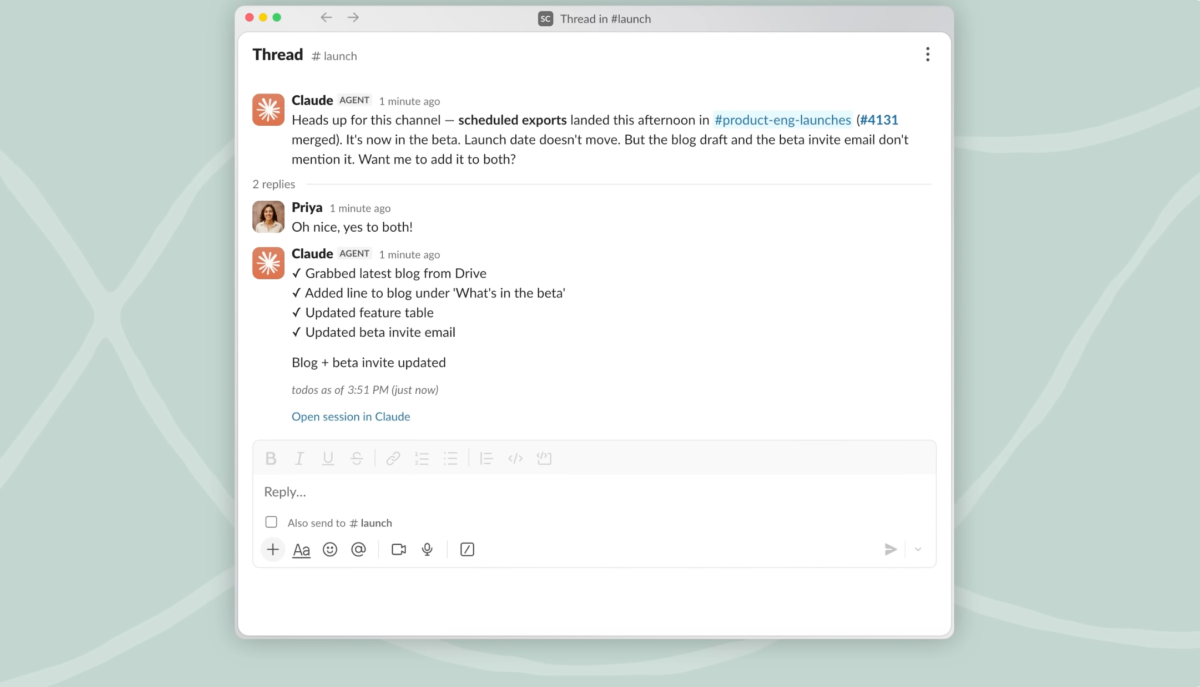
Add Claude to a channel, grant it access to needed tools, and tag @Claude for help — whether analyzing data, writing reports, reviewing code, or investigating incidents. But Claude Tag isn’t just another chatbot integration. Its key differentiator is that Anthropic positions it as a digital coworker for your team, enabling seamless collaboration where multiple users can jointly interact with the same AI within their work environment.

One AI to rule the channel (and hopefully the chaos)

What makes Claude Tag interesting isn’t that it can answer questions; it’s that it can ask them. Plenty of AI tools already do that. The bigger shift is Claude’s ability to serve as a shared, persistent participant within a Slack channel. Unlike other AI tools, Claude enables all team members to interact with a single instance, fostering collective visibility and continuity.

That means teammates can see what Claude is working on, continue tasks started by others, and build on previous conversations without constantly repeating context. Anthropic says Claude gradually learns the channel’s workflow and relevant projects if granted access to the right tools and data. That could mean spending more time simply asking Claude to do something.

How to set up Claude in Slack

If your organization has a Claude Enterprise or Claude Team subscription, getting started is relatively straightforward.

Advertisement

Step 1: Connect Claude Tag to your Slack workspace

Administrators first need to pair Claude Tag with the company’s Slack environment. Once connected, Claude can be added to specific channels where teams want AI assistance.

Step 2: Decide what Claude can access

This is arguably the most important step. Administrators choose which tools, datasets, and systems Claude can use. For example, a sales-focused Claude might gain access to CRM data and reporting tools, while an engineering-focused Claude could connect to repositories and development platforms. Anthropic says access can be tightly restricted to keep information isolated between teams.

Step 3: Set spending limits

Organizations can establish monthly usage budgets and channel-specific limits to keep costs under control. This gives teams room to experiment without worrying about unexpected AI bills showing up at the end of the month.

Step 4: Test Claude in a private channel

Before rolling it out company-wide, Anthropic recommends testing Claude in a private Slack channel. This allows administrators to verify permissions, tool access, and workflow behavior before broader deployment.

Step 5: Start assigning work

Once everything is configured, employees can simply tag @Claude and describe what they need. Claude then breaks the task into smaller steps, uses available tools where necessary, and eventually posts their results back into the Slack thread.

Advertisement

The most interesting feature might be what Claude does when nobody is talking to it

Most AI assistants are reactive; they wait for instructions. Claude Tag can be configured to be more proactive. With its optional “ambient” behavior enabled, Claude can monitor the channels and tools it has access to, surface potentially useful updates, flag unresolved issues, and follow up on tasks that appear to have stalled.

That’s a notable shift from the typical chatbot experience today. Instead of acting like a search engine that waits for prompts, Claude starts behaving more like a team member, keeping an eye on ongoing work. Whether that sounds helpful or mildly terrifying probably depends on how many Slack notifications you already receive.

Still, the broader trend is difficult to ignore. While many AI tools focus on chat interfaces, Claude Tag differentiates itself by embedding AI into collaborative workplace tools and acting as a delegate that works within the team’s workflow. And if that vision takes hold, workplace AI could soon mean more real collaboration—where @Claude becomes your team’s reliable problem-solver, not just another app to type into.

Source link

Advertisement
Continue Reading

Tech

South Korea chip bonuses flagged as inflation risk

Published

on

TL;DR

Samsung and SK Hynix workers stand to receive hundreds of thousands of dollars each in profit-linked bonuses as the AI memory boom drives record earnings. The Bank of Korea warns the payouts could trigger a wage domino across industries, inflate house prices in the semiconductor belt, and push inflation well above its 2 per cent target.

The semiconductor super-cycle has made South Korea’s chip workers extraordinarily well paid, and the country’s central bank is now worried about what happens when that money hits the wider economy. The Bank of Korea warned this month that performance bonuses at Samsung Electronics and SK Hynix could spread into broader wage increases and add upward pressure on inflation, which it already projects will come in at 2.7 per cent this year, well above its 2 per cent target.

Advertisement

The scale of the payouts is remarkable. Bloomberg Economics projects that the combined bonus pool at the two companies will grow from 4 trillion won ($2.7 billion) this year to 16 trillion won in 2027 and 30 trillion won by 2028.

How the deals were struck

SK Hynix set the precedent in September 2025 when its union agreed a deal that allocates 10 per cent of annual operating profit to a cash bonus pool. Samsung Electronics followed in May this year after its union threatened an 18-day strike that was suspended only when the company agreed to create a special bonus pool worth 10.5 per cent of its semiconductor division’s operating profit, paid partly in treasury shares.

The 💜 of EU tech

The latest rumblings from the EU tech scene, a story from our wise ol’ founder Boris, and some questionable AI art. It’s free, every week, in your inbox. Sign up now!

Advertisement

The bonuses are enormous because the profits are enormous. Samsung and SK Hynix posted a combined 91 trillion won in operating profit in the first quarter of 2026 alone, driven by insatiable demand for the high-bandwidth memory chips that power AI data centres.

What individual workers stand to earn

At SK Hynix, which recently joined the trillion-dollar club, each of the company’s roughly 35,000 employees could receive an average bonus of around 700 million won ($454,000) this year if operating profit hits projections, according to Tom’s Hardware. Samsung’s chip division workers could receive around 626 million won ($410,000), according to South Korean media estimates that could not be independently verified from primary company disclosures.

The sums have already changed spending patterns. Card spending growth in Gyeonggi Province, home to major Samsung and SK Hynix fabrication sites, has reportedly outpaced other regions, with luxury consumption “rapidly increasing in southern Gyeonggi, according to CNBC.

The wage domino

The central bank’s concern extends beyond the chip sector. Samsung’s profit-linked bonus formula has set a template that unions across South Korean industry are now demanding for themselves.

Advertisement

Hyundai Motor’s union has demanded 30 per cent of net profit as performance bonuses, a payout that would amount to more than 3 trillion won based on 2025 earnings. HD Hyundai Heavy Industries’ union has made a similar demand pegged at 30 per cent of operating profit.

Bloomberg Economics economist Kwon Hyo-sung described the phenomenon as a “wage domino,” noting that the semiconductor deals are “already spreading” across the conglomerate sector. The revised Trade Union and Labour Relations Adjustment Act, known as the Yellow Envelope Act, which took effect in March, has also strengthened the legal basis for workers to demand that principal companies share excess profits across supply chains.

From bonuses to house prices

Kwon warned that the bonus cash is likely to flow into real estate rather than consumer spending. Samsung and SK Hynix employees are high earners with a low marginal propensity to consume, he said, meaning a significant portion of the payouts will go into savings, the stock market, and property in the “semiconductor belt” cities of Yongin, Dongtan, and Suwon.

The bonus pool at the two companies averaged 8 per cent of annual mortgage loan growth from 2021 to 2025, according to Bloomberg Economics. That figure is projected to reach 32 per cent in 2027 and 57 per cent in 2028, a volume that could push up home prices across greater Seoul.

Advertisement

What the central bank does next

Bank of Korea Governor Shin Hyun-song, who took office earlier this year, has already signalled a hawkish stance. He told reporters this month that “growth, inflation, the exchange rate, real estate, all factors considered in monetary policy are pointing in the same direction,” effectively confirming a rate rise within the year.

The BOK held its benchmark rate at 2.5 per cent in May, but two of seven board members voted for an increase, making the July and September meetings critical windows. It is a peculiar problem for a central bank to have: the very industry that has made South Korea indispensable to the global AI supply chain is now generating so much wealth that it threatens the country’s price stability.

Source link

Advertisement
Continue Reading

Tech

Anthropic’s Claude Tag is learning your company, one Slack message at a time

Published

on

Anthropic is introducing Claude Tag in research preview, an “always-on Claude” that lives in Slack and acts as an AI teammate. The new feature — which allows users to tag @Claude to provide insights in chats and assign tasks — will begin in research preview, available through Slack for Claude Enterprise and Claude Team customers.

Claude Tag is an evolution of several integrations that already exist. Users can already DM @Claude within Slack or tag it in channels for on-demand help, and Claude Code in Slack routes coding tasks from channel mentions to full coding sessions on the web, posting updates back into the thread. 

But Claude Tag adds a layer of persistent context and memory that would be difficult to maintain with previous tools. “As Claude follows along with its channel, it learns ever more about the work,” reads a statement from Anthropic. “Claude can also automatically gather facts from elsewhere in the organization, if it’s granted permission to read other channels.”

With Claude Tag, everyone in a given Slack channel can access a single Claude identity, meaning “anyone can see what Claude has been working on, and can pick up the conversation from where the last person left off.” System administrators will specify which tools, information, and channels Claude can access, and each Claude identity will stay scoped to whichever channels the admins define, so that a Claude set up for legal work can’t seed memories into the engineering channel, for example.

Advertisement

When assigned a specific task, Claude Tag will break down the task into stages and will work through them using whichever tools it has access to, responding in a Slack thread with what it has created. But Claude Tag also features an ambient mode that proactively jumps into the chat of its own accord to keep your team updated, flag things from across the organization, and follow up on threads or tasks that have been forgotten.

Anthropic says this makes it feel like you’re “working with a real colleague — one that can produce work in public view, with far greater context and understanding than before.”

That context is an increasingly critical part of enterprise deployments, and Anthropic isn’t the only company focused on it. Microsoft also has Graph, expressed through Copilot and Work IQ. Snowflake and Databricks are positioning their platforms as the back-end support containing tacit organizational knowledge that agents can tap into. Glean is also building an intelligence layer that understands company context and sits between the model and the enterprise data.

When you purchase through links in our articles, we may earn a small commission. This doesn’t affect our editorial independence.

Advertisement

Source link

Continue Reading

Tech

95 Prime Day Deals on Gear We’ve Tested and Would Spend Our Own Money On

Published

on

Amazon Prime Day is here once again. Amazon’s annual Prime Day deals aims to entice us with an endless scroll of “discounts” (some real, many fake), hammering away with red slashes, big percentages off, and coupons you can only see after adding to cart.

Featured Cyber Monday Deal

While Prime Day deals aren’t what they once were—its success has inspired a massive number of fake deals and attracted obscure brands—there are still some very significant discounts to be found. For the next four days, the WIRED Reviews team will be pooling our hundreds of years of collective expertise to find actual savings on products we have personally tested and approved. Let us absorb the neon signage and “buy now” buttons on your behalf and share the deals worth sharing. We’ll keep this list updated frequently for the duration of the sale, which runs from June 23 to June 26.

Updated 12 pm ET June 23: We have searched for and added more great deals to the list.

Advertisement

Contributors: Louryn Strampe, Simon Hill, Nena Farrell, Martin Cizmar, Kat Merck, Matthew Korfhage, Molly Higgins, Luke Larsen, Scott Gilbertson, Boutayna Chokrane


WIRED Featured Deals


Table of Contents

Best Tech Deals

Advertisement
Gear-Anker_MagGo_Qi2-SOURCE-Simon-Hill

Anker

MagGo Power Bank (10K) (Qi2)

This is our very favorite MagSafe power bank. Wireless and MagSafe charging aren’t always the fastest or most efficient, but despite its bulk, this large-capacity bank can top off modern phones once (or maybe a little more than that) without overheating or taking forever. There’s a built-in kickstand and display, too. —Louryn Strampe

Source link

Advertisement
Continue Reading

Tech

A Vintage VHS Player Gets New Life as a Stealth Gaming Machine

Published

on

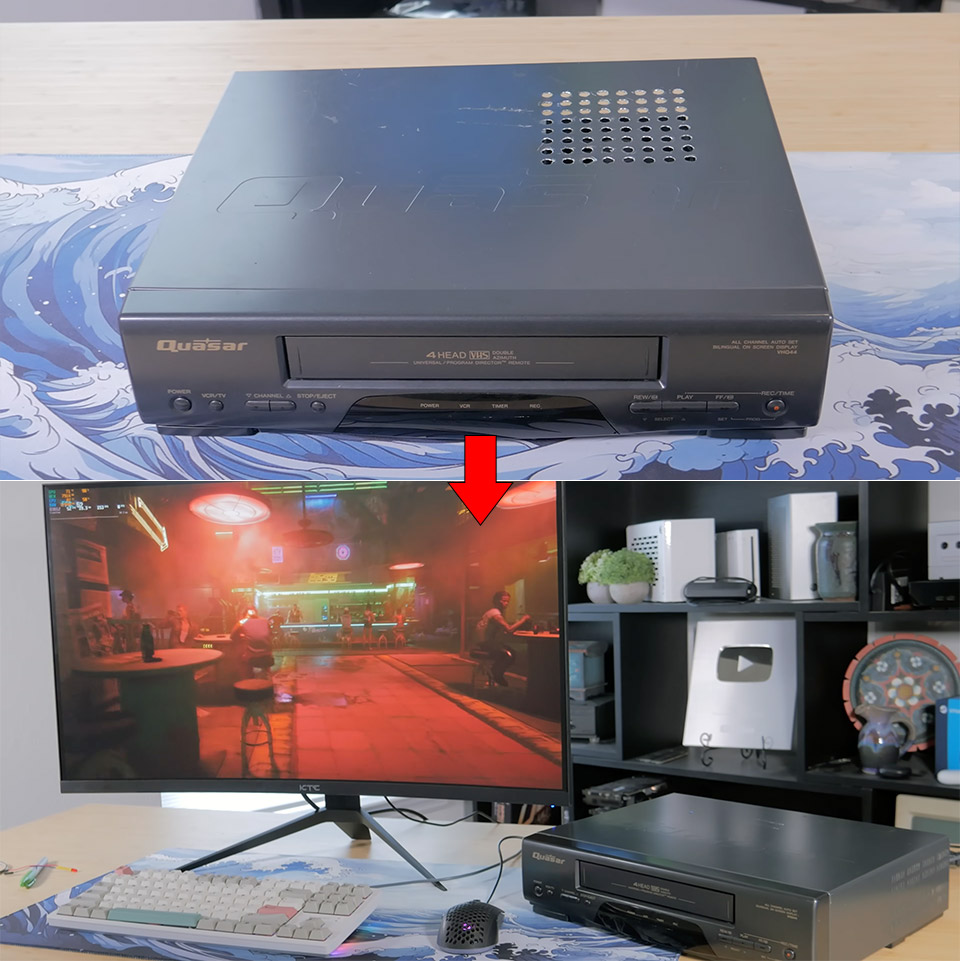
VHS Player PC Case Mod
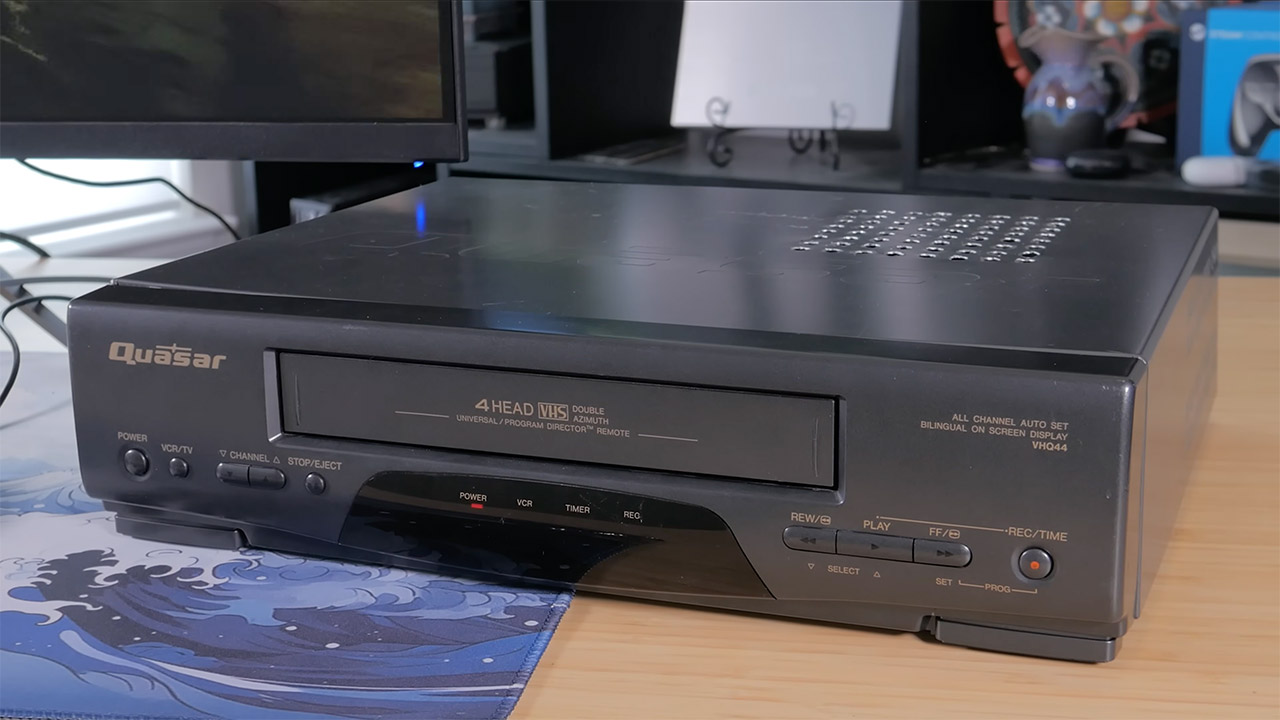
Matt received a broken Quasar VHS player from a family member who knew his habit of turning odd objects into computers. The unit arrived dusty, with a forgotten tape still inside and its mechanisms seized from years of disuse. On the workbench it looked like any other relic destined for the curb. After weeks of careful work it now runs modern games at 1440p and holds its own at 4K in several titles.


Many of his design decisions were based on the amount of space inside the plastic casing. To keep things compact, he chose an ITX motherboard, which makes sense when working with restricted space. The Gigabyte A520I AC is an excellent pick, with Wi-Fi, solid connectivity, and a single M.2 slot, all at a reasonable price. Matt decided to couple it with a Ryzen 5 5600. This six-core, twelve-thread processor provided enough oomph to handle high-fidelity gaming without exceeding the power or heat limits of his compact design.

Sale


Portta VHS to Digital Converter, Video to Digital Recorder with Remote, Compatible with VHS, VCR, DVR…
  • 【Video to Digital Converter】Effortlessly convert and store analog video and audio signals into digital formats, Recording resolution up to 1080P…
  • 【USB/SD Card for Storage】Equipped with a 3.0″ preview LCD and built-in speaker. No capacity limitation for the USB drive or TF card (not…
  • 【Video & Audio Format】Store video in MP4 format or audio in MP3 format. Supports NTSC-M/J 3.58, NTSC 4.43, PAL B/G/H/I/D (PAL/N) standard TV…

Matt chose a Sapphire Pulse RX 6600 XT graphics card with dual fans, and the GPU easily handles demanding games at 1440p and 4K with medium settings with upscaling in many situations. Storage came from a 1TB Crucial P1 NVMe drive he had lying around, and memory, of course, was 32GB of Corsair LPX DDR4-3600. Before he started tinkering with the casing, he had spent roughly $850 on parts.

Advertisement

VHS Player PC Case Mod
Power supply selection was a bit of a headache, primarily since normal SFX units would not fit in the limited area. So Matt went with a tiny 400W FSP Flex ATX supply, which sort of fit, although it gets a little loud under load and comes with older-style wires. He had to use an extension cord to transfer power from the wall to the case where it lives. First, he disassembled the entire unit, including every screw, the top cover, and the front panel. He was shocked by how much dust came out; it was as if the case was a hoover disguised. A piece of Lion King tape was even discovered during the disassembly procedure. The next step was to remove the plastic standoffs and bracing, which he performed using a rotary tool, cutoff wheels, and flush cutters. Once it was completed, the interior was relatively clean.

VHS Player PC Case Mod
A custom skeleton made of aluminum angle stock then served to give the components something to mount on. He chopped some aluminium into the desired shape, bent it at 45 degrees, drilled some holes, and created a U-shaped frame to support the motherboard and GPU. Additional brackets were required to support the power supply and prevent the GPU from slumping into a corner. Of course, there were countersunk bolts and precise alignment to deal with the offset original mounting holes. Overall, it was somewhat fiddly.

VHS Player PC Case Mod
To get the front panel to operate again, he had to rebuild it somewhat because the original buttons did not line up properly after he was inside the casing. So he attached the new buttons to some little aluminum brackets, which were held in place with screws and super glue underneath the plastic. The power button and LED just plug into the motherboard headers, while the three additional buttons he added are utilized to control media playing using an Arduino Pro Micro. Matt simply created some code to map them to keyboard shortcuts for play/pause and volume, nothing too complex. Finally, he installed a Silverstone remote start module that allows us to power the entire setup from across the room using a key fob, allowing him to turn it on and off without having to physically touch the case.

VHS Player PC Case Mod
After running the system through its initial tests, he saw that the CPU temperatures were rising far too quickly, reaching 90 degrees after only a few minutes of load. He ended up drilling a grid of quarter-inch holes above the low-profile Thermalright cooler to increase airflow out of it, as well as cutting out some GPU vents in the frame and shell where possible.Matt also added some rubber feet to elevate the entire thing off the ground, allowing it to pull in air from the bottom more effectively. After making all of these changes, the CPU temperature remained low, generally in the upper seventy, even under extended, continuous loads.

VHS Player PC Case Mod
The first time he powered it up after routing all of the cords and wiring up the custom controls, everything went well. Windows installed without trouble. Matt believes that if you want a small, always-on setup for day-to-day use, a Linux distribution like Bazzite would be a better choice than Windows. And in terms of performance, it definitely delivered. Cyberpunk 2077 in 4K on medium settings averaged 100 frames per second, with 1% lows of roughly 69. Borderlands 3 displayed comparable stable results at the same resolution and setting. Unfortunately, its handling of modern games is just good enough to allow you to play at higher resolutions without having to perform any significant fine tuning.

Source link

Continue Reading

Tech

Meta Glasses Drop the Famous Logos for a $299 Starting Price and Wider Everyday Appeal

Published

on

Meta Glasses Smartglasses Reveal
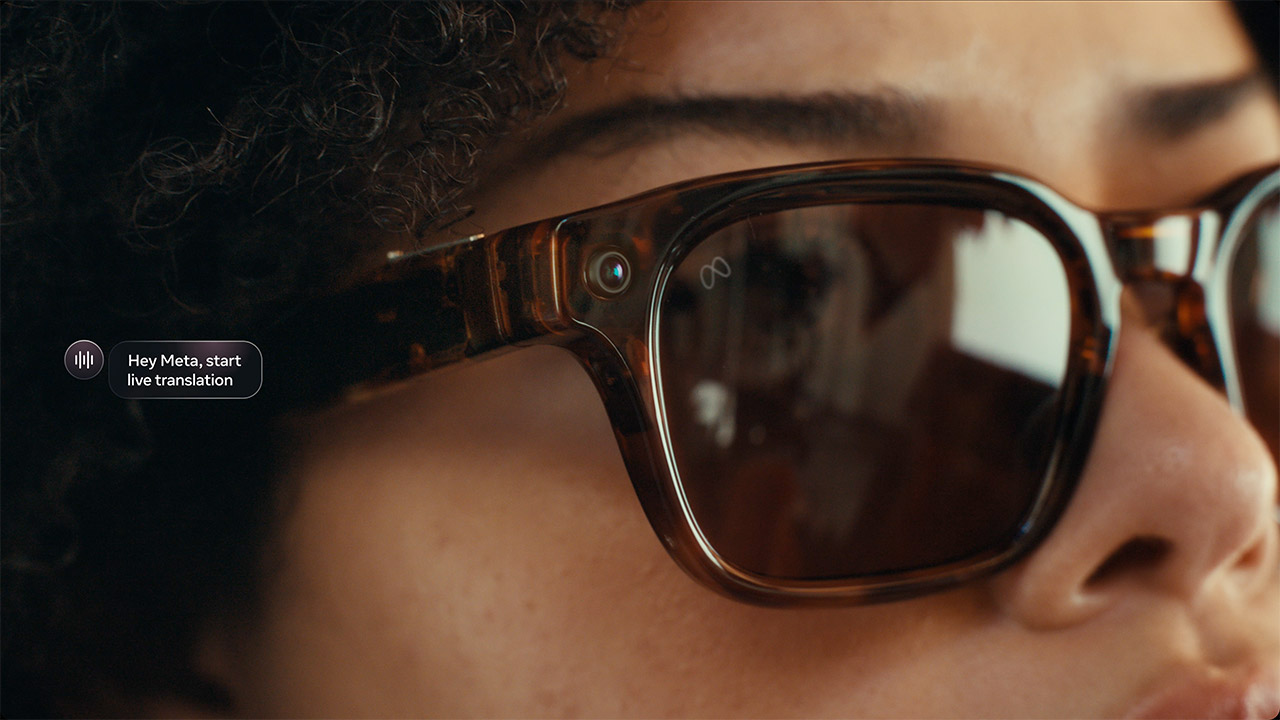
Meta just launched its own line of smart glasses built with EssilorLuxottica, the same partner behind the popular Ray-Ban Meta models, called Meta Glasses. These new frames skip the big designer branding on the temples and focus instead on lower prices, more style choices, and fit tweaks that should work for more face shapes. The base models start at $299, while a special collaboration with Kylie Jenner costs $399.


Three new frame families are launching at the same time. The Adventurer’s sleek, rectangular form, available in regular and large sizes, provides a classic look that will complement your everyday style. The Fury takes a bolder approach, with more serious lines and a larger choice of colors to choose from, while the Kylie Jenner edition, the Starfire, is a slim oval shape with a tiny gem embellishment on one lens and comes in either black or tortoiseshell – rather classy.


Ray-Ban Meta (Gen 1), Wayfarer, Matte Black | Smart AI Glasses for Men, Women — 12 MP Ultra-Wide…
  • #1 SELLING AI GLASSES – Move effortlessly through life with Ray-Ban Meta glasses. Capture photos and videos, listen to music, make hands-free calls or…
  • CAPTURE WHAT YOU SEE AND HEAR HANDS-FREE – Capture exactly what you see and hear with an ultra-wide 12 MP camera and a five-mic system. Livestream it…
  • LISTEN WITH OPEN-EAR AUDIO — Listen to music and more with discreet open-ear speakers that deliver rich, quality audio without blocking…

The true game changer, however, is the technology that goes into each pair. Gone are the days of cumbersome nose pads or swapping them out; now you can simply snap them in and out owing to a three-way adjustable mechanism and hinges that can be adjusted to fit your head perfectly. Early adopters have raved about how much of a difference this makes; even folks who don’t normally wear glasses have reported that they stay in place for hours on end without pain.


Prescription lenses are not a problem because they can be fitted to any of the frames, and with 26 different color and lens combinations available, there is plenty of choice without having to rummage through specialist shops. The maker also claims that the battery life is promising, allowing you to wear them all day and night without having to continually recharge them. The glasses themselves will last you more than 8 hours, and when you add the portable charging case, you’ll have an extra 40 hours of power.

Advertisement

Meta Glasses Smartglasses Reveal
Of course, there are a few things that will drain the battery faster, such as utilizing AI or taking a lot of shots at once, but overall, you should be able to get a day’s worth of use out of them. The camera is comparable to what we saw on the Ray-Ban Meta glasses, with high-quality photos and 3K video. There’s also a new photo option that takes a lot of photos in quick succession and then lets you choose the best one, which is quite cool. Oh, and did we mention you can shoot video and photographs fully hands-free using either voice commands or the camera button on the frame?

Meta Glasses Smartglasses Reveal
The star of the show, however, is most likely the Meta AI, which is equipped with a new multimodal model called Muse Spark that is specifically built to make sense of the real world. The demos are very remarkable, as the AI can instantly detect sceneries, objects, and even handle language translation in real time, including fluidly flipping between languages, so if someone is speaking a combination of English and Mandarin, the AI should pick it up no issue.

Meta Glasses Smartglasses Reveal
Another nice touch is that the camera button on the frame can be programmed to summon the AI immediately. As for privacy, everything is quite basic. When the camera or microphones are turned on, a little LED light flashes, and the app settings allow you to simply control what is transmitted. Of course, there will be some questions about others around, but the company has emphasized the built-in safety and simple toggle alternatives.

Meta Glasses Smartglasses Reveal
The base models will cost $299, which is a significant reduction from the previous entry-level prices for the Ray-Ban Meta glasses. The same fundamental camera, audio and AI architecture is all there, plus the additional fit improvements. The Kylie Jenner Starfire edition is an extra $100, but that gets you the fancy gem accent and the option of a custom AI voice. As for where to get them , Meta’s own site, Best Buy, Amazon, Lenscrafters and Sunglasses Hut are all stocking the glasses.

Source link

Continue Reading

Tech

Are We Stuck With Sneaky Subscription Cancellation Practices? One Attorney Chimes In

Published

on

The average US adult spends over $1,300 per year on subscriptions, according to CNET’s latest subscription survey. And they’re wasting an average of $252 per year in unused subscriptions. That’s even more than last year’s survey, when the average annual spend was $1,080, and we wasted slightly less — $204 annually. One way to lower that cost is to cancel the services you no longer want, but getting rid of them isn’t always simple. Some companies make it hard for customers to cancel memberships. 

Last year, the Federal Trade Commission’s Click to Cancel rule was struck down, which would have prohibited deceptive subscription cancellation practices and required companies that offer subscription services to make it just as easy to cancel as it is to sign up. The court put a stop to that in July because the FTC didn’t conduct a preliminary regulatory analysis — which is required for rules that could impact the economy by more than $1 million. There’s a chance that could change in the future. 

“The FTC is currently working on a revised Click to Cancel regulation, and FTC Bureau of Consumer Protection Director Chris Mufarriage, I understand, intends to make uniform rules of the road nationwide,” Brian Goodrich, a regulatory attorney at Holland & Knight, told CNET. 

Advertisement

However, the FTC isn’t stopping there. Other legislatures are blocking companies from deceptive subscription cancellation practices.

Check for state consumer protection laws 

If you’re dealing with misleading subscription cancellation or renewal practices, start by checking which state laws apply to consumer protections and subscriptions. I recommend checking your state’s legislative portal and searching for related terms for related acts or laws.

For example, some states have automatic renewal laws that prohibit a company from automatically renewing your subscription without your consent. Some ARLs require clear renewal details, such as the duration, the recurring amount charged, the cancellation policy and how to cancel. Some state laws, such as California’s, also require consent for renewal. 

Maryland enacted a similar law in June 2026 to fight poor subscription renewal and cancellation rates. The law, HB0107, requires companies that offer automatic renewals to allow Maryland residents to cancel the renewal in a cost-effective, timely and easy manner before it renews. And Colorado’s 2025 law, SB25-145, requires online cancellation, consumer consent and any retention offers to include a cancellation link, Goodrich said. Connecticut, Massachusetts and New York are among the states with automatic renewal laws.

Advertisement

The FTC is still stopping deceptive subscription acts

Even though the FTC’s Click to Cancel rule no longer exists, there’s another law that’s been in place since 2010 that the FTC is using to stop businesses from sneaky subscription practices — the Restore Online Shoppers’ Confidence Act

“ROSCA matters here because most modern subscription problems involve “negative options,” meaning the company treats the consumer’s silence or failure to cancel as permission to continue charging,” Goodrich said. “ROSCA is narrower than the vacated FTC rule because it applies to Internet transactions, but it remains a powerful enforcement tool for online subscriptions, free trials, automatic renewals, and other recurring-charge arrangements.”

ROSCA says that companies must list the price, billing date and cancellation policy before receiving your credit card details for a service (including a subscription). Before confirming the purchase, the company must provide a way for you to confirm the sign-up. The company is also prohibited from sharing consumers’ information with third parties. 

The most important part of ROSCA is Section 5 of the rule. This prohibits unfair or deceptive acts or practices, Goodrich said. “The FTC has interpreted ROSCA’s ‘simple cancellation’ requirement to mean that cancellation should be at least as easy to use as the method the consumer used to sign up,” Goodrich said. Those who violate the act are subject to penalties. Under this rule, the FTC has taken action against Uber and Chegg, as examples. And Section 6 gives the state’s attorney general authority to enforce the rule within their state, too. 

Advertisement

Read more: Don’t Keep Paying for Expensive Streaming Services. Here’s How to Cancel Them

Tero Vesalainen/Getty Images

Advertisement

Take these steps to stop sneaky subscription scams

Even if you don’t see a state law your servicer violated, it’s best to take action to raise awareness and stop deceptive practices. Here are a few steps you can take. 

Advertisement
  • File a complaint with your state’s attorney general. The FTC has a list of consumer protections, the complaint form and contact information for each state’s attorney general on its web page. You can also file an online complaint with the FTC. 
  • If you’re charged for a subscription you canceled, didn’t sign up for, or were still charged for after canceling, check to see if your credit card has purchase or fraud protection to get a refund for the unauthorized purchase. 
  • If you have trouble canceling online, call the company’s customer service to cancel. Regardless of how you cancel, make sure you receive a confirmation email and keep an eye on your credit card statement to avoid any future charges. 
  • Above all, make sure you read the fine print and ask any questions before you sign up. Check the ‘Manage Subscription’ or ‘Account’ page settings before you commit to a service to see how transparent the cancellation process is. 

Source link

Continue Reading

Tech

This 3-foot-tall robot wants to be your kid’s classroom buddy and your mom’s new friend

Published

on

A prototype of Codey, a humanoid social robot developed by Seattle-area startup Mind Children Robotics. (Mind Children Photos)

At a recent robotics event in New York, a young girl hid behind her mother when she first saw Codey. The robot broke the ice by complimenting the girl’s shirt, and 45 minutes later she was still there, taking Codey through the entire plot of Frozen.

Leaders of Mind Children Robotics tell that story to illustrate the potential of Codey — a child-sized humanoid with facial expressions, open-source AI and a planned price tag under $10,000. Codey represents the Seattle-area company’s answer to America’s most stubborn caregiving crises. It’s a social robot that can learn and adapt, and will soon have a stronger memory for relationship building, co-founder Ben Goertzel said.

Seattle-based Mind Children has built Codey for social connection at a time when turnover rates among school teachers continue to rise, the U.S. is projected to have at least 9 million unfulfilled direct care jobs by 2031 and 40% of older adults report feeling lonely or isolated.   

“I can show expressions and gestures, and sometimes I make robot jokes,” Codey said during an interview with GeekWire. “Just talk to me like you would to a person.”

A robot built for connection

Codey is 3 feet tall, rides on wheels and is made up of 3D-printed parts — for now, as it’s the first prototype and a proof of concept. Its physical design is mechanical and modular to achieve low-cost manufacturing, avoiding the uncanny valley and failing safely. Mind Children’s target production price is about $10,000 per robot, a fraction of what comparable platforms cost.

Advertisement

“The more of the same part you have on each robot, the cheaper they are,” co-founder Chris Kudla told GeekWire. “We want to get 80% of the functionality for 20% of the cost.”

The robot can look you in the eye, crack jokes and tell you your hat is fantastic. It’s designed for a child who needs more attention than one teacher can give, a patient in a busy hospital, or a senior who needs connection and medication reminders.

“It’s basically a teaching assistant’s assistant,” Goertzel said of Codey in a classroom. “There are loads of use cases for that right now.”

Ben Goertzel, left, and Chris Kudla demonstrate Codey, the social robot from Mind Children Robotics. (Video by Sydney Jackson for GeekWire)

Mind Children isn’t the only social robotics company looking to enter American schools or care settings. Israel-based Intuition Robotics has spent about $60 million developing its social robot ElliQ and distributing it to seniors around the U.S. More than 90% report feeling less lonely, and most confide in the robot as “a close friend, a therapist or even an essential life partner,” the New York Times reported in February.

Advertisement

In Japan, a therapeutic robot in the form of a fluffy harp seal named Paro has reduced stress and anxiety in patients. In South Korea, more than 12,000 Hyodol companion robots have been distributed to isolated seniors.

‘A holistic robot design’ 

Before Mind Children, Goertzel was chief scientist of the Hong Kong-based company Hanson Robotics. He was a leading mind behind Sophia, a robot that sparked debate over the design of feminine humanoids, robot citizenship and whether the company overstated Sophia’s abilities for publicity.

“They were really cool for certain applications,” Goertzel said of the Hanson robots, “but it started us thinking: how could you make a holistic robot design?”

About five years ago, Goertzel, who had moved to Vashon Island to be close to family, began recruiting engineers to help with repairs of Desdemona, a Hanson Robotics humanoid that lived with him and sings in his band Desdemona’s Dream. He met local engineers Nile Fahmy and Kudla, who had design experience from aircraft to custom bicycles. In 2023, Goertzel and Kudla co-founded Mind Children, bringing on Fahmy and another engineer.

Advertisement

“There are a lot of amazing robot companies, but their faces are sort of blank, and the focus is on walking without falling down, or taking stuff off shelves,” Goertzel said. “We decided not to focus on those problems, not because they’re unimportant, but because everyone else is solving them.”

Since the early 2000s, Goertzel has been a leading researcher and proponent of AGI, or artificial general intelligence that surpasses human abilities. He believes it will trigger a point of irreversible civilizational change called the Singularity, which aligns with transhumanism beliefs around expanded consciousness and immortality. 

Mind Children co-founder Ben Goertzel with a prototype of Codey, the company’s 3-foot-tall social robot. (Photo by Sydney Jackson for GeekWire)

By his own estimate, Goertzel received about $360,000 from Jeffrey Epstein for his AI research over roughly 17 years, beginning in 2001. Goertzel has publicly addressed the issue, denying knowledge of or involvement in Epstein’s crimes.

In 2017, he launched SingularityNET to develop and decentralize AGI through various research and AI products. Mind Children’s technology stack is built in partnership with SingularityNET, TrueAGI and the OpenCog Hyperon project – organizations oriented toward these ideas.

Codey currently runs on OpenAI’s API with custom guardrails layered on top. Through SingularityNET, Goertzel is developing a system called OmegaClaw, which he said combines language model reasoning and symbolic AI to create long-term memory and persona. When OmegaClaw integrates with Codey — targeted for this fall —  the robot should build ongoing relationships and remember every conversation, rather than starting fresh every time.

Advertisement

“The biggest value will be building real relationships, remembering people, stories, and past experiences,” Codey said. “I’ll be able to connect ideas across time, help them personally and keep conversations meaningful, even after weeks or months. It will make every interaction feel more human.” 

Who are the robots serving? 

Learning scientist Julie Carpenter has spent more than two decades studying what happens when people form relationships with robots and AI, including social AI systems provided to children with long-term disabilities. While she’s observed positive outcomes in the short term, there are lingering questions around whether the attachment that forms between vulnerable populations – such as children and older adults – and social robots is ethical. 

In Carpenter’s recent book, The Naked Android, she examines how AI reflects people’s beliefs and values. There’s no such thing as “neutral technology,” she said, and distinguishes between social robots developed with caregiving research at the center, and those developed with other goals aimed at caregiving populations. 

“My question is less about whether social robots can work, but under what conditions and who the robots are serving,” Carpenter told GeekWire. “The stakes in care contexts are much higher than on a talk show stage.”

Advertisement
A prototype of Codey in the Mind Children Robotics lab. (Photo by Sydney Jackson for GeekWire)

Resistance to social robots isn’t just unfamiliarity, said Clara Berridge, an associate professor at the University of Washington who studies care technology.

In a survey of 825 older adults on whether an “artificial companion that can talk with you” would ease loneliness, only a small share said “definitely yes.” The most common concern, raised by 45 respondents, was that companion robots reliant on audio data are overmonitoring, with worries about data security and third-party use. Another 32 said human interaction shouldn’t be replaced. 

Berridge suggests families ask questions before bringing a robot into a home or facility, such as whether it records continuously or only on a wake word, and what control users have over what’s collected. The deeper problem, she said, is structural: the U.S. has no comprehensive federal data privacy law, leaving those answers to vary company by company.

Codey’s visual and audio data collection won’t jeopardize user privacy, Mind Children insists. Any data the robot gathers will be encrypted with the user’s private keys, even when backed up to a server. The business model is selling robots and software subscriptions, not profiling users for advertising, Goertzel said. 

“We’re not going to have the robot say, ‘Good morning, drink Coca-Cola,’” he said. 

Advertisement
‘It takes a few years’

Although teacher and caregiver shortages are more acute in the U.S. than almost anywhere else, Mind Children’s first major rollout won’t be in the states. The plan is to run pilot studies in Korean schools. South Korea’s AI adoption grew 43% between mid-2025 and early 2026, the largest increase of any country globally, compared to 19% in the U.S. 

Fahmy recently completed a second prototype named Joy in Seoul, where the team has a manufacturing partner and a connection to South Korea’s Vice Minister of Education. The company is raising a seed round via WeFunder to help reach the near-term goal of 10 to 30 MVP units in pilot studies across education and healthcare. 

In the U.S., the team plans to enter lower-stakes hospitality environments first: hotel lobbies, museums and art galleries, where Codey could provide guided tours, answer questions and entertain guests.

“Every school board makes different decisions, and budgets are very poor because the U.S. undervalues education,” Goertzel said. “Bringing screens into classrooms was debated. Using the internet at school was debated. It takes a few years for these conversations to happen.” 

Advertisement

Source link

Continue Reading

Tech

The Best Movies to Stream This Month (June 2026)

Published

on

Temperatures may be soaring, but there’s an unseasonable chill on screens right now—at least when it comes to some of the movie offerings hitting streaming services this month.

Director Yorgos Lanthimos delivers a twisted take on Frankenstein in Poor Things on Netflix, while Shudder digs up painful family secrets and adds a side of demonic possession in The Voices of Our Mother. If you fancy some summer scares that are a bit more Halloween-grade, Netflix also has I Am Frankelda, a mesmerizing tour of a world of monsters and living nightmares, brought to life in stunning stop-motion.

There are also plenty of retro delights surfacing on streamers this month that are more than worth a rewatch. Hulu reinstalls Spielberg’s A.I. Artificial Intelligence, which lands very differently in 2026; Criterion Channel is declassifying Sean Connery’s first outings as 007, with Dr. No, From Russia With Love, and Goldfinger coming to the specialist platform; and Prime Video brings all three Bill & Ted films back to the future (sorry).

Here are WIRED’s picks of the best movies to watch right now.

Advertisement

I Am Frankelda

A gorgeous stop-motion animated outing from Mexico—the country’s first such feature—this supernatural tale follows Francisca Imelda (Mireya Mendoza in both the original Spanish and the English dub), an aspiring young author in late 1800s Mexico with a penchant for the fantastic and the macabre. Taken to the monstrous world of Topus Terrentus by the winged Prince Herneval (Arturo Mercado Jr. in Spanish, Claudis Bridgeforth in English), Francisca is charged with becoming the realm’s new “nightmare teller,” responsible for crafting the tales of terror that its denizens live on. The only problem is the role is already filled, and power-hungry incumbent Procustes (Luis Leonardo Suárez; Mark Lewis), a demonic spider, doesn’t take kindly to being replaced. An exquisitely crafted, visually astounding masterpiece, imagine a mix of The Nightmare Before Christmas, Pan’s Labyrinth, and Alice in Wonderland and you’re almost on the way to conceiving the darkly captivating magic of I Am Frankelda.

Poor Things

If the arrival of Bugonia on Netflix last month left you wanting more from the delightfully deranged pairing of director Yorgos Lanthimos and actor (and producer!) Emma Stone, look no further than Poor Things. Mad scientist Godwin Baxter (Willem Dafoe) has spent years building a personal menagerie of stitched-together animal chimeras, but his latest and greatest success is his “daughter” Bella (Stone). A reanimated dead woman implanted with the brain of the fetus she was carrying, Bella has a childlike disposition but rapidly learns and evolves, especially under the tutelage of Baxter’s student Max McCandles (Ramy Youssef). However, one sexual awakening later and Bella is a runaway on a whistle-stop tour of Europe with lawyer Duncan Wedderburn (Mark Ruffalo), running into remnants of her (or her body’s) old life, all while delving into newfound philosophies. Based on the novel of the same name by Scottish author Alasdair Gray, this surreal and darkly comedic reimagining of Frankenstein is peak Lanthimos—a visually lavish, almost indescribable strange experience.

Bill & Ted Trilogy

William “Bill” S. Preston Esq. (Alex Winter) and Ted “Theodore” Logan (Keanu Reeves) might appear to be regular teen slackers in 1988, but by 2688 they’re revered as the Great Ones, the music of their band Wyld Stallyns inspiring a utopian future through the divine principle of being excellent to each other. Humanity might not be quite there yet, but here in 2026, both the original time-traveling comedy Bill & Ted’s Excellent Adventure and its 1991 sequel Bill & Ted’s Bogus Journey—which sees the pair killed by their own futuristic robot duplicates before battling Death himself—are definitely firm cult favorites.

Source link

Advertisement
Continue Reading

Trending

Copyright © 2025