
Connect with us
DAPA Banner
DAPA Coin
DAPA
COIN PAYMENT ASSET
PRIVACY · BLOCKDAG · HOMOMORPHIC ENCRYPTION · RUST
ElGamal Encrypted MINE DAPA
🚫 GENESIS SOLD OUT
DAPAPAY COMING

Business

Bank of England’s Taylor sees limited inflation spillover risk

Published

on

Continue Reading
Click to comment

You must be logged in to post a comment Login

Leave a Reply

Business

Business Leaders Demand End to ‘Drift and Delay’ on Tax & Growth

Published

on

Business Leaders Demand End to 'Drift and Delay' on Tax & Growth

Britain’s business leaders have called for stability and warned ministers against further tax rises after the resignation of Sir Keir Starmer left the UK staring down its seventh prime minister in a decade.

Reducing the cost of doing business, unlocking more long-term investment and keeping Ed Miliband out of the Treasury sit at the top of a corporate wishlist that company chiefs are now pressing on a government in transition.

Less than two years after Labour’s landslide victory under Starmer, firms are bracing for another bout of uncertainty. The worry, privately expressed by several senior figures, is that “everything will get gummed up for at least a few weeks”, with ministers effectively frozen out of decision-making while Whitehall waits for a new occupant of Number 10, most likely Andy Burnham.

Some bosses also voiced unease at the prospect of Miliband, the energy secretary, being promoted to chancellor in the next administration.

Financial markets largely took the news in their stride. Sterling rose 0.3 per cent against the dollar to $1.32 and ten-year gilt yields held broadly steady at 4.85 per cent. Traders had widely anticipated Starmer’s departure after Burnham won the Makerfield by-election last week, and the City has welcomed the outgoing mayor of Greater Manchester committing to the government’s fiscal rules, the framework that governs day-to-day spending and borrowing.

Advertisement

Calm pricing has not translated into calm boardrooms, however. Big-business lobbyists are lining up calls with senior officials this week, while investment banks are scheduling client discussions on how the latest reshuffle of Downing Street will redraw the political map, policy agenda and market outlook. It is a familiar pattern for firms that have already weathered repeated bouts of pre-Budget uncertainty and wavering confidence.

One business figure and Labour donor, speaking confidentially, said the “country is just desperate for direction. There really, really has to be a clear articulation of the commitments of whatever the new government is.”

They added: “If a new prime minister is going to succeed, he’s going to have to stick his neck out to commit to what is going to get sorted out very quickly and, frankly, be prepared to be judged on it in about 18 months. Top of the list would be law and order. Obviously illegal immigration and welfare reform, welfare is at crisis point.”

The same donor said they were “really happy to see the back of Starmer”, who “pretty much failed on every score”. Labour, they argued, had spent so long thinking about how to win power while saying “very little by way of commitments” that the prime minister “probably didn’t have a mandate to make some very tough decisions and get his party to fall in line. And that was one of his biggest mistakes.” The “lack of urgency”, they said, “was what was most shocking”.

Advertisement

Not everyone is convinced the change at the top is cause for celebration. Theo Paphitis, the former Dragons’ Den investor and owner of Ryman and Boux Avenue, cautioned that the “country needs to be careful what it wishes for. We don’t know what Andy’s policies are, or what he stands for.”

Rain Newton-Smith, chief executive of the CBI, whose members include BAE Systems, Tesco, Centrica and AstraZeneca, thanked Starmer for championing UK business and for his international leadership, but warned that the hard work was only beginning. “With geopolitical tensions high, the country now needs stability, confidence and a clear path to growth,” she said.

“The UK’s economic challenges will not disappear with a change of prime minister. The economy won’t fix itself while politicians look inwards. And you cannot tackle the cost of living without addressing the cost of doing business.”

That message echoes the CBI’s long-running warning that the burden on employers is nearing a tipping point, a theme that has run through repeated calls for ministers to hold the line on tax.

Advertisement

Newton-Smith pointed to a list of decisions that cannot be allowed to slip: “There are big decisions that need to be taken, whether that’s on the defence investment plan, infrastructure projects, energy price caps or the UK-EU reset. These are long-term commitments and businesses need to know that there is not going to be further drift or delay.”

For many in the boardroom, the identity of the next chancellor matters more than the identity of the next prime minister. Sir Martin Sorrell, founder of S4Capital and a veteran of the advertising industry, struck a wait-and-see note on Burnham while making clear that delivery, not hospitality, would be the test.

“We don’t know what Andy stands for. Let’s see and give him a chance. He has spoken about working with industry and business,” Sorrell said. “Last time round there were scrambled eggs and smoked salmon breakfasts, but little or no follow-through. I guess it depends to some extent on who is chancellor. Miliband would be checked by the bond vigilantes.”

That last point captures the mood. Having spent the past year on the receiving end of a rising tax bill and a hardening tone from Number 10, business is willing to extend the next prime minister some goodwill, on the strict condition that this time the commitments are clear, the chancellor is credible and, above all, the drift finally stops.

Advertisement

Paul Jones

Harvard alumni and former New York Times journalist. Editor of Business Matters for over 15 years, the UKs largest business magazine. I am also head of Capital Business Media’s automotive division working for clients such as Red Bull Racing, Honda, Aston Martin and Infiniti.

Advertisement
Continue Reading

Business

Tech stocks tumble on concerns over AI spending

Published

on

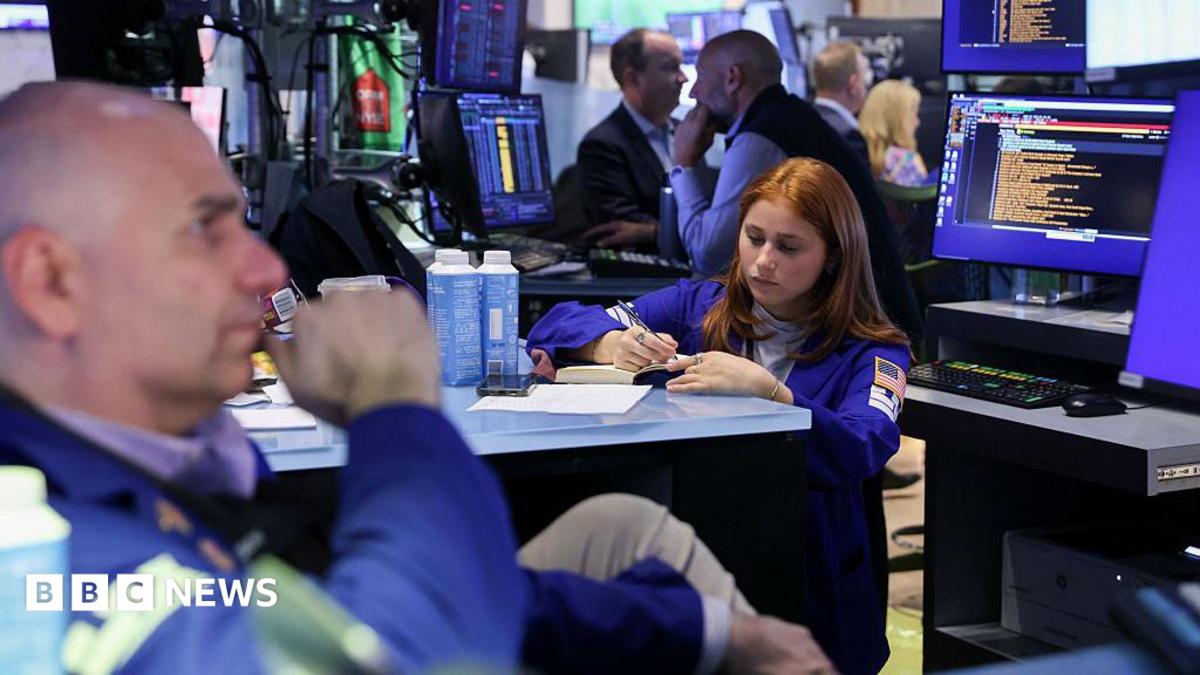
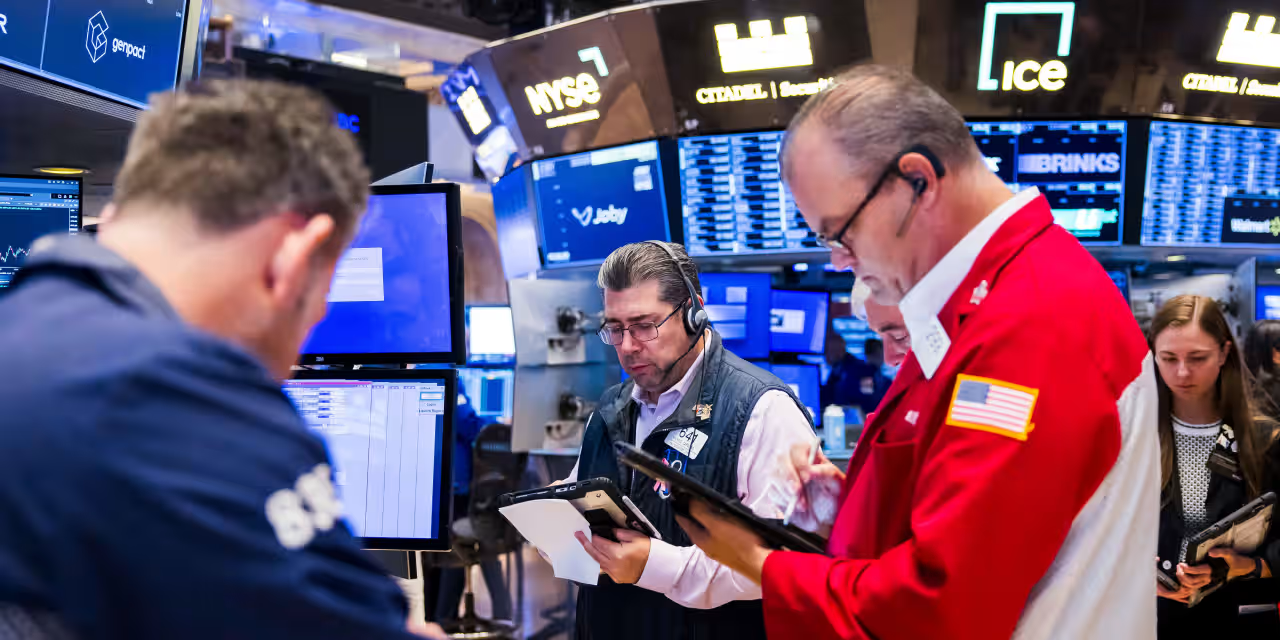
In the left corner, a bald male trader, and a woman with auburn hair, also a trader, in the middle, holding a pen and writing into a notebook, on the floor of the New York Stock Exchange.

Financial markets received a sharp wake-up call on Tuesday following a sudden wave of selling in major technology shares, triggering widespread doubt over the sustainability of the AI boom.

The tech-focused Nasdaq index fell about 2% alongside international chipmakers, reigniting fears that dizzying market valuations have finally run out of momentum after a relentless three-month climb.

At the same time, the newly public SpaceX has faced an incredibly choppy session. The aerospace giant’s share price plunged below the $150 (£114) mark– its initial floatation price–before staging a modest recovery to $157 despite the broader market anxiety.

For months, international stock exchanges have climbed on pure optimism. While this enthusiasm repeatedly pushed indices to unprecedented highs, the sustained 90-day rally left stock prices looking incredibly inflated.

Advertisement

On Tuesday, that upward drive vanished as market watchers questioned whether actual corporate adoption of AI can truly justify such expensive price tags.

The downturn hit semiconductor players such as Nvidia and Intel the hardest, causing a primary index of global chip firms to slide.

This turnaround follows a period where the wider tech sector had more than doubled stock prices from cyclical lows in 2022. It suggests that investors may have moved far too quickly to fund the hardware behind the AI shift.

The anxious mood quickly spread to other high-profile assets. Elon Musk’s newly public aerospace firm was caught in the crossfire, external.

Advertisement

Texas-based SpaceX has endured highly volatile trading session since going public on 12 June, proving just how vulnerable newly listed companies are when general tech sentiment turns sour.

The stock dropped past its widely watched $150 opening price early in the day. However, it managed a slight rebound to settle around $160.

Some optimistic traders interpreted the quick bounce as a sign of steady underlying interest in the commercial space sector.

Conversely, sceptics argue that these massive price swings only expose the highly speculative nature of today’s market.

Advertisement

Market analysts are now split on the next move.

They disagree on whether this sell-off is merely a healthy, temporary pause or the start of a much larger retreat for tech investments.

The more optimistic view suggests that taking profits is a completely standard reaction following a historic run.

Bank of America’s Vivek Arya supported this perspective. In a note to clients, Arya argued that the combination of sticky inflation and strengthening demand will ultimately drive sector forecasts higher.

Advertisement

According to Arya, the industry is simply transitioning from a phase where it had to defend its initial return on investment to one focused on solving physical infrastructure and power constraints.

However, a growing number of sceptics counter that, saying cooling corporate IT budgets and broader economic pressures mean the period of easy market gains is over.

Reflecting the shift, Danni Hewson, head of financial analysis at AJ Bell, noted that the relative lack of tech stocks on London markets helped the FTSE 100 stay in positive territory, even as Wall Street buckled.

As the trading week continues, Wall Street will be closely watching upcoming corporate earnings. That suggests tech giants must prove their massive AI investments are generating real profits rather than just marketing buzz.

Advertisement
Continue Reading

Business

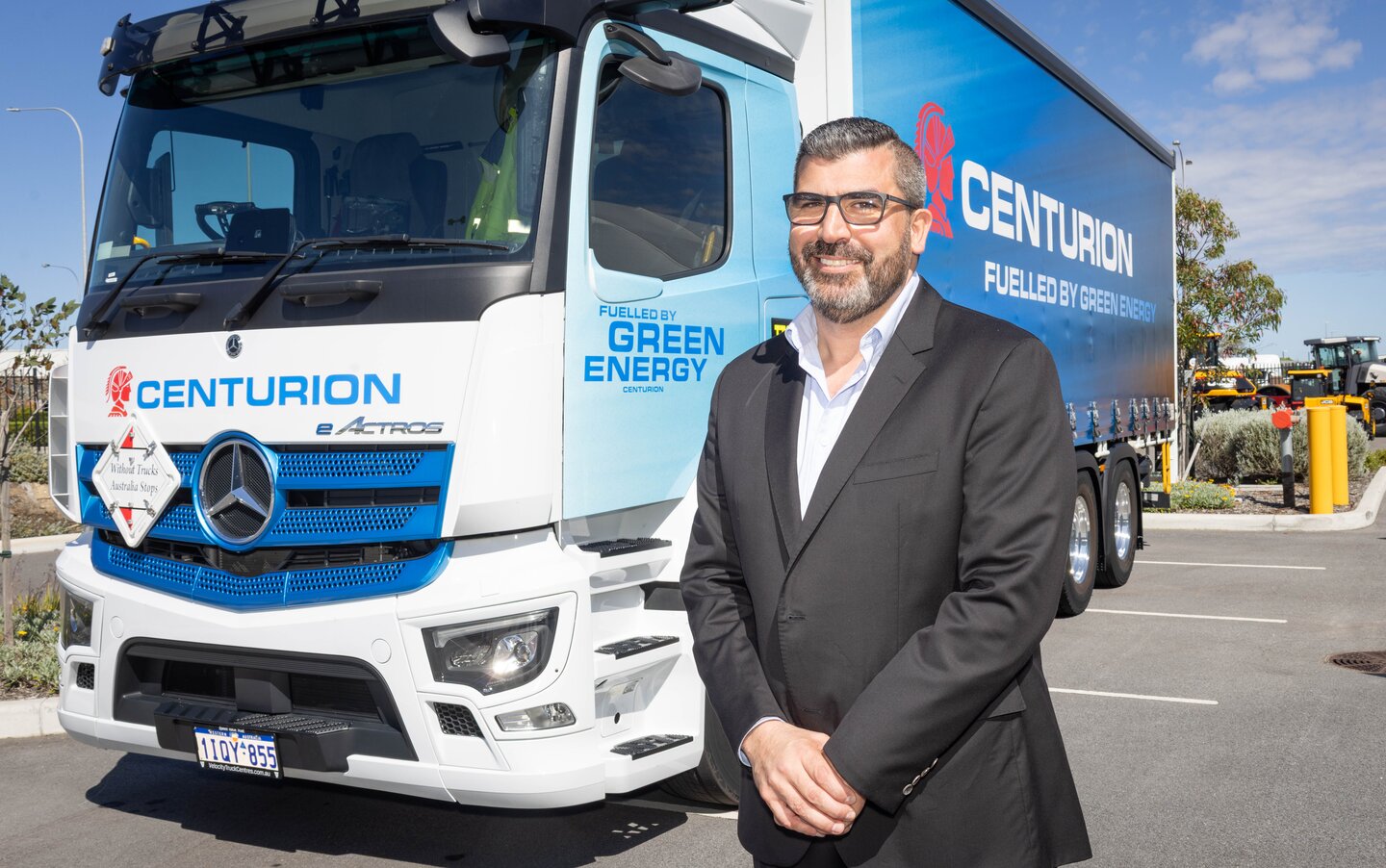
Centurion CEO Justin Cardaci to step down

Published

on

Centurion CEO Justin Cardaci to step down

Justin Cardaci is planning to step down as chief executive of the CFC Group subsidiary, with Michael West to fill the breach as interim CEO.

Continue Reading

Business

Meta halts worker tracking for AI training due to privacy fears

Published

on

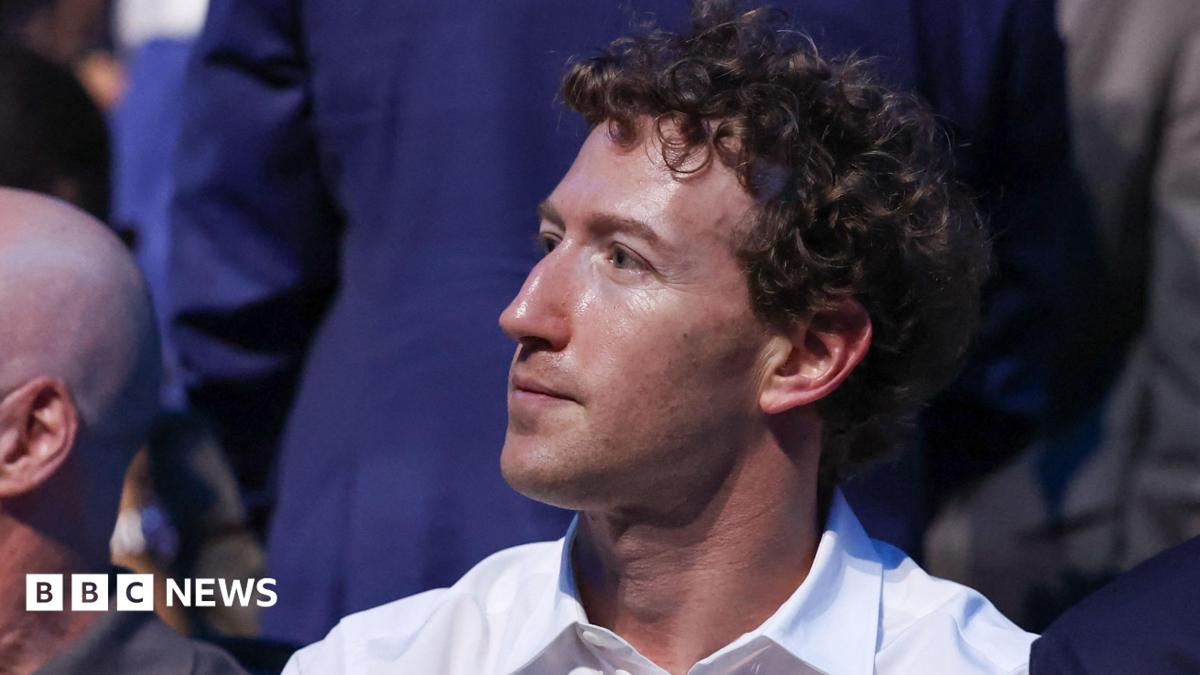
Mark Zuckerberg, wearing a white collared shirt while sitting in a crowd at the recent UFC event at the White House.

Meta has paused a new company-wide program of tracking its employees’ computer usage which has been plagued by internal frustration.

The program was started only two months ago as part of an effort by Meta to gather data on how people used computers, including mouse clicks and keystrokes, that could be used to train artificial intelligence (AI) models.

It was met immediately with upset from employees who were to have their every online action at work tracked and recorded, but also concerned about where the data was going and how it would be protected.

Meta halted the program on Monday after realising some of the collected data had been left potentially accessible to anyone inside the company.

Advertisement

A Meta spokesman confirmed to the BBC that the program, named internally the Model Capability Initiative (MCI), was “on pause for now” as the company investigates the issue.

“We have no indication at this time that any data was improperly accessed by Meta employees,” the spokesman added.

The pause follows weeks of blow-back from workers at the company, led by billionaire Mark Zuckerberg, to being tracked at work.

In an initial response to worker frustration – which was displayed in part through a petition signed by nearly 2,000 Meta workers demanding that the MCI program be cancelled – Meta said it would allow workers to not be tracked for up to 30 minutes at a time.

Advertisement

“That was just an attempt at damage control,” one current employee told the BBC. The person asked not to be identified.

Another Meta employee, who also asked not to be identified, said that while a lot of technical workers inside the company are open to the idea of improving its AI models and being more competitive in a field dominated by Anthropic and OpenAI, the fact that tracking “was forced on us, there was no consent” left people angry.

“I’ve never seen morale here so bad,” the employee said.

In addition to the tracking program, frustration inside Meta has grown as it has done extensive layoffs, and reorganised many employees and their work around AI initiatives, on which the company is spending up to $145bn (£109bn) this year alone.

Advertisement

Employees have even openly insulted management, external in an internal meeting on the AI-driven changes, according to a report in Wired.

While Meta has long had a reputation in the technology industry as a company that frequently reorganises internal teams around new projects, the changes and spending in an effort to catch up on AI feels like “chasing your tail”, a person who recently left Meta after several years said.

“The direction this company is going in is depressing”, the former employee said. “Exhausting and depressing.”

Advertisement
Continue Reading

Business

Clear Blue Technologies International Inc. (CBLU:CA) Q4 2025 Earnings Call Transcript

Published

on

OneWater Marine Inc. (ONEW) Q1 2026 Earnings Call Transcript

Miriam Tuerk
Co-Founder, CEO & Director

Good morning. This presentation is being recorded for further viewing after the webinar is completed. My name is Miriam Tuerk. I’m Co-Founder and CEO of Clear Blue Technologies. I’m joined today by Farrukh Anwar, who’s our CFO; and Jonathan van der Veen, who’s Head of our Marketing function within the company.

Today, we’re going to be going over our fiscal 2025 and Q1 2026 earnings results and try to give you as much information as we can from a forward outlook perspective. With respect to forward outlook perspective, please be aware always the guidance that’s around forward-looking statements we’re giving the best information we have at the time that we have it, but there is nothing that can promise what’s going to happen in the future. So please take that under advisement.

So just a little bit about Clear Blue. Clear Blue is a world leader in delivering clean, managed wireless power to meet the global need for reliable, low-cost energy for mission-critical infrastructure. Why do I say the word world leader? We don’t deliver large solar infrastructure that feeds into the grid. We deliver off-grid power that is disconnected from the grid for small point-of-use applications, satellite systems, WiFi networks, smart city infrastructure, security cameras, street lights, cell phone towers.

Advertisement

And when it comes to that, we build the technology, but we also manage and deliver it on an ongoing basis. We’ve been doing that since day 1 when we had our first prototype in 2011, and we’ve been remotely managing and monitoring that — those systems online with an ongoing service since day 1. As

Continue Reading

Business

Wales sees a rise in inward investment projects

Published

on

Business Live

However the promised new jobs from projects is down on 2024-25

(Image: Ian Cooper/North Wales Live)

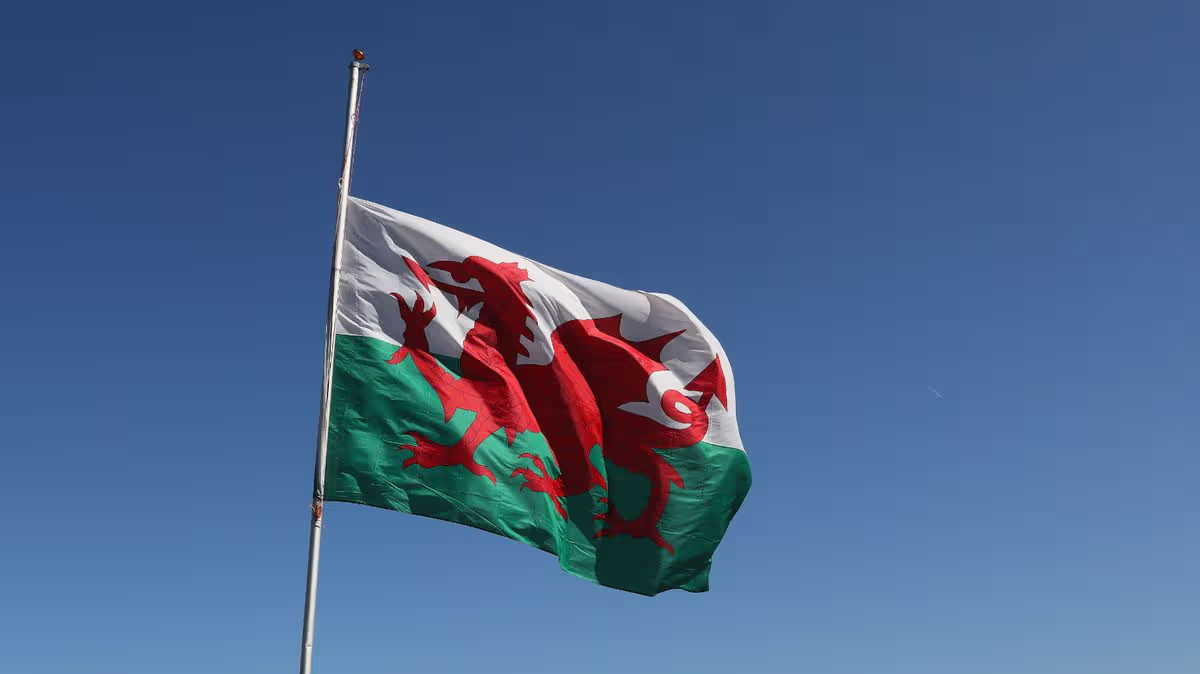
Wales has seen a rise in inward investment projects although the number of new jobs promised has fallen.

Figures from the UK Government’s Department for Business & Trade show that in 2025-26 Wales attracted 75 inward investment projects – which as well as overseas firms investing in Wales for the first time included expansions by companies already here – compared to 65 in the previous financial year.

Advertisement

The new projects promise to create 1,617 jobs, compared to 2,470 from foreign direct investment in the previous year.

New jobs and safeguarded from foreign direct investment in Wales amounted to 5,585 , up from 4,122 a year earlier.

For the UK as a whole there were 1,020 new inward investment projects – down from 1,375 a year earlier – that promised to create 69,166 jobs (69,355 previously).

In terms of origination some 239 projects into the UK came from US firms and investors, followed by India, 93, France 64, Germany 62 and Ireland 45.

Advertisement

London attracted around a third of all total UK projects with 326, followed in number by the north west, 115. Scotland attracted 94 and Northern Ireland 33. The lowest on number was the north east of England with 23.

While the Welsh Government has devolved powers to support efforts to attract foreign direct investment into Wales, the UK Government also has a role.

For the new Plaid Cymru Cardiff Bay administration inward investment will sit within a new at arm’s length development agency for Wales. It will also look to support greater links between inward investors and indigenous supply chains as a means of bolstering Welsh productivity levels.

Secretary of State for Wales, Jo Steven, said: “These latest figures show that Wales is punching above its weight. The UK Government is backing the industries of the future in Wales and creating the right conditions to attract yet more investment.

Advertisement

“This has been a driving motivation behind our new initiative, Brand Wales, which is designed to attract inward investment and promote Wales as a brilliant place to do business. We want to ensure that the economic opportunities offered by Wales sit at the forefront of the minds of global investors.”

Cabinet Minister for Enterprise, Connectivity and Energy, Adam Price, said:“Inward investment can play a crucial part in our goal to half the productivity gap with the rest of the UK. It’s encouraging to see Wales bucking the trend as the only part of the UK to see an increase in inward investment projects.

“But to meet our productivity goal we need to ensure that investment creates resilient and well-paid jobs and contributes to the long-term competitiveness and performance of the Welsh economy.

“Inward investment should strengthen Welsh firms, deepen supply chains, support priority economic platforms, increase exports, bring technology or management capability into Wales, and help retain more value in the Welsh economy. A new Welsh innovation and development agency will lead our approach to inward investment and make Wales the easiest place in the UK for investors to say yes. “Above all, investment must deliver for the people of Wales and lead to higher productivity and shared prosperity.”

Advertisement

The foreign direct investment figures also include those as a result of mergers and acquisitions.

Continue Reading

Business

Micron, Sandisk, SpaceX, Tesla, Carnival, and More Stocks That Explain Today’s Market

Published

on

Applied Materials, Rivian, Moderna, Arista, Fastly, Coinbase, Robinhood, DraftKings, and More Stock Market Movers

Micron, Sandisk, SpaceX, Tesla, Carnival, and More Stocks That Explain Today’s Market

Continue Reading

Business

SpaceX’s wild ride is just getting started

Published

on

SpaceX’s wild ride is just getting started


SpaceX’s wild ride is just getting started

Continue Reading

Business

TUC Cymru reveals its new general secretary

Published

on

Business Live

Laura Doel comes from a long line of family trade unionists

Laura Doel.

TUC Cymru has confirmed Laura Doel as its new general secretary. Ms Doel is currently the national secretary for Wales of the National Association of Head Teachers (NAHT) and the current TUC Cymru president.

She will replace Shavannah Taj who was elected as a Labour member of the Senedd in May.

Advertisement

A passionate trade unionist and education campaigner, she started her career in journalism working at several newspapers, including the Newport Argus, before moving into politics.

A stint in local government reignited a love of social activism and campaigning which turned into a career in the trade union movement. She began that career as an organiser for Unison, then an organiser for NAHT Cymru before becoming their National Secretary six years ago.

In her role as national secretary she held a number of key roles including NAHT Cymru’s seat on Wales TUC general council, as well as a number of key Welsh Government union positions under social partnership legislation including the National Attendance Task Force, the Pay Partnership Forum, the workload negotiating groups and Schools Social Partnership Forum.

Born and brought up in Aberbeeg, near Abertillery, she now lives in Cardiff with her two daughters. She attended Abertillery Comprehensive School before going to college in Ebbw Vale and Pontypool. She comes from a long line of trade unionists. She is the first female trade union official in her family following in the footsteps of her dad, grandfathers, and wider family who all worked in manufacturing, local collieries, steelworks, and local government.

Advertisement

The incoming general secretary said: “I am honoured to be appointed to the role of TUC Cymru general secretary, and I look forward to representing Wales’s nearly 400,000 trade unionists as we work together to build a Wales that works for everyone.

“I believe that trade unions have never been more important. Wales is experiencing a moment of significant change, with a new government in place, continued pressures on pay-packets, and a world of work that is transformed compared to what has come before.

“The workers of Wales need to know that there is someone on their side and I look forward to taking up that challenge in the coming weeks.”

Advertisement
Continue Reading

Business

Can Andy Burnham Win Over Britain’s Entrepreneurs?

Published

on

Can Andy Burnham Win Over Britain's Entrepreneurs?

So that’s that, then. Keir Starmer has read the room, found it on fire, and quietly let himself out of the back door.

Andy Burnham, the man who has spent years doing his best impression of a Prime Minister-in-waiting from a tram stop in Greater Manchester, is now the overwhelming favourite to be holding the keys to No.10. And the question I keep being asked, by founders who have built something real with their own sweat and overdraft, is a simple one: is he on our side or isn’t he?

I should declare an interest. I advised David Cameron’s government on enterprise, and I sat alongside the late, magnificent Lord Young of Graffham, the sharpest business brain to wander the corridors of Whitehall in a generation. Young understood something that most politicians never grasp, which is that you cannot conjure growth from a spreadsheet or a press release. You get it by listening to people who have actually met a payroll on a Friday when the bank has gone quiet. His reports on small business were not poetry, but they were honest, and they moved the needle. We need that voice in the room again.

Now, Burnham is not a fool, and he is not anti-business in the snarling, placard-waving sense. He talks a good game about “business-friendly socialism,” whatever that turns out to mean when the civil servants get hold of it. He wants to cut business rates for the corner café and the struggling pub, which is grand, and I will buy the first round. But the mood music among the people who actually create jobs is not exactly a standing ovation. A recent survey found that eight in ten SME owners are nervous about what a Burnham premiership means for their business, and you do not get a number like that by accident.

Here is the bit Burnham needs to understand, and understand fast. The genius of a healthy economy is not the wealth that gets created. It is what happens to that wealth afterwards. The founder who sells her software company for forty million does not stuff it under the mattress. She becomes an angel investor. She backs three more founders, mentors a dozen, and sets up a fund. That is the flywheel, and it is the single most powerful engine of prosperity we have. The Tony Blair Institute, no nest of swivel-eyed capitalists, has written about exactly this, the way start-up success recycles into the next generation of scale-ups. Nine out of ten angels reinvest their exit money. That is not greed. That is the machine working.

Advertisement

And here is my worry. You cannot, on the one hand, ask entrepreneurs to take insane risks, remortgage the house, miss the kids’ bedtimes for a decade, and then, on the other, signal that the moment they succeed you intend to relieve them of the reward through a wealth tax, a land tax, or whatever the focus group has christened it this week. Burnham has been artfully vague on this, which is its own kind of answer. Vagueness is what frightens founders. They can plan for bad news. They cannot plan for a shrug.

The thing is, the money is sitting there, ready to be put to work. The challenge for whoever is next PM is not creating start-up wealth. We are rather good at that, thank you. The challenge is getting it recycled into the real economy instead of fleeing to Lisbon and Dubai, where the welcome is warmer and the tax letters are kinder. That is a solvable problem, but only if Burnham does the one thing this government has been allergic to, which is actually listening to entrepreneurs about how to unlock the funding rather than lecturing them about fairness.

So can he win us over? Yes, he can, and I would rather like him to. But it requires a leap that does not come naturally to a man whose instincts were forged in the Labour movement. He needs a Lord Young of his own, a proper entrepreneur with calloused hands and scar tissue, sitting at the heart of Downing Street, not a special adviser who once read a book about disruption on the train to Manchester. He needs to treat founders not as a cash machine to be tapped but as the goose that lays the golden egg, and you do not, if you have any sense, threaten the goose.

Burnham has charisma, a northern soul, and a genuine knack for sounding like he means it. What he lacks, so far, is a credible promise to the wealth creators that their success will be celebrated rather than confiscated. Make that promise, and keep it, and he could be the most pleasant surprise this country has had in years. Break it, and the flywheel stops, the money leaves, and we are all the poorer for it. Over to you, Andy. The kettle is on.

Advertisement

Richard Alvin

Richard Alvin

Richard Alvin is a serial entrepreneur, a former advisor to the UK Government about small business and an Honorary Teaching Fellow on Business at Lancaster University.

A winner of the London Chamber of Commerce Business Person of the year and Freeman of the City of London for his services to business and charity. Richard is also Group MD of Capital Business Media and SME business research company Trends Research, regarded as one of the UK’s leading experts in the SME sector and an active angel investor and advisor to new start companies.

Richard is also the host of Save Our Business the U.S. based business advice television show.

Advertisement
Continue Reading

Trending

Copyright © 2025