

Business
How UK SMEs can build a reliable SERP data pipeline without burning budgets or breaking rules


Search still drives intent-led leads for most UK firms. Google says it handles trillions of searches each year. That scale brings noise, fast shifts, and sudden drops that you only spot with clean data.
Business Matters often covers growth levers that sit between marketing and ops. Rank tracking sits right there. It looks simple, but many SMEs lose weeks to bans, skewed results, or tool sprawl.
Why SERP data fails in the real world
Most teams start with a SaaS rank checker. That works until you need local packs, “near me” terms, or niche pages. Then you need raw results, not a single rank number.
Google also personalises results by place, device, and past clicks. Even “incognito” runs still vary by IP and locale. If you collect data from one office line, you log a view that few users see.
Sites also fight bots. They add rate limits, CAPTCHAs, and soft blocks that return empty pages. Your pipeline can “work” but still record bad data.
Design a lean pipeline before you add tools
Start with business questions, not keywords
Set a short list of board-level signals. Track share of page one for your top offers. Track how often maps show rivals ahead of you. Track brand vs non-brand split for your key pages.
Keep the first data set small. You can scale later once the flow stays stable. You also cut cost by scraping less and learning more.
Control pace and shape of requests
Scrapers fail when they hammer endpoints. Set a low request rate per target and add random gaps. Rotate user agents and keep headers steady for each session.
Cache what you can. A results page rarely needs a second pull in the same day. Reuse HTML for parse tests, so you do not hit the live page each run.
Pick an IP plan that matches the job
IP choice drives both access and data quality. Data centre IPs cost less, but blocks often follow. Mobile IPs help with hard targets, but they cost more and add churn.
Many SMEs need steady geo results for a set of towns. A fixed IP per town helps you spot real change, not drift. Many teams start with a static residential proxy.
Do not treat proxies as a magic key. Keep the same slow pace and clean sessions. You buy headroom, not a free pass.
Compliance: reduce risk without killing the project
Scraping sits in a grey zone for many firms. You must manage legal risk, client trust, and supplier terms. A simple rule helps: collect what you need, and keep it for as short a time as you can.
UK GDPR sets clear stakes. Fines can reach £17.5m or 4% of global annual turnover. You rarely need personal data for SERP work, so design the pipeline to avoid it.
Log only what supports audits and fixes. Store the query, time, locale, and parse status. Drop cookies and raw pages fast unless you need them for proof.
Check the terms for each target and for any API you use. Treat robots.txt as a signal for crawl care, not as a shield. Run your plan past counsel when the data will feed pricing, credit, or high-stakes claims.
Make the output fit how SMEs run
Engineers love raw feeds. Leaders want a short view of risk and return. Give both by splitting outputs into two layers.
Send the raw rows to a store you can query. Then publish a weekly pack with three charts: wins, losses, and causes. Tie each cause to an action, like “fix title,” “ship page speed,” or “build links to this page.”
Set a clear service level. Define how fast you detect a drop and how fast you alert. When the pipeline meets that bar, scale coverage and add new regions.
A good SERP pipeline does not chase vanity ranks. It gives SMEs early warning and sharp proof. That helps you spend less on guesswork and more on work that moves sales.


OPINION: A UK student loan scheme may work here if the right conditions are met.

Engineering And Construction Costs In June Continue To Rise But Momentum Slows

OPINION: Major internal economic changes are colliding with external forces in testing times for business and politics.

Flouris is a little sceptical of sweat-sensing.
Referring to various unnamed devices that analyse sweat, which he has evaluated in the lab, he says, “Most of these products that we’ve tested do not show the level of accuracy that you would expect.” The results of his experiments are as-yet unpublished.
Sweat sensors, Flouris suggests, work best when worn during long bouts of physical activity – such as a marathon. But they struggle when the exertion is more varied and intermittent. Think a footballer switching from walking to suddenly running very quickly.
In response, Ghaffari says he and his colleagues have published peer-reviewed papers, external on the accuracy of Epicore Biosystems’ gadgets.
He acknowledges that analysing sweat loss over short intervals up to 20 minutes long “can be challenging” but says his company’s products appear effective for 30-minute, or longer, workouts.
Perhaps the most common hydration-focused products available are the smart water bottles that remind you to take a sip throughout the day.
“We try to make it fun,” says Cem Bakiş, head of business development at WaterH, which has a glowing ring that blinks in order to prompt its owner to take a drink. “You can add friends, you can earn points.”
Some smart water bottles work by estimating the weight of liquid in them, and how that changes over time as the drink inside is consumed. But WaterH takes a different approach.
Sensors detect when the water bottle is tipped at an angle, and also the flow rate of fluid as it leaves the vessel. The water bottle will immediately recognise when you’ve had a sufficient quantity of liquid, stresses Bakiş.
I point out that, while some reviews online are positive, other comments criticise the accuracy of these measurements. This is often an issue with how the device is calibrated, and easily rectified, responds Bakiş.
If you don’t want to take instructions in hydration from a water bottle, though, you always have the option of asking your toilet how things are going.
Vivoo makes a urine-analysing gizmo that sits on the rim of a toilet bowl, promising to help you understand your hydration “like never before”.
The device uses optical sensors to work out your “urine specific gravity” – a measure of urine’s density compared to clean water. The denser it is, the more dehydrated you are, generally. Small print on Vivoo’s website emphasises that its products are not intended to provide medical diagnoses.
Urine-based measurements are used to evaluate hydration in scientific studies, says Flouris. Though he notes that there can be some delay between a person entering a dehydrated state, and this becoming detectable in their urine.

Scrap metal dealer Paul Owens has opened a new $12 million recycling plant focused on traditional lead-acid batteries in Perth’s southern suburbs.


Dollar hits 13-month high as rate-hike bets, stock rout boost demand

In the pre-SpaceX days, it didn’t really matter which major index benchmark an investor chose, whether it was constructed by Standard & Poor’s, the Center for Research in Security Prices (CRSP), or FTSE Russell. They all returned essentially the same amount.
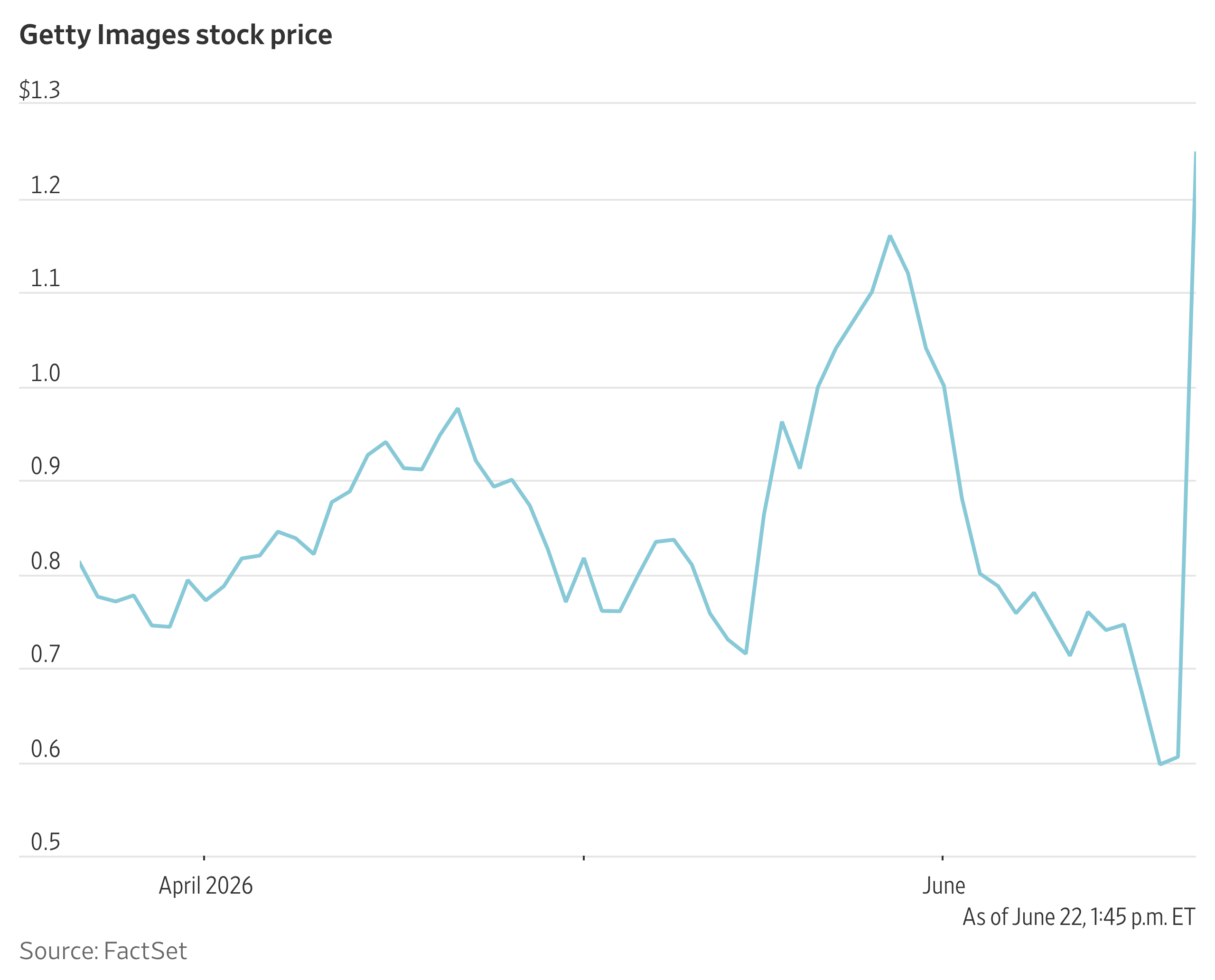
Shares of Getty Images more than doubled after the company disclosed a display agreement with OpenAI. The stock jumped 104%, to $1.23 a share Monday. Through Friday’s close, Getty Images shares had lost more than half of their value since the beginning of the year.
Under the partnership agreement, Getty said its licensed content libraries will appear across OpenAI search and discovery experiences within ChatGPT, enabling the use of Getty’s content within the artificial-intelligence platform.
Wednesday’s edition of The New York Times’ popular word-grouping game served up a grid built around classic rock bands, wedding traditions, and a clever color-themed character category that lured solvers toward an early, incorrect grouping before the actual answer revealed itself.
How the Game Works
Connections by The New York Times is a unique daily word game that fans can enjoy online for free. The puzzle challenges players to sort a given set of 16 words into groups of four. Each group features a hidden theme that connects the four words that belong in it. Players get only four guesses to find out how the words are connected and categorize them accordingly. The game also provides a “one away…” pop-up as a hint whenever a player chooses three out of the four correct words in a group. The four groups, Yellow, Green, Blue, and Purple, are divided according to the level of their difficulty, with Yellow being the easiest to sort and Purple featuring the trickiest theme to figure out.
Wednesday’s Four Categories
The themes and answers for the June 24, 2026, NYT Connections puzzle were as follows:
Yellow Group: Prog Bands — GENESIS, KING CRIMSON, PINK FLOYD, RUSH.
Green Group: Classic Wedding Gifts — CHINA, LUGGAGE, MONEY, TOASTER.
Blue Group: Red Characters — CLIFFORD, DEADPOOL, KOOL-AID MAN, MR. KRABS.
Purple Group: Rhyming Compound Words — CHICK FLICK, HELTER SKELTER, HUMPTY DUMPTY, MUMBO JUMBO.
The Color Trap That Caught Solvers Off Guard
Puzzle number 1109 features some heavy misdirection, with several words seemingly fitting into different themes before revealing the true groupings. Watch out for the red herrings today. At first glance, words like Pink and Deadpool look like they could fit into a simple color theme, but committing to that group early will cost you lives.
The trap centers specifically on Pink Floyd’s inclusion in the yellow prog-rock category, since the word “Pink” on its own could plausibly suggest a color-based grouping alongside the actually correct blue category of red-colored fictional characters. One solver described falling into exactly that confusion while working through the grid: “Not being familiar with the work of Kool-Aid Man put me at a disadvantage today and was the reason for my single mistake. While I knew that Clifford of Big Red Dog fame, Deadpool and Mr. Krabs favored the color red.”
Breaking Down the Categories
The yellow category gathered four influential progressive rock bands, bringing together Genesis, King Crimson, Pink Floyd, and Rush — a relatively straightforward grouping for fans of classic rock, though the inclusion of Pink Floyd specifically created the color-based misdirection that tripped up several solvers elsewhere in the grid.
The green category required players to think about traditional gift-giving customs, linking China, Luggage, Money, and Toaster as classic items associated with wedding registries and gift lists.
The blue category, despite its color-based misdirection trap, ultimately gathered four fictional characters who all happen to be red in appearance: Clifford the Big Red Dog, Deadpool, the Kool-Aid Man, and Mr. Krabs from SpongeBob SquarePants.
The Purple Category’s Wordplay Challenge
As is typical for Connections puzzles, the purple category delivered the day’s most inventive twist, built around compound phrases that rhyme internally. The category brought together Chick Flick, Helter Skelter, Humpty Dumpty, and Mumbo Jumbo — four well-known rhyming compound terms that required solvers to think specifically about phrase structure rather than shared meaning or category.
Strategic Advice From Puzzle Outlets
Ahead of revealing the solution, several outlets offered general guidance for navigating Wednesday’s grid. We recommend looking closely at proper names and word structure first. Separating band names from characters and common terms will make the remaining words significantly easier to manage.
Other strategists emphasized broader habits worth building into a daily Connections routine. Before submitting a set of words, you should always check whether they fit somewhere else too. If you hit a dead end, use the shuffle button at the bottom of the grid — placing the words in different positions can spark new connections and act as a mental refresh, helping new patterns emerge that may not have been obvious in the original layout.
A Moderate Difficulty Rating
Despite the color-based misdirection built into the puzzle, early tester feedback suggested Wednesday’s challenge landed closer to the middle of the difficulty spectrum overall. NYT’s early testers rated today’s Connection puzzle 2.5 out of 5, putting it in the medium difficulty level — a rating that aligns with the mixed reactions from solvers who successfully avoided the Pink Floyd trap versus those who fell for it.
The Game’s Continued Popularity
Connections is one of the most popular online word games from The New York Times, closely trailing behind Wordle. The puzzle presents players with a 16-word, four-by-four grid that has helped cement the game’s status as a daily ritual for millions of solvers since its 2023 launch.
Where to Find More Puzzle Help
Besides Connections, other puzzles that fans can play on The New York Times Games collection include Wordle, Strands, Pips, the NYT Crosswords, and Sudoku, among others. Wednesday’s slate also included Wordle puzzle number 1831 and Strands puzzle number 843, giving puzzle enthusiasts a full menu of additional daily challenges beyond the standard Connections grid alone.
With Wednesday’s puzzle now solved by players who successfully navigated the Pink Floyd color trap and identified the rhyming compound words hidden in the purple category, attention turns to Thursday’s edition, puzzle number 1110, when a fresh sixteen-word grid and an entirely new set of hidden categories — and likely a fresh round of cleverly placed red herrings — will once again test the Connections community’s pattern-recognition skills before their four guesses run out.


Rubio kicks off Middle East trip as allies seek answers on Iran

Circle Publishes Official USDC Spec for Machine Payments Protocol, Enabling Crosschain Agent-to-Agent Commerce

‘Neymar is ready’: Carlo Ancelotti gives major update ahead of FIFA World Cup match against Scotland | Football News

Chinese supercomputer using local processors heads TOP500 list


-

 Fashion5 days ago
Weekend Open Thread: Miami – Corporette.com
-

 Entertainment3 days ago
Renter of Home in Anne Heche Crash Denies Settlement With Son
-

 Tech2 days ago
Microsoft accidentally kills epic Outlook email threads
-

 Business3 days ago
Soccer-U.S. defends Iran World Cup travel restrictions, says discussions ongoing
-
Crypto World3 hours ago
Bitcoin (BTC) Dips Below $62K, Ethereum (ETH) Plunges 6% Daily: Market Watch
-
 Sports11 hours ago
Two goals and an assist by sheer aura: Cristiano Ronaldo just entered the World Cup chat
-

 Politics5 days ago
BBC Reporter Discusses Cross Party Criticism Of Trumps Iran Deal
-
 Business4 days ago
Wall Street Week Ahead: Investors see Micron earnings as pulse check of AI rally momentum
-
Business6 hours ago
Entergy settles forward sale agreements, raises $672 million in cash proceeds
-

 Politics4 days ago
Andy Burnham and the meaning of Makerfield
-

 Tech6 days ago
AWS enters the context layer race with a graph that learns from agents, not manual curation
-
 Crypto World4 days ago
Can Charles Hoskinson Really Rescue Cardano?
-

 Crypto World4 days ago
HIVE shares jump as $220M AI deal speeds Bitcoin mining pivot
-

 Crypto World4 days ago
Jake Chervinsky accuses CME of protecting derivatives monopoly
-

 NewsBeat5 days ago
Keir Starmer Allies Question His Chances For No 10
-

 Tech1 day ago
Nearly 7,000 fake Amazon domains registered ahead of Prime Day 2026, researchers warn
-

 Business5 days ago
Brexit cost 6% of UK economy, Bank of England company data suggests
-

 Sports5 days ago
FIFA World Cup 2026: Canada beat 9-men Qatar 6-0 to register first ever win | FIFA World Cup 2026
-
 Tech3 days ago
Signal’s Meredith Whittaker says AI chatbots ‘are not your friends’ and calls Copilot agents a backdoor
-

 Entertainment4 days ago
Jose Alvarado Wants Taylor Swift at More Knicks Games
You must be logged in to post a comment Login