

Business
Is your SIP giving FIIs an easy exit? AMFI CEO says mutual funds will actually lure them back


When FIIs sell and domestic funds buy, the net effect is a transfer of equity ownership with domestic investors indirectly absorbing institutional exits. Some market participants have framed this as retail investors being left holding the bag while sophisticated foreign money rotates out to hunt for new winners in America, Taiwan and Korea.
In an exclusive interview with ET Markets, Venkat N. Chalasani, CEO of the Association of Mutual Funds in India (AMFI), says that framing gets it exactly backwards.
“Some people say we are providing an easy exit for FIIs but that’s not the case,” Chalasani said. “This proves the maturity of the market, and it will be one of the biggest positive factors attracting FIIs back in a big way. They will be comfortable entering because they know this is a robust market that will also give them the ability to exit when needed.”
Also Read | Is your mutual fund SIP secretly crushing the Indian rupee? Jefferies explains the bitter side of the story

Chalasani, who spent years in SBI’s treasury, recalls that the Indian market was earlier hostage to FII sentiment precisely because it lacked domestic depth and liquidity. “If you go back 10–20 years, markets were extremely volatile because of external factors like geopolitical tensions, inflationary pressures and interest rate movements elsewhere. FIIs would come in and markets would appreciate; FIIs would exit and markets would collapse. I would check every day what FIIs were going to do — they were the big game changers, precisely because domestic liquidity was insufficient.”
That dynamic has now shifted. Domestic mutual funds, he argues, have replaced volatility with resilience and liquidity and that’s what will ultimately draw FIIs back, not drive them away.“A developed market is the one with liquidity and where large volumes can be handled without a big shake-up in the market. And that’s what domestic institutional investors are providing today, and we should appreciate that,” he explained.
Back in 2024, when the bull market was at its peak, the mutual fund industry was at the receiving end of another criticism that Indian households were shifting their savings away from low-cost bank deposits to higher-yielding mutual funds.
“At that time, we went on record to say that liquidity remains within the banking system regardless. When you and I invest in mutual funds, the money doesn’t leave the banking system — only the form changes. What was a savings bank deposit or fixed deposit now comes back to the bank as a current account balance or as a certificate of deposit. The liquidity always stays in the system,” the AMFI CEO said.
Also Read | Should you stop your SIP because the market is not doing well? History suggests otherwise
Mutual fund industry’s growth arithmetic
India’s mutual fund AUM-to-GDP ratio currently sits at 20–21%, against a global average of 65% and over 100% in some developed economies. AMFI’s targets reflect how much white space remains: 10 crore investors by 2030, up from 6.3 crore today, and AUM of ₹150 lakh crore — roughly 50% of projected GDP.
The growth is increasingly coming from beyond the country’s major urban centres. More than 55% of SIP accounts are now from B-30 cities — those outside India’s top 30 — and around 40% of monthly SIP contributions originate there. SEBI’s incentivisation scheme has played a role, offering distributors a 1% commission, capped at ₹2,000, for bringing in new investors from B-30 cities. AMCs have also lowered the floor, with some SIPs available for as little as ₹100 a month, and daily SIP options now available for India’s large base of daily-wage earners.
A SEBI survey recently found that 53% of Indian households are aware of mutual funds but only 6% have invested. That gap, more than any other number, captures both the industry’s challenge and its runway.
For the retail investor watching a negative portfolio balance for the first time, Chalasani’s message is to think of it as a small cost you are incurring for a long-term benefit you will accrue. “When you reframe a temporary fall as a cost rather than a loss, your attitude changes.”
“It is not the timing of the market that matters,” Chalasani said. “It is the time you spend staying in the market.”


The drug maker is undergoing a structural shift towards higher-value segments, with CDMO contributing over 30% to total revenue, up from 13% six years ago. This share is expected to reach 50% by FY30. The company has reduced dependence on the traditional segment of antiretroviral (ARV) therapies, with their contribution declining to about 41% from 67%.
 Agencies
Guidance for ₹3,000-cr capex reinforces co’s long-term growth play
The CDMO segment grew 36% year-on-year to ₹2,080 crore in FY26, driven by late-stage pipeline progress, higher commercialisation of novel molecules, and strong outsourcing demand from global pharma players. Laurus is also expanding into non-pharma segments such as crop science and animal health. From a current base of about ₹150 crore, Motilal Oswal Financial Services (MOFSL) expects these segments to scale beyond ₹1,000 crore over time. The brokerage highlighted that CDMO growth has been supported by both development projects and commercialised molecules, and expects the segment to maintain momentum, projecting a 22% annual growth over FY26-28.
The operating margin before depreciation and amortisation (Ebitda margin) expanded 670 basis points year-on-year to 26.8%, driven by higher operating leverage. While the company expects to sustain margin at current levels, its trend will depend on the extent of volatility in raw material prices.
The company has outlined capital expenditure of ₹3,000 crore over the next two years, with over 90% allocation towards expanding mid and large-scale manufacturing capacities. Its key projects include greenfield Unit 7 facility with over 2,000 cubic meters of reactor capacity and a second commercial block slated for validation by the September 2026 quarter, alongside investments in animal health, fermentation and a formulation facility.
MOFSL has maintained a ‘BUY’ rating on the stock and raised earnings estimates for FY27 by 8% and for FY28 by 6% citing stronger CDMO traction, steady growth in ARV and non-ARV segments, continued operating leverage and ongoing capacity expansion. The stock closed 0.2% lower at ₹1,450.6 on Thursday from the previous day’s close on the BSE.

India’s largest commodity exchange, the Multi-Commodity Exchange of India (MCX), is closed for the first session (9 am to 5 pm) on Friday. Trading will resume in the evening session between 5 pm and 11:30 pm, as per its website. The National Commodity & Derivatives Exchange Limited (NCDEX), meanwhile, is closed for the entire day.
Upcoming market holidays
In total, 16 stock market holidays were scheduled for 2026, of which nine have already passed. April saw two holidays – April 3 (Good Friday) and April 14 (Dr. B.R. Ambedkar Jayanti), while markets were also closed on May 1 on account of Maharashtra Day and May 28 for Bakri Id.After today’s market holiday, the BSE and NSE will next be closed on September 14 for Ganesh Chaturthi, followed by October 2 (Mahatma Gandhi Jayanti), October 20 (Dussehra), November 10 (Diwali-Balipratipada), November 24 (Guru Nanak Jayanti), and December 25 (Christmas).
Check list of upcoming seven market holidays, including today.
Muharram is the first month of the Islamic calendar and is based on the lunar cycle, so dates may differ between countries depending on when the new moon is sighted. In India, the datefor Muharram 2026 is Friday, June 26, 2026. This will give a three-day weekend to many.As the first month of the Islamic Hijri calendar, Muharram signifies the beginning of the Islamic New Year. Derived from the Arabic word meaning “forbidden,” Muharram is one of the four sacred months in Islam during which warfare is traditionally prohibited. It carries profound religious and historical significance throughout the Muslim communities of the world. For Shia Muslims, Muharram is particularly marked by grief and remembrance, especially on the day of Ashura, the 10th day of Muharram.
Also read: Vodafone Idea shares rally 80% in less than 3 months. Time to buy or avoid?
(Disclaimer: Recommendations, suggestions, views and opinions given by the experts are their own. These do not represent the views of The Economic Times)

Alphabet Stock Joins the Dow. What History Says Happens Next.

Montenegro police, FBI arrest Iranian wanted by US for hacking
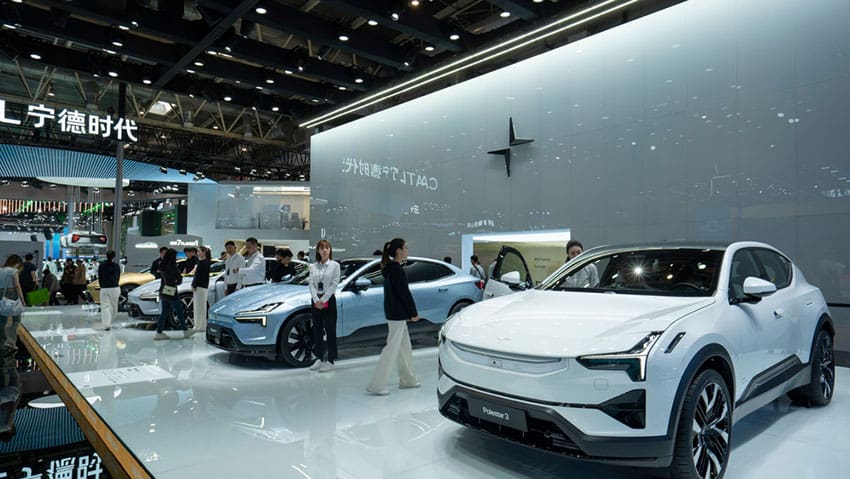
Polestar, the part Chinese-owned electric brand spun out of Volvo, is to abandon the United States after the Commerce Department refused it permission to keep selling new cars, making the company the first casualty of a sweeping American clampdown on Chinese technology in vehicles.
The decision is the opening blow from a rule designed to strip Chinese-written software out of any new car that connects to the internet, a measure Washington frames as shutting the door on the cameras, microphones and GPS systems that it fears could be turned into surveillance tools by a hostile state. For Britain’s small and medium-sized suppliers watching the trade winds, it is a pointed reminder that ownership and code, not just where a car is bolted together, now decide market access.
Polestar, which is controlled by the Chinese motoring giant Zhejiang Geely Holding Group, had applied to carry on selling under a waiver process written into the rule. The government turned it down, the company confirmed on Thursday. The Commerce Department did not immediately comment.
The brand said it would keep selling its remaining American stock and would honour servicing and repairs through its existing network, leaving current owners covered even as the shutters come down on new sales.
Drawn up under the previous administration, the “connected vehicle” rule restricts the import or sale of cars whose hardware and software are tied to China, on national-security grounds. The final rule took effect in March 2025 and has been carried forward rather than unpicked by the current White House.
Carmakers were given until March of this year to certify to the US government that their products carried no code written in China or by a Chinese company, or else to petition for authorisation to keep selling from the 2027 model year onwards. It is a high bar, and one that bites on corporate parentage as much as on the bill of materials.
That distinction explains an awkward split within the Geely empire. Volvo, also majority-owned by the Chinese group, secured authorisation in May to keep trading in the US, after what it described as a case-by-case review and talks with officials over its technology and data security. Polestar, working through the same process, did not clear it.
The rejection is the latest step in a broader American push to wall off Chinese-owned cars. Lawmakers have spent recent weeks floating legislation that would go further still, barring Chinese manufacturers from even building vehicles on US soil.
Polestar had sounded confident it would comply. Chief executive Michael Lohscheller said in a recent interview that the company was “in good dialogue with authorities” about an exemption, adding: “The US is important because obviously it’s a big market.”
Founded as Volvo’s performance and motorsport arm, Polestar became a stand-alone brand in 2017 and was hived off as a separate company in 2021, floating through a special-purpose acquisition vehicle at the height of the electric-car frenzy, when traditional carmakers and start-ups alike scrambled to chase Tesla’s vertiginous share price.
It launched with the limited-edition Polestar 1, a hybrid coupe priced at $156,000, and the Polestar 2, a sporting electric saloon built in China that took early aim at the Tesla Model 3. But a thin line-up left it exposed, particularly in the US, where buyers lean heavily towards SUVs and pick-up trucks. The shares now change hands at $19.22, down 96 per cent from a closing peak of $459.90 in November 2021.
Its Chinese ties had already proved costly. Punitive tariffs imposed by both the Biden and Trump administrations pushed the China-built Polestar 2 out of the American range. Today the brand sells the Polestar 3 SUV, made at Volvo’s plant in South Carolina, and the Polestar 4 SUV, shipped in from South Korea, neither of them built in China.
Polestar said it would now concentrate on shoring up its European business, which already accounts for roughly 80 per cent of global sales. The pivot lands at a moment when the politics of Chinese-built electric cars is fraught on both sides of the Atlantic, with the EU pressing ahead with tariffs on Chinese electric vehicles despite resistance from Germany.
Britain, for its part, is treading a notably different path, courting rather than repelling Chinese capital. The recent Nissan deal to build Chery’s cars in Sunderland underlines how far the UK’s calculation diverges from Washington’s, even as ministers face their own pressure to rethink the 2030 timetable for phasing out petrol cars.
For Lohscheller, the lesson is that the global car market is fragmenting along geographic lines. “The automotive industry is entering a new phase, based on regional dynamics,” he said on Wednesday. For Polestar, that new phase begins with a continent’s worth of ambition and a closed door in the world’s most valuable car market.

Jamie Young
Jamie is Senior Reporter at Business Matters, bringing over a decade of experience in UK SME business reporting.
Jamie holds a degree in Business Administration and regularly participates in industry conferences and workshops.
When not reporting on the latest business developments, Jamie is passionate about mentoring up-and-coming journalists and entrepreneurs to inspire the next generation of business leaders.

OPINION: The regulator has yet to tell retirement village operators whether changes to anti-money laundering regulations apply to them.

Chegg: Skilling Segment Deceleration Is A Major Red Flag (Downgrade)
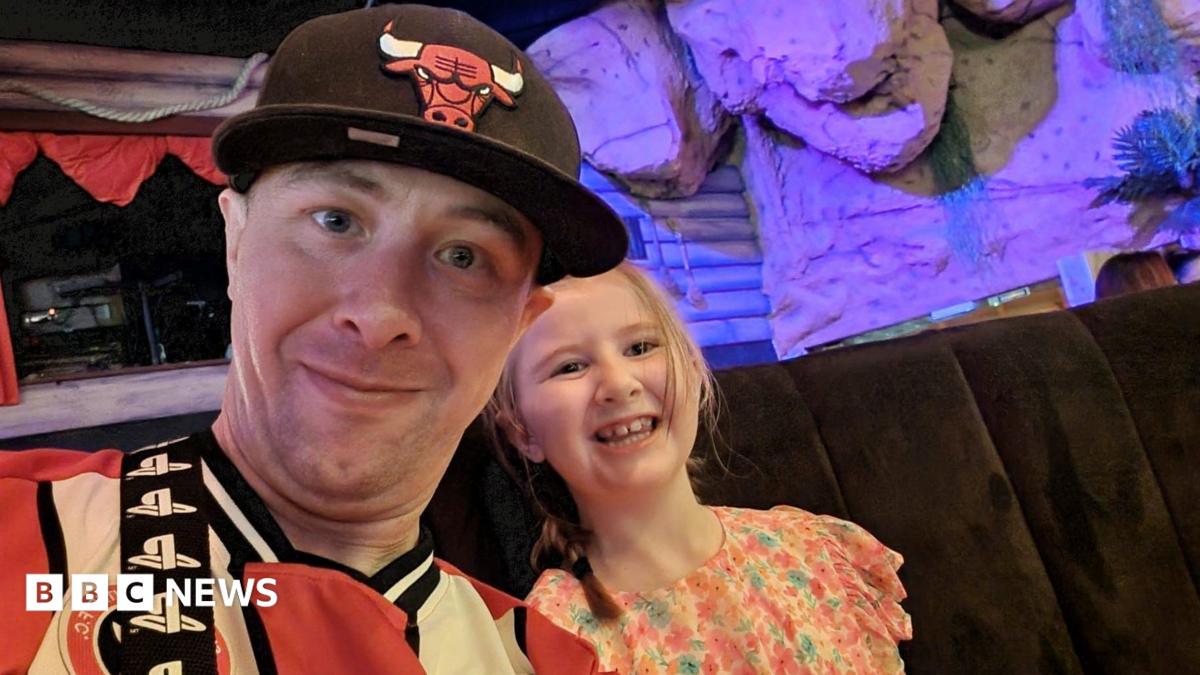
Yemi, a mother of four energetic boys and her husband Temitayo also benefitted from a SFHF holiday to Skegness.
“It was our very first holiday as a family, and when we found out we were going, we were so happy” she said.
“For my boys, it was their first time on a train, and they were beyond excited,” she said.
She said her youngest child, Ayosubomi, was a “lockdown baby” and had missed out on interaction with other children.
Yemi said the holiday had a “wonderful outcome”.
“He came home from school and told me about how he’s been playing nicely with other children and sharing toys.
“His behaviour has improved so much, and I’m incredibly proud of him”.
Helen Bolt the family services manager for Sheffield Young Carers who refers families to the charity describes the holidays as “transformative”.
“They create space for positive shared memories, something many families may not otherwise have the opportunity to do.”
“They help improve family functioning and emotional wellbeing long after the holiday ends.”
Business
(VIDEO) Elanga’s Stunner Secures Sweden’s Knockout Spot as Japan and Sweden Both Advance From Group F

ARLINGTON, Texas — Anthony Elanga scored a second-half stunner to secure a last-32 spot for Sweden as they came from behind to earn a point against Japan in Friday’s Group F finale.
Sweden Through as a Top Third-Place Finisher
Graham Potter’s side sit on four points — in third place in Group F — which will be enough to send them through, where they will play one of France, Norway, Germany, or Switzerland.
Japan Advances to Face Brazil
Japan finish second behind the Netherlands, who comfortably beat Tunisia, and will face five-time World Cup winners Brazil in the last 32.
A Beautifully Worked Opener From Japan
Celtic’s Daizen Maeda put Japan into the lead in the 56th minute following a lovely move, with Ayase Ueda and Ritsu Doan playing a one-two before the latter teed up the goalscorer.
A Quiet First Half Before the Drama
The first half had been quiet, with both teams seemingly content with a goalless draw as the game lacked energy. But that changed after the break, and within six minutes of Japan’s goal, Elanga leveled the game for Sweden.
Elanga’s Equalizer
The Newcastle United winger, making his first start of this World Cup, stepped in from the left before firing a powerful strike from the angle of the box past Japan keeper Zion Suzuki, who appeared to see the ball late and could not keep it out.
A Match That Cooled After the Equalizer
The pace in the game fizzled out somewhat following the second-half hydration break, but Elanga and Alexander Isak did force two good saves from Suzuki in stoppage time as Japan held on to their second-place position in the group.
Potter Continues to Lift Sweden
After being thrashed 5-1 by the Netherlands in their second group game, it was far from a straightforward task for Sweden to get a point against an impressive and hard-working Japan side. Potter had to pick Sweden up after they finished bottom of their group in a nightmare qualifying campaign, yet navigated their way to this tournament through the playoffs, thanks to their Nations League ranking.
Here he managed not only to lift them after that calamity against the Dutch, but also when they went behind on the night — as defeat would have left them sweating on their progression. It did take a moment of magic from Elanga, who was visibly frustrated at full-time for not finding a winner, but Sweden showed resilience to respond in this game, and Potter has achieved what was surely the minimum objective for them in reaching the knockout stages.
A Warning Ahead of the Knockout Rounds
They will need to be more defensively resilient than they were against the Netherlands if they face France in the last 32, of course. Yet if Potter can find a way to ensure Viktor Gyökeres, Isak, and Elanga are still a threat — while keeping it tight at the back — they cannot be ruled out.
Match Details
Friday’s match was played at Dallas Stadium in front of 70,137 fans, with Japan’s goal assisted by Doan and Sweden’s equalizer assisted by Gyökeres.
A Test of Character for Sweden
The dramatic comeback completes a turbulent group-stage journey for Sweden, who had entered the tournament needing to navigate the playoff path after a difficult qualifying campaign, only to suffer one of the heaviest defeats of the tournament so far against the Netherlands before responding with the kind of resilience under Potter that ultimately secured their place in the round of 32.
What’s Next for Japan
Japan will face Group C winners Brazil on Monday at 6 p.m. BST at Houston Stadium, setting up a high-profile knockout-stage clash against one of the tournament’s traditional powerhouses.
What’s Next for Sweden
Sweden’s last-32 opponents are not yet known, but as the bracket currently stands, they will play France on Tuesday at 10 p.m. — a daunting potential matchup against one of the tournament favorites that will test whether Potter’s side can tighten up defensively after their earlier struggles against the Netherlands.
With both Japan and Sweden now confirmed for the knockout stage, attention turns to how each side approaches the considerable step up in quality awaiting them in the round of 32. For Japan, a clash with five-time champions Brazil represents arguably the biggest test of Hajime Moriyasu’s tenure, while Sweden’s likely meeting with France will require Potter’s team to replicate the attacking spark shown by Elanga, Gyökeres, and Isak while shoring up the defensive frailties exposed in their lopsided loss to the Netherlands. Both nations will now turn their full attention to preparing for matches that carry significantly higher stakes than Friday’s group-stage finale, even as that result itself proved decisive in securing their respective places in the tournament’s next phase.

Nearly five months after 84-year-old Nancy Guthrie vanished, new information about a February ransom note claiming she is dead has surfaced, prompting her family and investigators to reaffirm that the case remains active and that they are still seeking leads.
How the Disappearance Began
Nancy Guthrie, the 84-year-old mother of “Today” show anchor Savannah Guthrie, was last seen on the evening of January 31, when a family member dropped her off at her Tucson, Arizona, home after dinner. She was reported missing the next morning, and the Pima County Sheriff’s Department launched an investigation.
The First Notes Surface
In the days that followed, purported ransom notes containing alleged details about Nancy Guthrie’s suspected abduction were sent out. Savannah Guthrie said during an NBC interview in March that she and her family believe two of those notes — the first of which demanded money — “are real.” But now, nearly five months after the abduction, NBC News, ABC News, and CBS News reported on June 22 that the second note claimed Nancy Guthrie was dead.
February 3: First Notes Confirmed
Pima County Sheriff Chris Nanos told CBS News that a local news affiliate, later confirmed to be KOLD News 13, received a letter on February 2 that “contained specific details about the home and what Nancy Guthrie was wearing that night.” Nanos said he shared the note with Savannah Guthrie.
On February 3, TMZ reported it also received an alleged letter demanding money in exchange for Nancy Guthrie’s release. That same day, reporters for The Arizona Republic, part of the USA TODAY Network, witnessed blood, later confirmed to belong to Nancy Guthrie, on her front porch. Officials later revealed that these initial notes provided two deadlines: one for 5 p.m. on Thursday, February 5, and another on Monday, February 9.
February 4: The Family Speaks Out
Savannah Guthrie and her siblings posted an Instagram video speaking directly to their mother’s potential abductor. The post was captioned, “Bring her home.” “We too have heard the reports about a ransom letter in the media,” Savannah Guthrie said at the time. “As a family, we are doing everything that we can. We are ready to talk. However, we live in a world where voices and images are easily manipulated.”
“We need to know without a doubt that she is alive and that you have her. We want to hear from you and we are ready to listen. Please, reach out to us,” Savannah Guthrie added, noting Nancy Guthrie “is 84 years old. Her health, her heart is fragile. She lives in constant pain. She is without any medicine. She needs it to survive. She needs it not to suffer.”
February 5: The FBI Weighs In and Announces an Arrest
FBI Special Agent in Charge Heith Janke said during a February 5 news conference that the note, which investigators reviewed, did not provide “proof of life” and included “facts associated with a deadline,” an Apple Watch, a floodlight, and “a monetary value.” Authorities also revealed they had arrested a Southern California man on suspicion of allegedly transmitting a false ransom demand to Nancy Guthrie’s family.
The same day, Savannah Guthrie’s brother Camron Guthrie spoke to the person who might be “holding our mother” in an Instagram video posted as the first deadline allegedly mentioned in the initial ransom letter arrived. “We want to hear from you,” Camron Guthrie said. “We haven’t heard anything directly. We need you to reach out and we need a way to communicate with you so we can move forward. But first we have to know you have our mom.”
February 6: The Second Note Arrives
A second ransom note was sent out on February 6, which KOLD confirmed on social media it received. The FBI and the Pima County Sheriff’s Department also confirmed they were investigating a “new message,” according to a post on X at the time. Multiple outlets reported months later, on June 22, that this second note said Nancy Guthrie died after being kidnapped, and CBS reported investigators familiar with the case had reason to believe both notes came from the same person or people.
February 7: Another Plea to the Abductor
Savannah Guthrie and her siblings shared another video on social media addressing the potential abductor and the ransom notes. “We received your message and we understand,” Savannah Guthrie said. “We beg you now to return our mother to us so that we can celebrate with her. This is the only way we will have peace. This is very valuable to us, and we will pay.”
February 9: A Deadline Expires
As the second deadline in the letter expired on February 9, Savannah Guthrie shared “a few thoughts as we enter into another week of this nightmare” in a video message. She explained that she and her family “believe our mom is still out there” and asked the public for help. “Law enforcement is working tirelessly, around the clock trying to bring her home, trying to find her. She was taken, and we don’t know where, and we need your help,” Savannah Guthrie said, adding, “if you see anything, if you hear anything, if there’s anything at all that seems strange to you. We are at an hour of desperation, and we need your help.”
The next day, the FBI released images on X showing an armed, unidentified individual appearing to tamper with Nancy Guthrie’s front door camera the morning she disappeared. Later that month, the Guthrie family offered a $1 million reward for any information leading to Nancy Guthrie’s recovery.
March 26: Savannah Guthrie Confirms Some Notes Were Authentic
Ahead of Savannah Guthrie’s return to the “Today” show after stepping away from the job in February, she sat down with longtime colleague Hoda Kotb for an emotional interview in March. Explaining that she and her siblings “are in agony” over Nancy Guthrie’s disappearance, Savannah Guthrie opened up about the ransom notes. “There are a lot of different notes, I think that came. And I think most of them, it’s my understanding, are not real,” she said. “But I believe the two notes that we received that we responded to, I tend to believe those were real.”
June 22: New Details Emerge
NBC News, ABC News, and CBS News reported on June 22 that the February 6 ransom note stated Nancy Guthrie was dead. NBC and ABC cited unnamed people “familiar with the matter,” and CBS cited “sources who reviewed the notes.” NBC further reported the purported kidnapper allegedly did not apologize for abducting Nancy Guthrie but expressed regret over her death.
The Investigation Remains Active
When reached by USA TODAY, a spokesperson for the Pima County Sheriff’s Department in southern Arizona noted that inquiries regarding ransom notes should be directed to the FBI. The office said in a statement, “The investigation into the disappearance of Nancy Guthrie remains active and ongoing. The Pima County Sheriff’s Department continues to work closely with the FBI as investigators follow up on leads, review information, and pursue the facts surrounding this case.”
Savannah Guthrie’s Latest Comments
After a June 23 episode of “Today” featured an NBC News segment about the latest information on the reported ransom note, Savannah Guthrie said she didn’t “have any comment on the story” and is “not involved in our coverage,” going on to “beg people to come forward” with information. “Somebody knows something, and this is a news story today that is on your radar, but this is the life that my sister lives, that I live, that my brother lives, that our extended families live, that our children live every day, and we are in agony. We cannot be at peace,” she said.
With the case continuing to be described as active by both the FBI and the Pima County Sheriff’s Department, and with Savannah Guthrie continuing to publicly urge anyone with information to come forward, the timeline of ransom notes outlined above remains the clearest publicly available record of how the investigation has unfolded since Nancy Guthrie’s disappearance nearly five months ago. Law enforcement asks anyone with information to contact 1-800-CALL-FBI or tips.fbi.gov, the Pima County Sheriff’s Department at 520-351-4900, or 88-CRIME.

South Africa Make History, Reach Knockout Stage for First Time

Save $350 on 15inch MacBook Air M5 for Amazon Prime Day

Bitcoin, SpaceX & Co.: Mega-Rallye oder Crash? – DAS solltest du jetzt wissen!

No Jackpot Winner as $257 Million Prize Rolls Over to $269 Million Monday Draw

Blockchain.com files with SEC for U.S. IPO

Weekend Open Thread: Miami – Corporette.com
Bitcoin, SpaceX & Co.: Mega-Rallye oder Crash? – DAS solltest du jetzt wissen!

Crypto Markt Update & Wat Ik Doe Met Mijn Funds Op Dit Moment!

GTA 6 = Financial Crisis.#gta6leaks #rockstargames #gta #gaming #ps5 #gamingshorts
-
 Fashion7 days ago
Weekend Open Thread: Miami – Corporette.com
-

 Entertainment5 days ago
Renter of Home in Anne Heche Crash Denies Settlement With Son
-
 Sports2 days ago
Two goals and an assist by sheer aura: Cristiano Ronaldo just entered the World Cup chat
-

 Tech4 days ago
Microsoft accidentally kills epic Outlook email threads
-

 Business5 days ago
Soccer-U.S. defends Iran World Cup travel restrictions, says discussions ongoing
-

 Politics6 days ago
Andy Burnham and the meaning of Makerfield
-

 NewsBeat7 days ago
Keir Starmer Allies Question His Chances For No 10
-

 Tech11 hours ago
A Look At A Gaggle Of Transputer Boards
-
Crypto World2 days ago
Bitcoin (BTC) Dips Below $62K, Ethereum (ETH) Plunges 6% Daily: Market Watch
-

 Crypto World2 days ago
Securitize Wraps Roubini's SEC-Registered ETF as Dubai VARA Digital Security
-
Business2 days ago
Entergy settles forward sale agreements, raises $672 million in cash proceeds
-
 Business6 days ago
Wall Street Week Ahead: Investors see Micron earnings as pulse check of AI rally momentum
-
 Crypto World6 days ago
Can Charles Hoskinson Really Rescue Cardano?
-

 Crypto World6 days ago
HIVE shares jump as $220M AI deal speeds Bitcoin mining pivot
-

 Crypto World6 days ago
Jake Chervinsky accuses CME of protecting derivatives monopoly
-

 Entertainment6 days ago
Jose Alvarado Wants Taylor Swift at More Knicks Games
-

 Politics4 hours ago
Potential 2028er World Cup attendee leaderboard
-
 Tech5 days ago
Signal’s Meredith Whittaker says AI chatbots ‘are not your friends’ and calls Copilot agents a backdoor
-

 Sports17 hours ago
India vs Bangladesh LIVE Score, Women’s T20 World Cup: Bangladesh Opt To Bat; India Enter ‘Do-Or-Die’ Stage As Semi-Final Race Heats Up
-

 Tech3 days ago
Nearly 7,000 fake Amazon domains registered ahead of Prime Day 2026, researchers warn
You must be logged in to post a comment Login