

Crypto World
Citi Raises Sandisk Price Target to $2,500 as SNDK Rallies 4,800% in 12 Months

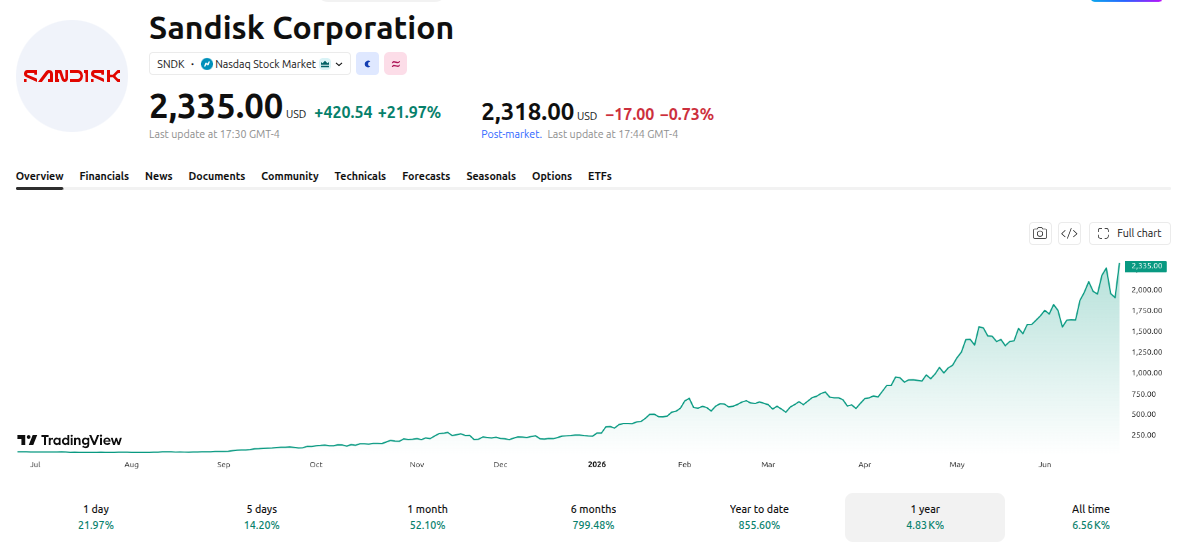
Citi has raised its Sandisk price target to $2,500 from $2,025, sending SNDK shares up roughly 22% in the last 24 hours. The chipmaker has rallied approximately 4,800% over the past 12 months on AI-driven NAND demand.
The upgrade adds fresh institutional firepower behind one of the most explosive Wall Street stories of 2026.
Why Citi Raised Its Sandisk Price Target
A price target is the level an analyst expects a stock to reach over a defined horizon, typically 12 months. Citi analyst Asiya Merchant lifted her Sandisk target by nearly 24%, signaling roughly 30.6% additional upside while keeping a Buy rating on the chipmaker.
The catalyst came from Micron’s blowout fiscal third quarter. Furthermore, NAND bit shipments rose mid-single digits sequentially, while average selling prices surged in the mid-80% range, confirming the depth of the supply tightness now reshaping the entire memory chip industry.
Follow us on X to get the latest news as it happens.
Merchant pointed to a clear structural setup. NAND industry demand is now outpacing supply, with that imbalance expected to persist well beyond 2027. AI workloads, especially in data centers, are driving most of the new demand across enterprise SSDs and adjacent storage products.
Citi also opened a 90-day short-term upside view on Sandisk shares. The bank flagged three near-term catalysts. Industry earnings, the Flash Memory Summit in August, and SanDisk’s investor day during the same month should all further sharpen sentiment across the sector.
Sandisk’s own numbers add weight to the bullish call. The company posted $5.95 billion in revenue last quarter, up 97% sequentially. Moreover, data center revenue alone grew 233% quarter over quarter, while more than one-third of fiscal 2027 bit output is already locked under multi-year contracts.
On the other hand, decentralized exchanges Raydium and Jupiter have added Sandisk to their roster of tokenized stocks. The listing reflects the rising appetite among crypto traders for exposure to the year’s top-performing equities.
What the 4,800% SNDK Rally Tells the Market
Sandisk has emerged as the best-performing stock in the entire S&P500 in 2026. Shares are up roughly 727% year-to-date, while the 12-month run from a low near $40 to recent highs above $2,335 marks an extraordinary 4,800% advance.
The rally tracks a structural shift in NAND economics. AI infrastructure spending has rewritten the demand curve. As a result, data center operators now rely heavily on cost-efficient SSDs to offload workloads, such as KV cache, a use case that did not exist in a meaningful way 18 months ago.
The Wall Street chorus has turned overwhelmingly bullish. Veteran trader Stephen “Sarge” Guilfoyle also raised his own Sandisk target to $2,600 from $2,425. Furthermore, the stock currently has a Strong Buy consensus rating on TipRanks, based on 14 Buy ratings and only 2 Hold ratings.

Risks remain real despite the conviction. SNDK trades at an elevated trailing P/E of 65 to 76 times earnings. Moreover, the stock recently fell 13.64% in a single session during a broader tech selloff tied to the Korean Kospi crash, showing how exposed the name remains to volatility.
For Citi, the bigger picture still favors the upside thesis. Bit supply growth across the NAND industry is projected at roughly 20% for 2026, while Micron itself expects its own supply growth to come in below that figure.
The post Citi Raises Sandisk Price Target to $2,500 as SNDK Rallies 4,800% in 12 Months appeared first on BeInCrypto.

SharpLink has resumed buying Ethereum (ETH) for the first time in 8 months, adding 5,000 ETH to its holdings.
The move breaks a long buying pause and lands while ETH trades far below the price the firm paid to build its treasury.
SharpLink Return to Buying as ETH Slides
According to Lookonchain, the 5,000 ETH, worth about $7.85 million, came from FalconX. SharpLink holdings have reached 876,285 ETH valued at roughly $1.4 billion. This also includes 22,102 ETH earned through staking rewards.
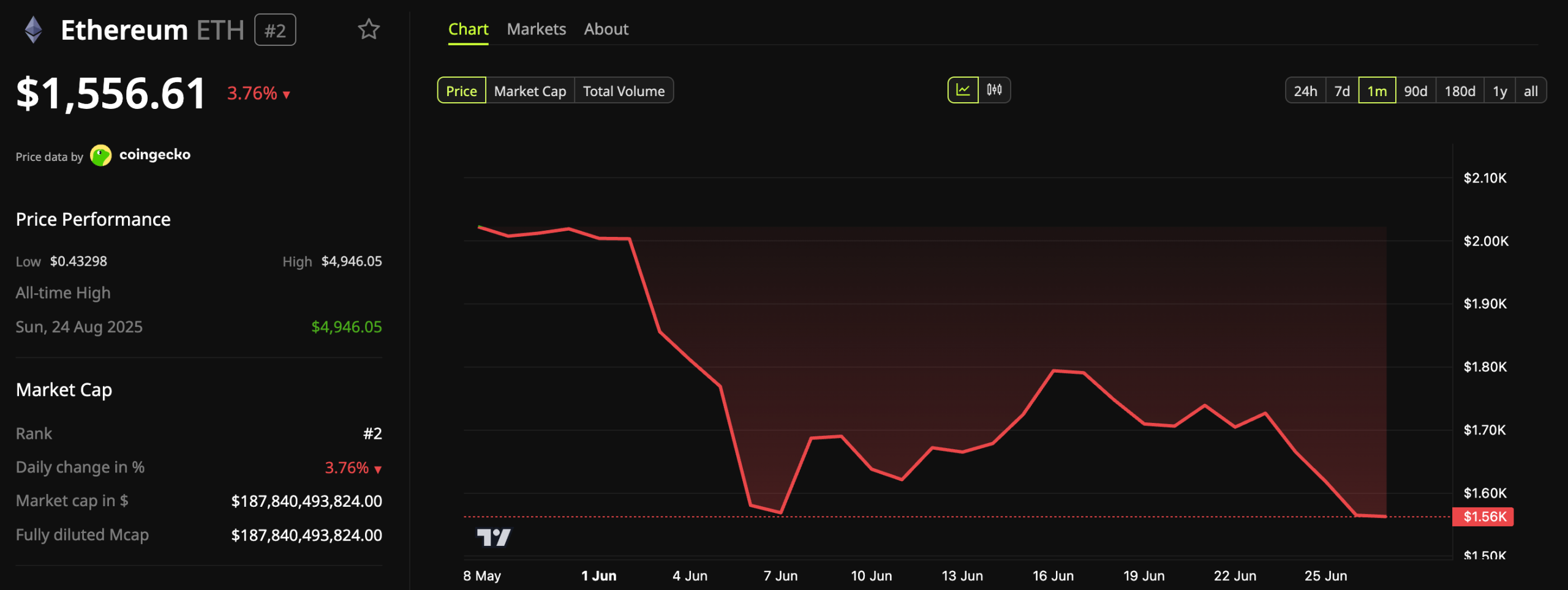
The acquisition adds to a position trading well below cost. SharpLink’s average purchase price is $3,609, while ETH traded near $1,556 today. That gap leaves the firm with an unrealized loss of more than $1.7 billion.
Follow us on X to get the latest news as it happens

That gap reflects a steep market decline. Ethereum has posted two consecutive red quarters and is on track to close the second quarter lower.
The asset has dropped nearly 25% over the past month, according to BeInCrypto Markets. The fall outpaced Bitcoin (BTC), which lost 22% across the same period.
Institutional appetite has cooled alongside the sell-off. According to SoSoValue data, spot Ethereum ETFs have recorded outflows for six consecutive weeks, with outflows extending into this week. The trend signals weak demand.

Mounting Losses and a Wider Ethereum Bet
The buying resumes after a punishing quarter. SharpLink reported a net loss of $685.6 million for the first quarter of 2026.
Most of that came from non-cash unrealized losses on its ETH holdings. Staking revenue, however, lifted total revenue to $12.1 million from $0.7 million a year earlier.
SharpLink has also widened its Ethereum commitment beyond its own balance sheet. The firm helped fund Ethlabs, a nonprofit research lab backing Ethereum’s institutional push.
Subscribe to our YouTube channel to watch leaders and journalists provide expert insights
The post SharpLink Resumes Ethereum Buying After 8-Month Pause appeared first on BeInCrypto.
Key Takeaways
- XRP touched $1.01 on June 25, marking its lowest valuation in 2026 and matching levels not seen since November 2024
- The digital asset has declined 43% from the beginning of 2026
- Approximately 100 million XRP tokens exited Binance reserves during the last month
- Large holder accumulation stays in positive territory with 5.14 million XRP daily net average over 90 days
- XRP spot ETFs have attracted $243 million in combined inflows starting from April
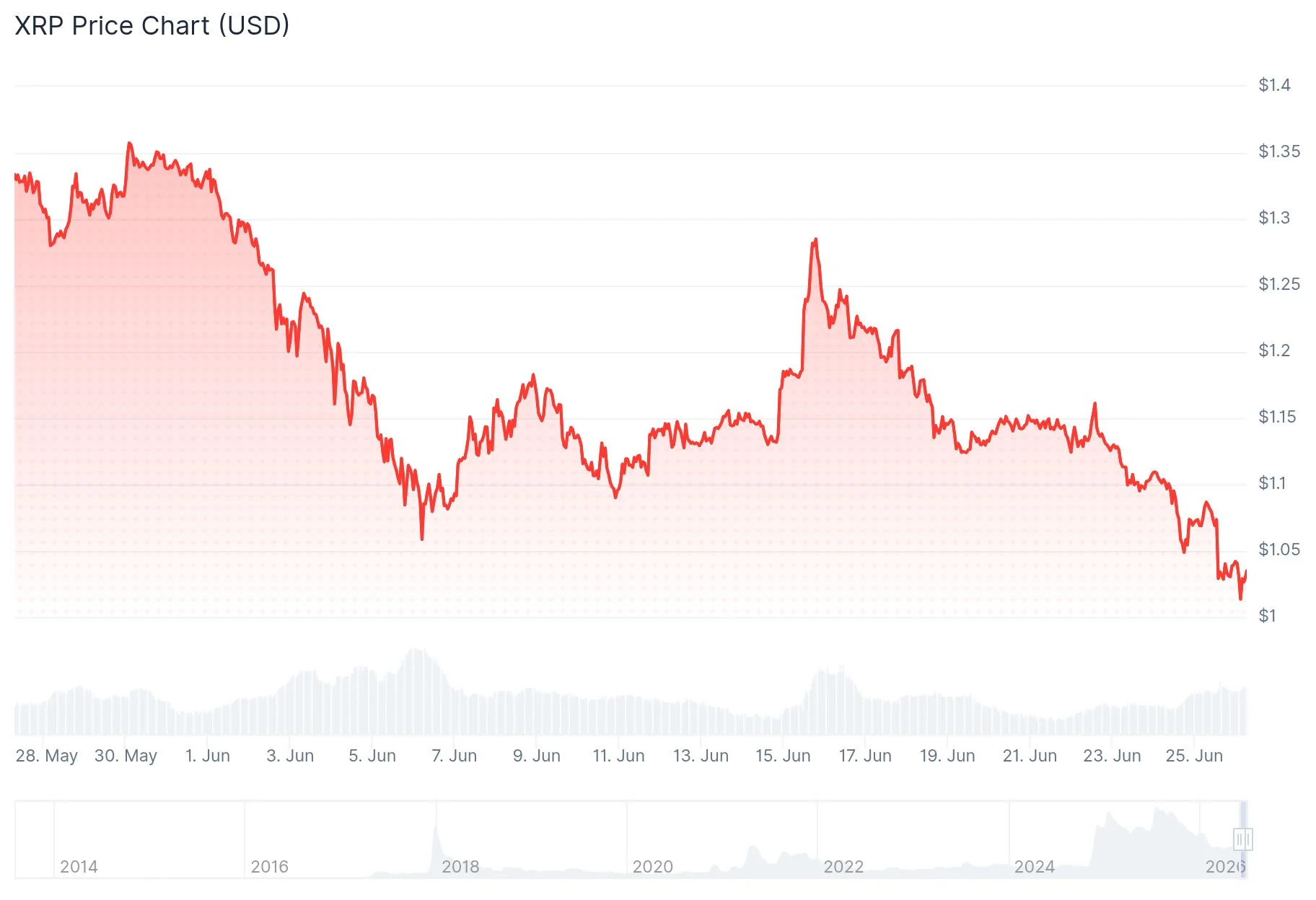
On June 25, 2026, XRP plummeted to $1.01, establishing its weakest performance for the year. This valuation brings the cryptocurrency dangerously close to breaking beneath the $1 threshold for the first time since November 2024.
The digital currency has surrendered 43% of its value since January 2026. The wider cryptocurrency sector has similarly experienced pressure, with Bitcoin sliding under $58,200 during the same trading session.
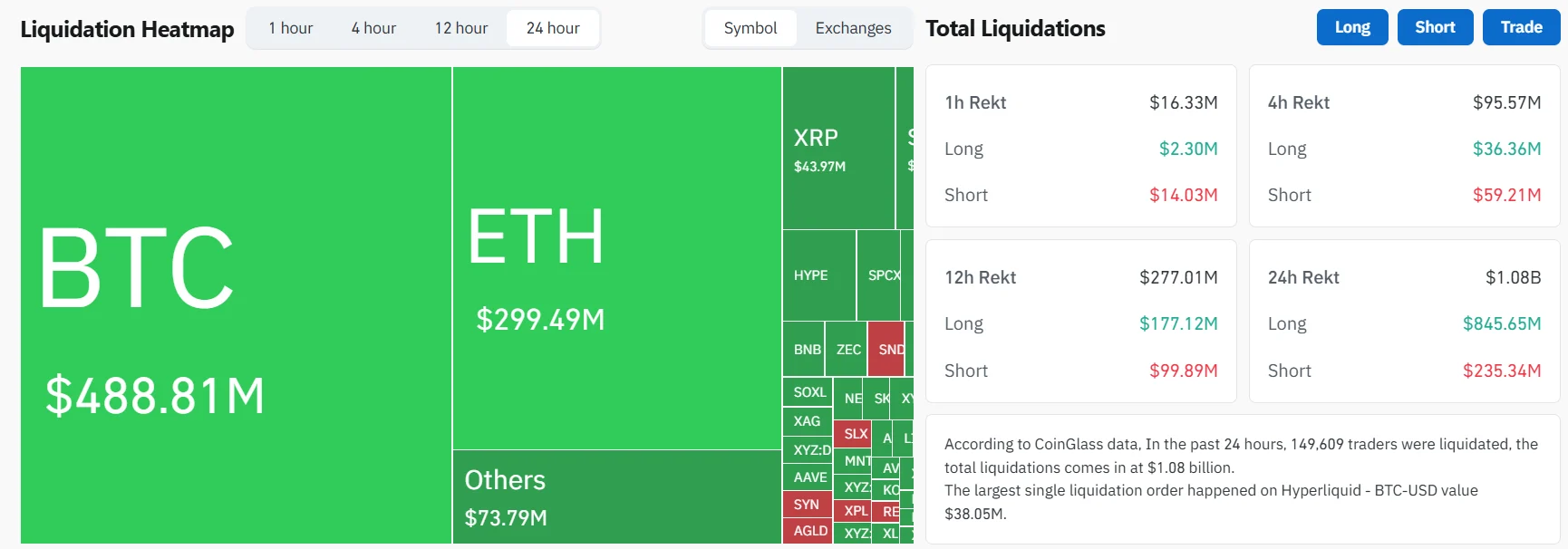
According to CoinGlass data, liquidations across the crypto market exceeded $915 million in the 24-hour window ending June 25. XRP contributed $42 million to this figure, with long positions representing $40.7 million of the total.
When XRP previously traded at comparable levels in November 2024, market dynamics were markedly different. Donald Trump’s presidential election victory had just occurred, triggering a widespread crypto market rally. During early November 2024, XRP was valued at $0.50 before experiencing a dramatic climb to $2.70 by December’s opening.
The token achieved its 2025 zenith of $3.65 during mid-July, coinciding with advancing clarity regarding its regulatory classification in the United States. The catastrophic market-wide flash crash on October 10 severely impacted prices, leaving XRP unable to recover momentum.
Market analyst Celal Kucuker published his perspective on X, projecting XRP’s floor at the $0.86–$0.87 zone, while identifying a ceiling target between $8–$9. His forecast correlates with Bitcoin stabilizing around $54,000.
Exchange Holdings Decrease Amid Rising Outflows
Blockchain metrics reveal a narrative diverging from price movements. XRP quantities stored on trading platforms have experienced consistent reductions across numerous exchanges.
Cryptocurrency researcher Amr Taha observed that Binance’s XRP holdings declined to approximately 2.68 billion tokens by June 25, down from 2.78 billion recorded on May 12. This represents roughly 100 million XRP departing the platform within a six-week timeframe.
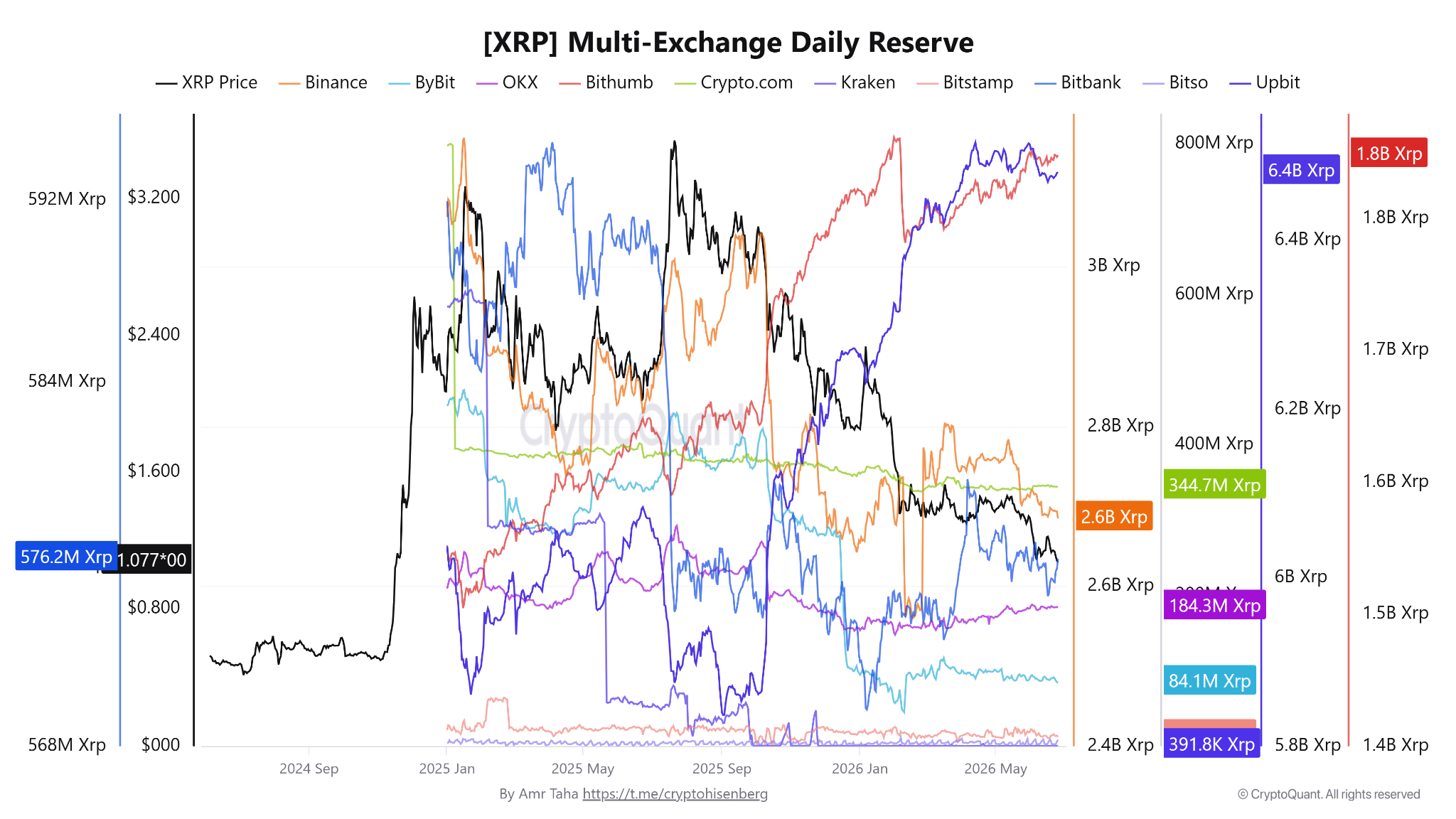
Upbit’s stockpile decreased from 2.51 billion to 2.48 billion XRP during the May 31 to June 25 period. Bybit witnessed a more pronounced percentage reduction, falling from 92 million to 82 million XRP since early June.
On Binance, withdrawal transactions have exceeded deposit activity for seven consecutive days beginning June 17. Withdrawals represented 53.8% of total flows on June 23, reaching the highest proportion since June 2024.
Major Holders and ETF Activity Show Continued Support
Significant XRP investors have maintained buying pressure. The 90-day rolling average for large holder net flows registered a positive 5.143 million XRP daily throughout the quarter.
Spot XRP ETF products recorded $2 million in net inflows on June 24, pushing June’s aggregate to $31 million. Since their April introduction, these funds have accumulated $243 million in total inflows.
ETF momentum has decelerated from initial enthusiasm. The products captured $666.61 million during November 2024 and $499.91 million in December. Throughout 2026, monthly inflows have fluctuated between $15.59 million in January and $131.94 million in May.
March remains the sole period recording negative flows, with $31 million in net outflows for the month.
At publication time, XRP was changing hands at $1.03.

Crypto World
The DATA Foundation Launches to Tackle AI’s Multi-Billion Dollar Training Data Bottleneck
[PRESS RELEASE – Palo Alto, United States, June 25th, 2026]
Story rebrands as The DATA Foundation, launches DATA Network with flagship Kled AI integration, registering 1.5 billion user-contributed records on the platform
The Foundation also introduces Trace, the first public audit layer for consent, licensing, and data provenance at scale
Today, Story announces a strategic transition to become The DATA Foundation (“DATA”) and launches Trace, an onchain registry for AI training data provenance and licensing. The launch includes a flagship integration with Kled, the world’s largest opt-in human data marketplace, registering 1.5 billion user-contributed records on the Network. Andrea Muttoni becomes CEO of The DATA Foundation, and Kled’s founder, Avi Patel, joins in an advisor position as the Chief Data Officer.
AI’s Training Data Has Hit a Bottleneck
The shift to DATA reflects where the market is pulling hardest. AI training data has emerged as the most valuable and least solved category of IP. Frontier AI labs have hit a multi-billion-dollar data bottleneck, where the internet has been effectively exhausted for scraping. The remaining supply is either expensive and bespoke or legally undocumented, leaving labs without a way to source data at scale, prove its provenance, or guarantee its quality.
The legal stakes are rising, as frontier labs stake out market-defining products on data sourced through opaque networks, often without clear records of consent or jurisdiction. Scraped and undocumented data is no longer an option for enterprise-grade AI.
“The challenge in AI has shifted from compute and architecture to sourcing and provenance. As the scrapable web fractures, the question for labs now is who is keeping the receipts,” said Andrea Muttoni, CEO of The DATA Foundation. “With Kled, we combine full data transparency and auditability with the largest pool of AI training data on the planet.”
Building the Infrastructure for Trusted AI Data
DATA builds on the original mission to deliver a data and intellectual property (IP) layer for the internet, recognizing that the form of data and IP that is most critical in this era is AI training data. DATA Network brings essential infrastructure for training AI, anchored by a flagship integration with Kled. Starting today, Kled’s licensing rails and contributor receipts run on DATA Network with added support for stable coin payouts, which involves registering a staggering 1.5 billion user-contributed records with programmatic legal safeguards.

“Frontier labs have exhausted the supply of high-quality, human-generated public text available on the open web. Suppliers showing data-sourcing provenance will win the next decade of deals, and that’s our bet,” said Avi Patel, CEO and founder of Kled and part-time advisory CDO of The DATA Foundation. “Instead of sourcing data blindly, Kled’s data marketplace and DATA’s auditable chain of custody converge on what labs actually need to license data with confidence and transparency.”
Trace Launches as the Public Audit Layer for AI Training Data
Trace, The DATA Foundation’s public audit and search platform, also launches today alongside the Kled integration. Trace generates immutable, confidential receipts for every contribution, allowing labs to verify the legitimacy of datasets in seconds. For every single record uploaded by users worldwide, a receipt on DATA will be generated, enabling upstream compensation for contributors’ data and intellectual property. This addresses an urgent need for a verifiable and compliant AI training data market, which has become a legal and operational minefield.
A Wider Contributor Network
DATA’s thesis was validated by Poseidon, the AI data processing project incubated by Story, which cleans, normalizes, and scores raw human data for authenticity and quality, ensuring every record that reaches a buyer is model-ready. Poseidon’s early traction with frontier labs proved the AI training data opportunity. Backed by a16z and now running entirely on DATA, its contributor app Numo is live today, bringing thousands of contributors into the AI economy in exchange for real-time payouts.
“We started Story to build an IP layer for the internet, and the most important IP of this era is the data you can’t scrape: how a surgeon’s hands move, how a robot grips, how people speak, drive, and work in the real world,” said SY Lee, CEO of PIP Labs and strategic adviser to The DATA Foundation. “DATA is where that conviction goes next: an end-to-end network that proves real-world data’s origin, licenses it, and pays the people who made it. “
Token Migration and Ecosystem Continuity
The $IP token migrates to $DATA one-to-one with no action required from existing holders. Migration guidance, exchange timing, and an FAQ are available here.
About The DATA Foundation
Data is the biggest bottleneck in frontier AI. The data models need most either sits siloed with people and companies, or doesn’t exist yet, and won’t, until incentives are aligned to create it. DATA Network is the world’s AI audit rails built to answer the three questions every lab asks: can you source data at scale, prove where it came from, and guarantee its quality? Contributor apps including Numo and Kled supply opt-in human data; Trace gives every record a public, tamper-proof receipt; Poseidon turns it into model-ready datasets, so frontier AI can keep advancing on a foundation it can trust. $IP is now $DATA. More information available at datafdn.org.
The post The DATA Foundation Launches to Tackle AI’s Multi-Billion Dollar Training Data Bottleneck appeared first on CryptoPotato.

Key Highlights
- Invesco submitted an SEC application for the Invesco Stablecoin Reserves Onchain Fund
- The proposed fund targets cash and short-dated U.S. Treasury securities, complying with GENIUS Act standards
- Superstate, a blockchain technology provider, will serve as sub-transfer agent and tokenize fund shares
- Major financial institutions including BlackRock, State Street, Morgan Stanley, JPMorgan, and Goldman Sachs have introduced competing offerings
- Market analysts at Citigroup forecast the stablecoin sector could expand to $4 trillion within six years
Invesco, managing approximately $2.5 trillion in assets, has submitted regulatory documents to the U.S. Securities and Exchange Commission for authorization to create a tokenized money market vehicle targeting the stablecoin reserve sector.
The proposed product, named the Invesco Stablecoin Reserves Onchain Fund, will allocate capital into cash instruments, short-duration U.S. Treasury securities, and repurchase agreements while preserving a constant $1 net asset value.
Invesco’s regulatory submission was dated June 24, 2026, with the anticipated effective date falling roughly 60 days following the filing.
Fund Structure and Strategic Purpose
The investment vehicle targets stablecoin issuers specifically. These entities create digital assets pegged to the U.S. dollar and require secure, highly liquid reserve holdings to back their tokens.
The GENIUS Act — federal legislation enacted during the previous summer establishing regulatory parameters for payment stablecoins — mandates that issuers maintain qualified assets as backing reserves. Invesco’s proposed fund is specifically structured to satisfy these regulatory obligations.
The vehicle will be classified as a government money market fund under Rule 2a-7 regulations, mirroring the framework recently adopted by State Street for its stablecoin reserve product.
Invesco plans to incorporate the fund into its Short-Term Investments Trust, a pre-existing Delaware statutory trust already managing similar money market investment vehicles.
Blockchain Technology Integration Through Superstate
Superstate, a blockchain infrastructure specialist, has been designated as the sub-transfer agent. The firm will handle tokenization of fund shares and oversee a blockchain-integrated shareholder record system.
According to regulatory documents, the fund will function on a public blockchain network, though the specific platform remains unnamed. Superstate has previously tokenized assets using Ethereum and Solana networks. While the SEC filing acknowledges risks associated with Ethereum, it makes no explicit reference to Solana.
This collaboration extends an existing relationship between Invesco and Superstate. During March 2026, Invesco assumed daily portfolio management responsibilities for Superstate’s $700 million tokenized U.S. Treasury fund, trading under the USTB ticker. That arrangement established Invesco as the inaugural third-party asset manager utilizing Superstate’s blockchain-powered FundOS infrastructure.
Intensifying Competition in Emerging Sector
Invesco’s entry comes amid rapidly intensifying competition. State Street introduced a comparable GENIUS-compliant product just last week. BlackRock, Morgan Stanley, BNY, JPMorgan, and Goldman Sachs have each rolled out similar offerings throughout recent months.
The stablecoin market presently totals approximately $300 billion. Citigroup forecasts potential expansion to $4 trillion by 2030, positioning stablecoin reserve management as a potentially substantial revenue opportunity for asset management firms.
Invesco now stands alongside BlackRock, Franklin Templeton, and Fidelity among prominent traditional asset managers advancing into tokenized money market products.
An Invesco representative indicated the company maintains a policy against commenting on products currently undergoing registration procedures.
Crypto World
Strategy’s $13 billion paper loss dwarfs dogecoin, BlackRock’s BUIDL and hundreds of other tokens
Strategy (MSTR) is sitting on one of the largest unrealized losses in corporate history and it’s bigger than some of crypto’s most prominent projects.
The software-turned-bitcoin-treasury company holds roughly 844,000 BTC, acquired at an average price near $75,600, according to data source BitcoinTreasuries.net. With BTC trading near $60,000 as of writing, the mark-to-market hit exceeds $13 billion, which as per fair-value accounting rules, flows straight through the income statement, generating headline-grabbing quarterly losses.
To put that number in perspective: Strategy’s paper loss now surpasses the total market capitalization of dogecoin (around $11.5–12.7 billion), a long running memecoin project and behind Hyperliquid’s HYPE token, which hovers around $18 billion. HYPE is the ninth-largest digital asset globally and a top pick for many analysts and funds. They point to substantial upside potential as the decentralized platform has emerged as the preferred marketplace for trading not only cryptocurrencies but also assets tied to traditional finance.
Strategy’s paper loss is also bigger than the market caps of countless other DeFi, privacy, oracle projects such as Monero, Cardano, Chainlink, Bitcoin Cash, Litecoin, BlackRock’s BUIDL, Uniswap, Near Protocol, Aster and others.
Base, the blockchain backed by crypto exchange Coinbase, has returned online after the network suffered nearly a two-hour outage due to a consensus issue that halted block production.
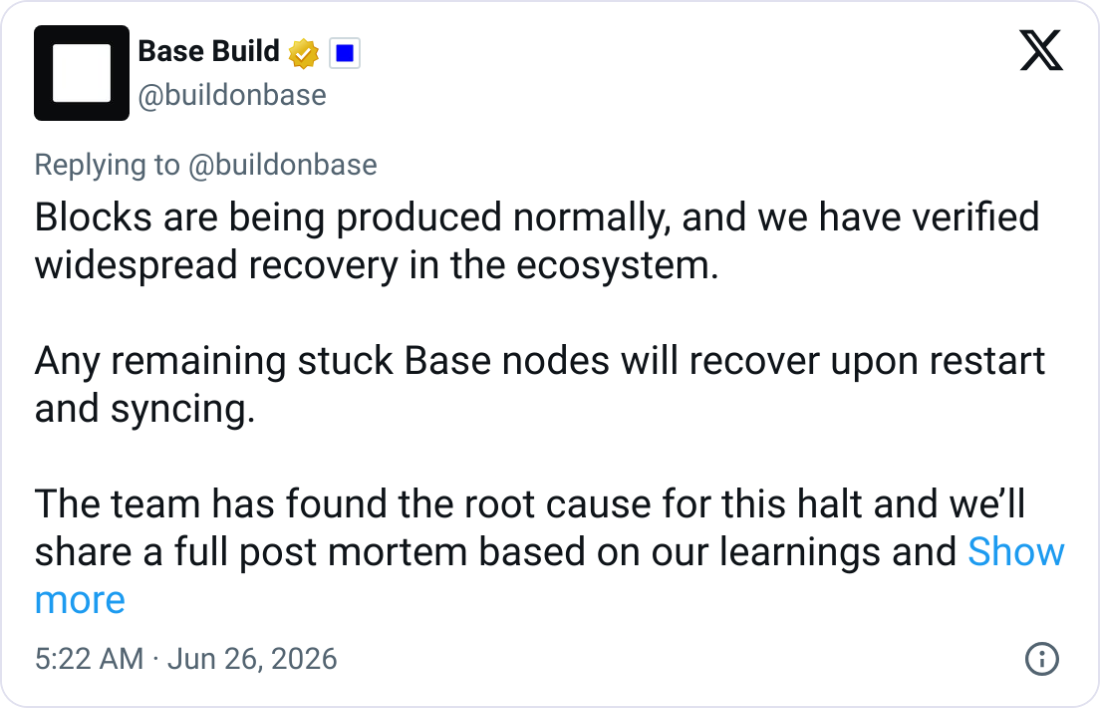
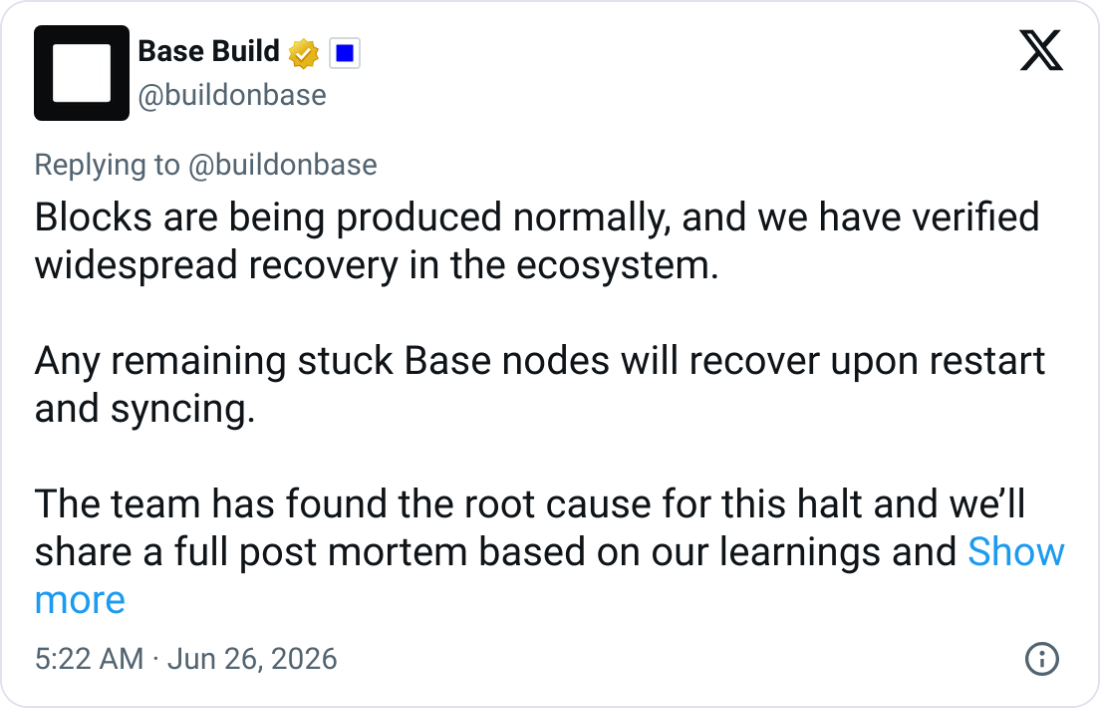
Base posted to X on Thursday after the outage that the network’s blocks “are being produced normally, and we have verified widespread recovery in the ecosystem.”
Base’s status page said it was investigating “unhealthy” block production at 4:03 pm UTC on Thursday. At 5:21 pm UTC the team said it “isolated a consensus problem that caused an invalid block to be sequenced. This prevented new blocks from being created.”
Base said in an update just before 6 pm UTC that it had “recovered healthy blockbuilding” and that ecosystem-wide infrastructure was able to sync, adding it had identified the issue and would investigate the root cause and share a full post-mortem.
The outage was a rare instance of downtime for a major blockchain like Base, the most used Ethereum layer-2 network, which last experienced a major outage in August 2025 when it went down for 33 minutes, according to its status page.
Source: Base Build
Base creator Jesse Pollack posted to X that all funds on the network are safe, “but a halt is not okay and we’ll use this to continue to level up base as a platform for global, 24/7 finance.”
Related: Coinbase lets users transfer stock portfolios as exchange expands beyond crypto
The downtime appeared to occur separately and just hours ahead of an upgrade for Base, dubbed Beryl, that was scheduled for 6 pm UTC and was completed two hours later at 8 pm UTC.
The update aimed to reduce delays on withdrawals and introduce a new token standard for real-world assets and stablecoins.
Layer-1 blockchain Sui experienced two periods of downtime on back-to-back days in May, each causing a temporary halt in block production. Sui later said the downtime was caused by a network update that it knew had a low probability of causing a halt.
Magazine: Bitcoin slides to $58K, XRP hits $1 but onchain data promising: Market Moves
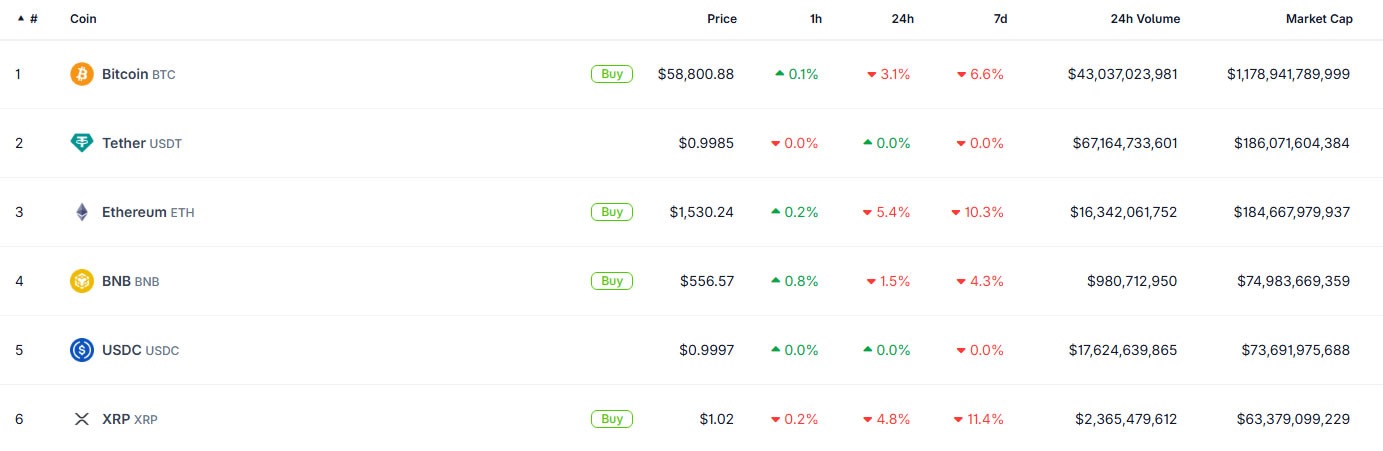
Tether stablecoin USDt has become the second-largest cryptocurrency by market capitalization as Ether fell to its lowest price of the year on Friday
Ether’s market capitalization dropped below $185 billion following a 5.2% price crash over 24 hours, sending the asset tumbling to $1,510 on Coinbase, according to TradingView. This allowed USDt, with a $186 billion market capitalization, to surpass the cryptocurrency.
“[The] stablecoin overtake really highlights how the market still favors stability over ETH’s volatility right now,” Andri Fauzan Adziima, research lead at Bitrue Research Institute, told Cointelegraph.
The development reflects accelerating stablecoin growth, which currently represents almost 15% of the entire crypto market capitalization. Stablecoin supply contracted more than 30% in the last bear market, but they’re hitting record highs this time, wrote 21Shares on Thursday, adding:
“To us, that is the strongest evidence yet that stablecoins are one of crypto’s defining use cases – demand that no longer depends on the cycle.”
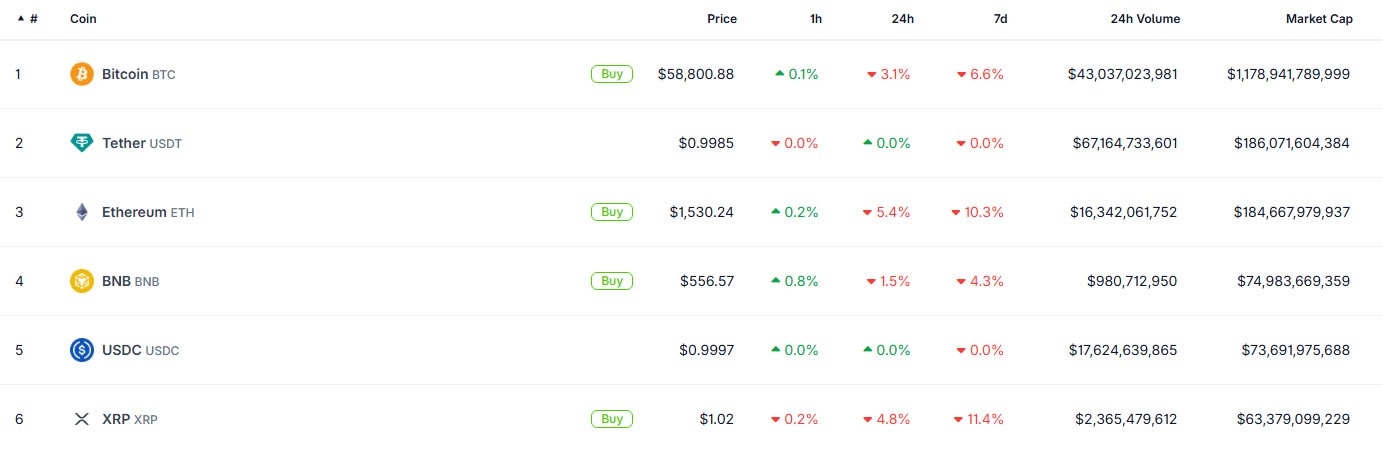
USDt flipped ETH in market capitalization. Source: CoinGecko
Alvin Kan, chief operating officer of Bitget Wallet, told Cointelegraph that the flip is a “notable milestone that highlights the explosive growth and dominance of stablecoins in today’s crypto ecosystem.”
“It demonstrates strong demand for reliable, liquid on- and off-ramps during periods of volatility, while serving as a reminder that ETH must continue delivering compelling utility and narrative momentum to maintain its position.”
Kan said the development is positive for the broader market, as deeper stablecoin liquidity supports higher trading volumes and ecosystem innovation.
Related: Sharplink buys ETH after 8-month pause as token hits 2026 low
ETH prices are back at crucial support levels last visited in October 2023 and April 2025.
The Ethereum ecosystem has also faced internal changes recently, following several executive departures and a 20% workforce reduction at the Ethereum Foundation.
However, a new nonprofit organization called Ethlabs was launched this week by key EF developers and researchers and backed by Ether treasuries Bitmine and Sharplink.
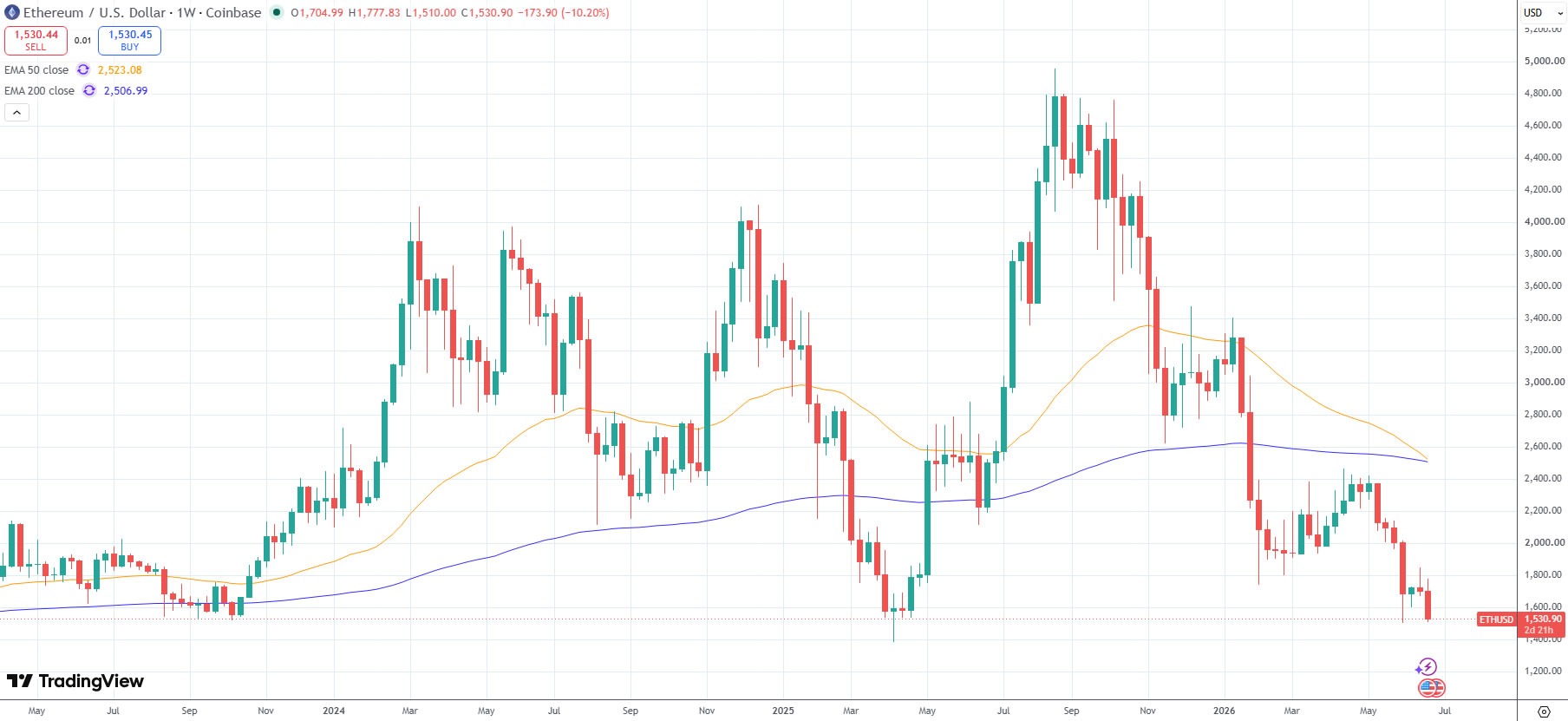
ETH prices are at a critical long-term support level. Source: TradingView
Not all are bearish
Some have taken Ether’s decline as an opportunity.
Ether treasury company Sharplink bought the dip, making its first purchase in eight months, scooping up 5,000 ETH on Thursday. Bitmine, chaired by Tom Lee, has also been accumulating at these low prices, adding a further 76,881 ETH last week.
Meanwhile, Circle’s USDC (USDC) also flipped Ripple’s XRP (XRP) in market capitalization as XRP fell back towards $1, its lowest level since November 2024, leaving XRP with a market capitalization of $64 billion compared with USDC’s $73.6 billion.
Magazine: AI is banking the unbanked in Africa… faster than crypto
Base, the blockchain developed by Coinbase, has resumed normal operations after an outage that lasted nearly two hours and stemmed from a consensus failure that prevented block production.
Base confirmed on Thursday that its blocks were once again being produced normally and that it had verified recovery across the broader ecosystem following the disruption. The incident was tracked publicly via Base’s status page, which first flagged unhealthy block production before later describing the specific consensus issue.
Key takeaways
- Base reported a near two-hour outage caused by a consensus problem that sequenced an invalid block and stopped new block creation.
- The network later restored “healthy blockbuilding,” and infrastructure across the ecosystem was able to sync again.
- Base said it had identified the issue and would investigate the underlying cause with a full post-mortem.
- The downtime was notable because Base is among the most widely used Ethereum layer-2 networks.
- An upgrade scheduled for shortly after the outage—Beryl—was completed hours later, after the incident.
Outage traced to consensus and invalid block sequencing
Base’s status page reported that the team was investigating “unhealthy” block production at 4:03 pm UTC on Thursday. Less than an hour later, Base said it had isolated a consensus problem in which an invalid block was sequenced. According to the status update, that sequence effectively halted block production, meaning no new blocks could be created during the period.
In a subsequent update just before 6 pm UTC, Base stated that it had recovered healthy blockbuilding, and that ecosystem-wide infrastructure had returned to a synced state. The team added that it had identified the issue and would continue investigating the root cause, promising a full post-mortem.
Base also posted the recovery status on X via its official account, saying blocks were being produced normally and that it had confirmed widespread recovery throughout the ecosystem.
Why Base downtime is noteworthy for Ethereum layer-2 users
While outages can happen across blockchain networks, a disruption of this nature is comparatively rare for major systems—particularly for networks that are heavily relied upon for daily activity. Base is described in the report as one of the most used Ethereum layer-2 networks.
Base previously experienced a significant outage in August 2025, when it went down for 33 minutes, as indicated in a separate incident recorded on its status page. The latest event therefore adds another high-visibility reliability test for users and operators who depend on Base for time-sensitive transactions and on-chain application workflows.
The reporting around the incident also emphasized that Base’s creator, Jesse Pollack, said funds on the network were safe. However, even when assets are not at risk, a halt in block production can affect confirmations, withdrawals, and the overall throughput that applications expect from a live network.
Timing around the Beryl upgrade
According to the report, the downtime appeared to occur separately and just hours ahead of a scheduled Base upgrade known as Beryl. The upgrade was set for 6 pm UTC and was reported as completed at 8 pm UTC, two hours later.
Base’s Beryl update was intended to reduce delays on withdrawals and introduce a new token standard for real-world assets and stablecoins. For users, those changes can directly influence how quickly funds move out of the system and how new tokenized products are represented on-chain. For infrastructure providers, upgrades also increase operational complexity—making it especially important that the network returned to healthy block production before or during the transition.
Wider reliability signals across competing networks
Base’s outage also fits into a broader pattern of occasional block-production stalls across large networks. The report points to Sui, which experienced two separate periods of downtime on back-to-back days in May, each causing a temporary block-production halt. Sui later stated that the downtime resulted from a network update it had assessed as having a low probability of causing a halt.
That detail matters because it highlights a recurring challenge in blockchain operations: even carefully planned upgrades can create unforeseen edge cases. In Base’s case, the immediate cause was described as a consensus problem that prevented block creation, and the team indicated it would investigate the root cause. Readers may want to watch whether Base’s post-mortem explains how the failure relates to network parameters, client behavior, or sequencing logic—and whether similar failure modes could recur.
What to watch next
Base says it has identified the issue and will publish a root-cause analysis. The key follow-up will be how the post-mortem explains the consensus failure and what safeguards are added to prevent invalid block sequencing and restore even more resilient block production—particularly around future upgrades like Beryl.

Around 153,500 Bitcoin options contracts will expire on Friday, June 26, with a notional value of roughly $9.3 billion. This event is much larger than usual, being the end of the month and end of quarter, so it may induce more volatility in the already battered spot markets.
Crypto markets fell to an almost two-year low this week, with total capitalization shedding more than $180 billion since Monday as the bear market deepens.
Bitcoin Options Expiry
This week’s batch of Bitcoin options contracts has a put/call ratio of 0.73, meaning that sellers of long (call) contracts slightly outweigh short (put) contract sellers. Max pain is around $72,000, which is around $13,000 higher than current spot prices, so most will be out of the money on expiry.
Open interest (OI), or the value or number of Bitcoin options contracts yet to expire, remains highest at the $80,000 strike price on Deribit, with $1.4 billion, but short sellers still have $1 billion in OI at $60,000. Total BTC options OI across all exchanges has been climbing over the past week, and is at $34 billion, according to Coinglass.
“BTC heads into expiry well below its $72K max pain level,” observed Deribit.
“While max pain remains a widely followed metric, recent quarterly expiries have shown limited evidence of a consistent pinning effect ahead of settlement.”
“Puts continue to command a meaningful premium over calls across all major tenors,” reported derivatives provider Greeks Live this week.
There is “persistent demand for near-term downside protection, while longer-dated options pricing remains comparatively anchored,” it added.
Q2 Options Expiry Alert
At 08:00 UTC tomorrow, ~$10.8B in BTC and ETH options are set to expire on Deribit. The largest expiry event on Deribit in 2026 so far.
bitcoin:native : ~$9.3B notional | P/C: 0.73 | Max Pain: $72K
ethereum:native : ~$1.6B notional | P/C: 0.54 |… pic.twitter.com/lFgWcR6kQc— Deribit (@DeribitOfficial) June 25, 2026
In addition to today’s big batch of Bitcoin options, around 1 million Ethereum contracts are also expiring, with a notional value of $1.6 billion, max pain at $2,000, and a put/call ratio of 0.54. Total ETH options OI across all exchanges is low at around $5.7 billion.
This brings the total crypto options expiry notional value to around $11 billion, which is one of the largest of the year.
Spot Market Outlook
Spot markets have tanked a further 3% on the day to their lowest levels since September 2024.
BTC lost 4%, dumping to just over $58,000 during the Friday morning Asian session. It rebounded slightly toward $60,000 as of press time after that fresh low for this market cycle. Analysts warned this week that a brutal wipeout at this zone was imminent.
Ether was briefly flipped by Tether in market cap, as it fell more than 5% to $1,522 on Friday morning, its lowest level since the April 2025 dip, and back to 2023 bear market levels. Meanwhile, the altcoins are a sea of red as the bloodbath continues.
The post Massive $11B End-of-Quarter Options Expiry Could Rattle Crypto Markets Today appeared first on CryptoPotato.


SharpLink has bought Ether for the first time in eight months as ETH traded near its lowest level of 2026.
Summary
- SharpLink resumed ETH buying after eight months, despite Ether trading near its lowest 2026 level.
- Its 876,285 ETH balance leaves the company exposed to large unrealized losses on paper.
- Russell index inclusion could widen SBET ownership as treasury investors track Ethereum exposure more closely.
The latest move suggests the company may be restarting active accumulation after months of relying mainly on its existing treasury and staking rewards.
According to Lookonchain, a wallet linked to SharpLink received 5,000 ETH, worth about $7.85m, from FalconX. The on-chain tracker said SharpLink last received ETH from FalconX in October, when it bought about $78.3m worth of the token.
Treasury loss grows with ETH weakness
The purchase came as Ether fell to about $1,537 on Thursday, its lowest price this year. At the time of writing, Arkham’s SharpLink dashboard showed the company as one of the largest corporate holders of Ethereum-linked assets.
Lookonchain said SharpLink now holds 876,285 ETH, worth about $1.4b at current prices. The tracker also said the total includes 22,102 ETH earned from staking. Its average purchase price stands near $3,609, leaving the company with an unrealized loss of about $1.71b.
Russell entry may broaden ownership
The ETH purchase also comes before SharpLink’s expected entry into the Russell 2000 and Russell 3000 indexes. In a May announcement, the company said the index additions would take effect on June 29, after the latest FTSE Russell reconstitution.
SharpLink CEO Joseph Chalom said the inclusion is “a meaningful validation” of the company’s ETH treasury strategy. He also said it could broaden SBET’s shareholder base and improve access to capital markets. Index inclusion does not remove market risk, but it can place the stock in more passive and active portfolios.
Ethereum catalysts remain mixed
Chalom previously named three possible catalysts for ETH: clearer U.S. crypto rules, a return of risk appetite and growth in tokenized real-world assets. The regulatory track remains active, with the CLARITY Act still moving through Congress. Risk appetite is less clear, as ETH and other crypto assets continue to trade under pressure.
Tokenization has continued to grow. Data from RWA.xyz shows tokenized real-world assets near yearly highs, with distributed asset value above $31b. That supports Chalom’s view that Ethereum could benefit from more financial assets moving on-chain.
As previously reported, Ethereum recently held near $1,600 as whales bought the dip. ETF outflows and weak open interest kept ETH under pressure, showing the market remains split between accumulation and caution.
SharpLink is also no longer the largest public ETH treasury company. As crypto.news reported, BitMine bought another $90m in ETH and moved closer to its 5% ETH supply target. In a previous article, crypto.news discussed Ethereum research group Ethlabs, which has support from Joe Lubin, BitMine and SharpLink.
SharpLink’s latest buy places the company back in the market while ETH trades at weak levels. The key test is whether the purchase marks a new accumulation phase or a single treasury move before index entry.

8 Perfect Thriller Movies That Nobody Remembers Today

Your Money Is About To Be Worth A Lot Less

NATO leaders hoping to display cohesion at an upcoming summit in Turkey


-

 Fashion7 days ago
Weekend Open Thread: Miami – Corporette.com
-

 Entertainment5 days ago
Renter of Home in Anne Heche Crash Denies Settlement With Son
-
 Sports3 days ago
Two goals and an assist by sheer aura: Cristiano Ronaldo just entered the World Cup chat
-

 Tech4 days ago
Microsoft accidentally kills epic Outlook email threads
-

 Business5 days ago
Soccer-U.S. defends Iran World Cup travel restrictions, says discussions ongoing
-

 Politics6 days ago
Andy Burnham and the meaning of Makerfield
-

 NewsBeat7 days ago
Keir Starmer Allies Question His Chances For No 10
-

 Tech11 hours ago
A Look At A Gaggle Of Transputer Boards
-
Crypto World2 days ago
Bitcoin (BTC) Dips Below $62K, Ethereum (ETH) Plunges 6% Daily: Market Watch
-

 Crypto World2 days ago
Securitize Wraps Roubini's SEC-Registered ETF as Dubai VARA Digital Security
-
Business2 days ago
Entergy settles forward sale agreements, raises $672 million in cash proceeds
-

 Politics5 hours ago
Potential 2028er World Cup attendee leaderboard
-
 Business6 days ago
Wall Street Week Ahead: Investors see Micron earnings as pulse check of AI rally momentum
-
 Crypto World6 days ago
Can Charles Hoskinson Really Rescue Cardano?
-

 Crypto World6 days ago
HIVE shares jump as $220M AI deal speeds Bitcoin mining pivot
-

 Crypto World6 days ago
Jake Chervinsky accuses CME of protecting derivatives monopoly
-

 Entertainment6 days ago
Jose Alvarado Wants Taylor Swift at More Knicks Games
-
 Tech5 days ago
Signal’s Meredith Whittaker says AI chatbots ‘are not your friends’ and calls Copilot agents a backdoor
-

 Sports18 hours ago
India vs Bangladesh LIVE Score, Women’s T20 World Cup: Bangladesh Opt To Bat; India Enter ‘Do-Or-Die’ Stage As Semi-Final Race Heats Up
-

 Tech3 days ago
Nearly 7,000 fake Amazon domains registered ahead of Prime Day 2026, researchers warn
You must be logged in to post a comment Login