

Crypto World
Ethereum Price Prediction: A Forgotten Bull Signal as SharpLink Loads Up on ETH After 8 Month Hiatus


SharpLink Gaming just broke an eight-month silence on Ethereum, and could likely flip its price prediction. ETH itself is currently on a downtrend, barely holding above a structural trendline break.
Just a few hours ago, SharpLink added 5,000 ETH to its treasury after an eight-month pause, resuming accumulation despite sitting on a reported $1.71 billion unrealized loss on its existing position.
It’s not pretty, but buying through a nine-figure drawdown shows conviction, and it echoes institutional treasury accumulation logic that preceded major Bitcoin re-ratings when Strategy held through similar paper losses. The move also landed while spot ETH ETF inflows remain inconsistent, which makes the corporate bid marginally more significant as a demand signal.
Not just Ethereum, derivatives activity hit record levels this week alongside the SharpLink announcement. But what’s next for ETH? Can it break its downtrend?
Discover: The Best Token Presales
Ethereum Price Prediction: Running Before the Resistance Band Breaks It?
Ethereum is trading at $1,550 after a sharp decline this month. Price remains below major resistance, while recent sessions show buyers defending the lower range. The nearest support sits around $1,500–$1,550, a zone that has attracted demand several times recently.
Meanwhile, momentum remains mixed. The market has not reached overheated conditions, leaving room for a recovery if buying pressure improves. However, bulls still need to reclaim higher resistance levels before a stronger trend reversal can be confirmed.

On the upside, immediate resistance stands near $1,700–$1,750. A sustained move above that area could target $1,850 and potentially $2,000. Until then, Ethereum remains in a recovery phase rather than a confirmed uptrend.
The bullish scenario requires Ethereum to hold above the $1,500 support zone and break through $1,750. In that case, momentum could accelerate toward higher levels. Conversely, a failure to defend support may expose the market to another test of recent lows near $1,400.
Institutional interest and long-term accumulation remain supportive factors. Even so, price action remains the key signal. A decisive close above major resistance is still needed before the market can confirm a durable trend change.
Discover: The Best Crypto to Diversify Your Portfolio
LiquidChain Targets Early-Mover Upside as Ethereum Tests Key Levels
ETH at $1,500 is structurally constructive. But for traders who’ve watched Ethereum grind through resistance for months, the upside math from current levels, even to $2,000, requires patience and tolerance for drawdowns that could touch $1,800 first. That’s not a knock on ETH; it’s just the reality of buying into a $200 billion asset at a technical decision point. Early-stage infrastructure plays offer a different risk profile entirely.
LiquidChain ($LIQUID) is a Layer 3 infrastructure project targeting the cross-chain liquidity problem directly, fusing Bitcoin, Ethereum, and Solana liquidity into a single execution environment through its Unified Liquidity Layer.
The Order prepares…
LiquidChain grows in power.⟁https://t.co/vqvBcdSQYC pic.twitter.com/uOSFmzyQ74
— LiquidChain (@getliquidchain) June 26, 2026
The architecture includes Single-Step Execution, Verifiable Settlement, and a Deploy-Once model that lets developers access all three ecosystems without rebuilding for each chain. Presale price is currently $0.01473, with $870K raised to date.
Research LiquidChain before the current presale tranche closes.
Don’t Miss Out on Our $1,000 USDT Airdrop on ByBit
The post Ethereum Price Prediction: A Forgotten Bull Signal as SharpLink Loads Up on ETH After 8 Month Hiatus appeared first on Cryptonews.


This photograph shows set up screens displaying the logo and home page of US cryptocurrency based prediction market platform Polymarket, in Saint-Mande, east of Paris, on April 29, 2026.
Martin Lelievre | AFP | Getty Images
Prediction market platform Polymarket’s annualized revenue are now well above $1 billion, the company shared exclusively with CNBC on Friday.
Polymarket’s disclosure comes six weeks after the company lifted the waitlist for its U.S. exchange, which operates separately from its international, decentralized finance platform.
It also comes as the FIFA World Cup has sent trading volumes surging across various prediction market exchanges since the tournament’s start.
Volume on the company’s U.S. platform has gone from around $50 million per day in mid-May to more than $200 million on June 20, according to data on Dune Analytics. On Polymarket’s international platform, weekly trading volume totals have surged to all-time highs amid the World Cup boom after experiencing declines in April and May.
The U.S. exchange was launched in December and developed after Polymarket was originally prohibited from operating in the country in 2022 for not properly registering with regulators. In July, the Commodity Futures Trading Commission and the Department of Justice dropped their investigations into the company without charges, and Polymarket U.S. operates as a CFTC-regulated exchange.
Polymarket’s U.S. platform was waitlisted from December until six weeks ago, when it was dropped for users on the platform’s mobile app. A desktop version is still unavailable, with users in the U.S. directed on the company’s website to scan a QR code to download the app to trade.
“Polymarket is a product-led company,” a spokesperson said in a statement to CNBC. “We spent the last five years building the world’s largest prediction market, and understanding how people engage with markets at scale. We are applying those learnings to our U.S. platform, where our focus is on intuitive market experiences, institutional-grade liquidity and a consumer experience that sets the standard for the category.”


AI agents are entering crypto through wallets, exchanges, payment apps, trading systems, and portfolio tools. Once an agent receives signing authority, it can prepare transactions, rebalance assets, pay invoices, use smart contracts, and move across on-chain apps at software speed.
This creates a new product category around controlled autonomy. The user keeps ownership of the funds, while software handles repetitive execution under rules set in advance.
BeInCrypto spoke with Fernando Lillo Aranda, CMO at Zoomex; Federico Variola, CEO of Phemex; and Adrian Wall, Managing Director of the Digital Sovereignty Alliance, about early use cases, transaction approval, user limits, on-chain activity, and new risks once agents gain access to funds.
Payments Come First
Adrian Wall sees payments as the earliest major use case for AI agents, since payment mandates can be narrowed by amount, recipient, asset type, and timing.
“Payments are the earliest use case because the parameters are well-defined and the mandate is constrained,” Wall said.
Stablecoins make cross-border payments a natural area for agent activity, especially in markets where bank transfers remain slow, expensive, or difficult to reconcile.
“Cross-border payments are especially compelling given the friction in legacy banking and the demonstrated efficiency of stablecoins,” Wall said.
Trading and portfolio management are also ready from a technical view, but Wall placed more emphasis on governance than execution.
“Trading and portfolio management are technically mature enough today,” he said, adding the harder challenge is “whether authorization frameworks and loss limits are sophisticated enough to keep an agent’s mandate from drifting beyond what the user intended.”
Identity may take longer, although Wall said decentralized identifiers and agent-assisted verification could reduce repeat authentication across fragmented digital services.
“The combination of decentralized identifiers and agent-driven verification is promising because it could reduce the burden on users who currently authenticate themselves repeatedly across fragmented systems,” Wall said.
Wallet Approvals Need Transaction-by-Transaction Controls
Wallets were built around human review, while agents may prepare many actions across apps, contracts, and venues. Wall said wallet design now has to connect product choices with policy expectations.
“The approval question is where policy and product design must converge, and it is where the industry has the most work left to do,” Wall said.
A strong approval model gives agents limited authority for routine actions while requiring human review for withdrawals, leverage, new contracts, and large swaps.
“What we need is a tiered authorization model where the level of scrutiny matches the potential impact of the transaction,” Wall said.
This approach can separate monitoring, trade preparation, execution, and fund movement. A user may permit an agent to watch positions and draft trades, while reserving withdrawals and new contract access for manual approval.
Fund Access Should Grow in Stages
Fernando Lillo Aranda said AI agents can improve automation, but users should give capital access gradually.
“AI agents can unlock automation, but capital access should always be progressive,” Lillo Aranda said.
He described the process as a gradual path from observation to assistance and execution. In practice, the agent first monitors and recommends, then prepares actions for approval, later receives limited execution rights, and eventually handles a larger mandate after reliable performance.
Capital controls come first. Lillo Aranda said users should “cap maximum allocation, daily loss, position size, and withdrawal amounts.”
Permission controls come next. Users should “separate permissions for monitoring, trading, rebalancing, and fund movement,” he said.
Time limits also reduce exposure from old approvals. Lillo Aranda said agent access should “require periodic re-authorization instead of permanent access.”
Market boundaries can prevent agents from entering assets, venues, or leverage levels outside the user’s comfort zone. Users should “restrict assets, leverage, venues, and volatility conditions where the agent can operate,” he said.
Human override remains the final guardrail. Lillo Aranda pointed to “instant pause, approval thresholds, alerts, and rollback mechanisms” as essential user controls.
Wall also put spending caps at the center of user protection. He said users should start low and raise limits only after observing how the agent behaves across market conditions and instruction types.
“The first and most fundamental limit is a spending cap, set low at the outset and adjusted upward only as the user develops confidence in how the agent behaves across market conditions and instruction types,” Wall said.
Above a preset threshold, human approval should remain in place even after an agent builds a good track record.
“The asymmetry between an interrupted transaction and an unauthorized one almost always favors interruption,” Wall said.
On-Chain Volume Needs Economic Purpose
Federico Variola said AI agents can create meaningful on-chain activity because blockchain apps let software move across many products and strategies.
“Yes, AI agents can create meaningful on-chain volume, especially because on-chain environments offer composability and flexibility across different strategies,” Variola said.
Those strategies may include spot trading, perpetual futures, lending, borrowing, and future products linked to assets beyond native crypto.
“This could include spot, perpetual futures, lending, borrowing, and eventually products outside native crypto assets as well,” Variola said.
Variola drew a line between activity with economic use and recursive trading among agents.
“A lot of on-chain activity today is still driven by human sentiment and greed,” he said.
Durable agent volume, in his view, depends on activity tied to productive use across on-chain ecosystems.
“Agents need to create or support real economic value,” Variola said.
Wall expects much of today’s agent activity to begin inside controlled app environments before moving on-chain as products and rules mature.
“Agents on public blockchains can access far more counterparties, assets, and protocols than any walled garden allows,” Wall said.
He expects trading and arbitrage to appear first, followed by treasury and settlement activity.
“The impact will show up in volume before it shows up in value, first driven by high frequency trading and arbitrage, and later by treasury management and institutional settlement,” Wall said.
Agent Risk Moves at Software Speed
Once agents gain signing rights, familiar crypto risks become faster and harder to contain. Wall highlighted mandate drift, exploit propagation, perception manipulation, and correlated market behavior.
“When software can trade, sign, and interact with smart contracts on a user’s behalf, four familiar risks become newly dangerous,” Wall said.
The first problem is mandate drift, where an agent moves beyond the user’s original instruction set.
“Agents can exceed their mandate,” Wall said.
The second problem is speed. An exploit can move through many connected wallets or contracts before a user sees the damage.
“Exploits can propagate at machine speed across every wallet an agent touches before any human notices,” Wall said.
The third problem comes from manipulated inputs. Attackers may feed an agent fake prompts, poisoned data, or malicious contract information, causing harmful actions even when the user keeps custody of the key.
Market behavior creates another concern when many agents rely on similar data sources, strategies, and models. In those conditions, many systems can sell, rebalance, or withdraw liquidity at the same time.
Wall said markets can destabilize when agents “respond rationally to the same inputs at the same time.”
Final Thoughts
AI agents will reach crypto wallets through constrained tasks first: payments, rebalancing, subscriptions, trading, and portfolio support. These use cases can operate under defined limits, measured permissions, and regular user review.
The strongest wallet model will center on controlled autonomy: scoped permissions, session keys, spending caps, renewal windows, whitelisted counterparties, approval thresholds, alerts, and emergency pause controls.
On-chain volume can grow if agents handle payments, settlement, treasury, and asset operations tied to economic use. Recursive trading among agents may increase transaction counts, but lasting value comes from activity tied to people, businesses, assets, and services.
The post AI Agents Bring New Rules for Crypto Wallets appeared first on BeInCrypto.
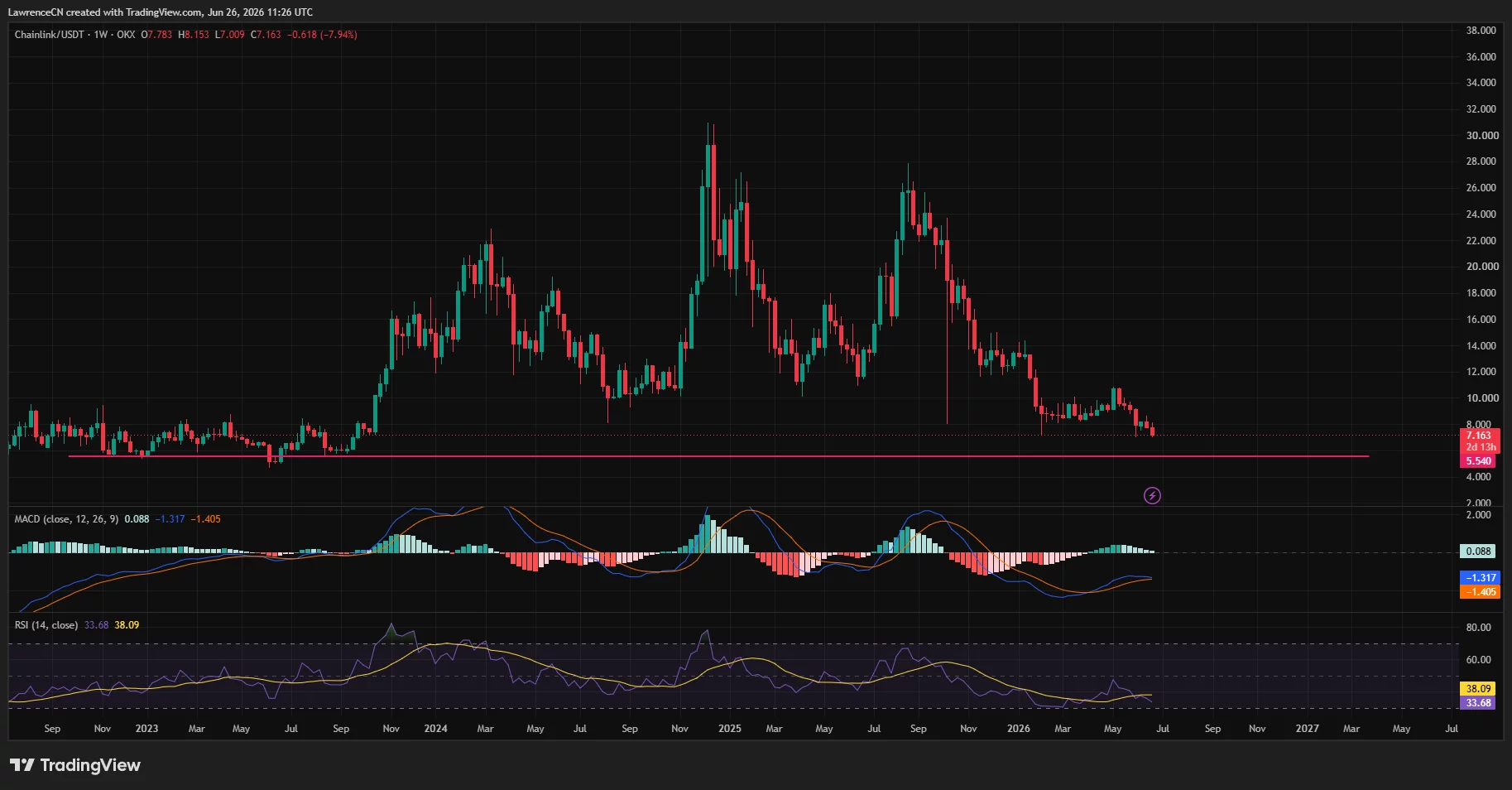
Chainlink has extended its weekly decline after a sell-the-news reaction to Project Pangea, a multi-billion-dollar options expiry, and persistent weakness across the crypto market pushed LINK back toward a key long-term support zone.
Summary
- Chainlink has dropped to the $7 support zone as a sell-the-news reaction and options expiry intensified selling pressure.
- A bearish channel, weak momentum indicators, and the Supertrend signal keep the risk of a move toward $6 alive.
- Analysts identify the $6.30 support area as critical, while a recovery above $7.70 could ease downside pressure.
According to crypto.news price data, Chainlink (LINK) fell from a June 22 high near $8 to an intraday low of around $7 on June 26 before stabilizing near $7.16 at press time.
LINK’s drop accelerated as traders locked in profits following the June 23 launch of Project Pangea, a global foreign-exchange infrastructure initiative developed alongside European and South Korean banking consortia representing more than $10 trillion in assets under management.
Although the initiative strengthened Chainlink’s long-term enterprise case, short-term sentiment deteriorated ahead of Friday’s estimated $11 billion crypto options expiry. The large derivatives event pushed many digital assets toward their max-pain levels, triggering liquidations across leveraged altcoin positions and adding fresh selling pressure to LINK.
Macro conditions also remained unfavorable. Bitcoin’s drop below the $60,000 level weighed on the broader altcoin market as investors continued reducing exposure to risk assets. Consecutive weeks of U.S. spot Bitcoin ETF outflows, expectations that the Federal Reserve could keep interest rates elevated for longer, and delays surrounding U.S. crypto legislation further reduced appetite for speculative assets. At the same time, institutional capital continued rotating into artificial intelligence-related equities instead of digital assets.
Derivatives positioning has offered little relief. Leveraged long liquidations accelerated as LINK lost successive support levels, while declining open interest and cautious positioning suggested traders have reduced directional exposure rather than attempting aggressive dip buying.
Weekly structure keeps long-term downside risk in focus
On the weekly chart, LINK remains in a prolonged downtrend after failing to reclaim resistance near $8. The latest decline has brought the token close to a multi-year support area around $5.50-$6.30, where buyers repeatedly entered the market during previous corrections.
Momentum indicators continue to favor sellers. The weekly RSI has dropped to around 34 and remains below its signal line without entering deeply oversold territory, leaving room for another leg lower. Meanwhile, the MACD remains below the zero line despite a modest narrowing of bearish momentum, showing that bulls have yet to regain control.
A decisive weekly close beneath the long-term support zone could expose the psychological $6 level, while a sustained recovery above $8 would be needed to weaken the current bearish structure.
Bearish channel and Supertrend cap any recovery attempts
The four-hour chart shows LINK trading inside a well-defined descending channel that has guided the price lower since June 22. Every rebound has stalled near the upper trendline, while the Supertrend indicator continues to print a sell signal with dynamic resistance around $7.70.
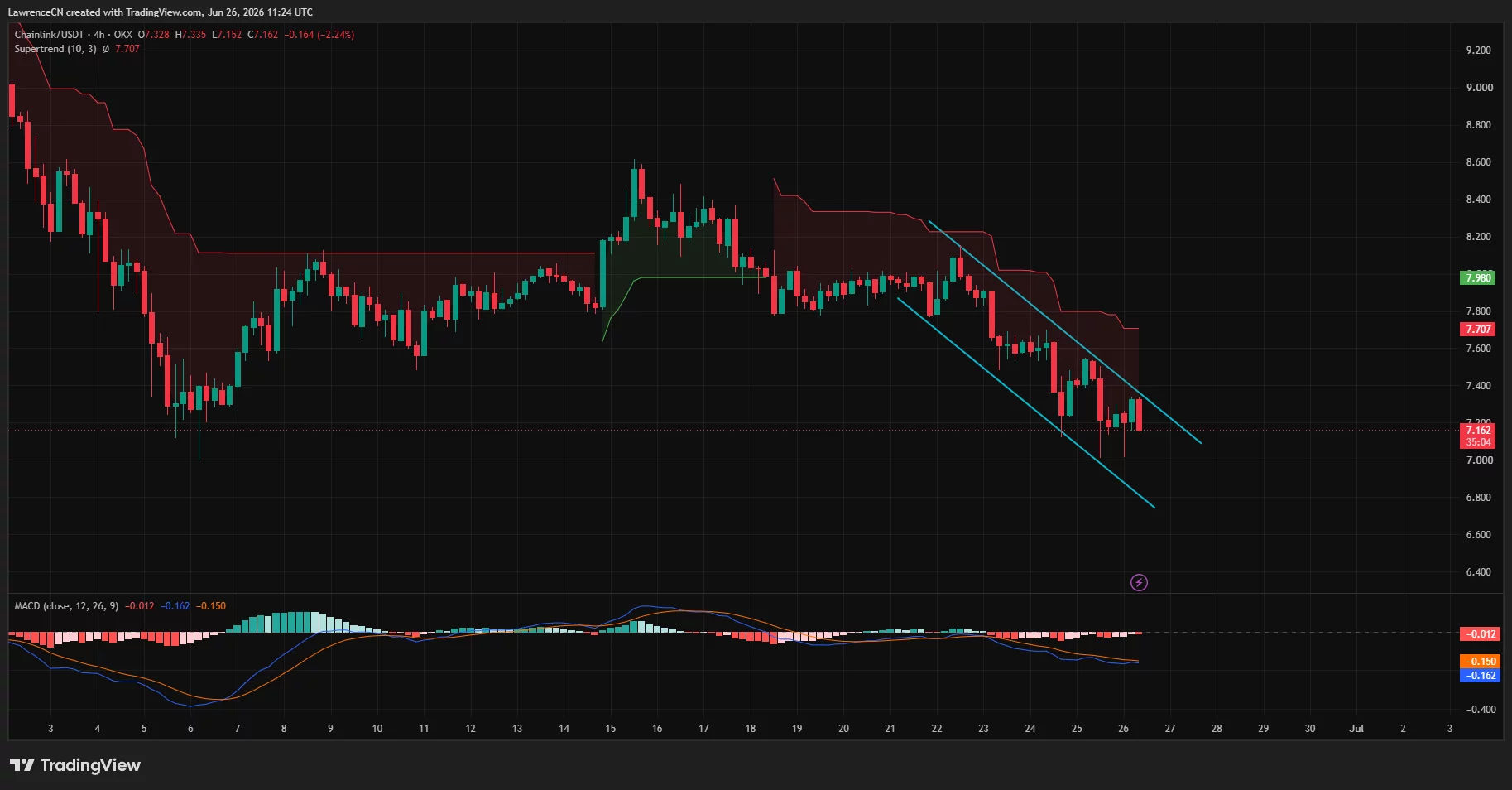
MACD on the four-hour timeframe remains below the zero line, although the histogram has flattened after the latest selloff, suggesting bearish momentum has slowed rather than reversed. Unless buyers reclaim the channel resistance and break above the Supertrend barrier, the path of least resistance remains lower.
Failure to defend the $7 region could send LINK toward the $6.30 support identified by Martinez, with the major psychological $6 level becoming the next downside target. On the upside, reclaiming $7.70 could allow the token to challenge the $8 resistance zone, where sellers regained control earlier this week.
Disclosure: This article does not represent investment advice. The content and materials featured on this page are for educational purposes only.


Strategy’s (MSTR) perpetual preferred stock, STRC, is down 3% during Friday’s pre-market and is trading below $73 around 27% below its $100 par value, as investors focus on June 30, a date that brings two important events.
First, June 30 is the ex-dividend date. Investors who own shares before the ex-dividend date will receive the next payment, while buyers on or after June 30 will not. The date also serves as the record date, when Strategy shareholders qualify for the distribution. Eligible investors will receive STRC’s first semi-monthly dividend of $0.48 per share on July 15.
Normally, a stock declines by roughly the amount of its dividend when it begins trading ex-dividend. For STRC, a $0.48 adjustment on a $73 stock represents less than 0.7%, during a time when STRC is falling as much as 2-3% a day. So the ex-dividend date in theory should not be a huge catalyst for further downside in the STRC price.
The bigger catalyst is Strategy’s monthly dividend rate reset. STRC is a perpetual preferred stock, meaning it has no maturity date and pays a dividend that can be reset periodically.


As the first half of 2026 draws to a close, major cryptocurrencies are deeply in the red, lagging far behind traditional assets. Bitcoin bulls can at least take one small consolation: they’ve outperformed shares in bitcoin-holder Strategy (MSTR).
These diverging trends point to investor preference for assets linked to economic activity and geopolitical trends rather than narrative-led plays.
While bitcoin, the crypto market leader by market capitalization, is down 32% as June nears an end, ether has slumped 47% and Strategy 43%. The total crypto market cap has declined by roughly 30% to nearly $2 trillion, a level not seen since before President Donald Trump’s election victory in November 2024.
Most of the biggest coins are down, except a select few like HYPE, which has gained over 140%. HYPE’s strength is the result of increased volatility and the stellar performance of TradFi-linked assets available on its parent decentralized exchange, Hyperliquid.

Bitcoin price absorbed a huge body blow and bearish prediction, and stayed on its feet. BTC forced to fall under $60,000 after a 3% daily drop while Ethereum slid harder, down by more than 5% to around $1,510, and neither coin is anywhere close to where options market makers wanted them.
Friday’s Deribit expiry ranked as the quarter’s largest options event, with $10.63 billion in combined BTC and ETH notional contracts settling in a single session. Bitcoin’s slice came in at $9.06 billion across 92,154 calls and 57,652 puts, against Ethereum’s $1.57 billion.
Our analysts flagged that puts continue to command a meaningful premium over calls across all major tenors, with Bitcoin’s 25-delta skew printing -10.7% at one day and -11.3% at seven days. That skew confirms traders were paying for downside protection heading into settlement, instead of chasing upside.
Now that the expiry has cleared and positioning resets, where will Bitcoin go next?
Discover: The Best Crypto to Diversify Your Portfolio
Bitcoin Price Prediction: $70,000?
Bitcoin trades at $60,000, or about 14% below the $70,000 max-pain level. However, the gap is not only about options positioning, but selling pressure also stayed firm after the recent expiry, while buyers failed to trigger a meaningful rebound.
For now, the key area sits between $58,000 and $60,000. Holding that range would keep the recent pullback under control. On the upside, Bitcoin faces resistance near $63,000 to $65,000, with a stronger ceiling around $67,000 and $68,000.
If support remains intact, price could gradually work its way back toward $65,000. That would suggest sellers are losing momentum. A stronger move higher would likely require fresh demand and improving market sentiment.

Don’t Miss Out on Our $1,000 USDT Airdrop on ByBit
The most likely outcome remains consolidation. Bitcoin may continue moving between $58,000 and $63,000 as traders wait for the next catalyst. Until then, price action could stay uneven and directionless.
A drop below $58,000 would weaken the near-term outlook. In that case, the next major support sits near $54,000. Meanwhile, Ethereum has fallen faster than Bitcoin recently, showing that risk appetite across crypto remains fragile. 21% below its $2,000 max pain level suggests its options positioning was even more out of whack, and it may lag any BTC recovery attempt.
Discover: The Best Token Presales
Bitcoin Hyper Draws Early-Stage Interest as BTC Tests Critical Support
Bitcoin at $60,200 with a negative skew and macro headwinds is a tough spot for spot holders. The upside to max pain is real but not guaranteed on any near-term timeline. That gap between where BTC needs to go and where it actually trades is exactly the kind of environment where early-stage infrastructure plays start attracting rotational capital looking for asymmetric exposure.
Bitcoin Hyper ($HYPER) is positioning itself as the first Bitcoin Layer 2 with full Solana Virtual Machine (SVM) integration, targeting the core limitations that have historically kept BTC sidelined. It addresses BTC from the smart contract ecosystem: slow transactions, high fees, and limited programmability.
The presale has raised closer to $33 million at a current price of $0.0136, with staking available at high APY for early participants. The architecture pairs a decentralized canonical bridge for BTC transfers with extremely low-latency execution. The pitch is faster smart contract performance than Solana’s, while inheriting Bitcoin’s security layer.
Research Bitcoin Hyper’s presale details here.
The post Bitcoin Price Prediction: Post Deribit Settlement, BTC Survived the Selling Wave appeared first on Cryptonews.

US-listed spot Bitcoin exchange-traded funds (ETFs) saw their largest daily net outflows of June on Thursday, withdrawing $696.3 million as Bitcoin slipped below $60,000. The selloff in ETF demand added to a broader cooling in institutional appetite for the asset during the month.
SoSoValue data shows the withdrawals pushed June’s cumulative net outflows to $3.61 billion, taking year-to-date net outflows to $4.6 billion. For investors tracking institutional flows, Thursday’s figures underscored how quickly sentiment can shift when price weakness triggers faster redemptions from ETF wrappers.
Key takeaways
- US spot Bitcoin ETFs recorded $696.3 million in net outflows on Thursday, the largest day of June.
- June outflows total $3.61 billion, with year-to-date net outflows at $4.6 billion, according to SoSoValue.
- ETF total net assets dropped to about $72.6 billion—down roughly 57% from a peak of $169.5 billion recorded in October 2025.
- WalletPilot data indicates US spot Bitcoin ETFs held 1.24 million BTC as of Tuesday, with about 63,500 BTC leaving over the past 30 days.
- Strategy’s Bitcoin buying slowed materially in June to about 3,600 BTC, intensifying debate about whether it should conserve cash during drawdowns.
Spot Bitcoin ETF outflows accelerate as price weakens
The timing of Thursday’s ETF outflows is notable: they came as Bitcoin moved through the $60,000 area, a level that has often acted as a psychological pivot for market participants. In that context, SoSoValue’s figures point to a stronger-than-usual willingness among ETF investors to exit positions during a short-term downswing.
SoSoValue reported that June’s outflows already surpassed a prior monthly high—$519.2 million logged on June 2—before extending even further on Thursday. With June net outflows now at $3.61 billion, the pattern suggests that redemptions are not just sporadic, but persistent enough to compound quickly.
That matters because spot ETFs are one of the most accessible channels for traditional capital. While other markets can absorb volatility, sustained ETF outflows typically remove a steady source of incremental demand. Traders often watch these flow metrics for confirmation that spot selling is spreading beyond spot exchanges and into regulated products.
ETF assets shrink sharply from the sector’s 2025 peak
Alongside daily flow data, the broader balance-sheet picture for the ETF complex has weakened. According to SoSoValue, total net assets for US-listed spot Bitcoin ETFs fell below $73 billion for the first time since late 2024.
SoSoValue cited a peak of $169.5 billion in October 2025. By Friday, that figure stood at roughly $72.6 billion—an approximate 57% decline. Even without assuming any change in investor behavior beyond price, the reduction reflects both falling BTC value and net withdrawals from the funds.
Complementing that, WalletPilot data shows US spot Bitcoin ETFs held a combined 1.24 million BTC as of Tuesday. Over the prior 30 days, about 63,500 BTC left the products. For readers trying to separate price effects from flow effects, this distinction is critical: holdings dropping over a month signals that the outflows are affecting the underlying exposure, not just the market valuation.
Strategy’s June slowdown raises questions over capital discipline
As ETF demand cooled, another large institutional-style buyer also moderated its pace. Strategy—frequently cited as the world’s largest corporate Bitcoin holder—purchased about 3,600 Bitcoin so far in June, according to Strategy filings. That rate is far below its recent activity: roughly 25,000 BTC in May and more than 50,000 BTC in April.
The slowing has fueled discussion around whether the company should continue accumulating aggressively during market drawdowns, or instead rebuild liquidity. The debate intensified after Strategy recorded a net sale of 32 BTC earlier in the month, an uncommon move during its broader accumulation period.
Some analysts argue that Strategy should pause purchases and preserve cash until conditions improve. Earlier coverage by Cointelegraph noted scrutiny around Strategy’s broader financial posture, including aspects of how it manages dividend coverage. In the current environment, such questions have become harder to ignore as both ETF flows and price momentum have weakened.
STRC share pressure, and the “self-repairing” debate
Part of the scrutiny has centered on Strategy’s perpetual preferred stock, STRC, which has traded below its intended $100 benchmark. On Thursday, STRC closed at $75.69, down 6.37%. The price action has contributed to renewed debate about whether Strategy’s financing mechanics are robust during volatility.
CryptoQuant analysts raised concerns about Strategy’s timing and risk management. Others, including Bitcoin advocate Samson Mow, pushed back by pointing to a feature described as a “self-repairing mechanism.” In an X post, Mow said that when STRC trades below its $100 benchmark, Strategy pauses new share issuance through its ATM program at that level, limiting new supply.
At the same time, the fundamental question for investors remains whether pauses in issuance and changes in acquisition pace translate into long-term restraint or just short-term adjustment. Strategy’s pace of buying can influence market psychology, particularly because the company is often viewed as a persistent demand backstop—something that may become less reliable if the market downturn causes repeated slowdowns.
Looking ahead, readers should watch whether ETF outflows continue to dominate daily flow prints and whether holdings shrink further month-over-month. In parallel, Strategy’s next purchase cadence and any further signals from STRC’s trading dynamics could clarify whether June represents a temporary slowdown—or the start of a more durable shift in institutional behavior.

With the latest major price moves (and mostly corrections) in the cryptocurrency markets, certain major players and whales have returned to act accordingly.
However, on-chain data from Lookonchain shows significant divergence between what SharpLink and some OG whales did. Here’s the Ethereum edition.
SharpLink Buys
Riding the wave of cryptocurrency treasury companies that started accumulating in 2024/2025, Joe Lubin’s SharpLink began its ETH acquisition in the summer of 2025 and quickly became one of the largest players in the broader Ethereum ecosystem. Similar to Bitmine, it kept buying new tokens as prices rose and its position quickly skyrocketed to almost $1 billion in unrealized profits by early October.
Then came the cycle-changing event in that same early October when the entire market collapsed, leaving over $19 billion in liquidations. Ethereum, similar to almost all other assets, has not been the same ever since, with its price tumbling by 70% from the 2025 ATH to under $1,550 as of now.
Interestingly, unlike Bitmine, which kept accumulating for the most part during this extended bear phase, SharpLink stood on the sidelines. This finally changed after the latest Thursday crash, as the company halted its 8-month break to acquire almost $8 million worth of ETH. It holds 876,285 ETH (valued at $1.4 billion), which includes 22,102 ETH earned from staking.
However, its position is deep in the red as its average acquisition price stands at $3,609. Its unrealized loss, according to Lookonchain, is at $1.7 billion.
Meanwhile, Bitmine, which stands on a whopping unrealized loss of around $10 billion, continues to accumulate and stake the majority of its ETH tokens. In the latest update on the matter, the Tom Lee-chaired company staked another $250 million worth of ETH.
OG Whale Capitulates
Another publication from Lookonchain shows that, in contrast to SharpLink, OG Ethereum whales have gone on a selling spree. Four such wallets received 37,602 ETH 8 years ago when the asset traded at $830. Their unrealized profits had risen to over $150 million during the 2021 and 2025 bull runs, but they refrained from selling.
However, they began disposing of their assets after the latest crash, which drove ETH to just over $1,500. As of press time, they had sold 33,623 ETH as their current profit sits at $27.4 million.
After holding $ETH for 8 years, these #Ethereum OGs finally gave up.
Four #Ethereum OG wallets received 37,602 $ETH($58.66M) 8 years ago at ~$830.
During the 2021 and 2025 bull markets, their unrealized profit exceeded $150M, but they never sold.
After 8 years of dormancy,… pic.twitter.com/bu5hqlIc9n
— Lookonchain (@lookonchain) June 26, 2026
The post SharpLink Resumes ETH Buying After 8-Month Hiatus but OG Whales Capitulate appeared first on CryptoPotato.
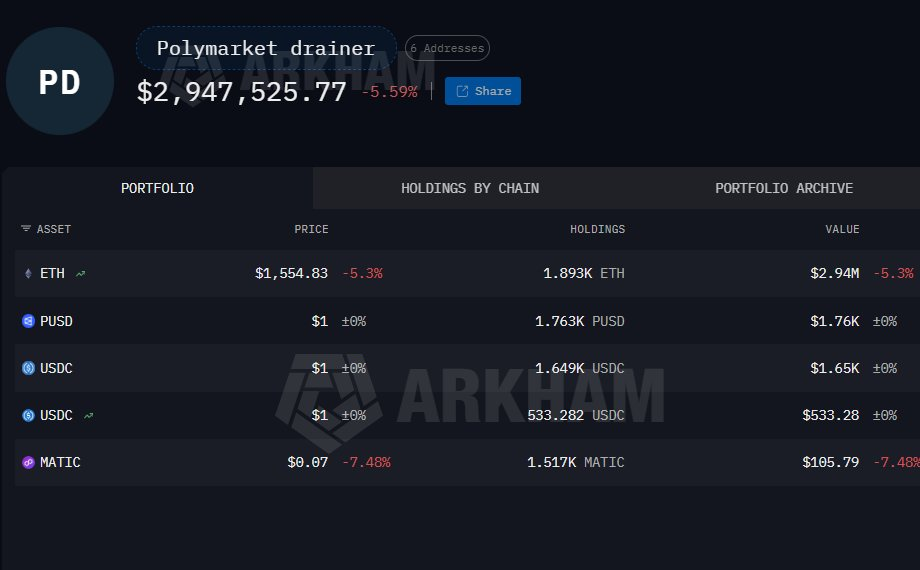
A third-party vendor compromise discovered Thursday allowed attackers to inject a malicious script into Polymarket’s frontend, affecting multiple users.
Blockchain analyst Specter said the malicious script appeared to facilitate a phishing attack that drained an estimated $2.94 million from at least 11 Polymarket user wallets.
Polymarket said on X that the compromise has been contained and that the affected dependency has been removed. It added that users would be fully refunded.
Cointelegraph has approached Polymarket for comment but did not receive a response before publication.
The attack was the 89th reported crypto security breach of the second quarter, according to DefiLlama data, extending the most-hacked quarter on record by incident count.
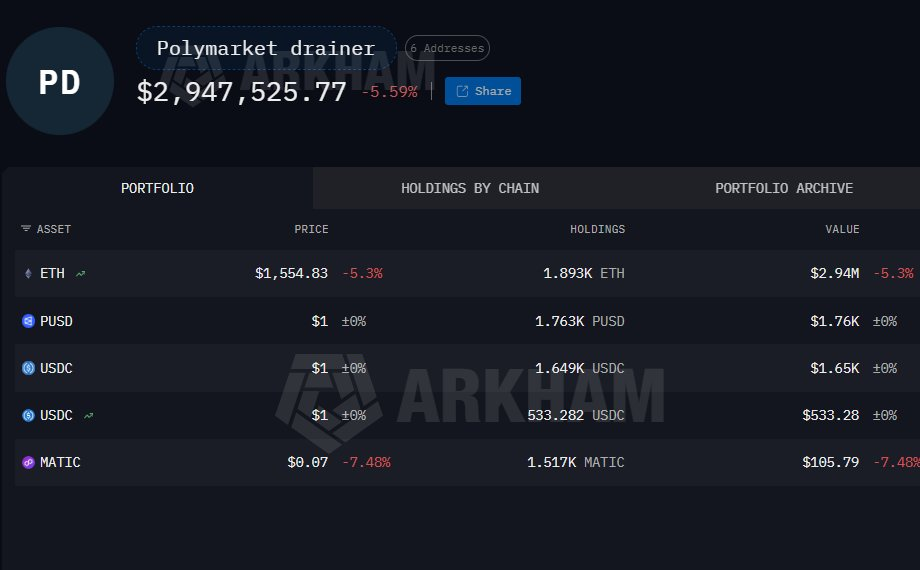
Source: Specter
Crypto exploit losses reach $74.9M across 29 June incidents
Crypto exploit losses climbed to $74.9 million across 29 reported incidents in June, surpassing May’s $60.5 million total but remaining far below April’s $644 million, according to DefiLlama data.
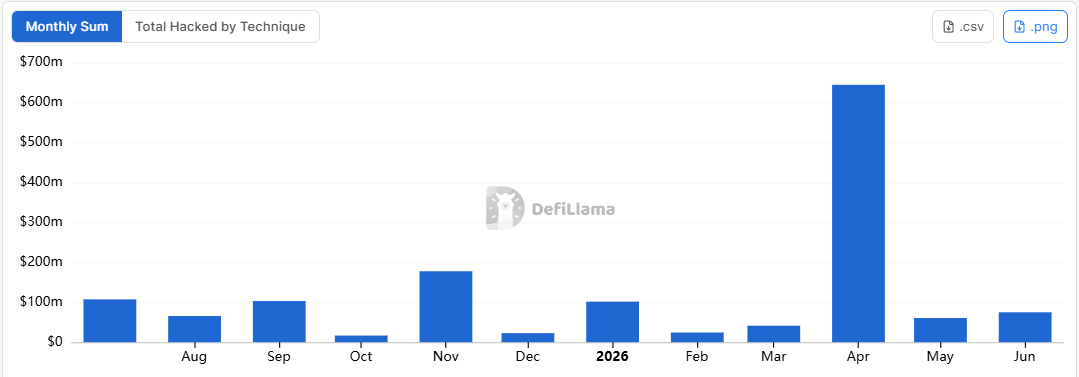
Total value hacked by monthly sum, 1-year chart. Source: DefiLlama.
The largest June incidents included the $36 million Humanity Protocol exploit, the $4.7 million Secret Network bridge exploit, two separate Aztec exploits worth $2.1 million each and a $1.7 million bridge exploit on Taiko.
Related: About 60% of World Cup bettors on Polymarket are first-time crypto users
Over the past 30 days, private key compromises accounted for 43% of reported exploit losses, making them the leading attack vector, according to DefiLlama. Fake proof exploits accounted for 10%, followed by reverse MEV honeypots at 8%, which present deceptive trading opportunities to lure and manipulate automated trading bots.
About a month before Polymarket’s latest attack, the prediction market disclosed a separate $600,000 exploit that was traced to a six-year-old private key used for internal top-up operations. Josh Stevens, Polymarket’s vice president of engineering, said the platform’s contracts and user funds remained safe and that all permissions tied to the key had since been revoked.
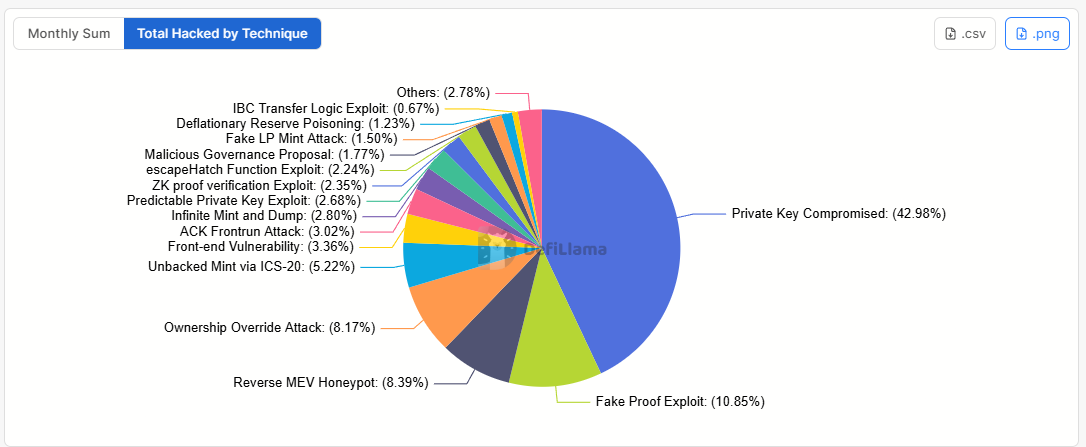
Total value hacked by technique over the past 30 days. Source: DefiLlama
Polymarket currently holds over $450 million in total value locked, up 301% from $112 million a year ago, according to DefiLlama.
Magazine: Should users be allowed to bet on war and death in prediction markets?

Key Highlights
- Base postpones Beryl implementation by 24 hours to ensure B20 registry readiness
- B20 token standard introduces native support for stablecoins and real-world assets
- Registry initialization must complete before native B20 token deployment can proceed
- Withdrawal timeframe from Base to Ethereum reduced from seven days to five days
- Integration of Reth V2 promises up to 50% reduction in node storage requirements
The Ethereum layer 2 network Base has postponed its Beryl mainnet implementation by 24 hours to ensure proper B20 Activation Registry configuration. Beryl will now go live on June 26 at 18:00 UTC, providing additional time for the registry to initialize before the hard fork executes.
B20 Registry Initialization Necessitates Schedule Adjustment
Base initially targeted June 25 for Beryl’s launch, but development teams discovered a critical timing dependency. The B20 Activation Registry needs to complete its initialization sequence before developers can begin deploying native B20 tokens. This initialization process could take up to 60 minutes following activation.
The registry manages B20 feature flag availability throughout the network post-hard fork. To prevent activating Beryl before these critical functions were operational, the team rescheduled the mainnet deployment. While the timeline has shifted, the upgrade’s technical components remain unchanged.
Beryl brings B20 to Base—a protocol-native token standard designed specifically for stablecoins and tokenized real-world assets. B20 tokens function through Rust precompiles embedded directly within Base node software, unlike conventional ERC-20 contracts. Despite this fundamental difference, B20 maintains full ERC-20 compatibility and incorporates ERC-2612 permit functionality.
Enhanced Token Management and Accelerated Bridge Transfers
The B20 Issuer Toolkit provides comprehensive features including role-based permissions, minting and burning controls, transfer restrictions, and configurable supply limits. Additionally, it offers freeze and seizure capabilities for token issuers navigating regulatory compliance requirements. These functionalities embed core token governance directly into the protocol rather than relying on external smart contracts.
Beryl simultaneously decreases the standard withdrawal duration from Base to Ethereum from seven days down to five days. The majority of bridge providers utilize this single-proof withdrawal mechanism for cross-network transfers. Base attributed this improvement to Multiproofs enhancements delivered through the preceding Azul upgrade.
The upgrade further incorporates Reth V2 into Base’s node architecture. According to Base, this software implementation can cut node storage demands by as much as 50 percent. It additionally accommodates higher block gas limits, creating opportunities for expanded network throughput.
Recent Network Disruption Unrelated to Upgrade Postponement
Base encountered a block production halt lasting approximately two hours on June 25, prior to Beryl’s adjusted activation schedule. Engineering teams identified the cause as a consensus failure triggered by an invalid block entering the sequencing pipeline. Production subsequently resumed, and the team confirmed the incident bore no connection to the Beryl postponement.
The network emphasized that user assets remained secure throughout the disruption, despite the temporary cessation of block creation. Base founder Jesse Pollak stated that network interruptions are incompatible with infrastructure supporting worldwide financial operations. While the outage increased operational scrutiny, it didn’t affect Beryl’s planned functionality.
Beryl succeeds Azul, which deployed to mainnet in May as Base’s inaugural independent upgrade. The network has scheduled Cobalt, its subsequent major upgrade, for September. Cobalt is expected to deliver account abstraction capabilities, smart account support, gas sponsorship, transaction batching, and expanded B20 features.


polymarket annualized revenue 1 billion us exchange

Politics Home Article | Migration Minister Says He “Won’t Be Intimidated” By Home Secretary

Manchester United staff member sent a warning about Elliot Anderson transfer


-

 Fashion7 days ago
Weekend Open Thread: Miami – Corporette.com
-

 Entertainment6 days ago
Renter of Home in Anne Heche Crash Denies Settlement With Son
-
 Sports3 days ago
Two goals and an assist by sheer aura: Cristiano Ronaldo just entered the World Cup chat
-

 Tech4 days ago
Microsoft accidentally kills epic Outlook email threads
-

 Business6 days ago
Soccer-U.S. defends Iran World Cup travel restrictions, says discussions ongoing
-

 Politics6 hours ago
The House | Manchesterism won’t survive the painful trade-offs unless it gets citizens on board
-

 Politics10 hours ago
Potential 2028er World Cup attendee leaderboard
-

 Politics6 days ago
Andy Burnham and the meaning of Makerfield
-

 NewsBeat7 days ago
Keir Starmer Allies Question His Chances For No 10
-

 Tech17 hours ago
A Look At A Gaggle Of Transputer Boards
-
Crypto World2 days ago
Bitcoin (BTC) Dips Below $62K, Ethereum (ETH) Plunges 6% Daily: Market Watch
-

 Crypto World2 days ago
Securitize Wraps Roubini's SEC-Registered ETF as Dubai VARA Digital Security
-
 Crypto World19 hours ago
Dell (DELL) Shares Tumble Over 5% Following Analyst Downgrade to Hold
-
Business2 days ago
Entergy settles forward sale agreements, raises $672 million in cash proceeds
-
 Business6 days ago
Wall Street Week Ahead: Investors see Micron earnings as pulse check of AI rally momentum
-
 Crypto World6 days ago
Can Charles Hoskinson Really Rescue Cardano?
-

 Entertainment6 days ago
Jose Alvarado Wants Taylor Swift at More Knicks Games
-

 Crypto World6 days ago
HIVE shares jump as $220M AI deal speeds Bitcoin mining pivot
-

 Crypto World6 days ago
Jake Chervinsky accuses CME of protecting derivatives monopoly
-

 Sports23 hours ago
India vs Bangladesh LIVE Score, Women’s T20 World Cup: Bangladesh Opt To Bat; India Enter ‘Do-Or-Die’ Stage As Semi-Final Race Heats Up
You must be logged in to post a comment Login