Age-verification has been a topic of hot debate recently, with many in the community feeling that keeping kids safe online is better handled by the parents. But what does that look like these days? [EposVox] has been working on a child-safe laptop to try and solve the problem, but depending on how you look at it, it also shows why non-technical people may feel they need the government involved.
His setup may seem simple to many readers — a carefully curated selection of edutainment apps running under Kubuntu on an old laptop. We particularly like his choice not to give access to the applications menu, but give himself a hotkey for the terminal if he needs to access something outside of the curated selection of software. Most things are local, though some browser games and cloud tools are made available via Vivaldi’s app mode. In this case there is no actual browser access for junior just yet, as the child in question is seven years old.
All in all, it sounds like less than an hour to set up. Assuming you’ve got experience with desktop Linux, anyway. Consider, though that it took [EposVox] an entire day just to get Kubuntu installed, and you begin to see why the average person might look kindly on a politician offering to solve these problems for them. For those that need it, [EposVox] points out some Windows-based alternatives for childproofing your PC, including the absolute minimum of DNS filtering. But the same problem applies: how many people outside our bubble know how to set that up?
Advertisement
While there’s an argument to be made that the sort of age-verification laws being passed are examples of government overreach, these laws aren’t facing a lot of push-back because most people aren’t technically literate enough to realize the problems with them. They like the idea of their kids being protected, and they don’t know how to set up an old PC the way [EposVox] does here.
It’s a real shame, especially considering that none of this is new. We featured a kid-friendly, Windows-based computer setup years ago. But it is what it is. Hopefully these sorts of hacks don’t end with the roll-out of age verification, because it’s a much better way to do it.
Industrialized factories changed how the world produced physical goods: more output, lower costs, faster than anything that came before. Now a similar shift is happening with software.
LLMs have lowered the barrier to writing code, increased individual output, and pushed organizations to think about software development as a production system. The standard software development lifecycle and CI/CD practices that have held for decades won’t hold up under that pressure. That’s where the software factory comes in — and like physical factories, it needs more than speed to actually work.
The idea of a “software factory” started to solidify over the past year. Luca Rossi’s “The Era of the Software Factory” made the case plainly: AI is not just changing how fast people write code — it’s changing the whole production system around software.
The concept can mean different things: a collection of coding agents and skills files; faster CI/CD; better review systems; or more automation around software delivery. A better frame is to think of it less as a tool category and more as a set of principles. A software factory can’t just be a loose collection of prompts, agents, and plugins. It needs a platform that defines how work moves through the system and how code is generated, reviewed, tested, traced, deployed, and improved when something goes wrong.
Advertisement
Otherwise all you’re doing is putting yet another one-off machine into an empty room and calling it a factory.
Why is this happening now?
There are a few forces all hitting at the same time.
Companies have always wanted more software than engineers can produce. That’s why tools like Excel exist: They often fill in the gap for a lot of the software that many companies wish they could make.
AI has also lowered the barrier of entry to creating code, and this is the part everyone focuses on. Code creation is now easier, though not always cheaper or better, as evidenced by many high-profile companies fretting over their high AI bills. The barrier to writing functional code has effectively collapsed.
Advertisement
More importantly, a single engineer can generate more code than they could just a few years ago. That changes the bottleneck: it’s no longer “How fast can someone write this?” or even, in some cases, “Can someone understand how to code?” Instead it becomes, “Should this be written?”
More importantly, can we actually create end products that are durable and reliable and don’t just build tech debt? Or are we just putting out more AI slop faster than ever? That’s where the danger lies.
The dangers of the modern software factory
All of this sounds great. Factories, after all, made production faster and more consistent.
They made it possible to build more cars and products, less expensively, which led to more people being able to afford cars and products. Putting environmental impacts aside, you could argue this was positive.
Advertisement
But like many things in engineering, there are always tradeoffs, and in this case, there are new risks.
When you increase the output of one person with machinery, digital or otherwise, you also increase the mistakes that can be made either by the individual or the machinery. The speed at which code can now be put out is on an industrial scale. Even smaller organizations can suddenly have code bases ballooning up to the size of tech company code bases a decade ago.
The data is already showing problems. Faros AI found that while task throughput per developer is up 33.7% and PR merge rate is up 16.2%, the incidents-to-PR ratio has risen 242.7% and bugs per developer are up 54%. Google’s DORA research found that more AI adoption was actually associated with worse delivery stability.
As a fractional head of data, I’ve been brought in to fix these exact issues. In the past year alone, I’ve worked on two projects where AI-generated data infrastructure slowly started to morph over time.
Advertisement
Between multiple engineers trying to move quickly and a lack of standards, these projects became unruly. Code bases tend to go through some level of evolution, but as different styles blend, the LLMs in turn start to create their own mutations. Codebases developed five to six different styles within months — a process that previously took years. Layer by layer, the engineers would slowly stop understanding exactly what was going on.
The pattern echoes what happened a decade ago with self-service tooling: early productivity gains that masked downstream complexity.
And that’s why the software factory can’t just be about speed.
What makes a software factory work
There are several key principles to consider when building a software factory.
Advertisement
Platform over tools: Many teams are slowly implementing AI into their coding workflows at the edges — adding a PR review agent or a skills file into their repos. But building an actual software factory requires a platform, not a collection of tools at the edges. A platform provides a unified foundation where tools aren’t scattered in separate corners. Instead, they actively share data, talk to each other, and work as a single cohesive system — standards, processes, and the work itself all connected.
Rerunability and traceability: A real platform requires the ability to go back into any run, identify what went wrong, and rerun it — which is why one-off agents don’t make a factory. The system needs to support taking a serial ID, looking it up, and tracing exactly how it got to the output it produced. This is why state machines make more sense than loops for AI workflows: they make it far easier to rerun a process and understand what happened at each step.
Safety and guardrails: Factories are not safe places. Neither is a software factory. As more people develop on these platforms, better guardrails and safety measures need to be built in. Testing and quality control need to be pushed to the front of the process — catching bugs at the lowest possible stage reduces the cost to fix them and limits the blast radius.
Standardization: At the enterprise level, every codebase has its own flavor. Layering a code assistant on top without standards produces an amalgamation of styles. Standardization has to be built into the process from the start.
Advertisement
Quality control: In older manufacturing models, quality control happened at the end of the line. The product was built, inspected, defects found, and fixed later. Toyota’s approach was different. Quality was pushed into the process itself — workers were expected to stop the line when something was wrong. The goal wasn’t to catch defects at the end; it was to prevent them from flowing downstream in the first place.
The same is true for the software factory. QC needs to be baked into the entire process, starting with how the spec is written. That means integrating static code analysis that catches obvious errors and providing templates to LLMs so they know the structure the code should follow. Without that, the bottleneck becomes the final review — or teams just push out more AI slop.
Speed without quality isn’t productivity
Improving the speed of your code output is not actual productivity if the downstream issues aren’t managed. A company is not more productive because it produces millions of cars, only to see them all fall apart within 100 miles. It’s also not more productive if all it does is produce an endless stream of proofs-of-concept that never enter production.
Actual productivity is when the software factory takes ephemeral tokens and turns them into durable outputs. It’s easy to talk about lines of code and how much faster your team is moving.
Advertisement
The software factory that wins isn’t the one that generates the most code. It’s the one that generates the fewest defects downstream.
The NotePin S AI wearable, seen here on the wrist of CNET’s Katie Collins, could be really useful for my job. And it’s on sale for Prime Day.
Andrew Lanxon/CNET
I took over the role of CNET’s editorial leader earlier this year, and while I’ve participated in Prime Day sales as a TV reviewer and general deals editor here for (literally) decades, this is my first Prime Day as EIC. In case you’re wondering what purchases a person like me is considering this time around, here’s a sampling.
iPad 11-inch A16 ($300): My artistic daughter has been asking for an iPad and if my wife approves, I’ll likely get her this basic version, our top pick for most people. I’d also get her the Apple Pencil (on sale for $60). We’d save both of these for Christmas presents.
Advertisement
Belkin Portable Charger Bank ($38): My family and I always need portable chargers. Half our devices call for Lightning and the other half for USB-C. This does both and I like the built-in cables.
Plaud NotePin S AI Notetaker ($152): In my new role I take more meetings than ever, and I also have plenty of valuable face-to-face conversations in the office and beyond. I currently depend on the Otter app on my phone and Gemini+Google Meet recordings at work to take notes (with appropriate permission, of course). This AI wearable could be my “secret weapon” to consolidate everything in one place.
JBL Go 4 Bluetooth Speaker ($38): I actually bought this one a few days ago when it was $40 – still a great deal, but now even better. It’s no longer one of our best Bluetooth speakers but it’s good enough for my (other) daughter, who wants one for the beach. At this price, I won’t be too annoyed if (when?) it gets destroyed by sand and surf. And yes, I got her the pink one which I know she’ll love. We’re saving this for her birthday.
Anker Solix F2000 portable power station ($749): I own a travel trailer and upgraded to solar with an inverter, but at a recent (shady) campsite, I still had to break out my loud, annoying propane generator. Sure, I could just add more standard 12V LiPo4 batteries, but this portable power station is so much more versatile. It includes a 30A RV outlet, and the wheels make it worth the extra $50 over the Bluetti AC200L. No way my wife approves this one, but it stays on the list anyway because I’m camping tech obsessed.
The social media checks implemented in Australia after the country banned their use for teens under 16 have shown little evidence of being effective, according to a study by the University of Newcastle. Published in the British Medical Journal, the study surveyed participants between 12 and 17 years old before and three months after the law was introduced. It specifically looked at the participants’ use of TikTok, X, Facebook, Instagram, YouTube and Snapchat.
Based on the information they gathered, more than 85 percent of teens under 16 continued using those social media apps, despite two-thirds of them reporting that they had encountered age checks. Approximately 54 to 68 percent of responders under 16 just kept on using their accounts. How, you ask? Well, the most common age check the Australian teens encountered was to self-declare their age, a method criticized by authorities in the country, as well as in other countries considering implementing the same law, due to its limited effectiveness. Among the responders, 24 to 39 percent encountered self-declared age verification, while 13 to 27 percent got through checks by uploading a selfie.
That said, the study also showed that affected teenagers found other ways to keep using social medial. Around 15 to 19 percent of the responders said they used fake accounts to access the platforms, while 9 to 29 percent reported going on social media using someone else’s account. Approximately 11 percent of the teens said they used private browsers to get around the restrictions. There were very few teens who reported using a VPN.
Overall, the study found that social media use remained the same among the 12 to 13 year olds after the law took effect. It declined among the 14 to 15 year olds, but it grew among the responders aged over 16.
Advertisement
While the researchers admit that it’s early days and the sample size was small and relied on self-reporting, an accompanying editorial of the study stresses that the results are early signals worth tracking.
“What these figures collectively describe is a partially implemented policy, one in which the mechanism intended to restrict access was not reliably activated,” said Dr. Amrit Kaur Purba, an assistant professor in the Faculty of Public Health and Policy at the London School of Hygiene & Tropical Medicine. “Australia’s experience shows that legislating a restriction is not the same as enforcing one: when age assurance relied on self-declared age, most adolescents continued to access restricted platforms. Countries now adopting similar measures – including the UK, which has committed to comparable restrictions and has tasked its regulator with defining effective age assurance before implementation – will need those mechanisms in place from the outset, rather than retrofitted once circumvention is already widespread. As governments across Europe, North America, and elsewhere consider similar approaches, Australia’s experience suggests that implementation may matter as much as legislation, and that lesson may prove as consequential as any headline result.”
Wireless charging on a power bank has always meant accepting a speed penalty, and for most people that trade-off is invisible right up until the moment they actually need to charge in a hurry.
Qi2.2 certification pushes wireless output to 25W, which is how the SnapGo Air gets an iPhone 17 Pro from flat to 50% in 33 minutes compared with 63 minutes on a standard 7.5W wireless pad.
That half-hour gap compounds fast when you are in an airport, a meeting room, or anywhere else where five minutes of charging has to stretch into something that actually moves the needle on your battery percentage.
Advertisement
When wireless is not fast enough, the attached USB-C GoCord delivers 45W wired output and takes an iPhone 17 Pro from 20% to 78% in 25 minutes, without needing a separate cable retrieved from anywhere.
Recharging the SnapGo Air itself through the same GoCord takes 1.8 hours, which means plugging in before bed gives you a full 10,000mAh bank by morning rather than a partial one that runs out by early afternoon.
Advertisement
The 13N magnetic grip holds it locked flush against any iPhone 12 through 17 series device, and at 0.5 inches thick the SnapGo Air adds no meaningful bulk to a phone sitting in a jacket or front pocket.
Advertisement
A side-mounted digital display gives an exact percentage readout of remaining charge, and TempGuard 3.0 monitors temperature 3.2 million times per day to keep output stable as the battery drains toward empty.
For iPhone owners who have settled for slow wireless charging because nothing thinner existed at a sensible price, the INIU SnapGo Air at $49.49 through June 26th on Amazon is the answer that has been missing.
Foldable phones have really matured in recent years, and my time with the Motorola Razr Fold really cemented that idea. Apart from the novelty of having a flexible screen, brands are baking in unique features that really take advantage of the foldable mechanism and laptop-like orientations.
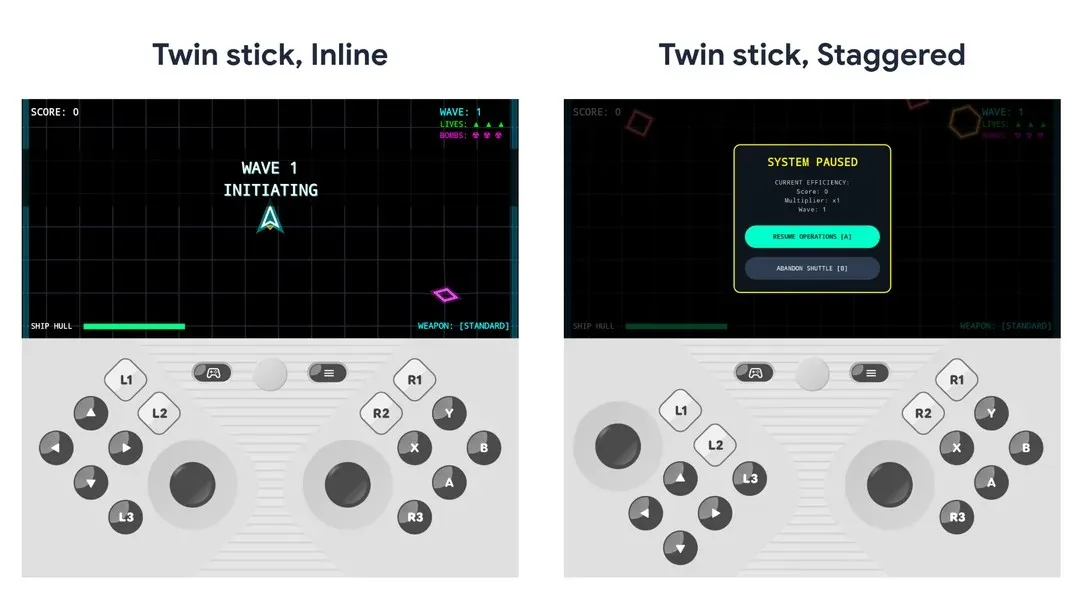
Now, Android 17 might look past just productivity and offer a new way to experience video games. A sneak peek shared on Reddit by Mishaal Rahman shows a new foldable gaming mode. It is a platform feature coming with Android 17. Simply unfold your phone, launch a compatible game, and Android can split the screen into two halves. The top half runs the game itself, while the bottom half turns into a dedicated virtual gamepad. If this reminds you of old handheld gaming devices like the Nintendo DS, you’re spot on!
Mishaal Rahman (r/AndroidGaming)
How does the new controller work?
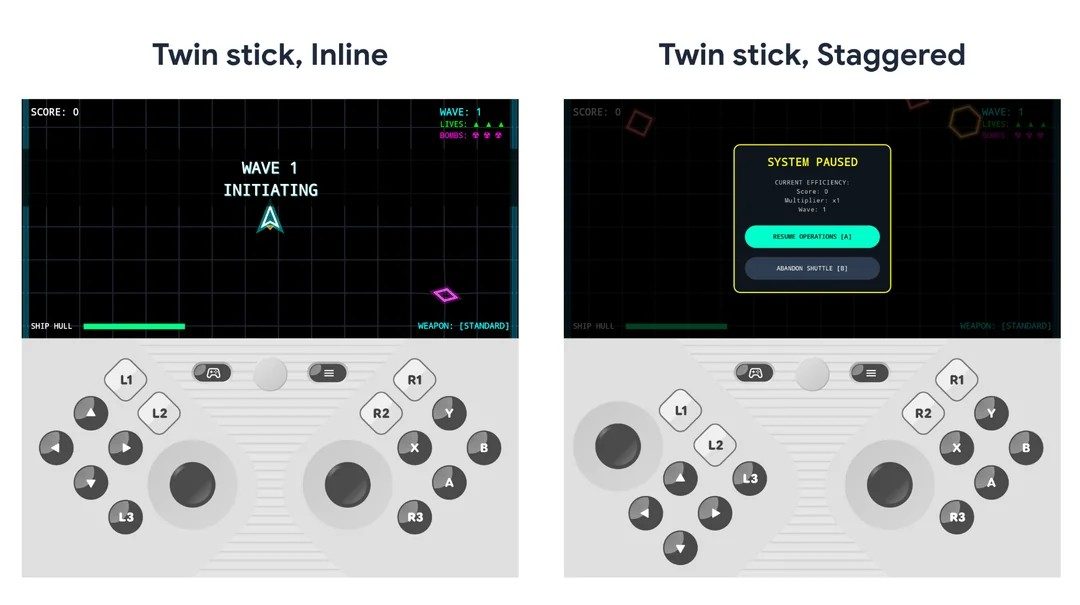
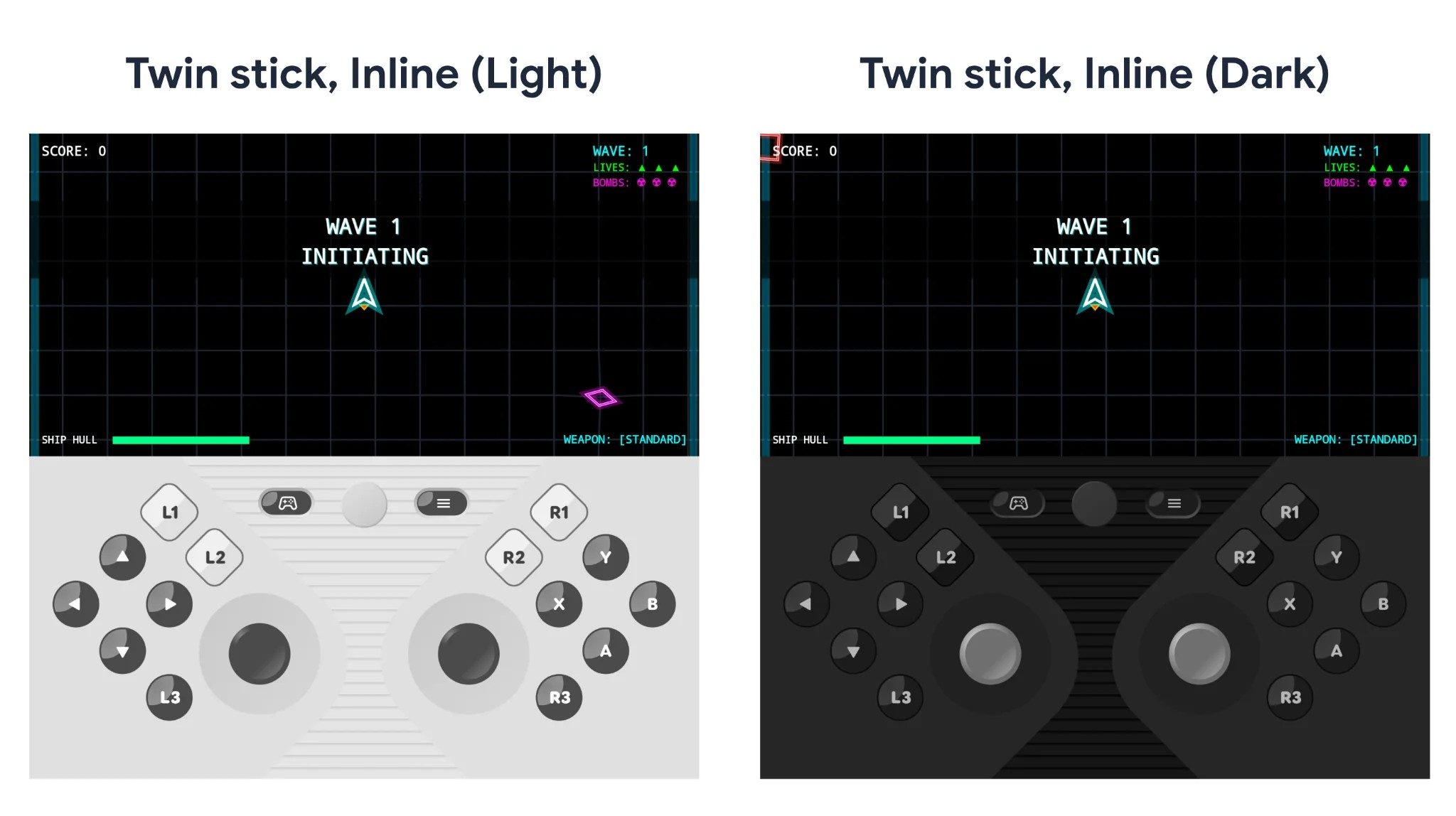
The virtual gamepad is designed to emulate physical controller inputs at the system level. So it should work with games that already offer controller support, without developers needing to build a custom touch layout from scratch. The current button setup includes a D-pad, left and right thumbsticks, A/B/X/Y buttons, L1/L2/L3, R1/R2/R3, and Start. Android 17 also includes a few customization options, including different twin-stick layouts, small/medium/large sizing, light and dark themes, and a toggle for haptic feedback.
The controller can also hide itself when not needed. If you connect a physical controller over Bluetooth or USB, the virtual gamepad is designed to disable automatically. Touch-only games can also continue using the full unfolded screen without forcing the controller layout.
Foldables are finally getting the gaming tweaks they deserve
Mishaal Rahman (r/AndroidGaming)
The catch is that games still need to be adaptive to properly use the 50/50 layout when the device is unfolded. Also, for now, users cannot adjust the game-to-controller split or make the controls transparent as an overlay, though device makers could add their own changes because the feature is part of AOSP.
In other words, Samsung, Google, OnePlus, Honor, and other foldable makers could potentially tailor the experience to their own hardware. A Galaxy Z Fold, Pixel Fold, or other large-screen foldable could each treat the feature a little differently. This isn’t an immediate replacement to gaming enthusiasts that prefer a physical controller, but for many casual gaming sessions, it does add more convenience–and a hint of nostalgia.
YouTube just rolled out four updates for Shorts, and they cover everything from long-requested quality-of-life fixes to changes that are going to divide opinion.
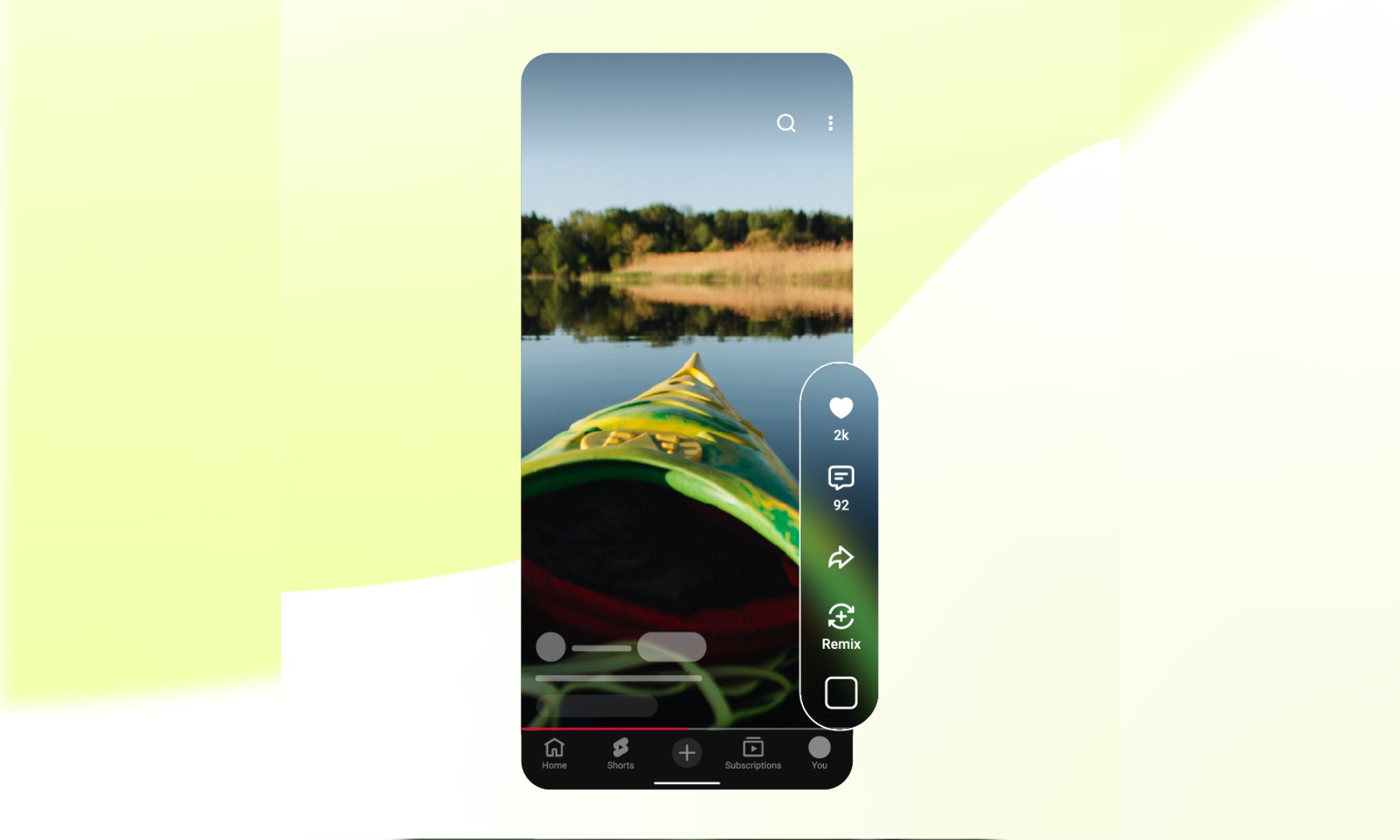
Starting with the good stuff, YouTube is adding a Clear Screen mode that strips away every overlay from the Shorts player, letting the video fill the full screen without clutter.
Google
So what exactly is changing on YouTube Shorts?
Shorts are also getting 2x playback speed (by pulling down on the screen), something that long-form content consumers have enabled by default, especially for podcasts. I can see people using 2x speed for Shorts that are closer to the maximum duration: 3 minutes.
Rounding out the useful additions are an easier mute option (tap to pause, then tap the mute icon) and the ability to set a Shorts timer, including to zero if you want to cut yourself off entirely.
Is removing the dislike button from Shorts actually a good idea?
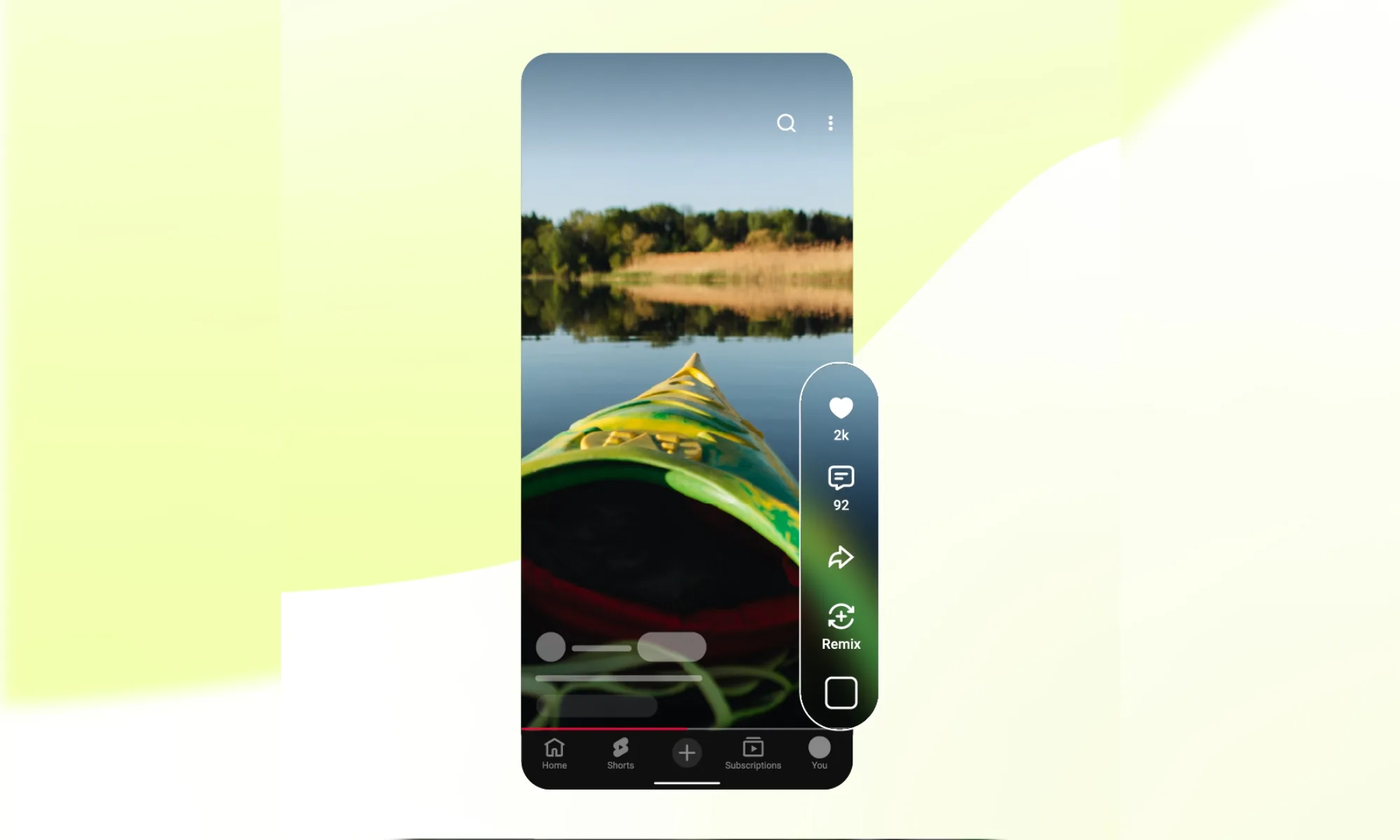
Then there’s the part that might spark a few conversations. YouTube is changing the thumbs-up icon into a heart, which is a cosmetic change that’s perfectly fine.
However, it’s also removing the dislike button from Shorts entirely (similar to how it hid dislike count in 2021). So, you’ll no longer see the dislike or the thumbs-down button between the thumbs-up and the comment button toward the right side of the screen.
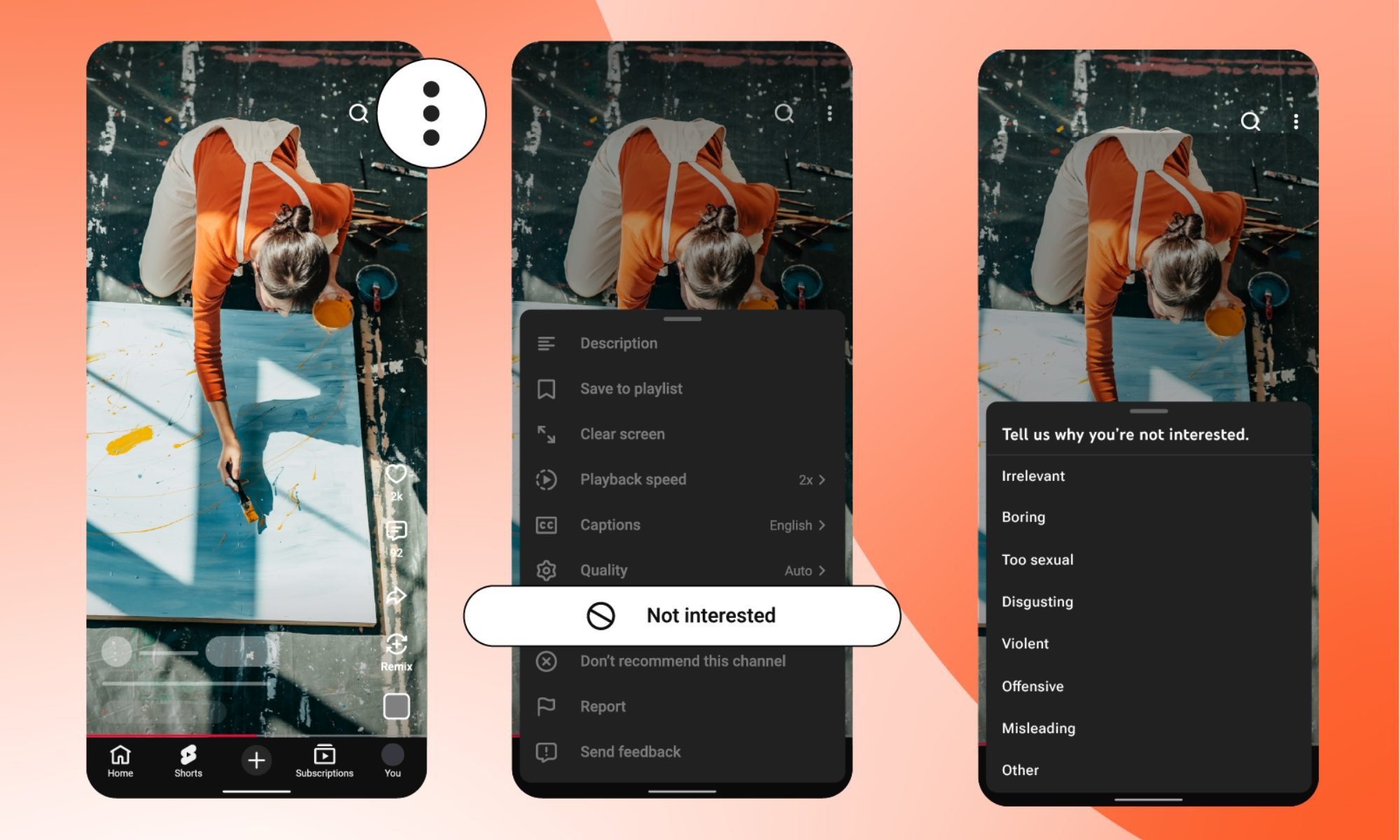
That overlay menu will step down from five to four controls. If you don’t like what you see, you can still tap on the three-dot button at the top right and then select the “Not Interested,” “Don’t Recommend This Channel,” and “Report” buttons.
Rachit Agarwal / Digital Trends
The explanation sounds believable at first. YouTube says there could be numerous reasons someone dislikes a Short, from bad audio to it not being their genre, and that the available options give viewers better control over their feed.
That logic isn’t wrong, but the dislike button has historically been one of the few ways viewers can push back on low-effort content. All updates are rolling out gradually and may take time to reach all users.
Well, perhaps the demise of the Stop Killing Games movement in the EU was overstated. We were just talking about how the attempt to introduce new legislation to support the goals of the movement were defeated, despite a petition with over a million signatures and a parliamentary hearing that reportedly went very well. Given that all the movement is really after is restoring the copyright bargain in the video game industry such that cultural output in the form of games can’t be disappeared into the ether when a company decides to stop supporting it, the EU’s claim that copyright itself prohibits crafting new legislation was very disappointing.
But the movement is not only not done, but appears to have anticipated the decision. They are now moving onto their secondary plan: amending legislation already in process to achieve the same end.
“This movement is defined by action and we will keep acting, we owe Ross [YouTuber Ross Scott, who launched Stop Killing Games in 2024] and the millions of people that have put their trust in us,” Stop Killing Games organizer Moritz Katzner wrote. “MEPs have recognized that, the California state assembly and even the courts have. Let’s keep winning.”
Katzner also laid out Stop Killing Games’ plans for the next few months, which includes continuing work on the Protect Our Games (POG) Act in the US and adapting it for the EU, pushing efforts based on existing legislation in the EU, and building up its new Stop Killing the Internet team.
Advertisement
The legislation in question is the EU’s Digital Fairness Act. The DFA has some lofty goals with some welcome aims, such as prohibitions on certain UI/UX practices online that are designed to push users to make uninformed decisions they wouldn’t otherwise make, or ending region-based restrictions on the use of technology. But there is plenty of concern about the law as well, with opportunities for it to focus on age-checks, deeper surveillance into the usership, and so on. If this thing is going to become law, it very much needs to focus on both consumer protections through freedom and not requiring corporations to take an even heavier hand in monitoring and restricting who can do what with the technology. And, above all else, it cannot curtail innovation.
Stop Killing Games organizers, including founder Ross Scott, anticipated the Commission’s refusal and are now focusing on amending the Digital Fairness Act. They claim to have majority support in the European Parliament, with over 40 lawmakers backing the petition’s goals. The DFA, still in development, addresses broader digital rights issues, making it a potential vehicle for game preservation measures.
“We have made serious inroads in parliament. Just recently, we’ve even had an inquiry call on legislative action to the Commission signed by 45 members of European Parliament and collectively we have majority support on this issue. This means we’re in a position to pass legislation on this even without the Commission’s blessing.” – Ross Scott
Despite the recent set back, those heading up the movement believe they’re still in a good place to get something done. Alongside the legislation being proposed in California, it would be nice to see them start to stack up wins.
PwC’s Will O’Brien talks to SiliconRepublic.com about how Irish businesses can prepare for a heightened threat landscape during the EU Presidency.
PwC has warned businesses in Ireland to improve their cybersecurity defences ahead of Ireland assuming the EU Presidency from the start of next month.
The professional services company said that cyberthreats are expected to escalate once Ireland assumes the Presidency, during which Ireland will host EU government leaders, heads of state and the European political community for a period of six months (from 1 July to 31 December).
“This positions Ireland as the temporary routing hub for sensitive EU political, economic, sanctions and foreign-policy material, and a priority target for state-aligned threat actors, hacktivists and organised cyber criminals,” said Will O’Brien, director of PwC Ireland’s cybersecurity practice.
Advertisement
The heightened cyber risks of the Presidency were also recently highlighted by Ireland’s National Cyber Security Centre (NCSC).
O’Brien advised Irish businesses work on their cyber defences by prioritising two things: preparedness and resilience.
“Organisations that are resilient, and have completed appropriate cyber risk assessments, will be far better placed to defend against attackers.”
He added that AI is a “decisive factor” – not just for threat actors, but for cybersecurity teams as well.
Advertisement
“Threat actors now treat AI as a core platform, automating reconnaissance, crafting convincing phishing lures, accelerating malware development and scaling social engineering. The gap between an AI capability’s public release and its weaponisation is shrinking sharply, with autonomous AI agents a primary concern,” explained O’Brien.
“The encouraging counterpoint: AI is also defenders’ single greatest opportunity to match that pace, enabling faster detection, automated containment and intelligence-led decision-making.”
Will O’Brien. Image: Gerard McCarthy
With the Presidency fast-approaching, O’Brien listed a number of recommendations for Irish businesses consider – including treating the six-month Presidency window as a “high-threat period”, particularly in how businesses score and prioritise cyber risk.
Advertisement
“Rehearse your crisis response. Run scenario exercises tied to major Presidency events, using ENISA’s Cybersecurity Exercise Methodology,” he said.
“Fix known software vulnerabilities faster. Subscribe to NCSC Alerts & Advisories and follow its Cyber Vitals Checklist throughout the period.”
O’Brien recommended that businesses “pressure test” their IT and OT suppliers, checking they meet NIS2 standards and ensuring that remote-access systems (VPNs) require multi-factor authentication.
He also advised that businesses adopt a zero-trust approach for data and devices; train staff for “AI-driven deception” such as deepfakes and phishing emails; and pre-plan for disinformation – “work with communications now so that any incident has a ready to go public response”.
Advertisement
Lastly, he encouraged businesses to engage with the NCSC early to confirm the organisation’s place in national incident coordination arrangements.
‘Act now’
The heightened cyber risks of hosting the EU Presidency are an expected concern in the backdrop of broader geopolitical tension.
The current Cypriot Presidency experienced its share of cyberthreats, with the country previously reporting a rise in cyberattack frequency during the Presidency window.
And if a significant cyberattack or breach were to successfully occur during Ireland’s EU Presidency, what would that look like?
Advertisement
O’Brien said the fallout would be “significant on multiple fronts”.
“As Ireland is considered one of Europe’s largest data hosting clusters, and home to several transatlantic subsea cable landing points, we sit at a position where disruption carries continent-wide consequences – the impact would not be confined to our borders,” he explained.
“The NCSC has noted that incidents during a Presidency are primarily designed to inflict reputational and political damage on the host State and the EU. A serious breach would therefore carry economic cost and business disruption, alongside potential reputational damage for Ireland on the European stage.
“This is why businesses must be on heightened alert and act now.”
Advertisement
Don’t miss out on the knowledge you need to succeed. Sign up for the Daily Brief, Silicon Republic’s digest of need-to-know sci-tech news.
Worker engagement in Singapore has stagnated since 2019
Ever taken public transport during the weekday morning rush?
Packed buses and trains. Corporate uniforms. Eyes glued to phones or staring blankly ahead. Lanyards around necks, coffee in hand, everyone hurrying somewhere that seems incredibly important.
However, according to a new report released last week, most of them would rather be anywhere else.
The inaugural Singapore Workplace Report 2026, produced by workplace consulting firm Gallup and the Singapore Institute of Directors, found that only 14% of Singapore’s workforce is actually engaged at work.
Advertisement
In other words, 86 out of every 100 workers are either merely going through the motions or are actively disengaged from their jobs.
What’s even more staggering is that figure has barely moved since 2019.
For workers under 35, the figure is even lower: just 10%. This paints a stark contrast with Singapore’s broader economic success.
Singapore’s GDP per capita is projected to exceed US$107,000 in 2026, according to the International Monetary Fund’s (IMF) data. We consistently rank among the world’s most competitive economies, and this year, we rose to first place for being the most competitive.
Advertisement
We have world-class infrastructure, one of the best education systems on the planet, and 64.2% of our workforce that’s in professional, managerial, executive and technical roles, according to the Ministry of Manpower’s 2025 Labour Force report.
And yet, the Philippines (39%), Thailand (34%), Indonesia (27%), and Malaysia (25%) all have more engaged workers than us, according to the Gallup report.
The global average is 20%, while Southeast Asia’s regional average is 25%. Singapore sits at 14%—below both, and well below what you’d expect from a country of our economic standing.
It’s costing us billions
Image Credit: The Light Lab via Shutterstock
Employee disengagement isn’t just a human resource problem, but a serious economic one.
For years, strong institutions, a stable business environment, and geographic advantages have let Singapore punch above its weight economically. But those tailwinds are masking a ground-level reality that the data keeps surfacing.
Our workers are checked out, and the bill is subtly getting more expensive.
Over the years, companies in Singapore have been trying to improve employee well-being in various ways, from flexible work arrangements to wellness days, mental health workshops and even subsidised gym memberships.
While these look impressive on paper, they merely help workers deal with the stress of work afterwards, rather than providing relief for the day-to-day pressure employees feel at work.
The Singapore Workplace Report surveyed 16 senior leaders across Singapore’s corporate sector and found that most of them offer exactly these things. The majority of them also admitted that none of it is making a real difference, merely “treating symptoms, not causes.”
One executive said plainly: “Every company has a mile-long employee wellbeing programme. This is standard. I am not surprised that this is not at all a differentiator.”
Another described how wellness initiatives get adopted in Singapore: “A lot of programmes are not necessarily thought through strategically. It may be everybody’s doing X, so let’s do that as well.”
Advertisement
Moreover, the numbers don’t lie.
When leaders rated how well their organisations prevent chronic work overload, the average score was 2.93 out of 5—the only survey item that fell below 3.0. Meanwhile, their well-being programmes scored 3.46.
In other words, companies are spending money on yoga sessions while piling unsustainable workloads onto the same employees. The wellness day doesn’t fix the root cause of work overload, but just temporarily papers over it.
The real problem might actually be your boss
Image Credit: PRIME STOCK LAB via Shutterstock
Gallup’s 2026 State of the Global Workplace report also found that 70% of the variance in team engagement is attributable to the manager.
This means managers affect virtually every aspect of a team’s performance and success. Not the CEO, not HR, or the annual town hall, but the person you report to daily.
Advertisement
And Singapore has a serious manager problem.
Leaders rated how effective their managers were at developing and engaging their teams at just 3.32 out of 5 in the Singapore Workplace Report. Bleakly, the pipeline for future leaders scored even lower at 3.05.
Leaders across industries described how their organisations invest heavily in technical skill development but provide little structured preparation to help employees transition to people manager roles. Then they get rewarded for their personal output rather than how well their team performs.
One roundtable participant captured it perfectly: “Managers are rewarded for performance, but they’re not rewarded for being good managers.”
Advertisement
To become a CFO, you go through years of technical training, professional qualifications, and structured development. In contrast, to become a people manager responsible for the engagement and productivity of an entire team? Most organisations hand you the title and wish you luck.
Moreover, Gallup’s research found that companies fail to choose manager candidates with the right talent 82% of the time. So, besides being a training problem, it also starts with a problem in the managerial selection process.
However, it doesn’t have to be this way.
A regional financial services company featured in the Singapore Workplace Report decided to do things differently.
Advertisement
They invested in a sustained, multi-year programme to build manager capability and deliberately reduced team sizes so managers had room to actually do their jobs well. This resulted in promising employee engagement of nearly four times the national average.
While it took years, it actually worked to raise employee engagement.
Debunking the narrative of Singapore’s strawberry generation
Image Credit: PanuShot via Shutterstock
There’s a narrative in Singapore corporate circles that often circles around younger, late millennial and Gen Z workers. They’re labelled the “Strawberry Generation”: soft, fragile, and unwilling to put in the hours that previous generations did.
However, the Singapore Workplace Report pushes back on this pretty firmly.
Workers under 35 have an engagement rate of just 10%, compared to 16% for those 35 and older. They report more daily stress (53% vs 37%), are three times as angry, and have more daily negative emotions than their older colleagues.
Advertisement
As such, those workers under 35 are less engaged and slightly less likely to be “thriving” in their overall wellbeing than their older counterparts.
But when senior leaders were asked why, the overwhelming answer did not involve workers’ attitudes, but external, structural conditions they face as a generation.
They’re also more likely to speak openly about burnout and mental health, which older leaders sometimes misread as fragility rather than honesty.
Advertisement
One management consultancy leader rejected the premise that younger workers are the problem: “They’re just different, and they need to be engaged differently, but I see more gaps on our end.” “It’s not just work environment, it’s the economic environment. The challenges are very different to when we entered the workforce.”
AI is making things worse for junior employees, specifically
Image Credit: 2p2play via Shutterstock
In most professional roles, your first few years are essentially an apprenticeship.
You do the repetitive, foundational work—the research, the drafting, the administrative work—and in doing so, you build the skills that eventually make you valuable at a higher level.
However, AI is inadvertently dismantling that essential on-the-job training pipeline.
Multiple leaders across industries told Gallup they believe generative AI will eliminate much of the entry-level work that junior employees have traditionally relied on to develop their craft. A 2024 study by MIT and Princeton found that generative AI disproportionately affects tasks performed by newer, less experienced workers.
The cruel irony is that AI makes experienced workers more productive while reducing the opportunities for less experienced ones to become experienced in the first place. Organisations that automate junior-level work without redesigning development paths risk producing mid-career professionals who never had the opportunity to build the foundational skills their roles and organisations require.
Meanwhile, 85% of leaders surveyed in the 2026 Singapore Workplace Report said they were confident in AI’s value to their organisation. However, only about a third were optimistic about Singapore’s overall workforce readiness.
Leaders rated their own organisation’s AI readiness at 4.11 out of 5, but dropped to just 3.18 when asked about Singapore’s workforce direction overall. This discrepancy suggests that confidence in AI at the company level isn’t translating into confidence about the bigger picture.
Advertisement
The Singapore government’s SkillsFuture programmes offer some pathways for workers to reskill and adapt to AI, but the report suggests that structured AI readiness programmes at the company level, where the problem actually lives, remain the exception rather than the rule.
So what actually works?
Image Credit: imtmphoto via Shutterstock
The report isn’t just a catalogue of problems. A few Singapore organisations featured in it have actually cracked the code on worker disengagement, and it’s not as impossible as it seems.
A government healthcare innovation unit improved engagement significantly over one to two years simply by running quarterly feedback surveys, meeting with employees in small groups, and making sure that every round of feedback produced a visible organisational response.
No fancy programme, but just listening and following through.
In addition, roundtable participants also coined a concept called “career bouldering”—the idea that career development doesn’t have to be a linear climb up the ladder.
Advertisement
Instead, organisations can keep high performers engaged by encouraging lateral moves across different functions and teams, creating intense, varied career journeys that develop people more broadly and keep them from stagnating in roles that no longer challenge them.
The four priorities leaders in the Singapore Workplace Report agreed on to ensure interdependent components that function together within a fully integrated performance infrastructure, in order of votes, are: building manager capability; aligning culture with actual employee experience; repositioning HR as a strategic function rather than a compliance team; and maximising talent density to develop every person in the organisation, not just those on a leadership track.
None of these is even a revolutionary idea. Companies are just not doing enough.
Singapore can afford to fix these distressing numbers. It just begs the question of whether companies will decide they want to.
Advertisement
For workers, especially younger ones, the report is a useful reality check. If you’re in that 90% who feel disengaged, you’re not alone, and you’re probably not imagining it.
But it also means it’s worth asking harder questions about where you work. Does your manager actually invest in your development? Does the company follow through when you give feedback? Are there real career paths available, or just the illusion of them?
The Minister of State for Manpower Dinesh Vasu Dash, speaking at the report launch at Andaz Singapore on Jun 22, noted that an engaged workforce is a “powerful engine of sustained economic growth and social cohesion.”
So, can Singapore break free from the worker disengagement crisis hiding in plain sight since 2019?
Advertisement
Read other articles we’ve written on Singapore’s current affairs here.
Read other articles we’ve written on about Singaporean businesses here.
Featured Image Credit: Shadow of light via Shutterstock
Researchers say they detected the first gravitational-wave “fingerprints” of a black hole’s event horizon by analyzing the final moments of the powerful GW250114 merger. The findings support Einstein’s general relativity and may eventually help probe frame dragging and quantum fluctuations near black holes. Phys.org reports: For the new research published in Nature, an international team of researchers analyzed data from the strongest gravitational wave ever recorded, known as GW250114, detected by the LIGO observatory in January 2025. By isolating the last burst of waves — known as “direct waves” — from this black hole merger, the scientists said they were able to extract information from closer to an event horizon than ever before. “This black hole horizon concept normally appears in science fiction,” lead study author Sizheng Ma of the Perimeter Institute for Theoretical Physics in Canada told AFP. “But now we are really able to touch the region around the horizon with gravitational data,” he added. “Sometimes I cannot believe this is really happening.”
The last stage of two black holes merging is like a spoon stirring a glass of water, Ma explained. The resulting swirl in space creates the ripple of gravitational waves that travel at the speed of light in all directions. If the metaphorical spoon is stirring close enough to the black hole’s event horizon, “this offers us a chance to decode the physics around that region,” Ma said. By supporting the theory of general relativity, the results “proved that Einstein was correct again,” he added.
The scientists emphasized that more research was needed to decipher what can be gleaned about event horizons using this method. But they did detect information about how black holes twist space around themselves as they rotate — a phenomenon known as “frame dragging.” “This is similar to pushing a glass into a table and twisting it, so that the tablecloth winds up around it,” Maximiliano Isi, a gravitational wave astrophysicist at Columbia University, told AFP. In the future, the scientists hope to find signs of tiny changes known as quantum fluctuations. “In this way, we can really probe this near-horizon region to look for new physics,” including searching for a deviation from general relativity, Ma said.




















































You must be logged in to post a comment Login