

Business
Caterpillar Stock Drops Nearly 5% Friday as Investors Take Profits After This Year’s Historic AI Rally


Shares of Caterpillar fell sharply Friday, sliding 4.79%, or $50.66, to $1,006.35 in midday trading, as investors locked in gains from one of the most remarkable stock rallies of the year following the heavy equipment maker’s unlikely transformation into a beneficiary of the artificial intelligence boom.
The decline marks a notable pullback for a stock that just days earlier had crossed a milestone few would have predicted for a century-old maker of bulldozers and mining equipment.
An extraordinary year by any measure
Caterpillar’s run over the past 12 months has been staggering by historical standards for an industrial company. The stock surged approximately 172% over the past year, closing Thursday at $1,057 — a level that made Caterpillar one of just two companies in the Dow Jones Industrial Average trading above $1,000 per share, and the best-performing stock in the index this year.
That climb culminated earlier this week in a milestone that underscored just how far the stock has come. Following a recent market rally, Caterpillar pushed past $1,000 for the first time on June 22, 2026, marking its seventh consecutive winning session at the time.
The AI connection behind the rally
The driving force behind Caterpillar’s transformation has little to do with its traditional construction and mining equipment business and everything to do with the company’s role in powering the artificial intelligence infrastructure boom. Caterpillar’s strong demand for its power generation equipment has been particularly linked to AI infrastructure projects, with the company building a record $63 billion order backlog and projecting future revenue of $93.8 billion by 2028.
The numbers behind that shift have been dramatic. Caterpillar’s Power & Energy segment saw revenue increase 41% year-over-year to $2.82 billion, attributed primarily to strong data center sales, as the company benefits from surging demand for reciprocating engines and generator sets used to power AI computing facilities. Management has responded by announcing plans to expand large reciprocating engine capacity to nearly three times 2024 levels.
That shift has fundamentally changed how Wall Street views the company. Caterpillar is increasingly being viewed less as a traditional machinery company and more as a long-term beneficiary of global infrastructure, energy, and data center investment, according to market commentary tracking the stock’s reclassification among investors.
Why the stock is pulling back now
Friday’s decline comes amid a broader reassessment of technology and AI-linked stocks across the market, as investors grow more selective about which companies can justify the valuations assigned to them after a powerful, sustained rally. That dynamic has hit Caterpillar particularly hard given how much of its recent gains have been tied directly to AI infrastructure enthusiasm rather than its traditional industrial business.
The stock’s valuation has stretched considerably during its run higher. Following the rally that pushed shares past $1,000, Caterpillar was trading at a trailing price-to-earnings ratio of roughly 49 to 51 times earnings — a striking premium for an industrial equipment manufacturer, and one that some analysts have flagged as vulnerable to a sharp correction if sentiment shifts.
Cracks beneath the surface
Beyond the broader market jitters, Caterpillar has also faced company-specific pressures that complicate the bullish AI narrative. Despite the strong order books driving headline enthusiasm, core operating margins have been showing signs of strain in parts of the business. The mining-focused Resource Industries segment experienced a 39% year-over-year profit drop and 7 percentage points of margin compression, while the Power & Energy segment’s operating margin contracted sequentially by 170 basis points to 20.6%, driven by manufacturing cost inflation.
Tariffs have added another layer of pressure to the company’s bottom line. Management has projected a full-year tariff impact of $2.2 billion to $2.4 billion for fiscal year 2026, costs expected to keep full-year adjusted operating margins constrained near the lower end of Caterpillar’s long-term targets.
Notable insider selling
Adding to investor unease, Caterpillar executives have been selling significant amounts of stock even as shares climbed toward record territory. Company insiders have executed more than 50 sales transactions totaling over $87.6 million in shares in recent months, a pattern some market watchers view as a note of caution even amid otherwise bullish technical and fundamental signals.
A divided view among analysts
Despite the recent pullback, Wall Street’s overall view of Caterpillar remains largely positive, even as some firms have grown more cautious about how much further the rally can run. According to 28 analysts tracking the stock, the average rating remains “Buy,” though the average 12-month price target of $949.68 actually sits below Thursday’s closing price — implying analysts, on average, see the stock as having outrun its near-term fundamentals following this year’s surge.
Not every analyst has pumped the brakes, however. Evercore ISI analyst David Raso raised his price target on Caterpillar to $1,103 from $878 while maintaining an Outperform rating, while UBS analyst Steven Fisher lifted his target to $900 from $677, even while keeping a more cautious Neutral rating on the shares.
A dividend hike underscores confidence
Even amid the valuation debate, Caterpillar’s board has continued signaling confidence in the company’s underlying business. Earlier this month, Caterpillar’s board voted to raise the quarterly dividend by 12 cents, an 8% increase, to $1.63 per share — marking the company’s 32nd consecutive annual dividend increase, a streak that places it among an elite group of long-term dividend growers regardless of near-term stock volatility.
For now, Friday’s pullback appears to reflect broader profit-taking and valuation concerns rather than any fundamental change in Caterpillar’s underlying AI-driven growth story. The company’s record order backlog, expanding power generation capacity, and direct exposure to data center buildouts give it a secular demand driver that few traditional industrial companies can claim. Whether Friday’s decline marks the start of a deeper correction or simply a pause within an extraordinary yearlong rally will likely depend on how investors continue to weigh Caterpillar’s AI-linked growth potential against its stretched valuation, margin pressures, and the broader market’s evolving appetite for AI infrastructure plays heading into the second half of the year.


Bangladesh secures $1.1 billion World Bank package to cushion Middle East shock


Trump says he will nominate Lance Schroyer as ICE director

Australia to double fines as child social media ban struggles to curb usage

The Tourism Authority of Thailand highlights the “Pay Like a Local” initiative, enhancing cross-border QR payments for tourists. This collaboration involves banks and payment partners, promoting convenience for international visitors.
Introduction to “Pay Like a Local”
Bangkok, 26 June 2026 – The Tourism Authority of Thailand (TAT) is emphasizing the country’s readiness for Cross-Border QR Payment in tourism under the “Pay Like a Local” initiative. This program aims to integrate merchant adoption with traveler awareness, facilitating digital payments for international visitors and presenting new opportunities for Thai businesses. It is a collaborative effort led by the Bank of Thailand, featuring eight notable banks and payment partners such as Alipay and WeChat Pay. The goal is to enhance the ease of QR payments at key tourist attractions across Thailand, with a focus on East Asian markets.
Enhancing the Tourism Experience
Mrs. Sirigesanong Trirattanasongpol, TAT Executive Director for the East Asia Region, highlighted the significance of adapting to changing traveler behavior in regions where mobile payments are prevalent. The Cross-Border QR Payment system is crucial for improving the visitor experience, allowing travelers to use familiar payment methods seamlessly. The initiative supports users from numerous countries, including China and South Korea, reducing cash reliance while providing secure transactions. It positions Thailand as a modern global destination catering to digital-savvy tourists.
Engaging Merchants and Expanding Services
To introduce this initiative effectively, a Merchant Activation Roadshow is underway at Asiatique The Riverfront in Bangkok. This event engages local businesses in embracing QR payments, offering insights, consultations, and registration opportunities. Participating merchants can benefit from promotions and learn about system integration. This follows a successful pilot in Udon Thani aimed at preparing local operators for an expected influx of Chinese tourists. TAT continues to promote broader adoption, aligning with Thailand’s vision of a cutting-edge tourism industry.
Source : TAT highlights Thailand’s “Pay Like a Local” Cross-Border QR Payment readiness
Other People are Reading


Cricket-Houston’s cricket boom aims to follow in soccer’s footsteps

ECB’s Schnabel says inflation risks remain despite easing energy prices

FOX Business host Charles Payne discusses the market shift driven by artificial intelligence on Making Money.
A Nobel Prize-winning economist has warned that persistent predictions of artificial intelligence destroying the job market could become a self-fulfilling prophecy.
Robert Shiller, who shared the 2013 Nobel Prize in economics for his work on asset prices, wrote a guest essay on Monday in The New York Times that argued the panic over AI is not a new sociological phenomenon.
In fact, he wrote, humans have been worried that new technology could replace them since the days of Aristotle, who envisioned a self-powered loom and a lyre that could play music without someone plucking the strings.
And in the 19th century, a group of English textile workers — who later became known as Luddites — intentionally destroyed machines they believed would put them out of a job.
ROBERT SHILLER: PEOPLE AREN’T AS IMPRESSED BY HOMES ANYMORE

Professor Robert J. Shiller wins Nobel Prize in economic sciences during an awards ceremony on Dec. 10, 2013, in Stockholm, Sweden. (Pascal Le Segretain / Getty Images)
Shiller fears that similar anxieties inherent within us are rearing their head once again.
He cited a Quinnipiac poll from March, which found that 70% of people believe AI will reduce the number of jobs. Additionally, only 16% of Americans believe AI will have a positive impact on society over the next two decades, according to a Pew Research survey conducted in June.
“Like many others, I believe AI could lower employment. But unlike most, I don’t necessarily blame the technology itself. Instead, I worry about the potency of the fear it is generating,” Shiller wrote.
“Our brains are wired to respond to stories. Narratives floating in a population can affect individuals’ economic decisions,” he continued. “When millions of people make millions and millions of decisions based upon negative expectations, there is a risk that fear can actually help birth the reality.”
THE AI REVOLUTION THREATENS OFFICE JOBS, BUT REVIVES DEMAND FOR SKILLED TRADES

Robert Shiller attends the 2019 Forbes 30 Under 30 Summit at Detroit Masonic Temple on Oct. 29, 2019, in Detroit, Michigan. (Taylor Hill / Getty Images)
Much of the negative media coverage around AI centers on speculation over how much it will impact jobs and the economy.
In late May, Anthropic CEO Dario Amodei told Axios that in the next one to five years, AI could eliminate half of all entry-level white-collar jobs and spike unemployment to as much as 20%. He later expressed uncertainty over the exact timeline.
The current unemployment rate is 4.3%, up from 4% at the beginning of President Donald Trump’s term in January 2025.
AI IS TOP REASON FOR US JOB CUTS FOR THIRD STRAIGHT MONTH
“While the job market has slowed for a host of reasons, there are reports that fear of an AI apocalypse is worsening the freeze and contributing to record lows in consumer sentiment,” Shiller argued.
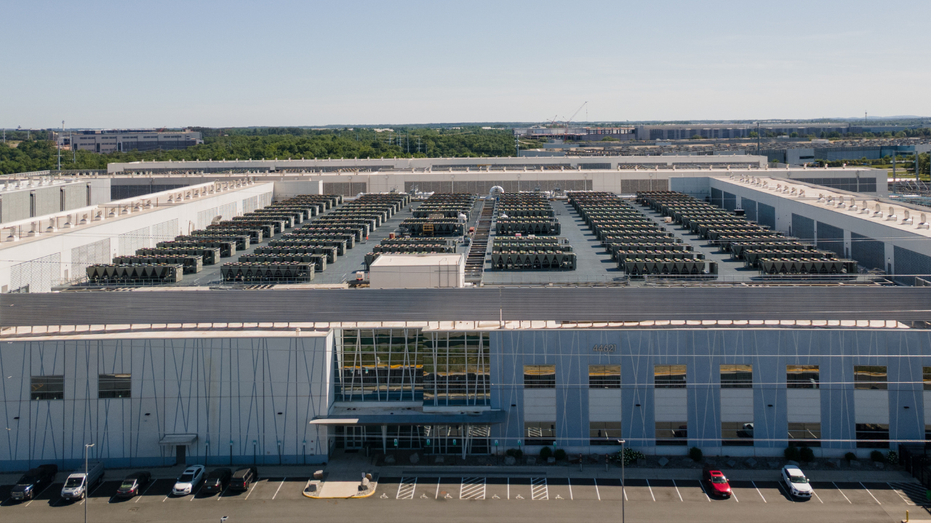
A CloudHQ data center in Ashburn, Virginia, on May 31, 2026. (Lexi Critchett/Bloomberg / Getty Images)
Shiller implied that tech leaders like Amodei, who promote doom-and-gloom scenarios their own companies could help realize, are being somewhat short-sighted and should be reined in to prevent an economic recession.
CLICK HERE TO DOWNLOAD THE FOX NEWS APP
“Perhaps the best we can do is to appeal directly to the leaders of Silicon Valley who have been promoting these negative narratives with such vigor,” Shiller wrote.
He continued: “Surely the resulting media attention highlighting how dangerously powerful your AI model is may help you sell more wares, but it may be far harder to do so in a period of recession. Try not to forget the critical lessons taught by our past.”
Business
Amazon Prime Day offers a glimpse into U.S. consumer as shoppers navigate with pinched wallets


Amazon Prime Day offers a glimpse into U.S. consumer as shoppers navigate with pinched wallets

Indonesia’s expanding digital economy offers opportunities for investors amid regional disparities and regulatory complexities requiring real-time, localized insights for successful investment.
Indonesia’s Growing Economy and Investment Opportunities
Indonesia’s rapidly evolving economy offers significant opportunities for foreign investors, with the digital sector projected to surpass US$124 billion. Its large population of nearly 285 million people, including over 212 million internet users, drives digital growth. However, regional disparities, varied regulatory interpretations, and macroeconomic volatility add complexity to investment decisions, requiring careful navigation of this dynamic market.
Modernization of Regulatory Frameworks
Despite economic fluctuations, Indonesia remains attractive to both regional and global investors. Central to its regulatory system is the Online Single Submission — Risk-Based Approach (OSS-RBA) launched in 2021 to streamline licensing. The system simplifies requirements based on risk levels and consolidates approvals into a single platform. Recent updates aim for better integration with sectoral agencies and stricter enforcement of service standards, improving overall regulatory efficiency.
The Need for Localized Regulatory Insights
Implementation of regulations varies across Indonesia’s provinces, with licensing durations and requirements differing in practice. Investors need real-time, ground-level intelligence to navigate these variations effectively. Local insights help anticipate delays, administrative hurdles, and infrastructural challenges, allowing decision-making based on actual operational conditions rather than relying solely on national data, ultimately enhancing investment success.
Read the original article : Business Intelligence in Indonesia: Reducing Investor Risks with Data-Driven Decisions
Other People are Reading


Serbia President Vucic says to resign within weeks, one year before end of mandate

Fans React To Opening Night Of Joint Tour

This Crypto Opportunity Won’t Stay Cheap For Long

Rylan Clark stranded abroad after being hit by flight cancellation chaos


-
 Sports4 days ago
Two goals and an assist by sheer aura: Cristiano Ronaldo just entered the World Cup chat
-

 Tech5 days ago
Microsoft accidentally kills epic Outlook email threads
-

 Fashion1 day ago
Weekend Open Thread: Staud – Corporette.com
-

 Politics2 days ago
The House | Manchesterism won’t survive the painful trade-offs unless it gets citizens on board
-

 Politics2 days ago
Potential 2028er World Cup attendee leaderboard
-

 Business2 days ago
Asia stock markets slide as tech shares slump
-

 Tech2 days ago
A Look At A Gaggle Of Transputer Boards
-
Crypto World4 days ago
Bitcoin (BTC) Dips Below $62K, Ethereum (ETH) Plunges 6% Daily: Market Watch
-

 Crypto World4 days ago
Securitize Wraps Roubini's SEC-Registered ETF as Dubai VARA Digital Security
-
 Crypto World2 days ago
Dell (DELL) Shares Tumble Over 5% Following Analyst Downgrade to Hold
-
Business4 days ago
Entergy settles forward sale agreements, raises $672 million in cash proceeds
-

 Sports1 day ago
FIH Pro League: India defeat Pakistan 7-1, register biggest win of campaign | Other Sports News
-

 Crypto World18 hours ago
Kraken's xStocks Opens Bending Spoons IPO Registration to EEA Retail
-

 Crypto World1 day ago
RTX holders must register wallets before token distribution begins
-
 Crypto World1 day ago
Hyperliquid Named on Singapore MAS Investor Alert Register
-

 Sports2 days ago
India vs Bangladesh LIVE Score, Women’s T20 World Cup: Bangladesh Opt To Bat; India Enter ‘Do-Or-Die’ Stage As Semi-Final Race Heats Up
-
 Tech6 days ago
Signal’s Meredith Whittaker says AI chatbots ‘are not your friends’ and calls Copilot agents a backdoor
-
Crypto World2 days ago
The DATA Foundation Launches to Tackle AI’s Multi-Billion Dollar Training Data Bottleneck
-

 Crypto World2 days ago
Strategy (MSTR) has a 10-month cash runway for dividends, but retail investors are losing faith
-
 Crypto World2 days ago
AAVE price tests 9-month trendline after 17% rebound as breakout hopes build
You must be logged in to post a comment Login