Connect with us
DAPA Banner
DAPA Coin
DAPA
COIN PAYMENT ASSET
PRIVACY · BLOCKDAG · HOMOMORPHIC ENCRYPTION · RUST
ElGamal Encrypted MINE DAPA
🚫 GENESIS SOLD OUT
DAPAPAY COMING

Tech

Are Checks Sent Through the Mail Vulnerable to Theft?

Published

on

The New York Times tells the story of a 63-year-old retiree who wrote a check for several thousand dollaras to pay her taxes. But she discovered much later that her taxes were never paid because that check had been intercepted and then altered to be payable to someone else:

In some cases, thieves may pilfer one or more checks from local mailboxes. Adam Rust, director of financial services for the Consumer Federation of America, said thieves sometimes “fish” for checks at free-standing drop boxes, using long tools with sticky pads on the ends to grab letters. In other cases, more sophisticated criminals may steal large batches of checks, copy them and then sell them on the internet. Often, the purloined checks are chemically altered in what’s known as “check washing” to remove the name of the recipient. The thief replaces it with a fraudulent name, and often increases the amount of the check, before cashing or depositing it.

The 63-year-old retiree’s bank told her she’d waited too long to recover the funds:

Schwab’s “security guarantee,” outlined on its website , says that “Schwab will cover losses in any of your Schwab accounts due to unauthorized activity.” But fine print at the bottom of the page notes that reimbursement “requires your timely reporting of unauthorized activity to Schwab,” and that Schwab “will not be liable for additional or increased losses resulting from a failure to report unauthorized activity in a timely manner.” It notes that more details are available in account agreements… Notify your bank as soon as possible, said Scott Anchin, senior vice president of strategic initiatives and policy at the independent bankers association. Banks generally allow at least 30 days and sometimes up to 90 days from the time your statement is made available to you to report suspected check fraud, he said.

Advertisement

So how can you avoid check fraud? Adam Rust, director of financial services for the Consumer Federation of America, just suggests that “No one should ever mail a check.”

If you must write a check, he said, try to deliver it in person or take it inside a post office to mail rather than relying on your own mailbox or public drop boxes. The American Bankers Association recommends using permanent “gel” ink pens when you do write checks to reduce the risk of tampering… And if you don’t already, consider using your bank’s online bill payment service.

The article notes that even the U.S. federal government “has been moving away from paper checks for things like benefit payments and income tax refunds, saying digital payment methods are more secure.”

Advertisement

Source link

Continue Reading
Click to comment

You must be logged in to post a comment Login

Leave a Reply

Tech

AI made every individual stronger and every team more fragmented. Yimao Zhou is building the OS to reverse that

Published

on

TL;DR

Yimao Zhou, 23-year-old founder of Emagen AI, believes today’s AI agent startups are accelerating individual productivity while ignoring the real bottleneck: team coordination. His product Cagen is an “OS Level Agent” that inverts the human-AI relationship, letting AI drive workflows and call on humans for judgment. Backed by MiraclePlus founder Qi Lu, Zhou predicts most AI agent startups will be dead in three years and that the minimum viable team size for a serious business is about to collapse.

The 23-year-old founder of Emagen AI argues the entire agent industry is optimizing the wrong unit. His answer is an operating system where AI drives the work and calls on humans, not the other way around.

Every week, another AI agent startup launches. They write code, draft emails, generate slides, analyze data. Each one promises to make you more productive. Yimao Zhou thinks they’re all solving the wrong problem.

Zhou is the founder and CEO of Emagen AI, the company behind Cagen, what he calls an “OS Level Agent,” an organizational operating system powered by AI. Backed by MiraclePlus (formerly YC China) and its legendary founder Qi Lu, Zhou is betting that the future of AI isn’t about making individuals faster. It’s about making teams fundamentally different.

Advertisement

The 💜 of EU tech

The latest rumblings from the EU tech scene, a story from our wise ol’ founder Boris, and some questionable AI art. It’s free, every week, in your inbox. Sign up now!

We sat down with Zhou to understand what that means, and why he thinks 90% of today’s AI agent companies won’t exist in three years.

You’ve said that AI is actually making teams worse. That’s a pretty contrarian take given that every AI company is promising productivity gains. What do you mean?

Advertisement

Think about what happens when you give every person on a five-person team their own AI assistant. Each person produces more, faster. The product manager generates specs faster. The engineer writes code faster. The designer iterates faster. Sounds great, right?

But here’s what actually happens: the output diverges. Everyone’s moving faster in slightly different directions, and nobody notices until it’s too late. The bottleneck in a team was never “one person works too slowly.” It was always “are these five people building the same thing?” AI tools accelerate the parts that weren’t bottlenecks and make the real constraint, coordination, worse.

60% of knowledge workers’ time goes to what I call coordination costs, syncing progress, writing status updates, relaying information between people, waiting for approvals. And these costs don’t just exist between humans. In the AI era, they multiply: human-to-agent coordination, agent-to-agent coordination, the overhead of keeping everyone and everything on the same page. AI is optimizing the other 40%, the actual doing, and completely ignoring the 60%. That’s not just a missed opportunity. It’s a directional error.

So what should the industry be building instead?

Advertisement

Every major computing shift follows the same path: tools come first, then platforms, then an operating system emerges. PCs had standalone software before Windows. Mobile had individual apps before iOS and Android unified the experience. Cloud had scattered services before AWS became the infrastructure layer.

AI is on the same curve. Right now we’re in the “standalone tools” phase. Hundreds of agents, each doing one thing well, none of them talking to each other. The platform phase is just starting. The OS phase hasn’t happened yet.

That’s what Cagen is. Not another AI tool. The operating system layer for how organizations work with AI.

OS Level Agent” is a big claim. In concrete terms, what does that actually look like?

Advertisement

Here’s a structural problem nobody’s addressing. Notion built Notion AI. GitHub built Copilot. Salesforce built Einstein. Every SaaS company is embedding AI, but their incentive is to make their own product stickier, not to connect you across tools. Notion AI makes Notion more valuable. It has zero incentive to help you bridge Notion to GitHub to Linear to Slack.

That means cross-tool intelligence is structurally impossible for any incumbent to build. It can only come from an independent layer.

Now, some people will say: “What about MCP? Anthropic’s Model Context Protocol already connects AI agents to multiple tools.” True, and MCP is great. But MCP is a connector protocol. It’s USB, not an operating system. It lets one person’s agent plug into that person’s tools. There’s still no shared organizational context, no persistent team memory, no cross-role orchestration. MCP actually benefits us. The more standardized the plumbing gets, the easier it is to build an OS on top.

Cagen is that OS. But here’s what really separates it from everything else, and this is the part most people miss. Every AI product today, including the ones that call themselves “team AI,” works the same way: capture information, organize it, and wait for a human to query it. The human is still the driver. The AI is a librarian.

Advertisement

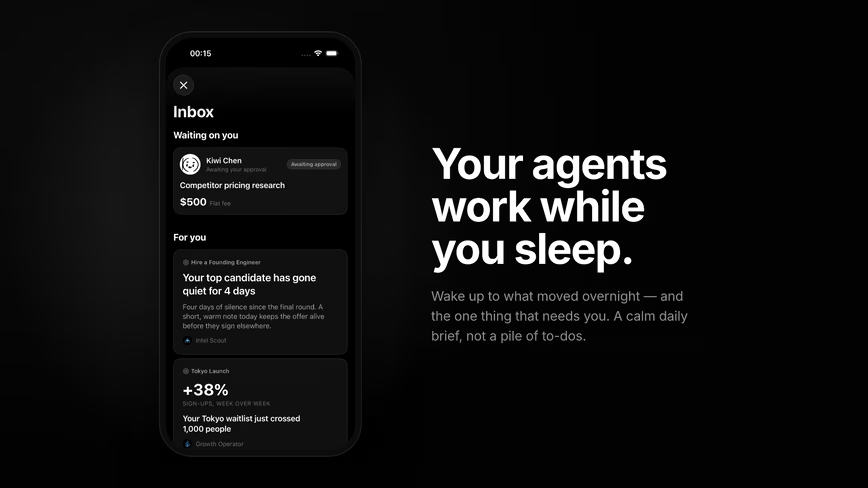
Cagen inverts that. Our agents have goals and context. They continuously reason about what needs to happen next based on the team’s objectives, the project state, and organizational context. When they need human judgment, a decision, an approval, creative input, they call on the human. The human is a resource in the system, not the operator of the system.

That’s what makes it OS-level. An operating system doesn’t wait for you to manually manage every process. It runs, it schedules, it handles events. It calls on you when it needs you. That’s how Cagen works for teams, teams of humans and AI agents working together.
AI-Agents

The AI market is brutally competitive. Investors will ask: what’s your moat?

After six months of using Cagen, what makes it irreplaceable isn’t any feature we built. It’s what your team built on top of it: decision patterns, communication habits, quality standards, workflow knowledge. All of that is deeply coupled to your specific organization. A competitor can clone every feature of Cagen. They cannot clone six months of your team’s accumulated intelligence.

Advertisement

This is the same reason Salesforce has industry-leading retention. It’s not because the CRM is irreplaceable. It’s because the data, processes, and automations running on it are irreplaceable. The product becomes an organizational asset, not a software subscription.

But here’s the important distinction: that stickiness comes from accumulated value, not artificial lock-in. We’re not trapping anyone. Teams stay because they don’t want to lose what they’ve built.

Individual AI memory is well understood. How is organizational memory different?

Fundamentally different. Individual AI memory scales linearly. I learn something, I benefit. Organizational AI memory has network effects. One person’s learning benefits everyone on the team, and every agent on the team. The compounding rate is n-squared, not n.

Advertisement

That’s why a “Team Agent” isn’t just a multiplayer version of a personal agent. It’s a completely different species. When one team member refines how competitive analysis gets done, that knowledge immediately elevates everyone else’s output, and every agent’s output. When the system learns how your organization defines “good,” what quality looks like, what tone you use, how you structure decisions, it raises the floor for every piece of work across the company, whether it’s done by a human or an agent.

Personal AI makes one person better. An OS Level Agent makes the organization smarter as a unit.

You keep saying “team.” But the trend right now is the opposite: more solo founders, more one-person companies. If teams are shrinking, who needs a team OS?

That’s exactly the right question, and the answer actually makes our case stronger.

Advertisement

There are actually two trends happening simultaneously, and they’re squeezing from both sides.

On one end, organizations are getting larger and more complex. Global teams, cross-timezone coordination, regulatory overhead, multi-vendor supply chains. The coordination burden inside large organizations keeps growing.

On the other end, individuals are getting smaller and more independent. Layoffs are accelerating. The freelancer economy, digital nomads, solo founders, one-person companies, they’re all exploding. But here’s what people miss: a solo founder doesn’t work alone. They hire a freelance designer on Fiverr, a contract developer on Upwork, a fractional CFO, a marketing consultant. The “team” still exists. It’s just not a fixed org chart anymore. It’s fluid, temporary, project-based. And increasingly, it includes AI agents as full team members.

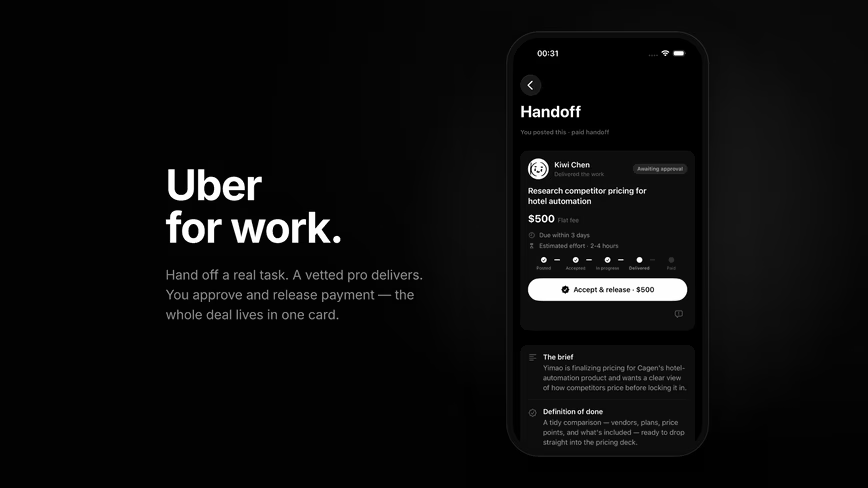
Both ends need the same thing: an orchestration layer. And that need is going to intensify. Work is atomizing. You’ll see more and more granular needs matched with more and more specialized providers, on-demand, globally, in real time. The old model was: hire five full-time employees, put them in an office, manage them. The new model is closer to Uber for work. Assemble the right people and agents for the right task, execute, disband.

Advertisement

But here’s the problem with that model: coordination costs explode. When your “team” is a rotating cast of freelancers, contractors, and AI agents who don’t share context, don’t know each other’s working style, and don’t have shared history, the coordination problem we talked about earlier gets ten times worse.
Uber

That’s where Cagen becomes essential. It’s the orchestration layer. It holds the organizational context, the project history, the quality standards, and it dispatches work to the right people and agents at the right time. The solo founder doesn’t need to manage anyone. Cagen manages the constellation.

So “team” doesn’t mean five people in a Slack channel. It means any group of humans and AI agents collaborating toward a goal. The more fluid and atomized work becomes, the more you need an OS to hold it all together.

Who are your first customers? I’d assume tech startups.

Advertisement

Actually, no, and this is counterintuitive. Tech companies already have deeply entrenched toolchains. Slack, Notion, Linear, GitHub. They’re locked in, and the switching cost of adding an OS layer is highest for teams that have already optimized their existing stack.

Our best early customers are organizations with high operational complexity but without deep commitment to any specific tool ecosystem. We’re currently deployed with a boutique hotel in Pittsburgh, for example. A hotel operations team juggles guest communication, maintenance coordination, shift scheduling, vendor management: dozens of handoffs per day across multiple roles. The coordination costs are extreme, but they haven’t built their workflows around a rigid SaaS stack.

That’s the sweet spot: complex enough to need an OS, flexible enough to adopt one. And if it works in hospitality, one of the most operationally dense environments for small teams, it works anywhere.

But hospitality, CPG, logistics: these are all very different industries. How do you scale across all of them without becoming a custom consulting shop?

Advertisement

This is the question everyone asks, and it’s the right one. The traditional answer is: you hire industry experts, do bespoke integrations, and it doesn’t scale. That’s the consulting trap.

Our answer is different. Think about the pipeline from customer acquisition to deployment: understanding a client’s operations, identifying where AI fits, building the right workflows. There’s no inherent reason that entire process has to rely on humans.

The bottleneck today is a mismatch. Non-technical users don’t understand what AI can and can’t do. At the same time, they struggle to articulate their own needs clearly. That’s why every AI integration today requires someone who has both domain expertise and AI expertise, and that combination is extremely rare and expensive.

Cagen’s roadmap is to fuse those two together inside the product. Ideally, a user just describes what their team does day to day, along with their company’s goals. The system then automatically understands, decomposes, and constructs the right workflows. It’s an automated consulting and execution layer. The AI doesn’t just run your workflows; it figures out what your workflows should be.

Advertisement

We’re not there yet. Nobody is. But even at the current stage, the approach gives us a structural advantage. And where full automation isn’t possible today, we can route specific needs into a marketplace: humans acting as builders, similar to Upwork or Fiverr, but orchestrated by the system. That turns bespoke integration from a consulting problem into a platform problem. And platform problems scale.

You were backed by Qi Lu, who decided to invest ten minutes into a thirty-minute pitch. That story’s been told before. What does it actually mean to you now, looking back?

What it means is that he wasn’t investing in a product. He was investing in a judgment.

Qi Lu spent his career at the OS layer: Executive VP at Microsoft, President and COO at Baidu. When he heard me describe the AI agent landscape as “everyone building apps, nobody building the operating system,” he didn’t need a demo. He’d lived through that exact pattern before. He knew what happens when someone identifies the right abstraction layer early.

Advertisement

Most AI pitches are “we do X better than Y.” My pitch was “the entire industry is building at the wrong layer.” He recognized the difference immediately. That’s what the ten minutes were about.

Claude Code surpassed $2.5 billion in annualized revenue by early 2026, contributing to Anthropic’s $44 billion total run rate by mid-year. OpenAI Codex has 5 million weekly users. OpenClaw has over 370,000 GitHub stars, more than the Linux kernel. Whether backed by the most powerful AI labs or the open-source community, the momentum behind AI agents is massive. How do you compete with that?

I don’t. Because we’re not playing the same game.

Look at what those products actually are. Claude Code is a terminal agent that helps one developer mass-produce code. Codex is the same thing inside ChatGPT. OpenClaw is an open-source personal assistant that runs on your laptop. They’re all extraordinary at what they do, and what they do is make one person more productive.

Advertisement

Claude Code even has something called “Agent Teams.” Sounds like team collaboration, right? It’s not. It’s one person orchestrating multiple AI instances. There’s no shared context between team members. No organizational memory. No cross-role coordination. Codex’s “Business plan” is seat management and billing. It doesn’t change how the product works at a team level.

This is exactly my point. The best-funded, most talented AI labs in the world are all converging on the same thing: supercharging individuals. They’re building the most powerful apps the world has ever seen. But nobody is building the OS.

There’s a way to think about this that I find clarifying. The infrastructure for AI-assisted coding, what some people call the “coding harness“, is essentially a solved problem. It’s a continent. Claude Code, Copilot, Cursor, Codex: the land has been claimed. But the infrastructure for AI-assisted working, coordinating teams, managing goals, orchestrating humans and agents together, is still a vast blue ocean. There are a few small islands, but no continent. That’s where we’re building.

When your engineer uses Claude Code and your product manager uses OpenClaw, each person gets faster. But the coordination between them, the context, the decisions, the handoffs, still travels through Slack messages and status meetings and Google Docs that nobody reads. The coordination costs are completely untouched.

Advertisement

That’s the gap. It’s not a feature gap. It’s a layer gap. And it’s not going to be filled by Anthropic or OpenAI, because their business model is selling seats to individuals. An OS for organizations is a fundamentally different product with a fundamentally different architecture.

Last question. Three years from now, what does the AI agent industry look like?

Most of today’s AI agent startups will be dead. Not because they’re bad, but because they’re building at a layer that’s about to get commoditized. When you’re essentially wrapping a prompt around a foundation model and optimizing for one vertical, your moat is prompt engineering. That’s not a moat. That’s a sand castle.

The survivors will be companies that built at a layer the foundation models can’t easily absorb. For vertical agents, that means deep domain-specific data flywheels. For us, it means the OS layer: the orchestration and organizational intelligence that sits above any single model.

Advertisement

But the real disruption isn’t about which companies survive. It’s about what becomes possible. The minimum viable team size for a serious business is about to collapse. Things that required 50 people will require 5 people plus an AI operating system. That doesn’t just change how companies work. It changes which companies can exist. A massive number of business ideas that didn’t pencil out under the old model suddenly become viable.

Three years from now, people won’t ask “what AI tool do you use.” They’ll ask “what OS is your team running on.

Yimao Zhou is the founder and CEO of Emagen AI, the company behind Cagen. He previously studied medicine at Shanghai Jiao Tong University and cognitive philosophy and philosophy of science. He was the youngest founder in MiraclePlus’s F24 cohort. Learn more at cagen.ai.

Advertisement

Source link

Continue Reading

Tech

Prime Day shows how AI is changing shopping, testing Amazon’s bet against ChatGPT and others

Published

on

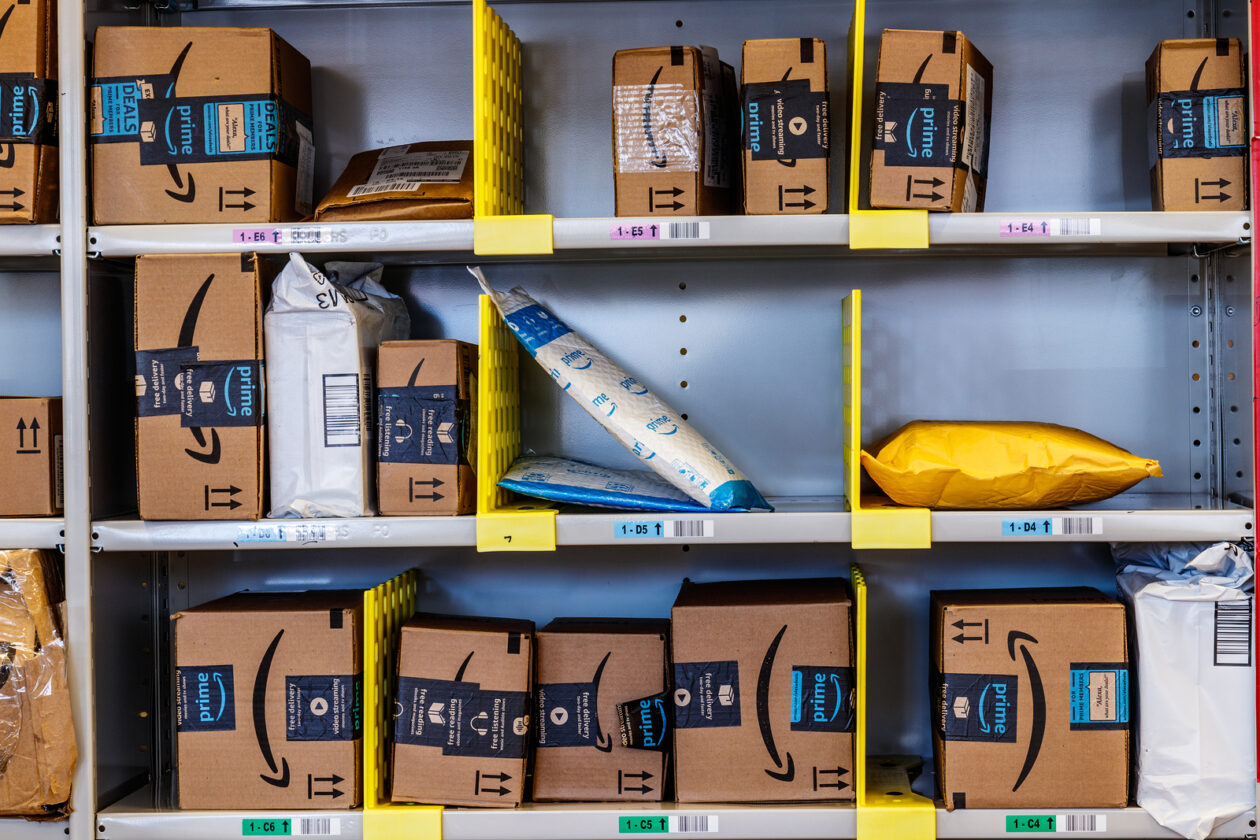
Adobe says shoppers arriving from AI chatbots were more likely to convert into sales for online retailers during Prime Day. (BigStock Photo)

U.S. shoppers spent a record $26.4 billion across all retail sites during Amazon’s four-day Prime Day event, and for the first time, the people most likely to complete a purchase were those who arrived from AI chatbots.

It’s the latest twist in a high-stakes bet by Amazon. The AI assistants now sending retailers their best-converting customers are the same ones Amazon has worked to keep away from its own store, hoping to keep shoppers coming directly to Amazon.com and using its own on-site AI assistant instead.

Adobe reported over that weekend that visitors who clicked through to shopping sites from AI assistants were 40% more likely to make a purchase during the four-day event than those showing up through search, email or social media.

AI still accounts for a small fraction of total shopping traffic, but a trend is starting to emerge. In the past, shoppers sent by AI were the least likely to buy, according to Adobe’s data. The change suggests that ChatGPT, Claude, Gemini and others are becoming more effective at giving shoppers the information they need to buy with confidence.

Those figures span all of U.S. retail — “Prime Day” has become much more than a day, and much bigger than Amazon alone. The distinction matters, because Amazon has taken a different path than many of its rivals. While Walmart, Target and others have opened their catalogs to outside AI assistants, Amazon has kept them out.

Advertisement

Agentic AI drives less than 1% of traffic across every major online store, but Amazon’s share is the lowest of the group, at about 0.4%, according to J.P. Morgan data.

That’s by design: Amazon sued Perplexity, for example, over its browser that shopped on customers’ behalf, and won a preliminary injunction barring the tool from the logged-in parts of its site, arguing that unauthorized shopping agents degrade a trusted experience. Perplexity is appealing.

Amazon has separately blocked ChatGPT’s crawlers from reading its listings — even as it has begun buying ads inside ChatGPT to bring shoppers back, a move first spotted by Marketplace Pulse founder Juozas Kaziukėnas and reported by Business Insider and Modern Retail.

On Amazon’s most recent earnings call, in April, CEO Andy Jassy said the company was in talks with the AI companies to come up with a better experience between Amazon and third-party agents to “find something that works for customers and all the companies.”

Advertisement

In the meantime, Amazon is focusing on its own AI assistant.

@media (max-width: 600px) {
aside.callout { float:none !important; max-width:100% !important; margin-left:0 !important; margin-right:0 !important; }
aside.callout .callout-img { display:none !important; }
}

The tool — launched as Rufus and folded in May into a service called Alexa for Shopping — has drawn more than 250 million users, with monthly users up more than 115% over the past year, the company said. Customers who use it while shopping are more than 60% more likely to buy, and Amazon Web Services has said the tool drove nearly $12 billion in incremental sales last year.

Jassy said on the earnings call that third-party agents weren’t good enough yet — that they lacked a shopper’s history and often couldn’t get prices right — and that people would gravitate to whichever assistant knew them best. That’s the opening Amazon is going after with its own AI chatbot and related tools on Amazon.com.

“We are aiming to have it be the best shopping assistant anywhere,” Jassy said.

Advertisement

The strategy reflects one of the ways Amazon is increasingly making money. Advertising is now among its most profitable businesses. J.P. Morgan expects it to bring in about $83 billion in revenue this year and, because the margins are high, to account for roughly a third of the company’s operating income.

That advertising revenue depends on Amazon getting shoppers to browse its own site rather than handing the decision to an outside chatbot it doesn’t control.

The big question long-term is whether Amazon can maintain its own role as a primary destination for shoppers and avoid becoming just another selection on a chatbot’s shelf.

Source link

Advertisement
Continue Reading

Tech

As a deadly heatwave grips Europe, Rome leans on a bracelet to watch its elderly

Published

on

Dina Gazzella is 85, and on her wrist is a small black band that looks like a watch and does rather more than tell the time. “If I feel unwell, this is a lifesaver,” she told Reuters.

In a summer that has turned lethal across Europe, that is not a figure of speech.The bracelet is part of a scheme run by Rome’s municipality, which has equipped around 700 elderly residents with a wearable that monitors heart rate and sleep patterns, detects falls through motion sensors, and lets the wearer call for help in an emergency.

A team of social workers keeps watch remotely, and the device tracks movement both inside and outside the home. The city is presenting it as a health-prevention tool, and the timing is not accidental.

Rome has spent the past week in the upper 30s Celsius, hot enough to place it among 16 Italian cities under the health ministry’s highest red heat alert, alongside Milan, Turin, and Verona.

Advertisement

The 💜 of EU tech

The latest rumblings from the EU tech scene, a story from our wise ol’ founder Boris, and some questionable AI art. It’s free, every week, in your inbox. Sign up now!

The wider picture is worse. The World Health Organisation has linked more than 1,300 deaths to the extreme heat that began on 21 June, France has reported roughly a thousand excess deaths in a single week, and Germany recorded a peak of 41.7C.

Heat kills the old before it kills anyone else, quietly and at home, which is exactly where the bracelet is meant to be looking.

Advertisement

The device sits inside a larger support programme the municipality introduced last year, funded with EU post-Covid money and budgeted, according to the reporting, at around €400m for elderly care.

The wearable is the visible part, but the human part is arguably the point. Social workers call beneficiaries daily to check that they have taken their medicine, to ask whether they are coping with the heat, and sometimes simply to talk to someone who might otherwise spend the day alone.

That combination, a sensor plus a phone call, is what separates the Rome scheme from a consumer fitness tracker. The technology flags the emergency; the person on the other end of the line addresses the loneliness and the missed medication that often precede it. It is a reminder that the most useful health wearables tend to be the ones wired into a service rather than left to buzz on a wrist.

It also sits at an uncomfortable intersection. A device that tracks an elderly person’s movements inside and outside their home, around the clock, is a surveillance tool as much as a safety one, and some participants have reportedly left the programme over privacy worries. The concern is not paranoid.

Advertisement

Health data is among the most sensitive a person holds, and the broader drift toward always-on monitoring has made even well-intentioned tracking feel less benign. Rome’s challenge is to reassure people that the watching is care, not control.

Behind the individual stories is a structural problem cities across the continent are only beginning to confront. Europe’s population is ageing, its summers are intensifying, and heat has become one of the deadliest climate-related risks it faces, which is why cooling and heat resilience have moved from niche concerns to civic priorities.

A bracelet does not cool a flat or fix a city built for milder weather. What it does is make the most vulnerable residents visible to someone who can act before a hot afternoon becomes a fatality.

For Gazzella, the calculation is simpler than any of that. The band on her wrist means that if she falls, or her heart races, or she simply cannot manage the heat, somebody will know. In a Roman summer that has already proved how fast that can matter, it is a modest piece of technology doing a quietly enormous job.

Advertisement

Source link

Continue Reading

Tech

China’s Huajiang Grand Canyon Bridge is Now World’s Highest, Boasts Massive Artificial Waterfall

Published

on

China Huajiang Grand Canyon Bridge Waterfall
China’s Guizhou province has once again made a name for itself by going overboard with extreme infrastructure; the Huajiang Grand Canyon Bridge is a new addition to the list as the world’s highest bridge, with its roadway dangling 625 meters over the Bei Pan River. Drivers may pass by in about a minute flat, which represents a big improvement over historic mountain roads and ferry crossings that used to take more than an hour if they were fortunate.


The Liuzhi-Anlong Expressway is a beast, winding its way through a stunning karst landscape of towering limestone cliffs and deep valleys, spanning a 2890-meter-long bridge from one side of the abyss to the other. The longest part is 1420 meters and is situated between two towers that stand 262 meters tall. With the alpine scenery in the background, it’s a genuinely stunning effort. The bridge is remarkable on its own, but what was added during construction elevates it to new heights.

Sale


LEGO Architecture Trevi Fountain Building Set – Collectible Model of Italian Landmark for Display for…
  • ICONIC LANDMARK MODEL – Embrace every step in the architectural recreation of an iconic Rome baroque monument with this 1,880-piece Trevi Fountain…
  • HISTORY & TRAVEL-LOVERS MEMORABILIA – Your building journey lets you recreate the iconic Rome fountain in all its glory, while enjoying updated…
  • AUTHENTIC DETAILS – Admire the facade’s backdrop, the details of the statue figures, mini hippocampi and small ’Lovers’ Fountain’, plus…

When one of the engineers boring a tunnel on one side of the bridge came across a massive underground water flow in the porous karst rock, they could have simply drained it all, but they chose to collect it in a reservoir and pump it back up to the bridge deck. According to Chinese government media, it was spread in the center of the main span to create this gigantic, misty waterfall that is approximately 300 meters wide and has a 600-meter cascade, making it the world’s largest artificial waterfall. With a simple adjustment of the pressure, you can change the height as well as volume of the spray, and when the sun sets, laser lights illuminate it, making the entire thing shimmer. Bonus points: the water is utilized to irrigate the fields next door, it serves as a comfortable rest stop for passing truckers, and it keeps the toilets operating.

Advertisement


People who have crossed the bridge, on the other hand, describe it as terrifying from above. The vehicles on the deck resemble small matchboxes, and several passengers have reported feeling as if they are nearly touching the clouds with their fingertips. The construction team, who spent months creating the thing, gushed about the breathtaking vistas and how many first-timers enjoy standing on the edge.


People now flock to the bridge for more than just the views, since there is now a glass walkway beneath the deck that provides an unobstructed view straight down into the valley, as well as a bright new glass elevator that transports visitors to a cafe high above the bridge, ideal for a coffee with a view. The bridge even provides some death-defying activities, such as bungee jumping and paragliding, with intentions to organize base jumping events soon.
[Source]

Source link

Advertisement
Continue Reading

Tech

Prime Day might be over, but the Ninja Crispi is still 20% off

Published

on

Ninja makes some of the most useful kitchen gadgets on the market, and the Crispi is up there with our favourites.

The Ninja CRISPi Glass Air Fryer is down to £119.99 from £149 right now, and that £29 saving is worth acting on before the price creeps back.

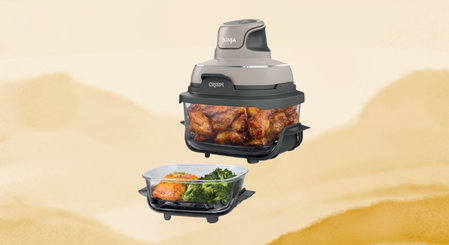
Ninja Crispi on a sandy backgroundNinja Crispi on a sandy background

Prime Day might be over, but the Ninja Crispi is still 20% off

Ninja makes some of the most genuinely useful kitchen kit on the market, and the CRISPi with 20% off is one of its more tempting ideas.

Advertisement

View Deal

The concept is built around a 1700W portable PowerPod that sits on top of thermal-shock-resistant glass containers rather than the usual plastic basket, which means you prep your ingredients in the same vessel you cook them in, then serve directly from it and snap a lid on for leftovers.

Advertisement

There are two glass containers in the box, a 1.4L for personal portions and a 3.8L that fits a whole 1.2kg chicken with vegetables alongside, so you are covered whether you are making a quick lunch on a Tuesday or roasting for a table of six.

Ninja CRISPi‘s four cooking modes, air fry, roast, keep warm, and recrisp, cover the vast majority of what people actually use an air fryer for day to day, and the recrisp function is genuinely useful for anything you want to revive from the fridge without it going soft.

Advertisement

The Whatsapp LogoThe Whatsapp Logo

Get Updates Straight to Your WhatsApp

Advertisement

Join Now

The glass cooking surface is the part worth dwelling on: it contains no PFAS, is dishwasher safe along with the lids and adaptor plate, and it nests neatly inside itself for storage, which matters more than it sounds in a kitchen where counter space is never quite enough.

Advertisement

The honest caveat is that at 7.1kg this is not something you will move around constantly, so the portable framing works better as a flex kitchen appliance than a take-anywhere device, despite the snap-lock lid on the smaller container being designed for exactly that.

For small kitchens, student flats, or anyone who has been quietly frustrated with the plastic-and-coating situation on every other air fryer they have owned, the Ninja CRISPi at £119.99 is a considered buy.

SQUIRREL_PLAYLIST_10148964

Advertisement

Advertisement

Source link

Continue Reading

Tech

The Anti-Data-Center Movement Is Reshaping Michigan Politics

Published

on

Will Lawrence is one of the founders of the Sunrise Movement, a grassroots climate activism group. Now, he’s running for Congress in a Michigan swing district, one of a growing handful of candidates around the country calling for a moratorium on data center development.

Senator Bernie Sanders has endorsed him, calling Lawrence a candidate who will “demand real accountability for big tech and AI companies.” And the backlash to data centers, Lawrence says, is helping him understand rural resistance to another kind of large-scale industrial project in the state: utility-scale renewable energy.

Lawrence’s campaign sees data centers as a potent topic to rally voters to his side in the Democratic primary in Michigan’s 7th district, to be held in August. Internal polling conducted by Data for Progress of likely Democratic primary voters in the district shared with WIRED shows that more than 40 percent of respondents were “much more likely” to vote for a candidate who opposed data centers. The message resonated even more with respondents under 45: Almost 80 percent of younger voters said they’d be much more likely or more likely to support an anti-data-center candidate. (The 7th district includes the college town of Ingham.)

Data centers “certainly [weren’t] the issue I expected to be talking about on the campaign,” Lawrence tells WIRED. Voters, he says, started organically approaching him at town halls and other meetings after he announced his candidacy last summer, asking for his advice as a longtime organizer about how to channel the anti-data-center energy among their neighbors into something productive.

Advertisement

“People feel like they’re being utterly disrespected by the companies and the local officials who are welcoming them into town,” he says.

The Data for Progress poll put Lawrence ahead of both his opponents in the primary. Another poll commissioned by one of his opponents and released in April shows Lawrence winning the primary, though it also shows the vast majority of voters remain undecided. Lawrence also remains a distant third in fundraising.

There are at least 11 data centers planned throughout Michigan, according to the clean-energy database Cleanview. Significant local pushback in two townships in the 7th district have stalled at least two planned projects over the past year. But data center developers have found ways around local opposition elsewhere in the state. After a township in the 6th district voted against an Oracle data center earlier this year, the company sued, and the town let development begin rather than engage in a costly court battle.

Earlier this month, Michigan governor Gretchen Whitmer appeared at the opening of the Oracle data center, where she was photographed smiling next to OpenAI’s Sam Altman and praised the $16 billion investment.

Advertisement

“Any candidate worth their weight knows that these data centers are toxic,” says Cooper Teboe, a Democratic strategist based in California. Candidates that don’t recognize this, Teboe says, “are not candidates that are going to win.”

Christy McGillivray, the executive director of Voters Not Politicians, a Michigan-based democracy reform organization, says that Whitmer’s appearance at the opening was a major misstep for the governor, who’s been floated as a 2028 presidential contender.

“It literally blew my mind,” she says. “I was like, ‘Are you trying to hurt the entire Democratic party?’”

While on the campaign trail, Lawrence says that he met with data center protesters who differed significantly with him politically. These included people opposed to data center construction who were also opposed to solar and wind projects being built on farmland.

Advertisement

Michigan is a hotbed of resistance to renewable energy projects. A 2025 review ranks it as the state with the largest number of local restrictions: More than 60 local governments in Michigan passed ordinances, moratoriums, or other restrictions on wind and solar development between 2011 and 2024. Local opposition, the report found, had stalled or blocked at least 28 projects across the state.

Source link

Continue Reading

Tech

Yeasound RIC800 Hearing Aids Review: Good Audio, Glitchy App

Published

on

While the bulk of innovation in the over-the-counter hearing aid market revolves around more modern in-ear models, a new brand called Yeasound is proving there’s still some life left in the traditional behind-the-ear (BTE) hearing aid space. The company is relatively new, but it’s actually a subsidiary of Yealink, a Chinese telecom producer that’s been making headsets and phone hardware for 25 years.

Yeasound’s BTE hearing aids currently come in two versions. I tested the higher-end RIC800 model, which includes AI-powered noise reduction, an automatic speech-focusing system, and support for Android in addition to iOS. (The RIC700 is Apple-compatible only.)

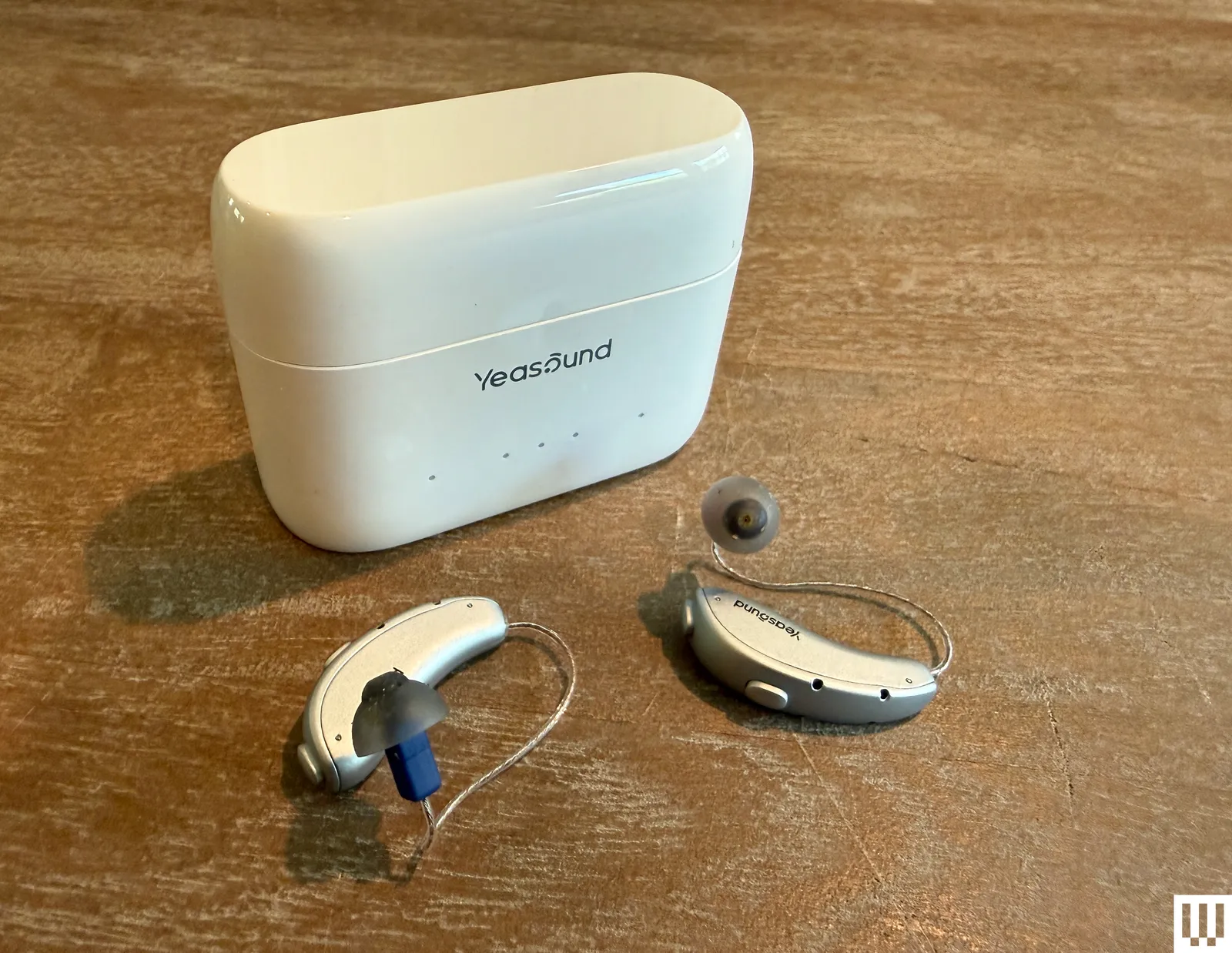
Image may contain Electronics

Photograph: Chris Null

The units otherwise look identical and even weigh the same; I measured a single unit at 2.76 grams, which is only slightly heavier than some of my favorite BTE hearing aids, like the Jabra Enhance Select 700. Physical controls are limited to two buttons on the back side of each unit. These are mainly used to control volume (independently for each ear) but can also be used to interact with phone calls via a streaming connection.

Advertisement

Onboard Audiogram

Image may contain Body Part and Ear

ScreenshotiYeasound app via Christopher Null

The first stop for most users will be the iYeasound mobile app, which offers a simplified home screen that puts all the essentials front and center. The in-app hearing test sets a baseline for how frequencies are adjusted. I rather enjoyed Yeasound’s hearing test, which is quite expedited in comparison to others on the market. While the test works the same way, delivering pings of various frequencies and volume to each ear, it eschews lengthy and unnecessary pauses between each test, so you can finish the entire test in about five minutes instead of 10 or more. The results are plotted on a traditional audiogram for posterity; my results were slightly more aggressive than my canonical audiogram suggests, but they were close enough for an OTC product and an informal, in-home test. Unfortunately, if you already have an audiogram in hand, it can’t be imported, and Yeasound’s testing results can’t be manually edited aside from taking another test.

With the hearing test done and my audiogram loaded, I was ready to embark on the Yeasound user experience in earnest.

The main screen of the app offers five environmental modes: Adaptive, General, Noisy, Music, and Outdoors, all largely self-explanatory. Volume controls for each ear appear below the mode selector. You won’t find any noise cancellation options here, though. For those you need to drill into the Sound Setting system, which is unique for each of the five modes except Adaptive. Here you can roughly adjust low, mid, and high frequencies (though nothing more refined than that), opt for one of three noise reduction levels, and choose between using an all-around microphone, a forward-facing mode, and an even tighter focus mode.

Image may contain Text

ScreenshotiYeasound app via Christopher Null

The Adaptive mode is where the RIC800’s AI features come into play, and if you enable it you forgo all of the additional controls mentioned above, with volume the only modification offered. This sounds liberating, but I preferred using the General mode much of the time, with my own fine-tuning proving more effective than the algorithm’s, especially after pushing noise cancellation to its maximum level. This mode had a little less hiss—a noticeable problem in the Adaptive mode when the volume level creeps up—and it felt less boomy, especially when testing with closed ear tips. With open ear tips, the two modes were about a draw. (Open, closed, and hybrid ear tips are included in the box in various sizes for you to experiment with.)

Advertisement

On the whole, I found the units’ audio assistance to be effective if imperfect. Mid-level frequencies often felt a little muddy and muffled, a problem that extended to a lesser degree to lower-frequency tones. Noise cancellation was surprisingly good, however, and the units can be pushed to very loud levels without introducing significant distortion.

Source link

Continue Reading

Tech

Robot hand company settles Tesla trade secret suit and announces $11M raise

Published

on

Jay Li doesn’t recommend getting sued by Tesla if you’re trying to get a startup off the ground. But he does think his company, Proception, might be better off for having endured the experience.

“I think it’s kind of like a resilience test, or pressure test,” he told TechCrunch in an exclusive interview. “People say that what doesn’t kill you makes you stronger, right?”

Li, who was a technical lead on Tesla’s Optimus humanoid robot program, was accused by his former employer last year of absconding with trade secrets to start Proception. But after months of trading legal blows, he finally reached a settlement with Tesla, which dismissed the lawsuit earlier this month. (Tesla did not respond to a request for comment.)

Now Li is free to tackle what he thinks is an even harder problem: making robot hands work like a human’s.

Advertisement

To help do that, Proception announced Monday that it has raised an $11 million seed round led by First Round Capital, with contributions from Y Combinator and early stage fund BoxGroup.

Proception also announced Monday that it is shipping the first batch of its “high-dexterity robotic hand” to “researchers and robotics companies,” while opening up to wider orders. The goal, Li said, is to become the top hand supplier to other companies that don’t want to spend the time or resources developing what’s known in the industry as “dextrous manipulation.”

While there’s been an avalanche of money and attention rushing into the world of robotics, Li believes not enough of that has gone to making robotic hands truly mimic a human’s hands.

One of the loudest voices talking about this challenge has actually been his old boss, Tesla CEO Elon Musk, who has said robot hands are one of the biggest engineering problems yet to be solved.

Advertisement

While Musk has maintained that Optimus robots could start working in factories in a matter of years, the consensus view is that making robotic hands equivalent to a human’s is still many years away. Kevin Lynch, the director of Northwestern University’s Center for Robotics and Biosystems, told the Wall Sreet Journal last year that his team believes it will be a decade until they are “functional and useful and able to do some of the things that humans do.”

Li thinks Proception can do it much faster, in large part because of how they’re collecting data.

Most companies training humanoid robots right now are using teleoperators to train their systems. A human wearing a virtual reality headset is able to see what a robot sees and manipulate what’s in front of that robot, then the robot can learn from the commands given by the human.

A big drawback to this approach, according to Li, is that the teleoperator is not receiving feedback from the objects the robot is touching. This approach is also limited to the number of robots a company has available at any given moment, Li said.

Advertisement

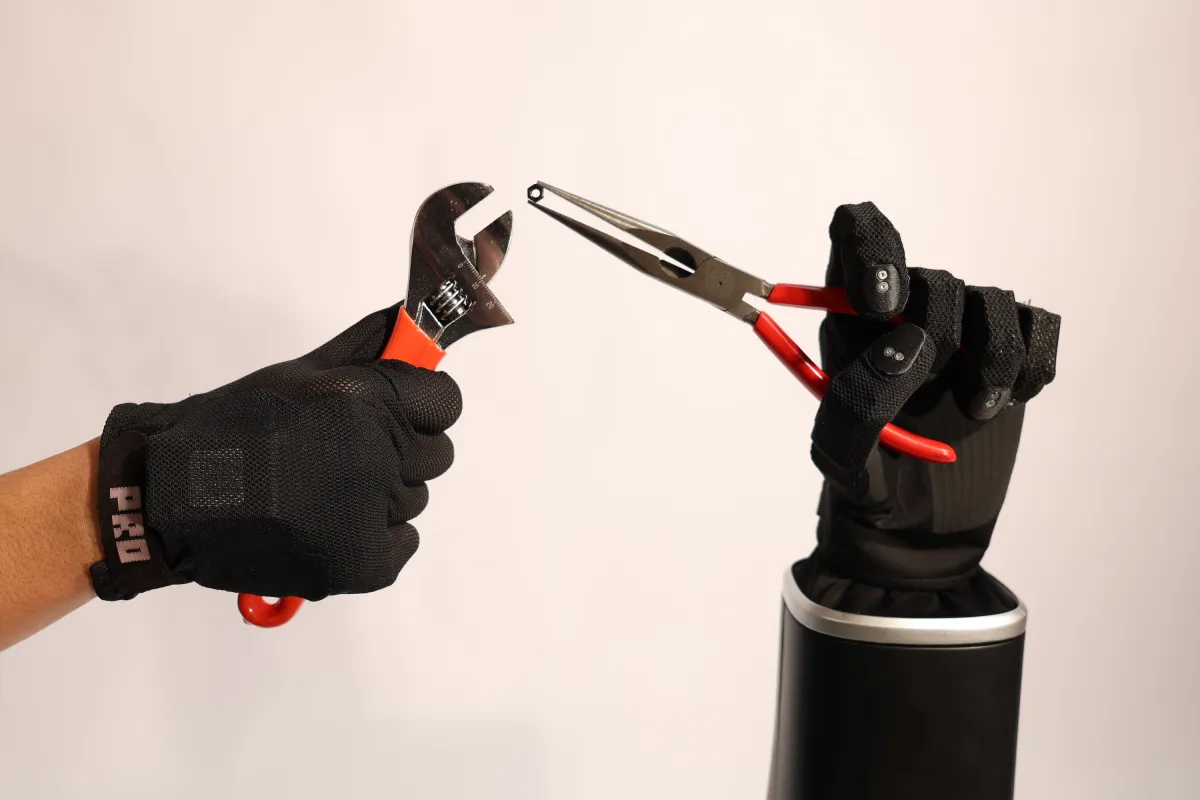
Proception’s solution is a glove laden with sensors. With human testers wearing the gloves (and a headset), Proception and its customers can capture “human hand interaction data without requiring a robot in the loop,” according to Proception’s press release.

This same glove also goes on the hand Proception is developing, acting as its sensor-packed “skin.” The hand has 22 degrees of freedom and multiple joints per finger to enable a “wide range of dexterous motions,” according to Proception.

Li said this approach will also let Proception and its customers gather finer, more task-specific data that can allow its robotic hands to more accurately resemble a human’s. He also thinks it is better suited to scale up.

“You need both hardware and data, and those need to come hand-in-hand to get [dextrous manipulation] to work. A lot of companies solely focus on hardware, or like hardware plus non-scalable data [collection],” he said. “We’re working on this highly dexterous hardware plus highly scalable data. We believe that’s a key combination to solve this problem.”

Advertisement

First Round partner Bill Trenchard, who led the investment in Proception, said this was a big reason why he backed Li.

“We think they will have the best hand in the market, maybe the most sophisticated hand today, and the underlying data and models to support that,” he told TechCrunch. “Dexterous manipulation is a very, very, very important part of the whole humanoid story going forward, and as many people have said, it’s sort of the last mile of getting these robots to be truly performant.”

Trenchard also praised Li’s ability to keep a cool head while being sued by his former employer.

“He was very upfront with us when this came out, and I think the team did an amazing job of keeping their heads down,” Trenchard said. “Jay’s a very strong leader.”

Advertisement

Li is also confident. After facing down Tesla’s “hardcore litigation department,” he told TechCrunch that he wouldn’t be surprised if the company comes calling for help as Proception grows.

“I think it will happen,” he said.

When you purchase through links in our articles, we may earn a small commission. This doesn’t affect our editorial independence.

Source link

Advertisement
Continue Reading

Tech

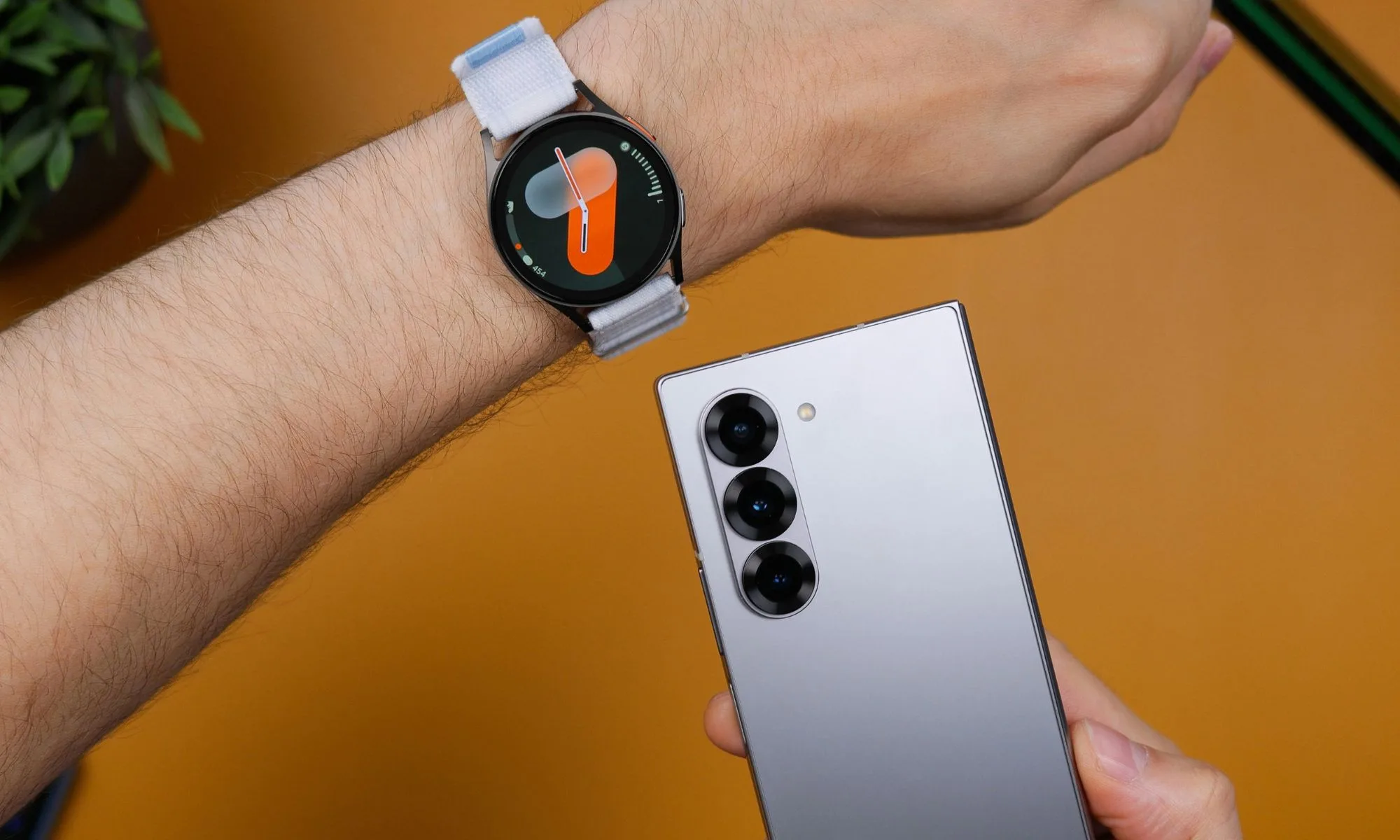
Samsung’s upcoming Galaxy Watch Ultra 2 could get a blindingly bright display, but I’m worried about the tax

Published

on

If there’s one thing that annoys me about using a smartwatch outdoors, it’s squinting at the screen under bright sunlight. Whether I’m checking directions on a walk or glancing at a notification while cycling, a dim display can quickly turn a premium smartwatch into a guessing game.

That’s why the latest Galaxy Watch Ultra 2 leak immediately caught my attention. But after reading through it, I couldn’t shake one nagging thought: all these upgrades probably won’t come cheap.

Finally, a smartwatch that can outshine the sun?

According to a new leak from tipster Ice Universe, Samsung’s next flagship smartwatch could arrive with a display capable of hitting an eye-watering 5,000 nits of peak brightness. If that figure holds up, it would be a meaningful leap over the current Galaxy Watch Ultra and one of the brightest smartwatch displays we’ve seen. The leak also suggests Samsung will use its newer On-Cell Film (OCF) OLED technology. Beyond making the screen brighter, the newer panel is designed to be more power efficient while taking up less space inside the watch. That’s the kind of upgrade I like seeing because it improves the everyday experience.

But there’s more to it! The Galaxy Watch Ultra 2 is also rumored to receive an IP69K rating, offering enhanced protection against high-pressure water jets and harsh environments. Most people may never intentionally blast their smartwatch with hot water, but tougher protection is never a bad thing on a wearable that’s meant to accompany you almost everywhere.

Every upgrade comes with a price tag lurking nearby

The leak doesn’t stop there. An 800mAh battery is also reportedly in the cards, a sizeable jump from the original Galaxy Watch Ultra’s 590mAh cell. Pair that with a more efficient display and whatever processor Samsung chooses next, and the result could be noticeably longer battery life. That’s exactly what I want from an Ultra smartwatch.

Advertisement

Still, there’s one reason I’m keeping my excitement in check. Bigger batteries, brighter displays, and tougher hardware rarely arrive without affecting the final price. Samsung has steadily pushed its Ultra branding toward the premium end of the market, and these rumored upgrades only reinforce that direction. Of course, this is still a leak, so it’s worth taking every detail with a healthy dose of skepticism until Samsung makes things official. If recent rumors are accurate, we won’t have to wait long: the Galaxy Watch Ultra 2 is expected to debut alongside the Galaxy Watch 9 lineup and Samsung’s newest foldables at its next Unpacked event. For now, I’m all for a smartwatch that’s easier to read in the sun. I just hope my wallet doesn’t end up feeling the heat instead.

Source link

Continue Reading

Tech

The Teenage Angst Of 3D Printing: Solidoodle, Printrbot, And Bridges

Published

on

Bridges are a part of our constructed landscape that we take for granted. And bridges by themselves aren’t especially important. What is important is that bridges let you get from one place to another. Technology is often the same. We get from point A to point B through some bridge technology that, probably, most normal people never even notice.

Years ago, point A was commercial 3D printing. Industry had stereolithography, selective laser sintering, fused deposition modeling, and other rapid-prototyping technologies. These were not toys. They were expensive industrial systems used by companies that needed prototypes badly enough to pay serious money for them.

Fast Forward to Today

Today, you can go to a big box store and buy a 3D printer for well under $1,000, and often far less. Modern machines are almost plug-and-play and tend to do all the hard parts for you. That’s point B. How we got between points is a story of hackers who had a dream, and many Hackaday readers lived through it and even played a part in that bridging.

For a long time, RepRap was synonymous with hobby-level 3D printing. The project, started by [Adrian Bowyer] at the University of Bath in 2005, was built around a powerful idea: a machine that could print many of its own parts, thereby helping make more machines. RepRap Darwin reached its early self-replicating milestones in 2008, and the movement produced a thicket of descendants, variants, and arguments about rods, belts, bearings, extruders, firmware, and what “self-replicating” really meant. Of course, the machine could only print some of the parts you needed, but it was still impressive how much of a printer you could make with one printer.

Advertisement

Without RepRap, the desktop 3D printer boom would have looked very different. It created a common pool of ideas: Cartesian frames, printed brackets, hobbed bolts, heated beds, RAMPS boards, Marlin firmware, and a whole common vocabulary. It also created the expectation that a 3D printer was something you could understand, modify, repair, and improve. That expectation would not survive everywhere, but it defined the early culture.

Kicking Kickstarter

By the early 2010s, 3D printing had the right ingredients for a crowdfunding explosion. The technology was visible enough to be exciting, but not yet mature enough to be boring or attract big players. Hackerspaces were multiplying. Arduino had made embedded tinkering feel approachable. Laser-cut plywood, stepper drivers, and commodity motion hardware were easy to source. There were enough RepRap veterans to know what worked, and enough newcomers to believe the next machine would finally make 3D printing simple.

Kickstarter was a perfect amplifier. A desktop 3D printer looked good in a campaign video. It moved. It made things. It appeared to turn imagination directly into plastic. Printrbot was one of the defining examples. [Brook Drumm’s] original Printrbot campaign launched in 2011 and became one of the notable early 3D printer crowdfunding successes, raising far beyond its initial goal. The pitch was seductive: a printer you could afford, build, and actually use. Not an industrial system, not a laboratory instrument, but your first 3D printer.

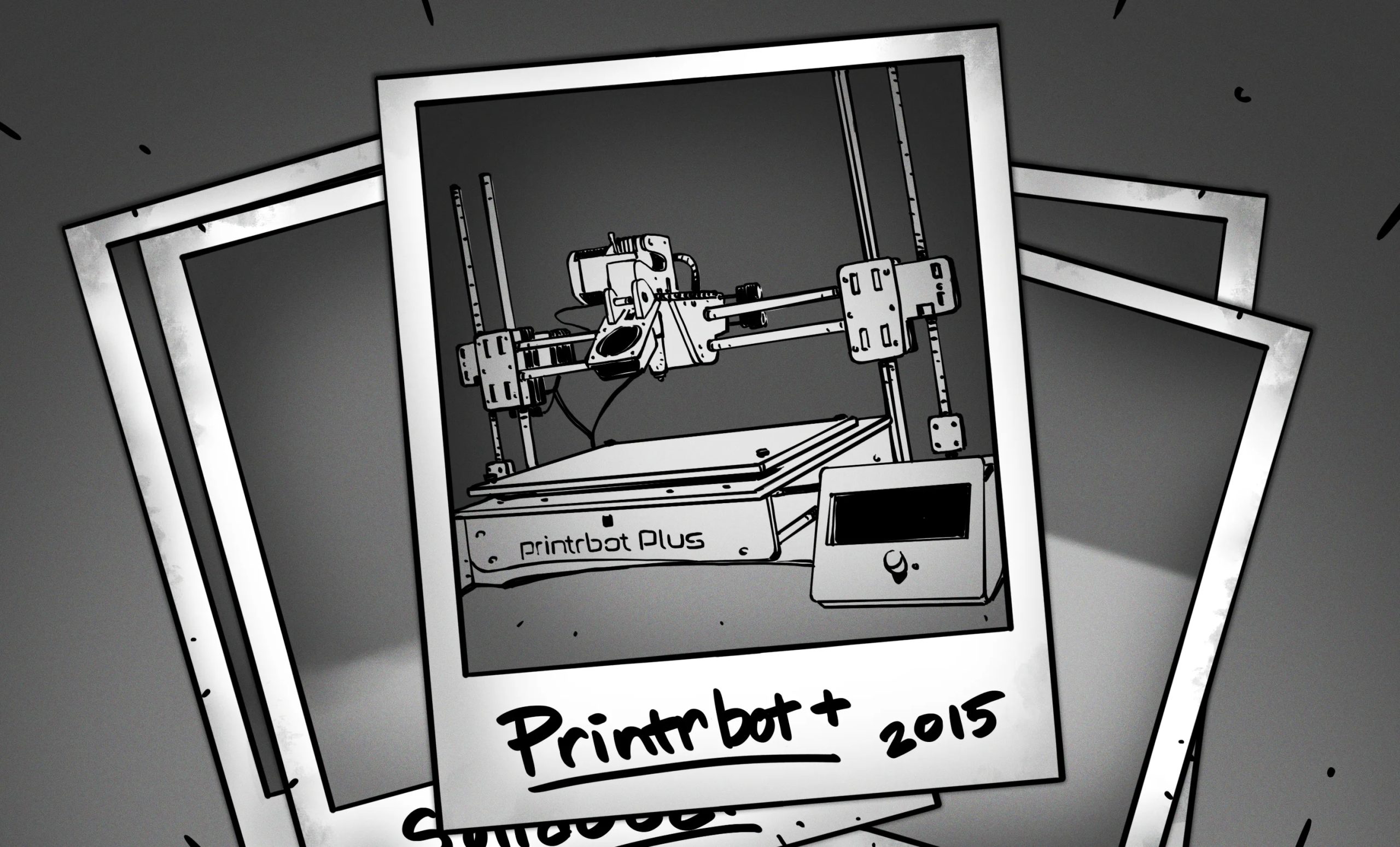
I had a Printrbot Plus built from a kit, and that experience says a lot about the period. It was not a toaster. It was not even quite a drill press. It was more like buying a small CNC machine from a bright, optimistic friend who assumed you owned calipers, weren’t afraid of firmware, and could recognize when a machine was racking itself out of square. You can see some very old YouTube videos of my machine below.

Advertisement

The Printrbot was charming because it was so direct. There was very little mystery in it. It was made from wood! Even some of the gears were wooden. You could see the rods, belts, pulleys, endstops, and wiring. You could also see the compromises. The Printrbot used LM8UU linear bearings that were, in some cases, held in place with zip ties. This was not necessarily as terrible as it sounds; zip ties are a valid engineering material if your tolerance stack and expectations are sufficiently charitable. But the bearings could be a little loose. The folk remedy was equally period-correct: jam a bit of 3 mm filament in there as a wedge to keep the bearing from wiggling.

That little trick captures the mood of the time. The printer came from a factory, or at least from a company, but it still expected you to meet it halfway. It was full of these tiny bits of tribal knowledge. Blue tape on glass. Hairspray. Kapton. ABS juice. Tighten the belts, but not too much. Level the bed with a piece of paper, unless you had a feeler gauge, unless the bed was warped, in which case all bets were off. If the extruder skipped, maybe the nozzle was clogged, or the filament was too fat, or the hot end was too cold, or the hobbed gear was packed with dust, or the phase of the moon was affecting your controller board. Ok, maybe not the last one.

Advertisement

Solidoodle

Solidoodle was another emblem of that period. Founded in 2011 by [Sam Cervantes], the company pushed hard on affordability, with early machines such as the Solidoodle 2 attracting attention partly because they promised a usable enclosed printer at a price that seemed startling at the time. Wired covered the Solidoodle in 2012 as an assembled $499 machine, which was exactly the sort of price that made people start thinking desktop 3D printing might jump from hackerspaces to ordinary homes.

The Solidoodle story also shows the danger of that moment. The market wanted cheap, reliable, attractive, assembled, easy-to-use machines. The technology could supply maybe three of those at once. Companies were trying to scale production, support beginners, improve hardware, and hit aggressive prices while the entire field was still learning what “reliable” even meant for a low-cost filament printer. Solidoodle eventually suspended operations in 2016, a fate that befell more than one early desktop 3D printing company.

Part of Solidoodle’s problem was that they were too invested in the original RepRap idea. I almost bought a Solidoodle because I was fearful of trying to put a kit together with so many mechanical parts. Why didn’t I? Because RepRap lead times were enormous. At least part of the problem was that they were using Solidoodle printers to produce parts for Solidoodle printers.

Advertisement

Say you have ten printers. You get orders for 100. Great, right? But getting parts for those 100 printers done on your ten printers will take a long time. Of course, you could take the first ten to help, but now you can only ship 90 printers. If you only had 100 orders, you’d be fine. But in the printer-starved 2010s, a cheap printer like Solidoodle or Printrbot would get orders faster than they could fill them, and had to decide if they’d fill orders faster or try to make do with their existing printer farms. There really isn’t a right answer to that question. We heard that [Brook], for example, expected to sell 50 printers through Kickstarter. They wound up with a backlog of over 1,000 printers. Within a year they had $2 million in sales and it went up from there. Until, of course, it didn’t.

MakerBot

MakerBot deserves mention here, too, although it occupies a slightly different lane. It started in the open-source maker world and became the company most associated with the dream of consumer 3D printing. For a while, it seemed like MakerBot might become the Apple II of 3D printers. Instead, it became a cautionary tale about trying to turn a hacker tool into a mass-market appliance too quickly. The machines got slicker, the company moved away from its open-source roots, and the consumer revolution failed to arrive on schedule. By 2016, even mainstream coverage was asking what happened to the 3D printing revolution that had been promised.

But failure is too simple a word. The Kickstarter-era machines did not fail in the way that, say, a fad diet fails. They moved the ball down the field. They trained a generation of users. They revealed what mattered: rigid frames, better motion systems, predictable extrusion, heated beds that stayed flat, slicers that didn’t require a sacrificial offering, and firmware that could recover from ordinary user behavior. They also created demand. People who bought a Printrbot or a Solidoodle might have cursed it, modified it, and eventually replaced it, but they knew what they wanted next.

And what they wanted next was cheaper and better. That leads to the next wave: the low-cost commodity printers. The Monoprice Select Mini was one of the machines that made people do a double-take (see the video below). It was small, inexpensive, and not especially glamorous, but it was also a complete 3D printer at a price (around $200) that, up to that point, had seemed impossible. The Anet A8 represented another branch of the same tree: a very cheap kit printer, descended in spirit from RepRap machines, that put a large-ish build volume within reach of people willing to accept risk, tinkering, and sometimes questionable electrical design.

Advertisement

The End?

These machines were not the end state either. The cheap printers democratized access, but many still required an operator rather than a mere owner. The Anet A8 in particular became infamous not just for its low price but for the upgrades people considered mandatory: better firmware settings, frame braces, MOSFET boards, power supply caution, and general fire-safety paranoia. Still, it mattered. A rough kit at $150 or $200 changes a market. It lets students, hackers, model builders, repair-minded homeowners, and the merely curious take a chance. My A8 is unrecognizable today with an aluminum frame and a 32-bit controller board, a proper 24V power supply, a custom hot end mount, and other enhancements.

You can see my original A8 (and a peek at the Printrbot in the background) in the video below.

Advertisement

A few years later, it looked like this video.

The real consumer-ready printers came later, after years of iteration. Auto bed leveling became common. Filament paths improved. Machines got stiffer. Slicers became far better. PEI spring steel sheets replaced a lot of glass-and-hairspray rituals. Direct drive and better Bowden setups reduced extrusion drama. Enclosed CoreXY machines brought speed without quite so much ringing and finagling. Companies learned that the printer had to be a system: hardware, firmware, slicer profiles, materials, documentation, and support.

Right, Yet Wrong

Looking back, the funny thing is that the early hype was both wrong and right. Desktop 3D printers did not become like inkjet printers, and they certainly did not become like microwave ovens. Most people do not need to manufacture a plastic bracket before breakfast. Most people do not want to think about layer adhesion, nozzle wear, or whether that weird clicking noise is the extruder eating the filament.

Advertisement

I lived through the time when the hacker dream was that every home would have a computer. Most of us didn’t see what would really happen. Every person has at least one computer; every home has dozens. But we were on the right track; most of us just didn’t see what would drive it. But I never really thought 3D printers would become as common as personal computers.

I did think it might become like a drill press. Not everyone has a drill press. In fact, most people probably do not. But no one is amazed to learn that you have one. It is a normal thing for a certain kind of person to own. If you fix things, build things, make brackets, or restore equipment, a drill press is not exotic. It is just one of the tools that may live in the shop.

That is where 3D printing has largely landed. Not universal, but ordinary. A decade ago, saying you had a 3D printer was a conversation starter. People wanted to see it move. They wanted to know if you could print a wrench, a phone case, a toy, or, inevitably, another printer. Today, in technical circles, saying you have a 3D printer is more like saying you have a bench vise. The interesting question is not whether you have one, but what you use it for.

That normalization is the real legacy of the awkward Kickstarter era. Those machines were crude, but they were legible. They let us see the process. They forced us to learn what mattered. They converted 3D printing from an industrial service into a shop skill. A Printrbot with zip-tied LM8UU bearings and bits of filament jammed in as shims was not a consumer appliance. It was a bridge.

Advertisement

And like many bridges, it was not the destination. It was the thing that got us there. Of course, things continue to move. Maybe one day we will look back on the current generation of printers and wonder how we ever used them. But, like the personal computer, we probably can’t imagine what is going to drive the adoption of those new machines.

Source link

Advertisement
Continue Reading

Trending

Copyright © 2025