Connect with us
DAPA Banner
DAPA Coin
DAPA
COIN PAYMENT ASSET
PRIVACY · BLOCKDAG · HOMOMORPHIC ENCRYPTION · RUST
ElGamal Encrypted MINE DAPA
🚫 GENESIS SOLD OUT
DAPAPAY COMING

NewsBeat

Supporting women in early labour is important for safe maternity care

Published

on

Supporting women in early labour is important for safe maternity care

The Nottingham University Hospitals NHS Trust report has identified serious failings in care at one of England’s largest maternity services, with lessons for maternity units nationally. Among its findings was a repeated problem at the very start of labour: women and families struggled to access timely assessment and felt dismissed during telephone triage.

In several cases, women were discouraged from attending hospital when they believed labour had started, only to arrive later in established or advanced labour. In some cases, poor care during this period had serious consequences.

Across hospital-based maternity services, attention and resources tend to focus on women in more advanced labour, and those requiring induction of labour or caesarean section. This can mean services miss the chance to identify problems, offer reassurance and build trust at the very start of labour.

Listening to women and providing supportive care at the start of labour sets a woman up for a positive birth experience. Instead, research consistently shows that women report feeling unsupported and discouraged from coming to hospital in early labour.

Advertisement

Right at the start of labour, there is often a mismatch between the needs and expectations of women and the expectations and priorities of maternity services. Many women have long been told that hospital is the safest place to give birth. It is therefore unsurprising that they expect to be welcomed to the maternity unit where they are booked to give birth when labour starts.

The drivers of decision-making on the maternity services side are more complex. They include beliefs about early labour care, national guidance, unsuitable environments and workforce pressures.

Early labour

There is a widespread belief in many maternity systems that while women should give birth in hospital, they should not be admitted until they are in established labour.

Advertisement

This can result in midwives gatekeeping: discouraging or refusing admission in early labour. Women report receiving inconsistent advice, feeling unwelcome and dismissed and having to negotiate permission for admission.

This belief is influenced by international, national and local guidance. NICE guidance states that if a woman seeks advice or attends a midwifery-led unit or obstetric unit with painful contractions but is not in established labour, she should be encouraged “to remain at or return home”, unless doing so could mean she gives birth without a midwife present or becomes distressed.

The same guidance also says early labour assessment should include listening to the woman’s story, asking about her wishes, expectations and concerns, asking about the baby’s movements, offering support and agreeing a plan of care. The problem arises when “return home” becomes the default response, rather than the outcome of careful assessment and discussion.

A practical problem is that many maternity units are not designed or staffed to provide sustained early labour care. Historically, women in early labour were more likely to have access to antenatal ward beds or early labour areas, where they could receive midwifery support outside the labour ward.

Advertisement

As maternity care has shifted towards shorter stays, outpatient monitoring and day-case assessment, many services now have fewer options for supporting women before established labour.

The number of maternity beds in England fell by around 52% between 1987-88 and 2019-20, mainly because women spend less time in hospital before and after birth. Antenatal beds were removed or repurposed to streamline maternity processes, but this also reduced care options.

The result is that many maternity units now lack a suitable environment to care for women in early labour. When there is nowhere appropriate for women to be supported, they are more likely to be encouraged to go home.

Workforce pressures

At the same time, workload and the complexity of women’s care needs have increased. There has been a rise in caesarean birth rates in England, with NHS maternity statistics showing that 45% of deliveries in NHS hospitals in England in 2024-25 were by caesarean section.

Advertisement

Induction of labour has also become more common. These changes increase care requirements for women and babies, particularly on labour wards. Staffing models have often struggled to keep pace with workload and the need for safe, personalised care.

Organisational demands exert significant pressure on midwives to keep women out of hospital and to make decisions based on bed availability and staffing rather than on the care needs of mother and baby.

Midwives have described not admitting women in early labour because of staff and bed shortages. Some have even described hiding women on labour wards because they knew they needed care, while trying to avoid disapproval from senior staff.

The result is a service that can fail to support women at a time when they and their birth partners feel most vulnerable. It is time for a rethink.

Advertisement

Early labour care must be organised around women’s needs and safety, rather than institutional pressures alone. That means properly staffed assessment, clear return plans, dedicated early labour spaces where possible, and workforce models that include time for assessment, reassurance and support.

Research from Denmark, Sweden and Switzerland suggests that early labour care works best when it is accessible, individualised and organised around women’s needs rather than simply her stage of labour. In the Danish study, women had access to a dedicated early labour unit and staff received training to emphasise the importance of early labour care. The wider findings highlighted the value of clear plans, emotional support, continuity and flexible care. This change was brought about in one of Denmark’s busiest units (6,500 births), and is a lesson on how UK maternity units could work with women to improve care.

The Nottingham report shows what can happen when women’s concerns are minimised at the very start of labour. Getting that first contact right will not solve every problem in maternity care, but it is a practical place to begin.

Women need to know that if they call because they are worried, in pain or unsure, someone will listen properly. Early labour may be the beginning of birth, but it should never be the point at which care is weakest.


Advertisement

Source link

Continue Reading
Click to comment

You must be logged in to post a comment Login

Leave a Reply

NewsBeat

Why hot weather can leave you feeling stressed and anxious

Published

on

Why hot weather can leave you feeling stressed and anxious

AS another spell of hot weather arrives, many of us are looking forward to longer evenings and spending time outdoors with barbecues and paddling pools!

But while warmer days can bring enjoyment, there is growing evidence that rising temperatures can also affect our wellbeing in unexpected ways.

Heat can make us more irritable, disrupt our sleep and increase feelings of stress and anxiety.

At the same time, the wider world often feels increasingly unsettled. News reports of conflicts overseas, economic uncertainty and the effects of climate change can leave many people feeling overwhelmed.

Advertisement

For some York residents, these pressures can combine to create a sense that life is becoming harder to navigate.

At Citizens Advice York, we see every day how global events often translate into local challenges.

When international tensions affect energy markets, household bills rise. When supply chains are disrupted, the cost of everyday essentials increases. When uncertainty dominates the headlines, people naturally worry about what the future might hold for themselves and their families.

These concerns are entirely understandable. Yet they can also take a toll on our mental wellbeing, particularly when they are combined with personal financial pressures, caring responsibilities or health concerns.

Advertisement

We know that many people are feeling the strain. Some are anxious about making ends meet over the summer holidays, especially when schools close and free school meals are no longer an option.

Others worry about paying for cooling their homes during heatwaves, while still keeping energy costs under control. We are all becoming aware that UK houses were mostly not built to deal with extreme heat. Older people and people with babies and small children may be concerned about staying safe during periods of extreme heat. Parents may be juggling childcare, rising food costs and work commitments.

Sometimes it isn’t one big problem that brings someone to Citizens Advice York. It’s several smaller worries that gradually build up until they begin to feel unmanageable.

Stress often affects more than our emotions. It can make it harder to think clearly, make decisions or know where to turn for help. People may delay opening letters, avoid answering phone calls or put off dealing with financial or family issues because everything feels too overwhelming.

Advertisement

Keeping cool is one way to cope with the hot weather. Image: Pixabay (Image: CCN)

That is where talking to someone can make a real difference.

Citizens Advice York provides free, confidential and independent advice on a wide range of issues, including debt, benefits, housing, employment, consumer problems and energy costs. While we are not a mental health service, reducing practical worries can often help reduce emotional stress as well.

Many people tell us they feel better simply after having a conversation with one of our advisers. Having someone listen without judgement, explain your options clearly and help you take the next step can restore a sense of control when life feels uncertain.

If you’re worried about paying your bills, we can help you understand your options before problems become crises. If you’re struggling with debt, we can help you create a realistic plan and negotiate with creditors where appropriate. If your income has changed, we can check whether you’re receiving all the financial support you’re entitled to.

Advertisement

We also work closely with other organisations across York and can help people find specialist support where needed, including services that focus on mental health and emotional wellbeing.

It’s important to remember that stress is a normal response to difficult circumstances. None of us are immune to worrying when the news feels relentless or when our own finances become stretched.

There are also small steps we can all take to look after ourselves during periods of hot weather. Staying hydrated, taking breaks from continuous news coverage, checking in with neighbours who may be vulnerable, telling trusted friends and family how you are feeling and making time for rest can all make a positive difference.

Even a short conversation with a friend, family member or trusted organisation can help prevent worries from growing.

Advertisement

York has always been a city with a strong sense of community. Throughout recent years, we’ve seen neighbours supporting neighbours through floods, the pandemic and the cost-of-living crisis. That same community spirit remains one of our greatest strengths as we face new challenges.

The issues affecting the world may sometimes feel beyond our control. But seeking advice, asking for help and supporting one another are things we can all do.

If rising temperatures, rising costs or rising worries are affecting you, you don’t have to face them alone.

At Citizens Advice York, we’re here to help people find practical solutions, understand their rights and regain confidence during difficult times. Sometimes the first step is simply having a conversation.

Advertisement

This summer, if you or someone you know is feeling the pressure, please remember that help is available. Reaching out is not a sign of weakness, it is often the beginning of finding a way forward.

Citizens Advice York is a small independent charity providing support and advice to Yorkresidents on all of the topics mentioned here!

Whilst City of York Council remain consistent and generous funders, we still have to raise £30,000 to £40,000 each and every year (and sometimes more!) to cover the full cost of this important service. We could not operate without the generosity of donations to fill this gap. We are incredibly grateful of support, especially when everyone is feeling the effects of this current cost of living crisis.

We know that times are hard, but if you are able to help please donate so we can keep on helping others. You can make a one off donation or become a “Friend of Citizens Advice York” and make a monthly subscription. You will receive a quarterly newsletter and an invitation to our AGM and annual fundraising event.

Advertisement

More at: https://www.citizensadviceyork.org.uk/donate/

Or, for details of how to become a Friend of Citizens Advice York, please email admin.team@cayork.org or call 01904 623648.

Source link

Advertisement
Continue Reading

NewsBeat

Patient tests negative for Ebola at Glasgow hospital

Published

on

Manchester Evening News

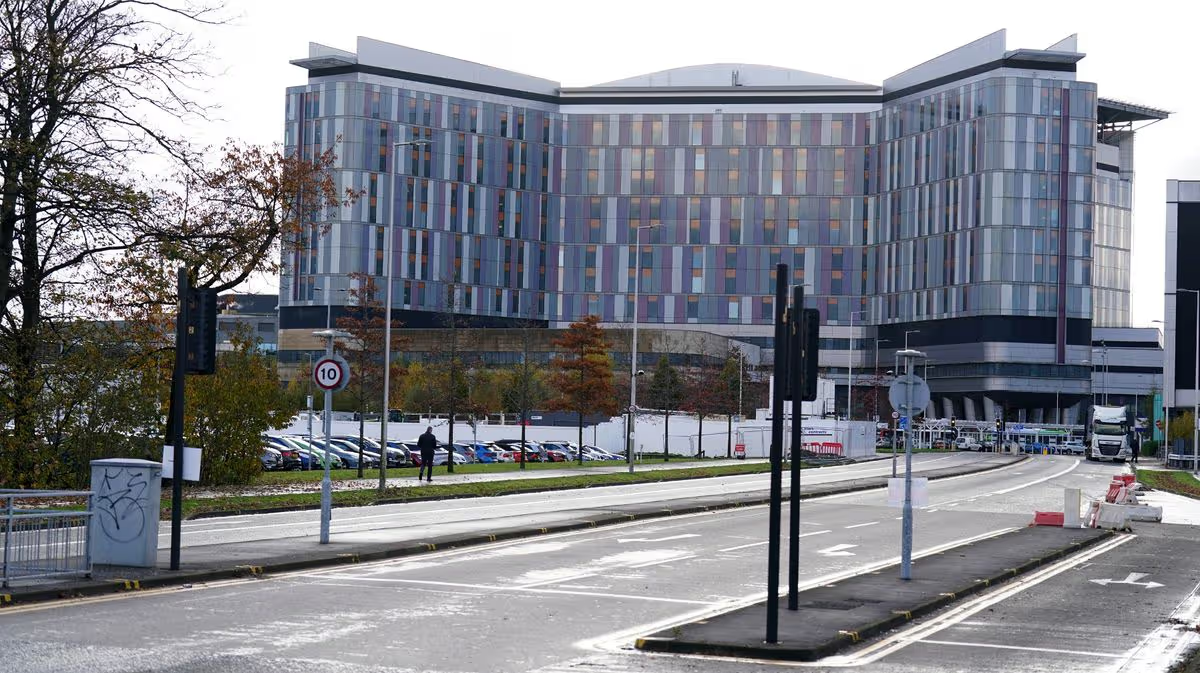
It is understood the patient was admitted to the Queen Elizabeth University Hospital in the early hours of Tuesday

A patient who was tested for the suspected Ebola virus at a Glasgow hospital has tested negative.

It is understood the patient was admitted to the Queen Elizabeth University Hospital in the early hours of Tuesday.

Advertisement

Public Health Scotland (PHS) said it was aware that an individual in Scotland was tested for Ebola as a precautionary measure.

Click here to get the biggest stories straight to your inbox in our Daily Newsletter

The test result has now been received and is negative.

A PHS spokesperson said there are “no confirmed cases of Ebola” in Scotland right now.

Advertisement

It continued: “Public Health Scotland is working closely with UKHSA to assess routes by which travellers may enter the UK from affected countries.

“The risk from people arriving in the UK from affected areas is low and the NHS has safe procedures in place for detecting and managing any such cases.

“PHS and NHS boards across Scotland have well-established protocols for assessing and testing travellers arriving in the UK from areas affected by Ebola where necessary.

“Where required, contact tracing will occur and contacts may undergo clinical assessment and precautionary testing.”

Advertisement

There have been almost 700 confirmed cases of bundibugyo Ebola virus, the majority of which are in the Democratic Republic of Congo

Some 138 people have died, including two in neighbouring Uganda.

If confirmed, it would have been the first case in the UK since the outbreak in the DRC was declared a public health emergency of international concern by the World Health Organisation (WHO).

The UK has committed up to £21 million to support the local response to Ebola in DRC, helping to protect frontline workers and vulnerable communities.

Advertisement

Officials have stressed that diseases “are not restricted by borders” and it is “vital” the UK works with international partners to protect global health.

The experts from the UK Public Health Rapid Support Team include seven specialists from the UK Health Security Agency (UKHSA) and the London School of Hygiene & Tropical Medicine.

Four are to be based in the eastern DRC to support World Health Organisation (WHO) field operations, while one will join the WHO country office in the capital Kinshasa.

An epidemiologist will also be sent to the Republic of Congo to support the wider response in the region.

Advertisement

Dr Edmund Newman, director of the UK Public Health Rapid Support Team at UKHSA, said: “This deployment will help strengthen the existing response to the Ebola outbreak in the DRC and across the region, with experts in epidemiology, risk communications and community engagement, infection prevention and control and data modelling now on the ground to support.

“We know infectious diseases are not restricted by borders, which is why it’s vital we continue to work collaboratively with the World Health Organisation and other international partners, as well as national and local response organisations, to protect global health security.”

A UK Public Health Rapid Support Team was developed during the West Africa Ebola outbreak in 2014/15.

Source link

Advertisement
Continue Reading

NewsBeat

Erling Haaland gives bleak take on Norway’s chances against Brazil | Football

Published

on

Erling Haaland gives bleak take on Norway's chances against Brazil | Football

Close Overlay

In The Mixer’s World Cup special

Everything you need to know about the World Cup – England updates, the games to watch and stories you missed – in five minutes, at 1pm, every day.

Source link

Advertisement
Continue Reading

NewsBeat

Patient tests negative after Ebola alert at Glasgow hospital

Published

on

A woman in a pink bikini lies on a deck chair covered in pink blankets, reads a magazine. there are pink towels, a tote bag and a radio next to her.

Public Health Scotland (PHS) said it was aware that an individual in Scotland was tested for Ebola as a “precautionary measure”.

A spokesperson added: “The test result has now been received and is negative.”

PHS said that, together with other NHS health organisations, it had “well established protocols for assessing and testing travellers arriving in the UK from areas affected by Ebola”.

These include contact tracing, clinical assessment and precautionary testing.

Advertisement

PHS confirmed the UKHSA Returning Workers Scheme (RWS), external, which aims to protect and monitor the health of those who may travel from the UK to affected areas for their work, had been activated after it was made aware of the suspected case.

The spokesperson said organisations deploying workers to affected areas where they may be exposed to Ebola through their work should register them with the scheme.

NHS Greater Glasgow and Clyde earlier said there were no ward closures at the QEUH and it confirmed patients and visitors were not being advised to stay away.

Unlike flu or Covid, Ebola is not an airborne virus so is not spread simply by being near an infected person.

Advertisement

Source link

Continue Reading

NewsBeat

UK drivers given points on licence for easy-to-miss issue

Published

on

UK drivers given points on licence for easy-to-miss issue

According to figures obtained by the RAC through a Freedom of Information request to the Vehicle Licensing Agency (DVLA), 10,054 motorists across the UK were penalised last year for driving with defective vehicles.

Of these cases, 6,670 related to tyre issues.

Jack Halstead, RAC’s Servicing and Repair Mechanic of the Year, said: “Far too many vehicles are unfit for the roads, posing a danger not only to the driver, but to other road users as well.

Advertisement

“Having bald tyres drastically reduces grip, greatly increases stopping distances, and raises the risk of blowouts.”

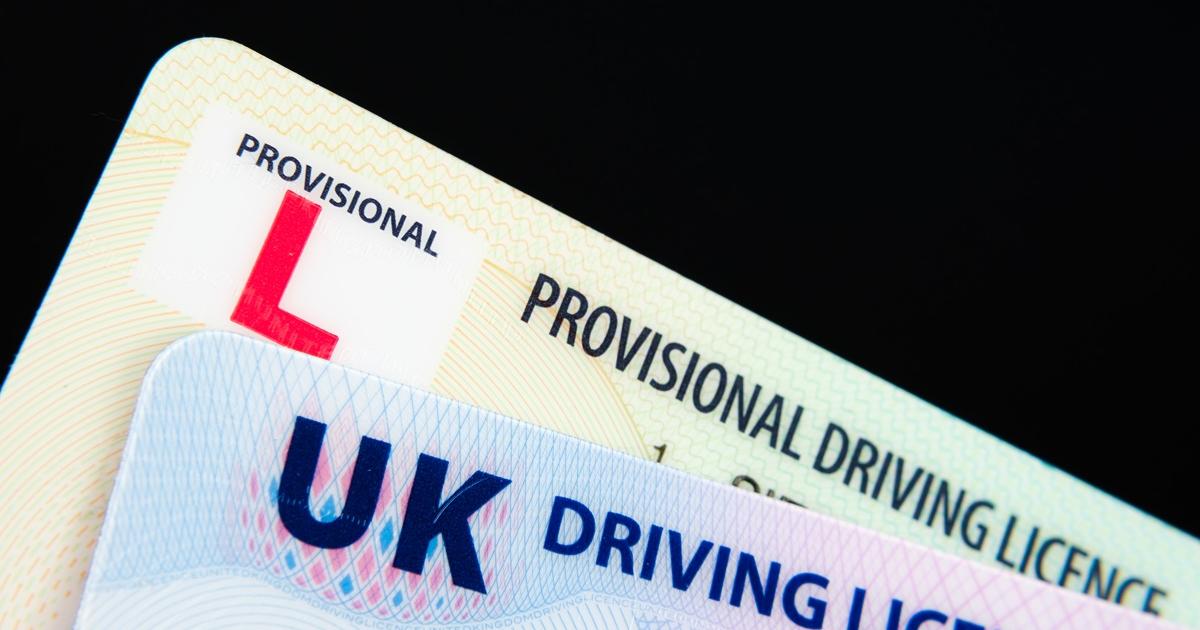
Defective steering or brakes were behind 3,384 of the incidents, with each offence carrying a penalty of three points on the driver’s licence.

Tyre-related offences can also result in fines of up to £2,500 per tyre.

Mr Halstead said: “But whether it’s tyres, brakes, steering or something else, every mechanical component in a vehicle plays a critical role.

Advertisement

“And this is likely to be just the tip of the iceberg because, with fewer police traffic units, it’s likely more offenders are evading officers and putting themselves and others at risk.”

The report suggests there may be ‘many more unroadworthy vehicles’ on UK roads, noting that around 10 million vehicles fail their MOTs each year.

The RAC highlighted a decline in the number of traffic police, with 1,088 more officers patrolling the roads in 2015 (5,237) than in 2025 (4,149).

Mr Halstead said: “No doubt there will be some who have accidentally let their car maintenance slip, but this can be easily avoided by using free apps like myRAC.

Advertisement

“They will send you reminders to check key components like tyres as well as flagging important dates like your MOT, service, tax and insurance renewal.”

The RAC advises that tyres are considered defective if they fail to meet the legal minimum tread depth of 1.6mm across the central three-quarters of the tyre and around the entire circumference.

Tyres must also be free from any forms of damage, such as cuts or bulges, that could ‘compromise their structural integrity’ and must be appropriate for the vehicle in terms of type, size, and speed and load rating.

Mr Halstead also encouraged drivers to take advantage of mobile services: “We know life gets busy so that’s why we’re helping drivers to keep on top of car admin with our team of nationwide mobile mechanics that come to you.

Advertisement

“They can carry out repairs and service your vehicle on your driveway or at work, saving you the slog of getting it to a garage.

“It’s the better way to look after your car.”

Source link

Advertisement
Continue Reading

NewsBeat

Bury man and teen arrested after drugs and cash seized

Published

on

Bury man and teen arrested after drugs and cash seized

Preston Task Force officers responded to reports of a suspicious vehicle driving erratically on the motorway.

The vehicle, a Lexus, was located on Harrington Road in Broadgate, Preston.

Officers searched the driver, passenger, and the vehicle and found approximately £28,000 in cash in a supermarket carrier bag and a quantity of suspected class A drugs.

Advertisement

A 39-year-old man from Bury and a 17-year-old passenger, also from Bury, were arrested on suspicion of money laundering and possession with intent to supply class A drugs.

A second vehicle believed to be connected to the incident was stopped on the motorway.

Three males, aged 17, 27, and 28, all from Bury, were also arrested.

All five have been interviewed and released on bail.

Advertisement

A police spokesperson said: “We weren’t just policing the football on Saturday, as five individuals found out after scoring an own goal.

“Preston Task Force attended reports of a suspicious vehicle driving erratically on the motorway after it had come into Preston. Officers located the vehicle, a Lexus, on Harrington Road in Broadgate.

“The driver, passenger and car were searched under section 23 of the misuse of drugs act.

“Officers found approximately £28,000 of cash in the car in a supermarket carrier bag.

Advertisement

“Also in the vehicle was a quantity of suspected Class A drugs and the driver also tested positive for cocaine.


“The driver, a 39-year-old man from Bury, Greater Manchester and a 17-year-old male, again from Bury was arrested on suspicion of money laundering and possession with Intent to supply class A drugs. The driver was also arrested on suspicion of drug driving.

“A further vehicle suspected to be linked to the incident was stopped on the motorway. The three males aged 17, 27 and 28, again all from Bury in Greater Manchester were arrested.

“All have been interviewed and properties searched before being released on bail whilst our investigation continues.

Advertisement

“Know something we don’t about drug dealing? Let us know PrestonTaskForce@lancashire.police.uk.”

Source link

Advertisement
Continue Reading

NewsBeat

Boy, 11, dies from rabies after bat landed on his face while he slept but left no visible bite as doctors issue warning

Published

on

An 11-year-old boy has died after he was exposed through skin-to-skin contact to a bat carrying rabies in Canada (stock)

Advertisement

An 11-year-old has died after contracting rabies from a bat, as health experts warned about how exposure to the rare virus can be missed.

The fatal encounter happened in Northern Ontario, Canada, where the boy had been staying during the summer of 2024.

Advertisement

The child was peacefully sleeping before he suddenly awoke to find a bat perched directly on his face, covering his nose and mouth, according to the case report.

Without thinking, he swatted the animal away. His father captured it and released it back outside.

At the time, the family claimed they had no reason to believe there had been a bite, a scratch or any cause for concern.

The boy appeared completely normal, uninjured with no blood, no puncture marks and no visible trauma – so they did not seek urgent medical care. 

Advertisement

Roughly 19 days later, the child began to feel unwell, developing symptoms such as persistent vomiting. 

What started as vague discomfort rapidly escalated into serious neurological illness, including bouts of tingling and numbness on one side of his face. 

An 11-year-old boy has died after he was exposed through skin-to-skin contact to a bat carrying rabies in Canada (stock)

Advertisement

Due to the family’s insistence on no bite history, doctors initially explored more common causes but as his condition rapidly deteriorated, rabies was eventually diagnosed.

The delay in diagnosis meant the disease had already taken hold of his nervous system.

He was admitted to hospital and placed under intensive care but as with all symptomatic rabies cases, treatment could not halt the progression of the virus.

Despite more than two weeks of aggressive supportive care, his condition continued to worsen and life support was ultimately withdrawn.

Advertisement

The child died, surrounded by his family. It marked Ontario’s first locally acquired human rabies infection since 1967.

The boy’s relatives agreed to publicize the case in the hope that it prevents another tragedy. 

Experts involved in the case say the most alarming aspect is how easily exposure to the virus can be missed.

Bats can carry rabies and their bites are often so microscopic that they leave no visible trace.

Advertisement
The fatal incident happened in Northern Ontario. At the time, the child's family suspected nothing ominous and continued with everyday life (stock)

The fatal incident happened in Northern Ontario. At the time, the child’s family suspected nothing ominous and continued with everyday life (stock)

‘It was important to us and to the family to take the opportunity to find learning experiences and lessons that we could take from his case to try and help spread awareness and understanding of rabies infection and risks,’ said Dr Brian Hummel, a pediatric infectious disease specialist involved in the case. 

He stressed that the absence of a wound doesn’t mean there was no exposure and warned that even brief skin contact, particularly on the face, should trigger immediate medical assessment for post exposure rabies treatment.

The case, published in the Canadian Medical Association’s Journal, is only one of a handful of instances of human rabies ever recorded in Canada.

Advertisement

Bats are the leading cause of human rabies deaths in the United States despite under 1 percent of the wild species actually carrying the virus, according to the Centers for Disease Control.

Advertisement

Source link

Advertisement
Continue Reading

NewsBeat

Beloved woman, 31, identified as alligator attack victim killed after predator ripped off both her arms… as nightmarish new details of her final moments are revealed

Published

on

The 31-year-old woman who died during a horrific alligator attack in central Florida on Sunday has been identified as Orlando native Brittany Clark

A woman who died during a horrific alligator attack in central Florida on Sunday has been identified, with her terrifying final moments also detailed in a harrowing report.

Brittany Clark, 31, had been enjoying a hike in the picturesque Little Big Econ State Forest with her boyfriend and friend when they took a dip in a river just after 1.30pm. 

Chilling 911 audio from the scene previously revealed how an alligator stealthily approached the trio before viciously attacking Clark by tearing off both of her arms. 

Now, a medical examiner’s report obtained by the Daily Mail has given more details about Clark’s final moments, including how her boyfriend heroically fought the gator even as it dragged them both underwater into a ‘death roll’.  

Advertisement

A ‘death roll’ is a technique alligators use to subdue prey by violently twisting onto their backs before attempting to pull the victim underwater to drown them.  

The report describes how Chance Allison risked his life and eventually managed to pry his girlfriend from the gator’s jaws – but it was too late to save her. 

It also details how officials tracked down the 12-foot apex predator in the aftermath and ‘put it down’, before decapitating it and keeping its head as ‘evidence’.  

The horror unfolded when Clark, Allison, and an unnamed friend were swimming in ‘shoulder-deep water’ in the Econlockhatchee River close to a popular hiking trail. 

Advertisement

The 31-year-old woman who died during a horrific alligator attack in central Florida on Sunday has been identified as Orlando native Brittany Clark

Clark had been enjoying a hike in the picturesque Little Big Econ State Forest with her boyfriend and friend when they took a dip in a river just after 1.30pm

Clark had been enjoying a hike in the picturesque Little Big Econ State Forest with her boyfriend and friend when they took a dip in a river just after 1.30pm

‘While they were swimming an alligator grabbed (Clark) by her arm and began the “death roll”,’ the report reads. 

Advertisement

‘Her boyfriend Chance grabbed the alligator trying to get it to release her when it took them both underwater’. 

Allison managed to get the gator to release her arm ‘for a moment’ – but it seized its jaws on her other arm instead.

‘Chance attempted to bring them both to shore when the alligator finally let go and CPR was started on shore by her boyfriend, and 911 was called,’ the report states. 

The report did not state whether Allison grappled with the alligator before or after making the emergency call, but audio of the call suggests he dialed 911 while still fighting the predator.  

Advertisement

Screaming and crying could be heard in the harrowing recording, as Allison told call handlers he was ‘still trying to get her arms away from the alligator’s mouth’. 

Moments later, he told the operator that ‘both her arms, both her arms are off’, while her friend told them that one arm was ‘hanging by a thread.’ 

When the dispatcher asked where the other arm was, the woman replied: ‘Gone’. 

Clark's boyfriend, Chance Allison, heroically tried to fight off the alligator, the report reveals

Clark’s boyfriend, Chance Allison, heroically tried to fight off the alligator, the report reveals

Advertisement
The report describes how Allison risked his life and eventually managed to pry his girlfriend from the gator's jaws - but it was too late to save her

The report describes how Allison risked his life and eventually managed to pry his girlfriend from the gator’s jaws – but it was too late to save her

Allison described the situation as ‘bad, real bad’ while urging responders to ‘please hurry… she’s losing a lot of…’ before his voice trailed off. 

The gator eventually ‘went away,’ Allison told the operator, before describing his girlfriend’s injuries as ‘horrible’.  

Allison said he had stepped in to help, and he dragged Clark out of the water with the help of her friend. 

Advertisement

‘We’re far off the trail, we’re off of a little launch area by the river… We need help now!’ he told the operator. 

‘You may see a helicopter. If you see it, just try and flag it down if you can,’ the operator responded.

Barr Street Trailhead, the popular hiking route where the horror unfolded, is now closed until further notice.

The vicious attack unfolded as the trio took a dip in the shallows of the Econlockhatchee River (pictured above) in Little Big Econ State Forest, 20 miles north-east of Orlando

The vicious attack unfolded as the trio took a dip in the shallows of the Econlockhatchee River (pictured above) in Little Big Econ State Forest, 20 miles north-east of Orlando

Advertisement

Clark’s Facebook page shows she was a big fan of the outdoors – pictured frequently on hikes and swimming in nature.  

The horrific incident marks the third alligator attack in central Florida over the last week.

Seven days before, a gator attack was reported at Rainbow River in Merriam County, and a child was injured in another incident in the same county on Saturday. 

Attacks on humans are rare in the US, according to the Florida Wildlife Commission, but alligators are more territorial during mating season, which lasts from April until the end of June.

Advertisement

Source link

Continue Reading

NewsBeat

UK patient undergoing tests for Ebola as disease outbreak declared ‘public health emergency’

Published

on

Manchester Evening News

The patient is thought to have been admitted on Tuesday morning (June 30)

A UK patient is in hospital and undergoing testing for a suspected case of the Ebola virus. A person at the Queen Elizabeth University Hospital in Glasgow is currently being tested for the disease.

Advertisement

It comes after the World Health Organisation declared the disease outbreak a ‘public health emergency of international concern.’ If the case is confirmed, it’s understood to be the first in the UK since the recent outbreak in the Democratic Republic of Congo.

The BBC reported that the patient was thought to have been admitted to the hospital on Tuesday morning (June 30). Public Health Scotland (PHS) said it was working closely with the UK Health Security Agency (UKHSA) to assess routes by which travellers may enter the UK from affected countries.

Click here to get the biggest stories straight to your inbox in our Daily Newsletter

A statement read: “There are currently no confirmed cases of Ebola in Scotland and the risk to the general public remains low.

Advertisement

“Public Health Scotland is working closely with UKHSA, to assess routes by which travellers may enter the UK from affected countries. The risk from people arriving in the UK from affected areas is low and the NHS has safe procedures in place for detecting and managing any such cases.

“PHS and NHS boards across Scotland have well established protocols for assessing and testing travellers arriving in the UK from areas affected by Ebola where necessary. Where required, contact tracing will occur and contacts may undergo clinical assessment and precautionary testing.

“The UKHSA Returning Workers Scheme (RWS) which aims to protect and monitor the health of those who may travel from the UK to affected areas for their work, has been activated. Organisations deploying workers to affected areas where they may be exposed to Ebola through their work, should register those workers with the scheme.”

There have been almost 700 confirmed cases of bundibugyo Ebola virus, the majority of which are in the Democratic Republic of Congo

Advertisement

Some 138 people have died, including two in neighbouring Uganda.

If confirmed it would be the first case in the UK since the outbreak in the DRC was declared a public health emergency of international concern by the World Health Organisation (WHO).

The UK has committed up to £21 million to support the local response to Ebola in DRC, helping to protect frontline workers and vulnerable communities.

Source link

Advertisement
Continue Reading

NewsBeat

Martinelli scores late to help Brazil beat Japan 2-1 at World Cup

Published

on

Martinelli scores late to help Brazil beat Japan 2-1 at World Cup

HOUSTON (AP) — With Brazil trailing for much of the game and with extra time looming, Gabriel Martinelli came through in a big, big way at the World Cup.

Martinelli entered the game as a second-half substitute and put an end to Japan’s near-upset on Monday, scoring the winning goal late in injury time to give five-time champion Brazil a 2-1 victory and a spot in the round of 16.

The result was a showcase of Brazil’s Italian connections. Martinelli holds dual citizenship in Italy and Brazil, and the man who made the decision to change the team’s makeup was Carlo Ancelotti, an Italian who is the first European to coach the South American country’s national team.

“Above all else we wanted to freshen up the field because Martinelli has a lot of intensity as a player,” Ancelotti said through a translator. “When he goes in the match he’s always on his top game.”

Advertisement

Brazil will next face either the Ivory Coast or Norway on Sunday in East Rutherford, New Jersey, in the round of 16.

“We can never be content with what we’re doing,” Ancelotti said. “We’re doing a good job. We are performing. But you can never be content because we want to play better. We want to play at the highest level.”

Casemiro had earlier equalized for Brazil on a header in the 56th minute off an assist from Gabriel Magalhães after just missing another chance two minutes earlier. The shot sailed just out of the reach of the outstretched hand of Japan goalkeeper Zion Suzuki and into the net.

Kaishu Sano stole a misplaced pass at midfield and took it down the field before a right-footed shot from above the half circle put Japan ahead in the 29th minute.

Advertisement

“There is not not making mistakes because nobody is perfect,” Ancelotti said. “But you have to overcome it and you have to push it forward. The team did a good job of that in the second half.”

Vinícius Júnior, who has scored four goals so far in this year’s tournament, had a chance to put Brazil on top in the 58th minute but his shot from the left box was deflected by Suzuki and went off the far post.

Casemiro left in the first minute of second-half stoppage time with what appeared to be a leg injury.

Brazil had two chances to even the score early in the second half before breaking through. On the first one, Suzuki blocked a header from Bruno Guimarães in the 52nd minute. Soon after, Casemiro’s header bounced off a defender’s head and Suzuki’s face. Suzuki finished with four saves.

Advertisement

Brazil great Neymar didn’t play Monday after making his first appearance for the team since 2023 in the last game against Scotland. He played only 14 minutes in that 3-0 win after missing the first two group matches at the World Cup with a right calf injury.

“I was seriously considering putting him on the pitch,” Ancelotti said. “In the end, we did not need him.”

Japan has never won a knockout match at the World Cup, going 0-4 in the round of 16 — including also taking the lead the last two times in 2018 and 2022 before losing.

The win was Brazil’s 12th in 15 games against Japan. The teams have also played to two draws while Japan got its first win in the series in a friendly in Tokyo in October.

Advertisement

“The gap between us is closing now,” Japan coach Hajime Moriyasu said through a translator. “Brazil is a top-tier team and we’re definitely approaching that level.”

Then he mentioned the loss in Qatar four years ago before adding: “We have to up our game.”

This was a matchup between two countries with deep ties, with Brazil being home to about 2.7 million Japanese descendants, which is the largest Japanese population outside of Japan.

Those ties extend to soccer where Brazil superstar Zico moved to Japan in 1991 to play for Kashima Antlers and help build Japan’s professional soccer network. He coached the Japan national team from 2002-06, leading the team to the World Cup in 2006.

Advertisement

That team lost to Brazil 4-1 in the only previous meeting between the teams at the World Cup.

Brazil won Group C after a draw with Morocco and victories over Haiti and Scotland. Monday’s victory came on the anniversary of their first World Cup championship in Sweden in 1958, when a 17-year-old Pele scored two goals in the final against the host country.

Japan reached the round of 32 as runner-up in Group F after a draws with the Netherlands and Sweden and a win over Tunisia. The loss snaps a 10-game unbeaten streak dating back to a 2-0 loss to the United States in September.

___

Advertisement

See more of AP’s World Cup coverage here

Source link

Advertisement
Continue Reading

Trending

Copyright © 2025