

Business
Comcast NBCU spinoff raises hope for M&A. There aren’t good options

Comcast logo on the wall of a building at Universal Studios in Orlando, Florida, July 18, 2019.
Roberto Machado Noa | Lightrocket | Getty Images
Analysts think Comcast is priming for deals. Comcast leadership says they’re wrong.
The company announced Monday it plans to separate its two primary businesses — cable broadband and the media units of NBCUniversal and Sky. It’s the second major structural change for the decades-old company in recent months, and it’s raising questions of potential future deals for either half of the company.
But on a call with investors to discuss the split, Comcast executives came ready with cold water:
“Absolutely not,” Comcast co-CEO Brian Roberts said Monday, when asked if investors should view the separation as a potential setup for future deals.
Roberts, son of founder Ralph Roberts and Comcast’s controlling shareholder, won’t be CEO of either company after the separation but will continue to be “actively involved” in the leadership of both companies, Comcast said.
“This is the right move to put each company in the strongest position to create value, fully monetize its assets, and aggressively pursue its own organic growth strategies,” Roberts said.
Co-CEO Mike Cavanagh echoed that denial: “On the NBCUniversal side and [with] Sky, definitely not.”
A reason Comcast is squashing deal speculation? There may not be many good ones left.
Splitting before M&A
Wall Street and industry onlookers have called for a split of Comcast for years, motivated by the rise of streaming and severe competition in the media industry.
While company leaders have discussed a separation at various points since at least 2019, executives have never seriously considered it until now, according to a person close to the situation who spoke anonymously due to the private nature of the discussions.
When Comcast decided to siphon off its cable TV networks into a separate publicly traded company less than two years ago — the spinoff that would ultimately become CNBC-parent Versant Media Group — the prospect of carving out NBCUniversal as a whole never came up, the person said.
Instead, the move to sever NBCUniversal and Sky from the Xfinity cable business came together rather quickly in recent months, the person said.
Wall Street just witnessed a large media deal following an announced spin, noted Mike Proulx, research director at Forrester. Before Warner Bros. Discovery launched a sale process that resulted in dueling bids from Netflix and Paramount Skydance, WBD said it planned to separate its assets into two companies.
“Comcast is following a playbook we have already seen. Warner Bros. Discovery split itself apart as it moved into a deal with Paramount. Now Comcast is doing the same with NBCUniversal. History matters here because Peacock increases NBCUniversal’s acquisition potential,” said Proulx.
Michael Angelakis (L), vice chairman and chief financial officer of Comcast Corp. and Brian Roberts, chairman and chief executive officer of Comcast Corp., attend the Allen & Company Sun Valley Conference on July 9, 2014 in Sun Valley, Idaho.
Scott Olson | Getty Images
It comes against the backdrop of widespread consolidation. Paramount Skydance itself is the product of a merger that closed just about a year ago. Soon after closing, it fought off streaming giant Netflix for the WBD assets.
Smaller deals have come to market too, as the media industry grapples with shifting consumption habits. Earlier this month Fox agreed to buy streaming platform company Roku for $22 billion. And broadcast station owners have been desperate to combine to gain scale.
With the exception of bidding on WBD, Comcast has stayed away from M&A and has focused on its own businesses.
“There’s no surprise that both the media and telecom landscapes have become increasingly competitive and that pace of change continues to accelerate. We simply don’t see these conditions changing anytime soon,” Cavanagh said on Monday’s call.
Cavanagh will be CEO of the media businesses post-spin, Comcast said.
“Our plan for NBCUniversal and Sky is to build and invest for growth. We have the ambition that’s big to pursue opportunities that keep us ahead of evolving consumer behavior and audience demands, and we have the freedom now to explore adjacent business where we have the right to play,” Cavanagh said.
Deal hurdles
The motivation behind splitting a company apart is often to open up more deal opportunities. Still, it’s not clear what deals the newly created company of NBCUniversal and Sky assets could explore without serious regulatory challenges.
For one, housing broadcast network NBC creates various obstacles. The company wouldn’t be able to merge with a company that has another national network, effectively taking Disney, the owner of ABC, and Paramount Skydance, owner of CBS off the table.
Even eliminating the broadcasters from the equation, a deal with Paramount Skydance — which has been on something of a shopping spree under new CEO David Ellison — would be a stretch following the completion of its deal with WBD.
Fox, the remaining major player in linear TV, has stayed away from traditional media after hiving off its entertainment assets years ago and likely doesn’t have the appetite for another deal after its Roku agreement.
With the WBD sale process Netflix showed it was open to doing deals — for the right assets.
But Netflix’s interest in WBD was in its film studio and streaming assets, casting aside WBD’s linear networks. Even with major sports properties like the NFL’s Sunday Ticket, the NBA and other top film content, it’s hard to imagine Netflix would make such a shift and get into linear TV via a hypothetical deal with NBCUniversal.
That leaves little else on the table when it comes to media deals, with the largest players all pretty much spoken for. Comcast didn’t specify Monday what it expects either company to be valued at post-spin, but between the Universal theme parks business, a substantial, albeit small, streamer and a respected content library, NBCUniversal would likely be too large for a smaller player to swallow.
On the cable side, it may be a similar scenario.
Cord keepers
A Comcast Xfinity work truck is seen on April 23, 2026 in Miami, Florida.
Joe Raedle | Getty Images
The remaining Comcast assets after the spin off — broadband, mobile and pay TV under the Xfinity brand — have gone from gangbusters growth to stagnation and often quarterly losses of broadband customers as competition has ramped up from wireless and satellite providers.
The market immediately rewarded the stock of Charter Communications, another cable giant in the midst of completing a different acquisition, on Monday after Comcast’s announcement.
Charter shares soared 10%, signaling investors could be favoring a possible Comcast and Charter merger, tying up the two largest U.S. cable companies.
Charter and Comcast have both invested heavily in their broadband networks and mobile businesses, even as competition has intensified. They are part of a joint venture in which Charter cable TV customers can use Comcast’s Xumo streaming devices.
They’ve also each aggressively changed pricing packages to go after and retain customers. But such moves have done little for either stock price.
There’s some historical precedent driving Wall Street’s anticipation of a potential deal. Comcast attempted to acquire Time Warner Cable in 2014. When Comcast dropped its bid amid regulatory opposition, Charter scooped up the asset — then the nation’s second-largest U.S. provider. The majority of modern-day Charter used to be Time Warner Cable.
Still, there’s reason for skepticism, according to MoffettNathanson analyst Craig Moffett. The Department of Justice had been prepared to block a Comcast-Time Warner Cable deal. Even if a hypothetical Comcast-Charter deal got federal approval, it would need state-by-state acceptance, which may not be easy in Democrat-controlled states such as Massachusetts, Illinois and Maryland, Moffett said in an interview.
“You’d have to go through a gauntlet of individual state public service commissions,” Moffett said. “There would likely be pretty staunch opposition in blue states that are traditionally opposed to mergers like this.”
There’s also the enormous debt load that would come with such a combination, according to the person close to the matter.
Charter is in the midst of closing its merger with Cox, which would leave it with a debt load of more than $100 billion after taking on Cox’s debt. Assuming Comcast shoulders much of the debt load post-spin in a move to alleviate NBCUniversal — a hallmark of the Versant spinoff was a low amount of debt on the new company — combining the two cable companies would create a hefty debt burden, the person said.
There are also strategic questions about a Charter-Comcast deal. In 2014, when Comcast tried to buy Time Warner Cable, one of the driving forces of that transaction was the ability to gain leverage over media programmers in TV carriage disputes by adding subscribers. More than a decade later, the cable TV business has become a far smaller component of both Charter and Comcast, diminishing the value of this potential synergy.
There are few broadband synergies by simply owning more customers, Moffett said. Cable businesses are local operations that are largely unaffected by adding scale, he said.
“Your cost structure in Chicago isn’t meaningfully affected if you own systems in North Carolina,” Moffett said.
To be sure, former Comcast chief financial officer and incoming CEO of the cable assets post-spin, Michael Angelakis, said Monday he believes the company has the network assets it needs to compete.
Future transactions
Rather than an immediate transaction, Comcast may be looking years ahead.
“It may not be imminent. But I think it probably sets the stage on the M&A front,” said Jonathan Miller, a media industry veteran, who currently serves as chief executive of Integrated Media, which specializes in digital media investments.
“This is literally done for the purpose of having more optionality around different opportunities,” Miller added.
Timing of a future deal may also come down to technicalities. Comcast estimated a one-year timeline to close the split. After that, standard U.S. tax regulation compels potential acquiring companies to wait even longer before acquiring a recently spun-off target. However, depending on details such as the kind of deal and timing, there are varying degrees to just how long a company has to wait, the person familiar said.
Disclosure: Versant Media Group is the parent company of CNBC.


Orvana acquires Evelina claims for $1.2M in Argentina
Business
Chipotle Stock Slips Again Today as Investors Question Whether Its Traffic Rebound Can Offset Rising Costs
Chipotle Mexican Grill shares fell again Monday, extending a difficult stretch for the burrito chain as investors continue to weigh whether a recent return to positive customer traffic is strong enough to offset mounting cost pressures squeezing the company’s margins.
Shares of the Newport Beach, California-based company were trading at $32.80 as of 12:19 p.m. EDT, down 55 cents, or 1.63%, on the day. The decline keeps the stock not far above its 52-week low of roughly $28.04, reached late last month, and well below the levels it traded at before a punishing 2025 that erased roughly 40% of the company’s market value from its 52-week high. The stock remains down about 14% so far in 2026 alone.
Chipotle’s struggles trace back to an unusually difficult stretch last year, when the company posted negative comparable restaurant sales for the first time in its history, a streak that ultimately ran for five consecutive quarters. Traffic declined, margins compressed, and two prominent institutional investors, Bill Ackman’s Pershing Square and Viking Global, exited their positions in the stock entirely during that period, contributing to the broader selloff that has weighed on shares ever since.
Signs of a turnaround emerged in the company’s first-quarter 2026 results. Chipotle reported revenue of $3.1 billion, up 7.4% year-over-year and ahead of analyst expectations, while comparable restaurant sales rose 0.5%, driven by a 0.6% increase in transactions, finally breaking the five-quarter streak of declining traffic. Chief Executive Scott Boatwright described the quarter as a meaningful step forward for the business.
“Tangible progress across operations, digital, menu innovation, people, and development,” Boatwright said.
Despite that improvement, the same quarterly report revealed continued pressure on Chipotle’s margins. Food, beverage and packaging costs rose to 29.6% of revenue from 29.2% a year earlier, while labor costs climbed to 26.1% from 25.0%. Operating margin for the quarter came in at 12.9%, a notable step down from the company’s peak margins of nearly 18% reached in 2024, before wage inflation, higher beef and freight costs, and softer average restaurant volumes began eating into profitability through 2025. Chipotle’s revenue has nonetheless grown steadily over time, climbing from $7.5 billion in 2021 to nearly $12 billion by 2025, even as the percentage of that revenue converted into operating profit has become harder to sustain.
On the company’s earnings call, Chief Financial Officer Adam Rymer addressed analyst questions about when margin pressure might ease, noting that the first half of the year was likely to remain the toughest stretch on a year-over-year basis as pricing gradually narrows the gap with inflation. Rymer pointed out that Chipotle’s pricing increase in the first quarter, at 0.9%, remained well below the mid-single-digit pace of inflation the company was experiencing, though he expressed confidence that gap would close as the year progressed. The company guided toward second-quarter comparable sales growth of roughly 1%, a modest step up from the first quarter’s half-percentage-point gain, while indicating that menu mix effects were expected to be roughly flat in the second quarter after dragging on results by about 1% in the first.
Despite the initially positive reaction to those first-quarter results, which had briefly pushed shares up more than 3% on the day they were announced, the stock’s momentum has since reversed sharply. Shares fell 4.6% on June 22 amid lingering concerns that Chipotle’s nascent traffic recovery might not be durable enough to offset both rising input costs and heavier promotional spending, a decline that came alongside a fresh analyst downgrade. Two days later, in the first regular trading session following the Juneteenth holiday, Chipotle shares dropped a further 6% to close at $30.54, a move that outpaced the broader restaurant sector and left the stock only modestly above its 52-week low at the time. Analysts following the stock have framed the central question facing the company not as whether diners are returning, but whether that returning traffic is arriving through smaller average orders, heavier use of loyalty rewards redemptions, and continued price restraint, all of which can support top-line sales while still squeezing profit margins.
Not every recent signal has been bearish. BTIG analyst Peter Saleh set a price target of $45 on the stock in late April, a level that would represent substantial upside from current trading levels and reflects continued confidence among some on Wall Street that Chipotle’s brand strength and long-term unit growth story remain intact even amid near-term margin noise.
Chipotle has also continued to invest in its brand and promotional strategy as part of its effort to sustain the early traffic recovery. The company recently launched its 2026 “Summer of Extras” rewards campaign, which offers free entrée incentives to loyalty program members, and has leaned into limited-time menu items such as Chipotle Honey Chicken as part of a broader push to drive engagement. Underscoring the importance of that strategy, Chipotle recently appointed Fernando Machado as its new Chief Brand Officer, a hire that places renewed emphasis on brand and digital execution as central levers for both traffic growth and pricing power going forward.
How effectively that new leadership and marketing push can translate into sustained comparable sales growth, without further eroding restaurant-level margins, is likely to remain the central question shaping investor sentiment toward the stock in the coming quarters. For a company that built its reputation in part on consistently expanding margins alongside rapid unit growth, the current stretch represents an unfamiliar test of whether Chipotle can simultaneously rebuild customer traffic and protect profitability at the same time, a balancing act that has so far left the stock trading well below the highs it set before its difficult 2025.

Check out whats clicking on FoxBusiness.com.
British American Tobacco is planning to cut about 20% of its workforce as it moves forward with using artificial intelligence (AI) to reshape its operations with the goal of lowering costs and boosting profits.
The maker of Lucky Strike and Dunhill cigarettes said Monday it plans to cut around 5,500 jobs and outsource about 3,500 roles to third-party firms, including Accenture. The restructuring would impact about 9,000 employees total, while excluding the U.S.
BAT didn’t specify where the jobs would be cut as its main profit driver of traditional tobacco faces a long-term decline amid the rise of smoking alternatives.
The company said the cost-cutting program is expected to deliver $793 million in annualized savings by 2028, with much of that total targeted by 2027.
NICOTINE POUCHES SURGE IN POPULARITY AS DIPLO, CELEBRITY INVESTORS BET ON INDUSTRY’S FUTURE

British American Tobacco announced job cuts as it implements AI to cut costs. (BSIP/Universal Images Group via Getty Images)
BAT CEO Tadeu Marroco said the overhaul would make the company more agile, cost-disciplined and technology-enabled.
“These changes affect many of our colleagues and we are focused on supporting them through this transition with care and respect,” Marroco said in a statement.
The company’s sales and profit growth have been slow in recent years, often missing or narrowly meeting company targets and disappointing some investors. BAT is aiming to grow its revenue between 3% and 5% per year over the medium term.
FDA LOOKS TO CURB NICOTINE LEVELS IN CIGARETTES, OTHER PRODUCTS WITH NEW RULE
| Ticker | Security | Last | Change | Change % |
|---|---|---|---|---|
| BTI | BRITISH AMERICAN TOBACCO PLC | 62.73 | -0.04 | -0.06% |
The company said it has begun streamlining its manufacturing over the last 18 to 24 months, a process which included the previously announced closure of a factory in South Africa.
BAT expects traditional tobacco product sales to decline 2.5% across the industry this year. Due to that trend, the company is shifting its focus to alternatives like Vuse vapes and Velo nicotine pouches, though it lags behind industry rival Philip Morris International.
U.S. regulators have adopted a tough approach to approving licenses for new products like vapes, which have delayed the launch of new products. BAT said the approval challenges have led to an influx of illegal Chinese products, which has weighed on its sales and market share.
SMOKERS UNDER 30 MUST SHOW ID TO PURCHASE TOBACCO PRODUCTS, FDA SAYS
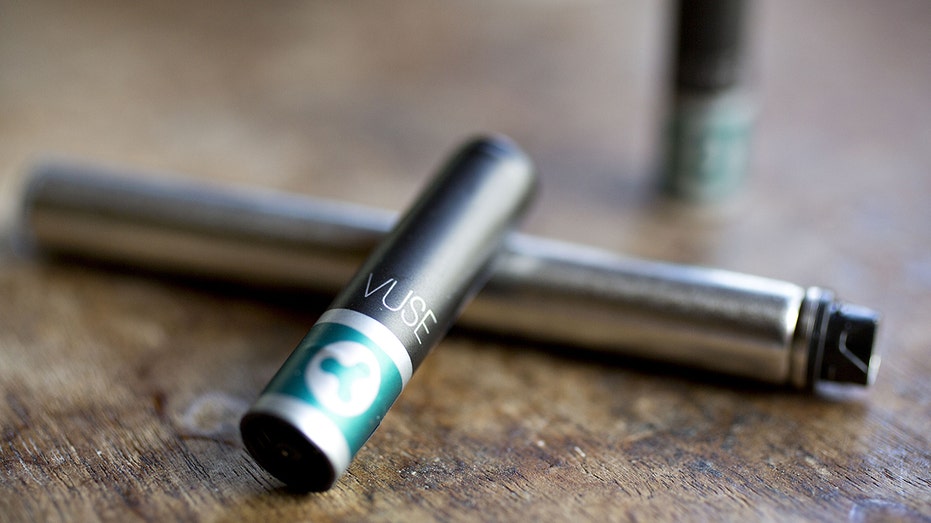
Vuse vapes are a growing focus for British American Tobacco amid shifting consumer habits. (Daniel Acker/Bloomberg via Getty Images)
Tobacco sales in the U.S. have also been hit as smokers shift to cheaper brands amid high living costs, while BAT also faces rising import taxes, tighter regulations and illicit trade in markets like Australia and Bangladesh.
BAT said most of the role changes had been confirmed with employees, while remaining consultations were underway in compliance with local requirements.
GET FOX BUSINESS ON THE GO BY CLICKING HERE
The company also said that roles transferred to third parties include positions in its Global Service Hubs in Costa Rica, Mexico, Romania and Malaysia, as well as certain roles in Pakistan, and some digital and technology roles in Poland and Romania.
Reuters contributed to this report.

Check out what’s clicking on FoxBusiness.com.
Nearly 100,000 Hyundai vehicles are being recalled due to a software glitch that could increase the risk of a crash, federal officials announced.
The recall affects approximately 96,310 Hyundai Tucson vehicles from the 2025 and 2026 model years, according to a National Highway Traffic Safety Administration (NHTSA) notice dated June 24.
Officials said the glitch may cause the instrument panel — which displays critical information such as speed, fuel level and warning indicators — to go blank while driving, depriving drivers of essential safety data needed to operate the vehicle safely.
“The instrument panel (‘IP’) display in the subject vehicles may intermittently reboot during vehicle operation, potentially resulting in a temporary blank display screen,” recall documents stated.
MORE THAN 1 MILLION JEEP VEHICLES RECALLED OVER FIRE RISK AS OWNERS WARNED NOT TO PARK INSIDE

Hyundai Tucson vehicles bound for export are driven onto a vehicle carrier cargo ship in Ulsan, South Korea, on Wednesday, Jan. 21, 2026. (SeongJoon Cho/Bloomberg via Getty Images / Getty Images)
According to the notice, the SUVs equipped with standard gasoline, hybrid and plug-in hybrid powertrains are affected.
An estimated 53,886 hybrid vehicles are included in the recall, along with 39,605 standard gasoline vehicles and 2,819 plug-in hybrid models.
HONDA RECALLS MORE THAN 880,000 VEHICLES OVER REAR SUSPENSION FAILURE RISK
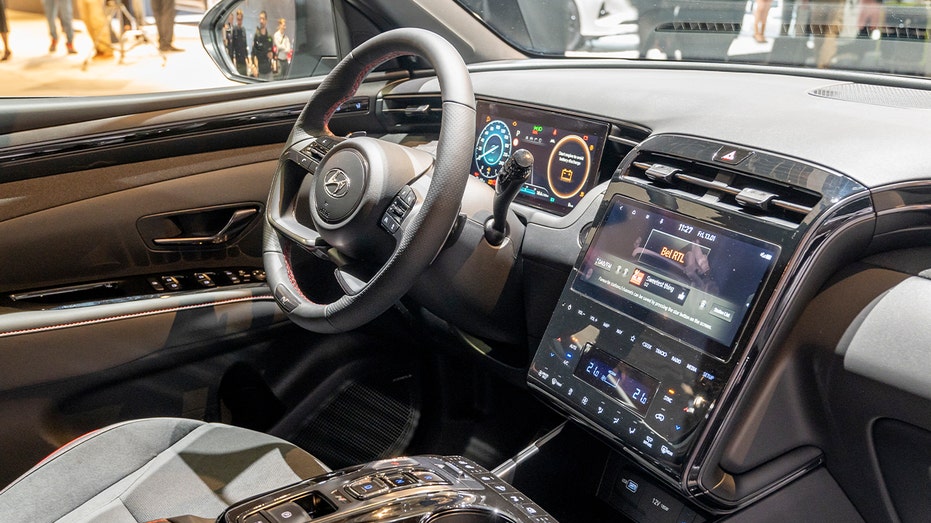
A Hyundai Tucson SUV interior is seen on Jan. 13, 2023, in Brussels, Belgium. (Sjoerd van der Wal/Getty Images / Getty Images)
As of June 2026, there are no confirmed crashes, fires or injuries in the U.S. linked to the defect, the NHTSA said. Officials estimate about 1% of the recalled vehicles are affected.
To address the issue, Hyundai will provide free software updates through dealerships or via wireless over-the-air (OTA) transmission.
The OTA update will be available for eligible vehicles enrolled in Hyundai’s Bluelink system, officials said.
Hyundai will also reimburse owners who previously paid out-of-pocket expenses to repair the issue.
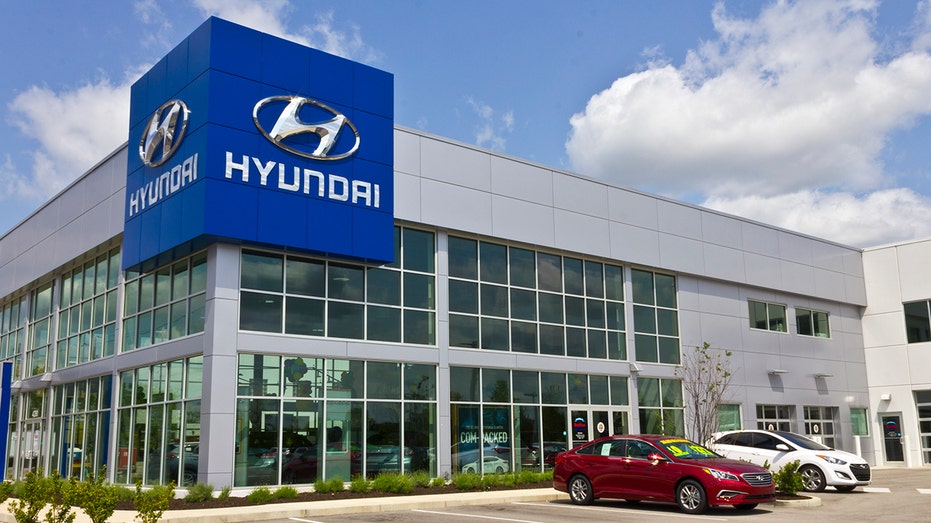
Cars are displayed outside a Hyundai Motor Company dealership in Indianapolis, U.S., May 15, 2016. (iStock / iStock)
GET FOX BUSINESS ON THE GO BY CLICKING HERE
Formal notification letters are scheduled to be mailed to impacted owners beginning Aug. 22, 2026.
Owners can verify whether their vehicle is included by searching for their Vehicle Identification Number (VIN) on NHTSA.gov.
| Ticker | Security | Last | Change | Change % |
|---|---|---|---|---|
| HYMLF | HYUNDAI MOTOR CO. | 89 | -31.00 | -25.83% |
For additional information, owners can contact Hyundai at 855-371-9460 or reach the NHTSA Vehicle Safety Hotline at 1-888-327-4236.
FOX Business reached out to Hyundai for more information.
Business
Texas Instruments Shares Advance 1% as Chipmaker Benefits from Industrial and Automotive Demand
NEW YORK — Shares of Texas Instruments Inc rose modestly Monday, reflecting steady investor interest in the analog and embedded processing chipmaker’s diversified business model and consistent cash generation amid broader semiconductor sector movements.
The stock gained about 1% to around $288.28 in afternoon trading, adding to recent performance as Texas Instruments continues benefiting from demand in industrial, automotive and personal electronics markets.
Texas Instruments specializes in analog chips and microcontrollers essential for a wide range of applications including power management, signal processing and embedded control. Its products are found in everything from industrial automation systems to automotive electronics and consumer devices.
The company has maintained a disciplined approach to capital allocation, returning substantial cash to shareholders through dividends and share repurchases while making targeted investments in manufacturing capacity.
Texas Instruments operates highly efficient 300-millimeter wafer fabs that provide cost advantages in analog semiconductor production. Its long product life cycles and broad customer base contribute to stable revenue streams compared to more cyclical logic chip markets.
Recent quarterly results showed resilience despite softness in some end markets. Management highlighted strength in automotive and industrial segments while navigating inventory corrections in personal electronics.
The company’s automotive business benefits from increasing semiconductor content in vehicles, driven by electrification, advanced driver assistance systems and infotainment features. Texas Instruments supplies chips for power management, body electronics and radar applications.
Industrial demand remains a key growth driver as factories automate and adopt smart manufacturing technologies. Texas Instruments’ analog products play critical roles in motor control, sensing and power systems for industrial equipment.
Monday’s share advance occurred without major company-specific news, suggesting continuation of positive sentiment from recent operational updates and broader technology sector stability. Texas Instruments shares have shown relative resilience within the semiconductor group.
Analysts maintain generally favorable views on Texas Instruments, citing its strong free cash flow, conservative balance sheet and diversified end-market exposure. Some highlight potential for margin stability as inventory situations normalize.
Texas Instruments’ manufacturing strategy emphasizes internal production for core analog technologies, providing control over quality and supply. The company has invested in expanding U.S. and international wafer fabrication capacity.
The chipmaker’s focus on long-lifecycle products reduces obsolescence risks and supports predictable revenue. Many Texas Instruments components remain in production for decades, serving both new designs and legacy systems.
Monday’s trading reflected measured buying interest. The stock has navigated volatility while trending in line with broader market performance in recent sessions.
Texas Instruments maintains a strong balance sheet with low debt levels, enabling flexibility for investments, dividends and opportunistic share repurchases. Its capital return program appeals to income-focused investors.
The semiconductor industry faces cyclical pressures even as long-term demand for electronics grows. Texas Instruments’ analog focus provides some insulation from the more volatile logic and memory segments.
Automotive electrification represents a significant opportunity. Texas Instruments supplies solutions for battery management, power conversion and motor drives essential for electric vehicles.
Industrial automation trends, including robotics and smart factories, drive demand for Texas Instruments’ sensing and control products. The company’s broad portfolio supports multiple industrial applications.
Personal electronics, while cyclical, contribute meaningfully to revenue. Texas Instruments provides components for smartphones, tablets and wearables, though this segment has faced inventory adjustments.
The company’s research and development efforts focus on advancing analog technologies and integration capabilities. Innovations in power efficiency and precision signal processing support customer needs across markets.
Texas Instruments operates with a decentralized structure that encourages business unit autonomy while maintaining company-wide financial discipline. This approach has contributed to consistent execution over decades.
Monday’s gains add to Texas Instruments’ steady performance profile. The stock reflects confidence in its business model and ability to generate cash through economic cycles.
The chipmaker’s dividend yield and history of increases attract long-term investors seeking technology exposure with income characteristics. Texas Instruments has raised its dividend for multiple consecutive years.
As artificial intelligence and data center demand influence semiconductor markets, Texas Instruments benefits indirectly through power management solutions for servers and networking equipment.
The company’s global operations span manufacturing, sales and design centers. This footprint supports customer proximity and supply chain resilience.
Texas Instruments continues evaluating strategic opportunities while maintaining focus on core analog and embedded strengths. Its conservative approach has served shareholders well through industry cycles.
Investor attention centers on inventory trends, customer demand signals and capital expenditure plans. Consistent execution supports Texas Instruments’ reputation for reliability.
The semiconductor industry’s long-term growth drivers include electrification, automation and connectivity. Texas Instruments’ portfolio aligns well with these secular trends.
Monday’s trading highlighted Texas Instruments’ relative stability within the chip sector. Its business model provides a defensive quality compared to more cyclical peers.
Texas Instruments’ role in enabling modern electronics underscores its importance in the technology supply chain. Its analog expertise remains essential across diverse applications.
As markets assess technology investments, Texas Instruments offers exposure to steady demand drivers with strong cash flow characteristics. Its trajectory depends on continued execution in key end markets.
Business
Comcast Stock Soars Today as Company Announces Plan to Spin Off NBCUniversal and Sky Into New Independent Firm
Comcast shares jumped sharply Monday after the company announced plans to break itself in two, separating its media and entertainment businesses, including NBCUniversal and Sky, from its core broadband and wireless operations in a move that would unwind a corporate marriage forged 15 years ago.
Shares of the Philadelphia-based company were trading at $24.64 as of 12:43 p.m. EDT, up $1.47, or 6.32%, on the day. The gain marked a significant pullback from the stock’s initial reaction to the news, with shares surging more than 20% in heavy premarket trading immediately after the announcement, before paring those gains as the session progressed.
Under the plan announced Monday, Comcast will separate into two independent, publicly traded companies through a tax-free spinoff. The newly independent NBCUniversal will combine with Sky, the British broadcaster Comcast acquired in 2018, to form what the company described as a premier global media and entertainment business. That entity will include Universal’s theme parks division, the Universal Pictures film and television studio, the NBC and Telemundo broadcast networks, NBC News, the Peacock streaming service and the Bravo cable network. The remaining Comcast entity will retain the company’s connectivity-focused businesses, including Xfinity, Xfinity Wireless and Comcast Business, continuing to operate what the company has described as the largest converged broadband and entertainment network in the United States.
Comcast said it expects to complete the separation in approximately one year, contingent on customary conditions including final approval from Comcast’s board of directors, receipt of favorable tax opinions, regulatory approvals and the completion of financing arrangements for both resulting companies. NBCUniversal will carry the same dual-class share structure currently used by Comcast, and Comcast plans to retain an ownership stake of up to 19.9% in the new NBCUniversal for as long as a year following completion of the spinoff, with intentions to monetize that stake in a tax-efficient manner over time. Goldman Sachs and PJT Partners are serving as advisors on the transaction.
Leadership for the two future companies has already been mapped out. Mike Cavanagh will lead the newly independent NBCUniversal, while Michael Angelakis, a former Comcast chief financial officer, will return to run the slimmed-down Comcast. Comcast Chairman and co-Chief Executive Brian Roberts is expected to remain actively involved in the leadership of both companies going forward, working alongside the chief executives of each. Speaking with investors Monday morning, Roberts framed the move as an evolution rather than a dismantling of what the company had built.
“This is not about separating what we built together,” Roberts told investors.
Roberts went on to describe the split as an effort to give each business greater focus and flexibility to pursue its own opportunities, rather than the start of a broader wave of dealmaking. He specifically pushed back on the notion that the separation was a precursor to additional strategic transactions for either company once the split is finalized, even as industry analysts have speculated about what doors the move could open. A formal statement released by Comcast laid out the broader strategic rationale behind the decision.
“Comcast’s board and management team believe each company will be better positioned to pursue its own strategic priorities, invest for growth, and create long-term shareholder value as independent entities,” the company said.
Monday’s announcement follows an earlier restructuring move by Comcast, which spun off a collection of its cable television networks, including USA Network, Oxygen, E!, SYFY and Golf Channel, along with CNBC and MSNBC, into a separate company called Versant. That spinoff was first announced in November 2024 and formally completed at the start of this year, establishing a template of sorts for Monday’s far larger separation involving NBCUniversal itself.
Wall Street’s initial read on the move has been broadly favorable, though not without caveats. Adam Crisafulli, head of research firm Vital Knowledge, said in a note Monday that the rationale behind separating the businesses reflects long-standing investor concerns about Comcast’s traditional cable and broadband operations.
“Comcast shares have traded poorly due in large part to concerns about the secular outlook,” Crisafulli wrote.
Crisafulli added that the standalone NBCUniversal, with its theme parks, film and television studio assets, should have greater flexibility to participate in the wave of mergers and acquisitions currently reshaping the media industry, though he cautioned that concerns about the broadband business’s growth outlook are unlikely to disappear and could leave that remaining unit more exposed as a standalone company.
The timing of Comcast’s announcement places it squarely within a broader period of upheaval across the media landscape. David Ellison’s Paramount Skydance, the owner of CBS, is currently working to close a roughly $110 billion deal to acquire rival studio Warner Bros., one of several major consolidation moves reshaping the industry in recent months. Against that backdrop, some analysts have already begun speculating about whether the newly independent NBCUniversal could eventually become an acquisition target itself, with names like Netflix and Apple floated as potential suitors interested in its studio and brand portfolio, even as Comcast executives have stressed that no such outcome is the intended goal of Monday’s announcement.
The proposed breakup will still require regulatory approval before moving forward, and Comcast has not yet provided detailed estimates of the expected market valuations for either resulting company, though analysts anticipated further clarity following a scheduled call with investors Monday morning. For now, the announcement represents a striking reversal of the strategic logic that drove Comcast’s original 2011 acquisition of a controlling stake in NBCUniversal, a deal once heralded as a model for combining content creation with distribution infrastructure under a single corporate roof, and one that Comcast is now moving to unwind in pursuit of what the company describes as greater focus and value for shareholders of both resulting businesses.

Guido Mieth/DigitalVision via Getty Images
A week ago, I wrote that leadership had left the mega-cap “generals” and split into two baskets: semiconductors (velocity) and regional banks (breadth). That’s still true. But the dashboard has been quietly flagging a third group climbing the leaderboard, and this week it’s undeniable: biotech
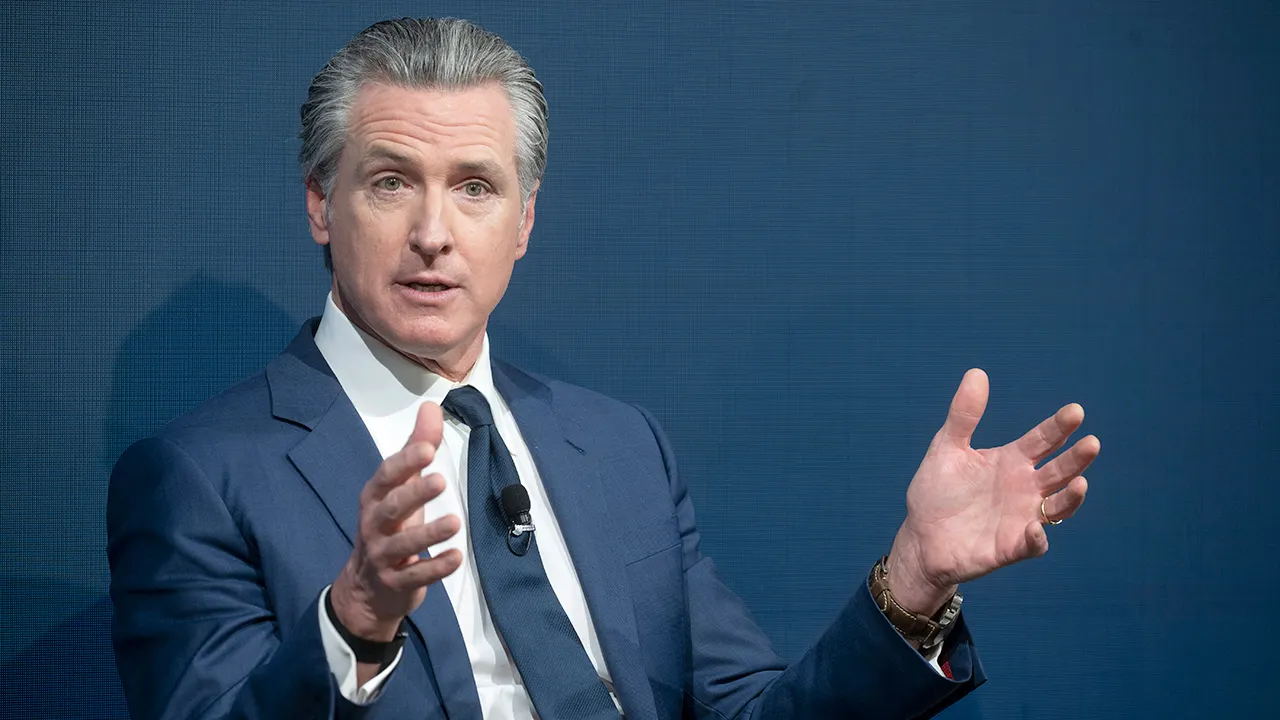
California Governor Gavin Newsom advocates for a national billionaire’s tax, despite rejecting similar legislation in his own state.
California state agencies and local governments may access Anthropic’s Claude artificial intelligence platform at a 50% discount, Democratic Gov. Gavin Newsom’s office said on Monday.
“Through the agreement, state agencies may access Anthropic’s AI productivity assistant, Claude, at a 50% discounted price, coupled with free workforce training as well as expert GenAI technical assistance and workflow input from Anthropic developers. The agreement also provides the same discounted offer for California’s local governments, including cities and counties,” a press release announced.
“Claude is the first AI productivity tool that will be available to all State agencies though the California Department of Technology’s new Statewide Information Technology Shared Services (SITeS) portal. The portal centralizes AI tools in one place with transparent pricing around key business use cases — such as improving operational efficiency, enhancing data security, and optimizing state worker experience,” the announcement continued.
AI COULD UNLEASH ‘SINGLE GREATEST PRODUCTIVITY REVOLUTION’ IF WASHINGTON AVOIDS OVERREACH: REPORT
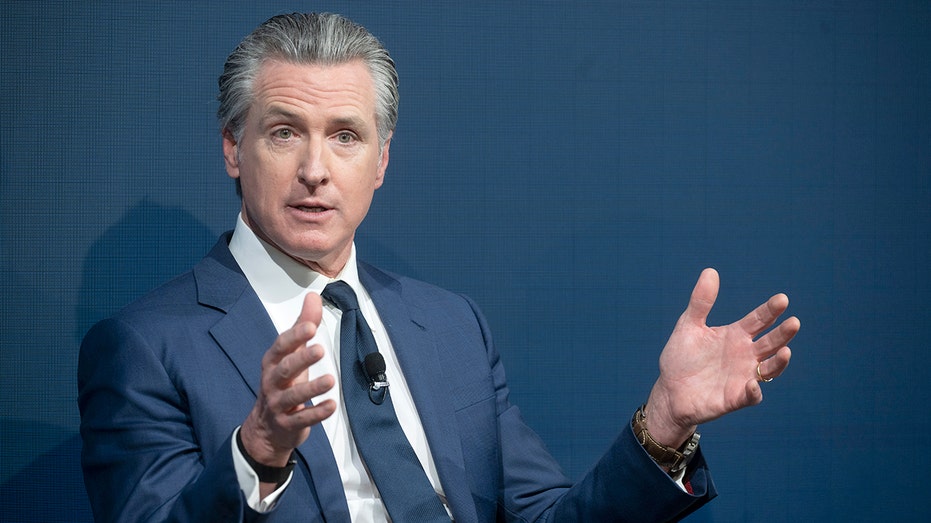
Gavin Newsom, Governor of the US state of California, takes part in the 62nd Munich Security Conference. (Marijan Murat/picture alliance via Getty Images / Getty Images)
Newsom, who has been in office since early 2019, is term limited from running again this year — he won re-election in 2022 after surviving a recall contest in 2021.
“This partnership is about using technology the California way: responsibly, transparently, and in service of people. AI should not replace the human work of government; it should help our workers move faster, solve problems more effectively, and deliver better results for Californians,” the governor said in a statement.
“As a California company, we feel a real responsibility to our home state. We’re honored to expand our partnership with California’s agencies and to put Claude to work for the people who keep this state running,” Anthropic Head of Americas Kate Jensen said. “Building AI responsibly and in service of people has been our approach from the start, and that’s exactly what this partnership puts into practice.”
NOBEL ECONOMIST WARNS AI DOOMSDAY JOB FEARS COULD BECOME SELF-FULFILLING PROPHECY
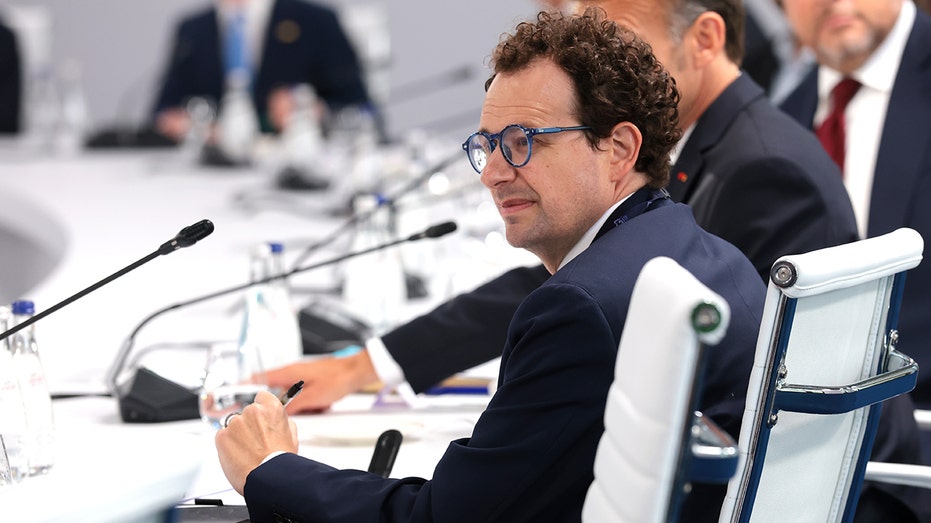
CEO of Anthropic Dario Amodei attends a working lunch with G7 leaders, G7 outreach partners, and global tech CEOs on innovation and AI, during the G7 Summit on June 17, 2026, in Evian-les-Bains, France. (Anna Moneymaker/Getty Images / Getty Images)
The governor’s office indicated that the state has already been utilizing Claude.
“California has already implemented some use of Claude in state government, including using the tool to facilitate Engaged California, a first-in-the-nation deliberative democracy platform announced by Governor Newsom last year, that helps provide Californians with a stronger voice in policymaking,” the office noted. “Claude was also used in the state’s development of Poppy – a simple AI tool designed by state workers for state workers through pre-built, easy-to-use queries tailored to common state business needs, facilitating more reliable, trustworthy outcomes.
“As a California company, we feel a real responsibility to our home state. We’re honored to expand our partnership with California’s agencies and to put Claude to work for the people who keep this state running,” Anthropic Head of Americas Kate Jensen said in a statement. “Building AI responsibly and in service of people has been our approach from the start, and that’s exactly what this partnership puts into practice.”
TECH CEO PREDICTS AI GLASSES WILL TURN AMERICANS INTO ‘WALKING CAMERAS’ AS NEXT TECH ERA ARRIVES
Qualcomm CEO and President Cristiano Amon discusses the company’s diversification beyond mobile chips, its entry into data centers, the demand for AI spending, outlook on agentic AI and more on ‘Mornings with Maria.’
GET FOX BUSINESS ON THE GO BY CLICKING HERE
“CDT and CalOES are partnering to use Claude for cyber defense — Claude Security and Claude Code for scanning, triaging, and patching state code. Among the largest agencies, CA DMV is using Claude to improve customer service and lower wait times, and CA Dept of Healthcare Services, the largest Medicaid Agency in the country, is using Claude for internal workflows to better assist Medicaid recipients,” the press release said.
Form 4 MACOM Technology Solutions Holdings Inc For: 29 June
Check out what’s clicking on FoxBusiness.com.
Casey’s General Stores is betting bigger on stores, food and tech as it looks to extend its growth streak.
The Ankeny, Iowa-based company recently unveiled a new three-year plan centered on expanding its prepared food business, adding new stores and using technology to run more efficiently.
Casey’s plans to add at least 400 stores over the next three years through acquisitions and new builds. The company operates more than 2,900 convenience stores and says it is the nation’s third-largest convenience store retailer and fifth-largest pizza chain.
“We made a commitment to grow our EBITDA by 8% to 10%, which is top-quintile growth for the S&P 500,” CEO Darren Rebelez told FOX Business. “We’ll do that through growing our prepared foods business, growing our store base and running our business more efficiently.”
BELOVED CONVENIENCE STORE FOOD HELPING COLLEGE FOOTBALL FANS TACKLE EARLY KICKOFFS
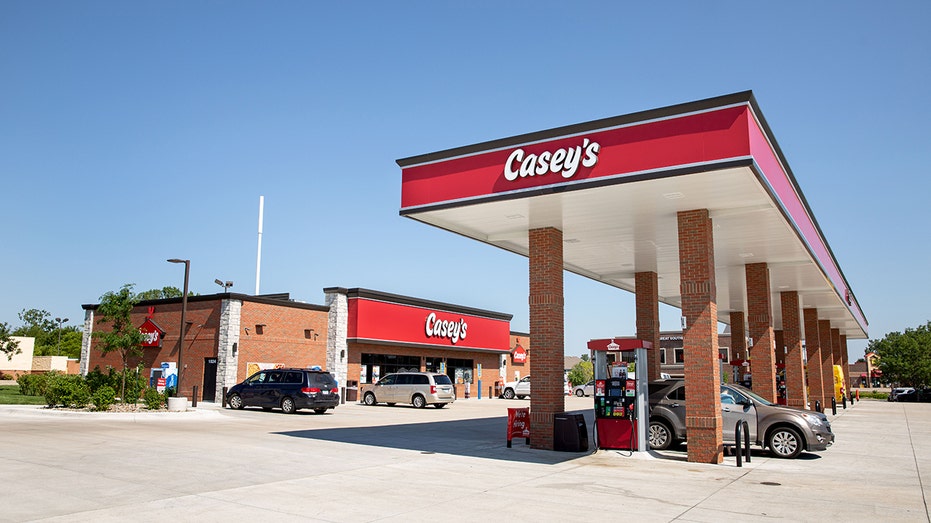
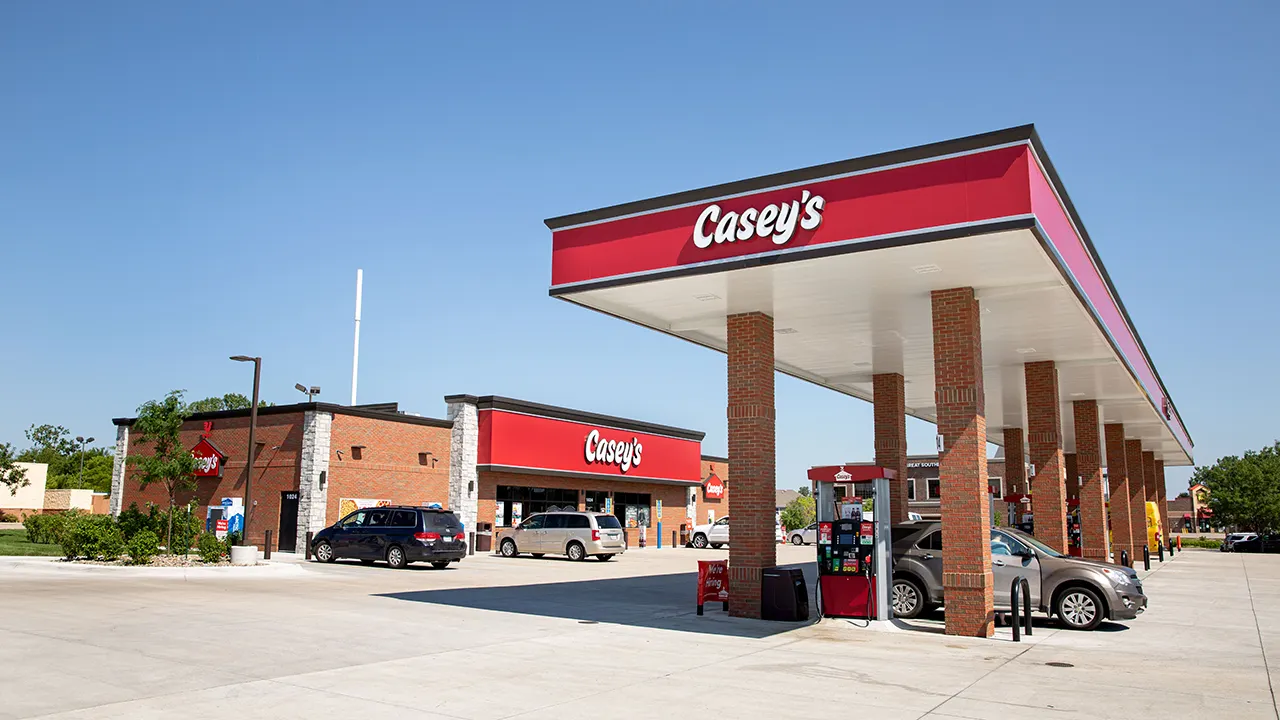
Casey’s General Stores is betting on more stores, more food and more technology as the convenience chain looks to keep its growth streak going. (Casey’s)
Rebelez said Casey’s is coming off “the best three-year cycle” in company history after beating its prior targets, adding more than 500 stores and joining the S&P 500. The company’s stock is up more than 53% year-over-year.
Food remains a key part of Casey’s growth strategy. The company, long known for its pizza, is pushing deeper into made-to-order items such as wings and fries.
Rebelez said wings are now available in 850 stores, with bone-in and boneless options, five sauces, three dry rubs and ranch made from scratch daily.
“We’re famous for our pizza, we still have a long runway for growth there with innovation and new items that we’ve introduced more recently,” he said. “But now we have the wings platform.”
YUM BRANDS SELLS PIZZA HUT FOR $2.7B, SHARPENS FOCUS ON TACO BELL AND KFC
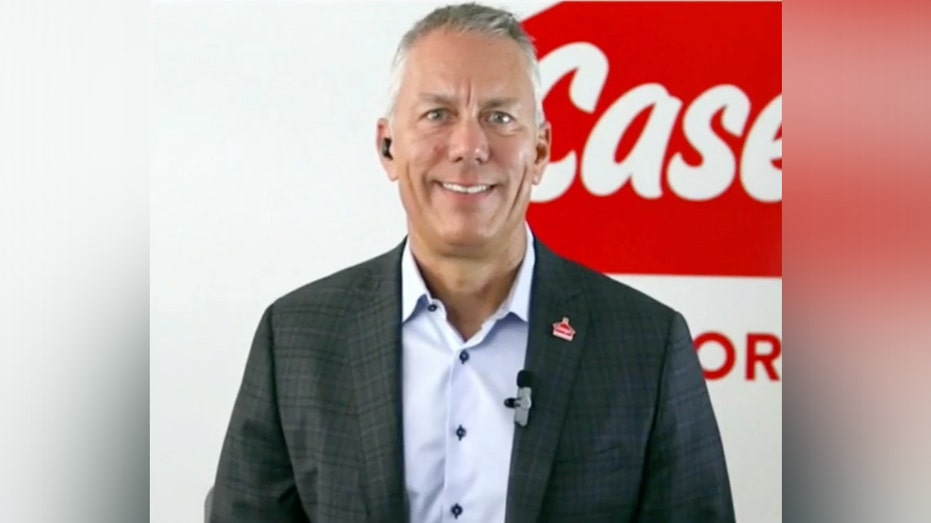
Casey’s CEO Darren Rebelez said Casey’s is coming off “the best three-year cycle” in company history after beating its prior targets, adding more than 500 stores and joining the S&P 500. (FOX Business / Fox News)
Casey’s sees its food business as competing more with restaurants than other convenience stores.
“We really don’t look at the convenience store industry as a competitor for our prepared foods. We’re really competing with the restaurant business,” Rebelez said.
In Des Moines, where wings have been available for more than a year, sales are up roughly 20% year over year, according to the company.
Casey’s is also looking to expand “Casey’s Country” by opening stores in current and new markets.
“Our growth strategy is expanding Casey’s Country in a disciplined way,” Ena Williams, chief operations officer at Casey’s, said in a statement. “We’ve shown that we can grow through both new stores and acquisitions.”
PAPA JOHNS SHUTS DOWN DOZENS OF LOCATIONS ACROSS 17 STATES AS FAST-FOOD COMPETITION INTENSIFIES
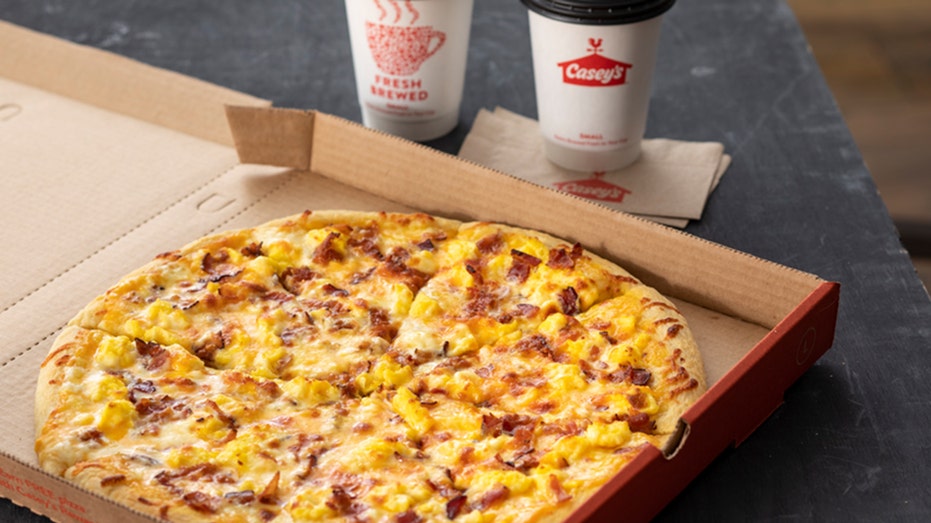
The company, long known for its pizza, is leaning further into made-to-order offerings, including wings and fries. (Casey’s / Fox News)
Stocks In This Article:
The company is additionally investing in artificial intelligence, forecasting tools and digital platforms such as the Casey’s app and Casey’s Rewards to help improve efficiency and strengthen the guest experience.
GET FOX BUSINESS ON THE GO BY CLICKING HERE
Rebelez said investors have responded to Casey’s consistency and its hybrid position between convenience retail and quick-service restaurants.
“We sell fuel, we sell grocery and general merchandise, and we have prepared food, so we can compete in either space.”

‘It stinks’: Ten Brits fall on nightmare opening day of Wimbledon

Meta Contractors Posed as Teens to Prompt Rival Chatbots About Suicide, Sex, and Drugs

DWP to record all PIP and disability assessments by default


-
 Sports6 days ago
Two goals and an assist by sheer aura: Cristiano Ronaldo just entered the World Cup chat
-

 Fashion3 days ago
Weekend Open Thread: Staud – Corporette.com
-

 Politics4 days ago
The House | Manchesterism won’t survive the painful trade-offs unless it gets citizens on board
-

 Politics4 days ago
Potential 2028er World Cup attendee leaderboard
-

 News Videos1 day ago
MAJOR BITCOIN & MARKET UPDATE!!!! (MUST WATCH ASAP!!!)
-

 Business4 days ago
Asia stock markets slide as tech shares slump
-

 Tech4 days ago
A Look At A Gaggle Of Transputer Boards
-
Crypto World6 days ago
Bitcoin (BTC) Dips Below $62K, Ethereum (ETH) Plunges 6% Daily: Market Watch
-
 Crypto World4 days ago
Dell (DELL) Shares Tumble Over 5% Following Analyst Downgrade to Hold
-

 Crypto World2 days ago
Coinbase, Circle Deepen Crypto Stock Losses Despite Resilient S&P 500
-

 Crypto World6 days ago
Securitize Wraps Roubini's SEC-Registered ETF as Dubai VARA Digital Security
-
Business6 days ago
Entergy settles forward sale agreements, raises $672 million in cash proceeds
-

 Crypto World3 days ago
Kraken's xStocks Opens Bending Spoons IPO Registration to EEA Retail
-

 Sports3 days ago
FIH Pro League: India defeat Pakistan 7-1, register biggest win of campaign | Other Sports News
-

 Tech2 days ago
Russian hackers now target Signal backup recovery keys
-

 Tech2 days ago
Bluekit phishing kit adopts browser-in-the-middle for login theft
-

 Crypto World4 days ago
Bitcoin Sparks $600M Hourly Liquidations With $65,000 Set To Become Resistance
-

 Crypto World3 days ago
RTX holders must register wallets before token distribution begins
-
 Crypto World3 days ago
Hyperliquid Named on Singapore MAS Investor Alert Register
-

 Crypto World5 days ago
Ripple and SBI launch RLUSD in Japan after JFSA approval
You must be logged in to post a comment Login