

Crypto World
Smart Money is Leaving Nvidia for This AI Chip Stock

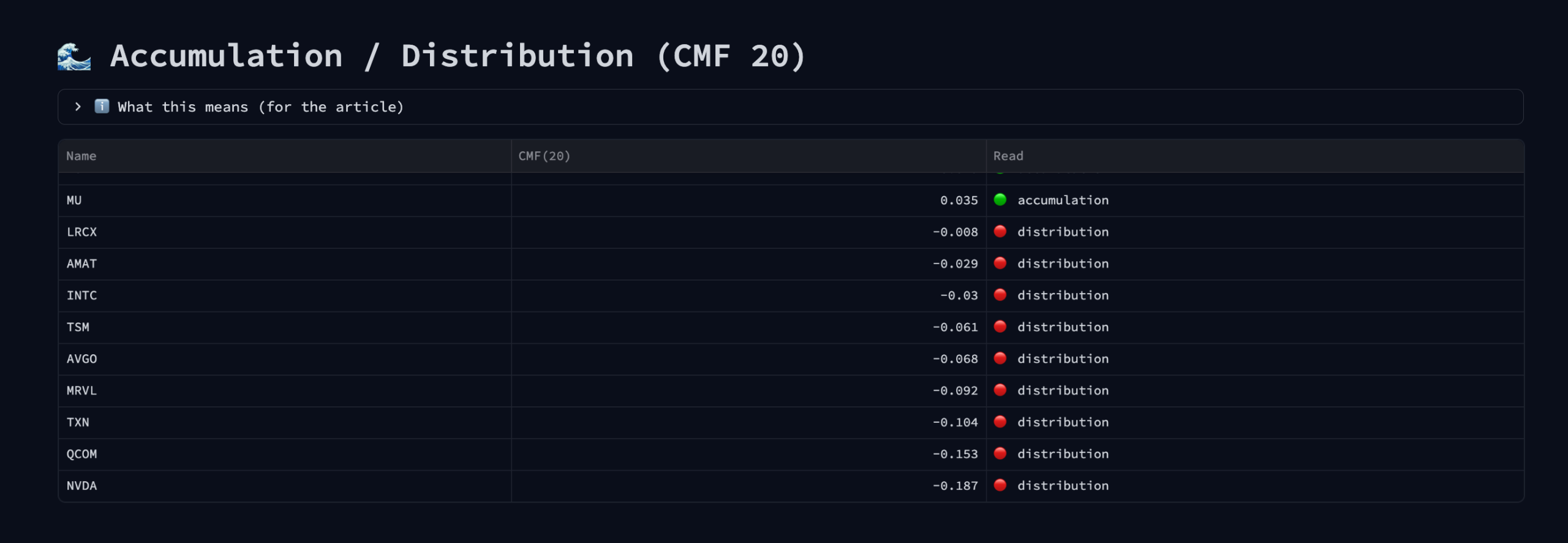
Nvidia stock price keeps sliding, yet the usual dip buyers are missing. Institutional money flow on the stock is the most negative of any major chip name, which means big investors are stepping back instead of loading up.
That single fact reframes the whole selloff. A falling price normally pulls in bargain hunters. This time, the money is leaving Nvidia and moving elsewhere inside the same sector, and the reasons explain why the dip keeps failing.
Institutions are Leaving Nvidia, Not the Chip Sector
Across the major semiconductor names, Nvidia (NVDA) shows the deepest negative reading on the 20-day Chaikin Money Flow, near -0.19. Micron (MU) is one of the few stocks in the group still being accumulated.

In plain terms, this indicator works as a proxy for institutional money. Nvidia’s deep negative score means institutional money isn’t choosing this chip stock.
Because the selling is specific to Nvidia, the price split is stark. The stock is up only about 2.6% so far in 2026 and has slipped roughly 18% from its May peak.
Measured against the semiconductor index, Nvidia scores just 52.9 on relative strength, where 100 means keeping pace with the sector.

In plain terms, the chip index has nearly doubled over the past six months while Nvidia has gone almost nowhere. So the sector is not breaking. One company is, which is why its chart signals turned bearish while peers rose.
Positioning agrees. In early June, Nvidia director Mark Stevens sold about 1 million shares worth roughly $221 million, one of several insider sales that month. That is the setup. The next question is: where did the money go?
Why the Money is Rotating Elsewhere
The capital from Nvidia went mostly into the memory sector. Micron recently posted record revenue of $41.46 billion, up 346% in a year, and the stock jumped about 15% immediately after.
It also guided next-quarter sales near $50 billion, well above forecasts. The Micron stock forecast is now one of the hottest on Wall Street.
Here is the simple version. Micron makes the memory chips that feed Nvidia’s processors, and that memory is in short supply. Its entire HBM (specialized AI memory) is sold out, and prices keep climbing. So big money chased it.
The Micron stock price has roughly tripled this year, and Micron even briefly passed Meta in value. Investors did not quit chips. They moved one step over, from Nvidia to its supplier.

Nvidia’s Biggest Customers Are Now Its Rivals
The second reason runs deeper. Nvidia’s largest buyers are building their own chips. Alphabet now sells its in-house AI chips to outside customers, and Anthropic plans to spend about $200 billion with Alphabet over five years.
In short, the giant cloud firms that buy the most Nvidia chips need fewer of them once they make their own. Citizens analyst Andrew Boone estimates Alphabet’s chip business could grow from about $3 billion in 2026 to $25 billion in 2027.
That is why investors doubt Nvidia can keep charging top prices, a worry tied to the wider AI spending surge and Wall Street’s caution on the stock.
Why Wells Fargo Cutting Its Nvidia Target Makes Sense Now
Put those causes together and one earlier move suddenly fits. The buy ratings have not changed. Nvidia still holds a Strong Buy consensus, with 37 buy ratings, one hold, and no sells over the past month, and an average target near $309.

But the ceiling is dropping. On June 1, Wells Fargo analyst Aaron Rakers cut his Nvidia target from $375 to $315 while keeping his buy rating. Across the desk, the Wall Street price target picture shows buyers stepping aside even as ratings stay green.

That combination is the rotation in a single data point. Analysts still like the business, so they hold the rating. They no longer trust the premium, so they cut the number. A target trim that looked odd in isolation makes sense once you see the money already leaving.
What It Takes for Institutions to Come Back
None of this means Nvidia is broken. Revenue is still growing fast, Blackwell demand looks strong, and the forward price-to-earnings (P/E) has slipped to roughly 20 times earnings, cheap next to several AI peers.
In plain terms, that means investors pay about $20 for every $1 of profit the company is expected to earn over the next year, a low price for a top AI name.
Wedbush keeps a $330 target and calls the selloff a buying chance.
That is the tension. Fundamentals look excellent, yet the flow points the other way, and flow is what moves price now. While the money flow stays this negative, each dip is more likely to meet sellers than buyers.
The first real signal of a turn would be Chaikin Money Flow returning to accumulation. Until that happens, Nvidia is no longer the default chip stock, and the smart money is shopping elsewhere in the aisle.
The post Smart Money is Leaving Nvidia for This AI Chip Stock appeared first on BeInCrypto.


Key Takeaways
- Alphabet (GOOGL) jumped 3.7% to $350.24 during its inaugural trading session as a Dow Jones Industrial Average constituent, taking over from Verizon Communications.
- The index reshuffle was revealed by S&P Dow Jones Indices on June 23; Alphabet’s elevated share price makes it one of the Dow’s heaviest-weighted stocks.
- With this addition, five of the Magnificent Seven tech giants—Alphabet, Nvidia, Amazon, Apple, and Microsoft—are now Dow components.
- Reports indicate Google has restricted Meta Platforms’ access to Gemini AI infrastructure as computing resource demand reaches unprecedented levels.
- Cloud services revenue at Alphabet surged 63% in Q1 2026—the fastest expansion since the segment’s disclosure began in 2019—with projections hitting $480 billion by 2031.
Alphabet (GOOGL) made its official entrance into the Dow Jones Industrial Average on Monday, and investors responded enthusiastically. Shares advanced 3.7% to reach $350.24 during its debut session as a Dow constituent.
S&P Dow Jones Indices publicly disclosed the index modification on June 23. Alphabet secured the position formerly occupied by Verizon Communications, which ranked among the index’s least impactful members.
Given the Dow’s price-weighted methodology, Alphabet instantly assumes significant influence within the 30-company benchmark. Its premium share valuation grants it substantially greater weight than Verizon commanded.
This development elevates the Magnificent Seven representation in the Dow to five companies. Alphabet now joins Nvidia, Amazon, Apple, and Microsoft within this prestigious index.
The previous restructuring occurred in November 2024, when Nvidia and Sherwin-Williams displaced Intel and Dow Inc.
Passive funds that replicate the Dow must acquire GOOGL shares to maintain proper index tracking. Approximately $115 billion in assets were indexed or benchmarked to the Dow as of December 31, 2024—considerably less than the roughly $20 trillion following the S&P 500, where Alphabet already maintains membership.
Consequently, mandatory purchasing activity stemming from this index revision remains modest compared to potential S&P 500 inclusion.
Tech Giants Rebound and Gemini Capacity Constraints
Monday’s upward movement extended beyond mere index mechanics. The broader Magnificent Seven cohort experienced a robust recovery. Meta, Amazon, and Tesla each advanced over 3%. Nvidia and Microsoft recorded gains exceeding 1%. Apple trailed with a modest 0.1% increase.
The Roundhill Magnificent Seven ETF had declined 13% throughout June leading up to Friday—tracking toward its steepest monthly decline since its April 2023 inception. Monday provided welcome respite.
Additional developments contributed momentum to Alphabet’s rally. The Financial Times disclosed that Google has been throttling Meta Platforms’ access to its Gemini AI infrastructure, alongside certain smaller customers, citing overwhelming demand for computational resources.
Neither Google nor Meta provided immediate commentary on the matter.
Cloud Expansion Validates AI Investment Thesis
While restricting client access might superficially suggest revenue constraints, it actually underscores extraordinary demand for Google’s artificial intelligence capabilities.
Alphabet’s cloud business delivered 63% revenue expansion in Q1 2026—representing the division’s most robust performance since the company initiated segment reporting in 2019.
TD Cowen analyst John Blackledge projects cloud revenue will compound at a 37% annual rate, escalating from approximately $100 billion this year to $480 billion by 2031.
Alphabet shares had appreciated roughly 11% year-to-date through the preceding Friday, positioning it among the strongest performers within the Magnificent Seven collective this year.



The chances of the CLARITY Act becoming law in 2026 have narrowed after Galaxy Digital reduced its approval odds to 50%, even as Senate Republicans continue pushing for a vote when lawmakers return from recess.
Summary
- Galaxy Digital has lowered the probability of the CLARITY Act becoming law in 2026 to 50% despite ongoing Senate negotiations.
- Senator Tim Scott has backed a July Senate vote while lawmakers continue working to resolve key policy differences.
- Negotiators are still discussing ethics rules, anti-money laundering measures, and digital asset market oversight before the Senate returns.
According to journalist Eleanor Terrett, congressional staff, White House officials, and crypto industry representatives have continued negotiating behind closed doors while the U.S. Senate remains in recess until July 13. Their discussions are focused on resolving differences between separate versions of the crypto market structure bill produced by the Senate Banking and Agriculture Committees before senators reconvene.
The negotiations are centered on several unresolved issues, including ethics requirements, anti-money laundering provisions, and the framework for regulating digital asset markets. Reaching agreement on those points is considered necessary before the legislation can move toward a Senate floor vote.
July timeline faces procedural hurdles
Even if negotiators finalize the bill before lawmakers return, the Senate calendar could delay its progress.
Terrett reported that Senate Majority Leader John Thune has indicated that the National Defense Authorization Act will take priority once the Senate resumes work in mid-July. As a result, consideration of the CLARITY Act could slip to the latter half of July or even the opening week of August.
The timing has become increasingly important because many observers believe the legislation needs Senate approval before Congress leaves for its August recess. Missing that legislative window could make it substantially harder for the bill to advance before the end of the 2026 congressional session.
Passing the measure will also require bipartisan support. The legislation needs at least 60 votes in the Senate, while Republicans currently hold 53 seats. Full Republican backing is not guaranteed, as Senators Josh Hawley and Rand Paul opposed the earlier GENIUS Act, making Democratic support important for the CLARITY Act as well.
Republican support remains intact despite lower approval odds
Although negotiations remain unfinished, senior Republicans have continued encouraging a July vote.
In a recent post on X, Senator Tim Scott endorsed Majority Leader John Thune’s proposed timeline for bringing crypto market structure legislation before the Senate. Scott said the bipartisan proposal would provide clearer regulatory rules for digital assets, strengthen consumer protections, and help keep innovation in the United States. He also urged lawmakers to move the legislation forward for the benefit of Americans.
While Republican leaders continue pressing ahead, market expectations have become more cautious. Galaxy Digital has lowered its estimate for the CLARITY Act’s chances of becoming law in 2026 to 50%, highlighting the political and procedural challenges that still remain before the legislation can clear the Senate.
The next two weeks are expected to play a decisive role as negotiators work to settle outstanding policy differences before senators return to Washington. Whether those talks produce a compromise could determine if the CLARITY Act reaches the Senate floor in July or loses momentum ahead of Congress’s summer recess.

TLDR:
- Chainlink holder count climbed to 892.8K Ethereum wallets after adding more than 8K holders in five days.
- Recent wallet growth accelerated sharply and pushed LINK closer to the 900K holder milestone.
- Santiment linked the increase to growing interest in tokenized assets and institutional blockchain projects.
- LINK holder growth continued even while the token traded near recent local price lows.
Chainlink has surpassed another important adoption milestone amid the recent surge in wallet growth over the last few days. The network now has 892,800 non-empty Ethereum wallets, which have swelled by over 8,000 in the last five days, according to fresh on-chain data.
The boost is part of a growing spotlight on the crypto market on tokenized assets and institutional blockchain projects. Despite LINK trading near recent lows, the latest stats suggest more people are joining the network.
Chainlink Holder Count Rises as More Wallets Join the Network
On-chain analytics platform Santiment reported that Chainlink’s holder count has entered a much steeper growth phase. The platform tracks non-empty Ethereum wallets holding LINK.
Its latest data shows the network added more than 8,000 holders over five days. That pushed the total number of wallets holding LINK to roughly 892,800.
The recent increase stands out from previous growth trends. According to Santiment, Chainlink could move beyond the 900,000-holder mark before the week ends if the current pace continues.
Holder growth remains one of the clearest ways to measure network adoption. A larger holder base often reflects increasing participation across an ecosystem, regardless of short-term market movements.
While price often attracts the headlines, wallet data can tell a different story. In Chainlink’s case, more users continue entering the network even as LINK remains close to recent local lows.
Institutional Blockchain Activity Keeps Chainlink in Focus
Santiment linked the recent wallet expansion to several developments involving real-world assets and institutional finance.
These include Project Pangea, DTCC’s collateral initiatives, tokenized assets, and 24/5 equity data streams.
Chainlink has become part of a growing number of blockchain projects supporting tokenized financial infrastructure.
Its oracle network provides external data that decentralized applications and financial platforms rely on. The latest wallet figures arrived during a period when institutional blockchain projects continue expanding.
Real-world asset tokenization has also remained one of the industry’s most active development areas throughout the year.
Although LINK has yet to stage a major price recovery, wallet growth has continued moving higher.
Santiment noted that the increase in holders has taken place while the token trades near local lows, suggesting network participation continues to build despite subdued market conditions.
Chainlink’s expanding holder base adds another metric to watch as adoption develops across the ecosystem. The latest on-chain figures show users continue accumulating LINK while institutional blockchain and tokenized asset initiatives remain active across the broader crypto market.


Securitize, a tokenization specialist backed by BlackRock, said Monday it cleared a final major hurdle to becoming a public company after shareholders of Cantor Equity Partners II (CEPT) approved the firms’ proposed merger on Monday.
The transaction is expected to close on Wednesday, subject to customary closing conditions, with the combined company beginning trading Thursday on the New York Stock Exchange under the ticker SECZ, the company said in an X post.
Shares of CEPT surged as much as 20% during the Monday session.
Founded in 2017, Securitize has become one of the leading providers of tokenization infrastructure, helping asset managers including BlackRock, Apollo, KKR and VanEck issue blockchain-based versions of traditional investment products. The company counts BlackRock and ARK Invest among its early investors.
The listing comes as tokenization — the process of representing traditional assets such as funds, bonds and private credit on blockchain networks — gains traction across Wall Street. Citi has projected tokenized assets could reach $5.5 trillion by 2030, while Standard Chartered estimated the market could grow to $2 trillion by 2028 as financial institutions increasingly move real-world assets onto blockchain rails.
The NYSE debut will give public market investors one of the few pure-play opportunities to gain exposure to the rapidly growing tokenization sector.
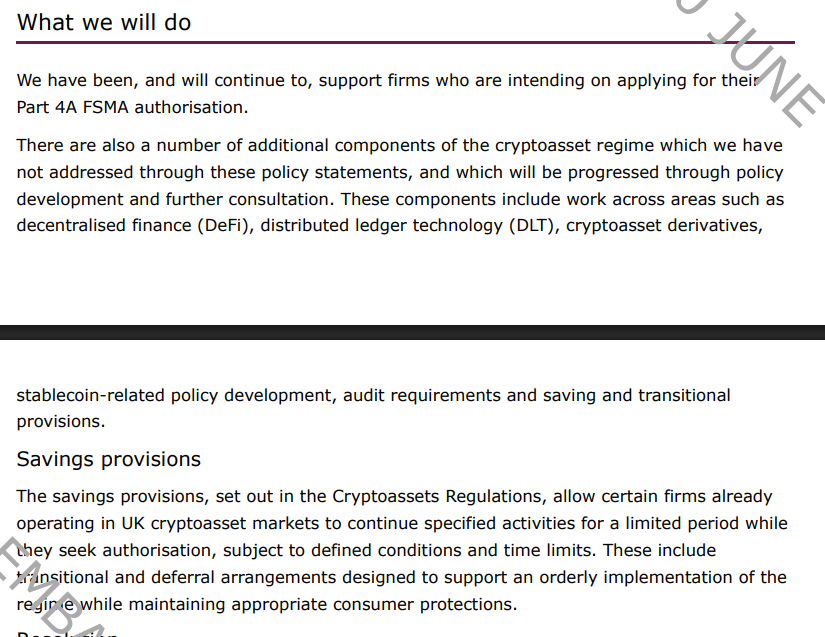
The UK’s Financial Conduct Authority (FCA) has published its landmark crypto regulatory framework, marking the completion of its crypto roadmap seeking to bring digital assets under the regulator’s purview.
Significant new elements include mandatory licensing for crypto firms, capital stress-testing requirements, improved market manipulation and insider trading rules, as well as simplified capital requirement standards for stablecoin issuers, according to a Tuesday press release shared with Cointelegraph.
The licensing window for crypto companies will open from September until Feb. 28, 2027, before the regime goes live on Oct. 25, 2027.
The new framework means that crypto companies in the UK will be held to “similar standards” as other financial service providers in the country, wrote David Geale, executive director of payments and digital finance at the FCA, adding:
“We’ve created a framework that doesn’t force firms to choose between regulatory certainty and room to innovate – this regime means they can have both in a stable, competitive home to build and grow.”
Cryptocurrency firms, including trading platforms, custodians, stablecoin issuers, staking companies and other intermediaries, must obtain FCA authorization to operate in the UK under the new framework.
The framework comes nearly a month after the regulator concluded its consultation window on the guidelines for the country’s future crypto regime on June 3.
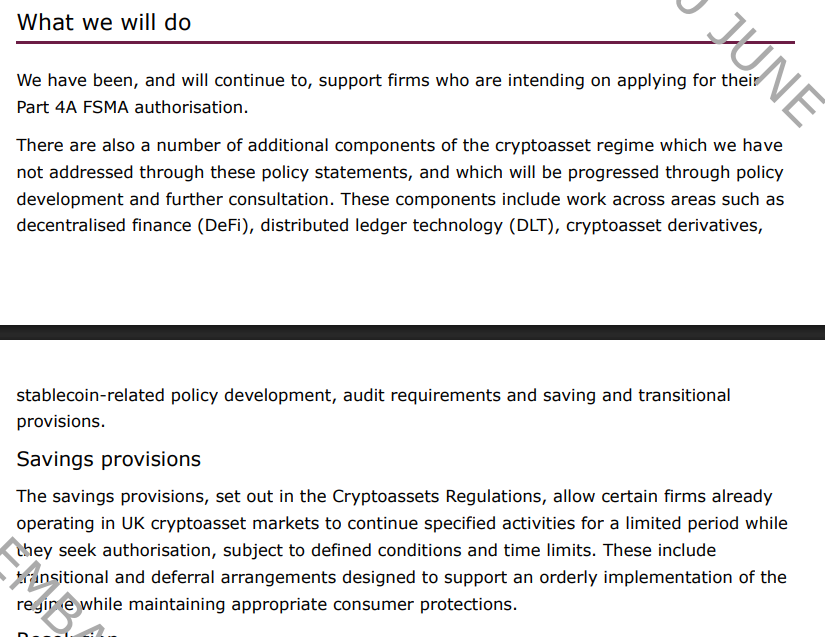
Overview of FCA crypto regime, next steps and savings provisions. Source: FCA
AML-authorized crypto firms need new licenses in the UK
Crypto firms with existing authorization under the money laundering regulations will not have their licenses automatically converted and will have to obtain new authorization.
Certain companies already operating in the UK may continue specified activities for a limited period as they seek authorisation under the framework’s transitional “savings provisions.”
The FCA said that pre-application support meetings for companies will be available starting next month.
The regulator will set out its policy statements during a webinar on July 17. It will also publish a further policy statement in September to establish how the regulatory perimeter applies to cryptoasset activities.
Related: Aave Labs’ Push gains UK FCA crypto registration
FCA simplifies stablecoin capital standards, promises tailored DeFi guidance
The FCA has maintained the core stablecoin framework but made minor adjustments, including simplifying the backing asset composition requirement by no longer requiring estimated redemption forecasts, adding requirements for statutory trust over reserves and removing unallocated backing fund accounts.
The guidelines will also require issuers to offer specific withdrawal rights to users, permit a 5% excess to be held in the backing asset pool and allow limited intragroup custody subject to safeguards.
The FCA noted that this establishes a “baseline regime for stablecoin issuance” and added that it will consult with the Bank of England later this year on how the the agency’s rules will apply to stablecoin issuers recognized as systemic by HM Treasury.
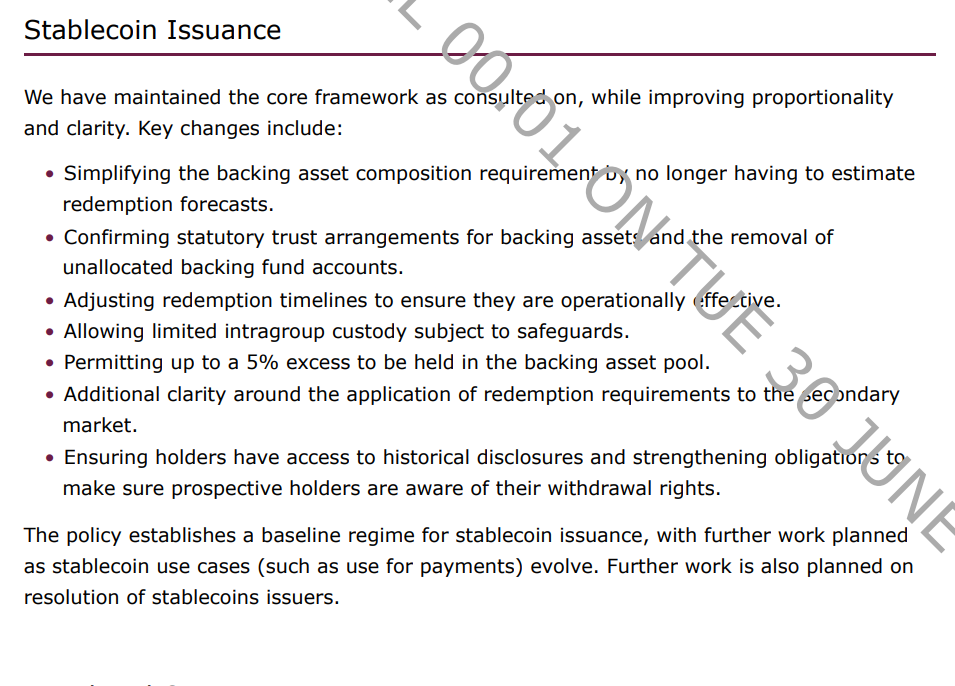
New guidelines for stablecoin issuance. Source: FCA
Later this year, the FCA will also host a separate consultation on decentralized finance (DeFi) guidance and operational resilience guidelines for firms using distributed ledger technology (DLT).
It also plans to consult on updates to the Financial Crime Guide relevant to crypto asset firms.
“We’re going to continue to work on DeFi,” said Matthew Long, director of payments & digital assets at the FCA, adding that they are seeking a case-by-case approach as “true DeFi” with “no identifiable person undertaking the activity” will fall out of the scope of the regulation.
Magazine: How crypto laws changed in 2025 — and how they’ll change in 2026

Key Points
- Shares of Velo3D advanced 7.1% Monday following the company’s inclusion in both the Russell 3000 and Russell Microcap indexes
- The metal 3D printing firm officially entered both benchmarks on June 29 during the 2026 annual reconstitution process
- Approximately $12.2 trillion in investment assets track Russell US indexes based on May 2026 data
- The company’s market capitalization reached around $496 million, with shares posting gains exceeding 126% year-over-year
- The additive manufacturing specialist will maintain Russell 3000 membership through December 2026’s next reconstitution
Shares of metal additive manufacturing specialist Velo3D (VELO) rallied 7.1% Monday following the company’s addition to both the Russell 3000 Index and Russell Microcap Index, which became effective June 29.
The inclusion occurred during the initial 2026 reconstitution of Russell indexes, an annual process that evaluates and ranks the top 4,000 U.S. companies by total market capitalization based on April 30 data.
For smaller publicly traded companies, Russell index inclusion carries significant weight. As of late May 2026, approximately $12.2 trillion in investment capital was benchmarked to Russell US indexes.
This massive pool of passive investment capital typically flows into newly added stocks, as fund managers who track these indexes must purchase shares to maintain accurate index representation.
Prior to Monday’s announcement, VELO had already demonstrated impressive momentum. Over the preceding 12-month period, the stock had appreciated more than 126%, bringing its market capitalization to approximately $496 million entering June.
CEO Arun Jeldi expressed enthusiasm about the development. “Being added to the Russell 3000 and Russell Microcap indexes is an important milestone for Velo3D,” he stated.
“We have made meaningful strides in transforming the company, advancing our technology leadership, and creating value for shareholders. Inclusion in these widely followed indexes broadens our exposure to the investment community.”
Companies included in the Russell 3000 are automatically categorized into either the large-capitalization Russell 1000 or small-capitalization Russell 2000, along with corresponding growth and value style indexes.
Based on Velo3D’s present market capitalization, the firm qualifies for inclusion in both the Russell 2000 and Russell Microcap categories — representing the smaller end of the market spectrum while still delivering significant institutional investor visibility.
Velo3D’s Business Model
Velo3D specializes in metal 3D printing solutions designed primarily for aerospace and defense industry supply chains. The company’s product portfolio encompasses Flow print preparation software, the Sapphire printer series, and the Assure quality assurance platform.
Notable clients include SpaceX and Honeywell — relationships that underscore the company’s credibility within defense and aerospace manufacturing sectors.
Duration of Index Membership and Future Outlook
Velo3D’s Russell 3000 membership remains guaranteed through December 2026’s semi-annual reconstitution event. During that review, the company could potentially migrate between the Russell 1000 and Russell 2000 based on market capitalization fluctuations.
FTSE Russell oversees these benchmark indexes, which rank among the most extensively utilized standards for U.S. equity portfolio managers.
Monday’s 7.1% stock appreciation follows a familiar trend observed when smaller companies gain entry to major indexes — an initial buying surge fueled by passive fund inflows and heightened institutional interest.


Stream Finance, the collapsed DeFi yield protocol behind the depegged xUSD token, has begun collecting information from potential creditors and claimants as a step toward what it called a "potential global resolution." The protocol said in a post on X that it is gathering and confirming claim… Read the full story at The Defiant


Crypto influencer Ansem has airdropped about $7 million worth of the $ANSEM memecoin to Solana users, and said he will keep distributing tokens as the price rises in a push to grow the holder base to 1 million wallets. Ansem, who posts under the handle @blknoiz06 and counts close to 1 million… Read the full story at The Defiant
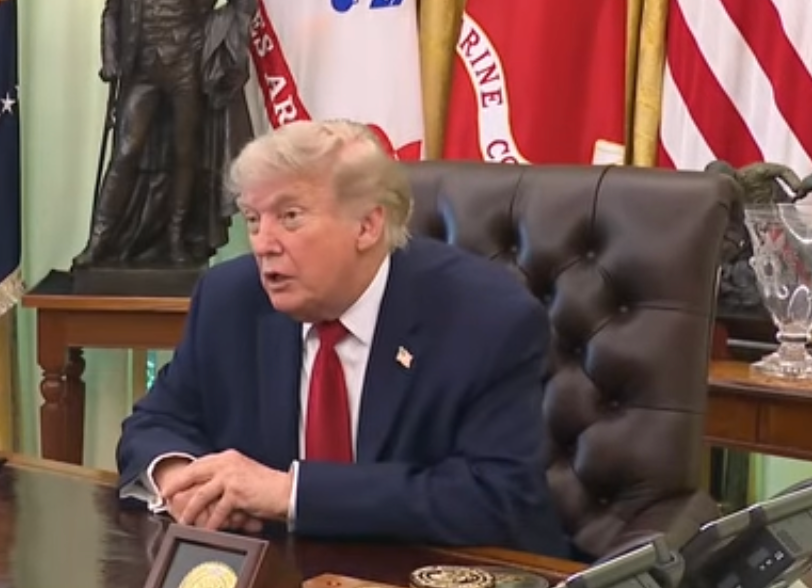
US President Donald Trump has about 10 days to decide whether or not to sign bipartisan housing legislation containing a ban on a central bank digital currency (CBDC) into law after saying he planned to prioritize a controversial voting bill.
According to reports, House Speaker Mike Johnson sent the 21st Century ROAD to Housing Act to Trump’s desk on Monday, kicking off a 10-day timeline for the president to decide whether to ignore, sign or veto the bill under the US Constitution, excluding Sundays. The bill, passed by the House of Representatives last week, included language barring the Federal Reserve from issuing or creating a CBDC “or any digital asset that is substantially similar” until the end of 2030.
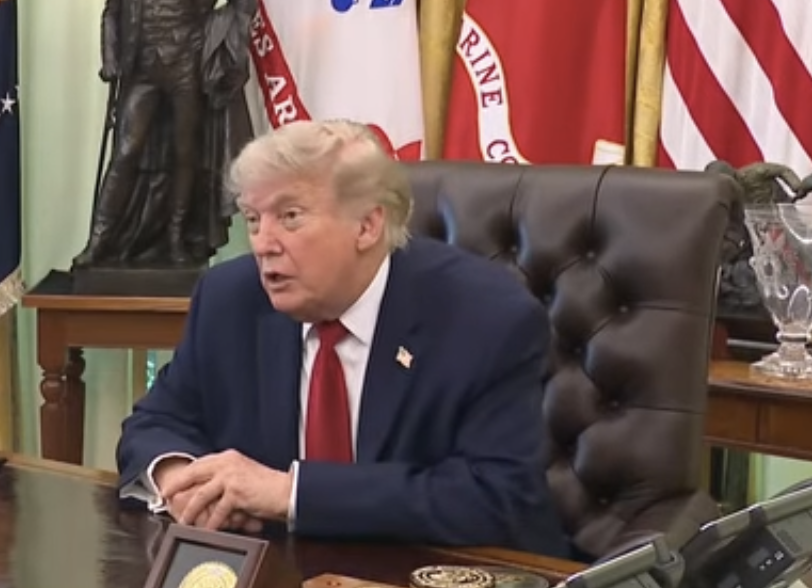
Donald Trump signing executive orders on Monday. Source: The White House
Trump reportedly called the legislation a “yawn” and sarcastically referred to the situation as a “big deal.” He canceled the signing ceremony for the bill on Wednesday, saying that Republicans in Congress should focus on passing the SAVE America Act. The legislation would require voters to provide proof of US citizenship in person to register, potentially disenfranchising millions of people.
The 21st Century ROAD to Housing Act received significant bipartisan support from Democrats and Republicans, with members of both parties lauding progress ahead of Trump’s potential signature. Sponsored by Senator Elizabeth Warren, the Democrat-led legislation included a CBDC ban in an attempt to garner support from Republicans and the White House.
Related: Senate leaders push for July passage of CLARITY Act
“We should be celebrating a bipartisan housing law,” said Warren on Monday. “Instead, we have a call to action. Mr. President: sign the damn bill.”
Senators on state work periods, chamber set to consider market structure
The US Senate broke on Friday for state work periods, with lawmakers expected to return by July 13. The chamber’s calendar gives lawmakers about four weeks to address the Digital Asset Market Clarity (CLARITY) Act before another state work period in August.
Trump said in March that he would “not sign other bills” until the SAVE America Act was passed, but also made a social media post signaling that he supported CLARITY. Should the president veto the bill, Congress could override his action with a two-thirds majority in both chambers.
Magazine: SBF will never get a pardon, Trump peace deal boosts Bitcoin: Hodlers Digest June 14-21
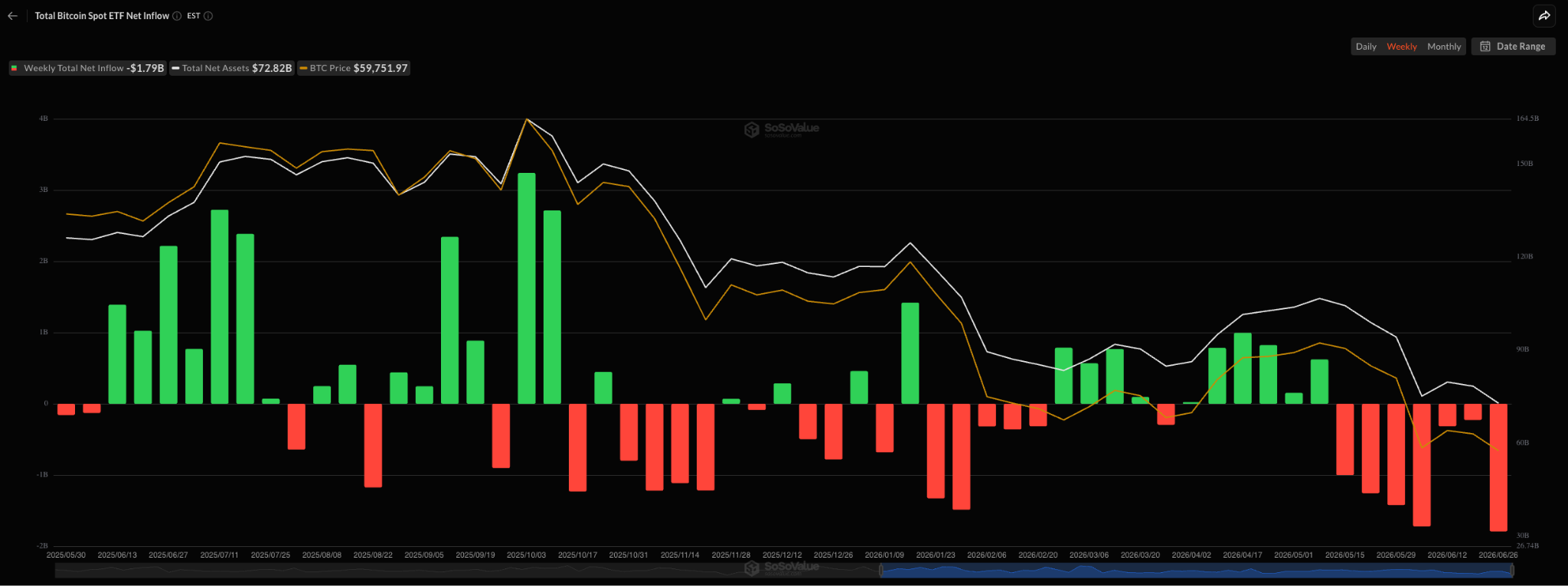
Bitcoin (BTC) trades at an important inflection point as retail investors are selling, big institutions are in a hold despite the discounted valuation and the market is paused at $60,300—awaiting the next significant move. The situation reveals two very different investor groups making opposite bets.
Retail investors sell, TradFi watches
The general mood is fearful, with the Crypto Fear & Greed Index sitting at 36 out of 100, indicating fear but not total panic. This number masks a sharp divide. In June alone, investors pulled $4.4 billion from US spot Bitcoin ETFs—the worst month this year. At the same time, Strategy continues to buy BTC, although the pace and size of its purchases have slowed. While ETF flows and Bitcoin treasury accumulation are not in a buying phase, a majority of corporate BTC treasuries have not reduced their existing positions.
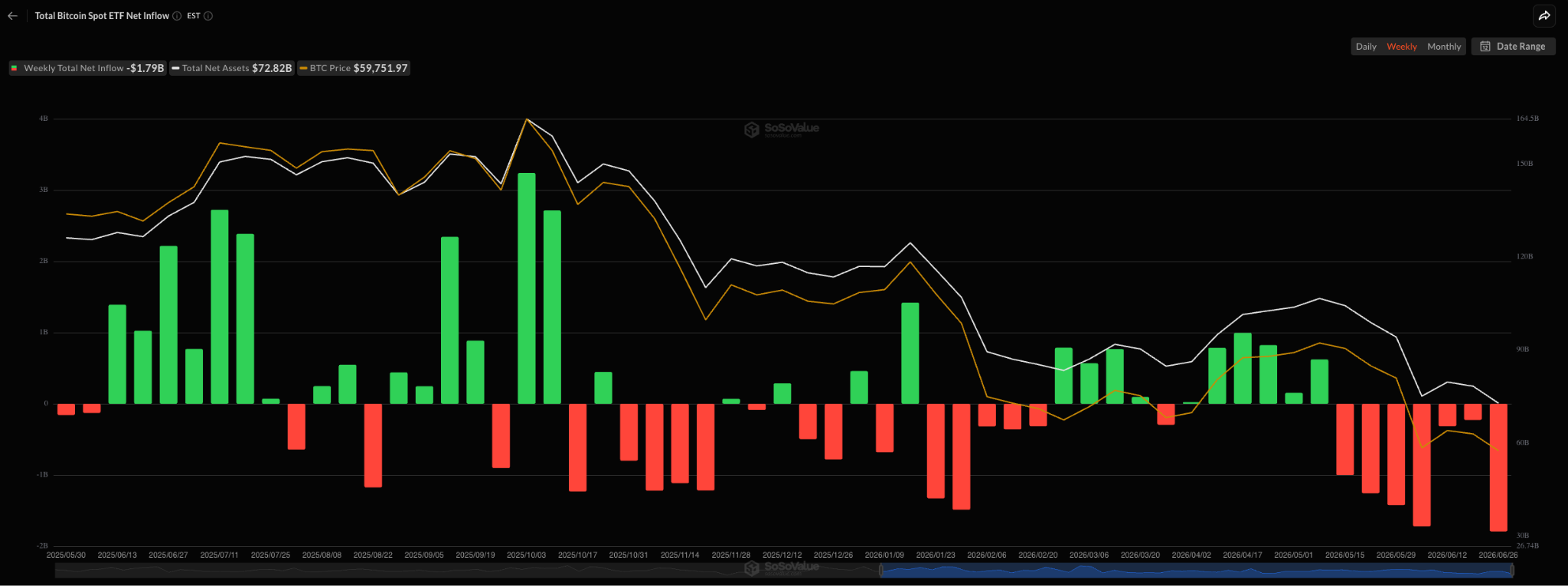
Spot Bitcoin ETF net flows. Source: SoSoValue.com
Leverage unwinds, but slowly
The aggregate open interest in Bitcoin futures contracts across all exchanges is $19.92 billion. Two weeks ago, it was $20.1 billion. This unwinding—when traders close positions to reduce risk—is happening in an orderly way, not in a panic.
The borrowing costs for holding long positions have dropped from 0.25% to 0.12%, suggesting that the worst of the forced selling is over. However, longs are still paying to hold their positions, meaning traders believe in a recovery but aren’t willing to bet their full account on it.
The current danger zone is $58,800, Bitcoin’s low for the day. If the price breaks below this level, the next $500 million worth of traders holding long positions could be forced to close their trades, sending Bitcoin toward $56,000. That move may extend the selling pressure into next week.
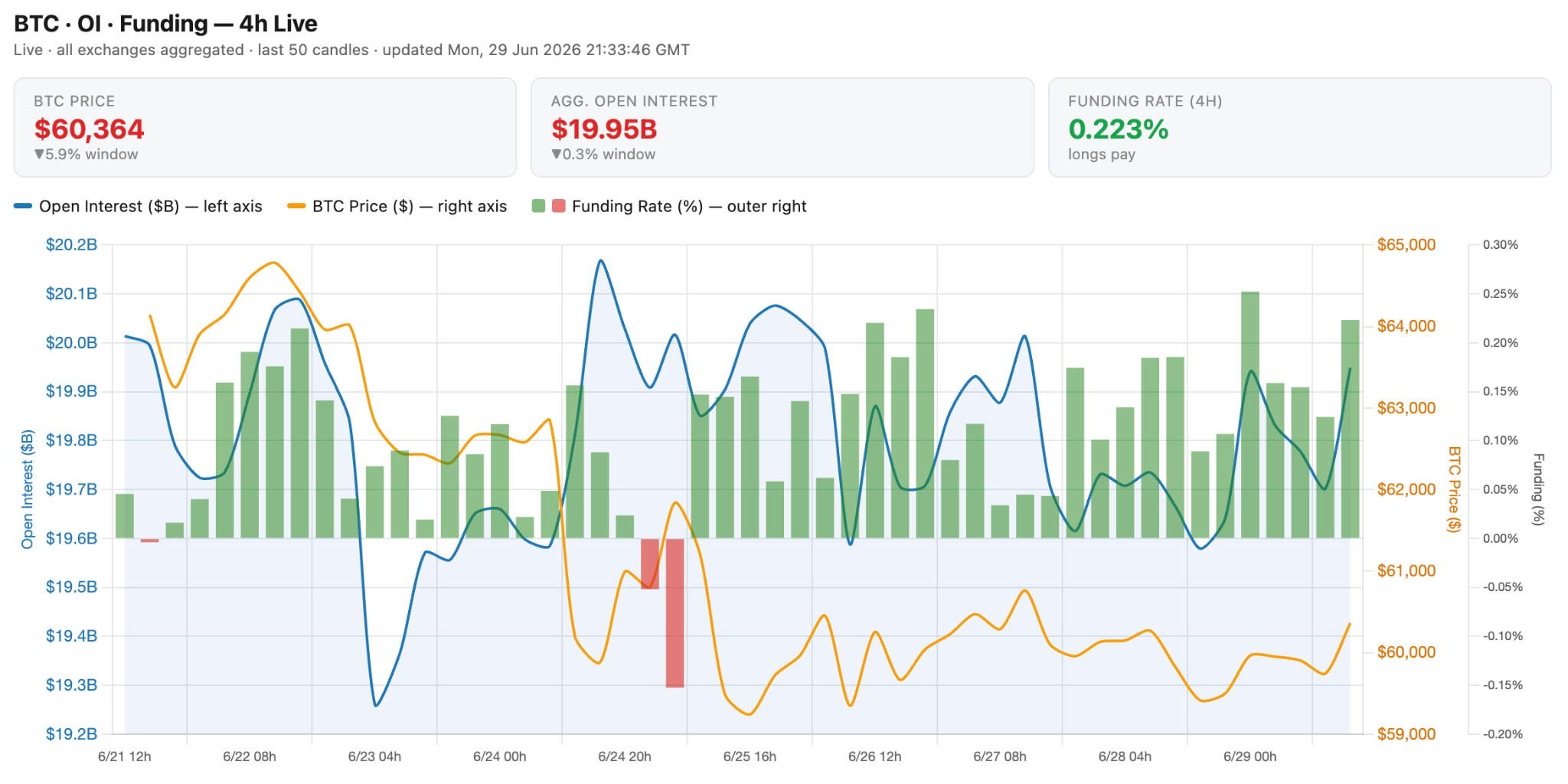
Bitcoin open interest, funding rate. Source: Hyblock
The market is waiting, not acting
When fresh capital flows into Bitcoin, volume spikes and the action shows up in the data. Right now, it doesn’t, as trading volume is down, and open interest changes are small. This suggests the market is in an indecisive phase where retail traders may be done selling, but nobody is confident enough to buy in size yet. That’s not surprising.
Related: Bitcoin balances $60K tightrope as US stocks rebound on fresh Iran peace deal hopes
MicroStrategy, which has accumulated Bitcoin for corporate reserves, did buy 3,600 Bitcoin in June for $236 million, betting on a recovery. But overall, institutions are holding rather than aggressively buying. This pause could break in either direction: lower (if one more wave of sellers emerges) or higher (if confidence returns).
For Bitcoin to move meaningfully higher, it needs to reclaim $62,000. The risk is real: a macro news event at any point in the week, like the June employment report or the resumption of military action in Iran, could weigh on investor sentiment and tip BTC back under the $60,000 handle.

CF Montreal transfer F Mahala Opoku to Greek club

IBM Says It Can Fit Nearly 100 Billion Transistors On a Chip

Consultation to close on new council wards for Darlington


-
 Sports6 days ago
Two goals and an assist by sheer aura: Cristiano Ronaldo just entered the World Cup chat
-

 Fashion3 days ago
Weekend Open Thread: Staud – Corporette.com
-

 Politics4 days ago
The House | Manchesterism won’t survive the painful trade-offs unless it gets citizens on board
-

 Politics4 days ago
Potential 2028er World Cup attendee leaderboard
-

 News Videos1 day ago
MAJOR BITCOIN & MARKET UPDATE!!!! (MUST WATCH ASAP!!!)
-

 Business4 days ago
Asia stock markets slide as tech shares slump
-

 Tech4 days ago
A Look At A Gaggle Of Transputer Boards
-
Crypto World6 days ago
Bitcoin (BTC) Dips Below $62K, Ethereum (ETH) Plunges 6% Daily: Market Watch
-
 Crypto World4 days ago
Dell (DELL) Shares Tumble Over 5% Following Analyst Downgrade to Hold
-

 Crypto World2 days ago
Coinbase, Circle Deepen Crypto Stock Losses Despite Resilient S&P 500
-

 Crypto World6 days ago
Securitize Wraps Roubini's SEC-Registered ETF as Dubai VARA Digital Security
-
Business6 days ago
Entergy settles forward sale agreements, raises $672 million in cash proceeds
-

 Crypto World3 days ago
Kraken's xStocks Opens Bending Spoons IPO Registration to EEA Retail
-

 Sports3 days ago
FIH Pro League: India defeat Pakistan 7-1, register biggest win of campaign | Other Sports News
-

 Tech2 days ago
Russian hackers now target Signal backup recovery keys
-

 Tech2 days ago
Bluekit phishing kit adopts browser-in-the-middle for login theft
-

 Crypto World4 days ago
Bitcoin Sparks $600M Hourly Liquidations With $65,000 Set To Become Resistance
-

 Crypto World3 days ago
RTX holders must register wallets before token distribution begins
-
Crypto World3 days ago
Hyperliquid Named on Singapore MAS Investor Alert Register
-

 Crypto World5 days ago
Ripple and SBI launch RLUSD in Japan after JFSA approval
You must be logged in to post a comment Login