Connect with us
DAPA Banner
DAPA Coin
DAPA
COIN PAYMENT ASSET
PRIVACY · BLOCKDAG · HOMOMORPHIC ENCRYPTION · RUST
ElGamal Encrypted MINE DAPA
🚫 GENESIS SOLD OUT
DAPAPAY COMING

NewsBeat

how ‘working memory’ may mysteriously give rise to it

Published

on

how ‘working memory’ may mysteriously give rise to it

You know that feeling when you walk into a room and immediately forget why you came in? Maybe you were there to fetch your keys. On your way to the room, you were thinking about grabbing your keys. But once you arrive, your keys have completely disappeared from your mind.

This is sometimes known as the doorway effect, since it often strikes when you walk into a new room. Why does it happen? The answer has a lot to do with a faculty called working memory. Information gets stored in working memory when we need it for the tasks that we are engaged in right now (like remembering to grab your keys).

What makes working memory so intriguing is its close link to consciousness. The doorway effect suggests that when information is removed from working memory, it immediately seems to leave consciousness. It also suggests that it is easy for information in working memory to be forgotten.

The link between working memory and consciousness is getting increasing attention in psychology, philosophy and neuroscience. Could working memory somehow give rise to consciousness? In my new book, I explore the complex relationship between the two.

Advertisement

Working memory: both rich and poor

To understand the doorway effect, we’ll need to know a bit about working memory. One thing that makes working memory so special is that it’s so rich, both in terms of the information it has access to, and its processing power. According to recent models of working memory, it can draw information from sensory channels (vision, touch, smell etc), as well as from other memory systems such as long-term memory and also the brain’s system for processing language. In other words, working memory is where a lot of the information in your brain comes together.

Wait, why am I carrying boxes?
Prostock-studio/Shutterstock

Once working memory has that information, there’s a lot it can do with it. Inside working memory are a host of different smaller systems for specific tasks, including visual and spatial reasoning (like solving a Rubik’s cube) and storing chunks of information (like a phone number). There’s even a “central executive” system (my favourite). The executive is like a merciless boss, assigning tasks to the different systems within working memory and keeping everything under control.

In other ways, what makes working memory so special is that it’s simultaneously very poor. Despite the riches of information available to it, working memory can only actually store a tiny amount of information at any one time.

Advertisement

In one classic experiment reported in 1997 people were asked to view a screen with several coloured shapes on it, which they were told to remember. The shapes then disappeared for about a second, and a new set of coloured shapes appeared. One of the new shapes might have changed colour. Participants were asked to spot whether there had been any changes between the two sets of shapes. This is called “change-detection”.

People were almost perfect at this when there were only 1-3 shapes involved in each set, but got steadily worse as the number of shapes was increased from 4-12. The experimenters argued that this is because it gets harder to store information as the number of shapes increases. This is because the capacity of working memory isn’t big enough to store lots of shapes. The experimenters concluded that the capacity of working memory is only about four “slots”. Once those slots are taken, working memory is full up: there’s simply no more room for any new information.

The idea that working memory has “slots” is closely related to something called “chunking”. Here are two strings of letters (nine in each). Try to memorise them both:

BBC FBI WWF

Advertisement

ZQK EWP WLJ

I bet you find the first string of letters easier to memorise. This is because they’re familiar, and so naturally your brain sorts them into three chunks. They can then be stored as three different chunks in working memory. For this reason, the first set only takes up three slots in working memory. The second string of letters is unfamiliar, and so requires us to store all nine letters as individual chunks. This is difficult because working memory quickly runs out of slots.

But like many features of working memory, its capacity is a hotly debated issue. A growing number of scientists have rejected the idea that it has “slots”, arguing instead that its capacity is more of a flexible resource that can be differently distributed across different pieces of information. According to this view, working memory’s capacity – far from being four rigid slots – might be more like a tank of water to be used in watering your garden: you can give a little bit of water to lots of different areas, or lots of water to just one or two areas.

In the same way, working memory might be able to store a little bit of information about lots of objects, or very detailed information about just one or two of them.

Advertisement

One study from 2004 supports this flexible resource view over the slots view. This experiment also used change-detection with shapes.

Crucially, the experimenters tried this with different kinds of shapes. Sometimes they used only very simple shapes, sometimes very complicated ones. They found that people seem able to store information about more of the simpler shapes in working memory. They were much worse at storing information about the complicated shapes. In fact, the experimenters suggest that the capacity of working memory for a very complicated object (like a cube with many different coloured sides) might only be between 1 and 2.

This seems to show that the capacity of working memory is “soaked up” much more when it tries to remember very complicated objects. This suggests that working memory doesn’t have a fixed number of slots, but that its capacity depends on how complicated the information you’re trying to store is.

To me, there’s something romantic about how rich working memory is in terms of how much information is available to it, and how poor it is in terms of its small capacity. It’s like it can always see the vast riches available to it, but can only ever sample a tiny portion at a time.

Advertisement

The low capacity of working memory can help us understand why the information it stores is so easily forgotten, like in the doorway effect. There’s not much room in working memory, so when new information comes in, old information needs to go.

As I mentioned at the beginning, research suggests that the very action of walking through a doorway might trigger forgetting. One experiment showed that people find it harder to remember things when they walk through a doorway, compared to people who walk the same distance but don’t cross a threshold. When we enter a new room, its like the brain flushes away the old facts from working memory, to get ready for the fresh information that we might need in our new setting.

From an evolutionary perspective, the doorway effect makes sense: forgetting old information is important in helping us to stay open and alert to novel information in the new environment.

Thinking about the capacity of working memory can help shed light on why it’s so easy to forget things, even when we were just this second thinking about them. But there’s an even more tantalising possibility here. When we forget things like our keys, they seem to drop away from our consciousness entirely. This raises the suggestion that working memory and consciousness might go hand in hand.

Advertisement

Working memory and consciousness

Consciousness is perhaps the biggest mystery facing both science and philosophy today. By “consciousness”, I mean the subjective experiences that we have of the world. Consciousness includes the visual image of a beautiful sunset, or the taste of chocolate, as well as emotions like love and anger.

Many philosophers and scientists have thought that working memory can help us understand consciousness..
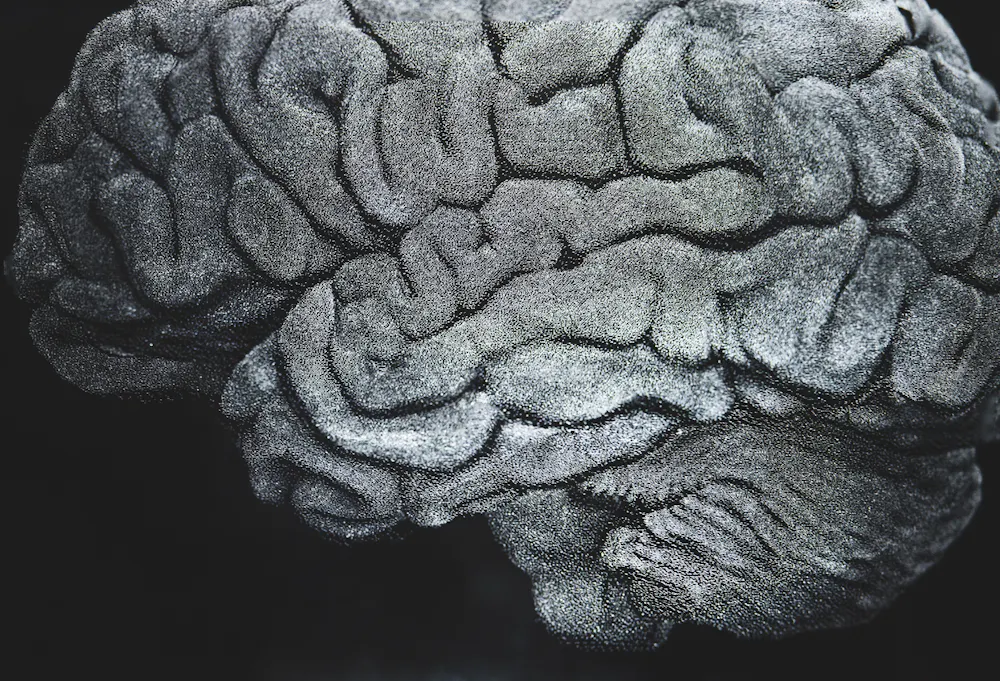
Abstract image of human brain texture.

We still don’t know where consciousness ‘lives’ in the brain.
Thomas B Lee/Shutterstock

The close link between consciousness and working memory is clear from some of the major theories of consciousness in psychology and neuroscience today. Personally, I’m a huge fan of the global neuronal workspace theory, which suggests that consciousness arises as a result of information being “broadcast” in a “global workspace” in the brain. This workspace is like a central information store, which can process information and distribute it globally to many different systems in the brain.

Does that sound like working memory to you? If it does, that’s no coincidence: the global workspace and working memory are similar notions. Their similarity can even be seen in the brain. There are still lots of open questions about where working memory is located in the brain but one important area is the prefrontal cortex. This is at the front of your brain, just above your eyes and behind your forehead. The same area also seems to be important for the sort of global broadcasting that global workspace theorists think is responsible for consciousness.

Advertisement

Scientists friendly to the global neuronal workspace theory have suggested that when we pay attention to information that is stored in working memory, that information gets boosted in volume and is broadcast across the brain – and that is what makes it conscious. According to this view, consciousness arises when working memory and attention work together.

The idea that attention and working memory might both be important for consciousness seems to fit with our own experience. When you’re trying to remember a phone number in your head, your attention stays on the phone number and you’re conscious of it. If someone distracts you by asking you a question, your attention is pulled away from the phone number and it immediately gets deleted from your consciousness. According to this picture, no attention = no consciousness.

The importance of both working memory and attention also fits with experimental data. One of my favourite experiments studied people walking across a courtyard on a spring afternoon. It was found that 75% of people who were on their mobile phones completely failed to spot a purple and yellow clown unicycling around the courtyard. This is even though the clown could have crossed their path, potentially causing a dangerous collision. They were on their phones, their attention was elsewhere, so the clown didn’t get into their consciousness. Again, this suggests that no attention = no consciousness.

Advertisement
High contrast image of a scary clown on a black background.

If you snooze, you lose.
Fer Gregory/Shutterstock

I have a lifelong fear of clowns. The idea that there might be a clown nearby that I just haven’t spotted fills me with dread. (I mean come on, they’re clearly terrifying).

But like everything to do with consciousness, the link between consciousness and working memory is controversial. Some think that there’s just too much consciousness to fit into working memory. Others say that some bits of working memory aren’t conscious at all. Let’s have a look at these arguments.

Is working memory too small for consciousness?

We’ve seen that working memory has a small capacity. This raises an obvious question: if working memory is responsible for consciousness, doesn’t that mean that consciousness must have a small capacity as well?

This can be a difficult idea to swallow. Imagine you’re looking out at a countryside scene. You see rolling hills, the vibrant sunshine and a herd of cows. You hear the birds, smell the fresh cut grass and feel the wind on your skin. Surely you are conscious of this whole scene all at once. But we know that working memory has a capacity that is far too tiny to fit all of this information in at one time. If consciousness arises from working memory, then how can I be conscious of all this stuff at once?

Indeed, some philosophers and scientists have argued in just this way, saying that consciousness overflows the capacity of working memory. If this is true, it would be a problem for those who think that consciousness arises from working memory.

Advertisement

In response to this problem, supporters of the link between working memory and consciousness have argued that consciousness isn’t as big as you might think. With the countryside scene, you might think that you’re conscious of all those sights, sounds and smells together. However, according to this view, really you’re only ever conscious of a few scraps at any one time. The reason it feels like you’re conscious of more is because, whenever you pay attention to something, that attention boosts the information into consciousness.

This is known as the refrigerator light illusion. Imagine someone who thought the light in their fridge was always turned on, because whenever they open the door to check, the light is on. Obviously, the problem is that the very act of opening the door causes the light to come on.

In the same way, the very act of checking to see if you’re conscious of birdsong causes you to direct attention to it, which brings the birdsong to consciousness. According to this view, we are only ever conscious of a few little bits at a time, but the ease with which attention can make things conscious fosters the illusion that we’re conscious of a lot more.

As if it weren’t bad enough that doorways make us forget, or that phones make us ignore unicycling clowns, now we have to deal with our fridges hoodwinking us about our own consciousness.

Advertisement

Working memory without consciousness?

Another area where consciousness and working memory might come apart concerns unconscious information. We know that lots of processing in our brains occurs unconsciously. When it comes to information in the brain, we only get to be conscious of the very tip of a large iceberg. Some psychologists have suggested that some of the information in working memory is completely unconscious. If this is true, this would mark an important difference between consciousness and working memory (since by definition, unconsciousness can’t be part of consciousness).

One key experiment from 2011 involves showing participants an image of a rippled patch, tilted at a specific angle. In the psychology world, this is called a Gabor patch. This patch was only shown to the participants for the tiniest flash of time. It’s there on the screen for only 16.67 milliseconds, about 17 thousandths of a second. This is about as long as a bee takes to flap its wings three times.

Example of a two-dimensional Gabor patch.

Gabor patch.
wikipedia

Flashing the patch on the screen so briefly prevents the patch from being consciously seen. Because of the brevity with which the patch appears, information about the patch enters the participants’ eyes, and participants see the patch but are not consciously aware of it. They see it, but unconsciously.

Still, we know that information about things we’re not conscious of must be processed at quite a high level in the brain. After the first patch disappeared, they were shown another different patch. This one was shown for longer, so it could be seen consciously. Participants were asked to indicate (by clicking a button) whether this second patch was tilted to the left or the right of the first patch that they had not consciously seen. Amazingly, they were able to do this at a level above chance. Even though the first patch was unconscious, people could still use information about it to make comparison judgements.

Advertisement

This is crucial for working memory and consciousness. The experimenters claimed that information about the briefly flashed patch must be stored in working memory, even though participants were completely unaware of it. From this, the experimenters concluded that some information in working memory is not conscious. If so, the link between consciousness and working memory is weaker than we might hope.

My idea: not all-or-nothing thing

When it comes to the experiment just discussed, I want to close with some of the ideas that I’ve been exploring in my book. I think that working memory might not be an all-or-nothing thing, that information might not have to be either “in” or “out” of working memory.

Sometimes, we can slip into the trap of thinking that everything in the human mind must be either one thing or another. This mindset is very natural, but in my book I argue that it must be rejected.

I suggest that there could be some information that is not “in” or “out” of working memory, but somewhere in between. I argue that working memory comes on a spectrum. Some information is definitely in working memory, and some is definitely not. But in between (I argue) is a large grey area where there is some information in our minds that falls in between being fully stored in working memory and not being stored.

Advertisement
Honey bee pollinating lavender flowers.

The flap of a bee wing is too quick for us to register it consciously.
Serenko Natalia/Shutterstock

This is certainly an unusual suggestion. But I argue that thinking about working memory as a spectrum sheds new light on the experiments I talked about above. Remember the patch that was flashed up in three beats of a bee’s wing – so fast you couldn’t consciously see it and preventing it from being fully encoded in working memory? I argue that this information sits in the grey area between being fully in and fully out of working memory.

This raises an interesting possibility with respect to consciousness. If we think that working memory is closely linked to consciousness, an obvious question is whether there can be a grey area between something being conscious and not being conscious. Indeed, some philosophers have suggested that there might be such a grey area.

At first sight, the experiments I’ve talked about might look a bit strange and obscure. When I tell people about these experiments at parties, they sometimes ask me how I can spend so much time thinking about doorways, unicycling clowns, or how we remember random shapes. I get visibly excited talking to people about all this, and I can almost see them making a mental note not to invite me back.

But these experiments are exciting. To see this, we need to step away from the technical details of these experiments and take a broader view. These experiments and others continue to unearth the mechanics of working memory. There is still much more to find out, such as where and how it is brought about in the brain, and the ways in which injury to the brain can impact on working memory. As these mysteries are slowly explained, perhaps we will be in a better place to tackle the arguably biggest conundrum in science: consciousness itself.


Advertisement

Source link

Continue Reading
Click to comment

You must be logged in to post a comment Login

Leave a Reply

NewsBeat

NHS patients are being socially prescribed yoga. But is yoga ready to help them?

Published

on

NHS patients are being socially prescribed yoga. But is yoga ready to help them?

Yoga can be seen as an accessible way to exercise and improve wellbeing. You don’t always need a gym membership, specialist machinery or other people to do it.

But in practice, yoga in the UK is easier for some people to access than others. It is increasingly being linked to NHS social prescribing, where people may be connected with health-promoting, non-clinical activities delivered by community and voluntary services. Yet what is available, accessible or affordable can differ from place to place. My research suggests that some of the people who could benefit most from yoga face barriers to taking part.

Available evidence suggests that yoga participation in the UK is strongly skewed towards a narrow demographic. Respondents to a 2020 survey of UK yoga students and teachers were 91% white, 71% university educated and 87% female. These figures sit uneasily beside yoga’s reputation as open to all.

Many of the people least represented in yoga also experience poorer health outcomes and face health inequalities: avoidable and unfair differences in health between different groups of people. If yoga is being used as part of public health and wellbeing services, we need to ask who can realistically afford it, reach it and feel welcome once they arrive.

Advertisement

Mind and body

Yoga is a mind-body activity with roots in ancient south Asia. It can include breathing exercises (pranayama), philosophy, mindfulness, meditation and movement. Research suggests that it may help some people manage aspects of physical and mental health, including chronic lower-back pain, stress, symptoms of anxiety or depression, and quality of life and fatigue among some cancer survivors. The strength of the evidence is variable and covers a wide range of conditions, but yoga is widely understood to support health.

I am a researcher and yoga teacher with a focus on inclusion and marginalised groups. I teach yoga in northern city neighbourhoods with high levels of deprivation. These subsidised classes are more diverse than many other yoga spaces, and I wanted to find out why yoga is so often lacking in diversity.

In my forthcoming book, The Diversity Gap in UK Yoga: Outsider Perspectives, I examined the yoga access experiences of people from a range of backgrounds under-represented in yoga, including those on low incomes, disabled people, people with a high body-mass index and minority ethnic groups.

When analysing the interviews, I looked not only at the barriers people described directly, but also at underlying issues of power and inequality that shaped how bodies, backgrounds and needs were viewed in yoga spaces. This helped me identify cultural barriers that might otherwise be overlooked.

Advertisement

Identifying barriers

Some of the barriers I found were practical. Classes could be difficult to attend because of where and when they were held, how easy they were to reach, how much they cost and whether people were expected to buy particular clothing or equipment.

Other barriers were linked to how people imagined yoga before they tried it. Some worried that yoga would be too physically demanding, or not active enough. Some thought it might be “uncool”. Others felt that yoga was only for people who were slim, flexible, athletic or already confident in exercise spaces.

Some were also put off by elements that felt unfamiliar or alien, such as chanting, especially when these were not clearly explained.

Other barriers were cultural: they related to yoga spaces and the assumptions within them. Some participants felt excluded by the tendency for people within yoga to overlook access barriers, or to assume they could be overcome through luck, confidence, persistence or the right attitude, rather than recognising that the barriers themselves needed addressing.

Advertisement

Representation also affected whether people felt they belonged. Not seeing anyone like themselves could be alienating for some people.

For some people from south Asian national or faith backgrounds, it was also alienating when yoga’s south Asian origins were ignored, simplified or used in ways they felt were inappropriate. A strong belief that yoga is inherently welcoming could also make it harder to raise concerns. If criticism is discouraged, access problems are less likely to be acknowledged or addressed.

My research helps explain why yoga in the UK is often so white and middle class, and why this has consequences when yoga is used to support health and wellbeing. It found that people with marginalised identities experienced practical, perceptual and cultural barriers when they tried to get involved in yoga. Many of these groups already face poorer health outcomes and greater barriers to care.

These findings offer yoga teachers, studios and community providers an opportunity to examine their practices and make yoga more accessible to people who have too often been excluded.

Advertisement

Source link

Continue Reading

NewsBeat

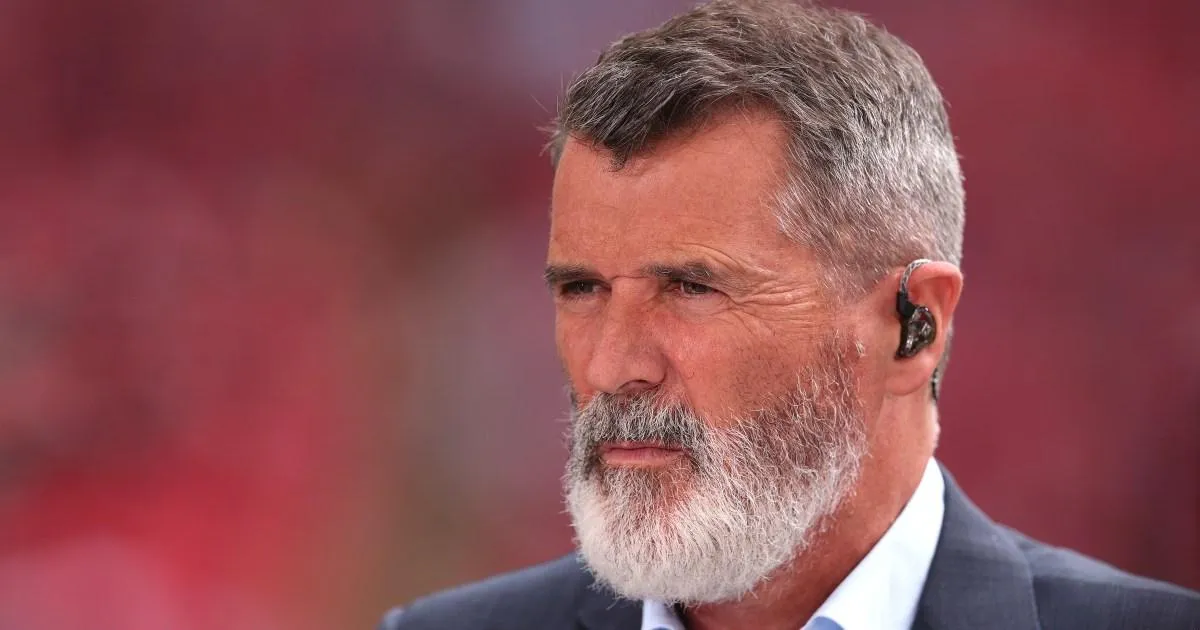
Roy Keane names his two World Cup favourites: ‘They will meet in the final’ | Football

Published

on

Roy Keane names his two World Cup favourites: 'They will meet in the final' | Football

Close Overlay

In The Mixer’s World Cup special

Everything you need to know about the World Cup – England updates, the games to watch and stories you missed – in five minutes, at 1pm, every day.

Source link

Advertisement
Continue Reading

NewsBeat

What TV channel is France v Sweden on tonight? Kick-off time and live stream

Published

on

Wales Online

France take on Sweden in the World Cup round of 32 tonight. Here’s the kick-off time, TV channel, live stream details and who awaits the winners

France and Sweden go head-to-head tonight for a place in the last 16 of the World Cup.

Advertisement

Didier Deschamps’ side have been one of the standout teams of the tournament so far, winning all three of their group matches in style against Senegal, Iraq and Norway, scoring at least three goals in each outing.

Kylian Mbappe has already netted four times in the competition and will be hoping to continue his fine goalscoring form as France bid to keep their World Cup challenge on track.

Sweden, managed by former Swansea City and Chelsea boss Graham Potter, squeezed through to the knockout stages as one of the best third-placed teams and face a huge task against one of the pre-tournament favourites.

Deschamps will also be back on the touchline after briefly returning to France following the death of his mother.

Advertisement

Here is everything you need to know about tonight’s match.

What time is France v Sweden?

France v Sweden kicks off at 10pm BST tonight on Tuesday, June 30.

The match takes place at the New York/New Jersey Stadium.

What channel is the game on?

The game will be shown live and free on ITV1 across the UK. Viewers in Scotland can also watch on STV.

Advertisement

What about live streaming?

The match can be streamed live via ITVX or STV Player.

Who will the winners face?

The winners will take on Paraguay in the last 16 after the South Americans stunned Germany in a penalty shootout.

That match will be played on Saturday, July 4, in Philadelphia.

France v Sweden team news

William Saliba is expected to return to France’s starting line-up after being rested for the group-stage win over Norway because of a minor back issue.

Advertisement

Sweden’s main concern is Isak Hien, with Victor Lindelof expected to move back into central defence if Hien is unable to feature.

Source link

Continue Reading

NewsBeat

Co Down community calls for Stormont to ‘save our rural school’ amid closure fears

Published

on

Belfast Live

A petition signed by 5,000 people calling for the school to remain open was submitted to the Education Minister

St Malachy’s PS Kilclief at Stormont

The community surrounding a rural Co Down school have taken their battle to remain open to Stormont by handing in a petition signed by thousands to the Education Minister.

St Malachy’s Primary School has been at the heart of the Kilclief community for 159 years. The school is known for its peaceful rural setting, strong pastoral ethos, child-centred teaching, and dedicated staff. The school is also known for its inclusive approach to education, particularly for children with Special Educational Needs.

Last year, the primary school received the news it was facing closure due to low enrollment numbers. The Council for Catholic Maintained Schools said the proposed closure would be effective in September 2027, alongside an expansion of St Joseph’s PS Strangford, which includes two external classrooms.

A petition calling for the school to remain open received more than 5,000 signatures from the local community and beyond. On June 30, parents, teachers, and pupils from St Malachy’s PS took this petition to Stormont, to be handed over to the Education Minister.

Advertisement

Speaking to Belfast Live, acting principal of the school, Ashlene McMullan, said they have been blown away by the response to their petition.

She said: “St Malachy’s is a rural school that is the heart of the community. It’s so much more than just an education, the children make memories and friends, as well as the school hosting so many cornerstone events. It would be a big loss if the school were to close.

Advertisement

“We had an online petition and a written petition, which has had thousands of responses. People locally and from further afield have been supporting us, which has been great to see.

“We need to save our rural school. Our school is so much more important than people realise, and without it, it would be a big loss to the community.”

Claire Cultra’s son, five-year-old Daniel, has just finished Primary One at St Malachy’s PS. She said the school has given so much support to her young son, who has Down’s syndrome, and Claire said her three-year-old daughter Susie is excited to start at the school in September 2027.

“Daniel goes in every morning the happiest child, he is loved by all the children and teachers, he has an amazing classroom assistant,” Claire said.

Advertisement

“We had a process of introducing Daniel into the school just because of his Down’s syndrome, he’s very much into routine. He has just blended into the school so well. Susie is super excited to go to the school, but she has another year to wait.

“Generations of our family, on both sides, have attended this school. It would be devastating if it ever closed.”

Claire said the closure of the school would have a knock-on effect to the surrounding community. She added: “It’s so part of the community – everything centres around the school.

“We’re a small parish in Kilclief, but when we come together, we hold events at the school throughout the year. We have people coming from far and wide for the Pumpkin Patch, we have Santa visits.

“The school is loved by everybody, it would be devastating to see it close. That site would just be vacant and the only thing left in the parish would be the church.

“Yes our numbers are low, but our community is growing. There are houses being developed. We are just calling for our school to be saved.”

Conor McCarthy, regional officer for Unison, said they “disagree completely” with the decision to earmark the school for closure.

Advertisement

He said: “We fully back the community and the staff. It does need to stay open, these children have amazing opportunities, and it’s a beautiful school surrounded by a beautiful environment. For it to be earmarked for closure is absolutely scandalous.

“There’s no way the Department of Education and this current minister can say they’re for the promotion of good educational outcomes, and fostering good mental health in our schools, while at the same time closing schools like St Malachy’s. It just does not add up.

“The school needs to remain open, not only for these current kids, but for future generations. There are kids waiting to go into that school, so the numbers can be obtained, but this managed decline – not only of St Malachy’s, but rural schools right across the country – needs to stop.”

Chris Hazzard, MP for South Down, said the focus needs to be on local children receiving a world class education, no matter what decision is ultimately made.

He said: “Like so many of our small rural schools across the North, there’s real pressures when it comes to sustainability and the quality of the education the child is receiving.

“We as a community, parents, grandparents, we can all have an attachment to the bricks and mortar of local schools, but we must ensure the education the child is receiving is world class. My ask here is whatever process is in place, whatever the decision that is come to, that the education of the children is world class.

“Like many rural isolated communities, this is a small coastal area. You have stunning scenery, a strong GAA club, and you have a small local school in that community.

Advertisement

“Once you start to lose those different elements, the sense of community cohesion can lose out, which we’ve seen in other areas as well. We’ve dealt with a school amalgamation process in the Mourne area over the years, and much of these fears came to the surface in that process as well. Fundamentally, the most important thing is the education of the children.”

St Malachy’s Primary School said they have submitted a detailed and evidence-based case and is urging CCMS and the Department of Education to give full consideration to the unique role the school plays, particularly in supporting children with SEN.

In a previous statement, a CCMS spokesperson said: “Operational Plan 2 of the Strategic Area Plan 2022 – 2027, was published on 16 January 2025.

“This included a work stream for the Strangford and Kilclief area in which the Council for Catholic Maintained Schools (CCMS) proposed to review maintained primary school provision in the area.

Advertisement

“CCMS plans carry out a pre-publication consultation with parents, staff and governors from St Malachy’s Primary School and St Joseph’s Primary School on the future of primary provision in the area.

“The consultation is due to commence later this year. Stakeholders will have the opportunity to provide feedback to the proposal being consulted on.”

For all the latest news, visit the Belfast Live homepage here and sign up to our daily newsletter here.

Source link

Advertisement
Continue Reading

NewsBeat

Caribbean police investigating ‘all lines of enquiry’ after Scots man shot dead

Published

on

Daily Record

Danny Vettrino was shot dead on the luxury island of Canouan last week, with multiple people ‘assisting police’ in their investigations.

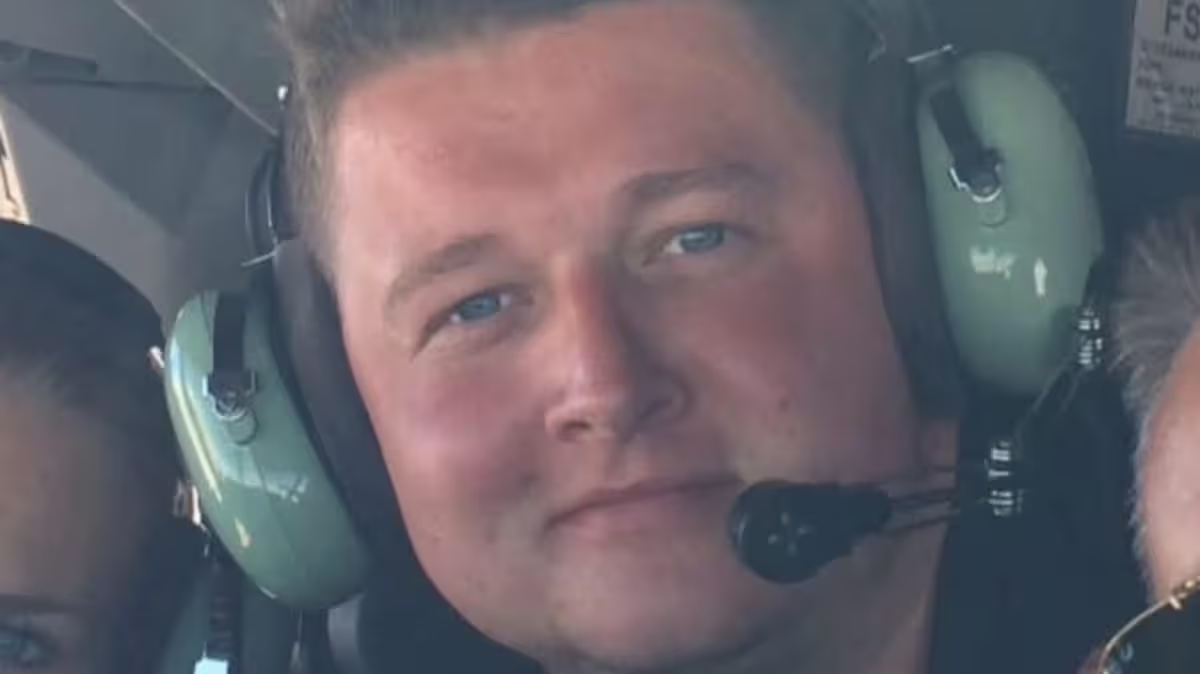
Police are considering “all lines of enquiry” in their investigation into the death of a Scottish man gunned down on a Caribbean island. Danny Vettrino was shot and killed at a car park in the Gym Hill area of Canouan in St. Vincent and the Grenadines at around 11.30pm on Wednesday, June 24, after returning from a day out.

Advertisement

The Record revealed yesterday that local media had linked the 36-year-old’s death to a plane that vanished on the luxury island earlier this month. However, the Royal St Vincent and the Grenadines Police Force (RSVGPF) was unable to confirm Danny’s death was linked to this incident.

A spokesperson for the force told the BBC that a probe was ongoing and would be following “all available lines of enquiry”, with multiple people “assisting police” in their investigations.

It had been reported the RSVGPF detained two men in connection with the death but they have not verified if this is true at this stage. The light aircraft left Argyle International Airport for Tobago on June 12 but was missing for three days.

However, Deputy Prime Minister of Saint Vincent and the Grenadines, Clair Leacock, announced it had been traced three days later. Leacock refused to go into detail on the matter and said the situation was a “very delicate security matter”

Advertisement

He said the intelligence and security agencies are closely monitoring the situation and would focus on the two Colombian pilots.

The Record revealed on Sunday how Vettrino moved to Colombia for a year in 2023 after working in Egypt for eight years with an international peacekeeping organisation. He left South America in 2024 and moved to the Grenadines where he worked as a Technical Service Manager at the Canouan Estate Resort and Villas.

Confirming his passing online, his brother Robson Vettrino Kolberg said Daniel, known as Danny, was “loved by everyone, a pure soul who only wanted success and happiness for all of those around him”. He said: “He has touched the lives of so many people, from his hometown in Fife to all corners of this world.”

Daniel’s aunt also paid a heartfelt tribute to her “one in a million” nephew on Sunday. She said: “Daniel lived a life shaped by courage, independence, and a determination to follow his own path.

“He was one of five, a brother, son, nephew, cousin, and friend — loved deeply in every role he held. His journey was uniquely his: brave, stubborn, gentle, and unforgettable. He did it his way.

Advertisement

“Daniel was violently taken, robbed of the years he deserved, and the loss has shaken every part of the family. But his story, his spirit, and his love remain. Rest in the peace you deserve.”

A spokesman for the Foreign Office said: “We are supporting the family of a British national who died in St Vincent and the Grenadines, and we are in contact with the local authorities.”

Get more Daily Record exclusives by signing up for free to Google’s preferred sources. Click HERE.

Source link

Advertisement
Continue Reading

NewsBeat

US Supreme Court upholds birthright citizenship in blow to Trump

Published

on

A woman in a pink bikini lies on a deck chair covered in pink blankets, reads a magazine. there are pink towels, a tote bag and a radio next to her.

On Truth Social, Trump said that the court’s decision was “too bad” and vowed to continue to fight to end birthright citizenship through legislation.

“No long and unwieldy constitutional amendment is necessary,” he said. “Congress should today start work on ending expensive, and unfair to our country, birthright citizenship.”

The US has granted citizenship to everyone born in the country since 1868, with the right enshrined in the 14th Amendment of the US Constitution, and bolstered by later US Supreme Court rulings.

“Citizenship, then and now, was the right to have rights – to freely participate in our political community,” Justice Roberts wrote in the majority opinion. “The Framers of the Fourteenth Amendment extended that promise to ‘every free-born person in this land’,” he wrote.

Advertisement

“We keep that promise today,” the chief justice said.

Three of the court’s nine justices dissented from the decision: Justices Clarence Thomas, Neil Gorsuch and Samuel Alito.

Justice Thomas, for his part, argued that the 14th amendment was being “repurposed for political projects” and that the freed slaves it was originally intended for “were Americans” with no allegiance to other countries.

Another of the dissenting Justices, Samuel Alito, described the ruling as a “serious mistake” that “confers citizenship on virtually anyone who happens to be born in this country”, including those who come to the US with the explicit purpose of giving birth to a child and then returning to their country of origin.

Advertisement

The case was of enormous significance to President Donald Trump, who made a brief but historic appearance at the court to watch oral arguments in April.

On X, White House Chief of Staff Stephen Miller – a vocal proponent of stricter immigration rules – called it “one of the most destructive and outrageous decisions” in the Supreme Court’s history.

“American citizenship is not the birthright of the world,” he said. “No provision of the Constitution can be read to require our national self-obliteration.”

But immigration advocates and detractors of the administration celebrated the ruling.

Advertisement

Dariely Rodriguez, chief counsel at the Lawyers’ Committee for Civil Rights Under Law, said that the ruling “solidifies what we have known to be true for over a hundred years”.

“Anyone born on American soil, regardless of the legal status of their parents, is born an American citizen,” she added. We have endured an incredible test of our collective will as a nation and have prevailed.”

Source link

Advertisement
Continue Reading

NewsBeat

New Epicland UK soft play centre comes to Trafford with light up slides and role play

Published

on

Manchester Evening News

It’s taken the place of another play centre which closed down earlier this year

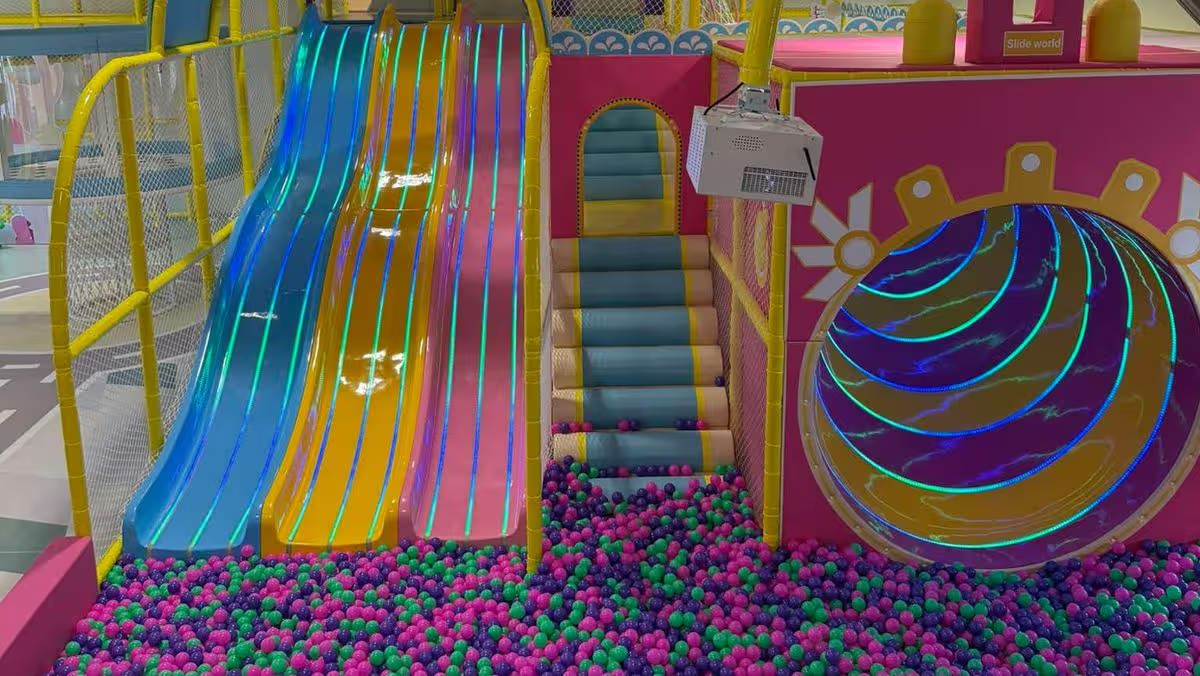
A new soft play centre has opened in Trafford with light up slides, role play sections and an interactive projector screen.

Advertisement

Epicland UK will officially launch on Saturday on the upper floor of Partington Shopping Centre and is already grabbing the attention of families.

The attraction is replacing The Hideaway family play centre, part of The Hidden Treasure Trust Christian-led charity, which closed at the beginning of this year.

Click here to keep up to date with the latest Family news in our newsletter

The new brightly coloured centre, which is mostly pink and yellow, features two soft play sections – one for twos and under and another for children aged three to nine years.

Advertisement

Its main features include a light up racing slide and a light up warp slide. There’s also an interactive projector screen and role play sections.

Wendy Leung has opened the business with her sisters Winnie, Winhola and Wanda and with 10 young children between them, they say they know only too well what families are looking for.

“We have 10 kids between us aged two to nine, so it’s been a busy few years and hadn’t been the right timing for us to open the soft play,” she said.

Advertisement

“This opportunity arose at the beginning of the year when we saw that The Hideaway was for sale.

“We have always dreamed of opening a soft play since having kids. We have been to many over the years, so we have put together things that we have liked from other soft plays and things we thought were missing, and would make the experience more enjoyable for parents too.

“Location wise we thought this was easy to travel to from Stockport, where we are from, and from all other Trafford surrounding areas.”

Advertisement

She said the free car park was ‘a big plus for us’ and being able to create jobs locally.

“Most of our staff are within walking distance from here,” she added. “Some are students, some are mums themselves. We think this would bring more footfall to nearby businesses too.”

Epicland UK also features a cafe, from where parents can keep an eye on their kids, and has its own party packages available.

Advertisement

“We will have good quality food menu and barista quality coffee as we want parents to enjoy it as well as children,” said Wendy.

“We have party packages available with over 20 themes to choose from.”

During peak times (weekends and school holidays) sessions last two and a half hours, but off peak it’s unlimited play.

For one child, aged one to nine with an adult included, it costs £16.95 peak or £12.95 off peak. Extra children are £13.95 peak and £9.95 off peak. Babies under one go free. Parties cost £21.95 per child off peak and £24.95 a child at peak times.

Advertisement

It’s open 9am to 6pm Tuesday to Friday, and 8.30am to 6pm at weekends and bank holidays.

Source link

Continue Reading

NewsBeat

Portsmouth's heatwave led to restless nights? Expert reveals 4 tips to help banish lingering fatigue

Published

on

Portsmouth's heatwave led to restless nights? Expert reveals 4 tips to help banish lingering fatigue

With Portsmouth hitting record high temperatures during June’s heatwave, many may have had minimal or significantly disrupted sleep due to the heat through the evenings. Not only does this result in feeling tired for the days following, but it can also affect sleep schedules for several days afterwards.

Source link

Continue Reading

NewsBeat

Dad on the run from police after killing baby daughter in drink-drive crash

Published

on

Daily Mirror

Emmanuel Sakyi, 31, fled the scene after crashing while drink driving on Bletcham Way in Milton Keynes with his baby daughter dying in the accident, a court heard

A dad is on the run from police after being convicted of killing his baby in a drink-drive crash.

Emmanuel Sakyi, 31, allegedly fled the scene after a collision with an oncoming car, having driven on the wrong side of the road, on Bletcham Way in Milton Keynes in December 2022.

His seven-month-old daughter Emmanuela, who was sitting on her mother’s lap in the passenger seat, suffered serious injuries in the crash and later died in hospital.

Advertisement

Sakyi, of Milton Keynes, did not appear at Aylesbury Crown Court last week for his trial after being charged with causing death by dangerous driving.

On Monday, he was found guilty by a unanimous jury after just over two and a half hours of deliberation, and was sentenced in absentia to 15 years’ imprisonment.

During the trial, jurors heard that Sakyi was driving while twice the legal alcohol limit and “demonstrably far below” the standard of any reasonable motorist.

He drove his grey Peugeot 508 “for a considerable distance on the wrong side of the road” before colliding with a green Fiat 500, the court heard.

Advertisement

Prosecutor Daren Samat said the defendant did not, as he was legally responsible to do, secure his daughter in a car seat or appropriate restraint. It was heard that instead, Sakyi “simply allowed her to be carried in the front seat by her mother”.

Emmanuela was sitting on her mother’s lap with a seatbelt across her stomach, Mr Samat told the court. “We say that in itself was wholly inappropriate and dangerous,” he added.

The defendant failed to respond to the driver of an oncoming Fiat 500, named in court as Shannon Willison, who was flashing her lights and beeping her horn to attract his attention, jurors heard.

“Instead, he carried on straight and despite the other driver’s best effort to avoid a collision, he drove into that Fiat 500,” Mr Samat added.

Advertisement

The prosecutor said the defendant, who it was alleged knew he was responsible for the collision, “wasn’t going to stick around for the police” and fled the scene. He said that the defendant may not have known at this stage how serious the injuries to baby Emmanuela were.

Sakyi was later arrested by police outside his home address, but since he failed to appear for his trial, Thames Valley Police are now appealing for help locating him. He is described as a black man with a medium build, with black hair and brown eyes and is around 5ft 3inches tall.

Lead investigating officer, Detective Sergeant Ed Crofts, said: “Enquiries have been ongoing to locate Emmanuel Sakyi, and we are now appealing for the public’s help in locating him. This is a devastating case where a child’s life has been lost. Our enquiries are focused on ensuring Sakyi faces the consequences of his actions.”

He added that members of the public should not approach Sakyi if they see him, but should instead call 999. Police have asked that anyone with information on Sakyi’s whereabouts should call 101 or make a report online quoting reference 20260622-2396, or anonymously through Crimestoppers on 0800 555 111.

Advertisement

Sakyi, of Milton Keynes, denied but was convicted of causing death by dangerous driving and was sentenced in absentia to 15 years imprisonment, and disqualified from driving for 18 years.

Source link

Continue Reading

NewsBeat

Replacing warships with drones is not an upgrade in capability

Published

on

Replacing warships with drones is not an upgrade in capability

Britain’s Defence Investment Plan (DIP) marks a significant shift in military priorities. Over four years, an additional £15 billion will take spending up to £298 billion overall.

This includes £63 billion to fund nuclear deterrence and £8 billion for future combat aircraft. But its most attention-grabbing headline concerns the maritime domain.

Plans for the Type 83 destroyer to replace ageing Type 45s have been shelved.
Instead, at least six Common Combat Vessels will be acquired, to act as hubs for
uncrewed systems (drones). Alongside them, more than £5 billion will fund air, land and sea drones and autonomous systems across Britain’s armed forces.

The Type 83 was meant to be Britain’s next great destroyer with cutting edge
capabilities. It would have replaced the Type 45 class from around 2035. It would
have operated as part of the Future Air Dominance System (FADS).

Advertisement

It was never intended to be a conventional ship. Instead it was to be a platform for maritime air defence, strike, sensing, command and networking.

Early reports described a minimally crewed warship between 145 and 165 metres long. It would have displaced between 6,000 and 10,000 tonnes. Its planned surface role included maritime interdiction and self-defence against small attack craft.

Defences included a 57mm gun and directed-energy weapons (such as lasers) for
those missions. They also included decoys and directed-energy weapons for close
threats.

Its strike role was more ambitious. Planned capabilities included between 72 and
128 Mk 41 vertical missile launch cells. These could carry air defence missiles and
long-range strike weapons. There was also potential for future hypersonic weapons,
one of the most deadly weapons of the Russia-Ukraine war.

Advertisement

Announcement of the Defence Investment Plan (Sky News).

Defending airspace

Air defence was the Type 83’s central purpose. The ship would have protected UK
aircraft carrier strike groups and other allied and Royal Navy groups in places like the North Atlantic, the Norwegian Sea, the Mediterranean, the Gulf, the Red Sea and the Indo-Pacific region. Its mission was to defend against aircraft, drones, cruise missiles, ballistic missiles, and hypersonic threats. Artificial intelligence would help select sensors and weapons against complex raids, from several directions at once.

However, all ships, including destroyers, have their own vulnerabilities. Ukraine has used small naval drones to sink the Moskva missile cruiser. The patrol ship Sergey Kotov was destroyed by Magura V5 uncrewed surface vessels.

In early 2026 Ukraine claimed around 30% of Russia’s Black Sea Fleet combat assets had been
destroyed or damaged. A Type 83 destroyer would be far more capable than any of
those ships. But it may also have had to face hypersonic anti-ship missiles one
day.

Advertisement

Savings from cutting the Type 83 are being spent on a wide variety of drones. These
will cover air, land and sea, ranging from small quadcopters to mine-hunting drones
and one-way attack “Kamikaze” drones. The Royal Navy will develop autonomous
vessels to act as uncrewed missile platforms, and to sense and hunt submarines.
Project Pantheon will trial jet-powered drones operating alongside F-35B aircraft.

The Army will get small Rapstone First Person View (FPV) strike drones and
interceptor drones. Project Nyx aims to have up to 24 armed drones flying as wingmen for Apache helicopters by 2030. Project Corvus adds up to 24 surveillance drones. While the RAF will develop autonomous fighter aircraft, with a demonstrator by at least 2030.

Floating platforms

The range of drones initially looks impressive, but there is no total drone
procurement figure. The DIP has specified small numbers for some higher-end
systems. Ukraine offers an uncomfortable comparison. Britain aims to produce up to
150,000 drones for Ukraine by the end of 2026. In comparison, Ukraine’s defence ministry expects to produce more than seven million drones in 2026.

That difference shows the challenge facing the Ministry of Defence and the UK government. Drone warfare requires massive numbers of low cost, low capability, short range drones. Plus significant numbers of large, medium-range and long-range drones.

Advertisement

So can drones replace Type 83 destroyers? No. Surface drones can be dispersed
and operated across wide areas. But in a maritime environment they need a floating
platform to operate from. The same goes for aerial drones. Neither can replace a
Type 83’s large, portable missile magazines, command facilities, or defence of a
carrier fleet. The Common Combat Vessel will provide some hybrid capabilities.

But it does not carry the strike threat or defensive capabilities of a destroyer.
The timeline to achieving these capabilities also matters. The Storm Shroud
uncrewed electronic warfare vessel is expected this year. Rapstone will receive
extra money over the next 12 months. Nyx and Corvus are aimed at 2030, and
Defence procurement is often hit by delays.

The RAF combat drone demonstrator is due by at least 2030. Common Combat Vessels are expected from the early 2030s. Until then, upgraded ageing Type 45 destroyers will need to meet new challenges. In the meantime, Ukraine is innovating, designing, building, testing and deploying drone systems faster than the UK can currently contemplate.

Advertisement

Source link

Continue Reading

Trending

Copyright © 2025