






Connect with us
DAPA Banner
DAPA Coin
DAPA
COIN PAYMENT ASSET
PRIVACY · BLOCKDAG · HOMOMORPHIC ENCRYPTION · RUST
ElGamal Encrypted MINE DAPA
🚫 GENESIS SOLD OUT
DAPAPAY COMING

Business

The Quiet Powerhouse Driving the UK Economy

Published

on

The Quiet Powerhouse Driving the UK Economy

There is no shortage of admiration for Britain’s fastest-growing businesses, and nor should there be.

The entrepreneurs who disrupt industries, scale at speed and pull in investment embody much of what makes British enterprise so widely admired. They are a reminder that innovation, ambition and resilience remain alive and well in every corner of the economy.

At the Lloyds British Business Excellence Awards, we celebrate those firms with pride. They represent the future. But if we are to build that future properly, we must also give due credit to the businesses already carrying so much of the economy today.

Britain’s mid-market is, in many respects, our economic backbone. These are the companies that have made the difficult passage from start-up to sustainable enterprise. They have moved beyond proving an idea and into the far harder work of building something that lasts, creating thousands of jobs, investing in people, supporting supply chains and contributing in real terms to regional and national prosperity.

The numbers bear this out. Mid-sized firms make up roughly 0.5 per cent of UK companies yet account for around a quarter of private-sector employment and close to a third of economic output, contributing some £1.3 trillion in turnover. They rarely command the headlines in the way unicorns or venture-backed scale-ups do. Yet their contribution is, frankly, immeasurable.

Advertisement

Every year, the awards give us the privilege of meeting businesses that show exactly what sustainable success looks like.

Take Net World Sports, recognised as Lloyds Mid-Size Business of the Year. From its base in North Wales, it has grown into a global sporting goods business, exporting British innovation around the world while creating high-quality employment and investing continually in its people and infrastructure. Its story is a reminder that world-class companies are being built in every region of the UK, not just the major cities.

Or consider Travel Counsellors, whose steady growth over more than three decades has shown that putting people and relationships at the heart of a business is not simply good culture, it is good business. Its continued success illustrates how mid-market firms build resilience through trust, loyalty and long-term thinking.

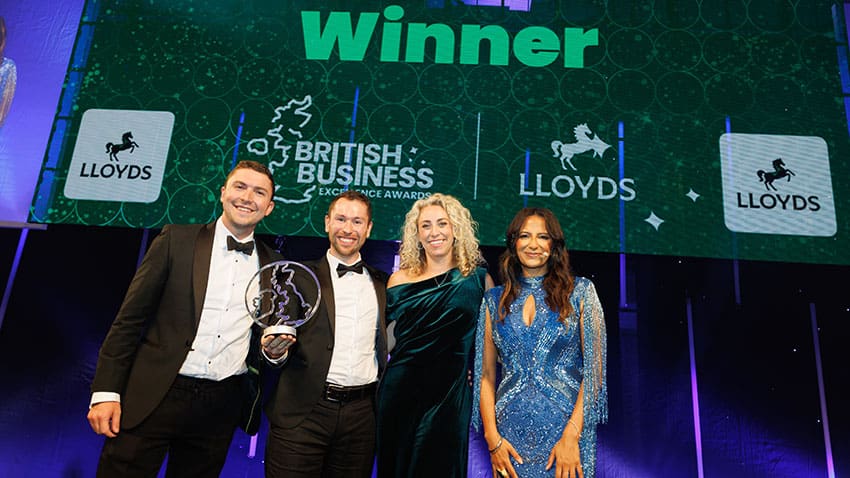
More recently, Tropic Skincare, winner of the Lloyds Mid-Market Business of the Year (pictured), has demonstrated that rapid commercial success and purpose-led leadership are not mutually exclusive. Under Susie Ma’s leadership, the company continues to scale while holding firm to an unwavering commitment to ethical sourcing, sustainability and the empowerment of thousands of independent ambassadors across the country.

Advertisement

Realise Training Group, recognised for Mid-Market Growth, shows another side of Britain’s economic success. By training more than 16,000 learners a year and employing hundreds of people, its expansion directly strengthens the UK’s workforce and productivity, delivering social impact alongside commercial returns.

These businesses may operate in very different sectors, but they share something fundamental. They have moved beyond merely building successful companies. They are building institutions.

Taken together, Britain’s mid-market firms employ millions of people. They invest in apprenticeships, nurture future leaders, adopt emerging technologies and support thousands of suppliers across every nation and region of the UK. They are often the anchor employers in their local economies, providing stability in uncertain times while continuing to invest for the future. Importantly, they have mastered one of the hardest disciplines in business: longevity.

That contribution is finally being recognised at a national level. A government-backed council to champion the country’s “unsung” mid-sized businesses is now giving the sector a more unified voice on issues from planning and infrastructure to the persistent skills shortage. It is a welcome acknowledgement that, much like the small and medium-sized firms so often described as the backbone of our economy, the middle of the market has been underserved by the national conversation for too long.

Advertisement

At the Lloyds British Business Excellence Awards, we celebrate organisations at every stage of that journey, from ambitious start-ups to established market leaders, as this year’s line-up of finalists makes clear. What unites them all is excellence.

Excellence is not measured by valuation or headline growth alone. It is reflected in leadership, culture, innovation, resilience, customer commitment and the positive impact a business has on its people and communities.

Britain’s future will not be built by one type of business alone. It will be built by ambitious start-ups becoming scale-ups, scale-ups becoming established enterprises, and established mid-market businesses continuing to innovate, invest and inspire the next generation. That is why supporting the entire business lifecycle matters.

Because while tomorrow’s unicorns will undoubtedly shape future headlines, it is Britain’s mid-market businesses that power our economy every single day. They may not always be the loudest voices in British business. But they are, without question, among its strongest.

Advertisement

Entries close for the 2026 Lloyds Business Excellence Awards on July 3rd.


Sarah Austin

Sarah Austin

Sarah Austin, founder and Director of the Lloyds British Business Excellence Awards, champions British entrepreneurship, inspiring businesses to start and stay in Britain. She tirelessly supports women in business, fostering innovation, resilience, collaboration, sustainable growth, opportunity, ambition, leadership, and lasting economic prosperity across communities, empowering future generations of entrepreneurs nationwide.

Advertisement
Continue Reading
Click to comment

You must be logged in to post a comment Login

Leave a Reply

Business

Gas prices under scrutiny as Bessent vows to hold retailers accountable

Published

on

Gas prices under scrutiny as Bessent vows to hold retailers accountable

Treasury Secretary Scott Bessent warned gasoline retailers that the Trump administration is “watching” pump prices and expects them to pass lower oil costs on to Americans.

Speaking on “Fox & Friends,” Bessent’s comments came a day after President Donald Trump urged gas stations to lower prices to around $2.50 per gallon following a decline in crude oil prices.

Advertisement

“I would encourage them to be good actors, especially in the 250th anniversary, because we’re watching,” Bessent said Tuesday. 

TRUMP DECLARES FOOD SUPPLY EMERGENCY, SUSPENDS TARIFFS ON KEY FERTILIZER IMPORTS

Treasury Secretary Scott Bessent arrives for House committee hearing.

Treasury Secretary Scott Bessent arrived before testifying before the House Ways and Means Committee in the Longworth House Office Building on June 4, 2026, in Washington, D.C. (Chip Somodevilla/Getty Images / Getty Images)

Gas prices rose during the conflict between Israel and Iran, though prices have eased since the onset of the fighting. The AAA national average for regular gas was $3.860 per gallon as of June 29, down from $4.391 a month earlier but still higher than the year-earlier average of $3.187.

AMERICAN AIRLINES DELAY STRANDS GOP LAWMAKER, CAUSES 3 HOUSE MEMBERS TO MISS VOTES

Advertisement

Higher fuel costs have squeezed consumers and businesses alike, with some California small business owners saying they’re “working for peanuts” just to keep their doors open. But Bessent said that as crude oil prices decline, he’ll be watching gasoline retailers to ensure savings are passed on to consumers.

“We’ve got a chart of how quickly the prices went up and how they followed crude, and we’re going to hold them accountable on the other side,” he said, calling Trump’s Truth Social post on the issue “powerful.”

The president wrote on Truth Social earlier this week, “Gasoline Retailers must get their Prices down, IMMEDIATELY!” and added that “They’re too high considering that Oil is now at $68 a Barrel, and heading south.”

Advertisement

TECH CEO PREDICTS AI GLASSES WILL TURN AMERICANS INTO ‘WALKING CAMERAS’ AS NEXT TECH ERA ARRIVES

CLICK HERE TO GET FOX BUSINESS ON THE GO

“The Retailers must quickly react to this statement, and do what they know is right — DROP YOUR PRICE FOR OUR GREAT AMERICAN PEOPLE!” he continued. “There will be no gauging, which is totally illegal. If Retailers don’t do this, big problems lie ahead!”

Bessent said stations often benefit when oil prices spike and argued it is now time to provide relief for the public. “They’re making an extra margin there, and they probably had record profits on gasoline retailing. Now it’s time to do something for the American people,” he said. 

Advertisement

Fox News Digital’s Greg Wehner contributed to this report. 

Continue Reading

Business

Here Are 5 Things Every Galaxy Owner Must Know Right Now

Published

on

Galaxy S26

Samsung has confirmed that its long-running Messages app will be discontinued in July 2026, ending a texting platform that has shipped on Galaxy devices since 2009 and forcing millions of remaining users to migrate to Google Messages before the cutoff arrives. Here’s what Android owners need to understand about the shutdown and how to prepare.

1. The shutdown is scheduled for July 2026, with some users reporting a specific date. Samsung’s official End of Service notice, posted on its U.S. support website, states plainly that “the Samsung Messages application will be discontinued in July 2026,” directing users to “upgrade to Google Messages as your default messaging app today to maintain a consistent messaging experience on Android.” While Samsung’s public messaging has stuck to the broader monthlong window, at least one specific date has surfaced through device notifications sent directly to users. A screenshot obtained by NBC Chicago showed one notice reading, “Samsung Messages is being discontinued on July 6 2026.” Samsung has advised users to check the Samsung Messages app itself for the exact shutdown date applicable to their device, suggesting the rollout may be phased or staggered rather than occurring all at once.

2. Once the cutoff hits, the app won’t disappear, but it will stop functioning as a texting tool. According to the fine print in Samsung’s notice, “sending messages via Samsung Messages on your phone will no longer be possible, except for emergency service numbers or emergency contacts defined in your device.” The shutdown also extends to a feature some users have come to rely on for cross-device texting: Samsung’s Message Continuity service, known as “Call & Text on Other Devices,” which allows people to send texts from a paired tablet or PC, will also be disrupted once Samsung Messages is formally discontinued.

3. The change is currently limited to the U.S. market, and not every device is affected equally. Samsung’s notice specifies that the discontinuation applies to the U.S. market only, with no confirmed shutdown date announced for other regions at this time. Within the U.S., devices running Android 11 or lower are explicitly excluded from this particular end-of-service deadline and will continue functioning as before. However, availability of the app itself has already been shrinking ahead of the formal cutoff: owners of the Galaxy S26 and newer devices cannot download Samsung Messages from the Galaxy Store at all, and once the app is officially discontinued in July, no other devices will be able to download it from the Galaxy Store either. On devices released before 2022, switching messaging apps may temporarily disrupt ongoing RCS conversations, though Samsung says those conversations can resume once both parties have switched to Google Messages, with standard MMS and SMS messaging remaining available throughout that transition period.

Advertisement

4. The shift is part of a broader, years-long move toward Google Messages and RCS standardization, not a sudden decision. Samsung stopped making its own Messages app the default texting platform on Galaxy phones back in 2021 and stopped pre-installing it alongside Google Messages starting in 2024. The July 2026 shutdown formalizes a shift the company had already been making in practice for years. Industry observers have tied the change closely to Google’s broader push for Rich Communication Services, or RCS, a messaging standard often described as Android’s answer to Apple’s iMessage. Google Messages offers RCS features including read receipts, real-time typing indicators, higher-quality photo and video sharing, end-to-end encryption in supported chats, and integration with Gemini-powered AI tools such as suggested replies and an experimental image-generation feature. Samsung has framed the consolidation around streamlining the texting experience, stating in its announcement that the goal is to “maintain a consistent messaging experience on Android.” The company has also emphasized that the discontinuation is limited specifically to messaging and does not affect other core Galaxy apps or services.

5. Scammers are already exploiting confusion around the transition, so verify any notice independently. As word of the shutdown has spread, fraudulent text messages designed to mimic Samsung’s official notifications have begun circulating, targeting confused Galaxy phone owners. One reader from Running Springs, California, who goes by Gilberto, described receiving a suspicious text warning him that Samsung Messages would end on a specific date and urging him to switch apps immediately. While the underlying shift to Google Messages is genuine, security experts have cautioned that unsolicited texts urging immediate action, particularly those containing links, should be treated skeptically. The safest approach is to ignore unexpected links entirely and instead verify any notice directly through a device’s own settings or by checking the Samsung Messages app, rather than clicking through a text message claiming to be from Samsung.

For most users, the actual process of switching should be straightforward when it comes to standard text messages. Google Messages draws from a device’s standard SMS and MMS database, meaning older text conversations typically carry over automatically without requiring any manual export. Users can switch by opening or installing Google Messages, then selecting the option to set it as their default SMS app. Samsung has said many Galaxy phones will display in-app notifications within Samsung Messages guiding users through that transition before the cutoff arrives. The shutdown also extends to Tizen OS smartwatches, where Samsung Messages is similarly being discontinued, though those devices will retain basic read and send capability even as full conversation history access is lost; Galaxy Watch models running WearOS are handled differently and will retain full conversation continuity through Google Messages across phone, tablet and watch.

With the July deadline approaching, Samsung is encouraging all remaining Samsung Messages users, particularly those on devices still capable of running the app, to complete the switch to Google Messages well ahead of the cutoff date rather than waiting until service is formally discontinued and texting capability becomes limited to emergency contacts only.

Advertisement
Continue Reading

Business

Watchdog moves to crack Apple and Google’s app store grip

Published

on

Tracy Brabin leads West Yorkshire trade mission to Switzerland and Germany

The UK’s competition regulator is preparing to loosen Apple and Google’s hold over the mobile economy, proposing rules that would let app developers point customers towards cheaper ways to pay outside the two companies’ app stores.

The Competition and Markets Authority (CMA) argues that consumers and the businesses that build apps are being short-changed by restrictions stopping people from spending money outside Apple’s App Store and Google’s Play Store. With at least 90 per cent of UK mobile devices running on one of the two platforms, the regulator has branded the pair an “effective duopoly”, a description it has used repeatedly as it ramps up scrutiny of the sector.

At the heart of the proposals is “steering”, the practice of letting an app guide users to a website where they can subscribe or buy directly, sidestepping the platforms entirely. The CMA is consulting on lifting the curbs that currently block this, a change it says would let apps bypass the “mandatory fees” the two companies impose. Both Apple and Google charge commission of up to 30 per cent on purchases made inside apps, including subscriptions, a levy that has long irritated developers and the focus of the regulator’s proposed action to drive more competition on mobile platforms.

The restrictions have real consequences for how people use everyday apps. Spotify, for instance, does not let UK users buy a monthly subscription through the Apple App Store, because it does not want to absorb the fees and pass them on to customers. Would-be subscribers must instead sign up via the desktop website, an awkward workaround that the CMA believes typifies a market lacking competitive pressure.

Will Hayter, executive director at the CMA, said it was important to give apps and their users more choice over how they transact and communicate. “This is not only because choice is inherently valuable but also because we see this as the best way to introduce some competitive pressure in a vital part of the mobile ecosystem that is otherwise sorely lacking such pressure,” he said.

Advertisement

Crucially, the watchdog is not proposing to strip the platforms of all revenue. Apple and Google would still be able to charge fees for allowing steering, provided those charges are applied fairly. Google said it had already made the required changes, including letting apps steer users outside the Play Store to complete transactions, and has introduced new fees this week covering, among other things, charges for steering users to alternative payment methods.

The CMA is also weighing whether to force Apple to open up access to its near-field communication (NFC) technology, the chip behind contactless payments. Doing so could allow developers to offer their own tap-to-pay services inside iOS apps rather than routing everything through Apple Pay, a move that would hand more room to challengers. British fintech Curve is among those that have already set out plans to take on Apple Wallet with a rival payment system.

The proposals build on the CMA’s decision last October to award Apple and Google “strategic market status” over their dominance of the mobile market, a designation that allows the regulator to set bespoke conduct rules for each company. That ruling has already prompted both firms to agree a series of UK app store changes, and the latest package of measures aimed at opening up the mobile market goes further still. The full consultation on the new requirements for Apple and Google’s mobile platforms is now open.

Apple, predictably, is unhappy. The company warned that the steering changes undermine protections for users and open the door to scams and the circumventing of parental controls. “When users are directed away from Apple’s trusted payment infrastructure, they lose the protections they rely on Apple to provide. We will continue to make our concerns clear in our ongoing dialogue with the CMA,” a spokesperson said.

Advertisement

For the UK’s small and medium-sized app businesses, the prize is straightforward: lower fees, a more direct relationship with customers and, the CMA hopes, savings that can be reinvested into the kind of innovation an entrenched duopoly has tended to discourage.


Jamie Young

Jamie Young

Jamie is Senior Reporter at Business Matters, bringing over a decade of experience in UK SME business reporting.
Jamie holds a degree in Business Administration and regularly participates in industry conferences and workshops.

When not reporting on the latest business developments, Jamie is passionate about mentoring up-and-coming journalists and entrepreneurs to inspire the next generation of business leaders.

Advertisement
Continue Reading

Business

Gloucestershire Airport put up for sale again as bosses refuse to reveal why it’s losing millions

Published

on

Business Live

The Staverton airfield is currently a loss-making site

View of Gloucestershire Airport runway

View of Gloucestershire Airport runway

Gloucestershire Airport is going back up for sale again, its joint owners have announced. Cheltenham Borough Council and Gloucester City Council confirmed on Tuesday (June 30) the Staverton site would brought back to market, with property firm Savills appointed to lead a renewed sales process.

The news comes just three months after the sale of the loss-making transport hub fell through after months of negotiations. In March, a deal to offload the airport to preferred buyer Horizon Aero Group collapsed after the authorities said they could not accept the terms of the sale.

Advertisement

On Tuesday, council chiefs said they were relaunching the sale process after receiving a “number of approaches” from interested parties.

Councillor Rowena Hay, leader of Cheltenham Borough Council, said: ‘’We are hopeful this renewed sale process will attract the right partner for the airport’s future, which remains our key priority. We will work with partners and stakeholders to update as the new sale process proceeds.’’

Councillor Jeremy Hilton, leader of Gloucester City Council, said: “Gloucestershire Airport is a vital economic and aviation asset for our county and region and we must do our best for it.

“In recent weeks there has been considerable interest from potential investors in the airport and now is the right time to put the airport back on the market.

Advertisement

“This next phase gives us the opportunity to build on what we have learned and engage with investors who share our vision for growth and continued aviation at Staverton.”

It comes as bosses at Gloucestershire Airport refused to reveal to the public on Monday why the airfield has cost taxpayers millions of pounds in recent years.

City councillors were given an update on the situation of the 350-acre general aviation site, which sees around 66,000 aircraft movements a year. During the public meeting, civic chiefs quizzed airport management over the operational loss at the site.

A slide presented to the committee suggested an unaudited loss for the financial year, including depreciation and loan interest, of £2.1m. It also showed the situation had improved over the last three years.

Advertisement

Operational losses, excluding non-monetary adjustments, loans and depreciation, in 2024 was £1,333,041, falling to £738,030 in 2025 and £489,979 in 2026.

Interim managing director Brian Rawlings said it was “one of the few airfields you can walk in having never flown an aircraft and leave to go off and fly for an airline”.

“I can’t think of another airfield that offers that facility,” he said. “And that is backed up with the various tenants that we have there that offer some extensive flight training that is basically unique.”

But when asked why they can’t make it pay for the taxpayer, airport chiefs refused to answer detailed questions in public – instead they said they would tell civic chiefs away from the public eye.

Advertisement

During the public part of the meeting, the airport’s head of finance, Marian Bidmead, said the bottom line figure was a £2.1m loss. She explained the accounts were unaudited and it could be more or less than £2.1m because they “have fair evaluations on the market rentals to do as well and capitalised interest to take into account on top of that”.

Mr Rawlings admitted all members of the team were “fully aware” of what the situation and said they “absolutely” took it seriously.

“We’ve got people there who are very loyal to the airfield, very skilled and for us to be able to turn things around and make it the best airfield it can be, yes, absolutely we can do it. I’m sure we can,” he added.

The committee ultimately voted to exclude the press and public to further discuss airport issues behind closed doors while the chairman voted against.


Advertisement
Continue Reading

Business

Trump pushes domestic rare earth processing to reduce China reliance

Published

on

Trump pushes domestic rare earth processing to reduce China reliance

President Donald Trump’s push to rebuild a domestic rare earth supply chain reached another milestone as the U.S. Army partners with industry to expand North American processing capacity for materials used in military equipment, as part of a broader effort to reduce reliance on China.

REalloys CEO Leonard “Lipi” Sternheim joined FOX Business’ Maria Bartiromo on “Mornings with Maria” to discuss the company’s role in developing heavy rare earth processing capabilities alongside government and industry partners.

Advertisement
A soldier of the U.S. Army.

A U.S. Army soldier handling caliber cartridges. (Sean Gallup / Getty Images)

Heavy rare earth elements such as dysprosium and terbium are essential components in advanced defense technologies, including fighter jets, missiles, submarines and drones. While rare earth deposits exist in multiple countries, much of the world’s processing and refining capacity has been concentrated in China for decades.

“Currently, China controls the entire supply chain of rare earths for heavies, which is where the processing, the refining, the metalizing magnet making,” Sternheim said, adding that REalloys is focused on bringing “the full supply chain” to North America.

TEXAS RARE-EARTH PROJECT AIMS TO CURB US RELIANCE ON CHINA, STRENGTHEN NATIONAL SECURITY

Advertisement

Sternheim said an upcoming federal procurement requirement scheduled to take effect on January 1, 2027, is expected to accelerate domestic sourcing for the defense industrial base by restricting products with a Chinese nexus.

He also argued that the challenge is less about finding rare earth deposits than rebuilding the refining and processing expertise needed to turn raw materials into usable products.

“It’s not the rocks that are rare. It’s the processing and refining, which are complicated technologies,” Sternheim said.

Advertisement

He noted the U.S. Army’s partnership with REalloys is designed to ensure critical defense materials can be sourced domestically rather than from geopolitical rivals.

NOEM WARNS OF ‘COORDINATED’ EFFORT TO FUNNEL CHINESE NATIONALS INTO US

“The reason the military partnership is so important, because that gives the country the security it needs. Nothing is reliant on other countries after that. We’re building it here. We’re building it with a partnership with the Army on their bases,” he said.

Looking ahead, Sternheim said expanding domestic capacity will take time but expressed confidence that the U.S. and its partners will make meaningful progress over the next several years.

Advertisement

CLICK HERE TO DOWNLOAD THE FOX NEWS APP

Continue Reading

Business

Fun Spot America Atlanta, home of ArieForce One, to close after Aug. 2

Published

on

Fun Spot America Atlanta, home of ArieForce One, to close after Aug. 2

An Atlanta-area amusement park with the largest zero-G stall roller coaster in the U.S. is planning to close later this summer, with fans only having a few more weeks to attend the park.

Fun Spot America Atlanta’s location in Fayetteville will close permanently after its final day of operation on August 2, though it remains open until that date from 10 a.m. to 10 p.m. Additionally, season passes and gift cards will remain valid until the final day of operation at the Fayetteville location.

Advertisement

While Fun Spot America is closing the Atlanta-area amusement park, its other locations in Orlando and Kissimmee, Florida, will remain open and those locations will honor season passes and gift cards.

The amusement park is best known for the ArieForce One Roller Coaster, which claims the title of being the largest zero-G stall in the country.

DISNEYLAND VISITORS FACE GROWING WAVE OF RIDE CLOSURES, SHOW SHUTDOWNS HEADING INTO SUMMER 2026

Fun Spot America Atlanta CEO John Arie Jr.

John Arie Jr., owner and CEO of Fun Spot America, stands in his “it’s huge” pose in the Orlando, Florida, attraction. He said the new coaster at the Atlanta location will also boost his Central Florida parks.  (Dewayne Bevil/Orlando Sentinel/Tribune News Service via Getty Images)

The ArieForce One features a 146-foot first drop at an 83-degree angle, with the ride reaching a top speed of 64 m.p.h., according to Fun Spot America.

Advertisement

The ride has a height requirement of 48 inches and lasts about 100 seconds. Parkgoers can access the ride with a single day pass, or with a pay-as-you-go price of $12 per person, per ride.

ArieForce One reaches a maximum vertical G of 3.75, with a minimum vertical G of minus 1 and max lateral G of plus or minus 1.25 G.

SIX FLAGS TO SELL 7 AMUSEMENT PARKS IN DEAL WORTH MORE THAN $330M

Six Flags goers on a roller coaster

Fun Spot America’s other locations in Florida will remain open. (Hans Gutknecht/MediaNews Group/Los Angeles Daily News via Getty Images)

FOX Business reached out to Fun Spot America for comment.

Advertisement

Fun Spot America CEO John Arie, Jr., previously told Amusement Today that the decision to close the Atlanta-area park “was an extremely difficult decision.”

“Our Atlanta team has poured their hearts into serving our guests and creating a place where families could have fun together. We are deeply grateful for their dedication and for the support we have received from the Fayetteville community,” Arie added.

MUSK COMPANY CHOSEN FOR UNDERGROUND TRANSIT SYSTEM FOR UNIVERSAL PARKS

ATLANTA, GEORGIA - MAY 15: In an aerial view, the midtown skyline is seen from Piedmont Park on May 15, 2024 in Atlanta, Georgia. Atlanta is one of the host cities for the 2026 World Cup. (Photo by Alex Slitz - FIFA/FIFA via Getty Images)

The Atlanta-area theme park’s final day will be Aug. 2. (Alex Slitz – FIFA/FIFA via Getty Images)

The outlet’s report noted that the company plans to work with its team members during the transition period and will support them with resources.

Advertisement

Fun Spot America opened its first theme park in 1979 with its Orlando location.

The Atlanta-area location was previously known as Fun Junction USA, and was acquired by Fun Spot America in 2017.

GET FOX BUSINESS ON THE GO BY CLICKING HERE

Advertisement
Continue Reading

Business

Harbor Emerging Markets Select ETF Q1 2026 Commentary (EMES)

Published

on

Calamos Market Neutral Income Fund Q1 2026 Commentary (Mutual Fund:CMNIX)

Harbor Capital is an asset manager focused on curating an intentionally select suite of active ETFs that they believe have the potential to produce compelling, risk-adjusted returns within a portfolio. Note: This account is not managed or monitored by Harbor Capital, and any messages sent via Seeking Alpha will not receive a response. For inquiries or communication, please use Harbor Capital’s official channels.

Continue Reading

Business

Form 4 Ciena Corp For: 30 June

Published

on


Form 4 Ciena Corp For: 30 June

Continue Reading

Business

Remote Work Is Making It Harder for Grads to Find (and Keep) Jobs

Published

on

Remote Work Is Making It Harder for Grads to Find (and Keep) Jobs

Remote Work Is Making It Harder for Grads to Find (and Keep) Jobs

Continue Reading

Business

Money Box – Chair of the Banking Review and Winter Fuel Payments

Published

on

Money Box - Chair of the Banking Review and Winter Fuel Payments

Available for over a year

More than 15,000 people have responded to a Government review into access to banking services in just three weeks since it opened. The review comes after a decade which has seen almost 7,000 bank branches close, with hundreds more happening this year and some announced in just the past few days. Richard Lloyd, a former Director at the consumer group Which?, gives his first interview since being appointed to lead the review.

HMRC must “learn lessons” for the future after incorrectly suspending child benefit payments from thousands of claimants last year. That is the conclusion of a report published this week by the National Audit Office. The mistake happened during the wider roll out of a pilot scheme designed to cut some of the hundreds of millions of pounds estimated to be lost to fraud and error in child benefit claims each year.

People who are 66 today, born 27 June 1960, are the youngest people who will get the Winter Fuel Payment this year. Normally the qualifying date is three months later. How does the payment work?

Advertisement

And, VAT has been cut on summer attractions used by children – from theme parks to fast food – what kind of discounts are there?

Presenter: Paul Lewis
Reporters: Sarah Rogers and Jo Krasner
Researcher: Catherine Lund
Editor: Jess Quayle
Senior News Editor: Sara Wadeson

(First broadcast at midday on Saturday 27th June, 2026)

Programme Website

Advertisement
Continue Reading

Trending

Copyright © 2025