

Crypto World
D-Wave Quantum (QBTS) Stock Dips Despite $1.6M NSF Grant for Quantum Research


Key Takeaways
- D-Wave Quantum has received $1.6 million in funding from the National Science Foundation via its National Quantum Virtual Laboratory initiative.
- The grant backs D-Wave’s participation in ERASE, a research initiative developing fault-tolerant quantum computing capabilities.
- Over 24 organizations, including IonQ, Nvidia, and Quantinuum, participate in NSF-supported quantum computing programs.
- QBTS shares have declined 8.9% year-to-date in 2026 following a 211% surge in 2025, contrasting with competitors IonQ and Rigetti’s trajectories.
- The company is expanding its technology portfolio to include gate-model computing beyond its core quantum annealing platform.
D-Wave Quantum has secured new federal financial backing. On Tuesday, the quantum computing firm revealed it won a $1.6 million grant from the National Science Foundation.
The funding originates from the NSF’s National Quantum Virtual Laboratory initiative. This collaborative framework connects academic researchers, private sector participants, and federal entities to advance quantum technology toward commercial viability.
D-Wave’s allocation supports its involvement in ERASE—an acronym for Erasure Qubits and Dynamic Circuits for Quantum Advantage.
The ERASE initiative concentrates on creating core infrastructure for fault-tolerant quantum systems. It earned selection as one of six pilot programs the NSF designated over twelve months ago.
The NSF committed an additional $4 million to the project last week, advancing it into its subsequent development stage. Simultaneously, the agency designated five research groups to engineer experimental quantum networking infrastructure.
Quantum networking represents a critical frontier for the sector. Industry experts consider it essential infrastructure for an eventual quantum-enabled internet.
An Expansive Consortium of Industry Players
D-Wave operates within a broader collaborative ecosystem. More than two dozen corporations have joined these NSF-supported programs to accelerate technology maturation.
Notable participants include IonQ, Nvidia, and Quantinuum—backed by Honeywell and recently completing its public market debut this month. Federal support extends broadly throughout the quantum computing sector, benefiting multiple competitors.
This marks another milestone in D-Wave’s federal engagement. Last May, the Commerce Department selected the company for an initiative where quantum firms traded equity positions for government capital.
Most recently, President Trump issued two executive directives aimed at accelerating quantum system deployment. One directive targets delivery of a research-capable quantum computer by 2028. The companion order establishes a 2031 timeline for complete government transition to post-quantum cryptographic standards.
Share Price Movement Contradicts Federal Support
The context around this announcement matters significantly. D-Wave is currently transitioning toward gate-model quantum computing architectures, diverging from the quantum annealing methodology that established its market position.
QBTS shares have experienced headwinds in 2026, declining 8.9% after posting gains exceeding 200% throughout 2025. By comparison, IonQ has advanced 20% this year, while Rigetti Computing has retreated 12%.
D-Wave dominated 2025 performance metrics with a 211% appreciation versus IonQ’s modest 7.4% increase and Rigetti’s approximately 45% climb. This exceptional 2025 performance left limited upside momentum entering 2026.
IonQ’s stronger 2026 showing reflects evolving investor sentiment toward quantum stocks. Market participants increasingly differentiate companies demonstrating tangible revenue expansion from those trading primarily on future potential.
D-Wave’s most recent quarterly revenue contracted 81% on a year-over-year basis. CEO Alan Baratz has acknowledged results will remain “lumpy” due to the irregular timing of complete system transactions.
However, bookings momentum has strengthened, which management highlights as evidence of expanding long-term order commitments. During its recent investor presentation, D-Wave leadership indicated system sales were beginning to contribute more substantially to consolidated growth, complementing stable revenue from its quantum-computing-as-a-service platform.
D-Wave CEO Alan Baratz addressed the grant award directly. “NSF’s continued support for the ERASE project highlights the national importance of accelerating progress toward scalable, fault-tolerant quantum computing,” he stated, noting that D-Wave’s dual-rail technology architecture could contribute significantly to these objectives.




Ethereum has remained under pressure near $1,560 as Robert Kiyosaki’s long-term $95,000 price forecast has returned to focus while the cryptocurrency continues testing a key support zone.
Summary
- Robert Kiyosaki’s $95,000 Ethereum forecast has resurfaced as ETH trades near key support around $1,560.
- Bitmine and SharpLink continued buying Ethereum despite the token remaining on track for a historic third straight quarterly loss.
- Technical indicators keep favoring sellers, with analysts watching the $1,500 level for the next major move.
According to data from crypto.news, Ethereum (ETH) traded around $1,560 on June 30, down about 1% over the past day as selling returned across the crypto market. The total crypto market capitalization slipped 1% to $2.11 trillion, while Bitcoin fell 1.6% amid continued outflows from U.S. spot Bitcoin ETFs. XRP, Dogecoin, and Cardano also traded lower during the session.
The weakness comes despite renewed attention around comments made by Rich Dad Poor Dad author Robert Kiyosaki, whose March prediction that Ethereum could reach $95,000 by mid-2027 has resurfaced across crypto social media.
Kiyosaki argued that a major global financial crisis would trigger a sharp repricing of alternative assets, adding that Ethereum could climb to $95,000 within a year of such an event.
His outlook extended beyond Ethereum. Kiyosaki also projected Bitcoin could reach $750,000 after the same financial reset, while forecasting gold at $35,000 per ounce and silver at $200. Those projections have renewed debate over Ethereum’s long-term valuation even as its current market performance remains weak.
Institutional buying continues despite weak price action
Corporate treasury activity has continued to favor Ethereum even as the token struggles to recover.
Bitmine disclosed that it purchased another 27,084 ETH during the past week, increasing its holdings to roughly 5.7 million ETH valued at nearly $9 billion. According to the company, that represents approximately 4.7% of Ethereum’s circulating supply, with most of those holdings remaining staked.
SharpLink also expanded its position by acquiring another 10,000 ETH at an average purchase price of about $1,611. The company said its total holdings have reached 886,725 ETH after the purchase. During the same period, SharpLink repurchased 2.13 million shares and raised $75 million.
Even with treasury firms continuing to accumulate Ethereum, the token has failed to build sustained upside momentum. At current prices, ETH is down roughly 25% for the quarter and remains on track to record its third consecutive quarterly decline, which would be the first such streak in the asset’s history if the quarter closes at current levels.
Technical levels leave Ethereum at a critical support zone
Technical indicators continue to favor sellers despite Ethereum stabilizing around the $1,500-$1,560 range.
As crypto.news reported earlier, ETH remains below a descending trendline that has capped rallies since mid-May while also trading beneath the Supertrend indicator. Any recovery would first require a break above that trendline before buyers could challenge Supertrend resistance near $1,650, followed by Fibonacci resistance levels around $1,680 and $1,720. A move through those barriers would bring the $1,750 level into view.
Offering a shorter-term outlook, analysts at Unknown.Ai said Ethereum recently rebounded after sweeping liquidity around the $1,550 support zone before rallying into the $1,630-$1,640 resistance area.
According to the analyst, ETH has since pulled back toward support, and buyers now need to reclaim the $1,580-$1,590 region, where the 1-hour and 4-hour EMA20 indicators sit, to reopen the path toward $1,630-$1,640 and potentially $1,660.
The analyst added that a four-hour close below $1,550 would invalidate that bullish setup and increase the probability of a decline toward $1,500. Separately, analyst Ted identified the $1,500 area as a key demand zone and said holding that level could support a relief rally next month.
Macro conditions continue to weigh on sentiment. Sticky U.S. inflation has reduced expectations for Federal Reserve rate cuts, keeping Treasury yields elevated and limiting liquidity flowing into risk assets. Bitcoin’s move below $60,000 has also drawn capital toward the largest cryptocurrency instead of major altcoins.
If Ethereum loses the $1,500 support that has held throughout the latest consolidation, then another wave of selling could follow as leveraged long positions unwind and bearish momentum accelerates.
Disclosure: This article does not represent investment advice. The content and materials featured on this page are for educational purposes only.


Nasdaq has expanded its blockchain strategy by making its TotalView order book data available to blockchain applications through the Pyth Network.
Summary
- Nasdaq has started distributing its TotalView order book data to blockchain applications through the Pyth Network.
- The integration gives developers access to first-party market data for trading platforms, exchanges, and prediction markets.
- The partnership adds to Nasdaq’s growing crypto strategy alongside tokenization, derivatives, and digital asset market initiatives.
According to Pyth, the collaboration gives blockchain applications and software platforms access to Nasdaq’s proprietary market data through a single integration, starting with the exchange’s TotalView feed.
The company said the service is designed for blockchain applications, digital asset exchanges, prediction markets, trading systems, and other software platforms that require direct access to institutional-grade market information.
Nasdaq TotalView provides full depth-of-book data by displaying every visible buy and sell order across all price levels, along with order imbalance information published around the opening and closing auctions. The feed is widely used by professional traders because it offers a detailed view of market liquidity beyond standard market quotes by exposing the complete order book.
What market data is becoming available onchain?
With Nasdaq joining the network, Pyth has added another traditional financial data publisher to its marketplace. According to Pyth, developers can now access first-party market data from multiple providers through a single connection instead of integrating each source separately.
Nasdaq joins several organizations already distributing data through Pyth, including Euronext, OTC Markets, Tradeweb, Kalshi, Exchange Data International, Singapore Exchange’s SGX FX, and the U.S. Department of Commerce.
The announcement adds another step to Nasdaq’s ongoing involvement in digital assets. Earlier this year, the exchange partnered with crypto exchange Kraken and tokenization infrastructure provider Backed to develop infrastructure connecting traditional equities with blockchain networks, continuing its work around tokenized financial assets.
Regulatory progress has also supported Nasdaq’s crypto product lineup. In April, the U.S. Securities and Exchange Commission approved Nasdaq’s proposal to list Bitcoin index options linked to the Nasdaq Bitcoin Index, although trading still requires approval from the Commodity Futures Trading Commission.
Nasdaq also partnered with CME Group to introduce cryptocurrency index futures tracking seven digital assets, including Bitcoin, Ether, Solana, and XRP.
How are traditional exchanges expanding into crypto?
Other exchange operators have also continued building products that combine traditional finance with digital assets. In May, Intercontinental Exchange, the parent company of the New York Stock Exchange, partnered with crypto exchange OKX to introduce perpetual futures tied to its Brent crude and West Texas Intermediate oil benchmarks. According to the companies, the contracts were the first products announced under their broader partnership.
Later, ICE Chief Executive Officer Jeffrey Sprecher urged regulators to allow traditional exchanges to offer 24/7 onchain perpetual futures, arguing that regulated venues should be permitted to compete with crypto-native platforms already providing similar products.
Nasdaq has also remained active across other digital asset initiatives. As previously reported by crypto.news, Celsius-linked Ionic Digital recently applied for a direct listing on the Nasdaq Global Select Market under the ticker IOND.
According to the company’s SEC filing, existing registered shareholders may sell up to 10.8 million shares once the registration statement becomes effective, while Ionic will not receive any proceeds. The filing also showed the company is expanding beyond Bitcoin mining into high-performance computing and AI data center infrastructure.

Bitcoin Core has introduced version 31.1rc1 as a release candidate before the software reaches its stable mainnet release. The update improves privacy, strengthens network behavior, and adds several performance enhancements for node operators, wallet users, and developers. At the same time, the development team has opened the testing phase and encouraged community feedback before the final version becomes available.
Bitcoin Core 31.1rc1 Strengthens Privacy And Network Performance
Bitcoin Core 31.1rc1 represents the final testing stage before the next stable software release. The release candidate allows developers and community members to evaluate new features under real operating conditions. The testing process also helps identify remaining issues before the software reaches production.
The latest release addresses an important privacy issue affecting the PrivateBroadcast feature. Under specific network conditions, a user’s internet address could become visible instead of remaining behind the selected privacy network. The update removes that behavior and improves the reliability of private transaction broadcasting.
The networking layer also receives several refinements in this version. Bitcoin Core now handles proxy settings and private broadcast connections more efficiently during operation. As a result, users who rely on privacy tools receive more consistent network performance across supported environments.
Wallet And Validation Updates Improve Software Reliability
The new version also improves Bitcoin Core’s blockchain validation process. The software now manages transaction data more efficiently while maintaining a cleaner blockchain database. Consequently, these adjustments help reduce unnecessary storage growth over time and improve long-term system performance.
Wallet-related improvements also appear throughout the release candidate. Developers optimized wallet migration checks and refined transaction input size estimation during wallet operations. These changes improve accuracy while making wallet behavior more dependable across different usage scenarios.
Bitcoin Core also expands support for MuSig2 signature aggregation. The software now rejects empty public key lists that contain invalid public keys before aggregation begins. This validation step strengthens signature handling and reduces the possibility of incorrect aggregation during multi-signature operations.
Developers Open Public Testing Before Stable Release
Beyond user-facing changes, Bitcoin Core 31.1rc1 introduces several improvements for software developers. The release removes race conditions, improves fuzz testing, updates build systems, and cleans testing tools across the development environment. These changes support more stable software development and simplify future maintenance.
Developers also added checks for failed write operations before saving important configuration settings. This improvement helps prevent configuration errors caused by unsuccessful file operations during software updates. Therefore, users receive more reliable system behavior when changing or storing application settings.
Bitcoin Core 31.1rc1 supports the current versions of Linux, macOS, and Windows. Users can upgrade directly from recent releases, although much older versions may require additional migration time. Since this remains a release candidate, the development team encourages widespread testing and bug reporting before the stable release enters the Bitcoin network.
Bitcoin Core follows a release candidate process before introducing major software updates to the broader network. This approach allows developers to verify new features under real-world conditions while reducing the likelihood that undiscovered issues reach production systems. Community testing also provides practical feedback that supports software stability, improves compatibility across supported platforms, and strengthens future releases before they become part of the standard Bitcoin Core distribution.
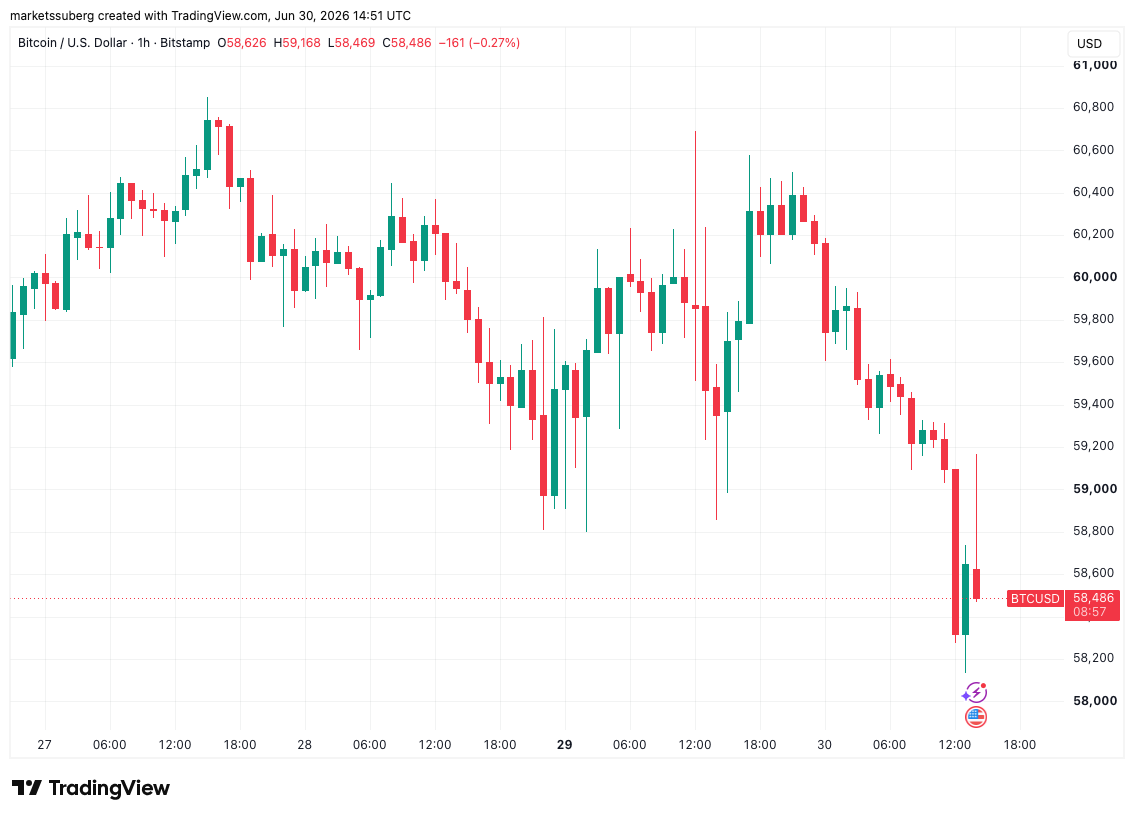
Bitcoin (BTC) fell toward $58,000 around Tuesday’s Wall Street open as the clock ticked down to a brutal quarterly close.
Key points:
- US stocks’ Q2 gains leave Bitcoin far behind as bulls nurse losses of nearly 20%.
- Bitcoin faces renewed pressure from the risk of Japanese government moves to support the yen.
- BTC price weakness is forcing capitulation by top buyers, says analysis.
Bitcoin “about to get spicy” amid 40-year dollar/yen high
Data from TradingView showed downside gaining the upper hand as volatility increased into the US session.
BTC/USD one-hour chart. Source: Cointelegraph/TradingView
With $60,000 increasingly looking lost as support, commentators saw the tussle between bulls and bears continuing on short time frames.
“Open Interest pumping, noticed some large longs entering on this dip, it’s about to get spicy,” commentator Exitpump wrote in fresh analysis on X.
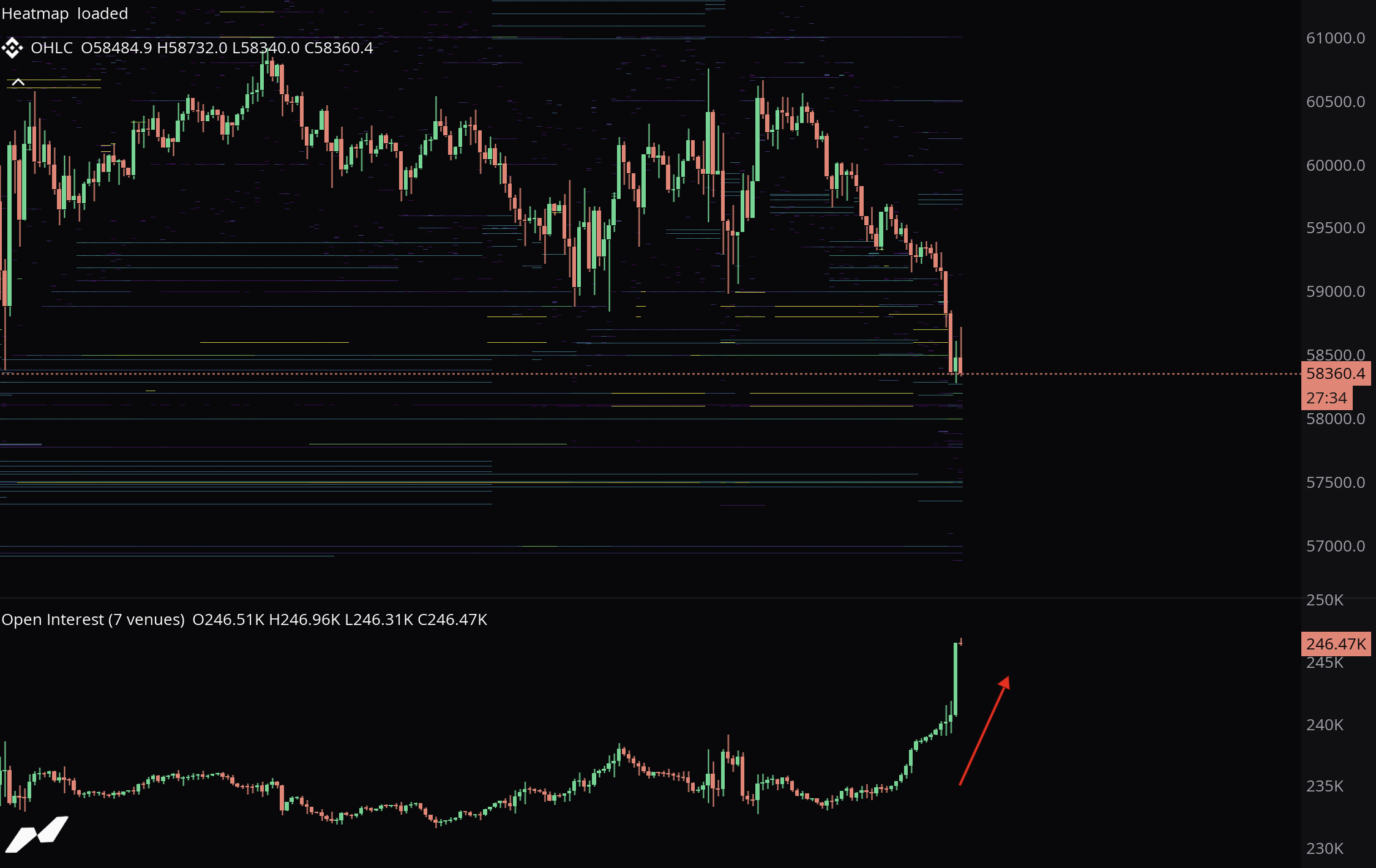
BTC/USD order-book data. Source: Exitpump/X
Trader Killa eyed a repeat of weekly price patterns, in which Mondays formed the swing low or high of the following week.
“$BTC Keeps consolidating in this price range. Marginally higher lows and equal highs,” trader Daan Crypto Trades continued.
“Look out for whichever direction breaks first, I think a quick move should follow after that seeing how compressed this is becoming.”
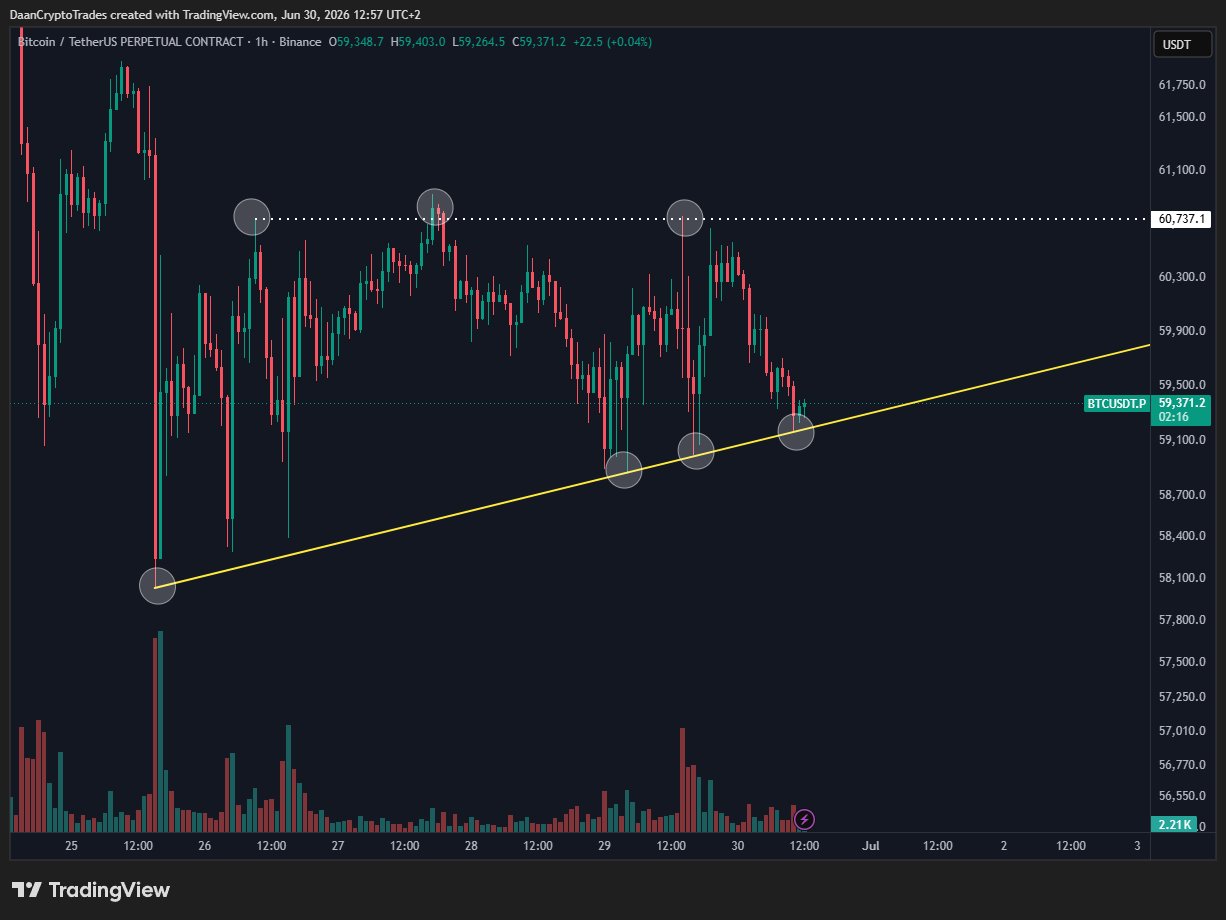
BTC/USDT perpetual contract one-hour chart. Source: Daan Crypto Trades/X
Bitcoin thus reinforced its divergence from US stocks with total Q2 losses nearing 20%.
By contrast, trading resource The Kobeissi Letter noted the S&P 500 was up 14% over the quarter, marking its best performance since 2020.
“This would mark the 2nd-largest quarterly gain since the 2008 Financial Crisis recovery,” it added in an X post alongside data from Bloomberg.
“At the same time, the Nasdaq 100 is up +25%, on track for its strongest quarter in 5 years. This would also mark the Nasdaq 100’s 2nd-best quarterly performance in 25 years.”
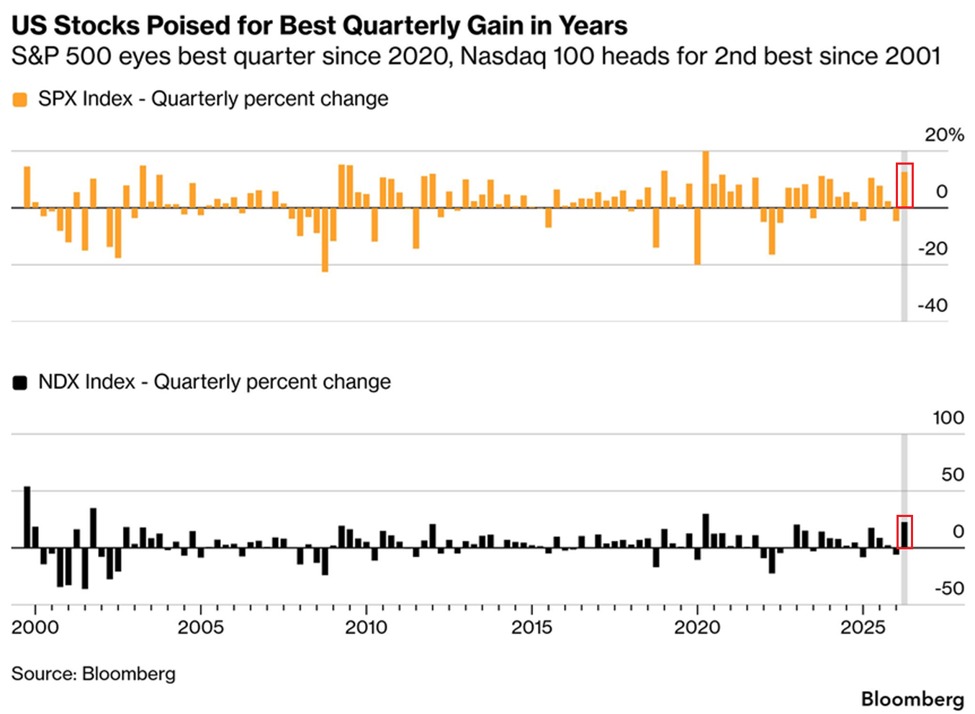
US stocks performance comparison. Source: The Kobeissi Letter/X
Kobeissi described an “accelerating” global stocks rally, with the US providing the impetus.
In a potential headwind for crypto, the US dollar hit new multidecade highs against the Japanese yen, increasing the odds of government intervention.
USD/JPY reached 162.50 on the day, its highest since the mid 1980s.
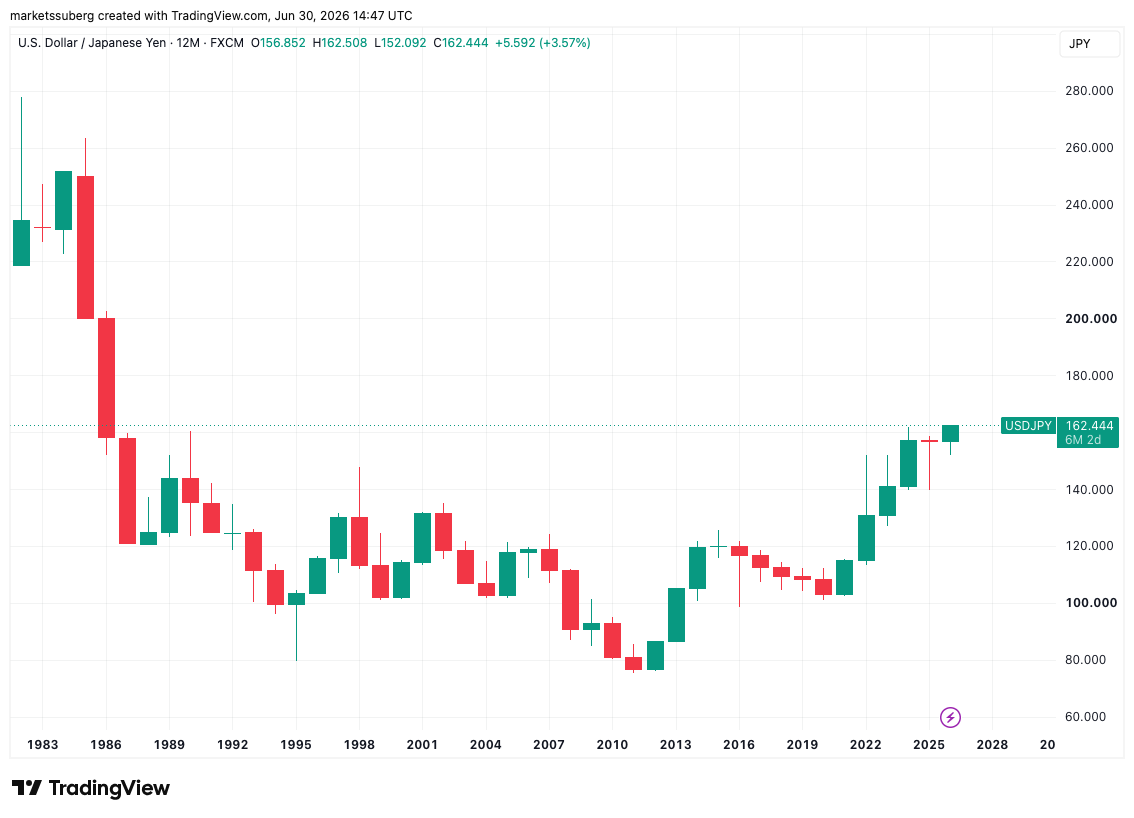
USD/JPY 12-month chart. Source: Cointelegraph/TradingView
“Whether it’s Japan, India, South Korea or MSTR, It’s the same problem,” analyst and YouTube personality George Gammon summarized to X followers on the day.
“You’ve got dollar liabilities and not enough dollars. So you sell assets to get dollars putting downward pressure on the asset. Yen, Rupees, Won, or Bitcoin.”
Bitcoin hodlers “appear to be cutting losses”
In new research, onchain analytics platform CryptoQuant warned of a fresh round of Bitcoin investor “capitulation.”
Related: BTC price RSI prints key 2026 signal: Five things to know in Bitcoin this week
At sub-$70,000 levels, contributor Crypto Sunmoon warned that those who had bought BTC around all-time highs were now selling at a loss.
“Since the break below $70K, exchange inflows have risen sharply, with the majority of this volume consisting of coins held for roughly six to twelve months, coins most likely accumulated near the cycle highs,” they wrote in a Quicktake blog post.
“This pattern is consistent with capitulation among cycle-top buyers, as holders appear to be cutting losses rather than continuing to hold through the drawdown.”
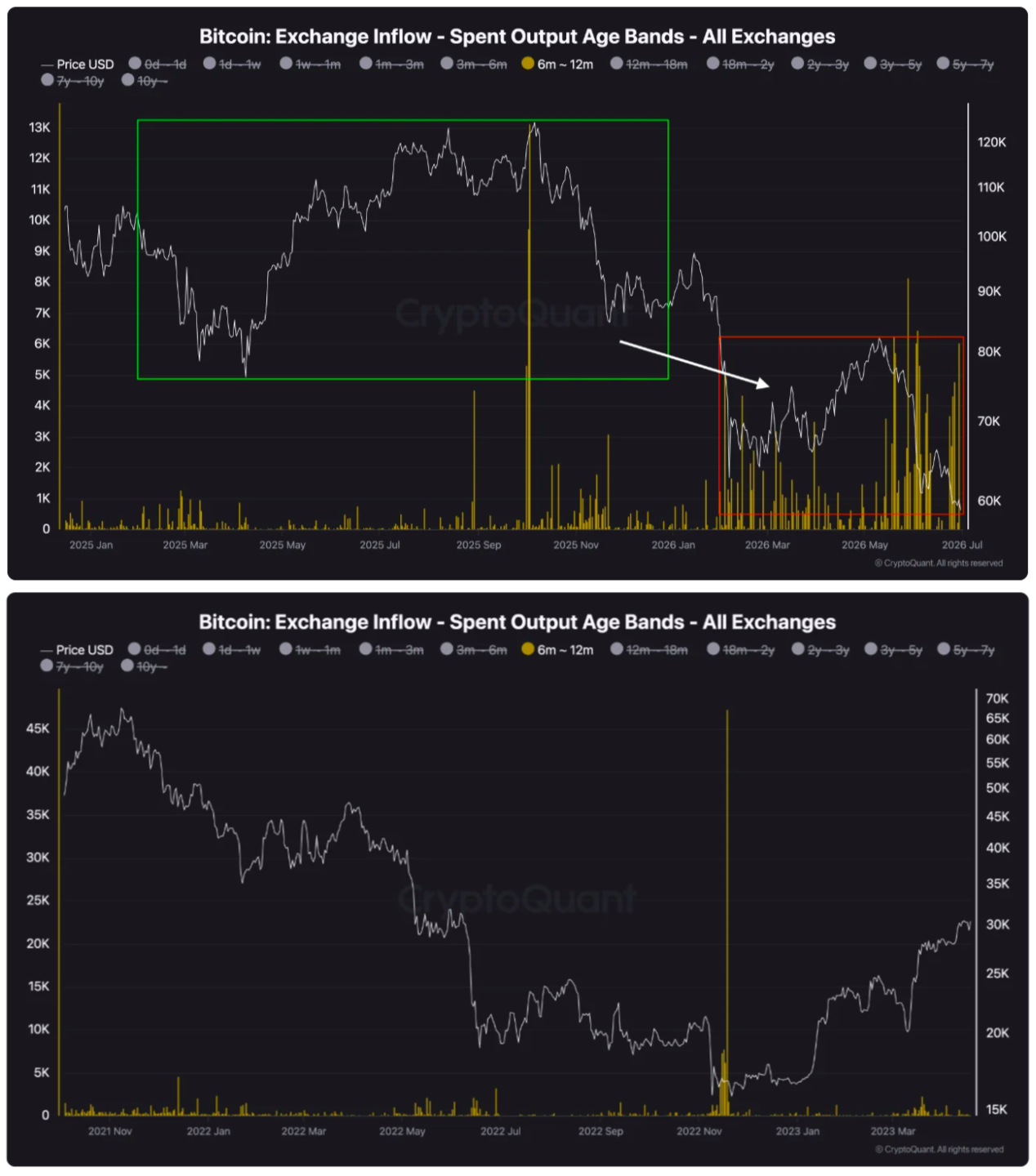
Source: CryptoQuant
CryptoQuant data showed onchain movements increasingly involving coins that last moved around all-time highs, along with increasing inflows to exchanges.
“For some, this will be a painful stretch. That said, capitulation events of this kind among cycle-top investors have historically coincided with long-term bottom formation, a pattern observed in both the 2018 and 2022 cycles,” Crypto Sunmoon added.

The project, supported by Visa, Mastercard and many crypto companies, could be in a position to challenge Tether’s USDT and Circle’s USDC, currently the two largest stablecoins by market capitalization.
More than 140 companies have signed onto a US dollar-pegged stablecoin project that allows them to “receive all of the earnings” from its reserves.
In a Tuesday notice, Open Standard said it was launching the Open USD (OUSD) stablecoin, a US dollar-pegged coin supported by financial companies including Visa and Mastercard, as well as crypto companies Coinbase, Ripple, OKX and Bybit. The project will allow businesses to mint OUSD “at no cost and with no artificial limits on volume,” and keep earnings from the coin’s reserves.
“When Visa, Stripe, Mastercard, Coinbase and Google coordinate on a new stablecoin, the signal is unmistakable,” said Rhino.fi co-founder and CEO Will Harborne. “Open USD is the first launch with a real chance to win share from USDT and USDC, because reserve revenue flows back to everyone who holds it. But that same incentive is what drives fragmentation at scale.”

Source: Open Standard
Because it’s backed by so many high profile companies, the coin could be in a position to challenge Tether’s USDT and Circle’s USDC, currently the two largest stablecoins by market capitalization. The share price of Circle Internet Group dropped by more than 16% on Tuesday to $63.63.
Related: Business use of stablecoins set for growth surge: Cybrid report
According to Open Standard, OUSD will launch “later this year.” The current size of the stablecoin market, according to DefiLlama, is more than $312 billion and projected to reach up to $4 trillion by 2030.
In a Tuesday X post following the announcement, Circle CEO Jeremy Allaire said that the company welcomed “continued innovation and competition in the space,” adding that it would soon expand support for US dollar-pegged and non-US dollar stablecoins.
“[We] look forward to remaining laser-focused on building the best stablecoin infrastructure possible and driving more customer and partner success,” said Allaire.
Stablecoin launch comes under US law favorable to the industry
US President Donald Trump signed a bill to establish a regulatory framework for payment stablecoins, called the GENIUS Act, into law last year. Many experts expect that the legislation, awaiting federal authorities finalizing regulations for implementation, could pave the way for the stablecoin market to grow as companies potentially begin issuing and accepting digital assets more easily.
Magazine: Does ‘Paper Bitcoin’ mean there’s an unlimited supply of BTC?


The crypto industry has contributed $189 million to the 2026 U.S. election cycle so far, pushing political spending beyond 2024 levels months before voters head to the polls.
Summary
- Public Citizen says the crypto industry has contributed $189 million to the 2026 U.S. election cycle, surpassing 2024 spending.
- Ripple- and Coinbase-backed PACs, led by Fairshake, remain among the biggest sources of crypto political spending.
- Rising voter interest in crypto and the ongoing CLARITY Act debate continue to shape the industry’s political influence.
According to a report published Tuesday by consumer advocacy group Public Citizen, crypto companies now account for roughly 37% of all corporate political contributions made during the 2026 election cycle. The nonprofit estimated that the industry has spent about $189 million with more than four months remaining before the November election.
Public Citizen said much of that spending has come through crypto-backed political action committees. Fairshake alone has spent more than $82 million during the current cycle, while MAGA Inc., a Super PAC largely backed by Crypto.com, has spent more than $56 million.
The nonprofit argued that these organizations operate independently of traditional party priorities, supporting or opposing candidates from either major party depending on their policy positions. Public Citizen said this approach follows the same strategy used during the 2024 election cycle.
Ripple and Coinbase remain central to crypto political funding
Among the largest industry-backed groups, Fairshake and its affiliated committees, Defend American Jobs and Protect Progress, continue to receive support from cryptocurrency companies including Coinbase and Ripple. Public filings cited by Public Citizen showed the network held a combined $193 million war chest as of January.
The report also pointed to newer political organizations created after the 2024 elections, including Fellowship PAC, which is backed by Cantor Fitzgerald. Public Citizen said the combined spending by crypto-backed PACs has already surpassed the roughly $170 million contributed during the previous federal election cycle, when the industry supported candidates viewed as favorable to digital assets.
Interest in crypto policy has also expanded among voters. As crypto.news previously reported, a DCG-Harris Poll found that 40% of registered voters now consider cryptocurrency a major election issue, up from 20% in 2024. The survey questioned 1,874 registered voters between May 8 and May 18 and included oversamples across Arizona, Georgia, Michigan, Nevada, North Carolina, Ohio, Pennsylvania and Texas.
DCG said the findings indicate that more voters are paying attention to how candidates address digital asset policy as Congress continues debating new crypto legislation.
Crypto lobbying grows alongside CLARITY Act debate
Congressional efforts to establish a regulatory framework have unfolded alongside the industry’s growing political activity. The CLARITY Act remains under Senate consideration, with supporters arguing that the legislation would define oversight responsibilities for U.S. crypto markets.
Earlier reporting from crypto.news noted that Coinbase, Ripple and more than 200 cryptocurrency organizations urged Senate leaders to schedule a vote on the bill.
Separate reporting by crypto.news also stated that Galaxy Digital lowered its estimated probability of the CLARITY Act becoming law in 2026 to 50%, citing a tightening Senate calendar, limited floor time before the August recess, and a lack of visible progress in negotiations.
Political spending has also reached individual congressional races. Colorado voters headed to the polls Tuesday for primary elections, where Public Citizen highlighted activity in the state’s 8th Congressional District.
According to the report, the You Can Push Back Super PAC, backed by Ripple Labs co-founder Chris Larsen, spent $1 million on media supporting Democratic candidate Manny Rutinel. The committee’s previous major expenditure totaled $3.3 million in support of Democrat Alex Bores in New York’s 12th Congressional District. Bores lost his primary last week to Micah Lasher, who had criticized Larsen’s involvement in the race.

Nasdaq has chosen Pyth, an onchain financial data network, to distribute Nasdaq’s proprietary market data to blockchain applications and other software platforms, expanding how institutional trading feeds can be consumed by decentralized systems.
The collaboration begins with access to Nasdaq TotalView, the exchange’s depth-of-book data feed that captures every displayed bid and ask across price levels, along with order imbalance information around the opening and closing auctions. For traders and developers, the emphasis is on richer liquidity visibility than standard quote feeds, since a full order book can help power more informed execution, market-making analytics, and trading logic.
Key takeaways
- Nasdaq selected Pyth to make Nasdaq market data available to blockchain and other software platforms via onchain distribution.
- Initial coverage is Nasdaq TotalView, including full displayed order books and order imbalance data around opening and closing auctions.
- Pyth positions its integration as “single” access, aiming to simplify how applications obtain first-party market data.
- Nasdaq joins existing Pyth publishers such as Euronext, Tradeweb, Kalshi, Singapore Exchange (SGX FX), and the US Department of Commerce.
From exchange microstructure to onchain use
Traditional market data products typically serve low-latency trading systems and professional analytics, where order book visibility is critical. Nasdaq TotalView is designed for that purpose, offering a more complete picture of market liquidity by publishing the full displayed order book at each price level rather than relying only on top-of-book quotes.
By routing this type of feed through an onchain data network, Nasdaq is effectively lowering the integration barrier for applications that want to incorporate exchange-grade market information. According to Pyth, the service allows software applications to access first-party market data through a single integration, and it is intended for a range of use cases including blockchain applications, digital asset exchanges, prediction markets, and trading systems.
For builders, this matters because onchain trading and derivatives often struggle with a lack of consistent, high-quality market inputs. Depth-of-book and auction-related imbalance data can also support models that go beyond last-trade or index pricing, potentially improving how decentralized systems interpret liquidity conditions around times when participation and price formation are especially active.
Nasdaq’s broader digital-asset push
The Pyth partnership aligns with a series of moves by established exchange operators to expand into crypto-adjacent infrastructure and regulated market services.
In March, Nasdaq expanded its tokenization efforts through an agreement with crypto exchange Kraken and its infrastructure affiliate Backed to develop infrastructure aimed at linking traditional equities with blockchain networks. The company has framed this as part of a larger push to integrate tokenized assets with existing capital markets rails.
Nasdaq has also continued to deepen its regulated crypto derivatives strategy. The SEC approved Nasdaq’s proposal to list Bitcoin index options tied to the Nasdaq Bitcoin Index, with trading pending approval from the Commodity Futures Trading Commission. In parallel, Nasdaq partnered with CME Group to launch cryptocurrency index futures that track a basket of seven digital assets, including Bitcoin, Ether, Solana, and XRP, as part of its broader regulated derivatives lineup.
Exchange peers and the race for crypto product scope
Nasdaq is not alone in expanding beyond legacy exchange offerings. ICE—the parent of the New York Stock Exchange—has taken steps into crypto futures by partnering with OKX to launch perpetual futures tied to ICE’s Brent crude and West Texas Intermediate oil benchmarks. The announcement was described as the first product under that partnership.
ICE CEO Jeffrey Sprecher has also argued that regulators should allow traditional exchanges to offer 24/7 onchain perpetual futures. The core point is competitive: regulated venues should be able to contend with crypto-native platforms that already operate perpetual products around the clock.
While Nasdaq’s current Pyth deal is centered on market data distribution rather than trading products, it fits the same competitive theme—improving the ability of institutional-grade infrastructure to connect with blockchain applications. In practice, data access is often a prerequisite for building or operating decentralized systems that can respond to real liquidity conditions.
What to watch next
Investors and developers should keep an eye on how Nasdaq TotalView data is rolled out through Pyth beyond the initial scope, and whether additional Nasdaq market data offerings follow. As onchain applications increasingly seek higher-fidelity inputs, partnerships like this could become a differentiator for decentralized trading and prediction systems—provided integration remains practical and latency or data quality expectations can be met in real-world deployment.
Crypto World
Securitize Shareholders Approve Merger, Paving Way for First Publicly Traded Tokenization Company


Cantor Equity Partners II shareholders voted Monday to approve a merger with Securitize, clearing the final pre-close hurdle before the combined company lists on the New York Stock Exchange on July 2 as Securitize Corp., the first publicly traded tokenization company in the United States. The vote… Read the full story at The Defiant
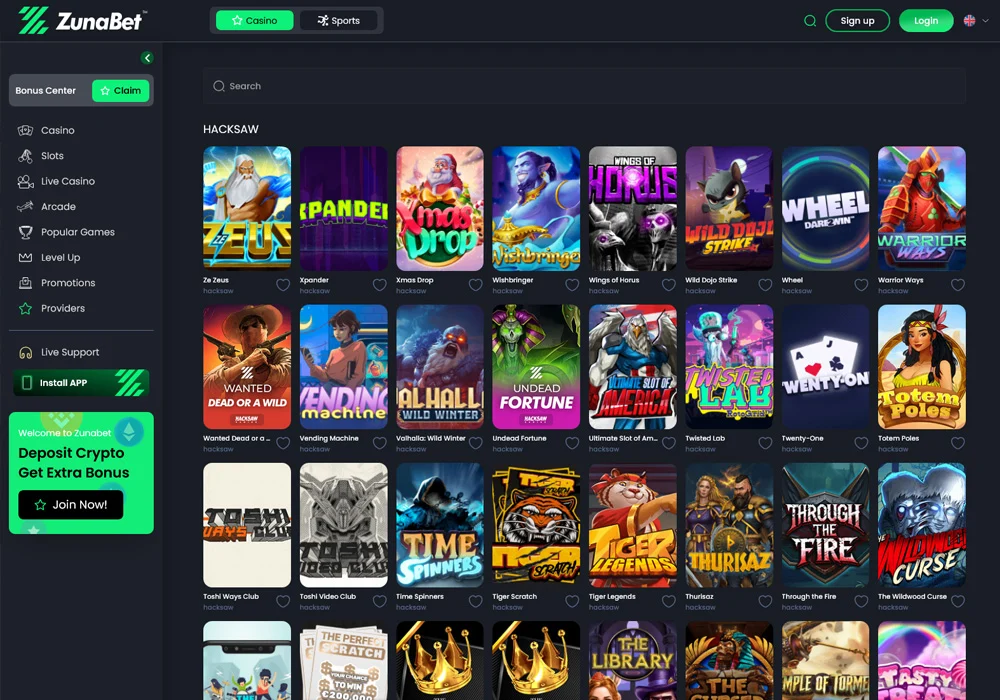
The 2026 online betting landscape continues to be shaped by FanDuel and BetMGM, two names that pull in the bulk of US market share through major league deals, sharp mobile apps, and consistent advertising. But the picture is widening. Crypto-first operators have started occupying real ground in the same discussions, and ZunaBet — which launched in 2026 — is one of the brands finding its place quickly within that shift.
Here’s how FanDuel and BetMGM compare today, and where ZunaBet’s setup positions it as part of the evolving landscape.
The Two US Market Leaders
FanDuel has been operating since 2009, beginning as a daily fantasy sports site before expanding into a full sportsbook and online casino. In 2026, it sits at the top of US sports betting across many states. The platform runs polished mobile apps, holds major league partnerships, and works on the standard fiat banking model — cards, bank transfers, and e-wallets.
BetMGM launched in 2018 as a joint venture between MGM Resorts and Entain, combining MGM’s long casino history with Entain’s online betting technology. The platform offers a full sportsbook and online casino, with crossover perks tied to MGM resorts — hotel stays, dining, and entertainment included. Like FanDuel, it deals only in dollars and runs under state-by-state licensing.
Both are dependable choices for players who want a regulated US experience. Both also share the constraints that come with the traditional operating model — state-by-state restrictions, withdrawal timelines that depend on chosen methods, libraries narrower than what global crypto operators carry, and loyalty programs that haven’t moved far from the standard tiered template.
Where ZunaBet Comes In
ZunaBet went live in 2026 under Strathvale Group Ltd, operating with an Anjouan gaming license. The defining separator from the older brands is in the architecture — crypto isn’t a feature added later but the foundation the whole platform was built on.
The casino library covers more than 11,000 titles from over 60 providers, including Pragmatic Play, Hacksaw Gaming, Yggdrasil, BGaming, and Evolution. That depth places it among the larger crypto-focused libraries available, easily exceeding what FanDuel or BetMGM can carry in most of their licensed markets. Slots, table games, and live dealer rooms all share a single account.
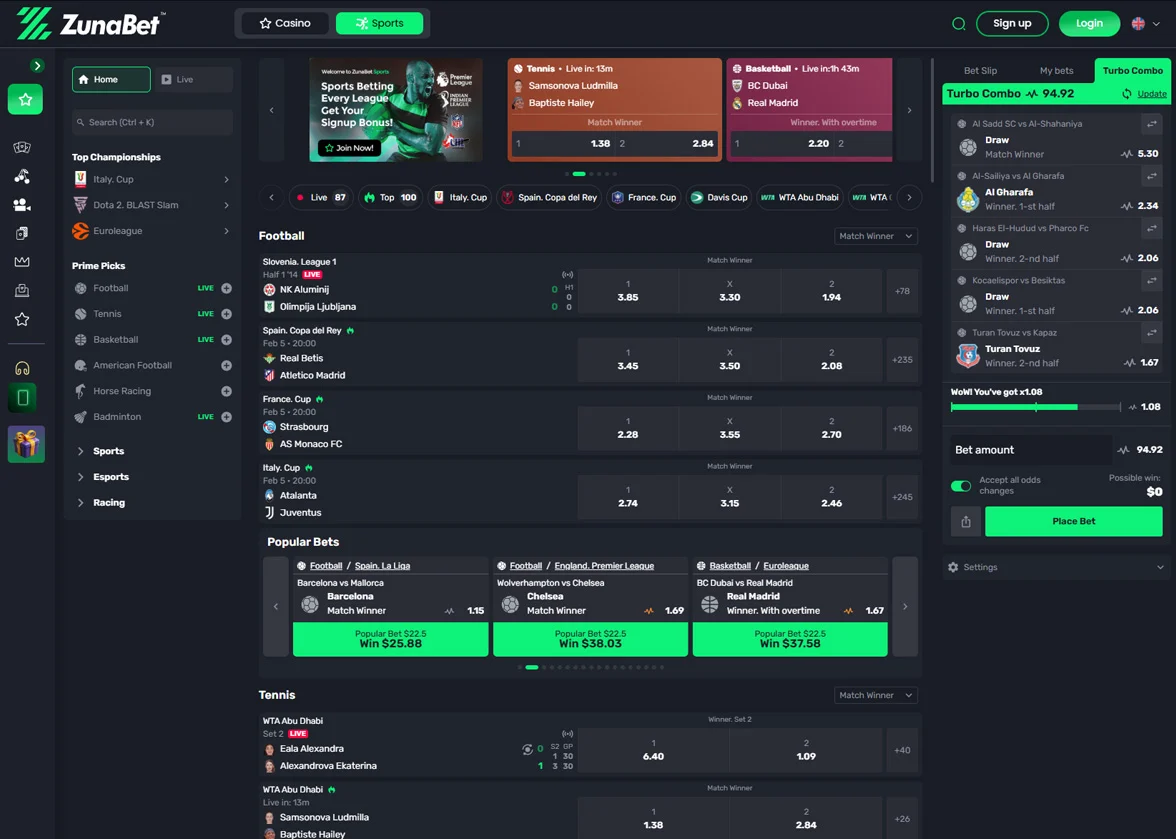
The sportsbook completes the platform. Football, basketball, tennis, NHL, and other major sports sit alongside esports like CS2, Dota 2, League of Legends, and Valorant. Virtual sports and combat sports finish out the menu. The hybrid arrangement matches the category FanDuel and BetMGM occupy, with broader market coverage rolled into one platform.
How the Banking Models Differ
This is where the operating gap is clearest. FanDuel and BetMGM run all money through traditional banking. The result is processing windows, possible holds, and withdrawal speeds that depend on which method the player chose at deposit.
ZunaBet handles payments entirely in crypto, supporting more than 20 currencies — Bitcoin, Ethereum, USDT on multiple chains, Solana, Dogecoin, Cardano, and XRP all included. No platform fees apply on transactions, and withdrawals settle quickly. For players already comfortable holding crypto, the experience strips out the friction that comes with bank-routed payments.
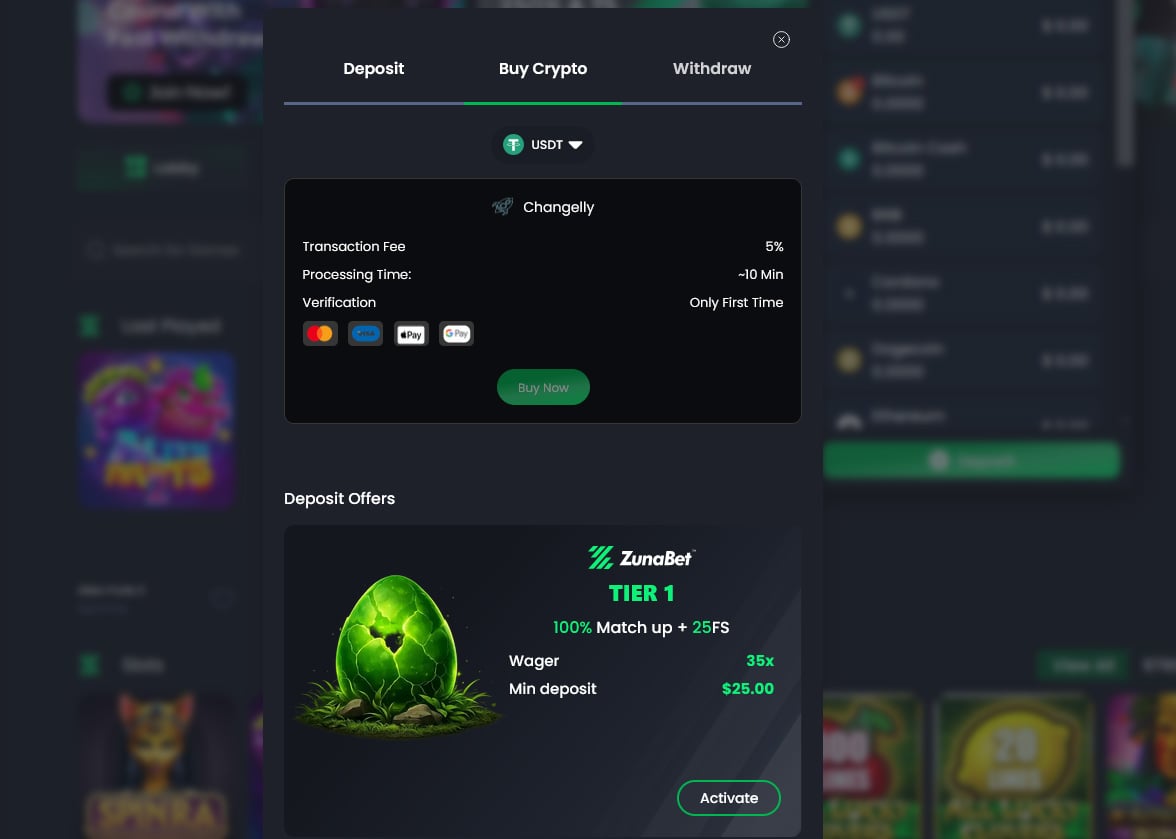
There’s a reach factor too. Crypto-first operators don’t sit inside the same state-by-state licensing structure that US fiat brands work within. ZunaBet’s full platform is accessible across many regions where FanDuel and BetMGM can’t operate. For a generation already living in digital, crypto-friendly contexts, that aligns with how they expect any modern platform to work.
Welcome Bonus Comparison
FanDuel and BetMGM build welcome offers around deposit matches, bonus bets, or risk-free first bets. The exact terms shift by state, and wagering requirements often take close reading to navigate fully.
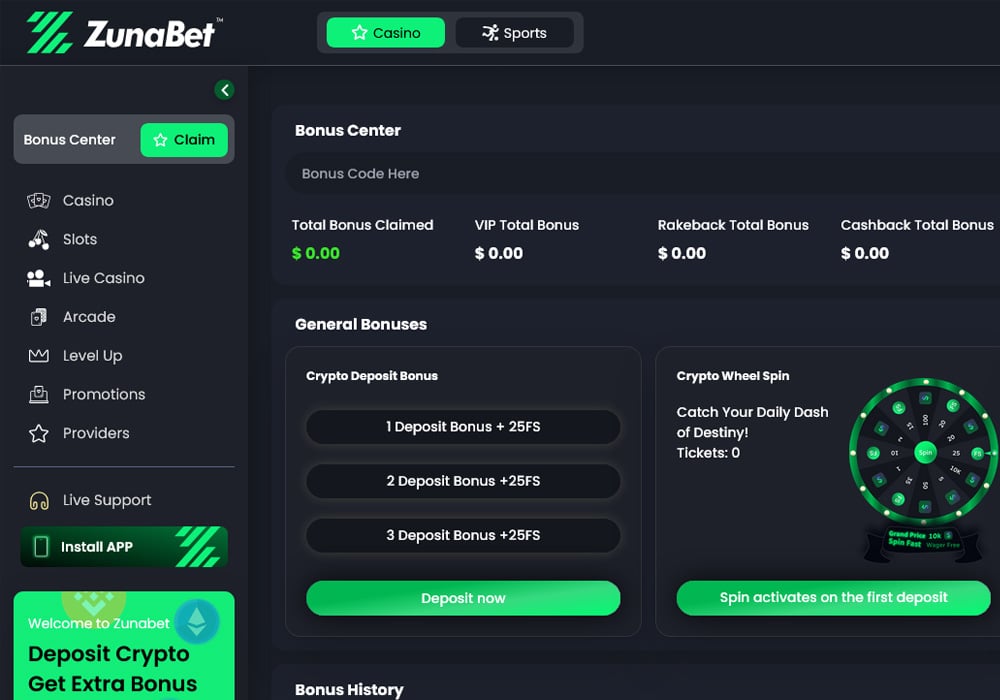
ZunaBet’s welcome offer runs up to $5,000 plus 75 free spins across three deposits. The first matches 100% up to $2,000 plus 25 spins. The second adds 50% up to $1,500 plus 25 spins. The third closes with 100% up to $1,500 plus another 25 spins. Marketed as a 250% bonus across three deposits, the layout gives new players more time and depth to explore than a single-deposit offer does.
Loyalty Programs Side by Side
FanDuel runs the FanDuel Rewards program, with points earned through play that can be exchanged for bonuses and perks. BetMGM uses MGM Rewards, which connects online play to perks at MGM resorts — hotel stays, dining, and entertainment among them. Both function effectively, but both stay close to the standard tiered loyalty model the industry has used for decades.
ZunaBet rebuilds the structure. The loyalty program runs on a dragon evolution theme, with a mascot named Zuno guiding players through six tiers. Squire opens at 1% rakeback, then Warden at 2%, Champion at 4%, Divine at 5%, Knight at 10%, and Ultimate at the top with 20% rakeback.
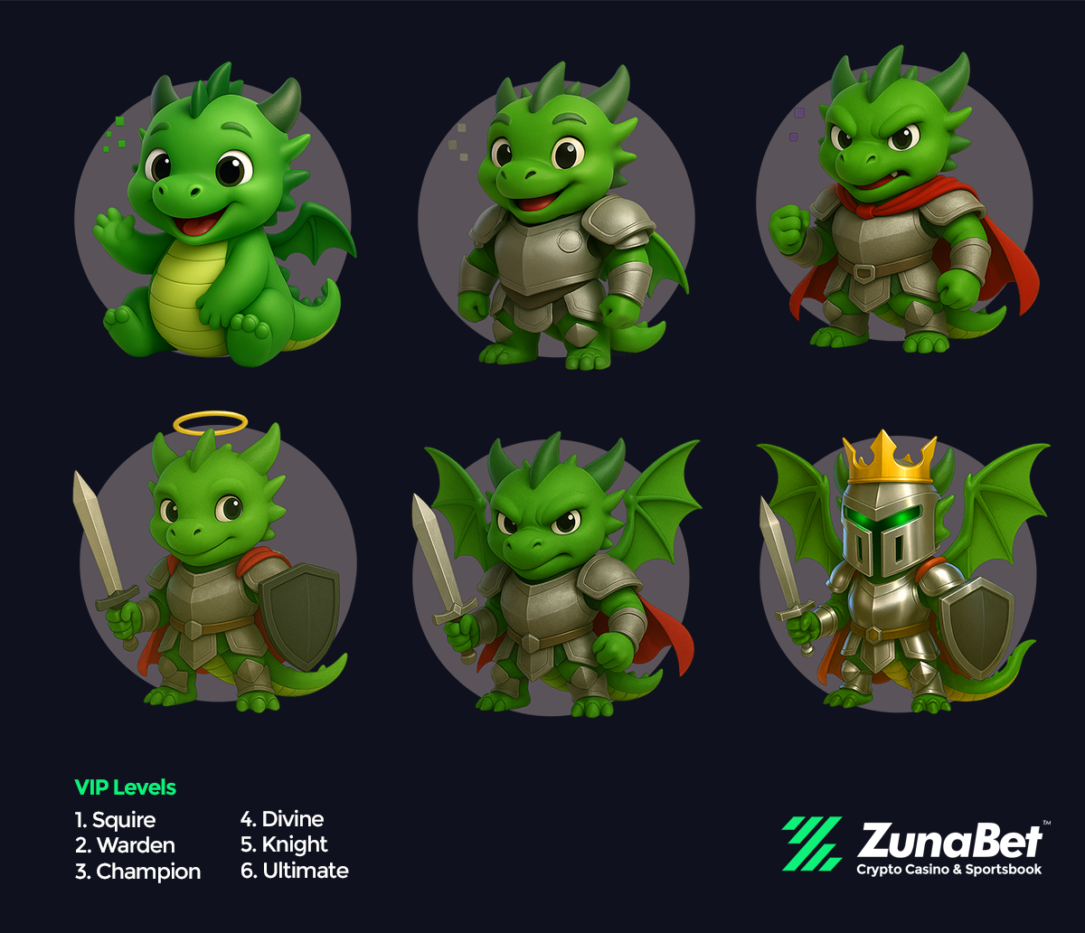
Tier movement unlocks more than rakeback. Free spins scale up with tier — reaching 1,000 spins at the highest level — along with VIP club access and double wheel spins through the climb. The format feels closer to in-game progression than collecting points toward a reward. For players already drawn to that kind of mechanic, the system creates engagement a flat VIP setup can’t match.
Why ZunaBet Fits the 2026 Landscape
FanDuel and BetMGM remain dependable choices for players who value regulation and a track record built over time. Neither brand is going anywhere. But the expectations players bring to these platforms in 2026 keep moving forward. Fast settlement, deep libraries, and engaging loyalty mechanics are turning into baseline features rather than premium ones.
ZunaBet was designed around those baselines from the start. The crypto-first core delivers quick payments and minimal fees. The library reaches beyond what most established brands offer. The sportsbook covers traditional sports and esports together. The dragon loyalty program adds direction and progression to regular play.
For players who want speed, variety, and a more current feel, ZunaBet sits among the more interesting platforms in the 2026 landscape. The brand is still in its early growth phase, but the trajectory is clear. A new generation of players treats crypto support, gamified rewards, and global access as starting points rather than features to request.
FanDuel and BetMGM built the online betting world that exists today. ZunaBet is one of the platforms working on what 2026 and beyond will look like — and players exploring it now are catching that direction early.


For the five years leading up to June 2025, Michael Saylor posted to X thousands of times, consistently praising BTC while disparaging credit and emphasising the legacy financial system’s emphasis on debt.
However, a social media audit pinpoints the exact moment when he pivoted.
Starting in June 2025, Saylor began lavishing praise on fiat-denominated credit in a series of online posts that culminated in the launch of STRC.
From August 2020 to June 2025, Saylor posted 3,494 times to X, with 75.8% of those posts mentioning BTC. He mentioned credit in fewer than one in 100.
When he did, he referred to credit as an insult aimed at fiat money, which BTC intended to supplant.
However, once he reversed his stance, his change in tone wasn’t subtle.
Read more: Strategy’s STRC hit another all-time low today
More bitcoin, but way more credit
According to Saylor’s bizarre dictionary of invented terminology, BTC was now called “digital capital,” his MSTR common stock was “digital equity,” and his dividend-paying STRC was “digital credit.”
In particular, he has emphasized STRC‘s aim of holding a USD par value while paying USD dividends.
References to fiat were also plastered across Strategy’s website and marketing materials, USD-denominated issuances arrived in a steady drip of dilution, and Saylor sold Strike with a special convertability bonus if the USD price of MSTR rallied high enough.
Strife and Stride launched with fiat dividends and USD credit seniority in the case of a bankruptcy.
STRC permanently ended the dominance of BTC in Saylor’s posts to X as credit- and debt-engineering vocabulary displaced BTC.
For a few months, things seemed to be going well. STRC held its $100 par value intermittently from October 2025 through May 2026.
Then, this month, the bottom fell out.
STRC, alongside MSTR, hit a series of new lows, eventually falling to $71.25, a terrifying 29% below where it should have been trading.
MSTR hit $82 last week, down $375 from its 52-week high.
Fiat games continue with BTC-branded dilution
While Saylor kept posting credit-focused quips on social media, investors read the fine print on Saylor’s debt engineering.
STRC, despite its marketing lingo, isn’t actually a corporate bond. What’s more, the company isn’t required to hold any assets to back it, offers shareholders no redemption rights at its $100 par value, and pledges no BTC as collateral.
Unlike many traditional credit products, Strategy provides no FDIC, SIPC, nor any type of insurance against losses incurred by its shares falling in price.
STRC is, after all, just a stock that the company has relententlessly diluted alongside its MSTR shareholders.
Saylor stopped calling BTC digital money. Instead, he simply called it a capital asset that, in his view, should compound near 30% a year, even though its actual five-year compounded annual growth rate through mid-2026 is closer to 12%.
As BTC underperformed, Saylor’s stocks performed even worse.
The stress test for Saylor’s de-emphasis of BTC has arrived in full force this summer. BTC has more than halved from its peak above $126,000, and Strategy’s common stock has shed 78% of its value over the past 12 months.
This month, the company’s enterprise value slipped below the value of its BTC for the first time. Worse, it made its first voluntary BTC sale since December 2022, breaking multiple years of guidance from Saylor that Strategy didn’t plan to sell BTC.
As shares cratered, Saylor posted that he remained focused on BTC, despite his obvious focus on credit.
STRC, Saylor’s flagship “credit” product that is supposed to trade at $100, opened for trading today at $81.
Got a tip? Send us an email securely via Protos Leaks. For more informed news and investigations, follow us on X, Bluesky, and Google News, or subscribe to our YouTube channel.

Janus Living: After Recent IPO, Senior-Care REIT Goes On Property Shopping Spree

Robert Kiyosaki revives $95K Ethereum call as ETH tests support

General Hospital: Cullum’s Brutal Exit – Who Takes Out the WSB Villain?





-

 Fashion4 days ago
Weekend Open Thread: Staud – Corporette.com
-

 Politics5 days ago
The House | Manchesterism won’t survive the painful trade-offs unless it gets citizens on board
-

 Crypto World18 hours ago
Strategy authorizes up to $1.25B in Bitcoin sales under new capital plan
-

 Politics5 days ago
Potential 2028er World Cup attendee leaderboard
-

 Business5 days ago
Asia stock markets slide as tech shares slump
-

 News Videos2 days ago
MAJOR BITCOIN & MARKET UPDATE!!!! (MUST WATCH ASAP!!!)
-

 Tech5 days ago
A Look At A Gaggle Of Transputer Boards
-

 Crypto World7 days ago
Securitize Wraps Roubini's SEC-Registered ETF as Dubai VARA Digital Security
-
Crypto World7 days ago
Bitcoin (BTC) Dips Below $62K, Ethereum (ETH) Plunges 6% Daily: Market Watch
-
 Crypto World5 days ago
Dell (DELL) Shares Tumble Over 5% Following Analyst Downgrade to Hold
-

 Crypto World3 days ago
Coinbase, Circle Deepen Crypto Stock Losses Despite Resilient S&P 500
-
Business7 days ago
Entergy settles forward sale agreements, raises $672 million in cash proceeds
-

 Crypto World4 days ago
Kraken's xStocks Opens Bending Spoons IPO Registration to EEA Retail
-

 Business17 hours ago
Australia treasurer says alleged access of prime minister’s bank data ’incredibly concerning’
-

 Sports4 days ago
FIH Pro League: India defeat Pakistan 7-1, register biggest win of campaign | Other Sports News
-

 Crypto World5 days ago
Bitcoin Sparks $600M Hourly Liquidations With $65,000 Set To Become Resistance
-

 Tech3 days ago
Bluekit phishing kit adopts browser-in-the-middle for login theft
-

 Tech3 days ago
Russian hackers now target Signal backup recovery keys
-
 Crypto World4 days ago
Hyperliquid Named on Singapore MAS Investor Alert Register
-

 Crypto World6 days ago
Ripple and SBI launch RLUSD in Japan after JFSA approval
You must be logged in to post a comment Login