

Crypto World
Bitcoin Price Prediction: How Michael Saylor’s Capital Strategy Could Impact BTC

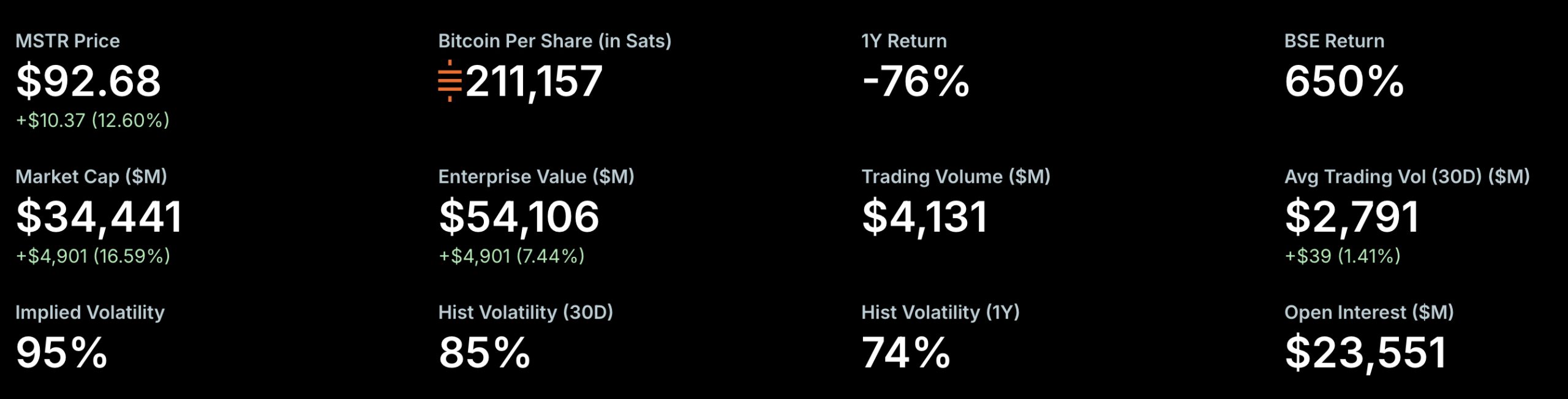
Bitcoin is holding a narrow consolidation price range as its prediction hangs in the balance on Michael Saylor’s next move and macroeconomic catalyst. Strategy’s MSTR shares snapped a nine-day losing streak on Monday after the firm unveiled a formalized capital framework that could allow it to sell up to $1.25 billion in Bitcoin to strengthen its balance sheet.
The announcement centered on Strategy’s expanded USD Reserve alongside a “BTC Monetization Program” that formalizes potential Bitcoin sales as a cash management tool. Meanwhile, Michael Saylor raised its dividend for the eighth time, targeting a 12% annual yield through twice-monthly distributions.
As one analyst noted, Saylor’s recent $1 billion Bitcoin purchase was financed entirely through STRC preferred stock sales, with no dilution of MSTR common shares. However, the preferred share product STRC rebounded after the news and sent the company’s mNAV above 1.0.

Macro context adds a layer of uncertainty. The Bank of Japan’s upcoming rate decision, a potential hike to the highest levels in 30 years, remains a live risk-off trigger for BTC and risk assets. So, until the BoJ verdict lands, directional conviction is thin.
Discover: The Best Crypto to Diversify Your Portfolio
Bitcoin Price Prediction: Break $70,000 This Week?
Bitcoin is trading around $60,000, 52% below its all-time high. Price remains locked inside a defined range after several failed breakout attempts. Meanwhile, MACD still favors buyers, although bullish momentum has weakened over the past two days. RSI is also trying to move above its signal line.
If buyers defend support near $58,800 and momentum strengthens, Bitcoin could challenge resistance around $64,100. A successful breakout would expose the next upside target near $71,700. However, the market still needs stronger buying pressure to confirm a sustained recovery.

Don’t Miss Out on Our $1,000 USDT Airdrop on ByBit
The most likely outcome remains continued consolidation while traders wait for the Bank of Japan’s policy decision and any fresh announcement from Strategy regarding additional Bitcoin purchases. On the downside, a surprise rate hike or disappointing corporate demand could drag Bitcoin toward support near $55,000.
We might still see some short-term volatility as traders adjust their exposure. Although Michael Saylor continues projecting Bitcoin could eventually reach $150,000 and later $1 million, price direction will ultimately depend on liquidity and sustained capital inflows rather than long-term forecasts.
Discover: The Best Token Presales
Bitcoin Hyper Targets Early-Mover Upside as Bitcoin Tests Key Levels
Bitcoin consolidating 50% below its high is the textbook setup where established-asset upside gets slowly priced in. It’s also where early-stage infrastructure plays attract rotational interest from traders who’ve done the math on BTC’s remaining percentage moves.
At the current rate, a 10x from here would make BTC a $10 trillion asset; that’s a very different probability calculus than it was at $1,000. That’s the context to keep in mind when evaluating what gets built on top of Bitcoin’s base layer.
Bitcoin Hyper ($HYPER) is positioning itself as the first Bitcoin Layer 2 with SVM (Solana Virtual Machine) integration, targeting the performance gap between Bitcoin’s security and Solana-grade execution speed.
The presale has raised close to $33 million at a current price of $0.01368, with staking available and a decentralized canonical bridge for native BTC transfers. The core pitch: fast, low-cost smart contracts on Bitcoin without sacrificing the trust layer.
Research Bitcoin Hyper before the presale window closes.
The post Bitcoin Price Prediction: How Michael Saylor’s Capital Strategy Could Impact BTC appeared first on Cryptonews.



The United States just lifted export controls on Anthropic’s Claude Fable 5 and Mythos 5. The Commerce Department cleared both models on June 30, paving the way for a swift restoration of full global access starting July 1.
The resolution ends nearly three weeks of tense negotiations between Anthropic and the White House.
What the Lifted Export Controls Actually Mean
An export control is a US rule that restricts who can access sensitive technology, including advanced AI models, based on national security concerns. The Commerce Department imposed one on Claude Fable 5 and Mythos 5 shortly after the models launched. It has now been formally reversed.
The original directive landed on June 12, just three days after the models went live on June 9. Furthermore, it cited national security concerns reportedly tied to potential model jailbreaks. As a result, Anthropic suspended access for foreign nationals worldwide across every product surface.
The rule caused immediate operational chaos. Segmenting users by nationality in real time proved impossible in practice. Consequently, Anthropic took both models entirely offline for customers on Claude.ai, the API, AWS Bedrock, and other partner platforms until the situation could be resolved.
The company confirmed the reversal directly. “We’ve received notice that the Department of Commerce has lifted export controls on Claude Fable 5 and Mythos 5. We’ll begin restoring access tomorrow, and will share an update soon,” Anthropic posted on June 30.
Why Claude Fable 5 and Mythos 5 Matter So Much
Claude Fable 5 stands as Anthropic’s most capable widely available model. It is built on the powerful Mythos-class architecture but ships with enhanced safeguards for general use. Furthermore, it excels at demanding reasoning tasks, long-horizon agentic work, software engineering, and advanced vision capabilities.
Mythos 5 targets more sensitive workloads. The model shares the same underlying architecture but comes with lifted safeguards for cybersecurity applications. Moreover, access was originally reserved for trusted partners through Project Glasswing across high-stakes government and enterprise deployments.
Pricing keeps both models competitive across the industry. Anthropic charges 10 dollars per million input tokens and 50 dollars per million output tokens. Additionally, built-in classifiers automatically route high-risk queries to safer fallbacks, especially on cybersecurity and biology-related tasks across every product surface.
The resolution highlights a broader shift in the AI industry. Anthropic held intensive talks with Commerce Department and White House officials throughout the standoff. As a result, the swift lifting signals both effective advocacy and a maturing regulatory framework for advanced AI systems across the entire United States.
The post US Lifts Export Controls on Anthropic’s Claude Fable 5 and Mythos 5 Models appeared first on BeInCrypto.
XRP is down 6% on the weekly chart. Where will it stop?
Ripple (XRP) Price Predictions: Analysis
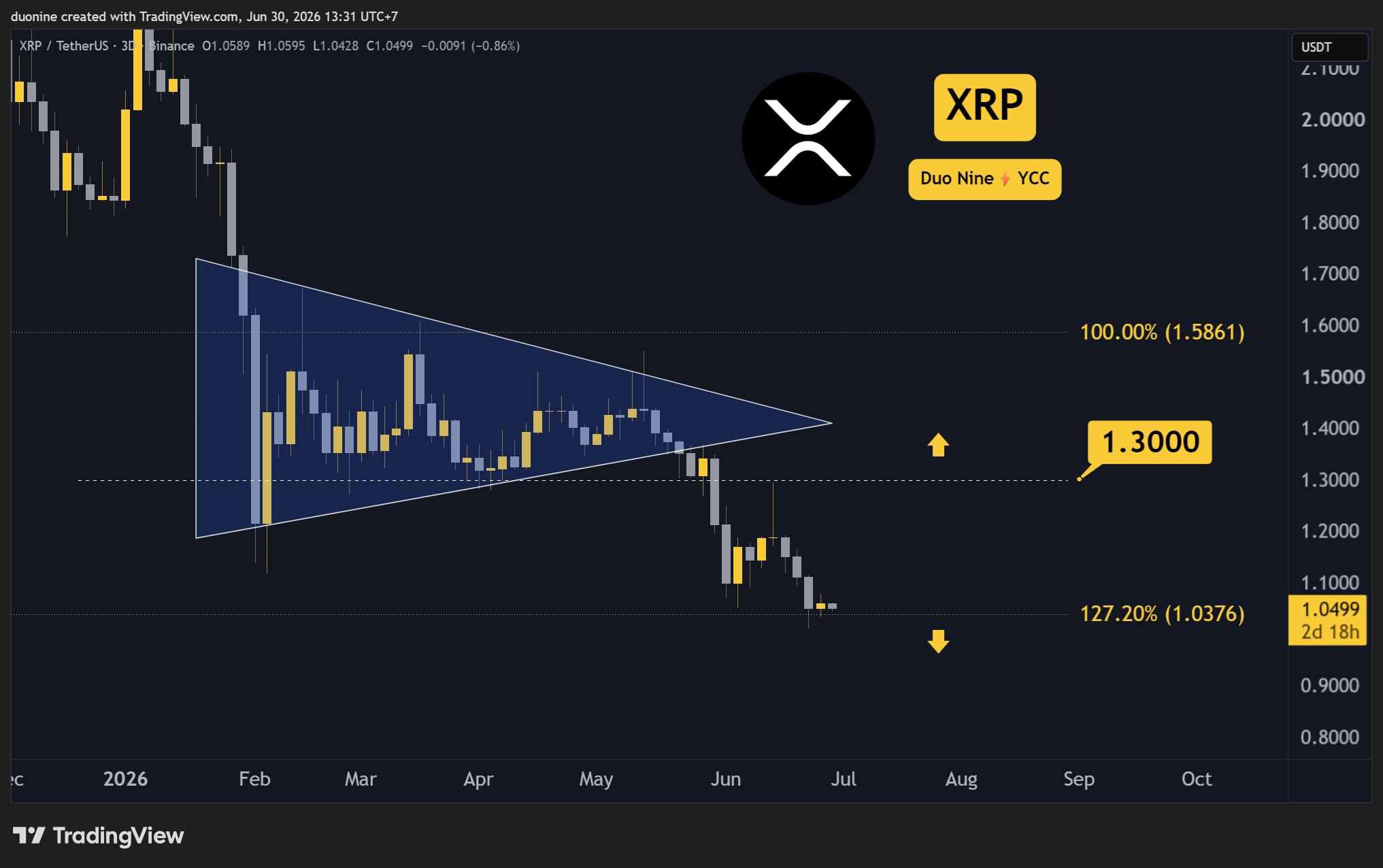
Key support levels: $1
Key resistance levels: $1.3, $1.6, $2
XRP is Back at $1
Despite the best efforts from buyers, XRP has returned to the $1 support. This is the third time in the past two weeks that this cryptocurrency tested this level. This is somewhat bearish since bulls have failed to push the price away from the key support.
If seller pressure intensifies this week, then this support may eventually crack and turn into resistance. If so, buyers will most likely retreat to 80 cents, where the next major support level is found.
Momentum Remains Bearish
With clear lower highs and lower lows, XRP is in a bearish trend that is still to find a bottom. Because of this, the price has a good chance to drop lower in the coming weeks and turn $1 into resistance.
Moreover, the momentum indicators remain on the bearish side, with the 3-day RSI close to 30 points, which also indicates a bearish trend. As long as the RSI remains under 50, bears retain the upper hand.

Weekly MACD About to do a Bearish Cross
Another concerning signal can be seen on the weekly MACD. The moving averages are about to do a bearish cross. This would be the first time it happens in 2026, and if confirmed, it’s unlikely XRP will enter a recovery in the future.
Considering the above, the outlook for the second half of the year is negative, with lower lows likely. Best to wait for a bottom confirmation before considering an entry on XRP.

The post 3 Things to Watch for in Ripple’s (XRP) Price This Week appeared first on CryptoPotato.

A Massachusetts judge has allowed state authorities to expand their lawsuit against prediction markets platform Kalshi, extending the legal fight over whether the company’s sports event contracts should be regulated as online sports wagering.
In a Tuesday filing in Suffolk County Superior Court, associate justice Peter Krupp permitted Massachusetts regulators to submit a 71-page amended complaint, adding new allegations to the state’s initial case that Kalshi violated Massachusetts law by offering sports-related wagering without the required authorization.
Key takeaways
- A Massachusetts judge allowed the state to file a 71-page amended complaint against Kalshi, keeping the case active.
- The expanded allegations claim Kalshi’s product effectively functions as sports wagering and that its marketing may reach people under 21.
- Massachusetts’ argument hinges on whether Kalshi must be licensed through the Massachusetts Gaming Commission to comply with state rules.
- The dispute also sits within a wider US battle over whether the CFTC has “exclusive jurisdiction” over prediction markets.
- Gaming and tribal groups are separately pushing Congress for clearer rules through the CLARITY Act.
Expanded allegations in the Massachusetts case
The Tuesday ruling clears the way for Massachusetts authorities to strengthen their claims as the case continues. According to the court filing, the amended complaint builds on earlier allegations that Kalshi engaged in sports wagering in a way that violates state law.
The state’s updated pleading includes accusations that the platform “targets those under 21 years of age” and does not do enough to prevent underage users from accessing the product. The complaint points to Kalshi’s marketing practices and to ad creative that, the filing alleges, shows individuals who appear younger than 21.
Massachusetts authorities also reiterated that Kalshi permits users from age 18 to create accounts and place wagers on sports events by purchasing event contracts, framing that accessibility as incompatible with the state’s approach to online sports wagering.
How the dispute started—and what the judge previously ordered
Massachusetts Attorney General Andrea Joy Campbell announced the lawsuit in September 2025, arguing that Kalshi needed to be licensed by the Massachusetts Gaming Commission to comply with state rules governing online sports wagers.
Earlier developments escalated the dispute quickly. In January, a judge issued a preliminary injunction barring Kalshi from offering sports event contracts while the case was reviewed.
With the latest amended complaint allowed by the court, Kalshi now faces a more detailed version of the state’s allegations as it continues fighting the legality of its sports contracts under Massachusetts law.
Cointelegraph reached out to Kalshi for comment, but did not receive an immediate response. After the initial complaint was filed, a Kalshi spokesperson had said the company was “ready to defend” itself in court.
The federal-versus-state jurisdiction fight over prediction markets
The Massachusetts case is only one part of a broader regulatory tug-of-war in the US. In parallel with state-level enforcement efforts, the CFTC has supported the view that prediction markets fall within its authority.
In April, the CFTC filed a brief in Massachusetts arguing that it had “exclusive jurisdiction” over prediction markets. The agency’s position, under Chair Michael Selig, is that event contracts offered by platforms like Kalshi are “swaps” under the Commodity Exchange Act and therefore should not be governed by state regulation.
As Selig put it in remarks associated with the agency’s stance, Congress has entrusted the CFTC with sole authority to regulate commodity derivatives markets, including prediction markets—and he warned that states attempting to override federal law would face legal challenges.
Why this matters beyond Kalshi: a policy push for the CLARITY Act
Even as the legal arguments could eventually move toward higher courts, some industry and stakeholder groups are urging lawmakers to address the jurisdictional uncertainty with legislation.
Earlier this month, national gaming and tribal organizations and labor groups asked US senators to add language to the Digital Asset Market Clarity (CLARITY) Act. Their request is aimed at explicitly prohibiting event contracts tied to sports and casino-style gaming.
The CLARITY Act—currently under consideration in the Senate—is expected to shape how the CFTC’s authority over digital assets and related market activities is defined. In that context, stakeholders pushing for restrictions on sports and casino-style event contracts are effectively seeking legislative clarity to reduce the need for repeated state-by-state court battles.
Cointelegraph has also reported that the legal landscape for Kalshi and similar platforms has varied by jurisdiction, including instances where the company was blocked from offering sports bets in certain locations.
What to watch next
For market participants and platform users, the next key developments are procedural and strategic: Massachusetts will attempt to sustain its expanded claims after the preliminary injunction, while Kalshi’s defense will likely continue confronting the CFTC’s argument for exclusive federal oversight. At the same time, the direction of the CLARITY Act could determine whether US prediction markets face a patchwork of state litigation or a more uniform regulatory framework.

According to on-chain indicators reviewed by analysts at the crypto exchange Bitfinex, bitcoin (BTC) still has some way to go before it bottoms out in this bear cycle.
The latest Bitfinex Alpha report revealed that the leading digital asset could decline further into the $40,000s by the end of this year as more investors exit the spot market.
A Possible Drawdown Into the $40Ks
In past market cycles, BTC has always declined at least 70% from its all-time highs (ATHs) before bottoming out and recovering. During the 2022 bear market, BTC fell 78% from $69,000, while in 2018, it plummeted 86% below cycle highs near $20,000.
Based on previous drawdown patterns and the time horizons between tops and bottoms, BTC is likely to extend its ongoing decline into the $40,000s. The asset is currently 53.9% down from its ATH of $126,000; dropping into the $40,000s will bring the decline to at least 68%. Additionally, analysts believe BTC could reach its bear-cycle bottom in the fourth quarter of 2026 if cycle estimates account for price moves relative to moving averages.
Analysts say BTC’s structural levels remain unchanged, even though the asset’s floor gave way over the weekend. With the coin trading near $60,000 at press time, it is positioned beneath the True Market Mean of $77,000, a level representing the average cost basis for active investors. This level also serves as a demarcation between bullish and bearish market regimes, so bitcoin’s price action will continue to be defined by a structural bear market environment.
Spot Demand Still Weak
After breaking below the $61,500 support level and falling to a new bear cycle low of $58,136 last week, $53,400 is now the key support level to watch. The move towards $58,000 reflects weakening spot demand as seen in short-term holder selling, exchange-traded fund (ETF) outflows, the collapse of the digital asset treasury channel, and negative gamma pressure.
Unlike previous declines, there were no large-scale liquidations and flushes in open interest as BTC fell below $60,000 last week. This substantiated the fact that the fall was a structural exodus within the spot markets. With the market’s primary demand engine missing, bitcoin’s price is likely to remain weak and continue a downtrend in the coming weeks.
“But the market awaits a resurgence of spot demand to be able to find a floor and potentially turn higher,” analysts explained.
The post Bitcoin Could Fall Into the $40,000s Before Bottoming: Bitfinex Analysts appeared first on CryptoPotato.
Key takeaways:
- The Spot Ether ETF outflows overwhelmed BitMine’s ETH accumulation, raising the chance of a drop below the $1,500 support.
- Falling DApps revenue and weak staking yields highlight limited ecosystem incentives despite tokenization potential.
Ether (ETH) has failed to sustain prices above $1,600 since Thursday, following the broader cryptocurrency market’s downtrend. Lower oil prices created a positive tone that fueled investors’ hopes for more expansionist monetary policy. That setup favors stocks and pushes bond yields higher.
Traders now fear that ETH will not hold the $1,500 support level for long. Spot Ether ETF outflows void the impact of accumulation from Ether treasury companies.
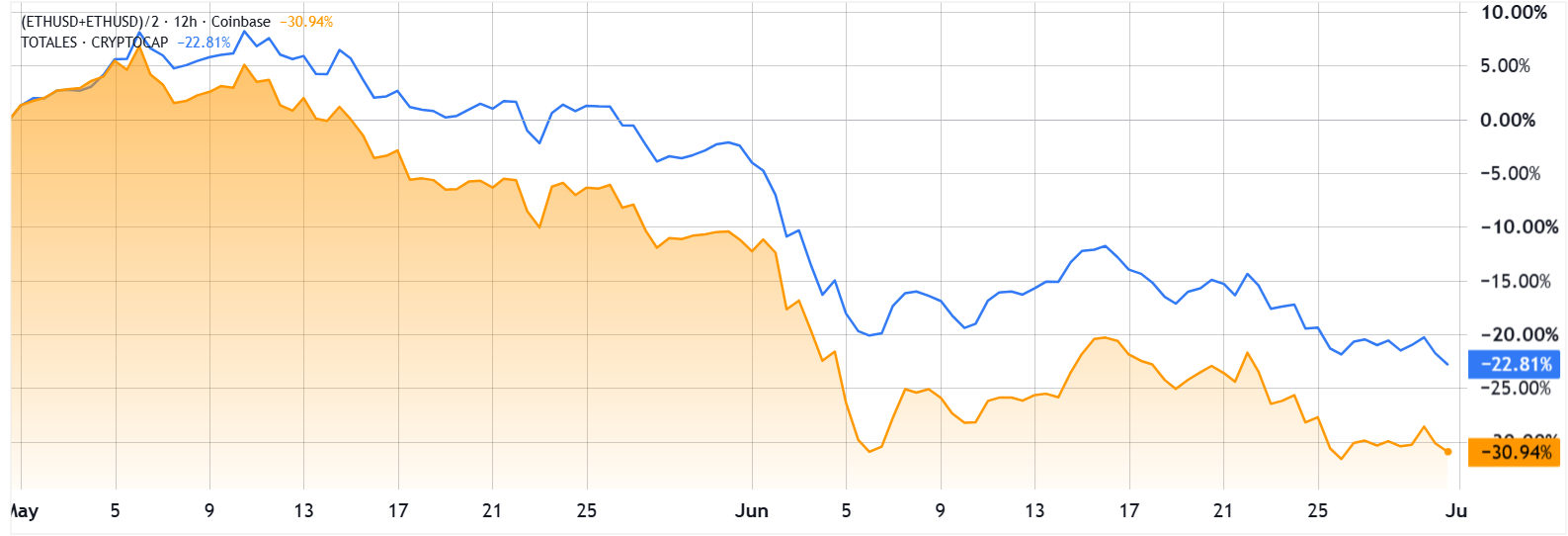
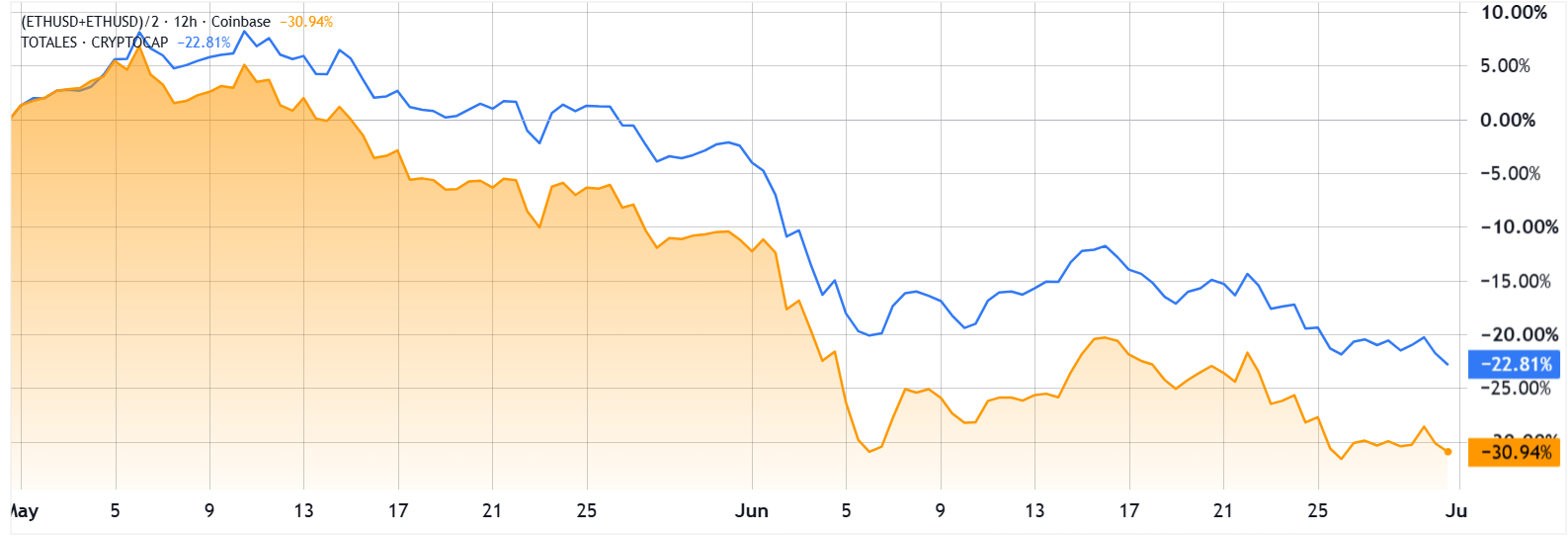
ETH/USD (orange) vs. Total crypto market cap (blue). Source: TradingView
Ether price has declined 31% since May and underperformed the total cryptocurrency market capitalization by 8% over that period. US-listed Ether ETFs saw $345 million in net outflows since June 17, which more than offset the $182 million in ETH accumulation from BitMine Immersion (BMNR US) and Sharplink (SBET US) during the same period.
Regulatory setbacks, AI competition and weak Ethereum onchain metrics
Several factors appear to have held back investor appetite, including regulatory uncertainty in the United States. Meanwhile, the stock market continues to draw attention thanks to strong earnings and lower inflation expectations.
The Digital Asset Market CLARITY Act has awaited a Senate vote since May 15. The bill ends regulation-by-enforcement and clarifies which tokens count as securities. Yet it has faced pushback from lawmakers over provisions regarding stablecoin yields and anti-money-laundering standards.
Democratic lawmakers voiced ethical concerns about the Trump family’s ties to crypto and its role in the World Liberty Financial platform. Most view the CLARITY Act as a positive catalyst for the decentralized finance (DeFi) sector. So ongoing uncertainty around approval hurts institutional demand for ETH.
The artificial intelligence sector now competes with blockchain for data processing as cloud providers deliver services through agentic architectures. Enterprise software leader SAP (SAP DE) has integrated autonomous, modular AI agents natively across multi-vendor clouds, enabling peer-to-peer collaboration.
Ether investors also feel disappointment from stagnant Ethereum network fees and decentralized applications (DApps) revenues. As a result, ETH supply becomes inflationary, staking yields remain limited, and fewer incentives exist for ecosystem growth, since part of DApps’ revenue flows back to users.
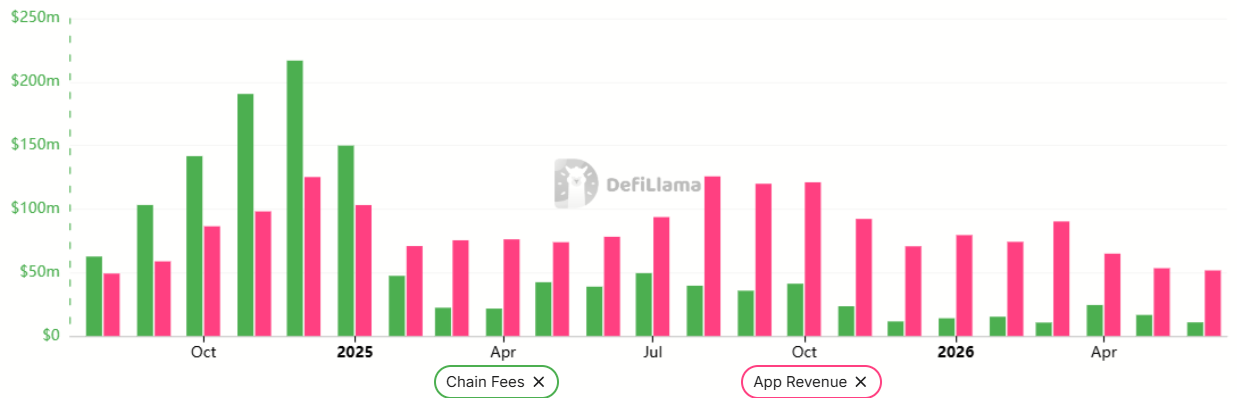
Ethereum monthly network chain fees vs. DApps revenue, USD. Source: DefiLlama
Ethereum network fees reached only $10.7 million in June, down from $24.4 million in April. DApps revenue hit $51.7 million in June, down from $64.8 million two months earlier. Top contributors included Sky (formerly Maker) at $12.7 million, Titan Builder at $7.2 million, and Chainlink at $4.6 million.
Ethereum supporters argue that tokenization remains in its early innings. The long-term growth potential should create enough blockchain demand to support a much higher ETH valuation.
Related: Ether treasury Sharplink bought $62.4M ETH last week
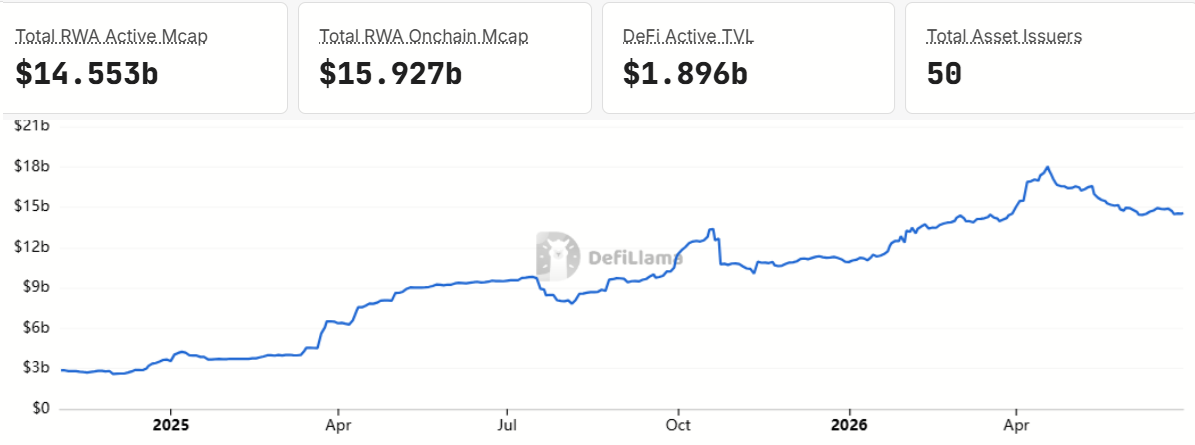
Ethereum real world assets (RWA) active market capitalization, USD. Source: DefiLlama
While real world assets (RWA) show real promise, the $14.5 billion in tokenized market cap on Ethereum has yet to spark meaningful DeFi activity. With a 2.7% staking yield and weak onchain metrics, the odds of ETH breaking below $1,500 remain in play.
Crypto World
China-linked actors target more than technology as AI competition with U.S. intensifies

U.S.-based cybersecurity giant CrowdStrike has warned of increasing cyberattacks from China-based entities aimed at stealing artificial intelligence to narrow the tech gap with the U.S.
Bill Hinton | Moment Mobile | Getty Images
Cyberattacks aimed at stealing American artificial intelligence technology are increasingly expanding from tech-based attacks to the exploitation of human-level vulnerabilities, with China-based actors playing a growing role.
“As the AI race has heated up, the [People’s Republic of China] has targeted the tech sector increasingly,” said Matt Pearl, director of the strategic technologies program at the U.S.-based think tank Center for Strategic and International Studies.
Rather than focusing on a specific trade secret, such as hardware designs, the hackers have broadened their interest to anything that could narrow the three- to four-month AI gap with the U.S., Pearl said. That, he said, ranges from understanding a company’s product roadmap, particularly in highly competitive sectors, to identifying weaknesses in supply chains.
The alleged cases are already piling up.
In June, U.S.-based cybersecurity giant CrowdStrike said Chinese entities accounted for more than half of state-sponsored intrusions targeting technology companies, especially their AI assets, in the 12 months through March 31.

American tech start-up Anthropic has also accused Chinese companies, including Alibaba, of illicit attempts to steal its AI capabilities. Alibaba did not respond to a request for comment.
Last year, U.S.-based AI content detection startup Copyleaks said the responses generated by Chinese startup DeepSeek’s R1 model resembled those produced by OpenAI’s ChatGPT nearly three-quarters of the time, suggesting the open-source Chinese model may have been trained on the U.S.-developed one.
“We haven’t seen [the same stylistic match] in other LLMs,” said Alon Yamin, CEO and co-founder of Copyleaks.
DeepSeek and OpenAI did not immediately respond to requests for comment.
Brian Abbott, founder and CEO of U.S.-based start-up Agentiq Capital, told CNBC in June that he believed an employee he hired from China last year was an agent of Beijing who purposely altered code and website content to prevent the company from getting venture capital funding.
Abbott alleged the employee replaced references to “ASI,” or artificial superintelligence, with “fintech,” a once-trending term that many investors have soured on.
The individual was dismissed earlier this year, Abbott said, and the company filed a complaint with the FBI. CNBC was unable to independently verify the allegation.
“China’s economic espionage campaign is a continuing threat that costs the American economy hundreds of billions of dollars per year and puts our national security at risk,” the FBI said in a statement to CNBC.
“The FBI prioritizes investigating any potential theft of US technology by foreign actors and remains unwavering in our commitment to protect the homeland.”
The Cyberspace Administration of China and the U.S. Department of State did not offer a comment when contacted by CNBC. None of the individuals interviewed for this piece said they had heard of a similar instance of state-directed subversion of U.S. technology.
Graham Webster, editor-in-chief of Stanford University’s DigiChina Project, said distinguishing state-sponsored espionage from individual or corporate-level efforts can be difficult.
He also pointed out that the conversation about Chinese AI is also affected by major U.S. companies gearing up for major initial public offerings.
“[The] narrative is overtaking reality in a lot of decisions,” Webster said.
“The U.S. government is trying to hold China back to some extent,” he added, referring to technology export controls. “We should not be surprised that the Chinese government tries otherwise.”
Start-ups more at risk
Capital has been a defining driver of the AI race so far, with start-ups racing to rival tech giants or position themselves for acquisitions.
But that’s also created “cyber poverty lines” where small businesses lack the resources of large companies to defend against cyberattacks, said Cliff Steinhauer, director of information security and engagement at the non-profit National Cybersecurity Alliance.
Human vulnerabilities often pose the greater risk, Steinhauer said, particularly as attackers rely on “social engineering” tactics amplified by AI-powered content campaigns.
Cyberattacks can also target new or contracted employees to breach systems.
“We’ve seen a lot of cases within our company, new employees that are joining the company, immediately they’re a target of cyberattacks to get access to our AI models,” Copyleaks’ Yamin said. He expects to see more such cases.
Government and company-led efforts also impact start-up operating costs.
Anthropic on June 11 announced a program called Claude Corps to train 1,000 people in AI and match them with non-profits in the U.S. Meanwhile in China, policymakers have rolled out significant AI support, including free or subsidized computing power and rent-free office space for start-ups.
Isaac Stone Fish, founder and chief executive of consultancy Strategy Risks, said Beijing tends to focus more heavily on large corporations, but startups remain especially exposed since they don’t necessarily have cyber expertise.
“And Beijing’s attempt[s] have certainly increased over the last 18 months, since the release of DeepSeek really kicked off the US-China AI race,” Stone Fish said.
“Beijing wants to ensure that Chinese companies are at the vanguard of the global AI race,” he said. “One way that it does that is by sometimes working to suppress the development of American AI companies, through supply chain restrictions, employee harassment, hacking, targeted government subsidies of copycat competitors, among other strategies.”
“We’ve seen a lot of cases within our company, new employees that are joining the company, immediately they’re a target of cyberattacks to get access to our AI models,” Copyleaks’ Yamin said. He expects to see more such cases.
For startups, balancing rapid innovation with security remains a challenge.
Abbott said the employee he hired was initially willing to work for free, and eventually received a few thousand dollars a month in addition to stock options, before the firing.
“If we paid everybody market rate, for a scrappy start-up I could never afford to do this,” he said, emphasizing the “need to secure our economy of start-ups stateside.”
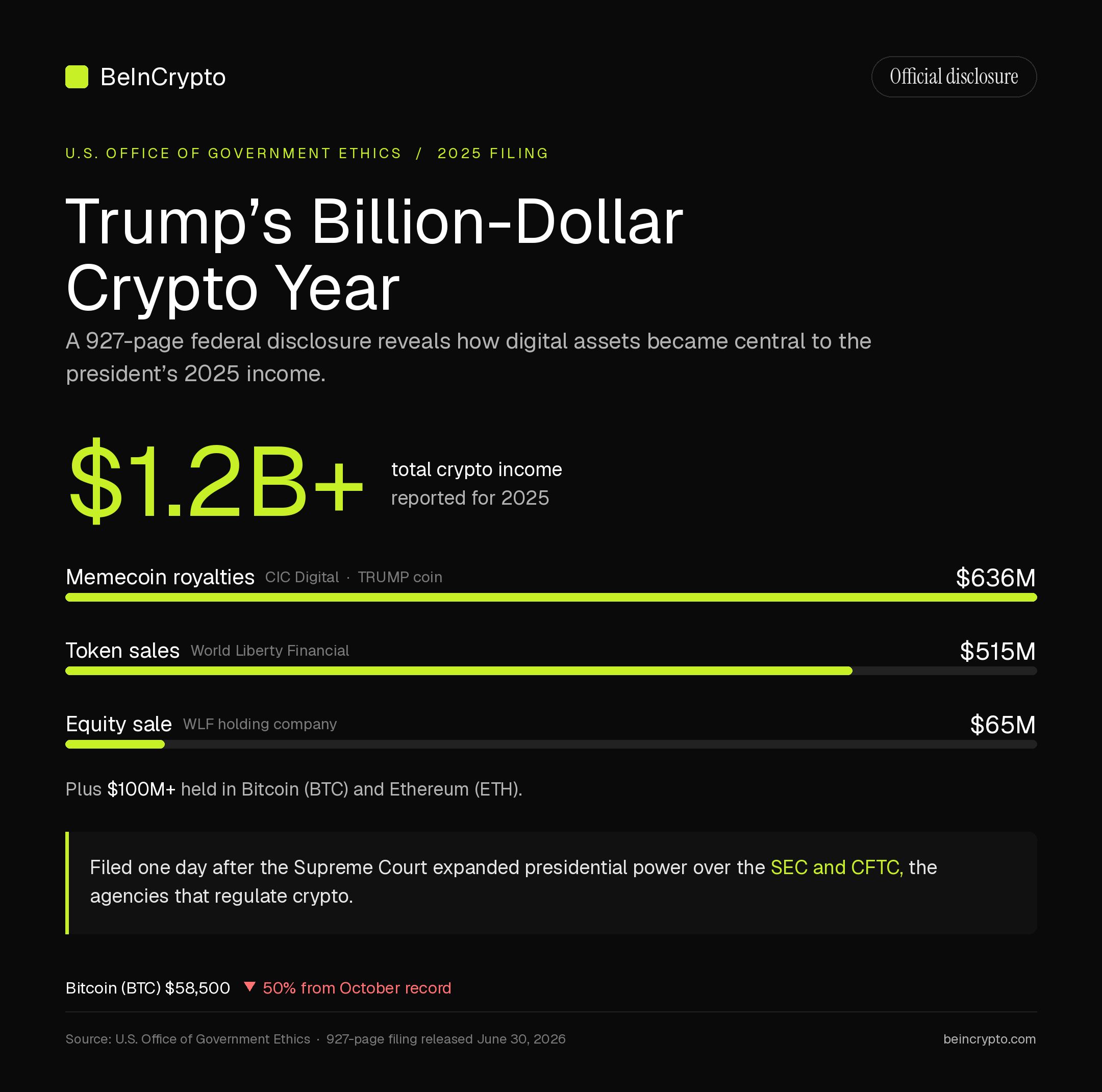
President Donald Trump reported more than $1 billion in crypto earnings for 2025, with a single meme coin and his family’s crypto venture driving most of the income detailed in a new federal financial disclosure.
The 927-page filing, released Tuesday by the Office of Government Ethics, arrived one day after a pivotal Supreme Court ruling. The decision widened presidential power over the independent agencies that regulate digital assets.

Where Trump Crypto Earnings Came From
The filing shows CIC Digital, Trump’s meme coin business, earned about $636 million in royalties. He launched the token three days before his January 2025 inauguration.
World Liberty Financial added about $515 million from token sales and $65 million from equity in its holding company. The decentralized finance (DeFi) venture is roughly 38% owned by a Trump family entity.
Together, the three streams topped $1.2 billion. Trump separately disclosed more than $100 million in Bitcoin (BTC) and Ethereum (ETH) holdings.
The stake ties him to a Trump family crypto empire built on assets he now helps regulate.
Disclosure Lands Beside a Major Court Ruling
The disclosure followed Trump v. Slaughter, a Supreme Court decision that lets presidents fire commissioners at independent regulators without cause.
The 6-3 ruling overturned Humphrey’s Executor, a 91-year-old precedent that had shielded those agencies from the White House. Legal analysts say it extends to the SEC and CFTC, the main crypto regulators.
The timing sharpened questions about Trump’s dual role as policymaker and crypto investor. Trump welcomed the outcome.
“This Decision gives tremendous additional Power back to the Presidency, where it belongs. It is an Honor to be the sitting President who, after all these years, WON this very important, and hard fought, Case,” Trump noted in a Truth Social post.
Follow us on X to get the latest news as it happens
Scrutiny Over Conflicts of Interest Grows
World Liberty Financial has drawn the sharpest scrutiny. In May 2025, Abu Dhabi state fund MGX settled a $2 billion Binance investment using the firm’s USD1 stablecoin.
That deal routed foreign-government money through a token the president’s family helps control. Senate Democrats demanded hearings into the venture over its foreign ties.
The White House has denied that a reported UAE deal shaped the firm. Lawmakers have pushed to bar federal officials from such crypto transactions.
The earnings landed during a market slump. Bitcoin’s spot price sat near $58,500 on Tuesday, down more than 50% from its October record.
Most small wallets that bought the meme coin have lost money, public data shows. Trump’s gains, set against those losses, will keep his stakes under watch as his agencies write the sector’s rules.
The post Trump Reports Over $1 Billion in Crypto Earnings in 2025 Disclosure appeared first on BeInCrypto.
Crypto World
Massachusetts AG Files Amended Lawsuit Against Kalshi over Sports Betting after Court Ruling
Prediction markets platform Kalshi’s legal battle against Massachusetts will continue after a judge ruled that state authorities could add allegations against the company over sports betting.
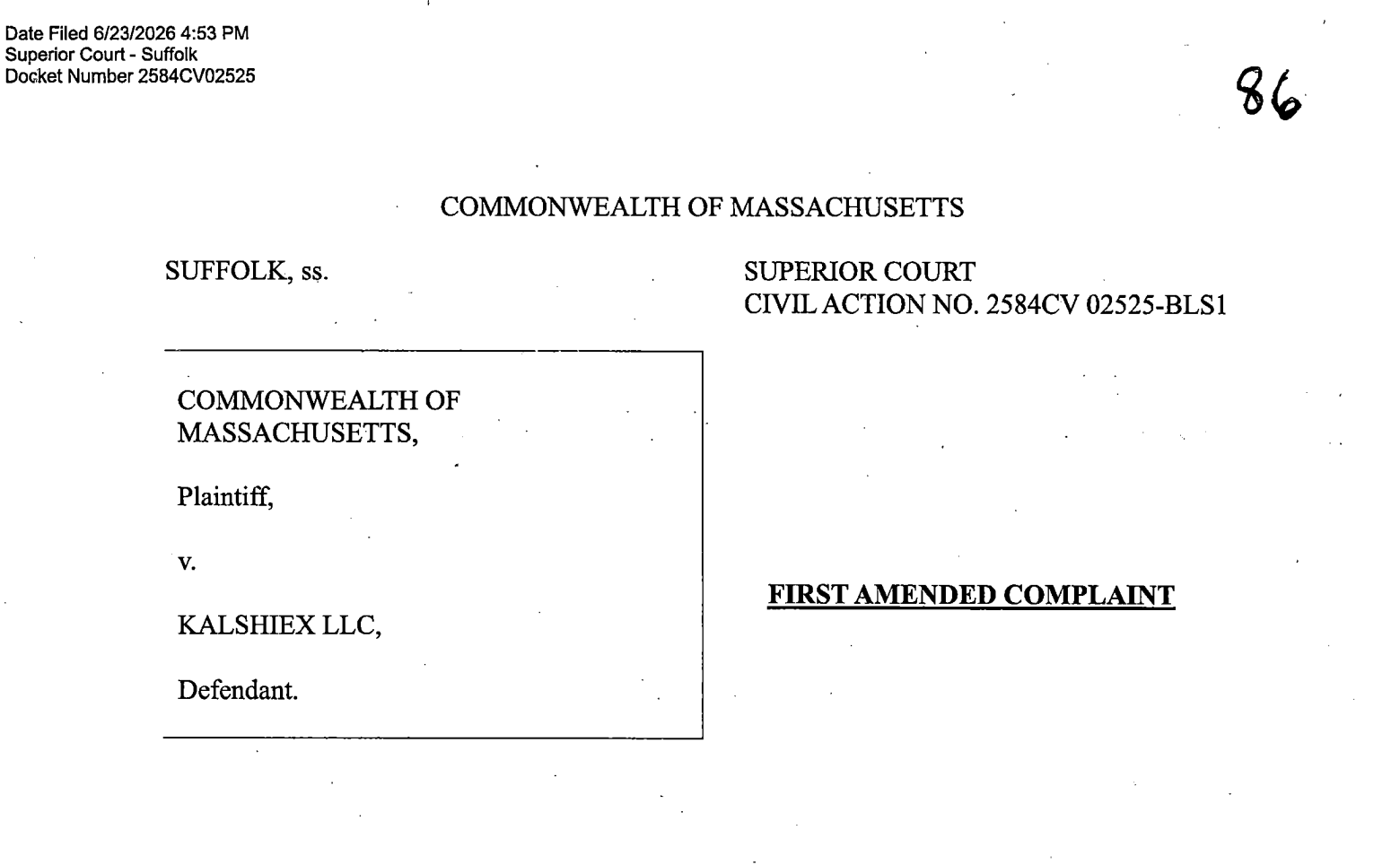
In a Tuesday filing in Suffolk County Superior Court, associate justice Peter Krupp allowed state authorities to file a 71-page amended complaint, building on a filing alleging that Kalshi engaged in sports wagering in violation of state laws.
The amended complaint included allegations that Kalshi “targets those under 21 years of age and does little to stop them from using its platform,” citing the company’s marketing to university campuses and presenting images in ads of people who “appear to be younger than 21 years old.”
“Kalshi allows anyone who is at least 18 years old to create an account and wager on sports events by purchasing event contracts,” alleged Massachusetts authorities.
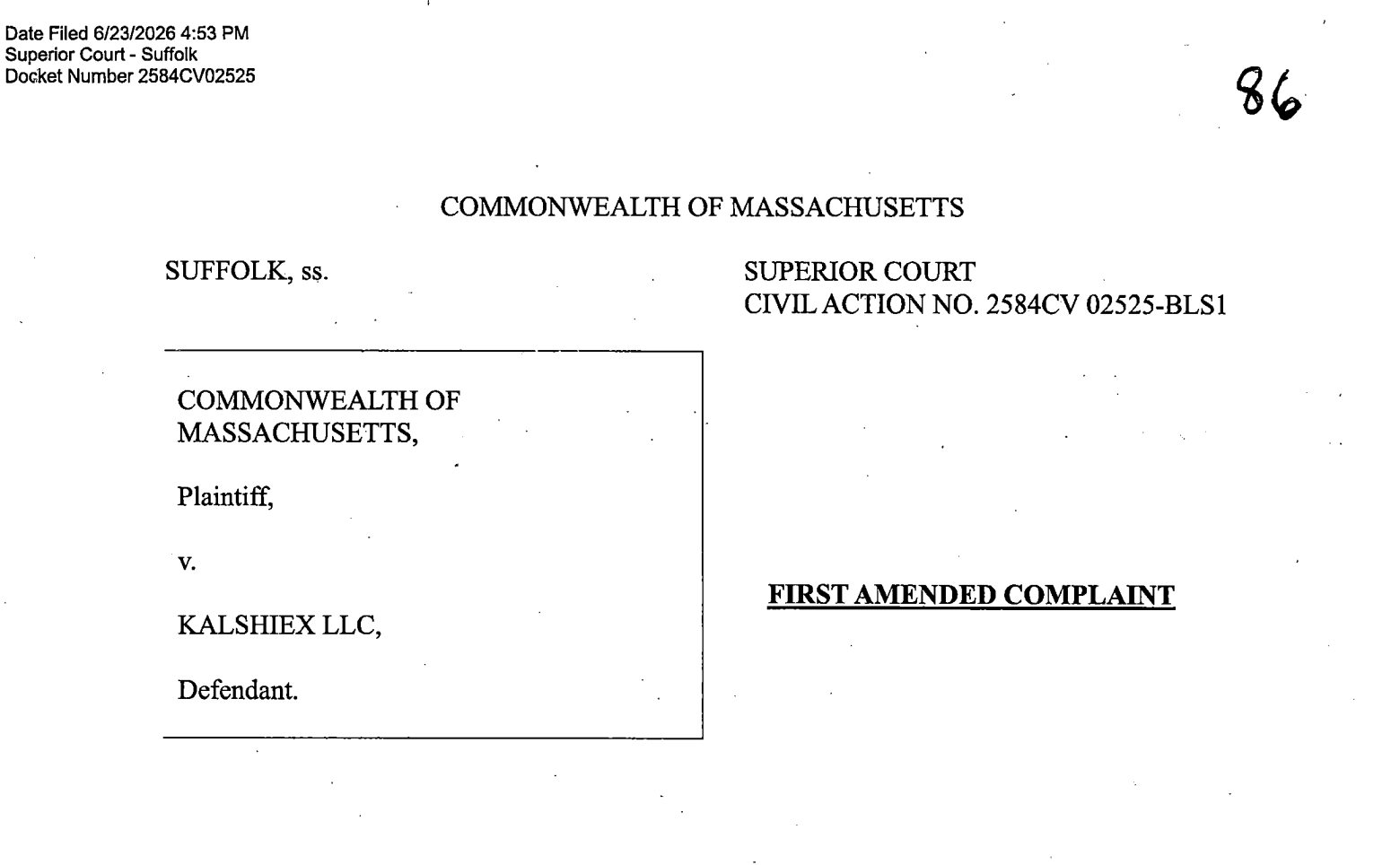
Source: Massachusetts Superior Court
Massachusetts Attorney General Andrea Joy Campbell announced the lawsuit against Kalshi in September 2025, alleging that the company needed to be licensed by the Massachusetts Gaming Commission to comply with state laws on online sports wagers. In January, a judge granted a preliminary injunction barring Kalshi from offering sports event contracts as the case was under review.
Related: US senators push to end CFTC ‘assault’ on state oversight of prediction markets
The Massachusetts case is just one of many involving state-level authorities and prediction markets companies like Kalshi and Polymarket, who offer users the ability to trade using event contracts on a variety of outcomes related to sports, politics and current events.
While Kalshi has been blocked from offering sports bets in some jurisdictions, it also has support from the US Commodity Futures Trading Commission (CFTC), which in April filed a brief in Massachusetts arguing the agency had “exclusive jurisdiction” over prediction markets. The CFTC, under Chair Michael Selig, has claimed that event contracts on the platforms amount to “swaps” covered by the Commodity Exchange Act and were not subject to state regulation.
“Congress has entrusted the CFTC with the sole authority to regulate commodity derivatives markets, including prediction markets,” said Selig. “To any state that seeks to nullify federal law and seize authority over these markets, I say again: we will see you in court.”
Cointelegraph reached out to Kalshi for comment but did not receive an immediate response. Following the initial complaint in September, a spokesperson said that the company was “ready to defend” itself in court.
Gaming organizations look to CLARITY Act for clarity on prediction markets
While one of the cases between a prediction markets platform and US state authority could ultimately reach the US Supreme Court given the arguments over federal and state laws, some groups are looking to Congress for solutions.
Earlier this month, national gaming and tribal organizations and labor groups called on US senators to add language “that explicitly prohibits event contracts tied to sports and casino-style gaming” to the Digital Asset Market Clarity (CLARITY) Act. The bill, under consideration in the Senate, is expected to give the CFTC more regulatory authority over digital assets.
Magazine: Does ‘Paper Bitcoin’ mean there’s an unlimited supply of BTC?


Nearly 1,700 UK investors have sued Binance and founder Changpeng Zhao (CZ) in London’s High Court, seeking at least £150 million ($200 million) over crypto derivatives they say were sold unlawfully.
The claimants argue the exchange marketed risky leveraged products to retail traders from late 2019 without proper authorization. Some say they lost tens of thousands of pounds when those bets turned against them.
The Binance UK Lawsuit Tests Who Pays
The case reaches beyond one exchange. It revives a question crypto has long avoided. When an unlicensed platform sells high-risk products, who absorbs the losses, the platform or the trader? It is a gap UK crypto oversight has not closed.
Britain’s Financial Conduct Authority (FCA) banned retail crypto derivatives in January 2021. It cited extreme volatility and a high risk of sudden losses. The regulator estimated the ban would save retail consumers around £53 million ($70 million).
The claimants say Binance pushed such products around that ban, breaching the Financial Services and Markets Act.
That statute may matter more than any risk warning. Under it, deals arranged by an unauthorized firm can be ruled unenforceable, letting clients reclaim their money and losses.
The real question is whether buyer beware can survive when the seller broke the rules. Britain already forced Binance to restructure under UK financial promotion rules in 2023.
Defenders of open trading say adults chose leverage with full warnings. Critics counter that an unauthorized seller cannot hide behind the risks its customers accepted.
Binance Digs In for a Long Fight
Binance has vowed to defend the claim. A spokesperson told Reuters the exchange honors its legal duties.
“Binance remains committed to its obligations to users and to operating in accordance with applicable law.”
Follow us on X to get the latest news as it happens
The allegations echo earlier ones. In 2023, the US Commodity Futures Trading Commission charged Binance and CZ with running an illegal derivatives exchange.
Regulators said it courted American users it had claimed to block. Months later, both pleaded guilty in a $4.3 billion settlement, the largest the crypto sector had seen.
The London claim names Cayman-registered Binance Holdings, UAE-based Nest Exchange, and unnamed operators.
CZ, pardoned in the US last year, is named personally. Even so, that structure could make any UK judgment hard to enforce.
The timing is awkward. The claim lands just as Binance exits Europe after its EU license bid failed, leaving its main authorization in the UAE.
Should the court void these deals, buyer beware may no longer protect exchanges that sold unauthorized products. The precedent would reach past Britain.
For an industry built on caveat emptor, that is the real verdict, even if compensation takes years.
The post UK Investors Sue Binance for $200 Million in Losses They Chased With Leverage appeared first on BeInCrypto.
With Bitcoin plunging below $60,000 and Strategy’s share price down by more than 70% from the high, some crypto investors are questioning if Strategy could become this cycle’s Terra/LUNA — a highly leveraged bet on crypto market structure that explodes under stress.
The company’s response? A new capital framework released on Monday aimed at addressing investors’ fears.
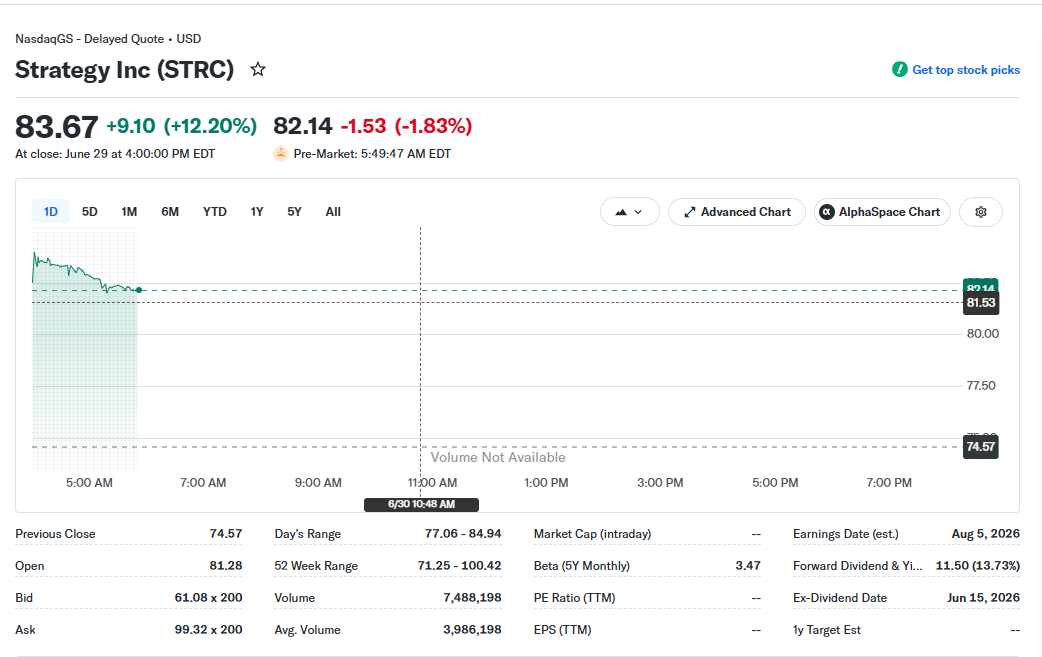
The package includes up to $1 billion in buybacks for MSTR, up to $1 billion in buybacks for STRC and related securities, an increase in STRC’s dividend to roughly 12%, and a cash buffer expansion to $2.55 billion.
Of particular note for a company famed for its maximalist approach to Bitcoin, Strategy also said it may sell up to $1.25 billion in BTC holdings if required to meet dividend or debt obligations.
Markets responded positively to the news, with both STRC and MSTR shares rallying more than 12% in after-hours trading. STRC is currently trading at $84.86, a significant improvement on the $72.06 it was trading at on June 26.
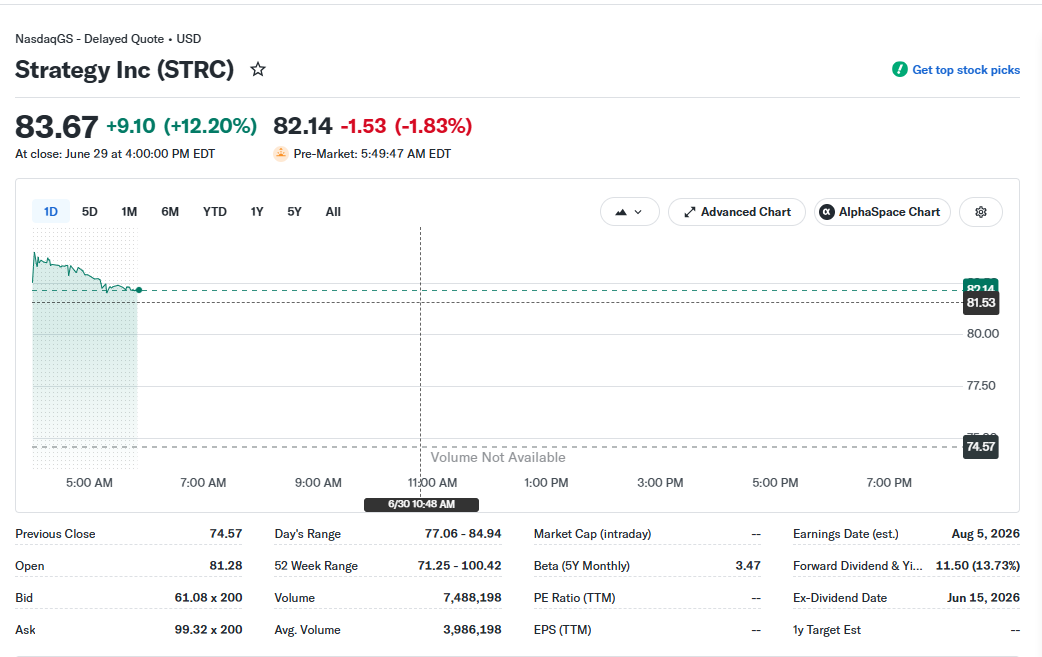
STRC share price rallied by over 12% in after-hours trading. Source: Yahoo Finance.
But is the plan enough to assuage fears that STRC’s structure — famously cooked up by CEO Michael Saylor with the help of an LLM — could expose Strategy to a “death spiral” of reflexive funding risks during periods of market stress?
What is STRC and why is it controversial?
STRC is part of Strategy’s capital structure linked to its broader Bitcoin treasury strategy. It sits between traditional equity and debt-like instruments, offering investors yield while maintaining exposure to the company’s Bitcoin holdings.
Related: Strategy’s MSTR may plunge 80% if it repeats this dot-com-era fractal
Strategy describes STRC as a perpetual preferred stock paying a 12% annual dividend on a $100 par value, funded from its cash reserve and Bitcoin-linked capital framework.
While the structure is designed to provide financing flexibility without issuing traditional debt, analysts have questioned whether its stability depends on continued investor demand in secondary markets, particularly during periods of Bitcoin volatility or tighter liquidity conditions.
By contrast, Strategy’s common stock is called MSTR and it represents an equity ownership stake in Strategy along with voting rights. The fate of the two securities is closely aligned, but they are different. Similarly, Strategy’s position as the largest buyer of Bitcoin (and perhaps in future as a seller) means its fate is closely intertwined with the price of Bitcoin at present.
Perpetual goldbug and Bitcoin critic Peter Schiff has repeatedly called out Strategy’s model, pointing out that it “can’t sell Bitcoin without crashing the price of Bitcoin. Even if Strategy merely stops buying Bitcoin, that change alone would crush the market.”

Strategy describes STRC as a short-duration, high-yield credit. Source: Strategy
Yet Taran Dhillon, head of digital assets at Kula, told Cointelegraph that “Bitcoin volatility alone is unlikely to break a structure like Strategy’s.”
He said that a more meaningful test is “whether Bitcoin remains under pressure while access to capital becomes progressively more expensive or difficult.”
The Bear case: feedback loops and liquidity dependency
Some argue that Strategy’s entire fundraising and equity model is inherently reflexive, compounding both upside and downside cycles. The same flywheel that amplifies gains in bull markets can accelerate losses during the bear, when falling Bitcoin and share prices collide with weaker demand.
Ripple CEO Brad Garlinghouse made that exact point on CNBC this week. “Financial engineering does not drive long term value,” he said.
Kyle Rodda, senior analyst at Capital.com, told Cointelegraph that Strategy effectively operates as a momentum-driven Bitcoin accumulation vehicle, in which capital raises funds for Bitcoin purchases that, in turn, support the company’s valuation. However, he warned that the dynamic can reverse under stress.
“Strategy’s business definitely compounds momentum in both directions,” Rodda said, adding that in weaker conditions, rising funding costs and declining investor appetite can reinforce downward pressure.
Related: Grayscale’s Pandl says Strategy should sell $3B Bitcoin to restore confidence
He also argued that secondary market liquidity is a structural dependency, meaning large-scale selling or refinancing pressures could have wider spillovers into Bitcoin markets themselves.
Among Bitcoiners, Charles Edwards, the founder of Capriole Investments, is one of Strategy’s most hawkish commentators of late.
He compared stressed conditions in digital asset treasury companies to broader crypto deleveraging events, warning that feedback loops can accelerate losses when leverage and sentiment deteriorate.
“Anyone else getting LUNA 2022 vibes on MicroStrategy?” he posted on June 26.
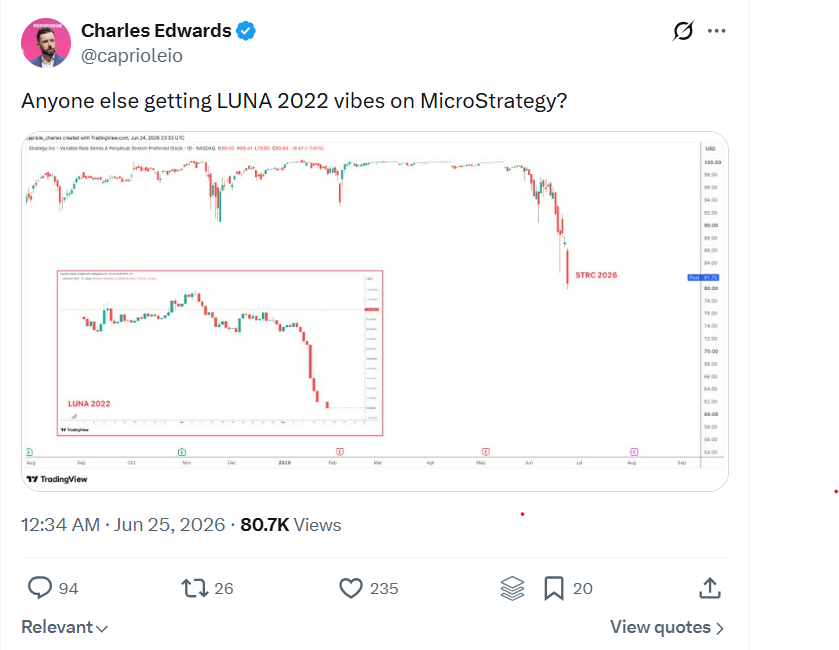
Comparing Strategy to Terra/LUNA. Source: Charles Edwards
The neutral view: the real risk is funding markets, not Bitcoin
While the bearish sentiment around Strategy piles up on X, Dhillon told Cointelegraph that stress would likely first appear in funding conditions, pointing to widening discounts, higher yields, and reduced issuance capacity as early warning signals.
In his view, Strategy’s Bitcoin holdings are less relevant than whether the company can continue refinancing or rolling capital efficiently during periods of market stress.
And while failure of STRC to maintain its “peg” of $100 has caused much consternation, STRC isn’t pegged to $100 in the way a stablecoin is pegged to the value of $1. The yield simply gets more attractive the further the price falls under $100, which in theory, should see buyers push the price back to $100 at some point.
A Bitfire Research report shared with Cointelegraph said that STRC’s recent price dislocations should not be interpreted as structural failure.
The firm argued that de-pegging events are largely driven by sentiment and liquidity conditions rather than changes to Strategy’s underlying fundamentals or solvency profile.
“Strategy (formerly MicroStrategy) faces no near-term insolvency risk,” the firm wrote.
Bull case: stress is not insolvency
Strategy supporter Adam Livingston, a Bitcoin advocate and author, ran what he described as a “three-year MSTR stress test” under extreme conditions, including a 55% Bitcoin drawdown, closed capital markets, and sustained cash burn requiring large Bitcoin sales to meet obligations.
Related: CryptoQuant warns on Strategy’s dividend coverage as cash reserve falls 38%
In his model, Strategy’s senior claims expand sharply in Bitcoin terms, while the company’s “common equity Bitcoin exposure” (CEBE) compresses significantly. He described this as “CEBE getting annihilated”, falling from 138,161 sats per share to 7,884 sats per share at the trough of the simulation.
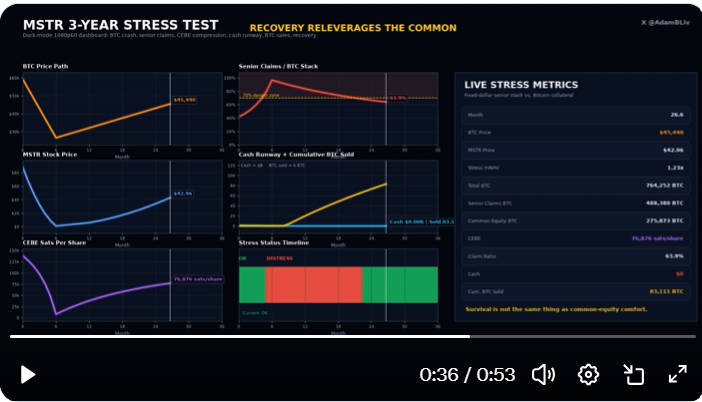
Death spiral? This model says no. Source: Adam Livingston
The model assumes no new Bitcoin purchases or equity issuance during the downturn, with approximately 115,727 BTC sold over the three years to service obligations before stabilization conditions return.
Despite the severity of the drawdown, Livingston’s model ultimately shows Strategy surviving the cycle, ending with over 700,000 BTC remaining on its balance sheet and a recovering net asset structure once market conditions normalize.
What Strategy actually changed
The new framework represents the most explicit attempt yet by Strategy to address concerns around liquidity and reflexivity risk.
Key components of Strategy’s June 29 8-K filing that aim to restore confidence in the company, include buybacks for MSTR shares and STRC and a big focus on expanding cash reserves to pay dividends. The nuclear option of selling up to $1.25 billion in Bitcoin holdings to pay dividends is included partly as a way to assure markets Bitcoin maximalist Michael Saylor will reluctantly sell assets if he’s forced to.
Related: Bitcoin price is down over 40% since STRC launched: Is Strategy ‘fine’?

Strategy’s 8-K filing, June 29. Source: US Securities and Exchange Commission
Dhillon said the framework “meaningfully improves” transparency around how Strategy would respond under stress, with the expanded $2.55 billion reserve and clearer Bitcoin monetization plan helping strengthen investor confidence.
But Schiff pointed out that the current market cap of MSTR is $30 billion, while the current value of its Bitcoin is $50 billion. “Until MSTR’s market cap rises above the value of its Bitcoin, any Bitcoin bought by issuing MSTR shares creates a negative Bitcoin yield,” he said.
A stronger toolkit, same core bet
While the framework strengthens Strategy’s ability to manage short-term stress, it does not eliminate its reliance on capital markets to sustain its broader Bitcoin accumulation strategy.
As Dhillon told Cointelegraph, the key test will be whether funding conditions remain accessible during periods of market stress, rather than Bitcoin price action alone.
He added that the update clarifies Strategy’s capital allocation playbook, and gives management a more defined order of operations, which makes its overall strategy more credible.
For critics like Rodda, the underlying concern persists. Strategy’s structure remains exposed to feedback loops if liquidity tightens across both equity and credit markets.
While Strategy’s move introduces clearer liquidity buffers, buybacks, and contingency options, including potential Bitcoin sales, the debate over structural reflexivity has not yet been fully resolved.
The question now is not whether STRC is inherently fragile in theory, but whether Strategy’s expanded toolkit can withstand a prolonged period of capital market stress, and whether investors still want exposure to a vehicle that amplifies Bitcoin’s cycles and adds risk, rather than simply tracking them.
Magazine: Bitcoin will not hit $1M by 2030, says veteran trader Peter Brandt

France 3-0 Sweden: Kylian Mbappe continues blistering form as Les Bleus cruise into last-16

Tesla: Execution Risks Mount (NASDAQ:TSLA)

US Lifts Export Controls on Anthropic’s Claude Fable 5 and Mythos 5 Models

No Jackpot Winner as $257 Million Prize Rolls Over to $269 Million Monday Draw

Renter of Home in Anne Heche Crash Denies Settlement With Son

Two goals and an assist by sheer aura: Cristiano Ronaldo just entered the World Cup chat

RECEIVE UNEXPECTED MONEY IN 10 MINUTES (MONEY FLOWS TO YOU) Music to attract money

Crypto Live Trading| 30 june #vinbullindia #livetrading #vinbulllive #live #trading #cryptotrading

AI Business Ideas That Can Make You Money
-

 Fashion4 days ago
Weekend Open Thread: Staud – Corporette.com
-

 Politics5 days ago
The House | Manchesterism won’t survive the painful trade-offs unless it gets citizens on board
-

 Crypto World22 hours ago
Strategy authorizes up to $1.25B in Bitcoin sales under new capital plan
-

 Politics5 days ago
Potential 2028er World Cup attendee leaderboard
-

 Business5 days ago
Asia stock markets slide as tech shares slump
-

 News Videos2 days ago
MAJOR BITCOIN & MARKET UPDATE!!!! (MUST WATCH ASAP!!!)
-

 Tech5 days ago
A Look At A Gaggle Of Transputer Boards
-

 Crypto World7 days ago
Securitize Wraps Roubini's SEC-Registered ETF as Dubai VARA Digital Security
-
Crypto World7 days ago
Bitcoin (BTC) Dips Below $62K, Ethereum (ETH) Plunges 6% Daily: Market Watch
-
 Crypto World5 days ago
Dell (DELL) Shares Tumble Over 5% Following Analyst Downgrade to Hold
-

 Crypto World3 days ago
Coinbase, Circle Deepen Crypto Stock Losses Despite Resilient S&P 500
-
Business7 days ago
Entergy settles forward sale agreements, raises $672 million in cash proceeds
-

 Crypto World4 days ago
Kraken's xStocks Opens Bending Spoons IPO Registration to EEA Retail
-

 Business21 hours ago
Australia treasurer says alleged access of prime minister’s bank data ’incredibly concerning’
-

 Sports4 days ago
FIH Pro League: India defeat Pakistan 7-1, register biggest win of campaign | Other Sports News
-

 Crypto World5 days ago
Bitcoin Sparks $600M Hourly Liquidations With $65,000 Set To Become Resistance
-

 Tech3 days ago
Bluekit phishing kit adopts browser-in-the-middle for login theft
-

 Tech3 days ago
Russian hackers now target Signal backup recovery keys
-
 Crypto World4 days ago
Hyperliquid Named on Singapore MAS Investor Alert Register
-

 Crypto World6 days ago
Ripple and SBI launch RLUSD in Japan after JFSA approval
You must be logged in to post a comment Login