

Crypto World
Strategy (MSTR) stock price prediction: BTC plan

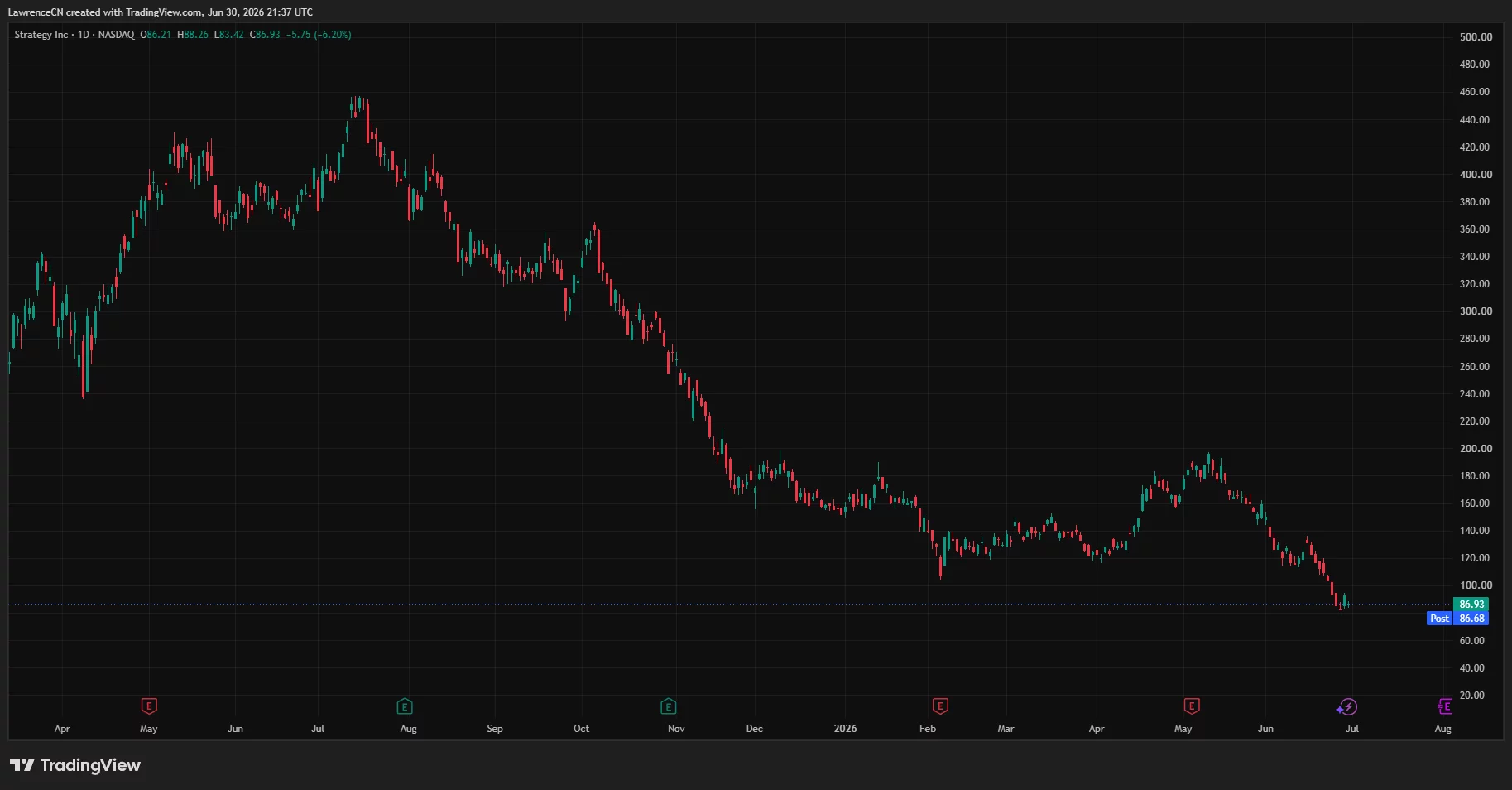
Strategy did not sell $1.25 billion of Bitcoin. It gave itself permission to do so, as part of a wider capital overhaul. The real driver of the stock is the premium to its Bitcoin holdings, and that premium has been shrinking.
Summary
- On June 29, 2026, Strategy’s board authorized a BTC Monetization Program allowing it to sell up to $1.25 billion of Bitcoin if needed, a cap and a framework, not a completed sale.
- The program is one piece of a new Digital Credit Capital Framework that also set up $2 billion of buybacks, $1 billion for common stock and $1 billion for preferred securities, and raised the STRC preferred dividend to 12%.
- Strategy holds 847,363 BTC bought for $64.10 billion, an average near $75,651 per coin, so the full $1.25 billion would be roughly 20,800 BTC, about 2.5% of its stack.
- The number that actually drives MSTR is mNAV, the premium the stock trades at relative to its Bitcoin holdings, and that premium has compressed toward 1x, which is why the company is pivoting from issuing equity to buybacks and selective Bitcoin sales.
- MSTR rose on the announcement even with Bitcoin near $60,000, but the forecast hinges on whether the premium can hold and where Bitcoin goes, not on the sale authorization itself.
The headline that traveled fastest was wrong in a way that matters. Strategy did not sell $1.25 billion of Bitcoin. On June 29, 2026, its board authorized a program permitting the company to sell up to $1.25 billion of Bitcoin if it needs to, as one component of a broad overhaul of the financing model that has funded years of aggressive accumulation.
The distinction is the whole story: this is Strategy formalizing Bitcoin as a funding source it can tap, not a fire sale of its holdings. Whether that is bullish or bearish for the stock depends on a number most headlines never mention: the premium MSTR trades at over the Bitcoin it owns.
This piece lays out exactly what Strategy announced, why mNAV is the real driver of the stock, how the pivot from never-sell to active capital management changes the picture, whether selling Bitcoin helps or hurts MSTR, the buyback and dividend math, the stock’s leverage to Bitcoin, and what it all means for the forecast. It closes with bull, base, and bear scenarios and a short FAQ. Note at the outset: MSTR is a stock, and nothing here is investment advice.
What Strategy actually announced
The June 29 filing introduced a Digital Credit Capital Framework that ties together Strategy’s Bitcoin holdings, its preferred securities, and its equity. Its most-discussed component is the BTC Monetization Program, which authorizes the company to sell Bitcoin primarily to raise up to $1.25 billion for a USD Reserve, and also to fund preferred dividends, interest, and buybacks.
Any Bitcoin sales beyond those stated purposes or amounts would require additional board approval. In Strategy’s own framing, sales would happen from time to time depending on market conditions and capital needs, not on a fixed schedule.
The framework did more than open the door to Bitcoin sales. It set up a board-approved USD Reserve that stood at roughly $2.55 billion as of June 28, dedicated to covering preferred dividends and interest, with a policy that the reserve stay above 12 months of coverage.
It authorized 2 separate buyback programs of up to $1 billion each, 1 for the Class A common stock and 1 for the Digital Credit preferred securities, $2 billion in total repurchase capacity. And it raised the dividend rate on the STRC preferred stock to 12% from 11.5%, effective for record dates on or after July 1, a move aimed at pushing that security back toward its $100 par value.
Alongside the framework, Strategy also disclosed it had raised about $1.15 billion selling common shares through its at-the-market program, and that it had paused Bitcoin buying, holding steady at 847,363 BTC.
The picture, then, is a company building a cash cushion, arming itself to buy back its own securities, and giving itself the option to sell a slice of Bitcoin to fund all of it.
The number that actually matters: mNAV
To forecast MSTR, you have to understand mNAV, the modified net asset value, which is the relationship between the company’s market value and the value of its Bitcoin holdings. For years, MSTR traded at a large premium to its Bitcoin, meaning the market valued the company well above the worth of the coins on its balance sheet. That premium was the engine of the entire model.
When a company trades above the value of its assets, it can issue new shares at that premium and use the proceeds to buy more of the asset, adding more Bitcoin per share than the dilution costs. Issue high, buy Bitcoin, watch the premium justify more issuance: a reflexive flywheel that worked as long as the premium held.
The problem driving the June overhaul is that the premium has compressed toward 1x, meaning MSTR has been trading close to the bare value of its Bitcoin. At or near 1x, the flywheel stalls, because issuing equity no longer adds Bitcoin per share; it just dilutes. That is why Strategy explicitly said it intends to be disciplined about issuing common stock when the shares trade near 1x mNAV.
With the equity lever jammed, the company turned to the other tools: buy back securities to support their value, and monetize a small portion of Bitcoin to fund obligations rather than selling stock into a thin premium. Read this way, the $1.25 billion authorization is not a panic move. It is the logical response to a compressed premium.
For the stock price, the implication is direct. MSTR is, in large part, a leveraged claim on Bitcoin plus or minus a premium. Where that premium goes, expansion back toward the old multiples or further compression toward 1x or below, will drive the stock as much as Bitcoin itself does.
From never-sell to capital management
The symbolic weight of the announcement comes from what it ends. For years, Michael Saylor built Strategy around one rule: raise capital, buy Bitcoin, and do not sell. That doctrine was the company’s identity. It cracked on June 1, 2026, when Strategy disclosed its first Bitcoin sale since 2022, a token 32 coins, negligible against holdings worth tens of billions but enormous in what it signaled. The June 29 framework formalizes the shift, turning a one-off sale into a standing capacity to monetize Bitcoin as part of routine capital management.
The scale keeps it in perspective. Strategy holds 847,363 BTC acquired for $64.10 billion, an average cost near $75,651 per coin. The full $1.25 billion, if ever executed, would be roughly 20,800 BTC, about 2.5% of the stack. This is not the company unwinding its Bitcoin thesis.
Saylor framed the existing reserve plus the new monetization capacity as providing around $3.8 billion of dividend coverage, close to 26 months, while keeping the commitment to long-term Bitcoin exposure. The pivot is from accumulation at all costs to disciplined balance-sheet management, which is a meaningful change in character even if the Bitcoin pile barely moves.
Does selling Bitcoin help or hurt the stock?
This is the question the market is actually debating, and there is a real case on each side. The constructive read is that the framework strengthens the company. A funded USD Reserve and the ability to monetize Bitcoin mean preferred dividends and interest are covered without forced equity sales into a weak premium, which reduces a key risk that had been weighing on both the common and the preferred securities.
Buyback capacity gives the company a tool to support its own securities when they trade cheaply. And the discipline around issuing stock near 1x mNAV stops the dilution that erodes value when the premium is gone. In this reading, the overhaul removes overhangs, and the stock should breathe easier, which is roughly how it reacted on the day, rising on the announcement.
The bearish read is that the framework is a tacit admission the old model is broken. Selling any Bitcoin at all, after building a brand on never selling, removes the accumulation flywheel that justified MSTR’s premium in the first place. If the company is no longer a one-way Bitcoin accumulator, the argument for paying a premium over its holdings weakens, which could keep mNAV pinned near 1x or push it below.
There is also a market-wide angle: Strategy selling Bitcoin, even a small amount, adds supply and dents sentiment in a leveraged, reflexive way, since the company’s buying had helped push Bitcoin higher on the way up. In this reading, the overhaul manages decline rather than reversing it.
The honest answer is that both can be true at once: the framework reduces short-term financial risk while confirming the premium era is over. That combination is exactly why the stock can rise on the news and still face a lower ceiling than it once had.
The buybacks and the dividend math
The capital tools deserve a closer look because they shape the floor under the stock. The $2 billion in buyback authority, split between common and preferred, gives Strategy a mechanism to return capital and defend its securities when they trade below intrinsic value, which can support the share price at the margin. Buybacks are most accretive precisely when the stock trades near or below the value of its assets, so authorizing them at compressed mNAV is internally consistent with the discipline message.
On the dividend side, raising the STRC rate to 12% is aimed at pushing that preferred security back toward its $100 par value, a sign the company is prioritizing the health of its credit stack. The USD Reserve at roughly $2.55 billion covers about 17 months of preferred dividends and interest on its own, with a policy floor of 12 months, and the reserve combined with the Bitcoin monetization capacity extends coverage to around 26 months by Saylor’s account.
That coverage is the point of the whole exercise: it buys time and reduces the chance of a forced, dilutive capital raise at the worst possible moment. For the common stock, a more stable credit structure underneath is a quiet positive, even if it is less exciting than the accumulation story it replaces.
The leverage to Bitcoin
Whatever happens with the premium, MSTR remains a high-beta proxy for Bitcoin, and Bitcoin is the larger variable. With Bitcoin near $60,000 as of late June, down sharply from its prior highs, Strategy’s average cost near $75,651 means a meaningful portion of the stack sits underwater on paper, which is part of the pressure that prompted the overhaul. The stock tends to move more than Bitcoin in both directions, so the Bitcoin path dominates the forecast.
If Bitcoin recovers, the value of the holdings rises, the premium has more room to expand, and the leveraged nature of the stock can produce outsized gains. If Bitcoin stays soft or falls further, the holdings lose value, the pressure on the credit structure grows, and the monetization program may be used more actively, which feeds the bearish reflexivity. In short, the $1.25 billion authorization changes how Strategy manages its balance sheet, but it does not change the fact that the single biggest input to MSTR’s price is where Bitcoin trades.
What it means for the MSTR forecast
Forecasting a stock like MSTR is not the same as forecasting a token, and it would be irresponsible to attach a precise price target to a security whose value depends on two moving parts, the Bitcoin price and the mNAV premium, that interact reflexively.
The useful framing is conditional. MSTR’s value can be thought of as the value of its Bitcoin per share, multiplied by whatever premium or discount the market assigns. The June overhaul mainly affects the premium term: by reducing forced-dilution risk and adding buybacks, it supports the premium at the margin, while the end of never-sell may cap how high that premium can climb. The Bitcoin term is set by the market.
That is why the scenarios below are built around those 2 drivers rather than a single number. They are illustrative, not predictions, and they are not advice.
How the flywheel worked, and why it stalled
To see why the June overhaul was necessary, it helps to trace the mechanism that built Strategy in the first place. The company would issue new securities, common stock, convertible debt, or preferred shares, and use the proceeds to buy Bitcoin.
Because the market valued MSTR above the worth of its Bitcoin, each issuance added more Bitcoin per share than it diluted away, so existing holders came out ahead even as the share count grew. More Bitcoin per share supported the premium, the premium justified more issuance, and the cycle compounded. For years this reflexive loop turned a software company into the largest corporate holder of Bitcoin on the planet, with 847,363 coins acquired for $64.10 billion.
The loop only works in one direction, and only above a certain line. That line is roughly 1x mNAV, the point where the stock trades at the bare value of its Bitcoin. Above it, issuing stock is accretive and the flywheel spins. At or below it, issuing stock is dilutive, because the company would be selling shares for less than the Bitcoin those shares represent, handing value to new buyers at the expense of existing holders.
When the premium compressed toward 1x in 2026, the most powerful tool in Strategy’s kit, the ability to print equity and buy Bitcoin, stopped being usable without harming shareholders. The flywheel did not just slow. It hit a wall.
That is the context that makes the new framework coherent. With the equity lever jammed, the company reached for the tools that work at a compressed premium: buying back its own securities when they trade cheaply, raising a cash reserve so it is not forced to issue stock at the wrong price to cover dividends, and giving itself the option to monetize a small slice of Bitcoin to fund those obligations. Each piece is a response to the same problem. The premium that powered everything is gone, so the company is building a structure that can function without it.
What to watch: the signals that move MSTR
For readers tracking MSTR instead of the daily noise, a few signals will indicate which scenario is taking shape. The first is Bitcoin’s price relative to Strategy’s roughly $75,651 average cost. While Bitcoin trades near $60,000, a meaningful portion of the stack sits underwater on paper, which keeps pressure on the credit structure. A recovery above the cost basis would ease that pressure and give the premium room to expand; further weakness would deepen it.
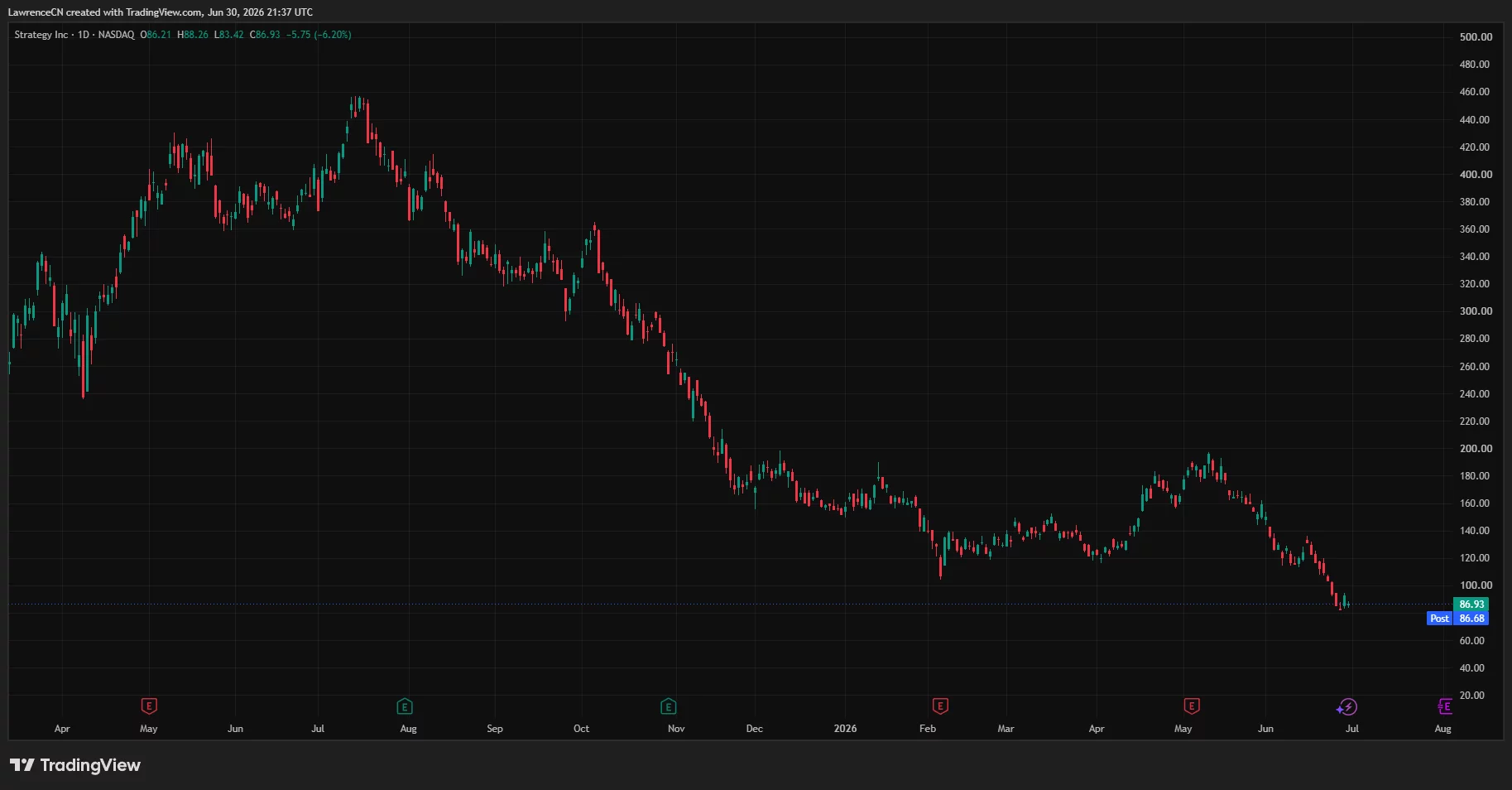
The second is the direction of mNAV itself. A premium rebuilding above 1x would signal the market is again willing to pay up for Strategy’s structure, the bullish path. A premium stuck at 1x or slipping to a discount would confirm the de-rating the bears expect.
The third is the pace of actual Bitcoin sales under the new program: sparing, opportunistic use would read as disciplined capital management, while heavy or frequent sales would read as forced and would reinforce the broken-model narrative. The fourth is buyback execution, whether the company actually repurchases common and preferred securities into weakness, which would support prices and show the framework is more than words.
The fifth is the health of the preferred stack, with the STRC dividend raised to 12% to push that security toward its $100 par and the reserve policy holding above 12 months of coverage. Stability there underpins the whole structure; stress there would signal trouble spreading.
Tracked together, these five map the two variables that decide the stock, the Bitcoin price and the premium, onto observable events. The $1.25 billion authorization changed Strategy’s toolkit. These signals will show whether the tools are working.
Bull, base, and bear scenarios for MSTR
The scenarios combine the Bitcoin path with the direction of the mNAV premium. They describe possible outcomes, not targets, and the figures are deliberately framed as conditions instead of prices.
Bull case
In the bull scenario, Bitcoin recovers from the $60,000 area, lifting the value of Strategy’s 847,363 coins back above the cost basis and easing the pressure that prompted the overhaul. The buybacks and the funded reserve reassure the market that the credit structure is sound, dilution risk fades, and investors regain confidence enough to pay a premium over net asset value again. mNAV expands back above 1x, and because MSTR is leveraged to both Bitcoin and its own premium, the stock outpaces Bitcoin to the upside. This case needs Bitcoin strength and a restored willingness to pay up for Strategy’s structure.
Base case
In the base scenario, Bitcoin chops sideways around current levels and the premium stays compressed near 1x. The framework does its job of stabilizing the credit stack and removing forced-sale risk, so the stock avoids a crisis, but with the accumulation flywheel gone, MSTR trades largely in line with the value of its Bitcoin, give or take a modest premium. The buybacks provide some support, the monetization program is used sparingly, and the stock tracks Bitcoin without the old multiplier. This is the “stabilized but de-rated” outcome where MSTR behaves more like a leveraged Bitcoin holding company than a premium growth story.
Bear case
In the bear scenario, Bitcoin weakens further from $60,000, pushing more of the stack underwater and forcing more active use of the monetization program to cover obligations. The market reads continued Bitcoin sales as confirmation the model is broken, mNAV slips below 1x to a discount, and the leveraged downside takes the stock lower than Bitcoin’s decline alone would suggest. Preferred-stack stress, despite the higher STRC dividend and the reserve, keeps sentiment fragile. In this case, the overhaul slows the bleeding without stopping it, and the stock re-rates toward or below the value of its Bitcoin.
Frequently Asked Questions
Did Strategy actually sell $1.25 billion of Bitcoin?
No. On June 29, 2026, Strategy’s board authorized a program permitting it to sell up to $1.25 billion of Bitcoin if needed, primarily to fund a USD Reserve and service obligations. It is a cap and a framework, not a completed sale. Any sales would happen over time depending on conditions, and selling beyond the stated purposes would require further board approval.
What is mNAV and why does it matter for MSTR?
mNAV, or modified net asset value, is the premium or discount at which MSTR trades relative to the value of its Bitcoin holdings. A premium lets Strategy issue stock and buy more Bitcoin accretively, powering its growth. That premium has compressed toward 1x, which jams the equity lever and is the core reason for the new buyback and Bitcoin-monetization tools. Where the premium goes is a primary driver of the stock.
How much Bitcoin does Strategy hold?
As of late June 2026, Strategy held 847,363 BTC purchased for an aggregate $64.10 billion, an average near $75,651 per coin. The full $1.25 billion monetization authorization would represent roughly 20,800 BTC, about 2.5% of the holdings. The company paused Bitcoin buying in the week of the announcement.
Is the announcement good or bad for the stock?
It is genuinely mixed. The framework reduces forced-dilution risk, funds dividends, and adds buyback capacity, which the market read positively on the day. But formalizing Bitcoin sales ends the never-sell model that justified MSTR’s premium, which may cap how high the premium can climb. Both effects can hold at once: lower near-term risk, lower long-term ceiling.
How does Bitcoin’s price affect MSTR?
MSTR is a high-beta proxy for Bitcoin and tends to move more than Bitcoin in both directions. With Bitcoin near $60,000, below Strategy’s average cost, part of the stack is underwater on paper. A Bitcoin recovery would lift the holdings and give the premium room to expand, while further weakness would deepen the pressure and could trigger more active Bitcoin monetization.
What is the STRC dividend change about?
Strategy raised the dividend on its STRC preferred stock to 12% from 11.5%, effective for record dates on or after July 1, 2026. The goal is to push the security back toward its $100 par value and signal commitment to the health of its preferred, or Digital Credit, stack. It is part of the broader framework aimed at stabilizing the company’s capital structure.
Disclaimer: This article is for information purposes only and does not constitute financial, investment, or trading advice, and the author is not a licensed financial adviser. MSTR is a publicly traded stock whose value depends on volatile inputs including the price of Bitcoin. Price scenarios are illustrative and speculative, not predictions or recommendations. Always do your own research and consider consulting a licensed professional before making financial decisions. Figures are accurate as of June 30, 2026, and will change.


TLDR
- Avalanche Treasury Corp told regulators it may not survive the year due to financial strain.
- The company cited “substantial doubt” about its ability to continue as a going concern.
- AVAX price declines led to major writedowns and over $26 million in quarterly losses.
- The firm’s AVAX holdings dropped to nearly half of their original purchase value.
- Shares collapsed over 90% within a month and now trade below $0.73.
Avalanche Treasury Corp told regulators it may not survive the year after a steep decline in its finances. The company disclosed material losses and liquidity pressure linked to falling AVAX prices. It also warned that current conditions raise “substantial doubt” about its ability to continue operations.
AVAX Holdings Decline and Balance Sheet Pressure
The company previously promoted a large AVAX treasury valued near one billion dollars during last year’s expansion phase. However, market conditions changed, and the value of its AVAX holdings dropped sharply over recent months. As a result, its market capitalization fell below thirty million dollars, reflecting severe investor concern.
Its operating unit reported losses exceeding twenty-six million dollars in one quarter due to AVAX writedowns. The firm bought AVAX for about two hundred sixty-five million dollars, yet the holdings fell to nearly one hundred twenty-three million dollars. This gap left the company holding assets worth far less than their original purchase cost.
AVAX prices declined forty-seven percent this year and nearly two-thirds over the past twelve months. Consequently, the treasury strategy weakened as asset values dropped and reduced the firm’s financial flexibility. The company stated that these conditions created ongoing uncertainty regarding its financial stability.
Stock Collapse Follows AVAX Treasury Strategy
Avalanche Treasury Corp completed a merger with a blank check company and entered public markets with high expectations. However, investor sentiment turned negative as disclosures revealed risks tied to its AVAX exposure and financial position. The stock fell from above ten dollars to below two dollars within days of additional filings.
Shares continued to decline and traded below seventy-three cents, entering penny stock territory. In total, the stock lost more than ninety percent of its value within one month. This decline reflected market concern over the sustainability of its AVAX treasury model.
The company also pledged a large portion of its AVAX holdings as collateral for a loan agreement. It committed nearly seven point eight million AVAX tokens from a total of thirteen point eight million holdings. This move increased financial risk as falling prices could pressure collateral requirements.
Other AVAX Treasury Firms Show Similar Declines
Other firms pursuing AVAX treasury strategies reported similar declines in value after initial expansion plans. AgriFORCE Growing Systems rebranded as AVAX One and announced a large capital raise to acquire more AVAX. The company aimed to build a significant AVAX treasury supported by strategic investors and advisors.
Despite those plans, its market value dropped sharply and now stands near forty-three million dollars. The firm’s shares declined sixty-eight percent this year and over ninety percent in the past year. These figures highlight the broader pressure affecting companies holding large AVAX reserves.
Data across the sector shows a consistent downward trend in treasury company valuations linked to AVAX exposure. Companies that accumulated AVAX during earlier market optimism now face reduced asset values and weaker investor confidence. This trend underscores the risks tied to concentrated digital asset treasury strategies.


Strategy, the publicly traded firm behind the Strategy (formerly MicroStrategy) Bitcoin treasury model, has moved to reassure investors after a steep drop in both Bitcoin and its own shares intensified fears about the company’s complex capital structure. With Bitcoin trading below $60,000 and Strategy’s stock down more than 70% from its highs, attention has turned to STRC—Strategy’s preferred-like security—and the possibility that its funding mechanics could amplify downturns.
On Monday, Strategy unveiled a new capital framework designed to address concerns around liquidity, financing reflexivity, and the company’s ability to meet obligations during stress. The plan includes up to $1 billion of buybacks for MSTR, up to $1 billion of buybacks for STRC and related securities, an increase in STRC’s dividend to roughly 12%, and expansion of the company’s cash buffer to $2.55 billion. Strategy also disclosed that it may sell up to $1.25 billion in BTC holdings if needed to satisfy dividend or debt requirements.
Key takeaways
- Strategy’s new framework combines buybacks (MSTR and STRC) with a larger cash reserve, aiming to reduce uncertainty during market stress.
- STRC’s dividend is expected to rise to roughly 12%, supported by expanded cash resources under the plan.
- Strategy added a contingency option: selling up to $1.25 billion in Bitcoin if required for dividend or debt obligations.
- Short-term trading activity improved after the announcement, with STRC and MSTR both rallying more than 12% in after-hours trading, according to Yahoo Finance.
- Debate continues over whether the company’s structure can withstand prolonged tightening in funding markets—even if it is not expected to face near-term insolvency.
What Strategy outlined in its capital framework
Strategy’s announcement centers on a restructuring of how it intends to manage risk across its Bitcoin-linked balance sheet and its layered security offerings. The company says the package includes up to $1 billion in buybacks for MSTR and up to $1 billion in buybacks for STRC and related securities.
In addition to buybacks, Strategy is increasing the STRC dividend rate to roughly 12% and expanding its cash buffer to $2.55 billion. Strategy’s filing—an 8-K submitted June 29—spells out the mechanics and priorities management would follow in its capital allocation framework, including an emergency pathway that allows BTC sales if needed to meet obligations.
Crucially for investors who worry about “reflexive” downside dynamics, Strategy also said it may sell up to $1.25 billion in BTC holdings to meet dividend or debt requirements. That disclosure is notable given Strategy’s long-standing “Bitcoin maximalist” positioning and the recurring argument that selling BTC during stress could worsen market conditions.
Following the release, markets reacted positively. As reported with reference to Yahoo Finance, STRC and MSTR shares rose more than 12% in after-hours trading. The piece notes STRC was trading at $84.86 after the announcement, up from $72.06 on June 26.
Why STRC is a flashpoint for investors
STRC sits in the middle of Strategy’s capital structure—positioned as a perpetual preferred-like instrument linked to the broader Bitcoin treasury strategy. Strategy describes STRC as paying an annual dividend of about 12% on a $100 par value, supported by cash and its Bitcoin-linked capital framework.
This design has drawn skepticism from critics who argue that the instrument’s stability depends less on Strategy’s underlying solvency and more on the health of secondary-market demand and liquidity conditions. In other words, even if STRC is not a classic stablecoin, its market behavior can still be sensitive to tightening access to capital.
Earlier concerns have focused on how Strategy’s treasury approach could interact with market stress. Bitcoin critic Peter Schiff has repeatedly challenged Strategy’s model, warning that Strategy can’t sell Bitcoin without negatively affecting Bitcoin’s price and pointing to potential spillover effects if purchasing activity slows or selling accelerates.
At the same time, some analysts and market participants argue the risk framing is overstated. Taran Dhillon, head of digital assets at Kula, told Cointelegraph that Bitcoin volatility alone is unlikely to break the structure; he suggested the more important test is whether Bitcoin remains under pressure while funding becomes progressively more expensive or difficult.
The bear case: liquidity dependency and potential feedback loops
Much of the controversy around Strategy’s structure relates to how its financing cycle can behave in both directions. The core bear argument is that the same momentum that fuels expansion in calmer conditions can intensify stress when investors pull back, funding costs rise, or liquidity in secondary markets deteriorates.
Cointelegraph reported that Brad Garlinghouse, CEO of Ripple, made a similar point on CNBC, criticizing financial engineering as a driver of long-term value. Kyle Rodda, senior analyst at Capital.com, characterized Strategy as a momentum-driven accumulation vehicle: capital raises funds for Bitcoin purchases, and those purchases support the company’s valuation. But he warned the dynamic can reverse when market conditions weaken, funding costs rise, and investor appetite declines.
Rodda also emphasized that secondary market liquidity is a structural dependency. If refinancing pressures or forced selling forces larger adjustments elsewhere, the spillover effects could extend beyond Strategy itself.
Some prominent Bitcoin commentators have compared the scenario to prior stress-tested leveraged structures in crypto. Charles Edwards, founder of Capriole Investments, has been among the critics drawing parallels to Terra/LUNA-era dynamics during drawdowns, framing the situation as potential “feedback loop” risk rather than a purely price-driven story.
The neutral and bull positions: stress may target funding markets first
Not all observers agree that the primary threat is Bitcoin price movement. Dhillon suggested that any early instability would likely show up first in funding conditions—such as widening discounts, higher yields, and reduced issuance capacity—rather than immediate solvency failure tied directly to Bitcoin valuation.
He also highlighted a key distinction: STRC is not a stablecoin pegged mechanically to $100. Instead, its yield profile is designed to adjust with market pricing. The logic, in theory, is that when STRC trades below par value, the effective yield becomes more attractive to buyers, eventually pulling pricing back toward $100.
Cointelegraph also referenced a Bitfire Research report shared with the outlet, which argued that recent STRC price dislocations should not automatically be treated as structural failure. The report stated that Strategy faces no near-term insolvency risk, attributing de-pegging events largely to sentiment and liquidity conditions rather than a sudden change in fundamentals or solvency profile.
On the bull side, the article describes a “three-year MSTR stress test” conducted by Bitcoin supporter Adam Livingston. His model assumes extreme conditions—including a 55% Bitcoin drawdown, closed capital markets, and continued cash burn requiring large Bitcoin sales. The simulation also tracks a dramatic compression in “common equity Bitcoin exposure” (CEBE) and estimates that Strategy would sell approximately 115,727 BTC over three years to meet obligations before stabilization returns.
In Livingston’s scenario, the company survives the cycle and ends with over 700,000 BTC on its balance sheet, with a recovering net asset structure once conditions normalize. The takeaway from this model, regardless of how an investor views its assumptions, is that proponents believe the balance-sheet framework could be robust enough to survive even severe drawdowns—particularly if contingency mechanisms are executed as planned.
What changed—and what remains uncertain
Strategy’s new framework can be viewed as an attempt to make its stress-response playbook more concrete. According to the article’s references to Strategy’s June 29 8-K filing, management is focusing on transparency around how it would act during liquidity or capital-market disruptions—especially through cash buffer expansion, buybacks for both MSTR and STRC, and the ability to monetize Bitcoin up to $1.25 billion if required.
Dhillon described the changes as a meaningful improvement to transparency and confidence, pointing to the enlarged $2.55 billion reserve and a clearer plan for how Bitcoin monetization would work under pressure.
However, critics argue the fundamental dependency remains. Schiff, as cited in the piece, pointed to market-cap vs. Bitcoin value asymmetries—arguing that as long as MSTR’s market cap remains below the value of its Bitcoin holdings, newly issued capital could imply a “negative Bitcoin yield.” In other words, for some skeptics, the debate is not whether contingency tools exist, but whether the market structure will persistently price exposure in a way that helps—or harms—long-term holders.
Ultimately, Strategy’s framework strengthens the company’s toolkit for short-term stress, but it does not remove its reliance on access to capital markets over time. The key unresolved question is whether expanded liquidity buffers, buybacks, and contingency BTC sales can stand up to a prolonged period of tightening across both equity and credit-style markets—precisely the environment where feedback-loop concerns tend to matter most.
For investors, the next watch items are straightforward: whether STRC’s pricing relationship to par value stabilizes, how funding conditions evolve if Bitcoin stays under pressure, and whether Strategy’s disclosed order of operations holds up in practice during the next stress test.


The United States just lifted export controls on Anthropic’s Claude Fable 5 and Mythos 5. The Commerce Department cleared both models on June 30, paving the way for a swift restoration of full global access starting July 1.
The resolution ends nearly three weeks of tense negotiations between Anthropic and the White House.
What the Lifted Export Controls Actually Mean
An export control is a US rule that restricts who can access sensitive technology, including advanced AI models, based on national security concerns. The Commerce Department imposed one on Claude Fable 5 and Mythos 5 shortly after the models launched. It has now been formally reversed.
The original directive landed on June 12, just three days after the models went live on June 9. Furthermore, it cited national security concerns reportedly tied to potential model jailbreaks. As a result, Anthropic suspended access for foreign nationals worldwide across every product surface.
The rule caused immediate operational chaos. Segmenting users by nationality in real time proved impossible in practice. Consequently, Anthropic took both models entirely offline for customers on Claude.ai, the API, AWS Bedrock, and other partner platforms until the situation could be resolved.
The company confirmed the reversal directly. “We’ve received notice that the Department of Commerce has lifted export controls on Claude Fable 5 and Mythos 5. We’ll begin restoring access tomorrow, and will share an update soon,” Anthropic posted on June 30.
Why Claude Fable 5 and Mythos 5 Matter So Much
Claude Fable 5 stands as Anthropic’s most capable widely available model. It is built on the powerful Mythos-class architecture but ships with enhanced safeguards for general use. Furthermore, it excels at demanding reasoning tasks, long-horizon agentic work, software engineering, and advanced vision capabilities.
Mythos 5 targets more sensitive workloads. The model shares the same underlying architecture but comes with lifted safeguards for cybersecurity applications. Moreover, access was originally reserved for trusted partners through Project Glasswing across high-stakes government and enterprise deployments.
Pricing keeps both models competitive across the industry. Anthropic charges 10 dollars per million input tokens and 50 dollars per million output tokens. Additionally, built-in classifiers automatically route high-risk queries to safer fallbacks, especially on cybersecurity and biology-related tasks across every product surface.
The resolution highlights a broader shift in the AI industry. Anthropic held intensive talks with Commerce Department and White House officials throughout the standoff. As a result, the swift lifting signals both effective advocacy and a maturing regulatory framework for advanced AI systems across the entire United States.
The post US Lifts Export Controls on Anthropic’s Claude Fable 5 and Mythos 5 Models appeared first on BeInCrypto.
XRP is down 6% on the weekly chart. Where will it stop?
Ripple (XRP) Price Predictions: Analysis
Key support levels: $1
Key resistance levels: $1.3, $1.6, $2
XRP is Back at $1
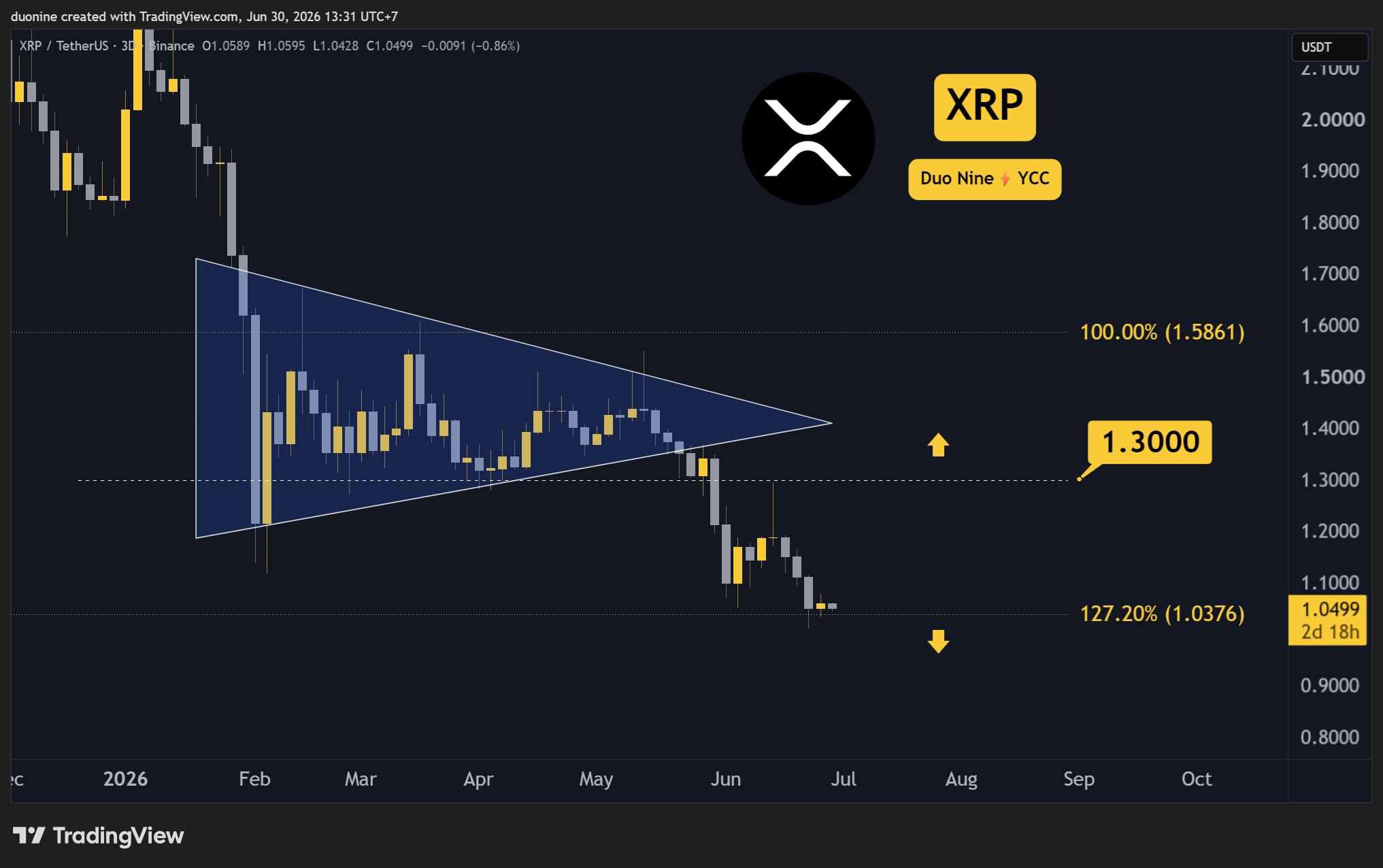
Despite the best efforts from buyers, XRP has returned to the $1 support. This is the third time in the past two weeks that this cryptocurrency tested this level. This is somewhat bearish since bulls have failed to push the price away from the key support.
If seller pressure intensifies this week, then this support may eventually crack and turn into resistance. If so, buyers will most likely retreat to 80 cents, where the next major support level is found.
Momentum Remains Bearish
With clear lower highs and lower lows, XRP is in a bearish trend that is still to find a bottom. Because of this, the price has a good chance to drop lower in the coming weeks and turn $1 into resistance.
Moreover, the momentum indicators remain on the bearish side, with the 3-day RSI close to 30 points, which also indicates a bearish trend. As long as the RSI remains under 50, bears retain the upper hand.

Weekly MACD About to do a Bearish Cross
Another concerning signal can be seen on the weekly MACD. The moving averages are about to do a bearish cross. This would be the first time it happens in 2026, and if confirmed, it’s unlikely XRP will enter a recovery in the future.
Considering the above, the outlook for the second half of the year is negative, with lower lows likely. Best to wait for a bottom confirmation before considering an entry on XRP.

The post 3 Things to Watch for in Ripple’s (XRP) Price This Week appeared first on CryptoPotato.

A Massachusetts judge has allowed state authorities to expand their lawsuit against prediction markets platform Kalshi, extending the legal fight over whether the company’s sports event contracts should be regulated as online sports wagering.
In a Tuesday filing in Suffolk County Superior Court, associate justice Peter Krupp permitted Massachusetts regulators to submit a 71-page amended complaint, adding new allegations to the state’s initial case that Kalshi violated Massachusetts law by offering sports-related wagering without the required authorization.
Key takeaways
- A Massachusetts judge allowed the state to file a 71-page amended complaint against Kalshi, keeping the case active.
- The expanded allegations claim Kalshi’s product effectively functions as sports wagering and that its marketing may reach people under 21.
- Massachusetts’ argument hinges on whether Kalshi must be licensed through the Massachusetts Gaming Commission to comply with state rules.
- The dispute also sits within a wider US battle over whether the CFTC has “exclusive jurisdiction” over prediction markets.
- Gaming and tribal groups are separately pushing Congress for clearer rules through the CLARITY Act.
Expanded allegations in the Massachusetts case
The Tuesday ruling clears the way for Massachusetts authorities to strengthen their claims as the case continues. According to the court filing, the amended complaint builds on earlier allegations that Kalshi engaged in sports wagering in a way that violates state law.
The state’s updated pleading includes accusations that the platform “targets those under 21 years of age” and does not do enough to prevent underage users from accessing the product. The complaint points to Kalshi’s marketing practices and to ad creative that, the filing alleges, shows individuals who appear younger than 21.
Massachusetts authorities also reiterated that Kalshi permits users from age 18 to create accounts and place wagers on sports events by purchasing event contracts, framing that accessibility as incompatible with the state’s approach to online sports wagering.
How the dispute started—and what the judge previously ordered
Massachusetts Attorney General Andrea Joy Campbell announced the lawsuit in September 2025, arguing that Kalshi needed to be licensed by the Massachusetts Gaming Commission to comply with state rules governing online sports wagers.
Earlier developments escalated the dispute quickly. In January, a judge issued a preliminary injunction barring Kalshi from offering sports event contracts while the case was reviewed.
With the latest amended complaint allowed by the court, Kalshi now faces a more detailed version of the state’s allegations as it continues fighting the legality of its sports contracts under Massachusetts law.
Cointelegraph reached out to Kalshi for comment, but did not receive an immediate response. After the initial complaint was filed, a Kalshi spokesperson had said the company was “ready to defend” itself in court.
The federal-versus-state jurisdiction fight over prediction markets
The Massachusetts case is only one part of a broader regulatory tug-of-war in the US. In parallel with state-level enforcement efforts, the CFTC has supported the view that prediction markets fall within its authority.
In April, the CFTC filed a brief in Massachusetts arguing that it had “exclusive jurisdiction” over prediction markets. The agency’s position, under Chair Michael Selig, is that event contracts offered by platforms like Kalshi are “swaps” under the Commodity Exchange Act and therefore should not be governed by state regulation.
As Selig put it in remarks associated with the agency’s stance, Congress has entrusted the CFTC with sole authority to regulate commodity derivatives markets, including prediction markets—and he warned that states attempting to override federal law would face legal challenges.
Why this matters beyond Kalshi: a policy push for the CLARITY Act
Even as the legal arguments could eventually move toward higher courts, some industry and stakeholder groups are urging lawmakers to address the jurisdictional uncertainty with legislation.
Earlier this month, national gaming and tribal organizations and labor groups asked US senators to add language to the Digital Asset Market Clarity (CLARITY) Act. Their request is aimed at explicitly prohibiting event contracts tied to sports and casino-style gaming.
The CLARITY Act—currently under consideration in the Senate—is expected to shape how the CFTC’s authority over digital assets and related market activities is defined. In that context, stakeholders pushing for restrictions on sports and casino-style event contracts are effectively seeking legislative clarity to reduce the need for repeated state-by-state court battles.
Cointelegraph has also reported that the legal landscape for Kalshi and similar platforms has varied by jurisdiction, including instances where the company was blocked from offering sports bets in certain locations.
What to watch next
For market participants and platform users, the next key developments are procedural and strategic: Massachusetts will attempt to sustain its expanded claims after the preliminary injunction, while Kalshi’s defense will likely continue confronting the CFTC’s argument for exclusive federal oversight. At the same time, the direction of the CLARITY Act could determine whether US prediction markets face a patchwork of state litigation or a more uniform regulatory framework.

According to on-chain indicators reviewed by analysts at the crypto exchange Bitfinex, bitcoin (BTC) still has some way to go before it bottoms out in this bear cycle.
The latest Bitfinex Alpha report revealed that the leading digital asset could decline further into the $40,000s by the end of this year as more investors exit the spot market.
A Possible Drawdown Into the $40Ks
In past market cycles, BTC has always declined at least 70% from its all-time highs (ATHs) before bottoming out and recovering. During the 2022 bear market, BTC fell 78% from $69,000, while in 2018, it plummeted 86% below cycle highs near $20,000.
Based on previous drawdown patterns and the time horizons between tops and bottoms, BTC is likely to extend its ongoing decline into the $40,000s. The asset is currently 53.9% down from its ATH of $126,000; dropping into the $40,000s will bring the decline to at least 68%. Additionally, analysts believe BTC could reach its bear-cycle bottom in the fourth quarter of 2026 if cycle estimates account for price moves relative to moving averages.
Analysts say BTC’s structural levels remain unchanged, even though the asset’s floor gave way over the weekend. With the coin trading near $60,000 at press time, it is positioned beneath the True Market Mean of $77,000, a level representing the average cost basis for active investors. This level also serves as a demarcation between bullish and bearish market regimes, so bitcoin’s price action will continue to be defined by a structural bear market environment.
Spot Demand Still Weak
After breaking below the $61,500 support level and falling to a new bear cycle low of $58,136 last week, $53,400 is now the key support level to watch. The move towards $58,000 reflects weakening spot demand as seen in short-term holder selling, exchange-traded fund (ETF) outflows, the collapse of the digital asset treasury channel, and negative gamma pressure.
Unlike previous declines, there were no large-scale liquidations and flushes in open interest as BTC fell below $60,000 last week. This substantiated the fact that the fall was a structural exodus within the spot markets. With the market’s primary demand engine missing, bitcoin’s price is likely to remain weak and continue a downtrend in the coming weeks.
“But the market awaits a resurgence of spot demand to be able to find a floor and potentially turn higher,” analysts explained.
The post Bitcoin Could Fall Into the $40,000s Before Bottoming: Bitfinex Analysts appeared first on CryptoPotato.
Key takeaways:
- The Spot Ether ETF outflows overwhelmed BitMine’s ETH accumulation, raising the chance of a drop below the $1,500 support.
- Falling DApps revenue and weak staking yields highlight limited ecosystem incentives despite tokenization potential.
Ether (ETH) has failed to sustain prices above $1,600 since Thursday, following the broader cryptocurrency market’s downtrend. Lower oil prices created a positive tone that fueled investors’ hopes for more expansionist monetary policy. That setup favors stocks and pushes bond yields higher.
Traders now fear that ETH will not hold the $1,500 support level for long. Spot Ether ETF outflows void the impact of accumulation from Ether treasury companies.
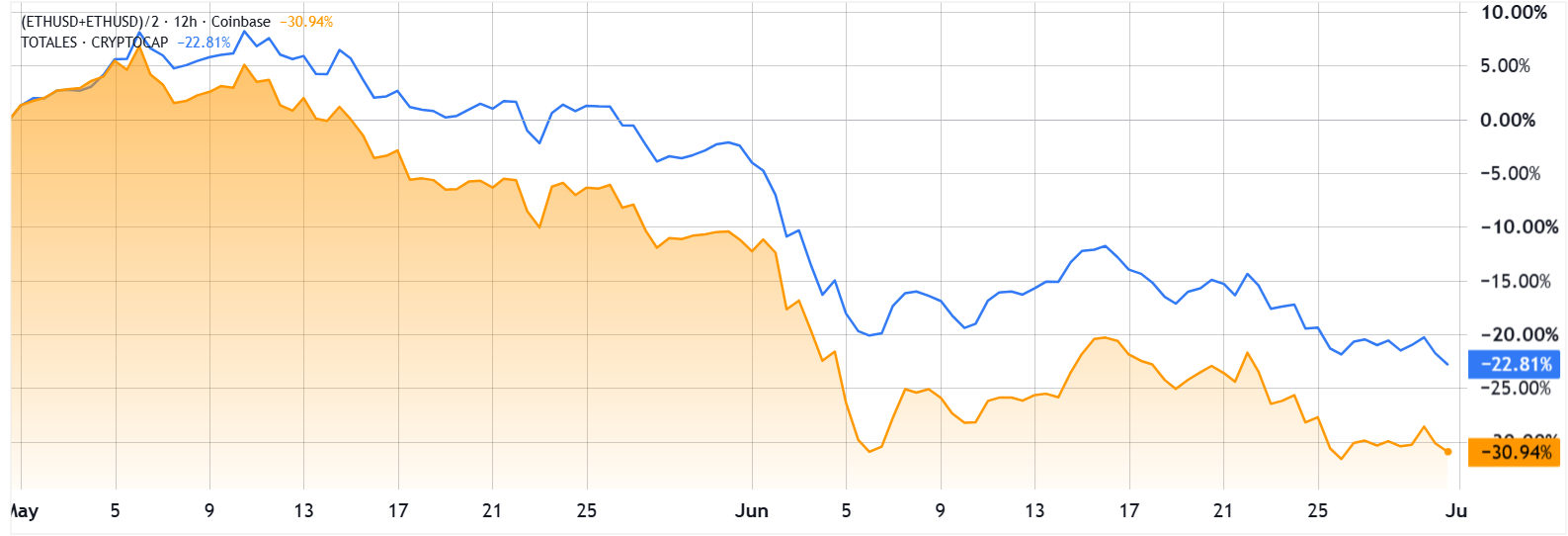
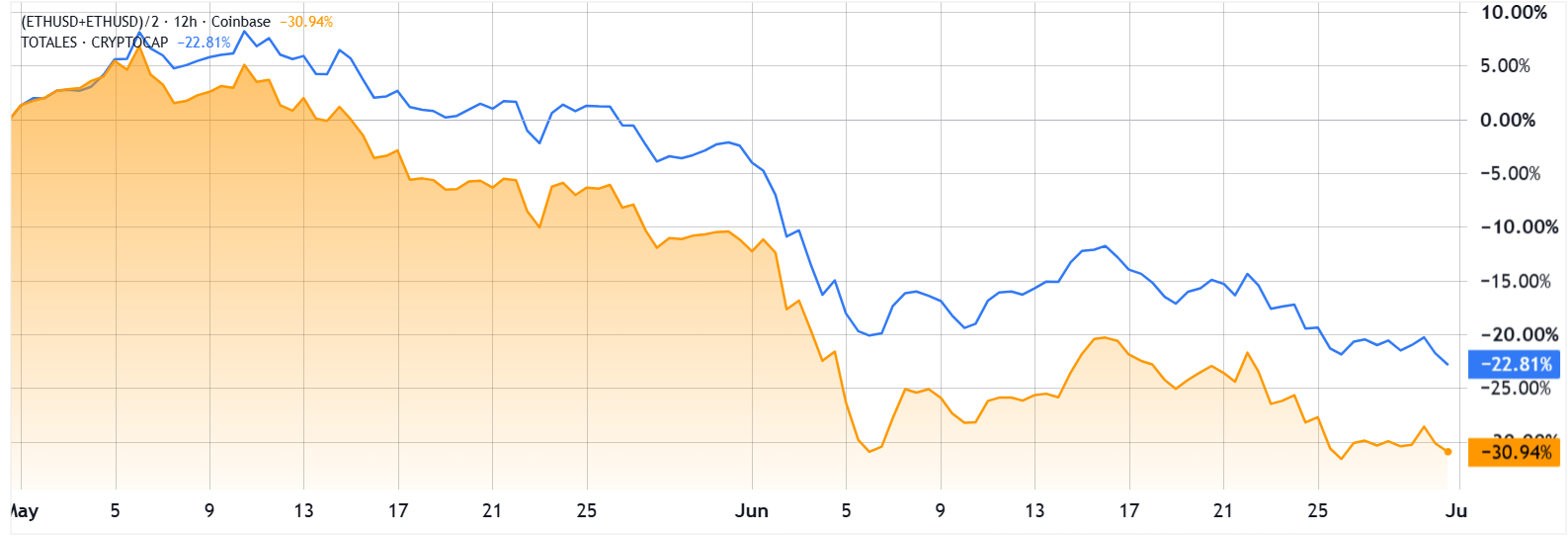
ETH/USD (orange) vs. Total crypto market cap (blue). Source: TradingView
Ether price has declined 31% since May and underperformed the total cryptocurrency market capitalization by 8% over that period. US-listed Ether ETFs saw $345 million in net outflows since June 17, which more than offset the $182 million in ETH accumulation from BitMine Immersion (BMNR US) and Sharplink (SBET US) during the same period.
Regulatory setbacks, AI competition and weak Ethereum onchain metrics
Several factors appear to have held back investor appetite, including regulatory uncertainty in the United States. Meanwhile, the stock market continues to draw attention thanks to strong earnings and lower inflation expectations.
The Digital Asset Market CLARITY Act has awaited a Senate vote since May 15. The bill ends regulation-by-enforcement and clarifies which tokens count as securities. Yet it has faced pushback from lawmakers over provisions regarding stablecoin yields and anti-money-laundering standards.
Democratic lawmakers voiced ethical concerns about the Trump family’s ties to crypto and its role in the World Liberty Financial platform. Most view the CLARITY Act as a positive catalyst for the decentralized finance (DeFi) sector. So ongoing uncertainty around approval hurts institutional demand for ETH.
The artificial intelligence sector now competes with blockchain for data processing as cloud providers deliver services through agentic architectures. Enterprise software leader SAP (SAP DE) has integrated autonomous, modular AI agents natively across multi-vendor clouds, enabling peer-to-peer collaboration.
Ether investors also feel disappointment from stagnant Ethereum network fees and decentralized applications (DApps) revenues. As a result, ETH supply becomes inflationary, staking yields remain limited, and fewer incentives exist for ecosystem growth, since part of DApps’ revenue flows back to users.
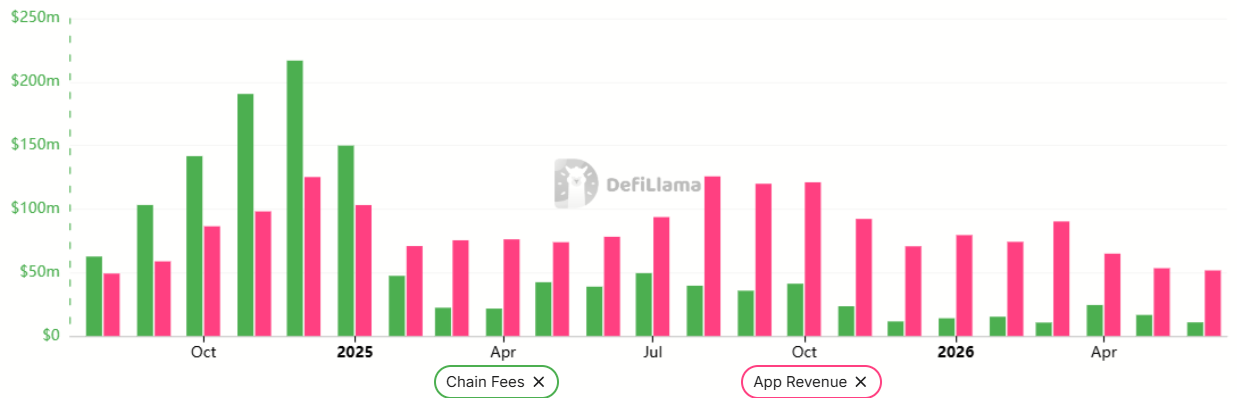
Ethereum monthly network chain fees vs. DApps revenue, USD. Source: DefiLlama
Ethereum network fees reached only $10.7 million in June, down from $24.4 million in April. DApps revenue hit $51.7 million in June, down from $64.8 million two months earlier. Top contributors included Sky (formerly Maker) at $12.7 million, Titan Builder at $7.2 million, and Chainlink at $4.6 million.
Ethereum supporters argue that tokenization remains in its early innings. The long-term growth potential should create enough blockchain demand to support a much higher ETH valuation.
Related: Ether treasury Sharplink bought $62.4M ETH last week
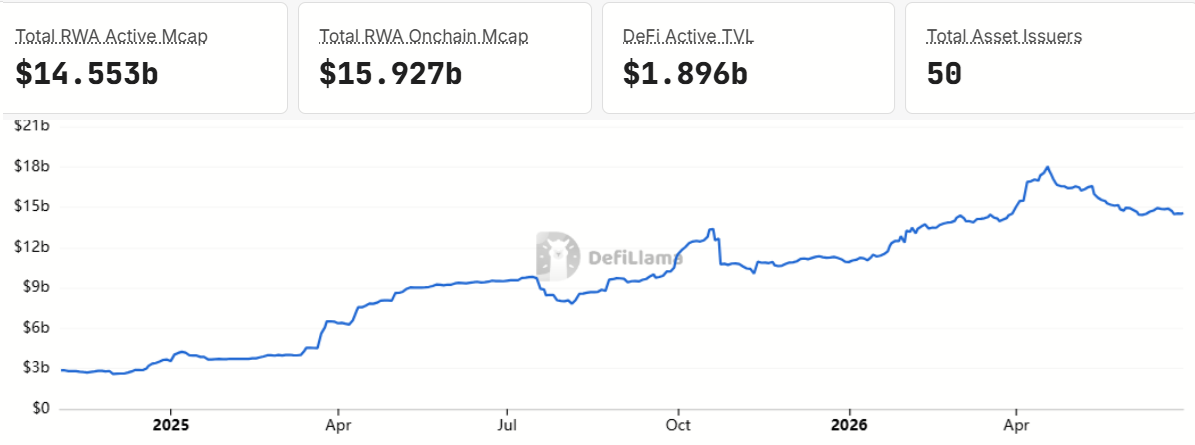
Ethereum real world assets (RWA) active market capitalization, USD. Source: DefiLlama
While real world assets (RWA) show real promise, the $14.5 billion in tokenized market cap on Ethereum has yet to spark meaningful DeFi activity. With a 2.7% staking yield and weak onchain metrics, the odds of ETH breaking below $1,500 remain in play.
Crypto World
China-linked actors target more than technology as AI competition with U.S. intensifies

U.S.-based cybersecurity giant CrowdStrike has warned of increasing cyberattacks from China-based entities aimed at stealing artificial intelligence to narrow the tech gap with the U.S.
Bill Hinton | Moment Mobile | Getty Images
Cyberattacks aimed at stealing American artificial intelligence technology are increasingly expanding from tech-based attacks to the exploitation of human-level vulnerabilities, with China-based actors playing a growing role.
“As the AI race has heated up, the [People’s Republic of China] has targeted the tech sector increasingly,” said Matt Pearl, director of the strategic technologies program at the U.S.-based think tank Center for Strategic and International Studies.
Rather than focusing on a specific trade secret, such as hardware designs, the hackers have broadened their interest to anything that could narrow the three- to four-month AI gap with the U.S., Pearl said. That, he said, ranges from understanding a company’s product roadmap, particularly in highly competitive sectors, to identifying weaknesses in supply chains.
The alleged cases are already piling up.
In June, U.S.-based cybersecurity giant CrowdStrike said Chinese entities accounted for more than half of state-sponsored intrusions targeting technology companies, especially their AI assets, in the 12 months through March 31.

American tech start-up Anthropic has also accused Chinese companies, including Alibaba, of illicit attempts to steal its AI capabilities. Alibaba did not respond to a request for comment.
Last year, U.S.-based AI content detection startup Copyleaks said the responses generated by Chinese startup DeepSeek’s R1 model resembled those produced by OpenAI’s ChatGPT nearly three-quarters of the time, suggesting the open-source Chinese model may have been trained on the U.S.-developed one.
“We haven’t seen [the same stylistic match] in other LLMs,” said Alon Yamin, CEO and co-founder of Copyleaks.
DeepSeek and OpenAI did not immediately respond to requests for comment.
Brian Abbott, founder and CEO of U.S.-based start-up Agentiq Capital, told CNBC in June that he believed an employee he hired from China last year was an agent of Beijing who purposely altered code and website content to prevent the company from getting venture capital funding.
Abbott alleged the employee replaced references to “ASI,” or artificial superintelligence, with “fintech,” a once-trending term that many investors have soured on.
The individual was dismissed earlier this year, Abbott said, and the company filed a complaint with the FBI. CNBC was unable to independently verify the allegation.
“China’s economic espionage campaign is a continuing threat that costs the American economy hundreds of billions of dollars per year and puts our national security at risk,” the FBI said in a statement to CNBC.
“The FBI prioritizes investigating any potential theft of US technology by foreign actors and remains unwavering in our commitment to protect the homeland.”
The Cyberspace Administration of China and the U.S. Department of State did not offer a comment when contacted by CNBC. None of the individuals interviewed for this piece said they had heard of a similar instance of state-directed subversion of U.S. technology.
Graham Webster, editor-in-chief of Stanford University’s DigiChina Project, said distinguishing state-sponsored espionage from individual or corporate-level efforts can be difficult.
He also pointed out that the conversation about Chinese AI is also affected by major U.S. companies gearing up for major initial public offerings.
“[The] narrative is overtaking reality in a lot of decisions,” Webster said.
“The U.S. government is trying to hold China back to some extent,” he added, referring to technology export controls. “We should not be surprised that the Chinese government tries otherwise.”
Start-ups more at risk
Capital has been a defining driver of the AI race so far, with start-ups racing to rival tech giants or position themselves for acquisitions.
But that’s also created “cyber poverty lines” where small businesses lack the resources of large companies to defend against cyberattacks, said Cliff Steinhauer, director of information security and engagement at the non-profit National Cybersecurity Alliance.
Human vulnerabilities often pose the greater risk, Steinhauer said, particularly as attackers rely on “social engineering” tactics amplified by AI-powered content campaigns.
Cyberattacks can also target new or contracted employees to breach systems.
“We’ve seen a lot of cases within our company, new employees that are joining the company, immediately they’re a target of cyberattacks to get access to our AI models,” Copyleaks’ Yamin said. He expects to see more such cases.
Government and company-led efforts also impact start-up operating costs.
Anthropic on June 11 announced a program called Claude Corps to train 1,000 people in AI and match them with non-profits in the U.S. Meanwhile in China, policymakers have rolled out significant AI support, including free or subsidized computing power and rent-free office space for start-ups.
Isaac Stone Fish, founder and chief executive of consultancy Strategy Risks, said Beijing tends to focus more heavily on large corporations, but startups remain especially exposed since they don’t necessarily have cyber expertise.
“And Beijing’s attempt[s] have certainly increased over the last 18 months, since the release of DeepSeek really kicked off the US-China AI race,” Stone Fish said.
“Beijing wants to ensure that Chinese companies are at the vanguard of the global AI race,” he said. “One way that it does that is by sometimes working to suppress the development of American AI companies, through supply chain restrictions, employee harassment, hacking, targeted government subsidies of copycat competitors, among other strategies.”
“We’ve seen a lot of cases within our company, new employees that are joining the company, immediately they’re a target of cyberattacks to get access to our AI models,” Copyleaks’ Yamin said. He expects to see more such cases.
For startups, balancing rapid innovation with security remains a challenge.
Abbott said the employee he hired was initially willing to work for free, and eventually received a few thousand dollars a month in addition to stock options, before the firing.
“If we paid everybody market rate, for a scrappy start-up I could never afford to do this,” he said, emphasizing the “need to secure our economy of start-ups stateside.”
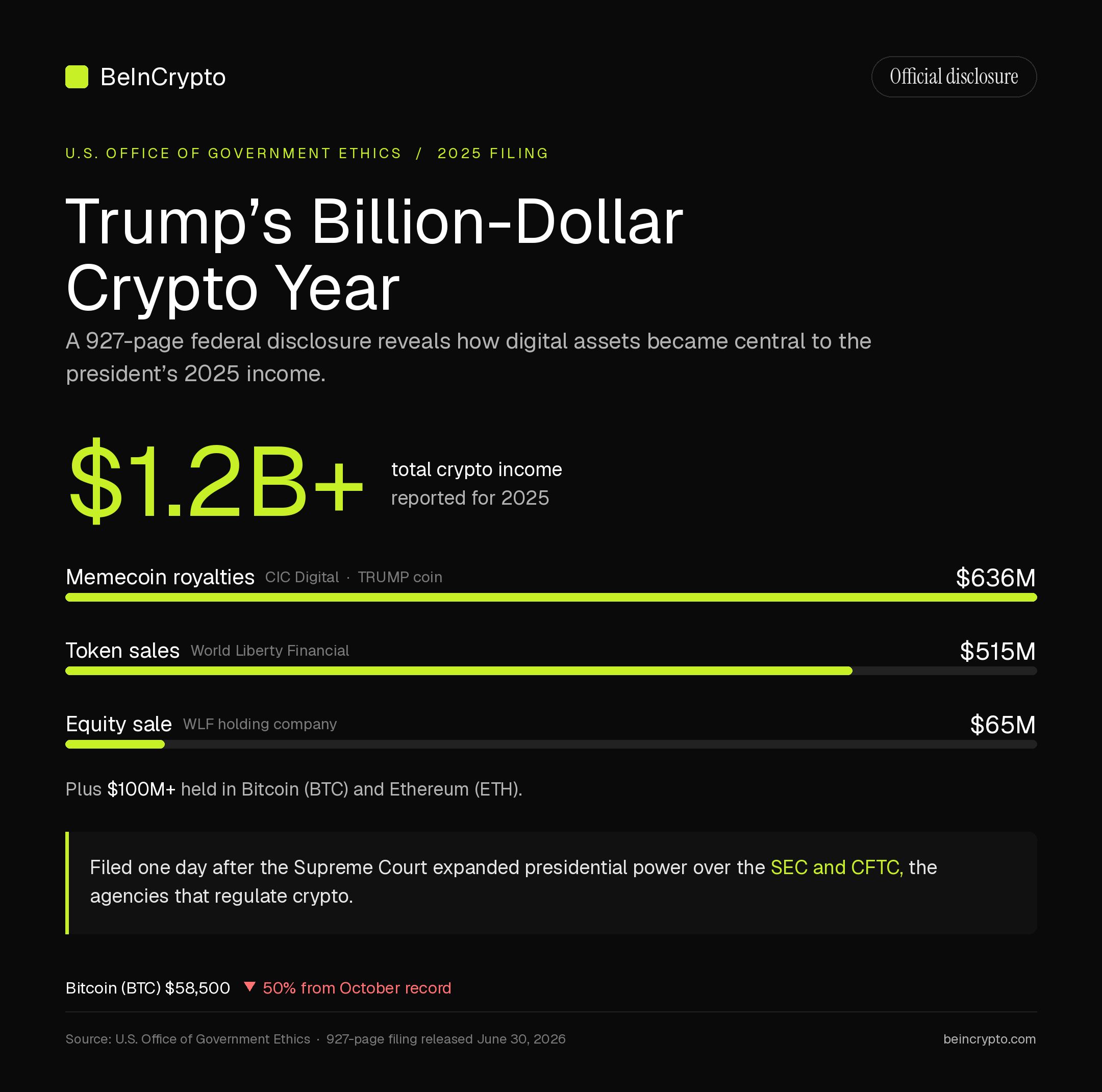
President Donald Trump reported more than $1 billion in crypto earnings for 2025, with a single meme coin and his family’s crypto venture driving most of the income detailed in a new federal financial disclosure.
The 927-page filing, released Tuesday by the Office of Government Ethics, arrived one day after a pivotal Supreme Court ruling. The decision widened presidential power over the independent agencies that regulate digital assets.

Where Trump Crypto Earnings Came From
The filing shows CIC Digital, Trump’s meme coin business, earned about $636 million in royalties. He launched the token three days before his January 2025 inauguration.
World Liberty Financial added about $515 million from token sales and $65 million from equity in its holding company. The decentralized finance (DeFi) venture is roughly 38% owned by a Trump family entity.
Together, the three streams topped $1.2 billion. Trump separately disclosed more than $100 million in Bitcoin (BTC) and Ethereum (ETH) holdings.
The stake ties him to a Trump family crypto empire built on assets he now helps regulate.
Disclosure Lands Beside a Major Court Ruling
The disclosure followed Trump v. Slaughter, a Supreme Court decision that lets presidents fire commissioners at independent regulators without cause.
The 6-3 ruling overturned Humphrey’s Executor, a 91-year-old precedent that had shielded those agencies from the White House. Legal analysts say it extends to the SEC and CFTC, the main crypto regulators.
The timing sharpened questions about Trump’s dual role as policymaker and crypto investor. Trump welcomed the outcome.
“This Decision gives tremendous additional Power back to the Presidency, where it belongs. It is an Honor to be the sitting President who, after all these years, WON this very important, and hard fought, Case,” Trump noted in a Truth Social post.
Follow us on X to get the latest news as it happens
Scrutiny Over Conflicts of Interest Grows
World Liberty Financial has drawn the sharpest scrutiny. In May 2025, Abu Dhabi state fund MGX settled a $2 billion Binance investment using the firm’s USD1 stablecoin.
That deal routed foreign-government money through a token the president’s family helps control. Senate Democrats demanded hearings into the venture over its foreign ties.
The White House has denied that a reported UAE deal shaped the firm. Lawmakers have pushed to bar federal officials from such crypto transactions.
The earnings landed during a market slump. Bitcoin’s spot price sat near $58,500 on Tuesday, down more than 50% from its October record.
Most small wallets that bought the meme coin have lost money, public data shows. Trump’s gains, set against those losses, will keep his stakes under watch as his agencies write the sector’s rules.
The post Trump Reports Over $1 Billion in Crypto Earnings in 2025 Disclosure appeared first on BeInCrypto.
Crypto World
Massachusetts AG Files Amended Lawsuit Against Kalshi over Sports Betting after Court Ruling
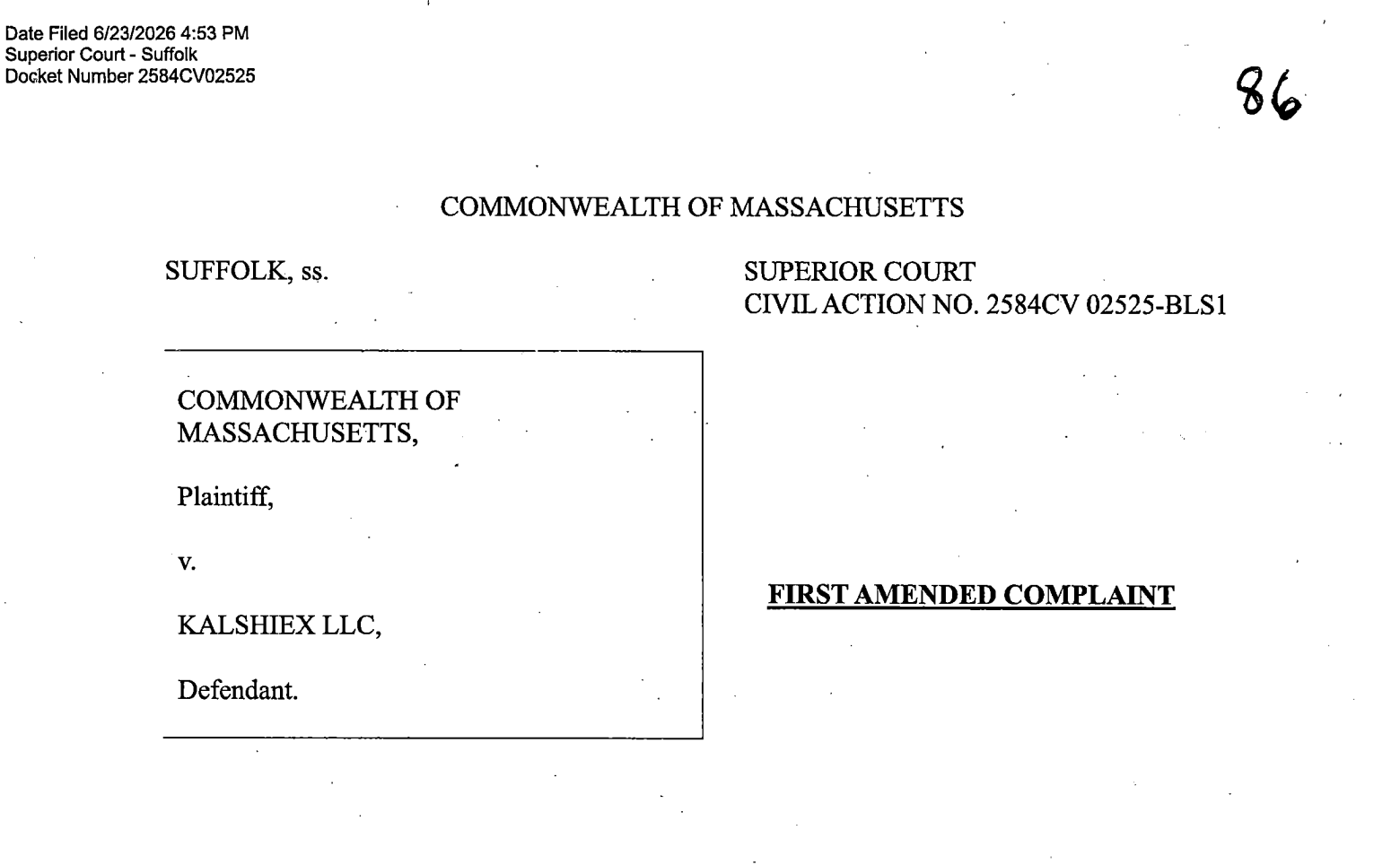
Prediction markets platform Kalshi’s legal battle against Massachusetts will continue after a judge ruled that state authorities could add allegations against the company over sports betting.
In a Tuesday filing in Suffolk County Superior Court, associate justice Peter Krupp allowed state authorities to file a 71-page amended complaint, building on a filing alleging that Kalshi engaged in sports wagering in violation of state laws.
The amended complaint included allegations that Kalshi “targets those under 21 years of age and does little to stop them from using its platform,” citing the company’s marketing to university campuses and presenting images in ads of people who “appear to be younger than 21 years old.”
“Kalshi allows anyone who is at least 18 years old to create an account and wager on sports events by purchasing event contracts,” alleged Massachusetts authorities.
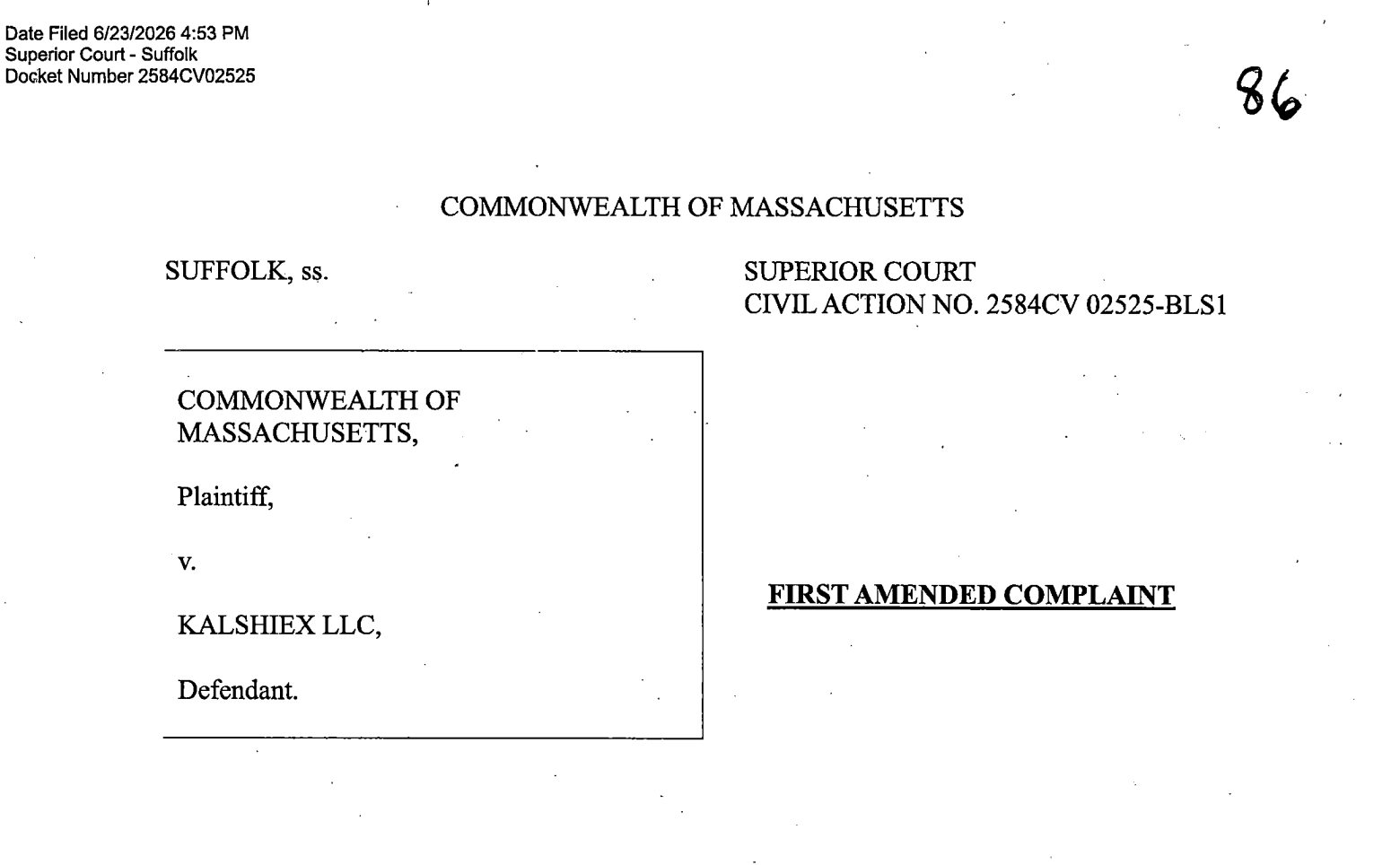
Source: Massachusetts Superior Court
Massachusetts Attorney General Andrea Joy Campbell announced the lawsuit against Kalshi in September 2025, alleging that the company needed to be licensed by the Massachusetts Gaming Commission to comply with state laws on online sports wagers. In January, a judge granted a preliminary injunction barring Kalshi from offering sports event contracts as the case was under review.
Related: US senators push to end CFTC ‘assault’ on state oversight of prediction markets
The Massachusetts case is just one of many involving state-level authorities and prediction markets companies like Kalshi and Polymarket, who offer users the ability to trade using event contracts on a variety of outcomes related to sports, politics and current events.
While Kalshi has been blocked from offering sports bets in some jurisdictions, it also has support from the US Commodity Futures Trading Commission (CFTC), which in April filed a brief in Massachusetts arguing the agency had “exclusive jurisdiction” over prediction markets. The CFTC, under Chair Michael Selig, has claimed that event contracts on the platforms amount to “swaps” covered by the Commodity Exchange Act and were not subject to state regulation.
“Congress has entrusted the CFTC with the sole authority to regulate commodity derivatives markets, including prediction markets,” said Selig. “To any state that seeks to nullify federal law and seize authority over these markets, I say again: we will see you in court.”
Cointelegraph reached out to Kalshi for comment but did not receive an immediate response. Following the initial complaint in September, a spokesperson said that the company was “ready to defend” itself in court.
Gaming organizations look to CLARITY Act for clarity on prediction markets
While one of the cases between a prediction markets platform and US state authority could ultimately reach the US Supreme Court given the arguments over federal and state laws, some groups are looking to Congress for solutions.
Earlier this month, national gaming and tribal organizations and labor groups called on US senators to add language “that explicitly prohibits event contracts tied to sports and casino-style gaming” to the Digital Asset Market Clarity (CLARITY) Act. The bill, under consideration in the Senate, is expected to give the CFTC more regulatory authority over digital assets.
Magazine: Does ‘Paper Bitcoin’ mean there’s an unlimited supply of BTC?

Hesai Group Stock Soars 11% Today as Shareholders Approve Stock Split, Mercedes-Benz Deal Fuels Optimism
AVAX Treasury Collapse Raises Doubts Over Company Survival

Concern over ‘toxic’ chemicals at potential Cambridge railway site

No Jackpot Winner as $257 Million Prize Rolls Over to $269 Million Monday Draw

Renter of Home in Anne Heche Crash Denies Settlement With Son

Two goals and an assist by sheer aura: Cristiano Ronaldo just entered the World Cup chat

How To Become Crypto Millionaire #trading #crypto #bitcoin

RECEIVE UNEXPECTED MONEY IN 10 MINUTES (MONEY FLOWS TO YOU) Music to attract money

Crypto Live Trading| 30 june #vinbullindia #livetrading #vinbulllive #live #trading #cryptotrading
-

 Fashion4 days ago
Weekend Open Thread: Staud – Corporette.com
-

 Politics5 days ago
The House | Manchesterism won’t survive the painful trade-offs unless it gets citizens on board
-

 Crypto World22 hours ago
Strategy authorizes up to $1.25B in Bitcoin sales under new capital plan
-

 Politics5 days ago
Potential 2028er World Cup attendee leaderboard
-

 Business5 days ago
Asia stock markets slide as tech shares slump
-

 News Videos2 days ago
MAJOR BITCOIN & MARKET UPDATE!!!! (MUST WATCH ASAP!!!)
-

 Tech5 days ago
A Look At A Gaggle Of Transputer Boards
-

 Crypto World7 days ago
Securitize Wraps Roubini's SEC-Registered ETF as Dubai VARA Digital Security
-
Crypto World7 days ago
Bitcoin (BTC) Dips Below $62K, Ethereum (ETH) Plunges 6% Daily: Market Watch
-
 Crypto World5 days ago
Dell (DELL) Shares Tumble Over 5% Following Analyst Downgrade to Hold
-

 Crypto World3 days ago
Coinbase, Circle Deepen Crypto Stock Losses Despite Resilient S&P 500
-
Business7 days ago
Entergy settles forward sale agreements, raises $672 million in cash proceeds
-

 Crypto World4 days ago
Kraken's xStocks Opens Bending Spoons IPO Registration to EEA Retail
-

 Business21 hours ago
Australia treasurer says alleged access of prime minister’s bank data ’incredibly concerning’
-

 Sports4 days ago
FIH Pro League: India defeat Pakistan 7-1, register biggest win of campaign | Other Sports News
-

 Crypto World5 days ago
Bitcoin Sparks $600M Hourly Liquidations With $65,000 Set To Become Resistance
-

 Tech3 days ago
Bluekit phishing kit adopts browser-in-the-middle for login theft
-

 Tech4 days ago
Russian hackers now target Signal backup recovery keys
-
Crypto World4 days ago
Hyperliquid Named on Singapore MAS Investor Alert Register
-

 Crypto World6 days ago
Ripple and SBI launch RLUSD in Japan after JFSA approval
You must be logged in to post a comment Login