Connect with us

NewsBeat

Trust in US health agencies appears to be eroding

Published

on

Trust in US health agencies appears to be eroding

NEW YORK (AP) — Since Robert F. Kennedy Jr. was sworn in to lead the U.S. Department of Health and Human Services one year ago, he has defended his upending of federal health policy by saying the changes will restore trust in America’s public health agencies.

But as the longtime leader of the anti-vaccine movement scales back immunization guidance and dismisses scientists and advisers, he’s clashed with top medical groups who say he’s not following the science.

The confrontation is deepening confusion among the public that had already surged during the COVID-19 pandemic. Surveys show trust in the agencies Kennedy leads is falling, rather than rising, as the country’s health landscape undergoes dramatic change.

Kennedy says he’s aiming to boost transparency to empower Americans to make their own health choices. Doctors counter that the false and unverified information he’s promoting is causing major, perhaps irreversible, damage — and that if enough people forgo vaccination, it will cause a surge of illness and death.

Advertisement

There was a time when people trusted health agencies regardless of party and the government reported “the best of what science knows at this point,” said Kathleen Hall Jamieson, director of the Annenberg Public Policy Center at the University of Pennsylvania.

“Now, you cannot confidently go to federal websites and know that,” she said.

HHS spokesman Andrew Nixon argued that trust had suffered during the Biden administration. “Kennedy’s mandate is to restore transparency, scientific rigor, and accountability,” he said.

Trust slid during the COVID pandemic

Historically, federal scientific and public health agencies enjoyed strong ratings in public opinion polls. The U.S. Centers for Disease Control and Prevention for decades scored above many other government agencies in Gallup surveys that asked whether they were doing a “good” or “excellent” job.

Advertisement

Two decades ago, more than 60% of Americans gave the CDC high marks, according to Gallup. But that number fell dramatically at the beginning of the COVID-19 pandemic, amid agency mistakes and guidance that some people didn’t like.

In 2020, the percentage of Americans who believed the CDC was doing at least a “good” job fell to 40% and then leveled off for the next few years.

Alix Ellis, a hairstylist and mom in Madison, Georgia, used to fully trust the CDC and other health agencies but lost that confidence during the COVID-19 pandemic. She said some of the guidance didn’t make sense. At her salon, for example, stylists could work directly on someone’s hair, but others in the room had to be several feet away.

“I’m not saying that we were lied to, but that is when I was like, OK, ‘Why are we doing this?’” the 35-year-old said.

Advertisement

Kennedy helped create the trust problem, doctor says

Part of Kennedy’s pitch as health secretary has been restoring Americans’ trust in public health.

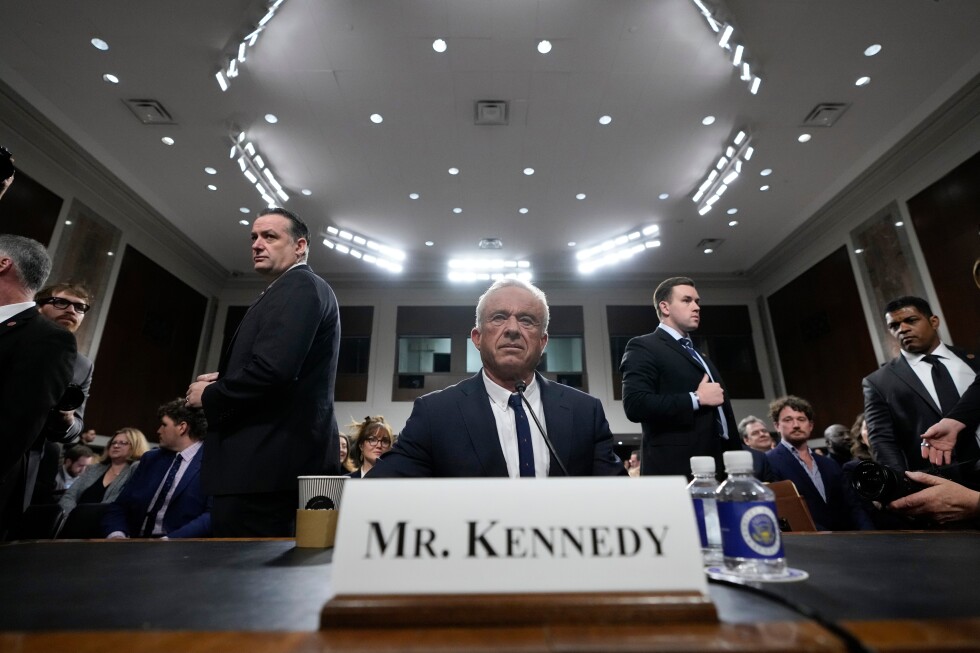
“We’re going to tell them what we know, we’re going to tell them what we don’t know, and we’re going to tell them what we’re researching and how we’re doing it,” Kennedy told senators last September, while explaining how he intended to make the CDC’s information reliable. “It’s the only way to restore trust in the agency — by making it trustworthy.”

Before entering politics, Kennedy was one of the loudest voices spreading false information about immunizations. Now, he’s trying to fix a trust problem he helped create, said Dr. Rob Davidson, a Michigan emergency physician.

“You fed those people false information to create the distrust, and now you’re sweeping into power and you’re going to cure the distrust by promoting the same disinformation,” said Davidson, who runs a doctor group called the Committee to Protect Health Care. “It’s upside-down.”

Advertisement

Kennedy has wielded the power of his office to take multiple steps that diverge from medical consensus.

Last May, he announced COVID-19 vaccines were no longer recommended for healthy children and pregnant women, a move doctors called concerning and confusing.

In November, he directed the CDC to abandon its position that vaccines do not cause autism, without supplying new evidence. And earlier this year, the CDC under his leadership reduced the number of vaccines recommended for every child, a decision medical groups said would undermine protections against a half-dozen diseases.

Kennedy also has overhauled his department through canceled grants and mass layoffs. Last summer, Kennedy fired his new CDC chief after less than a month over disagreements about vaccine policy.

Advertisement

Confusion emerges as trust erodes

Some have applauded the moves. But surveys suggest many Americans have had the opposite reaction.

“I have much less trust,” said Mark Rasmussen, a 67-year-old retiree walking into a mall in Danbury, Connecticut, one recent morning.

Shocked by Kennedy’s dismantling of public health norms, professional medical groups have urged Americans not to follow new vaccine recommendations they say were adopted without public input or compelling evidence.

The American Academy of Pediatrics, along with more than 200 public health and advocacy groups, urged Congress to investigate how and why Kennedy changed the vaccine schedule. The American Medical Association, working with the University of Minnesota’s Vaccine Integrity Project, this week announced a new evidence-based process for reviewing the safety of respiratory virus vaccines — something they say is needed since the government stopped doing that kind of systematic review.

Advertisement

Many Democratic-led states also have rebuffed Kennedy’s policies, even creating their own alliances to counter his vaccine guidance.

“We see burgeoning confusion about which sources to trust and about which sources are real. That makes decision-making on an individual level much harder,” said Dr. Megan Ranney, dean of the Yale School of Public Health.

She said she worried the confusion was contributing to the recent rise in diseases like whooping cough and measles, which were once largely eliminated in the U.S.

Surveys indicate growing public wavering over support for the measles-mumps-rubella vaccine. Although a large majority of people support giving it to children, the proportion declined significantly in just over nine months, according to Annenberg research. An August 2025 survey finds that 82% would be “very” or “somewhat” likely to recommend that an eligible child in their household get MMR vaccine, compared with 90% in November 2024.

Advertisement

Surveys show trust is declining again

New findings from the health care research nonprofit KFF in January show that 47% of Americans trust the CDC “a great deal” or “a fair amount” to provide reliable vaccine information, down about 10 percentage points since the beginning of Trump’s second term.

Trust among Democrats dropped 9 percentage points since September, to 55%, the survey found. Trust among Republicans and independents hasn’t changed since September, but it has declined somewhat among both groups since the beginning of Trump’s term.

Even among MAHA supporters, the poll shows, fewer than half say they trust agencies like the CDC and FDA “a lot” or “some” to make recommendations about childhood vaccine schedules.

Gallup surveys also show a drop in Americans who believe the CDC is doing a “good job,” from 40% in 2024 to 31% last year.

Advertisement

Those results came alongside a decline of trust across the government — not just agencies under Kennedy’s oversight. Yet concerns about Kennedy’s trustworthiness also have emerged in the past year. Documents recently obtained by The Associated Press and The Guardian, for example, undermine his statements that a 2019 trip to Samoa ahead of a measles outbreak had “nothing to do with vaccines.” The documents have prompted senators to assert that Kennedy lied to them over the visit.

HHS officials say they are promoting independent decision-making by families while working to reduce preventable diseases. They say reducing routine vaccine recommendations was meant to ensure parents vaccinate children against the riskiest diseases.

HHS did not make Kennedy available for an interview, despite repeated requests. But as he has pledged to restore trust, he’s also urged people to come to their own conclusions.

“This idea that you should trust the experts,” Kennedy said recently on The Katie Miller Podcast, “a good mother doesn’t do that.”

Advertisement

___

AP writer Amelia Thomson DeVeaux in Washington contributed to this report.

___

The Associated Press Health and Science Department receives support from the Howard Hughes Medical Institute’s Department of Science Education and the Robert Wood Johnson Foundation. The AP is solely responsible for all content.

Advertisement

Source link

Advertisement
Continue Reading
Click to comment

Leave a Reply

Your email address will not be published. Required fields are marked *

NewsBeat

How the FBI search warrant to raid the Georgia election office was based on debunked conspiracy theories

Published

on

How the FBI search warrant to raid the Georgia election office was based on debunked conspiracy theories

The FBI document behind an unprecedented raid of an elections office in Georgia, sparked by an election denier close to Donald Trump, echoes allegations about the 2020 presidential election that have circulated for years and faced thorough investigations.

Those investigations did not uncover any evidence of widespread fraud to change the outcome of a race that Trump lost, and the affidavit itself provides no additional evidence to support a claim of fraud, even noting that “many allegations” have already been “disproven.”

“After more than five years, dozens of court cases, and over a year in total control of the federal government, this is all they’ve got?” said elections law expert David Becker, director of the Center for Election Innovation & Research.

“If taken at its word, this entire affidavit at most alleges human error after a late night during a global pandemic, all of which had no impact on the outcome of the race,” he said.

Advertisement

Here is what’s inside the document.

The document supporting the FBI’s raid of an elections office in Georgia echoes years-long allegations about the 2020 election that were previously debunked after state investigations

The document supporting the FBI’s raid of an elections office in Georgia echoes years-long allegations about the 2020 election that were previously debunked after state investigations (AP)

Election deniers lead investigation

The criminal investigation into allegations of fraud and the destruction of records was prompted by former Trump campaign attorney Kurt Olsen with support from witnesses who have promoted debunked conspiracy theories about election administration and the outcome of the 2020 race.

Advertisement

While the search warrant was executed in Georgia, the federal prosecutor whose name is on the document is Thomas Albus, the U.S. Attorney for the Eastern District of Missouri.

Albus, a Trump appointee who was tapped by Attorney General Pam Bondi to investigate elections, is among a fleet of newly hired government lawyers who boosted false claims about the 2020 election or were directly involved with litigation to overturn the results.

The affidavit then notes that the criminal probe “originated from a referral sent by Kurt Olsen, Presidentially appointed Director of Election Security and Integrity.”

Olsen worked closely with Trump’s campaign in 2020 to challenge election results as part of a “Stop the Steal” movement that was largely rejected by courts across the country.

Advertisement
Deputy FBI director Andrew Bailey, center, joined FBI agents during the raid. He is among several prominent election deniers now closely working on a criminal investigation into Trump’s loss in Georgia in 2020

Deputy FBI director Andrew Bailey, center, joined FBI agents during the raid. He is among several prominent election deniers now closely working on a criminal investigation into Trump’s loss in Georgia in 2020 (REUTERS)

He was later sanctioned by a federal judge for “false, misleading and unsupported factual assertions” in support of Republican Kari Lake’s unsuccessful attempt to overturn her loss in the 2020 race for Arizona governor.

Olsen also spoke with Trump on January 6 as a mob of the president’s supporters stormed the Capitol and breached the halls of Congress.

Deputy FBI director Andrew Bailey, the former attorney general of Missouri who publicly endorsed the president’s false narrative that the election was stolen, joined agents during the Georgia raid.

Advertisement

The FBI also called on Clay Parikh, who had joined Lake’s failed effort to reverse her loss in the Arizona governor’s race.

He is now a special government employee in the Trump administration, and the FBI relied on his analysis of Fulton County’s results to pursue the investigation, according to the affidavit.

The FBI seized Georgia voting records and other documents from the 2020 election as part of a criminal investigation into Trump’s loss in the state

The FBI seized Georgia voting records and other documents from the 2020 election as part of a criminal investigation into Trump’s loss in the state (REUTERS)

The affidavit also lists several witnesses whose names are redacted, though descriptions of their allegations and activities match those from State Election Board members and other figures who denied the results of the 2020 election and promoted conspiracy theories about the vote count.

Advertisement

FBI alleges ‘deficiencies or defects’ that were previously debunked

The document states that the investigation involves two statutes — one concerning the destruction of election records and another that makes it a crime to “knowingly and willfully deprive” residents of a “fair and impartially conducted election process.”

Election law experts say the rest of the document provides no evidence to support a claim of fraud; Georgia’s ballots were counted three times, three different ways, following the election and challenges withstood scrutiny each time.

The FBI is instead investigating five alleged “deficiencies or defects” from those recounts, according to the affidavit.

Advertisement

Those allegations include missing images of ballots, ballots that were scanned multiple times, inconsistent vote counts from a hand recount, ballots that could have been improperly added, and changing vote totals during a machine recount.

Only one of those allegations — that ballots may have been scanned twice during a Trump-requested recount — had previously been “partially substantiated” by law enforcement officials, who have repeatedly affirmed Trump’s loss in the state.

Election workers and officials in Georgia came under severe scrutiny during the 2020 election, with activists and Trump allies alleging widespread fraud

Election workers and officials in Georgia came under severe scrutiny during the 2020 election, with activists and Trump allies alleging widespread fraud (Getty Images)

One allegation alleges “inconsistent” ballot tallies during a Risk Limiting Audit, which Georgia’s secretary of state addressed in 2022. In its report, the office noted that the audit is designed to confirm a winner, not deliver a precise count of more than 5 million ballots, which “is impossible.”

Advertisement

“Human counting will always produce errors,” the report said. “These differences are well within the expected variances in a computer count vs. a hand count and further support the overall conclusion of the hand audit — that the initial reported result in the presidential contest in Georgia was correct.”

The FBI also notes that there were ballots “that had never been creased or folded,” which could happen for a number of reasons, including damaged ballots that cannot be read electronically and must be duplicated, or certain overseas and military ballots that cannot fit into scanners.

In 2023, the secretary of state’s office determined that “investigators could not substantiate the allegations of ‘pristine’ ballots being counted during the risk-limiting audit.”

“This affidavit was much weaker than I suspected — no allegations of intent, no allegations of election theft, no allegations of foreign interference, and no allegations that the statute of limitations doesn’t apply,” according to Becker, the elections law expert.

Advertisement
Trump supporters protested outside the State Farm Arena where Fulton County elections officials and workers counted ballots during the 2020 election

Trump supporters protested outside the State Farm Arena where Fulton County elections officials and workers counted ballots during the 2020 election (AFP via Getty Images)

What about the statute of limitations?

One of the crimes cited by the affidavit requires election officials to keep records for 22 months after an election, so the statute of limitations would expire five years after that.

The 2020 election falls well outside of that five-year window, and the affidavit concerns activities that happened in the immediate aftermath of that contest, not in the two years that followed.

Advertisement

And while it is technically possible that election officials could have disposed of those records within that time, the affidavit does not provide any allegations that they did.

“That raises serious questions about probable cause for the investigation and why such an intrusive action is being taken more than five years after the election was certified,” according to Michael McNulty, policy director with Issue One.

“This raid fits a growing pattern by the administration to exert executive control over elections, despite the Constitution’s clear assignment of election administration to the states and Congress,” he added. “Targeting election officials and records years later risks undermining confidence in the process for future elections. If allowed to stand, this could set a troubling precedent that would chill election administration nationwide and invite more executive interference.”

Source link

Advertisement
Continue Reading

NewsBeat

Zelensky accuses Winter Olympics of ‘playing into Russia’s hands’

Published

on

Zelensky accuses Winter Olympics of ‘playing into Russia’s hands’

Good morning and welcome to our live coverage of the men’s skeleton heats on day six of the Winter Olympics where all eyes are on Vladyslav Heraskevych.

Throughout practice, Heraskevych has worn a specially designed ‘helmet of memory’ which depicts the faces of 24 Ukrainian athletes killed since Russia’s invasion of the country in 2022.

The 27-year-old has vowed to continuing wearing the helmet in the first round of competition proper this morning, something which the International Olympic Committee say would contravene their rules forbidding political statements.

Advertisement

The IOC has offered Heraskevych the chance to display the helmet before and after his skeleton run, but they regard the field of play as sacrosanct.

When asked directly if they would disqualify Heraskevych or bar him from competing, the IOC said they would follow their rules.

Of course, it would be a considerable political and diplomatic own goal by the IOC were they to disqualify a Ukrainian athlete but on the other hand, allowing the rules to slide could open the floodgates to more political statements of various stripes.

It puts the organisers in something of a bind then, and it promises to be a tense moment when Heraskevych walks out to compete.

Advertisement

As Jeremy Wilson reports, the IOC held urgent talks on Wednesday with Heraskevych and begged him to stand down.

“I will not betray these athletes,” Heraskevych said. “These athletes sacrificed their lives, and because of this sacrifice, I am able to be here, so I will not betray them.

“An Olympic medal would be huge. Since my childhood, it’s my big dream. But in this time, in time of full-scale war, some things are really more important than medals. At this point, I would say that a medal is worthless in comparison to people’s lives, and I believe in comparison to memory of these athletes.”

Source link

Advertisement
Continue Reading

NewsBeat

Pam Bondi’s Very Public Crash Out

Published

on

Pam Bondi’s Very Public Crash Out

!function(n){if(!window.cnx){window.cnx={},window.cnx.cmd=[];var t=n.createElement(‘iframe’);t.display=’none’,t.onload=function(){var n=t.contentWindow.document,c=n.createElement(‘script’);c.src=”//cd.connatix.com/connatix.player.js”,c.setAttribute(‘async’,’1′),c.setAttribute(‘type’,’text/javascript’),n.body.appendChild(c)},n.head.appendChild(t)}}(document);(new Image()).src=”https://capi.connatix.com/tr/si?token=19654b65-409c-4b38-90db-80cbdea02cf4″;cnx.cmd.push(function(){cnx({“playerId”:”19654b65-409c-4b38-90db-80cbdea02cf4″,”mediaId”:”906c2cf9-6680-4659-8e9c-697b13983090″}).render(“698e34e1e4b0967ff009d559”);});

Source link

Continue Reading

NewsBeat

Snow maps reveal 95% of UK buried in Valentine’s Day blizzard including London

Published

on

Daily Mirror

Several inches of snow could settle across the UK this weekend as weather maps reveal a blizzard will bury several major cities including London, Birmingham and Manchester

Shocking new weather maps suggest as much as 95 per cent of the UK could see snow settled on the ground following a blizzard starting on Valentine’s Day this weekend.

Advertisement

The GFS weather model shows the south-west of England, parts of Wales, western parts of Scotland and all of Northern Ireland will see snow at around 9pm on Saturday, as a storm moves in from the Atlantic.

At around midnight on Valentine’s Day, snow is seen falling across the entire length of the UK – roughly 600 miles – from the south coast of England to the far north of Scotland. Glasgow, Manchester, Birmingham and Cardiff can all expect flurries around this time.

READ MORE: Met Office says ‘widespread snow is likely this weekend’ and names exactly whereREAD MORE: Snow maps reveal when twin blizzards will bury Brits as England faces 19 inches

Advertisement

The storm will then continue eastward, the maps suggest, consuming almost all of central England and parts of the south by 3am. London could face snow from around this time too, although the most intense flurries are expected in Scotland.

At 6am on Sunday, maps show East Anglia and the south-east will face more heavy snow, with wintry showers still impacting London. The Pennines and the north-east appear to be in the firing line as well.

Snow coverage maps show roughly 95 per cent of the UK shaded in purple by 9am on Sunday – showing snow settled on the ground – with only the far south-west of England missing out.

Advertisement

Snow depth charts reveal the greatest accumulations will be in the Scottish mountains, where 24cm (nine inches) is on the cards. Parts of northern England could see 6cm (two inches), with 4cm (1.5 inches) coming in Wales and 2cm (0.7 inches) in the Midlands.

BBC Weather suggests snow could fall in places on both Saturday and Sunday too. Its forecast states: “A crisp, bright day on Saturday, excluding some lingering wintry showers on east coasts in the morning.

“Turning cloudier in the west later in the afternoon and evening. Overnight and into Sunday morning, turning windy as a band of rain moves in from the west, falling as snow initially. Sunday afternoon and Monday will see a mix of sunny spells and showers.”

Advertisement

BBC Weather also expects some snow tomorrow. The forecast adds: “Tomorrow, rain across the south of England and Wales with a chance for snow over the hills. Cold in Scotland and North England with sunny spells and snow showers. Dry and bright for Northern Ireland.”

The Met Office expects snow around the coasts on Friday. It says: “Rain continues to move southwards with Northern Ireland and Scotland seeing some sunshine. Snow showers around the coasts. Staying cloudy and wet across the south but eventually clearing later.”

The national weather agency says “widespread” snow could come on Sunday. Its forecast states: “Bright skies with sunny spells on Saturday but feeling much colder than in recent days. Turing wetter on Sunday with widespread snow likely across the north. Unsettled into next week.”

Source link

Continue Reading

NewsBeat

M66 Northbound reopened following an earlier incident

Published

on

M66 Northbound reopened following an earlier incident

The incident occurred at around 4:45pm this evening on the M66 Northbound between Junction one (Ramsbottom) and the A56.

The incident caused around 50 minutes of delays with both lanes initially being closed.

One lane was eventually reopened before the road was opened up fully at around 18:45.

Advertisement

A National Highways spokesperson confirmed that the road has now been reopened and the collision resulted in only minor injuries to those involved.

Emergency services were called to the scene, but there were no serious injuries or fatalities.

Source link

Advertisement
Continue Reading

NewsBeat

Why phone signal in Northern Ireland is so poor

Published

on

Belfast Live

While 98.8% of Northern Ireland homes have 4G coverage from at least one mobile operator, the figure drops significantly when looking for coverage from all operators

On Thursday, MPs debated a motion which called on the Government and service providers to help improve mobile connectivity in rural areas across the UK

Advertisement

While geographic coverage is improving, Northern Ireland trails behind England, Scotland, and Wales for consumer choice and reliable indoor connection.

A key part of this comes down to differences in our planning laws, which are preventing service providers from erecting the required number of masts to expand coverage across Northern Ireland.

How does the phone coverage in NI compare to the rest of the UK?

According to a House of Commons Library briefing, data from July 2025 reveals a stark divide between urban and rural connectivity. While 98.8 per cent of Northern Ireland homes have 4G coverage from at least one mobile operator, the figure drops significantly when looking for coverage from all operators.

Access to all four major networks (EE, O2, Vodafone, and Three) is crucial for consumer choice and market competition. In Northern Ireland, only 75 per cent of premises have indoor 4G coverage from all four operators, which is the lowest figure in the UK.

Advertisement

The situation is most acute in the countryside. Only 50 per cent of rural premises in Northern Ireland have indoor 4G coverage from all operators. By comparison, 57 per cent of rural homes in England and 67 per cent in rural Scotland have full operator access.

Voice call reliability is also suffering in rural areas, with just 5 per cent of rural premises in Northern Ireland able to make indoor calls on all four networks.

What impact have NI’s planning laws had on the rollout?

The briefing suggests that differences in planning regulations may be a contributing factor to the slow rollout of infrastructure.

While the UK Government has introduced reforms in England to allow taller and wider masts to be built more easily, planning is a devolved matter. Notably, Northern Ireland does not have a “prior approval” procedure for building mobile masts.

Advertisement

In England and Scotland, “prior approval” allows developers to bypass the full planning application process for certain infrastructure, speeding up deployment. The lack of this mechanism in Northern Ireland means operators often face a more rigorous and slower planning process.

What is being done to tackle the poor signal?

Efforts are underway to close the gap through the Shared Rural Network (SRN), a £1 billion deal between the UK government and mobile operators to eliminate “not-spots”.

Mobile Network Operators have signed legally binding commitments to meet specific coverage targets by the end of January 2027.

Forecasts indicate that upon completion of the SRN, 4G geographic coverage from all operators in Northern Ireland is expected to rise to 85 per cent of the landmass, up from a pre-SRN baseline of 79 per cent.

Advertisement

However, the report notes that commercial viability remains a major hurdle. Low population density and difficult topography in rural areas make it expensive for operators to install masts, leaving Northern Ireland’s most remote communities reliant on government-subsidised interventions to stay connected.

For all the latest news, visit the Belfast Live homepage here and sign up to our daily newsletter here.

Source link

Advertisement
Continue Reading

NewsBeat

Swiss bar owners confronted by fire victim families

Published

on

Swiss bar owners confronted by fire victim families

The owners of a Swiss bar, where a deadly fire broke out on New Year’s Eve, killing 41 people and injuring at least 115 others, were heckled by grieving families, as they appeared in court in Switzerland on Thursday.

Jessica and Jacques Moretti are under criminal investigation for involuntary manslaughter, as well as bodily harm and arson through negligence.

Source link

Continue Reading

NewsBeat

Fact check: Jim Ratcliffe’s claims about population, manufacturing and emissions

Published

on

Fact check: Jim Ratcliffe’s claims about population, manufacturing and emissions

Claim: “There’s not much manufacturing. If you look at the UK, about 25 years ago – no, about 1995 I think it was – about 25% of our GDP was manufacturing, and Germany was about the same, 25%. So we’re going back what, 30 years? Today Germany’s still up there, 20-21% of its GDP is manufacturing, in the UK it’s down at about 8%. So manufacturing’s collapsed in the UK.”

Source link

Continue Reading

NewsBeat

To resurrect venerable American chestnuts, scientists turn to genetic testing

Published

on

To resurrect venerable American chestnuts, scientists turn to genetic testing

WASHINGTON (AP) — Billions of American chestnut trees once covered the eastern United States. They soared in height, producing so many nuts that sellers moved them by train car. Every Christmas, they’re called to mind by the holiday lyric “chestnuts roasting on an open fire.”

But by the 1950s, this venerable tree went functionally extinct, culled by a deadly airborne fungal blight and lethal root rot. A new study out Thursday in the journal Science provides hope for its revitalization, finding that the genetic testing of individual trees can reveal which are most likely to resist disease and grow tall, thus shortening how long it takes to plant the next, more robust, generation.

A smaller gap between generations means a faster path to lots of disease-resistant trees that will once again be able to compete for space in Eastern forests. The authors hope that can occur in the coming decades.

“What’s new here is the engine that we’re creating for restoration,” said Jared Westbrook, lead author and director of science at The American Chestnut Foundation, which wants to return the tree to its native range that once stretched from Maine to Mississippi.

Advertisement

The American chestnut, sometimes called the “redwood of the East,” can grow quickly and reach more than 100 feet (30 meters), produce prodigious amounts of nutritious chestnuts and supply lumber favored for its straight grain and durability.

But it had little defense against foreign-introduced blight and root rot. Another type of chestnut, however, had evolved alongside those diseases. The Chinese chestnut had been introduced for its valuable nuts and it could resist diseases. But it isn’t as tall or competitive in U.S. forests, nor has it served the same critical role supporting other species.

So, the authors want a tree with the characteristics of the American chestnut and the disease resistance of the Chinese chestnut.

That goal is not new — scientists have been reaching for it for decades and made some progress.

Advertisement

But it has been difficult because the American chestnut’s desirable traits are scattered across multiple spots along its genome, the DNA string that tells the tree how to develop and function.

“It’s a very complex trait, and in that case, you can’t just select on one thing because you’ll select on linked things that are negative,” said John Lovell, senior author and researcher at the HudsonAlpha Genome Sequencing Center.

Breed for disease resistance alone and the trees get shorter, less competitive.

To deal with this, the authors sequenced the genome of multiple types of chestnuts and found the many places that correlated with the desired traits. They can then use that information to breed trees that are more likely to have desirable traits while maintaining high amounts of American chestnut DNA — roughly 70% to 85%.

Advertisement

And genetic testing allows the process to move faster, revealing the best offspring years before their traits would be demonstrated by natural growth and encountering disease. The closer the gap between generations, the faster gains accumulate.

Steven Strauss, a professor of forest biotechnology at Oregon State University who wasn’t involved in the study, said the paper identified some promising genes. He wants scientists to be able to edit the genes themselves, a possibly faster, more precise path to a better tree. In an accompanying commentary piece in Science, he says regulations can bog down these ideas for years.

“People just won’t consider biotech because it is on the other side of this social, legal barrier” and that’s shortsighted, he said.

For people who have closely studied the American chestnut, the work begs an almost existential question: How much can the American chestnut be changed and still be an American chestnut?

Advertisement

“The American chestnut has a unique evolutionary history, it has a specific place in the North American ecosystem,” said Donald Edward Davis, author of the American chestnut, an environmental history. “Having that tree and no other trees would be sort of the gold standard.”

He said the tree was a keystone species, useful to humans and vital to bigger populations of squirrels, chipmunks and black bears — hybrids might not be as majestic or effective. He was pleased that the authors included some surviving American chestnuts in their proposal, but favored an approach that relied on them more heavily.

“Not that the hybrid approach is itself bad, it is just that why not try to get the wild American trees back in the forest, back in the ecosystem, and exhaust all possibilities from doing that before we move on to some of these other methods?” he said.

Lovells said resurrecting the species requires introducing genetic diversity from outside the traditional pool of American chestnut trees. The study authors’ goal is tall, resilient trees and they are optimistic.

Advertisement

“I think if we only select American chestnut (tree genes), period, there’s going to be too small of a pool and we’re going to end up with a genetic bottleneck that will lead to extinction in the future,” said Lovell.

___

The Associated Press receives support from the Walton Family Foundation for coverage of water and environmental policy. The AP is solely responsible for all content. For all of AP’s environmental coverage, visit https://apnews.com/hub/climate-and-environment
Advertisement

Source link

Continue Reading

NewsBeat

More than 2,000 NI families could lose childcare places due to HMRC tax changes

Published

on

Ipso logo

The changes are due to come into effect from April

More than 2,000 families could be impacted by a reduction in the availability of childminders as a result of changes to how the profession is taxed, the head of the Northern Ireland Childminders Association has warned.

Advertisement

Patricia Lewsley Mooney was speaking to Belfast Live after she met with HMRC to raise the concerns of their members regarding changes to the ‘wear and tear’ tax discount as a result of the Government’s introduction of the Making Tax Digital system, which is due to be rolled out from April.

Under the current system, childminders can claim a 10 per cent discount on their tax bill to account for ‘wear and tear’ on their homes caused by operating their businesses.

HMRC have said that those using the new MTD system will be able to see an in-year estimate of how much tax they owe, understand their cash flow better, make more informed financial decisions for their business and reduce the risk of under or overpaying tax and that claiming actual costs may be more beneficial than the flat-rate deduction, ensuring that expenses accurately reflect the valuable work childminders do.

Childminders with a qualifying income of over £50,000 are required to use MTD from April 2026. These childminders, HMRC have said that, like any other business, they can continue to get full tax relief on the business proportion of their expenses when they join MTD, meaning their actual expenses will need to be recorded and deducted.

Advertisement

“Very few childminders in Northern Ireland will be affected this year, because in 26/27 it is anybody earning over £50,000.. Then, from 27/28, it will be £30,000, and by 28/29, it will be anyone earning over £20,000 moving onto the new system. So, while we have had one enquiry from a childminder who earns more than £50,000, it will be next year before we properly start to see the impact,” Patricia said.

“There hasn’t been a good enough lead-in time or understanding of what the process is like.

“We’ve done a UK-wide survey that tells us that 68 per cent of our childminders are still paper-based, so it’s going onto that Making Tax Digital and the cost of that, because many of them won’t have laptops or scanners and some of them don’t even have phones.”

HMRC said that childminders do not currently get a separate allowance from HMRC, and that administrative changes for childminders were announced at the Budget to record keeping and the way some expenses are calculated for childminders in MTD.

Advertisement

They also said that they are aware that childminders are uncertain about how these changes may affect them and may have seen misleading information online. They confirmed that they are supporting customers with a suite of guidance products, direct communications, webinars, live events and social media activity to help them to prepare. and are using targeted paid-for advertising and making direct contact with MTD customers by writing to them to explain the changes and how to prepare.

“Just after Christmas, we were told that the changes were coming in and that they were taking away the 10 per cent ‘wear and tear’ tax discount on childminders without any consultation,” Patricia said.

Patricia Lewsley Mooney refuted the claim by HMRC that childminders will still be able to claim for wear and tear under the new system.

“The only people that will be able to continue are those that are on the different income levels,” she said. “So anybody earning under £50,000 this year can still claim it next January, and those under £30,000 can claim it the following January. That means that anybody earning under 20,000 who will not be in the Making Tax Digital bracket will still be able to continue to claim the 10 per cent.

Advertisement

“My worry is that the majority of our childminders who are maybe earning 20 to £25,000 will decide to lower their capacity and go in under the threshold of £20,000 to be able to claim the 10 per cent wear and tear discount.

“That will put huge strain on a sector which is already straining at the sides with regard to capacity.”

Patricia said that this could have a detrimental impact on the availability of childcare places in Northern Ireland.

“We’ve done our own survey of 833 childminders, asking them how many families they work with. So, if we are saying that half of those decide to leave the sector, which the original survey said, then you’re talking about 2,034 families that would be affected.”

Advertisement

Lagan Valley MLA and member of Stormont’s Education Committee, Michelle Guy, said that the move was “alarming”.

Childminders provide a vital source of childcare for parents in Northern Ireland. This is a sector that’s already under a lot of pressure, and everybody knows there is a childcare crisis. So to introduce a change that would have an impact on childminders to the extent that a number will decide that they can’t afford to be a childminder anymore, it’s something I’m very, very concerned about.

I’m also concerned about how this has been rolled out. They have not engaged at all with our local childminding associations, and they haven’t done any proper impact assessment.

“This seems to have been done v ery quickly on the back of an envelope one day and issued in a statement in December, and that’s not good enough, there’s a real threat in terms of our economy here too with the need for childcare, if you start removing, and losing childminders from the the sector, then that’s going to have an impact on parents and their ability to go to work.

Advertisement

“This may especially impact some parents with kids with special educational needs because the flexibility a nd the type of care they get in a childminding setting will suit a lot of those families a lot better. I’m not sure that the reward they think they’re going to get from it will be worth it, so I just want the HMRC to really meaningfully engage, understand the impact of what they’re doing, and at the very least pause this move right now until we can have more conversations.”

Michelle Guy also expressed concern about the impact this could have on families in rural communities where access to childminders may be limited and called on the Finance and Education Ministers to work together to lobby on behalf of childminders in Northern Ireland.

An HMRC spokesperson said: “All childminders will still be able to claim for the same categories of expenses as they currently do, including wear and tear. Those in MTD may also be able to claim more than they currently do.”

For all the latest news, visit the Belfast Live homepage here and sign up to our politics newsletter here.

Source link

Continue Reading

Trending

Copyright © 2025