

Crypto World
FBI Director Kash Patel Undisclosed Strategy Investment Raises Conflict-of-Interest Questions


FBI Director Kash Patel purchased between $100,001 and $250,000 worth of Strategy stock on November 21, 2025, and did not disclose the transaction until May 26, 2026. It is a gap of more than six months against the STOCK Act’s 45-day reporting requirement.
Why is it being questioned? The delay would be a routine compliance footnote if Strategy were an ordinary holding, but the company sits at the intersection of federal law enforcement, an active DOJ contracting relationship, and the world’s largest publicly listed Bitcoin treasury.
According to federal financial records reviewed by NOTUS, Patel explained the omission in a letter to the Office of Government Ethics, saying the transaction had been “inadvertently omitted” from an earlier filing. Two days later, Deputy Assistant Attorney General William Taylor attributed the delay to a miscommunication and stated that Patel remains in compliance with federal conflict-of-interest rules and that the stock purchase does not create a conflict with his duties as FBI director.
As of today, it is understood that DOJ ethics officials subsequently approved the corrected paperwork.
Discover: The Best Crypto to Diversify Your Portfolio
Kash Patel Under Scrutiny: A $200 Fine, Unenforced, and the Ethics Watchdog Response
Dylan Hedtler-Gaudette, acting vice president of the Project on Government Oversight, said: “Patel’s filing was clearly submitted after the legal deadline, calling it a violation of the STOCK Act.” The law sets a $200 civil penalty for first-time violations by senior executive branch officials, a figure that has drawn sustained criticism for being too low to deter. Although the Department of Justice has not issued any fine against Patel.
The procedural lapse is not isolated. According to NOTUS, more than 30 members of Congress have also filed late crypto disclosure and stock-trading reports under the STOCK Act over the past year. The nominal penalty structure makes voluntary compliance the primary mechanism, which is precisely why watchdog groups argue the existing framework is structurally inadequate for senior law-enforcement officials.
The pattern of senior government officials navigating financial disclosure rules around crypto-linked assets has added political weight to calls for tighter enforcement.
Discover: The Best Token Presales
Why Strategy Makes This a Crypto Market Issue, Not Just an FBI Compliance Story
Strategy, the company formerly known as MicroStrategy, trading under the ticker MSTR, is a Bitcoin Treasury Company and holds 847,363 BTC, a position currently valued at more than $50 billion. That concentration makes MSTR’s equity performance tightly correlated to Bitcoin price action, meaning Patel’s undisclosed position was, in practical terms, a leveraged directional bet on Bitcoin made by the director of the agency responsible for investigating cryptocurrency-related fraud.

Don’t Miss Out on Our $1,000 USDT Airdrop on ByBit
The conflict-of-interest question extends further. Strategy has secured millions of dollars in Department of Justice contracts over the past decade and continues to hold active federal business relationships. The FBI operates under the DOJ and routinely investigates crypto investment fraud, digital asset scams, and illicit blockchain activity.
Patel has publicly amplified the FBI’s crypto enforcement actions in recent months, including posts about major Bitcoin seizures and actions against fraud networks. Understanding the macro conditions that govern Bitcoin’s price trajectory through central bank liquidity cycles makes it clear why a senior official’s directional bet on MSTR is not a neutral financial decision.
DOJ ethics officials concluded the investment does not present a conflict of interest. Watchdog groups argue the opposite: that holding shares in a company with ongoing government contracts, particularly one whose core asset is under active federal law-enforcement scrutiny. It creates the appearance of a conflict regardless of intent.
Discover: The Best Crypto to Diversify Your Portfolio
The post FBI Director Kash Patel Undisclosed Strategy Investment Raises Conflict-of-Interest Questions appeared first on Cryptonews.


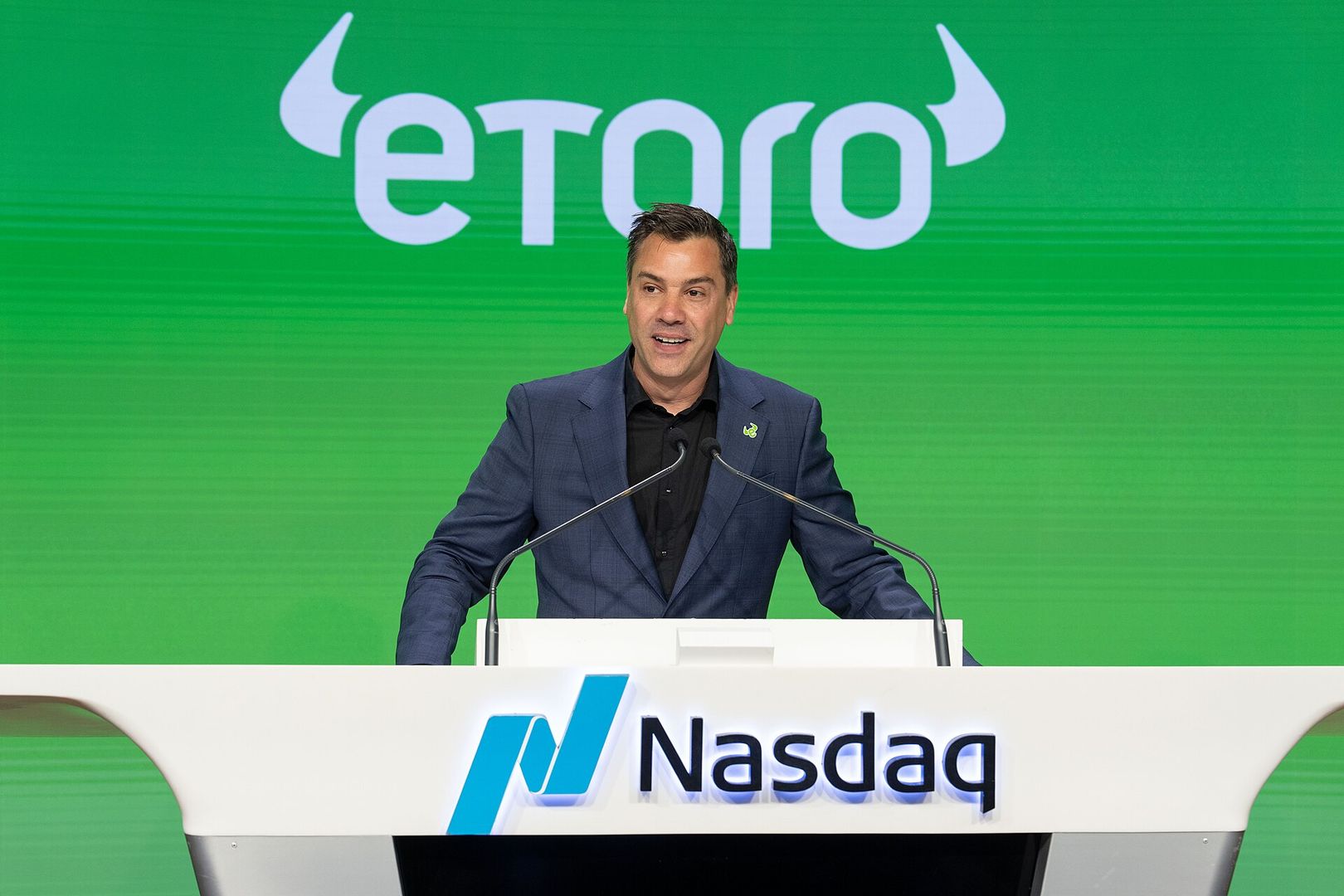
Perpetual futures, once a niche crypto product, have become one of the industry’s fastest-growing markets. Alongside cryptocurrencies like bitcoin, trading platforms are increasingly listing contracts tied to equities, commodities and other real-world assets, blurring the line between crypto-native and traditional financial markets.
Led by former Revolut crypto head Ruslan Fakhrutdinov, Extended had processed more than $245 billion in trading volume as of June and supports more than 100 perpetual markets, according to the company.
The firm said it plans to expand into spot trading, tokenized real-world assets and multi-asset collateral.
“The first phase was building for DeFi natives,” Fakhrutdinov said in a statement. “The next is expanding the infrastructure and partnerships needed to support the next stage of onchain derivatives.”
The investment points to a broader race to become what is best described as the “everything exchange” or “everything app” for financial markets. Coinbase (COIN) has expanded into perpetual futures, Robinhood is pairing tokenized stocks with event contracts and commodity perps, and prediction market operator Kalshi recently entered the perpetual futures business.
As trading increasingly moves onto a blockchain environment, the lines separating brokerages, crypto exchanges and prediction markets are becoming harder to distinguish.
“Capital markets are increasingly converging with digital asset infrastructure,” Zengo managing director Ouriel Ohayon, said in a statement. “eToro’s investment in Extended reflects a mutual conviction that the future of trading will be digital, accessible and can operate 24/7, beyond the traditional trading week.”
[PRESS RELEASE – Victoria, Seychelles Islands, July 2nd, 2026]
Lizex.io, a rapidly growing instant cryptocurrency exchange platform, announces the full launch of its B2B partnership program targeting crypto wallets, exchangers, rate aggregators, and fintech products. The company is opening access to its infrastructure for business partners worldwide.
About the Partnership Program
Lizex.io provides partners with direct access to an API for cryptocurrency exchange, offering aggregated liquidity across 5,000+ coins, including BTC, ETH, XMR, USDT, SOL, BNB, and other major assets. Integration takes just a few hours, backed by dedicated 24/7 technical support.
Lizex.io acts as a liquidity layer for both crypto wallets and aggregators, delivering a continuous stream of competitive quotes and instant order execution on the partner’s side. This allows B2B clients to offer their users best-in-class exchange rates without having to independently aggregate liquidity sources.
Key features for B2B partners:
- Access to 5,000+ crypto coins with deep aggregated liquidity
- Fixed and floating exchange rates at the partner’s discretion
- White-label integration: no Lizex.io branding in the partner’s interface
- Competitive revenue share of up to 60% of transaction fees
- Embeddable widget requiring no development from scratch
- Full transparency: all fees are displayed before transaction confirmation
Market & Positioning
According to the company, in the first six months of 2026, the volume of exchange transactions via the Lizex.io API exceeded $380 million. The platform currently serves more than 40 active B2B partners across 20 countries, with an average swap completion time under 4 minutes.
Lizex.io positions itself as a reliable liquidity backbone for the crypto ecosystem — an alternative to building in-house exchange infrastructure for services looking to add swap functionality without high operational costs.
How to Become a Partner
Companies interested in joining the Lizex.io B2B program can apply via the official website at lizex.io or contact the partnership team directly. A first response is guaranteed within 24 hours.
About Lizex.io
Lizex.io is a non-custodial instant cryptocurrency exchange platform operating since 2024. The service enables fast, secure, and private transactions with no registration required. Lizex.io offers both a retail interface for end users and B2B infrastructure for business clients, including API access, embeddable widgets, and white-label solutions.
Website: https://lizex.io
Telegram: https://t.me/Lizex_Partnership
The post Lizex.io Launches Large-Scale B2B Partnership Program for Crypto Services appeared first on CryptoPotato.
Circle is facing one of its biggest challenges following the announcement of Open USD (OUSD), a new stablecoin backed by major financial and payments companies, including Visa, Mastercard, American Express, BlackRock, and Coinbase.
As speculation grew over what the new initiative could mean for USDC, Circle’s stock came under pressure. It has fallen about 12.7% over the past five trading days.
While incumbents still control the vast majority of the market, industry experts believe OUSD could significantly reshape the competitive landscape.
OUSD vs. USDC
In a conversation with CryptoPotato, Alex Witt, General Partner at Verda Ventures, said that “distribution is king” and value will accrue to built-in distribution networks. He explained,
“Circle, unlike Tether, does not own its primary distribution channels, as evidenced by Circle sharing 90% of USDC reserve yield with Hyperliquid, demonstrating its weak competitive position.”
As a result, Witt believes OUSD could “dramatically erode” the company’s first-mover advantage.
Meanwhile, Trace Finance co-founder and CEO Bernardo Brites described Open USD as “a real structural break” in the stablecoin market.
He said markets read the announcement as a direct threat to Circle, but also noted that skeptics have flagged real execution risks, including bootstrapping liquidity from zero, the lack of trading pairs against major crypto assets, governance friction from coordinating many stakeholders, and a thin fee model that could leave OUSD under-resourced.
Even so, Brites argued that Open USD’s consortium is “bigger than anything the USDG consortium assembled,” referring to the consortium behind Paxos-issued USDG.
“Getting the major card networks, processors like Adyen, and banks like BNY and Cross River behind a single stablecoin is unprecedented. Distribution has always been the hardest problem in stablecoins, and OUSD is launching with more of it than any issuer before.”
Allaire: OUSD’s Model Could ‘Starve an Infrastructure’
Circle CEO Jeremy Allaire, however, pushed back against many of the arguments made in favor of the new stablecoin. In a tweet, Allaire said that stablecoin networks are platform and network effect businesses that tend towards “winner-take-most market structures,” while suggesting that years of network building matter more than newly announced consortia.
Responding to OUSD’s revenue-sharing model, the exec said Circle already shares the majority of its income with distribution partners, and added that “giving away all the income is a recipe for starving an infrastructure.” He also remains skeptical of OUSD’s governance model and argued that the track record of consortium products achieving scale, product-market fit, or even basic product agility is “absolutely dismal.”
“We actually tried this in the early days of USDC, and even with a very small group, ran into endless challenges and complexity.”
While acknowledging the new entrant, Allaire said Circle’s partnership with Coinbase “remains as strong as ever” and went on to say that he expects many of OUSD’s founding members to remain USDC partners and customers.
The post Can Circle Defend Its Stablecoin Lead Against OpenUSD? Experts Weigh In appeared first on CryptoPotato.
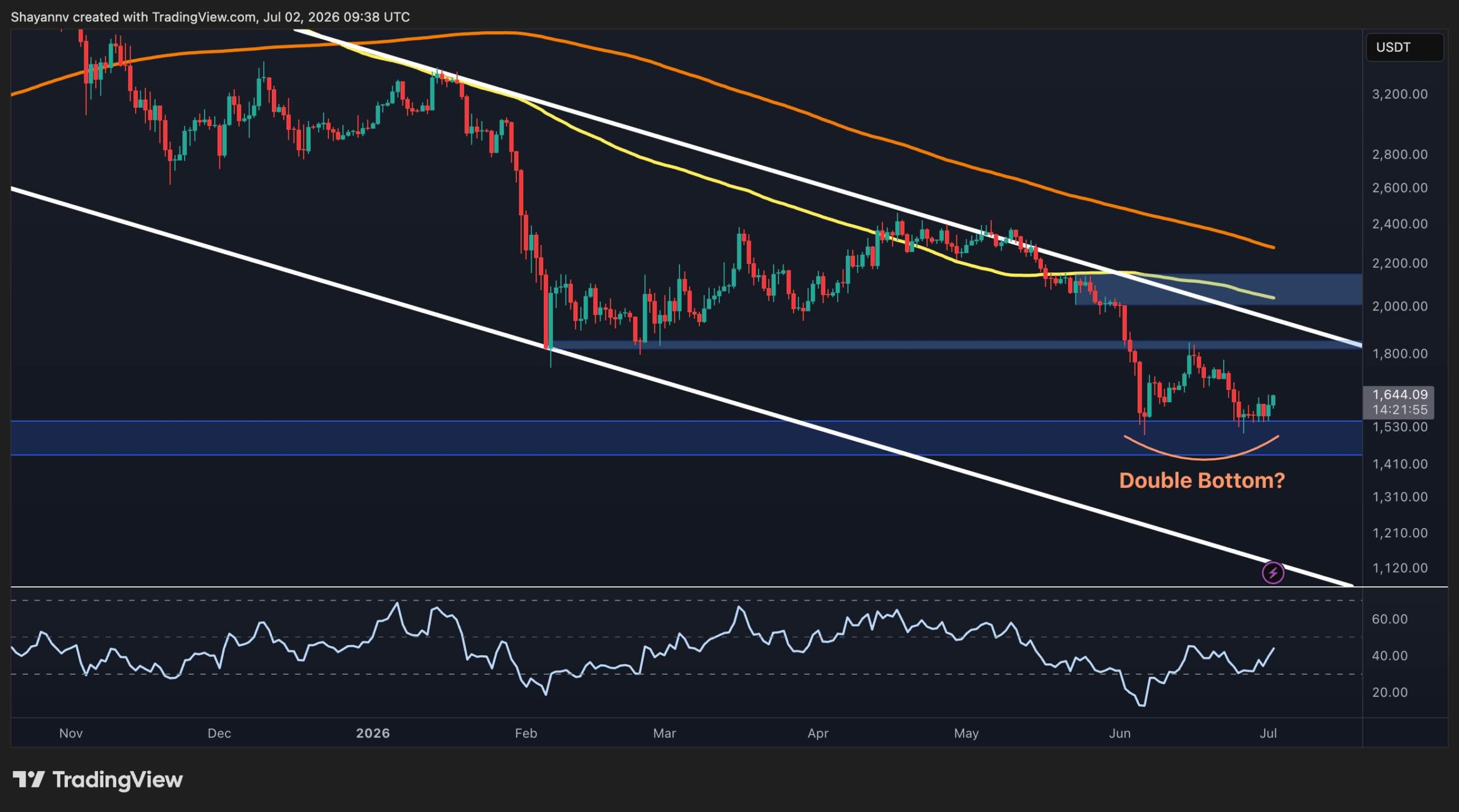
While Ethereum’s overall market structure is still dominated by the sellers, recent price action suggests sellers may be losing momentum after the market was held by the $1.5K support region twice. The emergence of a potential double bottom and improving short-term momentum could pave the way for a relief rally if buyers reclaim the next resistance cluster.
Ethereum Price Analysis: The Daily Chart
On the daily timeframe, ETH is still trading within the same long-term descending channel that has remained intact for months, with both the long-term moving averages sloping lower just above the channel’s higher boundary. The price remains well below the 100-day and 200-day moving averages, which are currently positioned around the $2K to $2.2K region, confirming that the macro trend is still bearish.
After the sharp sell-off a few weeks ago, the cryptocurrency found strong demand inside the $1.5K support zone. The price has now tested this area twice, raising the possibility of a double-bottom formation. Although the pattern is not confirmed yet, the repeated defense of this support suggests that bearish momentum is fading.
The RSI has also recovered from near-oversold conditions and is gradually pushing higher toward the midline, indicating improving momentum without reaching overbought territory.
For the bullish scenario to gain credibility, ETH needs to reclaim the $1.8K resistance zone to validate the double bottom setup. A successful move above that level would also expose the next major supply area around $2K to $2.2K, where the 100-day and 200-day moving averages converge.
Conversely, losing the $1.5K support zone could likely prove catastrophic, as it would invalidate the potential reversal structure and likely trigger a deeper leg lower within the broader downtrend.
ETH/USDT 4-Hour Chart
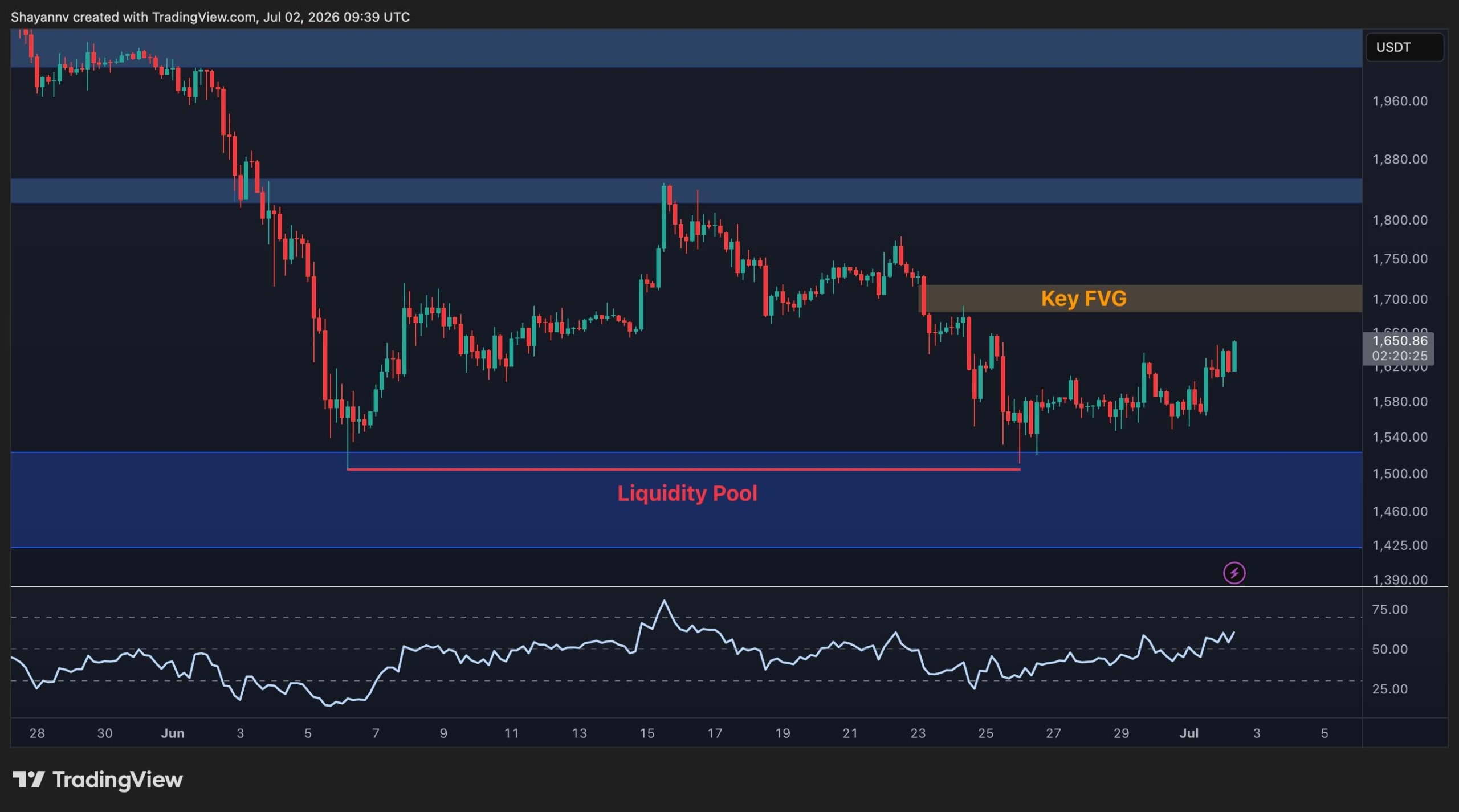
The 4-hour chart presents a clearer short-term picture. The price has built liquidity beneath the $1.5K lows, as buyers stepped back into the market, preventing a lower low. This demand is gradually pushing ETH toward the first area of overhead supply.
The price is currently approaching a key fair value gap at approximately $1.7k. This imbalance coincides with the latest bearish impulse and is likely to attract selling interest. A decisive breakout above this zone would signal improving short-term strength and could open the path toward the $1.85K resistance.
Momentum has also noticeably improved on the lower timeframe, with the RSI climbing toward bullish territory while printing higher lows alongside price. This suggests buyers have regained some control after the recent rebound.
However, unless ETH successfully clears the fair value gap and establishes higher highs, the current advance could still develop into nothing more than a corrective rally within the larger bearish trend.
Sentiment Analysis
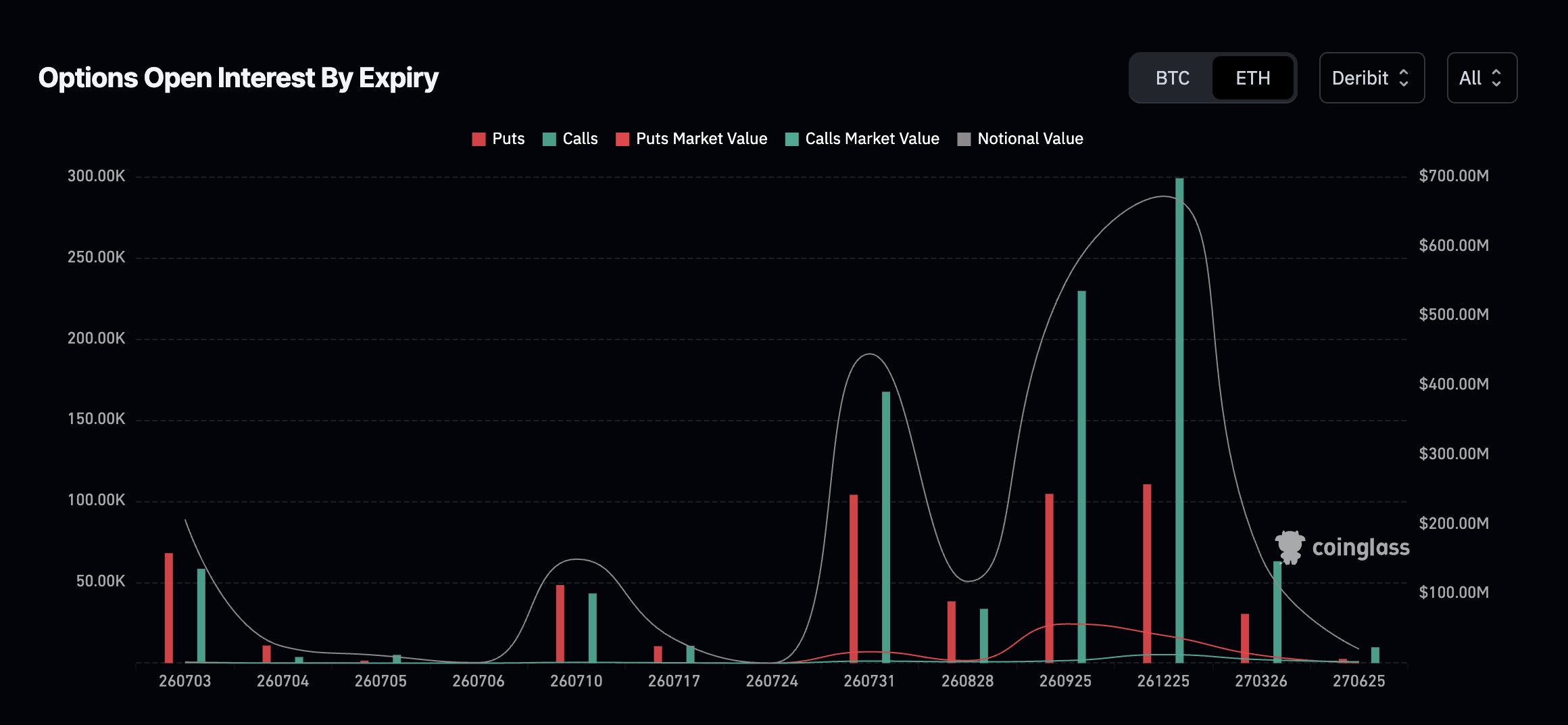
The distribution of open interest in options contracts shows that the largest concentration is positioned around the late December 2026 expiry, where call open interest significantly outweighs put open interest. Several other major expiries, including late September and late July, also display a clear dominance of call positioning.
This skew toward call options suggests that derivatives participants continue positioning for higher prices over the medium to long term despite Ethereum’s recent weakness. At the same time, the substantial notional value concentrated around the larger expiries indicates that these dates could become important volatility catalysts as expiration approaches.
While options positioning alone does not guarantee a bullish outcome, the current distribution reflects a market that still maintains longer-term upside expectations even as spot price remains trapped below major technical resistance. If ETH confirms the developing double-bottom structure and breaks above the nearby resistance cluster, the optimistic options positioning could provide additional tailwinds through improved market sentiment.
The post Ethereum Eyes Relief Rally as Double Bottom Forms Near $1.5K (ETH Price Analysis) appeared first on CryptoPotato.
Pi Coin price has edged higher after Pi Network introduced three ecosystem upgrades, while buyers stepped in following the token’s fresh all-time low and a broader crypto market rebound lifted sentiment.
Summary
- Pi Coin edged higher after Pi Network launched SoloHost, Pi Sign-In, and PiVerify during its Pi2Day event.
- A rebound from oversold conditions lifted PI, but a potential bearish flag continues to weigh on the short-term outlook.
- Large monthly token unlocks and limited exchange listings remain the biggest obstacles to a sustained recovery.
According to data from crypto.news, PI price traded near $0.115 on July 2, up around 0.5% over the past 24 hours after the Pi Core Team unveiled SoloHost, Pi Sign-In, and PiVerify during the Pi2Day event. The move also came as derivatives activity improved, with open interest climbing back above $20 million after falling during last week’s selloff.
Pi Network said SoloHost allows developers to build AI-powered applications on its infrastructure, while Pi Sign-In offers a unified authentication system for decentralized applications. PiVerify gives third-party businesses access to Pi’s network of more than 18 million KYC-verified users, creating an additional use case that requires developers and businesses to interact with the ecosystem.
At the same time, macro conditions favored risk assets. Bitcoin climbed back above $61,000 and briefly traded beyond $62,000 after weaker-than-expected U.S. June jobs data strengthened expectations that the Federal Reserve could cut interest rates later this year. The rally added roughly $50 billion to the total crypto market capitalization and helped several altcoins post intraday gains alongside PI.
Oversold bounce meets bearish chart structure
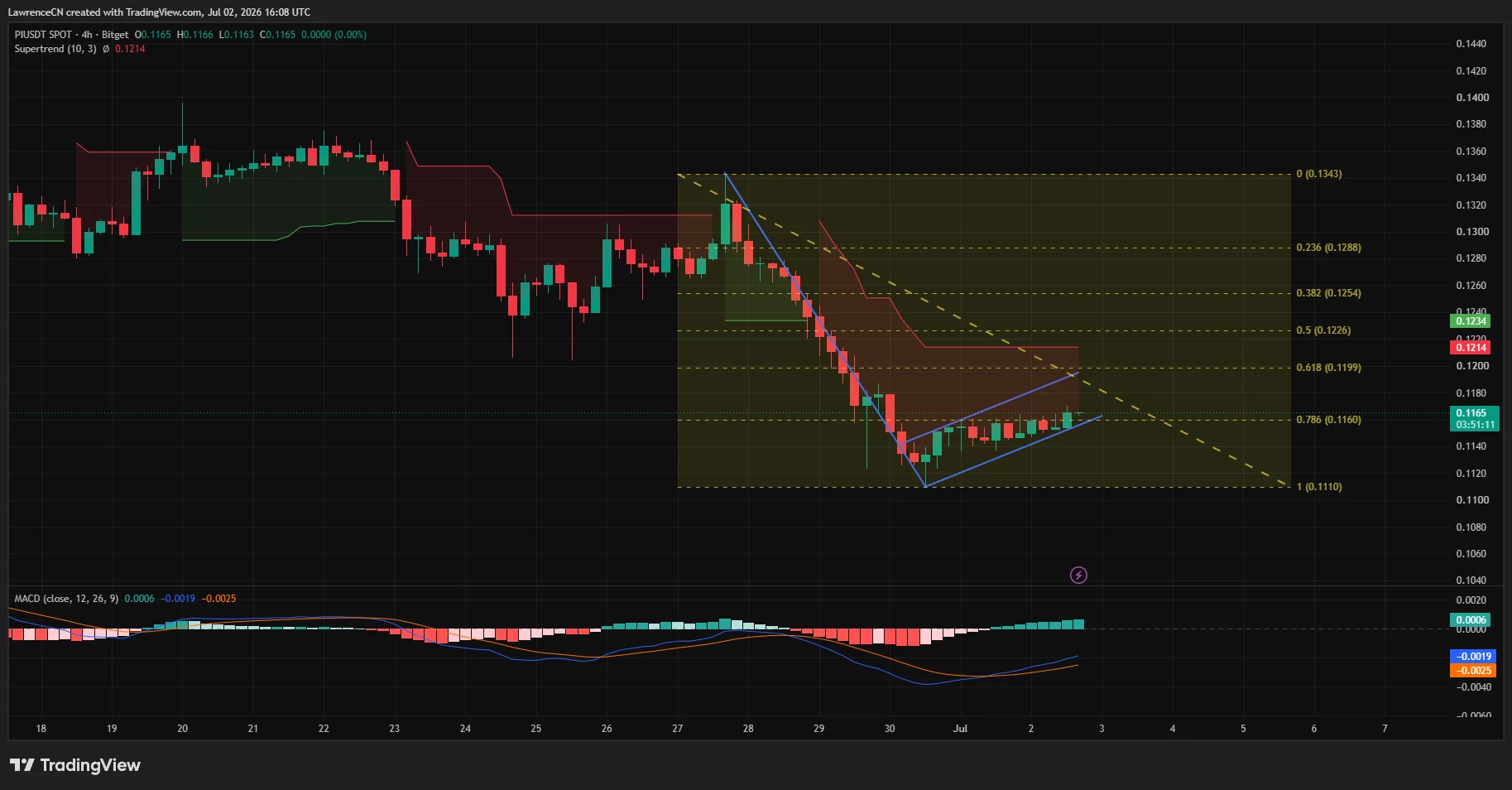
PI’s latest uptick followed a sharp decline that pushed the token to a fresh all-time low near $0.1141 on July 1. The daily Relative Strength Index dropped to around 27 before buyers returned, giving the token a foothold around the $0.115 support zone.
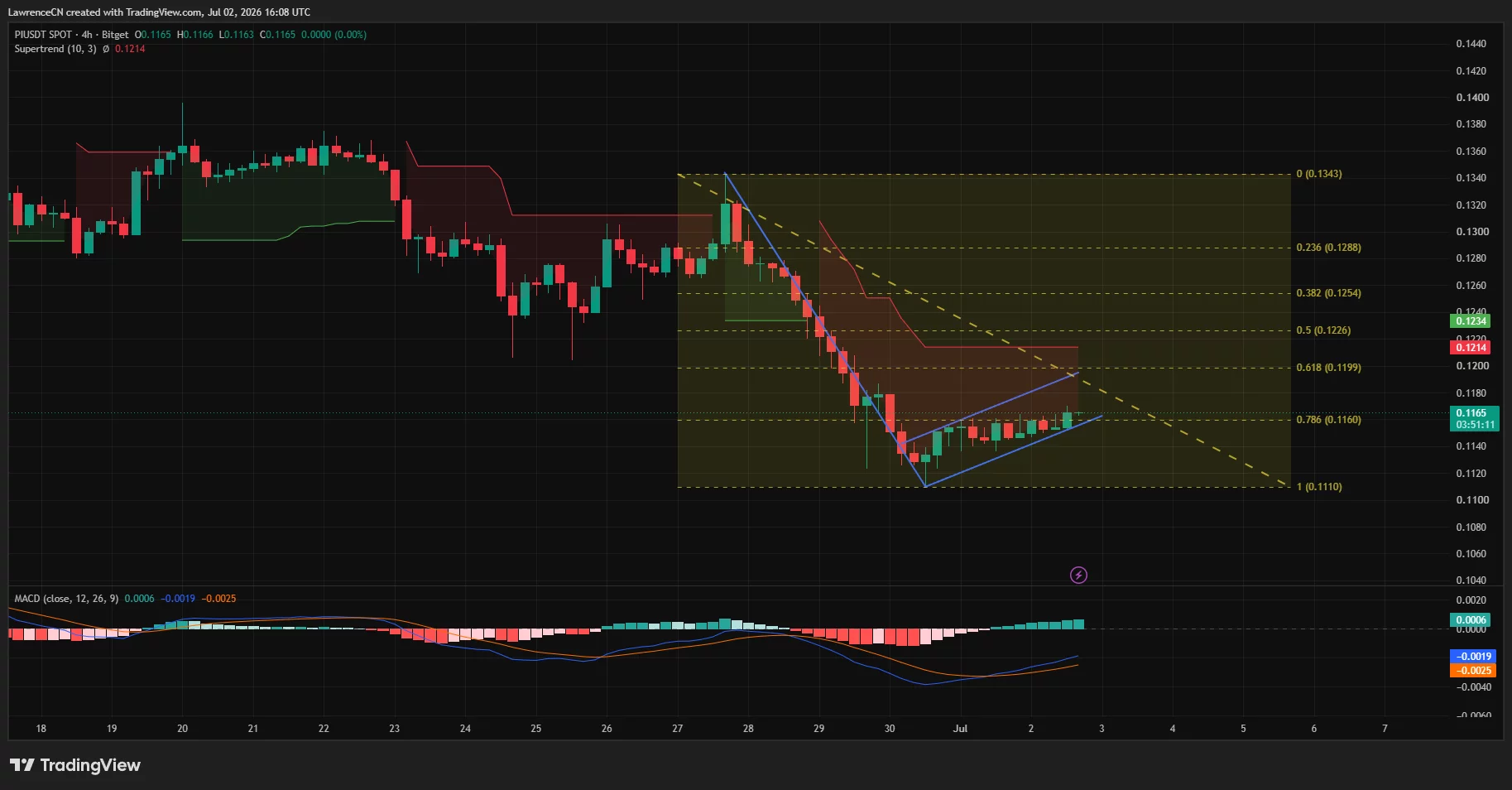
The 4-hour chart, however, continues to favor sellers. PI has formed what appears to be a potential bearish flag, with price moving inside a narrow ascending channel after the steep decline from roughly $0.132. A descending trendline has rejected every recovery attempt since late June, while the Supertrend indicator remains above price near $0.121.
The MACD has started to improve, with the histogram returning above zero and the MACD lines curling upward. Buyers still need to reclaim several resistance levels before the short-term structure changes. Fibonacci retracement levels place the first barriers near $0.116, $0.120, and $0.123, while a move above the descending trendline and Supertrend would weaken the bearish setup.
Token unlocks remain the biggest downside risk
Supply pressure continues to overshadow the network’s new utility releases. PiScan data shows between 76 million and 149 million PI tokens are scheduled to unlock during rolling 30-day periods, while more than 1.7 billion tokens are expected to enter circulation over the next 12 months.
The steady increase in liquid supply has consistently outpaced demand and remains the main reason PI continues to trade near record lows. Liquidity also remains limited because Binance, Coinbase, and Bybit have yet to list the token.
A breakdown below the lower boundary of the four-hour bearish flag and the recent $0.111 low would strengthen the bearish case and expose fresh all-time lows.
On the upside, sustained buying above $0.120-$0.121, supported by growing adoption of SoloHost, Pi Sign-In, and PiVerify, would invalidate the current bearish pattern and open the door for a recovery toward $0.123-$0.125.
Disclosure: This article does not represent investment advice. The content and materials featured on this page are for educational purposes only.
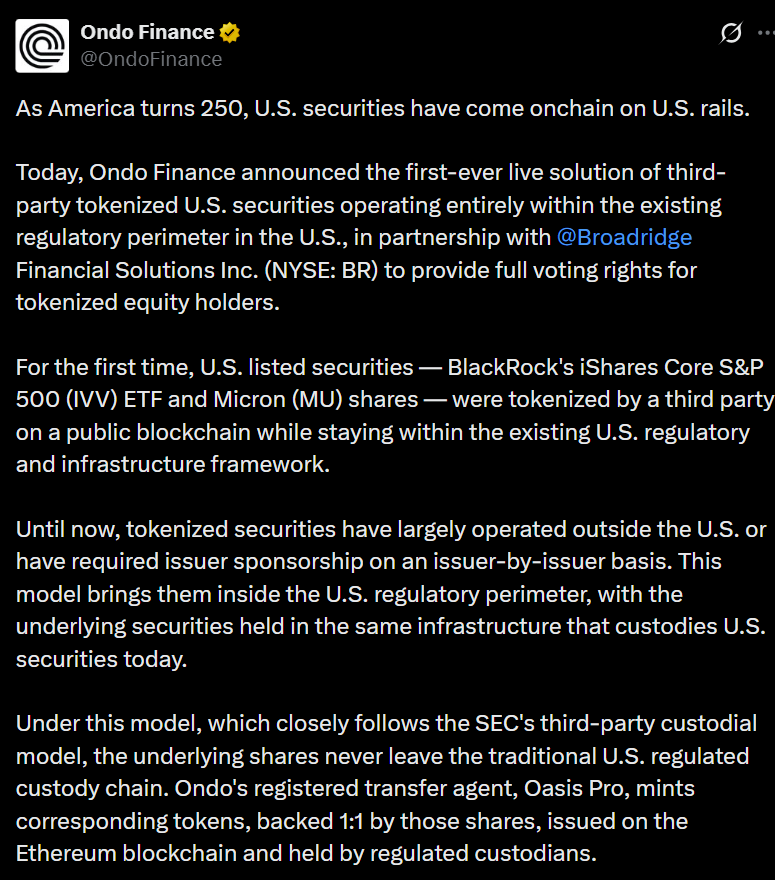
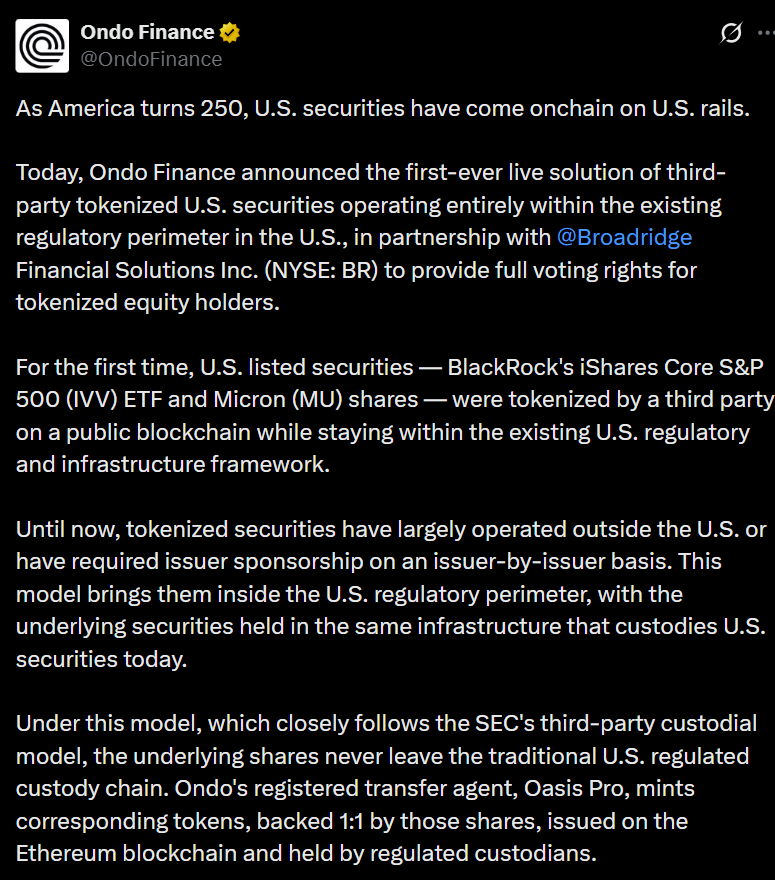
Ondo Finance is adding shareholder voting rights to its tokenized stocks and exchange-traded funds (ETFs) through a partnership with financial infrastructure provider Broadridge, addressing one of the key limitations of blockchain-based securities.
The companies announced Thursday that holders of more than 250 tokenized securities issued through Ondo will be able to participate in proxy voting and access corporate communications, including regulatory filings and other shareholder documents.
The integration uses a Web3-enabled version of Broadridge’s investor communications platform, allowing users to authenticate with blockchain wallets while accessing governance services typically reserved for shareholders in traditional markets.
The move comes as tokenized equities gain momentum among digital asset companies seeking to bring conventional financial products onchain. While tokenization promises faster settlement and around-the-clock trading, questions have remained over whether investors would receive the governance rights that accompany traditional direct stock ownership.
Source: Ondo Finance
Ondo said the governance features will accompany the launch of its first US custodial tokenized securities, including tokenized versions of BlackRock’s iShares Core S&P 500 ETF (IVV) and Micron Technology (MU). The company said the assets are the first issued under the US Securities and Exchange Commission’s third-party custodial framework for tokenized securities.
Related: Blockchain.com deepens onchain stock offerings as tokenized equities market grows
Competition heats up in tokenized equities
The market for tokenized stocks has expanded rapidly this year, as its total value first surpassed $1 billion in March, according to Foresight Ventures. Data published by Ondo on Wednesday showed the market has since grown to $1.67 billion, with nearly 181,000 unique holders.
Ondo is one of several companies competing for a share of the fast-growing market. Backed Finance, which issues tokenized stocks through its xStocks platform, has also expanded its footprint, with its products now available across multiple crypto exchanges and blockchain networks.
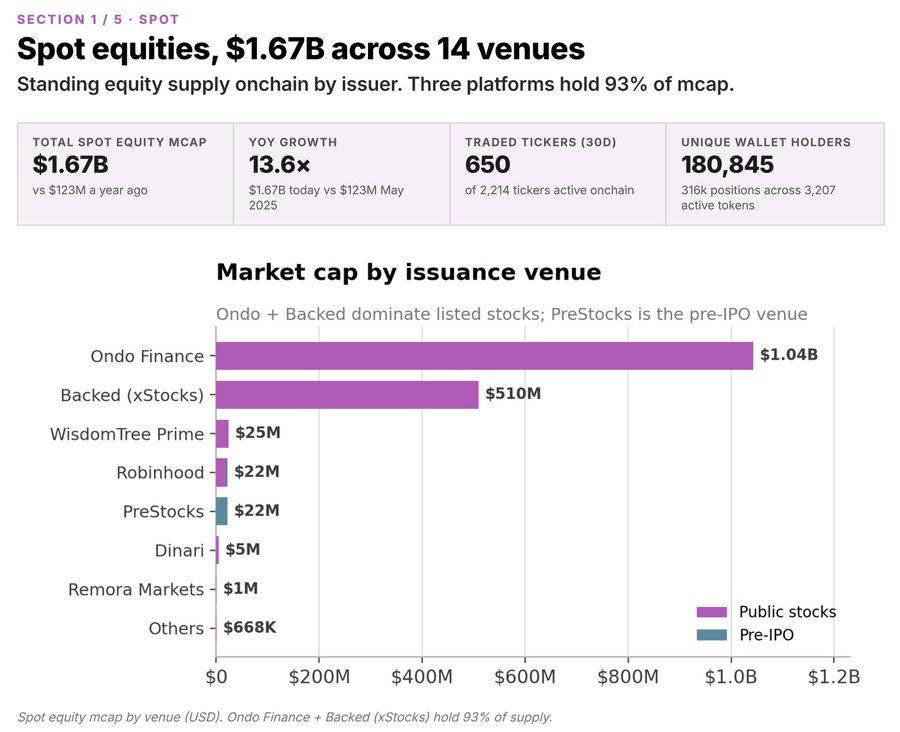
The market for tokenized stocks has grown nearly 14-fold since May 2025. Source: Ondo Finance
Tokenization has emerged as one of crypto’s fastest-growing sectors in 2026, defying broader market weakness. A recent 21shares report attributed the trend to rising institutional adoption and improving infrastructure. Separate data from Binance showed the value of tokenized real-world assets, including stocks, has surged nearly 600% over the past year.
Related: Crypto Biz: The cost of stacking sats
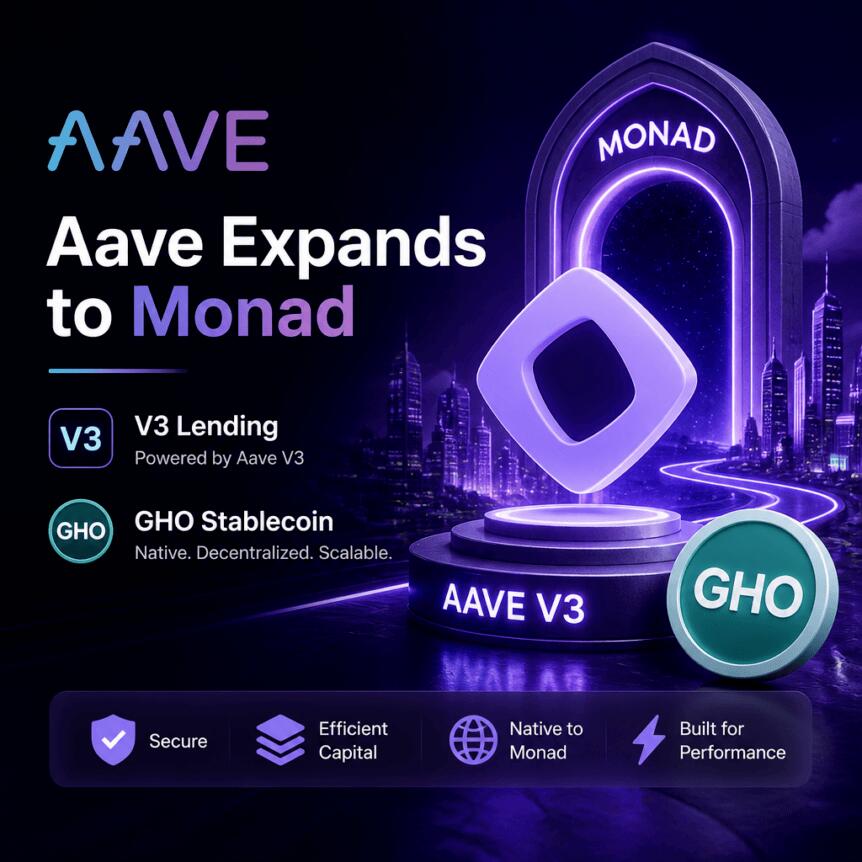
DeFi lending protocol Aave has expanded its multi-chain footprint by deploying its V3 lending markets on Monad, a layer-1 network designed to run Ethereum-compatible applications. The rollout introduces Aave on Monad with 12 supported assets at launch, aiming to give Monad users an established borrowing venue and to accelerate liquidity formation via incentives.
In its announcement on Thursday, Aave said the initial markets include USDT, USDC, Aave’s GHO stablecoin, USDe, mUSD, AUSD, WETH, cbBTC, wstETH, weETH, syrupUSDC, and sUSDe. It also highlighted that this is Aave’s first deployment with Chainlink Smart Value Recapture enabled from day one, a mechanism that redirects part of the value generated from liquidations back to the protocol.
Key takeaways
- Aave V3 is live on Monad with markets for 12 assets, including GHO and multiple stablecoin and wrapped-asset pairs.
- Chainlink Smart Value Recapture is enabled from launch, redirecting a portion of liquidation-generated value back to Aave.
- Governance materials show Monad’s ecosystem support includes $15 million in incentives over the first 12 months and additional GHO commitments.
- A risk assessment cited concerns about early activity on Monad compressing after an initial strong start, with liquidity remaining concentrated in established protocols.
What Aave V3 brings to Monad
The deployment matters for Monad because it moves beyond isolated DeFi activity and adds a battle-tested lending framework with liquidity incentives and a mature stablecoin ecosystem. Aave’s governance proposal notes that Monad is compatible with Ethereum’s application environment, meaning developers can reuse existing Solidity contracts and Ethereum tooling with minimal changes.
Aave also positioned the launch as more than a deployment checklist: it is meant to connect Monad’s users to GHO and to borrowing/lending liquidity designed for sustained market use. In addition to the asset list, Aave underscored the strategic role of Chainlink Smart Value Recapture in its liquidation flows, which can affect how value accrues on the protocol side and how incentives are structured during early adoption.
Incentives to jump-start liquidity—plus a reality check
Aave’s governance documentation indicates that the Monad Foundation committed $15 million in incentives during the first 12 months following activation. The foundation also agreed to acquire and retain 10 million GHO for more than six months, while the Aave DAO committed an additional 500,000 GHO in incentives to support onboarding on Monad.
That funding structure is designed to reduce early friction for borrowers and suppliers, but it does not automatically guarantee long-term utilization. A risk assessment by LlamaRisk pointed to a key uncertainty: while Monad’s mainnet launched on Nov. 24, 2025, network usage reportedly softened after a strong start. As of June 8, LlamaRisk estimated Monad’s total value locked at about $359.5 million, while noting that liquidity remained concentrated in already established protocols.
LlamaRisk backed the Aave deployment with conservative initial parameters, explicitly citing Monad’s short operating history at the time of evaluation. The practical takeaway for investors and traders is that incentive-backed liquidity often looks strong early, but the sustainability of borrow/supply activity will be tested as rewards decline and market participants decide whether to stay without continued subsidization.
Why tokenized assets could make lending more important
The Aave-on-Monad rollout lands as tokenized real-world assets (RWAs) increasingly intersect with DeFi lending strategies. Earlier coverage noted that institutions are looking at ways to bring tokenized assets into DeFi lending markets, and Standard Chartered previously said that tokenized assets entering DeFi could drive deposits into Aave. According to that same earlier reporting, Aave’s deposit base reached roughly $75 billion at its October 2025 peak.
Meanwhile, Centrifuge has discussed bringing tokenized Treasurys, private credit, and AAA-rated collateralized loan obligations to Monad for use across lending, collateral, and secondary-market activity. While the input does not indicate that Centrifuge assets have been integrated into Aave yet, the logic for Monad users is straightforward: if tokenized asset issuers expand into Monad, having an established lending venue such as Aave V3 can lower the barrier for turning those assets into productive borrowing and collateral workflows.
What to watch after the launch
Aave’s deployment gives Monad an immediate, Ethereum-compatible lending destination with a defined set of markets and liquidation value-sharing mechanics. The next signal that will matter most is whether borrowing demand and supply growth persist after early incentives—particularly given LlamaRisk’s observation that activity compressed after Monad’s initial strong start and that liquidity was concentrated in established venues. Readers should watch for changes in utilization across the new Aave markets and for any confirmed integration of tokenized asset products into Aave on Monad as the ecosystem develops.
Pi Network rarely stays out of the spotlight, as the Core Team consistently rolls out ecosystem upgrades and major announcements.
Yet despite the steady stream of updates, the project’s native token has continued to slide, recently tumbling to a fresh all-time low.
The Latest Developments
Pi Network’s community has been desperately waiting for a potential catalyst that could finally trigger a price rebound for PI, with numerous members pinning their hopes on Pi2Day.
The date is symbolic, as it represents the mathematical constant 2π, and it is celebrated annually on June 28. There was widespread speculation that the team would unveil groundbreaking announcements that day, as some even anticipated a listing on Binance.
Instead, Pi Network introduced SoloHost, Pi Sign-in, and PiVerify – tools designed to expand the ecosystem beyond native apps and into AI, digital identity, and third-party services. Several hours ago, the Core Team offered additional clarification on these features, saying:
“Together, these releases point to a broader direction for the ecosystem: Pi products are built both for the Pi ecosystem and to extend Pi services and resources to the external world. This, in turn, enriches and strengthens the Pi ecosystem.”
The Reaction
Some industry participants and entities praised Pi Network for releasing the aforementioned tools. X user Onur described these as “banger updates,” while CiDi Games argued that everything the team shipped on Pi2Day “points in the same direction: real utility, built by the people who use it.”
The community, though, wasn’t unanimously impressed. Many urged the team to fix the ongoing KYC and migration issues first, claiming that these problems are more urgent than new feature releases.
PI Price Outlook
The overall market weakness, and perhaps the emergence of a classic “sell the news” scenario after Pi2Day, has resulted in a further price decline for PI, which fell to a new ATL of just over $0.11 towards the end of June.
As of press time, the token trades at roughly $0.115, representing a minor 0.8% increase on a daily scale and a whopping 96% crash since the historic peak of $3 witnessed at the start of 2025.
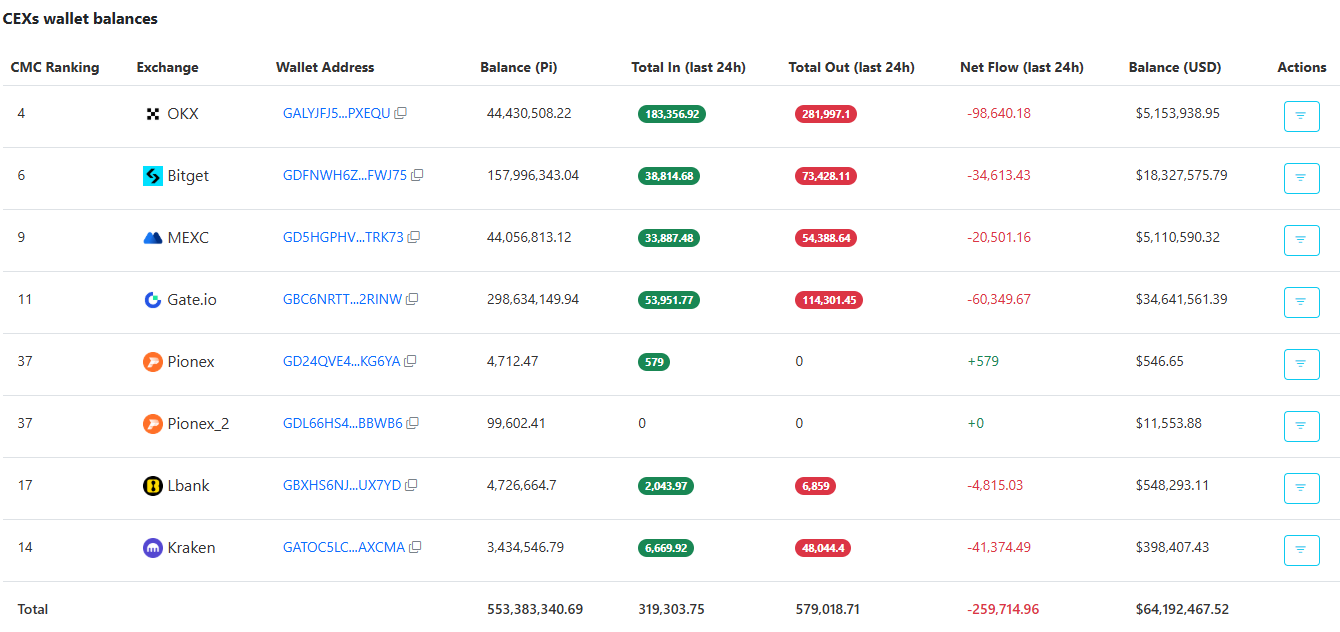
Still, some factors suggest that bears may loosen their grip in the short term. The number of PI coins stored on crypto exchanges has decreased by about 260,000 over the past day, bringing the total to 553.3 million. Such a trend usually leads to reduced selling pressure.
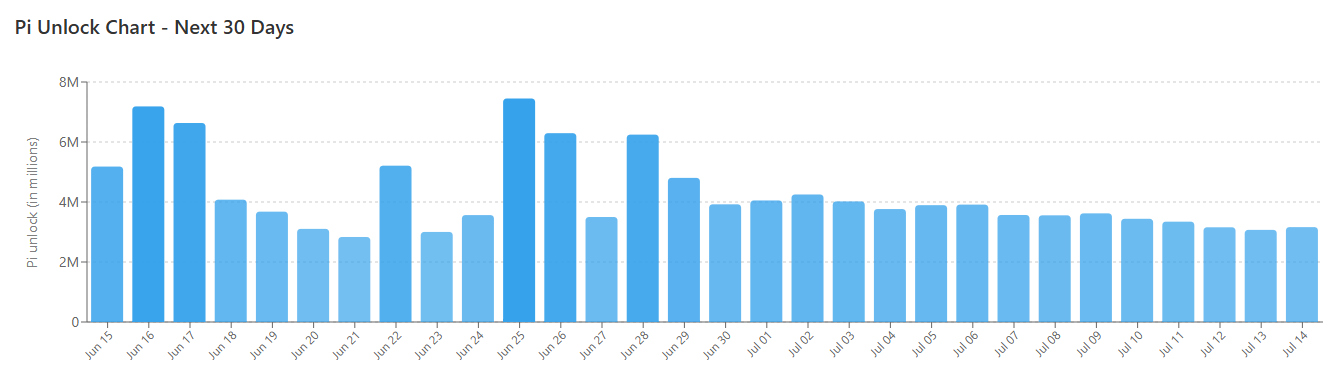
The upcoming token unlocks are also worth monitoring. Roughly 127.5 million PI are scheduled for release over the next 30 days, with an average daily unlock of 4.25 million. This is far less aggressive than in previous months and may help set the stage for a period of price stabilization.
The post Pi Network (PI) News Today: July 2 appeared first on CryptoPotato.
Decentralized finance (DeFi) platform Aave has deployed its V3 lending protocol on Monad, expanding the layer-1 blockchain’s lending ecosystem with support for 12 assets at launch.
On Thursday, Aave announced that the initial market supports USDT0, USDC, Aave’s GHO stablecoin, USDe, mUSD, AUSD, WETH, cbBTC, wstETH, weETH, syrupUSDC and sUSDe. It is also Aave’s first deployment with Chainlink Smart Value Recapture enabled from day one, allowing part of the value generated from liquidations to be redirected back to the protocol.
The deployment expands Aave’s multichain lending network while giving Monad users and developers access to an established borrowing market, Aave’s GHO stablecoin and liquidity incentives intended to support early adoption.
Monad is compatible with Ethereum’s application environment, allowing existing Solidity contracts and Ethereum tooling to be used with minimal changes, according to Aave’s governance proposal.
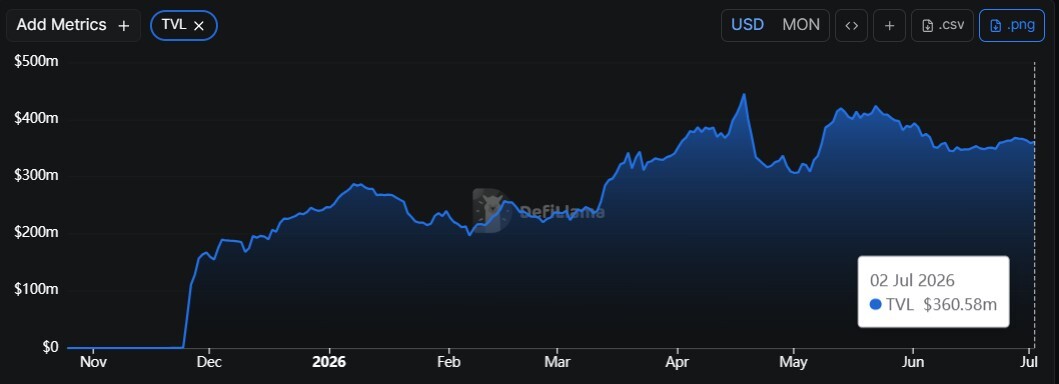
Monad’s total value locked as of Thursday. Source: DefiLlama
Aave deployment tests Monad’s liquidity ambitions
Aave’s governance documents show that the Monad Foundation committed $15 million in incentives during the first 12 months after activation. The foundation also agreed to acquire and retain 10 million GHO for over six months, while Aave DAO committed another 500,000 GHO in incentives to support adoption on Monad.
These incentives could help establish initial liquidity. However, user activity will need to persist after incentives decline. According to a risk assessment by LlamaRisk, Monad’s mainnet launched on Nov. 24, 2025, and had about $359.5 million in total value locked as of June 8. It said early network usage had compressed after a strong start and that liquidity remained concentrated in established protocols.
LlamaRisk supported the deployment with conservative initial parameters, citing Monad’s short operating history.
Related: DeFi TVL drops 39% in 2026 amid market downturn and record hack activity
The launch also comes as institutions increasingly explore bringing tokenized assets into DeFi lending markets. In June, Standard Chartered said that tokenized assets entering DeFi could drive deposits into Aave, whose deposit base reached about $75 billion at its October 2025 peak.
In April, Centrifuge revealed plans to bring tokenized Treasurys, private credit and AAA-rated collateralized loan obligations to Monad for use in lending, collateral and secondary-market activity.
Although Centrifuge has not announced that its assets will be integrated into Aave, the deployment gives Monad an established lending venue that could support tokenized assets as its ecosystem develops.
Magazine: China’s 107 Bitcoin memory thief, Bithumb CEO booked: Asia Express
Crypto World
Every Setup Says Dogecoin Is Due a Big Rally: One Barrier Could Trigger the Next Leg Higher

Dogecoin is trading around $0.074 after recovering from recent lows, yet it remains below a key resistance area. That ceiling has become the market’s main focus. Crack it, and sentiment could shift quickly; miss it, and we may face another round of sideways action.
DOGE is tightening beneath resistance, a pattern that often comes before a stronger move. If buyers push through and hold the breakout, the next technical target sits near $0.1172.
Meanwhile, Javon Marks sees a much bigger picture. His cycle analysis points to a potential target at $1.25, and even above $1.80 if past market patterns repeat. That’s an ambitious roadmap, but it starts with clearing the same resistance first.
Still, charts cannot do all the heavy lifting. Stronger market liquidity and steady buying demand must back any breakout. Until then, the bullish case remains promising, though it is still waiting for its starting gun.
Discover: The Best Crypto to Diversify Your Portfolio
Can Dogecoin Price Reclaim $0.11 and Set Up a Run Toward $0.12?
Dogecoin has dropped from about $0.117 in January to $0.074 today, after sliding below $0.07 late in June. Since then, buyers have stepped in, although the price remains stuck in a narrow range as the chart suggests consolidation rather than a decisive trend change.
Attention now shifts to the $0.09-$0.11 zone, where DOGE previously found strong demand. A move above $0.11 could open the door to a retest of $0.117. Even so, that breakout still needs convincing trading volume to avoid turning into another false start.

The most likely outcome is continued sideways trading between $0.07 and $0.10 while the market searches for direction. If buyers regain control above $0.11, momentum could improve quickly. On the other hand, a drop below the late-June low near $0.069 would weaken the recovery setup.
Dogecoin still adds about five billion new tokens each year, although the inflation rate gradually declines as supply grows. Merchant adoption has improved over time, but that alone has not been enough to offset weak demand during cautious market conditions. In short, the chart can open the door, but the market still has to walk through it.
Discover: The Best Token Presales
Maxi Doge Targets Early-Mover Upside as DOGE Tests Key Levels
Dogecoin’s breakout potential is compelling, but at its current market cap, the math on a 10x return is a different conversation than it was in 2021. Traders who want asymmetric exposure to meme coin momentum, without waiting on a $0.11 reclaim that may or may not materialize, are rotating into earlier-stage plays where the entry price still reflects genuine speculation rather than priced-in hope.
Maxi Doge ($MAXI) is one such play. Built on Ethereum as a meme token engineered around a 1000x leverage trading mentality, it has raised $4.8 million in presale at a current price of $0.0002827, and dynamic staking APY is live for presale participants.
The project runs holder-only trading competitions with leaderboard rewards, a Maxi Fund treasury allocated to liquidity and partnerships, and a community culture built around what it calls “gym-bro” viral marketing. It’s a loud, repeatable, and sticky in the same way early DOGE humor was.
Don’t Miss Out on Our $1,000 USDT Airdrop on ByBit
The post Every Setup Says Dogecoin Is Due a Big Rally: One Barrier Could Trigger the Next Leg Higher appeared first on Cryptonews.

NHS 24 warns holidaymakers not to forget essential medicines when travelling

Australian Man Charged in Murder of Thai Teenager Sparks Global Attention

EToro (ETOR) ramps up blockchain trading push, investing in derivatives venue Extended


-

 Fashion6 days ago
Weekend Open Thread: Staud – Corporette.com
-

 Politics6 days ago
The House | Manchesterism won’t survive the painful trade-offs unless it gets citizens on board
-

 Crypto World3 days ago
Strategy authorizes up to $1.25B in Bitcoin sales under new capital plan
-

 Politics7 days ago
Potential 2028er World Cup attendee leaderboard
-

 Business6 days ago
Asia stock markets slide as tech shares slump
-

 News Videos4 days ago
MAJOR BITCOIN & MARKET UPDATE!!!! (MUST WATCH ASAP!!!)
-

 Tech7 days ago
A Look At A Gaggle Of Transputer Boards
-
 Crypto World7 days ago
Dell (DELL) Shares Tumble Over 5% Following Analyst Downgrade to Hold
-

 Crypto World5 days ago
Coinbase, Circle Deepen Crypto Stock Losses Despite Resilient S&P 500
-

 Tech3 days ago
Anonymous researcher drops 0-day ‘exploitarium’ repo
-

 Business3 days ago
Australia treasurer says alleged access of prime minister’s bank data ’incredibly concerning’
-

 Crypto World6 days ago
Kraken's xStocks Opens Bending Spoons IPO Registration to EEA Retail
-

 Sports6 days ago
FIH Pro League: India defeat Pakistan 7-1, register biggest win of campaign | Other Sports News
-

 Crypto World7 days ago
Bitcoin Sparks $600M Hourly Liquidations With $65,000 Set To Become Resistance
-

 Tech5 days ago
Bluekit phishing kit adopts browser-in-the-middle for login theft
-

 Tech5 days ago
Russian hackers now target Signal backup recovery keys
-
 Crypto World6 days ago
Hyperliquid Named on Singapore MAS Investor Alert Register
-

 Crypto World6 days ago
RTX holders must register wallets before token distribution begins
-

 Crypto World6 days ago
Tether (USDT) Passes Ether in Market Cap as ETH Drops Toward $1.5K
-

 Sports1 day ago
Broncos roster: OL Ben Powers (No. 74) entering final year of contract
You must be logged in to post a comment Login