

Business
OPEC+ expected to approve another oil output increase for August




Form 424B5 ClearSign Technologies Corporation For: 6 July
Form 4 Yelp For: 6 July
Form 424B5 US Goldmining Inc Unit For: 6 July

Fox News contributor Liz Peek discusses state regulation of AI and warns how it could threaten economic growth and competition against China on The Big Money Show.
The Trump administration on Friday laid out a sweeping deregulatory plan to eliminate over 700 rules across federal agencies.
The Office of Information and Regulatory Affairs (OIRA) released its 2026 regulatory plan which covered 702 deregulatory actions, an increase from 482 in the 2025 regulatory plan released by the Trump administration.
OIRA is part of the White House’s Office of Management and Budget (OMB), and the agency indicated this year’s unified regulatory agenda aims to rollback rules impeding economic growth.
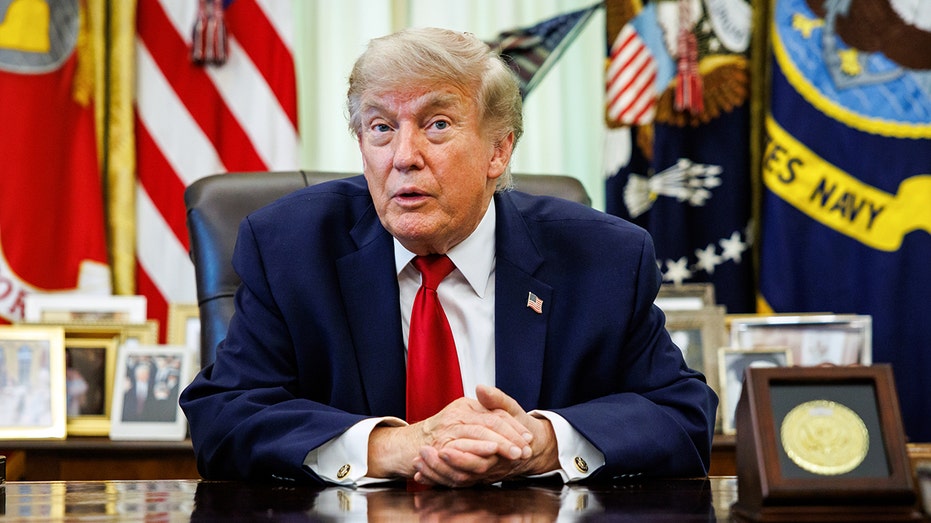
The White House released the executive branch’s regulatory plan for 2026, which includes a whopping $1.5 trillion in estimated savings. (Samuel Corum/Sipa/Bloomberg via Getty Images / Getty Images)
“The North Star of this Regulatory Plan is improving the lives of Americans. At its core, this document outlines how the Trump Administration is promoting economic growth, jobs, and affordability,” said Mark Paoletta, general counsel performing the duties of the OIRA administrator.
‘LIGHTNING SPEED’: SUPERSONIC CIVILIAN FLIGHTS IN US SKIES TAKE ANOTHER STEP TOWARD SWIFT RETURN
Paoletta added that OIRA estimates the 2026 regulatory plan will lead to a significant increase in regulatory cost savings above the record set last year.
“The President’s bold deregulatory efforts yielded $211.8 billion in cost savings for Americans in Fiscal Year 2025 – a level of regulatory savings never before achieved in American history,” Paoletta explained. “Yet Fiscal Year 2026 will go far beyond even that number with a record-setting $1.5 trillion in projected cost savings.”
POLESTAR BANNED FROM US MARKET UNDER RULE TARGETING CHINA-LINKED CONNECTED VEHICLES
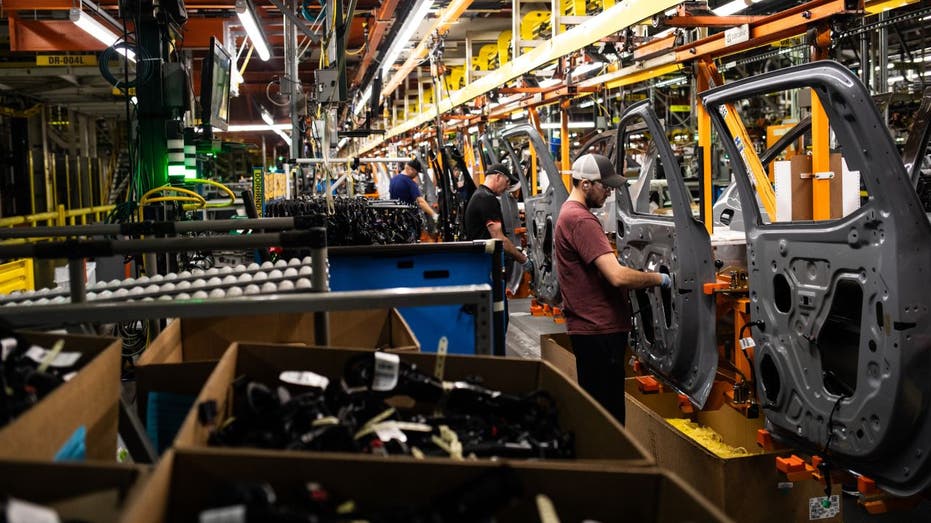
Biden-era EPA pollution rules for light- and medium-duty vehicles will be reconsidered. (Emily Elconin/Bloomberg via Getty Images)
The 2026 regulatory plan includes a wide range of rules changes across federal agencies. For example, the Environmental Protection Agency (EPA) signaled it will reconsider Biden-era pollution standards for light- and medium-duty vehicles, as well as repealing carbon pollution standards that affect power plants powered by fossil fuels.
The Department of Agriculture (USDA) said that it will propose a new rule covering the Supplemental Nutrition Assistance Program (SNAP) that includes new requirements for retailers aimed at deterring fraud and abuse within the program.
USDA also plans to revise work requirements for able-bodied adults enrolled in SNAP, along with revising the definition of eligible foods within the program to align with the administration’s nutrition goals. Food safety inspections are also to be modernized under a proposed rule that would include the removal of outdated inspection procedures.
WHITE HOUSE LAYS OUT FIXES FOR HOUSING AFFORDABILITY PROBLEM

The administration is developing a new framework for the safe spread of U.S. AI tech around the world. (iStock)
The Commerce Department’s Bureau of Industry and Security (BIS), which oversees export controls and looks to support national security and the defense industrial base, will implement a new framework for safely spreading U.S. artificial intelligence (AI) technology around the world.
BIS also plans to reduce export controls on drones that are provided to certain U.S. partners and allies, as well as including copper in the administration’s national security tariff regime.
Business
Crime Scene Expert Calls Nancy Guthrie Kidnapping Probe ‘Botched’ as Man Pleads Guilty to Ransom Hoax


TUCSON, Ariz. — A prominent crime scene investigator has publicly criticized the handling of the investigation into the disappearance of Nancy Guthrie, the 84-year-old mother of “Today” show co-anchor Savannah Guthrie, calling the probe “so botched” due to what she describes as a lack of communication and unity between the victim’s family and law enforcement agencies involved in the case.
Crime scene expert Sheryl McCollum said the investigation has suffered from a disconnect between the Guthrie family and the law enforcement agencies leading the case, noting that Savannah Guthrie and her relatives have never appeared jointly with the FBI and the Pima County Sheriff’s Department to deliver a unified public statement. McCollum’s comments add to a growing chorus of criticism directed at the investigation, which has now stretched more than five months without a named suspect or an arrest.
Nancy Guthrie was last seen alive around 9:45 p.m. on January 31, when a family member dropped her off at her Tucson home following a family dinner. She was reported missing the following day, and investigators later discovered blood near the front doorstep of her residence, along with personal effects left inside the house, details that led authorities to treat the case as a kidnapping from early in the investigation.
Pima County Sheriff Chris Nanos, the lead official overseeing the local response to the case, has pushed back against suggestions that law enforcement is dismissing important leads or operating without coordination between agencies. Nanos has said that every piece of communication related to the case is being handled with significant care, and Savannah Guthrie has separately issued a statement expressing gratitude to both the FBI’s Phoenix field office and the Pima County Sheriff’s Office for what she described as their “tireless work” to help bring her mother home.
Even so, Nanos himself has become a focal point of public criticism as the case has dragged on. Questions have circulated for months over whether the investigation was mishandled from its earliest stages, with some observers pointing to Nanos’ decision to release the crime scene relatively quickly after Guthrie’s disappearance and to his limited direct experience with homicide and ransom investigations prior to taking on this case. Backlash intensified further after revelations emerged regarding Nanos’ professional history, including his 1982 resignation from the El Paso Police Department in Texas, which reportedly came amid a dispute with a supervisor over vehicle towing procedures. Nanos’ attorney responded to renewed scrutiny over that history with a lengthy written statement to the Pima County Board of Supervisors, stating that Nanos was never formally suspended during his subsequent four decades of service with the Pima County Sheriff’s Department, though he acknowledged Nanos had been suspended more than 40 years earlier while employed in El Paso. The statement also addressed confusion during a deposition in which Nanos reportedly did not understand a question related to discipline at a separate agency not governed by Arizona’s Peace Officers’ Bill of Rights.
Public reaction to the revelations about Nanos’ history has been largely critical, with social media users expressing frustration over the sheriff’s continued role leading the investigation. Commentary circulating online has included characterizations describing the case as mishandled from the outset, reflecting a broader pattern of public skepticism toward the pace and transparency of the investigation as it has unfolded over recent months.
Alongside the criticism of the investigation’s leadership, the case has also produced its first criminal conviction tied to the flood of ransom communications the Guthrie family has received since Nancy’s disappearance. In early July, a California man, Derrick Callella, 42, pleaded guilty in federal court to two felony charges, including transmitting a ransom demand across state lines and using a telecommunications device to threaten or harass, in connection with a false ransom message sent to the family. Prosecutors said Callella tested positive for drugs at the time of his court appearance, and he is scheduled to be sentenced on September 10, facing a term of five years of probation under the terms of his plea agreement.
The FBI has confirmed receiving several ransom notes over the course of the investigation, acknowledging that while some have been determined to be illegitimate extortion attempts unrelated to Guthrie’s actual disappearance, others remain under active investigation as potentially genuine communications from those responsible for her abduction. That distinction has added complexity to an already difficult case, as investigators work to separate credible leads from opportunistic hoaxes like the one that led to Callella’s guilty plea.
According to McCollum, the investigation’s forward path continues to focus on several key areas, including efforts to trace the digital origins of ransom letters that have not been publicly released, monitoring tips submitted by the public, and coordinating searches that may extend across state or national borders. She has also pointed to what she described as inexperienced leadership and significant forensic processing backlogs as ongoing obstacles slowing the investigation’s progress, in addition to the continued absence of any named suspect more than five months into the case.
Despite the mounting criticism directed at the pace and management of the investigation, both the Guthrie family and local law enforcement officials have continued to publicly emphasize their appreciation for the resources devoted to the case. A combined reward of $1.1 million remains available for information leading to Nancy Guthrie’s safe return, and authorities continue to urge anyone with relevant information to come forward through the Pima County Sheriff’s Department’s tip line or the FBI’s national tip line.
As of this report, no suspect has been publicly identified in connection with Guthrie’s disappearance, and investigators have not disclosed a timeline for when DNA evidence recovered from the scene, including a hair sample previously referenced in the investigation, might yield further leads. The case remains active, with the FBI and Pima County Sheriff’s Department continuing to coordinate their response even as public scrutiny over the handling of the investigation shows no signs of easing.
Business
10 Things You Must Know About British Tennis Star Katie Boulter After Her Early Wimbledon Exit This Week

Katie Boulter has long been one of the most recognizable names in British tennis, and her profile only grew this week following an emotional first-round exit at Wimbledon. Here are ten facts to know about the British No. 1, from her career highlights to her recent tournament results.
1. She was born and raised in Leicestershire. Katie Charlotte Boulter was born on August 1, 1996, in Woodhouse Eaves, Leicestershire, England. She began playing tennis at age five and went on to represent Great Britain internationally by the time she was just eight years old.
2. She overcame a serious health diagnosis as a teenager. Boulter was diagnosed with chronic fatigue syndrome as a teenager, a condition that significantly affected her early development as a professional athlete. She has since spoken about the challenges of battling the illness while working to break into the top 100 of the WTA rankings, a milestone she eventually achieved despite the setback.
3. She holds a career-high singles ranking of No. 23. Boulter reached a career-high WTA singles ranking of No. 23 on November 4, 2024, cementing her status as Britain’s top-ranked female player for much of the past several years. She has also reached a best doubles ranking of No. 225, achieved as recently as June 8, 2026.
4. She has won four WTA singles titles. Boulter has claimed four WTA Tour singles titles over the course of her career, including two victories at the Lexus Nottingham Open on home soil, a title at the WTA 500 event in San Diego in 2024, and most recently a fourth career title at the Ostrava Open in 2026, where she defeated Tamara Korpatsch in the final by a score of 5-7, 6-2, 6-1.
5. She made history as the first British woman to win a WTA title in years. Boulter’s first WTA singles title, won on home soil at Nottingham in 2023, marked a significant milestone for British women’s tennis at the time, coming shortly after she had also become the first British woman since Emma Raducanu to capture a WTA title.
6. She had a breakout run at Queen’s Club before Wimbledon. Ahead of this year’s Wimbledon Championships, Boulter entered the grass-court season as a wildcard at the Queen’s Club Championships, where she defeated eighth seed Leylah Fernandez and Jaqueline Cristian to reach the quarterfinals. She then recorded the best win by ranking of her career, upsetting world No. 2 and top seed Elena Rybakina, before her run was ultimately ended in the semifinals by lucky loser Donna Vekic.
7. Her 2026 grass-court form did not carry over to Wimbledon. Despite her strong showing at Queen’s Club, Boulter lost in the first round of Wimbledon this week to Italian qualifier Tyra Grant, who entered the tournament ranked 112 places below Boulter at world No. 172. Grant dominated with her first serve throughout the 6-4, 6-2 win on No. 3 Court, never allowing Boulter to establish rhythm during the match. The result came just two weeks after Boulter also suffered a lengthy three-hour, twelve-minute first-round loss to Fernandez at the Bad Homburg Open.
8. She was candid about her disappointment following the loss. Speaking to reporters after her Wimbledon exit, Boulter did not shy away from expressing her frustration with the result. “Yeah, disappointing day. Not a good day at the office,” she told reporters, while also crediting her opponent’s performance. “I have to give credit to her, as well. She’s a young girl who’s swinging, playing some fearless tennis.” Boulter added that she believed her level throughout the year had continued moving in the right direction despite the setback, saying, “I think as a whole, I’m moving in the right direction. I am.”
9. She recently changed coaches. In November 2025, Boulter announced she had ended her three-year partnership with coach Biljana Veselinovic. She subsequently hired Michael Joyce as her new coach, with the change officially announced on January 2, 2026, as Boulter looked to build on her previous career-best results heading into the new season.
10. She has personal ties to another prominent Australian tennis player. Beyond her own career, Boulter is known to be engaged to Australian tennis player Alex de Minaur, with the couple frequently appearing together at major tournaments, including previous editions of Wimbledon. Off the court, Boulter has also spoken about her support for Leicester City Football Club and her interests in fashion, shopping and cooking, rounding out a public profile that extends beyond her achievements on the tennis court.
Boulter’s early exit from this year’s Wimbledon continues a difficult pattern for British players at their home Grand Slam, following the pre-tournament withdrawals of Jack Draper and Emma Raducanu and the early exits of players including Cameron Norrie and Harriet Dart. With Boulter having been considered one of Britain’s best chances at a deep run in the women’s singles draw this year, her loss leaves fellow Briton Katie Swan, who advanced to the second round for just the second time in her career, as one of the remaining hopes to carry British interest forward in the tournament.
Despite the disappointing result, Boulter has continued to emphasize the progress she has made over the course of the season, pointing to her run to the semifinals at Queen’s Club as evidence that her game remains on an upward trajectory even after a difficult week at the All England Club. With her fourth WTA title already secured earlier this year in Ostrava and her ranking continuing to reflect steady improvement, Boulter appears likely to remain one of the most closely watched British players on tour as the season progresses toward its hard-court swing later this year.
Business
Dow Jones Notches New Record Close Above 53,000 as Tech Stocks Rebound Sharply to Start the New Trading Week

NEW YORK — U.S. stocks pushed further into record territory Monday, with the Dow Jones Industrial Average closing at 53,032.55, up 132.48 points, or 0.25 percent, extending a rally that has carried the blue-chip index to a series of fresh highs in recent sessions as technology stocks rebounded from a late-June slump.
Monday’s gains built on a strong finish to the previous week. The Dow closed at a record 52,900.07 last Thursday, the final trading session before markets closed Friday for the Independence Day holiday, after climbing nearly 600 points, or 1.1 percent, in a single session. For the holiday-shortened week, the Dow rose 2 percent, while the S&P 500 gained 1.8 percent and the Nasdaq Composite added 2.1 percent, according to data from Trading Economics.
Technology shares, which had weighed on broader market performance in the final days of June amid concerns over stretched valuations in artificial intelligence-related stocks, showed signs of renewed strength heading into Monday’s session. Futures on the Nasdaq 100 climbed as much as 1 percent ahead of the opening bell, while S&P 500 futures rose 0.4 percent, according to data from Yahoo Finance. Dow futures were comparatively little changed following the blue-chip index’s record-setting run last week.
The rebound in chip and technology stocks followed a stretch of heavy selling in late June, when semiconductor names including Micron Technology, Advanced Micro Devices and Intel each fell sharply amid investor concern that AI-related valuations had climbed too far, too fast. Micron shares dropped as much as 7 percent during that stretch, while Applied Materials and Marvell each fell around 10 percent, and SanDisk tumbled 13 percent in a single session. Monday’s tone appeared more optimistic, with reports that Taiwan-based Hon Hai Precision Industry, known as Foxconn and a key supplier to Nvidia, posted stronger-than-expected quarterly sales over the weekend, a development that helped renew investor confidence in continued demand tied to artificial intelligence infrastructure.
Attention this week is also turning to South Korea’s memory chip giants. Samsung Electronics is scheduled to release preliminary second-quarter 2026 earnings Tuesday, with expectations pointing to an 18-fold jump in profit compared with the prior year, a figure that would exceed the company’s total earnings for all of 2025, according to reporting from Yahoo Finance. Samsung shares have rallied 165 percent so far this year ahead of the report. Later in the week, rival chipmaker SK Hynix is expected to complete a roughly $28 billion to $29 billion U.S. stock market listing, a move Bloomberg reported could help the company better compete globally in the memory chip market that underpins much of the current AI computing boom.
Elsewhere in the tech sector, Tesla shares rose in premarket trading Monday after the company said its robotaxi service had become available in Miami, marking a further expansion of its autonomous ride-hailing operations following the service’s earlier rollout in other markets. That news followed a difficult stretch for the stock, which fell more than 7 percent in the prior week despite the company posting stronger-than-expected vehicle delivery figures for the second quarter.
Also in focus this week is Elon Musk’s SpaceX, which is set to officially join the Nasdaq-100 index before trading begins Tuesday, following the company’s public listing on June 12. The Nasdaq-100 is heavily weighted toward technology companies but also includes major names across healthcare, retail and biotechnology sectors. The Roundhill Magnificent Seven ETF, which provides equal-weighted exposure to Alphabet, Amazon, Apple, Meta Platforms, Microsoft, Nvidia and Tesla, gained 0.54 percent in premarket trading Monday, reflecting broader optimism around the group of large-cap technology stocks that have driven much of the market’s gains in recent years.
Last week’s rally was also supported by economic data that tempered expectations for an imminent interest rate move by the Federal Reserve. The Department of Labor reported that nonfarm payrolls rose by just 57,000 in June, well below the consensus estimate of 117,000, while the unemployment rate fell to 4.2 percent from 4.3 percent in May, a decline driven in part by a drop in the labor force participation rate to 61.5 percent, its lowest level since March 2021. The broader, or “real,” unemployment rate, which accounts for discouraged workers and those holding part-time jobs for economic reasons, fell to 7.9 percent. Federal Reserve Chairman Kevin Warsh urged investors last week to focus on incoming economic data rather than on the central bank itself for guidance on the future path of interest rates, a comment that came as markets weighed the softer jobs figures against continued strength in headline stock indexes.
Beyond the labor market data, several notable individual stock moves shaped last week’s trading. Apple shares gained roughly 4.8 percent to 5 percent across multiple sessions, while McDonald’s and Walt Disney also posted strong gains, rising 4.07 percent and 3.84 percent, respectively, on the same day the Dow notched its most recent record close. Visa and Walmart each advanced by roughly 2 to 3 percent over the course of the week as well, contributing to broader strength in consumer and financial sector stocks even as technology names experienced heightened volatility.
Reports that OpenAI was in discussions to sell a 5 percent stake to the U.S. government, along with news that Meta Platforms was exploring ways to monetize excess computing capacity built up as part of its aggressive AI infrastructure spending, added additional headlines to a market already closely tracking developments across the AI sector. Meta shares fell nearly 5 percent following that report, reflecting investor uncertainty over whether the company’s massive capital expenditures on AI infrastructure had outpaced near-term demand.
Overseas, markets showed a more mixed picture Monday. Europe’s Stoxx 600 index fell 0.4 percent after reaching a record high in the prior session, while stocks across Asia fluctuated as investors positioned ahead of this week’s earnings from Samsung and the pending SK Hynix listing. JPMorgan strategists have said they expect the broader AI investment cycle to continue supporting U.S. equity markets through the remainder of the year, having recently raised their year-end target for the S&P 500 in light of continued strength in the sector.
With the third quarter of 2026 now underway following what Trading Economics data showed was Wall Street’s best quarterly performance since 2020, investors are expected to closely watch this week’s chipmaker earnings, along with any further signs of stabilization in the technology sector, as key indicators of whether the current rally can be sustained through the remainder of the summer trading season.
Business
Nasdaq Composite Climbs to a New Record High as Tech Stocks Rally Sharply After Late-June Chip Sell-Off
NEW YORK — The Nasdaq Composite closed at a record high Monday, ending the session at 26,018.82, up 186.15 points, or 0.72 percent, as technology stocks extended a sharp rebound following a bout of heavy selling in semiconductor shares in the final days of June.
Monday’s gains came as investors returned from the extended Independence Day holiday weekend with renewed appetite for artificial intelligence-related stocks, a reversal from the volatility that had gripped the sector just days earlier. Futures on the tech-heavy Nasdaq 100 had climbed as much as 1 percent ahead of Monday’s opening bell, according to data from Yahoo Finance, setting the stage for the index’s strong close.
The rally in tech shares followed a difficult stretch in late June, when concerns over stretched valuations tied to the artificial intelligence trade sent chipmakers sharply lower across multiple sessions. Semiconductor names including Micron Technology, Advanced Micro Devices and Intel each posted steep single-day declines during that period, with Micron falling as much as 7 percent, Applied Materials and Marvell both dropping around 10 percent, and SanDisk tumbling 13 percent in a single trading session, according to data from Trading Economics. The selling reflected broader investor unease over whether AI-linked valuations had climbed too far relative to near-term earnings potential.
Sentiment shifted heading into Monday’s session after Taiwan-based Hon Hai Precision Industry, the Nvidia supplier better known as Foxconn, reported stronger-than-expected quarterly sales over the weekend, a signal that demand tied to AI infrastructure buildouts remains robust. That report appeared to help ease some of the concerns that had weighed on chip stocks in the prior weeks, contributing to the broader tech-sector rebound that lifted the Nasdaq to its record close.
Attention is now shifting to a pair of major developments from South Korea’s memory chip industry set to unfold later this week. Samsung Electronics is scheduled to report preliminary second-quarter 2026 earnings Tuesday, with expectations pointing to profit growth of roughly 18 times year-over-year, a figure that would surpass the company’s total earnings for all of 2025, according to reporting from Yahoo Finance. Samsung shares have surged 165 percent so far this year heading into the report. Later in the week, rival SK Hynix is expected to complete a U.S. stock market listing valued at roughly $28 billion to $29 billion, a move Bloomberg reported could strengthen the company’s position in the global memory chip market that underpins much of the current AI computing boom.
Elon Musk’s SpaceX is also drawing attention this week, with the company set to officially join the Nasdaq-100 index before trading begins Tuesday, following its public listing on June 12. The Nasdaq-100, while heavily weighted toward technology, also includes major companies across healthcare, retail and biotechnology sectors. The Roundhill Magnificent Seven ETF, which offers equal-weighted exposure to Alphabet, Amazon, Apple, Meta Platforms, Microsoft, Nvidia and Tesla, gained 0.54 percent in premarket trading Monday, underscoring renewed optimism around the group of large-cap technology names that have driven a significant share of the market’s gains over the past several years.
Tesla shares also advanced Monday after the company announced its robotaxi service had become available in Miami, extending the rollout of its autonomous ride-hailing operations to a new market. The news offered a bright spot for the stock following a rough prior week, during which shares fell more than 7 percent despite the company reporting vehicle delivery figures for the second quarter that easily surpassed analyst estimates.
Monday’s tech-driven gains came against the backdrop of a broader market that has continued climbing to fresh records in recent sessions, even as some corners of the technology sector experienced turbulence. The Dow Jones Industrial Average closed at a record high last Thursday, the final trading session before markets were closed Friday for the Independence Day holiday, and extended that record-setting run into the new trading week. For the holiday-shortened week ending Thursday, the Nasdaq Composite gained 2.1 percent, while the S&P 500 rose 1.8 percent and the Dow added 2 percent, according to data from Trading Economics, capping what the firm’s data showed was Wall Street’s best quarterly performance since 2020.
Economic data released last week also played a role in shaping market sentiment heading into the new week. The Department of Labor reported that nonfarm payrolls increased by just 57,000 in June, well below the consensus estimate of 117,000, while the unemployment rate declined to 4.2 percent from 4.3 percent the previous month, a drop driven in part by a decline in labor force participation to 61.5 percent, its lowest level since March 2021. Federal Reserve Chairman Kevin Warsh urged investors last week to look to incoming economic data, rather than to the central bank itself, for signals on the future direction of interest rates, a comment that came as markets weighed the softer-than-expected jobs figures against the market’s continued record-setting momentum.
Other notable developments last week included reports that OpenAI was in discussions to sell a 5 percent stake to the U.S. government, along with news that Meta Platforms was exploring options to monetize excess computing capacity built up as part of its aggressive investment in AI infrastructure. Meta shares fell nearly 5 percent following that report, reflecting investor scrutiny over whether the company’s substantial capital spending on AI has outpaced near-term demand for that capacity.
Overseas markets presented a more mixed picture to start the week. Europe’s Stoxx 600 index slipped 0.4 percent after touching a record high in the prior session, while markets across Asia showed choppier trading as investors positioned ahead of this week’s closely watched earnings from Samsung and the pending SK Hynix listing.
Looking ahead, strategists at JPMorgan have said they expect the broader artificial intelligence investment cycle to continue supporting U.S. equity markets through the remainder of the year, having recently raised their year-end target for the S&P 500 amid sustained strength in the technology sector. With Samsung’s earnings report and the SK Hynix listing both set to unfold in the coming days, investors will be watching closely for further signals on whether the renewed momentum in chip and technology stocks that lifted the Nasdaq to Monday’s record close can be sustained through the remainder of the summer trading season.
Business
Russell 2000 Falls as Rate-Sensitive Small-Cap Stocks Lag Record Highs Set by Both Dow and Nasdaq Monday
NEW YORK — The Russell 2000, the benchmark index for U.S. small-capitalization stocks, closed lower Monday even as the Dow Jones Industrial Average and the Nasdaq Composite both notched fresh record highs, highlighting a growing divergence between large-cap technology and blue-chip names and their smaller-company counterparts to start the trading week.
The Russell 2000 finished the session at 2,996.11, down 16.48 points, or 0.55 percent, pulling the index further from the psychologically significant 3,000 mark even as broader market benchmarks continued to climb. The decline came on a day when the Dow closed at 53,032.55, up 132.48 points, and the Nasdaq Composite ended at a record 26,018.82, up 186.15 points, underscoring how unevenly gains have been distributed across the market to start the new trading week.
The divergence reflects a broader pattern that has periodically emerged throughout 2026, in which large-cap technology and blue-chip stocks have outperformed smaller companies, which tend to be more sensitive to the direction of interest rates and broader economic growth expectations. Small-cap companies, many of which carry higher levels of variable-rate debt relative to larger, more established corporations, often see their stock performance more directly tied to expectations around Federal Reserve policy than their large-cap counterparts, which can rely more heavily on global revenue streams and stronger balance sheets to weather periods of economic uncertainty.
Monday’s pullback in small-cap stocks came in the wake of a mixed labor market report released last week. The Department of Labor reported that nonfarm payrolls rose by just 57,000 in June, well below the consensus estimate of 117,000, while the unemployment rate declined to 4.2 percent from 4.3 percent in May. That decline in the unemployment rate was driven in part by a drop in the labor force participation rate to 61.5 percent, its lowest level since March 2021, a detail that some analysts have said complicates the overall read on labor market health despite the headline improvement in the jobless rate.
Federal Reserve Chairman Kevin Warsh urged investors last week to focus on incoming economic data rather than on the central bank itself for signals about the future path of interest rates. That guidance has left investors parsing recent economic releases for clues about whether the Fed will move to adjust rates in the coming months, a question that carries particular weight for smaller companies within the Russell 2000, given their generally higher sensitivity to borrowing costs.
The divergence between small-cap and large-cap performance also comes amid a broader rotation of investor attention toward the technology sector, which has driven much of the market’s gains in recent weeks following a bout of heavy selling in semiconductor stocks in late June. Chipmakers including Micron Technology, Advanced Micro Devices and Intel had each posted sharp declines during that stretch amid concerns over stretched valuations tied to the broader artificial intelligence investment cycle. That selling gave way to a rebound heading into this week, following stronger-than-expected quarterly sales reported over the weekend by Taiwan-based Hon Hai Precision Industry, the Nvidia supplier known as Foxconn, a development that helped restore investor confidence in continued AI-related demand and contributed to Monday’s records in both the Dow and the Nasdaq.
With investor attention concentrated heavily on large-cap technology names this week, including anticipation ahead of Samsung Electronics’ preliminary second-quarter earnings report scheduled for Tuesday and SK Hynix’s pending multibillion-dollar U.S. stock listing later in the week, smaller companies within the Russell 2000 have received comparatively less attention from investors positioning around the AI trade. The Roundhill Magnificent Seven ETF, which tracks Alphabet, Amazon, Apple, Meta Platforms, Microsoft, Nvidia and Tesla on an equal-weighted basis, gained ground in early trading Monday, reflecting the continued concentration of investor interest in a small group of dominant technology companies rather than the broader universe of smaller, domestically focused firms that make up the Russell 2000.
The performance gap between small-cap and large-cap stocks is not a new phenomenon this year. Small-cap companies, which tend to have less exposure to international markets compared with many of the multinational technology firms driving the S&P 500 and Nasdaq higher, have periodically lagged broader market benchmarks throughout 2026 as investor enthusiasm has concentrated around artificial intelligence infrastructure spending and the handful of large technology companies most directly tied to that trend.
Monday’s decline in the Russell 2000 also stood in contrast to a broadly strong holiday-shortened week across major indexes. For the week ending last Thursday, the Dow rose 2 percent, the S&P 500 gained 1.8 percent and the Nasdaq Composite added 2.1 percent, according to data from Trading Economics, capping what the firm’s data showed was Wall Street’s best quarterly performance since 2020. Whether small-cap stocks can participate more fully in that broader rally in the weeks ahead may depend heavily on incoming economic data and any further signals from the Federal Reserve regarding the future path of interest rates.
Overseas markets offered a mixed backdrop to start the week as well. Europe’s Stoxx 600 index slipped 0.4 percent Monday after reaching a record high in the prior session, while markets across Asia showed choppier trading as investors positioned ahead of this week’s high-profile earnings and listing events tied to South Korea’s memory chip sector.
Looking ahead, market strategists will be watching closely to see whether the current divergence between large-cap and small-cap performance persists or narrows in the coming weeks, particularly as more companies across a broader range of sectors begin reporting second-quarter earnings later this month. Until then, the contrast between Monday’s record closes for the Dow and Nasdaq and the more modest pullback in the Russell 2000 serves as a reminder that not all corners of the U.S. stock market are moving in lockstep, even during a period of broadly positive sentiment on Wall Street.
Why is Space Exploration Technologies stock sliding today?

Sir Jim Ratcliffe launches new three-word Man United slogan as part of major rebrand
Form 424B5 ClearSign Technologies Corporation For: 6 July

Ripple Receives Full MiCA License After EU Crypto Deadline


-

 Fashion3 days ago
Weekend Open Thread: High Hopes
-

 Politics3 days ago
The House | “Reframing the debate from a binary discussion of winners and losers”: Yuan Yang reviews ‘We Are Not Machines’
-

 Crypto World7 days ago
Strategy authorizes up to $1.25B in Bitcoin sales under new capital plan
-

 News Videos6 days ago
How to Build INSANE Live Financial Dashboards With Claude
-

 Tech7 days ago
Anonymous researcher drops 0-day ‘exploitarium’ repo
-

 Business7 days ago
Australia treasurer says alleged access of prime minister’s bank data ’incredibly concerning’
-
 NewsBeat2 days ago
Taylor Swift and Travis Kelce wedding staffer hilariously struggles to keep her cool while checking in megastars
-

 Fashion4 hours ago
Open Thread: What Great Books Have You Read Recently?
-
 Crypto World5 days ago
Airdrop Registration Becomes Key Focus For Remittix As RTX Launch Updates Approach
-

 Sports5 days ago
Broncos roster: OL Ben Powers (No. 74) entering final year of contract
-

 Crypto World5 days ago
Binance stock trading tops $1B in first month after launch
-

 NewsBeat6 days ago
Presenter Caroline Flack’s brother Paul Flack dies aged 55
-

 Crypto World5 days ago
Alibaba-affiliate Ant Group enters the humanoid robot market with 12 deals
-

 Crypto World3 days ago
Standard Chartered Secures MiCA License as ESMA Adds 37 New Crypto Firms
-

 Crypto World1 day ago
South Africa proposes crypto tax guidance under existing rules
-

 News Videos5 hours ago
Best Time to Enter Small Caps Right Now? Another Bull Run? | Financially Free
-
 NewsBeat4 days ago
New exhibition reflects five decades of movement between island of Ireland and GB
-

 Business5 days ago
Meta Platforms Stock Jumps 7% Today as Bloomberg Reports Company Plans to Enter the Cloud Business
-

 Tech1 day ago
Lenovo laptops are now shipping with YMTC SSDs, a sign of Chinese NAND entering the mainstream
-

 Business4 days ago
What a 10 Percent Drop Means for Buyers, Sellers and Renters
You must be logged in to post a comment Login