

Connect with us
DAPA Banner
DAPA Coin
DAPA
COIN PAYMENT ASSET
PRIVACY · BLOCKDAG · HOMOMORPHIC ENCRYPTION · RUST
ElGamal Encrypted MINE DAPA
🚫 GENESIS SOLD OUT
DAPAPAY COMING

Business

Nifty Bank rises 400 points as HDFC Bank, IndusInd, other stocks jump up to 3% after Q1 updates

Published

on

Nifty Bank rises 400 points as HDFC Bank, IndusInd, other stocks jump up to 3% after Q1 updates
The Nifty Bank index rose more than 400 points on Monday as sharp gains in heavyweights HDFC Bank, IndusInd Bank and ICICI Bank outweighed a nearly 4% crash in Kotak Mahindra Bank shares after Q1 business updates.

The Nifty Bank index rose to 58,376, gaining nearly 1%. The index snapped a two-session losing streak today.

HDFC Bank Q1 business update

HDFC Bank shares were the top gainers on the index, jumping nearly 3% after India’s largest private lender reported gross advances at Rs 30.61 lakh crore at the end of the April-June quarter of FY27, marking a 15.4% year-on-year (YoY) rise from Rs 26.53 lakh crore reported in the corresponding quarter of the previous financial year.

Its period end deposits meanwhile rose 14.7% YoY to Rs 31.71 lakh crore at the end of the first quarter of FY27, as against Rs 27.64 lakh crore reported at the end of the corresponding quarter of FY26.

Advertisement

JM Financial noted that HDFC Bank reported healthy deposit mobilisation. “HDFC Bank reported robust loan growth, marginally ahead of estimates, while deposit growth was in line. Consequently, the CD ratio inched up to 95.8% (vs. 94.6% in Q4 FY26). We expect margins to contract slightly this quarter and, in our recent preview note, estimated a 2bp QoQ margin contraction,” said Motilal Oswal in its note.

Also read: HDFC Bank Q1 business update | Gross advances rise 15% to Rs 30.61 lakh crore


AU Small Finance Bank and IndusInd Bank shares gained nearly 2% each. AU Small Finance Bank’s gross loan portfolio rose around 23% YoY to Rs 1.44 lakh crore, while total deposits gained nearly 24% to Rs 1.58 lakh crore. IndusInd Bank’s net advances however declined over 2% YoY to Rs 3.26 lakh crore, but deposits rose 4.5% YoY to Rs 4.15 lakh crore.
ICICI Bank, Axis Bank, Federal Bank, State Bank of India and Yes Bank shares gained up to 1%, as seen at 11 am.Also read: Yes Bank shares gain after Q1 advances rise 18% to Rs 2.85 lakh crore, deposits up 14%

Kotak Mahindra Bank Q1 business update

Bucking the trend, Kotak Mahindra Bank shares crashed 4%, significantly weighing on the Nifty Bank index. This came after the private lender announced that its net advances for the quarter which ended on June 30, 2026, rose more than 15% year-on-year (YoY) to Rs 5.12 lakh crore, from Rs 4.45 lakh crore reported in the same period last year. Deposits meanwhile grew nearly 12% YoY to Rs 5.73 lakh crore during Q1 FY27, from Rs 5.13 lakh crore in Q1 FY26. Sequentially however, the growth in deposits was marginal at 0.1% QoQ from Rs 5.72 lakh crore in Q4 FY26.

Motilal Oswal noted that Kotak Mahindra Bank’s Q1 loan growth remained largely in line with its estimate. However, deposits surprised negatively amid a sharp decline in CASA. As a result, the bank’s CD ratio increased to 89.4% vs 86.6% in Q4 FY26.

Advertisement

JM Financial also noted that Kotak Mahindra Bank reported relatively weaker deposit mobilisation. “ICICI Bank, Axis Bank and Kotak Bank are expected to continue delivering strong earnings growth, while Ujjivan, City Union Bank and DCB Bank should remain among the better-performing mid-sized lenders supported by healthy business growth and improving operating metrics,” the domestic brokerage said.

Also read: Kotak Mahindra Bank shares fall over 4% after Q1 update; advances jump 15% to Rs 5.12 lakh crore

Canara Bank, Union Bank of India, Punjab National Bank and Bank of Baroda shares meanwhile traded in the red with marginal losses.

Key technical levels for Nifty Bank

Following the sharp rally witnessed at the start of June, the banking index has entered a phase of time-wise correction, evident from the formation of three consecutive small-bodied candles on the weekly chart, Rajesh Bhosale, Technical Analyst at Angel One, had said after the two-session losing streak.

Advertisement

“Despite this consolidation, the broader structure remains constructive as Bank Nifty continues to hold above the breakout zone of the April month swing high around 57,500, which also coincides with the 200DSMA. The overall trajectory continues to remain positive, and the current consolidation appears to be a healthy pause within the prevailing uptrend. Momentum indicator RSI, which had earlier entered the overbought zone, has now cooled off towards the 60 mark, creating room for the next leg of the upmove to unfold. Hence, traders should continue to maintain a buy-on-dips approach,” he said.

Also read: Why the world’s biggest banks keep selling their India retail arms

The Nifty Bank index is likely to see resistance at 58,500–58,800, and a sustained move above this zone is likely to reignite the primary uptrend, according to the analyst. On the downside, he sees the banking index finding support at 57,000–56,500 zone. “From a stock-specific perspective, frontline private banking stocks continue to exhibit relative strength, while PSU banks were under pressure. Traders are therefore advised to be selective and focus on stronger private banking names for potential outperformance,” Bhosale said.

(Disclaimer: Recommendations, suggestions, views and opinions given by the experts are their own. These do not represent the views of The Economic Times)

Advertisement
Continue Reading
Click to comment

You must be logged in to post a comment Login

Leave a Reply

Business

Silverleaf buys $19m Darwin asset

Published

on

Silverleaf buys $19m Darwin asset

The property, on the city’s eastern waterfront, represents the Fremantle-based developer’s first Darwin acquisition.

Continue Reading

Business

UK’s High Pay Centre to close for good amid funding troubles

Published

on

Business Live

The think tank tracked the pay of the country’s top bosses including FTSE 100 executives

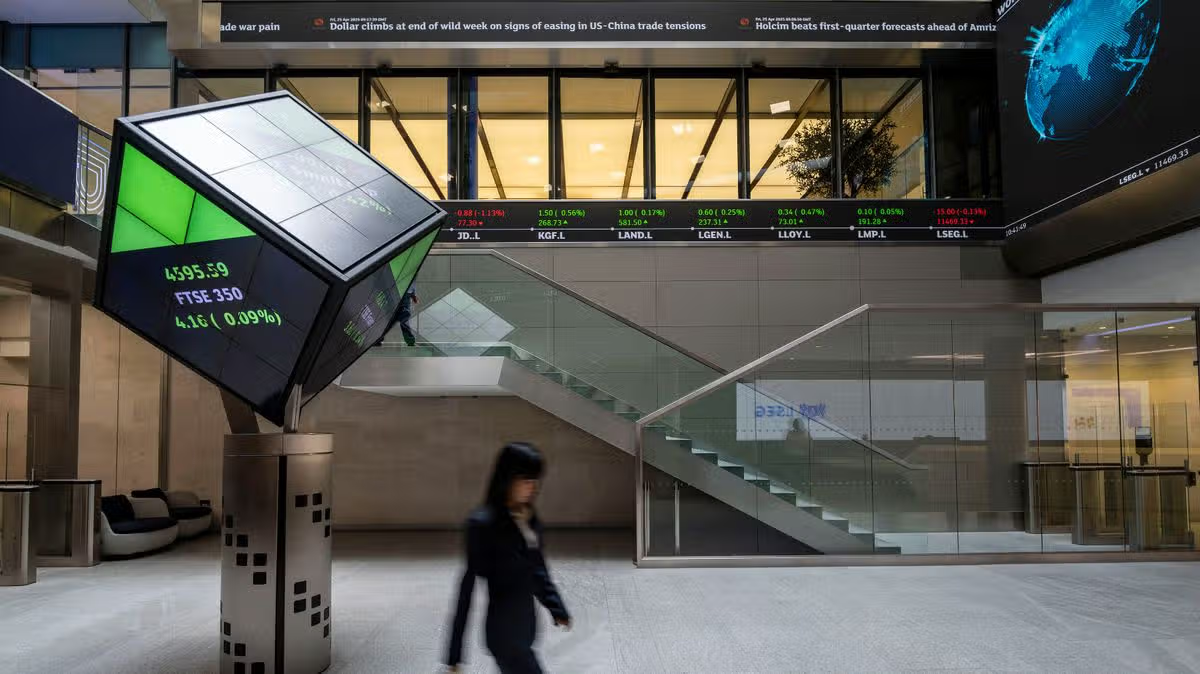
A general view of the London Stock Exchange in the City of London

A general view of the London Stock Exchange in the City of London(Image: Jeff Moore/PA Wire)

A think tank that raised awareness of pay inequality in the UK and tracked the salaries of Britain’s top-paid executives including bosses on the FTSE 100 has announced its closure. The High Pay Centre (HPC) said on Tuesday (July 7) it had faced “considerable fundraising challenges” over the past two years.

The London-based organisation was founded 15 years ago by Deborah Hargreaves, a former business journalist at the Guardian and Financial Times, following the High Pay Commission’s report, which at the time proposed a 12-point plan to curb excessive top executive salaries.

Advertisement

The HPC advocated for fairer pay in Britain and ran a programme of research and events aimed at influencing policy change and public debate around the issue.

But it is understood the organisation came under financial strain in recent years after failing to secure new sources of finance after long-standing donors left the sector.”

“While we have worked hard to develop a more sustainable funding model, unfortunately we have not been able to secure new sources of funding to replace what has been lost,” the company said in a statement.

“The reforms we have advocated for, including greater transparency on executive pay and workforce pay ratios, as well as shareholder ‘say on pay’, have increased transparency and given investors greater opportunities to express their views on company decisions about pay and reward.

Advertisement

“However, while the gap between the pay of top executives and that of British workers remains in excess of 100:1, we are disappointed that successive governments and regulators have not gone further to address an economic model that continues to drive inequality.”

The HPC is set to close later in July but said it would first publish its latest analysis of CEO salaries and pay ratios in the FTSE 100, along with “further reflections” on what is needed to transform the UK’s economic model from one that “exacerbates inequality” to one that “can deliver prosperity while better serving society”.

It also said it was currently exploring whether “other like-minded organisations” might be able to continue its work.

“We hope to share more information before our closure,” the organisation added in a statement.

Advertisement

“In the meantime, we’d like to thank the many individuals and organisations who have supported our work over the years, including those who have donated to help support our survival in recent months.

“We know that many of you will be as disappointed as we are that this day has come. As so many of you have told us recently, the issues we have campaigned on are more important now than ever.”
Continue Reading

Business

Burnham urged to replace stamp duty and council tax with property levy

Published

on

Burnham signals tax movement with business rates cut for pubs & high street firms

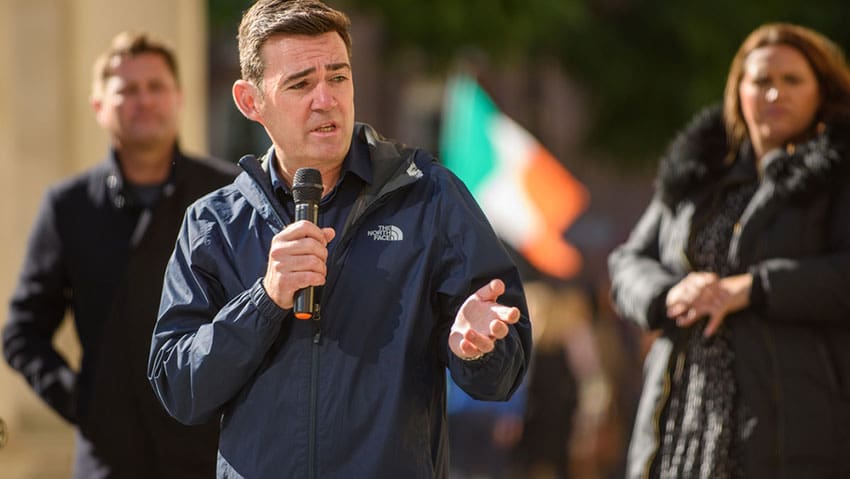
Some of Britain’s leading economists have urged Andy Burnham to tear up the UK’s tax system, calling for stamp duty and council tax to be scrapped and replaced with a single annual property value tax.

The group, which includes Lord O’Neill of Gatley, the former Goldman Sachs chief economist who advises Burnham, has written an open letter to the man widely expected to become the next prime minister, warning that structural reform can no longer be delayed.

Their intervention endorses Prosperity 2030, a five-year programme from University College London’s Institute for Global Prosperity launching on Thursday, which the signatories say “models how fiscal, welfare, and infrastructure policies can unlock the gridlock that plagues the country”.

Burnham is on course to enter Downing Street on 20 July if he wins the Labour leadership, inheriting an economy weighed down by high debt and stubbornly low growth. Westminster and the City are watching his fiscal plans, and his choice of chancellor, particularly closely after his Manchester speech last week calling for greater devolution. As Business Matters has reported, Burnham has already signalled “room for movement” on tax, pledging a business rates cut for pubs and high street firms.

The centrepiece of the report is a single national contributions levy that would replace six separate taxes: income tax, employee and self-employed national insurance, dividend tax, inheritance tax and capital gains tax. The levy would run from 0 per cent to a 22 per cent base rate, with a 46 per cent top rate applied to a “flat definition” of income, raising an estimated £75 billion after five years.

Advertisement

That “simpler, more efficient system” would fund nine new universal services, transforming the welfare state by delivering support in kind rather than in cash.

On property, the plan would abolish stamp duty and council tax in favour of a 1 per cent annual property value tax, ending what the report calls “the absurdity of a modest terrace paying proportionally more than a high-value mansion”. A deferral option would ensure “no one is forced to sell to pay it”. The idea echoes proposals already circulating in the Treasury for an annual charge to replace stamp duty, and chimes with the Institute for Fiscal Studies, which has long argued the case for the abolition of stamp duty as one of Britain’s most economically damaging taxes.

A new property levy is unlikely to pass without a fight, however. Sir James Cleverly, the shadow secretary of state for housing, communities and local government, has already branded it a “garden tax … straight out of the Corbyn playbook”. Nor is it the first Burnham-linked tax idea to unsettle boardrooms: the debate over what a Burnham wealth tax could mean for UK business and investors is still fresh.

Andrew Percy, co-chairman of the social prosperity network at the UCL Institute for Global Prosperity and the report’s lead author, said it was a “plan to cut taxes for working people, abolish the taxes holding back the housing market, and get young people into paid work. The question is no longer whether Britain can afford reform. It is whether we can afford another decade without it.”

Advertisement

Alongside Lord O’Neill, the letter’s signatories include Professor Dame Henrietta Moore, founder and director of the institute, Professor Jonathan Portes of King’s College London, Professor John Muellbauer of Nuffield College, Oxford, and Danny Sriskandarajah, chief executive of the New Economics Foundation.

Their verdict on Westminster’s recent record is blunt: “Seven prime ministers in ten years have inherited the same challenge and failed to solve it for the same reasons: the problems are structural and systemic.”


Amy Ingham

Amy is a newly qualified journalist specialising in business journalism at Business Matters with responsibility for news content for what is now the UK’s largest print and online source of current business news.

Advertisement

Continue Reading

Business

Stellantis to sell small Fiat Topolino EV for $13,995 in U.S.

Published

on

Stellantis to sell small Fiat Topolino EV for $13,995 in U.S.

Stellantis plans to offer the Fiat Topolino, an all-electric quadricycle vehicle, in the U.S.

Stellantis

DETROIT — Chrysler parent Stellantis on Tuesday said it has opened ordering for its small Fiat Topolino electric vehicle in the U.S., starting at $13,995.

Advertisement

While the Topolino resembles a small car such as the Fiat 500, the EV is actually a quadricycle that functions more like a golf cart.

Stellantis said the Topolino is capable of going 19 mph, with an electric range of up to 46 miles. A “Low Speed Vehicle” conversion kit can boost the top speed to 25 mph to make it street legal on roads with speed limits of 35 mph or less, according to the trans-Atlantic automaker.

A Stellantis spokeswoman said there will be no charge for the conversion kit but confirmed a mandatory destination fee will add $990 to the base price, bringing the customer price to $14,985.

The Topolino, which translates to “little mouse” in Italian, is produced in Morocco. The company said it will be available in limited quantities this year as a hardtop model with doors or a “Dolce Vita” soft-top convertible model with a rope instead of doors.

Advertisement

2026 Fiat Topolino Dolce Vita.

Courtesy Fiat

“Topolino represents a new chapter for the brand in the U.S. — defined not just by size, but by purpose,” Fiat brand CEO Olivier Francois said in a release. “With Topolino, we bring a feeling, a lifestyle, a reminder that mobility can be joyful, expressive and beautifully simple.”

Stellantis, which also owns American brands such as Jeep and Dodge, late last year confirmed it would bring the vehicle from Italy to the U.S. less than a week after President Donald Trump praised small “Kei” cars from Japan during a meeting at the White House with Stellantis CEO Antonio Filosa and other automotive leaders.

Advertisement

“They’re very small. They’re really cute,” Trump said at the December meeting. “And I said, ‘How would that do in this country?’ And everyone seems to think ‘good,’ but you’re not allowed to build them.”

It’s not illegal to produce such cars in America, but they have to meet American safety standards, speed requirements and other regulations.

Small cars such as Fiats have historically not sold well in the U.S. In its first full year in the U.S. in 2012, Fiat sold 43,772 vehicles domestically. Those sales dwindled to roughly 1,300 Fiat vehicles sold last year in the U.S.

The Stellantis spokeswoman at that time said Fiat’s announcement was unrelated to Trump’s comments and that the automaker had been has been gauging customer interest for the Topolino at U.S. events such as auto shows.

Advertisement
Choose CNBC as your preferred source on Google and never miss a moment from the most trusted name in business news.
Continue Reading

Business

RBI to conduct Rs 25,000-cr overnight variable rate repo auction on Jul 8

Published

on

RBI to conduct Rs 25,000-cr overnight variable rate repo auction on Jul 8
The Reserve Bank of India (RBI) on Tuesday said it will conduct an overnight variable rate repo (VRR) auction for a notified amount of Rs 25,000 crore on July 8.

The auction will take place between 9:30 am and 10:00 am on Wednesday, and the funds will be reversed on July 9, according to the RBI’s notification.

“On a review of current and evolving liquidity conditions, it has been decided to conduct a Variable Rate Repo (VRR) auction on Wednesday, July 8,” the RBI said in a release.

Currently, liquidity in the banking system is estimated to be in surplus of around Rs 1.19 lakh crore as of July 6, according to the RBI’s data.

Advertisement

On July 7, the central bank received a muted response on the overnight VRR auction, with just Rs 1,135 crore worth of bids for a notified amount of Rs 50,000 crore. Experts attributed this to the comfortable surplus liquidity in the banking system.


The central bank accepted the entire amount at a cut-off and weighted average rate of 5.26 per cent, according to the release.
The central bank had infused more than Rs 6 lakh crore of transient liquidity to the banking system through various VRR auctions ranging between overnight and seven days since June.

Continue Reading

Business

Strangeways regeneration: Apartments set to be approved

Published

on

Business Live

Some locals object to plan, with one saying it could ‘de-value many of the existing flats’

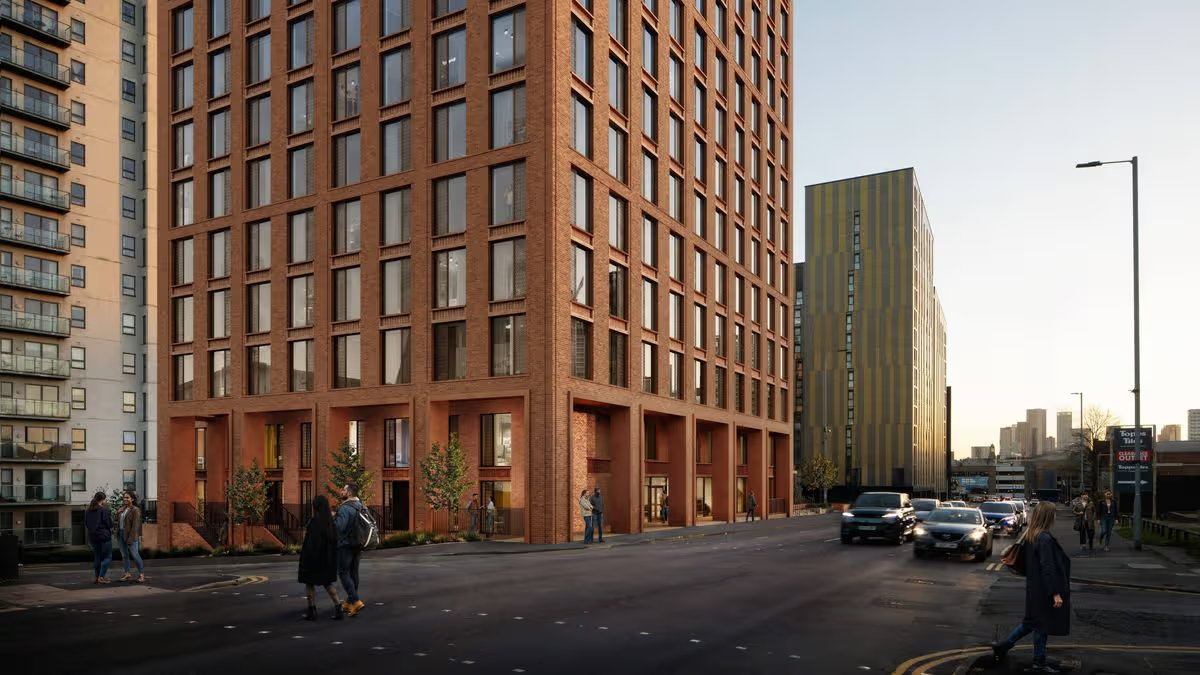
Concept images showing plans for a new 24-storey tower known as One Lord Street, based in Manchester's Green Quarter.

Concept images showing plans for a new 24-storey tower known as One Lord Street(Image: Linear Living )

Plans for swanky apartments within eyesight of Strangeways prison are set to be approved this week – but the scheme has already caused a stir among local residents.

Advertisement

The development would create 251 ‘high-quality’ homes in a part-24-storey building. The homes would be for private sale, with none at ‘affordable’ prices below market rates. A report submitted with the plans confirmed the scheme ‘can’t support affordable housing‘.

But 15 objections have been submitted about the proposals, claiming construction would ‘create bottlenecks and congestion’ on the roads, and would ‘block views and create a sense of enclosure’ in the area.

One objector said: “This is going to ruin the stunning view, ruin the area and de-value many of the existing flats.

“Will there be any compensation, financial or otherwise, for the negative impacts on neighbouring apartments and subsequent their loss of value?”

Advertisement

If approved, there would be four two-bed townhouses in the development, alongside 82 one-bed apartments, and 165 two-beds in the scheme overall.

It would be ‘car free’, designed to encourage potential future residents to use public transport or active travel options to get around instead.

There are plenty of public transport options nearby, including Victoria train station which is about a 15-minute walk away and also offers access to trams.

The new building by Linear Living would be based on the corner of Lord Street and Cheetham Hill Road, just minutes away from the Victorian prison that dominates the neighbourhood.

Advertisement

Land earmarked for the development is currently empty and surrounded by hoardings. It sits on the edge of Greengate, a part of Manchester which has been transformed into a popular place for city-centre living.

Concept images showing plans for a new 24-storey tower known as One Lord Street, in Manchester's Green Quarter.

A concept images showing plans for the 24-storey tower known as One Lord Street(Image: Linear Living)

Councillors in Manchester are meeting to make a decision on the plans on Thursday, with a recommendation of approval.

Meanwhile, separate regeneration projects are about to change the face of Strangeways forever, with thousands of new homes coming spread across seven new neighbourhoods.

How the future of Strangeways prison fits into the plans remains to be agreed, but council bosses in Manchester are pushing for a long-term plan to relocate it to another area. It comes as the boundaries of Manchester city centre are expanding outwards after a decade of growth.

Advertisement

In May, it was reported that ‘promising conversations’ are taking place with the government about relocating the prison. It is believed that it’s likely the new location would be outside Greater Manchester.

To find all the planning applications, traffic diversions, road layout changes, alcohol licence applications and more in your community, visit the Public Notices Portal.

Continue Reading

Business

UWE Bristol’s Future Space start-up hub creates nearly 1,000 jobs in decade

Published

on

Business Live

The innovation centre at Frenchay campus is marking its 10th anniversary

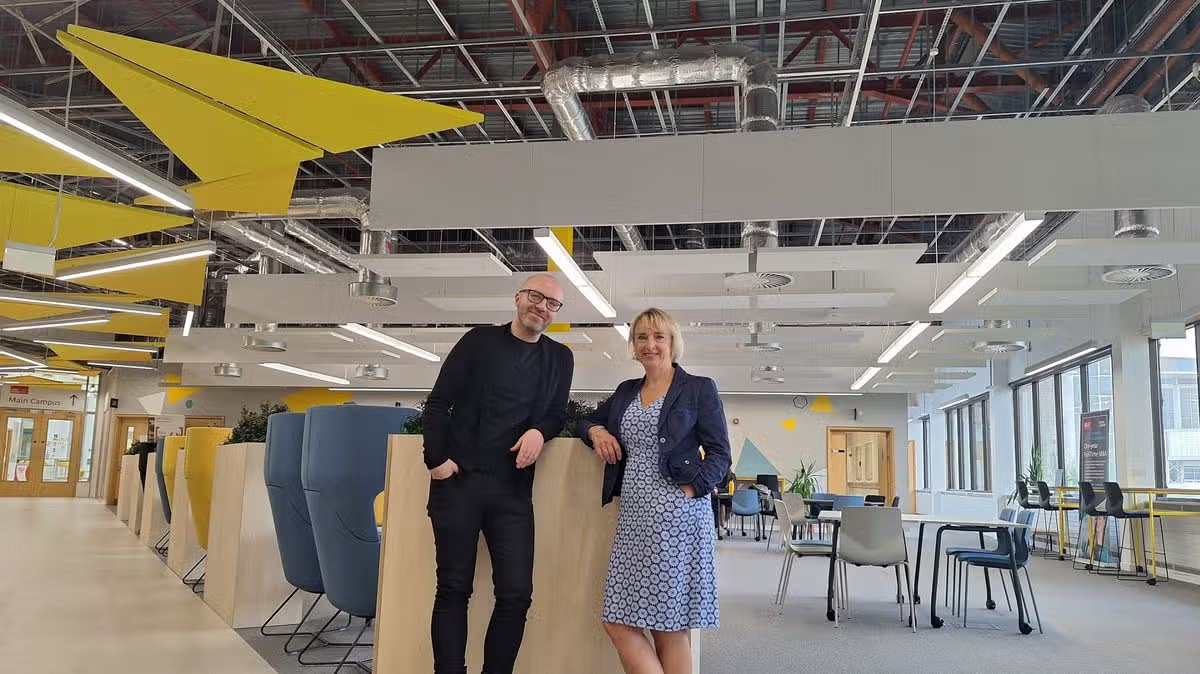
Professor Matt Freeman, Future Space centre director, and Tracey John, director of research and external engagement at UWE Bristol

Professor Matt Freeman, Future Space centre director, and Tracey John, director of research and external engagement at UWE Bristol(Image: UWE Bristol)

A university start-up hub has created nearly 1,000 jobs and contributed £56m to the economy since it was established a decade ago, those behind the initiative have said.

Future Space, the University of the West of England’s (UWE Bristol) innovation centre, was founded in 2016 as part of the Government’s University Enterprise Zone programme. The hub is based at Frenchay campus and offers workspace, university research facilities and business support to start-up and high-growth companies.

Since its founding, Future Space has generated more than £136m in investment and grants, according UWE, and assisted 178 businesses – from robotics to AI to biotech firms – to launch some 588 products.

The centre is managed in partnership with Oxford Innovation Space.

Advertisement

Professor Matt Freeman, centre director of Future Space, said: “Over the last decade, Future Space has become a place where businesses, researchers and student talent stop operating in separate worlds and start innovating together.

“Our impact figures tell a story of hundreds of new products and innovations, almost a thousand jobs, over £136m of investment secured, and thousands of moments where researchers, students, founders and partners have come together to turn ideas into real-world impact.”

The companies Future Space has supported include Albotherm, which offers temperature-responsive greenhouse coatings to support sustainable farming, and cell and gene therapy business eXmoor Pharma.

Another is SAH Diagnostics, which delivers specialist cancer diagnostic services to 34 NHS trusts and hospitals across the UK.

Advertisement

After three years at Future Space developing the world’s first mobile urology unit, SAH Diagnostics has recently opened a new cancer diagnostic centre in Bradley Stoke.

The company has supported the treatment of more than 400,000 patients to date, partnering with UWE Bristol to develop community outreach programmes and working towards an accredited training and education programme.

Tracey John, director of research and external engagement at UWE Bristol, said: “Future Space demonstrates the vital role universities can play in driving innovation, supporting business growth and creating opportunities for people and communities.

“As we celebrate this milestone, we are also celebrating Bristol’s strength as a city of innovation – one that continues to show how partnerships between universities and businesses can help address some of society’s biggest challenges while creating sustainable economic growth.”

Advertisement

In the last year, over 400 UWE Bristol students have engaged with businesses based at Future Space through student projects, funded internships and part-time roles, according to the university.

Jo Stevens, managing director at Oxford Innovation Space, added: “At Oxford Innovation Space, we believe that when innovative businesses are given the right environment to grow, they create jobs, attract investment and strengthen local economies.

“Future Space is a fantastic example of this in action. Over the past 10 years, it has become a catalyst for innovation-led growth in the West of England, helping ambitious founders turn ideas into successful businesses and delivering significant economic impact for the region.”

Advertisement
Continue Reading

Business

Local shares dip, miners slump as Hormuz tensions flare

Published

on

Local shares dip, miners slump as Hormuz tensions flare

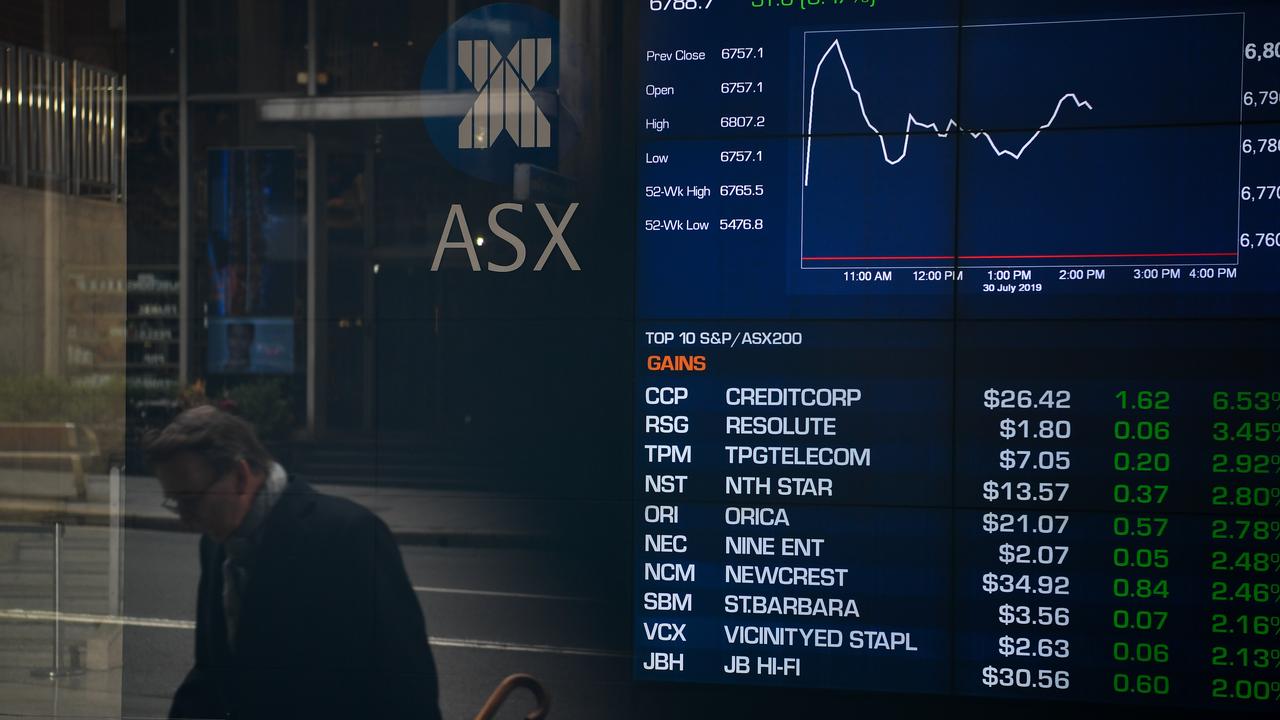
Australia’s share market has resumed its decline after a container ship in the Strait of Hormuz was hit by a projectile, testing a fragile truce between the US and Iran.

Continue Reading

Business

Muhlenkamp Q2 2026 Quarterly Letter (Mutual Fund:MUHLX)

Published

on

Invesco Global Strategic Income Fund Q4 2025 Commentary (OPSIX)

Businessman and team analyzing financial statement Finance task. with smart phone and laptop and tablet.

laddawan punna/iStock via Getty Images

Fellow Investors,

For most of the second quarter, the markets were driven by news concerning the Iran War. Major combat operations began on February 28th and mostly ended after the April 8th cease-fire agreement. The war mattered to markets because the Iranians closed the Strait of Hormuz, reducing global crude oil flows by about 20% of global daily consumption and significantly reducing liquefied natural gas (LNG) and fertilizer flows as well. Oil prices peaked at $113 per barrel on April 7th and have declined erratically since then, hitting a low of $70 on June 24th. On June 17th, the Strait of Hormuz was partially reopened after the signing of a memorandum of understanding between the United States and Iran, and oil slowly began to flow out of the area once again. This was critical, as many countries had been drawing down oil reserves to keep their economies running. Their ability to do this was finite, and there were some real concerns that a true oil shortage would develop when their reserves were depleted, sending prices much higher and slowing economic activity sharply. While those fears have not completely disappeared, such a dire outcome is far less likely now.

While the conflict with Iran is not resolved, the opening of the Strait of Hormuz has allowed Wall Street to think about other things: a new Federal Reserve Chairman (Kevin Warsh) and the massive IPO of SpaceX.

Advertisement

Mr. Warsh became the Fed Chair on May 22nd and appears intent on reforming the Federal Reserve. He started his reforms by doing away with forward guidance and creating five advisory committees to study communications, the balance sheet, inflation frameworks, data sources, and productivity/jobs. These committees are expected to wrap up their work by the end of 2026, so it won’t be long before we find out what they recommend. At its May meeting, the Fed kept the Federal Funds Rate target unchanged at 3.50% – 3.75%. Mr. Warsh emphasized price stability in his remarks, and prediction markets took those comments as a sign that rate hikes were more likely in the near future, not the expected rate cuts. We’ll see.

As regards the SpaceX IPO, I am struck by the high valuation given to the company: 55 times this year’s estimated sales (the company is not yet profitable, so Price/Earnings is meaningless). As a rule of thumb, I generally consider 10 times sales to be expensive – SpaceX is far beyond that. CEO Musk has set himself some very ambitious goals including deploying orbital data centers and putting a million people on Mars – if he can do the improbable, perhaps his company is worth its current price. Again, we’ll see.

On to more mundane concerns.

The U.S. economy appears to be doing fine. The U-3 Unemployment Rate was 4.3% on May 31st, about where it has been since May 2025. 1st Quarter real GDP growth was reported to be 2.1% on March 31st and the Atlanta Federal Reserve’s GDPNow estimate for the second quarter is 2.5% as of June 25th, 2026. Inflation has increased throughout the year with the Consumer Price Index indicating 4.2% year-over-year inflation on May 31st, 2026. The high inflation number probably prompted Warsh’s repeated emphasis on price stability as a Federal Reserve goal. Interest rates in general bottomed in early March and have been rising erratically ever since. The yield on the 10-year Treasury bond was 3.94% on March 1st, rising to 4.38% on June 25th. Similarly, the 30-year fixed mortgage rate was 6.1% on March 1st and hit 6.57% on June 25th.

Advertisement

The S&P 500 has bounced nicely from the late March low and is now up roughly 7% year to date. Semiconductor stocks have led the move higher as massive investments by artificial intelligence developers and cloud service providers accelerated chip makers’ revenue and earnings growth.

As I did last quarter, let’s review our standing questions. The questions are listed below in italics, with our updates in bold letters.

  • When will the AI boom end? The answer still eludes me. My number one concern is that the AI boom will turn to bust, and the stock market will do a re-enactment of 2000 – 2002. I have been actively reducing exposure to companies benefitting from AI investments for the last 18 months. I may have acted too soon, and our investments may underperform for a time if the AI boom continues.
  • When will the contraction in manufacturing end? 1st quarter 2026. This question will be dropped going forward.
  • Will the tailwinds for gold continue? The price of gold has dropped about 25% from its January peak and is down 6% year to date. The stronger dollar has been a headwind, but the structural tailwinds (central bank buying, gold backed crypto currency buying, profligate government spending) are still in place. Our gold related holdings change little during the Quarter.
  • Will the tariff and regulatory upheaval we saw in ’25 settle down, allowing CEOs to start making long-term decisions again? This is not yet clear. In conversations with CEOs tariffs rarely come up any more and regulatory change is more often beneficial than not. Long term, I think regulatory reform is a significant positive change for the U.S. economy.
  • What will inflation do this year? So far it has mostly gone up, it is not clear how much was due to oil prices and how much is due to other factors. Also unclear is the ability or willingness of the Fed to raise interest rates and thereby increase borrowing costs for the government.
  • How long will the Iran war last? 45 Days. How high will oil prices go? $110 per barrel. I don’t think the U.S. will resume major combat operations. This question will also be dropped unless I am wrong and major combat operations resume.

The accounts Muhlenkamp and Company manages remain up by high-single-digit percent year to date. I’ve taken profits on some successful investments in the Quarter and sold our international and Chinese investments. The Chinese holdings were not meeting my expectations, so I sold them. The international exchange-traded fund we owned was heavily exposed to Korean and Taiwanese chipmakers and did better than I expected. I sold it because I think those chipmakers are now overpriced. I’m not in a hurry to put our cash to work but will happily do so when I find lucrative opportunities.

I hope that you and your family enjoyed our nation’s 250th birthday and didn’t get overcooked! As always, please contact us if you have any questions, we’d love to hear from you!

Jeff Muhlenkamp, Portfolio Manager

Advertisement

Muhlenkamp and Company, Inc.

Consumer Price Index (CPI) – measures the average change in prices over time that consumers pay for a basket of goods and services, commonly known as inflation.

GDP (Gross Domestic Product) – is the total market value of all goods and services produced within a country in a given period of time (usually a calendar year).

Advertisement

Price to Earnings ratio (P/E) – the current price of a stock divided by the trailing twelve months earnings per share.

Price to Sales ratio (P/S) – the current price of a stock divided by (in this case) the average of analysts’ estimates for FY 2026 sales. Trailing twelve months’ sales or forward twelve months’ sales estimates are also commonly used in this calculation.

S&P 500 Index® – the S&P 500 (Standard & Poor’s 500) is a stock market index that tracks the performance of 500 leading publicly traded companies in the United States. The S&P 500® Index is weighted by market value and its performance is thought to be representative of the stock market as a whole. One cannot invest directly in an index.

U-3 Unemployment Rate – U-3 is the official unemployment rate published by the U.S. Bureau of Labor Statistics (BLS). It measures the total number of jobless people (aged 16 and older) who are available to work and have actively searched for a job in the past four weeks, expressed as a percentage of the labor force.

Advertisement

Past performance does not guarantee future results.

The comments made in this letter are opinions and are not intended to be a forecast of future events, a guarantee of future results, nor investment advice.

Visit our website for past Quarterly Letters and other archives – Muhlenkamp Library

Copyright © 2026 Muhlenkamp & Company, Inc. All Rights Reserved

Advertisement

Original Post

Editor’s Note: The summary bullets for this article were chosen by Seeking Alpha editors.

Continue Reading

Business

Coco Gauff Reaches First Wimbledon Semifinal With Dramatic Comeback Win Over Fellow American Jessica Pegula

Published

on

Coco Gauff

LONDON — Coco Gauff advanced to her first career Wimbledon semifinal on Tuesday, rallying from a set down to defeat fellow American Jessica Pegula 4-6, 6-3, 6-3 in an all-USA quarterfinal that pitted the tournament’s two highest-seeded women’s players against each other on Centre Court.

The No. 7-seeded Gauff overcame an early setback, dropping the first set to the No. 4-seeded Pegula before regrouping to take control of the match over the final two sets. The turning point of the second set came when Pegula, serving at 3-4, double-faulted at 0-40, handing Gauff a 5-3 lead she would not relinquish. Gauff then sealed the set with a 117 mph ace, leveling the match at one set apiece.

The decisive third set featured several momentum swings before Gauff ultimately pulled away. She broke Pegula with a low passing-shot winner to take a 2-1 lead, only for Pegula to break back immediately when Gauff netted a forehand on break point, tying the set at three games apiece. Gauff responded right away, breaking Pegula at love for a 4-3 lead after Pegula netted a forehand off a deep service return. With Pegula serving to stay in the match at 3-5, 30-40, she dumped a backhand into the net, sending Gauff into a celebration on court as she completed the win.

Gauff finished the match a perfect 4-for-4 on break-point conversions and served at 76 percent in the decisive third set, controlling the tempo from the baseline throughout the closing stages of the match. Speaking on court immediately after the win, Gauff reflected on the significance of the result given her earlier struggles on grass. “Honestly, pretty insane,” Gauff said. “Considering I hadn’t won a match on grass in 2 years before this tournament. I’m definitely just really happy with how I played today. Jess is an incredible opponent and person, playing against her is never easy. I’m just happy to get through this one today.”

Advertisement

Tuesday’s meeting marked a historic occasion for American tennis. According to ESPN, Gauff and Pegula were the first pair of American women’s top-10 seeds to meet at Wimbledon since Serena Williams defeated her sister Venus in the 2009 final. The matchup also carried personal significance for both players, given their history as former doubles partners, including during the 2024 Paris Olympics, where the pair won gold together before splitting to focus on their individual singles careers.

With the win, Gauff, 22, became the highest remaining seed in the women’s singles draw and is now guaranteed to reach at least the final, given the depth of the remaining field. She is set to face the winner of Thursday’s quarterfinal between No. 14 seed Naomi Osaka of Japan and No. 10 seed Karolina Muchova of Czechia in the semifinals. ESPN broadcaster Mary Joe Fernandez offered high praise for Gauff’s game following the match, suggesting she could be the player to beat for the remainder of the tournament. “I like the winner of this match going all the way,” Fernandez said on air. “The way that Coco moves, the way that she can attack the net, she’s going to be really hard to beat.”

For Pegula, 32, the loss extends a career pattern in which she has consistently reached the latter stages of Grand Slam tournaments without ever winning one. She has now reached 10 career Grand Slam quarterfinals but has never advanced past the quarterfinal round at Wimbledon specifically, and she remains in search of her first major singles title. Pegula, the daughter of billionaire Buffalo Bills owner Terry Pegula, had entered this year’s tournament having reached the semifinals of the Aussie Open earlier this season, adding to a résumé that already includes a runner-up finish at the 2024 U.S. Open, her best Grand Slam result to date.

Tuesday’s result carries significant financial implications for both players as well. According to prize money figures cited by Forbes, Gauff’s semifinal appearance earns her approximately $1.24 million, while the tournament’s eventual champion will take home close to $5 million, with the runner-up receiving approximately $2.48 million.

Advertisement

Gauff’s path to her first Wimbledon semifinal has been defined by resilience throughout the tournament. Her win over Pegula marked her third three-set victory of this year’s Championships, following an earlier comeback in the second round that included a tense 10-point tiebreak against Solana Sierra. Prior to this tournament, Gauff had never advanced past the fourth round at the All England Club, making Wimbledon the last of the four Grand Slam events where she had yet to reach the quarterfinal stage before this year’s breakthrough run. She previously won the 2023 U.S. Open and the 2025 French Open, giving her two major titles heading into this week’s semifinal, but neither had come on grass, a surface that had proven consistently difficult for her in previous years.

Gauff’s semifinal opponent will be determined Thursday when Osaka and Muchova meet in a rematch of their recent Bad Homburg final. Osaka reached the quarterfinals after delivering one of the standout performances of the tournament, upsetting top-seeded and world No. 1 Aryna Sabalenka in straight sets, a result that reshaped the entire women’s draw following the earlier eliminations of defending champion Iga Swiatek and 2022 champion Elena Rybakina.

With Tuesday’s win, Gauff has ensured that an American will reach the Wimbledon final for the first time since the 2009 all-Williams-sisters final, a milestone that adds further significance to a tournament that has already produced a string of notable upsets throughout its women’s draw. As she prepares for Thursday’s semifinal, Gauff will look to build on what she described as a career-best performance on grass, a surface she has now shown she can navigate at the highest level of the sport after years of comparative struggle on the fastest of tennis’s four Grand Slam surfaces.

Advertisement
Continue Reading

Trending

Copyright © 2025