Connect with us
DAPA Banner
DAPA Coin
DAPA
COIN PAYMENT ASSET
PRIVACY · BLOCKDAG · HOMOMORPHIC ENCRYPTION · RUST
ElGamal Encrypted MINE DAPA
🚫 GENESIS SOLD OUT
DAPAPAY COMING

Business

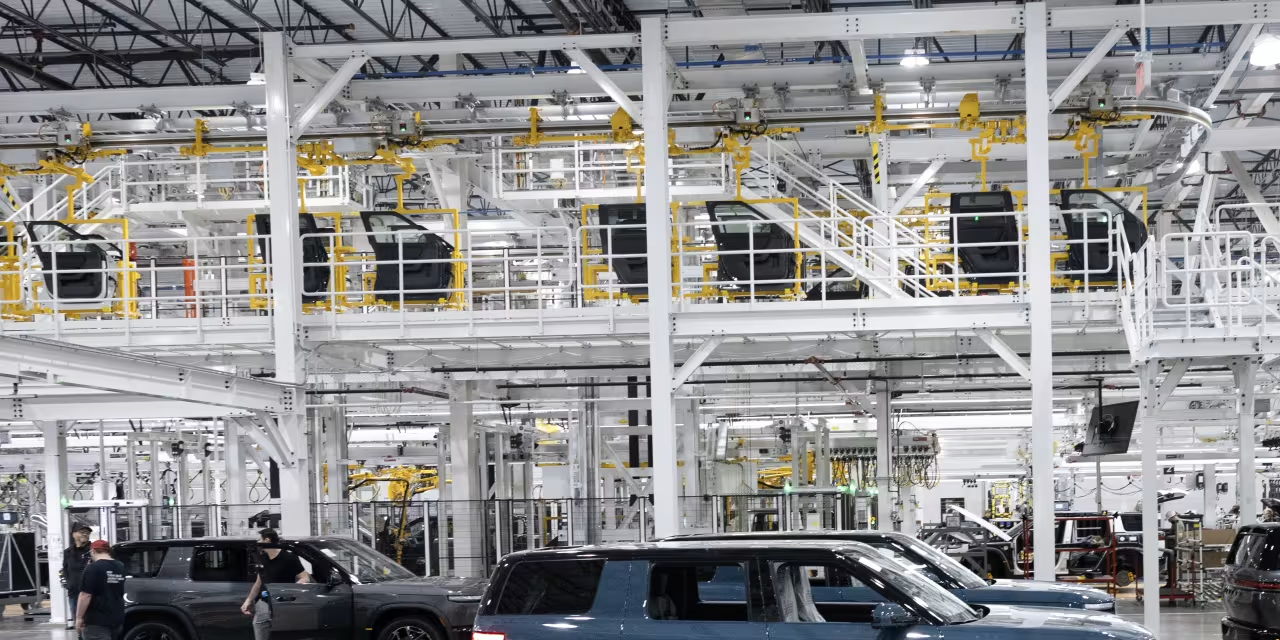
Rivian Stock Soars on Target Price Hike. There’s Just One Problem.

Published

on

Rivian Stock Soars on Target Price Hike. There’s Just One Problem.
Continue Reading
Click to comment

You must be logged in to post a comment Login

Leave a Reply

Business

Nasdaq Composite Climbs to a New Record High as Tech Stocks Rally Sharply After Late-June Chip Sell-Off

Published

on

The tech sector led record gains in the S&P 500 index. Pictured: a man with umbrella walks past the New York Stock Exchange.

NEW YORK — The Nasdaq Composite closed at a record high Monday, ending the session at 26,018.82, up 186.15 points, or 0.72 percent, as technology stocks extended a sharp rebound following a bout of heavy selling in semiconductor shares in the final days of June.

Monday’s gains came as investors returned from the extended Independence Day holiday weekend with renewed appetite for artificial intelligence-related stocks, a reversal from the volatility that had gripped the sector just days earlier. Futures on the tech-heavy Nasdaq 100 had climbed as much as 1 percent ahead of Monday’s opening bell, according to data from Yahoo Finance, setting the stage for the index’s strong close.

The rally in tech shares followed a difficult stretch in late June, when concerns over stretched valuations tied to the artificial intelligence trade sent chipmakers sharply lower across multiple sessions. Semiconductor names including Micron Technology, Advanced Micro Devices and Intel each posted steep single-day declines during that period, with Micron falling as much as 7 percent, Applied Materials and Marvell both dropping around 10 percent, and SanDisk tumbling 13 percent in a single trading session, according to data from Trading Economics. The selling reflected broader investor unease over whether AI-linked valuations had climbed too far relative to near-term earnings potential.

Sentiment shifted heading into Monday’s session after Taiwan-based Hon Hai Precision Industry, the Nvidia supplier better known as Foxconn, reported stronger-than-expected quarterly sales over the weekend, a signal that demand tied to AI infrastructure buildouts remains robust. That report appeared to help ease some of the concerns that had weighed on chip stocks in the prior weeks, contributing to the broader tech-sector rebound that lifted the Nasdaq to its record close.

Advertisement

Attention is now shifting to a pair of major developments from South Korea’s memory chip industry set to unfold later this week. Samsung Electronics is scheduled to report preliminary second-quarter 2026 earnings Tuesday, with expectations pointing to profit growth of roughly 18 times year-over-year, a figure that would surpass the company’s total earnings for all of 2025, according to reporting from Yahoo Finance. Samsung shares have surged 165 percent so far this year heading into the report. Later in the week, rival SK Hynix is expected to complete a U.S. stock market listing valued at roughly $28 billion to $29 billion, a move Bloomberg reported could strengthen the company’s position in the global memory chip market that underpins much of the current AI computing boom.

Elon Musk’s SpaceX is also drawing attention this week, with the company set to officially join the Nasdaq-100 index before trading begins Tuesday, following its public listing on June 12. The Nasdaq-100, while heavily weighted toward technology, also includes major companies across healthcare, retail and biotechnology sectors. The Roundhill Magnificent Seven ETF, which offers equal-weighted exposure to Alphabet, Amazon, Apple, Meta Platforms, Microsoft, Nvidia and Tesla, gained 0.54 percent in premarket trading Monday, underscoring renewed optimism around the group of large-cap technology names that have driven a significant share of the market’s gains over the past several years.

Tesla shares also advanced Monday after the company announced its robotaxi service had become available in Miami, extending the rollout of its autonomous ride-hailing operations to a new market. The news offered a bright spot for the stock following a rough prior week, during which shares fell more than 7 percent despite the company reporting vehicle delivery figures for the second quarter that easily surpassed analyst estimates.

Monday’s tech-driven gains came against the backdrop of a broader market that has continued climbing to fresh records in recent sessions, even as some corners of the technology sector experienced turbulence. The Dow Jones Industrial Average closed at a record high last Thursday, the final trading session before markets were closed Friday for the Independence Day holiday, and extended that record-setting run into the new trading week. For the holiday-shortened week ending Thursday, the Nasdaq Composite gained 2.1 percent, while the S&P 500 rose 1.8 percent and the Dow added 2 percent, according to data from Trading Economics, capping what the firm’s data showed was Wall Street’s best quarterly performance since 2020.

Advertisement

Economic data released last week also played a role in shaping market sentiment heading into the new week. The Department of Labor reported that nonfarm payrolls increased by just 57,000 in June, well below the consensus estimate of 117,000, while the unemployment rate declined to 4.2 percent from 4.3 percent the previous month, a drop driven in part by a decline in labor force participation to 61.5 percent, its lowest level since March 2021. Federal Reserve Chairman Kevin Warsh urged investors last week to look to incoming economic data, rather than to the central bank itself, for signals on the future direction of interest rates, a comment that came as markets weighed the softer-than-expected jobs figures against the market’s continued record-setting momentum.

Other notable developments last week included reports that OpenAI was in discussions to sell a 5 percent stake to the U.S. government, along with news that Meta Platforms was exploring options to monetize excess computing capacity built up as part of its aggressive investment in AI infrastructure. Meta shares fell nearly 5 percent following that report, reflecting investor scrutiny over whether the company’s substantial capital spending on AI has outpaced near-term demand for that capacity.

Overseas markets presented a more mixed picture to start the week. Europe’s Stoxx 600 index slipped 0.4 percent after touching a record high in the prior session, while markets across Asia showed choppier trading as investors positioned ahead of this week’s closely watched earnings from Samsung and the pending SK Hynix listing.

Looking ahead, strategists at JPMorgan have said they expect the broader artificial intelligence investment cycle to continue supporting U.S. equity markets through the remainder of the year, having recently raised their year-end target for the S&P 500 amid sustained strength in the technology sector. With Samsung’s earnings report and the SK Hynix listing both set to unfold in the coming days, investors will be watching closely for further signals on whether the renewed momentum in chip and technology stocks that lifted the Nasdaq to Monday’s record close can be sustained through the remainder of the summer trading season.

Advertisement
Continue Reading

Business

Russell 2000 Falls as Rate-Sensitive Small-Cap Stocks Lag Record Highs Set by Both Dow and Nasdaq Monday

Published

on

FTSE 100 Surges 0.8% Today as Oil Eases and Markets

NEW YORK — The Russell 2000, the benchmark index for U.S. small-capitalization stocks, closed lower Monday even as the Dow Jones Industrial Average and the Nasdaq Composite both notched fresh record highs, highlighting a growing divergence between large-cap technology and blue-chip names and their smaller-company counterparts to start the trading week.

The Russell 2000 finished the session at 2,996.11, down 16.48 points, or 0.55 percent, pulling the index further from the psychologically significant 3,000 mark even as broader market benchmarks continued to climb. The decline came on a day when the Dow closed at 53,032.55, up 132.48 points, and the Nasdaq Composite ended at a record 26,018.82, up 186.15 points, underscoring how unevenly gains have been distributed across the market to start the new trading week.

The divergence reflects a broader pattern that has periodically emerged throughout 2026, in which large-cap technology and blue-chip stocks have outperformed smaller companies, which tend to be more sensitive to the direction of interest rates and broader economic growth expectations. Small-cap companies, many of which carry higher levels of variable-rate debt relative to larger, more established corporations, often see their stock performance more directly tied to expectations around Federal Reserve policy than their large-cap counterparts, which can rely more heavily on global revenue streams and stronger balance sheets to weather periods of economic uncertainty.

Monday’s pullback in small-cap stocks came in the wake of a mixed labor market report released last week. The Department of Labor reported that nonfarm payrolls rose by just 57,000 in June, well below the consensus estimate of 117,000, while the unemployment rate declined to 4.2 percent from 4.3 percent in May. That decline in the unemployment rate was driven in part by a drop in the labor force participation rate to 61.5 percent, its lowest level since March 2021, a detail that some analysts have said complicates the overall read on labor market health despite the headline improvement in the jobless rate.

Advertisement

Federal Reserve Chairman Kevin Warsh urged investors last week to focus on incoming economic data rather than on the central bank itself for signals about the future path of interest rates. That guidance has left investors parsing recent economic releases for clues about whether the Fed will move to adjust rates in the coming months, a question that carries particular weight for smaller companies within the Russell 2000, given their generally higher sensitivity to borrowing costs.

The divergence between small-cap and large-cap performance also comes amid a broader rotation of investor attention toward the technology sector, which has driven much of the market’s gains in recent weeks following a bout of heavy selling in semiconductor stocks in late June. Chipmakers including Micron Technology, Advanced Micro Devices and Intel had each posted sharp declines during that stretch amid concerns over stretched valuations tied to the broader artificial intelligence investment cycle. That selling gave way to a rebound heading into this week, following stronger-than-expected quarterly sales reported over the weekend by Taiwan-based Hon Hai Precision Industry, the Nvidia supplier known as Foxconn, a development that helped restore investor confidence in continued AI-related demand and contributed to Monday’s records in both the Dow and the Nasdaq.

With investor attention concentrated heavily on large-cap technology names this week, including anticipation ahead of Samsung Electronics’ preliminary second-quarter earnings report scheduled for Tuesday and SK Hynix’s pending multibillion-dollar U.S. stock listing later in the week, smaller companies within the Russell 2000 have received comparatively less attention from investors positioning around the AI trade. The Roundhill Magnificent Seven ETF, which tracks Alphabet, Amazon, Apple, Meta Platforms, Microsoft, Nvidia and Tesla on an equal-weighted basis, gained ground in early trading Monday, reflecting the continued concentration of investor interest in a small group of dominant technology companies rather than the broader universe of smaller, domestically focused firms that make up the Russell 2000.

The performance gap between small-cap and large-cap stocks is not a new phenomenon this year. Small-cap companies, which tend to have less exposure to international markets compared with many of the multinational technology firms driving the S&P 500 and Nasdaq higher, have periodically lagged broader market benchmarks throughout 2026 as investor enthusiasm has concentrated around artificial intelligence infrastructure spending and the handful of large technology companies most directly tied to that trend.

Advertisement

Monday’s decline in the Russell 2000 also stood in contrast to a broadly strong holiday-shortened week across major indexes. For the week ending last Thursday, the Dow rose 2 percent, the S&P 500 gained 1.8 percent and the Nasdaq Composite added 2.1 percent, according to data from Trading Economics, capping what the firm’s data showed was Wall Street’s best quarterly performance since 2020. Whether small-cap stocks can participate more fully in that broader rally in the weeks ahead may depend heavily on incoming economic data and any further signals from the Federal Reserve regarding the future path of interest rates.

Overseas markets offered a mixed backdrop to start the week as well. Europe’s Stoxx 600 index slipped 0.4 percent Monday after reaching a record high in the prior session, while markets across Asia showed choppier trading as investors positioned ahead of this week’s high-profile earnings and listing events tied to South Korea’s memory chip sector.

Looking ahead, market strategists will be watching closely to see whether the current divergence between large-cap and small-cap performance persists or narrows in the coming weeks, particularly as more companies across a broader range of sectors begin reporting second-quarter earnings later this month. Until then, the contrast between Monday’s record closes for the Dow and Nasdaq and the more modest pullback in the Russell 2000 serves as a reminder that not all corners of the U.S. stock market are moving in lockstep, even during a period of broadly positive sentiment on Wall Street.

Advertisement
Continue Reading

Business

Why is Space Exploration Technologies stock sliding today?

Published

on


Why is Space Exploration Technologies stock sliding today?

Continue Reading

Business

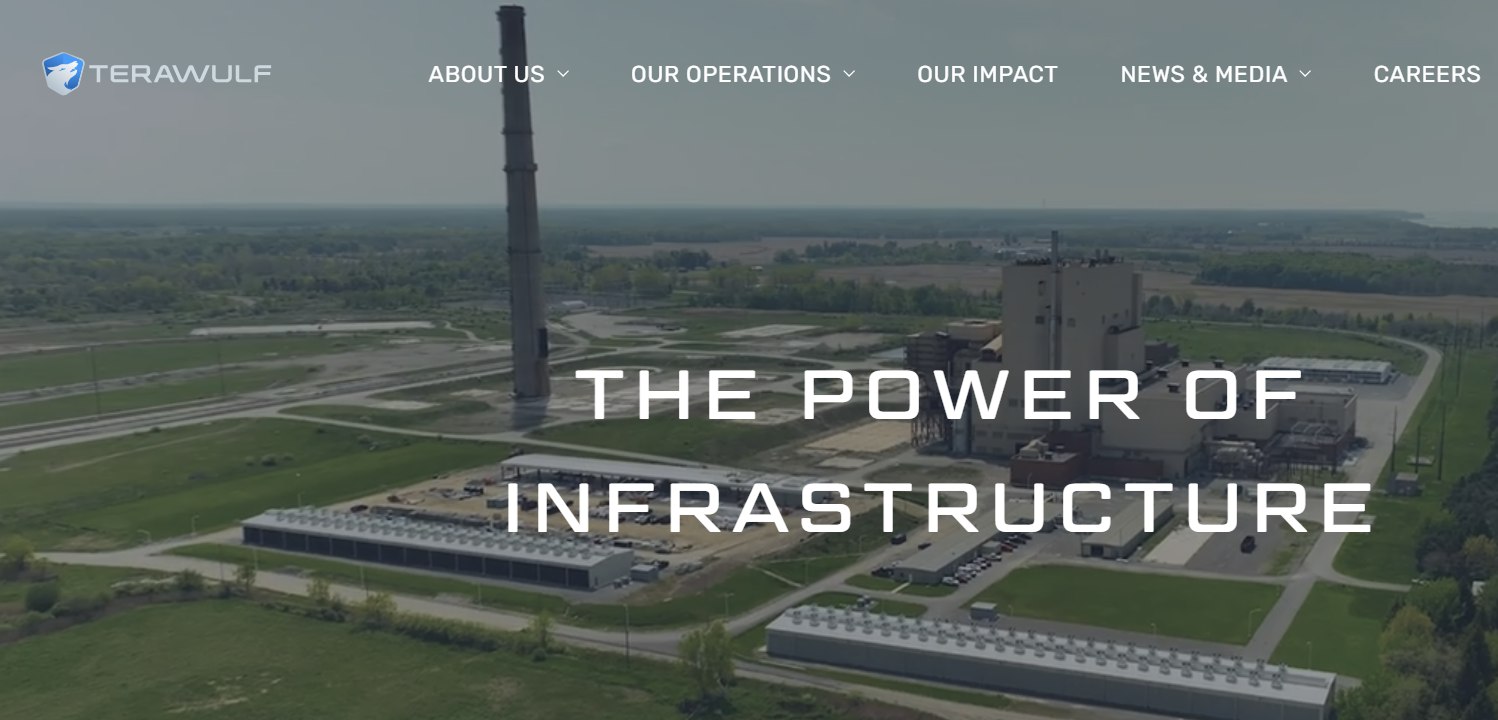
TeraWulf Stock Soars Nearly 18% After Signing $19 Billion Anthropic Data Center Lease Deal in Kentucky

Published

on

UiPath

Shares of TeraWulf Inc. surged nearly 18 percent in early trading Monday after the company announced a 20-year artificial intelligence infrastructure lease agreement with Anthropic, along with the sale of its majority stake in a separate joint venture, marking the latest step in the company’s transformation from a bitcoin mining operator into a major AI and high-performance computing infrastructure provider.

TeraWulf shares were trading at $24.95, up $3.77, or 17.82 percent, as of 9:49 a.m. Eastern time Monday, according to Yahoo Finance data. The stock’s sharp move followed the pre-market disclosure of two significant corporate actions: a long-term lease agreement with AI company Anthropic covering TeraWulf’s Justified Data campus in Hawesville, Kentucky, and the sale of the company’s 50.1 percent stake in the 168-megawatt Abernathy Joint Venture to a group led by Fluidstack.

According to the company’s announcement, the 20-year lease with Anthropic is expected to generate approximately $19 billion in contracted revenue over its initial term and will be supported by an investment-grade credit structure. The Kentucky campus is designed to accommodate roughly 401 megawatts of critical IT load and will be developed in multiple phases, with initial capacity expected to come online during the second half of 2027 and the site reaching full capacity by early 2028.

The Anthropic agreement adds a high-profile hyperscale AI tenant to TeraWulf’s growing roster of contracted customers, further validating the company’s pivot toward long-term, credit-backed infrastructure leasing rather than the more volatile revenue streams associated with bitcoin mining. That shift became structurally visible in the company’s first-quarter 2026 results, when revenue from high-performance computing operations, at $21 million, surpassed bitcoin mining revenue of $13 million for the first time in the company’s history.

Advertisement

Alongside the Anthropic lease, TeraWulf also announced the sale of its majority interest in the Abernathy Joint Venture to the Fluidstack-led group, a transaction that is expected to monetize roughly $450 million of invested capital at a premium. Company officials described the sale as a move to free up capital for the expansion of wholly owned AI infrastructure assets, which carry higher long-term margin potential compared with joint-venture holdings.

Monday’s rally followed a difficult stretch for TeraWulf shares, which had declined roughly 26 percent over seven consecutive trading sessions since late June before Monday’s rebound. Analysts covering the stock have generally maintained a bullish outlook despite the recent volatility. TeraWulf carries an all-Buy consensus rating from Wall Street analysts, with firms including Morgan Stanley, Bernstein and Clear Street each raising their price targets on the stock in recent weeks. Citi initiated coverage of the company late last month with a Buy rating and a $36 price target, implying meaningful upside from the stock’s trading levels at the time.

TeraWulf’s broader transformation has accelerated over the past year as the company has aggressively expanded its infrastructure footprint to meet growing demand for AI and high-performance computing capacity. In May, the company completed its acquisition of the Muskie Data Campus in Eastern Kentucky from Industrial Equity Partners, a 285-acre site capable of supporting more than one gigawatt of AI and HPC data center capacity. The company has said it plans to bring 500 megawatts of capacity online at that site by the second half of 2028, with an additional 500 megawatts targeted by 2030, expanding its total infrastructure inventory to approximately 3.8 gigawatts.

The company has also pursued significant financing to support its expansion plans, including a $3.2 billion high-yield bond sale earlier this year to fund the buildout of its Lake Mariner campus in New York, a facility that is backed by Google as a guarantor once operational. That financing arrangement has been cited by analysts as further evidence of TeraWulf’s growing credibility as a scaled AI infrastructure developer capable of attracting institutional-grade financial backing.

Advertisement

Over the past year, TeraWulf shares have posted extraordinary gains, with some reports citing increases ranging from roughly 80 percent to as much as 500 percent or more depending on the specific measurement period, reflecting the market’s growing enthusiasm for companies positioned to benefit from the ongoing buildout of artificial intelligence computing infrastructure. That rally has come even as the company continues to post net losses, with analysts forecasting continued losses per share in the year ahead as TeraWulf invests heavily in expanding its data center capacity ahead of generating the full revenue potential of its contracted leases.

Company leadership has framed the shift away from bitcoin mining as a strategic response to the broader economics of the crypto mining industry, where rising operational costs have made mining less profitable for many operators, alongside a recognition of surging demand for data center capacity tied to AI development. TeraWulf co-founder and CEO Paul Prager has previously discussed the company’s transition toward becoming a data center supplier as a direct response to what he has described as tremendous demand tied to the broader AI boom.

Monday’s stock movement occurred against a broader market backdrop in which the Dow Jones Industrial Average briefly topped 53,000 for the first time and the Nasdaq Composite advanced to a fresh record high, led largely by strength in chip and technology stocks. Even so, analysts noted that TeraWulf’s outsized gain Monday appeared to be driven primarily by company-specific news rather than broader macroeconomic conditions, given that the stock’s pre-market advance significantly outpaced the moves in major indexes.

Despite the strongly bullish reaction to Monday’s announcements, some risks remain for the company as it continues its rapid infrastructure buildout. TeraWulf holds more than $17 billion in total contracted revenue commitments, according to recent company disclosures, but faces ongoing execution risk as it works to convert those contracts into operating cash flow while simultaneously managing an aggressive capital spending program. The company has also disclosed a limited cash runway based on recent free cash flow trends, along with periods of significant stock price volatility and some insider selling activity in recent months, factors that investors will likely continue to monitor as the company works to scale its newly signed agreements into recurring revenue.

Advertisement

With the Anthropic lease now anchoring TeraWulf’s Kentucky campus and proceeds from the Abernathy joint venture sale available for redeployment into wholly owned infrastructure, the company appears positioned to continue its transition toward becoming a significant player in the AI data center sector, even as questions remain about how quickly its expanding contract backlog will translate into sustained profitability.

Continue Reading

Business

AXT Shares Jump Nearly 14% as Semiconductor Materials Maker Rebounds on AI-Linked Indium Phosphide Demand

Published

on

GameStop stock graph is seen in front of the company's logo

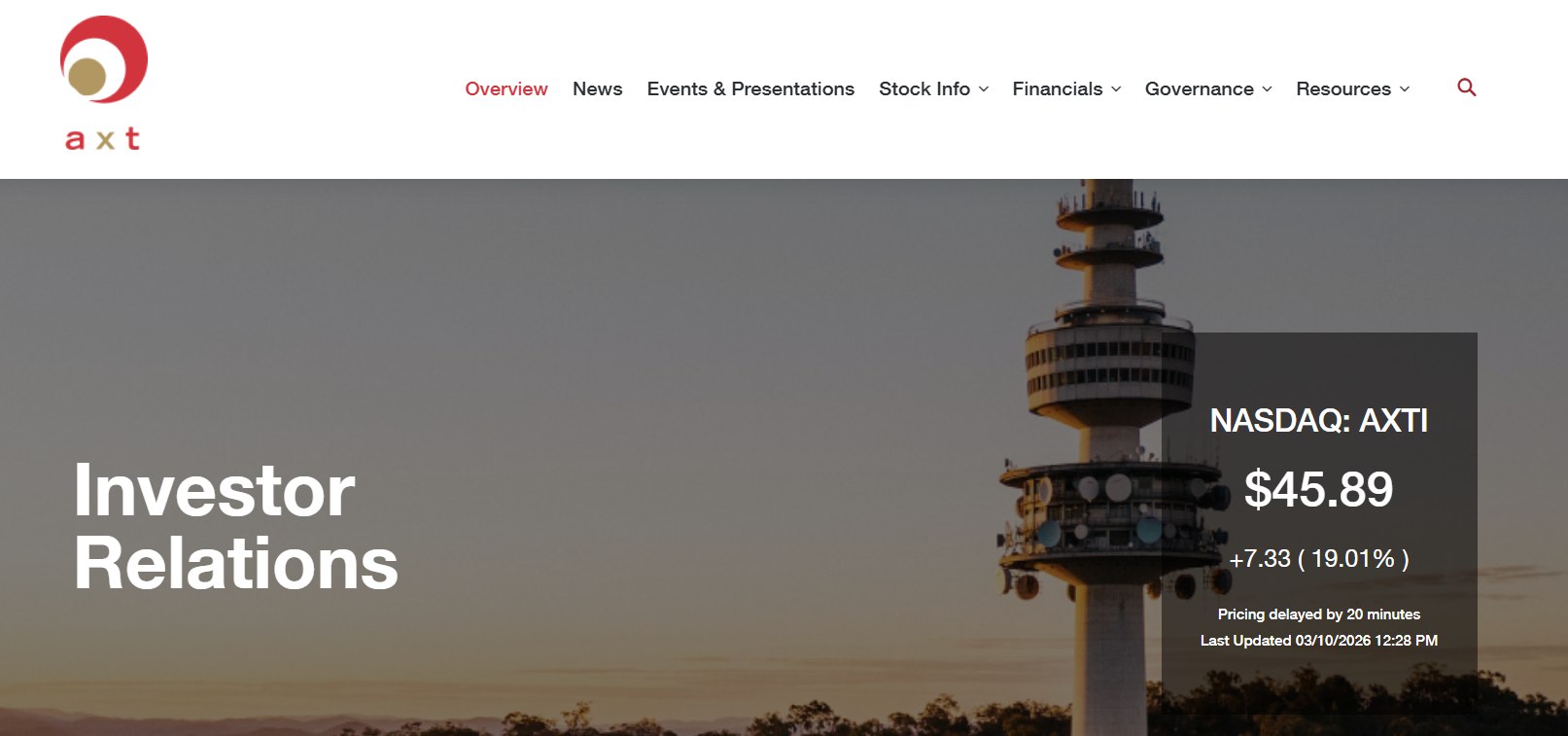
Shares of AXT Inc., a Fremont, California-based maker of compound semiconductor substrates, surged Monday morning, continuing a volatile run for a stock that has become one of the more closely watched names tied to the artificial intelligence infrastructure buildout over the past year.

AXT shares were trading at $64.73, up $8.11, or 14.32 percent, as of 9:52 a.m. Eastern time, according to Yahoo Finance data. The move came after a difficult stretch for the stock, which had fallen roughly 40 percent over the prior 30 days even as its year-to-date gain remained substantial, with shares up more than 280 percent since the start of 2026 as of recent trading, according to data from Simply Wall St.

AXT manufactures compound and single-element semiconductor substrate wafers made from materials including indium phosphide, gallium arsenide and germanium, which are used in applications ranging from data center optical connectivity and 5G infrastructure to satellite communications, lidar systems and infrared sensors. The company has increasingly positioned itself as a supplier to the broader artificial intelligence infrastructure buildout, given the role its indium phosphide substrates play in high-speed optical networking components used in AI data centers.

The stock’s recent volatility has been shaped by a combination of company-specific developments and broader index-related trading activity. Late last month, AXT’s subsidiary, Beijing Tongmei Xtal Technology, known as AXT-Tongmei, entered into a three-year master development and supply agreement with Coherent Corp. to develop and supply six-inch indium phosphide wafer substrates, a deal that included a $22.29 million prepayment from Coherent to help fund expanded production capacity. That agreement, announced June 25, was cited by analysts as a significant driver of investor interest in the stock in the days that followed.

Advertisement

AXT shares also moved sharply in connection with a reconstitution of the Russell family of stock indexes, with the company gaining inclusion in the Russell 2000, Russell 2500, Russell 3000 and several related growth benchmarks, while exiting certain microcap and value indices it had previously belonged to. Index-related additions of this kind can generate significant buying pressure as funds that track those benchmarks are required to adjust their holdings accordingly, a dynamic that analysts said contributed to some of the stock’s recent price swings independent of company-specific news.

The company has also taken steps to raise additional capital to support its expansion plans. Shareholders approved an increase in AXT’s authorized common stock from 70 million to 120 million shares at the company’s annual meeting, a move that followed an underwritten public stock offering expected to raise approximately $550 million before expenses. That capital raise is intended to support the company’s efforts to scale up production capacity to meet growing demand for its substrate materials.

Wall Street analysts have grown increasingly bullish on AXT’s prospects in recent months. Northland Capital Markets raised its price target on the stock to $125 from $90 earlier this year while reiterating an Outperform rating, citing the company’s exposure to indium phosphide demand tied to AI and optical networking growth. Other analysts have pointed to AXT’s improving financial performance as additional support for the bullish case, with the company’s first-quarter 2026 results showing revenue of $26.9 million, up 39 percent from the prior-year period, alongside a net loss of $1.62 million that narrowed 82 percent compared with the same quarter a year earlier.

Despite the bullish analyst sentiment, some investors and analysts have raised concerns about AXT’s valuation following its dramatic rally. According to a recent analysis from Simply Wall St, the stock trades at a price-to-sales ratio of roughly 43 to 48 times, compared with an average of approximately 9.2 times for the broader U.S. semiconductor industry and roughly 5 times for AXT’s direct peer group. That analysis noted that the company’s fair-value price-to-sales ratio, based on its growth profile, margins and risk factors, would suggest a multiple closer to 18.9 times, indicating that the stock may be pricing in significant future growth that has yet to materialize in current financial results.

Advertisement

Insider selling activity has also drawn attention amid the stock’s rally. According to data compiled by Quiver Quantitative, AXT insiders, including chief executive Morris Young and chief financial officer Gary Fischer, have engaged in dozens of open-market stock sales over the past several months without any corresponding insider purchases, a pattern that some market watchers view as a note of caution even amid otherwise positive sentiment toward the company’s growth story.

AXT has continued to expand its customer base and secure additional long-term agreements in recent months. In addition to the Coherent deal, the company’s Tongmei subsidiary previously entered into a long-term supply agreement with Nanjing Casela Technologies, further building out its roster of contracted customers within the compound semiconductor materials market. The company has scheduled its second-quarter 2026 earnings release for July 30, with a conference call to follow the same day, an event that analysts said will provide further clarity on how the company’s recent supply agreements and capacity expansion plans are translating into financial results.

AXT’s stock has experienced a particularly wide trading range over the past year, with its 52-week low sitting at $1.85 and its 52-week high reaching $143.16, according to data from Robinhood, reflecting the significant volatility that has characterized the stock as investor sentiment around AI-linked semiconductor materials companies has fluctuated throughout 2026. The company’s shares touched an intraday high of $65.49 and a low of $59.35 during Monday’s session, with trading volume of approximately 2.25 million shares, below the stock’s average daily volume of roughly 10.55 million shares.

With the broader market watching closely for signs of how sustainable the current enthusiasm around AI infrastructure spending will prove to be, AXT’s stock movement Monday reflects the broader pattern of heightened volatility among smaller companies positioned at the center of the artificial intelligence supply chain, where rapid share price gains have frequently been followed by sharp pullbacks as investors weigh long-term growth potential against near-term execution risk and elevated valuations.

Advertisement
Continue Reading

Business

Company behind baby pushchair rocker sold by John Lewis hits ‘major milestone’

Published

on

Business Live

Rockit was created in a shed a decade ago

Rockit was founded in Bristol

Rockit was founded in Bristol(Image: Rockit)

A pair of Bristol entrepreneurs who invented a baby rocking device in a garden shed have now sold one million products.

Engineer Nick Webb came up with the idea for Rockit after becoming frustrated his three-month-old daughter would only sleep while her pushchair was moving.

Advertisement

So he took apart an old printer, salvaged the motor and soldered together a makeshift device that could gently rock a stationary buggy. After testing the device, he discovered it worked.

“She stayed asleep even when the pushchair stopped moving,” recalled Webb. “That was the moment I realised I might be onto something.”

Webb teamed up with his brother-in-law – a dad and former product design teacher – Matt Dyson to transform the initial prototype into a commercial product. Working part time they spent the next 18 months refining the idea and securing support from the Design Council before launching the Rockit Rocker in 2017.

The duo have since grown Rockit into a global brand, with the product selling in major retail outlets including John Lewis and JoJo Maman Bébé. Today, Rockit products are also exported to more than 40 countries across Europe, North America, Australia and Asia.

Advertisement

Dyson said: “When we were developing the product, we didn’t dare dream it would become such a global success. After we launched, it was a couple of years before I spotted a Rockit ‘in the wild’. Now I have to pinch myself because every time I walk down the High Street I see several attached to pushchairs and prams.

“To think that something created by two ordinary dads in Bristol has now helped more than a million families around the world is pretty special.”

In 2022, Rockit received two Queen’s Awards for Enterprise, one of the UK’s highest business honours, with the founders invited to Buckingham Palace where they met Prince Charles.

“Meeting the future King was definitely one of our proudest moments,” said Dyson, “It was incredible to talk to him about the product and hear his interest in what we’d achieved.”

Advertisement

Rockit has since expanded its range with the launch of ZED, a vibration soother and nightlight; Wooshh, a small sound soother; and a rechargeable version of Rockit that hit the market in 2023.

In 2024, the business was named among the fastest-growing companies in the UK.

Despite its growth, Rockit remains “firmly rooted” in Bristol, according to its founders who say they are planning to expand the Rockit baby product range this month.

Advertisement
Continue Reading

Business

Chocolate batons designed for laminated pastry items

Published

on

Chocolate batons designed for laminated pastry items

The batons from Guittard reduce melt-out and offer greater consistency.

Continue Reading

Business

Barilla improves portfolio’s nutritional profile

Published

on

Barilla improves portfolio’s nutritional profile

New report also shares insight on regenerative ag and sustainable production.

Continue Reading

Business

payrolls stall at 57,000 as World Cup lift fails to appear

Published

on

payrolls stall at 57,000 as World Cup lift fails to appear

The American jobs machine slipped a gear in June. The world’s largest economy added just 57,000 jobs last month, barely half the 110,000 that Wall Street had pencilled in and the first undershoot in employment growth since the US-Iran war began.

The figure, published by the Bureau of Labor Statistics, is the weakest since payrolls contracted by 155,000 in February. Yet the report was not uniformly gloomy: the unemployment rate fell to 4.2 per cent from 4.3 per cent, defying forecasts of no change.

Much of the disappointment centred on the football World Cup, which kicked off on June 11 across 11 US host cities. Analysts had expected the tournament to lift hiring in hospitality and related sectors. Instead, payrolls in food and accommodation fell by 55,000. “We haven’t seen any major indication of World Cup related hiring yet,” said Shruti Mishra, US economist at Bank of America.

That is not to say the tournament has left no trace. Host cities have reported a 5 per cent rise in spending at restaurants and bars during the competition, against an average of 3.8 per cent across the rest of the country, according to Bank of America’s credit card spending data. The spending is flowing; the jobs, so far, are not.

The broader picture is one of deceleration on both sides of the ledger. The public sector generated 8,000 jobs, down from 32,000 in May, while the private sector added 49,000, down from 97,000. Jobs growth was strongest in education, professional and business services, social assistance and healthcare. Figures for April and May were revised down by a cumulative 74,000, with the losses concentrated in leisure and hospitality, a pattern familiar to readers who have followed the slowdown in the US jobs market over the past year.

Advertisement

Until now, the US labour market had performed better than forecast since the war in Iran, buoyed by booming private sector investment in artificial intelligence and resilient consumer spending. Average hourly earnings growth was unchanged at 0.3 per cent on the month, with the annual rate edging up to 3.5 per cent from 3.4 per cent.

All eyes now turn to the Federal Reserve. Kevin Warsh, who took over as chairman in late May, has made clear the central bank will prioritise bringing down above-target inflation over its mandate to ensure full employment. Traders trimmed their expectations of two interest rate rises after the data landed.

Holger Schmieding, chief economist at Berenberg, said the slowdown would push the Fed into leaving borrowing costs unchanged this month. “President Donald Trump has deported Goldilocks, the ability of the US economy to expand at a solid pace without generating excess inflation,” he said.

The miss was not entirely unforeseen. Economists at Citigroup had forecast a softer 25,000 to 85,000 expansion, citing rising unemployment claims, weaker private sector hiring intentions and a drop-off in job postings in June.

Advertisement

Markets took the news in their stride. The dollar declined by 0.6 per cent against a basket of currencies on Thursday, while government bond prices were stable. Seema Shah, chief global strategist at Principal Asset Management, said the report “should ultimately be welcomed by markets”.

She added: “We continue to expect the Fed to hold rates steady through to the year-end. However, if unemployment keeps falling, the case for additional policy tightening later this year will become increasingly compelling.”


Amy Ingham

Amy is a newly qualified journalist specialising in business journalism at Business Matters with responsibility for news content for what is now the UK’s largest print and online source of current business news.

Advertisement

Continue Reading

Business

5 Teams LeBron James Could Most Likely Join for the 2026-27 NBA Season as Free Agency Decision Still Looms

Published

on

LeBron James

LeBron James has officially become a free agent for the first time since 2018, and the four-time NBA champion’s decision on where he plays next has become the defining storyline of this year’s offseason. James informed the Los Angeles Lakers earlier this month that he intends to continue his career elsewhere for the 2026-27 season, ending an eight-year run with the franchise and setting up what has already been dubbed “The Decision 4.0.”

The move was confirmed by James’ longtime agent, Rich Paul, chief executive of Klutch Sports, who told multiple outlets that James would play for a different team next season but had not yet decided where. Lakers governor Jeanie Buss addressed the news in a statement, calling James “one of the greatest athletes in history” and adding that the organization would “always be thankful for his eight years with the Lakers — including the title he led us to in 2020 under the toughest imaginable circumstances.” James responded publicly as well, writing that it had been “truly a honor to wear the purple and gold while trying to continue the greatness and legacies that came before” him.

According to reporting from ESPN’s Shams Charania, the Cleveland Cavaliers, Miami Heat and Golden State Warriors have emerged as the current leaders in the race to sign James, with the Denver Nuggets also expressing interest. Paul has since been candid about additional teams in the mix, discussing potential fits including the New York Knicks, Philadelphia 76ers and Boston Celtics during a podcast appearance. Reports also indicate James instructed Paul to speak with any interested team around the league before returning with a full set of options for him to consider.

1. Cleveland Cavaliers A return to Cleveland would mark James’ third stint with the franchise that drafted him first overall in 2003. He returned to a hero’s welcome in 2014 and later led the Cavaliers to their first championship in 2016. The current roster, featuring James Harden, Donovan Mitchell, Evan Mobley and Jarrett Allen, is considered championship-ready, with what analysts describe as a natural opening at small forward for James to fill. A homecoming would also set up what could become a full-circle retirement tour for the Akron, Ohio, native in the years ahead.

Advertisement

2. Miami Heat The Heat represent familiarity for James, who spent four seasons in Miami from 2010 to 2014, winning two championships during his time there. While specific roster fits with Miami have drawn less detailed public reporting than some other suitors, the team has remained consistently mentioned among the frontrunners according to Charania’s reporting, reflecting the strength of James’ historical ties to the organization and the city.

3. Golden State Warriors Perhaps no potential destination has generated more buzz than Golden State, where James could pair with longtime rival-turned-Olympic teammate Stephen Curry. The two competed against each other in four consecutive NBA Finals during the 2010s before later teaming up to win Olympic gold together in 2024. Speaking about a separate teammate, Kevin Durant, during that tournament, James once said, “He’s just out of this world talent. I think he even goes even harder in practice, and when the game starts, it’s just routine for him,” illustrating the mutual respect James has expressed for some of the era’s other top scorers. A Golden State move would require the Warriors to navigate significant salary-cap challenges, and questions remain about the team’s aging core, with Curry set to turn 39 during the coming season and Draymond Green’s own future with the franchise reportedly tied in part to whether the team lands James.

4. Minnesota Timberwolves According to The Athletic’s Jon Krawczynski, the Timberwolves believe they have a legitimate shot at signing James, pitching a young core built around Anthony Edwards, LaMelo Ball, Jaden McDaniels and Rudy Gobert. James has previously called himself a “longtime fan” of Edwards, his teammate during the 2024 Paris Olympics. Minnesota’s pitch reportedly leans heavily on the franchise’s lack of a championship in its history, framing a potential title alongside James as a legacy-defining achievement for both the team and the player. The Timberwolves have reached the Western Conference finals in each of the past two seasons, giving the pitch added credibility.

5. Denver Nuggets Denver’s veteran-heavy roster, built around three-time MVP Nikola Jokic and Aaron Gordon, pushed the Oklahoma City Thunder to seven games in last year’s playoffs. Pairing James with Jokic would give the Nuggets what analysts describe as a strong case for the league’s best frontline, while Jokic’s dominant presence could allow James to manage his workload during the regular season with an eye toward a deep playoff run. The Nuggets previously made a notable effort to recruit James back in 2018, well before Jokic had won any of his three MVP awards or the franchise had captured its only championship.

Advertisement

Beyond these five teams, additional franchises have continued to make their own pitches public. The Philadelphia 76ers became a more serious contender after acquiring Jaylen Brown in a trade for Paul George, a move that reportedly intrigued Paul during his recent media appearances. Other teams, including the Atlanta Hawks, Dallas Mavericks, Sacramento Kings and San Antonio Spurs, have also been floated in various reports as long-shot destinations, each framing a potential James signing around either mentorship of a young core or a low-pressure path to a possible fifth championship ring.

As of the latest reporting, James has not set a firm timeline for his decision, and league insiders have suggested fans may need to wait further before learning his choice. With training camps still months away, the coming weeks are expected to bring continued speculation as Paul works through conversations with interested franchises on James’ behalf, determining which combination of roster fit, championship potential and personal history will ultimately guide the four-time MVP’s next chapter as he prepares for a record-extending 24th NBA season.

Continue Reading

Trending

Copyright © 2025