

Politics
Politics Home Article | Nigel Farage To Resign As MP And Fight By-Election

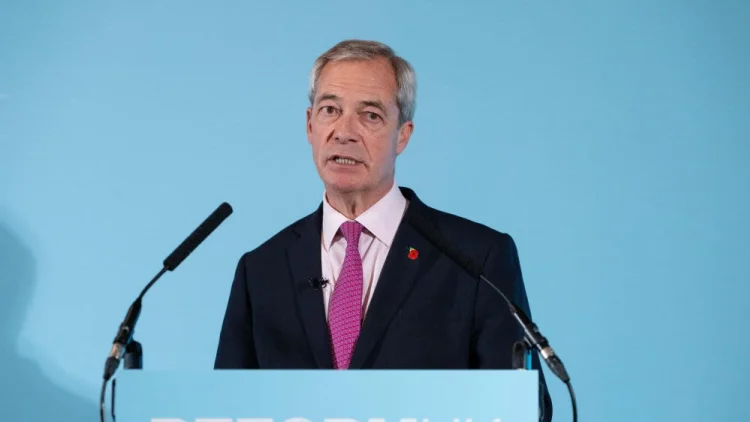

Nigel Farage speaking at a press conference in 2025 (Thomas Krych/Alamy)
2 min read
Nigel Farage has announced that he is resigning as the Reform MP for Clacton and will fight the by-election that follows.
Speaking on Tuesday afternoon, Farage said the contest would be a “people versus the establishment by-election” that would take place “in short order”.
“It’s a chance to stick two fingers up to the entire establishment, to frankly tell them where to go, and that is why I will be putting my name forward to stand in this by-election. I will fight to win. I will fight to continue the political revolution that Reform UK has started,” the Reform leader declared.
Farage added that the “people of Clacton” would then be “the judges” of his actions, amid increasing pressure on him over recent weeks due to a series of reports about his financial backing before he became an MP.
Over the weekend, The Sunday Times revealed that Farage had failed to declare funding from convicted fraudster George Cottrell.
Farage is also being investigated by the parliamentary standards watchdog after he received £5m from crypto-billionaire Christopher Harborne just weeks before announcing his intention to run in the 2024 general election.
The parliamentary standards commissioner, Daniel Greenberg, is expected to publish his findings before the end of next week.
If Farage is found to have seriously breached the code of conduct, consequences could include suspension from the Commons and a recall petition leading to a potential by-election.
This is a developing story…



5 min read
Shared public spaces like libraries, parks and sports clubs help create strong communities. No longer can they be seen as nice-to-haves.
The work of councils reaches into almost every part of people’s lives.
It is there when a child needs protection, when someone needs care, when a family needs a home, when a road needs repairing, when a library gives someone a quiet place to learn, when a local business needs support, or when a community is hit by crisis.
That is why the new report by the Local Government Association (LGA), LG2040: Forces Shaping Local Government, matters. Published today (Tuesday), it looks ahead to the forces that will shape councils and communities over the next 15 years.
Its message is clear. Unless we act now, the country risks entering the 2030s and 2040s with weaker communities, higher demand for crisis services and a growing gap between what residents need and what councils can deliver.
One warning stands out. The loss of social infrastructure is becoming one of the biggest risks facing the country.
For too long, the places and relationships that hold communities together have been treated as valuable, but only if budgets allow. Libraries, parks, youth centres, leisure facilities, community hubs, sports clubs and shared public spaces cannot be seen as optional extras.
Social infrastructure is the foundation of strong communities. It is the quiet, everyday network that reduces loneliness, supports families, keeps young people engaged and helps older people stay connected. It is often where problems are spotted early, long before they become crises.
When these places disappear, the need does not disappear with them. It shows up in the NHS, in policing, in mental health services, in housing need, in community safety and in rising demand for urgent support. We pay for the loss many times over.
The pressures facing communities are changing. People are living longer. Young people face more insecure prospects. Health inequalities remain deeply rooted in some places. Climate shocks, economic insecurity and falling trust in institutions do not arrive neatly one at a time. They collide.
When they do, the strength of a community’s social fabric often determines whether a challenge is managed early or becomes a crisis.
That is why prevention cannot just be a slogan. It has to mean real places, real services and real relationships.
It is the library that keeps a teenager learning. The park that supports physical and mental health. The community centre that gives an older person somewhere to go. The youth worker who notices when something is wrong.
At its best, local government helps stop people falling through the cracks in the first place. But councils cannot rebuild the foundations of community while being forced to spend more and more of their budgets responding to acute need.
The current model is not sustainable. Councils cannot keep absorbing rising demand for care, children’s services, homelessness support and other urgent help while the funding, flexibility and certainty needed to prevent demand are squeezed.
That means a new settlement for local government.
Councils need sustainable long-term funding so they can plan ahead. They need greater freedom to join up services around residents, rather than work around Whitehall departments. They need the ability to invest in prevention, not just manage crisis. And they need national government to recognise social infrastructure as essential to the country’s resilience.
This should be an urgent priority for any prime minister who wants to improve public services and strengthen communities.
National reform will only work if it is rooted in neighbourhoods, towns and cities, and if councils are treated as partners with the tools to support people earlier.
This is also a significant moment for local government itself. Councils are facing major structural change through local government reorganisation, rising demand, tight budgets and growing expectations from residents. Recent local elections have brought a wider range of political voices into town halls, reflected in the growth of political groups at the LGA.
The LG2040 report is not a prediction of decline. It is a warning that the choices made now will shape the country we become by 2040.
Across the country, councils are already finding new ways to support people earlier, use data better, work with residents and build stronger local partnerships. But local innovation cannot replace national reform.
If we want a country where people feel connected, supported and confident about the future, we have to invest in the places and services that make that possible. We have to stop treating libraries, parks, youth services and community spaces as expendable, and start seeing them as part of how we keep people well, safe and connected.
As I begin my term as Chair of the LGA, I want to champion the role of councils in shaping the future of this country. Local government is not simply there to pick up the pieces when other systems fail. It is where prevention, resilience and trust can be built in people’s everyday lives.
That is the future we should be building towards. And it starts by rebuilding the social fabric of this country.
Cllr Eamon O’Brien is Chair of the Local Government Association
Politics
Anna Ridgway: Burnham has the chance to do what no politician has dared – scrap the triple lock
Anna Ridgway is National Coordinator for Students for Liberty UK.
Three months ago I wrote on this site that Britain needs to start thinking differently about the state pension. I was called selfish, ignorant, cruel, and (my favourite) a “lefty.” Seventy-three comments, many of them furious. One commenter told me I just need to get off social media and stop doing university courses that do not lead to a good income. Noted.
But here is what has changed since April. Keir Starmer is gone. Andy Burnham is almost certainly about to become Prime Minister. The fiscal case I made has not changed much. The OBR still projects £80 billion more in state pension spending by the 2070s, with over half driven by the triple lock. The IFS still shows the full new state pension running £30 a week higher than it would under simple earnings indexation. Annual spending is still £12 billion above what an earnings link would have cost. None of this is news.
What is new is that the consensus against the triple lock has hardened into something close to unanimity. As Sky News reported recently, think tanks from across the political spectrum now warn the policy is unsustainable. The original estimates when it was introduced in 2012 suggested it would cost around £5.2 billion a year by 2029–30 and push the state pension up by an average of 0.2 percentage points above earnings growth. It has blown past both figures.
Even the Resolution Foundation, a centre-left outfit once led by the current pensions minister Torsten Bell, has called time on it, publishing a report in June called What a Ratchet! which found that pensioner poverty fell by 15.8 percentage points in the fourteen years before the triple lock existed, driven mostly by Pension Credit, and that the policy has cost the Treasury three times more than originally expected while doing comparatively little for the poorest pensioners. When a think tank that close to Labour is saying this, it is worth paying attention. More importantly, they proposed a concrete replacement. More on that shortly.
Now, Burnham has publicly committed to keeping the triple lock. Of course he has. Every party leader does. But there are reasons to think he might actually be the one to ditch it, and reasons to think he should.
The first is that he has watched, up close, what happens when you reform pensioner benefits stupidly. The winter fuel allowance debacle was not the only thing that sank Starmer, but it became the one voters kept bringing up. Labour MPs called it “kryptonite” on the doorstep. The reason it stuck was not the policy itself but the execution: announced three weeks into government, with no groundwork, no explanation of what the savings would fund, and no compensating offer. It looked like taking from pensioners for nothing in return.
The lesson is not “never touch pensioner spending.” The lesson is “don’t do it badly.” Burnham can learn from this. He can do it differently.
His own advisers are already telling him to. Lord O’Neill, the former chairman of Goldman Sachs Asset Management and the man who coined “BRIC”, has called ending the triple lock a “no-brainer.” Andy Haldane, formerly chief economist at the Bank of England, has warned that Britain cannot afford its current spending commitments. Both sit at the centre of Burnham’s economic thinking, and both are pushing hard.
And Burnham has something Starmer never had – goodwill.
He is the most popular figure in the Labour Party by a country mile. He won Makerfield with a majority over 9,000, smashing expectations. He has framed his pitch around “economic renewal” and trust. If a prime minister is ever going to spend political capital on something difficult, the first six months are when you do it. Everyone knows this. Burnham knows this.
The Resolution Foundation has even handed him the replacement policy on a plate. A “smoothed earnings link” would keep the state pension tracking wages over the long run, while still protecting its real value in years when inflation outpaces earnings. What it would not do is keep ratcheting the pension above earnings every time the economy misbehaves. The difference in cash terms? About £1.30 a week by 2029–30. That is it. £1.30 a week less for pensioners, £650 million a year back to the Exchequer, growing over time.
£1.30 a week. That is what stands between the current policy and a fiscally sustainable alternative. Try telling me that is not a trade worth making.
There is also a looming absurdity that makes reform almost unavoidable. The full new state pension is now £12,548 a year. The personal allowance is frozen at £12,570. Next year, the state pension will breach that threshold, and pensioners receiving only the state pension will start paying income tax on it. Burnham has said he will exempt them. Fine. But that is yet another sticking plaster on top of a system that is generating its own contradictions faster than politicians can patch them.
Yes, this is politically risky. YouGov found in May that 66 per cent of the public support keeping the triple lock. Only 14 per cent oppose it. Landslide numbers. But dig into the detail and the picture shifts. When people are presented with specific alternatives, like a double lock or a smoothed earnings link, support and opposition split much more evenly. The British public might well accept change if anyone in politics actually tried to explain one.
So far, nobody has.
Westminster knows all this, by the way. As this site noted back in April, the triple lock is an open secret. Almost every economist, journalist, and politician privately accepts it is unsustainable. They keep it because older voters turn out, younger voters do not, and nobody wants to go first. That is not principle. It is cowardice dressed up as compassion.
Burnham could break the pattern. Not by cutting pensions or punishing pensioners, but by swapping a volatile and badly designed indexation formula for a stable one, and being straight about why. He could say: we are protecting the state pension, we are keeping it rising with wages, and we are using the savings to bring down the tax burden on young workers, build houses, and fund training for people locked out of the labour market. Call that an attack on pensioners if you like. I would call it governing.
Will he do it? The early signs are not encouraging. Burnham recently did a Reddit “Ask Me Anything” session, presumably to show he is the kind of leader who engages with difficult questions. One of the most upvoted questions asked whether it is time to abolish the triple lock. His answer: “I appreciate there’s a lot of debate about this but it is important that the commitment in the manifesto stands.” That is not a leader preparing the ground for reform. That is a politician reading from the same script as every other politician who has ever been asked this question.
His public statements are no bolder. Defenders will point out, as they always do, that the UK state pension remains low by international standards. That is true. But the triple lock is not a policy designed to reach a target and stop. It is a ratchet with no ceiling, and keeping it because the pension is still comparatively modest does not make the mechanism any less broken.
The economists around Burnham are serious. The fiscal arithmetic does not go away. And the political window is as open as it is likely to get. Plenty of people doubt he has it in him. They may be right. But if Burnham ducks this, the next prime minister will face the same problem under worse conditions. And the generation paying for it, my generation, will still be here, still paying, still waiting for someone in charge to be honest.
I said in April that symbolism does not pay the bills. Three months on, I see no reason to update that view.

Nigel Farage has announced that he will resign as a member of parliament and force a by-election in the constituency of Clacton.
In a statement on Tuesday afternoon, the Reform UK leader vowed he would stand as a candidate in the contest so that voters in Clacton could be the “judges of my actions”.
Farage delivered the live statement concerning his “future in public life” after facing growing questions over a series of donations. He is facing an investigation by the parliamentary standards commissioner over a £5 million gift he received from crypto-billionaire Christopher Harborne.
Farage, who returned to frontline politics shortly before the 2024 general election, took aim at the “mainstream media” and the “establishment”. He insisted that he had done “nothing wrong”.

MDU warns Chancellor clinical negligence system ‘not fit for purpose’

Northern Ireland RE curriculum is ‘indoctrination’ – Supreme Court
The Reform leader then declared his intention to vacate his parliamentary seat and force a by-election in Clacton in order to give voters a chance to “stick two fingers up to the establishment”.
Farage stated: “I thought about it hard and I have decided today I will resign as a member of parliament for Clacton-on-Sea, thereby forcing a by-election, which should happen, I hope, in short order.
“Now I’ve decided that the people of Clacton should be the judges of my actions. This will be a people versus the establishment by-election. It’s a chance to stick two fingers up to the entire establishment to frankly tell them where to go. And that is why I will be putting my name forward to stand in this by-election.
“I will fight to win. I will fight to continue the political revolution that Reform has started, and I would say this to you, the voters of Clacton, if I win, you win, because if I lose, they win, and we will never with the two old parties get the type of fundamental change that we need to fix broken Britain.”
This is a breaking news story. Refresh the page for updates.
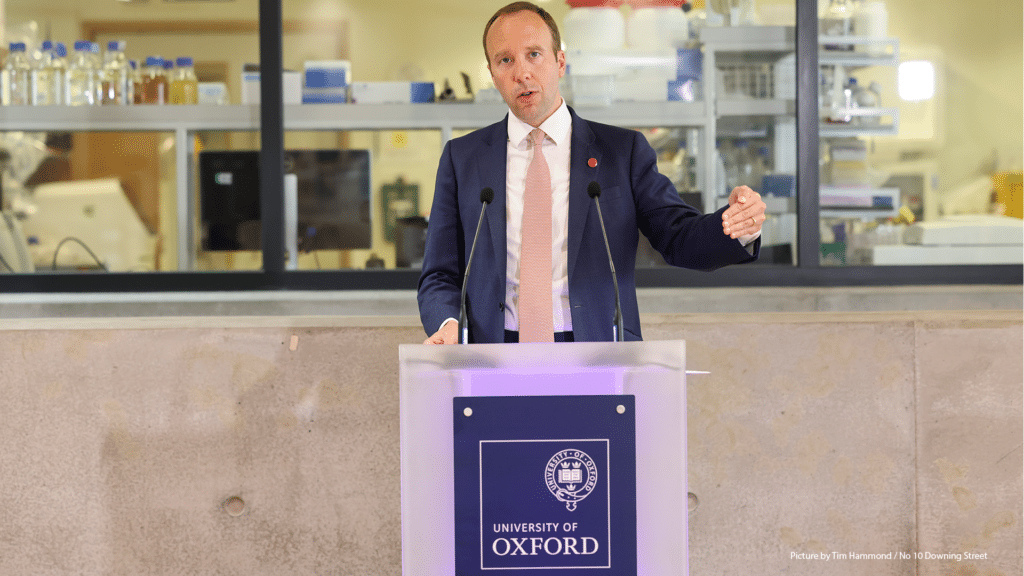
Anne-Marie Houde explores how emotional narratives associated with the Brexit years continue to shape how disagreements between the UK and the EU are interpreted.
Last month, the United Kingdom (UK) reached an important milestone in the controversial project of leaving the European Union (EU): it has been a decade since the Brexit referendum. Ten years on, the relationship between the UK and the EU looks calmer. Keir Starmer set out to negotiate a ‘reset’, while a warmer tone has been established. Brexit no longer dominates the headlines, yet the emotions of the Brexit years seem to resurface every time a potential issue arises in the wider relationship.
To illustrate this dynamic, our research examines the so-called ‘vaccine war’ between the UK and the EU during the COVID-19 pandemic. This conflict arose from the race to determine who had the most effective vaccine and who could roll it out the quickest to the widest part of their population. While the EU was pushing the German-developed BioNTech/Pfizer vaccine, the UK was working on an alternative, the ‘Oxford vaccine’, created by the British-Swedish company AstraZeneca and the University of Oxford. The conflict escalated when the EU and UK fought over vaccine supplies, EU politicians and countries started to cast doubt over the AstraZeneca vaccine, and ultimately issued a warning to stop using the AstraZeneca vaccine on parts of its population due to safety concerns. Outrage followed from the UK media and politicians: the EU’s response to concerns over the vaccine was seen as retaliation for Brexit and became emotionally politicised.
Looking at what British media like the Guardian, the Telegraph, and the Daily Mail, as well as politicians like Prime Minister Boris Johnson, Secretary of State for Health and Social Care Matt Hancock, and Secretary of State for Foreign and Commonwealth Affairs and First Secretary of State Dominic Raab, had to say on the topic between January and April 2021, we observe two dynamics. First, pride in the UK’s collective success and the ‘Oxford vaccine’ was strongly encouraged, with newspaper articles and political speeches emphasising the UK’s national success and the collective achievement that ‘winning the vaccine war’ represented. These ‘triumphs’ were closely linked to Brexit and to the sense that British people could now feel vindicated in having left the EU, as it had enabled them to secure the best vaccine and the fastest rollout. These positive emotions were used to depoliticise the vaccine issue within the UK: criticising the government became a lot harder when it was seen as being a killjoy of British pride. Moreover, raising doubts about the vaccine’s efficacy or potential side effects was cast as endangering lives, reckless, and outright dangerous. This remained the case until the NHS itself acknowledged these issues, at which point, rather than addressing the political and media frenzy surrounding the vaccine “war”, public discourse largely dropped the topic and moved on.
At the same time, emotions about the EU were also running high, but in a much more negative direction. The vaccine issue was politicised at the European level as the EU was accused by both the media and politicians of being incompetent for allegedly moving more slowly and having worse contracts with AstraZeneca, driven by envy, which led them to question the superiority of the “British” jab, and bitterness about Brexit altogether. Consequently, the EU and European countries were described as looking to sabotage the UK’s efforts in the vaccine rollout as retaliation for leaving the Union. The EU was compared in several media pieces to dictatorships, making the UK seem much more desirable by comparison. In sum, next to an angry, vindictive, inefficient EU, the UK could feel proud and like it ‘got it right’ with Brexit. While the vaccine itself was depoliticised at the domestic level thanks to an insistence on positive emotions, the EU issue was emotionally negatively politicised. Throughout the ‘vaccine war’ episode, colourful language was used to foster these dynamics and shaped where responsibility lay. Domestic criticism became harder to mount because success was celebrated as a national achievement, while problems were increasingly blamed on Brussels.
Years after the pandemic and the ‘vaccine war’, the emotional (de)politicisation of the EU or of EU-related issues is still not a thing of the past. While the political context has changed, the emotional dynamics that characterised the Brexit years continue to shape how disagreements between the UK and the EU are interpreted. Technical disputes can quickly become symbols of something much bigger: whether Brexit is succeeding or failing. This matters because emotions help increase or decrease politicisation, as well as shift blame, shield from criticism, and narrow down discourses to make political choices acceptable or not. As a consequence, Brexit remains a tempting prism through which EU–UK relations can be framed by politicians and media alike, as it activates emotions and can be used both to politicise and depoliticise issues, to engage audiences with seemingly banal and otherwise unremarkable topics, and to deflect or shift blame onto others. As the UK and the EU seek to reset their relationship, it remains essential to pay attention to these emotional dynamics and how they influence (de)politicisation. Agreements can be negotiated, but if old emotional narratives continue to frame how these developments are understood, the politics of Brexit will continue to influence UK-EU relations long after Brexit itself has faded from the headlines.
Amid geopolitical upheaval and a cost-of-living crisis, the UK can hardly afford to remain captured by emotional narratives from a decade ago. Politicians and the media need to critically reflect on what vision of the country can offer a more hopeful future, rather than continuing to reproduce emotionally charged, decade-old ideological and partisan narratives.
By Anne-Marie Houde, Postdoctoral Research Fellow in Public Policy, the Blavatnik School of Government, University of Oxford.


In the final article of his series on community pharmacy, Nick Linton, UK Country Head at Opella, examines how data and connectivity can transform the way self-care and community pharmacy is delivered
The NHS 10-Year Health Plan made clear that digital transformation is essential to delivering safer, more efficient, and personalised primary care. And yet, too often, pharmacy is excluded from the NHS’ digital infrastructure.
It should be a priority of policy makers and health officials to provide pharmacists with access to the digital tools and insights they need to deliver the best care possible.
This requires three shifts: access to the Single Patient Record, meaningful integration with the NHS app, and shared performance metrics and data frameworks that demonstrate pharmacy’s impact.
Supporting pharmacists with access to records
Interoperable digital systems across the NHS would allow pharmacists to make better informed decisions, and to access and update patient records in real time, supporting improved and safer clinical outcomes.
Central to this is the rollout of the Single Patient Record, enabling pharmacists to view, update, and share information across care settings – we welcomed the commitment in the 10 Year Health Plan to increase community pharmacy access to them.
This is not just a technical improvement, but rather the foundation for proactive, truly joined-up care.
Crucially, it would also help change patient behaviour and promote self-care.
When patients are confident that a pharmacist can see their records, can act on them, and can update them with their visit, they’re more likely to come to the pharmacy as their first point of contact, rather than the GP. Not only will this make best use of pharmacists expertise, but can also reduce pressure on GP services.
Driving digital integration through the NHS App
The NHS App is another critical enabler of digital, joined up care. But for it to deliver its full potential, it must be developed in partnership with the wider healthcare ecosystem, including pharmacy and industry.
Trust in the app is critical. Patients are more likely to engage with it if they see information and insight from brands they already know, and healthcare professionals with whom they already interact. Integrating pharmacist expertise and clinically proven self-care treatments into the app will therefore help drive adoption.
The app must also deliver the joined-up healthcare experience patients expect. For example, if a patient uses a digital tool or visits a pharmacy and self-care is deemed inappropriate, the system should allow for a seamless transition, either by booking a GP appointment directly or making a formal clinical referral through the pharmacy. This ensures no patient falls through the cracks and reinforces the pharmacy as a reliable entry point to the wider NHS.
Demonstrating pharmacy’s impact through shared data
To fully recognise the value of community pharmacy, its contribution must be measurable.
Indeed, existing data already proves the sector’s readiness to deliver when empowered. For example, from April 2024–February 2025, community pharmacies exceeded hypertension case-finding targets by 181 per cent.1
Digital integration would strengthen this further by ensuring pharmacy interventions are consistently captured and recognised within patient records.
Shared datasets and performance metrics can clearly quantify avoided GP appointments, prevented hospital admissions, and improvements in key clinical outcomes like blood pressure control and medication adherence.
These shared metrics would enable commissioners to plan future services around pharmacy’s proven impact, ensuring sustained investment in a sector ready to lead prevention and access over the next decade.
A connected NHS
A fully connected, digital NHS must see community pharmacy as a core partner, and provide it with the digital insight and tools to play that role.
Our vision is for a health system where community pharmacists are seamlessly integrated into patient pathways, and equipped with interoperable tools and real‑time data to deliver proactive, personalised care at scale.
At Opella, we are ready to support this transition, co-developing trusted, accessible solutions that support pharmacists and empower patients to act earlier in their healthcare journey.
Digital integration is not simply about modernisation, it is essential to unlocking the full potential of community pharmacy, and building a more sustainable and effective NHS.
Reference
- The Pharmaceutical Journal (2025). Pharmacies achieve more than double target number of blood pressure checks, NHS England data reveal. Available at: https://pharmaceutical-journal.com/article/news/pharmacies-achieve-more-than-double-target-number-of-blood-pressure-checks-nhs-england-data-reveal. (Last accessed 9th March 2026)
As we told you last week, we’ve now had counsel draft our application for a group proceedings action on behalf of donors to the “ringfenced” independence referendum campaign funds which were stolen and spent by the SNP on party business.

The draft can be read below. We’ve already gathered dozens of people who are unhappy about having their donations misappropriated by the party, and we invite any others who’d like refunds and compensation to join the group by getting in touch via the Wings contact form.
(There will be no cost to you from becoming involved in the claim.)
——————————————————————————-
FORM 13.2-AA Rule 13.2(1A)
IN THE COURT OF SESSION
(Group Proceedings Action) (Chapter 26A)
SUMMONS
IN THE CAUSE
JOHN TAMSON, residing at [address]
REPRESENTATIVE PARTY
against
THE SCOTTISH NATIONAL PARTY, an unincorporated association having its principal office at Gordon Lamb House, 3 Jackson’s Entry, Edinburgh, EH8 8PJ; and JOHN RAMSAY SWINNEY, Party Leader, STUART MACDONALD, Treasurer, and IAN MCCANN, Nominating Officer, all having a place of business at Gordon Lamb House aforesaid, as Officers of the Scottish National Party representing same and as individuals
DEFENDER
Charles III, by the Grace of God, of the United Kingdom of Great Britain and Northern Ireland and of His other Realms and Territories, King, Head of the Commonwealth, Defender of the Faith, to THE SCOTTISH NATIONAL PARTY, JOHN RAMSAY SWINNEY, PETER GRANT, and IAN MCCANN.
By this summons, the court having authorised JOHN TAMSON to be a representative party in group proceedings and having granted permission to JOHN TAMSON to bring the proceedings, the representative party for the pursuers craves the Lords of our Council and Session to pronounce a decree against you in terms of the conclusions appended to this summons. If you have any good reason why such decree should not be pronounced, you must enter appearance at the Office of Court, Court of Session, 2 Parliament Square, Edinburgh EH1 1RQ, within three days after the date of the calling of the summons in court. The summons shall not call in court earlier than 21 days after the date of service on you of this summons.
Given under our Signet at Edinburgh
Solicitor for the Representative Party
Conclusions
-
For declarator that the Defender held the sums donated by each group member to the Defender’s ring-fenced independence referendum fund in trust for the purpose of funding a future independence referendum campaign, and for no other purpose.
-
For declarator that the Defender’s knowing application of the said ring-fenced funds to purposes other than a future independence referendum campaign constituted a fraudulent breach of trust.
-
For payment by the Defender to the Representative Party of the appropriate sum by way of damages which represents a reasonable assessment of the losses suffered by each individual Group Member, being (i) repayment of the sums donated by each group member to the Defender’s ring-fenced independence referendum fund, together with (ii) such further sum as represents reasonable compensation for the fraudulent breach of trust hereinafter condescended upon, in order that the sum assessed for each group member may be transferred to the group member named in the Group Register, together with interest thereon at the rate of eight percent per annum from the date of each Group Member’s donation(s) to date, or at such other rate and from such other date as the court thinks fit, until payment.
- For the expenses of the group proceedings.
Articles of Condescendence
The Parties’ Designations
-
The Representative Party is John Tamson. He resides at [address]. His date of birth is [date]. He is [occupation]. The Representative Party donated sums to the Defender’s ring-fenced independence referendum fund, as hereinafter condescended upon, and has a claim against the Defender arising from the Defender’s fraudulent breach of trust. The individual group members are designed in the Group Register, which is produced herewith (hereinafter “the Group Members”). Each of the Group Members donated money to the Defender’s ring-fenced independence referendum fund and has not received a refund of those sums.
-
The Defender is the SCOTTISH NATIONAL PARTY, an unincorporated association and registered political party, having its principal office at Gordon Lamb House, 3 Jackson’s Entry, Edinburgh, EH8 8PJ. The Defender is registered with the Electoral Commission. JOHN RAMSAY SWINNEY, Party Leader, PETER GRANT, Treasurer, and IAN MCCANN, Nominating Officer, are convened as the Officers thereof, as representing the Scottish National Party and as individuals.
Jurisdiction
-
This Court has jurisdiction to hear this claim against the Defender. The Defender has its principal office in Edinburgh, within the jurisdiction of this Court. Moreover, the subject matter of the present action concerns wrongs committed in Scotland. There are no other proceedings pending before any other Court between the parties hereto in respect of the subject matter of this cause of action. There are no proceedings elsewhere in respect of any of the Group Members named in the Group Register in respect of the subject matter of this action. No agreement exists between the parties prorogating jurisdiction over the subject matter of the present cause to any other Court.
Subject Matter of the Group Proceedings
-
These group proceedings arise out of the Defender’s solicitation from the public, including the Group Members, of donations expressly and repeatedly represented as being ring-fenced for the exclusive purpose of funding a future independence referendum campaign; the creation thereby of a trust in respect of those funds; and the subsequent deliberate and dishonest application of those funds to purposes other than the stated purpose, without the knowledge or consent of the Group Members, constituting fraudulent breach of trust.
The Defender’s Fundraising Representations
-
In or around March 2017, the Defender launched a fundraising campaign soliciting donations from the public. This was done by way of a website with the domain name www.ref.scot to collect donations “as part of a fundraising campaign for the proposed second referendum”. The website included a video message from the then First Minister and Party Leader of the Defender, Nicola Sturgeon, in which she urged supporters to sign a pledge “to support Scotland’s referendum” and to make a donation to the SNP’s “independence fighting fund”. Potential donors were asked, and many agreed, to set up direct debits by which monthly donations to the Defender would be made for the purposes of funding campaigning for an anticipated future Independence referendum.
-
On 29 March 2017, by email from the Defender’s then party fundraiser, Jim Henderson, those that had by that date executed direct debits to make donations to the Defender for the purposes of funding a future referendum were told inter alia as follows:
“Thank you for your recent donation which will be ring fenced for a future independence referendum. Your decision, with many other members and supporters, to make a monthly contribution will mean that we are able to build up a sizeable war chest to fight the campaign when the time comes.”
The email went on to set out various reasons why a referendum was necessary, with a heavy focus on the then-possibility of the UK exiting the European Union, and concluded:
“We are starting to build the resources that will ensure we are not outspent in the referendum campaign. Your generosity and support will be vital to making that happen.”
-
In June 2017, after concerns were raised that money donated as aforesaid might instead be used for general election campaigning, Scottish Labour MSP James Kelly asked the Electoral Commission to investigate. The Defender’s response at that point, made publicly and widely reported including in an article in the National newspaper published in hard copy and online on 13 June 2017, was to deny misuse. The Defender’s spokesman told the National newspaper, in comments quoted in said article, as follows:
-
In or around May 2019, the Defender launched a further fundraising campaign soliciting donations from the public on materially identical terms. The Defender represented that donations had “been put into a ring-fenced fund to build up a war chest to fight a future Independence Referendum.” Those representations were again made to donors by email from the Defender’s party fundraiser.
-
In March 2020, a donor requested repayment of moneys donated by him to the ring-fenced fund. The fourth named defender, Ian McCann, replied in writing: “your other donations are in a ring-fenced fund to fight the next referendum, whenever we are in a position to call that… We are not in a position to refund those monies.”
-
In the summer of 2020, the Defender launched a further fundraising campaign soliciting donations from the public, again on materially identical terms. In the campaign documentation, donors were given an option to “add my personal donation to the ring-fenced Independence Referendum Campaign fund”.
-
Later in 2020, the Defender’s then Treasurer emailed Members of the Defender, saying inter alia:
-
At the Defender’s party conference in November 2020, its then Treasurer issued the following statement:
-
In 2021, the Defender’s then Treasurer issued the following further statement in the Financial Review section of the party’s annual accounts for 2020:
-
The said representations were not qualified or limited in any way. There was no suggestion that the donated funds could be used by the Defender for any purpose other than a referendum campaign. The acknowledgement emails sent to donors were clear and unambiguous: the money was to be held for and applied exclusively to a future independence referendum campaign.
-
It is understood that the total sums raised by the Defender through the said ring-fenced fundraisers exceeded £600,000. The precise total donated by Group Members falls to be ascertained upon recovery of documents in these proceedings.
The Trust Thereby Created
-
Where persons subscribe money to effect a particular object, and place the money in the hands of certain persons to carry out that object, a trust (or quasi-trust) is thereby created. The trust so created is for the purpose of either carrying out the object of the subscription, or, if that cannot be done, of paying back the money. The persons holding the trust funds are not entitled to outlay the moneys for purposes other than the object for which they were pledged.
-
In the circumstances, the Defender held the sums donated by the Group Members in trust for the exclusive purpose of funding a future independence referendum campaign. Alternatively, if no referendum campaign materialised, the Defender was bound to return the donated sums to the donors. The Defender, through its office-bearers and those responsible for the custody and management of its funds, occupied a position of trust in relation to the Group Members as donors. The Defender was not at liberty to treat the moneys thereby donated as its own.
The Fiduciary Relationship
-
By virtue of the terms upon which the donations were solicited and accepted, and the trust thereby created, the Defender and its responsible office-bearers stood in a fiduciary relationship with the Group Members. They were subject to a duty of loyalty, requiring them to act in the interests of the donors by applying the ring-fenced funds only for the stated purpose.
The Diversion of Funds
-
Despite the said representations, the “ring-fenced funds” were not in fact “ring-fenced” (viz, held separately) or applied for the stated purpose. Instead, the funds were absorbed into the Defender’s general finances and applied to the Defender’s ongoing party activities, unrelated to any independence referendum campaign. No independence referendum campaign has taken place since the donations were solicited. The funds were not returned to the donors. They have been spent for other purposes.
-
On or about 3 June 2026, the second named defender, John Swinney, in his capacity as leader of the Defender, publicly confirmed that the ring-fenced referendum funds had been applied to “the ongoing activities of the Scottish National Party.” This admission constitutes a public acknowledgment that the funds were diverted from their stated purpose.
-
This diversion was without the knowledge or consent of the Group Members. No communication was sent to donors informing them that the ring-fencing had been breached or that their donations were being applied to purposes other than those represented. The donors were not asked to, and did not, consent to such diversion of funds.
Fraudulent Breach of Trust
-
Those responsible for the custody and management of the Defender’s funds occupied a position of trust in relation to the Group Members. The deliberate and dishonest decision to apply trust funds to an unauthorised purpose constituted a fraudulent breach of trust which (a) amounted in criminal law to embezzlement; and (b) in civil law gives rise to a right of reparation in the Group Members.
-
The Defender’s office-bearers breached their fiduciary duties to the Group Members by (a) applying the ring-fenced funds to purposes other than those for which they were donated, in breach of the duty of loyalty; (b) failing to maintain the funds separately or to account for them; (c) concealing the diversion from the Group Members; and (d) making false representations as to the continued existence and application of the ring-fenced fund. These acts and omissions contributed to said fraudulent breach of trust.
Loss and Damage
-
As a result of the Defender’s fraudulent breach of trust, each of the Group Members has suffered loss and damage, being at minimum the sum donated by them to the ring-fenced independence referendum fund and not refunded. The Group Members have further suffered distress and inconvenience at the revelation of breach of trust, which distress and inconvenience gives rise to claims in reparation given the intentional nature of the wrongdoing.
Prescription
-
The donations in question were all, or at least mainly, paid to the Defender more than five years ago. However, the obligations in respect of which enforcement is sought herein have not suffered prescription, since obligations arising from fraudulent breach of trust are imprescriptible in terms of s.7(2) of and Schedule 3 to the Prescription and Limitation (Scotland) Act 1973.
Necessity
-
The Representative Party has called upon the Defender to repay the sums donated by the Group Members to the ring-fenced independence referendum fund, and to compensate the Group Members for the Defender’s fraudulent breach of trust. The Defender refuses or at least delays in doing so. This action is accordingly necessary.
PLEAS-IN-LAW FOR THE REPRESENTATIVE PARTY
-
The Defender having solicited and received donations from the Group Members upon the express representation that those donations would be ring-fenced for a future independence referendum campaign, the Court should declare that a trust was thereby created in respect of those funds, and that the Defender was bound to apply those funds exclusively for that purpose, as first concluded for.
-
The Defender having diverted said trust funds to other purposes without the knowledge or consent of the Group Members, and having done so deliberately and dishonestly, declarator should be granted as second concluded for.
-
The Representative Party and the Group Members having sustained loss and damage as a consequence of the Defender’s fraudulent breach of trust, the Defender is liable to make reparation therefor and decree should be granted as third concluded for.
IN RESPECT WHEREOF
Halliday Campbell
Solicitor for the Representative Party
——————————————————————————-
The SNP have made it clear that while they expect to be recompensed for the money Peter Murrell embezzled from them, they do NOT intend to repay the donors that the party embezzled the “Referendum Appeal Fund” (current balance: £0) from.


Well, let’s see about that, shall we?

 lead image
Politics
Lord Ashcroft: Burnham compared to Starmer, should there be an election, and what do we think of Restore Britain?
Lord Ashcroft KCMG PC is an international businessman, philanthropist, author and pollster. For more information on his work, visit lordashcroft.com
My latest poll looks at expectations of Andy Burnham, whether there should be a leadership election, when the next general election should happen, the most important issues facing the country and voters’ attitudes to Restore Britain.
What did Starmer do?

We asked respondents to name, unprompted, anything they can remember the Labour government doing since it was elected in July 2024. Top of the list this month was lifting the two-child benefit cap, very slightly ahead of means-testing the winter fuel allowance, which has dominated recollections for the last eighteen months. Employers’ National Insurance and workers’ rights are next on the list.

Our political map shows which parts of the electorate are most likely to mention different government actions. The two-child benefit cap and the winter fuel allowance both appear close to the centre of the map, showing that they were widely recalled across voter types. The minimum wage, NHS waiting lists, renewable energy, the social media ban and staying out of the Iran war were most likely to be recalled in Labour and Lib Dem-supporting territory, while Israel and disability benefits were most likely to be mentioned close to the Greens’ centre of gravity in the bottom left. Tax, migration, defence and the economy were most likely to be mentioned on the Conservative or Reform-leaning right-hand side of the map.

Since we have asked this question every month since January 2025, we can see the most recalled actions of the Labour government over the last 18 months.
Andy Burnham and the Labour leadership

Overall, voters said they would like to see a contested leadership election by a 50 per cent to 27 per cent. However, 2024 Labour voters said they would like to see Burnham become PM without a leadership election by a 7-point margin, and current Labour leaners by a 26-point margin.

A clear majority said there should be a general election within a year or so of the new PM taking office. Four in ten voters said he or she should call an election as soon as practically possible, with a further 19 per cent saying there should be an election in the next year or so. Just over a quarter, including more than half of 2024 Labour voters and 63 per cent of those currently leaning towards Labour, say there is no need for an early election and the government should continue until 2028 or 2029.

More than four in ten voters said they thought Burnham was more left-wing than Starmer – more than twice the proportion who thought they had similar political views. Current and 2024 Labour voters were more likely than most to see Burnham as being further to the left. Nearly four in ten said they didn’t know whether his political views stood in relation to Starmer’s.

Voters as a whole were more likely to think Burnham would perform about the same as Starmer in each policy area than to think he would do either better or worse. They were more likely to think he would do a better job than a worse job on the economy, the NHS, the cost of living, crime and policing, and running the country in general. They were more likely to think he would do a worse job than a better job on immigration, government borrowing and debt, setting tax rates at the right level, defence, and Britain’s relationships with other countries.

A majority of all voters said the new PM should feel bound by Labour’s 2024 manifesto promises on income tax, National Insurance and VAT. Current and 2024 Labour voters were also more likely than not to take this view.
Most important issues facing Britain

The cost of living was rated the most important issue facing the country, with half of all respondents choosing it in their top three. Among voters as a whole this was followed by immigration and asylum, the NHS and social care, and the economy and jobs. For 2024 Labour voters, the NHS was second after the cost of living, followed by climate change and the environment. Immigration and asylum topped the list for current and 2024 Conservative and Reform UK voters. National security and defence was the second most important issue to 2024 Tories, ahead of the cost of living.

Asked who would do the better job running the economy, 33 per cent of voters said a Labour government, 20 per cent said a Conservative government and 18 per cent said a Reform UK government. Just over two thirds of 2024 Labour voters said a Labour government would do the best job, while 62 per cent of 2024 Conservatives named the Tories (and nearly one in five of them named Reform UK).
Restore Britain

Just over one in ten said they like a lot of what Restore Britain stand for and might well vote for them next time. This included nearly four in ten Reform voters from 2024 and more than a quarter of those currently leaning towards Reform. A further 14 per cent say they probably wouldn’t vote for Restore but they say things that need saying so they’re glad the party is around. Just under four in ten say they don’t like what Restore stand for and would never vote for them. A quarter say they have never heard of Restore Britain. Of those who say they might well vote for Restore Britain, 33 per cent are currently leaning towards Reform, eight per cent towards the Conservatives, and 25 per cent towards another party.

For those interested in Restore Britain, the most appealing factors were that “they have more radical policies on things like migration and repatriation” and “they want to keep Britain British”. Cutting taxes and welfare benefits and forcing other parties to pay attention to important issues were the next biggest attractions.
The political map

Our political map shows how different issues, attributes, personalities and opinions interact with one another. Each point shows where we are most likely to find people with that characteristic or opinion; the closer the plot points are to each other the more closely related they are. Here we see how different kinds of voters see the most important issues facing the country, how soon people would like to see a general election once the new prime minister is installed, and where we are most likely to find different views of Restore Britain.
Leadership ratings, best prime minister and next general election

Equal numbers said they had a favourable view of Kemi Badenoch and Andy Burnham, though Badenoch’s unfavourability score was higher than Burnham’s. Nigel Farage had the next highest positive rating, but with negatives of 63 per cent. In order of net scores, the results were Burnham (-9), Davey (-13), Badenoch (-15), Lowe (-20, but with 42% saying ‘don’t know’), Polanski (-23), Starmer (-39), Farage (-41).

When we asked who would make the better prime minister, Burnham led Badenoch by eight points. 2024 Labour and Conservative voters were equally likely to choose their respective party leaders. Last month, Badenoch led Starmer by one point (32 per cent to 31 per cent).

Given a choice between Burnham and Farage, voters as a whole chose Burnham by a 26-point margin. Last month, Starmer led Farage by 18 points.

Offered a choice between Burnham, Badenoch and Farage, voters chose Starmer over Badenoch by an 18-point margin (compared to Starmer’s 14-point lead last month) with Farage third on 17 per cent. More than seven in ten Labour voters preferred Burnham (compared to 65 per cent who preferred Starmer last month).

Andy Burnham has taken over from Nigel Farage as the leader voters consider most likely to be PM after the next general election. 33 per cent named Burnham, with 20 per cent naming Farage (down from 27 per cent) last month. Just under two thirds of those currently intending to vote Reform thought Farage would be PM (down from 74 per cent last month), while 65 per cent of Labour leaners expect Burnham to be PM (more than three times the proportion who last month expected Starmer still to have the job).
We ask people how likely they are to vote for each party at the next election, rather than which party they would pick in a hypothetical election tomorrow. Those who voted Labour in 2024 put their chances of doing so again at the next election at an average of 48/100. They put their chances of voting Green at 25/100. Those who switched to Labour in 2024 put their chances of voting for the party again next time at 36/100, and those who switched from the Conservatives to Labour in 2024 put their chances of voting Labour again next time at an average of 30/100.
Looking at those more likely than not to vote for a particular party (those whose highest likelihood of voting for one party was at least 50/100), this implies vote shares of Reform UK 21 per cent, Conservative 21 per cent, Labour 21 per cent, Green 17 per cent, Lib Dems 9 per cent, Others 10 per cent.
Full data tables at LordAshcroftPolls.com
The post Lord Ashcroft: Burnham compared to Starmer, should there be an election, and what do we think of Restore Britain? appeared first on Conservative Home.
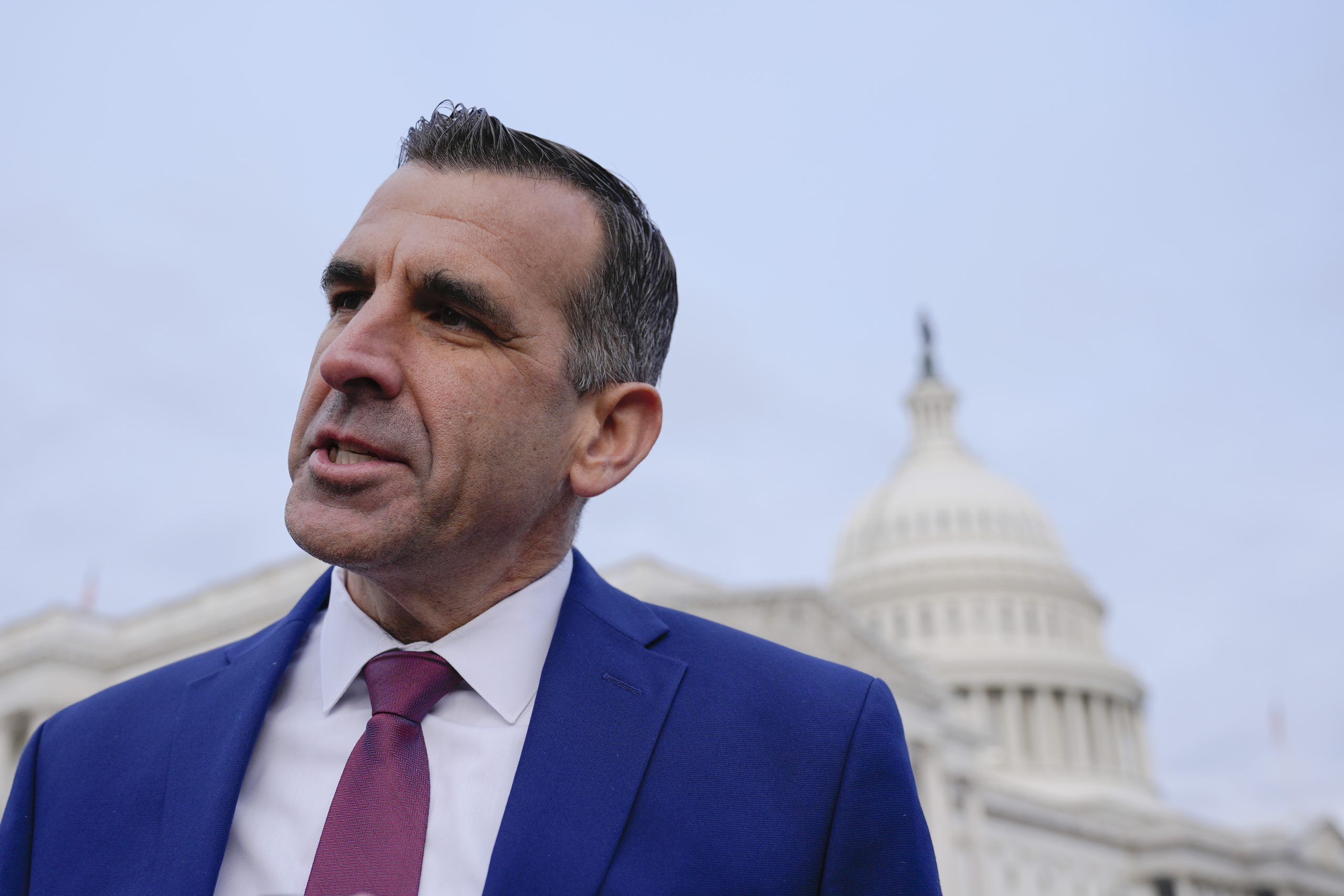

Sam Liccardo said he “groaned excessively” when the U.S. national team’s Folarin Balogun was given a red card.
Yet the Silicon Valley representative objected after President Donald Trump pressed FIFA to review the play at issue, before the world soccer organization suspended the penalty and allowed the U.S.’ lead scorer to play in today’s knockout round match against Belgium.
“We can’t win this way,” Liccardo, a Democrat, wrote on social media. “I won’t cheer FIFA’s capitulation to power.”
Few other American politicians have expressed a similar sentiment, perhaps wary that they’ll be viewed as rooting against their own country’s success. But Liccardo joined a chorus of international officials who took issue with the pressure campaign that culminated in Balogun’s return to the pitch, while stressing that the “right outcome” had been reached despite what he viewed as foul play by FIFA leadership.
“The fact that we should see this outcome after this corruption summit between FIFA and Donald Trump accentuates the distaste for many,” he told POLITICO in an interview just over an hour before the U.S.-Belgium match.
This interview has been edited for length and clarity.
Were you at the match where the red card was issued in Santa Clara?
I was not, I’m ashamed to say. It’s slightly outside my district, and a few thousand dollars outside my tax bracket. … I watched on television and cheered wildly for the U.S. team, and groaned excessively when Balogun got his red card.
Democrats have accused President Trump of a lot of instances of corruption throughout his second term, so why speak out on this particular incident?
Well, I think in your question there’s an implication, and it’s a fair one, which is: Far be it from me to suggest that FIFA could ever be corrupt. But at least we could say that for once it was Americans that benefited from the corruption, not the Qataris or the Russians.
Look, I root for the U.S. men’s team every time they take the field, and, like virtually everyone else watching that game, I felt Balogun was treated very unfairly. That being said, since 1962, FIFA has never allowed a player to appear at a World Cup game after receiving a red card in the game immediately following. The intervention of a head of state — in what should be an international celebration of sports that should be above politics and beyond it — is troubling. And the fact that we should see this outcome after this corruption summit between FIFA and Donald Trump accentuates the distaste for many. [FIFA has repeatedly asserted that Trump’s call for a review had no impact on its decision, and Trump said the same today, while confirming he had asked for another look at the play.]
Do you think your constituents feel the same way?
People feel all kinds of different ways, and I don’t blame anyone for saying, “Hey, this is the right outcome.” That’s fine. I’m simply saying it’s the right outcome for the wrong reasons. And it’s hard to blame you global fans of the sport for having hard feelings.
Like, you said, a lot of people probably feel that this was the right outcome. Has that made this at all a tricky situation for Democrats to address politically?
No, because politicians shouldn’t address this. It’s not my problem to solve, and it’s certainly not Donald Trump’s problem to solve. So, I don’t have any problems. I’m a spectator, like everybody else. I’m simply saying we all want an umpire that calls balls and strikes, and we know that umpires get it wrong plenty of times. We just don’t want somebody bribing the umpire to get us a ball rather than a strike.
You’re a bystander in some ways, but this is also not your first time encountering FIFA. In addition to being a co-chair of the World Cup Caucus, you were the mayor of San Jose when the city was participating in the bidding process to host that tournament. Didn’t you and some of the other Bay Area mayors even go on a tour with FIFA officials of Levi’s Stadium a few years ago?
Yeah, I think we were at the stadium, and then we went to San Francisco. That’s what you do when you’re the mayor of the largest city in the region and you want the World Cup to come to your region.
So, when you say that FIFA is a corrupt organization, has that always been your view, or did this particular incident kind of drive you there?
It’s the view of the Department of Justice that indicted them for more than $150 million in bribes in 2015, it’s the view of lots of other folks who are concerned about how the Qataris ended up with the World Cup. We can go on and on. It’s not my view that matters here. The point is this: Nobody wants to see the head of state of any country calling an international sports organization to get a better call. That’s not the way sports should work.
The Olympics are coming to California in 2028. Should Democrats be trying to guard against Trump exerting influence once again to aid the host country in that international competition?
No, elected officials should be refraining from getting engaged in international sports competitions, the area where people don’t want politics. So it’s not about what we do or don’t do. It’s not about us standing up to Trump or not standing up to Trump. It’s about the fact that we should want international sports competitions to be free of political influence.
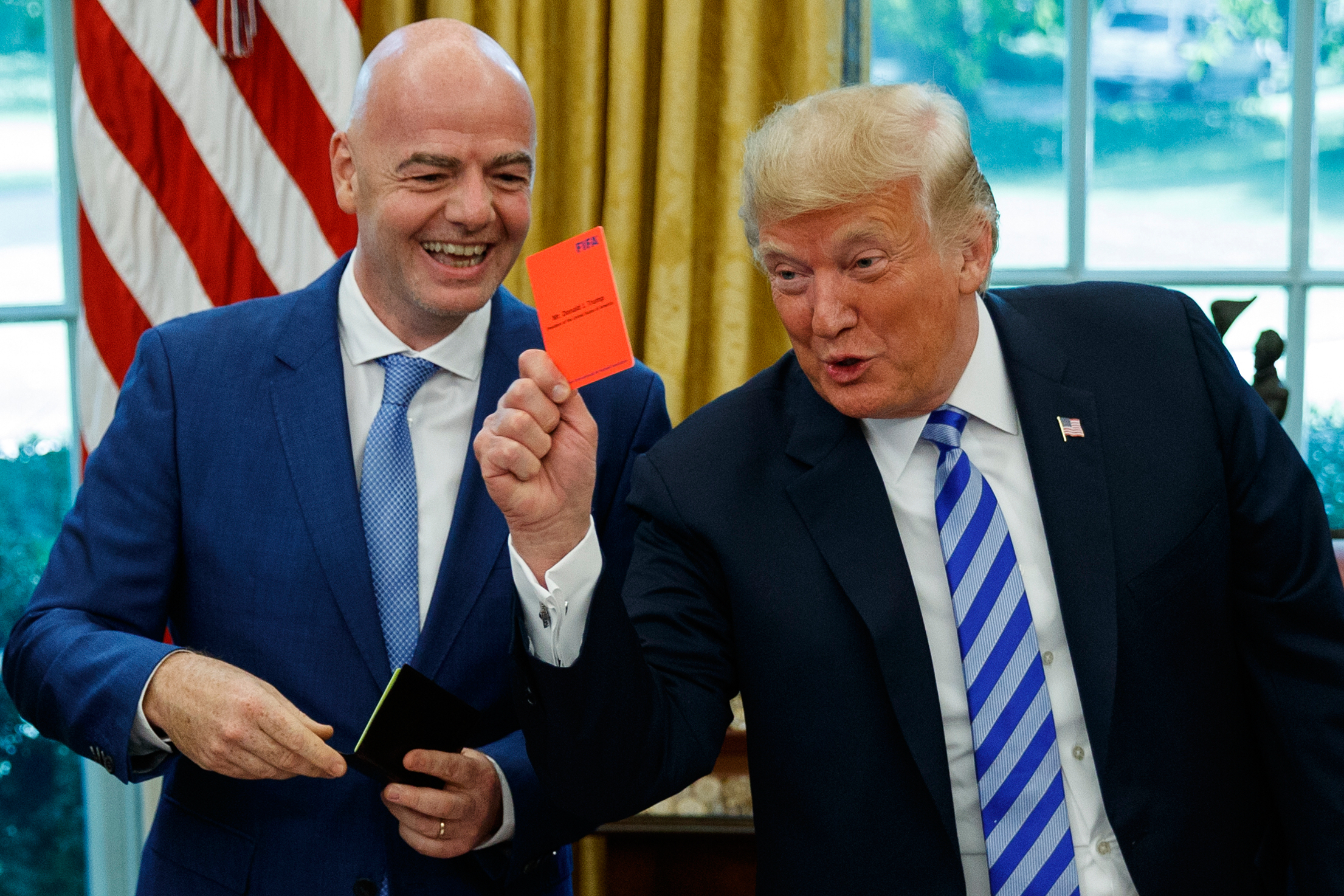

President Donald Trump said earlier Monday that he didn’t know what a red card was before last Wednesday’s U.S.-Bosnia match.
But FIFA President Gianni Infantino actually gave him a lesson on soccer’s disciplinary system during a 2018 Oval Office meeting after the United States secured the right to co-host the 2026 World Cup.
During the visit, which followed the successful United Bid, Infantino explained the sport’s use of yellow and red cards before pulling one of each out from a case.
“In soccer we have referees and they have cards: yellow cards and red cards,” Infantino told Trump. “Yellow card is a warning, and when you want to kick out someone, a red card. Like this!”
Trump appeared amused by the demonstration.
“I like that,” he said picking up the red card and holding it up. “Thank you.”
Infantino then joked that the cards might come in handy beyond the soccer field.
“That could be used for, I don’t know, the next media session,” he said.
Farage must ‘answer some questions’ over finances says Badenoch as he quits as MP to be ‘judged by the people’ in by-election

Silverleaf buys $19m Darwin asset
Bitcoin Price Analysis: BTC’s Structure Remains Bearish Until This Key Level Is Reclaimed

No Jackpot Winner as $257 Million Prize Rolls Over to $269 Million Monday Draw

Renter of Home in Anne Heche Crash Denies Settlement With Son

Weekend Open Thread: Staud – Corporette.com

Why Bitcoin is Facing More Pain Ahead (Data)

Music to Attract Fast and Urgent Money | Treasure of Abundance | Spiritual Wealth | 432 Hz

XRP v RLUSD, SHOCKING NeW OUSD, Stablecoin SANDWICH spreads, Flare is NEXT LEVEL, Validator Attacks
-

 Fashion4 days ago
Weekend Open Thread: High Hopes
-

 Fashion23 hours ago
Open Thread: What Great Books Have You Read Recently?
-
 NewsBeat2 days ago
Taylor Swift and Travis Kelce wedding staffer hilariously struggles to keep her cool while checking in megastars
-

 Politics4 days ago
The House | “Reframing the debate from a binary discussion of winners and losers”: Yuan Yang reviews ‘We Are Not Machines’
-
 Crypto World6 days ago
Airdrop Registration Becomes Key Focus For Remittix As RTX Launch Updates Approach
-

 Sports6 days ago
Broncos roster: OL Ben Powers (No. 74) entering final year of contract
-

 Crypto World5 days ago
Binance stock trading tops $1B in first month after launch
-

 Crypto World4 days ago
Standard Chartered Secures MiCA License as ESMA Adds 37 New Crypto Firms
-

 NewsBeat7 days ago
Presenter Caroline Flack’s brother Paul Flack dies aged 55
-

 Business21 hours ago
AXT Shares Jump Nearly 14% as Semiconductor Materials Maker Rebounds on AI-Linked Indium Phosphide Demand
-

 Crypto World6 days ago
Alibaba-affiliate Ant Group enters the humanoid robot market with 12 deals
-
Crypto World20 hours ago
SK hynix (000660.KS) Stock Dips as $28B Nasdaq ADR Offering Drives AI Memory Expansion
-

 News Videos24 hours ago
Best Time to Enter Small Caps Right Now? Another Bull Run? | Financially Free
-

 Crypto World2 days ago
South Africa proposes crypto tax guidance under existing rules
-

 Tech2 days ago
Lenovo laptops are now shipping with YMTC SSDs, a sign of Chinese NAND entering the mainstream
-

 Business6 days ago
Meta Platforms Stock Jumps 7% Today as Bloomberg Reports Company Plans to Enter the Cloud Business
-
 NewsBeat5 days ago
New exhibition reflects five decades of movement between island of Ireland and GB
-

 News Videos12 hours ago
Whats Hidden Inside This Cash Register? #treasure #reselling #money
-

 Business4 days ago
What a 10 Percent Drop Means for Buyers, Sellers and Renters
-

 Crypto World5 days ago
Binance Re-Enters Philippines As EU MiCA Rules Restrict Access
You must be logged in to post a comment Login