

Crypto World
Crypto Market Slips 1.24% as US Strikes on Iran Lift Oil

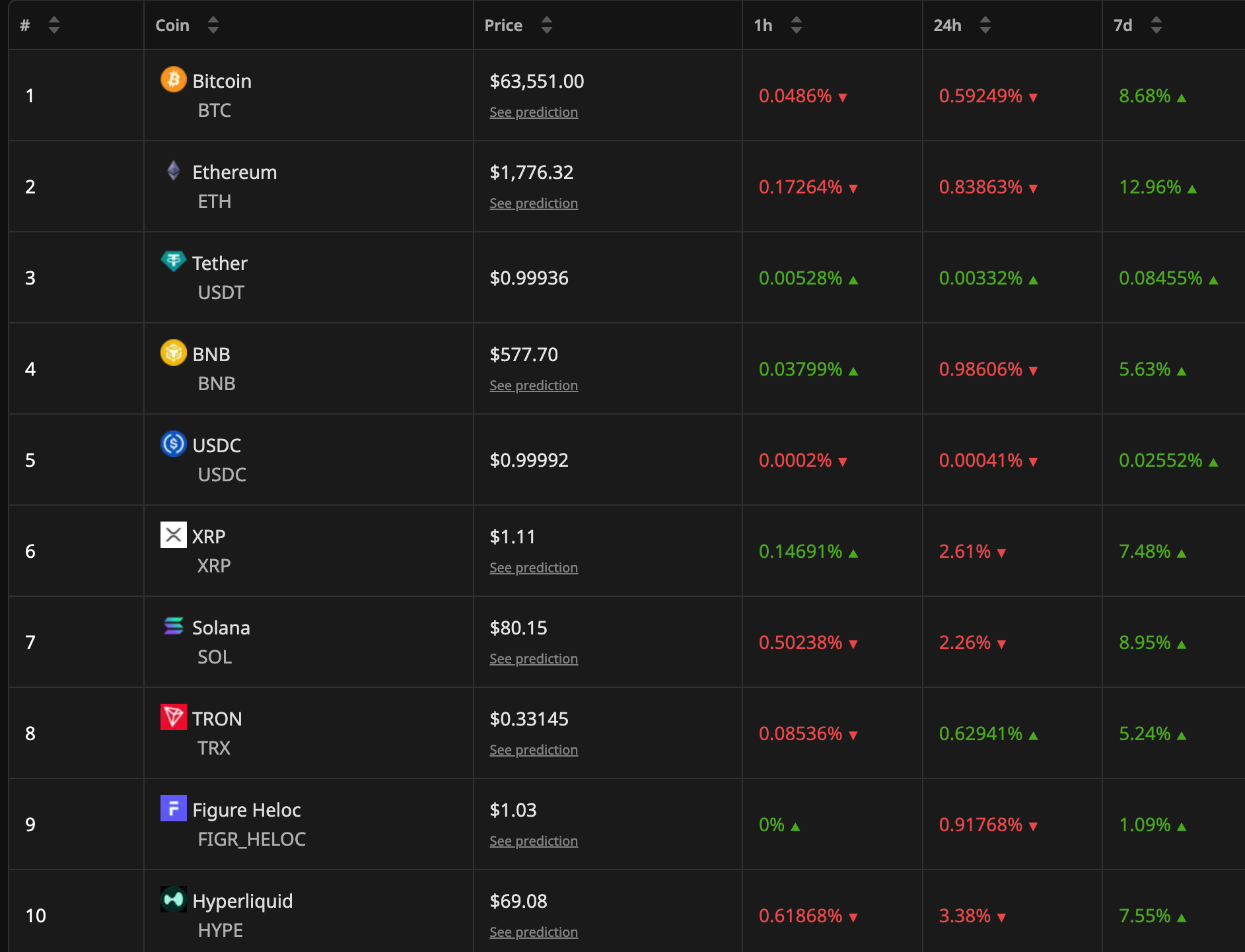
The total cryptocurrency market fell 1.24% on Wednesday after the United States launched military strikes against Iran, lifting oil prices and pushing investors out of risk assets.
Bitcoin (BTC), Ethereum (ETH), and most large tokens traded lower over the past 24 hours, though the majors held onto strong gains built over the past week.
Oil Price Jumps as US Strikes Hit Iran
CENTCOM said its forces struck Iran, revealing they hit more than 80 targets with precision munitions on July 7. The actions followed reports of Iranian attacks on three vessels in the Strait of Hormuz.
The latest attacks tested a fragile ceasefire reached between Washington and Tehran last month. The military described the operation in a statement posted to social media.
“The unwarranted aggression by Iranian forces is a clear and dangerous violation of the ceasefire and undermines freedom of navigation,” CENTCOM wrote.
Follow us on X to get the latest news as it happens
At the same time, Washington re-imposed sanctions on Iranian oil. The Ministry of Foreign Affairs of the Islamic Republic called it a “clear and material breach of Article 10 of the Memorandum of Understanding on the Cessation of War.”
Following the escalation, oil prices jumped. Brent crude rose 2.05% to $75.68 a barrel, according to Trading Economics data. US West Texas Intermediate (WTI) gained 2.07% to $71.90.
Crypto Retreats in Risk-Off Move
Meanwhile, crypto markets moved in the opposite direction, with the total market cap down 1.24%. Bitcoin traded near $63,551, down 0.59% over 24 hours. Ethereum slipped 0.84% to about $1,776.

Hyperliquid (HYPE) led losses among the top 10 assets, falling 3.38% to $69.08. XRP (XRP) dropped 2.61%, and Solana (SOL) fell 2.26%.
The pullback came after a strong week for digital assets. Higher oil prices tend to fuel inflation worries. Those concerns can push expectations of interest rate cuts further out, weighing on risk assets.
Subscribe to our YouTube channel to watch leaders and journalists provide expert insights
The post Crypto Market Slips 1.24% as US Strikes on Iran Lift Oil appeared first on BeInCrypto.

Crypto World
Binance Co-CEO Says Regulators Invited Exchange to Apply for New Licenses After MiCA Setback

Binance co-CEO Richard Teng said the exchange is discussing with regulators in “premature” talks about applying for crypto licenses after it pulled back its MiCA application in Greece. Speaking at the Reuters NEXT Asia conference in Singapore on Thursday, Teng did not name the jurisdictions involved, adding that the dialogue is still at an early stage.
The comments come after Binance’s regulatory pivot inside the EU. MiCA—the European Union’s single, harmonized crypto licensing regime—became fully applicable after the bloc’s transition period ended on July 1. As a result, the European Securities and Markets Authority (ESMA) said crypto firms must serve EU clients through a MiCA-authorized entity, with limited exceptions for unsolicited cross-border business.
Key takeaways
- Binance is in early discussions with regulators about obtaining crypto licenses, Teng said, without identifying the countries.
- Binance withdrew its MiCA license application in Greece on June 24, citing concerns about how quickly EU users would face a shortened transition period.
- Teng argued that EU users increasingly moved funds to self-custody rather than to MiCA-authorized platforms, questioning MiCA’s consumer-protection impact.
- Competition among licensed exchanges has intensified following the transition end, according to statements citing app download growth.
- Binance says it continues expanding in Asia through partnerships, including in the Philippines, while noting the regulatory landscape there is split between different agencies.
Binance seeks a new licensing path after Greece withdrawal
Binance’s Greek setback followed reports that Greek regulators intended to reject its MiCA licensing bid. According to earlier coverage by Cointelegraph, Binance withdrew its Greece MiCA application on June 24. Teng said at Reuters NEXT Asia that the situation took the company by surprise even though it submitted what it believed to be a fully compliant application.
“It caught us by surprise because we submitted a fully compliant application. The regulators told us as much,” Teng said, adding that the company was “not quite sure” why the approval process continued to be delayed. He said Binance withdrew the application to avoid a scenario where users would be forced into an extremely short transition window.
Separately, ESMA’s guidance after the MiCA transition ended emphasized that EU-facing services should route through a MiCA-authorized entity, with only narrow carve-outs for unsolicited cross-border activity. That framework is intended to bring crypto firms under a consistent EU rulebook, replacing a patchwork of national regimes.
Self-custody dominates outflows, Teng says
At the conference, Teng argued that the post-transition reality in Europe has not played out in the way MiCA’s consumer-protection goals might suggest. He pointed to user behavior after MiCA requirements took effect, saying that users who withdrew assets from Binance overwhelmingly chose self-custody.
According to Teng, “Of the users in the EU [who] have subsequently withdrawn their funds out of our platform, 70% of those funds went to self-hosted wallets. Only 30% flowed to MiCA-regulated entities.” Teng suggested that this outcome reduces the level of oversight available to consumers, since self-hosted wallets are not subject to the same licensing and operational constraints as regulated exchange platforms.
Cointelegraph also reported that Binance recorded net outflows of $1.23 billion during the week beginning June 29, which it noted was up 207% from roughly $400 million the prior week, referencing DefiLlama data reviewed by Cointelegraph.
The key tension in the exchange’s argument is straightforward: even if MiCA strengthens licensing standards for intermediaries, it may not reduce the volume of users holding assets in unhosted environments. That matters for investor protection because wallet custody shifts risk from licensed venues to end users, including risks around backups, access control, and security hygiene.
MiCA transition end reshapes competition among licensed exchanges
Another theme from Teng’s remarks was how quickly the competitive map can change once MiCA becomes enforceable. He referenced ongoing market dynamics inside the EU, while also highlighting that licensed exchanges are vying for the attention of users and liquidity that move once a major platform changes its regulatory stance.
OKX, for example, said its app downloads rose 158% between June 24 and July 5, citing Sensor Tower data. While download metrics do not directly translate into regulated trading volume, they can indicate faster user inflows during periods when compliance-driven changes affect how and where EU clients can access services.
For traders and allocators, this kind of shift can influence both execution quality and on-platform liquidity. But it also raises practical questions: whether users consolidate into a smaller set of MiCA-authorized venues, and how quickly those venues can absorb order flow compared with the speed at which users move out of non-compliant pathways.
Binance continues Asia expansion amid different regulators
Beyond Europe, Teng said Binance is working to expand its regulatory footprint across Asia. He cited deployments in multiple jurisdictions, naming Japan, Korea, Thailand, Indonesia, Australia, and announcing the Philippines as a recent addition.
Binance re-entered the Philippine market through a partnership with BlockShoals Technologies after regulators moved to restrict access to the exchange in 2024. The relationship, however, sits within a regulatory split: neither Binance nor BlockShoals is licensed by the Bangko Sentral ng Pilipinas to handle peso transfers or other central bank-regulated virtual asset services.
Earlier reporting from Cointelegraph included an interview with BlockShoals’ head of legal, Marie Antonette Quiogue, who said the arrangement allows Binance to offer crypto trading because the trading activity is under the jurisdiction of the Philippine Securities and Exchange Commission. Services regulated by the central bank, she indicated, would require separate authorization.
That distinction underscores a recurring challenge for global exchanges: “one license” approaches can work poorly when oversight is divided across regulators with different scopes. It also means that compliance strategies often need to be tailored to the exact product—trading, custody, transfers, or other regulated functions—rather than treated as a single, uniform permission.
As Binance explores further licensing talks after its Greece withdrawal, investors and users will want to watch how the EU situation evolves: whether Binance can secure an authorization pathway for EU clients, whether more withdrawals keep flowing toward self-custody, and how quickly MiCA-licensed competitors can translate user interest into sustained liquidity.
Crypto World
Crypto News, July 9: Iran Market Fears Fade as Bitcoin and Ethereum Price Shrug Off Another Panic

Fresh Iran headlines sent us scrambling last night, but the panic did not last. Markets, especially Bitcoin and Ethereum price, sold off after new geopolitical developments, only to reverse within hours once the narrative changed. Bitcoin price bounced sharply from the lows, while Ethereum held relatively steady, as many expected.
The first reaction was predictable as traders dumped crypto, oil jumped, and stocks went lower. For a moment, it looked like another geopolitical shock would drag the market into a deeper correction. Instead, buyers showed up almost immediately, refusing to let the bears gain momentum.
By this morning, the fear had mostly disappeared, with Bitcoin recovered most of its losses, and Ethereum barely lost its footing. It was another classic whipsaw that punished emotional trading more than anything else.
The latest Iran headlines looked scary enough to spark a classic risk-off move. Oil climbed, stocks weakened, and the Bitcoin price slipped as traders rushed to reduce exposure. The Ethereum price also moved lower but avoided the heavier selling that hit Bitcoin during the first wave.
Then the market did what it does best. It flipped. Reports that Iran was willing to return to negotiations erased much of the fear within hours. Bitcoin ripped higher, Ethereum stabilized, and anyone who panicked sold was suddenly chasing prices instead. Headlines may move markets, but they rarely stay in control for long.
Don’t Miss Out on Our $1,000 USDT Airdrop on ByBit
Bitcoin Price Refuses to Stay Down

Bitcoin price once again proved why betting against it after a headline-driven selloff is rarely an easy trade. Buyers defend support and erased most of the decline. In the end, bulls pushed the market back into familiar territory.
That recovery came despite spot Bitcoin ETFs recording $84 million in net outflows, ending a three-day buying streak. Normally, that would weigh on sentiment, yet Bitcoin ignored the script. It has built a habit of frustrating traders who expect every negative headline to become a lasting trend.

Regulators also stayed busy as Europe continued reviewing crypto rules under MiCA, the United States pushed stablecoin legislation forward, and India’s central bank repeated its call for tighter restrictions. None of those developments mattered as much as the market’s ability to shrug off another wave of geopolitical fear.
Discover: The Best Token Presales
Ethereum Price Fights Bears
Ethereum is in a tight price range while the rest of the market bounced around. It did not match Bitcoin’s rebound, but it also avoided a meaningful breakdown. On a day dominated by uncertainty, it surprisingly stays steady.
However, the chart is still flashing warning signs. A weekly death cross has formed, convincing the bears after months of weakness. Momentum indicators remain soft, and another move lower cannot be ruled out if sellers regain control. Even so, experienced traders know those signals often appear near the end of a downtrend.
Outside the charts, the crypto industry kept moving. AscendEX confirmed it is winding down operations, tokenized equities continued gaining traction, and lawmakers debated fresh crypto legislation. In the end, Bitcoin price erased most of its losses, the Ethereum price held key support, and the latest Iran drama faded almost as quickly as it appeared.
Discover: The Best Crypto to Diversify Your Portfolio
The post Crypto News, July 9: Iran Market Fears Fade as Bitcoin and Ethereum Price Shrug Off Another Panic appeared first on Cryptonews.
Key Highlights
- The TRON blockchain has officially exceeded 392 million total wallet addresses
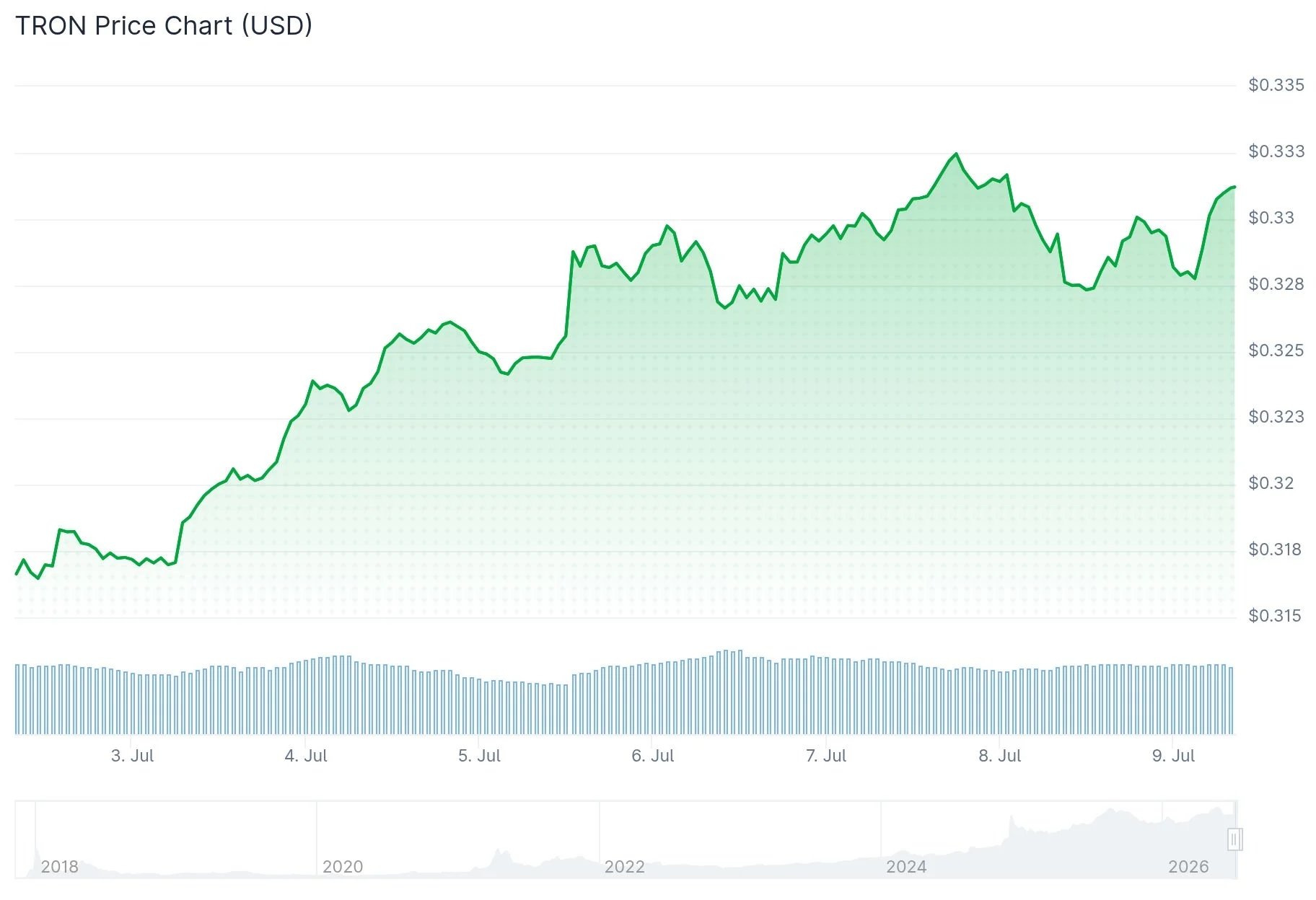
- TRX currently trades at $0.3321 with a total market capitalization of $31.5 billion
- Technical analysts identify $0.35 as the critical resistance zone for potential breakout
- Tron Inc. acquired 151,322 additional TRX tokens, pushing treasury holdings past 704 million
- Total Value Locked on TRON increased by $1.95 billion (7.8% gain) from July 1
TRON (TRX) continues demonstrating stable price action while the blockchain platform achieves significant network growth milestones and attracts sustained institutional accumulation.
Blockchain data from TRON’s official network explorer reveals the platform has successfully surpassed the 392 million total accounts threshold. This metric encompasses all wallet addresses ever generated on the blockchain network, distinguishing it from daily or monthly active user counts.
Since launching its independent mainnet in 2018, TRON has positioned itself as a leading infrastructure for stablecoin transactions and decentralized content distribution. According to DeFilLama analytics, USDT transfers on TRON dominate the stablecoin movement landscape across blockchain networks.
The platform’s infrastructure supports up to 2,000 transactions per second with remarkably low fees averaging approximately 0.0003 TRX per transaction. This combination of high throughput and minimal costs has drawn significant institutional adoption from industry giants such as Binance, HTX, and Tether.
Blockchain analytics platform Lookonchain documented that TRON’s Total Value Locked has expanded by $1.95 billion since the beginning of July, representing a 7.8% increase. This growth trajectory indicates accelerating on-chain activity throughout recent weeks.
At present, TRX is valued at $0.3321, reflecting a 1.13% gain over the past 24-hour period. The token recorded $492.43 million in trading volume during this timeframe, while maintaining its $31.5 billion market capitalization.
Critical Resistance Zone Under Scrutiny
Cryptocurrency technical analyst Umair Orakzai observed that TRX continues defending a crucial support zone, preserving its bullish technical structure. His analysis highlights $0.35 as the next significant resistance threshold requiring close monitoring.
Market technicians suggest that a decisive move above the $0.35 level would likely attract additional buying momentum and fuel further upward price movement. Conversely, a failed breakout attempt — characterized by a brief spike above resistance followed by rapid reversal — could unleash selling pressure.
According to technical analysis perspectives, TRX must either achieve a convincing breakthrough above $0.35 or maintain consolidation within its established trading range.
Institutional Accumulation Continues
Tron Inc. executed another strategic acquisition, purchasing 151,322 TRX tokens at an average entry price of $0.3304 per unit. This transaction elevates the organization’s cumulative TRX position beyond 704 million tokens.
The company announced its intention to continue expanding its Tron Digital Asset Treasury through ongoing accumulation. This persistent buying activity demonstrates sustained confidence and long-term strategic positioning in the native asset.
TRX DAO has also acknowledged the account growth achievement, connecting it to the network’s broader decentralization objectives.
Emerging regulatory frameworks in the European Union and United Arab Emirates are anticipated to influence TRON’s capacity to establish additional institutional collaborations moving forward.

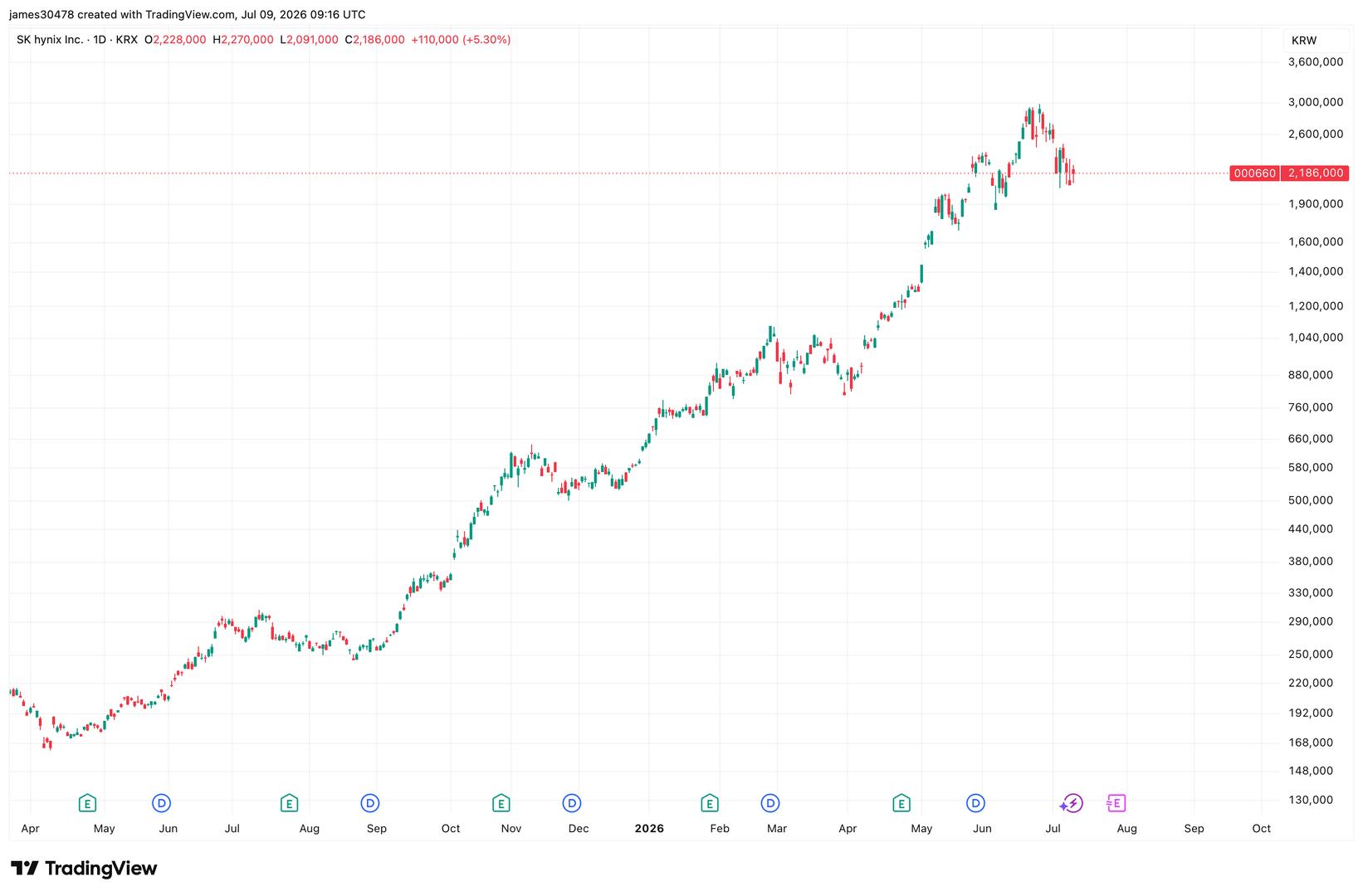
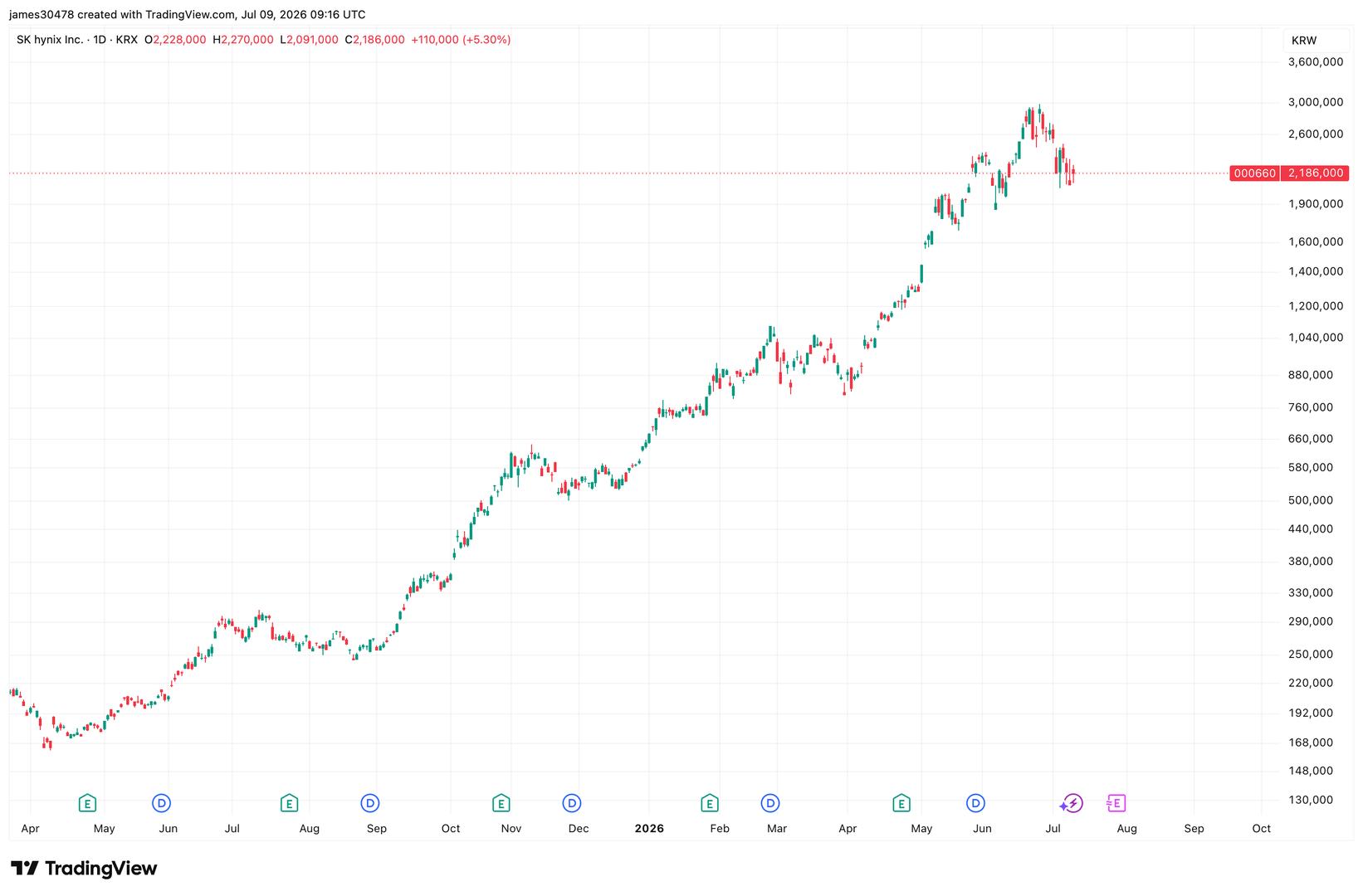
The U.S.-blocked company plans to use the proceeds to upgrade production lines and technology after posting explosive growth, including first-quarter revenue of 50.8 billion yuan, up 700% year-on-year. Reuters estimates CXMT held around 7.7% of the global DRAM market last year.
These deals follow SpaceX (SPCX) and Cerebras (CBRS), two AI-related listings that have fueled enthusiasm across semiconductor and memory stocks. Together they reinforce a broader theme: investors are allocating fresh capital to companies building the infrastructure behind artificial intelligence rather than to crypto assets.
Bitcoin has fallen roughly 50% from its October all-time high to around $63,000, as investors have increasingly favored AI infrastructure plays over digital assets.
The pipeline is far from empty.
OpenAI and Anthropic have both been discussed as companies that could eventually command valuations approaching $1 trillion.
While market expectations had pointed to IPOs as early as this year, however, growing investor unease over AI valuations and a cooling in semiconductor shares could delay those listings until 2027.
Even so, another wave of AI mega offerings would likely continue drawing liquidity away from crypto.


The Bank of Korea (BOK) has doubled down on its stance that won-denominated stablecoins should first be issued through bank-led consortiums.
According to local reports from Digital Asset and EDaily, the central bank made the comments in materials submitted on Thursday to the National Assembly’s finance committee. Local outlets reported that the BOK called for safeguards, including priority issuance by bank-led consortiums and a statutory policy body involving relevant agencies.
The latest comments reinforce the BOK’s months-long push to keep won stablecoin issuance under bank-led structures. The central bank’s stance has divided policymakers and industry groups and contributed to delays in South Korea’s digital asset bill.
The BOK also said it plans to continue developing deposit-token use cases in the second half of the year, including support for government subsidy payments, vouchers, electric vehicle charging infrastructure and further real-world transactions for the general public. Deposit tokens are digital tokens that represent commercial bank deposits.
In April, BOK Governor Hyun-Song Shin expressed support for deposit tokens and central bank digital currencies (CBDCs) in his first public address, while South Korea’s Ministry of Economy and Finance announced a pilot to use tokenized deposits for government operational spending.
BOK’s stablecoin stance keeps bill debate alive
The BOK’s latest comments add to a policy standoff that has slowed progress on South Korea’s Digital Asset Basic Act. The bill had repeatedly stalled over disagreements on who should be allowed to issue stablecoins, with the BOK pushing for banks to retain majority ownership of stablecoin issuers.
Related: South Korea adds token securities to capital market overhaul
The debate has continued as lawmakers consider how stablecoins, tokenized real-world assets (RWAs) and other digital assets should fit into South Korea’s rulebooks. In April, the ruling Democratic Party proposed to put stablecoins and RWAs under existing financial laws. Despite this, key issues such as whether stablecoin issuers should be bank-led remained unresolved.
The bill’s timeline, which the government told President Lee Jae-myung in January it aimed to meet by the first quarter of 2026, has since slipped amid the US-Israeli war with Iran that began in late February, local elections, and delays in reorganizing the Assembly’s committee structure.
Magazine: The 5 types of real world assets being tokenized fastest onchain


Paradigm has raised $1.2 billion for its fourth fund, extending one of crypto venture capital’s biggest names into a wider set of technology markets. The firm said the new vehicle will back builders working in crypto, artificial intelligence, robotics, and other areas near the edge of current software and hardware development.
Summary
- Paradigm’s new fund keeps crypto central while adding AI, robotics, and frontier technology bets now.
- Crypto venture firms are broadening strategies as AI funding captures largest share of venture capital.
- Hyperliquid, Kalshi, Tempo and Morpho show Paradigm still backs crypto market infrastructure despite wider ambitions.
Co-founder Matt Huang and managing partner Alana Palmedo announced the new fund on July 8, 2026. Paradigm said it began in 2018 with a focus on frontier markets and will now invest “first in crypto” while also expanding across AI and robotics. The company presented the move as a broader mandate, not a retreat from digital assets
https://x.com/matthuang/status/2074873573983035801?s=20 .
Crypto remains part of Paradigm’s plan
Paradigm said it will “continue investing in crypto” and in companies that work on markets and financial systems. It named Hyperliquid, Kalshi, and Tempo among examples linked to that strategy. Hyperliquid operates in crypto derivatives, Kalshi focuses on prediction markets, and Tempo is a stablecoin and agent-friendly blockchain project co-founded with Stripe.
The firm also pointed to its internal work on blockchain tools and security. Foundry and Reth remain part of its open-source work, while Paradigm built EVMbench with OpenAI to test AI agents for smart contract security. These projects show that Paradigm still uses research and software development to support crypto infrastructure.
AI and robotics widen the mandate
Paradigm’s fourth fund also gives the firm more room to back companies outside blockchain. The announcement named Zipline, SendCutSend, True Anomaly, and Nous Research as examples of companies it has supported across drone delivery, rapid manufacturing, space defense, and open AI.
That wider scope follows a larger change across venture capital. AI has drawn large funding rounds in 2026, while crypto investors have started to look for deals where blockchain can support automated payments, data markets, trading, and identity. Paradigm’s line that it is investing across “AI, robotics, and other frontiers” puts the firm inside that wider trend.
Crypto VC follows the AI agent theme
Paradigm is not the only crypto-linked investor moving this way. Framework Ventures closed a $400 million fourth fund in June for crypto, AI, robotics, and energy startups. Haun Ventures also raised $1 billion in May for crypto infrastructure, tokenization, and AI agents.
The common theme is not a full break from crypto. These funds are trying to place capital where digital assets, stablecoins, and machine-led software may overlap. AI agents are one example because they may need payment rails, identity checks, and settlement systems that can run with little manual action.
Paradigm’s new fund arrives as venture money has moved toward a smaller group of AI companies. Crunchbase reported record global startup funding in the first half of 2026, with OpenAI and Anthropic taking more than 40% of the total. That helps explain why crypto funds are watching AI closely.
The raise also gives Paradigm more capital to compete for founders across several fast-moving sectors. Its message to builders was direct: “come build with us.” It also gives founders a larger capital source during a more selective crypto funding cycle. For crypto, the key point is that one of its largest venture backers is now positioning blockchain as part of a broader frontier technology strategy.

- AscendEX shut down after MiCA pressure, weak liquidity, and failed funding left operations unsustainable.
- Users face delayed manual withdrawals, with the exchange unable to guarantee full balance recovery.
- ZachXBT had flagged nearly empty hot wallets before the shutdown, including ETH, USDT, USDC, and SOL.
- The closure revives custody concerns after AscendEX’s 2021 breach, which caused about $78M in losses.
AscendEX has shut down after regulatory, financial, and operational pressures pushed the crypto exchange into a controlled offboarding process. The platform ceased operations on July 1, then published a notice on July 6 explaining the decision.
The shutdown has left users facing uncertainty over whether they will recover their full crypto balances. The exchange said current liquidity problems may limit payouts, making withdrawals the central issue for affected customers.
MiCA Pressure And Failed Funding Trigger Closure
AscendEX linked its closure to the European Union’s Markets in Crypto-Assets framework, which came fully into force across the bloc. The platform said it did not hold the authorization required under MiCA, adding that regulatory pressure was only part of the problem.
Financial strain also played a major role. According to the exchange, a planned strategic transaction was expected to provide liquidity and support future growth. However, the counterparty failed to perform, leaving the business without expected funding.
The exchange also cited weak market conditions and operational pressure. Together, those factors forced the platform to stop normal services and begin reviewing its financial position.
That review now matters directly to users. AscendEX said it cannot guarantee that customers will receive all digital assets recorded in their accounts. It also said it cannot confirm the timing or size of any final recoveries.
The warning marks a sharp change from a standard exchange shutdown. Instead of simply closing services and processing withdrawals, the company is now assessing what assets remain available for distribution.
Manual Withdrawals Leave Users Facing Recovery Delays
User access has now been restricted to offboarding activities. Automated withdrawals have been suspended, while withdrawal requests are being reviewed manually.
That process could delay payouts further. The exchange said all claims will follow the same documented review process and that no group of users will receive preferential treatment.
Concerns, however, had already been growing before the notice. Last month, blockchain investigator ZachXBT said users had reported pending withdrawals lasting days or weeks. He also reviewed publicly identified hot wallets linked to the exchange.
According to his review, those hot wallets appeared to hold little or no balance in major assets, including ETH, USDT, USDC, and SOL. However, he also noted that exchange reserves may include cold wallets, third-party custodians, or addresses not publicly labeled.
Days later, ZachXBT urged affected users to report the matter to law enforcement agencies and financial regulators in their own jurisdictions. He also claimed the exchange continued accepting deposits while many withdrawals remained unprocessed.
He further alleged that one large user received no response from co-founder George Jing Cao. However, the company’s July 6 notice did not provide a specific recovery percentage for customers, leaving users with limited clarity on how much they may ultimately recover.
The uncertainty also adds to the exchange’s troubled history. AscendEX was founded in 2018 as BitMax before later rebranding, and it previously suffered a major security breach in 2021, when attackers stole about $78 million in crypto assets.
That attack was later linked to the Lazarus Group. Now, the platform’s closure has again placed user funds at the center of the story.
For affected customers, the immediate concern is recovery. For the wider market, the shutdown is another reminder that exchange account balances are not the same as direct asset control.
Pi Network’s team introduced new updates yesterday and has taken to X to outline more details about how they function and how users can take full advantage.
However, the underlying asset continues to dig new lows, and its free-fall doesn’t seem to be ending soon.
New Update Explained
CryptoPotato reported yesterday the two major updates, one focusing on the AI-assisted App Planning Phase, allowing developers to create their product from an initial idea, and the other improving the backend support. In the follow-up post on the second upgrade, the team highlighted the key features and how Pioneers can benefit.
“Backend capabilities begin with persistent storage for newly created App Studio apps, allowing apps to save and retrieve user-specific data across sessions.”
Developers can build applications on the Pi App Studio with experiences that continue even after users leave and return. The example given by the team was the following: games can remember a user’s high scores, productivity apps can display again a user’s to-do lists, and note-taking applications can preserve notes automatically.
The process was quite different until now, as these applications were “largely limited to frontend-only, single-session experiences,” in which app data such as preferences or progress disappeared if users exited the app.
The team claimed that adding such support now is a “significant App Studio platform milestone because it expands what AI-created apps can practically do on Pi Network.” Persistent storage is the first capability built on this foundation, allowing a broader range of useful apps, said the team.
PI Sees New ATL
Although Pi Network’s team continues to publish relatively frequent protocol updates, the native token fails to benefit and stage a notable comeback. Just the opposite; its price direction has been mostly south.
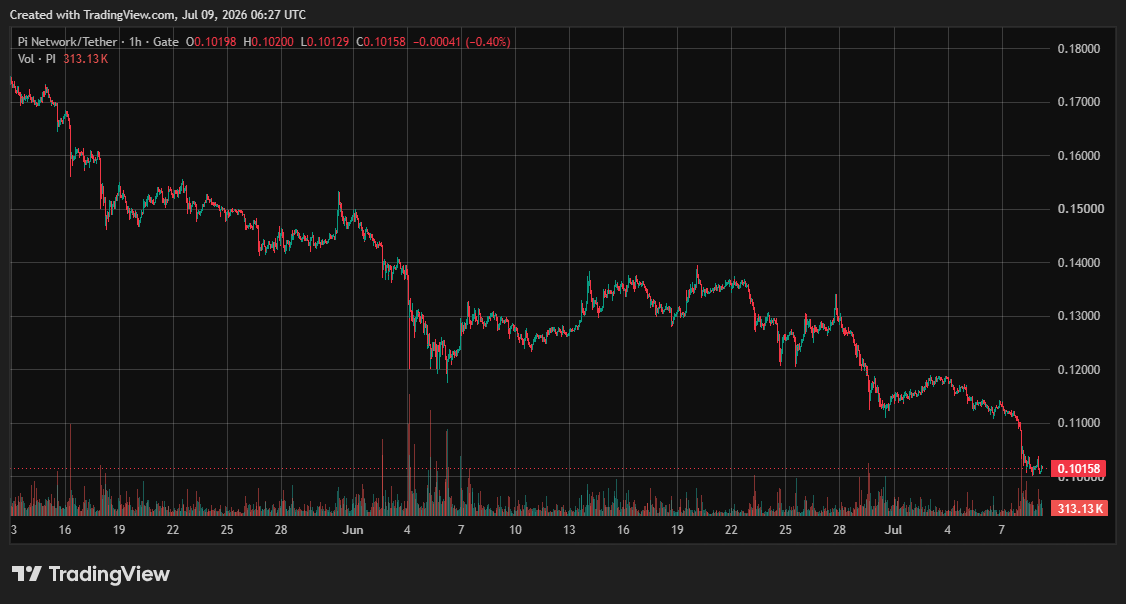
It painted a new all-time low at the end of June at under $0.115 when the entire market corrected. It managed to rebound slightly to somewhere between $0.12 and $0.13 for a week or so but nosedived once again at the start of the current business week. It plunged to $0.1033 yesterday for a new record low before the bears initiated another leg down several hours ago.
The new low, according to CoinGecko data, sits at $0.1002. Despite rebounding by 1.5% since then, PI is still in danger of breaking below $0.10 in the very near future given the overall market sentiment and the lack of trust in the token.
The post Pi Network’s Big July Upgrade Explained: What Pioneers Need to Know appeared first on CryptoPotato.
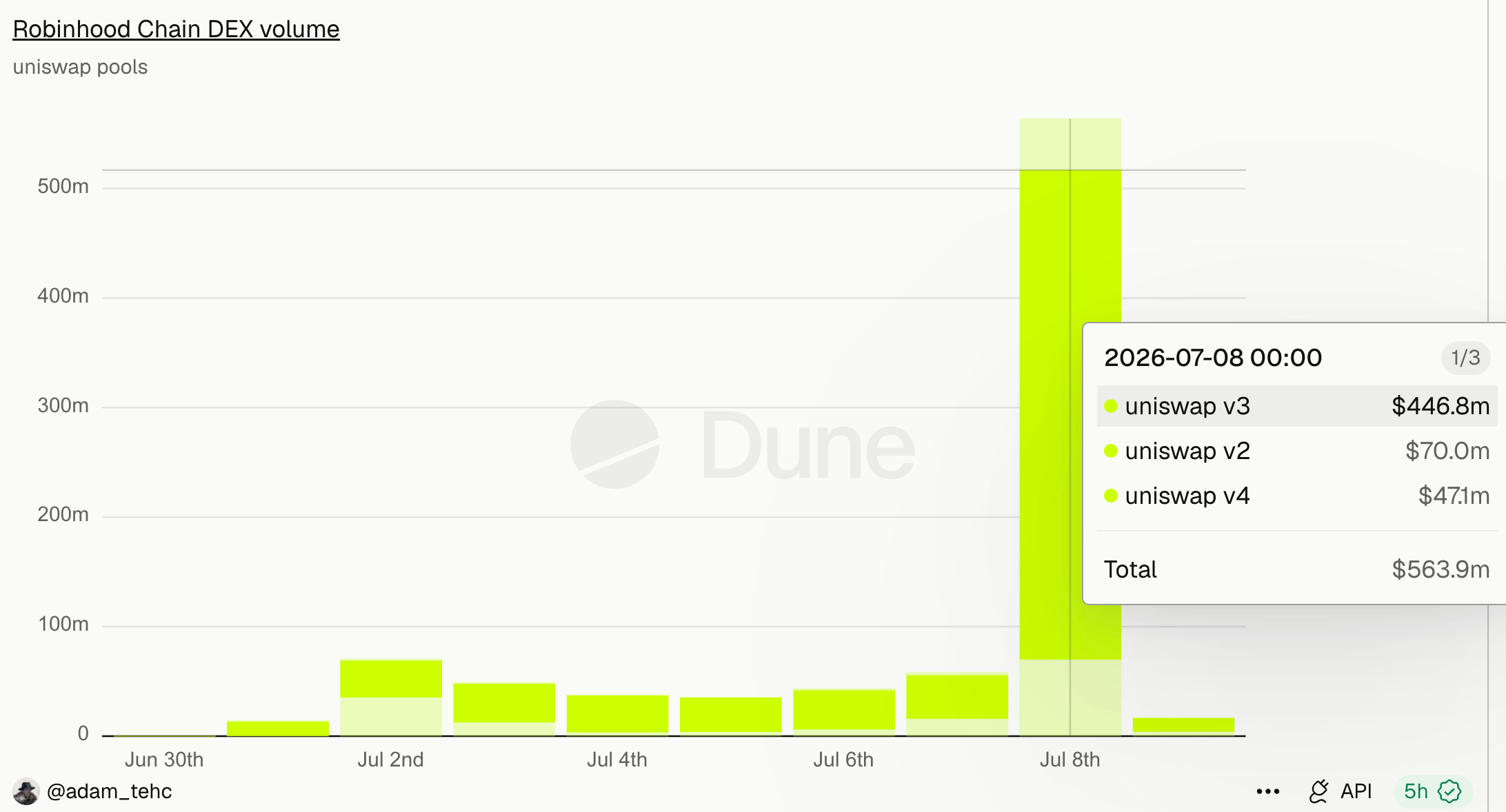
Robinhood Chain’s daily decentralized exchange (DEX) trading volume reached $563.9 million on July 8. This marked a record high for the week-old network, as a meme coin rush overtook its tokenized-asset pitch.
The surge coincided with 193,187 daily active addresses. Cash Cat (CASHCAT), a token tied to Robinhood’s original name, led the frenzy.
Robinhood Chain Turns Into a Meme Coin Hub
Robinhood launched the Robinhood Chain public mainnet on July 1. The Layer 2 network runs on Arbitrum technology and targets real-world assets (RWA).
Nonetheless, retail meme trading set the tone instead since the launch. According to data from Dune, 16,639 tokens were created over the past 24 hours, and many have already exceeded a $1 million market cap.
Follow us on X to get the latest news as it happens

One token that stands out among the new launches is Cash Cat. The meme coin draws inspiration from Robinhood’s early history.
Robinhood co-founder Vlad Tenev has previously hinted that the company was named CashCat before ultimately adopting its current brand.
However, it is worth noting that the token is not officially affiliated with either Robinhood or Tenev.
Tenev Comment Fuels the Cash Cat Surge on Robinhood
Cash Cat moved into the spotlight after its rally gained momentum following a post from Tenev.
“While we’re building Robinhood Chain to be the best chain for RWA … it works great for memes too,” he said.
Following the post, Cash Cat climbed to an all-time high of $0.147 on July 8, according to CoinGecko data. The token is also dominating trading activity on Robinhood Chain, recording roughly $98 million in 24-hour trading volume, according to a Dune dashboard. It attracted 8,720 unique traders, leading other tokens on the network.
Robinhood-themed meme coins, including Dog In Hood and The Robinhood, also ranked among the most actively traded assets.

However, the rally has since cooled. Cash Cat traded near $0.105 on July 9, down about 17% over the previous 24 hours, leaving open the question of whether the meme coin’s momentum can outlast the initial excitement.
Subscribe to our YouTube channel to watch leaders and journalists provide expert insights
The post Robinhood Chain DEX Volume Hits Record High Amid Cash Cat Frenzy appeared first on BeInCrypto.


“The under-covered angle is that this metric is documenting the end of the exchange-custody era,” Ben Nadareski, CEO of Solstice, said. The bigger story may not be lower exchange balances themselves, but where those assets are moving to.
“Assets are leaving trading venues for two destinations: regulated custody on one side, productive onchain positions on the other,” he said.
Moreover, the argument that bull runs always follow a steady decline in exchange balance is not necessarily true. For instance, in 2022, the supply on exchanges remained low, yet prices crashed hard.
HODLing is real
While the indicator may not be as dependable as before, it doesn’t change the fact that BTC is being accumulated by a variety of market participants in anticipation of a price increase.
“Over 130 public companies now hold bitcoin on their balance sheets, and spot ETFs have absorbed a growing share into regulated custody,” Zalan said.
According to Bitcoin Treasuries, public companies hold about 1,264,579 BTC, private ones 281,752, government entities 649,954, DeFi and other protocols 369,595, while ETFs and exchanges have 1,622,533. Its data also shows treasury companies hold about 7.252 million ETH.
Combined with nearly 7 million bitcoin in dormant wallets, a total of just under 11.2 million bitcoin sits outside active trade, which is about 56.5% of the currently circulating supply of roughly 20.05 million.

Football digital coach venture Coaches’ Voice secures equity boost to expand

Binance Co-CEO Says Regulators Invited Exchange to Apply for New Licenses After MiCA Setback

Cheryl Reeve breaks WNBA record for coaching wins as Lynx beat Sun


-

 Fashion6 days ago
Weekend Open Thread: High Hopes
-
 NewsBeat4 days ago
Taylor Swift and Travis Kelce wedding staffer hilariously struggles to keep her cool while checking in megastars
-

 Fashion3 days ago
Open Thread: What Great Books Have You Read Recently?
-

 Crypto World6 days ago
Standard Chartered Secures MiCA License as ESMA Adds 37 New Crypto Firms
-

 Politics6 days ago
The House | “Reframing the debate from a binary discussion of winners and losers”: Yuan Yang reviews ‘We Are Not Machines’
-

 News Videos2 days ago
Whats Hidden Inside This Cash Register? #treasure #reselling #money
-
 Tech2 days ago
Anthropic’s new “J-lens” reveals a silent workspace inside Claude that mirrors a leading theory of consciousness
-

 Business3 days ago
AXT Shares Jump Nearly 14% as Semiconductor Materials Maker Rebounds on AI-Linked Indium Phosphide Demand
-

 Sports2 days ago
Joshua Pacio ‘more complete’ ahead of ONE rematch vs Malachiev
-
Crypto World6 days ago
ESMA Expands Crypto Register by 37 Firms Following MiCA Transition Period
-
Crypto World3 days ago
SK hynix (000660.KS) Stock Dips as $28B Nasdaq ADR Offering Drives AI Memory Expansion
-

 Crypto World4 days ago
South Africa proposes crypto tax guidance under existing rules
-

 News Videos3 days ago
Best Time to Enter Small Caps Right Now? Another Bull Run? | Financially Free
-

 Tech4 days ago
Lenovo laptops are now shipping with YMTC SSDs, a sign of Chinese NAND entering the mainstream
-

 Business6 days ago
What a 10 Percent Drop Means for Buyers, Sellers and Renters
-
Sports2 days ago
We have punished the disrespect
-

 Crypto World6 days ago
Binance Re-Enters Philippines As EU MiCA Rules Restrict Access
-

 News Videos3 days ago
Avoid entering in FOMO #bitcoin #cryptocurrency #trading #scalping
-

 Crypto World6 days ago
Alibaba bans Claude Code over alleged backdoor security concerns
-

 Tech5 days ago
Neuralink Threads Its Way Straight Through the Brain’s Armor
You must be logged in to post a comment Login