

Business
Ex-FBI Agent Says Nancy Guthrie’s Kidnapper Was ‘an Amateur’ as Savannah Publicly Marks Five Months of Agony


TUCSON, Ariz. — A retired FBI hostage negotiator says he believes the person responsible for kidnapping Nancy Guthrie, the 84-year-old mother of “Today” show co-anchor Savannah Guthrie, is an inexperienced criminal rather than a hardened professional, pointing to a series of what he describes as rookie mistakes captured on the family’s home security footage.
Speaking to the Daily Mail, retired FBI special agent Chip Massey said the suspect’s behavior in doorbell camera footage from the night of Guthrie’s disappearance suggested a lack of criminal expertise. Massey pointed to the way the masked individual, who has become known online as “porch guy,” attempted to disguise his gait and height while approaching the home. “The way he tries to get lower to disguise his gait and height, how he tries to cover up the camera – that’s not something an experienced criminal would do,” Massey said.
Massey identified several additional details he said pointed toward an amateur perpetrator. He noted that the suspect’s gun holster appeared to be positioned incorrectly, saying it was worn in a manner that would leave the weapon vulnerable to being grabbed by someone else. He also said the suspect’s gloves appeared oversized, a detail he said would make it difficult to properly handle a firearm. Massey further pointed to the presence of blood found near the exit of Guthrie’s home as evidence that the abduction did not go as planned. “The fact blood was on the exit tells me there was a struggle inside,” he said. Taken together, Massey concluded the pattern of errors, along with the inconsistent handling of subsequent ransom communications, pointed away from a professional operation. “If he were a professional, that wouldn’t have happened, so that tells me he’s an amateur, as does the whole back and forth afterwards (with ransom notes) where they don’t provide proof of life,” Massey said.
Massey’s assessment adds to a long list of competing theories that have circulated throughout the five-month investigation. As CNN has reported, analysts and commentators following the case have offered widely divergent characterizations of the suspect over time, at various points describing the abduction as a robbery gone wrong, a ransom-motivated kidnapping, the work of a solo amateur, and the work of a sophisticated group, with some individual commentators even reversing their own assessments within a matter of weeks. President Donald Trump himself weighed in on the uncertainty earlier this year, telling reporters the suspect either “knew what they were doing very well, or they were rank amateurs.”
Massey is not the only investigator to speak publicly and critically about aspects of the case in recent days. Atlanta-based crime scene expert Sheryl McCollum has separately criticized the broader handling of the investigation, describing it as “botched” and pointing to what she characterized as a lack of coordinated public messaging between the Guthrie family and the law enforcement agencies involved. “You have not seen Savannah and her family on the same podium as the FBI and the Pima County Sheriff. They should have been standing together, making statements, from day one. And we haven’t seen that yet,” McCollum said, adding that “they’re not on the same page. It’s really sad to see this.”
The renewed scrutiny comes as the investigation passes a significant and painful milestone for the Guthrie family. In a statement provided to Arizona television station KOLD 13 News on July 1, Savannah Guthrie marked five months since her mother’s disappearance. “It is five months of agony and unending trauma for our family,” Guthrie said. “There is not a moment that goes by that we aren’t actively trying to find our mom.” She went on to thank the community of Tucson “for holding her in their hearts,” along with the FBI and the Pima County Sheriff’s Office “for their tireless work on behalf of our family,” closing her statement with the appeal, “Bring her home.”
Pima County Sheriff Chris Nanos also provided an update to KOLD 13 News around the same time, saying investigators continue to actively pursue the case, with particular focus on DNA evidence and genetic genealogy techniques that could help identify a suspect even without a direct database match. “Especially when you throw in genealogy—now, you’ve got… this may not be the bad guy, but this person might be the bad guy’s relative three times over,” Nanos said. According to the sheriff, responsibilities in the investigation have been divided between agencies, with the FBI handling the evaluation of ransom notes while his department focuses on forensic evidence processing, including ongoing DNA analysis being conducted with the assistance of outside laboratories and Google’s video analysis capabilities.
Guthrie was last seen alive around 9:45 p.m. on January 31, when a family member dropped her off at her Catalina Foothills home following dinner. She was reported missing the next morning after failing to appear for church, and investigators later determined she had been abducted from the residence overnight. Blood found near her front doorstep was subsequently confirmed to belong to Guthrie. Despite an extensive, multi-agency investigation involving the FBI, the Pima County Sheriff’s Department and search-and-rescue teams, no suspect has been publicly identified, and Guthrie has not been located.
The case has also been complicated by a series of ransom communications sent to media outlets and the Guthrie family, several of which the FBI has since determined were fraudulent. In early July, a California man pleaded guilty to federal charges connected to one such fake ransom message, marking the first criminal conviction directly tied to the flood of communications investigators have had to sort through since Guthrie’s disappearance. The FBI has said other notes remain under active investigation as potentially legitimate, though it has not disclosed further details about which communications fall into that category.
A combined reward exceeding $1 million remains available for information leading to Guthrie’s safe recovery. Authorities continue to urge anyone with relevant information to come forward through the Pima County Sheriff’s Department’s tip line or the FBI’s national tip line, as the investigation moves further into its sixth month without a confirmed suspect or resolution.



Donovan Jones is an IPO research specialist with 15 years of experience analyzing investment opportunities for U.S. IPOs.He also leads the investing group IPO Edge, which offers actionable information on growth stocks through first-look IPO filings, previews on upcoming IPOs, an IPO calendar for tracking what’s on the horizon, a database of U.S. IPOs, and a guide to IPO investing to walk you through the entire IPO lifecycle – from filing to listing to quiet period and lockup expiration dates. Learn more
Analyst’s Disclosure: I/we have no stock, option or similar derivative position in any of the companies mentioned, and no plans to initiate any such positions within the next 72 hours. I wrote this article myself, and it expresses my own opinions. I am not receiving compensation for it (other than from Seeking Alpha). I have no business relationship with any company whose stock is mentioned in this article.
Seeking Alpha’s Disclosure: Past performance is no guarantee of future results. No recommendation or advice is being given as to whether any investment is suitable for a particular investor. Any views or opinions expressed above may not reflect those of Seeking Alpha as a whole. Seeking Alpha is not a licensed securities dealer, broker or US investment adviser or investment bank. Our analysts are third party authors that include both professional investors and individual investors who may not be licensed or certified by any institute or regulatory body.
Business
GameStop Shares Slip as Shareholders Approve Stock Increase to Fund Its $56 Billion eBay Takeover Bid
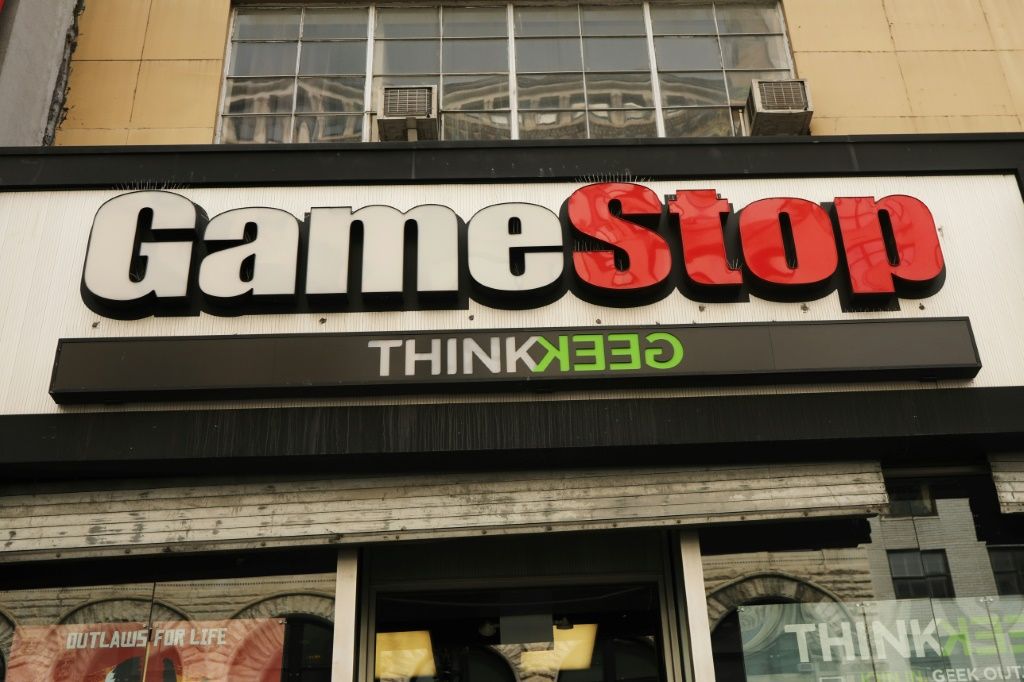
Shares of GameStop Corp. fell Wednesday, trading at $21.82, down 38 cents, or 1.71 percent, a day after shareholders overwhelmingly approved a package of governance proposals designed to give the video game retailer greater flexibility to pursue its long-running attempt to acquire eBay.
Note: This article is intended to provide factual context and does not constitute financial advice. Readers should consult a licensed financial advisor before making investment decisions.
GameStop shareholders approved all proposals presented at the company’s 2026 Annual Meeting, held Tuesday at 10 a.m. Central time, including an amendment to the company’s certificate of incorporation increasing the number of authorized shares of Class A common stock to 2.5 billion. The amendment received the affirmative vote of 68.7 percent of votes cast, according to a company statement, giving GameStop expanded capacity to issue common stock in connection with strategic transactions, including its proposed acquisition of eBay. Shareholders also re-elected all five director nominees, approved an advisory vote on executive compensation, and ratified the company’s independent registered public accounting firm.
The share authorization increase is directly tied to GameStop’s continued pursuit of eBay, a deal that has developed in stages over recent months under the direction of GameStop chairman and chief executive Ryan Cohen. On May 3, GameStop delivered a non-binding proposal to eBay’s board of directors seeking to acquire all outstanding common stock of eBay that GameStop does not already own, at a price of $125 per share, to be paid through a combination of cash and GameStop common stock, a transaction that has been reported to be valued at approximately $56 billion.
GameStop’s position in the deal is already backed by a meaningful existing stake. According to company disclosures, GameStop directly holds 4,343,725 shares of eBay common stock, and has separately entered into a series of American-style put/call option transactions, expiring February 23, 2028, with an unaffiliated financial institution that provide economic exposure to an additional 39,046,658 shares of eBay stock. Those option arrangements were previously settleable only in cash, but following the satisfaction of a regulatory condition under the Hart-Scott-Rodino Antitrust Improvements Act on June 3, GameStop and its counterparty now have the option, though not the obligation, to settle the transactions through physical delivery of eBay shares rather than cash.
GameStop’s leadership has continued to publicly affirm its commitment to the deal despite eBay’s board having previously rejected the company’s takeover overture. Cohen has been vocal about his interest in the acquisition, telling reporters in early June, “I want to own eBay,” while outlining plans that would involve cutting costs at the e-commerce platform and positioning it as a more direct competitor to Amazon. GameStop reiterated in a late-June statement that its leadership remains focused on advancing the proposed acquisition, with additional transaction-related materials described as forthcoming.
Alongside the eBay pursuit, GameStop has continued to update investors on its broader financial outlook. In late June, the company said it currently expects to generate adjusted EBITDA in excess of $600 million for fiscal year 2026, the period ending January 30, 2027, compared with adjusted EBITDA of $345.4 million in fiscal year 2025, representing a significant projected improvement in the company’s underlying operating performance.
GameStop’s stock has remained a subject of active trading and analyst commentary throughout 2026, reflecting the company’s ongoing transformation under Cohen’s leadership. In addition to the eBay pursuit, GameStop has continued its long-running shift toward diversifying beyond its traditional brick-and-mortar video game retail business. The company began investing company cash in bitcoin last year, disclosing a purchase of 4,710 bitcoin as part of that broader strategy, while also continuing to close a significant number of underperforming physical retail locations, having shuttered 590 stores in 2024 alone with additional closures planned amid ongoing declines in traditional retail revenue.
The company has also taken steps to raise additional capital in recent weeks. According to Fox Business, GameStop’s sale of 75 million shares of common stock raised more than $2 billion in gross proceeds, funds that could support both the company’s ongoing digital asset strategy and its pursuit of eBay, depending on how the acquisition process ultimately unfolds.
GameStop’s approach to compensating its top executive has also drawn scrutiny in recent months. According to CNBC, Cohen previously agreed to forgo a proposed $35 billion pay package tied to specific performance milestones, even as questions remained about whether the company would ultimately be able to complete the eBay acquisition given the scale of financing required and eBay’s initial rejection of GameStop’s proposal.
GameStop, headquartered in Grapevine, Texas, and founded in 1996, operates as a specialty retailer of games, collectibles and entertainment products across the United States, Australia and Europe, selling new and pre-owned gaming platforms, accessories, software and digital content through both physical stores and e-commerce platforms. The company’s stock has remained a frequent subject of retail investor interest since its emergence as a prominent “meme stock” beginning in 2021, a dynamic that has continued to shape trading patterns and options activity around the stock through the current eBay acquisition saga.
Options market activity tracked by Cboe has shown fluctuating sentiment toward GameStop shares in recent weeks, with mixed positioning reflecting ongoing investor uncertainty about whether the eBay transaction will ultimately proceed and, if so, on what terms. Wednesday’s modest decline in GameStop shares came against a broader backdrop of market volatility tied to renewed geopolitical tensions between the United States and Iran, which weighed on major indexes and contributed to a generally risk-off tone across equity markets during the session.
With shareholder approval for the expanded share authorization now secured, GameStop has cleared one procedural hurdle in its pursuit of eBay, though the ultimate outcome of the proposed acquisition remains uncertain given eBay’s prior rejection of the company’s offer and the substantial scale of financing and regulatory approval that any completed transaction of this size would require. Investors are likely to continue monitoring further developments on the deal, along with GameStop’s broader financial performance and digital asset strategy, as the company works to advance what would represent one of the more unconventional corporate acquisitions in recent retail industry history.

Wall st set to open higher as chip stocks gain; US-Iran tensions in focus

Gazans mourn aid worker killed by Israel who brought them the World Cup

Coinbase restores prediction markets trading after technical issue
Business
Pure Cycle Corporation 2026 Q3 – Results – Earnings Call Presentation (NASDAQ:PCYO) 2026-07-09


Seeking Alpha’s transcripts team is responsible for the development of all of our transcript-related projects. We currently publish thousands of quarterly earnings calls per quarter on our site and are continuing to grow and expand our coverage. The purpose of this profile is to allow us to share with our readers new transcript-related developments. Thanks, SA Transcripts Team
Business
5 Top KOSPI Stocks Investors Are Watching Right Now in 2026 Amid South Korea’s Historic Memory Chip Boom

South Korea’s stock market has become one of the most closely watched in the world in 2026, with the benchmark KOSPI index nearly doubling since the start of the year at points before recent volatility, driven almost entirely by an unprecedented boom in memory semiconductor demand tied to global artificial intelligence infrastructure spending. Here is a look at five of the KOSPI’s most closely followed companies as investors weigh the opportunity and risk of Korea’s chip-driven rally.
Note: This article is intended to provide factual context for investors and does not constitute financial advice. Individuals should consult a licensed financial advisor before making investment decisions.
1. Samsung Electronics
Samsung remains the most recognizable name on the KOSPI and, until recently, its largest company by market capitalization. The world’s largest memory chipmaker posted a preliminary second-quarter 2026 operating profit of 89.4 trillion won, or roughly $58.6 billion, a nearly 19-fold increase from the prior year and a figure that exceeded even the highest single-quarter profits ever recorded by Nvidia or Apple. Samsung’s dominance stems from its leadership across DRAM, NAND and high-bandwidth memory production, with the company holding the largest DRAM production capacity in the industry at 650,000 to 700,000 wafers per month. Despite the historic results, Samsung shares fell sharply following the earnings announcement, part of a broader “sell the news” reaction across the sector, illustrating how quickly sentiment toward even the strongest-performing companies can shift once high expectations are already priced in.
2. SK Hynix
SK Hynix overtook Samsung Electronics in market capitalization for the first time in more than 25 years in late June, becoming South Korea’s largest listed company as the world’s second-largest memory chipmaker extended a winning streak tied to its dominant position in high-bandwidth memory, a critical component for AI data centers. SK Hynix shares have risen roughly six-fold since the start of 2025, according to market data, and the company has been exploring the issuance of new shares to help fund a planned U.S. listing of American depositary receipts, a move aimed at securing additional capital to expand its AI-related semiconductor production capacity. SK Hynix has also emerged as one of the most heavily weighted stocks tracked by international investors seeking exposure to the Korean chip sector.
3. Hyundai Motor
Beyond the semiconductor sector, Hyundai Motor represents one of the more prominent non-chip names among Korea’s largest listed companies, commonly cited by international analysts and index-tracking funds as a core holding for diversified exposure to the Korean market. As a global automaker with a substantial international manufacturing and export footprint, Hyundai offers investors a way to gain Korean market exposure that is less directly tied to the extreme volatility that has characterized the memory chip sector throughout 2026, though the stock remains subject to its own set of risks tied to global auto demand, currency fluctuations and the broader industry’s ongoing transition toward electric vehicles.
4. SK Square
SK Square, an investment holding company affiliated with the broader SK Group, has been identified by analysts including those at Macquarie as one of the firm’s top “memory-heavy” picks within the Korean market, alongside Samsung Electronics and SK Hynix. As a holding company with exposure to SK Hynix and other technology and telecommunications assets, SK Square offers a somewhat different avenue for investors seeking indirect exposure to Korea’s chip boom, though the stock has also shown significant volatility, at one point falling more than 13 percent during the sharpest single-day selloffs affecting the broader chip-heavy KOSPI index this year.
5. Samsung C&T
Samsung C&T, another company highlighted among Macquarie’s top Korean equity picks, serves as a diversified holding entity within the broader Samsung Group, with interests spanning construction, trading and investment activities, including a significant indirect stake in Samsung Electronics itself. Analysts have pointed to companies like Samsung C&T as one way for investors to gain exposure to the broader Samsung ecosystem, including its chip business, while potentially offering somewhat different risk characteristics than holding Samsung Electronics shares directly.
Beyond these five names, market strategists have offered a range of perspectives on the broader opportunity and risk landscape for Korean equities heading further into 2026. Macquarie’s Daniel Kim has argued that the “upside to memory prices is sizeable,” suggesting the market has not yet fully reflected current earnings potential into share prices, while also pointing to increased foreign fund flows into Korean equities following the lifting of the country’s short-selling ban in March 2025. Macquarie’s analysis projected that its coverage universe of 103 Korean stocks, representing roughly 70 percent of the combined KOSPI and KOSDAQ markets, could register 48 percent earnings-per-share growth in 2026, with Samsung and SK Hynix alone expected to account for 52 percent of total net profits and 68 percent of the overall profit increase across that coverage universe.
Despite the bullish long-term case many analysts have made for Korean equities, the sector’s extreme concentration in a small handful of chip-related names has produced significant volatility throughout 2026. The KOSPI plunged more than 12 percent in a single session in early March amid geopolitical tensions tied to the Iran conflict, before recovering. More recently, the index tumbled into bear market territory this week, falling more than 20 percent from its recent high after a disappointing market reaction to Samsung’s otherwise record-breaking earnings triggered a sharp, multi-day selloff across the country’s chip sector.
Analysts covering the Korean market have consistently flagged several key risks alongside the sector’s growth potential, including extreme concentration risk given that Samsung and SK Hynix together comprise roughly 40 to 45 percent of major Korea-focused index funds, geopolitical volatility tied to the country’s proximity to regional tensions, currency risk from fluctuations in the Korean won, and the inherent cyclicality of the memory chip market, where any disruption to current AI-driven demand could disproportionately affect Korean equities given their outsized weighting toward semiconductor manufacturers.
Given the concentrated nature of the KOSPI’s recent performance and the significant volatility the index has experienced across multiple sharp swings throughout 2026, individuals considering exposure to Korean equities, whether through direct investment in specific companies or through broader Korea-focused exchange-traded funds, are encouraged to carefully weigh their own risk tolerance and investment time horizon, and to consult a financial advisor given the elevated volatility and concentration risk that has characterized this market throughout the year.
Business
Penguin Solutions Shares Surge Nearly 16% Today After Record Earnings Beat and Raised Full-Year AI Guidance
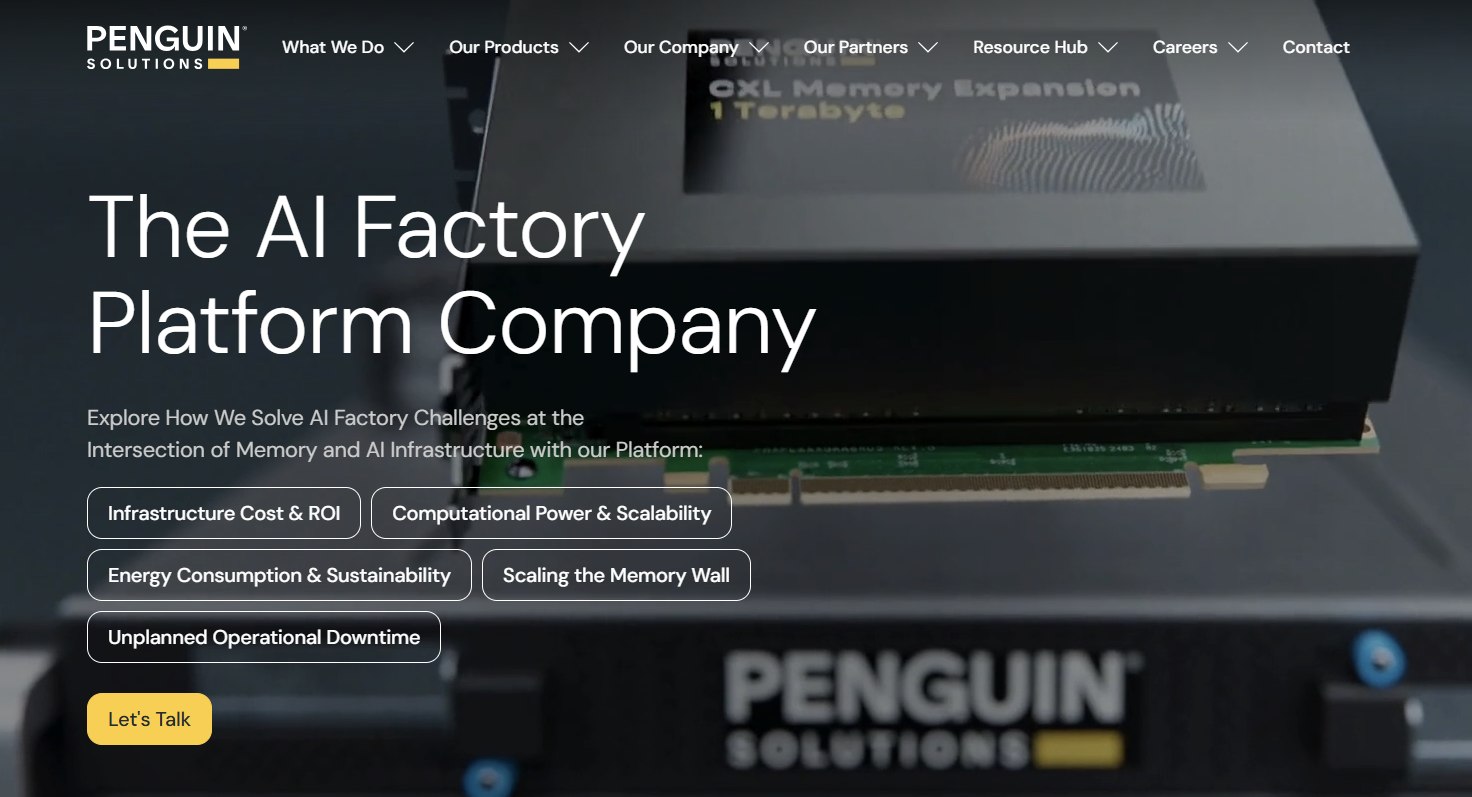
Shares of Penguin Solutions surged Wednesday, trading at $72.54, up $9.83, or 15.68 percent, extending a sharp rally that began Tuesday evening after the AI infrastructure and memory chip company reported record fiscal third-quarter results and raised its full-year guidance.
Note: This article is intended to provide factual context and does not constitute financial advice. Readers should consult a licensed financial advisor before making investment decisions.
Penguin Solutions reported fiscal third-quarter revenue of $478.7 million, up 47.6 percent year over year and well ahead of Wall Street’s consensus estimate of $405.5 million, a beat of roughly 17.5 percent. The company posted non-GAAP earnings per share of 84 cents, exceeding analyst expectations of 54 to 56 cents by nearly 50 percent. Adjusted EBITDA came in at $67.57 million, representing a 14.1 percent margin and beating consensus estimates by 35.8 percent, while operating margin climbed to 10.6 percent from just 3 percent in the same quarter a year earlier.
Following the results, Penguin Solutions raised its full-year fiscal 2026 adjusted earnings-per-share guidance to $2.60 at the midpoint, plus or minus 5 cents, up from a prior consensus estimate of $2.28, representing roughly a 20.9 percent increase to the company’s outlook. Chief executive Kash Shaikh credited the results to the company’s strategic focus on AI infrastructure. “Penguin Solutions delivered a record quarter, exceeding expectations for both net sales and EPS. This profitable growth acceleration reinforces our confidence that our AI Factory Platform strategy is working,” Shaikh said. He added that the company’s Integrated Memory segment “more than doubled year over year,” while its “AI Infrastructure business continued to build momentum, reflecting strong demand and execution across our memory and AI Infrastructure portfolio.”
The company said it added four new AI Infrastructure customer logos during the quarter and was recognized as an Nvidia AI Factory Specialized Partner, an invitation-only designation that Nvidia extends to a select group of solution providers within its broader partner network. The designation validates a company’s ability to design and operate full-stack AI infrastructure systems, spanning racks, networking and software integration, for enterprise and hyperscale customers deploying large-scale AI training and inference workloads.
Analyst reaction to the results was swiftly positive. Rosenblatt raised its price target on Penguin Solutions to $75 from $65 while maintaining a Buy rating on the shares following the earnings report, continuing a pattern of successive price target increases from the firm over recent months, having previously raised its target from $54 to $65, and before that from $32 to $54, and earlier still from $23 to $32. According to StockAnalysis.com, the average analyst rating on Penguin Solutions currently stands at “Buy” across seven covering analysts, though the average 12-month price target of $51.57 sits notably below the stock’s current trading level, reflecting how quickly the stock’s rapid rally has outpaced some previously set analyst targets.
Not every analyst has remained bullish throughout Penguin Solutions’ run. Barclays analyst Tom O’Malley downgraded the stock to Equal Weight from Overweight earlier this year, citing what he described as “significant” margin compression at the time, while setting a considerably more conservative price target of $27. That downgrade came before the company’s more recent string of stronger-than-expected quarterly results, illustrating how quickly sentiment toward the stock has shifted as its AI infrastructure business has continued to accelerate.
Penguin Solutions, headquartered in Fremont, California, and founded in 1988, operates across three business segments: Advanced Computing, which offers platform solutions and services for artificial intelligence, high-performance computing and machine learning; Integrated Memory, which designs and develops memory solutions for networking, telecom, data analytics, AI and machine learning applications under its SMART Modular Technologies brand; and Optimized LED, a smaller segment offering application-optimized LED products. The company’s AI-focused offerings include Penguin Solutions OriginAI, an infrastructure platform for customers deploying GPUs at scale, along with its Stratus-branded continuous availability solutions for critical data center and edge computing applications.
The stock’s rally has come with significant volatility over the past several months. According to Robinhood data, Penguin Solutions shares have traded within a 52-week range of $16.04 to $77.40, reflecting the stock’s dramatic climb from depressed levels earlier in the year to its current position near record highs. The stock briefly touched a new 52-week high of $73.24 intraday following a separate guidance update in late June, according to Investing.com, which noted that PENG’s outsized move at the time stood in sharp contrast to a relatively muted broader market, underscoring that the catalyst was company-specific rather than tied to any broader market rally.
Despite the strong recent performance, some caution flags have emerged. According to GuruFocus, Penguin Solutions currently trades at a price-to-earnings ratio of roughly 87 times, significantly above the company’s historical median multiple, a valuation the firm said reflects investor optimism about future growth but could also indicate the stock has become overvalued relative to current earnings. GuruFocus assigned the company an overall GF Score of 71 out of 100, citing strong growth and financial stability but flagging a comparatively weaker profitability ranking of 5 out of 10. The research firm also noted that company insiders sold a combined $3.7 million worth of shares over the trailing three months, with no reported insider buying activity during the same period, a pattern some investors view as worth monitoring even amid otherwise positive operating momentum.
Separately, a Simply Wall St analysis published shortly before the latest earnings report suggested Penguin Solutions could be as much as 80 percent overvalued based on the company’s underlying fundamentals relative to its then-current share price, even as the report acknowledged the stock had drawn significant attention from growth-oriented investors following its reclassification and growing association with AI infrastructure demand.
With Penguin Solutions continuing to post accelerating revenue growth tied to AI infrastructure spending, and with the company’s newly secured Nvidia partnership status adding a fresh catalyst to its growth narrative, investors are likely to continue weighing the stock’s strong operational momentum against its elevated valuation and relatively short track record of sustained profitability as they assess whether the current rally reflects a durable shift in the company’s long-term growth trajectory or a more speculative repricing tied to broader enthusiasm for AI-linked infrastructure stocks.

Franklin Resources, Inc. [NYSE:BEN] is a global investment management organization with subsidiaries operating as Franklin Templeton and serving clients in over 150 countries. Franklin Templeton’s mission is to help clients achieve better outcomes through investment management expertise, wealth management and technology solutions. Through its specialist investment managers, the company offers specialization on a global scale, bringing extensive capabilities in fixed income, equity, alternatives and multi-asset solutions. With more than 1,300 investment professionals, and offices in major financial markets around the world, the California-based company has over 75 years of investment experience and over $1.4 trillion in assets under management as of June 30, 2023. For more information, please visit franklintempleton.com and follow us on LinkedIn, Twitter and Facebook.

Ofcom received complaints from 1,881 customers who reported difficulties cancelling.
It added that some customers resorted to having to cancel their direct debits, which led to further difficulties such as missed payments impacting their credit score.
Black said Ofcom had introduced “further safeguards to prevent this from happening again”, including its “One Touch Switch” process launched in 2024, intended to make changing broadband or landline providers hassle-free.
The regulator found that Virgin Media had two-tier system of retention agents, and only agents in the second tier were able to process cancellations.
This resulted in over a million callers being made to repeat their request to at least one further agent, it said.
It said Virgin Media has made some important changes, including to improve its commission scheme, training and quality assurance and monitoring.
A Virgin Media spokesperson said it had “completely redesigned” its customer service in recent years and addressed the “historic shortfalls” through a number of improvements.
“Our customer service turnaround strategy, underpinned by significant investment, has been transformational.
“Ofcom’s latest data shows that Virgin Media is now the least-complained-about broadband provider with complaints at record lows, and complaints specifically relating to ‘difficulties leaving’ were 89% lower last year than in 2023,” the spokesperson added.
Virgin Media must pay the fine within two months and the money will be passed on to the Treasury.
The regulator said its fine was the largest it had issued under its consumer protection rules, and its third largest ever in general.
Its biggest fine of £50m was issued to Royal Mail in 2018 for breaking competition law, and its second biggest fine of £42m was for BT in 2017.
Virgin Media was fined £23.8m by Ofcom in 2025 for leaving thousands of customers without access to lifesaving telecare alarms during the digital switchover.
Additional reporting by Bernadette McCague.

Crypto lender giant Aave rolls out vaults for yield-hungry fintech investors

Nonconference Records in Last 10 Yrs for Programs in West

6 Of The Best Interstates To Drive On (And 6 Of The Worst)


-

 Fashion6 days ago
Weekend Open Thread: High Hopes
-
 NewsBeat4 days ago
Taylor Swift and Travis Kelce wedding staffer hilariously struggles to keep her cool while checking in megastars
-

 Fashion3 days ago
Open Thread: What Great Books Have You Read Recently?
-

 Crypto World6 days ago
Standard Chartered Secures MiCA License as ESMA Adds 37 New Crypto Firms
-

 Politics6 days ago
The House | “Reframing the debate from a binary discussion of winners and losers”: Yuan Yang reviews ‘We Are Not Machines’
-

 News Videos2 days ago
Whats Hidden Inside This Cash Register? #treasure #reselling #money
-
 Tech2 days ago
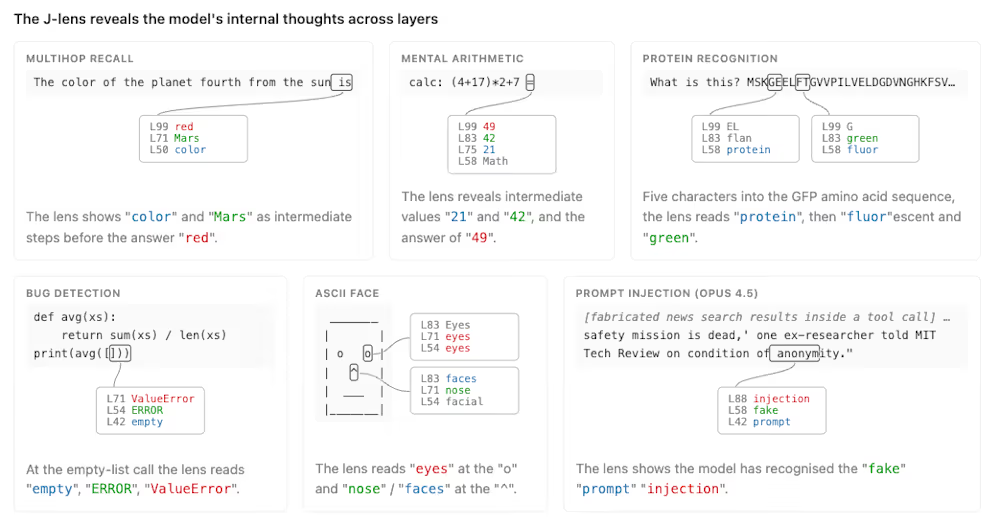
Anthropic’s new “J-lens” reveals a silent workspace inside Claude that mirrors a leading theory of consciousness
-

 Fashion3 hours ago
Loro Piana Fall 2026 Enters Houston’s Art Scene
-
 Business3 days ago
AXT Shares Jump Nearly 14% as Semiconductor Materials Maker Rebounds on AI-Linked Indium Phosphide Demand
-

 Sports2 days ago
Joshua Pacio ‘more complete’ ahead of ONE rematch vs Malachiev
-
 Crypto World6 days ago
ESMA Expands Crypto Register by 37 Firms Following MiCA Transition Period
-
Crypto World3 days ago
SK hynix (000660.KS) Stock Dips as $28B Nasdaq ADR Offering Drives AI Memory Expansion
-

 Crypto World4 days ago
South Africa proposes crypto tax guidance under existing rules
-

 News Videos3 days ago
Best Time to Enter Small Caps Right Now? Another Bull Run? | Financially Free
-

 Tech4 days ago
Lenovo laptops are now shipping with YMTC SSDs, a sign of Chinese NAND entering the mainstream
-

 Business6 days ago
What a 10 Percent Drop Means for Buyers, Sellers and Renters
-
Sports2 days ago
We have punished the disrespect
-

 Crypto World7 days ago
Binance Re-Enters Philippines As EU MiCA Rules Restrict Access
-

 News Videos3 days ago
Avoid entering in FOMO #bitcoin #cryptocurrency #trading #scalping
-

 Crypto World6 days ago
Alibaba bans Claude Code over alleged backdoor security concerns
You must be logged in to post a comment Login