Some material also goes to an unnamed US technology and industrial company, under a deal penned in the first quarter of 2026.
In the same quarter a year ago, the largest portion of MP’s sales by revenue—mined material, not NdPr—went to China’s Shenghe Resources. But MP has stopped selling to Shenghe as part of its deal with the US government.
MP ultimately plans to produce its own magnets at scale, which would require it to consume much of what it produces. Mined rare earths are turned into oxides, which are used to make metals and alloys that go into magnets.
The company has penned agreements with General Motors and Apple to supply them with its magnets. It said in May that it expected to begin shipping finished magnets to GM this year.
Advertisement
Meanwhile, Energy Fuels—which won $725 million in conditional government funding in June—plans to scale its production of rare earths and also has eyes on Asia.
“We will be sending oxides in the near-term to Korea,” said chief executive Ross Bhappu. Last year, a major South Korean manufacturer made a small amount of Energy Fuels’ NdPr into magnets.
Energy Fuels is in the process of acquiring Australian Strategic Materials, which owns a rare earths metal-making plant in South Korea. It also announced a $1.9 billion deal to buy German magnet maker Vacuumschmelze (VAC) in June, which Bhappu said would result in more of Energy Fuels’ products going to VAC’s US operations.
China is the largest global producer of the widely used neodymium iron boron magnets. Outside China, Japan produces 10,000-15,000 tonnes per year, while South Korea produces 2,000-3,000 tonnes annually, and the US produces 1,000 tonnes or less, according to John Ormerod, a rare earths consultant at JOC LLC. There is also some production in Europe.
Advertisement
Phoenix, which secured a conditional $500 million from Washington in June, said government funding would help it scale up metal and oxide production, which would “expand the pie for everyone.”
MP’s recent earnings have been boosted by the money it receives under its US government deal—which guarantees a minimum sale price for some products and tops up any shortfall from the price paid by third parties.
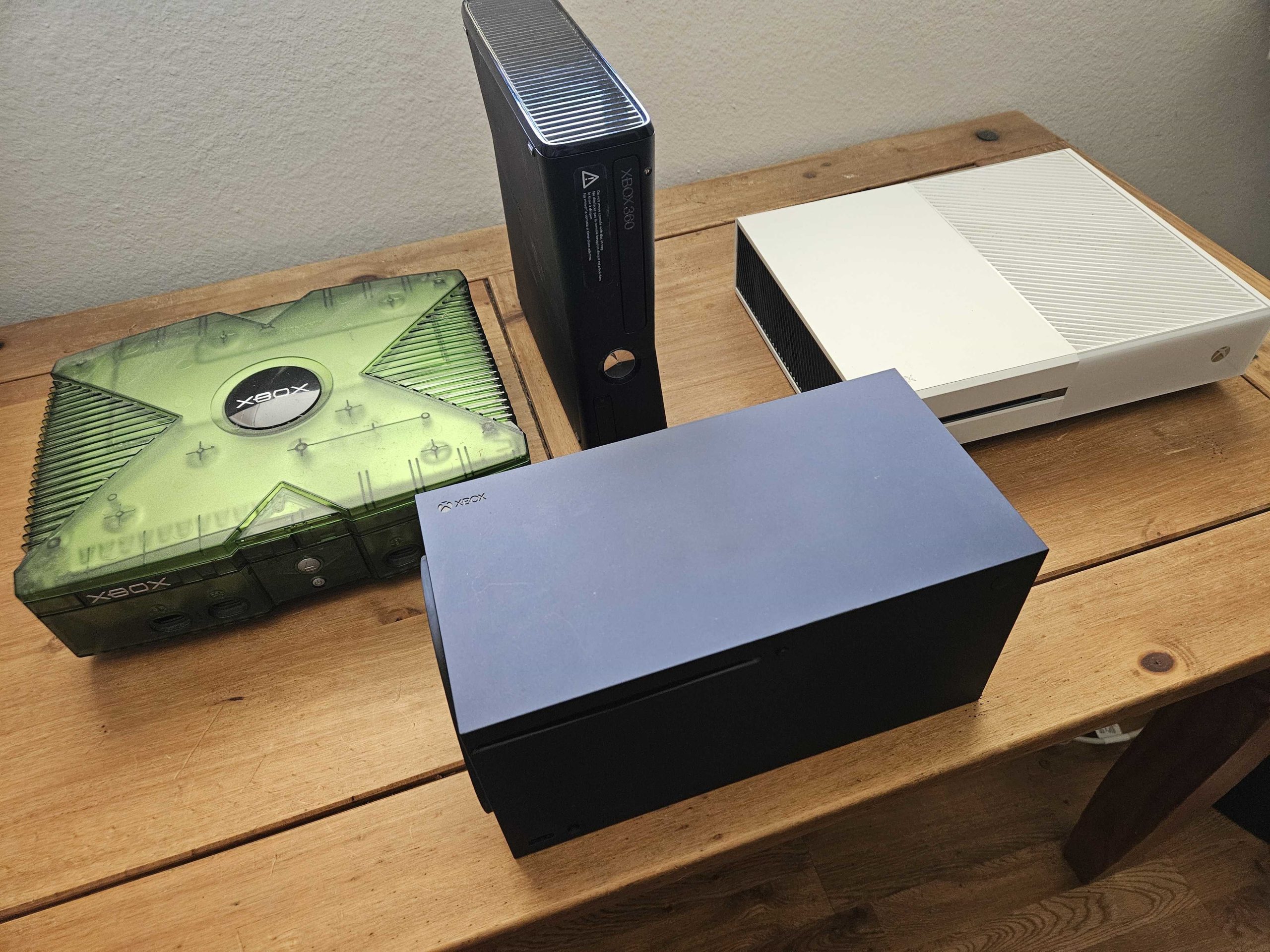
4 generations of Xbox hardware. (GeekWire Photo / Thomas Wilde)
Commentary: The last couple of weeks have served as a capstone to what’s become a bad few years for the international video game industry. Now it appears the larger sector is headed directly into a significant crash, as several unsustainable practices all seem to be approaching a crisis point at once.
The first and most obvious issue is the ongoing component shortage. Due to the rush to build AI data centers, both RAM and solid-state drives have risen dramatically in price in 2026, with analysts forecasting that costs might not settle back down until at least 2028.
Both the PlayStation 5 and Xbox Series X|S are at the point in their life cycle when they’d ordinarily be declining in per-unit costs as the technology matured. Instead, both Sony and Microsoft have raised console prices multiple times this year due to the high demand for parts.
This would ordinarily be a great time to get into video games, as we’re almost six years into the current console generation. Instead, it’s one of the worst. The base PS5 and Series X are about as expensive as they were at launch in November 2020, and building a new gaming PC right now can be costly.
The component crunch also harmed the debut of Valve’s new Steam Machine, which officially launched late last month with a starting MSRP of $1,049. Valve, based in Bellevue, Wash., was forced to offer the new hardware at a significantly higher price than planned due to the difficulty in getting components.
Advertisement
That’s been reflected in its early reviews, with manyoutletsnoting that the Steam Machine’s current price doesn’t match its power. At $700, the Machine would be a great gateway product for PC gaming, the way the Steam Deck was, and a genuine competitor in the console field, but a $1,049 price tag makes it an expensive curiosity for financially secure gadget-heads.
Another bad sign came from Sony’s recent announcement that it would sunset physical media for the PlayStation platform by 2028. This decision, which allegedly took many of Sony’s publishing partners by surprise, has serious knock-on effects for collectors, historians, developers, and most prominently consumers.
Sony has already caught one lawsuit over alleged market exploitation on the PlayStation Store, and that was a few days before it announced it wants to kill discs. An all-digital PlayStation library means that Sony would get to exercise full monopolistic control over pricing and access for every game it sells; licensing agreements mean that anything purchased on a digital storefront like the PlayStation Store is subject to deletion at any time without notice; and players wouldn’t be able to resort to any of the usual cost-cutting measures such as bargain bins, buying used copies, or even trading games with a friend.
That suggests that Sony has decided its best path forward is to continue to extract money from its established audience, rather than to have more options in place for gaming on a budget. There are free-to-play games on the PS5, of course, but most if not all are cross-platform and/or designed as money sinks. Ask any parent whose kids accidentally ran up a big tab in Fortnite.
Advertisement
Sony’s PlayStation 5. (Sony press image)
If Sony has decided to end physical media, then it’s likely Microsoft will follow suit. While Xbox hasn’t mentioned its next-generation console, codenamed Project Helix, for a hot minute, it has been eager to get rid of discs since at least 2013. Some sources, such as Windows Central, allege that Xbox is already planning to do so.
(Meanwhile, Nintendo is likely to do its own thing. While Nintendo has been forced to raise the price of the Switch 2 alongside its competitors, it has offered no sign that it plans to stop selling game cards or Switch cartridges. In an uncertain world, Nintendo can be relied upon to only ever follow its own peculiar instincts.)
This sets up an early look at the environment that surrounds the 10th generation of console hardware. If both Sony and Microsoft stick to traditional timelines, we’re likely to start hearing more about the PlayStation 6 and Project Helix over the course of 2027, with launch in holiday 2027 or 2028.
If they do launch along that timeline, then it’s difficult to see how either system will retail for less than $1,000, since the storage and RAM supplies will still be constrained by that point. That automatically prices most of the potential audience out of the market. Once the starting costs hit the four-digit range, a console stops being a hobby or a toy for children and becomes an expensive extravagance. (As a general rule, you probably don’t want your console to cost significantly more than the TV you’re attaching it to.)
Further, it’s arguable that neither the PlayStation 5 nor the Xbox Series X|S have really hit their potential. Sony has famously squandered much of this generation on a largely abortive pivot to games-as-a-service, while Xbox has often seemed more interested in laying off developers than actually making or marketing games. The 9th generation of consoles has had a few big hits, but it’s mostly despite itself.
Advertisement
Not only is there likely to be limited demand for the 10th-generation PlayStation or Xbox, but neither of them actually seem necessary. The only reason to make them is for a brand refresh, and that’s got nothing to do with consumers.
Microsoft, following its acquisition of Activision Blizzard in 2023, is currently the second largest game developer in the world, while Sony dominates today’s console market. These two companies influence much of what happens in the modern video game industry, and as of right now, both are apparently determined to do the most short-sighted thing possible at any given time.
Sony has decided that only part of its audience actually matters, while Microsoft seems to be saddling Xbox with unrealistic expectations, possibly to justify its eventual sale or shutdown, and is ignoring at least one organized boycott.
Reggie Fils-Aimé (center) leads a roundtable discussion of Xbox architects to celebrate the platform’s 20th anniversary in 2021. Left to right: Robbie Bach, Ed Fries, Fils-Aimé, Peter Moore, Bonnie Ross. (Microsoft Alumni Network)
Whenever the video game industry undergoes any kind of significant disruption, someone somewhere always asks if it’s the start of another “Crash of ‘83.” This is usually hyperbole, but it’s hard not to see the parallels between then and now: the video game market is flooded, there are few true exclusives left outside of Nintendo, many members of the gaming audience buy as few as 2 games a year, and the end of physical media will end both retail support and much of the casual audience.
Advertisement
This is unfolding as a slow, years-long plummet rather than the comparatively sudden shock of ‘83, but a crash is a crash. It’s avoidable, but it would require a massive, simultaneous course correction from several of the largest entertainment companies in the world.
That being said, it’s unlikely that video games as a medium are facing any kind of existential threat. Nintendo, as noted above, is well-positioned to ride out any potential problems with the larger market, PC gaming is hanging on, and the mobile sector is actually having a sort of quiet renaissance right now. There will still be video games to play in 2030, barring some larger disaster.
If there’s one big opportunity here, it’s that many of the major players in the games industry have either voluntarily abandoned the market for budget gaming or have been forced out by component costs. Some of the biggest hits of the 2020s to date, such as Vampire Survivors, Among Us, Lethal Company, and Balatro, are cheap, retro-styled games designed to run on almost any hardware, from a PlayStation 5 to your 4-year-old tablet.
The best step forward for mainstream gaming, then, might actually be to take a step back, in a similar way to projects such as Panic’s Playdate retro handheld (still going strong 5 years later) or Seattle’s Tin Can, seeing success with its land-line phones for kids and families. Chasing bigger games, higher frame-rates, and more realistic graphics for 30 years has gotten us here, up to the edge of a second major crash, while thousands of people log on every day to play games that could be run on a particularly big potato.
Advertisement
Instead of rushing into the 10th generation, the solution now might be to think simpler and cheaper, making smaller, more focused projects rather than the 5-year moonshot of a typical AAA game. Otherwise, mainstream video games may end up like Western comics: increasingly expensive options presented to a shrinking handful of fervent fans.
SambaNova last announced a $350m Series E raise in February.
Intel-backed SambaNova has secured $1bn in funding to expand its AI chipmaking business, as demand for its inference technology continues to grow.
The Series F round, which drives up SambaNova’s valuation to $11bn, was led by General Atlantic, with participation from long-term backer Intel Capital, alongside Cambium Capital, BlackRock and the Qatar Investment Authority.
A&E Investment, Assam Ventures, Battery Ventures, Kabila Capital, QFO Capital, Vista Equity Partners and Volantis also participated in the raise.
In recent months, the company launched its specialised SN50 chips that prioritise token efficiency, and announced a multi-year collaboration with Intel to deliver cost-efficient AI inference solutions to customers and roll out an Intel-powered AI cloud.
The 2017-founded SambaNova has close ties with Intel, whose CEO Lip-Bu Tan serves as chair of SambaNova’s board.
SambaNova said it will use proceeds from the latest raise to expand capacity, accelerate product innovation and scale deployments. Continuing on its growth momentum, the chipmaker plans to continue investing across chips, systems, software and full-stack AI infrastructure.
Advertisement
Alongside the funding, SambaNova has announced JPMorganChase as its latest customer to deploy the SN40 and SN50 chips.
“SambaNova’s platform is differentiated, built for a market where inference has become foundational to enterprise and industry transformation,” said Martín Escobari, the co-president and head of global growth equity at General Atlantic.
“Rodrigo and the team are driving deep technical innovation to achieve growing commercial momentum while demand for inference is accelerating well ahead of supply. We are pleased to lead this round to support SambaNova in shaping the next generation of AI infrastructure.”
SambaNova co-founder and CEO Rodrigo Liang told CNBC last month that “business is growing at an incredibly rapid rate”, adding that he is “really excited” about the current IPO market.
Advertisement
Don’t miss out on the knowledge you need to succeed. Sign up for the Daily Brief, Silicon Republic’s digest of need-to-know sci-tech news.
Earlier this week, Bloomberg reported that Microsoft was replacing some of OpenAI’s software with its own in-house models in an effort to cut costs. Those in-house models, known as MAI, were increasingly being used to power apps like Word and Excel, the outlet noted.
The story raised an increasingly common question about the two companies, which were once seemingly inseparable, and have recently sent mixed signals about the status of their situationship: Were the two companies drifting apart?
Now, OpenAI is attempting to put any insinuations of such a break to rest. During OpenAI’s launch of GPT 5.6 on Thursday, the company announced that it would become the “preferred model” powering Microsoft’s 365 Copilot.
OpenAI noted in a blog post published Thursday that GPT 5.6 would support Microsoft users across the company’s suite of productivity apps, including Word, Excel, PowerPoint, and Cowork.
Advertisement
“Our partnership with Microsoft has always been about bringing the benefits of advanced AI to more individuals and organizations, and we’re excited to continue building on that shared commitment,” OpenAI wrote in a blog post.
What being a “preferred model” actually means isn’t entirely clear, other than that OpenAI’s software will continue to power Microsoft’s apps.
That said, it was never reported that ChatGPT’s software would stop powering Microsoft’s apps — merely that Microsoft was relying increasingly on its own software in an effort to reduce costs. The new “preferred model” disclosure doesn’t appear to negate that previous reporting.
On Thursday, multiple news organizations accused OpenAI of withholding evidence about how the company trains its artificial intelligence models in a new motion that’s connected to a series of ongoing copyright lawsuits.
The motion was filed by 17 publishers, including The New York Times, the New York Daily News, the Chicago Tribune and Ziff Davis (CNET’s parent company). Ziff Davis sued OpenAI in 2025, alleging that OpenAI scraped its copyrighted works to train ChatGPT and other large language models.
The initial lawsuit dates back to 2023 when The New York Times first sued OpenAI and Microsoft, alleging the companies built their AI technologies using millions of news articles written by journalists. Microsoft and OpenAI have denied the claims.
The motion asks the court to impose legal sanctions against OpenAI, but not Microsoft, for allegedly withholding evidence, such as datasets and output logs, and claims that “OpenAI chose obstruction” by failing to produce it. If those sanctions are granted, OpenAI could be ordered to pay financial penalties.
“This motion asks the court to punish OpenAI for hiding and destroying evidence showing how ChatGPT was trained on stolen journalism,” New York Daily News attorney Steven Lieberman said, per the Associated Press.
At the center of the lawsuits is how generative AI, such as ChatGPT, is trained and how it sources its information. The Times’ original lawsuit claims that OpenAI’s generative AI tools “can generate output that recites Times content verbatim, closely summarizes it, and mimics its expressive style,” raising questions of copyright infringement.
The lawsuits come amid a broader conversation in the journalism industry: declining traffic across digital media outlets. AI overviews are often cited as a major reason for the decline in clicks to original reporting by writers and editors, which in turn impacts publishers’ advertising revenue.
Advertisement
A growing reliance on AI chatbots for finding news and other content is also a major concern for publishers, as it siphons off loyal readership and audience. Some data shows that small publishers have been hit the hardest, with a reported 60% traffic drop, while another analysis predicts traffic declines of more than 40% by 2029.
A statement by Ziff Davis notes that “OpenAI has copied and monetized Ziff Davis content without permission on a massive scale.” Lance Koonce, partner at Klaris Law and counsel for Ziff Davis, said that, since the lawsuit, “OpenAI repeatedly lied about its ability to search its own data sets for Ziff Davis content and engaged in other serious litigation misconduct.”
An ongoing debate over copyright and AI
OpenAI has long maintained that AI training is fair use. An OpenAI spokesperson denied the allegations in a statement to CNET, stating: “As the Times’ case weakens and they’ve been forced to drop claims against us, they’re persisting with their efforts to invade the privacy of people who have nothing to do with this case, including by making these blatantly false allegations.” The statement went on to say: “We’ll continue defending our users’ privacy and the long-established principles of fair use.”
In a 2024 rebuttal to the original lawsuit filed by The New York Times, OpenAI said the publisher falsely accused the company of destroying data and instead accused the newspaper of “secretly” deleting its own data that would have shown internal use of OpenAI products. Although the Times has dropped one claim against OpenAI, the larger lawsuit remains in litigation.
Advertisement
Other tech giants, including Meta, have also been accused by authors and news publishers of copyright infringement. Many of those cases are still in litigation as courts decide where to draw the line between fair use and infringement in the age of AI.
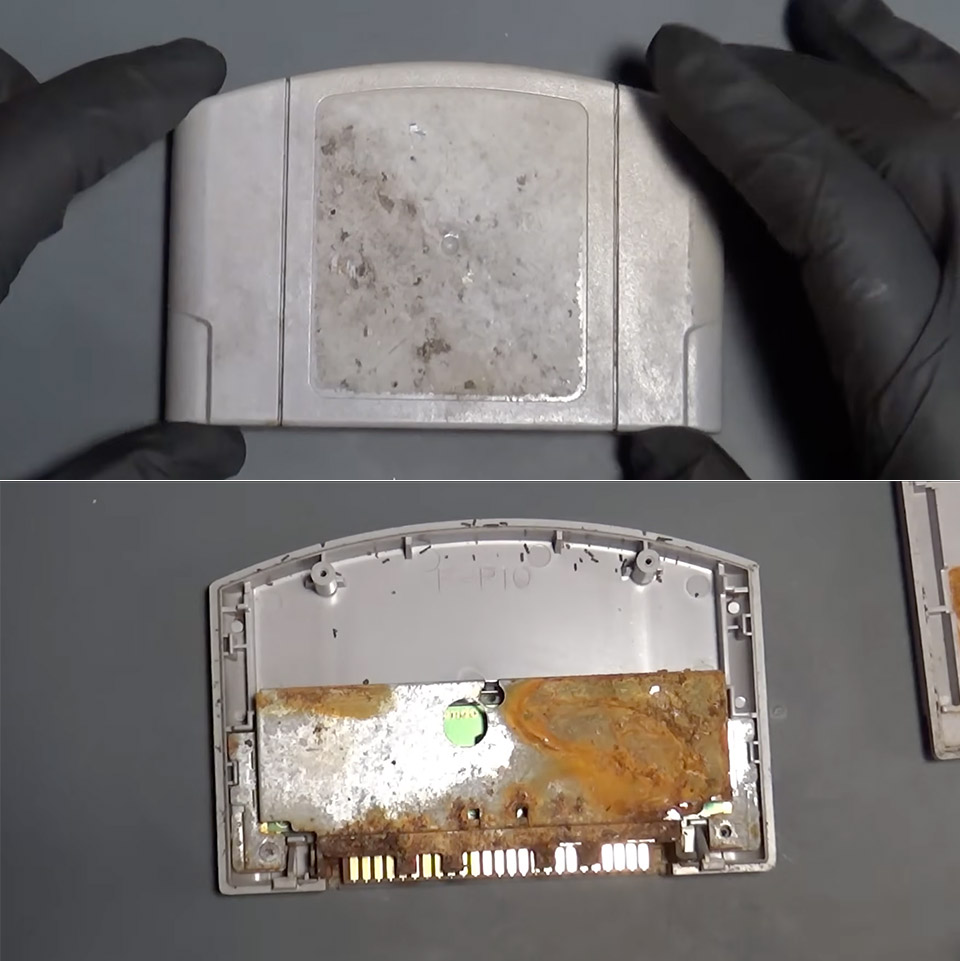
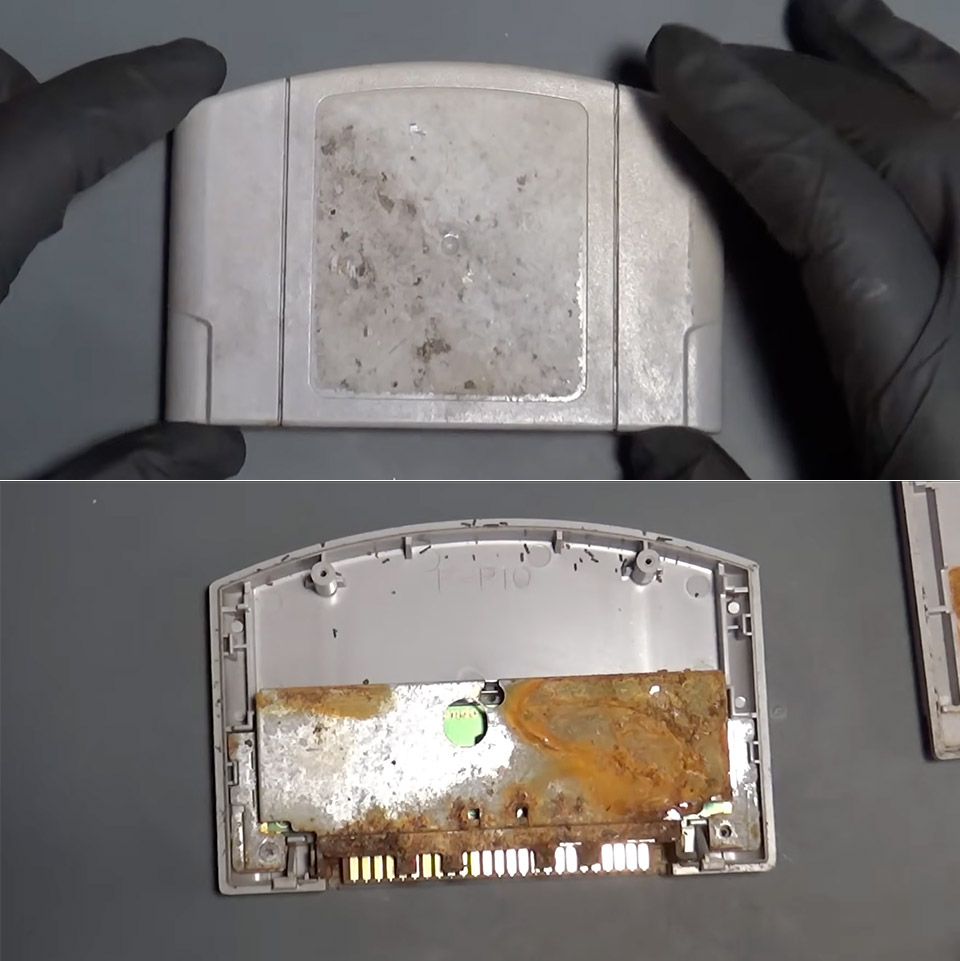
A walk through the trees turned up more than expected a few years ago. One person spotted a plastic Nintendo 64 cartridge half-hidden on the forest floor. Its paper labels had vanished completely, leaving no hint of what game sat inside. The finder brought it home, then passed it along to someone who fixes old consoles for a closer look.
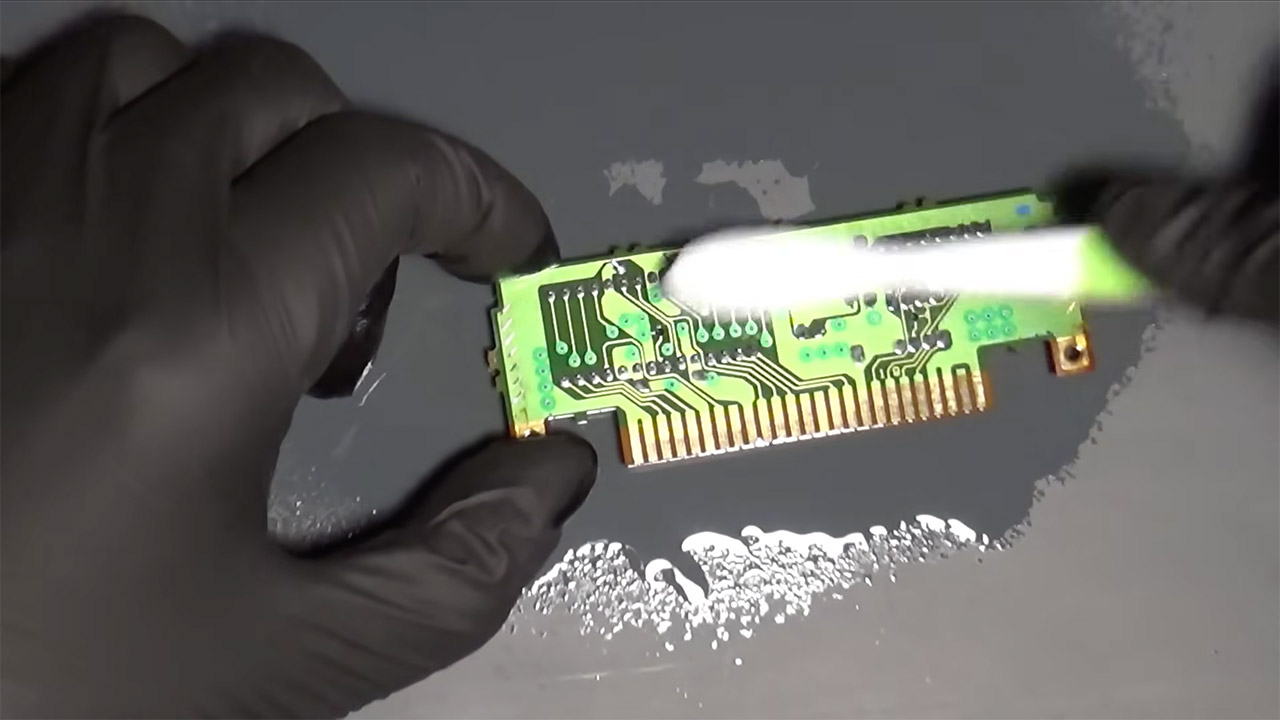
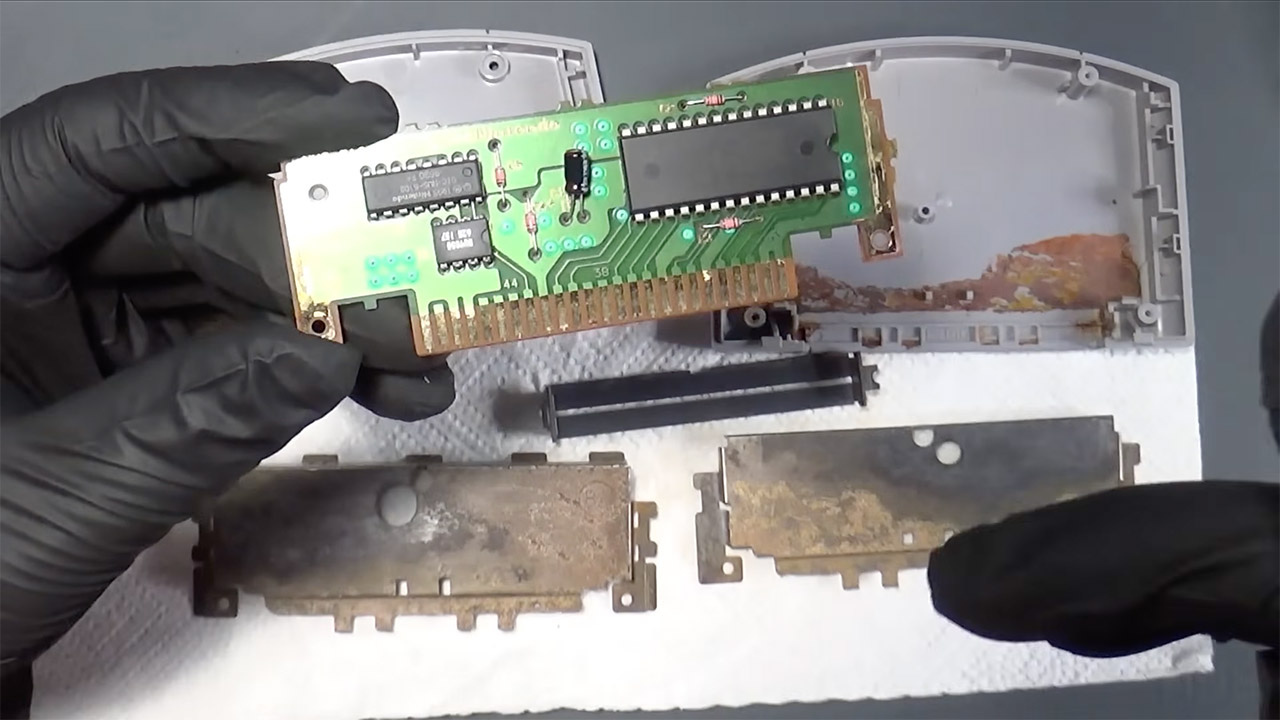
Rust had plainly gotten hold of the metal shield that covers the back, which is normally sealed up tight. The plastic shell that surrounded it had accumulated stains and scrapes from all of its time spent outside over the months or years, not to mention wear and tear. Inside, the circuit board, which is what actually matters, revealed some considerable corrosion around the vias on one side and a rougher surface on the other, and to top it all off, some of the screws had come free, adding to the overall ‘battered’ aspect. The real test would be when someone finally opened it up and attempted to get the parts to work again. First, you’ll need the right screwdriver, which should be a game-bit. When you take the shield off, you’re left with a wonderful mess of heavy crust and pitting across the metal underneath. Given the state of the outside, the board itself appears to be far superior to what you might assume. The pins on the edge connector are still in good condition, with no major damaged traces or fried components visible at first examination.
The next step was to clean it, starting with the board, then using high-strength isopropyl alcohol and a delicate brush. The residue is quickly removed without causing any damage, and the contacts can be polished with a Q-tip to look their finest. To be honest, the board appears very clean, nearly immaculate in sections. And the rusting hasn’t really taken hold, which is a comfort. In contrast, the shield and plastic shell told a different tale. Vinegar soaks appeared to dislodge some of the rust, and a combination of wire brushing and hot soapy water removed the most of the gunk. Some of the lighter stuff was removed with a magic eraser, but there is still some discoloration. If you were to restore it to its original condition, you’d probably have to replace the entire shell and shield, which would be a significant undertaking.
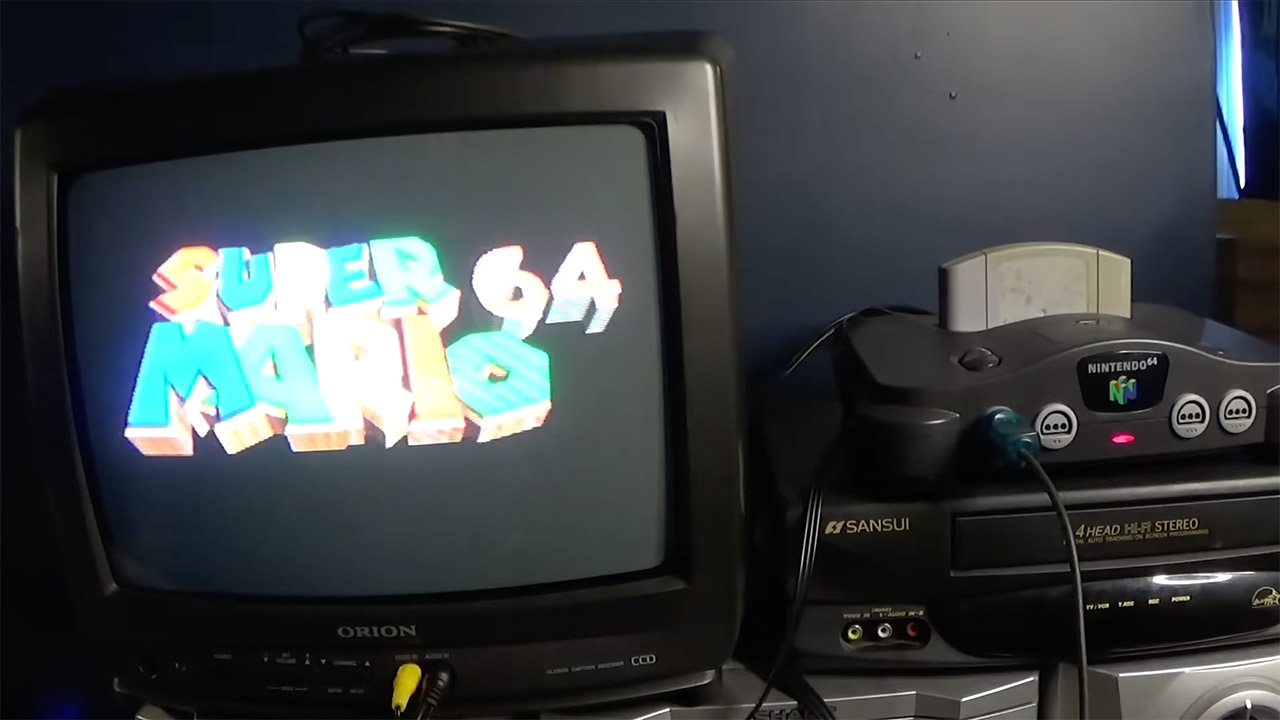
Before even attempting to boot the thing, he gave the N64 console a quick scrub just to be safe, and used an old cleaning kit to thoroughly clean the cartridge slot. One of the other known functional games proved that the device boots up normally. Then it was time to verify if our mystery cartridge was still functional. Slide it in, hit the power button, and the familiar title screen shows immediately.
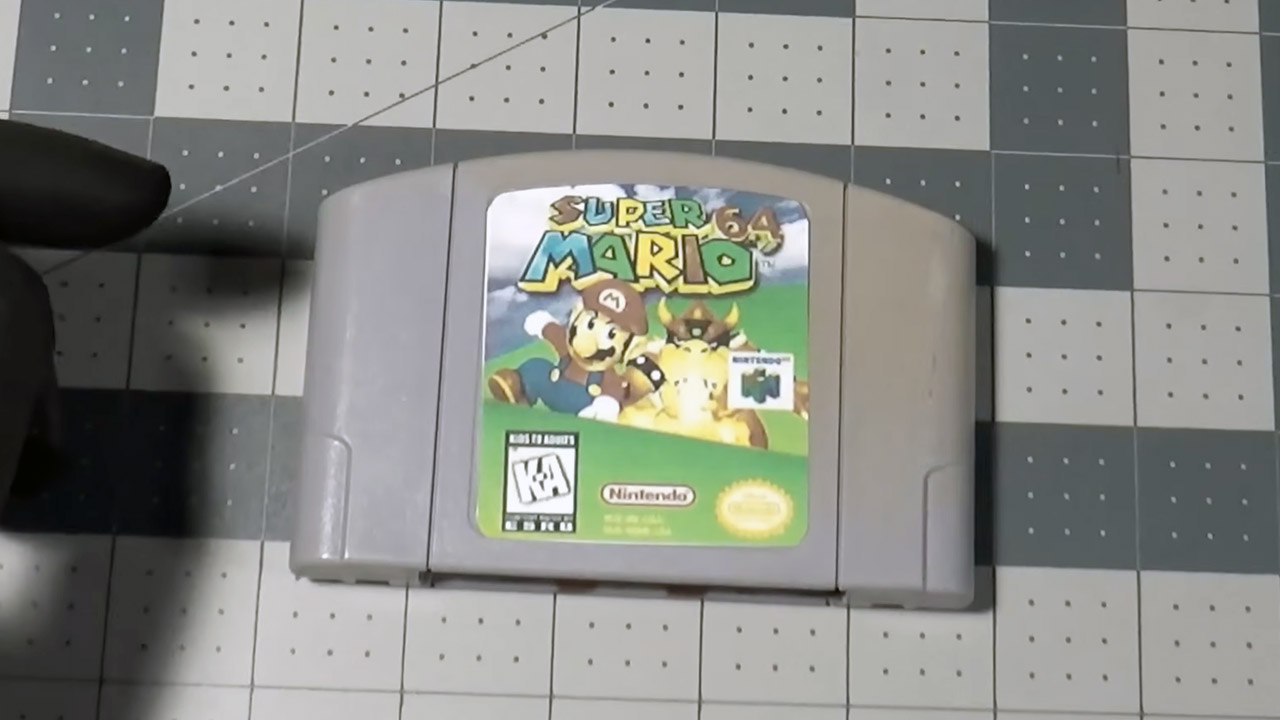
The game was, of course, Super Mario 64, as the markings on the ROM chip showed that it was the regular version, with no special hardware or hidden modifications.The save data was particularly noteworthy, as someone’s previous progress was still present, intact, after years of exposure to moisture and temperature fluctuations. Unlike several other N64 games, Super Mario 64 keeps its saves in a non-battery-dependent manner. That was a pleasant surprise, even if the cartridge still appeared a little rough.
You have to give Nintendo credit because these cartridges were engineered to survive far more than a few scrapes and scuffs. They’re designed to endure dust and harsh handling by children, as well as repetitive insertion and removal, and it turns out the strong plastic shell and metal shield worked harder than we thought. They shielded the electronics within from the woodland environment considerably better than anyone could have anticipated. The shield, in particular, did an excellent job of soaking the majority of the corrosion that had developed in, leaving the board and pins in good shape. One final touch: a quick print of a new label to cover up the old one. [Source]
A new NYT Strands puzzle appears at midnight each day for your time zone – which means that some people are always playing ‘today’s game’ while others are playing ‘yesterday’s’. If you’re looking for Thursday’s puzzle instead then click here: NYT Strands hints and answers for Thursday, July 9 (game #858).
Strands is the NYT’s latest word game after the likes of Wordle, Spelling Bee and Connections – and it’s great fun. It can be difficult, though, so read on for my Strands hints.
Want more word-based fun? Then check out my NYT Connections today and Quordle today pages for hints and answers for those games, and Marc’s Wordle today page for the original viral word game.
Advertisement
SPOILER WARNING: Information about NYT Strands today is below, so don’t read on if you don’t want to know the answers.
Latest Videos From
NYT Strands today (game #859) – hint #1 – today’s theme
What is the theme of today’s NYT Strands?
• Today’s NYT Strands theme is… I think…
Advertisement
NYT Strands today (game #859) – hint #2 – clue words
Play any of these words to unlock the in-game hints system.
STAY
STORY
SNAKE
LEEK
ROBE
HATE
NYT Strands today (game #859) – hint #3 – spangram letters
How many letters are in today’s spangram?
• Spangram has 11 letters
NYT Strands today (game #859) – hint #4 – spangram position
What are two sides of the board that today’s spangram touches?
• First side: left, 1st row
Advertisement
• Last side: right, 6th row
Right, the answers are below, so DO NOT SCROLL ANY FURTHER IF YOU DON’T WANT TO SEE THEM.
Advertisement
NYT Strands today (game #859) – the answers
(Image credit: New York Times)
The answers to today’s Strands, game #859, are…
BELIEVE
HISTORY
HASTE
GOOD
MERRY
LOVE
SENSE
SPANGRAM: WECANMAKEIT
My rating: Hard
My score: Perfect
Is it possible to look at today’s theme and not say to yourself “… therefore I am”? Apparently it is, because the words that complete “I think…” here were instead the more seemingly everyday “we can make it”.
Sign up for breaking news, reviews, opinion, top tech deals, and more.
Advertisement
Thinking that I was missing out on some cultural reference point I googled all of today’s game words, along with the spangram, and the AI result claimed that all the words feature in the 17th-century Irish Jacobite love song, Mo Ghile Mear (My Gallant Hero). And there was me thinking it was from Ted Lasso or a Taylor Swift song I’d not heard of.
Despite my ignorance I was able to navigate the game without using any hints.
Advertisement
Yesterday’s NYT Strands answers (Thursday, July 9, game #858)
STICK
GLOSS
STAIN
LINER
TINT
BALM
PLUM
SPANGRAM: KISSANDMAKEUP
What is NYT Strands?
Strands is the NYT’s not-so-new-any-more word game, following Wordle and Connections. It’s now a fully fledged member of the NYT’s games stable that has been running for a year and which can be played on the NYT Games site on desktop or mobile.
I’ve got a full guide to how to play NYT Strands, complete with tips for solving it, so check that out if you’re struggling to beat it each day.
A new Quordle puzzle appears at midnight each day for your time zone – which means that some people are always playing ‘today’s game’ while others are playing ‘yesterday’s’. If you’re looking for Thursday’s puzzle instead then click here: Quordle hints and answers for Thursday, July 9 (game #1627).
Quordle was one of the original Wordle alternatives and is still going strong now more than 1,500 games later. It offers a genuine challenge, though, so read on if you need some Quordle hints today — or scroll down further for the answers.
Enjoy playing word games? You can also check out my NYT Connections today and NYT Strands today pages for hints and answers for those puzzles, while Marc’s Wordle today column covers the original viral word game.
Advertisement
SPOILER WARNING: Information about Quordle today is below, so don’t read on if you don’t want to know the answers.
Latest Videos From
Quordle today (game #1628) — hint #1 — Vowels
How many different vowels are in Quordle today?
• The number of different vowels in Quordle today is 3*.
* Note that by vowel we mean the five standard vowels (A, E, I, O, U), not Y (which is sometimes counted as a vowel too).
Advertisement
Quordle today (game #1628) — hint #2 — repeated letters
Do any of today’s Quordle answers contain repeated letters?
• The number of Quordle answers containing a repeated letter today is 1.
Quordle today (game #1628) — hint #3 — uncommon letters
Do the letters Q, Z, X or J appear in Quordle today?
• No. None of Q, Z, X or J appear among today’s Quordle answers.
A new NYT Connections puzzle appears at midnight each day for your time zone – which means that some people are always playing ‘today’s game’ while others are playing ‘yesterday’s’. If you’re looking for Thursday’s puzzle instead then click here: NYT Connections hints and answers for Thursday, July 9 (game #1124).
Good morning! Let’s play Connections, the NYT’s clever word game that challenges you to group answers in various categories. It can be tough, so read on if you need Connections hints.
What should you do once you’ve finished? Why, play some more word games of course. I’ve also got daily Strands hints and answers and Quordle hints and answers articles if you need help for those too, while Marc’s Wordle today page covers the original viral word game.
Advertisement
SPOILER WARNING: Information about NYT Connections today is below, so don’t read on if you don’t want to know the answers.
Latest Videos From
NYT Connections today (game #1125) – today’s words
(Image credit: New York Times)
Today’s NYT Connections words are…
OUTKAST
DEPECHE MODE
FRESH-BAKED
BALL GOWN
DO NOT DISTURB
À LA MODE
STRIKE A POSE
AIRPLANE MODE
ERASURE
SAFE MODE
DECADENT
NEW ORDER
HOTSPOT
PET SHOP BOYS
MOLTEN
LOCATION SERVICES
NYT Connections today (game #1125) – hint #1 – group hints
What are some clues for today’s NYT Connections groups?
Advertisement
YELLOW: iPhone options
GREEN: Pudding levels
BLUE: UK chart acts of yesteryear
PURPLE: Umpire beginnings
Need more clues?
We’re firmly in spoiler territory now, but read on if you want to know what the four theme answers are for today’s NYT Connections puzzles…
Sign up for breaking news, reviews, opinion, top tech deals, and more.
Advertisement
NYT Connections today (game #1125) – hint #2 – group answers
What are the answers for today’s NYT Connections groups?
YELLOW: SMARTPHONE SETTINGS
GREEN: DESSERT MENU DESCRIPTORS
BLUE: ‘8OS SYNTH-POP BANDS
PURPLE: STARTING WITH BASEBALL CALLS
Right, the answers are below, so DO NOT SCROLL ANY FURTHER IF YOU DON’T WANT TO SEE THEM.
Advertisement
NYT Connections today (game #1125) – the answers
(Image credit: New York Times)
The answers to today’s Connections, game #1125, are…
YELLOW: SMARTPHONE SETTINGS: AIRPLANE MODE, DO NOT DISTURB, HOTSPOT, LOCATION SERVICES
GREEN: DESSERT MENU DESCRIPTORS: DECADENT, FRESH-BAKED, MOLTEN, À LA MODE
BLUE: ‘8OS SYNTH-POP BANDS: DEPECHE MODE, ERASURE, NEW ORDER, PET SHOP BOYS
PURPLE: STARTING WITH BASEBALL CALLS: BALL GOWN, OUTKAST, SAFE MODE, STRIKE A POSE
My rating: Hard
My score: 1 mistake
There were a number of fashion links among today’s tiles: A LA MODE, of course, STRIKE A POSE — which features in Madonna’s Vogue — BALL GOWN, and DEPECHE MODE, which was the name of a French fashion magazine.
What caught me out, however, was the SMARTPHONE SETTINGS, as I originally included SAFE MODE instead of DO NOT DISTURB.
Today’s game also featured my two favorite bands — PET SHOP BOYS and NEW ORDER, both of whom joined forces in the 1990s with Electronic and who still tour together occasionally.
Advertisement
Yesterday’s NYT Connections answers (Thursday, July 9, 2026, game #1124)
GREEN: MUSIC PUBLICATIONS: BILLBOARD, PITCHFORK, ROLLING STONE, SPIN
BLUE: KINDS OF RUGS: PERSIAN, PRAYER, SHAG, THROW
PURPLE: PONTIAC MODELS: FIREBIRD, G6, GRAND PRIX, TRANS AM
What is NYT Connections?
NYT Connections is one of several increasingly popular word games made by the New York Times. It challenges you to find groups of four items that share something in common, and each group has a different difficulty level: green is easy, yellow a little harder, blue often quite tough and purple usually very difficult.
On the plus side, you don’t technically need to solve the final one, as you’ll be able to answer that one by a process of elimination. What’s more, you can make up to four mistakes, which gives you a little bit of breathing room.
It’s a little more involved than something like Wordle, however, and there are plenty of opportunities for the game to trip you up with tricks. For instance, watch out for homophones and other word games that could disguise the answers.
It’s playable for free via the NYT Games site on desktop or mobile.
Jeff Bezos is letting outside investors into Blue Origin for the first time since he founded it in 2000. The rocket company is seeking about $10bn in fresh capital at a $130bn pre-money valuation, according to CNBC.
For 26 years, Bezos bankrolled the company himself, selling billions in Amazon stock rather than sharing ownership. That solo-funding era is now over.
He is not stepping back entirely, with reporting suggesting he will put around $2bn into the round himself. Hedge fund Coatue Management is expected to add roughly $4bn, with strong institutional interest for the rest.
The obvious question is what changed. The blunt answer is that staying in the space race has outgrown even one of the world’s richest people.
Advertisement
A costly stretch of bad timing
The 💜 of EU tech
The latest rumblings from the EU tech scene, a story from our wise ol’ founder Boris, and some questionable AI art. It’s free, every week, in your inbox. Sign up now!
New Glenn is the vehicle Blue Origin is counting on for lunar and national-security missions. Chief executive Dave Limp has committed to returning it to flight before the end of 2026, with launches planned for NASA, Amazon’s Leo satellite network, and AST SpaceMobile.
Advertisement
That combination of recovery and scale-up, more than any single rival’s move, is the sharper reason for the timing. Founder wealth alone cannot comfortably absorb costs at this pace.
Chasing a rival worth far more
The backdrop is SpaceX, which just pulled off the largest IPO in history. It raised a record sum, reportedly near $86bn, at a valuation around $2tn, even as its filing confirmed Musk keeps dominant voting control.
SpaceX’s lead is built on reusable rockets, Starlink, and government work, including a $2.29bn Space Force contract. Catching up on lunar and defence launches now takes tens of billions, not a founder’s cheque.
Investor appetite for space has swelled since that listing, as money that once flowed into SpaceX proxies now has the real thing to chase. Rivals from Stoke Space to Firefly have raised or gone public on the same wave.
Advertisement
Blue Origin has taken only limited outside money before, including a 2021 grant and a 2022 acquisition, and it has not disclosed a closing timeline. Whether $10bn narrows the SpaceX gap or merely buys time depends far less on the capital than on one thing: getting New Glenn back to the launch pad, and off it.
Every time you use ChatGPT or generate an image with AI, there is a memory chip working at extreme speed behind the scenes. However, that chip has a memory bottleneck problem, and a Korean research team may have just solved it.
Researchers at POSTECH (Pohang University of Science and Technology) developed a new way to stack more than 10 ultrathin semiconductor chips on top of each other, achieving a memory density roughly four times higher than the best commercial chips available today (via TechXplore).
Why is stacking chips so hard, and what makes this one different?
High-bandwidth memory, or HBM, is the type of memory that powers AI accelerators. It works by stacking multiple chips vertically, much like building a high-rise instead of spreading out across land.
The problem is that as chips get thinner, they become incredibly fragile. At one-fifth the thickness of a human hair, they bend, warp, and crack under pressure. Current manufacturing methods make this worse, often damaging chips before they even make it into a stack.
Advertisement
Transfer printing and in-situ bonding conceptScience Direct
The POSTECH team solved this by combining two techniques into one process. Transfer printing precisely places each chip where it needs to go, while in-situ bonding forms the metallic connections at the same moment, all under low heat below 180 degrees Celsius and low pressure below 20 kilopascals. The result is a stack of more than 10 chips with almost no misalignment and very little warping.
Why this matters for the future of AI
More memory packed into the same space means AI tools can run faster and handle bigger tasks without needing larger or more expensive hardware. The researchers also see uses beyond AI, including next-generation micro-LED displays and advanced processor designs that need the same kind of ultra-precise stacking this method delivers.
Getting this into commercial production is the next step, but if it gets there, the memory ceiling that has been quietly holding AI back could finally start to lift.


















































You must be logged in to post a comment Login