
News Beat
Why cassette tapes have seen a resurgence in recent years

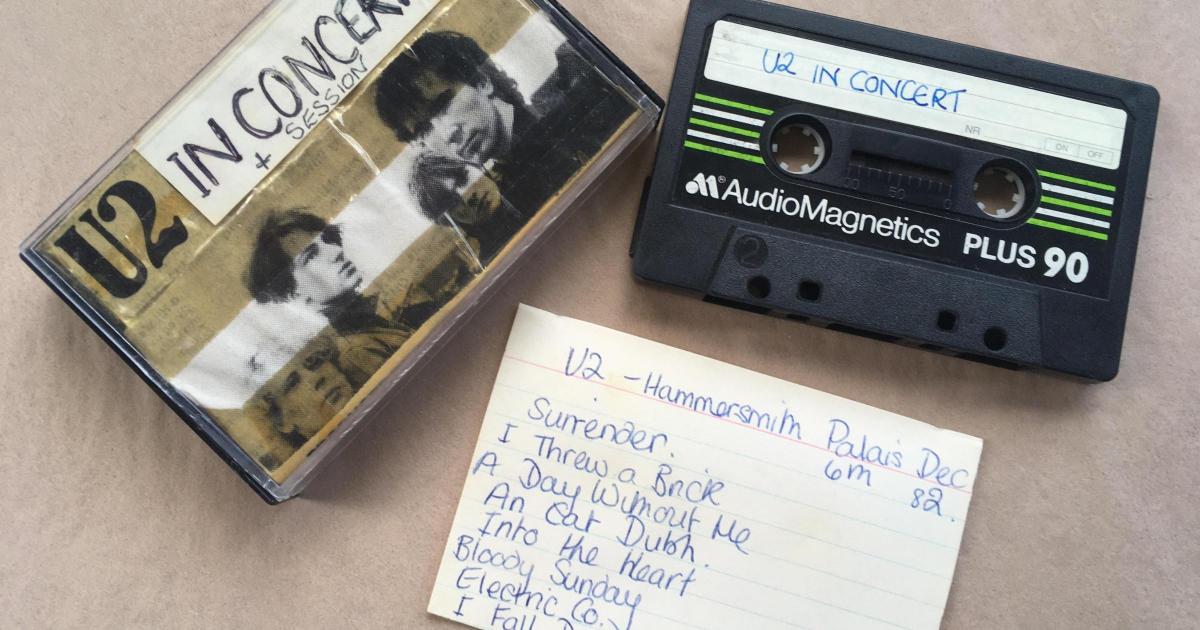
I’ve also talked about how CDs replaced vinyl in the 1980s, touted by radio DJs as the ‘crystal clear’ alternative.
But following another recent discovery in my mum’s loft, I feel compelled to give a massive shoutout to the other alternative at the time – the humble cassette tape.
The 1980s – my music-fan heyday – were really the golden years of cassette tapes. But like their vinyl counterparts, cassettes have experienced a notable resurgence in recent years, fueled by the interest in all things vintage and nostalgia for ‘tangible’ media.

We must all have owned a cassette tape at some point in our youth, even if it was only a poor-quality recording of a friend’s LP that you couldn’t afford to buy!
Cassettes were also the best way to hear your chosen tracks whilst travelling in the car. Most were equipped with radios by the time I was old enough to drive one, and if you were lucky, you got a built-in cassette player too.
My first car had one, and it provided the ideal opportunity to binge-listen to my favourite songs when I was on the way to work at the ungodly hour of 5 am for the early morning news-reading shift.
I could sing along loudly in blissful isolation (apart from a few bleary-eyed rabbits) as I trundled down the country roads at dawn.
Nobody ever accused cassettes of being ‘crystal clear’ or commended them on the quality of sound they produced. But it was undoubtedly a compact and handy way to access and store your tunes.

There were, of course, obvious flaws – not least that you had to listen to the tracks in order and couldn’t simply jump to the next song without fast-forwarding or rewinding.
There was also the guesswork involved in deciding where to stop the tape. Too much back and forth could result in the ultimate disaster of the tape inside the cassette being ‘overstretched’ and snapping.
You’d then have the onerous task of picking the scrambled mess of tape out of the machine, where it often became tightly wound around the ‘capstan’. If that occurred, there was simply no way back.
If you didn’t want to risk it, you could rewind a tape using a pencil or pen. The octagonal-shaped sides of these household implements engaged perfectly with the gears on the cassette tape.
You had to make sure you were winding the correct spool in the correct direction, of course, but it worked.
The most wonderfully versatile thing about cassettes was that you could record onto them and then re-record over the top if you wanted.

My first experience of this was via my dad’s ‘portable’ cassette player with built-in speaker, in the 1970s. The sound quality was not up to much, but it did the job.
My cousin and I spent many an hour recording ourselves saying silly things or making spoof radio shows.
Later on in the 1980s, my parents acquired a ‘music centre’ which incorporated a record deck, radio and cassette player.
I would record music ‘sessions’ by my favourite artists onto cassette – not strictly allowed (I know, but we were all guilty of it at some point).
The one cautionary note was that you had to be very careful to ensure it was a ‘blank’ cassette in case you inadvertently recorded over the top of something else (yep, I did that a few times with much regret)!
The introduction of the Sony Walkman, in the late 1970s, revolutionised the way people listened to cassettes, and I was fortunate enough to eventually acquire one.

The ultimate personal cassette player, it was much less cumbersome than the original tinny-sounding ‘portable’ versions of the early 1970s or the massive ‘ghetto blaster’ models of the 1980s.
In theory, as the name suggested, you could go out for a walk or even a run whilst carrying the Walkman. Compared to today’s iPods, they seem a little clunky and unwieldy, but I thought I was the bees knees wandering around town sporting my Walkman!
It had a bass-boost on it too, so it sounded quite good – plus an ‘auto-reverse’ so the tape automatically rewound when it reached the end.
The bonus was that it came with headphones, so you could listen to your tracks in peace and without your parents criticising your ‘appalling’ taste in ‘music’.
Recommended reading :
Dad was thrilled he no longer had to endure the mournful wailing of Morrissey nor the “infernal racket” of The Fall.
He could, however, still hear me “yowling along like next-door’s cat”, which I fear may have been a lot worse than hearing the original!
Did you listen to cassettes, or record music from the radio when you were younger? Did you have a Walkman or a ghetto blaster? Write to me with your cassette recollections and pictures at ebrennanhere@gmail.com



